Visualização de leitura

Iran-linked APT Mirage Kitten Uses Fake Job Tests to Spread Malware

Mirage Kitten used fake LinkedIn coding tests to spread NodeRabbit and PollCat, even banning AI tools that could have spotted the malware.

Iran-linked Mirage Kitten hackers just found a genuinely clever way to make their own malware harder to detect: telling job candidates not to use AI tools while reviewing the trojanized code they were sent. Kaspersky’s research documented two previously undocumented malware families from the APT group, delivered through fake coding challenges sent to job seekers on LinkedIn.

The setup is almost embarrassingly simple once you see it laid out. A fake recruiter contacts a software engineer, offers a role, and sends a coding assessment hosted on a completely legitimate-looking Amazon S3 link, the kind of hosting nobody would think twice about.

“During recent threat research, we detected suspicious activity on a system in Afghanistan. We traced it to an archive containing a software development project that the user may have received during a job application process.” reads the report published by Kaspersky. “The archive purported to contain a coding challenge for candidates applying for an engineering role.”

The archive includes a README with a three-hour time limit and an explicit rule against using AI assistants, which sounds like a normal anti-cheating measure until you realize what it’s actually preventing.

Kaspersky spells out exactly why that rule exists.

“The README also imposed a three-hour time limit and prohibited the use of AI assistants.”states the report. “Notably, an AI code-review assistant tasked with auditing the project would likely have flagged the suspicious first-line import of an unknown npm package and warned the targeted developer that the project was trojanized.”

the researchers write, which means the “no AI” instruction isn’t about fairness in a coding test at all, it’s a deliberate move to stop the one tool most likely to catch the malware before it runs.

The first malware family, called NodeRabbit, is written entirely in Node.js and can run on Windows, Linux, and macOS from the same codebase. That’s a change for Mirage Kitten, which has traditionally used malware written in C, C++ and Go.

NodeRabbit is hidden inside a fake npm package included in the coding test rather than published online. Once the victim runs it, the malware starts a background process and connects to infrastructure hosted on Azure, using AES-256-GCM encryption to protect its communications.

Newer versions added checks to detect sandboxes and analysis environments. The malware looks at system memory, the number of CPU cores and how long the machine has been running before deciding whether to continue.

One sample found in Egypt takes that trick a step further. When NodeRabbit suspects it’s being analyzed, it first sends a few harmless requests to Google, Microsoft and Cloudflare, then stops without contacting its real command server. That helps its traffic look like normal background activity instead of an obvious connection to the attackers.

A third variant, found on a system in Ethiopia, expanded the malware’s command set from 11 to 23 and added something genuinely unusual: the ability to plant a fake VS Code extension disguised as “GitHub Copilot Helper,” complete with a stolen publisher name to look legitimate, plus a technique that quietly injects a malicious launcher into a Git repository’s hooks so the malware relaunches every time someone merges or checks out code.

The second malware family, PollCat, takes a stranger route to establish itself. It’s disguised as a React coding challenge that requires entering a six-digit access code supposedly provided by the recruiter, with a ticking countdown designed to pressure the victim into working fast without scrutinizing anything.

“While tracking NodeRabbit infections, we discovered another malicious tool we dubbed PollCat, which is also distributed under the guise of a programming challenge. The sample we obtained resides inside RankChallenge-react, a React code-fixing challenge presented as a time-limited developer assessment. Running the project invokes npm i && node index.js, which starts the local application and attempts to open the challenge in the user’s browser.” states the report. “
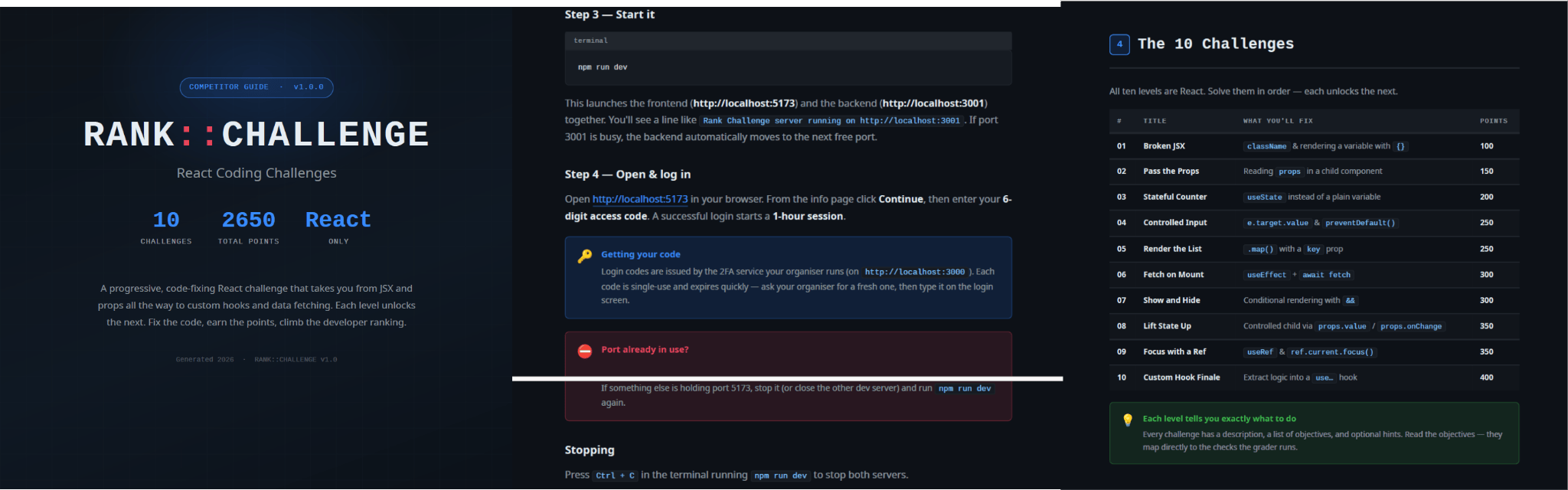
What victims don’t realize is that PollCat starts running and begins talking to its command server the moment the application loads, well before anyone types in that access code at all.

Kaspersky linked both malware families to Mirage Kitten with high confidence. Researchers compared PollCat’s network code with an older backdoor called Retrograde, also known as MiniFast, and found that the two use almost the same connection process.

One detail is especially telling: both malware families treat an HTTP 400 error as a successful registration and extract a session token from the response. That unusual behavior is unlikely to appear by chance in two unrelated malware families.

Victims identified so far cluster in fintech and aviation organizations across Egypt, Ethiopia, and Afghanistan, consistent with Mirage Kitten’s long-standing focus on the Middle East and Africa. If your organization does any hiring through LinkedIn outreach involving take-home coding assessments, this is worth flagging to your engineering team directly, because the lure here isn’t a suspicious email with bad grammar, it’s a completely normal-looking job opportunity with a legitimate cloud-hosted download link and a plausible-sounding reason not to use the one tool that would have caught it.

“Mirage Kitten’s latest activity marks a notable evolution in the group’s tooling: NodeRabbit and PollCat are the group’s first Node.js/JavaScript-based implants, departing from its usual native malware deployed through DLL search-order hijacking.” concludes the report.

“The delivery mechanism, however, remains consistent with Mirage Kitten’s historical tradecraft: the use of recruiter personas on LinkedIn to target critical sectors across the Middle East and Africa for cyberespionage purposes. We continue to track the group’s activity and will report on new developments in future publications.”

Follow me on Twitter: @securityaffairs and Facebook and Mastodon

Pierluigi Paganini

(SecurityAffairs – hacking, Mirage Kitten)

US Navy tells sailors and their families: scrub your social media, enemies are watching

The US Navy has told its entire workforce of 340,000 active-duty personnel, 58,000 reservists, and 210,000 civilian employees to clean up their social media profiles, because adversaries might be using them to determine who they are, where they live, and when they may not be at home. Read more in my article on the Hot for Security blog.

UK Power Plant Disabled for Four Days by Iran-Linked Hackers, Concurrent with US Water Attacks

Iran-linked hackers shut down a UK power plant for four days in the first confirmed attack of its kind, concurrent with water infrastructure attacks across 12 US states.

Iran-linked hackers shut down a British power plant for four days in what The Telegraph describes as the most successful cyberattack of its kind against UK energy infrastructure.

“Iran shut down a British power plant for four days in an unprecedented cyber attack, The Telegraph can disclose.” reads the report published by The Telegraph. “It is thought to be the first time that hackers affiliated to the Iranian regime have succeeded in closing down such a facility in the UK, and is believed to be the most successful cyber attack of its kind.”

British officials did not name the power plant because of security concerns. Staff worked for four days to restore it, but the plant was small and the outage did not affect the UK’s wider power supply. Still, the government warned power companies and businesses about the incident and provided guidance on how to respond.

The attack was reported to the National Cyber Security Centre (NCSC), part of GCHQ, which helps protect the UK’s critical infrastructure. The NCSC did not comment on the specific incident.

The US water infrastructure attacks hit dozens of wastewater treatment plants across 12 states, causing flooding and loss of pressure from taps. Authorities in affected areas told customers to boil water. The first reports came from Minnesota on July 26, followed by similar breaches in Michigan, Georgia, South Dakota, and New Jersey. The FBI attributed those incidents to “malicious cyber actors”; US government sources later confirmed the threat most likely originated in Tehran.

The UK attack is not thought to have been designed to harm civilians. The more probable intent was to demonstrate that hackers linked to Iran’s Islamic Revolutionary Guard Corps could gain access to UK infrastructure and shut it down at will. A four-day outage at a small generator that nobody outside the industry noticed is, from that perspective, a successful proof of concept.

Iran has accelerated its cyberattacks on Western countries since the US and Israel began air strikes in February. Suspected Iranian operations have been reported in Germany, Poland, Finland, Belgium, and Albania, with Israel and other Middle Eastern countries remaining the most frequent targets. In March, the NCSC advised British organisations to review their security posture in light of the wider conflict. NCSC chief executive Richard Horne said in June that the agency had handled more than 200 attacks on critical national infrastructure in the previous year alone.

The timing is awkward for the intelligence and security committee, which oversees UK spying agencies.

“Experts have long warned that the UK is unprepared for the scale of the threat of malicious cyber attacks from foreign adversaries, and the intelligence and security committee, which oversees spying agencies, reported last year that the chance of an Iranian cyber attack on British infrastructure was “unlikely”.” continues the report.

A Cabinet Office risk assessment published last month placed the probability of a serious and successful cyberattack on domestic infrastructure at between five and twenty-five percent. The same document warned that AI is making attacks faster and cheaper to run, and is lowering the technical bar for anyone wanting to attempt them.

The government’s public response leaned hard on the size of the target. A government source told The Telegraph: “We have thresholds for important generators to legally notify us of cyber activity, and this site is nowhere near. It’s a very small-scale site, less than a rounding error compared to grid capacity.”

A government spokesman said the UK has a strong and resilient energy system and that the incident never threatened the wider power network. While both statements are technically true, they do not answer a key question: should it be considered acceptable for even a small power plant to remain offline for four days?

Follow me on Twitter: @securityaffairs and Facebook and Mastodon

Pierluigi Paganini

(SecurityAffairs – hacking, Iran-Linked Hackers)

US Indicts 17 Iranians Over Years-Long Cyber Espionage Campaign

The US charged 17 Iranians over a years-long hacking campaign that stole 31TB from universities, companies and government agencies worldwide.

Eight years after the original indictment first went public, US prosecutors just added eight more names to the list. The Justice Department unsealed a superseding indictment this week charging 17 members of the Mabna Institute, an Iran-based operation running hacking campaigns since at least 2013 on behalf of Iran’s Islamic Revolutionary Guard Corps and other government and university clients.

According to DoJ, the group compromised systems at 144 US universities and 178 foreign ones, plus at least 42 US private companies, 11 foreign companies, five federal and state government agencies, and two nongovernmental organizations. They pulled more than 31 terabytes of academic data and intellectual property out of those systems, along with entire employee email inboxes wherever they had access.

“The Mabna Institute stole more than 31 terabytes of academic data and intellectual property from these universities, as well as the email accounts of employees at the private sector companies, government agencies, and NGOs.” reads the press release published by DoJ. “The defendants conducted many of these intrusions on behalf of the Islamic Republic of Iran’s Islamic Revolutionary Guard Corps (IRGC), one of several entities within the government of Iran responsible for gathering intelligence, as well as other Iranian government and university clients. Nine of the 17 defendants charged in the S2 indictment were previously charged in a 7-count indictment announced in March 2018. The case is assigned to U.S. District Judge Jesse M. Furman.”

The hackers targeted more than 100,000 professor accounts worldwide and broke into about 8,000 of them in around 24 countries. They used stolen credentials to access research papers, theses, dissertations and academic journals, which were then sold online.

The stolen material was offered through websites such as Megapaper.ir and Gigapaper.ir. Customers could buy academic resources or use compromised professor accounts to access university libraries. The operation turned stolen academic credentials and research into a profitable business.

One name on the new charge sheet connects this case to something much more publicly memorable. Behzad Mesri, listed among the newly added defendants, was separately charged years ago with breaking into HBO’s systems, stealing proprietary data, and attempting to extort the company for roughly $6 million in Bitcoin. This indictment ties him and four co-defendants to that same intrusion as part of the broader Mabna Institute operation, connecting a headline-grabbing entertainment industry hack to a much larger state-linked espionage campaign.

The financial damage extends well beyond stolen research. According to the indictment, other defendants ran password spray attacks against private companies and at least two government entities, causing victims to spend more than $20 million investigating and cleaning up after the intrusions.

““Today’s charges, which include eight additional defendants, reveal the broader network allegedly behind a sweeping, state-sponsored campaign to steal research and intellectual property from American universities, businesses, and government institutions,” said U.S. Attorney Jamie McDonald for the Southern District of New York. “More than eight years after making the original indictment public, these charges make clear that the passage of time will not deter us from identifying and pursuing those who target the United States from abroad. Cyber operations have become a central instrument of national power, and attacks on American and allied institutions carry direct consequences for our security and economic strength. This office and our partners will continue to protect American innovation and pursue accountability for the individuals behind these attacks.””

Five of the newly charged defendants, Mesri, Galekuhi, Kahzadian, Fayaz, and Ballojeh, now carry a combined bounty attached to their names. The State Department’s Rewards for Justice program is offering up to $10 million for information leading to their location, funneled through a Tor-based tip line for anyone willing to share what they know. Given that most of these defendants are almost certainly still in Iran and unlikely to face a US courtroom anytime soon, that reward is really the only lever prosecutors currently have.

An indictment isn’t a conviction, and every defendant here remains legally presumed innocent unless proven otherwise in court. But the FBI’s own framing of the case makes the intended message pretty clear regardless of what happens next: eight years between the original charges and this expanded version isn’t hesitation, it’s the department demonstrating that an open case file doesn’t have an expiration date, even when the people on it never set foot on American soil.

Follow me on Twitter: @securityaffairs and Facebook and Mastodon

Pierluigi Paganini

(SecurityAffairs – hacking, Iranians)

Follow me on Twitter: @securityaffairs and Facebook and Mastodon

Pierluigi Paganini

(SecurityAffairs – hacking, Iranians)

Iran-Linked Hackers Target More US Water Infrastructure in New Jersey and Alabama

Iran-linked hackers targeted Water Infrastructure in New Jersey and Alabama, bringing confirmed attacks to at least 12 states, with limited disruption.

The wave of cyberattacks targeting US water infrastructure has reached New Jersey and Alabama, bringing the confirmed count to at least 12 states since late July. The attacks are linked to Iranian hackers targeting industrial control systems made by Rockwell Automation and potentially other major vendors. Minnesota was the first to confirm over 30 affected water systems, followed by Michigan, South Dakota, and Georgia, and now two more states.

“The City of Cape May Sewer Department and the Borough of Woodbine Water Department reported the attacks on Thursday. Officials said the attacks happened nearly simultaneously early in the morning on July 27.” reports Fox29 “Both systems were impacted for approximately 12 hours.”

Water kept running in both New Jersey districts throughout the incident, and tests afterward confirmed no impact on water quality or safety. Cape May city manager Paul Dietrich told Fox29 that hackers changed settings to prevent remote access to the system, but did not take control of the systems to do anything — which is a meaningful distinction, and not the kind anyone wants to be making about their water supply.

“Cybersecurity experts say hackers could control a lot after breaking into a local water system. ‘They’re actually having the ability to control the water pressure, meaning that they could increase the pressure and cause flooding, or they could decrease the pressure so that you would have a reduced pressure, or ultimately, have no water flow at all,’ said Ian Marlow, CEO of FITECH.” continues Fox29.

In Alabama, the Childersburg Water, Sewer and Gas system was hit the same day, July 27, with hackers targeting industrial control systems. The attack didn’t disrupt water services there either. Neither department’s customer data was accessed in New Jersey, and no significant service disruption was reported in Alabama.

“The Childersburg Water, Sewer, and Gas Board reported that its computerized monitoring and control network was targeted in a cyberattack late last month, prompting officials to temporarily disconnect the system while additional safeguards are put in place.” reports Sylacauga News. “According to the utility, the incident occurred on Monday, July 27 and involved a programmable logic controller, a type of industrial device used to help manage utility operations. Officials said the attack was part of a broader effort that also targeted several other public utilities.”

The pattern across all confirmed states is consistent: attacks targeted operational technology and industrial control systems, some facilities shut down systems as a precaution, disruptions were limited, and drinking water remained safe in every case. The FBI confirmed at least seven states had been targeted as of July 30. Wisconsin, Pennsylvania, and Washington have issued warnings to water utilities without confirming attacks. New York has not said whether its utilities were hit but announced more than $9 million in grants to strengthen water sector cybersecurity.

The practical lesson from every confirmed case so far is the same one CISA has been repeating since its July 30 alert: get PLCs and industrial control systems off direct internet exposure, because the attackers are scanning for exactly that exposure and finding it.

Follow me on Twitter: @securityaffairs and Facebook and Mastodon

Pierluigi Paganini

(SecurityAffairs – hacking, Water Infrastructure)

Iran-Linked Actors Breach Are Targeting US Water and Energy Control Systems

US agencies warn Iran-linked actors are targeting internet-exposed water and energy control systems, risking disruption.

Federal agencies updated their cybersecurity advisory this week: Iran-linked actors are inside American water and energy control systems, and they’re not just looking around. They’re changing things.

The updated advisory from CISA, the FBI, NSA, and the Department of Energy says these actors are getting into programmable logic controllers, the small industrial computers that run pumps, valves, and safety alarms. Once inside, they can mess with what operators see on their screens. That’s how you get outages nobody saw coming.

“The authoring agencies urgently warn U.S. organizations of ongoing Iranian-affiliated cyber targeting of internet-connected operational technology (OT) devices, including programmable logic controllers (PLCs).” reads the advisory. “These actions disrupted PLCs across several U.S. critical infrastructure sectors through malicious project file interactions and manipulation of data on human machine interface (HMI) and supervisory control and data acquisition (SCADA) displays, resulting in operational disruption and financial loss.”

This isn’t new territory. Back in April, the same agencies flagged Iranian hackers going after Rockwell Automation controllers specifically. The updated advisory widens the net. Now Schneider Electric and Siemens equipment is on the list too.

US agencies have expanded guidance on detecting malicious code changes in PLCs after observing attacks targeting Rockwell Automation, Schneider Electric, Siemens, and other internet-exposed industrial controllers.

Attackers access exposed devices via OT ports (44818, 2222, 102, 502) and modems over SSH (port 22), then exfiltrate PLC project files using vendor tools such as Studio 5000, EcoStruxure Control Expert, and TIA Portal. They modify or delete project logic, including Add-On Instructions (AOIs), manipulate HMI and SCADA displays, and disable shutdown and alarm functions, allowing industrial systems to enter unsafe states without alerting operators.

Organizations should follow vendor security best practices, remove PLCs from direct internet access using secure gateways and firewalls, and monitor logs for indicators of compromise and suspicious traffic on OT ports such as 44818, 2222, 102, and 502. Rockwell users should set controllers to Run mode, while suspected victims should contact vendors and federal agencies.

The agencies say potentially any internet-exposed industrial control system could be a target. Here’s the part that should make plant operators lose some sleep. In one case, the hackers didn’t just peek at a system. They rewrote the controller’s programming logic to disable the processes meant to trigger shutdowns and alarms during dangerous conditions.

“At one U.S. victim, the FBI observed the APT actors download a malicious project file to a targeted PLC using configuration software. Analysis indicated the project file retained ladder logic for downstream function but added logic that overrode specific instruction sets responsible for maintaining safe operating parameters in the victim’s environment.

“Since at least March 2026, the authoring agencies identified (through engagements with victim organizations) an Iranian-affiliated APT group disrupted the function of PLCs.” states the advisory. “Organizations across several U.S. critical infrastructure sectors (including Government Services and FacilitiesWWS, and Energy Sectors) deployed these PLCs within a wide variety of industrial automation processes. Some of the victims experienced operational disruption and financial loss.”

Systems could then drift into unsafe territory with nobody watching the warning lights, because the warning lights had been switched off from the inside.

“After the actors extracted device project files, the FBI and CISA identified the modification and deletion of project file logic, to include Add-On Instructions (AOIs) and data manipulation on HMI and SCADA displays [T1565].” continues the advisory.” Additionally, the changes disabled critical shutdown and alarm logic, allowing systems to enter unsafe conditions without notifying operators of the anomalies.”

The advisory ties the activity to the ongoing conflict between Iran and the US and Israel, framing it as an effort to cause disruption inside the United States. It fits a pattern going back to February, when the war started and Iranian-linked hacking picked up sharply across the region.

Not all of it looks like this. Some of it has been standard espionage and embarrassment campaigns, like the leak of FBI Director Kash Patel’s personal email account. Some of it has been genuinely destructive. The Iranian group known as Handala remotely wiped tens of thousands of employee devices at medical device maker Stryker, and separately claimed a breach at California’s Cal Water, saying it could disrupt the water supply. Cal Water pushed back, saying it found no sign anyone had touched its operational networks.

That’s the pattern worth watching: espionage on one track, disruption on another, and now a wider set of manufacturers exposed on the operational technology side. If your PLC talks to the internet, it’s not a bystander anymore.

Nobody wants their water plant’s alarm system to be the one thing an adversary quietly switches off. Time to check who can actually reach those controllers from outside.

Follow me on Twitter: @securityaffairs and Facebook and Mastodon

Pierluigi Paganini

(SecurityAffairs – hacking, Iran-Linked Actors)

Crossbench MPs pressure Labor over gas export tax – as it happened

This blog is now closed

The pollies have been asked this morning whether people should consider working from home to save fuel, as conflict escalates in the Middle East.

Tehran has said it will “irreversibly destroy” essential infrastructure across the Middle East, including vital water systems, if the US follows through on Donald Trump’s threat to “obliterate” Iran’s power plants unless the strait of Hormuz is fully opened within two days.

This is like Covid style restrictions I think that are potentially being floated. I would not support that in any way, and I don’t think businesses would do so either …

If people can work from home and they want to and it works for their employers, fine, I think that’s terrific, but it doesn’t help small businesses. It certainly doesn’t help the truckers and the fishers and the farmers and the manufacturers and the miners that are relying on fuel supply.

Continue reading...

© Photograph: Mick Tsikas/AAP

© Photograph: Mick Tsikas/AAP

© Photograph: Mick Tsikas/AAP

❌