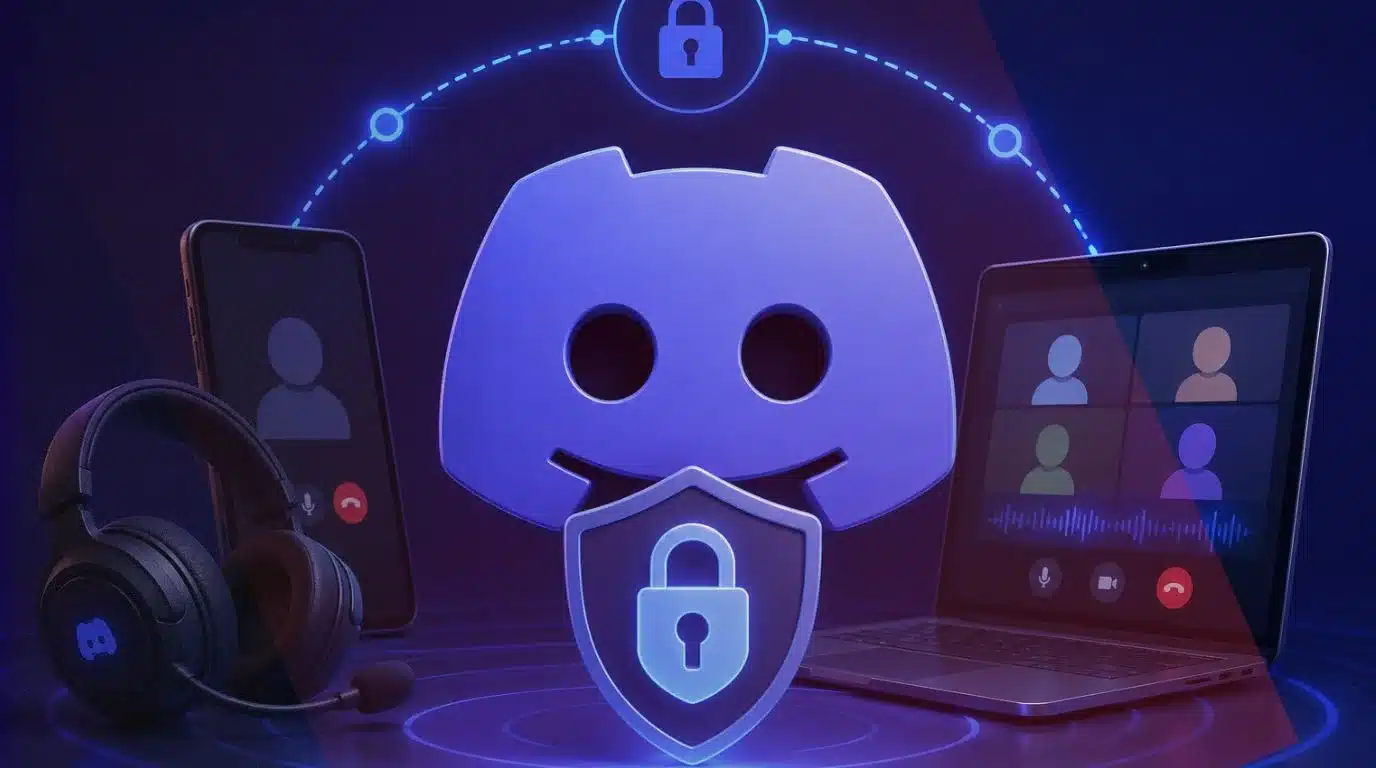
Discord has officially rolled out end-to-end encryption for all voice and video calls across its platform, marking a major shift in how the company approaches user privacy and secure communications.
The company announced that every voice and video conversation on Discord is now protected with
end-to-end encryption by default, with no opt-in required. The update applies to direct messages, group calls, voice channels, and Go Live streams across desktop, mobile devices, web browsers, and gaming consoles.
The move comes at a time when several major social media companies are scaling back
encryption features in messaging services, while others are expanding encrypted communication protections across platforms.
Discord Completes Multi-Year End-to-End Encryption Rollout
According to Discord, the
rollout is the result of a multi-year engineering effort that began in 2023 when the company first started experimenting with encrypted voice and video communication.
In September 2024, Discord introduced DAVE, an open and externally audited end-to-end encryption protocol designed specifically for voice and video communications at scale.
Mark Smith, Vice President of Core Technology at Discord, said the company completed full migration to encrypted communications in March 2026.
“As of early March 2026, every voice and video call on Discord is end-to-end encrypted by default,” Smith said in a company blog post.
Discord stated that the transition was completed without requiring users to manually enable
security settings or modify how they use the platform.
DAVE Protocol Designed for Cross-Platform Encryption
Discord explained that one of the biggest technical challenges involved supporting encrypted communication across a wide variety of devices and operating systems simultaneously.
Unlike many messaging services that primarily support smartphones, Discord calls often include users connected through:
- Desktop applications
- Mobile phones
- Web browsers
- PlayStation consoles
- Xbox devices
The company said the DAVE protocol was designed to maintain low-latency voice and video performance while enabling end-to-end encryption across all supported platforms.
Discord also noted that the DAVE protocol and its implementation are open source and were independently audited by
cybersecurity firm Trail of Bits.
The company expanded its
bug bounty program to include the encryption protocol as part of broader transparency and security testing efforts.
Firefox Compatibility Issue Addressed During Rollout
During development, Discord engineers encountered compatibility problems involving
Mozilla Firefox that affected the encryption protocol’s performance in real-world calls.
Instead of introducing temporary workarounds, Discord said its engineers collaborated directly with Mozilla developers to identify the root cause and implement fixes within
Firefox itself.
The company described the effort as part of its broader commitment to building encryption infrastructure that functions consistently across platforms without reducing user experience or call quality.
According to Discord, encrypted calls now operate transparently for users without affecting performance or reliability.
Stage Channels Remain Excluded From End-to-End Encryption
While most communication services on Discord now support end-to-end encryption, the company confirmed that Stage channels remain excluded.
Stage channels are designed for large-scale broadcasts, live
events, community discussions, and AMA-style sessions involving larger audiences.
Discord said the architecture of these channels differs from private conversations, making them unsuitable for the same encryption model currently used for direct voice and video communication.
The company also revealed that it currently has no plans to extend end-to-end encryption to text messaging on the platform.
Discord explained that many existing platform features were built around non-encrypted text systems, and redesigning them to support encrypted messaging would require significant engineering changes.
Encryption Debate Continues Across Social Media Industry
Discord’s
announcement arrives during a period of shifting encryption policies across the technology sector.
Several social media platforms have recently reduced or removed encrypted messaging capabilities, while companies such as Google and Apple have recently announced broader support for encrypted messaging between Android and iPhone users.
Privacy advocates and cybersecurity experts continue debating the balance between stronger encryption protections, platform functionality, and law enforcement concerns surrounding encrypted communications.
For Discord, the rollout positions the platform among a smaller group of major communication services now offering default end-to-end encryption for voice and video communication across multiple device ecosystems.

 Entrar