Visualização de leitura

Gunra Ransomware Builds a New Attack Network Through RaaS

Gunra ransomware

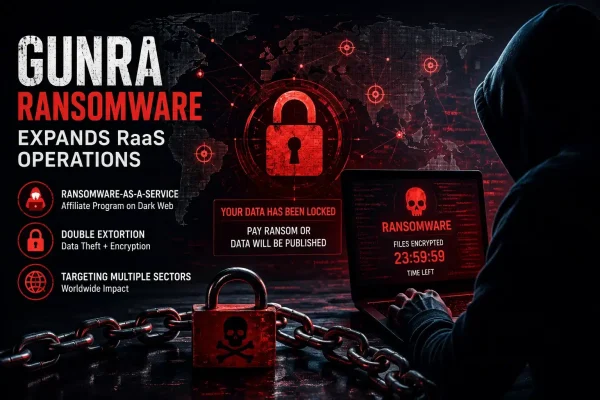
Gunra ransomware has expanded its operations through a structured ransomware-as-a-service (RaaS) affiliate program, prompting the FBI, CISA and other agencies to issue a joint advisory warning organizations about the threat. The Gunra ransomware variant uses a double-extortion model, encrypting victim data while threatening to publish stolen information on a dedicated leak site if ransom demands are not met. The FBI first observed Gunra in April 2025 as a double-extortion ransomware variant derived from leaked Conti ransomware source code.

Gunra Ransomware Shifts to Affiliate Model

By early 2026, the group had expanded through a formal ransomware-as-a-service affiliate program advertised on dark web forums. The program provides affiliates with a management panel, configurable ransomware builder, cross-platform locker payloads and affiliate documentation. The FBI also observed Gunra operating under new branding aliases, including Golden Community, while recruiting penetration testers and ethical hackers as initial access brokers. Gunra initially focused on Windows environments before introducing a Linux variant and moving toward broader cross-platform targeting. Victims observed on the group’s dedicated leak site include organizations across the Americas, Europe, the Middle East, Africa and the Asia-Pacific. Targeted sectors include healthcare and public health, financial services and insurance, critical manufacturing, transportation, government services, utilities, academia, media and communications, retail, and professional and nonprofit services. Gunra ransomware
VPN Vulnerabilities Used for Initial Access

According to the advisory, Gunra actors primarily gained initial access by exploiting known vulnerabilities in internet-facing devices, including firewall and VPN gateways. The FBI observed exploitation of CVE-2024-55591 and CVE-2025-24472, authentication bypass vulnerabilities affecting specific FortiOS and FortiProxy versions. The Republic of Korea’s National Police Agency also observed Gunra actors exploiting credential exposure and SSH access control weaknesses in internet-facing VPN gateways to obtain unauthorized remote access. After gaining access, attackers used tools including Impacket utilities to move laterally through victim networks using SMB. In one case, actors compromised an SSL-VPN appliance using default credentials where account lockout controls were absent. They later used stolen session information to access internal virtual desktop infrastructure and move through systems including Active Directory servers and IT personnel workstations.

Data Theft Precedes Encryption

The double-extortion ransomware operation involves stealing sensitive information before encrypting systems. The FBI observed Gunra actors collecting business-critical documents, databases, personally identifiable information, and internal email communications. In at least one case, the actors used a malicious executable called main.exe to exfiltrate data from Microsoft OneDrive and SharePoint. Compressed archives containing sensitive information were also transferred to the Mega file-sharing service, with the volume of exfiltrated data reaching tens of terabytes. For encryption, Gunra uses ChaCha20 and RSA-4096 algorithms and has been observed using the .ENCRT extension for encrypted files. A documented sample from July 2025 used the .CRYPT extension. The ransomware also uses Windows Management Instrumentation to delete volume shadow copies before encryption, while one victim had backup and archived data deleted from both primary and disaster recovery infrastructure.

Agencies Urge Patching and Network Segmentation

The authoring agencies recommend that organizations prioritize patching known exploited vulnerabilities in internet-facing systems, including VPN gateways and RDP-exposed infrastructure. They also advise implementing and testing offline, immutable backups stored in physically separate and segmented locations. Network segmentation is another key recommendation, intended to restrict lateral movement and limit the spread of ransomware between systems. The agencies also recommend reviewing domain controllers, servers, workstations and Active Directory environments for unrecognized accounts, auditing administrative privileges, requiring MFA where possible and testing security controls against the Gunra techniques mapped to the MITRE ATT&CK framework. The joint advisory was published August 10, 2026, as part of the ongoing #StopRansomware initiative.

Oracle July 2026 Patch Fixes 1,434 CVEs Across 334 Products

July 2026 Critical Patch Update

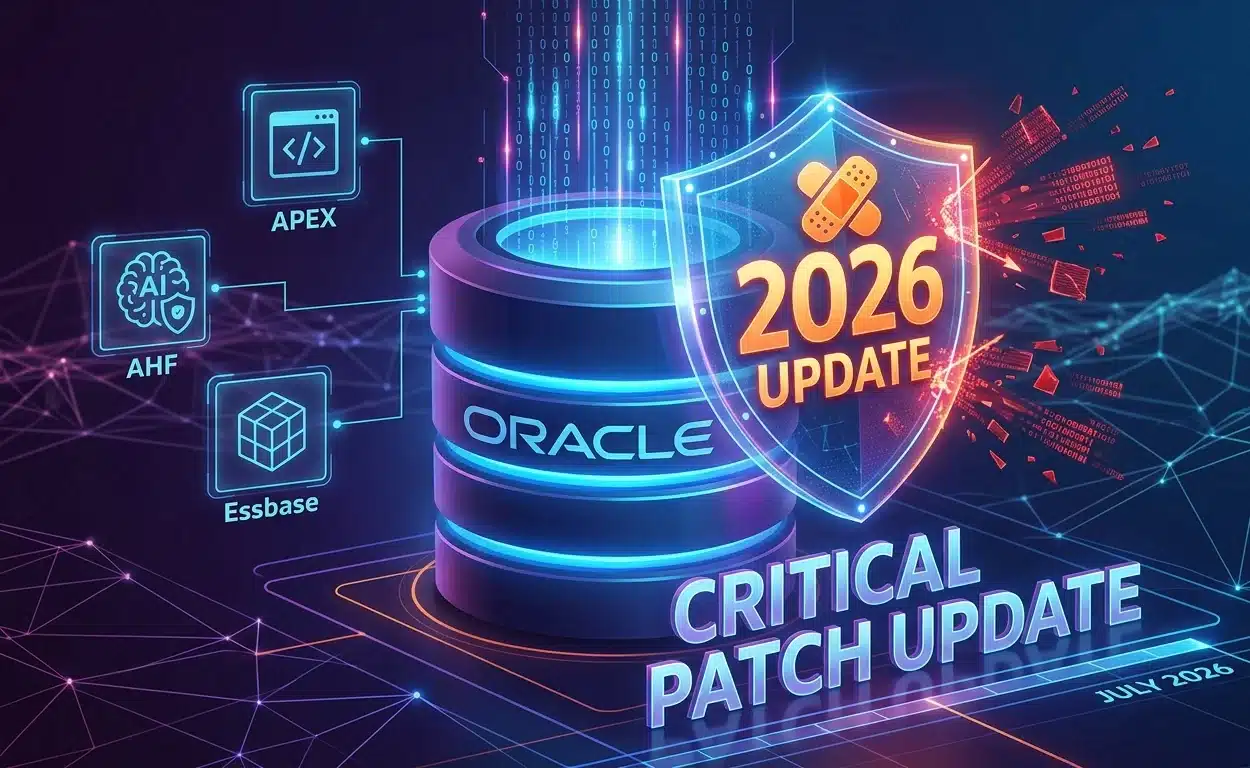
Oracle has released its July 2026 Critical Patch Update, delivering one of its largest quarterly security releases to date. The latest Oracle security patch addresses more than 1,400 vulnerabilities across hundreds of products, with the company indicating that artificial intelligence likely played a significant role in identifying most of the flaws.  According to Oracle, the July 2026 Critical Patch Update contains 1,449 security patches, covering 1,434 unique Common Vulnerabilities and Exposures (CVEs) across 334 products.  

July 2026 Critical Patch Update Covers Hundreds of Oracle Products 

The latest Oracle security patch spans a wide range of enterprise products and platforms. Among the affected products are Database Server, Oracle APEX, Autonomous Health Framework, Essbase, Global Lifecycle Management, GoldenGate, NoSQL Database, Spatial Studio, SQL Developer, TimesTen In-Memory Database, Application Testing Suite, Commerce, Communications, Construction and Engineering, and E-Business Suite.  The July 2026 Critical Patch Update also includes security fixes for Enterprise Manager, Financial Services Applications, Food and Beverage Applications, Fusion Middleware, Analytics, HealthCare Applications, Hospitality Applications, Java SE, JD Edwards, MySQL, PeopleSoft, Retail Applications, Siebel CRM, Supply Chain, Systems, Utilities Applications, and Virtualization.  By addressing vulnerabilities across such an extensive product lineup, the Oracle security patch aims to reduce the risk posed by security weaknesses that could affect organizations running Oracle technologies in production environments. 

Hundreds of Vulnerabilities Can Be Exploited Remotely 

A notable aspect of the July 2026 Critical Patch Update is the number of flaws that attackers could potentially exploit without requiring authentication. Oracle stated that roughly 600 of the patches fix vulnerabilities that can be exploited remotely by unauthenticated attackers. In addition, hundreds of the addressed security flaws have been assigned critical severity ratings, emphasizing the importance of applying the latest Oracle security patch without delay. Among Oracle's products, the highest number of vulnerabilities were addressed in: 
  • E-Business Suite: 410 vulnerabilities 
  • Fusion Middleware: 355 vulnerabilities 
  • Communications: 168 vulnerabilities 
  • PeopleSoft: 84 vulnerabilities 
These figures highlight that some of Oracle's most widely deployed enterprise applications received a significant share of the security fixes included in the quarterly update.

AI-Driven Vulnerability Discovery Appears to Have Played a Major Role 

One of the most notable aspects of the July 2026 Critical Patch Update is Oracle's growing use of artificial intelligence for security research. Only a few dozen of the vulnerabilities included in the release were credited to external security researchers. This indicates that the overwhelming majority of the discovered flaws were identified internally, likely with the assistance of AI-driven vulnerability analysis. Earlier this year, Oracle disclosed that it has access to leading artificial intelligence systems, including Anthropic's Claude Mythos and OpenAI's most capable models. According to the company, these AI technologies are being used to accelerate vulnerability discovery and improve the speed and accuracy of security patch development.  Oracle also said it is applying this AI-driven vulnerability approach across its own software and cloud services, Oracle Health offerings, and the open source components that it both develops and depends on.

Organizations Urged to Apply the Oracle Security Patch Promptly 

The release of the July 2026 Critical Patch Update comes amid continued efforts by threat actors to exploit vulnerabilities in enterprise software before organizations can deploy security updates.  Oracle product vulnerabilities have previously been targeted in real-world attacks. The company cited examples that include the exploitation of a PeopleSoft zero-day vulnerability as well as a recently patched Oracle E-Business Suite (EBS) vulnerability. Given the number of remotely exploitable and high-severity issues resolved in the Oracle security patch, organizations using affected Oracle products are advised to install the updates as soon as possible. Prompt deployment can help reduce exposure to attacks that take advantage of publicly known vulnerabilities before systems are secured. With 1,449 security patches addressing 1,434 unique CVEs across 334 products, the July 2026 Critical Patch Update represents one of Oracle's most extensive quarterly security releases.  

EU-US Data Privacy Framework Under Threat After Supreme Court Ruling

EU-US Data Privacy Framework

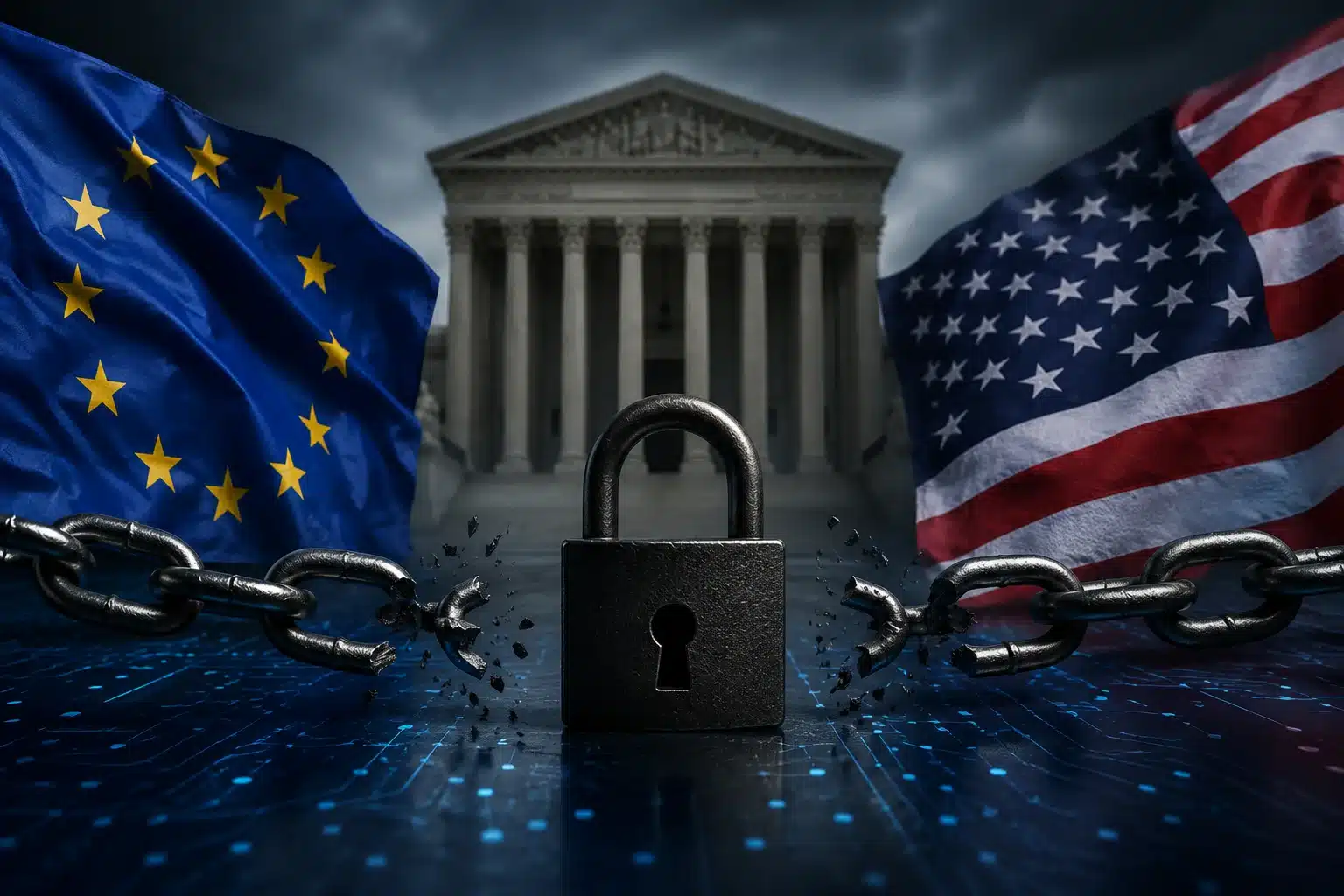
The EU-US Data Privacy Framework is facing renewed legal scrutiny after privacy advocacy group noyb announced plans to challenge the agreement following a recent U.S. Supreme Court decision involving the Federal Trade Commission.

In a letter sent to the European Commission on June 30, noyb founder Max Schrems argued that the Supreme Court's ruling in Trump v. Slaughter undermines a central requirement of the EU-US Data Privacy Framework: independent oversight of personal data transfers between the European Union and the United States.

The case concerns the U.S. Supreme Court's interpretation of presidential authority over independent executive agencies. According to noyb, the decision means that agencies such as the FTC can no longer be considered constitutionally independent, a status the European Commission relied upon when adopting the framework in 2023.

Why the FTC Matters to the Framework

The EU-US Data Privacy Framework, formally adopted through Commission Implementing Decision EU 2023/1795, allows certified U.S. companies to receive personal data from the EU under a system deemed to provide adequate privacy protections.

EU law requires that data protection oversight be carried out by an independent authority. The FTC has been the primary U.S. regulator fulfilling that role under the framework.

In its letter, noyb said the European Commission's adequacy decision references the FTC hundreds of times and treats the agency as the key enforcement body for privacy obligations.

Schrems argued that if the FTC's independence is no longer guaranteed, the legal foundation supporting the adequacy decision may no longer satisfy EU constitutional requirements.

Potential Impact on Data Transfers

The challenge does not immediately suspend transatlantic data flows. The European Commission's adequacy decision remains in force unless it is repealed by the Commission or annulled by the Court of Justice of the European Union.

However, the development could create uncertainty for companies that rely on the framework to transfer customer and employee data between Europe and the United States.

noyb is also questioning other oversight mechanisms tied to the agreement, including the Data Protection Review Court created under Executive Order 14086 and the Privacy and Civil Liberties Oversight Board.

The organization argues that these bodies may also be affected by the Supreme Court's reasoning because their independence depends on executive or statutory arrangements that could now face constitutional challenges.

Background: A Long-Running Dispute

The EU-US Data Privacy Framework is the third major attempt to create a legal basis for EU-U.S. data transfers.

Earlier arrangements, Safe Harbor and Privacy Shield, were both struck down by the Court of Justice of the European Union in the Schrems I and Schrems II judgments.

Those rulings focused on U.S. surveillance laws and the lack of effective judicial remedies for EU citizens.

The current framework was introduced in 2023 after negotiations between the European Commission and the Biden administration.

What Happens Next?

noyb has urged the European Commission to begin planning an orderly transition away from the current arrangement rather than waiting for a court ruling.

The group says it intends to file a formal lawsuit challenging the adequacy decision if the Commission does not act.

Legal experts expect any court challenge to take several years before reaching a final judgment.

For now, the EU-US Data Privacy Framework remains valid, but the Supreme Court's decision has reopened a debate that many businesses hoped had been settled.

What Ukraine’s Entry Into the EU Cybersecurity Reserve Means

Ukraine Joins EU Cybersecurity Reserve

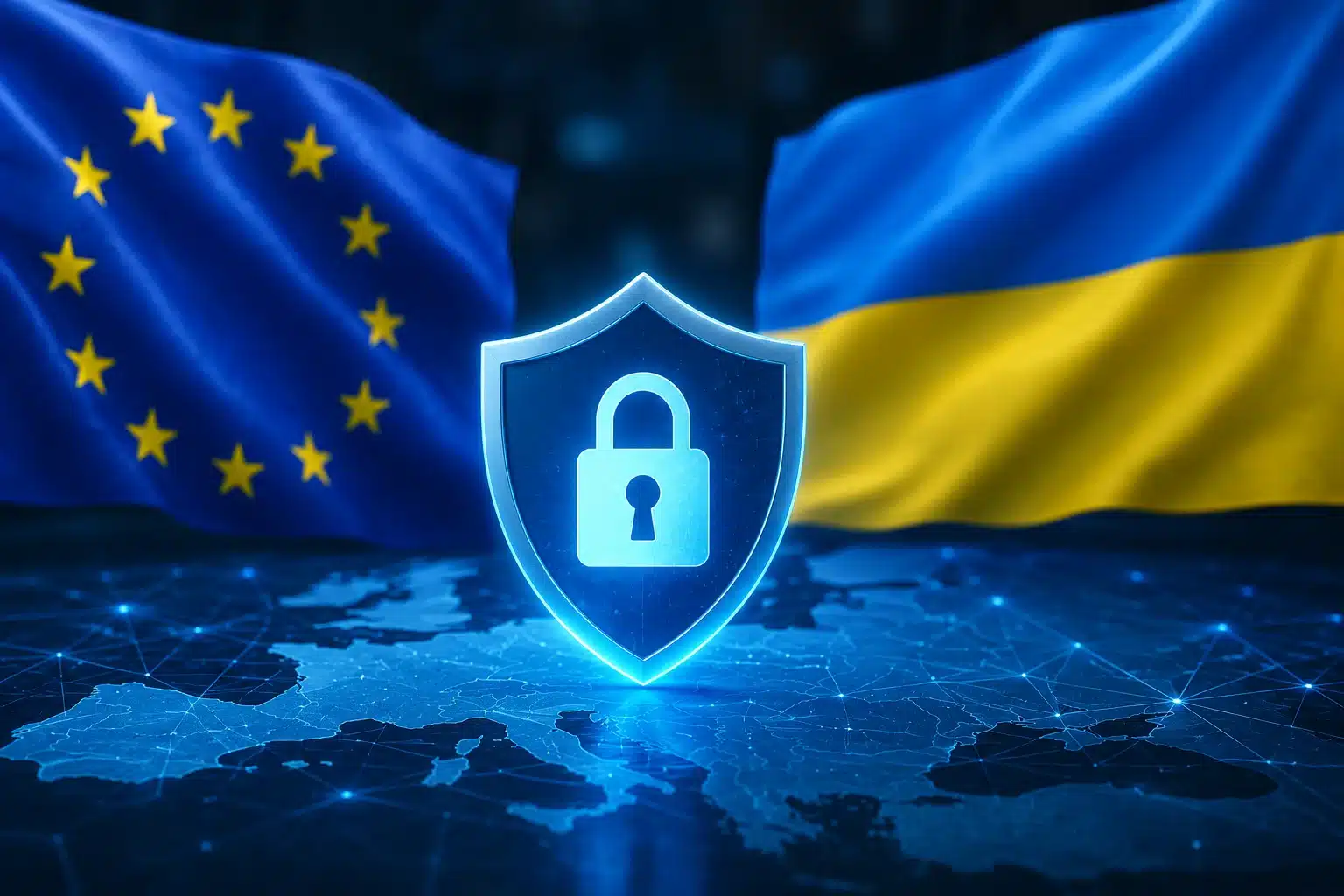
Ukraine Joins EU Cybersecurity Reserve after receiving approval from the Council of the European Union, enabling the country to access emergency cybersecurity assistance during large-scale cyber incidents that exceed national response capabilities. The decision allows Ukraine to activate support from the EU Cybersecurity Reserve, a mechanism managed by the European Union Agency for Cybersecurity (ENISA) that provides incident response services through trusted private-sector cybersecurity providers. The move reflects ongoing EU-Ukraine cooperation on digital security and resilience amid evolving cyber threats.

Ukraine Joins EU Cybersecurity Reserve Under EU Cyber Solidarity Framework

The EU Cybersecurity Reserve was established under the Cyber Solidarity Act to help participating countries respond to significant cybersecurity incidents. Through the reserve, nations can request specialized assistance when their own incident response resources are overwhelmed. According to the European Commission, Ukraine will now be able to officially seek emergency European support if a cyberattack surpasses the capacity of its domestic response teams. This would allow cybersecurity experts from across the European Union to assist in incident containment and recovery efforts. The Commission described the decision as part of broader efforts to strengthen preparedness, improve rapid response capabilities, and encourage cooperation against growing cyber threats.

EU Highlights Digital Security Cooperation

Commenting on the development, Henna Virkkunen, Executive Vice-President for Tech Sovereignty, Security and Democracy, said Ukraine's inclusion strengthens collective cyber defenses and reflects the principle of solidarity at the core of Europe's digital future. The Commission noted that cyberattacks continue to present a persistent challenge and emphasized the importance of coordinated responses and shared expertise among partner nations. Ukraine's inclusion also aligns with the EU's strategic digital partnership agenda, which focuses on strengthening cybersecurity cooperation with neighboring countries.

Moldova Previously Granted Access

Ukraine becomes the second non-EU country to gain access to the reserve. Moldova was granted access in 2024 following an increase in Moscow-linked Cyber Threats and influence operations targeting the country. The Council's authorization for Moldova to use the reserve was described as a major step forward in regional cybersecurity cooperation. The arrangement was implemented under the Cyber Solidarity Act and formed part of broader EU-Moldova efforts to improve digital resilience. The European Commission stated that enhancing cybersecurity cooperation remains a key component of its partnership with Moldova.

Broader EU-Moldova Digital Cooperation Expands

Alongside cybersecurity initiatives, the European Union has expanded digital cooperation with Moldova in several strategic areas. The Commission welcomed a political agreement that will allow Moldova to join the EU Roaming Area under the "Roam Like at Home" framework following formal adoption. Once implemented, Moldovan citizens and EU travelers will be able to call, text, and use mobile data without additional roaming charges. Moldova has also joined the EU Third Countries' Trusted List, enabling easier validation of electronic signatures and seals between EU and Moldovan organizations, businesses, and citizens. To strengthen resilience against Disinformation and foreign interference, a new hub of the European Digital Media Observatory (EDMO) known as FACT has also been established with support from the European Commission.

Cyber Cooperation Advances as EU Membership Talks Progress

The cybersecurity announcement comes shortly after EU member states agreed to launch formal accession negotiations with both Ukraine and Moldova. European Commission President Ursula von der Leyen described the decision as a major milestone, stating that all member states had agreed to open the first accession negotiations cluster with the two countries. She said the move recognizes the reforms undertaken by Ukraine and Moldova despite significant challenges and reinforces the EU's commitment to peace, security, and stability across the region. With access to the EU Cybersecurity Reserve, Ukraine now gains an additional layer of support to strengthen its cyber resilience and coordinate responses to major cybersecurity incidents alongside European partners.
❌