❌

Visualização de leitura

Microsoft Patch Tuesday Sets New Record with 1,415 CVEs in October 2026 Updates

Microsoft Patch Tuesday security updates for October 2026 address a record 1,415 vulnerabilities. Prioritize the exploited zero-day, critical bugs and potentially wormable vulnerabilities.

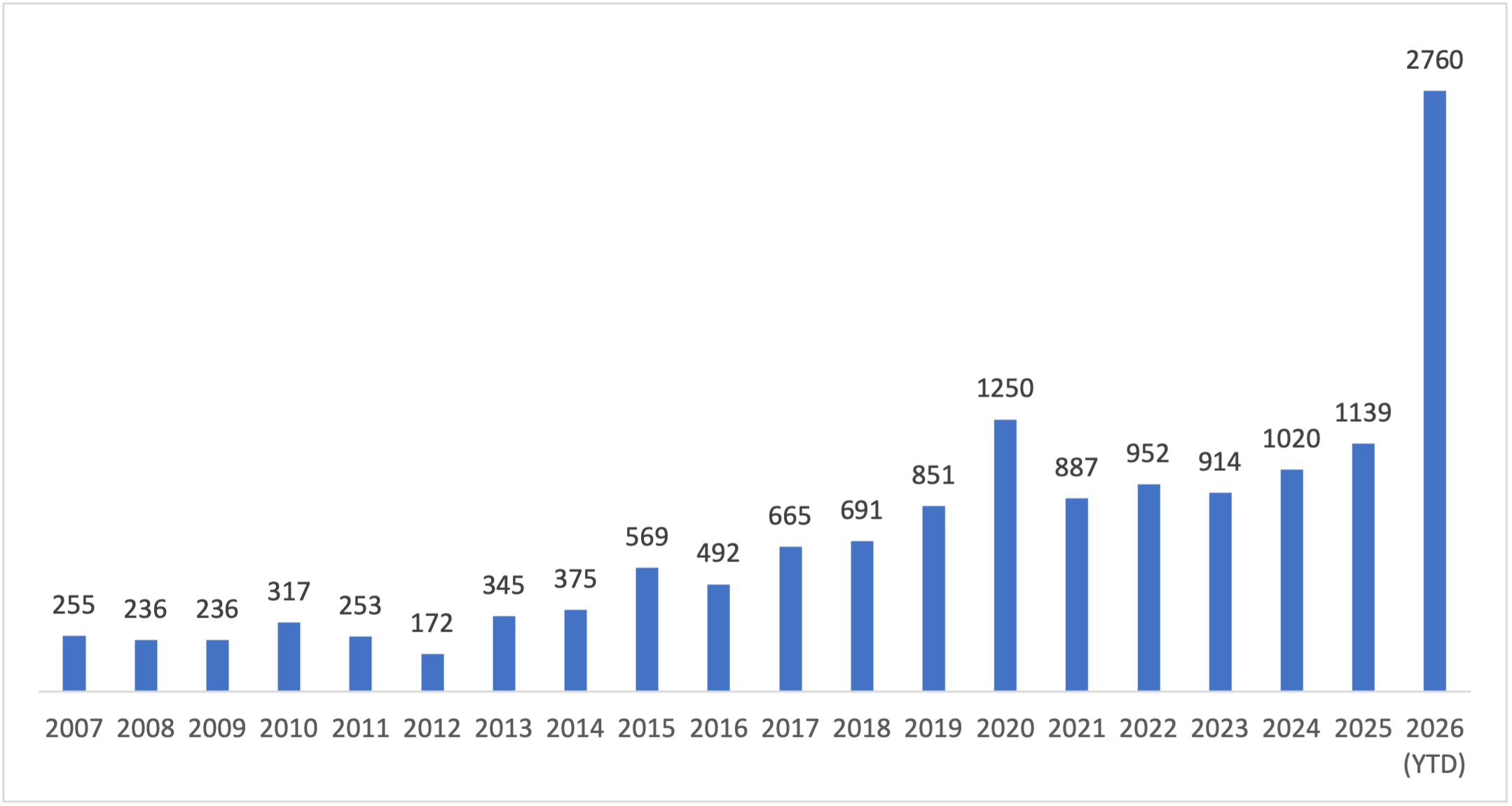
Microsoft just shattered every patch record in the book. October 2026 brought us a staggering 1,415 new CVEs from Microsoft alone.

“Well, it’s a new record release from Microsoft, again. This is also the first four-digit volume we have ever seen and includes six-digit CVEs. As always, counting this load is tricky, but I see 1,415 new CVEs from Microsoft. That puts this month at a greater volume than any previous YEAR from Microsoft. I’m starting to think I don’t like this new normal.” states ZDI. “As for the products affected by this release, we have Windows and Windows components, Office and Office Components, Developer Tools and .NET, SharePoint, Linux kernel, Skype for Business and Microsoft Lync, SQL Server and Dynamics, Azure and cloud services, and Exchange server.”

This is the first time Microsoft has reported more than 1,000 vulnerabilities in a single month. To help security teams handle this huge number of flaws, Microsoft introduced “risk cohorts” to group related vulnerabilities, similar to the old security bulletin system. AI is clearly helping researchers find bugs faster, both for attackers and defenders. The good news is that vulnerabilities are still being discovered faster than attackers are exploiting them. Security teams should focus on the most serious threats first instead of trying to patch every low-risk flaw at once.

Instead, focus immediately on what’s actively burning in the wild. The single zero-day under active attack this month is CVE-2026-96951, a Windows Shell security feature bypass used to dodge Mark of the Web protections.

“An attacker who successfully exploited the vulnerability could evade Mark of the Web (MOTW) defenses.” reads the advisory. “In an email or instant message attack scenario, the attacker could send the targeted user a specially crafted file that is designed to exploit the vulnerability. In any case an attacker would have no way to force a user to view attacker-controlled content. Instead, an attacker would have to convince a user to take action. For example, an attacker could entice a user to either click a link that directs the user to the attacker’s site or send a malicious attachment.”

Other high-priority threats include a critical unauthenticated SharePoint privilege escalation bug (CVE-2026-102866), a high-scoring SQL Server remote code execution flaw (CVE-2026-65674), and a massive wave of 59 potentially wormable vulnerabilities spanning core network services like DHCP, Remote Desktop Gateway, and DNS.

Below are the descriptions for the above issues:

  • CVE-2026-96951 (CVSS score of 8.8) is a Windows Shell command injection vulnerability that allows an unauthorized attacker to bypass security protections over a network. Exploitation can evade Mark of the Web (MOTW) defenses, which help protect users from potentially dangerous files downloaded from the internet. Microsoft confirmed that the flaw is being actively exploited.
  • CVE-2026-102866 (CVSS score of 8.1) is a Microsoft SharePoint Server vulnerability caused by improper verification of cryptographic signatures. It allows an unauthenticated attacker to elevate privileges over a network, potentially gaining unauthorized access to sensitive information or modifying data.
  • CVE-2026-65674 (CVSS score of 8.8) is a Microsoft SQL Server remote code execution vulnerability caused by the deserialization of untrusted data. An authorized attacker with the required privileges could exploit the flaw over a network to execute code on the affected server.

“I may be wrong about some of these – there are a few where the description is somewhat…er…ambiguous, but regardless, this number of wormable bugs in 2026 should cause some level of concern. Not panic.” concludes ZDI. “There’s no need for that, but it is disconcerting to see this many juicy targets sitting out there. Please do your best to test and deploy these fixes in a timely manner.”

Prioritize the proven, public, and exploited flaws first, and take a deep breath before diving into the rest of the patch mountain. Make sure your operational priorities remain laser-focused on real risk rather than chasing vanity metrics.

Make every effort to test and apply these patches as soon as possible.

Follow me on Twitter: @securityaffairs and Facebook and Mastodon

Pierluigi Paganini

(SecurityAffairs – hacking, Patch Tuesday)
Microsoft’s Biggest Patch Tuesday: 974 CVEs, 2 Zero-Days and 20 Wormable Bugs

September 2026 Patch Tuesday fixes a record 974 CVEs including 2 exploited zero-days, 20 wormable bugs, and a critical Exchange RCE via Visio email.

Microsoft’s September 2026 Patch Tuesday set a new record. Depending on how researchers count external and Chromium bugs, Microsoft fixed between 966 and 997 CVEs in this update. The company also fixed another 204 vulnerabilities earlier in September across Azure, Entra ID, Edge, and other services. This means the total number of September fixes is already much higher than the headline figure.

“It’s a new record release from Microsoft, but, again, that seems to be the new normal. As always, counting this beast is tricky, but I see 972 new CVEs rolling out from Redmond this month.” reads the report published by ZDI. “On the one hand, congrats to the security gnomes at Microsoft for being able to patch bugs at this rate. On the other hand, AI-assisted vulnerability discovery shows no signs of slowing down. However, we have not seen a correlating spike in active exploits – yet.”

The number of addressed issues skyrockets due to the use of AI for code auditing in the monthly counts, it has been climbing steadily through 2026. What hasn’t arrived yet, and ZDI notes the absence explicitly, is a corresponding spike in active exploits, though 58 of this month’s fixes are rated by Microsoft as more likely to be exploited.

The two vulnerabilities already under attack both allow attackers to gain higher privileges. CVE-2026-85880 (CVSS score of 7.8) is a heap buffer overflow in Windows Advanced Local Procedure Call (ALPC). It lets a local attacker gain SYSTEM-level privileges, and the researchers note it is only the second ALPC zero-day Microsoft has patched since January 2023.

CVE-2026-81963 (CVSS score of 7.8) flaw resides in the Windows Update Stack. It lets an attacker follow a malicious link and escalate privileges. It is the first Update Stack vulnerability that Microsoft has confirmed attackers actively exploiting. Both flaws require local access and user-level privileges, so attackers would likely use them after gaining an initial foothold and then use them to gain higher privileges.

The Exchange Server situation this month is more pressing than either zero-day. CVE-2026-55007 is a remote code execution vulnerability that deserves immediate attention.

“An unauthenticated attacker could send a specially crafted Visio attachment to an affected Exchange server. The server could process the attachment during content indexing, and successful exploitation could allow the attacker to execute code on the server. User interaction is not required.” reads the advisory. “Successful exploitation requires the target system to be under sustained low-memory (memory pressure) conditions, which are not commonly present in normal operation. This makes the vulnerability difficult to reliably trigger, as the attacker must first induce or wait for a constrained memory state before exploitation becomes possible.”

Microsoft rates the exploit as unreliable, but an attacker trying repeatedly only needs to succeed once. A second Exchange bug, CVE-2026-69380 (CVSS 8.1), is also a priority: it lets a low-privileged authenticated attacker impersonate any user in the organization and hijack every mailbox. If your Exchange servers face the internet, test and deploy these patches immediately.

Remote Desktop Services adds another urgent item: CVE-2026-69525 (CVSS score of 9.8) is a use-after-free bug that lets an unauthenticated in-network attacker execute arbitrary code. Microsoft specifies an “in-network” requirement, but the CVSS network vector score suggests any network path could be relevant. RDP is everywhere in enterprise environments, and that CVSS score combined with the unauthenticated attack path makes this one worth treating as urgent regardless of the technical qualifier.

Microsoft also fixed 20 wormable vulnerabilities. These flaws let remote, unauthenticated attackers execute code without any user interaction, creating the kind of conditions that can help malware spread from system to system. The affected components include DHCP Server, Active Directory, Windows DNS Server, SMB Client, Netlogon, NFS, RRAS, IP Helper, Message Queuing, and others. One DNS flaw, CVE-2026-69730, has a CVSS score of 9.8. ZDI calls it a “SigRed’s spiritual successor,” referring to the critical DNS flaw exploited in 2020. Fixing 20 wormable bugs in one Patch Tuesday is an unusually high number.

Microsoft also patched 17 SharePoint flaws, including four that allow remote code execution, and more than 60 SQL Server vulnerabilities. One SQL Server flaw affects SQL Copilot in SQL Server Management Studio. Microsoft also fixed an Android Microsoft Authenticator flaw that can let a malicious app gain valid access tokens after the user completes an authentication step. Teams should prioritize these fixes based on their own environments, but they should not ignore any of them.

The full list of vulnerabilities addressed by Microsoft this month is available here.

Follow me on Twitter: @securityaffairs and Facebook and Mastodon

Pierluigi Paganini

(SecurityAffairs – hacking, Patch Tuesday)

❌