
Visualização de leitura

Exposed Database Left 220Mn Airline Passenger, Crew Records Open to the Internet

Airline, Data Leak,

A misconfigured Elasticsearch cluster exposed roughly 220.8 million airline passenger and crew records, including passport numbers and full itineraries, before it was secured in June, researchers at Kinryu Labs disclosed.

The records spanned January 2017 through April 2026 and came from an Advance Passenger Information System deployment - the standardized data feed airlines transmit to border authorities before departure, covering traveler identity and flight details. Researchers linked the server to IP address space assigned to Vietnamese telecommunications operator Viettel in Hanoi but said they could not confirm which organization operated it.

What was exposed

As per BleepingComputer, the data set combined identity documents with granular travel history. Exposed fields included names, dates of birth, sex and nationality; passport or travel document numbers, expiration dates and issuing countries; and flight numbers and dates, airline names, departure, destination and transit airports, seat numbers, baggage references, and scheduled, estimated and actual flight times.

That combination is unusually sensitive. Passport numbers are difficult to change and useful for identity fraud and account takeover at travel providers, while the itinerary fields - particularly transit airports and actual flight times - allow reconstruction of an individual's movements over nine years. Security researchers have long flagged APIS-style data as a surveillance risk precisely because it maps people to places at fixed times.

Also read: Why Airline Data Breaches Matter – And Why Qantas Could Have Been Worse

Two misconfigurations

According to Kinryu Labs, the cluster was protected inconsistently. Direct access over the internet returned an HTTP 401 authentication error, which would give a casual scanner the impression the system was locked down. An alternative cloud-based access path, however, reached the same cluster and accepted default credentials.

The exposure appears to have been long-lived. Internet scanning service FOFA detected the host in 2022 and identified it as a database in 2023. Kinryu Labs reported the issue on June 3, 2026, and the cluster was secured by June 8. Singapore Airlines assisted in coordinating the response, the researchers said. There is no indication any airline was itself breached or operated the server.

Researchers said they found no evidence the data was stolen, but noted that without server logs they could not determine whether anyone copied it during the years it was reachable — a distinction that matters more than it may appear, because notification obligations in several jurisdictions turn on whether unauthorized access can be ruled out.

Compliance exposure

Vietnam's Personal Data Protection Law, Law No. 91/2025/QH15, took effect Jan. 1, 2026 - before the exposure was reported and remediated. The statute requires notification within 72 hours of detecting a violation, rather than from the time it occurred, and expands notification duties to affected individuals in defined circumstances. Its penalty ceiling for general violations is 3 billion Vietnamese dong, with cross-border transfer breaches exposed to fines of up to 5% of prior-year revenue.

Because the records cover international flights, EU and UK residents are almost certainly represented, which brings GDPR and UK GDPR into scope for any controller established in or targeting those markets. Passport numbers and travel history fall squarely within personal data, and passenger data processing has drawn repeated scrutiny from European data protection authorities.

678,000 People Hit in French Tax Authority Data Breach

DGFiP cyberattack

A DGFiP cyberattack has exposed sensitive tax and cadastral information after attackers allegedly used stolen credentials to access systems belonging to France's Directorate General of Public Finances. The French Public Finances Directorate said investigations found that data linked to 678,000 individuals and professionals had been consulted and extracted during intrusions in June and July 2026. The DGFiP cyberattack incidents were identified after a malicious actor claimed illegitimate access to the French tax authority's information system on August 12 and 13. DGFiP said the intrusions involved the usurpation of identifiers belonging to a DGFiP agent and an authorized third party.

DGFiP Cyberattack Exposed Taxpayer Information

After detecting the intrusions, DGFiP immediately suspended access to the accounts involved. Initial access controls did not identify data theft, which the authority attributed to the sophistication of the attack. A subsequent investigation established that the compromised access points had been used to consult and extract information concerning 678,000 individuals and professionals. The exposed information included reference tax income, family quotient and withholding tax rate for individuals. For businesses, the accessed information included company names and SIREN numbers. Cadastral data, including addresses and property sizes, was also accessed. DGFiP said online accounts belonging to individual and professional users were not compromised, and user IDs and passwords were not affected. The authority notified France's data protection regulator, CNIL, after identifying the data breaches.

Cadastral Data Leak Claim Targets DGFiP

Separately, a hacker using the alias ZeroBytes claimed an attack against DGFiP's Professional Cadastral Data Server (SPDC). According to the claim cited by FrenchBreaches, the alleged extraction contains 252,149 lines of data representing 2,041,778 people, with multiple holders potentially associated with the same property plot. The claimed dataset reportedly includes names, surnames, sex, dates and places of birth, addresses, land identifiers, cadastral sections and parcel numbers, as well as information about rights held on properties. The claim would therefore link individuals to personal information and real estate assets. However, the figures and technical details in this second claim remain allegations by the cybercriminal. The claim that the system could contain information relating to approximately 20 million citizens is also an estimate made by ZeroBytes and does not establish that this number of people was affected.

Investigation Into French Tax Authority Attack Continues

DGFiP said additional security measures were implemented after investigators uncovered new information. These included preventative shutdowns of access to sensitive information systems. Investigations remain underway to determine the precise nature and volume of data extracted and the number of users affected. DGFiP teams are working with France's economic and financial ministries, the High Official for Defence and Security and the National Agency for Information Systems Security, ANSSI. The authority said it will contact affected individuals and professionals directly from the following week by email or letter. Those notifications will identify the information that may have been accessed or extracted and outline any precautionary measures where applicable. DGFiP also said it will file a complaint and provide further information as the investigation progresses. The separate cadastral data breach claim remains subject to confirmation, including the alleged number of affected people, duration of access, methods used to bypass authentication, the full scope of extracted information and whether access remained active when the claim was published. The confirmed DGFiP investigation and the separate ZeroBytes claim therefore present different sets of figures and allegations, with the full scope of the incidents still being determined.

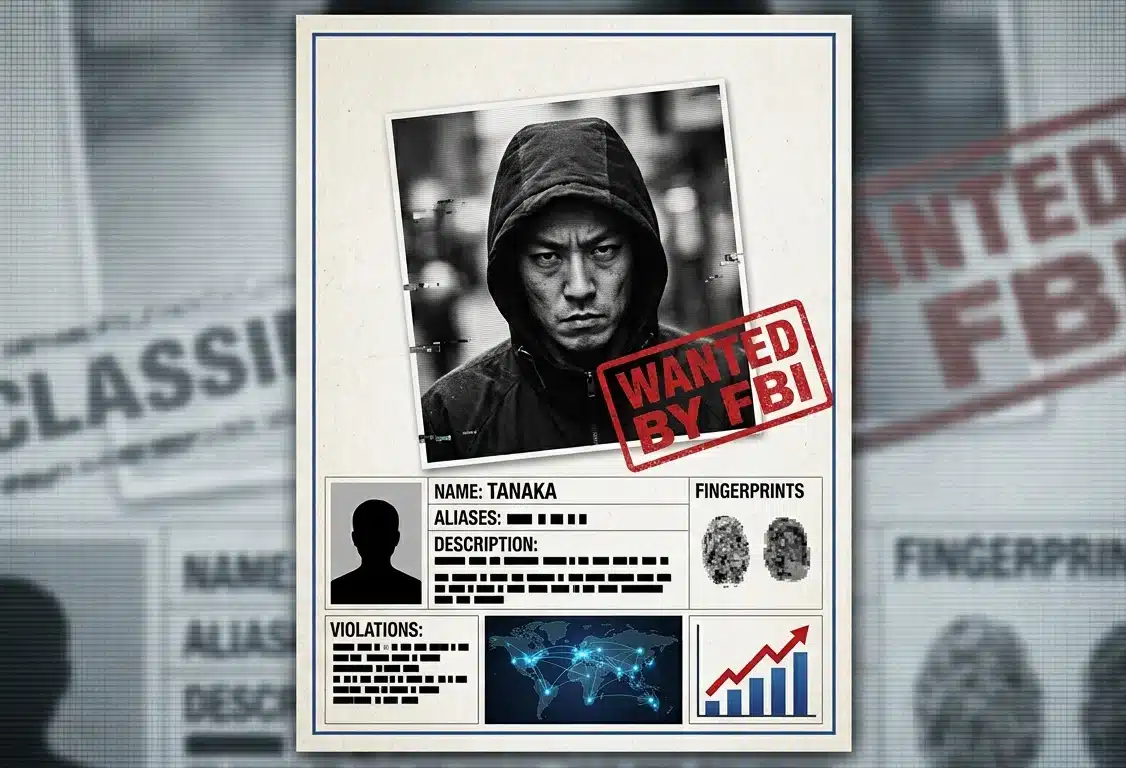
Tanaka Dominates Data Leak Landscape With 25 Leak Posts

Tanaka

Ransomware often dominates cybersecurity headlines, but stolen data has become an equally valuable commodity in the cybercrime economy. In the first half of 2026, one threat actor stood out in the data leak ecosystem: Tanaka, a prolific data leak broker responsible for more publicized leak activity than any other actor tracked by Cyble.  Cyble researchers recorded 367 data breach and leak incidents worldwide between January and June 2026. While dozens of actors participated in selling or publishing stolen information, Tanaka emerged as the most active, accounting for 25 distinct leak posts — more than double the activity of several other major actors. 

A Data Leak Operation Without Industry Boundaries 

Unlike threat actors that specialize in a single vertical, Tanaka followed a broad targeting approach across multiple industries and regions. The actor’s campaigns showed no strict preference for a specific sector, instead focusing on organizations where stolen information could hold financial or strategic value.  The Banking, Financial Services, and Insurance (BFSI) sector remained the most targeted industry globally, accounting for 38 breach incidents during the reporting period. Financial organizations continue to attract attackers due to the value of customer information, account data, and personally identifiable information (PII).  Government and Technology organizations were also frequent targets, reflecting the wider value of sensitive records, intellectual property, and institutional data. 

Regional Presence Across Major Markets 

Tanaka’s activity was visible across multiple regions. In North America, the actor was responsible for seven leak posts, making it the most active data leak actor in the region alongside other prominent sellers.  Europe and the UK also saw significant activity, with Tanaka linked to six leak posts during H1 2026. The region’s BFSI, Telecommunications, and Retail sectors faced heightened exposure due to the amount of valuable customer and financial data they hold.  The actor’s global footprint demonstrates how modern data leak operations can function independently of geography. Instead of focusing on a single country or industry, operators like Tanaka exploit opportunities wherever valuable information becomes available. 

The Rise of the Data Leak Marketplace 

Tanaka’s activity reflects a broader shift in the cybercrime ecosystem. Data leaks are no longer only a byproduct of ransomware attacks; they have become a standalone business model.  Threat actors monetize stolen information through underground marketplaces, using leaked databases for fraud, extortion, intelligence gathering, or resale. This specialization mirrors other parts of the cybercrime economy, where access brokers, ransomware affiliates, and data sellers perform separate roles.  For organizations, this means a breach does not always begin with a ransomware demand. A stolen database appearing in underground channels may indicate an earlier compromise that requires immediate investigation. 

Staying Ahead of Data Exposure Risks 

Security teams must treat underground data exposure monitoring as part of their broader defense strategy. Identifying leaked credentials, compromised databases, or mentions in cybercrime marketplaces can provide early warning before stolen information is weaponized.  To understand the 2026 data breach landscape, including the most active threat actors, targeted industries, and regional trends, access the full Cyble H1 2026 Cyber Threat Landscape Report. 
❌