Visualização de leitura

Global Crackdown on West African Crime Networks Leads to 58 Arrests

West African Organized Crime Groups

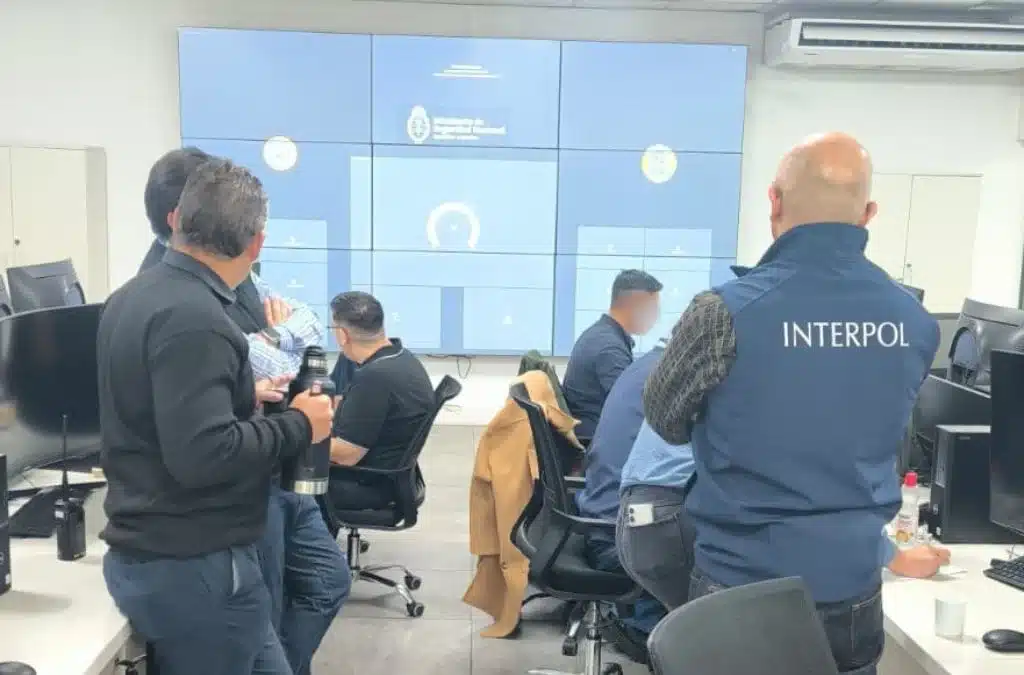
An eight-month international operation targeting West African organized crime groups has resulted in 58 arrests and the identification of 263 suspects across 22 countries, according to INTERPOL. Operation Jackal IV, conducted from November 2025 to June 2026, focused on disrupting criminal networks, tracing illicit funds, identifying high-value targets and supporting arrests and prosecutions. The operation brought together countries across six continents to tackle the growing global threat posed by West African criminal networks, including Black Axe and similar groups. These networks have been linked to a significant share of global cyber-enabled financial fraud, including romance scams, cryptocurrency and investment scams, and business email compromise fraud.

Operation Jackal IV Targets West African Organized Crime Groups

Operation Jackal IV also targeted money laundering activities used to move and conceal criminal proceeds across borders. INTERPOL coordinated cross-border intelligence sharing, analysis and operational support during the operation. It also provided specialized training to strengthen international investigations into financial crime. Tomonobu Kaya, Director of the INTERPOL Financial Crime and Anti-Corruption Centre, said the operation showed the importance of international cooperation in following illicit financial flows and disrupting criminal networks. [caption id="attachment_113806" align="aligncenter" width="600"]West African Organized Crime Groups Image Source: INTERPOL[/caption]

Major Arrests and Financial Crime Investigations

In Argentina, authorities identified 196 individuals linked to a major Crime-as-a-Service network suspected of providing website domains and money laundering support to West African organized crime groups. The investigation resulted in 17 arrests, with an INTERPOL Operational Support Team assisting with analysis of seized data and identification of suspects and criminal networks. South African authorities raided seven locations in Johannesburg linked to a syndicate involved in romance and investment scams targeting retirees in English-speaking countries. Investigators arrested 39 people, seized USD 2.67 million and blocked 257 bank accounts. In Italy, investigators identified an individual connected to a pan-European money laundering network that used shell companies, remittance services and cash withdrawals. One account processed EUR 845,000, or about USD 736,000, through 560 transactions involving 20 financial instruments. Romanian authorities dismantled a criminal group operating an investment scam through a call centre. The group promoted high returns from stocks and cryptocurrencies, with victims' money transferred to electronic wallets controlled by perpetrators. Authorities estimated that EUR 143 million had been stolen and laundered globally. Eleven people were arrested, while cash, cryptocurrency, six real estate properties and luxury watches were seized.

Sextortion and Crime-as-a-Service Emerge

Beyond individual investigations, the operation highlighted emerging threats involving sextortion and Crime-as-a-Service. INTERPOL identified an increase in West African organized crime groups using sextortion to target minors, including victims as young as 14. In these cases, offenders typically contacted minors through social media, established trust and persuaded them to share explicit images or videos. They then threatened to distribute the material to the victim's contacts unless a ransom was paid. Investigators also found that some criminal syndicates were procuring Crime-as-a-Service from external providers, including through the dark web. These services were used to outsource activities such as money laundering and other operational functions. While several cases from Operation Jackal IV remain under investigation, the preliminary results demonstrate the scale and international reach of the networks targeted during the eight-month operation. The participating countries were Austria, Argentina, Australia, Canada, Côte d'Ivoire, France, Germany, Indonesia, Ireland, Italy, Japan, Malaysia, the Netherlands, Nigeria, Portugal, South Africa, Spain, Sweden, Switzerland, the United Arab Emirates, the United Kingdom and the United States.

Four Men Admit to $2.2M Medicaid Fraud Scheme Using ChatGPT

Minnesota Medicaid fraud

Four Minnesota men have pleaded guilty to a Minnesota Medicaid fraud scheme that allegedly stole approximately $2.2 million from the state’s Housing Stabilization Services (HSS) program and used artificial intelligence to fabricate records when insurance companies requested documentation. The defendants admitted to submitting thousands of claims for services they never provided or significantly inflating claims to obtain higher reimbursements. The case involves four Twin Cities-area men who operated Brilliant Minds Services LLC from the Griggs-Midway Building in St. Paul, Minnesota. According to court documents, the business enrolled as a Medicaid program provider and claimed to help people with disabilities, including seniors and individuals with mental illnesses and substance use disorders, find and maintain housing through the now-defunct HSS program.

Minnesota Medicaid Fraud Scheme Targeted 350 Recipients

According to prosecutors, Moktar Hassan Aden, 31, Mustafa Dayib Ali, 29, Khalid Ahmed Dayib, 26, and Abdifitah Mohamud Mohamed, 27, signed up approximately 350 people for HSS. The defendants then billed Medicaid for services they allegedly did not provide to those recipients. The scheme reportedly operated from April 2022 through April 2025. During that period, the four men allegedly submitted thousands of HSS claims and fraudulently obtained approximately $2.2 million from Minnesota Medicaid. The case highlights the alleged misuse of a government program designed to provide housing-related support to vulnerable people. Authorities said the defendants exploited the program by claiming reimbursements for services that were never delivered or by submitting inflated claims.

Artificial Intelligence Used to Fabricate Records

The case also highlights the use of artificial intelligence in an alleged effort to conceal healthcare fraud. When insurance companies requested supporting documentation for the claims, the defendants used ChatGPT to fabricate records, according to court documents. The use of ChatGPT to create fake documentation adds another dimension to the health care fraud case, as authorities continue to investigate alleged schemes involving government-funded programs. The defendants allegedly used the fabricated records to conceal the fraudulent claims and support services they had claimed to provide. Assistant Attorney General Colin M. McDonald of the Justice Department’s National Fraud Enforcement Division said the defendants exploited vulnerable people and a vulnerable program for financial gain. U.S. Attorney for the District of Minnesota Daniel N. Rosen said Medicaid fraud carries serious consequences and that the funds involved were intended to support vulnerable Minnesotans relying on housing and recovery services.

Four Defendants Plead Guilty to Wire Fraud

In separate hearings held between July 7 and July 23, 2026, all four defendants pleaded guilty to one count of wire fraud. Each faces a maximum penalty of 20 years in prison. A federal district court judge will determine any sentence after considering the U.S. Sentencing Guidelines and other statutory factors. Sentencing dates have not yet been set. The FBI, the U.S. Internal Revenue Service, Criminal Investigation, and the U.S. Department of Health and Human Services, Office of Inspector General, are investigating the case. Trial Attorney Raymond E. Beckering III of the Criminal Division’s Fraud Section and Assistant U.S. Attorney Matthew Murphy for the District of Minnesota are prosecuting the case.

Health Care Fraud Strike Force Continues Investigations

The case is part of the ongoing collaboration between the U.S. Attorney’s Office for the District of Minnesota and the Health Care Fraud Strike Force to combat fraud targeting government programs. The Department of Justice’s Health Care Fraud Strike Force Program currently includes nine strike forces operating across federal districts. Since 2007, the program has charged more than 6,200 defendants who collectively billed federal health care programs and private insurers more than $45 billion. The case also comes as the Justice Department’s National Fraud Enforcement Division focuses on investigating and prosecuting fraud against the American people. Authorities said efforts to combat fraud remain part of broader work targeting fraud, waste, and abuse within federal benefit programs.

Dubai Police Warns Against Online Scams Promising Work and Visit Visas

Dubai Police fraudulent visa ads

The Dubai Police fraudulent visa ads warning has cautioned the public against scams offering work visas, residency visas, and visit visas in exchange for money. According to the Anti Fraud Centre at Dubai Police's General Department of Criminal Investigation, fraudsters are using social media platforms and messaging apps to circulate fake visa offers by impersonating official entities or using the names of unlicensed companies. The advisory was issued as part of Dubai Police's Be Aware of Fraud campaign, which aims to raise awareness about online scams and help residents identify fraudulent schemes.

Dubai Police Fraudulent Visa Ads Circulating on Social Media

According to Dubai Police, scammers are promoting visa services through advertisements and messages that claim to offer work, residency, or visit visas for a fee. The Anti Fraud Centre said these advertisements are designed to convince victims to transfer money by falsely claiming to represent government authorities or licensed visa service providers. Some also use the names of unlicensed companies or offices to appear legitimate. Dubai Police urged the public not to rely on such offers and reminded residents that all visa procedures should be completed only through competent authorities or legally approved offices.

Authorities Urge Public to Verify Visa Offers

The Anti Fraud Centre said verifying the source of a visa service is the first step in avoiding visa fraud. Residents have been advised to confirm the authenticity of any visa offer or application process through official channels before making payments or sharing personal information. The centre also warned against dealing with intermediaries or unknown individuals claiming they can arrange visas through unofficial means. Dubai Police said people should not be misled by promises of guaranteed visas or job opportunities that are offered outside the legal process.

How to Report Fraud Attempts

Dubai Police has asked members of the public to report any fraud or attempted fraud immediately. Reports can be submitted through the Dubai Police Smart App, the eCrime platform for cybercrime reports, or by calling 901. The Anti Fraud Centre reiterated that staying informed and verifying service providers through official channels remain the most effective ways to avoid falling victim to fraudulent visa schemes.

Dutch Police Arrest Key Suspect in €100M Global Crypto Investment Scam

global crypto investment scam

A major global crypto investment scam investigation has led to the arrest of an alleged key figure behind an international criminal organization accused of defrauding victims of more than €100 million every month. Dutch police announced multiple arrests across Europe following a long-running investigation into a fraud network that allegedly employed over 700 people operating from around 20 call centers worldwide.

The main suspect, a 46-year-old dual Israeli and Polish national, was arrested at an airport in Poland on May 26 at the request of Dutch authorities. Investigators believe he played an indispensable role in the organization, which allegedly carried out large-scale investment fraud targeting victims across multiple countries.

Global Crypto Investment Scam Network Operated Through Worldwide Call Centers

According to Dutch police, the organization functioned like a professional company with approximately 700 employees spread across nearly 20 offices globally. Individuals working as financial advisors scam operators allegedly contacted victims daily through online platforms and telephone calls while posing as legitimate investment professionals.

Authorities said the organization was structured with a central headquarters overseeing multiple teams, each assigned to target victims in specific countries. Employees reportedly worked under pseudonyms and used technical measures to hide their identities and locations.

[caption id="attachment_113134" align="aligncenter" width="600"]global crypto investment scam Excerpts from emails that victims sent to scammers[/caption]

As part of the investigation, Belgian police arrested five individuals believed to have worked as fraudulent financial advisors.

Multiple Arrests Made Across Europe

The investigation resulted in several coordinated arrests during May and July.

On July 7, authorities arrested two Dutch nationals aged 45 and 34, along with a 34-year-old Belgian, all residing in Cyprus. A 25-year-old suspect was also arrested in Belgium the same day. On July 10, police arrested a 44-year-old Dutch national in Athens.

The main suspect has since been extradited to the Netherlands, where an examining magistrate ordered 14 days of pre-trial detention. Dutch authorities indicated that additional arrests remain possible as the investigation continues.

How the Global Crypto Investment Scam Worked

Investigators said the online investment scam relied on building long-term trust with victims. Individuals posing as account managers or financial advisors maintained frequent contact through phone calls and online communication, sometimes over several months.

Victims were encouraged to begin with relatively small investments that appeared to generate immediate returns. Police said the investment platforms displayed convincing but fabricated profits, even though no actual investments were being made.

As confidence grew, victims were persuaded to transfer increasingly larger amounts, often in the form of cryptocurrency fraud payments. Instead of being invested, investigators said the funds were diverted directly to the criminal organization.

Authorities also warned that victims who stop investing may later be contacted by so-called recovery companies requesting upfront deposits to recover lost funds. Police believe these recovery operations may also be connected to the same fraud networks.

Hundreds of Complaints Linked to Investment Fraud

Dutch authorities have received approximately 550 reports connected to the organization, while Belgian police have recorded around 200 complaints. Investigators estimate the total number of victims worldwide could reach tens of thousands.

The financial losses reported by victims in the Netherlands alone amount to nearly €25 million, with many individuals losing well over €10,000.

Dutch police said officers proactively contacted some victims after discovering that many remained unaware they had fallen victim to cyber fraud.

Financial investigators are now examining whether assets linked to the suspects can be frozen or seized.

Digital Infrastructure Taken Offline

Investigators said the criminal organization remained active since at least 2021 and relied heavily on concealed digital infrastructure to evade law enforcement.

By tracing financial transactions, IP addresses, and other digital evidence, the Dutch police identified offices, suspects, and critical infrastructure supporting the operation. Authorities worked with commercial service providers to take key elements of the network offline.

The investigation also involved Europol, with intelligence shared across multiple countries to support ongoing criminal prosecutions.

Officials said the case demonstrates the scale and sophistication of modern investment fraud operations and highlighted continued international cooperation to dismantle cyber-enabled financial crime networks.

Operation Endgame Disrupts SocGholish, StealC Malware Networks

Operation Endgame Disrupts SocGholish

Operation Endgame has dealt another blow to cybercriminal operations after international law enforcement agencies and private sector partners dismantled infrastructure supporting the SocGholish, Amadey, and StealC malware families. The coordinated operation resulted in the seizure of more than EUR 41 million in criminal cryptocurrency assets, the recovery of 27 million stolen login credentials, and the disruption of hundreds of servers and domains used to distribute malware.

Led by Europol and Eurojust, the operation brought together authorities from Canada, Denmark, Germany, the Netherlands, the United Kingdom, the United States, Microsoft, and several cybersecurity organizations. Officials said the objective was to disrupt the infrastructure cybercriminals rely on to launch ransomware attacks, financial fraud, and attacks against critical infrastructure.

Operation Endgame Targets Cybercrime Infrastructure

During the coordinated action, authorities targeted the infrastructure supporting malware delivery rather than focusing on a single malware family.

Law enforcement and industry partners took action against 326 servers and 142 domains, significantly disrupting malware distribution channels. Investigators also identified and restricted criminal cryptocurrency assets currently valued at more than EUR 41 million (USD 47 million) while recovering approximately 27 million stolen login credentials.

According to Europol, the operation aimed to disrupt the "assembly line" used by cybercriminals to gain initial access to victim systems before deploying ransomware or stealing sensitive information.

[caption id="attachment_112936" align="aligncenter" width="600"]Operation Endgame Image Soure: Europol[/caption] [caption id="attachment_112937" align="aligncenter" width="600"]Operation Endgame Strikes Malware Image Source: Europol[/caption]

SocGholish, Amadey and StealC Malware Played Different Roles

The operation focused on three malware families that are commonly offered under the cybercrime-as-a-service model.

  • SocGholish functioned as a malware loader that distributed fake browser updates through compromised WordPress websites. Users who installed these fake updates unknowingly infected their systems, allowing attackers to gain initial access and later deploy ransomware or other malicious tools.
  • StealC malware primarily targeted sensitive information stored on infected devices, including passwords, authentication data, and digital identities. The stolen information was later used for fraud or traded within cybercriminal marketplaces.
  • Amadey was mainly distributed through phishing campaigns. It provided attackers with initial access to compromised systems while also offering information-stealing capabilities that enabled the theft of sensitive user data.

Microsoft reported that during the first two weeks of May 2026 alone, Amadey and StealC malware were linked to more than 140,000 infected computers worldwide.

Thousands of Infected WordPress Sites Cleaned

One of the largest actions under Operation Endgame targeted SocGholish, also known as FakeUpdates.

Authorities remediated 14,971 infected WordPress websites, including websites belonging to restaurants, automotive repair businesses, and other organizations. Investigators also disabled the SocGholish botnet by taking control of domains and shutting down supporting servers.

Website owners whose credentials had been exposed were notified through platforms including Have I Been Pwned, DIVD, Spamhaus, CheckjeHack, NoMoreLeaks, Shadowserver, and NL-NCSC.

The Dutch Police urged WordPress administrators to change passwords, enable multi-factor authentication, remove unknown administrator accounts, and keep their websites updated to reduce future compromise risks.

SocGholish Linked to Evil Corp

Authorities said SocGholish has been linked to Evil Corp, a Russian cybercriminal group previously associated with the Zeus and Dridex malware families, as well as multiple ransomware and money laundering operations.

Rather than targeting only malware operators, investigators focused on disrupting the broader infrastructure supporting cybercriminal activity. Europol said this strategy increases operational costs for threat actors and makes large-scale cyberattacks more difficult to execute.

Europol Coordinates Global Cyber Operation

Europol's European Cybercrime Centre (EC3) coordinated operational intelligence sharing through SIENA while providing analytical, technical, and cryptocurrency tracing support throughout the investigation.

The operation forms part of Operation Endgame, described by Europol as the largest international initiative to disrupt ransomware enablers worldwide.

Officials said the latest disruption reflects a growing international strategy of targeting the infrastructure that enables cybercrime operations, rather than responding only after attacks have occurred.

ATM Jackpotting Gang Members Sentenced for Ploutus Malware Attacks

ATM jackpotting

Two Venezuelan nationals have been sentenced to 78 months in prison for their role in an ATM jackpotting scheme that used malware to force cash machines across the United States to dispense money illegally. The operation, which authorities say was part of a broader transnational criminal network, involved the deployment of Ploutus malware on ATMs and resulted in losses exceeding $1.5 million.

Carlos Javier Padron, 36, was sentenced after pleading guilty to conspiracy to commit bank burglary and computer fraud. His co-defendant, Oddry Arnoldo Cabrera Torrealba, 37, received the same sentence on June 11 after pleading guilty to identical charges.

Ploutus Malware Used to Trigger Unauthorized Cash Withdrawals

According to court documents, Padron and Torrealba were members of a criminal network responsible for carrying out ATM jackpotting attacks across the United States. Their role involved physically installing a variant of Ploutus malware on targeted ATMs.

Once activated, the malware enabled attackers to send commands directly to the ATM's cash dispensing module, allowing unauthorized withdrawals of currency. Investigators said the malware was also designed to erase traces of its presence, making it more difficult for financial institutions to detect the compromise.

The two men were arrested by the Lincoln Police Department during an ATM jackpotting incident in October 2024.

More Than $1.5 Million Ordered in Restitution

Along with their prison sentences, Padron and Torrealba were jointly ordered to pay $1,537,696 in restitution to the affected financial institutions.

Officials said the investigation uncovered a much larger criminal operation following their arrests. Authorities have since indicted 96 additional individuals connected to the conspiracy on charges including bank burglary conspiracy, money laundering, computer fraud, unauthorized access to protected computers, bank fraud, and providing material support to a designated foreign terrorist organization.

Authorities Link Scheme to Tren de Aragua

U.S. officials stated that the investigation established direct and indirect links between several indicted co-conspirators and Tren de Aragua, a transnational criminal organization that originated in Venezuela.

According to investigators, the group has expanded its operations throughout the Western Hemisphere and has been involved in crimes including drug trafficking, firearms trafficking, kidnapping, robbery, extortion, commercial sex trafficking, and financial fraud.

Authorities allege that ATM jackpotting became one of the organization's revenue-generating activities, targeting financial institutions across the United States through coordinated cyber-enabled attacks.

Justice Department Says Financial Crimes Fund Organized Crime

Assistant Attorney General A. Tysen Duva said the defendants helped deploy malware as part of a criminal network that stole millions of dollars from ATMs across the country. He added that disrupting such operations is critical to protecting financial institutions from technology-enabled fraud.

U.S. Attorney Lesley Woods for the District of Nebraska described ATM jackpotting as a significant revenue source used to finance the criminal activities attributed to the organization and said federal prosecutors would continue targeting its financial networks.

The FBI's Omaha Field Office said it continues to adapt its investigative efforts as criminal organizations increasingly rely on cyber-enabled financial crimes. Homeland Security Investigations also stated that the prosecution was intended to protect both consumers and the U.S. financial system from organized criminal activity.

Multi-Agency Investigation Continues

The investigation was led by the FBI Omaha Field Office and Homeland Security Investigations, with assistance from numerous federal, state, and local law enforcement agencies across the United States.

The case is being prosecuted by the Justice Department's Computer Crime and Intellectual Property Section, the U.S. Attorney's Office for the District of Nebraska, and Joint Task Force Vulcan.

Officials said the case forms part of a broader federal effort targeting transnational criminal organizations involved in cybercrime, financial fraud, and other organized criminal activities. The investigation into the wider network remains ongoing.

Iranian Hacker Arrested Over Alleged $3.4 Billion Cyberattack on USA Infrastructure

Iranian hacker

An alleged Iranian hacker accused of hacking US infrastructure has been arrested in Montenegro following a joint operation by Montenegrin police and the U.S. Federal Bureau of Investigation (FBI). The suspect is expected to face charges related to computer fraud, hacking, conspiracy, and identity theft after authorities linked him to a years-long cyber campaign that reportedly caused more than $3.4 billion in damages. 

Iranian Hacker Faces Computer Fraud and Hacking Charges 

The 39-year-old suspect, who holds dual Iranian and Turkish citizenship, was arrested in the Adriatic coastal town of Kotor, Montenegro. According to local police, he is wanted by the Southern District Court of New York on charges of conspiracy to commit computer fraud, hacking, and identity theft.  The case will now be referred to a High Court judge in Montenegro's capital, Podgorica, where extradition proceedings are expected to begin. 

Alleged Cyberattack on USA Universities Caused Billions in Damage 

In an official statement, Montenegro's police directorate alleged that the Iranian hacker had been involved in large-scale hacking operations since 2013.  "From 2013 onward, … he carried out massive hacking attacks … targeting more than 150 universities in the United States, causing damage estimated at over $3.4 billion," the statement said.  Authorities claim the stolen data and access to compromised university accounts were used to benefit Iran's Islamic Revolutionary Guard Corps (IRGC) and other Iranian organizations, including universities. Investigators allege the campaign formed part of a broader cyberattack on USA institutions aimed at acquiring sensitive academic data and digital access. 

Extradition Process Underway 

Following the arrest, Montenegrin authorities confirmed that the suspect remains in custody while legal proceedings continue. If approved, he will be extradited to the United States to face charges tied to computer fraud, identity theft, and extensive hacking operations.  The FBI participated in the investigation that led to the arrest, although the agency was not immediately available for comment after the announcement. 

Iranian Cyber Operations Remain Under Scrutiny 

The latest arrest comes amid continued concerns over Iranian-linked cyber activity. Iran and the IRGC have long been associated with state-sponsored cyber operations targeting U.S. organizations and infrastructure.  In April, U.S. cybersecurity, intelligence, and law enforcement agencies warned that Iranian hacking campaigns targeting equipment across critical U.S. infrastructure had intensified. The warning highlighted an increase in attempted intrusions, reinforcing concerns over future cyberattacks on the USA.  The arrest marks a new development in an international investigation into one of the largest alleged cybercrime cases involving an Iranian hacker, with prosecutors pursuing charges that include conspiracy, computer fraud, hacking, and identity theft linked to billions of dollars in reported losses. 

National Health Care Fraud Takedown Charges 455 Defendants in $6.5 Billion Fraud Crackdown

National Health Care Fraud Takedown

The National Health Care Fraud Takedown has resulted in criminal charges against 455 defendants, including 90 doctors and other licensed medical professionals, for their alleged involvement in health care fraud schemes worth more than $6.5 billion. Announced by the U.S. Department of Justice (DOJ), the nationwide enforcement operation also targeted opioid-related crimes and fraud schemes that authorities say caused significant patient harm, including deaths. The 2026 operation marks the largest coordinated action of its kind, involving cases across 56 federal districts, 45 states and territories, and participation from all 50 Medicaid Fraud Control Units.

National Health Care Fraud Takedown Reaches Record Scale

According to the DOJ, the enforcement action reflects an expanded effort by federal, state, and international authorities to combat fraud within government-funded healthcare programs. Authorities announced charges against hundreds of individuals connected to Medicare fraud, Medicaid fraud, telemedicine fraud, illegal kickback schemes, and unlawful opioid distribution. Investigators also seized more than $182 million in assets, including cash, luxury vehicles, jewelry, and real estate. In parallel, the Centers for Medicare and Medicaid Services suspended 1,079 providers and revoked billing privileges for 1,403 providers. Federal agencies also secured more than $73 million in civil monetary settlements and initiated thousands of administrative enforcement actions. National Health Care Fraud Takedown

Billions in Fraudulent Wound Care Claims Uncovered

A significant portion of the cases announced during the National Health Care Fraud Takedown involved fraudulent billing for amniotic wound allografts. The DOJ charged 11 defendants, including company executives and medical professionals, in connection with schemes that generated billions of dollars in Medicare claims. In one Arizona case, authorities alleged that a company executive participated in an illegal kickback operation tied to allograft products that generated more than $4 billion in Medicare billings and over $2 billion in payments. Investigators claim marketers and providers received substantial kickbacks while applying medically unnecessary treatments to patients, including hospice patients. Prosecutors allege the products were sold with markups as high as 2,000%. In a separate Texas case, a nurse practitioner was charged in connection with a $906 million fraud scheme involving medically unnecessary allograft applications. Authorities seized more than $30 million in assets linked to the investigation.

Data Analytics Drive Health Care Fraud Investigations

Federal officials highlighted the growing role of advanced analytics in identifying fraudulent activity. The DOJ's Data Fusion Center, established to combine financial intelligence and healthcare data analysis, played a key role in several investigations announced during the takedown. One investigation led to charges against a defendant accused of submitting claims for behavioral health services that allegedly exceeded what providers could physically deliver, while diverting millions of dollars toward luxury purchases and investments. Officials said data analysis also helped uncover hospice fraud, fraudulent Medicaid billing schemes, and Medicare claims tied to services that were never provided. CMS Administrator Dr. Mehmet Oz stated that the agency is increasingly relying on advanced analytics to identify suspicious payment activity and stop fraudulent claims before taxpayer funds are released.

Medicaid Fraud and International Arrests Highlight Global Reach

The 2026 operation also recorded the largest number of Medicaid fraud defendants and losses charged in Department history. Authorities charged 295 defendants linked to more than $518 million in alleged fraudulent Medicaid claims. Cases announced included schemes involving adult day care services, behavioral health programs, and fraudulent claims targeting vulnerable populations, including homeless individuals and people struggling with substance abuse. The takedown also demonstrated unprecedented international cooperation. Authorities secured the apprehension and return of several suspects located overseas, including individuals linked to multibillion-dollar fraud operations. Among those apprehended were suspects connected to a previously charged $10.6 billion fraud scheme and a separate $3.7 billion medical equipment fraud case.

Opioid Fraud and Patient Harm Cases Included

The DOJ health care fraud crackdown also targeted illegal opioid distribution. Authorities charged 36 defendants, including 28 licensed medical professionals, for allegedly diverting prescription opioids and controlled substances. Several cases involved allegations that prescriptions were issued without proper patient interaction, while others focused on large-scale drug distribution networks. Officials emphasized that the enforcement effort was aimed not only at protecting taxpayer funds but also at preventing patient harm caused by fraudulent medical practices. The Department of Justice noted that all charges announced as part of the National Health Care Fraud Takedown remain allegations, and all defendants are presumed innocent unless proven guilty in court.

Why India Temporarily Blocked Telegram Ahead of NEET UG 2026

Telegram Ban in India

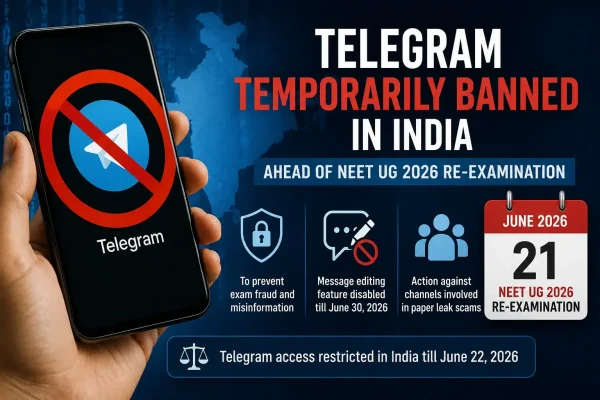
India has temporarily enforced a Telegram Ban in India ahead of the NEET UG 2026 Re-examination, citing concerns that the platform could be used by organized cheating networks to target candidates. The restriction, recommended by the National Testing Agency (NTA) and implemented through directions issued by the Ministry of Electronics and Information Technology (MeitY), will remain in effect until June 22, 2026. According to the NTA, the measure is intended to support the safe and secure conduct of the NEET re-examination scheduled for June 21, 2026, and prevent the spread of fraudulent claims related to exam papers.

Telegram Ban in India Limited to Examination Period

The temporary Telegram Ban in India has been imposed under Section 69A of the Information Technology Act, 2000. The restriction is limited to a defined period covering the examination day and its immediate aftermath. In addition to restricting access to the platform, authorities have directed Telegram to disable its Telegram Message Editing Feature in India until June 30, 2026. The NTA stated that the feature has been misused in the past to create misleading claims of Paper Leak incidents after examinations had already taken place. The agency noted that the temporary measures were adopted after other enforcement actions had already been pursued and were intended to address concerns during the examination window with the minimum restriction considered necessary. Telegram Ban in India Ahead of NEET UG 2026

Coordinated Action Against NEET UG 2026 Exam Fraud Networks

The NTA credited the Indian Cyber Crime Coordination Centre (I4C), operating under the Ministry of Home Affairs, for coordinating action against channels and groups allegedly involved in Exam Fraud targeting NEET candidates. According to the agency, I4C worked with state law enforcement agencies and MeitY to identify and remove numerous Telegram channels, groups, and bots that openly advertised access to examination papers or related services. Authorities said several channels used names such as "PAPER LEAKED NEET," "Re-NEET 2026," and similar variations while demanding payments from candidates and their families in exchange for purported access to examination material. The NTA reiterated that no examination paper was available outside the secured examination process and described such offers as fraudulent.

Why the Message Editing Feature Was Restricted

The direction related to the Telegram Message Editing Feature addresses concerns about fabricated evidence of examination leaks. According to the NTA, Telegram administrators can edit previously published messages while retaining the original posting timestamp. Authorities stated that this capability has been used in multiple examinations to replace earlier content with actual question papers after an exam had concluded, creating the appearance that the material had been shared before the test. The temporary restriction on editing existing messages is intended to prevent the creation and circulation of such misleading content during the post-examination period.

Law Enforcement Investigations Continue

Authorities also pointed to ongoing enforcement actions in several states. The Bihar Police Economic Offences Unit issued a public advisory on June 9, warning candidates against fraudulent claims of pre-examination paper access circulating through Telegram and other online platforms. Separately, the Ahmedabad City Cyber Crime Branch arrested members of an alleged inter-state cyber fraud network accused of operating multiple Telegram channels linked to the same scheme. Investigators reported documented transactions worth approximately ₹1.5 crore and outreach to nearly 1,000 mobile numbers within a month.

NTA Reassures Candidates

The NTA acknowledged that the restriction affects users who rely on Telegram for educational, professional, and personal communication. However, the agency emphasized that the measure is temporary and focused on protecting the integrity of the NEET UG 2026 Re-examination. The examination will proceed as scheduled on June 21. The agency urged candidates to ignore unverified information circulating online and rely only on official NTA communication channels for updates. Officials also encouraged students and parents to report suspicious activities through the national cybercrime reporting mechanisms and remain cautious of claims related to examination papers circulating on any platform.

Dubai Police Issues Urgent Warning on Fake Travel Offers Flooding Social Media

travel booking fraud

Dubai Police has warned residents and travellers about the sharp rise in travel booking fraud and fake holiday offers circulating online during the summer vacation season. The alert was issued as part of the Force’s ongoing “Be Aware of Fraud” campaign led by the Anti-Fraud Centre under the General Department of Criminal Investigation. According to Dubai Police, scammers are taking advantage of the growing demand for discounted holiday packages, airline tickets, and hotel reservations by promoting unrealistic offers through fake websites and fraudulent social media accounts. Authorities said fraudsters are designing fake platforms that imitate genuine travel agencies and tourism companies using copied logos, promotional images, and branding materials to make their offers appear legitimate. The police explained that these cybercriminals often pressure victims into making immediate payments by claiming that travel seats are limited or that discounted offers will expire within a few hours.

Travel Booking Fraud Cases Increase During Holiday Seasons

Dubai Police noted that travel booking fraud incidents typically rise during summer vacations and festive travel periods when families actively search for affordable travel deals. Dubai Police Fraud Warning Scammers reportedly contact victims through phone calls, messaging apps, and social media platforms to convince them to quickly confirm bookings. Victims are usually asked to transfer money to personal bank accounts or suspicious payment links before the fraud is detected. In several cases, travellers later discovered that flight tickets were invalid or hotel reservations did not exist. Some victims only realised they had been scammed after attempting to verify bookings with airlines or hotels. Authorities warned that such fraudulent schemes can lead to significant financial losses while also disrupting travel and family holiday plans.

Dubai Police Shares Safety Measures Against Online Travel Scams

Dubai Police urged the public to avoid being influenced by advertisements offering prices that appear unusually low compared to normal market rates. Officials advised travellers to deal only with licensed and accredited travel agencies or trusted official booking platforms. They also stressed the importance of verifying website links carefully before entering personal or banking information. According to the Force, many fake websites are intentionally designed to closely resemble legitimate booking platforms, with only minor spelling or domain name differences that can easily go unnoticed. Dubai Police further warned residents not to share bank card information, passwords, or security verification codes with unverified parties. The public was also advised to avoid transferring money to unknown personal accounts. Authorities encouraged residents to report suspicious websites or fraud attempts through the official e-Crime platform or by contacting the non-emergency helpline 901.

Dubai Police Earlier Warned About Harmful Viral Online Trends

Prior to this advisory, Dubai Police had also warned the public about the spread of viral energy drink videos targeting children and teenagers on social media platforms. The warning was issued by the Cybercrime Department under the General Department of Criminal Investigation. Officials said many viral videos encouraging excessive energy drink consumption are created mainly to generate online engagement without addressing associated health risks. Dubai Police urged parents to monitor the online content viewed by children and teenagers and educate them about the dangers of blindly following viral internet trends. Authorities added that influencer-driven challenges and online trends can make risky behaviour appear harmless to younger audiences, increasing concerns around digital safety and responsible social media use.

Dubai Police Smash International Scam Empire in Massive FBI and China-Led Operation

Operation Tri-Force Sentinel

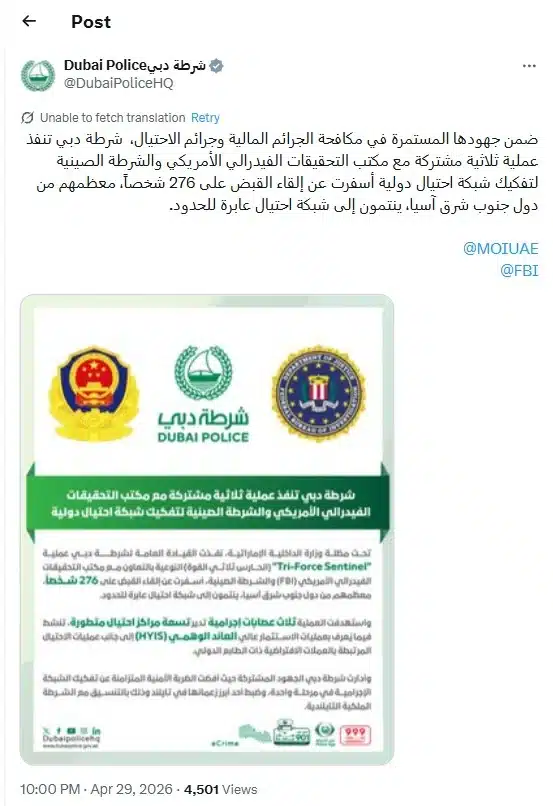
In a major international enforcement action, Operation Tri-Force Sentinel, led by Dubai Police, in coordination with the FBI and Chinese Police, has dismantled a large transnational fraud network involved in global financial scams. The Operation Tri-Force Sentinel crackdown resulted in the arrest of 276 individuals linked to organised cyber-enabled fraud activities spanning multiple countries, primarily involving suspects from Southeast Asia. The Operation Tri-Force Sentinel was carried out under the UAE Ministry of Interior and focused on disrupting criminal syndicates running high-yield investment scams, commonly known as HYIS, “pig butchering” schemes, and virtual currency fraud. Authorities confirmed that nine major fraud centres were dismantled during the coordinated action.

276 Arrests and Nine Fraud Centres Dismantled in Operation Tri-Force Sentinel

As part of the operation, law enforcement agencies executed synchronized raids that dismantled three major criminal syndicates operating fraud centres. These centres were responsible for large-scale financial deception campaigns targeting victims across several regions. The operation led to the arrest of 276 suspects, with authorities confirming that the network used advanced social engineering techniques. Victims were reportedly engaged through digital platforms, where trust was gradually built before financial exploitation took place. Dubai Police also confirmed the arrest of a key leader of one of the syndicates in Thailand, carried out in coordination with the Royal Thai Police. The enforcement action marked one of the most significant coordinated strikes against cyber-financial crime groups in recent times under Operation Tri-Force Sentinel. [caption id="attachment_111753" align="aligncenter" width="553"]Operation Tri-Force Sentinel Image Source: Dubai Police[/caption]

Dubai Police, FBI, and Chinese Police Coordination 

Dubai Police played a central role in directing and executing Operation Tri-Force Sentinel, enabling real-time intelligence sharing between international partners. The collaboration with the FBI and Chinese Police was described as critical to the success of the operation. Dubai Police stated that the operation reflects a proactive strategy to combat evolving transnational financial crime threats. The agency emphasized that coordinated international efforts were essential to dismantling complex criminal networks operating across borders. The FBI highlighted the significance of joint enforcement efforts, stating that the operation demonstrates the effectiveness of coordinated global action in disrupting large-scale fraud schemes. It further noted that the partnership with the UAE authorities, particularly the Dubai Police, played a key role in achieving operational success. Chinese Police also reaffirmed their commitment to combating telecom and financial fraud crimes. They emphasized continued cooperation with global law enforcement agencies to address emerging cross-border criminal activities targeted in Operation Tri-Force Sentinel.

Transnational Fraud Networks and Financial Crime Disruption

The dismantled network operated multiple fraud centres using structured and organised digital fraud models. These included investment scams and cryptocurrency-related fraud schemes that have increasingly affected victims across several countries. Authorities noted that the criminal groups involved in Operation relied heavily on psychological manipulation and digital engagement strategies to execute financial scams at scale. The coordinated enforcement action disrupted key operational infrastructure of these networks in a single phase.

International Cooperation Strengthened 

This operation highlights the growing importance of international cooperation in tackling financial crime networks that operate beyond national borders. The joint action between Dubai Police, the FBI, and the Chinese Police demonstrates strengthened coordination in intelligence sharing and enforcement execution. Officials involved in the operation emphasized that continued collaboration is essential to countering sophisticated fraud networks. The success of Operation reflects the ability of global law enforcement agencies to respond jointly to complex cyber-enabled financial threats. The operation marks a significant step in global efforts to combat organised fraud networks and reinforces the role of coordinated international enforcement in addressing cross-border financial crime.

IOCTA 2026 Report Warns of Rising AI-Driven Cybercrime and Dark Web Threats

IOCTA 2026 report

The IOCTA 2026 report released by Europol offers a detailed look at how cybercrime is evolving across Europe, with criminals increasingly using artificial intelligence, encryption, and cryptocurrencies to scale their operations. The latest edition of the Internet Organised Crime Threat Assessment outlines key trends shaping the threat landscape and calls for stronger coordination among law enforcement agencies. According to the IOCTA 2026 report, cybercrime is becoming more complex and interconnected, driven by rapid technological advancements. The findings highlight how criminals are adapting quickly, making it harder for authorities to detect, track, and disrupt their activities.

IOCTA 2026 Report Maps Evolving Cyber Threat Landscape

The IOCTA 2026 report serves as a roadmap for understanding emerging cyber threats, covering areas such as online fraud, ransomware attacks, and child exploitation networks. Edvardas Šileris, Head of the European Cybercrime Centre at Europol, emphasized that the report is intended to help law enforcement agencies respond effectively to these evolving risks. He noted that as cybercriminals continue to exploit new technologies, strengthening capabilities and improving collaboration will be essential to protect citizens and critical infrastructure.

Dark Web Fragmentation and Cryptocurrencies Fuel Crime

A key finding in the IOCTA 2026 report is the continued role of the dark web as a central hub for cybercriminal activity. Despite ongoing crackdowns, marketplaces and forums remain active, with criminals frequently shifting platforms to avoid detection. The report highlights how fragmentation and specialization across these platforms make investigations more difficult. Encrypted messaging services and anonymized networks are increasingly connecting surface and dark web environments, reducing the visibility of criminal operations. Cryptocurrencies also play a significant role, according to the IOCTA 2026 report. Privacy-focused coins and offshore exchanges are widely used to launder ransomware payments, making financial tracking more challenging. The report also points to a growing trend of younger individuals becoming involved in cryptocurrency-related activities, sometimes without understanding the legal risks.

AI-Driven Fraud Expands Across Europe

The IOCTA 2026 report identifies artificial intelligence as a major driver of online fraud. Cybercriminals are using generative AI tools to create highly targeted phishing campaigns and social engineering attacks. These tools allow attackers to:
  • Personalize fraudulent messages at scale
  • Mimic legitimate communication styles
  • Automate large-scale scam operations
The report also highlights the use of caller ID spoofing and SIM farms, which enable attackers to send thousands of messages or calls simultaneously. This combination of AI and automation is increasing both the reach and success rate of fraud campaigns.

Ransomware and Data Extortion Remain Key Threats

Ransomware continues to be a dominant threat, as outlined in the IOCTA 2026 report. A large number of active ransomware groups were observed throughout 2025, with many adopting data extortion tactics. Instead of relying solely on encryption, attackers are increasingly threatening to release stolen data to pressure victims into paying. This shift has made cyberattacks more damaging, particularly for public institutions and large organizations. The report also notes growing links between state-sponsored actors and criminal groups, with some cybercriminals acting as proxies in broader geopolitical strategies. Emerging hacking coalitions are adding another layer of complexity to the threat landscape.

Rise in Online Child Exploitation and Criminal Networks

The IOCTA 2026 report highlights a concerning increase in online child sexual exploitation cases. The financial trade of child abuse material is growing, and the use of synthetic content is creating new challenges for investigators. Encrypted messaging platforms are widely used by offenders, making it harder for authorities to monitor and intervene. The report also points to the emergence of organized online communities that engage in multiple forms of criminal activity. These networks combine cybercrime with violent offenses, creating a complex and dangerous ecosystem that extends beyond digital spaces.

Need for Stronger Law Enforcement Collaboration

The findings of the IOCTA 2026 report reinforce the need for improved coordination between governments, law enforcement agencies, and industry stakeholders. As cyber threats become more advanced, isolated efforts are no longer sufficient. The report provides actionable insights and recommendations aimed at strengthening investigative capabilities and improving response strategies. It also stresses the importance of innovation in tackling new forms of cybercrime.

Zimbabwe Boosts Cybersecurity as AI-Driven Cyber Fraud Surges

cyber fraud in Zimbabwe

Zimbabwe is intensifying efforts to reinforce cybersecurity in Zimbabwe as the nation confronts a rise of digital crime. As internet access expands and digital financial services become more embedded in everyday life, authorities warn that these developments are simultaneously exposing weaknesses in Zimbabwe's cybersecurity systems.  At the Cyber Fraud & AI Conference in Nyanga, Information and Communication Technology Minister Tatenda Mavetera highlighted the rise of cyber fraud, noting that cybercriminals are no longer relying on simple tactics. Instead, they are leveraging cutting-edge tools such as deepfake voice cloning, automated phishing platforms, and adaptive malware to exploit individuals, businesses, and public systems.  “The enemy now has artificial intelligence. You cannot fight an intelligent machine with a manual rulebook — you must fight AI with AI,” Mavetera said. 

Rising Cyber Fraud Threats Challenge Zimbabwe's Cybersecurity Systems 

The scale of the problem is further highlighted by recent data. Authorities estimate that mobile money-related cyber fraud costs Zimbabwe more than US$30 million annually. Meanwhile, phishing and social engineering attacks have surged by over 40% in recent years. Across Africa, cybercrime is estimated to cost more than US$4 billion each year, while global losses are projected to exceed US$10 trillion annually.  Mavetera denoted that the impact of cyber fraud extends beyond financial losses. “Cyber fraud erodes trust in digital systems, and without trust, there is no digital transformation,” she said. This erosion of trust threatens not only individuals and businesses but also the broader stability of the digital economy. 

Government Expands Cybersecurity in Zimbabwe with AI-Driven Solutions 

In response to these challenges, the government is implementing a range of measures aimed at strengthening cybersecurity in Zimbabwe. A National Security Operations Centre is nearing completion, with progress estimated at 85%, and is expected to centralize threat monitoring and response.  Additionally, a Computer Incident Response Team is being established to coordinate national responses to cyberattacks. These institutional developments are intended to improve the country’s ability to detect, manage, and mitigate cyber fraud and other digital threats.  A key initiative is the planned launch of the “Zimbabwe AI Cyber Shield” within the next 12 months. This AI-powered platform will focus on real-time fraud detection, representing a major step forward in modernizing Zimbabwe's cybersecurity capabilities.  Alongside technological investments, the government is prioritizing skills development. Training programs are underway to prepare 10,000 cybersecurity professionals, supported by broader digital literacy initiatives aimed at strengthening public awareness and resilience against cyber fraud. 

Policy and Collaboration Key to Strengthening Zimbabwe Cybersecurity 

Zimbabwe is also working to enhance its legal and policy frameworks. Authorities are introducing legislation to criminalize the misuse of artificial intelligence, particularly in cases involving deepfakes and identity-related cyber fraud. A National Cybersecurity Strategy has been finalized and is awaiting cabinet approval, while the National Artificial Intelligence Strategy (2026–2030), introduced in March, seeks to balance innovation with security.  Despite these efforts, Zimbabwe continues to face structural challenges. The country is currently ranked in the fourth tier of the International Telecommunication Union’s Global Cybersecurity Index, with a score of 39.85 out of 100. While legal measures are relatively strong, gaps remain in technical capacity, organizational readiness, international cooperation, and skills development.  Mavetera stressed that addressing these gaps will require coordinated action from multiple stakeholders. She called for stronger collaboration between the government, the private sector, academia, and citizens to build a resilient digital ecosystem.  She reiterated that cyber fraud is not just a financial issue but a threat to national progress. Without trust in digital systems, the country’s broader digital transformation goals could be undermined. 
❌