Entrar
New Zealand Targets Russian Cyber Actors With Fresh Sanctions





India online safety rules are being strengthened as the government steps up measures to protect children and other users from harmful digital content, cyber risks and emerging threats linked to artificial intelligence. The government said its policies are aimed at ensuring an open, safe, trusted and accountable internet, with recent measures focusing on child safety, privacy protection, faster content removal and stronger platform responsibilities.
The Information Technology Act, 2000, and the Information Technology (Intermediary Guidelines and Digital Media Ethics Code) Rules, 2021, form the core legal framework governing online safety and intermediary responsibilities in India. The government has also highlighted the Digital Personal Data Protection Act, 2023, and recent amendments to the IT Rules as part of its broader approach to digital safety.
Under the IT Rules, intermediaries are required to observe due diligence and inform users that they must not host, display, upload, modify, publish, transmit, update or share content that is harmful to children or violates applicable laws.
Recent amendments require social media platforms and other intermediaries to remove unlawful content within three hours of receiving an order from a competent court or a reasoned intimation from the appropriate government or its agency.
The government has also outlined specific obligations related to content involving nudity, impersonation and other sensitive material. In cases involving certain complaints about content featuring full or partial nudity, exposed private areas or artificially morphed images, intermediaries must take reasonable and practicable measures to remove or disable access within two hours.
The government said it has taken action against online platforms and OTT services over unlawful and obscene content. In the last two years, 50 OTT platforms have been disabled for public access in India for displaying obscene content and violating provisions including Sections 67 and 67A of the IT Act, Section 294 of the Bharatiya Nyaya Sanhita and the Indecent Representation of Women (Prohibition) Act, 1986.
The government also said it has taken note of reports alleging the dissemination of advertisements linked to child sexual abuse material (CSAM) on social media platforms and sought a detailed report from the concerned intermediary. The National Commission for Protection of Child Rights has also issued notices to the concerned platforms.
The government has also expanded its regulatory focus to address risks associated with AI-generated content and synthetically generated information. Amendments to the IT Rules introduce requirements for clear labelling and traceable metadata for permissible AI-generated content, allowing users to identify synthetically generated material.
The framework also strengthens platform accountability and requires greater user awareness about the legal consequences of unlawful AI-generated content. The rules specifically cover harmful material including CSAM, non-consensual intimate imagery and impersonation.
Platforms are required to deploy reasonable and appropriate technical measures, including automated tools or other mechanisms, to prevent users from creating, modifying, publishing or sharing synthetically generated information that violates applicable laws.
Significant Social Media Intermediaries are also required to make reasonable efforts to deploy technical measures to proactively identify content depicting rape, child sexual abuse or conduct, as well as content identical to information previously removed.
The Digital Personal Data Protection Act, 2023, provides a framework for protecting children's privacy online. It mandates parental consent for processing children's personal data and prohibits practices considered detrimental to children's well-being, including tracking, behavioural monitoring and targeted advertising directed at children.
The government has also highlighted digital addiction as a serious challenge affecting children and young people. The Economic Survey 2025-26 noted potential impacts on cognitive development, academic performance, workplace productivity, social connectedness and mental health, alongside risks linked to cyberbullying, compulsive gaming, social media and online gambling.
Alongside regulatory measures, the government is expanding cyber awareness initiatives through the Information Security Education and Awareness project. So far, 6,650 awareness workshops have been conducted nationwide, reaching more than 11.37 lakh participants, including students, teachers, law enforcement officials, government personnel and members of the public.
The government has also highlighted digital safety initiatives in education. The PRAGYATA Guidelines provide a framework for safe online learning and responsible use of social media and electronic devices. CBSE has introduced digital etiquette and cybersecurity training initiatives, while NCERT has incorporated cyber safety into its curriculum.
The measures were outlined by Union Minister for Electronics and Information Technology Ashwini Vaishnaw in the Lok Sabha on July 22, 2026, as the government continues to strengthen its approach to c child protection and accountability across India's digital ecosystem.


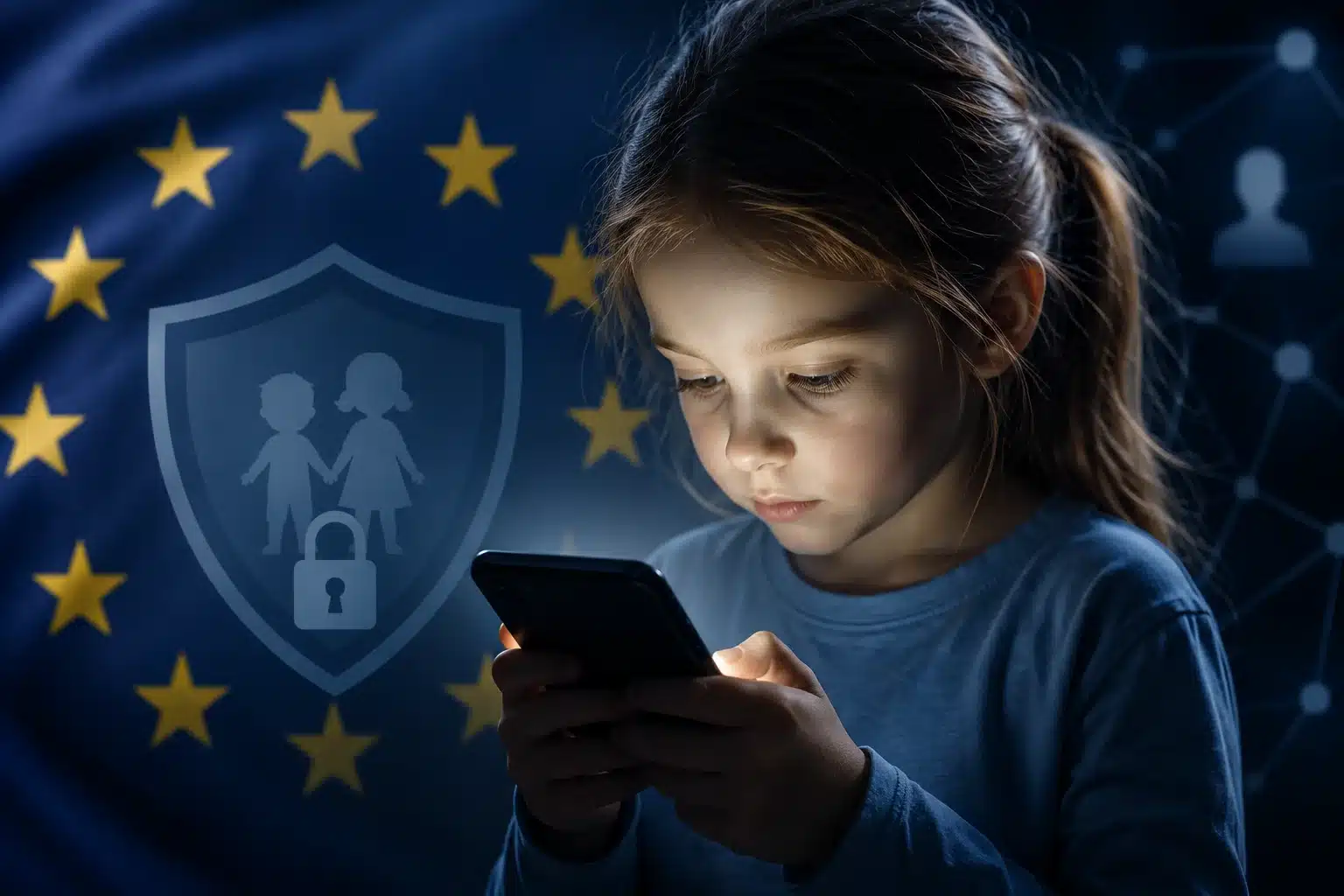
The European Commission is moving closer to introducing new measures on Child Safety Online after President Ursula von der Leyen received recommendations from a Special Panel examining the impact of social media on children. The report, released Monday, calls for stronger safeguards, greater platform accountability, and age-appropriate restrictions as the EU prepares to review the findings and present legislative proposals after the summer.
Speaking alongside the panel's co-chairs, von der Leyen said protecting children online has become one of the most pressing challenges facing governments. She stressed that parents, not algorithms, should shape children's development and warned that the current digital environment is exposing young users to growing risks.
Von der Leyen said the Special Panel examined both the opportunities and harms created by social media algorithms and their effects on children. According to the findings highlighted in her statement, young people across Europe now spend between four and six hours each day on screens, while nearly 60% of young children have experienced emotional or psychosocial problems online.
She said these challenges include loss of sleep, anxiety, depression, cyberbullying, exposure to harmful content, and unwanted online interactions, all occurring while children's brains are still developing.
"We believe that parents bring up our kids, and not predatory algorithms," von der Leyen said, adding that social media platforms should no longer have unrestricted access to children.
A key recommendation focuses on holding technology companies accountable for the safety of their services. Von der Leyen said platforms that build online systems should also be responsible for ensuring they do not harm users, particularly children.
She pointed to the Digital Services Act (DSA) as the EU's framework for requiring providers to remove harmful features, including addictive algorithms, dark patterns, harmful content, and unwanted contacts.
According to the Commission President, the EU has already taken action under the Digital Services Act against TikTok over its addictive design and recently against Meta. She said platforms have a duty of care toward users and must respond quickly when children report harmful experiences.
The report also strengthens the case for introducing social media age restrictions, with von der Leyen arguing that the debate is no longer about whether children use social media but when platforms should be allowed to reach them.
She said the European Union's age verification app is designed to help parents by providing an easy-to-use, privacy-preserving, and open-source tool to verify age before accessing online platforms.
Von der Leyen also suggested that Europe should consider establishing a "social media start date," comparing it to existing age limits for driving and purchasing alcohol.
According to the statement, children under the age of three should have no exposure to screens or digital platforms. Older children should only access social media under parental, caregiver, or teacher supervision and within limited time periods.
Von der Leyen said childhood is a critical stage of brain development and argued that children need opportunities to play, build real-world friendships, and develop their identities before algorithms begin shaping their online experiences.
She added that policymakers should first identify platforms with age-inappropriate and addictive features, describing the category as "social media plus," before considering phased access for different age groups.
The European Commission said the report comes after consultations with parents, educators, experts, young people, EU member states, and international partners, including Australia.
Von der Leyen confirmed that the Commission will now review the recommendations before presenting a formal proposal after the summer.
While no legislative measures have yet been announced, the report signals the EU's intent to strengthen Child Safety Online protections by expanding platform accountability, improving age verification, and evaluating new rules governing children's access to social media.





According to an official statement, UIDAI and NFSU have established a structured collaboration designed to address emerging challenges in cybersecurity and digital forensics.