Visualização de leitura

US Puts $10 Million Bounty on Alleged Iranian Cyber Chief

$10 Million Reward for Amir Yaryab

The U.S. State Department has posted a $10 million reward for Amir Yaryab, a senior Iranian official accused of leading the Islamic Revolutionary Guard Corps Cyber-Electronic Command (IRGC-CEC) Cyber Operations Command and directing multiple hacking groups targeting critical infrastructure across the United States, Europe and the Middle East. According to the Rewards for Justice program, Yaryab allegedly oversees cyber operations conducted by IRGC-CEC-affiliated groups including CyberAv3ngers, Dadeh Afzar Arman (DAA) and Mehrsam Andisheh Saz Nik (MASN). U.S. officials accuse these groups of using malware and conducting cyber and cyber-enabled information operations against civilian infrastructure worldwide.

$10 Million Reward for Amir Yaryab

The $10 million reward for Amir Yaryab seeks information leading to his identification or location. The offer applies to individuals acting at the direction or under the control of a foreign government who participate in malicious cyber activities against U.S. critical infrastructure in violation of the Computer Fraud and Abuse Act. [caption id="attachment_113961" align="aligncenter" width="600"]$10 million reward for Amir Yaryab Image Source: https://rewardsforjustice.net/[/caption] Yaryab is also accused of directing Shahid Hemmat and Shahid Shushtari, two groups linked to cyberattacks against U.S. organizations. The sectors allegedly targeted include defense, news, shipping, travel, energy, financial services and telecommunications. The six Iranian officials named in the advisory are linked to Iran's Islamic Revolutionary Guard Corps and its Cyber-Electronic Command.

Iranian Cyberattacks Target PLCs

The allegations also involve attacks against programmable logic controllers (PLCs), highlighting concerns around Iranian cyberattacks targeting industrial systems rather than focusing only on data theft. U.S. officials said Iranian-linked hackers compromised industrial control systems, specifically targeting the Vision series of PLCs manufactured by Israel-based Unitronics. These devices are used across water and wastewater, energy, food and beverage, manufacturing and healthcare sectors. The attackers exploited default credentials on the devices and left anti-Israel messages. Some of the compromises reportedly rendered the PLCs inoperative. The CyberAv3ngers group, which is linked to the IRGC-CEC, claimed responsibility for attacks against Unitronics Vision PLCs in October 2023. Beginning in November 2023, the group compromised default credentials in PLCs across the United States and left messages on the devices' digital screens.

CyberAv3ngers Attacks Critical Infrastructure

CyberAv3ngers has also claimed responsibility for attacks affecting other infrastructure. In October 2023, the group claimed it had breached ORPAK Systems, a provider of gas station solutions in Israel. The group said it had obtained the company's database and intended to publish it through its Telegram channel. The attack was reported to have disconnected 200 gasoline pumps from the system in the occupied Palestinian territories. In December 2023, CyberAv3ngers also claimed to possess and sell 1TB of data allegedly linked to Israel's electricity infrastructure. The group advertised the dataset for 5 Bitcoin, with an initial 100GB portion also offered at the same price.

U.S. Agencies Warn of PLC Cyberattacks

Concerns over critical infrastructure attacks involving PLCs continued into 2026. A joint advisory issued on April 7 by the FBI, CISA, NSA and other agencies warned that Iran-linked threat actors were actively exploiting internet-facing PLCs. The advisory said several organizations had experienced operational disruptions and financial losses after attackers interfered with industrial processes. The developments come amid broader U.S. actions against Iranian-linked cyber activity. The Justice Department accused Iran-connected hackers of breaching employee email accounts associated with the Department of Labor, the Federal Energy Regulatory Commission and multiple United Nations organizations. The Treasury Department also sanctioned Iranian nationals over cyberattacks targeting critical infrastructure. The State Department's reward offer places Amir Yaryab and the alleged activities of IRGC-CEC-linked groups at the center of the U.S. effort to identify individuals responsible for malicious cyber activity targeting critical infrastructure.

CISA, FBI Urge Clearer Communication During Major Outages

outage communications

The CISA and FBI, along with cybersecurity agencies from Australia, Canada, New Zealand and the U.K., have released new guidance on outage communications for service providers dealing with major IT and OT outages. The guide calls for prompt, factual and audience-specific communication during disruptions caused by malicious cyber activity or non-malicious events.

Titled “Communicating Under Pressure: Best Practices for Service Providers,” the guidance says effective communication is critical to limiting operational impact when IT and OT outages affect customers, network defenders, critical infrastructure owners and operators, and the public. It recommends that organizations clearly communicate what is known, what remains unknown and what is still under investigation, while providing frequent updates as circumstances change.

Outage Communications Should Start With Facts

The agencies recommend that service providers establish an outage communications plan before an incident occurs. The plan should define incident thresholds, escalation paths, target audiences and procedures for status pages, customer and partner notices, and regulatory communications. Organizations are also advised to establish cross-functional incident teams involving engineering and operations, communications, legal, risk and compliance, and customer support.

The guidance calls for clearly defined roles, including an incident lead, communications lead and spokesperson. It also recommends parallel workstreams so technical teams can focus on diagnosing and remediating the root cause while communications teams manage external messaging and leadership handles strategy and regulatory requirements.

For organizations responding to cyber incidents, the guidance places particular emphasis on balancing transparency with operational security. If malicious activity is suspected or confirmed, external communications should not compromise investigations, containment efforts or other response activities. Organizations are also advised against making premature conclusions when the root cause remains under investigation.

Service Providers Urged to Tailor Messages

The guidance recommends segmenting communications for technical teams, executives and the public. Audiences can include enterprise IT teams and security operations centers, employees and customers, government partners and regulators, critical infrastructure owners and operators, as well as the media and general public.

During an outage, organizations should lead with a concise summary covering affected systems, user impact, scope and the known cause without speculation. The agencies also advise against vague descriptions such as “service degradation” and recommend messaging that can be understood quickly during high-pressure situations.

Transparency is another central principle. Service providers are advised to state what they know and do not know, use a single source of truth such as a status page, and focus communications on actionable guidance rather than reputation management. Customers should be told what actions they need to take or clearly informed when no action is required.

The guidance also calls for continuous, time-stamped updates that show the incident timeline, actions taken, and recovery milestones. Organizations should maintain a single status page and align external messaging with legal, contractual and sector-specific reporting obligations.

Agencies ultimately frame effective outage communications around five principles: immediate acknowledgement, technical and actionable information, transparency, accountability, and continuous updates. For service providers, the guidance positions communication as an important part of incident response, alongside technical remediation and recovery.

Two Joyfill npm Packages Found Delivering DEV#POPPER Malware

joyfill npm Packages

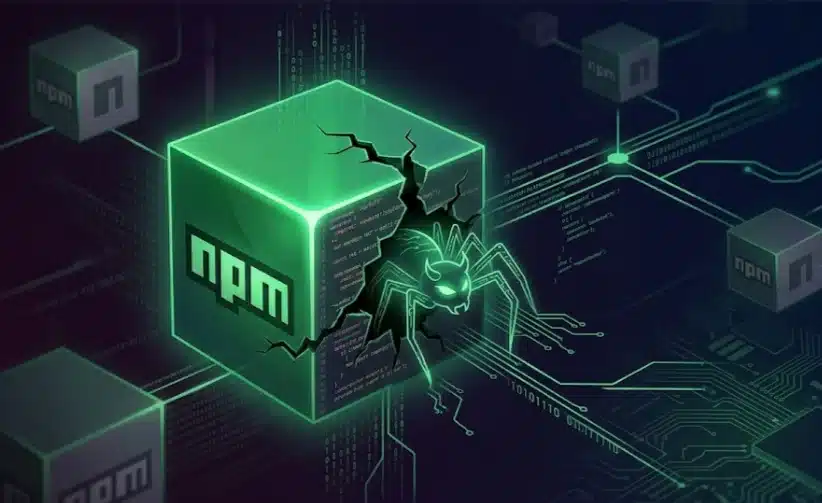
Two beta releases of joyfill npm Packages have been found distributing a malware implant capable of delivering the DEV#POPPER remote access trojan (RAT) . The compromised Node.js packages use an import-time loader that retrieves encrypted payloads through blockchain transactions instead of traditional command-and-control infrastructure.  The affected releases are @joyfill/layouts@0.1.2-2773.beta.0 and @joyfill/components@4.0.0-rc24-2773-beta.4. Joyfill develops software development kits for embedding forms, documents, and PDFs into web and mobile applications. While both packages collectively receive around 16,000 weekly npm downloads, researchers noted that the figure overlaps because @joyfill/components depends on @joyfill/layouts, and it does not represent installations of the compromised beta versions. 

Joyfill npm Packages Deliver DEV#POPPER RAT Malware

Unlike conventional npm attacks that rely on lifecycle scripts, the malicious code executes when the Node.js module is imported. This means the implant activates during package loading, making npm install --ignore-scripts ineffective once the affected module is used.  Socket's analysis identified code patterns matching the PolinRider loader family and linked the final payload to the DEV#POPPER malware family. Researchers emphasized that these findings are based on technical similarities and published research rather than attributing the compromise to a specific threat actor.  According to the report, the compromised joyfill npm Packages are capable of arbitrary code execution across development environments, CI runners, test systems, server-side rendering environments, and production builds. The recovered 77 KB Node.js RAT can collect host information, establish a Socket.IO remote-control channel, execute JavaScript or shell commands, upload files, access clipboard data, and modify developer-related files to maintain persistence. 

Blockchain Infrastructure Powers Multi-Stage Malware 

Investigators found that both malicious releases were published on 28 July 2026 using Node.js 18.20.0 and npm 10.5.0, with the shared prerelease build marker 2773. Source maps indicate the malicious code was present during the build process, although the report states this does not determine whether attackers compromised a developer workstation, source repository, CI pipeline or publishing credentials.  The malware uses a multi-stage delivery process, retrieving encrypted payloads through Tron, Aptos and BNB Smart Chain transactions. Researchers warned that this blockchain-based approach enables attackers to update payloads without publishing new npm releases.  Additional payloads downloaded by the malware included a detached Node.js bootstrap and a Python credential stealer believed, with medium confidence, to be a variant of OmniStealer. 

Recommendations for Developers and Security Teams 

The report also noted significant similarities to an incident analysed by eSentire earlier in 2026, in which DEV#POPPER was deployed via a weaponised GitHub repository. However, researchers believe the current campaign most likely resulted from a maintainer compromise rather than a malicious project clone.  Security teams are advised to remove both affected joyfill npm Packages, replace them with verified versions @joyfill/layouts@0.1.1 and @joyfill/components@4.0.0-rc24, isolate any systems that imported the malicious releases, and rotate credentials from unaffected machines. The researchers also recommend monitoring Node.js environments for unusual blockchain RPC traffic and reviewing systems for persistence mechanisms that may remain even after the packages are removed. 

AI Cyberattacks Are Escalating Across the Americas. This Webinar Explains Why

Americas cyber threat landscape

The Americas cyber threat landscape saw a significant rise in AI-powered cyberattacks, ransomware campaigns, and critical infrastructure targeting during the first quarter of 2026, reflecting how rapidly cyber threats are evolving across the region. Security researchers observed that threat actors increasingly used generative AI to automate phishing campaigns, create convincing deepfakes, and accelerate exploitation techniques. At the same time, ransomware groups, hacktivists, and nation-state actors intensified attacks against organizations operating in healthcare, manufacturing, utilities, energy, and government sectors across North and Latin America. To help cybersecurity professionals better understand these evolving risks, Cyble will host a live webinar on May 28, 2026, focused on the key cyber threats, adversary tactics, and emerging attack trends shaping the Americas cyber threat landscape in Q1 2026. Americas cyber threat landscape

AI-Powered Cyber Threats Continue to Grow

One of the most notable developments during Q1 2026 was the increasing use of artificial intelligence by cybercriminals and advanced threat groups. Threat actors are now leveraging generative AI to produce highly targeted phishing emails, fake identities, deepfake content, and automated social engineering campaigns at scale. Security analysts warn that these AI-driven techniques are making attacks more difficult to identify and increasing the success rate of phishing and credential theft operations. Researchers also observed that attackers are using AI to accelerate reconnaissance and exploitation activities, enabling cybercriminals to move faster and target larger numbers of victims simultaneously. As AI-powered attacks become more sophisticated, organizations are facing growing pressure to strengthen detection capabilities and improve incident response readiness.

Critical Infrastructure Remains a Primary Target

The Americas cyber threat landscape also highlighted the continued targeting of critical infrastructure sectors during Q1 2026. Healthcare providers, energy operators, utilities, manufacturing organizations, and public sector institutions experienced persistent cyber threats from ransomware operators, hacktivist groups, and nation-state actors. Security researchers noted increasing concerns around operational technology environments and attacks designed to disrupt essential services. Supply chain vulnerabilities and third-party risks also remained major challenges for organizations responsible for maintaining critical infrastructure. Experts believe these attacks are no longer solely focused on financial extortion. Many campaigns are increasingly linked to geopolitical tensions, intelligence gathering, and disruption-focused objectives targeting national infrastructure and strategic industries. Cybersecurity professionals looking for deeper insights into infrastructure threats and AI-driven attack trends can register for the upcoming webinar hosted by Cyble.
Register Here

Nation-State Cyber Operations Intensify

Threat intelligence findings from Q1 2026 also revealed growing activity from nation-state groups associated with China, Russia, Iran, and North Korea. These groups continued targeting organizations across the Americas through espionage campaigns, vulnerability exploitation, credential theft, and malware deployment. Researchers observed that government entities, infrastructure operators, and large enterprises remained among the primary targets of these advanced cyber operations. Security experts warn that geopolitical developments continue to influence cyber activity, increasing the need for organizations to monitor emerging risks and strengthen resilience against sophisticated attacks.

Ransomware and Dark Web Activity Continue

Despite the growing attention around AI-driven threats, ransomware remained one of the most disruptive elements of the Americas cyber threat landscape in Q1 2026. Threat actors continued targeting organizations across multiple industries using double extortion tactics, data theft, and operational disruption strategies. Researchers also identified ongoing activity across dark web marketplaces and underground forums supporting cybercriminal operations through the sale of stolen credentials, access data, and attack tools. Hacktivist groups also remained active during the quarter, particularly in campaigns linked to political and regional conflicts. Security teams are increasingly prioritizing real-time threat intelligence and attack surface visibility to identify risks earlier and respond more effectively to emerging threats. The upcoming webinar will feature insights from Kaustubh Medhe, Head of Research & Intelligence at Cyble, Brian Osterman, Senior Solutions Engineer for the US region, and moderator Mihir Bagwe. The session will explore ransomware trends, AI-powered attacks, nation-state cyber operations, and practical recommendations for strengthening cyber resilience in 2026. Registered attendees will also receive a complimentary copy of the Americas Threat Landscape Report – Q1 2026. Webinar Details Date: Wednesday, May 28, 2026 Time: 1:00 PM ET Duration: 45 Minutes

Registration Link: Click Here

National Technology Day 2026: India’s AI Growth Puts Security in Focus

National Technology Day 2026

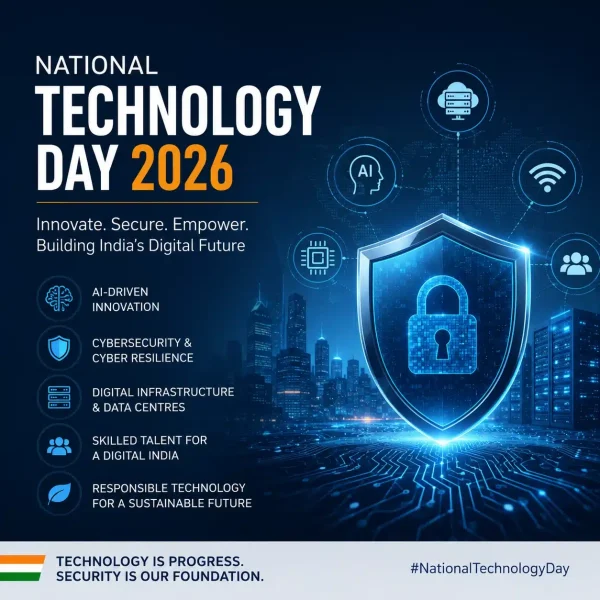
As India marks National Technology Day, industry leaders say the country’s technology ambitions are now closely tied to cybersecurity, AI infrastructure, and digital resilience. With businesses rapidly adopting artificial intelligence, cloud platforms, and connected systems, experts believe the next phase of growth will depend on how securely and responsibly these technologies are deployed. Across industries, organisations are moving beyond experimental AI projects and integrating intelligent systems directly into operations, customer engagement, healthcare, infrastructure, and enterprise decision-making. At the same time, cybersecurity leaders are warning that the rise of AI-driven environments is also creating faster and more sophisticated cyber threats.

National Technology Day 2026 Reflects India’s AI-First Push

According to Ritesh Kapadia, Field Chief Technology Officer, iLink Digital, technology discussions are increasingly centred around how AI systems behave and interact within organisations rather than just the tools themselves. Kapadia said AI is evolving from passive software into active systems capable of analysing context, triggering actions, and supporting enterprise decisions. He noted that organisations are gradually building “AI-first enterprises” where intelligence becomes part of daily workflows instead of operating as a separate technology layer. "Technology conversations today are becoming less focused on tools and more focused on behaviour. AI systems are evolving from passive platforms into active collaborators that can analyse context, trigger actions and support enterprise decision making. This shift is laying the foundation for AI first enterprises, where intelligence is embedded into everyday operations, workflows and business decisions rather than functioning as a separate layer of technology." He added that enterprises are focusing on connected systems that can respond intelligently while maintaining governance and operational clarity. The growing use of AI across enterprise environments is also increasing cybersecurity concerns. Security teams are now dealing with automated attacks, deepfakes, AI-assisted vulnerability discovery, and identity-based threats that can move at machine speed. National Technology Day

Cybersecurity, Core Part of Digital Transformation

Sunil Sharma, Managing Director & VP – Sales (India & SAARC) at Sophos, said National Technology Day 2026 is a reminder that innovation and cybersecurity must grow together. According to Sharma, organisations can no longer depend only on traditional or reactive security models. Businesses are now being pushed toward continuous threat monitoring and real-time response frameworks as attackers use AI to scale operations faster than before. He also highlighted identity security as a major challenge for enterprises managing cloud systems, remote access environments, and interconnected digital ecosystems. “The threat landscape is evolving rapidly,” Sharma said, pointing to deepfakes, automated attacks, and AI-driven vulnerability discovery as some of the biggest emerging concerns. Industry leaders believe cyber resilience is becoming equally important as digital transformation, especially as Indian enterprises continue accelerating cloud adoption and AI integration.

AI Infrastructure and Data Centres Gain Importance

Technology executives also stressed the importance of building infrastructure capable of supporting India’s growing AI ecosystem. AS Prasad, Vice President, Product Management, Vertiv, said the future of AI will depend heavily on infrastructure decisions being made today, particularly around power systems, cooling technologies, and data centre architecture. "The next decade of AI will be won in the infrastructure layer, in the power systems, the cooling architecture, and the data center design decisions being made right now. Prasad noted that AI workloads require scalable and reliable infrastructure to operate efficiently at enterprise and national levels. That view was echoed by Narendra Sen, Founder & CEO, RackBank & NeevCloud, who described data centres as critical to India’s digital future. Sen said India’s policy initiatives, including the IndiaAI Mission and data localisation efforts, are creating momentum for sovereign AI infrastructure and homegrown cloud ecosystems. He added that infrastructure readiness will determine how effectively India can scale AI adoption across industries and government systems.

Responsible AI Adoption Expands Across Industries

The life sciences sector is also witnessing increased AI adoption as companies look to improve operational efficiency and decision-making. Duraisamy Rajan Palani (Durai), Founder and CEO of Archimedis Digital, said AI is helping accelerate innovation in drug discovery, clinical trials, and patient engagement. However, he noted that as AI systems move beyond automation and begin supporting expert-level decisions, accuracy, accountability, and regulatory compliance become increasingly important. Industry experts say responsible AI adoption will remain a key focus area as organisations balance innovation with governance requirements. Meanwhile, Vikram Prabakar highlighted how technology is also being used to address sustainability and inclusion challenges. He said AI-powered waste traceability and digital recycling platforms are helping improve transparency and efficiency while supporting India’s broader sustainability goals.

India’s Technology Growth Also Depends on Skilled Talent

While India continues to invest heavily in AI infrastructure and digital transformation, experts say the shortage of specialised talent remains a growing challenge. Milind Shah, Managing Director, Randstad Digital India, said demand for professionals skilled in AI, cybersecurity, cloud computing, and digital infrastructure is increasing rapidly. He added that many of these specialised roles have emerged only recently, making workforce development a critical priority for businesses, academic institutions, and policymakers. "India is on track to become one of the world’s largest digital infrastructure markets within this decade, supported by sustained investments, policy momentum, and accelerating demand. What now requires equal emphasis is the depth, quality, and readiness of the talent pipeline. AI, cloud, and advanced digital infrastructure rely on highly skilled engineers, architects, and operators capable of managing complex, rapidly evolving environments. Many of these roles have emerged only recently, making workforce readiness a strategic priority rather than a secondary consideration. Addressing this gap will require coordinated action across industry, academia, and policy frameworks to build both scale and specialisation." As National Technology Day 2026 highlights India’s progress in AI and digital innovation, industry leaders say long-term success will depend on building secure infrastructure, strengthening cyber resilience, and preparing a workforce capable of managing increasingly complex technology environments.

CISA Launches CI Fortify to Defend Critical Infrastructure From Nation-State Cyber Threats

CI Fortify

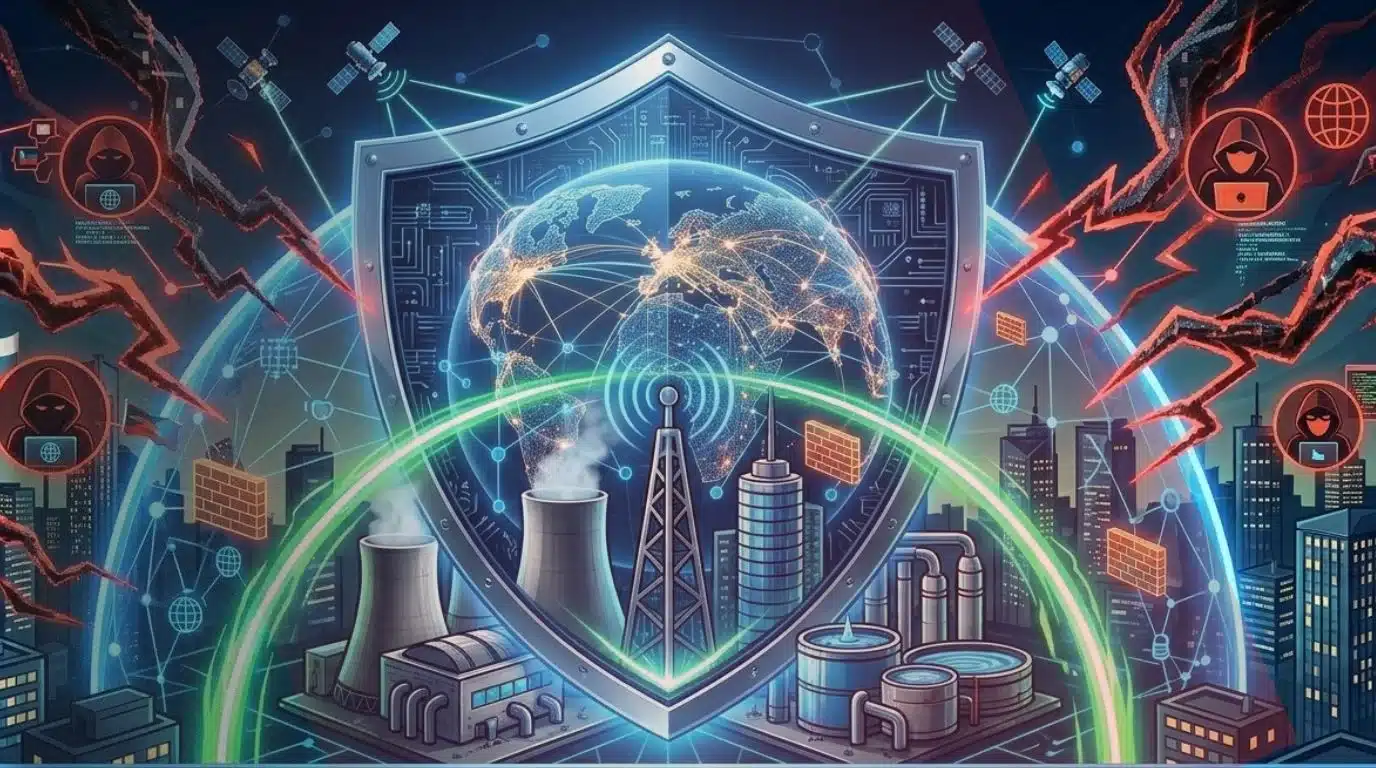
The U.S. Cybersecurity and Infrastructure Security Agency (CISA) has launched a new initiative called “CI Fortify” aimed at helping critical infrastructure operators prepare for disruptive cyberattacks linked to geopolitical conflicts. The initiative comes amid growing concerns over nation-state cyber threats targeting operational technology (OT) systems that support essential services across the United States. The CI Fortify initiative focuses on improving critical infrastructure resilience through two key objectives: isolation and recovery. CISA said the effort is designed to help operators maintain essential operations even if adversaries compromise telecommunications networks, internet services, or industrial control systems. According to the agency, nation-state actors are no longer limiting their activities to espionage. Instead, threat groups have increasingly been pre-positioning themselves inside critical infrastructure environments to potentially disrupt or destroy systems during future geopolitical conflicts.

CI Fortify Initiative Focuses on Isolation and Recovery

Under the CI Fortify initiative, CISA is urging critical infrastructure organizations to assume that third-party communications and service providers may become unreliable during a crisis. Operators are also being asked to plan under the assumption that threat actors may already have some level of access to OT networks. Nick Andersen, Acting Director at CISA, emphasized the need for organizations to prepare for worst-case operational scenarios. “In a geopolitical crisis, the critical infrastructure organizations Americans rely on must be able to continue delivering, at a minimum, crucial services,” Andersen said. “They must be able to isolate vital systems from harm, continue operating in that isolated state, and quickly recover any systems that an adversary may successfully compromise.” The isolation strategy outlined under CI Fortify involves proactively disconnecting operational technology systems from external business networks and third-party connections. CISA said this approach is intended to prevent cyber impacts from spreading into OT environments while allowing organizations to continue delivering essential services in a degraded communications environment. The agency advised operators to identify critical customers, including military infrastructure and other lifeline services, and determine the minimum operational capabilities needed to support them during emergencies. CISA also recommended updating engineering processes and business continuity plans to support safe operations for extended periods while systems remain isolated.

Recovery Planning Central to Critical Infrastructure Resilience

Alongside isolation, the CI Fortify initiative places strong emphasis on recovery planning. CISA urged operators to maintain updated system documentation, create secure backups of critical files, and regularly practice system replacement or manual operational transitions. The agency noted that organizations should also identify communications dependencies that could complicate recovery efforts, such as licensing servers, remote vendor access, or upstream network connections. CISA encouraged operators to work closely with managed service providers, system integrators, and vendors to understand potential failure points and establish alternative recovery pathways. The initiative also highlights broader benefits of emergency planning beyond cybersecurity incidents. According to CISA, the same planning processes can help organizations maintain operations during weather-related disruptions, equipment failures, and safety emergencies. The agency said isolation planning can help cut off command-and-control access to compromised systems, while strong recovery preparation can reduce incident response costs and shorten recovery timelines.

Security Vendors and Service Providers Asked to Support CI Fortify

The CI Fortify initiative extends beyond infrastructure operators and calls on cybersecurity vendors, industrial automation suppliers, and managed service providers to support resilience planning efforts. Industrial control system vendors are being encouraged to identify barriers that could interfere with isolation and recovery procedures, including licensing restrictions and server dependency issues. Managed service providers and integrators are expected to assist organizations in engineering updates, local backup collection, and recovery documentation planning. Meanwhile, security vendors are being asked to support threat monitoring and provide intelligence if nation-state actors shift from espionage-focused activity to destructive cyber operations. CISA also requested vendors share information related to tactics that could undermine recovery or bypass isolation protections, including malicious firmware updates and vulnerabilities affecting software-based data diodes.

Volt Typhoon Cyberattacks Continue to Shape U.S. Cybersecurity Strategy

The launch of CI Fortify is closely tied to ongoing concerns surrounding the Volt Typhoon cyberattacks, which U.S. officials have linked to Chinese state-sponsored threat actors. CISA’s initiative specifically references the Volt Typhoon campaign as an example of how adversaries have attempted to establish long-term access inside U.S. critical infrastructure systems to potentially support disruptive actions during military conflicts. The Volt Typhoon operation first became public in 2023, when U.S. authorities revealed that Chinese hackers had infiltrated multiple sectors of American critical infrastructure. Former CISA Director Jen Easterly stated in 2024 that the agency had identified and removed Volt Typhoon intrusions across several sectors. She later reiterated in 2025 that efforts continued to focus on identifying and evicting Chinese cyber actors from critical infrastructure environments. Despite these operations, cybersecurity researchers and some government officials have warned that Chinese threat actors may still retain access to portions of critical infrastructure networks. Several experts have argued that nation-state groups remain deeply embedded in certain environments despite years of remediation efforts. With the CI Fortify initiative, CISA appears to be shifting focus toward operational resilience, recognizing that prevention alone may not be sufficient against sophisticated nation-state cyber threats targeting U.S. critical infrastructure.

NCSC Warns Organisations to Act Fast as Hidden Software Flaws Surface

vulnerability patch wave

Organisations worldwide are being urged to prepare for a vulnerability patch wave, as security experts warn that advances in artificial intelligence (AI) could rapidly expose long-standing weaknesses across software systems. The warning comes from National Cyber Security Centre (NCSC), which says businesses must act now to strengthen their environments before a surge of critical updates arrives. In a blog, Chief Technology Officer Ollie Whitehouse highlighted that years of accumulated technical debt are now becoming a major cybersecurity risk. Technical debt refers to unresolved flaws and compromises in software that arise when organisations prioritise speed or short-term delivery over long-term resilience. According to Whitehouse, artificial intelligence is accelerating the problem. Skilled attackers are increasingly able to use AI tools to identify and exploit vulnerabilities at scale, forcing what the NCSC describes as a “correction” across the technology ecosystem. This is expected to trigger a vulnerability patch wave, with a high volume of security updates affecting open source, commercial, proprietary, and software-as-a-service platforms.

Prioritising External Attack Surfaces

As part of preparing for the vulnerability patch wave, the NCSC advises organisations to first focus on their external attack surfaces. Internet-facing systems, cloud services, and exposed infrastructure present the highest risk when new vulnerabilities are disclosed. The guidance recommends a perimeter-first approach. Organisations should secure outward-facing technologies before moving deeper into internal systems. This reduces the likelihood that attackers can exploit newly discovered weaknesses during the vulnerability patch wave. Where resources are limited, priority should be given to patching systems that are directly exposed to the internet. Critical security infrastructure should follow next. However, the NCSC cautions that patching alone will not solve every issue. Legacy and end-of-life systems remain a major concern. Many of these technologies no longer receive security updates, leaving organisations vulnerable even during a vulnerability patch wave. In such cases, businesses may need to replace outdated systems or bring them back into supported environments, especially if they are externally accessible.

Preparing for Faster and Large-scale Patching

The expected vulnerability patch wave will require organisations to rethink how they manage updates. The NCSC is urging businesses to prepare for faster, more frequent, and large-scale deployment of security patches, including across supply chains. Several key measures have been recommended:
  • Enable automatic updates wherever possible to reduce operational burden
  • Adopt secure “hot patching” to apply fixes without service disruption
  • Ensure internal processes support rapid and large-scale updates
  • Use risk-based prioritisation models such as Stakeholder Specific Vulnerability Categorisation (SSVC)
Whitehouse noted that organisations must be ready to accelerate patching timelines when critical vulnerabilities are actively exploited, particularly those affecting internet-facing systems. At the core of this approach is an “update by default” policy. This means applying software updates as quickly as possible, ideally through automated processes. While this may not always be feasible for safety-critical or operational technology systems, the NCSC says it should form the foundation of modern vulnerability management strategies.

Beyond Vulnerability Patch Wave: Addressing Systemic Risks

The NCSC emphasises that the vulnerability patch wave is only part of a broader cybersecurity challenge. Patching addresses immediate risks, but it does not eliminate the underlying causes of technical debt. Technology vendors are being encouraged to build more secure systems from the outset. This includes adopting memory safety and containment technologies such as CHERI, which can reduce the likelihood of exploitable vulnerabilities. For organisations operating critical services, strengthening cybersecurity fundamentals is equally important. Frameworks such as Cyber Essentials and sector-specific resilience models can help reduce the impact of breaches and improve overall security posture. Additional guidance has also been issued for high-risk environments, covering areas such as privileged access workstations, cross-domain security architecture, and threat detection through observability and proactive hunting.

Organisations Urged to Act Now

The NCSC has made it clear that preparation cannot be delayed. The anticipated vulnerability patch wave is expected to impact organisations of all sizes and sectors. Businesses are advised to review their vulnerability management processes, assess their exposure, and ensure their supply chains are also ready to respond. Larger organisations, in particular, are encouraged to seek assurance from both commercial and open-source partners. As Whitehouse concluded, readiness for the vulnerability patch wave will depend on proactive planning, strong fundamentals, and the ability to respond quickly at scale.
❌