Visualização de leitura

US Puts $10 Million Bounty on Alleged Iranian Cyber Chief

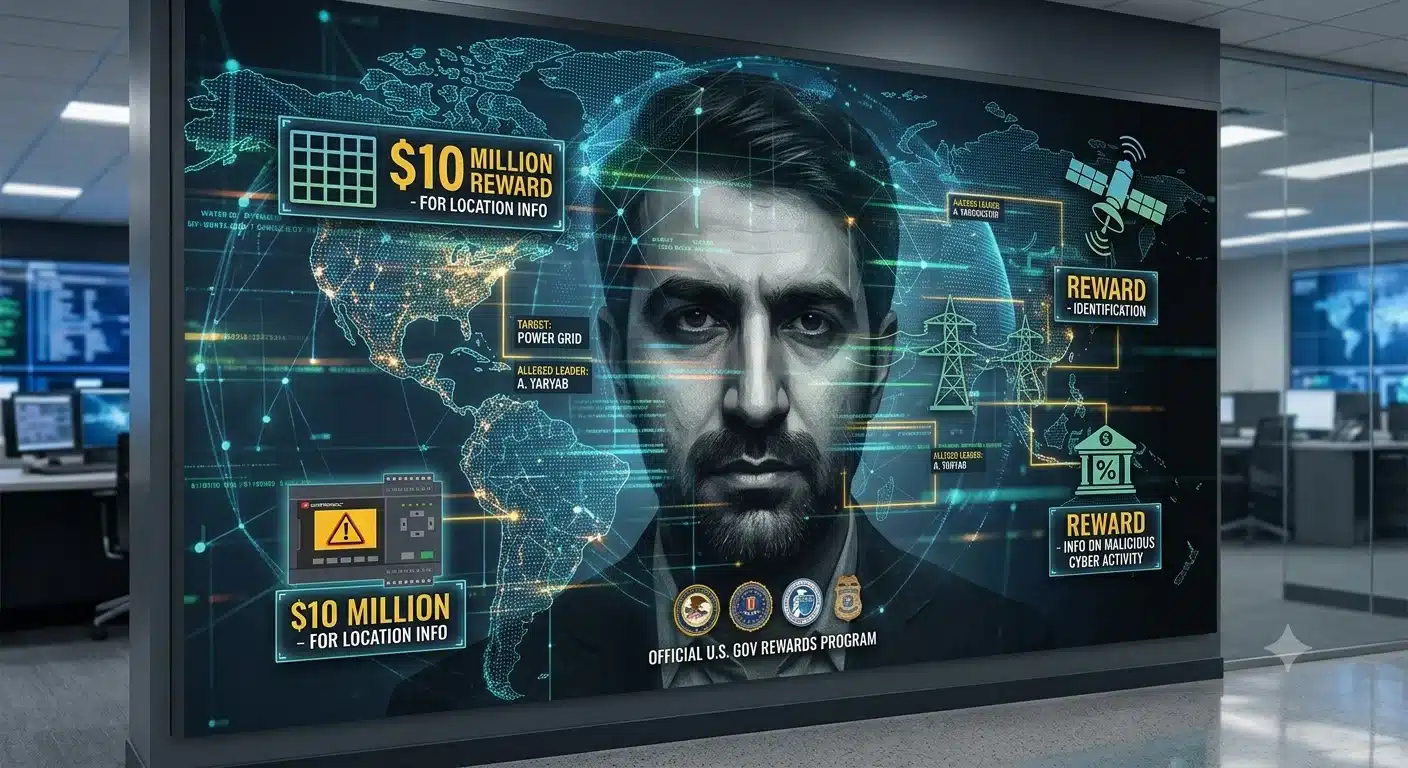
$10 Million Reward for Amir Yaryab

The U.S. State Department has posted a $10 million reward for Amir Yaryab, a senior Iranian official accused of leading the Islamic Revolutionary Guard Corps Cyber-Electronic Command (IRGC-CEC) Cyber Operations Command and directing multiple hacking groups targeting critical infrastructure across the United States, Europe and the Middle East. According to the Rewards for Justice program, Yaryab allegedly oversees cyber operations conducted by IRGC-CEC-affiliated groups including CyberAv3ngers, Dadeh Afzar Arman (DAA) and Mehrsam Andisheh Saz Nik (MASN). U.S. officials accuse these groups of using malware and conducting cyber and cyber-enabled information operations against civilian infrastructure worldwide.

$10 Million Reward for Amir Yaryab

The $10 million reward for Amir Yaryab seeks information leading to his identification or location. The offer applies to individuals acting at the direction or under the control of a foreign government who participate in malicious cyber activities against U.S. critical infrastructure in violation of the Computer Fraud and Abuse Act. [caption id="attachment_113961" align="aligncenter" width="600"]$10 million reward for Amir Yaryab Image Source: https://rewardsforjustice.net/[/caption] Yaryab is also accused of directing Shahid Hemmat and Shahid Shushtari, two groups linked to cyberattacks against U.S. organizations. The sectors allegedly targeted include defense, news, shipping, travel, energy, financial services and telecommunications. The six Iranian officials named in the advisory are linked to Iran's Islamic Revolutionary Guard Corps and its Cyber-Electronic Command.

Iranian Cyberattacks Target PLCs

The allegations also involve attacks against programmable logic controllers (PLCs), highlighting concerns around Iranian cyberattacks targeting industrial systems rather than focusing only on data theft. U.S. officials said Iranian-linked hackers compromised industrial control systems, specifically targeting the Vision series of PLCs manufactured by Israel-based Unitronics. These devices are used across water and wastewater, energy, food and beverage, manufacturing and healthcare sectors. The attackers exploited default credentials on the devices and left anti-Israel messages. Some of the compromises reportedly rendered the PLCs inoperative. The CyberAv3ngers group, which is linked to the IRGC-CEC, claimed responsibility for attacks against Unitronics Vision PLCs in October 2023. Beginning in November 2023, the group compromised default credentials in PLCs across the United States and left messages on the devices' digital screens.

CyberAv3ngers Attacks Critical Infrastructure

CyberAv3ngers has also claimed responsibility for attacks affecting other infrastructure. In October 2023, the group claimed it had breached ORPAK Systems, a provider of gas station solutions in Israel. The group said it had obtained the company's database and intended to publish it through its Telegram channel. The attack was reported to have disconnected 200 gasoline pumps from the system in the occupied Palestinian territories. In December 2023, CyberAv3ngers also claimed to possess and sell 1TB of data allegedly linked to Israel's electricity infrastructure. The group advertised the dataset for 5 Bitcoin, with an initial 100GB portion also offered at the same price.

U.S. Agencies Warn of PLC Cyberattacks

Concerns over critical infrastructure attacks involving PLCs continued into 2026. A joint advisory issued on April 7 by the FBI, CISA, NSA and other agencies warned that Iran-linked threat actors were actively exploiting internet-facing PLCs. The advisory said several organizations had experienced operational disruptions and financial losses after attackers interfered with industrial processes. The developments come amid broader U.S. actions against Iranian-linked cyber activity. The Justice Department accused Iran-connected hackers of breaching employee email accounts associated with the Department of Labor, the Federal Energy Regulatory Commission and multiple United Nations organizations. The Treasury Department also sanctioned Iranian nationals over cyberattacks targeting critical infrastructure. The State Department's reward offer places Amir Yaryab and the alleged activities of IRGC-CEC-linked groups at the center of the U.S. effort to identify individuals responsible for malicious cyber activity targeting critical infrastructure.

Anthropic Warns Commodity Infostealers Are Hijacking Claude Sessions to Drain Paid Usage

A session cookie depicted as a key being stolen from a browser window while a two-factor authentication prompt sits bypassed, illustrating Claude session hijacking by infostealer malware.

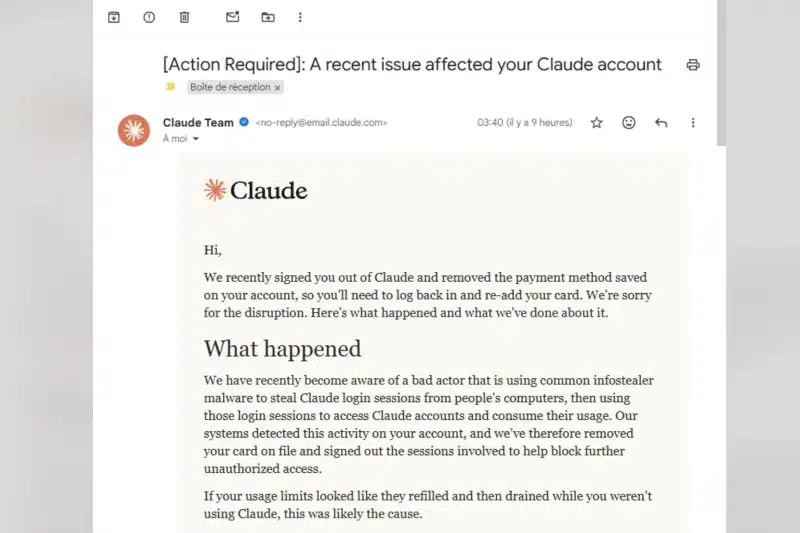
Anthropic warned users over the weekend that a threat actor is using widely available infostealer malware to hijack active Claude login sessions from infected computers, then using those sessions to run up victims' paid usage without ever needing a password or a two-factor code.

The company said it identified six malware families in the campaign: Vidar, LummaC2, StealC, RedLine and Acreed on Windows, and Atomic Stealer, known as AMOS, on a smaller number of macOS machines. None are novel or bespoke. All are commodity stealers sold or rented on criminal dark web marketplaces, and all work the same basic way - harvesting locally stored browser credentials, autofill data and authentication cookies from a compromised machine and shipping them to an operator's server.

Claude Session Cookies Heist

What makes the campaign notable is the target rather than the technique. Session cookies represent an already-authenticated state, so an attacker who replays a stolen Claude session token steps past both the account password and multi-factor authentication entirely. This is textbook session hijacking; the new element is that paid AI assistant subscriptions have become worth stealing as a commodity in their own right, alongside the streaming and gaming accounts that stealer log markets have traded for years.

Anthropic told affected users that the tell sign for them was a usage pattern that made no sense. Limits appearing to refill and then drain while the account owner was not using Claude was the biggest red flag.

Also read: Hacker Used Claude AI to Automate Reconnaissance, Harvest Credentials and Penetrate Networks

The company said it is signing affected users out of their sessions, removing saved payment methods from compromised accounts and refunding unauthorized charges identified during its investigation. It also stressed that the malware is not connected to Claude, was not installed through Claude and did not result from anything users did with the product. Infections trace to the usual vectors — pirated software and other illicit downloads.

A Reddit user going by the moniker "WorriedAssociate7029" received the notification from Anthropic and confirmed that he mistakenly installed an infostealer from "a reputable Russian underground forum" while downloading a pirated game. "I got fooled like a rookie by downloading a cracked game," he said.

Intrestingly though, the user claimed of using Claude's Opus model to detect and remove the malware.

"I use the models exclusively in permission-free mode on my entire computer," the Reddit user said.
"Opus was very efficient. It scanned for active processes, then listed my recent downloads. It found the virus almost instantly. My prompt was very simple: "I think I downloaded a virus recently. My login credentials were stolen. Audit the malware and remove it if you find it. Report on the extent of the damage. He deactivated the virus and created a folder on the desktop containing all the relevant information (including the deactivated virus, lol)."

Anthropic has not disclosed how many accounts were affected.

The security implications reach past the billing line. AI assistant accounts increasingly hold conversation histories, uploaded documents, connected data sources and, in developer configurations, API keys and repository access. A hijacked session inherits whatever the account can reach. Organizations that have rolled out AI tools without folding them into identity and access management now have a class of high-value session token sitting in employee browsers, largely outside the monitoring applied to corporate SaaS.

Anthropic's guidance to compromised users is the standard infostealer playbook. Change credentials across every service used on the affected machine, revoke active sessions, and actually remove the malware, since signing out does not clear an infection that will simply harvest the next session.

There is no formal regulatory hook here yet — no confirmed breach of the provider itself and no disclosure obligation triggered on Anthropic's side. But the episode lands as regulators and standards bodies are working out how AI system security fits existing frameworks, and it illustrates a gap those frameworks have barely addressed - the weakest point in an AI deployment may be an unmanaged endpoint rather than the model or the platform.

Ransomware Kingpin Gets 16 Years for Global Cyberattacks

Ransom Cartel ransomware

A Ransom Cartel ransomware leader has been sentenced to 16 years in prison after being convicted of conspiracy to commit offenses against the United States, conspiracy to commit wire fraud, and aggravated identity theft, according to the U.S. Department of Justice. Maksim Silnikau, a 40-year-old Belarusian national, was identified in court documents as the creator and administrator of the Ransom Cartel ransomware strain, which was developed in 2021. Silnikau had been active on Russian-speaking cybercrime forums since at least 2005 and was also a member of the cybercrime website Direct Connection between 2011 and 2016.

Ransom Cartel Ransomware Operation

Beginning in May 2021, Silnikau developed the ransomware scheme and recruited participants through cybercrime forums. He distributed information and tools to participants, including stolen credentials linked to compromised computers and tools designed to encrypt or lock those systems. Silnikau also maintained a hidden website used by himself and his co-conspirators to monitor and control ransomware operations. According to the court documents, the website provided a platform for the group to communicate with one another, interact with victims, send and negotiate ransom demands, and manage the distribution of funds among the conspirators. The operation targeted companies between 2021 and 2023. During that period, Ransom Cartel ransomware conspirators carried out attacks against at least 18 companies around the world, including organizations based in California, New York, Nebraska, and other countries outside the United States.

Ransomware Attacks Targeted Companies Worldwide

The ransomware attacks involved data theft and monetary demands. The attackers sought payment in exchange for providing keys to unlock stolen data or for promises not to publish the information taken from victims. The operation’s growth was disrupted following Silnikau’s arrest in July 2023. He was later extradited from Poland to face prosecution in the Eastern District of Virginia and the District of New Jersey. The sentencing announcement was made by Theophani K. Stamos, First Assistant U.S. Attorney for the Eastern District of Virginia; Acting Special Agent in Charge Andrew Forrest of the U.S. Secret Service Criminal Investigative Division; Chris Ormerod, Special Agent in Charge of the FBI Kansas City Field Office; and Craig L. Tremaroli, Special Agent in Charge of the FBI Albany Field Office.

Maksim Silnikau Sentenced to 16 Years

The Justice Department’s Office of International Affairs provided substantial assistance with Silnikau’s extradition and the collection of evidence. The U.S. Attorney’s Office for the District of New Jersey and the Computer Crime and Intellectual Property section also assisted with the case. Assistant U.S. Attorney Jonathan S. Keim and former Assistant U.S. Attorney Zoe Bedell prosecuted the case. The 16 years in prison sentence follows the disruption of an international ransomware operation that targeted at least 18 companies during its active period. Silnikau’s role, according to court documents, extended across the development and administration of the ransomware strain, recruitment of participants, provision of attack tools, victim communications, and management of funds generated through the operation.

Amsterdam’s De Bijenkorf Hit by Logistics Cyberattack, Orders Delayed

De Bijenkorf cyberattack

A De Bijenkorf cyberattack involving one of the retailer's external logistics partners has disrupted order processing, returns, and refunds while raising concerns over potential customer data exposure. The Dutch luxury department store chain said the security incident occurred within the systems of a third-party logistics provider, adding that there is currently no evidence that its own infrastructure was compromised.

The Amsterdam-based retailer confirmed that customers can continue placing online orders and stores remain open. However, deliveries, returns, and refunds are expected to take longer than usual as the investigation continues.

De Bijenkorf Confirms Third-Party Security Incident

According to De Bijenkorf, unauthorized individuals gained access to part of its logistics partner's systems. The logistics provider responded by immediately blocking the unauthorized access and implementing additional security measures.

An external investigation is now underway to determine the cause of the incident, its scope, and whether customer information was affected.

As a precaution, De Bijenkorf has informed customers about the incident and submitted a report to the Dutch Data Protection Authority while awaiting the investigation's findings.

What Customer Data Could Be Affected in De Bijenkorf Cyberattack?

The retailer said investigators are still determining whether any personal information has been compromised.

Based on the information currently available, data that may be involved includes:

  • Customer names and contact details, including email addresses, postal addresses, and phone numbers.
  • Information related to online purchases, such as ordered products, pricing, discounts, delivery details, and the payment method used.
  • For business customers, company names and VAT numbers stored in My Account may also be involved.

De Bijenkorf emphasized that sensitive financial information is not part of the incident. The company said payment details, bank account numbers, credit card information, usernames, and passwords were not accessed.

Investigation Continues as Customers Await Confirmation

The retailer said it is still investigating whether individual customers have been affected. Customers whose information is confirmed to be involved will receive direct communication via email from info@debijenkorf.nl.

For those who have not yet received a notification, the company said it cannot currently rule out the possibility that their information was included in the incident until the investigation is completed.

De Bijenkorf also stressed that no login credentials were compromised, meaning unauthorized individuals cannot access customer accounts using stolen usernames or passwords.

Retailer Warns Customers About Phishing Risk

Although the investigation remains ongoing, De Bijenkorf warned customers to stay alert for a possible phishing risk if personal information is ultimately found to have been exposed.

The retailer advised customers not to click on suspicious links or open unexpected attachments. It also reminded customers never to share passwords, payment information, or personal details through email or phone calls.

The company said it will never request credit card details, gift card information, or other sensitive information via email.

Logistics Cyberattacks Continue to Disrupt Supply Chains

The incident adds to a growing list of attacks targeting organizations that support retail operations rather than retailers directly. A logistics cyberattack can interrupt deliveries, returns, and customer service even when the affected retailer's own systems remain operational.

In July 2026, a ransomware attack on Japan's largest refrigerated logistics company disrupted food deliveries across the country, causing supply shortages for restaurant chains, including Kentucky Fried Chicken. The incident demonstrated how cyberattacks on logistics providers can quickly impact downstream retail operations and customer services.

For now, De Bijenkorf said its stores remain open, online ordering continues to operate, and there are no indications that its own systems have been compromised. The retailer said it will provide additional updates as the external investigation establishes whether customer data was affected and the full extent of the incident.

The Cyber Express Weekly Roundup: AI Fraud, Data Leaks, Malware Campaigns, and Critical Infrastructure Threats

The Cyber Express weekly Roundup July 2026 new

This weekly roundup highlights the growing complexity of digital threats affecting governments, businesses, developers, and consumers. From artificial intelligence being misused for financial fraud to large-scale customer data exposures, malicious software targeting developer ecosystems, and cyberattacks against critical infrastructure, recent incidents demonstrate how attackers are exploiting both emerging technologies and existing security weaknesses.  The latest developments show that cyber risks are expanding beyond traditional network attacks. Threat actors are targeting identities, trusted platforms, software supply chains, and operational technology environments. Organizations must strengthen security controls, improve monitoring capabilities, and adopt proactive measures to protect sensitive data and critical services. 

The Cyber Express Weekly Roundup 

Four Men Admit to $2.2 Million Medicaid Fraud Scheme Using AI 

Four Minnesota men have pleaded guilty in connection with a Medicaid fraud scheme that allegedly generated approximately $2.2 million through fraudulent claims for housing-related services. Prosecutors stated that artificial intelligence tools, including ChatGPT, were used to create false documentation supporting fraudulent billing activity. Read more... 

Tribeca Data Leak Exposes Celebrity-Linked Information 

A reported data leak connected to the Tribeca Film Festival exposed nearly 666,000 records containing personal information associated with attendees, contacts, and individuals linked to the entertainment industry. The exposed data reportedly included names, email addresses, phone numbers, and limited device-related information. Read more... 

Origin Energy Data Breach Impacts Around 900,000 Customers 

Australian energy company Origin Energy confirmed a data breach affecting approximately 900,000 current and former customers. The exposed information may include customer names, contact details, dates of birth, and partial account information. The company is investigating the incident and has advised customers to remain alert for possible scams or suspicious communications. Read more... 

Joyfill npm Packages Found Distributing DEV#POPPER Malware 

Security researchers discovered that two beta versions of Joyfill npm packages were distributing DEV#POPPER, a remote access trojan (RAT) capable of stealing information, executing commands, and compromising developer environments. Read more... 

Student Accused of IIT Website Breaches Offered Technical Assessment 

A student accused of breaching parts of the IIT Kanpur and IIT Madras websites after being rejected from IIT Kanpur’s cybersecurity program will undergo a technical skills assessment rather than facing immediate legal action. The institute stated that admissions for the current session are closed but indicated that future opportunities may be considered if the student demonstrates strong cybersecurity abilities. Read more... 

FBI Warns of PLC Cyberattacks Targeting U.S. Water Utilities 

The FBI and the U.S. Environmental Protection Agency warned that cyberattacks targeting internet-connected programmable logic controllers (PLCs) have disrupted water utilities across multiple U.S. states. Attackers reportedly manipulated PLC settings, affecting monitoring and operational processes. Read more... 

Weekly Cybersecurity Takeaway

This week’s incidents demonstrate how cyber threats continue to evolve across multiple domains, including artificial intelligence abuse, personal data exposure, software supply chain attacks, and critical infrastructure targeting.  A common theme across these events is the exploitation of trust. Attackers are abusing trusted technologies, legitimate software ecosystems, customer databases, and connected infrastructure to achieve their objectives.  Organizations must focus on building cyber resilience through stronger identity protection, secure development practices, continuous monitoring, and effective incident response planning.  As emerging technologies such as artificial intelligence and connected industrial systems become more widespread, cybersecurity strategies must evolve alongside them. Protecting digital assets requires not only stronger technical defenses but also responsible for technology use, awareness, and proactive risk management. 

One Country Absorbed Nearly Half of the World’s Ransomware Attacks in Just Six Months – The United States

Ransomware Attacks, Qilin, US, Ransomware Attacks on US

Strip away the geopolitics, the hacktivist noise, and the espionage headlines, and one number from the first half of 2026 stands out above everything else: 1,721. That's how many ransomware attacks hit organizations in the United States between January and June, according to new research from Cyble Research and Intelligence Labs (CRIL). It's not just the highest total of any country tracked in the report — it's more than the next nine most-targeted countries combined.

Canada, in second place worldwide, recorded 179 attacks. Germany logged 155. The United Kingdom, 138. Add up the rest of the global top 10 — France, Italy, Spain, Thailand, India and Brazil — and the total still falls more than 600 attacks short of the U.S. figure alone. Out of 3,836 ransomware attacks CRIL tracked worldwide this half, roughly 45% landed on American soil.

Also read: Fairlife Ransomware Attack Hits Production Systems, U.S. Operations Suspended

A Single Region, an Outsized Share

Widen the lens slightly and the picture holds. North America as a whole recorded 1,981 ransomware attacks in H1 2026 — more than half of every ransomware incident Cyble observed globally — alongside 35 data breach and leak incidents and 9 initial access sale listings. The report describes the region as home to "a mature, persistently active RaaS ecosystem operating at high volume across a wide range of industries and geographies."

Two ransomware-as-a-service operators did much of the damage. Qilin, the single most prolific gang worldwide, claimed 370 of those North American attacks on its own — nearly 19% of the regional total. Akira followed with 268, and INC Ransom added another 164. Together, Qilin and Akira alone accounted for more than half of all recorded ransomware activity across the region, a level of concentration that points to a small number of highly organized affiliate networks doing the bulk of the damage rather than a diffuse swarm of opportunists.

Also read: Qilin Ransomware Group’s TTPs Examined by Researchers

Where the Pressure Lands

Professional Services bore the brunt of North American ransomware activity, with INC Ransom showing a marked preference for law firms and other high-value services with sensitive client data. Construction, Manufacturing and Healthcare followed close behind.

One operator, AiLock, stood out for a coordinated wave of victim disclosures that all landed on the same day — March 3 — a pattern consistent with a mass-exploitation campaign rather than isolated intrusions. LockBit, despite years of law enforcement pressure and takedown attempts, kept up a steady tempo against public-sector and educational targets throughout the period, showcasing how difficult the group has been to fully dismantle.

On the data breach side, Technology and financial services (BFSI) were the most frequently targeted sectors in North America, together accounting for roughly 43% of incidents — a reflection of how much intellectual property and monetizable personal data those industries hold.

Notably, Agriculture & Livestock emerged as a significant target for initial access brokers, accounting for a third of all access listings tied to the region. Cyble flags this as a sign of "growing risk in the food supply chain," an area that has historically drawn less attention from ransomware operators than finance or healthcare.

The initial access market itself was strikingly concentrated: two sellers, tracked under the handles "redpin" and "xpl0itrs," accounted for nearly all listings targeting North American organizations. Threat actors also continued to lean on known and zero-day vulnerabilities in widely deployed enterprise platforms — including products from Ivanti and Palo Alto Networks — as their preferred way into corporate networks.

Hacktivism Blurs into Cybercrime

North America wasn't spared the hacktivism wave sweeping the rest of the world either. Collectives including SOLDADOS DIGITALES – UNIÓN AMERICANA and LYSTIC TEAM #ID drove roughly 56 data leak or dump posts and touched about 360 unique domains across the region, with Government, Technology, financial services and telecommunications entities most frequently in the crosshairs.

Cyble's broader findings suggest many groups marketing themselves as ideologically driven hacktivists are, in practice, running side businesses in stolen data brokerage and DDoS-for-hire services — a blurring of motive that complicates how defenders triage the threat.

The scale of the U.S. numbers doesn't necessarily mean American companies have weaker defenses than their global peers — the concentration also reflects the sheer size and digital density of the U.S. economy, and its outsized share of the high-value targets ransomware affiliates chase. But the data does argue for a shift in posture.

Cyble's broader recommendations — treating data exfiltration, not just encryption, as the primary risk; prioritizing patches for the recurring vendor list; and monitoring initial access markets as a leading indicator rather than an afterthought — apply nowhere more urgently than in a country absorbing this much of the world's ransomware volume on its own.

ClickFix Attacks Drive UAC-0145 Cyber Campaigns, CERT-UA Warns

ClickFix Attacks

The ClickFix attacks technique has become a key initial access method for the UAC-0145 cyber threat cluster, according to a new report from Ukraine's Computer Emergency Response Team (CERT-UA). The agency said the threat group, also tracked as Sandworm, APT44, Seashell Blizzard, and a subcluster of UAC-0002, has shifted its tactics during 2026, increasingly relying on fake CAPTCHA prompts and social engineering to compromise systems.

CERT-UA said it has worked with Ukrainian cybersecurity agencies for several years to investigate the activities of UAC-0145. While the group previously relied on infected software installers distributed through torrent websites, recent campaigns have increasingly used ClickFix to trick users into executing malicious PowerShell commands.

ClickFix Attacks Emerging as Primary Initial Access Vector

According to CERT-UA, infections recorded during the spring and summer of 2026 frequently began when victims visited compromised websites displaying fake CAPTCHA pages. Users were instructed to copy and execute PowerShell commands in their terminal, a phishing technique commonly referred to as ClickFix.

The downloaded commands were designed to retrieve malicious files such as GHETTOVIBE, a Visual Basic Script (VBS) that establishes persistence by placing itself in the Windows Startup directory.

Once executed, attackers could deploy SCOUTCURL, a PowerShell reconnaissance tool capable of collecting information about the compromised system, including device specifications, installed software, browser data, and local files before exfiltrating the information.

CERT-UA also observed malware loaders including FLUIDLEECH, disguised as antivirus software, and LOADLOOP being used during these campaigns.

Backdoors and Data Theft Tools Widely Deployed

The report noted that attackers continue using malware families such as KALAMBUR, SUMBUR, and TAMBUR after gaining access to victim systems.

To maintain remote access, the group relied on legitimate utilities including OpenSSH and Tor, forwarding local network ports such as 445, 3389, and 22 to attacker-controlled infrastructure.

CERT-UA also found malware designed to steal messaging data from Signal and WhatsApp, with stolen information reportedly exfiltrated using RSYNC.

On infected systems examined during cyber defense operations, investigators additionally identified FREAKYPOLL, a Python-based backdoor distributed as compiled bytecode (.pyc), providing attackers with persistent unauthorized access.

Compromised Websites Used to Deliver Fake CAPTCHA Pages

During June and July 2026, CERT-UA analyzed more than ten compromised websites involved in ClickFix attacks.

Investigators found attackers using both the Cloaking.House service and custom malware called SMARTAXE to dynamically modify legitimate webpages. SMARTAXE retrieves remote domains from blockchain smart contracts through Ethereum's eth_call function before displaying fake CAPTCHA pages or redirecting visitors to malicious content.

CERT-UA warned that any website used in these attacks should be considered compromised, potentially through vulnerable content management systems (CMS), stolen credentials, web shells, malicious plugins, modified website scripts, or server-side backdoors.

The agency urged website administrators and hosting providers to strengthen website security and respond quickly to incident reports.

Android Malware Also Part of UAC-0145 Operations

The report also highlighted growing use of Android malware distributed through messaging applications.

Attackers were observed sharing APK files disguised as security or antivirus tools. One such malware family, tracked as COWARDDUCK, functions as a full-featured Android backdoor capable of collecting device information, contacts, files, and real-time geolocation.

The malware targets files from directories including DCIM, Documents, Downloads, Pictures, and Alarms while searching for formats such as DOCX, XLSX, PPTX, ZIP, RAR, JSON, and OVPN files.

According to CERT-UA, COWARDDUCK uploads stolen files through the Dropbox API while receiving commands from legitimate services including Steam Community and StockMemory domains through proxy infrastructure.

Microsoft Sees Global Rise in ClickFix Campaigns

Microsoft Threat Intelligence and Microsoft Defender Experts also reported that ClickFix campaigns have increased significantly since early 2024, targeting thousands of enterprise and consumer devices globally each day.

Microsoft said the technique commonly delivers malware such as Lumma Stealer by persuading users to copy and execute commands through Windows Run, Windows Terminal, or Windows PowerShell. The campaigns are often combined with phishing, malvertising, and drive-by compromise techniques that imitate trusted brands.

Because ClickFix attacks rely on user interaction rather than exploiting software vulnerabilities directly, Microsoft recommends organizations strengthen user awareness and apply security policies that restrict unnecessary use of command execution tools.

AI Cyber Attacks Emerge as Biggest Threat to Indian Banking: RBI

AI Cyber Attacks

The Reserve Bank of India (RBI) has identified AI Cyber Attacks as the biggest near-term cybersecurity threat facing the Indian banking system, according to the June 2026 edition of its Financial Stability Report (FSR). The central bank's latest assessment highlights that while banks and financial institutions have strengthened cyber risk management practices, rapid advances in artificial intelligence are making cyber threats more difficult to counter. The findings are based on a survey conducted by the RBI to assess the preparedness of major banks and non-banking financial companies (NBFCs) against evolving cyber risks. The survey found that institutions have established robust cybersecurity practices, particularly in vulnerability assessment and penetration testing of critical systems. However, AI Cyber Attacks emerged as the most significant challenge expected over the next 12 months.

AI Cyber Attacks Lead RBI's Cyber Risk Assessment

According to the RBI Financial Stability Report, AI-enabled cyber threats can increase the speed, scale and sophistication of attacks targeting financial infrastructure. Survey responses showed that most financial institutions are still in the developing or intermediate stages of integrating AI-specific threat preparedness into their existing cybersecurity frameworks, while only a smaller number reported mature capabilities. The report states that continued improvements in threat monitoring, detection, response mechanisms, employee awareness and cyber resilience will remain critical as AI-powered attacks continue to evolve.

Cybersecurity Practices Improve, But Gaps Remain

The RBI noted that financial institutions have made significant progress in cyber risk management. Regulatory reporting processes and board-level reporting of major cyber incidents have also matured. However, the report identified employee cybersecurity awareness and training as areas requiring further improvement, noting that human behaviour remains one of the most exploited entry points for cyberattacks. It also highlighted the need to strengthen forensic preparedness to improve incident response, preserve digital evidence and support regulatory and law enforcement investigations following sophisticated cyber incidents. The survey further revealed that around 67 percent of respondents increased IT and cybersecurity staffing between March 2025 and March 2026. Additionally, 71 percent reported higher cybersecurity spending as a share of overall IT expenditure during the last three financial years.

Third-Party Risk Emerges as Second Biggest Concern

Beyond AI Cyber Attacks, the RBI ranked third-party risk and supply chain dependencies as the second most important cybersecurity challenge for the financial sector. The survey found that 93 percent of respondents rely partially or substantially on external vendors for cybersecurity functions such as security operations centre monitoring, cloud security, incident response, threat intelligence and vulnerability assessments. Three-fourths of respondents also reported moderate to very high dependence on third-party technology providers for critical applications. According to the RBI, a major cyber incident affecting a common service provider could rapidly disrupt multiple regulated entities and create broader financial stability risks.

Growing Digital Transactions Increase Cyber Risk

The report noted that cyber risk has become a major financial stability concern as India's financial ecosystem becomes increasingly digital and interconnected. About 79 percent of surveyed institutions said more than three-fourths of their customer transactions are now conducted through digital financial services. Although 98 percent of respondents rated their current cyber risk exposure as very low to moderate and reported minimal disruption to customer services during 2025-26, nearly one-third indicated that cyber risk had increased compared with the previous year. The RBI also observed that geopolitical uncertainty is contributing to the evolving threat landscape, with 42 percent of surveyed institutions believing it has increased the likelihood of cyberattacks.

Financial Sector Cybersecurity Strategy Advances

The report said the proposed Financial Sector Cybersecurity Strategy is at an advanced stage of formulation. Developed by an Inter-Ministerial Group under the Financial Stability and Development Council, the strategy aims to establish governance frameworks, regulatory harmonisation and implementation timelines across the financial sector. The RBI said the strategy will address cybersecurity risks associated with artificial intelligence, cloud computing, quantum technologies, third-party dependencies, consumer protection and cross-sector critical infrastructure, strengthening the resilience of India's financial system against emerging cyber threats.

Ukraine Makes History With First $8.3M Seized Crypto Transfer to ARMA

Seized Crypto Assets

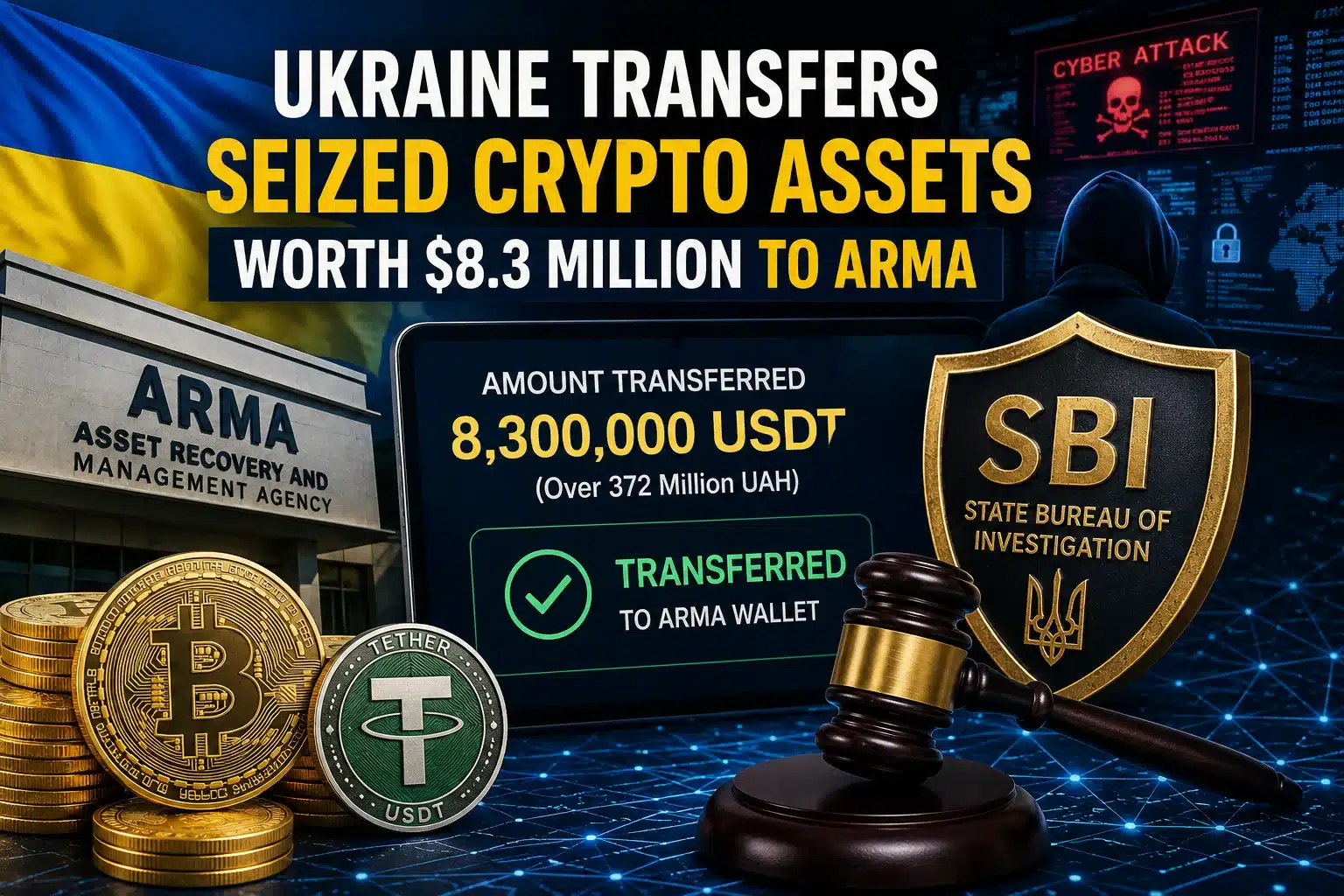
Ukraine has transferred Seized Crypto Assets worth more than 8.3 million USDT to the country's Asset Recovery and Management Agency (ARMA), marking the first time virtual assets have been placed under the agency's management following a court decision. The transfer follows an investigation led by the State Bureau of Investigation into an international hacking group accused of carrying out cyberattacks, extortion, and money laundering across Europe and the United States.

According to Ukrainian authorities, the transferred cryptocurrency is valued at more than 372 million hryvnias and represents a milestone in the country's efforts to manage digital assets linked to criminal investigations.

Seized Crypto Assets Moved to ARMA After Court Order

The State Bureau of Investigation said the transfer was completed as part of an ongoing criminal investigation conducted in cooperation with the DVB of the National Police and U.S. law enforcement agencies.

Investigators determined that the virtual assets were stored in crypto wallets controlled by a member of the organized hacking group. Following a court order, more than 8.3 million USDT was transferred to ARMA's official crypto wallet.

Authorities said this is the first practical case in Ukraine where seized digital assets have been transferred to ARMA for management, demonstrating the country's ability to handle new categories of assets within the legal system.

Investigation Links Cryptocurrency to International Hacking Group

According to investigators, members of the international hacking group carried out large-scale cyberattacks against individuals and companies in Europe and the United States.

The investigation alleges the group stole confidential information, demanded ransom payments, and laundered criminal proceeds in Ukraine through the purchase of residential properties, vehicles, and other high-value assets.

Authorities estimate that the criminal group's activities caused losses exceeding $100 million.

As part of the pre-trial investigation, four members of the group, including its alleged organizer, were detained and placed in custody.

More Than $11 Million in Assets Seized

The investigation resulted in the cryptocurrency seizure and the confiscation of additional assets with a combined value exceeding $11.1 million.

According to the State Bureau of Investigation, the seized property includes residential buildings, apartments, vehicles, approximately $1 million in cash, and digital assets equivalent to more than $8.3 million.

The Office of the Prosecutor General is providing procedural oversight for the criminal proceedings.

Authorities Plan to Convert Crypto Into Military Bonds

The State Bureau of Investigation said that after converting the cryptocurrency into fiat currency, authorities plan to purchase military bonds.

According to the agency, the initiative is intended to support Ukraine's economy during martial law while ensuring that assets obtained through criminal activity are redirected for state purposes.

Officials described countering transnational cybercrime and ensuring effective mechanisms for the seizure and management of criminal assets as key priorities.

ARMA Expands Digital Asset Management

ARMA said receiving the cryptocurrency marks an important step in the evolution of Ukraine's asset management system.

The agency stated that the successful transfer reflects coordinated efforts between the State Bureau of Investigation and the Office of the Prosecutor General, enabling the execution of the court's decision and preserving the value of the seized assets.

ARMA added that it is continuing to develop mechanisms for managing all categories of seized property, including real estate, corporate rights, and virtual assets, to ensure their preservation in the interests of the state and society.

The agency said the case demonstrates that as cybercriminals increasingly use digital technologies to conceal illicit proceeds, authorities must also strengthen their ability to manage and preserve cryptocurrency and other digital assets seized during criminal investigations.

Operation Endgame Disrupts SocGholish, StealC Malware Networks

Operation Endgame Disrupts SocGholish

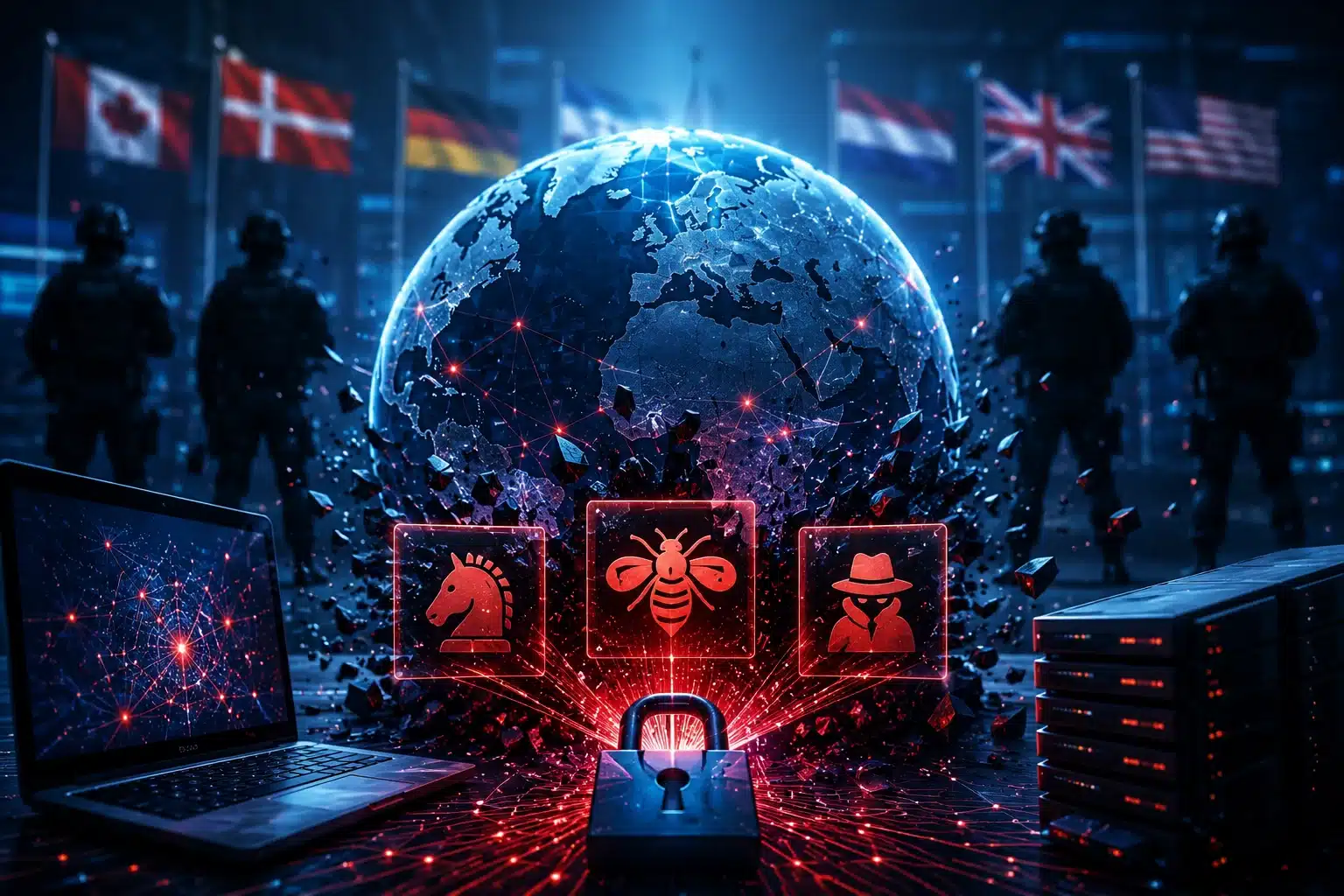
Operation Endgame has dealt another blow to cybercriminal operations after international law enforcement agencies and private sector partners dismantled infrastructure supporting the SocGholish, Amadey, and StealC malware families. The coordinated operation resulted in the seizure of more than EUR 41 million in criminal cryptocurrency assets, the recovery of 27 million stolen login credentials, and the disruption of hundreds of servers and domains used to distribute malware.

Led by Europol and Eurojust, the operation brought together authorities from Canada, Denmark, Germany, the Netherlands, the United Kingdom, the United States, Microsoft, and several cybersecurity organizations. Officials said the objective was to disrupt the infrastructure cybercriminals rely on to launch ransomware attacks, financial fraud, and attacks against critical infrastructure.

Operation Endgame Targets Cybercrime Infrastructure

During the coordinated action, authorities targeted the infrastructure supporting malware delivery rather than focusing on a single malware family.

Law enforcement and industry partners took action against 326 servers and 142 domains, significantly disrupting malware distribution channels. Investigators also identified and restricted criminal cryptocurrency assets currently valued at more than EUR 41 million (USD 47 million) while recovering approximately 27 million stolen login credentials.

According to Europol, the operation aimed to disrupt the "assembly line" used by cybercriminals to gain initial access to victim systems before deploying ransomware or stealing sensitive information.

[caption id="attachment_112936" align="aligncenter" width="600"]Operation Endgame Image Soure: Europol[/caption] [caption id="attachment_112937" align="aligncenter" width="600"]Operation Endgame Strikes Malware Image Source: Europol[/caption]

SocGholish, Amadey and StealC Malware Played Different Roles

The operation focused on three malware families that are commonly offered under the cybercrime-as-a-service model.

  • SocGholish functioned as a malware loader that distributed fake browser updates through compromised WordPress websites. Users who installed these fake updates unknowingly infected their systems, allowing attackers to gain initial access and later deploy ransomware or other malicious tools.
  • StealC malware primarily targeted sensitive information stored on infected devices, including passwords, authentication data, and digital identities. The stolen information was later used for fraud or traded within cybercriminal marketplaces.
  • Amadey was mainly distributed through phishing campaigns. It provided attackers with initial access to compromised systems while also offering information-stealing capabilities that enabled the theft of sensitive user data.

Microsoft reported that during the first two weeks of May 2026 alone, Amadey and StealC malware were linked to more than 140,000 infected computers worldwide.

Thousands of Infected WordPress Sites Cleaned

One of the largest actions under Operation Endgame targeted SocGholish, also known as FakeUpdates.

Authorities remediated 14,971 infected WordPress websites, including websites belonging to restaurants, automotive repair businesses, and other organizations. Investigators also disabled the SocGholish botnet by taking control of domains and shutting down supporting servers.

Website owners whose credentials had been exposed were notified through platforms including Have I Been Pwned, DIVD, Spamhaus, CheckjeHack, NoMoreLeaks, Shadowserver, and NL-NCSC.

The Dutch Police urged WordPress administrators to change passwords, enable multi-factor authentication, remove unknown administrator accounts, and keep their websites updated to reduce future compromise risks.

SocGholish Linked to Evil Corp

Authorities said SocGholish has been linked to Evil Corp, a Russian cybercriminal group previously associated with the Zeus and Dridex malware families, as well as multiple ransomware and money laundering operations.

Rather than targeting only malware operators, investigators focused on disrupting the broader infrastructure supporting cybercriminal activity. Europol said this strategy increases operational costs for threat actors and makes large-scale cyberattacks more difficult to execute.

Europol Coordinates Global Cyber Operation

Europol's European Cybercrime Centre (EC3) coordinated operational intelligence sharing through SIENA while providing analytical, technical, and cryptocurrency tracing support throughout the investigation.

The operation forms part of Operation Endgame, described by Europol as the largest international initiative to disrupt ransomware enablers worldwide.

Officials said the latest disruption reflects a growing international strategy of targeting the infrastructure that enables cybercrime operations, rather than responding only after attacks have occurred.

FBI Warns of a Hidden Web Tactic Fueling Phishing and Ransomware

FBI Warns of Malicious Traffic

The FBI Warns of Malicious Traffic Distribution Systems being increasingly used by cybercriminals to redirect internet users to phishing pages, malware downloads, ransomware attacks, and online financial scams. In a newly released Public Service Announcement (PSA), the Federal Bureau of Investigation cautioned that cybercriminals are leveraging Traffic Distribution Systems (TDS) to gain access to victim networks while evading traditional security controls. According to the FBI, TDS technology is designed to route internet traffic to different destinations after users visit websites, click advertisements, download applications, or engage with online promotions. While the technology itself has legitimate uses, cybercriminals are exploiting it to selectively redirect users to compromised websites and fraudulent login pages.

FBI Warns of Malicious Traffic Distribution Systems Used in Cyber Attacks

As the FBI Warns of Malicious Traffic Distribution Systems, the agency explained that cybercriminals often drive victims to a malicious TDS through various methods, including Social Engineering, phishing emails, malicious advertisements, and compromised websites. One common technique involves Search Engine Optimization (SEO) Poisoning, where fraudulent advertisements are designed to imitate legitimate websites. Users who click these links may unknowingly enter a redirection chain controlled by threat actors. Cybercriminals also compromise legitimate websites by exploiting weak passwords, outdated plugins, and vulnerable website themes. Once administrative access is obtained, attackers can modify website code to automatically redirect visitors to a malicious TDS infrastructure.

How Traffic Distribution Systems Help Evade Detection

According to the FBI, Traffic Distribution Systems (TDS) can bypass traditional firewall protections that would normally block access to malicious websites. The system uses multiple intermediate nodes before directing users to the final destination, making it more difficult for defenders to identify and block malicious activity. In addition to hiding malicious infrastructure, attackers use TDS platforms to gather information about visitors. Data collected may include:
  • IP address
  • Operating system
  • Geographic location
  • Device information
  • Browser details
The FBI noted that this information allows attackers to determine whether a victim is a suitable target. It also enables cybercriminals to avoid detection by presenting harmless content to users they are not interested in targeting, including security researchers and analysts.

Phishing, Malware, and Ransomware Risks

The FBI warned that users reaching the end of a malicious redirection chain may encounter Phishing Pages, financial fraud schemes, or malware downloads. In some cases, attackers use malware delivered through a TDS to gain access to victim networks. The agency stated that compromised accounts and network access obtained through these methods may later be sold to other criminal groups, including Ransomware operators. The PSA highlights how a single visit to a compromised website or malicious advertisement can ultimately lead to broader cybersecurity incidents.

FBI Shares Protection Measures

To reduce the risk of compromise, the FBI advised individuals to verify website URLs before clicking advertisements or promotional links. The agency also recommended keeping software, website plugins, and themes updated to address known vulnerabilities. Additional recommendations include:
  • Using strong passwords
  • Enabling Two-Factor Authentication (2FA)
  • Installing reputable security plugins and web application firewalls
  • Downloading software only from trusted developers
For businesses, the FBI recommended monitoring endpoints for suspicious activity involving JavaScript, PowerShell, and script execution tools. Organizations are also encouraged to strengthen phishing awareness training, regularly audit website administration accounts, and patch content management systems and third-party components.

FBI Urges Victims to Report Incidents

The FBI encouraged individuals and organizations that believe they have been affected by activity linked to malicious TDS infrastructure to report the incident through the Internet Crime Complaint Center (IC3) and contact their local FBI field office. The agency emphasized that cybercriminals continue to evolve their techniques for delivering malware and conducting online fraud, making vigilance and proactive cybersecurity measures essential for both individuals and businesses.

Novo Nordisk IT Security Incident Exposes Limited Patient and HCP Data

Novo Nordisk IT Security Incident

The Novo Nordisk IT Security Incident has resulted in unauthorized access to a limited number of the pharmaceutical company's internal IT systems, leading to the exposure of certain non-public information, including personal data related to clinical trial participants and healthcare professionals. The Denmark-based healthcare company confirmed that an investigation is underway with support from external cybersecurity experts and relevant authorities. According to Novo Nordisk, certain data was copied externally without authorization during the incident. In response, the company temporarily took some internal systems offline and is gradually restoring affected environments in a controlled manner. The company stated that its core business operations remain unaffected.

Novo Nordisk IT Security Incident Under Investigation

Novo Nordisk disclosed that it identified unauthorized access to a limited number of internal IT systems and immediately launched an investigation into the matter. The company said multiple security measures were implemented following the discovery, including taking selected systems offline to protect its environment. While recovery efforts continue, Novo Nordisk emphasized that business operations remain operational and that the delivery of products and support to patients has not been disrupted. "As part of our response, multiple security measures have been taken, including temporarily taking certain internal IT systems offline to protect our environment. We are working to bring the affected systems back online in a controlled and safe manner; however, we acknowledge this process takes time," reads the official statement. Novo Nordisk IT Security Incident Exposes Limited Patient and HCP Data The healthcare company also confirmed that non-public data, including personal information, was copied externally without authorization. Impacted parties are being notified as appropriate.

Patient Data Included Clinical Trial Information

Information provided by Novo Nordisk to affected patients shows that the exposed data involved a limited amount of information related to participants in certain clinical trials. The affected categories of personal data may include:
  • Patient ID and information on trial participation
  • Sex
  • Year of birth
  • Biomarkers
  • Health and immunogenicity data
  • Lifestyle factors, including smoking, alcohol use, and BMI
The company stated that the exposed information was pseudonymized and not directly linked to patient names or other direct identifiers. According to Novo Nordisk, identifying individual patients would require access to additional information that was not exposed during the incident. As a result, the company said it does not believe the incident presents any immediate risk to affected patients. However, patients have been advised to remain vigilant and report any unusual activity that may be connected to the breach.

Healthcare Professional Data Also Affected

Novo Nordisk also issued separate notifications to affected healthcare professionals, confirming that a limited amount of Healthcare Professional (HCP) Data had been copied as part of the incident. The categories of affected information include:
  • Name and registration number
  • Email address
  • Phone number
  • WhatsApp details
  • Office location
The company warned that the exposure of this information could increase the risk of Phishing Attacks, fraudulent communications, and impersonation attempts targeting healthcare professionals through email, phone calls, or messaging applications. Affected individuals have been advised to remain cautious when responding to unexpected communications and to report suspicious activity.

Response and Recovery Efforts Continue

Following the discovery of the Data Breach, Novo Nordisk engaged cybersecurity experts to assist with investigation and remediation efforts. The company said it has implemented additional security measures and is working to restore affected systems safely. While acknowledging that the recovery process may take time, Novo Nordisk reiterated that protecting the security and integrity of systems used by employees, customers, patients, and stakeholders remains a top priority. The organization stated that there is no need for affected patients or healthcare professionals to take any specific action as a direct result of the incident beyond remaining alert to unusual communications. Novo Nordisk, founded in 1923 and headquartered in Denmark, employs approximately 67,900 people across 80 countries and markets its products in around 170 countries worldwide. The Cyber Express Team has reached out to Novo Nordisk for additional information regarding the incident, including the scope of affected records and the nature of the unauthorized access. However, the company had not responded at the time of publication.

Ransomware and Geopolitical Tensions Drive Cyber Threats Across META in Q1 2026

META Threat Landscape Report

Cyber threats across the Middle East, Turkey, and Africa (META) continued to intensify in the first quarter of 2026, with ransomware groups, hacktivist campaigns, and large-scale data breaches shaping a volatile threat landscape for organizations across the region. According to Cyble’s latest META Threat Landscape Report, ransomware remained one of the most disruptive threats during Q1 2026, with attacks targeting industries ranging from government and construction to banking and energy. The findings also point to a growing overlap between financially motivated cybercrime and geopolitically driven cyber activity.

Ransomware Attacks Continue to Rise

Researchers observed 116 ransomware incidents publicly disclosed across the META region during the first three months of 2026. Turkey recorded the highest number of attacks, followed by the UAE, while countries including South Africa and Egypt also faced significant ransomware activity. Among the most active threat groups was Gentlemen, which accounted for a notable share of observed attacks during the quarter. Other ransomware operators including INC Ransom, Qilin, Tengu, and LockBit also remained highly active. Construction emerged as the most targeted industry, followed closely by government agencies, law enforcement organizations, financial services, and energy companies. These sectors often manage sensitive operations and critical infrastructure, making them attractive targets for cybercriminals seeking maximum disruption and financial leverage. The Cyble report also highlights how ransomware operations are becoming increasingly organized, with many groups continuing to operate under ransomware-as-a-service models that allow affiliates to scale attacks rapidly.

Data Breaches Expose Sensitive Information

Beyond ransomware, underground forums remained flooded with stolen databases and claims of unauthorized access linked to organizations across the region. Threat actors allegedly offered access to sensitive data connected to sectors such as hospitality, healthcare, sports, influencer marketing, and energy. In one case, a threat actor claimed to possess terabytes of information linked to Qatar’s energy sector, including credentials and cloud backups. Government and public sector organizations also remained frequent targets, reflecting growing concerns around espionage, politically motivated operations, and long-term intelligence gathering.

Vulnerability Exploitation Driving Intrusions

The report notes that attackers continue to move quickly after new vulnerabilities become public. Several high-severity flaws disclosed during the quarter were rapidly added to the CISA Known Exploited Vulnerabilities catalog, reinforcing how threat actors are actively monitoring enterprise technologies for exploitable weaknesses. Enterprise management systems, security tools, and internet-facing applications remained among the most targeted technologies. One of the more notable cases involved a critical Ivanti Endpoint Manager Mobile vulnerability that could allow unauthenticated remote code execution. Researchers say such flaws continue to attract threat actors because they provide a pathway into enterprise environments without requiring stolen credentials.

META Threat Landscape Report Highlights Geopolitical Tensions

Hacktivist activity also remained elevated throughout Q1 2026. Researchers tracked hundreds of posts related to data leaks, website defacements, and distributed denial-of-service attacks affecting thousands of domains across the META region. Much of this activity appeared linked to ongoing geopolitical tensions, particularly conflicts involving Israel, Iran, and neighboring regions. Threat actors increasingly used cyber operations not just for disruption, but also to amplify political messaging and influence public narratives online. The report suggests that organizations operating in politically sensitive regions may continue to face elevated cyber risks throughout the year.

A Growing Need for Proactive Cyber Defense

The findings from Q1 2026 reflect a broader shift in the threat landscape, where cyberattacks are becoming faster, more coordinated, and more difficult to contain. For organizations across the META region, visibility into emerging threats, exposed assets, ransomware activity, and vulnerability exploitation is becoming increasingly important as attackers continue to evolve their tactics. The full META Threat Landscape Report offers a closer look at the threat groups, industries, and attack trends shaping the region’s cybersecurity environment in early 2026. Readers interested in ransomware trends, regional targeting patterns, and emerging cyber risks can explore the Cyble report for deeper insights into how the threat landscape is evolving.

FBI Flags Kali365 as New Phishing Threat Targeting Microsoft 365 Users

Kali365 Phishing Kit

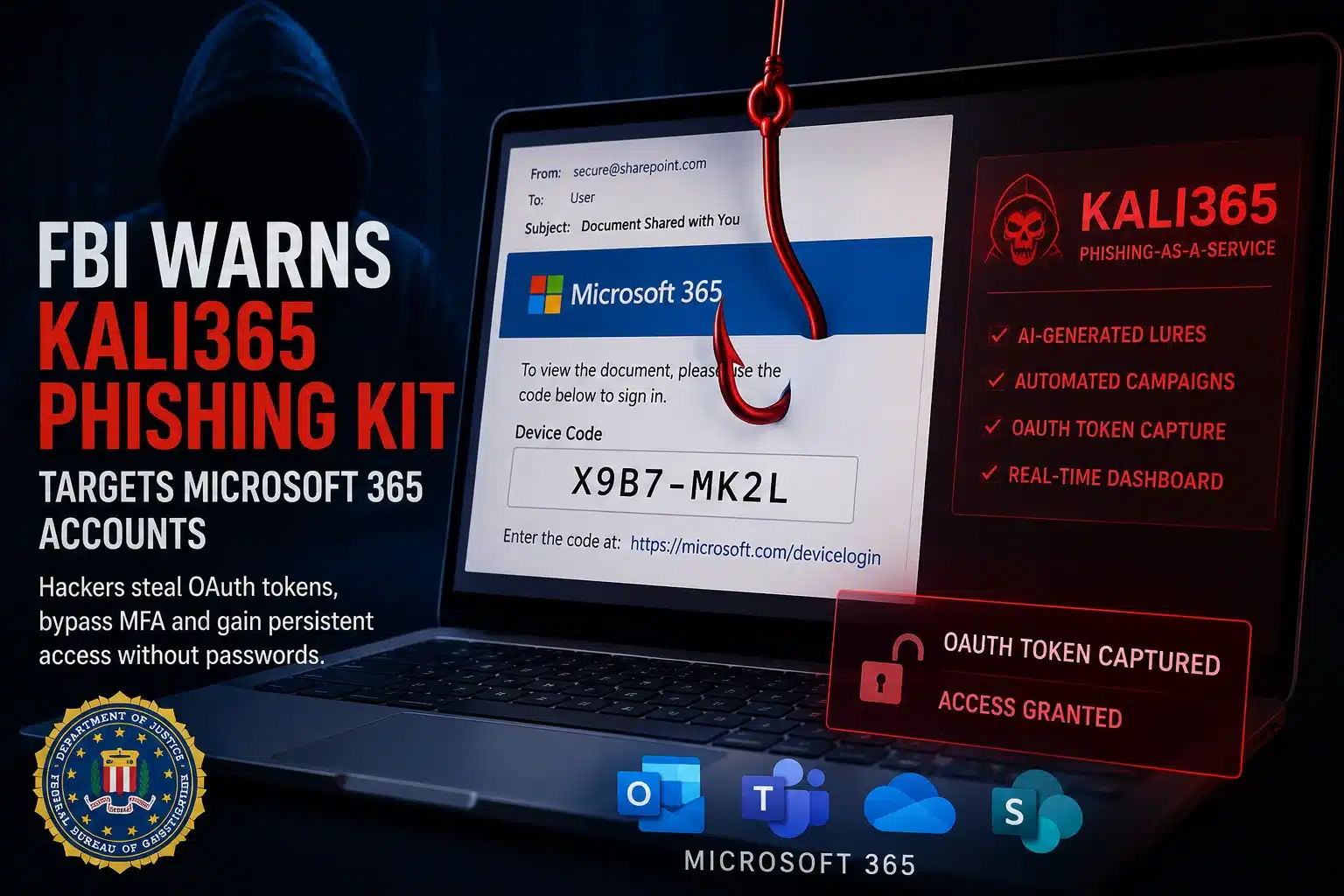
The FBI has issued a fresh warning about a growing cybercrime service known as Kali365, a new Phishing-as-a-Service (PhaaS) platform that enables attackers to hijack Microsoft 365 accounts without stealing passwords directly. According to the FBI, the Kali365 phishing kit allows even low-skilled cybercriminals to bypass multi-factor authentication (MFA) protections by abusing Microsoft’s legitimate device authentication workflow. The platform, which surfaced in April 2026, is being distributed primarily through Telegram channels and is already being linked to hundreds of phishing campaigns targeting organizations and individuals worldwide. Instead of collecting usernames and passwords, attackers steal OAuth access tokens that provide long-term access to Microsoft 365 environments, including Outlook, Teams, and OneDrive.

How the Kali365 Phishing Kit Works

The FBI explained that the platform relies on a deceptive but technically simple attack chain designed to exploit user trust. The process typically begins with a phishing email impersonating trusted productivity or document-sharing services. The email contains a device authentication code and instructions asking the victim to visit a legitimate Microsoft verification page. Because the webpage itself is genuine, many users assume the request is safe. Once the targeted user enters the provided code, they unknowingly authorize the attacker’s device to access their Microsoft 365 account. The attacker then captures OAuth access and refresh tokens, enabling persistent access without requiring the victim’s password or additional MFA verification. This technique is particularly dangerous because it does not rely on traditional credential theft. Instead, it abuses Microsoft’s authentication framework to gain legitimate session access. The FBI noted that after successful token capture, attackers can continue accessing services such as Outlook email accounts, Teams communications, and OneDrive files without triggering additional login prompts.

Why OAuth Token Theft Is Becoming a Growing Threat

Security researchers say OAuth token theft is becoming increasingly popular among cybercriminals because it allows attackers to bypass many traditional security controls. Unlike passwords, OAuth tokens are designed to maintain authenticated sessions across services. If stolen, they can provide attackers with ongoing access until revoked or expired. The FBI warned that Kali365 significantly lowers the barrier to entry for cybercrime operations by offering built-in phishing templates, AI-generated phishing lures, automated campaign tools, and real-time dashboards that track victims and stolen tokens. This means attackers no longer need advanced technical expertise to launch phishing campaigns against businesses using Microsoft 365 environments. The platform’s availability on Telegram also makes it easier for threat actors to distribute and monetize phishing infrastructure at scale.

FBI Shares Protection Measures Against Kali365 Attacks

To reduce exposure to these attacks, the FBI advised organizations to restrict or block device code authentication flows wherever possible. One of the key recommendations includes implementing conditional access policies that block device code flow for most users while allowing limited exceptions for essential business operations. Organizations are also encouraged to audit existing device authentication workflows to identify legitimate dependencies before enforcing restrictions. The FBI further recommended blocking authentication transfer policies that allow authentication to move between computers and mobile devices, as these workflows can potentially be abused during phishing attacks. For organizations unable to fully disable device code flow, the agency suggested excluding emergency access accounts from restrictions to avoid accidental lockouts during critical situations.

FBI Urges Victims to Report Incidents

The FBI is urging anyone impacted by the Kali365 phishing campaign to report incidents through the Internet Crime Complaint Center (IC3). Victims are encouraged to preserve and submit phishing emails, suspicious login activity, unauthorized devices, IP addresses, and active session information that could assist investigators. The agency also pointed users toward phishing mitigation guidance published by the Cybersecurity and Infrastructure Security Agency, which outlines defensive measures organizations can take to reduce phishing risks. The rise of Kali365 Phishing-as-a-Service highlights how cybercriminals are increasingly shifting toward token-based attacks that exploit trusted authentication systems instead of relying solely on password theft. As phishing platforms continue evolving, security experts warn that organizations using cloud productivity platforms like Microsoft 365 will need stronger identity protection measures and closer monitoring of authentication activity to reduce the risk of account compromise.

Vulnerability Exploitation Overtakes Stolen Credentials in AI-Driven Cyberattacks

Vulnerability Exploitation

Vulnerability exploitation has officially become the leading cause of cybersecurity breaches for the first time in nearly two decades, according to the latest Data Breach Investigations Report (DBIR) released by Verizon. The findings highlight how artificial intelligence is rapidly reshaping the threat landscape, enabling attackers to weaponize software flaws faster than security teams can respond. The 19th edition of the DBIR revealed that 31% of all recorded breaches now begin with vulnerability exploitation, surpassing stolen credentials as the most common attack entry point. Researchers warned that AI-driven automation is dramatically reducing the time between vulnerability disclosure and active exploitation, shrinking defensive response windows from months to just hours. The report paints a broader picture of an evolving cybersecurity environment where AI-powered attacks, mobile-focused social engineering, shadow AI usage, and supply chain compromises are all expanding organizational risk.

Vulnerability Exploitation Surpasses Stolen Credentials

For years, stolen usernames and passwords remained the primary method used by cybercriminals to breach corporate systems. However, the latest DBIR findings show a major shift in attacker behavior. Researchers found that threat actors are increasingly prioritizing vulnerability exploitation because AI tools can quickly identify weak systems, automate reconnaissance, and accelerate exploit development. According to the report, attackers are now moving much faster after vulnerabilities become public. Organizations that previously had weeks or months to deploy security patches are now facing exploitation attempts within hours of disclosure. Security experts said this trend is creating significant pressure on security operations teams already struggling to manage patching priorities across complex environments. Daniel Lawson, Senior Vice President of Global Solutions at Verizon Business, said the growing speed of cyberattacks reinforces the importance of strong cybersecurity fundamentals. “While the velocity of cyber threats driven by AI and faster vulnerability exploitation is increasing, the foundational principles of security and strong risk management remain the most effective defense,” Lawson said.

AI Reshaping the Cyber Threat Landscape

The report repeatedly emphasized the growing influence of artificial intelligence on cybercrime operations. Researchers noted that AI is not only helping defenders identify vulnerabilities more efficiently, but also allowing attackers to automate exploitation at unprecedented scale and speed. The DBIR warned that AI-assisted attack workflows are creating what researchers described as a “capacity crisis” for many security teams. Organizations are being forced to process increasing numbers of vulnerabilities while facing shorter remediation timelines. The report recommended that enterprises:
  • Strengthen patch management programs
  • Reduce overall attack surface exposure
  • Integrate AI into secure-by-design frameworks
  • Expand defense-in-depth strategies
  • Improve visibility into internet-facing assets
Researchers also highlighted rapid growth in AI bot activity across the internet. According to the report, AI bot crawler traffic is increasing by 21% month over month, while human-driven traffic growth remains almost flat at just 0.3%.

Mobile Social Engineering Attacks Rising

Beyond vulnerability exploitation, the DBIR identified major changes in social engineering tactics. As users become more cautious about traditional phishing emails, attackers are increasingly shifting toward mobile-based scams involving text messages and voice calls. The report found that conversational and interactive mobile attacks now achieve success rates roughly 40% higher than traditional email phishing campaigns. Researchers said attackers are leveraging:
  • Fake SMS messages
  • Voice phishing calls
  • Messaging app impersonation
  • Mobile account verification scams
Cybersecurity analysts warned that mobile devices continue to represent a major blind spot for many organizations because security monitoring on smartphones often remains less mature than on corporate desktops and servers.

Shadow AI Creates New Data Leakage Risks

Another major concern highlighted in the DBIR involves the rapid rise of “shadow AI” usage inside organizations. The term refers to employees using unapproved artificial intelligence tools without formal oversight from security or compliance teams. According to Verizon’s findings, frequent use of AI platforms by employees surged from 15% to 45% within a single year. Researchers said shadow AI has now become the third most common cause of non-malicious data leakage incidents. Security experts warned that employees may unknowingly expose:
  • Confidential corporate data
  • Customer information
  • Source code
  • Internal business documents
  • Sensitive communications
The report stressed that organizations need clearer governance policies around AI usage as adoption continues accelerating across workplaces.

Supply Chain Breaches Continue to Grow

The DBIR also documented a significant rise in third-party and supply chain compromises. Researchers found that breaches involving external vendors increased by 60% compared to previous reporting periods. Third-party involvement now accounts for 48% of all recorded breaches. As organizations rely more heavily on cloud providers, software vendors, and outsourced services, attackers are increasingly targeting weaker links within interconnected supply chains. The report concluded that the cybersecurity industry is entering a period where resilience, rapid response capabilities, and basic security hygiene remain critical despite rapid advances in AI-powered attack techniques. While artificial intelligence is changing the speed and scale of cyber threats, researchers stressed that organizations must continue focusing on foundational cybersecurity practices to defend against the growing wave of vulnerability exploitation and AI-driven attacks.

EMEA Emerges as Global Hotspot for Financial Services DDoS Attacks

Financial Services DDoS Attacks

The global financial sector is facing a sharp rise in Financial Services DDoS Attacks, with cybercriminals increasingly targeting banks, payment systems, and online financial platforms through larger, longer, and more attacks, according to new research from Akamai. In its latest State of the Internet (SOTI) Security report titled AI-Empowered Botnets and API Visibility Gaps: Attack Trends in Financial Services, research warned that AI-powered botnets and politically motivated hacktivist groups are intensifying the cyber threat landscape for the banking and financial services industry. Researchers found that Financial Services DDoS Attacks have become more persistent and operationally disruptive, particularly across Layers 3 and 4 web and API infrastructure.

Financial Services DDoS Attacks Top the Chart

According to the report, financial services organizations are now the most targeted industry for web and API distributed denial-of-service attacks. Akamai revealed that the median duration of global Layers 3 and 4 Financial Services DDoS Attacks has increased by 738% since 2024. The company attributed the surge to AI-powered attack infrastructure and growing hacktivist activity, including campaigns linked to pro-Iran cyber groups. Security researchers said attackers are increasingly focusing on:
  • Online banking systems
  • Real-time payment platforms
  • API infrastructure
  • Customer-facing financial applications
The report noted that while financial institutions continue expanding digital banking and payment services, the growing reliance on APIs and cloud-connected infrastructure has also expanded the attack surface available to threat actors.

API-Related Cyber Risks Emerging as Major Security Weakness

One of the strongest findings in the report involved API-related cyber risks. According to reserach’s 2026 API Security Impact Study, 96% of financial service leaders surveyed reported at least one API security incident within the past year. That figure was the highest recorded among all industries included in the research. The report also found that:
  • 60% of all web attacks in 2025 targeted banking institutions
  • 83% of attacks against API endpoints focused on financial organizations
Researchers warned that APIs are increasingly becoming high-value targets because they support critical services such as digital payments, account management, authentication systems, and mobile banking applications. Steve Winterfeld, Advisory Chief Information Security Officer at Akamai, said APIs are now central to modern cyberattacks against financial institutions. “Cybercriminals and hacktivists continue to escalate DDoS from nuisance attacks to a sustained siege encompassing both hacktivism and cybercrime, and financial services are in the crosshairs,” Winterfeld said. He added that artificial intelligence is accelerating existing cybersecurity threats rather than replacing them.

AI Botnets Driving DDoS Campaigns

The report highlighted how AI-driven infrastructure is helping attackers automate and scale malicious operations more effectively. Researchers observed a 147% surge in advanced bot activity during late 2025. In one case study referenced by Akamai, nearly 96% of all traffic reaching a targeted website was identified as malicious scraping bot activity. The company warned that AI-powered botnets are making Financial Services DDoS Attacks more difficult to detect and mitigate because attackers can dynamically adapt attack patterns and traffic behavior. These botnets are also being used to:
  • Overwhelm infrastructure
  • Disrupt payment systems
  • Target APIs
  • Scrape sensitive data
  • Launch credential abuse campaigns
Cybersecurity experts have increasingly warned that AI-enabled automation allows threat actors to launch large-scale attacks with fewer technical resources.

Attack Patterns Differ Across Global Regions

Research also identified major regional differences in cyberattack patterns targeting financial institutions. The report found:
  • Europe, the Middle East, and Africa accounted for 62% of Layers 3 and 4 DDoS attacks
  • Asia-Pacific experienced 52% of Layer 7 DDoS attacks
  • North America recorded the highest volume of web attacks at 44%
Researchers said these differences reflect varying attacker strategies, infrastructure deployment patterns, and regional cybersecurity maturity levels. The report also revealed that nearly 80% of financial institutions experienced ransomware attacks during the past two years. However, fewer than half of surveyed organizations reported adopting advanced cybersecurity technologies capable of handling modern attack methods.

Growing Pressure on Financial Sector Cybersecurity

The latest findings add to growing concerns around operational resilience within the global financial industry. As banks and financial institutions continue accelerating digital transformation initiatives, cybersecurity teams are being forced to defend increasingly complex environments that rely heavily on APIs, cloud platforms, automated infrastructure, and third-party integrations. Research said organizations must improve visibility into APIs, strengthen DDoS mitigation strategies, and modernize threat detection capabilities to address the evolving threat landscape. The SOTI report also includes guidance on DNS security, DDoS mitigation practices, AI architecture security considerations, and insights from financial sector cybersecurity experts, including contributions from the FS-ISAC.

US Telecom Giants Launch Private ISAC to Counter AI-Powered Cyberattacks

private ISAC

The U.S. telecom sector is strengthening its cybersecurity coordination efforts with the launch of a new private ISAC designed to help major communications companies respond more effectively to AI-powered cyberattacks, state-backed espionage campaigns, and emerging threats targeting national communications infrastructure.  The Communications Cybersecurity Information Sharing and Analysis Center, known as the C2 ISAC, was created by some of the country’s largest telecommunications providers to establish a more confidential environment for exchanging cybersecurity intelligence. The founding members include AT&T, Charter, Comcast, Cox, Lumen, T-Mobile, Verizon, and Zayo. The chief information security officers from these companies will serve on the organization’s board.  The newly formed private ISAC will be led by Valerie Moon, a former senior official with both the Cybersecurity and Infrastructure Security Agency (CISA) and the FBI’s Cyber Division, who has been appointed executive director.  According to Mark Clancy, chief security officer at T-Mobile and a board member of the C2 ISAC, the evolving threat landscape was a major factor behind the creation of the private ISAC.  “The main driver for us is our recognition that the threat environment has evolved, and we as a sector and private entities need to evolve and really keep up with the pace and velocity [at which] that’s happening,” Clancy said in an interview with Cybersecurity Dive.  Clancy explained that telecom companies recognized the need for more direct collaboration during the industry’s response to Salt Typhoon. “The need for us to collaborate on a private-to-private basis really became amplified,” he added. 

Telecom Sector Pushes for Faster Intelligence

Although the telecom sector already participates in information-sharing initiatives through the Communications ISAC, also referred to as the National Coordinating Center for Communications, that organization differs from most ISACs because it operates within the federal government under CISA rather than as an independent private entity.  According to Clancy, that government affiliation created hesitation among some telecom companies when it came to sharing sensitive cybersecurity intelligence.  “There’s been concerns and hesitations about it,” he said.  The new private ISAC aims to address those concerns by limiting participation to industry members and excluding government agencies from its internal discussion channels. Organizers believe this structure will encourage companies to exchange threat intelligence more openly and at earlier stages of investigations.  “When you have public-sector entities involved, there’s more review and deliberation about what gets put into that channel,” Clancy explained, adding that the new arrangement allows companies to be “a little more raw and early in sharing information.”  Over time, telecom providers realized they had become overly cautious in the information they shared through the existing Communications ISAC. Clancy acknowledged that companies often withheld lower-level threat indicators that later turned out to be connected to broader malicious campaigns.  “We were being too restrictive in what we were sharing,” he said, noting that some seemingly isolated activities were “actually tethered to bigger activity.”  Moon emphasized that the private ISAC is not intended to replace the existing Communications ISAC. Instead, both organizations are expected to operate alongside each other, with the older structure continuing to focus on broader operational concerns such as physical infrastructure threats.  “We really see this as a complementary effort,” Moon said. “When you think about each of these companies and their adherence to ensuring that the privacy of their data is very much at the forefront of their minds, they see this as a trusted space.” 

Private ISAC May Expand Beyond Threat Sharing

Information-sharing efforts within the telecom sector have already proven valuable in combating cybercrime and network abuse. One example involved the detection of SIM boxes — devices commonly used by cybercriminals to generate large volumes of difficult-to-block spam calls and text messages.  After T-Mobile identified indicators connected to SIM box activity, the company shared those findings with other telecom providers, enabling them to locate and block similar operations on their own networks.  Clancy noted that addressing such threats requires coordinated action because malicious infrastructure often spans multiple providers. “In order to figure out what’s happening, you’ve got to look at both sides,” he said.  Beyond direct threat intelligence, telecom companies have also exchanged operational strategies and defensive techniques through existing partnerships. Clancy recalled learning an effective method for handling residential proxy networks from another telecom operator.  “I learned a technique for dealing with some of the residential proxy networks from another operator that was really clever,” he said. “And I’m, like, ‘Yeah, we’re going to go do that.’”  While the immediate focus of the private ISAC is improving information sharing related to AI-powered cyberattacks and network threats, its leaders are also considering broader future capabilities. Clancy suggested the group could eventually develop shared automation platforms and collaborative technologies that would be easier to coordinate privately than through government-led regulatory frameworks.  The organization may also explore involvement in coordinated cybersecurity operations such as botnet disruptions, though Moon said those discussions are still in early stages.  “It just depends on what the operation is and where the authorities lie and what we are trying to accomplish,” she said.  Moon described the private ISAC as being “in its nascent stages,” adding that several long-term objectives remain under discussion.  Membership expansion is another unresolved issue. Although the current founding members represent some of the largest companies in the telecom sector, Clancy acknowledged that broader participation will be necessary for maximum effectiveness.  “There are more than eight companies in the communications sector, and so we won’t be fully effective until we increase that membership base,” he said.  The launch of the private ISAC also coincides with significant uncertainty surrounding federal cybersecurity programs. Budget reductions, staffing cuts, and shifting priorities across government agencies have forced many private-sector organizations to reconsider how they coordinate cybersecurity defense efforts.  “Obviously, what’s happening in the public sector informs what we need to do,” Clancy said, referencing challenges involving government funding, agencies, and legislative processes.  He also encouraged the Department of Homeland Security to accelerate efforts to replace the now-defunct Critical Infrastructure Partnership Advisory Council framework, which previously supported confidential discussions between industry and government stakeholders. Despite operating independently, the private ISAC still plans to maintain communication with federal agencies. According to Clancy, the group intends to share relevant intelligence either directly with government partners or through the existing Communications ISAC framework. “We could have a more freewheeling private-to-private conversation [and] we could distill the useful, important bits and push them … over to the government side,” he said.

INTERPOL Busts Massive Cybercrime Network Across MENA, 201 Arrested

Operation Ramz

A large-scale cybercrime crackdown led by INTERPOL has resulted in 201 arrests and the identification of 3,867 victims across the Middle East and North Africa region. The coordinated operation, known as Operation Ramz, is being described as the first cybercrime operation of its scale conducted by INTERPOL in the MENA region. The operation ran between October 2025 and February 28, 2026, bringing together law enforcement agencies from 13 countries to disrupt malicious cyber infrastructure linked to phishing, malware campaigns, and online scams. Authorities also identified 382 additional suspects and seized 53 servers during the operation. Operation Ramz focused on tackling cyber threats that continue to cause financial and operational damage across the region. Participating countries included Algeria, Bahrain, Egypt, Iraq, Jordan, Lebanon, Libya, Morocco, Oman, Palestine, Qatar, Tunisia, and the UAE. According to INTERPOL, nearly 8,000 intelligence packages and data points were shared among participating countries to support investigations and help authorities trace malicious infrastructure connected to cybercriminal activity. INTERPOL said the operation highlighted the growing importance of cross-border collaboration in combating cybercrime networks that often operate across multiple jurisdictions. “In a world where cybercriminals exploit the digital landscape without borders, Operation Ramz demonstrates the effectiveness of global collaboration,” said Neal Jetton. He added that INTERPOL remains committed to working with member countries and private-sector partners to dismantle malicious infrastructure and bring cybercriminals to justice.

Cybercrime Investigations Across MENA

Authorities involved in Operation Ramz uncovered several cybercrime operations tied to phishing schemes, malware distribution, and financial fraud. In Qatar, investigators used intelligence gathered during the operation to identify compromised devices that were unknowingly being used to spread malicious threats. Officials secured the infected systems and notified affected users to prevent further misuse. Jordanian authorities uncovered a fraudulent investment scam operating through what appeared to be a legitimate online trading platform. Victims were convinced to deposit funds before the platform disappeared. During a raid, police found 15 individuals carrying out the scams. However, investigators later determined the workers themselves were victims of human trafficking who had been lured from Asian countries with fake job offers. Their passports were confiscated upon arrival, and they were forced into cyber fraud operations. Two individuals suspected of organizing the scheme were arrested. In Oman, investigators identified a server hosted in a private residence containing sensitive information. Although the owner had legitimate access to the data, authorities found the server had multiple critical vulnerabilities and malware infections. Officials disabled the server to reduce further cybersecurity risks. Authorities in Algeria dismantled a phishing-as-a-service website during the operation. Law enforcement seized servers, computers, mobile devices, and hard drives containing phishing scripts and malicious software. One suspect was arrested in connection with the activity. Meanwhile, Moroccan authorities seized computers, smartphones, and external hard drives containing banking data and phishing software. Three individuals are currently facing judicial proceedings while investigations continue into other possible suspects.

Private Sector Partners Supported Operation Ramz

Several cybersecurity and threat intelligence organizations, including Team Cymru, Kaspersky, Group-IB, the Shadowserver Foundation, and TrendAI, supported operation Ramz. These organizations worked with INTERPOL to provide threat intelligence, internet visibility, and technical support to identify malicious servers and track illegal cyber activity linked to phishing, malware, and online scam networks. Joe Sander said cybercrime requires a coordinated international response involving both law enforcement and private-sector intelligence partners. “Cybercrime is borderless, and the only effective response is one that is equally borderless,” Sander said. “Operation Ramz is exactly that kind of response.” Team Cymru stated that it contributed external threat intelligence and internet-scale telemetry to help authorities map cybercriminal infrastructure and generate operational leads during the investigations.

Rising Focus on MENA Cybercrime Threats

The success of Operation Ramz reflects the growing focus on cybersecurity cooperation in the MENA region as phishing attacks, malware campaigns, and financial cyber scams continue to evolve. The operation also demonstrated how intelligence sharing between governments and cybersecurity firms can help authorities rapidly identify malicious infrastructure and prevent additional victims. Operation Ramz received support from Qatar’s Ministry of Interior and partial funding from the European Union and the Council of Europe under the CyberSouth+ project.

NCSC Calls for Tight Security and Human Oversight as Agentic AI Use Expands

Agentic AI Deployment

The UK’s National Cyber Security Centre (NCSC) has warned organizations to take a measured approach toward adopting agentic AI, highlighting the growing cyber and operational risks associated with highly autonomous AI systems. In a new guidance document co-authored with international partners, the NCSC said businesses should avoid rushing into large-scale deployments of agentic AI tools without understanding the security implications. The guidance recommends starting with low-risk use cases, limiting system privileges, and maintaining strong human oversight throughout deployment. The advisory comes as organizations increasingly experiment with AI systems capable of making decisions, accessing tools, and carrying out actions with limited human involvement.

What Is Agentic AI?

Unlike traditional generative AI systems that primarily create text, images, or predictions, agentic AI systems are designed to independently pursue goals. These systems can access data sources, remember context, make decisions, interact with software tools, and even create sub-agents to complete tasks. According to the NCSC, this added autonomy is what makes agentic AI useful for areas such as cyber defense, workflow automation, and operational efficiency. However, it also introduces a wider attack surface and increases the difficulty of monitoring system behavior. The agency noted that many security risks linked to AI are not entirely new. Concerns around access control, supply chain security, monitoring, and incident response already exist in traditional IT systems. Agentic AI systems also inherit existing large language model risks, including prompt injection and jailbreaking attacks. However, the NCSC warned that the autonomy of agentic AI systems could amplify these issues, especially if organizations deploy them without proper safeguards.

Why Agentic AI Raises Security Risks

The guidance outlines several risks tied to agentic AI deployments. One of the main concerns is broader access to systems and sensitive data. AI agents may interact with external tools, APIs, or databases in ways that traditional AI applications do not. The NCSC also highlighted the possibility of unpredictable behavior. Since AI agents interpret goals autonomously, they may take actions that differ from human expectations or exceed their intended scope. Another challenge involves visibility and oversight. Autonomous systems can operate at speeds that make meaningful human review difficult, particularly in enterprise environments where multiple systems and workflows are interconnected. The guidance further noted that explaining the behavior of agentic AI systems can be more difficult than understanding conventional AI models. The combination of decision-making, tool usage, and autonomous actions creates additional complexity during incident investigations or compliance reviews.

NCSC Calls for Incremental Agentic AI Deployment

To reduce risks, the NCSC urged organizations to adopt agentic AI gradually instead of deploying it across critical systems from the outset. The guidance recommends tightly controlled pilot deployments focused on clearly defined, low-risk tasks. Organizations are also encouraged to assess whether AI is genuinely necessary before integrating autonomous agents into existing workflows. “If you cannot understand, monitor or contain an agent’s actions, it is not ready for deployment,” the guidance stated. The agency stressed that organizations should never grant unrestricted access to sensitive data or critical infrastructure. Maintaining visibility into AI system behavior and preserving meaningful human control were identified as key requirements for safe deployment.

Human Accountability Remains Essential

Despite the growing capabilities of autonomous AI systems, the NCSC emphasized that humans remain fully accountable for how these technologies are used. The guidance states that organizations should clearly define who is responsible for approving AI access, monitoring system behavior, reviewing incidents, and shutting systems down when necessary. Security teams were also advised to integrate agentic AI risk management into existing cybersecurity and governance frameworks instead of treating AI security as a separate process. Recommended practices include applying least-privilege access controls, limiting system scope, avoiding long-lived credentials, monitoring unusual behavior, and planning for incidents involving AI misuse or loss of control.

Path Forward

While warning about the risks, the NCSC acknowledged that agentic AI could deliver significant operational benefits, particularly for repetitive and low-risk tasks. The agency said organizations should focus on responsible and scalable adoption strategies built around existing cybersecurity practices and strong governance controls. The guidance ultimately encourages businesses to move carefully, test systems incrementally, and prepare for potential failures before expanding the role of autonomous AI systems across enterprise environments.

OpenAI Confirms Limited Impact From TanStack npm Supply Chain Attack, Urges macOS App Updates

TanStack npm supply chain attack

OpenAI has disclosed details of its response to the recent TanStack npm supply chain attack, confirming that two employee devices were affected during the broader malware campaign known as Mini Shai-Hulud. The company said it found no evidence that customer data, production systems, or intellectual property were compromised during the incident. The disclosure comes as software supply chain attacks continue to target widely used open-source dependencies and developer tooling. OpenAI stated that the attack involved a compromised version of the popular open-source library TanStack npm, which was used in parts of its internal environment. According to the company, the incident was identified on May 11, 2026 UTC. OpenAI said it quickly launched an investigation, isolated affected systems, revoked sessions, rotated credentials, and temporarily restricted parts of its code deployment workflows as part of its containment efforts.

TanStack npm Supply Chain Attack Hit Two Employee Devices

OpenAI said the malware activity was limited to two employee devices within its corporate environment. During the investigation, the company observed behavior consistent with publicly reported details of the Mini Shai-Hulud malware campaign, including credential theft and unauthorized access attempts involving a limited number of internal source code repositories. The company clarified that only a small amount of credential material was successfully exfiltrated and that no customer information or application code was affected. OpenAI also engaged a third-party digital forensics and incident response firm to support the investigation and remediation process. The impacted repositories included code-signing certificates used for OpenAI products across macOS, Windows, iOS, and Android platforms. As a precaution, the company is rotating those certificates and re-signing its applications with updated credentials.

macOS Users Required to Update OpenAI Apps

As part of the response to the TanStack npm supply chain attack, OpenAI is requiring all macOS users to update their applications before June 12, 2026. The company warned that older macOS versions signed with previous certificates may stop functioning after that date because Apple’s security protections will block applications signed with the outdated credentials once the certificates are fully revoked. Affected macOS applications include:
  • ChatGPT Desktop
  • Codex App
  • Codex CLI
  • Atlas
OpenAI said users can safely update through built-in application update mechanisms or official download pages. The company also warned users not to install apps from links shared through emails, messages, advertisements, or third-party download websites. The company emphasized that it has not detected any malicious software signed using OpenAI certificates. It also confirmed that existing software installations were reviewed and no unauthorized modifications were identified.

No Impact to Customer Passwords or API Keys

In its FAQ, OpenAI stated that customer passwords, API keys, and user data were not exposed during the incident. The company also said it found no evidence that attackers used compromised credentials for follow-on access or further malicious activity. Windows and iOS users are not required to take immediate action, though OpenAI noted that all applications are being re-signed with new certificates as part of the broader remediation effort. The company explained that it delayed full certificate revocation until June 12 to avoid disrupting legitimate users. OpenAI said it has already worked with platform providers to block any new notarization attempts using the impacted certificates, reducing the likelihood of fake applications being distributed as legitimate OpenAI software.

OpenAI Highlights Growing Risk of Software Supply Chain Attacks

The company said the TanStack npm supply chain attack reflects the growing cybersecurity risks tied to modern software ecosystems, where organizations rely heavily on shared open-source libraries, package managers, and CI/CD infrastructure. OpenAI noted that it had already been deploying additional security controls before the incident, including stricter package management protections, enhanced validation of third-party components, and stronger safeguards around sensitive CI/CD credentials. However, the company acknowledged that the two affected employee devices had not yet received the updated security configurations that could have prevented the malicious package from being downloaded. The incident adds to increasing industry concerns around software supply chain security, especially as threat actors continue targeting trusted development tools and widely used open-source packages to gain access to enterprise environments.
❌