Visualização de leitura

678,000 People Hit in French Tax Authority Data Breach

DGFiP cyberattack

A DGFiP cyberattack has exposed sensitive tax and cadastral information after attackers allegedly used stolen credentials to access systems belonging to France's Directorate General of Public Finances. The French Public Finances Directorate said investigations found that data linked to 678,000 individuals and professionals had been consulted and extracted during intrusions in June and July 2026. The DGFiP cyberattack incidents were identified after a malicious actor claimed illegitimate access to the French tax authority's information system on August 12 and 13. DGFiP said the intrusions involved the usurpation of identifiers belonging to a DGFiP agent and an authorized third party.

DGFiP Cyberattack Exposed Taxpayer Information

After detecting the intrusions, DGFiP immediately suspended access to the accounts involved. Initial access controls did not identify data theft, which the authority attributed to the sophistication of the attack. A subsequent investigation established that the compromised access points had been used to consult and extract information concerning 678,000 individuals and professionals. The exposed information included reference tax income, family quotient and withholding tax rate for individuals. For businesses, the accessed information included company names and SIREN numbers. Cadastral data, including addresses and property sizes, was also accessed. DGFiP said online accounts belonging to individual and professional users were not compromised, and user IDs and passwords were not affected. The authority notified France's data protection regulator, CNIL, after identifying the data breaches.

Cadastral Data Leak Claim Targets DGFiP

Separately, a hacker using the alias ZeroBytes claimed an attack against DGFiP's Professional Cadastral Data Server (SPDC). According to the claim cited by FrenchBreaches, the alleged extraction contains 252,149 lines of data representing 2,041,778 people, with multiple holders potentially associated with the same property plot. The claimed dataset reportedly includes names, surnames, sex, dates and places of birth, addresses, land identifiers, cadastral sections and parcel numbers, as well as information about rights held on properties. The claim would therefore link individuals to personal information and real estate assets. However, the figures and technical details in this second claim remain allegations by the cybercriminal. The claim that the system could contain information relating to approximately 20 million citizens is also an estimate made by ZeroBytes and does not establish that this number of people was affected.

Investigation Into French Tax Authority Attack Continues

DGFiP said additional security measures were implemented after investigators uncovered new information. These included preventative shutdowns of access to sensitive information systems. Investigations remain underway to determine the precise nature and volume of data extracted and the number of users affected. DGFiP teams are working with France's economic and financial ministries, the High Official for Defence and Security and the National Agency for Information Systems Security, ANSSI. The authority said it will contact affected individuals and professionals directly from the following week by email or letter. Those notifications will identify the information that may have been accessed or extracted and outline any precautionary measures where applicable. DGFiP also said it will file a complaint and provide further information as the investigation progresses. The separate cadastral data breach claim remains subject to confirmation, including the alleged number of affected people, duration of access, methods used to bypass authentication, the full scope of extracted information and whether access remained active when the claim was published. The confirmed DGFiP investigation and the separate ZeroBytes claim therefore present different sets of figures and allegations, with the full scope of the incidents still being determined.

Amsterdam’s De Bijenkorf Hit by Logistics Cyberattack, Orders Delayed

De Bijenkorf cyberattack

A De Bijenkorf cyberattack involving one of the retailer's external logistics partners has disrupted order processing, returns, and refunds while raising concerns over potential customer data exposure. The Dutch luxury department store chain said the security incident occurred within the systems of a third-party logistics provider, adding that there is currently no evidence that its own infrastructure was compromised.

The Amsterdam-based retailer confirmed that customers can continue placing online orders and stores remain open. However, deliveries, returns, and refunds are expected to take longer than usual as the investigation continues.

De Bijenkorf Confirms Third-Party Security Incident

According to De Bijenkorf, unauthorized individuals gained access to part of its logistics partner's systems. The logistics provider responded by immediately blocking the unauthorized access and implementing additional security measures.

An external investigation is now underway to determine the cause of the incident, its scope, and whether customer information was affected.

As a precaution, De Bijenkorf has informed customers about the incident and submitted a report to the Dutch Data Protection Authority while awaiting the investigation's findings.

What Customer Data Could Be Affected in De Bijenkorf Cyberattack?

The retailer said investigators are still determining whether any personal information has been compromised.

Based on the information currently available, data that may be involved includes:

  • Customer names and contact details, including email addresses, postal addresses, and phone numbers.
  • Information related to online purchases, such as ordered products, pricing, discounts, delivery details, and the payment method used.
  • For business customers, company names and VAT numbers stored in My Account may also be involved.

De Bijenkorf emphasized that sensitive financial information is not part of the incident. The company said payment details, bank account numbers, credit card information, usernames, and passwords were not accessed.

Investigation Continues as Customers Await Confirmation

The retailer said it is still investigating whether individual customers have been affected. Customers whose information is confirmed to be involved will receive direct communication via email from info@debijenkorf.nl.

For those who have not yet received a notification, the company said it cannot currently rule out the possibility that their information was included in the incident until the investigation is completed.

De Bijenkorf also stressed that no login credentials were compromised, meaning unauthorized individuals cannot access customer accounts using stolen usernames or passwords.

Retailer Warns Customers About Phishing Risk

Although the investigation remains ongoing, De Bijenkorf warned customers to stay alert for a possible phishing risk if personal information is ultimately found to have been exposed.

The retailer advised customers not to click on suspicious links or open unexpected attachments. It also reminded customers never to share passwords, payment information, or personal details through email or phone calls.

The company said it will never request credit card details, gift card information, or other sensitive information via email.

Logistics Cyberattacks Continue to Disrupt Supply Chains

The incident adds to a growing list of attacks targeting organizations that support retail operations rather than retailers directly. A logistics cyberattack can interrupt deliveries, returns, and customer service even when the affected retailer's own systems remain operational.

In July 2026, a ransomware attack on Japan's largest refrigerated logistics company disrupted food deliveries across the country, causing supply shortages for restaurant chains, including Kentucky Fried Chicken. The incident demonstrated how cyberattacks on logistics providers can quickly impact downstream retail operations and customer services.

For now, De Bijenkorf said its stores remain open, online ordering continues to operate, and there are no indications that its own systems have been compromised. The retailer said it will provide additional updates as the external investigation establishes whether customer data was affected and the full extent of the incident.

Europe Warned Against AI Skills Gap as Experts Outline Possible 2040 Futures

AI skills development

A new outlook from the European Labour Authority and the European Commission’s Directorate-General for Employment, Social Affairs and Inclusion has highlighted how Europe’s approach to AI skills development could shape the future of work by 2040. The report presents several possible futures driven by artificial intelligence adoption, ranging from economic growth and new career opportunities to rising inequality, job insecurity and weakened worker protections. At the centre of all scenarios is one common factor: whether governments, employers and institutions invest early in workforce skills development. According to the findings, AI could create a future where learning becomes more accessible, career growth becomes flexible and workers are better equipped to adapt to changing industries. However, the report also warns that without strong investment in AI skills development, Europe risks widening the gap between workers who can adapt to new technologies and those left behind.

AI-Powered Workplace Could Deepen Inequality 

One of the scenarios described in the report imagines a future where artificial intelligence transforms workplaces so rapidly that many jobs become unrecognisable. In this version of 2040, governments and employers fail to provide adequate workforce training, leaving employees responsible for adapting on their own. The report notes that workers with strong digital and technical skills are likely to benefit the most in such an environment. Meanwhile, employees without access to learning opportunities could struggle to remain employable as automation reshapes industries. The consequences go beyond employment challenges. The report points to growing financial pressure, declining physical and mental wellbeing, and increased social inequality as possible outcomes of an AI transition that does not include inclusive skills development policies. Another scenario paints an even more severe picture of the future. In this case, AI technologies and automation dominate nearly every aspect of work and daily life. A small number of powerful organisations control much of the AI ecosystem, influencing policymaking, economic systems and broader social structures. Under this model, companies rely heavily on automation while reducing investment in employee development. Workers across industries lose jobs as AI systems take over tasks previously performed by humans. The report also warns that weak regulation and limited government oversight could leave workers with little protection. Trade unions, according to the scenario, lose influence in defending labour rights and fair working conditions. The concentration of power among major AI players could also threaten democratic systems while creating environmental concerns linked to large-scale AI infrastructure and energy use.

Slow AI Adoption May still Create a ‘Missed Opportunity’ for Europe

The report also explores a more moderate future in which AI adoption progresses gradually rather than aggressively. While this path appears less disruptive, researchers argue that it could still create long-term problems if Europe fails to prioritise AI skills development. In this “missed opportunity” scenario, the slower pace of AI adoption prevents businesses and workers from fully benefiting from innovation. The report suggests that Europe could lose out on productivity gains, new products and emerging industries if organisations hesitate to adopt AI technologies at scale. For workers, the impact could mean fewer opportunities to move into creative and high-value roles often associated with AI-driven industries. Instead, advanced tasks and innovation-related jobs may remain concentrated among a small group of highly skilled professionals, while much of the workforce continues performing repetitive or lower-value work. Employers may avoid the disruption linked to rapid automation, but they could also fall behind in global competitiveness due to limited innovation and slower operational improvements.

AI Skills Development Seen as Central to Europe’s AI Future

Despite outlining several concerning futures, the report emphasises that these outcomes are not inevitable. Instead, it argues that coordinated action between governments, businesses, educational institutions and workers can help create a more balanced and inclusive AI economy. The European Labour Authority stresses that ongoing workforce skills development will play a central role in determining whether AI benefits society broadly or primarily advantages a small section of the population. The report calls for greater collaboration in promoting lifelong learning, digital education and accessible training programmes that help workers adapt to evolving technologies. It also highlights the importance of policies that support fair AI adoption while protecting workers’ rights and ensuring technological progress contributes to long-term economic and social stability. As Europe continues shaping its AI strategy, the findings serve as a reminder that the future of work may depend less on the technology itself and more on how societies prepare people to work alongside it.

Cybersecurity Incident Strikes Contractor Handling JRL MRT Stations and NEWater Factory 3 Projects

Shanghai Tunnel

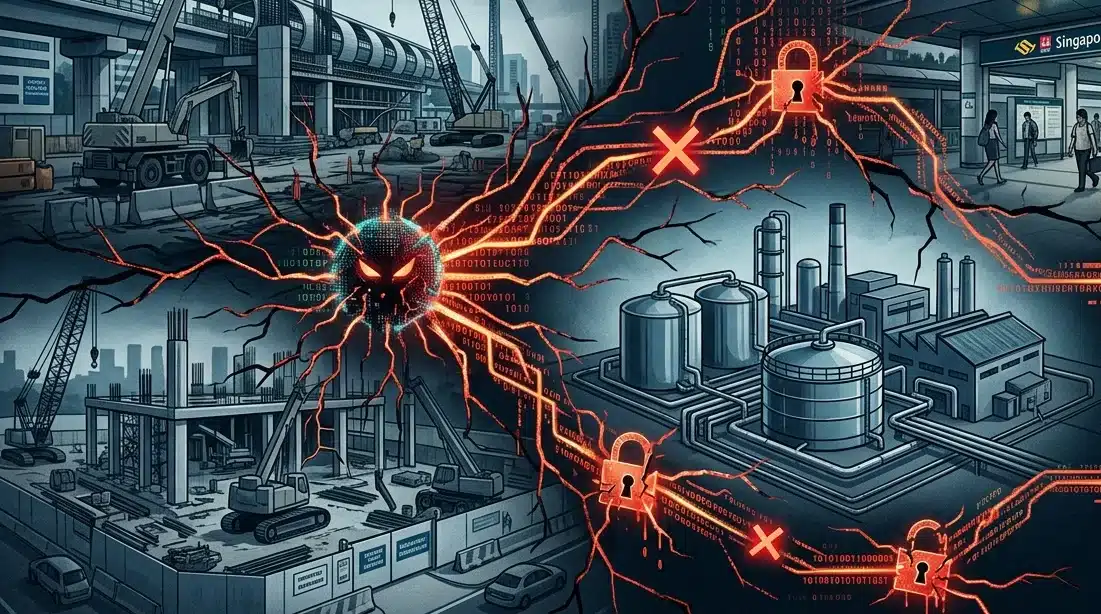
A cybersecurity incident has raised concerns after it was revealed that sensitive data associated with the Jurong Region Line (JRL) MRT stations and the Changi NEWater Factory 3 were compromised. The contractor responsible for both critical infrastructure projects, Shanghai Tunnel Engineering Co (Singapore), is currently facing scrutiny as authorities investigate the breach.

Data Compromise Involving Shanghai Tunnel Engineering Co 

The breach primarily affects the civil engineering firm Shanghai Tunnel Engineering Co, which has been engaged in the construction of three key stations along the JRL and the new Changi NEWater Factory 3. While the exact timing of the incident remains unclear, the compromised data has since been identified as tender documents for the projects. These documents, however, are available on the government’s GeBIZ procurement portal, which mitigates concerns over the theft of sensitive information. On April 27, the Land Transport Authority (LTA) responded to public queries by confirming that it was aware of the cybersecurity breach and had reported the matter to the police and other relevant authorities. In an effort to minimize potential risks, the LTA temporarily suspended the contractor’s access to its digital systems, although the breach has not been reported to have disrupted the ongoing construction of the JRL MRT stations.

Impact on Changi NEWater Factory 3 

While the data breach raises alarms, the national water agency PUB (Public Utilities Board) has reassured the public that there has been no access to its digital systems by Shanghai Tunnel Engineering Co. Following an internal investigation, PUB concluded that no sensitive data related to the Changi NEWater Factory 3 had been stolen. The only data compromised were the project tender documents, which, as mentioned, are publicly accessible on GeBIZ. A PUB spokesperson emphasized that the agency maintains a "serious view" of cybersecurity and has advised the contractor to review its security protocols. Despite extensive checks on known ransomware portals and hacker forums, no evidence of leaked data related to the breach has surfaced, alleviating some concerns among stakeholders.

Company’s Response to Cybersecurity Incident 

In a statement issued on April 28, Shanghai Tunnel Engineering Co (Singapore) acknowledged the cybersecurity incident, confirming that it had taken immediate steps to contain the situation. While the company did not specify when the breach occurred, it assured the public that it was cooperating fully with the authorities. Furthermore, the company has enlisted an external cybersecurity specialist to aid in the investigation. "We are cooperating fully with the relevant authorities and kindly request that all parties allow the investigation to proceed without interference," a company representative said. Shanghai Tunnel Engineering Co, established in 1996, is a well-established contractor with significant experience in MRT projects across Singapore. The firm has previously worked on various stations for the Circle, Downtown, and Thomson-East Coast lines. Its latest projects involve critical infrastructure, including the JRL stations and the Changi NEWater Factory 3.

Contract Details and Future Expectations 

In 2019, Shanghai Tunnel Engineering Co was awarded a $465.2 million contract to design and build three JRL stations, Choa Chu Kang, Choa Chu Kang West, and Tengah—along with a 4.3km viaduct connecting them. This work includes integrating the existing Choa Chu Kang MRT station on the North-South Line into the JRL network. In addition to the JRL projects, Shanghai Tunnel Engineering Co is also involved in the construction of the Changi NEWater Factory 3. In November 2025, a $205 million contract was awarded to Sanli M&E Engineering, which formed a joint venture with Shanghai Tunnel Engineering Co in February 2026. The joint venture will be responsible for several key aspects of the factory’s construction, including civil, structural, and architectural works, as well as external and building services. The Changi NEWater Factory 3 is expected to be operational by 2028 and will replace the existing Bedok facility. Once completed, the factory will be capable of producing up to 50 million gallons of NEWater daily, contributing significantly to Singapore's water sustainability efforts.

Poste Italiane, Postepay Fined €12.5M for Unlawful User Data Processing

Italian Data Protection Authority fine

The Italian Data Protection Authority fine against Poste Italiane and Postepay has reached over €12.5 million, after regulators found unlawful processing of personal data affecting millions of users.

Italy’s Italian Data Protection Authority imposed a €6.6 million penalty on Poste Italiane and €5.8 million on Postepay. The action follows an investigation launched in April 2024 after multiple complaints from users regarding how their data was being handled through mobile applications.

Italian Data Protection Authority Fine Linked to Intrusive App Monitoring

The Italian Data Protection Authority fine centers on how BancoPosta and Postepay apps collected user data. Customers were required to allow monitoring of information stored on their devices, including details about installed and active applications.

According to the companies, this access was necessary to detect malware and prevent fraud in line with payment security requirements. However, the regulator found that the scope of monitoring went too far.

Authorities stated that the data collection methods were not proportionate and resulted in excessive intrusion into users’ private lives. The ruling emphasized that fraud prevention cannot justify blanket access to personal device data.

Multiple Compliance Failures Identified

The investigation behind the Italian Data Protection Authority fine also revealed broader compliance failures. Regulators flagged insufficient transparency in how users were informed about data collection practices.

The companies were also found to have not conducted an adequate Data Protection Impact Assessment. Such assessments are required when processing activities pose high risks to individual privacy.

Further issues included weak security measures, unclear policies on how long data was stored, and irregularities in defining data controller responsibilities. These gaps raised concerns about how user data was governed internally.

As part of the enforcement action, both companies have been ordered to stop the disputed data processing practices if still ongoing. They must also align their data retention policies with regulatory requirements and report compliance to the Authority.

Italian Regulator Steps Up Enforcement

The action reinforces a broader trend of stricter enforcement by the Italian Data Protection Authority across the financial sector. The Italian Data Protection Authority fines Poste Italiane and Postepay case follows another high-profile enforcement action earlier this year involving Intesa Sanpaolo. In March 2026, the regulator imposed a €31.8 million penalty on the bank after uncovering serious lapses in how customer data was protected. The case involved unauthorized access to sensitive information of more than 3,500 customers over a period of more than two years. Investigators found that a single employee had accessed customer records more than 6,600 times without any legitimate business reason. The breach went undetected for months, exposing weaknesses in the bank’s internal monitoring systems.

Insider Risks and Monitoring Gaps under Focus

The Intesa Sanpaolo case highlighted a different but equally critical issue. While Poste Italiane and Postepay were penalized for excessive data collection, the bank was fined for failing to detect misuse of legitimate access. According to the Authority, the bank’s monitoring systems were not designed to identify slow, repeated misuse of access over time. This allowed the unauthorized activity to continue without triggering alerts, even when it involved high-risk individuals such as public figures. Regulators concluded that the controls in place were not aligned with the risks associated with broad internal access to sensitive financial data. The case has since raised concerns about insider threats and the effectiveness of existing detection mechanisms within financial institutions.

Growing Pressure on Financial Services

Together, these cases reflect a tightening regulatory environment in Italy, where financial institutions are being held accountable for both overreach and underperformance in data protection. The Italian Data Protection Authority fines Poste Italiane and Postepay decision highlights the importance of balancing fraud prevention measures with user privacy. Security controls must be proportionate, transparent, and supported by proper risk assessments. At the same time, the Intesa Sanpaolo breach demonstrates that insufficient monitoring can be just as damaging, particularly when insider threats go unnoticed for extended periods. With enforcement actions increasing in scale and frequency, organizations operating in the financial sector are facing mounting pressure to reassess their data governance frameworks. The regulator’s recent decisions make it clear that both excessive data collection and weak oversight can lead to significant financial and reputational consequences.
❌