Visualização de leitura

Global Crackdown on West African Crime Networks Leads to 58 Arrests

West African Organized Crime Groups

An eight-month international operation targeting West African organized crime groups has resulted in 58 arrests and the identification of 263 suspects across 22 countries, according to INTERPOL. Operation Jackal IV, conducted from November 2025 to June 2026, focused on disrupting criminal networks, tracing illicit funds, identifying high-value targets and supporting arrests and prosecutions. The operation brought together countries across six continents to tackle the growing global threat posed by West African criminal networks, including Black Axe and similar groups. These networks have been linked to a significant share of global cyber-enabled financial fraud, including romance scams, cryptocurrency and investment scams, and business email compromise fraud.

Operation Jackal IV Targets West African Organized Crime Groups

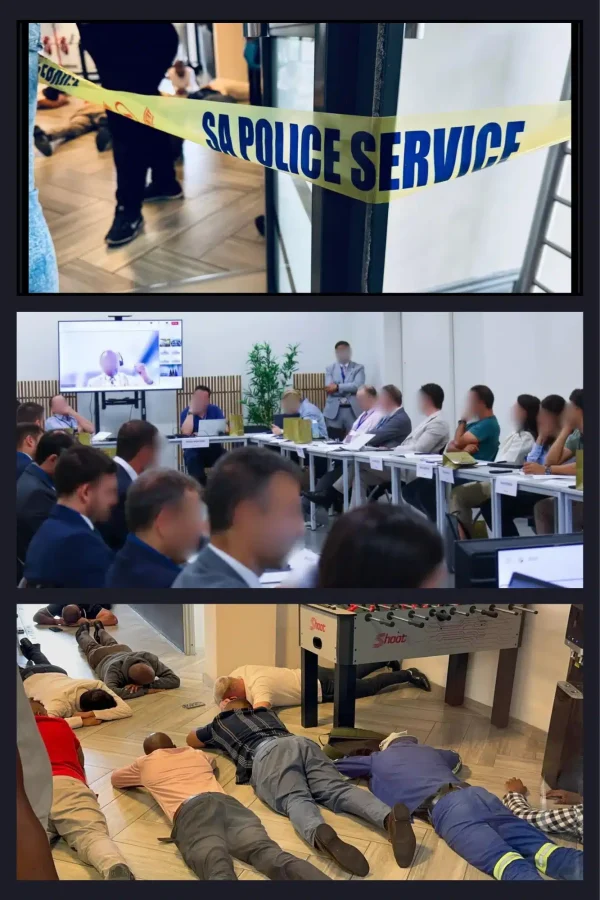
Operation Jackal IV also targeted money laundering activities used to move and conceal criminal proceeds across borders. INTERPOL coordinated cross-border intelligence sharing, analysis and operational support during the operation. It also provided specialized training to strengthen international investigations into financial crime. Tomonobu Kaya, Director of the INTERPOL Financial Crime and Anti-Corruption Centre, said the operation showed the importance of international cooperation in following illicit financial flows and disrupting criminal networks. [caption id="attachment_113806" align="aligncenter" width="600"]West African Organized Crime Groups Image Source: INTERPOL[/caption]

Major Arrests and Financial Crime Investigations

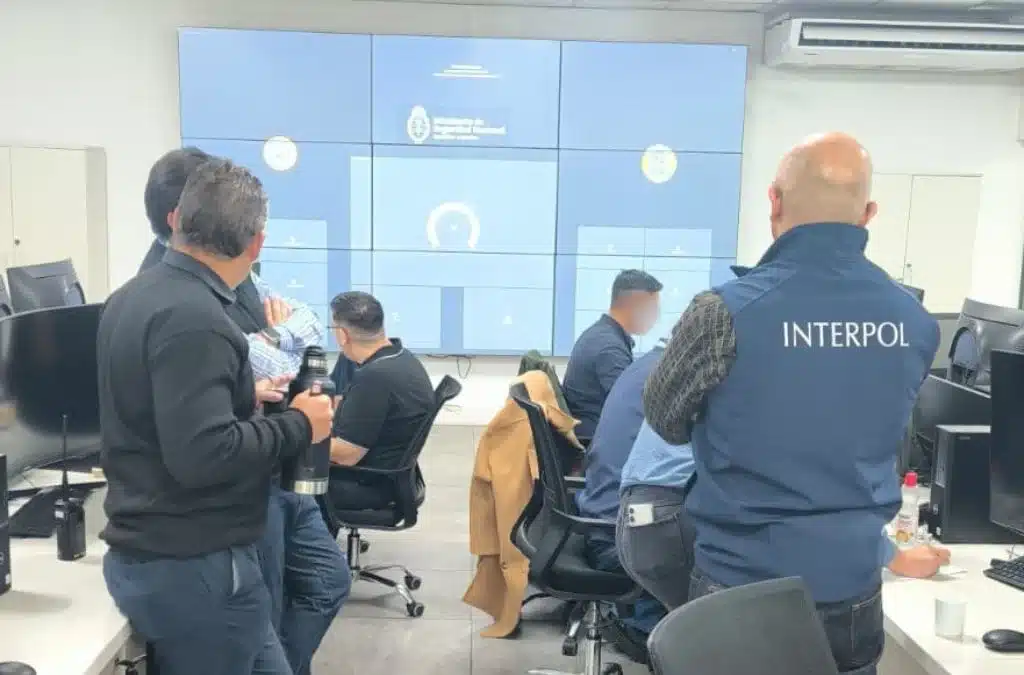
In Argentina, authorities identified 196 individuals linked to a major Crime-as-a-Service network suspected of providing website domains and money laundering support to West African organized crime groups. The investigation resulted in 17 arrests, with an INTERPOL Operational Support Team assisting with analysis of seized data and identification of suspects and criminal networks. South African authorities raided seven locations in Johannesburg linked to a syndicate involved in romance and investment scams targeting retirees in English-speaking countries. Investigators arrested 39 people, seized USD 2.67 million and blocked 257 bank accounts. In Italy, investigators identified an individual connected to a pan-European money laundering network that used shell companies, remittance services and cash withdrawals. One account processed EUR 845,000, or about USD 736,000, through 560 transactions involving 20 financial instruments. Romanian authorities dismantled a criminal group operating an investment scam through a call centre. The group promoted high returns from stocks and cryptocurrencies, with victims' money transferred to electronic wallets controlled by perpetrators. Authorities estimated that EUR 143 million had been stolen and laundered globally. Eleven people were arrested, while cash, cryptocurrency, six real estate properties and luxury watches were seized.

Sextortion and Crime-as-a-Service Emerge

Beyond individual investigations, the operation highlighted emerging threats involving sextortion and Crime-as-a-Service. INTERPOL identified an increase in West African organized crime groups using sextortion to target minors, including victims as young as 14. In these cases, offenders typically contacted minors through social media, established trust and persuaded them to share explicit images or videos. They then threatened to distribute the material to the victim's contacts unless a ransom was paid. Investigators also found that some criminal syndicates were procuring Crime-as-a-Service from external providers, including through the dark web. These services were used to outsource activities such as money laundering and other operational functions. While several cases from Operation Jackal IV remain under investigation, the preliminary results demonstrate the scale and international reach of the networks targeted during the eight-month operation. The participating countries were Austria, Argentina, Australia, Canada, Côte d'Ivoire, France, Germany, Indonesia, Ireland, Italy, Japan, Malaysia, the Netherlands, Nigeria, Portugal, South Africa, Spain, Sweden, Switzerland, the United Arab Emirates, the United Kingdom and the United States.

How the Gentlemen Ransomware Group Built a Multi-Region Attack Machine in H1 2026

Gentlemen ransomware group

Ransomware’s biggest story in the first half of 2026 was not only about established names maintaining dominance. A newer player, The Gentlemen ransomware group, emerged as one of the most geographically active operators, expanding its reach across Europe, Asia-Pacific, the Middle East & Africa, and the Americas.  According to research from Cyble Research and Intelligence Labs (CRIL), The Gentlemen became one of the top ransomware actors globally, demonstrating how quickly emerging ransomware-as-a-service (RaaS) groups can scale through affiliate-driven operations.  Unlike older ransomware brands that rely on a narrow set of preferred targets, The Gentlemen displayed a broad targeting strategy. The group impacted organizations across Manufacturing, Construction, Healthcare, Government, and IT sectors — industries where operational disruption, sensitive information, and regulatory pressure create strong incentives for victims to respond quickly. 

The Gentlemen Ransomware Group Becomes a Regional Threat 

The group’s strongest activity was observed in Europe and the UK, where it was responsible for 144 ransomware attacks during H1 2026. The region’s Manufacturing, Construction, Healthcare, and Professional Services sectors were among the most affected, highlighting the group’s preference for organizations with valuable data and limited tolerance for downtime.  In Asia-Pacific, The Gentlemen became the leading ransomware threat, accounting for 114 attacks — nearly one-quarter of the region’s ransomware activity. Manufacturing was among the primary targets, with additional campaigns affecting IT services, Professional Services, Healthcare, and government entities.  The group also gained significant attention in the Middle East & Africa, where it accounted for 56 attacks, representing more than 26% of ransomware incidents in the region. Construction, BFSI, and Government organizations were frequent targets, demonstrating the group’s interest in sectors linked to critical services and economic activity.  South America also saw notable activity, with The Gentlemen responsible for 46 attacks, making it one of the region’s leading ransomware operators.  Also Read: One Country Absorbed Nearly Half of the World’s Ransomware Attacks in Just Six Months – The United States

Double Extortion Remains the Core Strategy 

The rise of The Gentlemen reflects a broader ransomware trend: encryption alone is no longer the primary weapon. Like most modern ransomware operations, the group relies on double extortion — stealing sensitive information before encrypting systems and using the threat of public exposure as additional pressure.  This approach allows ransomware groups to target organizations even when companies maintain effective backup and recovery capabilities. Stolen data can be leveraged for financial gain, reputational damage, regulatory pressure, or further attacks. 

What Makes The Gentlemen a Growing Concern? 

The group’s rapid expansion highlights the resilience of the RaaS ecosystem. Modern ransomware operations no longer depend solely on a single team’s technical capabilities. Instead, affiliates, access brokers, and specialized cybercrime services allow operators to expand quickly across industries and regions.  The Gentlemen’s activity also reinforces a key security challenge: organizations cannot rely only on historical threat rankings. New ransomware groups can rapidly become major players by exploiting exposed systems, purchasing initial access, and adopting proven extortion tactics.  For security teams, monitoring emerging ransomware operators and tracking changes in attacker behavior is becoming as important as defending against established groups.  To explore the complete ransomware landscape, including regional attack trends, targeted industries, and the activity of leading ransomware groups, download the full Cyble H1 2026 Cyber Threat Landscape Report. 

Ransomware Attacks Surge 30% in 2026 as Qilin and INC Ransom Intensify Operations

Qilin

Ransomware attacks surged 30% in the first half of 2026 compared to the same period in 2025, with Qilin and INC Ransom emerging as two of the most prolific and dangerous operators in a crowded criminal ecosystem. Healthcare continues to be the top targeted industry, with 27 incidents in January 2026 alone, a figure that reflects both the sector's operational sensitivity and the premium value of health records on darknet markets.

Qilin: The Dominant Force

Qilin — also known as Agenda — is a ransomware group that entered 2026 accelerating, not slowing down. By early 2026, Qilin had already posted 55 confirmed victims, placing it ahead of its own 2025 pace. By June 2026, tracking data, Qilin had accumulated 168 confirmed victims in the healthcare sector alone, behind only manufacturing (291) and business services (245) in overall victim count. Qilin operates as a Ransomware-as-a-Service (RaaS) platform, recruiting affiliates who conduct attacks using Qilin's ransomware builder and infrastructure in exchange for a percentage of ransom proceeds. This model allows the core group to expand operational throughput without directly executing every attack. The group's double extortion model — encrypting victim data while simultaneously exfiltrating it and threatening public release on their leak site — has proven effective at pressuring victims into paying ransom demands even when robust backups exist. Public exposure of sensitive patient records creates regulatory, legal, and reputational pressure that many healthcare organisations find more immediately damaging than operational downtime. A notable recent case involves Covenant Health, which suffered a Qilin ransomware breach that exposed 478,188 patient records. The Covenant Health incident highlights Qilin's willingness to attack hospitals and health systems regardless of the direct patient safety implications.

INC Ransom: Targeting Critical Sectors

INC Ransom is another highly active operator that was among the top ransomware groups by victim count in January 2026, with 47 known attacks that month. The group targets organisations across multiple sectors, including healthcare, legal services, and public administration. INC Ransom gained significant attention in 2025 for its attack on NHS Scotland, which exposed 3 terabytes of patient data. The group continues to operate aggressively in 2026, targeting entities including healthcare practices, municipal agencies, and regional service providers. Recent INC Ransom victims include healthcare organisations such as Lymphedema Therapy Specialists, Inc. (February 2026, affecting 378 Texas patients) and various municipal and public sector entities, including Champaign-Urbana Public Health District.

The 2026 Ransomware Landscape

Beyond Qilin and INC Ransom, the broader 2026 ransomware ecosystem is characterised by:
  • AI-assisted operations: Multiple ransomware groups are now using AI tools to accelerate phishing campaign creation, target research, and initial access operations, reducing the operational cost of launching attacks.
  • Healthcare as a premium target: Patient records sell for up to 10 times as much as financial records on darknet markets, making it a persistently attractive target. Operational disruption of healthcare services also creates patient-safety leverage that can pressure organisations to make faster payment decisions.
  • The Play and SafePay operators were also confirmed in recent June 2026 attack disclosures, targeting organisations including Clínica Maitenes and various regional businesses.

Why It Matters

The 30% year-over-year increase in ransomware incidents confirms that neither law enforcement action nor improved defensive capabilities has materially reduced the operational tempo of ransomware criminal enterprises. The professionalisation of RaaS platforms, combined with AI-assisted tooling and shortened attack timelines, is creating conditions in which even well-defended organisations face materially elevated risk. For healthcare specifically, the combination of operational sensitivity, high data value, and historically underfunded security programmes creates a structural vulnerability that the industry has not yet resolved despite years of high-profile attacks.

IOCTA 2026 Report Warns of Rising AI-Driven Cybercrime and Dark Web Threats

IOCTA 2026 report

The IOCTA 2026 report released by Europol offers a detailed look at how cybercrime is evolving across Europe, with criminals increasingly using artificial intelligence, encryption, and cryptocurrencies to scale their operations. The latest edition of the Internet Organised Crime Threat Assessment outlines key trends shaping the threat landscape and calls for stronger coordination among law enforcement agencies. According to the IOCTA 2026 report, cybercrime is becoming more complex and interconnected, driven by rapid technological advancements. The findings highlight how criminals are adapting quickly, making it harder for authorities to detect, track, and disrupt their activities.

IOCTA 2026 Report Maps Evolving Cyber Threat Landscape

The IOCTA 2026 report serves as a roadmap for understanding emerging cyber threats, covering areas such as online fraud, ransomware attacks, and child exploitation networks. Edvardas Šileris, Head of the European Cybercrime Centre at Europol, emphasized that the report is intended to help law enforcement agencies respond effectively to these evolving risks. He noted that as cybercriminals continue to exploit new technologies, strengthening capabilities and improving collaboration will be essential to protect citizens and critical infrastructure.

Dark Web Fragmentation and Cryptocurrencies Fuel Crime

A key finding in the IOCTA 2026 report is the continued role of the dark web as a central hub for cybercriminal activity. Despite ongoing crackdowns, marketplaces and forums remain active, with criminals frequently shifting platforms to avoid detection. The report highlights how fragmentation and specialization across these platforms make investigations more difficult. Encrypted messaging services and anonymized networks are increasingly connecting surface and dark web environments, reducing the visibility of criminal operations. Cryptocurrencies also play a significant role, according to the IOCTA 2026 report. Privacy-focused coins and offshore exchanges are widely used to launder ransomware payments, making financial tracking more challenging. The report also points to a growing trend of younger individuals becoming involved in cryptocurrency-related activities, sometimes without understanding the legal risks.

AI-Driven Fraud Expands Across Europe

The IOCTA 2026 report identifies artificial intelligence as a major driver of online fraud. Cybercriminals are using generative AI tools to create highly targeted phishing campaigns and social engineering attacks. These tools allow attackers to:
  • Personalize fraudulent messages at scale
  • Mimic legitimate communication styles
  • Automate large-scale scam operations
The report also highlights the use of caller ID spoofing and SIM farms, which enable attackers to send thousands of messages or calls simultaneously. This combination of AI and automation is increasing both the reach and success rate of fraud campaigns.

Ransomware and Data Extortion Remain Key Threats

Ransomware continues to be a dominant threat, as outlined in the IOCTA 2026 report. A large number of active ransomware groups were observed throughout 2025, with many adopting data extortion tactics. Instead of relying solely on encryption, attackers are increasingly threatening to release stolen data to pressure victims into paying. This shift has made cyberattacks more damaging, particularly for public institutions and large organizations. The report also notes growing links between state-sponsored actors and criminal groups, with some cybercriminals acting as proxies in broader geopolitical strategies. Emerging hacking coalitions are adding another layer of complexity to the threat landscape.

Rise in Online Child Exploitation and Criminal Networks

The IOCTA 2026 report highlights a concerning increase in online child sexual exploitation cases. The financial trade of child abuse material is growing, and the use of synthetic content is creating new challenges for investigators. Encrypted messaging platforms are widely used by offenders, making it harder for authorities to monitor and intervene. The report also points to the emergence of organized online communities that engage in multiple forms of criminal activity. These networks combine cybercrime with violent offenses, creating a complex and dangerous ecosystem that extends beyond digital spaces.

Need for Stronger Law Enforcement Collaboration

The findings of the IOCTA 2026 report reinforce the need for improved coordination between governments, law enforcement agencies, and industry stakeholders. As cyber threats become more advanced, isolated efforts are no longer sufficient. The report provides actionable insights and recommendations aimed at strengthening investigative capabilities and improving response strategies. It also stresses the importance of innovation in tackling new forms of cybercrime.
❌