Entrar

The 2026 Infostealer Intelligence Shortlist: Top 10 Vendors Security Teams Should Know



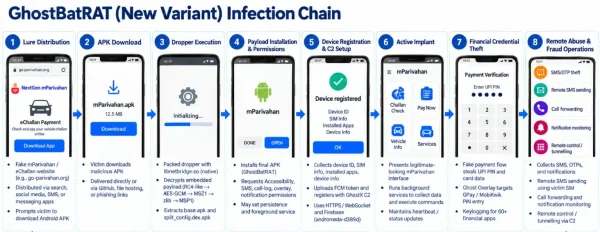 GhostBat-RAT-Infection-Chain-1536x595[/caption]

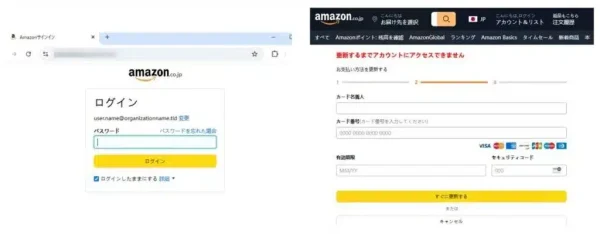 Image Source: https://blogs.microsoft.com/[/caption]
By mid-2026, CoGUI was increasingly being replaced by Iron Man, which offered thousands of phishing templates tailored to specific brands, industries and countries. Criminals could use them to quickly deploy email, text and web content.
Through test purchases and work with Resecurity, investigators identified more than 2,300 templates impersonating banks, retailers, healthcare providers, transportation authorities, police departments and government agencies across more than 150 countries. Others mimicked airlines, telecommunications companies and parcel delivery services. Some were built for government impersonation scams, using the look of official authority to pressure victims into paying or sharing sensitive information.
Microsoft noted that an organization appearing in these templates does not mean its systems were compromised.

 Image Source: Cyble[/caption]
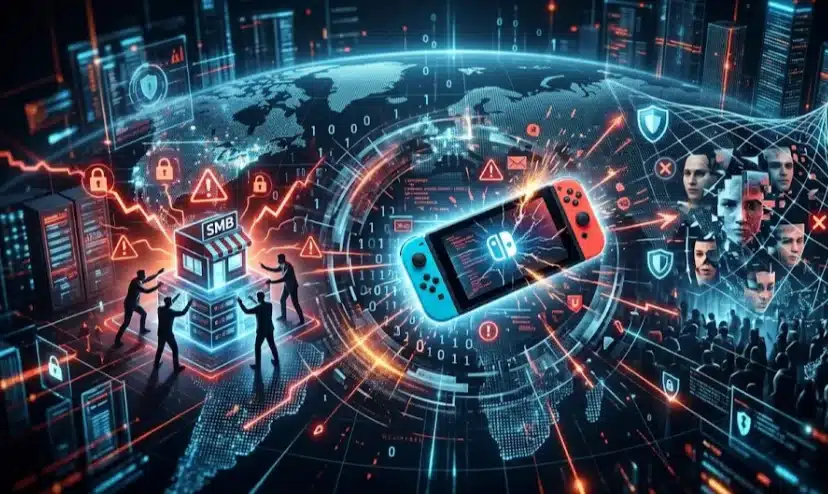


Cyble, a global AI-native cybersecurity company, has signed a Memorandum of Understanding (MOU) with the Cyber Security Council of the United Arab Emirates to strengthen national threat intelligence capabilities. The agreement was announced in Abu Dhabi in September 2026 and formalizes a strategic collaboration between Cyble and the federal entity responsible for strengthening the UAE's cybersecurity posture.
The MOU marks a significant milestone in Cyble's engagement with the UAE's national cybersecurity ecosystem, bringing together a global cybersecurity provider and a national authority tasked with protecting the country's digital environment.
The MOU establishes a framework for Cyble to support the Council's mission of protecting the UAE's digital infrastructure. The collaboration centers on delivering advanced threat intelligence, early warning capabilities, and actionable insights into emerging cyber risks facing government and critical infrastructure entities across the country. These focus areas are intended to help the Council anticipate and respond to threats before they escalate into significant incidents.
The partnership reflects the UAE's continued commitment to building a resilient, forward-looking cybersecurity posture at the national level. It also positions Cyble as a trusted technology partner in that effort.
By working closely with the Council, Cyble aims to strengthen visibility into threat actors, malicious campaigns, and vulnerabilities that could affect the UAE's most critical systems and services. This visibility is expected to support the Council's broader objective of maintaining a secure and stable digital environment for government and critical infrastructure operators.
Beenu Arora, CEO and Co-Founder of Cyble, described the agreement as more than a routine partnership announcement. He called it a strategic validation of Cyble's capabilities at the national cybersecurity level and a potential gateway to the UAE government and critical infrastructure ecosystem. This is not just a partnership announcement. It is a strategic validation of Cyble's capabilities at the national cybersecurity level and potentially a gateway to the UAE government and critical-infrastructure ecosystem," said Arora.
Arora added that working alongside the Cyber Security Council underscores the trust placed in Cyble's threat intelligence platform and reflects the growing importance of proactive, intelligence led defense in protecting nations against increasingly sophisticated cyber threats.
Dr. Mohamed Al Kuwaiti, Chairman of the Cyber Security Council of the United Arab Emirates, said the Council is committed to building strategic partnerships with world class technology providers that strengthen the UAE's cyber resilience at every level. He noted that the MOU with Cyble reflects a shared commitment to safeguarding the nation's digital infrastructure through advanced threat intelligence and proactive, intelligence led defense, ensuring the UAE remains at the forefront of global cybersecurity readiness.
"This MOU with Cyble reflects our shared commitment to safeguarding the nation's digital infrastructure through advanced threat intelligence and proactive, intelligence-led defense — ensuring the UAE remains at the forefront of global cybersecurity readiness," said Dr. Mohamed Al Kuwaiti.
The agreement builds on Cyble's broader strategy of deepening engagement with government and regulatory bodies across the Middle East. It reinforces the company's position as a trusted partner to national cybersecurity authorities navigating an increasingly complex threat landscape, and it adds to a growing list of engagements between Cyble and public sector organizations in the region.
Cyble Vision, the company's threat intelligence platform powered by Blaze AI, will play a central role in the collaboration. The platform is designed to deliver rapid detection, automated analysis, and contextual insights into ransomware, phishing, fraud, and other evolving threats relevant to national security priorities. Through this platform, Cyble intends to provide the Council with tools that support faster identification and analysis of threats targeting the UAE's digital infrastructure.
Cyble is a global, AI-native cybersecurity company specializing in threat intelligence, digital risk protection, and dark web monitoring. Its flagship platform, Cyble Vision, powered by Blaze AI, delivers rapid threat detection, automated analysis, and contextual insights into ransomware, phishing, and fraud.
Media Contacts: enquiries@cyble.com | +1 678 379 3241 | www.cyble.com
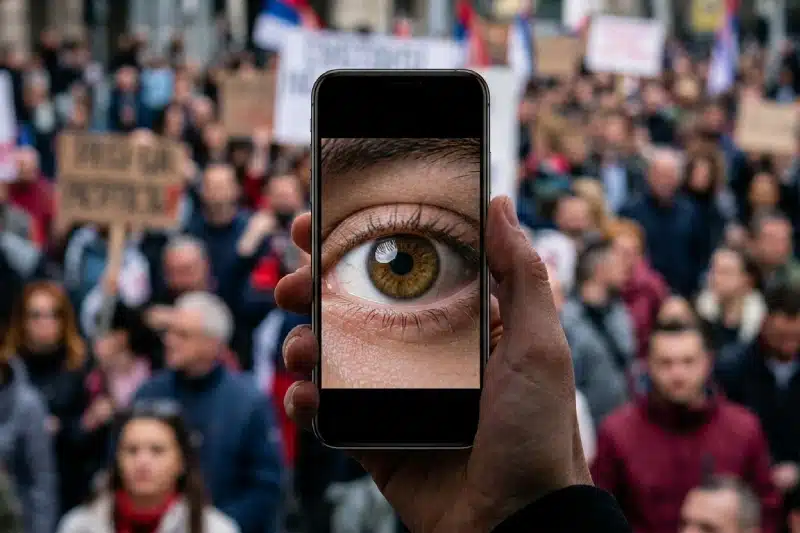
At least 14 people connected to Serbia's student protest movement and opposition politics have been targeted with mercenary spyware since early 2026, the Belgrade-based digital rights organization SHARE Foundation said, in what it called the largest documented wave of such targeting in the country.
The group said the cohort includes student movement members, civil society activists, a member of parliament and a local councilor. Forensic analysis was independently confirmed by the Citizen Lab at the University of Toronto and by Amnesty International's Security Lab.
Citizen Lab, in its own findings, said it verified an infection with NSO Group's Pegasus on the iPhone of a student activist who asked not to be named. High-confidence infection indicators span December 2025 through January 2026, delivered by a zero-click iMessage exploit that required no interaction from the target. Apple has since patched the underlying flaw; the fix shipped in iOS 18.4.1. Pegasus grants an operator access to notes, photographs and messages decrypted on the device, and can silently activate the microphone and camera.
Amnesty's Security Lab confirmed a new variant of NoviSpy, an Android implant first identified in Serbia in 2024, on two additional devices. SHARE said the rebuilt version was designed to evade the detection methods that exposed its predecessor.
The circumstances of two infections are what elevate the findings beyond routine spyware reporting. SHARE said one NoviSpy infection appeared after police seized a student's phone during questioning, and another after private messages from that device were published by a pro-government media outlet. Donncha Ó Cearbhaill, who heads Amnesty's Security Lab, said the evidence suggests "infections are being carried out during detention by Serbian authorities."
Suspicion centers on Serbia's Security Information Agency, or BIA. Amnesty's December 2024 report "A Digital Prison" found earlier NoviSpy samples configured to send collected data to IP addresses associated with BIA servers, and documented the agency's parallel use of Cellebrite extraction tools on journalists and activists. In March 2025, Amnesty reported that two journalists at the Balkan Investigative Reporting Network were targeted with Pegasus.
The current cases surfaced through Apple's threat notification wave of Aug. 13, which reached users in 110 countries. The timing is politically loaded. The targeting overlaps with protests that followed the November 2024 collapse of a railway station canopy in Novi Sad, spans local elections held March 29 in 10 municipalities, and precedes October parliamentary elections widely read as a test of the ruling Serbian Progressive Party.
Ana Toskic Cvetinovic, a legal expert cited in the reporting, noted that deploying intrusive software without judicial authorization is unlawful under Serbian law. SHARE published an analysis of the domestic legal framework in January arguing the same. Criminal complaints filed over the 2024 cases remain pending before Serbian courts, with no resolution.
NSO has been on the U.S. Commerce Department's Entity List since 2021.
Serbia is an accession candidate, the European Parliament has previously questioned the Commission over unlawful spyware use in the country, and the Commission published its 2026 enlargement country report in July. Amnesty's submission for that package raised surveillance directly.
Both groups urged at-risk users to enable Lockdown Mode on iOS or Advanced Protection on Android.