 Entrar
Ransomware Kingpin Gets 16 Years for Global Cyberattacks


Strip away the geopolitics, the hacktivist noise, and the espionage headlines, and one number from the first half of 2026 stands out above everything else: 1,721. That's how many ransomware attacks hit organizations in the United States between January and June, according to new research from Cyble Research and Intelligence Labs (CRIL). It's not just the highest total of any country tracked in the report — it's more than the next nine most-targeted countries combined.
Canada, in second place worldwide, recorded 179 attacks. Germany logged 155. The United Kingdom, 138. Add up the rest of the global top 10 — France, Italy, Spain, Thailand, India and Brazil — and the total still falls more than 600 attacks short of the U.S. figure alone. Out of 3,836 ransomware attacks CRIL tracked worldwide this half, roughly 45% landed on American soil.
Widen the lens slightly and the picture holds. North America as a whole recorded 1,981 ransomware attacks in H1 2026 — more than half of every ransomware incident Cyble observed globally — alongside 35 data breach and leak incidents and 9 initial access sale listings. The report describes the region as home to "a mature, persistently active RaaS ecosystem operating at high volume across a wide range of industries and geographies."
Two ransomware-as-a-service operators did much of the damage. Qilin, the single most prolific gang worldwide, claimed 370 of those North American attacks on its own — nearly 19% of the regional total. Akira followed with 268, and INC Ransom added another 164. Together, Qilin and Akira alone accounted for more than half of all recorded ransomware activity across the region, a level of concentration that points to a small number of highly organized affiliate networks doing the bulk of the damage rather than a diffuse swarm of opportunists.
Professional Services bore the brunt of North American ransomware activity, with INC Ransom showing a marked preference for law firms and other high-value services with sensitive client data. Construction, Manufacturing and Healthcare followed close behind.
One operator, AiLock, stood out for a coordinated wave of victim disclosures that all landed on the same day — March 3 — a pattern consistent with a mass-exploitation campaign rather than isolated intrusions. LockBit, despite years of law enforcement pressure and takedown attempts, kept up a steady tempo against public-sector and educational targets throughout the period, showcasing how difficult the group has been to fully dismantle.
On the data breach side, Technology and financial services (BFSI) were the most frequently targeted sectors in North America, together accounting for roughly 43% of incidents — a reflection of how much intellectual property and monetizable personal data those industries hold.
Notably, Agriculture & Livestock emerged as a significant target for initial access brokers, accounting for a third of all access listings tied to the region. Cyble flags this as a sign of "growing risk in the food supply chain," an area that has historically drawn less attention from ransomware operators than finance or healthcare.
The initial access market itself was strikingly concentrated: two sellers, tracked under the handles "redpin" and "xpl0itrs," accounted for nearly all listings targeting North American organizations. Threat actors also continued to lean on known and zero-day vulnerabilities in widely deployed enterprise platforms — including products from Ivanti and Palo Alto Networks — as their preferred way into corporate networks.
North America wasn't spared the hacktivism wave sweeping the rest of the world either. Collectives including SOLDADOS DIGITALES – UNIÓN AMERICANA and LYSTIC TEAM #ID drove roughly 56 data leak or dump posts and touched about 360 unique domains across the region, with Government, Technology, financial services and telecommunications entities most frequently in the crosshairs.
Cyble's broader findings suggest many groups marketing themselves as ideologically driven hacktivists are, in practice, running side businesses in stolen data brokerage and DDoS-for-hire services — a blurring of motive that complicates how defenders triage the threat.
The scale of the U.S. numbers doesn't necessarily mean American companies have weaker defenses than their global peers — the concentration also reflects the sheer size and digital density of the U.S. economy, and its outsized share of the high-value targets ransomware affiliates chase. But the data does argue for a shift in posture.
Cyble's broader recommendations — treating data exfiltration, not just encryption, as the primary risk; prioritizing patches for the recurring vendor list; and monitoring initial access markets as a leading indicator rather than an afterthought — apply nowhere more urgently than in a country absorbing this much of the world's ransomware volume on its own.
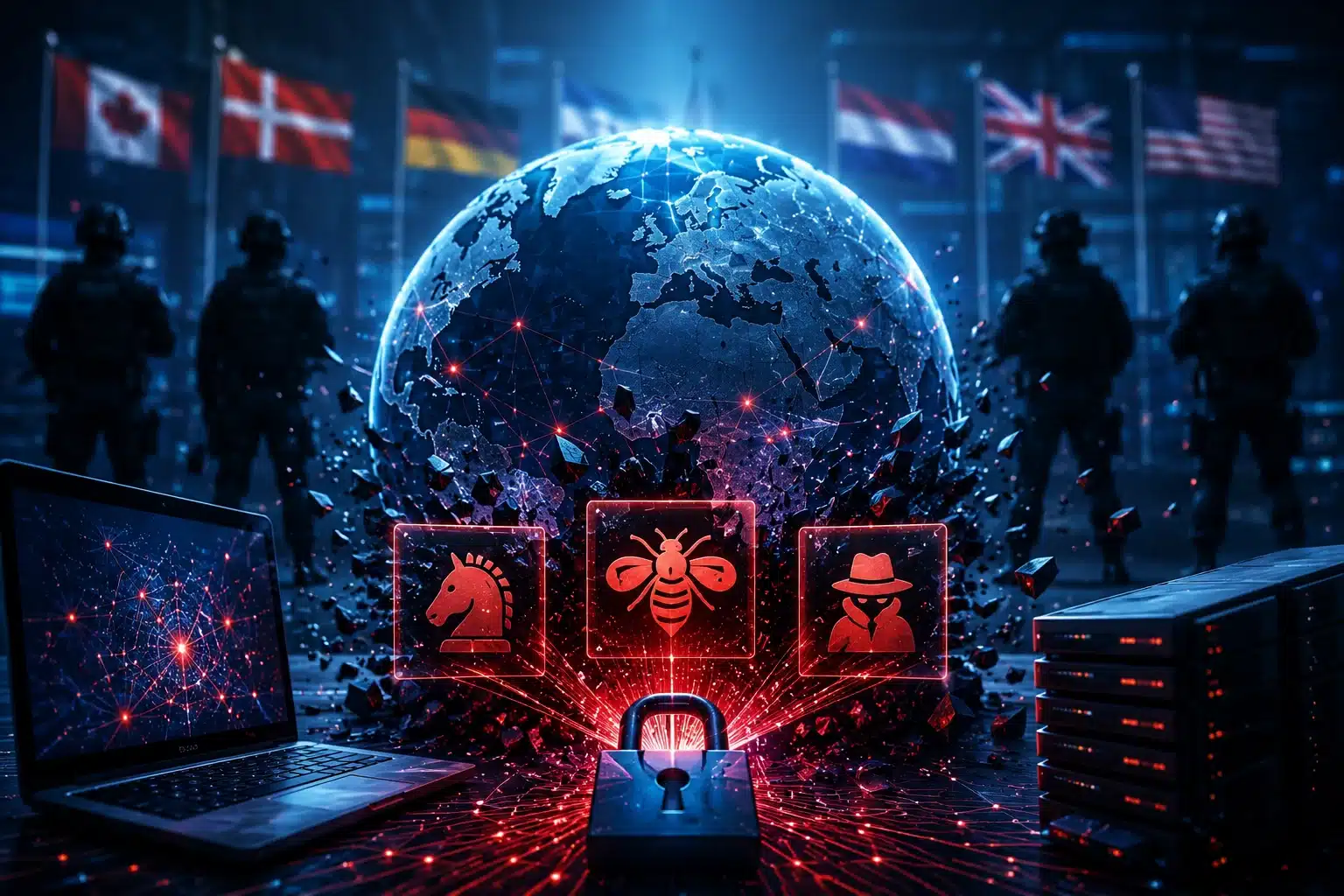
Operation Endgame has dealt another blow to cybercriminal operations after international law enforcement agencies and private sector partners dismantled infrastructure supporting the SocGholish, Amadey, and StealC malware families. The coordinated operation resulted in the seizure of more than EUR 41 million in criminal cryptocurrency assets, the recovery of 27 million stolen login credentials, and the disruption of hundreds of servers and domains used to distribute malware.
Led by Europol and Eurojust, the operation brought together authorities from Canada, Denmark, Germany, the Netherlands, the United Kingdom, the United States, Microsoft, and several cybersecurity organizations. Officials said the objective was to disrupt the infrastructure cybercriminals rely on to launch ransomware attacks, financial fraud, and attacks against critical infrastructure.
During the coordinated action, authorities targeted the infrastructure supporting malware delivery rather than focusing on a single malware family.
Law enforcement and industry partners took action against 326 servers and 142 domains, significantly disrupting malware distribution channels. Investigators also identified and restricted criminal cryptocurrency assets currently valued at more than EUR 41 million (USD 47 million) while recovering approximately 27 million stolen login credentials.
According to Europol, the operation aimed to disrupt the "assembly line" used by cybercriminals to gain initial access to victim systems before deploying ransomware or stealing sensitive information.
[caption id="attachment_112936" align="aligncenter" width="600"]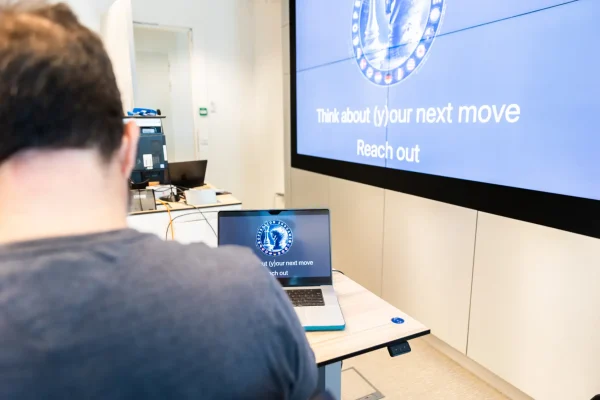 Image Soure: Europol[/caption]
[caption id="attachment_112937" align="aligncenter" width="600"]
Image Soure: Europol[/caption]
[caption id="attachment_112937" align="aligncenter" width="600"] Image Source: Europol[/caption]
The operation focused on three malware families that are commonly offered under the cybercrime-as-a-service model.
Microsoft reported that during the first two weeks of May 2026 alone, Amadey and StealC malware were linked to more than 140,000 infected computers worldwide.
One of the largest actions under Operation Endgame targeted SocGholish, also known as FakeUpdates.
Authorities remediated 14,971 infected WordPress websites, including websites belonging to restaurants, automotive repair businesses, and other organizations. Investigators also disabled the SocGholish botnet by taking control of domains and shutting down supporting servers.
Website owners whose credentials had been exposed were notified through platforms including Have I Been Pwned, DIVD, Spamhaus, CheckjeHack, NoMoreLeaks, Shadowserver, and NL-NCSC.
The Dutch Police urged WordPress administrators to change passwords, enable multi-factor authentication, remove unknown administrator accounts, and keep their websites updated to reduce future compromise risks.
Authorities said SocGholish has been linked to Evil Corp, a Russian cybercriminal group previously associated with the Zeus and Dridex malware families, as well as multiple ransomware and money laundering operations.
Rather than targeting only malware operators, investigators focused on disrupting the broader infrastructure supporting cybercriminal activity. Europol said this strategy increases operational costs for threat actors and makes large-scale cyberattacks more difficult to execute.
Europol's European Cybercrime Centre (EC3) coordinated operational intelligence sharing through SIENA while providing analytical, technical, and cryptocurrency tracing support throughout the investigation.
The operation forms part of Operation Endgame, described by Europol as the largest international initiative to disrupt ransomware enablers worldwide.
Officials said the latest disruption reflects a growing international strategy of targeting the infrastructure that enables cybercrime operations, rather than responding only after attacks have occurred.


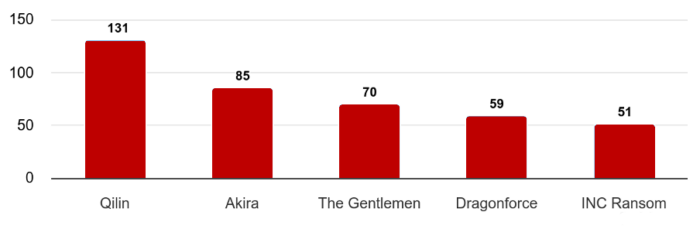 One of the most defining aspects of the March 2026 threat landscape was the scale of ransomware attacks. CRIL recorded 702 ransomware incidents globally, underscoring the continued dominance of ransomware as a primary attack vector.
Among the most active threat groups were Qilin, Akira, The Gentlemen, Dragonforce, and INC Ransom. Collectively, these actors were responsible for over 56% of all observed ransomware activity, reflecting their operational maturity and extensive affiliate networks.
Industries most affected by ransomware attacks included:
One of the most defining aspects of the March 2026 threat landscape was the scale of ransomware attacks. CRIL recorded 702 ransomware incidents globally, underscoring the continued dominance of ransomware as a primary attack vector.
Among the most active threat groups were Qilin, Akira, The Gentlemen, Dragonforce, and INC Ransom. Collectively, these actors were responsible for over 56% of all observed ransomware activity, reflecting their operational maturity and extensive affiliate networks.
Industries most affected by ransomware attacks included:
