❌

Visualização de leitura

From federal SOCs to Talos: Ryan Fetterman on practical security research

From federal SOCs to Talos: Ryan Fetterman on practical security research

What does it mean to be "blue collar" for the blue team? Amy sat down with security researcher Ryan Fetterman to discuss his journey from federal agency work to his new role at Talos. He shares the realities of detection engineering — including the creative, often frustrating ways attackers evolve their tactics to stay one step ahead of traditional defenses.

Beyond the technical grind, Ryan shares his philosophy on building a career in security without burning out. From the value of project-based learning to the importance of finding time to step away from the keyboard, here's Ryan's take on what it really means to navigate today's cybersecurity industry.

Amy Ciminnisi: Tell me a little bit about the journey that has taken you to Talos, from early on in your career through to now. How did you get here? I actually don't know that much about it.

Ryan Fetterman: I've been doing security about 15 years now, and my career was largely shaped by where I started in the DC area. I spent about a decade there. I started out in consulting and then pivoted over to research, but that was a great place to get started.

I got a lot of great experience in federal agencies and government consulting, continued my education down there, got trained up, got certifications and things like that. And that was where I got my first exposure to doing actual security operations, which is what I really stuck with. It was my first exposure to Splunk.

Querying lots of log data and building visualizations and analytics in Splunk was the first time in my career that I felt it was kind of my natural inclination. It seems like it should have been more obvious to me looking back on it, but it's something that I try to explain to people a lot. When you first get into security, there's a desire to kind of find your specialization and start working towards it. But in my experience, it's just not something that you can rush.

I met the people connected with that space, which eventually led to me going to work for Splunk. I worked on the Splunk research team, SURGe. And then after the Cisco acquisition of Splunk, I ultimately became reorganized into Talos.

AC: I'm sure there have been so many challenges, so many obstacles in your way as you're trying to do this research. Can you share one that you've faced and how it shaped your perspective on cybersecurity?

RF: Something that stuck with me was actually my first advanced persistent threat (APT) incident. Now, you can look this up. It's called Pandora Song if you search for the C2. I was in the DC area working in a federal SOC, and I was doing some of the first host-based analytics at the time, which have now become kind of the concentration of a lot of detection. Engineering and analytics are host-based, so this was kind of pioneering at the time.

I was looking at a lot of host-based sensors and writing analytics in Splunk, actually, and we had been tipped off to this incident by a third party. I was looking through the details of the incident and how the attacker was carrying out the progression of their attack...


Want to see more? Watch the full interview, and don’t forget to subscribe to our YouTube channel for future episodes of Humans of Talos.

Give yourself room to be human

Give yourself room to be human

Welcome to this week’s edition of the Threat Source newsletter. 

Fall is officially here in Maryland, and I can’t be more relieved. I flourish in 50 degree weather, where it feels natural to burrow under blankets, knit sweaters, and listen to an audiobook. 

Beyond that, though, can I say that I’m glad fall is here because the end of summer has been a bit of a shitshow? I’m allowed to curse on here, right? 

Without going into too much detail, my uncle was diagnosed with a rare cancer, and my family decided we were going to fly out to spend a week with him. I was determined to find a way to make it work, but on top of all of the emotions, my mind was racing with trying to figure out how to request the time off and get coverage for the tasks I’d be missing. 

I was anxious to ask, but my manager’s response to me requesting the week off was:

“Family always, always comes first at Talos. You spend as much time with your family as you need. Don’t worry, we’ll work everything out. We have your back.”

I knew I was in such a fortunate position to have that kind of support. Yet, even with the explicit encouragement to step away, there was still a lingering weight on my shoulders that I couldn't quite set down. 

LinkedIn might be an awful, artificial place, but occasionally I’ll find a non-AI-generated think piece or quote that sticks with me. On a recent post, I read, “We’d all be better off if we gave each other a little more room to be human here without worrying it makes us look less capable.” 

Okay, ouch! That described the unsettled feeling to a T. Ever since I was laid off at my previous company, my trauma response has insisted I prove myself, make myself “indispensable” and capable of taking on any challenges thrown my way. I'm sure if you've been through a layoff, you can relate. 

If you’re scared of your team perceiving you as less capable and more dispensable, please hear this: You are not a machine, and your value to your team isn't defined by how much personal or professional weight you take on without a break. It's so easy to extend grace to others, to insist that they spend time with their ill family members, but we have to extend the same grace to ourselves. 

If your team is great, they’ll want you at your best, not just your most productive, so you can fight the good fight. Don't let this fear stop you from taking the time you need. Life is worth living now, and we’re better at what we do when we’re well in all aspects of life.

The one big thing  

For Cybersecurity Awareness Month, Talos is sharing crowdsourced strategies from our researchers to help you master “The Fine Art of Frustrating the Adversary.” By deploying deception techniques, behavioral detections, and strict controls over legitimate tools, defenders can strip away an attacker's advantages. The goal is to make every alternative slower, less stealthy, and significantly more expensive for the threat actor. Ultimately, we want to force them to make mistakes or give up entirely. 

Why do I care? 

Threat actors rely on predictable environments, dual-use tools, and manufactured urgency to execute operations at scale. If defenders rely solely on tool-specific detections, adversaries can easily pivot by simply swapping out a payload. Shifting to behavior-based detections and introducing friction, like honeypots or strict AI boundaries, exploits the fact that attackers have rigid end goals. This approach slows down their operations and gives defenders earlier opportunities to interrupt the attack chain. 

So now what? 

Start by allowlisting approved remote monitoring and management (RMM) tools and blocking unauthorized ones to prevent dual-use abuse. Build resilient behavioral analytics that target underlying techniques rather than specific malware. Consider deploying deception tactics like fake employee profiles or false infrastructure. Ensure any AI agents in your environment have identifiable, short-lived credentials and strict network boundaries. And, of course, explore the blog to dive deeper into these strategies. 

Top security headlines of the week 

South Africa seeks help after cyber attack targets air traffic control 
The South African state-owned company that provides air traffic control and weather operations for approximately 10% of the world's airspace discovered ransomware-linked malware in an OT network. (Dark Reading) 

Automated AI agent used to breach cybersecurity nonprofit DIVD 
The Dutch Institute for Vulnerability Disclosure (DIVD) suffered an AI-driven cyber attack that the organization described as “loud and very, very messy.” Evidence uncovered during the ongoing investigation indicates the attacker exploited a vulnerability, but the attack's purpose and impact remain unclear at this stage. (Bleeping Computer)

Citrix confirms 2 NetScaler zero-days after admins pulled the plug 
Citrix rushed out patches for two critical NetScaler zero-day vulnerabilities that have been exploited in the wild. The advisory covers eight vulnerabilities affecting NetScaler ADC and NetScaler Gateway. (SecurityWeek) 

Pentagon personnel agency data breach impacts 3 million people 
The US Defense Manpower Data Center (DMDC), which maintains personnel records for the Pentagon, has started notifying people that their personal information was exposed. Unauthorized users had access to one of its file-sharing servers for roughly nine months. (SecurityWeek) 

TeamViewer urges users to patch severe flaws “as soon as possible” 
Remote access software company TeamViewer warned customers on Tuesday to immediately patch a set of high-severity vulnerabilities affecting its client and host software. (Bleeping Computer) 

Cisco’s Relentless Defense report is available now 
Cisco asked 8,000 security leaders from across the globe how they’re coping with a threat landscape being reshaped by AI, including whether their processes can keep pace with AI’s ability to surface thousands of vulnerabilities at once, and whether they’re confident staying ahead of the volume of new threats being discovered. (Cisco) 

Can’t get enough Talos? 

China-nexus UAT-11587 targets government and policy organizations across Asia with Antino backdoor 
Cisco Talos uncovered a cluster of activity we track as UAT-11587 targeting government and policy organizations across Asia, including in Taiwan, India, the Philippines, and Cambodia, to deliver a previously undocumented backdoor referred to as “Antino” in developer artifacts. 

Securing the keys to the kingdom: Announcing Executive Threat Detection 
For a sophisticated threat actor, an executive is not only a high-ranking employee, but also a high-yield target. Talos IR’s new service offers protection for up to 10 principals, with monthly custom threat hunts and reports relevant to your organization’s most high-value IT assets. 

Beers with Talos: Your AI malware experiments are showing 
Adversaries are experimenting with AI-integrated malware, and today's guest, Talos researcher Ryan Fetterman, has been looking at their working notes. 

Upcoming events where you can find Talos 

Most prevalent malware files from Talos telemetry over the past week 

SHA256: 9f1f11a708d393e0a4109ae189bc64f1f3e312653dcf317a2bd406f18ffcc507  
MD5: 2915b3f8b703eb744fc54c81f4a9c67f  
Talos Rep: https://talosintelligence.com/talos_file_reputation?s=9f1f11a708d393e0a4109ae189bc64f1f3e312653dcf317a2bd406f18ffcc507 
Example Filename: sample.exe  
Detection Name: W32.9F1F11A708-100.SBX.TG** 

SHA256: 96fa6a7714670823c83099ea01d24d6d3ae8fef027f01a4ddac14f123b1c9974 
MD5: aac3165ece2959f39ff98334618d10d9  
Talos Rep: https://talosintelligence.com/talos_file_reputation?s=96fa6a7714670823c83099ea01d24d6d3ae8fef027f01a4ddac14f123b1c9974 
Example Filename: d4aa3e7010220ad1b458fac17039c274_63_Exe.exe  
Detection Name: W32.Injector:Gen.21ie.1201 

SHA256: 90b1456cdbe6bc2779ea0b4736ed9a998a71ae37390331b6ba87e389a49d3d59  
MD5: c2efb2dcacba6d3ccc175b6ce1b7ed0a  
Talos Rep: https://talosintelligence.com/talos_file_reputation?s=90b1456cdbe6bc2779ea0b4736ed9a998a71ae37390331b6ba87e389a49d3d59 
Example Filename: tmp00055df5.dll  
Detection Name: Auto.90B145.282358.in02 

SHA256: 540080fea97d88ed902c5e4f9a026b4fcd32ab263706c520e00728f1a29578b8 
MD5: d65c7b544a97b0c3f2773b5fcc57d30e  
Talos Rep: https://talosintelligence.com/talos_file_reputation?s=540080fea97d88ed902c5e4f9a026b4fcd32ab263706c520e00728f1a29578b8 
Example Filename: f_006048.exe  
Detection Name: W32.540080FEA9-95.SBX.TG 

SHA256: 9896a6fcb9bb5ac1ec5297b4a65be3f647589adf7c37b45f3f7466decd6a4a7f 
MD5: 38de5b216c33833af710e88f7f64fc98  
Talos Rep: https://talosintelligence.com/talos_file_reputation?s=9896a6fcb9bb5ac1ec5297b4a65be3f647589adf7c37b45f3f7466decd6a4a7f 
Example Filename: SECOH-QAD.exe  
Detection Name: W32.9896A6FCB9-95.SBX.TG

[Webinar] Tales from the Frontlines: An exclusive briefing on Q2 incidents

[Webinar] Tales from the Frontlines: An exclusive briefing on Q2 incidents

Have you ever read the Talos IR Quarterly Trends report and wondered, “How did that phishing or ransomware campaign actually play out? When was Talos IR contacted, how did they contain it, and how did they remediate the environment?" 

You’re in luck. Next Tuesday, August 11, Cisco Talos Incident Responders will be hosting an exclusive, unrecorded 30-minute webinar to review the most high-impact incidents our customers faced in Q2 2026. This isn’t a rehashing of the report itself, but a candid discussion of what happened, how we handled it, and what it means for your organization. 

The session is designed for security professionals of all levels, from analysts and incident responders to managers and senior leaders. We'll focus on strategic takeaways and business impact, with just enough technical depth to provide context and spark meaningful conversations. 

Registration is required to attend. Don’t miss this chance to hear real-world stories from the frontlines of cyber defense, directly from the team who lived them.

You were onto something with “It’s the Climb,” Miley

You were onto something with “It’s the Climb,” Miley

Welcome to this week’s edition of the Threat Source newsletter. 

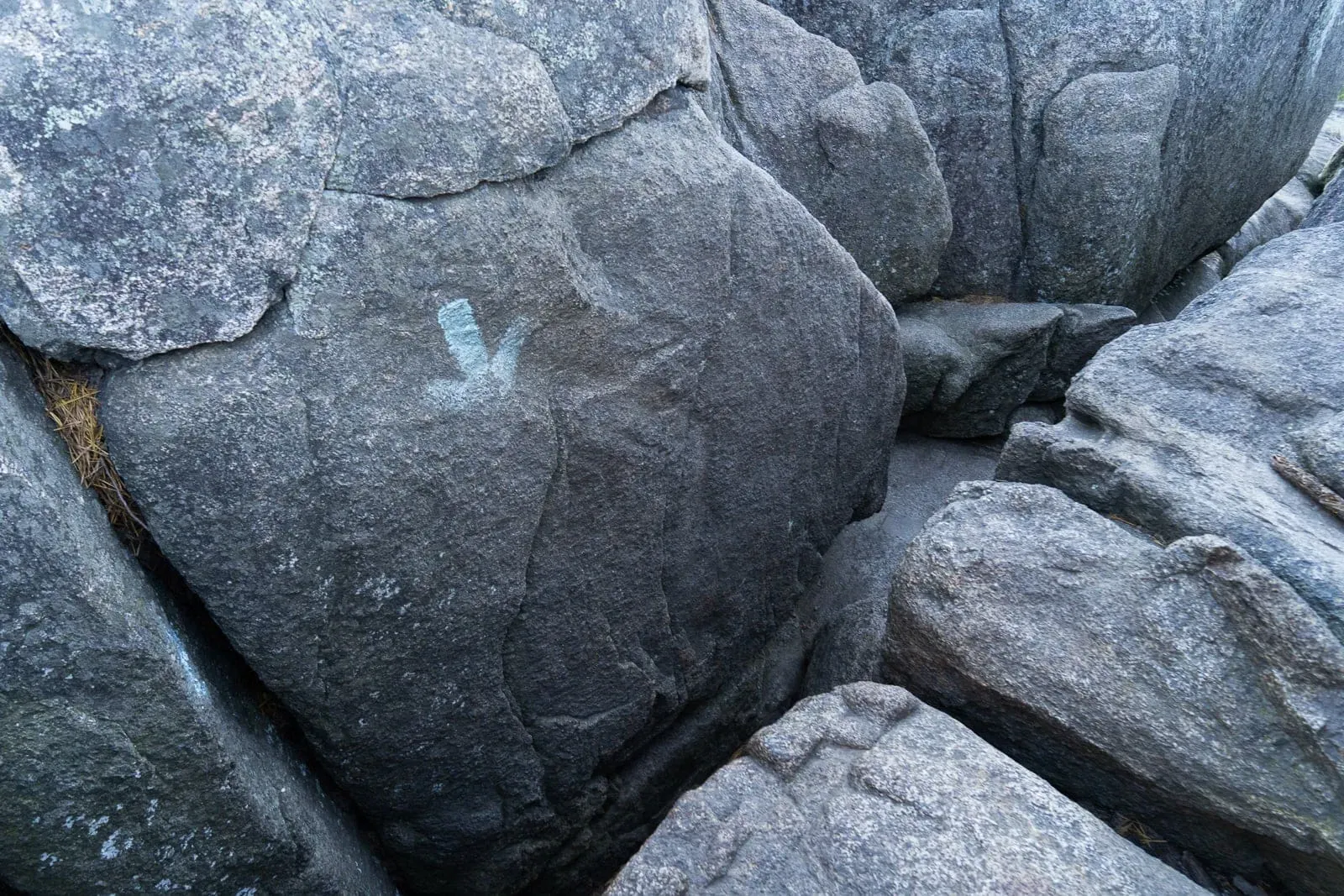
For my fianceé’s 30th birthday, I took her on a weekend trip to Shenandoah National Park – a favorite of ours since we went to a wedding there several years back. We’ve done several incredible hikes over the years, but one in particular had always loomed over my head: Old Rag, a 9.3 mile circuit hike that’s largely considered the most difficult in Virginia. 

I've always been warned that at the beginning and end, you hate Old Rag. For the first 2.6 miles, you’re hiking a steep climb on a dirt road, with lots of switchbacks, and plenty of places where you turn a corner and groan, because there’s an even steeper section ahead. This part was pretty torturous, because 1) I felt like my heart was going to explode out of my chest, 2) I couldn’t breathe, and 3) several times, there was a family we passed as they were taking a break, then WE took a break and THEY passed US, and so on and so forth. So awkward. 

Finally, we reached the fun part: a mile-long rock scramble, where you're squeezing through (and down) narrow rock crevices, cramming your boots to desperately find any leverage to propel yourself upward, and using all your upper body strength to control your descent. This was definitely the most fun part, although my hands and knees were sore by the end.

You were onto something with “It’s the Climb,” Miley

After hiking for hours, you reach the top and realize it was all worth it, because the summit has a a spectacular vie—

You were onto something with “It’s the Climb,” Miley

... That’s what we get for being excited to hike in overcast weather. Well, at least the way back down is fun— oh wait, four miles downward on a fire trail, crushing your toes in the front of your hiking boots? Yike. 

It may sound like I’m complaining a lot about this hike, but it was genuinely the most fun one that I’ve done to date. By the time I was freshly showered and drinking an iced coffee in Culpeper, I was gushing about when we’d go back. 

There’s a really good tie-in to cybersecurity somewhere here. Ah, got it. 

Everyone has had those uphill hike phases with the endless documentation, patching, and alerts that keep you up at night. You’re waiting for the misery to end and hoping that around the next corner, you’ll see a sign that you’re almost out of the woods. Bruised and out of breath, you finally arrive at the exciting parts: a complex project that finally comes together, the thrill of stopping an attack, or a feeling of pride when someone you're mentoring gets a new certification. Maybe the payoff is something completely unexpected.

Those moments definitely don’t erase the exhaustion — you're still sore and bruised, and will be for days — but they do remind you why you started in the first place. 

The one big thing 

Talos released our Q2 2026 Incident Response Trends report, which showed a massive spike in authentication abuse and sophisticated phishing tactics. Phishing drove over half of all engagements, with attackers leveraging QR codes and advanced platforms like ARToken to bypass multi-factor authentication (MFA). Additionally, ransomware operators are increasingly weaponizing legitimate remote management tools like MeshAgent and Zoho Assist to establish stealthy, persistent access. 

Why do I care? 

Standard email gateways and basic MFA are no longer enough to stop adversaries from bypassing traditional defenses. By abusing legitimate administrative tools and trusted cloud infrastructure, threat actors can easily blend malicious traffic with normal network activity to remain undetected before deploying ransomware. Furthermore, the continued targeting of health care and public administration highlights a deliberate focus on organizations with zero tolerance for downtime. 

So now what? 

Organizations must transition from push- and SMS-based MFA to phishing-resistant methods like FIDO2 or hardware security keys. Defenders should also shift to behavior-based monitoring, specifically hunting for unauthorized instances of administrative tools. Finally, configure centralized logging with at least 90 days of retention, enforce strict outbound email thresholds, and prioritize patching internet-exposed infrastructure.  

Read the full report for a deeper dive into this quarter's trends and observed MITRE ATT&CK techniques. 

Top security headlines of the week 

Authorities investigating a coordinated cyber attack against Minnesota water systems 
Federal and state authorities are investigating what they call a coordinated cyberattack over two days against operational technology at more than 30 community water systems in Minnesota. (Cybersecurity Dive) 

Hacked public Wi-Fi gateways used to harvest corporate credentials 
As part of the attacks, the hackers modified the DNS configurations of the compromised small office/home office (SOHO) routers to redirect users to attacker-controlled infrastructure for credential theft. (SecurityWeek) 

Default Azure Automation setting enables cross-tenant identity takeover 
Microsoft addressed a public-by-default configuration and chain of code flaws in Azure Automation that could have let attackers seize another tenant's identity and access others' data, credentials, and cloud workloads. (DarkReading) 

Public proof-of-concept released for exploited Check Point SmartConsole authentication bypass 
The vulnerability is an authentication bypass in the SmartConsole login process that allows an unauthenticated remote attacker to obtain an application login token and use it to authenticate with full administrative privileges. (The Hacker News) 

Can’t get enough Talos? 

The TTP: Built for IT. Used by attackers 
In this episode of The Talos Threat Perspective, Hazel, Craig and Joe explore how attackers are abusing legitimate Remote Monitoring and Management software, trusted services and compromised identities to evade detection. Based on trends revealed in the latest Talos Incident Response Quarterly Trends report, the discussion covers ransomware groups using remote tools to maintain access, phishing platforms that have evolved into complete attack ecosystems, and an ongoing QR code phishing campaign targeting Microsoft 365 accounts.

Talos Takes: Q2 Talos IR Trends: Phishing and authentication abuse
In this episode, Amy and analyst Lexi DiScola unpack the trends Talos IR saw on the frontlines in Q2 2026. From creative phishing lures that slip past email gateways to the weaponization of legitimate remote management tools, we explore why traditional defenses are falling short and the practical things you can do to reclaim the advantage. 

Preview: Cisco Talos at Black Hat USA 2026 
We have a presence within the Cisco and Splunk booth (2633) during Black Hat where you can chat to us about our latest threat research, incident response, and how Talos powers the Cisco portfolio with our intelligence. Or, feel free to pretend to want to talk to us about those things while grabbing a new multicolored Snorty. That’s fine, too. 

Chaos ransomware's msaRAT: Living off the browser to build a covert C2 channel 
The Chaos ransomware group uses new malware "msaRAT" that hijacks browsers. The malware doesn't communicate directly with C2 but connects through the browser. It enables arbitrary command execution while hiding the attacker's IP from victims via WebRTC over TURN. 

Upcoming events where you can find Talos 

Most prevalent malware files from Talos telemetry over the past week 

SHA256: 9f1f11a708d393e0a4109ae189bc64f1f3e312653dcf317a2bd406f18ffcc507  
MD5: 2915b3f8b703eb744fc54c81f4a9c67f  
Talos Rep: https://talosintelligence.com/talos_file_reputation?s=9f1f11a708d393e0a4109ae189bc64f1f3e312653dcf317a2bd406f18ffcc507 
Example Filename: VID001.exe 
Detection Name: Win.Worm.Coinminer::1201 

SHA256: a31f222fc283227f5e7988d1ad9c0aecd66d58bb7b4d8518ae23e110308dbf91 
MD5: 7bdbd180c081fa63ca94f9c22c457376  
Talos Rep: https://talosintelligence.com/talos_file_reputation?s=a31f222fc283227f5e7988d1ad9c0aecd66d58bb7b4d8518ae23e110308dbf91 
Example Filename: d4aa3e7010220ad1b458fac17039c274_62_Exe.exe 
Detection Name: Win.Dropper.Miner::95.sbx.tg** 

SHA256: 9896a6fcb9bb5ac1ec5297b4a65be3f647589adf7c37b45f3f7466decd6a4a7f 
MD5: 38de5b216c33833af710e88f7f64fc98 
Talos Rep: https://talosintelligence.com/talos_file_reputation?s=9896a6fcb9bb5ac1ec5297b4a65be3f647589adf7c37b45f3f7466decd6a4a7f 
Example Filename: SECOH-QAD.exe 
Detection Name: Win.Tool.Procpatcher::1201 

SHA256: fc18d4060c6dad3057c0b5a70a2081473e066951720cafbd2aa159d3aaccf2e1 
MD5: ded73d04bb3e3525226de64c38a332e3 
Talos Rep: https://talosintelligence.com/talos_file_reputation?s=fc18d4060c6dad3057c0b5a70a2081473e066951720cafbd2aa159d3aaccf2e1 
Example Filename: f_000177.exe 
Detection Name: W32.Trojan.29jq.1201 

SHA256: 90b1456cdbe6bc2779ea0b4736ed9a998a71ae37390331b6ba87e389a49d3d59 
MD5: c2efb2dcacba6d3ccc175b6ce1b7ed0a 
Talos Rep: https://talosintelligence.com/talos_file_reputation?s=90b1456cdbe6bc2779ea0b4736ed9a998a71ae37390331b6ba87e389a49d3d59 
Example Filename:tmp00055df5.dll 
Detection Name: Auto.90B145.282358.in02 

Black Hat special: Rewind and revisit

Black Hat special: Rewind and revisit

Cybersecurity is rarely a straight line. In this special Black Hat edition of Humans of Talos, Amy looks back at the incredible journeys that brought past guests to the world of threat intelligence. From forensic labs and newsrooms to the kitchen line, we’re revisiting the stories and lessons that define the people behind the threat intelligence.

Heading to Black Hat? We have a presence within the Cisco and Splunk booth (2633) during Black Hat where you can chat to us about our latest threat research and incident response, and grab the newest Snorty. Check out our schedule here.

Want more episodes? Watch the full episode, and don’t forget to subscribe to our YouTube channel for the next Humans of Talos.

Martin Lee: Running through the Arctic (and the threat landscape)

Martin Lee: Running through the Arctic (and the threat landscape)

Ever wonder how someone goes from studying human viruses to leading cybersecurity teams? In this Humans of Talos, we’re joined by Martin Lee, EMEA Lead, to talk about his journey into the industry. Martin takes us back to the early days of the internet, explaining how he made the leap from academia to the front lines of threat research. He also gives us a fascinating look at his current work, where he’s applying a sociological lens to cybersecurity to better understand what makes certain organizations more resilient than others.

Whether you’re just starting your career in security or looking for a fresh perspective, you won't want to miss Martin’s advice on staying visible, being curious, and "flavoring your life with many spices."

Amy Ciminnisi: Martin, welcome! Can you describe what you do here at Talos for people who might not know you?

Martin Lee: My job is really ambassadorial. I still research the threat landscape, although I spend less time doing that now. Certainly understanding what are the changes that are happening in the threat landscape. But mostly my job is to externalize that — both to write about the threat landscape, but also discuss what we're seeing, what's important, and what's different with our customers and partners.

AC: I had no idea that you started your career in researching the genetics of human viruses. That’s one hell of a career change. Can you tell us about how you ended up where you are today?

ML: Yeah, "I discovered the internet," is basically the short answer. I discovered the internet very, very early on and just thought this is going to be the biggest invention in my life. I thought if I didn't jump there and then because I could see it was going to explode and go everywhere, and if I didn't jump then, I wouldn't be able to keep up with it. So, I left behind a career in academia to jump on board in the early internet and start building it and building websites.

AC: I actually wrote about this in my most recent newsletter — I'm one of the younger members of Talos, so I was born well after all of this started. It is so fascinating to me to hear about people who were out of college when the internet really started booming.

ML: Yeah, it was growing massively through the mid to late 90s, which was awesome. And then there was the .com crash, which was pretty rubbish. So, I found myself with a young family and less work than I wanted. This job came up, writing spam filters. This was before spam filters and certainly before spam was a big problem. So I thought, "Okay, that sounds fun, let's do that." And then we started detecting all of these weird and wonderful attacks. What we didn't know is we were detecting the first APT attacks. In trying to work out what was happening and what we were seeing, that kind of launched the career. So here we are over 23 years later, and cybersecurity has just grown massively. But it was entirely by accident that I ended up here.


Want to see more? Watch the full interview, and don’t forget to subscribe to our YouTube channel for future episodes of Humans of Talos.

❌