Visualização de leitura

From Stolen Credentials to Full Breach: The 72-Hour Timeline
72-hour Timeline

A single compromised credential is often all it takes to turn an ordinary workday into a full-scale cybersecurity incident. Despite investments in firewalls, endpoint security, and identity controls, attackers continue to exploit one of the simplest yet most effective entry points—stolen usernames and passwords. 

Whether exposed through phishing campaigns, malware infections, credential-stealing infostealers, or data breaches, compromised credentials are readily traded across underground forums and dark web marketplaces. Once obtained, threat actors waste little time putting them to use. What begins as an unauthorized login can quickly escalate into privilege abuse, lateral movement, data exfiltration, and ransomware deployment—all within a matter of hours. 

The risk is no longer theoretical. According to Cyble Research & Intelligence Labs (CRIL), more than 6,046 confirmed data breach incidents were monitored globally in 2025, with stolen credentials and compromised identities remaining one of the most common starting points for enterprise attacks. At the same time, Cyble researchers continue to observe credentials harvested through infostealer malware being traded across underground marketplaces, enabling attackers to purchase valid enterprise access for as little as a few dollars. 

The 72-hour Timeline 

Understanding how quickly credential-based attacks unfold is critical for reducing response times. The following 72-hour timeline breaks down each stage of a typical intrusion, highlights the attacker’s objectives, and identifies key detection opportunities that can help security teams interrupt the attack before it becomes a business-wide crisis. 

Stolen credentials often appear on underground marketplaces long before organizations realize they have been compromised. Cyble's Dark Web Monitoring continuously tracks dark web forums, marketplaces, and leak sources to identify exposed corporate credentials early, enabling security teams to investigate and remediate risks before attackers can exploit them. 

Hour 0–6: Initial Access 

The attack begins when threat actors obtain valid credentials. These may originate from credential dumps, phishing campaigns, malware infections, or previously breached third-party services where employees reused passwords. 

This growing underground economy is fueled by infostealer malware. According to CRIL, more than 50 active infostealer variants are currently circulating, continuously harvesting usernames, passwords, browser cookies, and session tokens that are later sold or shared among initial access brokers and ransomware affiliates.  

Because the credentials are legitimate, attackers frequently bypass traditional perimeter defenses without triggering immediate alarms. Instead of exploiting software vulnerabilities, they simply log in using valid accounts. 

Detection Opportunity 

Security teams should monitor for: 

  • Logins from unfamiliar geographic locations 

  • Impossible travel events 

  • Access attempts from anonymous VPNs or Tor exit nodes 

  • Repeated authentication failures followed by a successful login 

The earlier abnormal authentication behavior is identified, the greater the chance of preventing further compromise. 

Hour 6–18: Establishing Persistence 

After gaining access, attackers work to ensure they cannot be easily removed. They may register new authentication methods, create additional user accounts, modify MFA settings, or generate persistent API tokens. 

Their goal is simple: maintain access even if the original password is reset. 

Attackers also spend this period quietly learning about the environment, identifying high-value systems, and understanding privilege structures. 

Detection Opportunity 

Security teams should investigate: 

  • Unexpected MFA changes 

  • Newly created privileged accounts 

  • Unauthorized mailbox rules 

  • Suspicious administrative activities 

  • Changes to identity or authentication configurations 

At this stage, seemingly minor administrative changes often provide the earliest indicators of malicious persistence. 

Hour 18–36: Privilege Escalation and Internal Reconnaissance 

With persistence established, attackers begin expanding their access. They enumerate Active Directory environments, identify privileged users, scan internal assets, and search for sensitive repositories. 

Rather than acting aggressively, experienced adversaries move deliberately to avoid detection. Their objective is to understand the organization's architecture before executing the next phase. 

This reconnaissance often reveals domain administrators, backup infrastructure, cloud resources, financial systems, and critical databases. 

Detection Opportunity 

Organizations should monitor for: 

  • Unusual privilege escalation attempts 

  • Excessive directory queries 

  • Credential dumping activities 

  • PowerShell abuse 

  • Administrative tools running outside normal operating hours 

This phase represents one of the strongest opportunities to stop attackers before they reach mission-critical assets. 

Why Early Visibility Matters 

Attackers rarely begin with privileged accounts—they build toward them. Cyble's Dark Web Monitoring helps organizations detect leaked employee credentials, exposed corporate identities, and compromised accounts circulating across dark web ecosystems.  

Hour 36–60: Lateral Movement 

Once sufficient privileges have been acquired, attackers begin moving across the environment. 

Using legitimate remote administration tools, stolen session tokens, or harvested credentials, they access additional endpoints, servers, and cloud workloads. Their movements are intentionally designed to blend into normal administrative activity. 

During this stage, attackers identify the systems that contain the organization's most valuable information. 

Detection Opportunity 

Security teams should watch for: 

  • Remote administrative connections between unusual hosts 

  • Sudden authentication activity across multiple systems 

  • Unexpected access to file servers 

  • Abnormal service account usage 

  • Large volumes of internal network scanning 

Behavioral anomalies become increasingly valuable indicators during lateral movement because attackers are using valid identities rather than malware. 

Hour 60–72: Data Exfiltration and Business Impact 

The final stage is where financial and operational damage occurs. 

Sensitive customer information, intellectual property, financial records, and confidential business documents are collected and transferred outside the organization. In many cases, ransomware deployment follows immediately afterward to maximize leverage during extortion. 

At this point, containment becomes significantly more expensive, investigations become more complex, and regulatory reporting obligations often begin. 

Detection Opportunity 

Security teams should prioritize alerts involving: 

  • Large outbound data transfers 

  • Connections to unfamiliar cloud storage services 

  • Compression and archiving of sensitive files 

  • Encryption activity across multiple endpoints 

  • Unexpected privilege changes immediately before data movement 

By this stage, every hour of delayed detection substantially increases business risk and recovery costs. 

Why Speed Determines the Outcome 

Credential-based attacks are no longer slow-moving campaigns that unfold over weeks. Modern adversaries automate credential validation, privilege escalation, and reconnaissance, allowing them to compromise environments in less than three days. 

This compressed timeline leaves security teams with only a handful of meaningful opportunities to detect and interrupt malicious activity. While strong authentication controls remain essential, organizations also need visibility beyond their own networks. 

Monitoring the dark web for exposed credentials provides an opportunity to act before attackers ever attempt to authenticate. Combined with proactive identity monitoring and rapid incident response, early intelligence can dramatically reduce the likelihood of a successful credential-based breach. 

Cyble's Dark Web Monitoring enables organizations to identify leaked employee credentials, monitor underground criminal ecosystems, and receive timely alerts when corporate identities appear in dark web forums, marketplaces, and breach repositories. This proactive visibility empowers security teams to remediate exposed accounts before they become the first step in a 72-hour compromise. 

Book a personalized demo today to see how Cyble helps security teams uncover credential exposure across the dark web, prioritize risks, and respond faster to new threats. 

The post From Stolen Credentials to Full Breach: The 72-Hour Timeline appeared first on Cyble.
Why Australian Dark Web Data Is Now Being Sold in Bundles — and What It Means for Organizational Exposure in 2026

Australian dark web data

In 2026, opportunistic assaults and isolated breaches will no longer characterize Australia's cyber risk environment. Industrialized data theft, in which stolen data is packaged, repackaged, and marketed on underground marketplaces, is influencing it. 

Threat actors are already combining Australian data into composite "breach packages," increasing both its commercial worth and its downstream danger, as opposed to single-company breaches occurring in isolation. This trend is also intensifying concerns around Australian dark web data, where aggregated breach packages are increasingly traded and monetized. 

This move has a direct impact on how exposed enterprises will be in 2026 and is not merely cosmetic; rather, it represents a structural shift in how cybercriminal ecosystems monetize stolen information. 

Why are Australian dark web data breaches increasing?

Australian cyber events have sharply increased, according to Cyble cyber threat intelligence monitoring. 71 publicly reported data breaches involving Australian companies were found between January and early October 2025. Compared to the 48 breaches that were reported at the same time in 2024, that is a 48% increase. 

The overall trend is even more telling: 71 breaches in 2025 have already surpassed the 66 Australian breaches that were reported in 2024. This suggests that the year is structurally exceeding previous standards rather than just drifting upward. The rapid escalation in both the number and severity of every major data breach Australia has experienced indicates a maturing underground economy centered on stolen information. 

Cyble reported 1,684 occurrences of reported data breaches worldwide in 2025, an 18% increase. In light of this, Australia's more rapid growth stands out as being disproportionately severe rather than a component of a global increase. 

It is crucial to remember that these numbers only include occurrences that have been reported to the public. Since many breaches never appear on forums or leak sites, the actual exposure baseline is probably much greater. This means the scale of the current Australian data breach landscape may still be underestimated. 

Why “Bundled Data” Has Become the New Trade Standard

The packaging of stolen Australian data into bundled datasets is one of the most significant developments in underground markets. Threat actors are progressively combining several datasets into composite offerings rather than selling a single breach per victim organization. 

Bundled data is easier to monetize, which provides a straightforward economic explanation for this practice. It enables cybercriminals to: 

  • Combine data from several organizations to increase resale value  

  • Attract a larger range of purchasers (ransomware affiliates, fraud groups, and access brokers)  

  • Cut down on the time spent promoting specific violations  

Bundling also indicates maturity in the supply chain for cybercrime from an operational perspective. Data is now curated rather than just stolen. 

This implies that an organization's security posture is no longer the only factor influencing exposure. One vendor or partner's data may unintentionally be included in a larger selling bundle with unrelated victims due to a breach. This is one reason why modern dark web data breach operations are becoming more difficult to contain once information is leaked. 

Ransomware Groups Are Driving the Acceleration

The prevalence of ransomware-related entities is a significant contributing element to Australia's breach rise. 

Ransomware groups were responsible for around half of the 71 breaches that were discovered in 2025. This indicates a change in attribution from around 42% of Australian violations in 2024 to approximately 71% in 2025. 

This modification shows how ransomware tactics have evolved. Data theft is becoming more important to groups than encryption. Even if encryption is never used, attackers exfiltrate sensitive data before using it for extortion or resale, rather than depending only on locking measures. 

This dual-use approach feeds directly into the bundling ecosystem. Stolen datasets become modular assets that can be repackaged across multiple campaigns, contributing to the growing volume of dark web data breaches impacting Australian organizations. 

Supply Chain Attacks Expand the Blast Radius

The increase in supply chain compromise is another significant factor. Attackers are taking advantage of third-party providers' laxer security measures rather than going after companies directly. 

This has a domino effect: 

  • Numerous downstream companies may be exposed by a single hacked vendor  

  • Unintentionally, data from unrelated victims is combined  

  • Attack surfaces extend beyond the impacted enterprise's direct control  

This is one of the main ways that bundled data sales are made possible. Multi-organization datasets are inevitably created by supply chain breaches, consolidated, and resold. 

Sector Exposure: No Industry Left Untouched

Australian breaches in 2025 have impacted a wide range of industries, including: 

  • Professional services  

  • Information technology  

  • Healthcare  

  • Energy and utilities  

  • Banking and financial services  

  • Education  

  • Construction and real estate  

  • Telecommunications  

  • Transportation and hospitality  

  • Manufacturing  

The breadth of targeting highlights a key reality: attackers are no longer selecting industries solely based on prestige or financial value. Instead, any organization with usable data, operational leverage, or weak third-party dependencies becomes a viable target. 

Notable Incidents Highlight the Scale of Exposure

Several incidents in 2025 illustrate the depth and variety of compromised data: 

  • A threat actor operating via a private Telegram channel claimed access to approximately 2TB of sensitive documents allegedly belonging to a major Australian airline  

  • A telecommunications-related database containing around 236,000 records reportedly included names, emails, passwords, phone numbers, billing details, and payment data  

  • A SaaS provider offering loan management and digital signing tools reportedly had its source code exposed, including authentication systems, APIs, and administrative modules  

  • An ICT and telecommunications provider breach allegedly exposed financial records and internal databases, claimed by an extortion group  

  • In construction, 71GB of engineering and infrastructure files were advertised, including geotechnical reports and safety documentation  

  • A trading platform breach reportedly exposed 27,000 records containing KYC data, user identities, and transaction histories  

  • Pension funds were impacted through credential reuse attacks that enabled unauthorized account access and financial losses  

  • Energy and logistics systems were affected by leaks involving millions of operational files from petroleum distribution and internal logistics networks  

Across these incidents, one pattern stands out: attackers are extracting structured, high-value data sets that can be reused, recombined, and resold. 

Why Australia Is in the Crosshairs

The increase in targeting can be explained by several structural factors: 

First, ransomware and data extortion groups find Australian companies appealing because they are very data-driven and technologically advanced. 

Second, systemic exposure is increased by reliance on outside service providers. One provider's security flaws can spread throughout large ecosystems. 

Third, the cost of starting large-scale campaigns is being reduced by attackers using sophisticated tools, such as automation and AI-assisted phishing. 

Lastly, Australia's widespread use of digital technology raises the attack surface and data accessibility. 

Defensive Shifts Required for 2026

Organizations are being forced to adopt intelligence-driven security solutions due to the shifting threat landscape. 

Risk-based vulnerability management, which concentrates remedial efforts on actively exploited vulnerabilities rather than theoretical problems, is becoming important. 

To protect against credential-based assaults, which are commonly employed in supply chain and ransomware incursions, multi-factor authentication is becoming a standard requirement. 

To identify vulnerability outside of their immediate surroundings, organizations are also improving their supply chain risk assessments. 

To combat contemporary threats like AI-generated phishing, deepfake impersonation, and automated social engineering efforts, security awareness programs are changing. 

Behavioral analytics and AI-driven detection systems are becoming more and more important at the infrastructure level to find anomalies that conventional monitoring tools overlook. 

Lastly, as businesses shift from implicit trust to continuous verification models, Zero Trust architectures are becoming more popular. 

The Role of Intelligence-Led Defense Platforms

Platforms such as those developed by Cyble reflect a broader shift toward real-time, intelligence-led security operations. Their approach combines dark web monitoringexternal attack surface visibility, vulnerability intelligence, and endpoint compromise detection. 

While such systems vary in implementation, the broader trend is clear: security teams are moving away from static defense models toward continuous monitoring of external threat ecosystems. 

This shift is especially relevant in environments where stolen data is rapidly aggregated and resold, making early detection of exposure more valuable than post-incident response. 

Bundling Is the New Exposure Multiplier

The 48% increase in Australian data breaches highlights a major shift in cybercrime operations. Stolen data is no longer traded in isolation — cybercriminals are bundling, repackaging, and reselling Australian dark web data across larger underground ecosystems, increasing exposure for multiple organizations at once.

For the upcoming years, organizations must focus not only on preventing breaches but also on understanding how stolen data is reused and monetized after exfiltration. With AI-native threat intelligence, dark web monitoring, and attack surface management, Cyble helps organizations identify exposed data, detect emerging threats, and strengthen cyber resilience.

Want to see the intelligence behind the data in this report or learn how Cyble can help protect your organization?

Schedule a personalized demo with Cyble today.

The post Why Australian Dark Web Data Is Now Being Sold in Bundles — and What It Means for Organizational Exposure in 2026 appeared first on Cyble.

Third-Party Breaches Without Breaches: How Attackers Use Trusted Access to Bypass US Enterprise Defenses

supply chain attack

The modern enterprise is no longer breached in the traditional sense. Firewalls remain intact; endpoints appear compliant, and credentials are often never “stolen” in the usual way. Yet attackers still get in—and stay in. The difference lies in how trust is being weaponized.  

Threat actors are executing what looks like a supply chain attack without ever touching the actual supply chain infrastructure. Instead, they exploit the implicit trust organizations place in browsers, third-party services, and user behavior. 

This shift represents a quiet but dangerous evolution in supply chain cybersecurity. It’s less about breaking systems and more about bending them, using legitimate access paths to bypass defenses that were designed to stop intrusion, not misuse. 

The Rise of “Invisible” Supply Chain Attacks 

Traditional software supply chain attack scenarios often involve tampering with code libraries, compromising vendors, or injecting malicious updates. Those risks still exist, but attackers are now pursuing a lighter, faster approach: manipulating user-facing workflows that rely on trusted platforms. 

In recent campaigns, phishing pages masquerade as routine services—identity verification tools, account recovery portals, or internal workflows. What makes these attacks stand out is not just the deception, but the permissions they request. Instead of asking for passwords, they request access to cameras, microphones, and device-level metadata. 

This tactic transforms a simple phishing attempt into a sophisticated supply chain attack example—one where the “chain” is not software distribution, but user trusts in familiar digital processes. 

Once permissions are granted, the attack doesn’t need to escalate privileges. It already has them. 

When Browsers Become Data Exfiltration Tools 

Modern browsers are powerful. They support APIs for video capture, audio recording, geolocation, and device fingerprinting. These capabilities are designed for legitimate applications—but in the wrong hands, they become surveillance tools. 

Attackers embed scripts within phishing pages that activate these features immediately after permission is granted. Within seconds, they can: 

  • Capture images and short video clips from the user’s camera  

  • Record audio through the microphone  

  • Collect device details such as OS, browser version, and memory  

  • Approximate location and network characteristics  

This isn’t brute-force hacking. It’s precision harvesting. 

The data is then quietly transmitted to attacker-controlled systems, often using simple channels like messaging bots. There’s no need for complex infrastructure, which makes detection even harder. 

From a supply chain cybersecurity perspective, this is particularly concerning. The browser—arguably one of the most trusted components in enterprise environments—becomes the weakest link. 

QR Codes and the Expansion of the Attack Surface 

Another variation of this evolving threat involves QR codes embedded in seemingly legitimate documents. This technique, often called “quishing,” shifts the attack from desktops to mobile devices. 

An employee receives a polished PDF—perhaps an HR document or compliance guide. It looks authentic, reads well, and builds credibility. Then, at the end, it asks the user to scan a QR code for more information. 

That scan leads to a phishing site. 

Because QR codes obscure the underlying URL, they bypass many traditional email filters. On mobile devices, where users are less likely to scrutinize links, the success rate increases dramatically. 

This approach represents another subtle supply chain attack example: attackers are exploiting trusted communication formats—PDFs, QR codes, and mobile workflows—to deliver malicious payloads without triggering alarms. 

Adversary-in-the-Middle: The New Credential Theft 

Credential harvesting has also evolved. Instead of simply collecting usernames and passwords, attackers now position themselves between the user and the legitimate service. 

This adversary-in-the-middle (AITM) technique allows them to intercept: 

  • Login credentials  

  • Multi-factor authentication (MFA) codes  

  • Session tokens  

In effect, they don’t just log in—they become the user. 

This is particularly damaging in enterprise environments where MFA was once considered a strong defense. It highlights a critical gap in how to prevent supply chain attacks: focusing solely on authentication is no longer enough. Continuous verification and behavioral monitoring are now essential. 

Why These Attacks Work 

What makes these campaigns effective isn’t just technical sophistication—it’s psychological alignment. Every step mimics something users already trust: 

  • Identity verification flows  

  • Corporate documents  

  • QR-based access to resources  

  • Familiar login interfaces  

Attackers are not introducing new behaviors; they are blending into existing ones. 

This is why traditional defenses struggle. Security tools are designed to detect anomalies, but these attacks look normal—because they are built on legitimate features. 

Rethinking Defense: From Perimeter to Context 

Defending against this new class of software supply chain attack requires a shift in mindset. Organizations must move beyond perimeter-based security and adopt a context-driven approach. 

Key strategies include: 

  • Strict permission governance: Limit browser access to sensitive hardware unless necessary  

  • Behavioral monitoring: Detect unusual patterns in device usage and data access  

  • Zero Trust architecture: Continuously verify users, devices, and sessions  

  • User awareness: Train employees to question permission requests, not just links  

Understanding how to prevent supply chain attacks now means recognizing that the “supply chain” includes user interactions, browser capabilities, and third-party workflows—not just software dependencies. 

Strengthening Endpoint Resilience with Cyble Titan 

https://www.youtube.com/watch?v=NS7XHdNpkyE

As attackers exploit trusted access points, endpoint visibility becomes critical. This is where platforms like Cyble Titan play a strategic role. 

Cyble Titan is designed to go beyond traditional endpoint protection. It brings together real-time telemetry, threat intelligence, and automated response into a unified platform. Rather than relying on static rules, it continuously analyzes behavior across endpoints, detecting subtle anomalies that indicate misuse of legitimate tools. 

Key strengths include: 

  • Real-time visibility: Deep insights into processes, file activity, and user behavior  

  • Intelligence-driven detection: Integration with threat intelligence for contextual awareness  

  • Automated response: Rapid containment to reduce attacker dwell time  

  • Cross-platform coverage: Coverage for environments across Windows, Linux, and macOS  

In the context of supply chain cybersecurity, this level of visibility is essential. When attacks don’t “break in” but instead operate within trusted boundaries, detection depends on understanding what shouldn’t be happening, even if it looks normal on the surface. 

Trust Is the New Attack Surface 

The definition of a breach is changing. It’s no longer about unauthorized access—it’s about unauthorized use of authorized access. 

These emerging supply chain attack examples demonstrate that attackers are adapting faster than traditional defenses. They are leveraging trust, not bypassing it. And that makes them harder to detect, harder to prevent, and potentially more damaging. 

Organizations that want to stay ahead must rethink how to prevent supply chain attacks. That means focusing on context, behavior, and continuous verification—not just barriers. 

Ready to see how modern endpoint security can close these gaps? Explore Cyble Titan and experience a more intelligent approach to defending against today’s most deceptive threats.  

Request a demo and evaluate how real-time visibility and AI-driven detection can strengthen your security posture from the inside out. 

The post Third-Party Breaches Without Breaches: How Attackers Use Trusted Access to Bypass US Enterprise Defenses appeared first on Cyble.

💾

Enjoy the videos and music you love, upload original content, and share it all with friends, family, and the world on YouTube.

Threat Landscape March 2026: Ransomware Dominance, Access Brokers, Data Leaks, and Critical Exploitation Trends

Monthly Threat Landscape, March 2026,

Cyble Research & Intelligence Labs (CRIL) in its monthly threat landscape analysis observed a highly active threat environment throughout March 2026, shaped by large-scale ransomware campaigns, persistent data breach activity, growing initial access brokerage markets, and exploitation of critical vulnerabilities affecting widely deployed enterprise systems.

Threat actors continued to prioritize financial extortion, credential access, and operational disruption, while increasingly targeting sectors rich in sensitive data or dependent on business continuity.

Quick Summary

Key threat trends identified during March 2026 include:

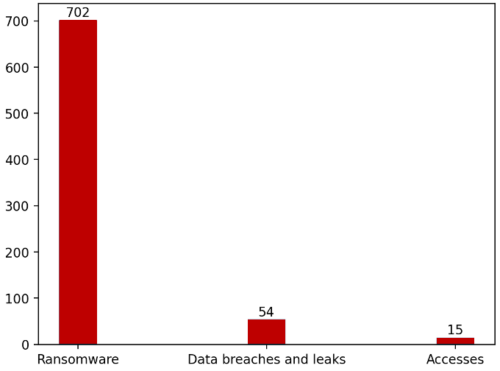
  • 702 ransomware attacks recorded globally.
  • 54 major data breach and leak incidents observed.
  • 20 compromised access sale listings tracked across cybercrime forums.
  • High concentration of attacks against Professional Services, Manufacturing, Retail, and Government sectors.
  • Continued exploitation of vulnerabilities listed in CISA’s Known Exploited Vulnerabilities (KEV) catalog.

Fig 1. Cyber incidents recorded in March 2026 (Data Source: Cyble Blaze AI)

These trends indicate a mature cybercriminal ecosystem where access brokers, ransomware operators, and data leak actors increasingly operate in parallel.

Ransomware Activity Remained the Dominant Threat

CRIL recorded 702 ransomware attacks worldwide in March 2026, reflecting sustained aggression from both established groups and emerging operators.

Top Ransomware Groups

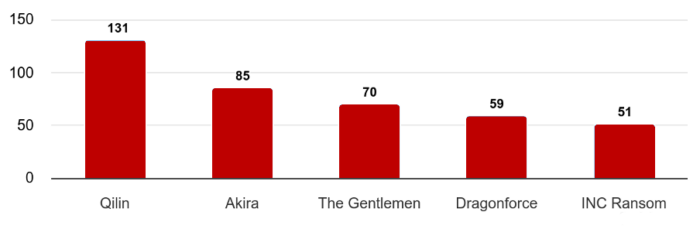
Qilin, Akira, The Gentlemen, Dragonforce, and INC Ransom were the top five most active ransomware actors in March 2026.

Monthly Threat Landscape, Top Ransomware Actors
Fig 2. Top five ransomware actors (Data Source: Cyble Blaze AI)

Together, the top five groups accounted for more than 56% of observed ransomware activity, highlighting strong operational scale and affiliate ecosystems.

Most Targeted Industries

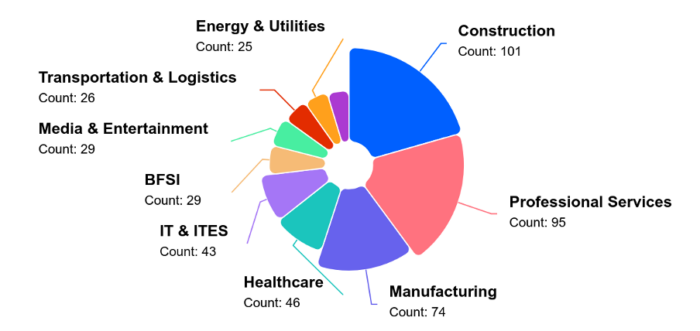
Construction, Professional Services, Manufacturing, Healthcare, and Energy & Utilities were the most targeted sectors by ransomware actors in March 2026.

Monthly Threat Landscape
Fig 3. Top 10 industry-wise attacks by ransomware actors (Data Source: Cyble Blaze AI)

Threat actors continued using data theft + operational disruption as dual-extortion pressure tactics.

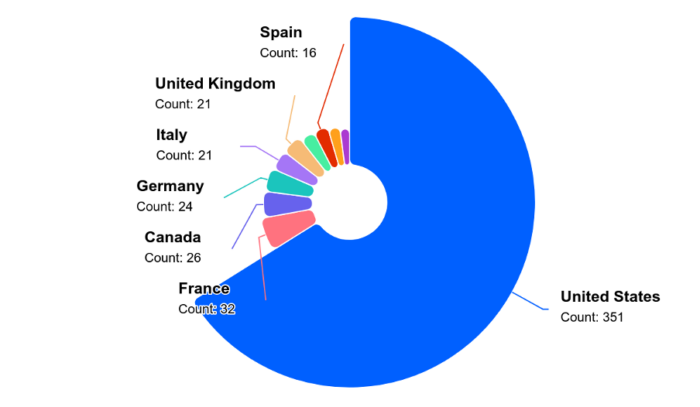
And when it came to country-wise split-up, the United States remained the focal point amid the ongoing geopolitical issues with Iran.

Monthly Threat Landscape
Fig 4. Top 10 country-wise attacks by ransomware actors (Data Source: Cyble Blaze AI)

Compromised Access Market Expanded

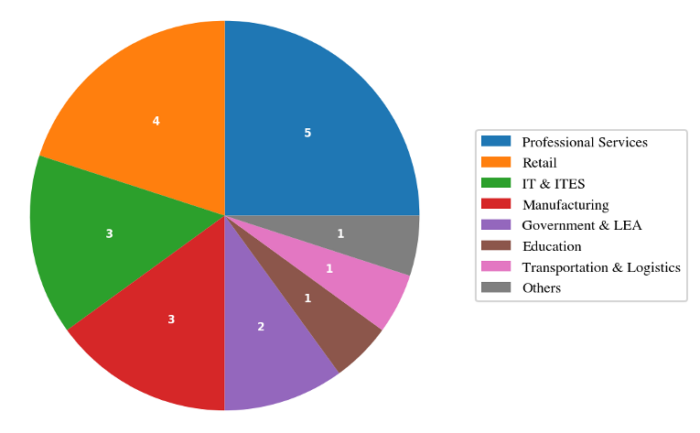
CRIL tracked 20 distinct incidents involving the sale of unauthorized network access on underground forums.

Most Targeted Sectors

  • Professional Services – 25%
  • Retail – 20%
  • IT & ITES
  • Manufacturing

Monthly Threat Landscape
Fig 5. Sector-wise compromised accesses recorded (Data Source: Cyble Blaze AI)

Leading Access Sellers

A small group of actors dominated this market:

  • vexin
  • holyduxy
  • algoyim

These three actors were responsible for over 55% of observed access listings.

This reinforces the role of access brokers as upstream enablers for ransomware, espionage, and fraud operations.

Data Breaches and Leak Markets Remained Active

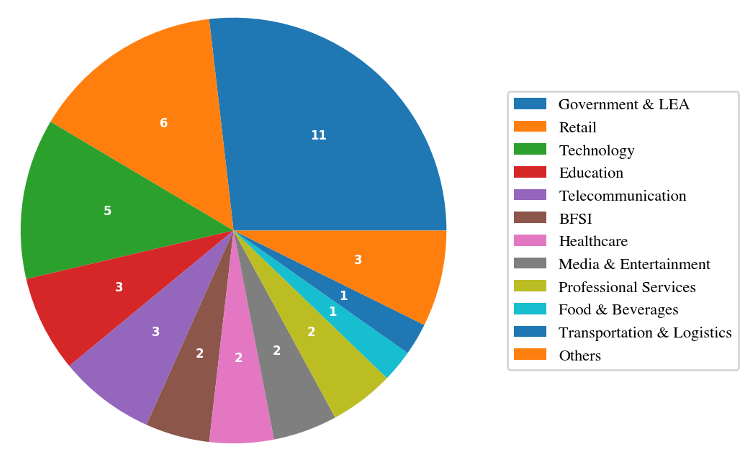
CRIL observed 54 significant breach and leak incidents during the month.

Most Targeted Sectors

  • Government & Law Enforcement
  • Retail
  • Technology

Monthly Threat Landscape
Fig 6. Sector-wise data breaches and leaks recorded (Data Source: Cyble Blaze AI)

Notable Incidents

Hospitality Holdings – TA Claimed 5TB Leak

Threat actor “nightly” claimed theft of over 5TB of data, including biometric records, CCTV footage, and financial documents.

South African Government Dataset for Sale

Threat actor XP95 advertised 3.8TB of allegedly stolen provincial government data.

Travel Data Leak

Over 95,000 travel-related records were reportedly exposed, including passports and payment data.

Exploited Vulnerabilities Accelerated Risk

March also saw active exploitation of critical vulnerabilities affecting enterprise technologies.

Notable KEV-listed vulnerabilities included:

  • CVE-2026-20131 – Cisco Secure Firewall Management Center
  • CVE-2025-53521 – F5 BIG-IP APM
  • CVE-2026-20963 – Microsoft SharePoint Server
  • CVE-2026-33017 – Langflow AI
  • CVE-2021-22681 – Rockwell Automation ICS

Key Trend

Attackers exploited both:

  • Newly disclosed zero-days
  • Legacy vulnerabilities from prior years

This showcases widespread failures in patch management and exposure reduction.

Emerging Strategic Threat Developments

AI-Augmented Offensive Operations

Threat actors reportedly used CyberStrikeAI, an open-source AI-native security testing framework, in attacks against Fortinet FortiGate devices across 55 countries, compromising more than 600 appliances.

Supply Chain Malware via npm

North Korean actors were linked to 26 malicious npm packages distributing RAT malware through Pastebin/Vercel-based infrastructure.

Geopolitical Cyber Risk

Iran-linked cyber operations were assessed as likely to increase following regional tensions, with potential ransomware and hacktivist targeting across the Middle East.

Industries Facing Highest Risk

Based on March activity, organizations in the following sectors faced elevated risk:

  • Professional Services
  • Government
  • Manufacturing
  • Retail
  • Healthcare
  • Critical Infrastructure
  • Transportation & Logistics

These sectors combine valuable data, high uptime requirements, or complex supply chains.

Conclusion

The March 2026 threat landscape was defined by scale, specialization, and speed.

Threat actors increasingly leveraged:

  • Access brokerage markets
  • High-volume ransomware operations
  • Large-scale data theft
  • Rapid weaponization of critical vulnerabilities
  • AI-enhanced offensive tooling

The combination of concentrated criminal ecosystems and widespread enterprise exposure creates a sustained high-risk environment for organizations globally.

Key Recommendations

  • Prioritize remediation of KEV-listed vulnerabilities
  • Strengthen identity security and MFA across remote access platforms
  • Monitor for exposed credentials and access sale activity
  • Segment critical networks to reduce lateral movement
  • Conduct tabletop exercises for ransomware response
  • Improve backup resilience and recovery testing
  • Monitor software supply chain ecosystems
  • Expand threat intelligence coverage across dark web and leak forums

Cyble’s threat intelligence, ransomware monitoring, vulnerability intelligence, and attack surface management solutions help organizations proactively identify risks, prioritize remediation, and defend against evolving global threats.

Book your demo now to see it in action!!!

The post Threat Landscape March 2026: Ransomware Dominance, Access Brokers, Data Leaks, and Critical Exploitation Trends appeared first on Cyble.

❌