
 Entrar
Third-Party Breaches Without Breaches: How Attackers Use Trusted Access to Bypass US Enterprise Defenses
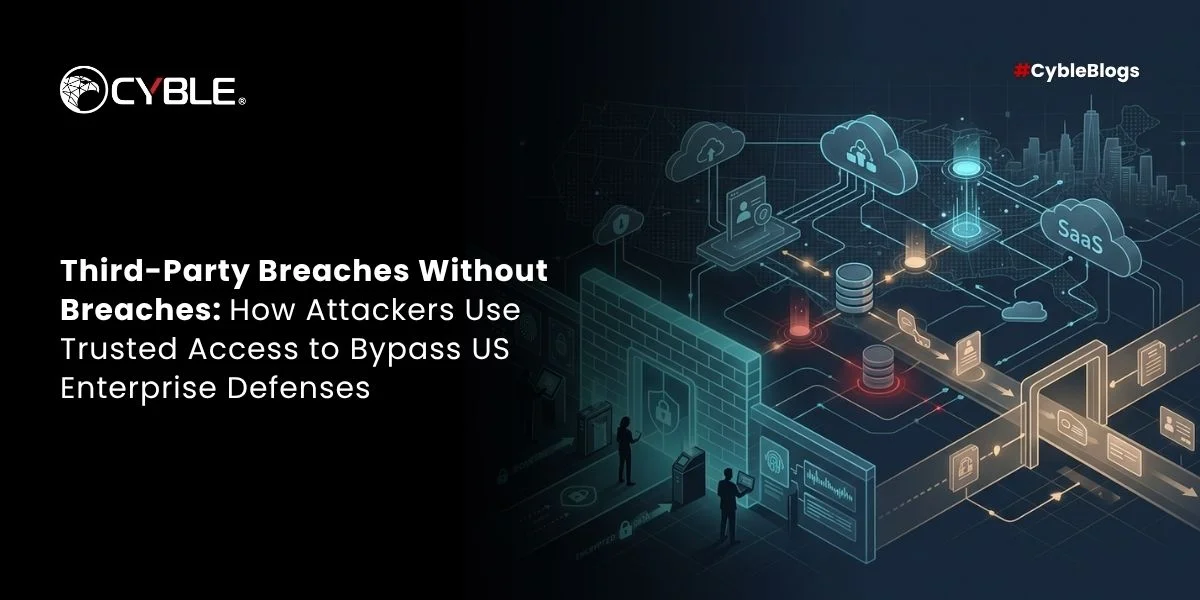
The modern enterprise is no longer breached in the traditional sense. Firewalls remain intact; endpoints appear compliant, and credentials are often never “stolen” in the usual way. Yet attackers still get in—and stay in. The difference lies in how trust is being weaponized.
Threat actors are executing what looks like a supply chain attack without ever touching the actual supply chain infrastructure. Instead, they exploit the implicit trust organizations place in browsers, third-party services, and user behavior.
This shift represents a quiet but dangerous evolution in supply chain cybersecurity. It’s less about breaking systems and more about bending them, using legitimate access paths to bypass defenses that were designed to stop intrusion, not misuse.
The Rise of “Invisible” Supply Chain Attacks
Traditional software supply chain attack scenarios often involve tampering with code libraries, compromising vendors, or injecting malicious updates. Those risks still exist, but attackers are now pursuing a lighter, faster approach: manipulating user-facing workflows that rely on trusted platforms.
In recent campaigns, phishing pages masquerade as routine services—identity verification tools, account recovery portals, or internal workflows. What makes these attacks stand out is not just the deception, but the permissions they request. Instead of asking for passwords, they request access to cameras, microphones, and device-level metadata.
This tactic transforms a simple phishing attempt into a sophisticated supply chain attack example—one where the “chain” is not software distribution, but user trusts in familiar digital processes.
Once permissions are granted, the attack doesn’t need to escalate privileges. It already has them.
When Browsers Become Data Exfiltration Tools
Modern browsers are powerful. They support APIs for video capture, audio recording, geolocation, and device fingerprinting. These capabilities are designed for legitimate applications—but in the wrong hands, they become surveillance tools.
Attackers embed scripts within phishing pages that activate these features immediately after permission is granted. Within seconds, they can:
- Capture images and short video clips from the user’s camera
- Record audio through the microphone
- Collect device details such as OS, browser version, and memory
- Approximate location and network characteristics
This isn’t brute-force hacking. It’s precision harvesting.
The data is then quietly transmitted to attacker-controlled systems, often using simple channels like messaging bots. There’s no need for complex infrastructure, which makes detection even harder.
From a supply chain cybersecurity perspective, this is particularly concerning. The browser—arguably one of the most trusted components in enterprise environments—becomes the weakest link.
QR Codes and the Expansion of the Attack Surface
Another variation of this evolving threat involves QR codes embedded in seemingly legitimate documents. This technique, often called “quishing,” shifts the attack from desktops to mobile devices.
An employee receives a polished PDF—perhaps an HR document or compliance guide. It looks authentic, reads well, and builds credibility. Then, at the end, it asks the user to scan a QR code for more information.
That scan leads to a phishing site.
Because QR codes obscure the underlying URL, they bypass many traditional email filters. On mobile devices, where users are less likely to scrutinize links, the success rate increases dramatically.
This approach represents another subtle supply chain attack example: attackers are exploiting trusted communication formats—PDFs, QR codes, and mobile workflows—to deliver malicious payloads without triggering alarms.
Adversary-in-the-Middle: The New Credential Theft
Credential harvesting has also evolved. Instead of simply collecting usernames and passwords, attackers now position themselves between the user and the legitimate service.
This adversary-in-the-middle (AITM) technique allows them to intercept:
- Login credentials
- Multi-factor authentication (MFA) codes
- Session tokens
In effect, they don’t just log in—they become the user.
This is particularly damaging in enterprise environments where MFA was once considered a strong defense. It highlights a critical gap in how to prevent supply chain attacks: focusing solely on authentication is no longer enough. Continuous verification and behavioral monitoring are now essential.
Why These Attacks Work
What makes these campaigns effective isn’t just technical sophistication—it’s psychological alignment. Every step mimics something users already trust:
- Identity verification flows
- Corporate documents
- QR-based access to resources
- Familiar login interfaces
Attackers are not introducing new behaviors; they are blending into existing ones.
This is why traditional defenses struggle. Security tools are designed to detect anomalies, but these attacks look normal—because they are built on legitimate features.
Rethinking Defense: From Perimeter to Context
Defending against this new class of software supply chain attack requires a shift in mindset. Organizations must move beyond perimeter-based security and adopt a context-driven approach.
Key strategies include:
- Strict permission governance: Limit browser access to sensitive hardware unless necessary
- Behavioral monitoring: Detect unusual patterns in device usage and data access
- Zero Trust architecture: Continuously verify users, devices, and sessions
- User awareness: Train employees to question permission requests, not just links
Understanding how to prevent supply chain attacks now means recognizing that the “supply chain” includes user interactions, browser capabilities, and third-party workflows—not just software dependencies.
Strengthening Endpoint Resilience with Cyble Titan
As attackers exploit trusted access points, endpoint visibility becomes critical. This is where platforms like Cyble Titan play a strategic role.
Cyble Titan is designed to go beyond traditional endpoint protection. It brings together real-time telemetry, threat intelligence, and automated response into a unified platform. Rather than relying on static rules, it continuously analyzes behavior across endpoints, detecting subtle anomalies that indicate misuse of legitimate tools.
Key strengths include:
- Real-time visibility: Deep insights into processes, file activity, and user behavior
- Intelligence-driven detection: Integration with threat intelligence for contextual awareness
- Automated response: Rapid containment to reduce attacker dwell time
- Cross-platform coverage: Coverage for environments across Windows, Linux, and macOS
In the context of supply chain cybersecurity, this level of visibility is essential. When attacks don’t “break in” but instead operate within trusted boundaries, detection depends on understanding what shouldn’t be happening, even if it looks normal on the surface.
Trust Is the New Attack Surface
The definition of a breach is changing. It’s no longer about unauthorized access—it’s about unauthorized use of authorized access.
These emerging supply chain attack examples demonstrate that attackers are adapting faster than traditional defenses. They are leveraging trust, not bypassing it. And that makes them harder to detect, harder to prevent, and potentially more damaging.
Organizations that want to stay ahead must rethink how to prevent supply chain attacks. That means focusing on context, behavior, and continuous verification—not just barriers.
Ready to see how modern endpoint security can close these gaps? Explore Cyble Titan and experience a more intelligent approach to defending against today’s most deceptive threats.
Request a demo and evaluate how real-time visibility and AI-driven detection can strengthen your security posture from the inside out.
The post Third-Party Breaches Without Breaches: How Attackers Use Trusted Access to Bypass US Enterprise Defenses appeared first on Cyble.















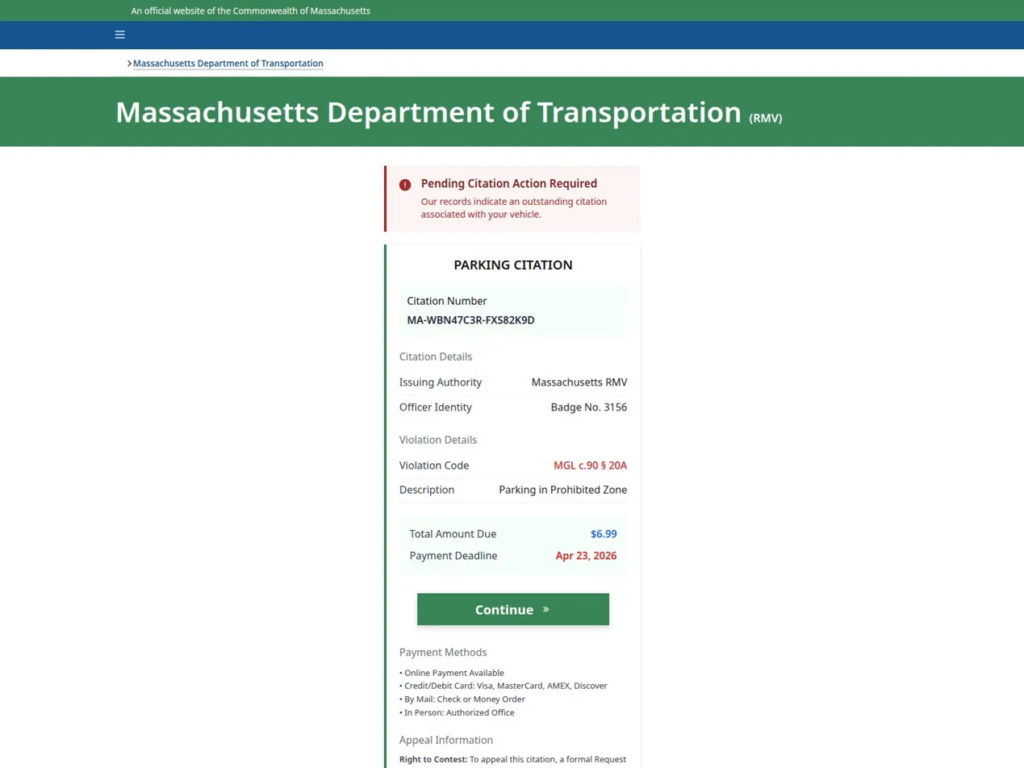 Fake Massachusetts RMV citation landing page (Source: Cyble)[/caption]
![APT36 impersonating NIA, India operating at nia[.]gov[.]in[.]in3ymonaq[.]casa](https://cyble.com/wp-content/uploads/2026/04/figure7.png) APT36 impersonating NIA (Source: Cyble)[/caption]
APT36 impersonating NIA (Source: Cyble)[/caption]
