Bellingcat has geolocated and verified two new videos showing the deadly strikes that hit an Iranian Revolutionary Guard Corps (IRGC) compound as well as an adjacent school in the city of Minab in late February.
One of the new videos shows the area around the school being struck while the other shows a nearby IRGC clinic and two buildings within the IRGC facility being hit by Tomahawk missiles.
Support Bellingcat
Your donations directly contribute to our ability to publish groundbreaking investigations and uncover wrongdoing around the world.
Visual and solar analysis of the videos appears to show there was a time gap between when each was filmed, suggesting that there were at least two waves of strikes carried out in the area.
Applying the same solar analysis techniques to social media footage that showed the school after it had been hit indicates the school was impacted during the first wave of strikes.
Previous investigations by Bellingcat and other news organisations showed a US Tomahawk missile struck the IRGC facility on Feb. 28.
The US is the only party to the conflict to possess Tomahawk missiles.
Media reports, including from the New York Times and Reuters, have since detailed that a preliminary investigation by the US military concluded it was likely a US strike that hit the Shajarah Tayyebeh elementary school.
According to Iranian media, at least 175 people were killed in the attack, including children.
Analysing New Minab Videos
The first video (video one) is filmed from just over 2.5 kilometres (1.5 miles) away from the IRGC base and shows at least 10 missiles impacting the area over a period of 50 seconds.
The first explosion is visible five seconds into the video. The area around where the school was located is struck at 14 seconds. This is the fourth explosion visible in the footage.
Another structure that was damaged in the strikes is situated approximately 100 metres away from the school in the same general area. It was therefore not possible to determine which exact structure was hit from this footage alone.
Screenshot of Video one showing 10 missiles striking the area. The fourth impact hits the area round the school (white box), seconds after the first three explosions. Annotation by Bellingcat. Source: Tasnim News.
The second new video (video two) was filmed approximately two kilometres southeast of the school, and is of a higher quality than video one. This video shows three Tomahawk missiles in the moments before impact.
Screenshots from Video two showing each Tomahawk missile before impact. Annotations added by Bellingcat. Source: Iran Ministry of Foreign Affairs.
Video two includes annotations and pauses when each Tomahawk appears on screen.
A frame-by-frame analysis also shows what appear to be two minor visual glitches where some frames are transposed and annotations were added, highlighting when missiles can be seen.
The second impact seen in video two is the same as seen in footage released by Iranian media in early March, and previously reported on by Bellingcat and others, only from a different perspective.
Video two also only shows the southern part of the base, with its northern section not visible. The school is located on the northern edge of the base and is therefore not visible in video two.
Left: Tomahawk missile strike in footage previously published showing Tomahawk strike in Minab. Right: The same strike visible in Video two. Sources: Mehr News and Tasnim News.
Bellingcat asked the Iranian Ministry of Foreign Affairs why only part of the strike, as seen in video one, was released and if there was a longer version that may show further impacts. We did not receive a response before publication.
Bellingcat also asked the US Department of Defense whether it had any further information on the strike since its reported preliminary findings. It referred us to CENTCOM, which said: “We have nothing for you on this. The investigation is still ongoing.”
Geolocating the Videos
Bellingcat was able to geolocate and verify video one by tracing sightlines on satellite imagery to determine the camera’s location and identify objects such as buildings, trees and a water tower within the IRGC facility.
According to this analysis, video one was most likely filmed from an electric substation southeast of the school.
Left: Screengrab from video one. The dashed vertical lines represent the intersection of planes of constant angle with the image plane. These planes connect the center of the camera and enable the selected elements to be geolocated. Right: annotated satellite imagery showing the corresponding perspective lines and the geolocated elements. The analysis allowed us to identify, geolocate buildings and locate the explosion points. Annotated by Bellingcat. Source: Tasnim News. Satellite Image: Google Earth/Airbus
Once all key elements were identified and geolocated, we analysed each explosion that can be seen in the footage.
Fourteen seconds into video one, the fourth impact appears to hit the area immediately around the school, which was approximately 200 meters behind a water tower.
While the school was walled off and outside the IRGC facility, the water tower and another building (situated between the school and the water tower) are located within it.
Due to the relatively small distance between the school and the other IRGC building (roughly 100m), it was not possible to determine what structure was hit at the moment of the strike visible in video one.
More information, such as obtaining the entire strike video sequence, would be needed to fully determine which structure was hit in this footage. However, social media footage captured at the scene does suggest that the school was hit around this time.
Left: Line of sight passing by the yellow building intersects the point of forth explosion from behind the IRGC water tower. Center: Direction of line of sight intersects school and passes close to a nearby IRGC building. Both buildings were damaged in the attack. Right: Satellite image showing both the school and IRGC building. More details would be needed to determine which of both buildings were hit in this video. Satellite image: Google Earth/Airbus
For video two, we stitched together a rough panorama of what could be seen in the footage.
This made it possible to match up multiple buildings visible southeast of the IRGC base and school, while also building rough sightlines to show which part of the base was being filmed.
Annotated geolocation with Google Earth imagery showing key visual elements visible in the stitched panoramic from the end of Video two and their corresponding locations in satellite imagery. Source: Tasnim News. Satellite Image: Google Earth/Airbus/Maxar.
Bellingcat was able to narrow down the areas hit by the three missiles seen in video two by comparing it with the point of view of a short video released in early March, showing a Tomahawk hitting the complex, as well as with what could be seen in video one. Post-strike satellite imagery also helped confirm the buildings that were hit in the footage.
We were thus able to determine that video two shows an IRGC clinic and two buildings within the IRGC compound being hit.
Left: Planet SkySat imagery of the IRGC Base, and the adjacent school and health clinic, collected March 04, 2026 after the strikes. Annotated by Bellingcat. Right: Screenshots of the three explosions in video two. Sources: Planet and Iran Ministry of Foreign Affairs
Initial analysis did suggest that video one and two appeared to be filmed at different times as the strikes visible in each clip cannot be synced up.
Solar data also gives clues as to the time each was taken, suggesting that there was a time gap of at least an hour between the strikes seen in the two videos.
According to the New York Times, the strikes were first reported on social media just after 11:30 am.
Solar data, derived by the direction of shadows visible in video one and simulated via the SunCalc platform, appears to indicate it was filmed between 10:30 and 11:30am.
Left: Screengrab from video one showing an object on a roof casting a shadow consistent with a time between 10:30-11:30 a.m on February 28 2026. Right: Solar data simulation center on the object. Source: Tasnim News, SunCalc.org
Analysing the shadows seen in the earlier March video using the same method, appears to show that it was filmed between 13:30 and 14:30.
This would seem to indicate that video two and the earlier March video were likely filmed after video one.
Left: Screengrab from earlier March video showing rebars casting a shadow parallel to the building construction and consistent with a time between 13:30-14:30 on February 28 2026. Top Right: Solar data simulation center on the object. Bottom Right; Satellite image showing the shadow direction along the building line. Source: The Washington Post, SunCalc.org. Satellite Image: Google Earth Pro/Airbus
Solar data from a video posted to Telegram showing the smouldering school, and damage to the nearby IRGC building about 100m away, shows that it was recorded around the time of the first video.
Left: Screengrabs from a video released the day of the strikes, showing the destroyed school (blue), and damaged roof of the IRGC building about 100m away (red box). Inset: Planet SkySat imagery showing this building (red) and the school (blue). Right: The shadow cast by the bystander is consistent with a time between 11:00-12:00 on February 28 2026. Right: Solar data simulation centred on where the bystander was standing.. Sources: Mehr News, Planet, and SunCalc.
This, therefore, appears to confirm that the school was impacted before the wave of attacks seen in video two.
Bellingcat was not able to verify where the remnants were originally found, but was able to identify them as Tomahawk missile remnants. The New York Times also confirmed this identification by matching the contract number on a remnant to a contract for the Tomahawk missile.
Bellingcat’s Carlos Gonzales, Jake Godin and Trevor Ball contributed research to this article.
Bellingcat is a non-profit and the ability to carry out our work is dependent on the kind support of individual donors. If you would like to support our work, you can do so here. You can also subscribe to our Patreon channel here. Subscribe to our Newsletter and follow us on Bluesky here, Instagram here, Reddit here and YouTube here.
The US appears to have deployed the Gator Scatterable Mine system over Kafari, a village near Shiraz, in southern Iran overnight. Several people were killed according to Iranian media.
Three experts told Bellingcat the munitions appeared to be air-delivered US-made Gator anti-tank mines.
The US is the only participant in the Iran war known to possess Gator Scatterable Mines.
Bellingcat asked the US Department of Defense whether it had dropped the mines overnight, but did not receive a response at time of publication.
Dr NR Jenzen-Jones, Director of Armament Research Services, told Bellingcat that the images appeared to show US-made anti-tank landmines.
“These images show what appear to be American BLU-91/B scatterable anti-tank landmines.
“The BLU-91/B is dispensed from the CBU-78/B or CBU-89/B air-delivered cargo bombs (cluster munitions).
“The presence of square ‘aeroballistic adaptors’ indicates that the mines seen here were delivered by air. Similar mines can be dispensed from the vehicle- or helicopter-based Volcano system.”
Gator “SCATMINE” system. BLU-91/B pictured on the bottom left, BLU-92/B pictured on the bottom right. Source: Department of the Army.
Amael Kotlarski, Weapons Team leader at Janes, also identified the mines as BLU-91/B ‘Gator’ anti-tank mines. Kotlarski told Bellingcat “the BLU-91/B is dispensed from either the US Air Force’s CBU-89/B (72 BLU-91/B and 22 BLU-92/B) or the US Navy’s CBU-78/B (45 BLU-91/B and 15 BLU-92/B).”
He elaborated that the BLU/92B is an anti-personnel mine, similar in appearance to a BLU/91B, though not identical.
“No BLU-92/B is observable in the photographic evidence presented so far. This could be that they have not been found, or that the dispensers were loaded solely with AT mines to help reduce the risk to civilians.”
BLU-91/B anti-tank mine posted by Iranian Media. Source: IRIB News.
Gator Scatterable Mines System
The Gator system is an air-delivered dispenser system or cargo bomb that distributes mines over an area. These dispensers contain a mixture of either 94 or 60 BLU-92/B anti-personnel and BLU-91/B anti-vehicle mines depending on which dispenser is used. These dispensers release the mines over an area of approximately 200 by 650 metres. In the images reviewed by Bellingcat, it is not clear which dispenser was used, or how many dispensers were deployed.
Andro Mathewson, an independent open source analyst, who formerly worked at landmine-clearing NGO The HALO Trust, told Bellingcat the images showed BLU-91/B mines.
BLU-91/B mine found with an aeroballistic adaptor. Source: Tasnim News.
Some of the images of the mines posted by Iranian media show an aeroballistic adaptor. The aeroballistic adaptor is only present on the BLU-91/B and BLU-92/B, not on other mines within the US Family of Scatterable Mines (FASCAM), indicating that these were deployed from a Gator system aircraft dispenser.
BLU-91/B mine with a partially broken aeroballistic adaptor. Source: Tasnim News.
BLU-91/B and BLU-92/B Mines and Self-Destruct Features
Both BLU-91/B and BLU-92/B mines are activated two minutes after being deployed; however, a very small number can fail to properly arm and explode. These mines also have self-destruct features with a variable delay which means they may randomly explode hours or days after they are dispensed. They may also explode if disturbed. These features make them particularly dangerous.
So far, only visual evidence of magnetically influenced BLU-91/B anti-tank mines has been posted online, but these mines are usually deployed alongside the anti-personnel BLU-92/B. The BLU-92/B also deploys tripwires.
In addition to the self-destruct features, the BLU-92/B anti-personnel mines have an anti-handling device (AHD) that is intended to make the mine explode when disturbed. While BLU-91/B anti-tank mines do not have an anti-handling device (AHD), they “may detonate when moved, because the mine may sense a significant change from its original orientation.”
Amael Kotlarski of Janes told Bellingcat that “The mine will go off if subjected to significant movement.” This could explain local reports that a man was killed when he picked one up near his car.
The US is the only participant in the war known to possess these mines. They were developed after the US stopped supplying arms to Iran. A review of Stockholm International Peace Research Institute’s (SIPRI) Arms Transfer Database, and US Major Arms Sales does not show any transfers of these mines to Israel.
Dr Jenzen-Jones also told Bellingcat that “Scatterable anti-tank landmines may have been employed to deny vehicles access to or from so-called ‘missile cities’. This could both prevent TELs [missile launch vehicles] from leaving, and limit efforts to re-establish access to facilities (for example, by preventing excavators from operating at collapsed entrances).”
Two of the mines visible in the video geolocated by Bellingcat. The mine on the right has an aeroballistic adaptor, while the one on the left does not. Source: Reason2Resist with Dimitri Lascaris.
Bellingcat asked the US Department of Defense to confirm whether they dropped mines in this area, how many were deployed, and what the intended target was. They did not respond at time of publication.
Bellingcat was unable to determine how many more mines were scattered over the village. Some mines may not yet have been found due to where they landed.
Bellingcat’s Carlos Gonzales and Logan Williamsas well as Felix Matteo Lommerse contributed research to this article.
Munition remnants pictured at the site of a strike that killed at least 17 people in the town of Tiné, Chad, last week appear to match a weapon previously used by Sudan’s Rapid Support Forces (RSF) in the war with Sudanese government forces – despite RSF denials of involvement in the incident.
Photographs showed what appeared to be a match for the rear control section of a Chinese-made GB25A or GB50A bomb, which can be dropped by Chinese-made drones. Amnesty International previously identified a GB50A used by the RSF that it said had “almost certainly” been re-exported to the group by the UAE.
Remnants of a Chinese-made GB25A or GB50A bomb pictured in Tiné, Chad (left). A reference image showing GB25A and GB50A bombs.
The first photographs of the remnants were posted by Chad’s by ATPE CHAD publication, which reported a public prosecutor had visited the site of impact.
A separate set of photographs showing even clearer visuals of the remnants was subsequently shared by the N’Djamena-based broadcaster MRTV. It’s Facebook page showed Chadian soldiers standing beside the remnants.
Images were also posted by posted on Facebook by the Department of Public Safety and Immigration in Chad.
By using the time displayed on a watch worn by an official in one of the pictures it was possible to estimate that the images were likely taken in the late afternoon. By comparing this with solar data, the shadows visible in the photos and other visual details, it was then possible to infer the approximate layout of nearby buildings and the distribution of trees where the remnants were found.
Picture featuring Ali Ahmat Aghabache, Chad Minister of Public Security and Immigration. The time on his watch was used as an approximate time of capture of the set of images at the remnant site. Credit: Ministère De La Sécurité Publique Et De L’immigration Facebook.
With this information, and using satellite imagery, we then geolocated the photos to the northwest of the Bir Tine neighbourhood, just 650 metres from the border with the Western Darfur region of Sudan that is largely controlled by the RSF.
Top: Using the approximate time of capture, Bellingcat analyzed solar data to reconstruct the site layout and created an approximate panoramic view. Bottom: This reconstruction enabled the identification of building features and tree positions, leading to the precise determination of the site’s coordinates. (15.043158, 22.818438)
Remnants from the control sections of other GB25A or GB50A bombs have previously been found after RSF attacks in Sudan, including attacks on Kassala Airport and Coral Marina Hotel in Port Sudan (as seen in the images below).
BBC News reported that the RSF is suspected of carrying out the attack.
However, the RSF has denied any involvement and blamed Sudan’s army, the Sudanese Armed Forces (SAF). The SAF has in turn said the RSF was responsible. Chad’s president on Thursday ordered the military to retaliate against future attacks from Sudan.
Support Bellingcat
Your donations directly contribute to our ability to publish groundbreaking investigations and uncover wrongdoing around the world.
RSF spokesperson Al-Fateh Qurashi told Bellingcat via WhatsApp: “Our forces are not responsible for any targeting of neighboring Chad, and we have no connection to this targeting.” Qurashi instead blamed forces aligned with the Sudanese government over the strike.
Imran Abdullah, an adviser to the RSF commander, told Bellingcat via WhatsApp that satellite imagery tracked the drone and that it belonged to the forces aligned with the Sudanese government. However, Abdullah refused to share the imagery he referred to saying: “It can be published if an independent international commission of inquiry is in place.”
The SAF are not known to use any Chinese-made drones or bombs, like the GB25A or GB50A. The SAF has been observed using Turkish and Iranian made drones and munitions such as the MAM-L bomb.
Bellingcat sought comment on the use of these weapons from the Chinese manufacturer, Norinco, as well as the UAE given Amnesty’s previous reports about how a GB50A was used by the RSF after “almost certainly” being re-exported to Sudan. Neither responded prior to publication.
The conflict has previously spilled over the border into Chad. Reuters reported last month the country closed its border with Sudan after five Chadian soldiers were killed following clashes in Tiné between the RSF and militia fighters loyal to the Sudanese government.
Ziyu Wan and Riccardo Giannardi contributed from Bellingcat’s volunteer community.
Bellingcat is a non-profit and the ability to carry out our work is dependent on the kind support of individual donors. If you would like to support our work, you can do so here. You can also subscribe to our Patreon channel here. Subscribe to our Newsletter and follow us on Bluesky here, Instagram here, Reddit here and YouTube here.
The United States and Israel launched an attack on Iran on Saturday morning, killing Supreme Leader Ayatollah Ali Khamenei as well as several senior regime figures and striking multiple sites across the country. Iran retaliated by firing at targets across the region, including Israel, Bahrain, Qatar, the UAE and other Gulf states. The conflict is ongoing despite no declaration of war by the US Congress. US President Donald Trump initially called for regime change in Iran but has since delivered a mixed message about the aims of “Operation Epic Fury”.
Israel has said it dropped more than 2,000 bombs in the first 30 hours of the war. While the US claims to have struck over 1,000 targets in the first 24 hours, with President Trump stating that “bombs will fall everywhere”. In response, Iran is reported to have launched at least 390 missiles and 830 drones in the first two days. Bellingcat has been monitoring strikes across the region, including those that caused civilian harm, and identified a wide variety of weapons have been used so far, including missiles and drones.
US-Made Weapons and Tomahawks Launched
The US reported that some of the first weapons they launched were Tomahawk missiles. Footage from the US McFaul also showed Tomahawks being launched.
Imagery of many other different munitions used by the US, Israel and Iran have appeared on social media.
This article covers some of the munitions Bellingcat has seen imagery of as the war enters its fourth day.
Many of the weapons used so far have also been deployed in other recent US conflicts, including the 12-day Israel-Iran war, and US strikes in Yemen and Venezuela.
The US is the major supplier of arms to allies in the region, including for Israel, Kuwait, Qatar, UAE, and Jordan.
On Sunday, the US Department Of Defence (DOD) published photos showing weapons being prepared for loading on aircrafts, including the MK-80 series of bombs like MK-82 500-pound bombs, and BLU-109 2,000-pound ‘bunker busters’ equipped with Joint Direct Attack Munition (JDAM) bomb guidance kits.
Left: Feb. 27. 500-pound bombs equipped with JDAM guidance kits. Right: Feb. 28. 2,000-pound BLU-109 ‘bunker busters’ equipped with JDAM guidance kits. Sources: US Navy/DVIDS and US NAVY/DVIDS.
Image of a Precision Strike Missile being fired in the first 24 hours of the war. Source: US CENTCOM.
Many of the weapons deployed by the US have also been used by Israel. This includes the MK-80 series of bombs, BLU-109 bombs and Joint Direct Attack Munition (JDAM) bomb guidance kits.
A Feb. 28. image shows an IAF F-15 equipped with a BLU-109 bomb with a JDAM guidance kit. Source: Israeli Air Force.
Israel also produces some of its own munitions, which they released video or photos of since the start of the conflict, including MK-83 1,000-pound bombs equipped with Israeli SPICE-1000 bomb guidance kits.
A Mar. 1. screenshot showing IAF personnel loading a MK-83 1,000 pound bomb equipped with a SPICE-1000 bomb guidance kit. Source: IAF.
Israel also produces RAMPAGE missiles, visible in the image below.
A Feb. 28. image showing an IAF F-16 with a RAMPAGE missile. Source: IAF.
On Sunday, the DOD said they had used the Low-cost Unmanned Combat Attack System (LUCAS) one-way attack drones in strikes. The LUCAS drone is a US copy of the Iranian Shahed one-way attack drone.
A video of a crashed LUCAS drone has subsequently appeared online, reportedly in Iraq.
While Bellingcat could not geolocate this video, then men seen in the footage can be heard speaking Arabic while US CENTCOM has said that this is the first time they have used this drone in combat.
Local Iraqi residents are taking the newly deployed, nearly intact American LUCAS drone for themselves. pic.twitter.com/fbx411iAYU
— Special Kherson Cat (@bayraktar_1love) March 2, 2026
A video shows a LUCAS drone that allegedly crashed in Iraq.
Iranian Attacks
Iran has retaliated by firing one-way attack drones, including Shahed variants, and missiles at Israel, and US-bases in various countries across the region, including UAE, Qatar, Kuwait, Jordan and Iraq.
A Feb. 28. video shows a Shahed drone hitting a residential tower in Bahrain.
Many missiles have a booster, a rocket motor that detaches from the missile after it is expended. These boosters fall to the ground under the flight path of the missile.
Bellingcat verified that Iranian missile boosters have fallen in nearby countries caught in the crossfire, including Qatar and Jordan (see below post geolocated to Al-Hashmi St. in Irbid, Jordan), while some Israeli boosters have reportedly fallen in Iraq.
A Feb. 28. post shows an Iranian ballistic missile booster that fell on Al-Hashmi St. in Irbid, Jordan.
Iranian Missiles Intercepted
The US and Israel, as well as several Gulf countries, have fired missiles, intended to destroy Iranian missiles or drones in the air before they reach their targets. Many Iranian weapons have been intercepted, but others have successfully hit, including in a strike on a US command post in Kuwait, killing six US troops.
Most ballistic missile interceptors are “hit-to-kill” where they are designed to destroy missiles by the impact. These interceptors have their own components that fall to the ground, as well as the debris from interceptions.
Feb. 28.Two photos showing the same remnants of a US-made Patriot Air Defense System PAC-3 CRI interceptor missile published by the UAE MOD. The UAE operates the Patriot system. Source: UAE Ministry of Defense.
A Sea of Unverified Images and Misidentification of Munitions
Many close-up images of munition debris have been posted on social media over recent days which are difficult to geolocate. While we have not been able to verify the location of these munitions, we used reverse image search tools to verify they had not been posted online prior to the current conflict. The munition remnants are also consistent with those used by the US, Israel and Iran. But as we cannot geolocate or chronolocate them yet, we cannot fully verify them. Many of these images have been posted with false claims about the object and who fired it.
Despite Bellingcat being unable to fully verify them, we are including a selection of them with accurate identifications, due to the likelihood that more images of these same objects will continue to appear online as the war continues.
One example of incorrectly identified munitions, is the below picture of an aircraft’s external fuel tank, or drop tank that was posted on Telegram on March 1 alongside the claim that it is an Israeli missile.
A Mar. 1. image shows a drop tank from an Israeli jet reportedly found in Anbar, Iraq. Source: NAYA.
Drop tanks are used on jets to extend the range and are jettisoned after use, resulting in these tanks falling to the ground. These tanks have been mistaken for missile parts in previous conflicts.
Despite Iran’s prevalent use of missiles, not all missile boosters are Iranian. On February 28 missile boosters from Israeli air-launched ballistic missiles were reportedly found just east of Tikrit, Iraq. The below image shows the booster from Israel’s Blue Sparrow series, and can be matched to images previously identified and posted on the likes of the Open Source Munitions Portal.
A Feb. 28. post shows an Israeli Blue Sparrow series missile booster, reportedly found in Duraji, Iraq.
Additionally, unexploded WDU-36/B warheads from Tomahawk missiles were reportedly found –, one in Kirkuk, Iraq and one found near Jablah, Syria. Tomahawk warheads and other remnants are frequently misidentified, often as drones.
Left: Feb. 28. Unexploded Tomahawk warhead reportedly found in Kirkuk, Iraq. Right: Mar. 2. Unexploded Tomahawk warhead reportedly found near Jablah, Syria. Sources: NAYA and Qalaat Al Mudiq.
These titanium cased warheads comprise a small part of the much larger Tomahawk missile, and have been found intact in numerous countries when the warhead has failed to explode, as seen in images shared on the Open Source Munitions Portal.
Unexploded Tomahawk warheads from strikes in other conflicts have also been identified by the Open Source Munitions Portal .
Remnants of an Israeli Arrow 2 interceptor missile were posted online, falsely identified as an Iranian missile, and were allegedly found in eastern Syria. These images could again be matched to those found from previous conflicts on the Open Source Munitions Portal.
An Iranian missile fell in Al-Shoula area, south of DeirEzzor eastern Syria!. pic.twitter.com/TsWVuda2nf
A Israeli Arrow 2 interceptor missile falsely identified as as an Iranian missile in a post on X.
An Ancient US Munition Used by Iran
One photo of a remnant reportedly found in Ahvaz, Iran, included a false claim that it was a US ATACMS missile. Bellingcat was able to confirm the image does not match ATACMS construction by comparing it to imagery of that munition. We have as yet been unable to confirm if it was indeed located in Ahvaz, Iran – although we were able to identify the munition.
An actuator section of a MIM-23 HAWK missile, falsely identified by the post above as an ATACMS missile.
The markings on the remnant include an “FSN” or federal stock number, that can be looked up to identify the item. The FSN was replaced by the national stock number (NSN) in 1974, meaning this missile was produced prior to 1974.
The markings on a actuator section of a MIM-23 HAWK missile.
Bellingcat looked up the FSN/NSN (1410002343266) which corresponds with the US manufactured MIM-23B HAWK, an air defence missile.
There are many other US, Israeli and Iranian munitions that may have been used in the current conflict, but images have not yet appeared on social media.
With fresh strikes carried out overnight/ early Tuesday and President Trump saying that “likely more” US troops will die, the conflict continues to escalate and shows no sign of ceasing in the days ahead. And despite the death of Ayatollah Ali Khamenei the Iranian regime has vowed revenge and continued strikes against Israel, the US and their Gulf allies.
Bellingcat’s Carlos Gonzales, Jake Godin and Felix Matteo Lommerse contributed research to this article. Anisa Shabir from Bellingcat’s Volunteer Community also contributed to this piece.
Bellingcat is a non-profit and the ability to carry out our work is dependent on the kind support of individual donors. If you would like to support our work, you can do so here. You can also subscribe to our Patreon channel here. Subscribe to our Newsletter and follow us on Bluesky here, Instagram here, Reddit here and YouTube here.
To stay up to date on our latest investigations, join Bellingcat’s WhatsApp channel here
On the night of Jan. 7 this year, three 250-pound bombs smashed into an apartment block in the Al Tuffah neighbourhood of northern Gaza. Footage of the aftermath shows walls collapsed, rubble piled up and blackened household items scattered across the scene.
Although a ceasefire has been in effect since October, and a Board of Peace led by US President Donald Trump has been announced to begin phase two of that process, Israel has continued to conduct strikes within Gaza
The IDF claimed they targeted a senior Hamas operative in response to a violation of the ceasefire agreement in the Jan. 7 attack.
While the strike was an Israeli operation, among the debris were munition remnants of at least three US-made GBU-39 Small Diameter Bombs, including one that failed to explode.
However, human rights groups like Amnesty International and Human Rights Watch have said that US-made weapons have been used in Gaza in ways that have likely violated international law. Multiple international media reports have also identified individual instances of civilian harm likely caused by US weaponry deployed by Israel in Gaza.
A 2024 State Department report, completed during the administration of former President Joe Biden, even stated that due to Israel’s “significant reliance on US-made defence articles it is reasonable to assess” that they have been used in “instances inconsistent with its IHL [International Humanitarian Law] obligations or with established best practices for mitigating civilian harm” — although Israel says it operates within international law and seeks to mitigate civilian harm while aiming to dismantle Hamas’ military capabilities.
Support Bellingcat
Your donations directly contribute to our ability to publish groundbreaking investigations and uncover wrongdoing around the world.
Yet the full extent of civilian harm in Gaza caused by the use of US-produced weapons remains unclear.
Foreign media are not allowed into Gaza and the documentation of events there has relied heavily on social media footage and the work of local journalists, many of whom have been killed in Israeli air or ground strikes while carrying out their work.
Collating Incidents
Bellingcat has collated scores of incidents like the Jan. 7 strike in Al Tuffah where US-produced munitions have been found in the aftermath of Israeli strikes.
This analysis utilises publicly available media footage and identifies at least 79 specific cases, many of which caused death and damage to civilian infrastructure such as schools, homes and healthcare infrastructure.
While revealing, it is important to note that the data comes with some significant caveats and limitations that must be acknowledged before exploring it.
Gaza has been pummelled since the Hamas attacks of Oct. 7, 2023, when more than 1,200 Israelis were killed and hundreds more kidnapped.
In response, Israel is reported to have deployed 30,000 munitions into Gaza in the first seven weeks of the conflict alone. The Israeli Airforce has also bombed over 100 different targets in Gaza in a single day multipletimes.
This dataset – which details cases where US-made munition remnants have been found and evidence of their use published in media or posted to social media – therefore only captures a small fraction of the overall incidents over more than two years of war.
Furthermore, Israel and the US both produce some of the same munitions, such as the MK-80 series of bombs. The US supply of this series, especially the 2,000-pound MK-84 of which over 14,000 have reportedly been delivered since Oct. 7 2023, have been central to calls for the suspension of US arms transfers to Israel due to their destructive potential.
But because Israel also makes these bombs domestically the country of origin cannot be definitively identified without specific remnants that show either the lot number, indicating the manufacturer, or other identifying information.
Etched information on an unexploded MK-84 2000-pound bomb that was dropped by the Israeli Air Force on Sanaa Airport, Yemen and failed to explode. The lot number indicates that this bomb body was manufactured by General Dynamics Tactical Systems, a US based company, in 2017. Source: YEMAC
As a result a decision was made to try and track the use of three specific munitions that are made solely in the US and which Israel does not domestically produce. This, again, significantly reduced the number of incidents analysed.
The full dataset can be found here. The munition identifications were reviewed by Frederic Gras, an independent Explosive Remnants of War (ERW) Expert and Consultant.
Residents near the rubble of the Al Roya 2 tower which was hit in an Israeli attack in September 2024. Anadolu via Reuters Connect.
Despite all of the above caveats and limitations, the analysis recorded 79 geolocated incidents where remnants of these three models of US-made munitions were either found in the aftermath of a strike or were captured in visual imagery in the moments before impact.
Beyond the 79 cases analysed and included in the dataset, other US-made munitions were identified in a further 26 cases, although it was not possible to geolocate the remnants or strikes prior to publication. It may be possible to geolocate the outstanding incidents in time. Bellingcat is, therefore, including these incidents in the dataset but notes further work is required for them.
Many of the geolocations in the dataset were initially posted publicly by independent geolocators, or volunteers from the GeoConfirmed community, including Anno Nemo, Abu Location, fdov, Chris Osieck, Zvi Adler and Will Cobb. These geolocations were independently checked and verified by Bellingcat.
Subscribe to the Bellingcat newsletter
Subscribe to our newsletter for first access to our published content and events that our staff and contributors are involved with, including interviews and training workshops.
For the 79 incidents it was possible to geolocate, Bellingcat sought to compile reports of civilian harm. Yet given the lack of access afforded to international observers it was not possible to independently verify each of these reports of casualties or fatalities.
The reports, many of which cite health authorities in Gaza, detailed that at least 744 people were killed in these 79 strikes, including at least 78 women and 175 children. When reports offered a range for the number killed, or number of women and children killed, Bellingcat used the lower end of the estimate.
Israel rarely provides estimates for civilian casualties from their strikes. It has also claimed that the Gaza Ministry of Health has exaggerated death tolls after specific strikes. Analysing previous public reporting of each incident in the dataset, Bellingcat found that the IDF had claimed at least 69 people that were reported killed in these attacks were militants belonging to Hamas or other factions. In one strike, where at least 33 people were reported killed, the IDF claimed to have targeted “dozens” of Hamas members, releasing the names of 17 people they said were part of Hamas.
Bellingcat asked the IDF if they could provide a total for the number of people killed in the attacks listed in the dataset or for any specific strikes but they did not provide a figure. A spokesperson for the IDF provided information for eight strikes within the dataset that it said sought to hit “terrorist targets”. Bellingcat has noted this response beside each incident in the dataset.
The spokesperson added that Israel “strikes military targets and objectives in accordance with international law and takes all feasible measures to mitigate harm to civilians and civilian structures as much as possible.”
The Gaza Ministry of Health has reported that over 70,000 Palestinians have been killed in the conflict. While Israel has long disputed those casualty figures, Israeli media recently cited anonymous Israeli Defence Force (IDF) sources who said they believed them to be largely accurate. Israel has claimed to have killed about 25,000 militants in Gaza.
Attacks on Schools
Attacks on schools, mosques, shelters and residences are all included in the dataset. In total, 28 strikes on schools using US made munitions were identified. GBU-39 bomb remnants were found at the site of 20 of these strikes. Most of these took place before the ceasefire of January 2025.
For example, the Khadija school in Deir Al Balah was targeted in three rounds of airstrikes on July 27, 2024 that used both GBU-39 bombs and MK-80 series bombs equipped with JDAM kits. Satellite imagery before and after the strike showed significant damage to the facility.
Planet Imagery from before and after the July 27 2024 airstrikes on Khadija School Complex. The destruction of several buildings is visible. (Credit: Planet Labs PBC).
Video from the ground provided more detail, showing that the first round of airstrikes targeted five different areas of the school complex.
The unexploded bomb body of a GBU-39 was found inside the school, while the fuzewell from a GBU-39 bomb that exploded was photographed near the destroyed gate structure.
An evacuation notice was then reportedly issued, and two buildings on the eastern side of the complex were targeted with larger bombs, leveling the buildings there. An additional evacuation notice was reportedly issued before a third strike.
A video of the third strike shows at least six people, including a child, visible within approximately 55 meters of where a bomb equipped with a US-made JDAM kit hit one of the already collapsed buildings on the eastern side of the complex.
MK-80 series bomb shortly before impact in the third round of strikes at Khadija School. The buildings visible on the left in the previous graphic are both seen here already leveled. Source: Hamza via Telegram/Abu Ali Express
These three strikes killed at least 30 people, including 15 children and eight women, according to reports collated by Airwars. At least 100 were injured, according to the same reports. Most people were reportedly harmed in the initial strikes, according to the UN Office of the High Commissioner for Human Rights.
The United Nations reported at the end of February 2025 that 403 of 564 school buildings in Gaza had been “directly hit” in some manner, either by airstrikes or by other munitions. School buildings are often used as shelters. However, Israel has claimed in some instances that they were being used as Hamas command centres.
After the war resumed in March 2025, recorded strikes on schools generally appeared to use Israeli-made munitions. Only two strikes on schools since then were found to have used US made munitions – a May 2025 attack on the Fahmy Al Jarjawi school with at least three US-made GBU-39 bombs that killed 36 people, according to hospitals in Gaza, and a July 2025 strike on Cairo Basic School where five people were reported killed and where remnants of a Hellfire missile was found.
Part of a Hellfire missile rocket motor recovered after the strike at Cairo Basic School that reportedly killed five. Ali Jadallah / Anadolu via Reuters Connect.
While the dataset shows no other attacks on schools using US munitions after this period, it is important to note that there may have been other instances where US-made munitions were used in such circumstances but which were not recorded.
Strikes on Healthcare Facilities
Two strikes using US-made munitions to directly target medical facilities were identified in this analysis. A Hellfire missile was used in a June 2024 strike on a health clinic in Gaza City that killed Hani al-Jafarawi, the director of ambulance and emergency services in Gaza. However, the IDF claimed the strike had killed “the terrorist Muhammad Salah, who was responsible for projects and development in Hamas’ Weapons Manufacturing Headquarters”.
The Gaza Civil Defence Headquarters in Al Daraj, Gaza City, was also targeted with a US-made GBU-39 bomb in September 2024. The bomb penetrated multiple floors but failed to explode, causing injuries but no deaths.
Five instances of US-made munitions being used for strikes near medical facilities were also identified. Four of these strikes used Hellfire missiles to target tents within approximately 150 meters of the Al Aqsa Martyr’s Hospital Main Complex in Deir Al Balah.
Remnants of a Hellfire missile, including the control section, found after a November 2025 strike outside AlAqsa Martyr’s Hospital complex that reportedly killed three and wounded 26 others. Sources: Seraj TV, Lance Cpl. Paul Peterson/DVIDS, Captain Frank Spatt/DVIDS.
The fifth strike used a US JDAM likely attached to a MK-82 500-pound bomb to target the Al Aqsa Mosque across the street from the hospital, approximately 50 meters away from the main hospital complex. This strike killed 26 people, according to the Gaza Ministry of Health.
A US Marine Corps manual on Close Air Support states that a MK-82 bomb delivered within 425 meters is considered “danger close”, with a bomb delivered within 250 meters being 100 times more dangerous than the minimum “danger close” standard.
Evacuation Strike Notices
Twenty-sixstrikes were identified where US munitions were used to target buildings including homes, schools and mosques after an evacuation notice was issued by the IDF. In 23 of these strikes there was no reported harm. However, there was significant harm recorded in others even with evacuation notices.
Evacuation notices are notifications that provide advance warning of strikes and can be made on social media or sent to people’s phones. These notices often provide journalists on the ground time to set up cameras to record the incoming strikes. Such videos are occasionally of high enough quality to identify the bomb guidance kit attached as JDAMs kit as they fall, as can be seen in the video below.
لحظة قصف مسجد الألباني في مدينة خانيونس بصاروخين من طيران الحربي . The moment the Al-Albani Mosque in Khan Younis was bombed with two missiles by warplanes.
— عبدالله العطار abdallah alattar (@abdallahatar) August 1, 2025
By Sept. 17, 2025 Israel said it had destroyed 25 high-rise buildings in preparation for their assault on Gaza City. Bellingcat was able to identify that at least seven high-rise buildings in Gaza City, including Al Soussi Tower, Al Roya Tower, and Al Roya 2 Tower, were issued evacuation notices then destroyed using MK-80 series bombs with JDAM kits.
MK-80 series bombs with JDAM kits shortly before impact. Both strikes resulted in the total collapse of the towers. Source: Anadolu Agency via Reuters.
The Aybaki Mosque, built in the 13th century, was also hit with MK-80 series bombs with JDAM kit, which the IDF told Bellingcat was a strike targeting the “deputy commander of heavy machine guns unit in Hamas, Khaled Nabil Saleh Shabat”. The IDF has claimed that these tall buildings host Hamas infrastructure, including observation posts and prepared attack positions.
The public warnings posted by the IDF for buildings targeted in Gaza City in September 2025 alerted residents of specific blocks, as well as those in the target building and adjacent tents to leave and head south towards the IDF declared humanitarian zone.
Prior to strikes in Lebanon where the IDF issued evacuation notices, maps were publicly posted requesting civilians evacuate at least 500 meters away. However, a review of public posts by the IDF for evacuation notices in Gaza from September 2025 found no notices that provide a specific evacuation distance.
Bellingcat asked the IDF if the content of evacuation notices sent to people’s phones differ in content from those publicly posted and why evacuation notices in Gaza appeared to not provide a recommended evacuation distance like those issued by the IDF in Lebanon. The IDF told Bellingcat that they issue “clear and detailed advance warnings through multiple channels, including communications published by the IDF Arabic Spokesperson and enables the civilian population to evacuate before strike.”
The distance people are told to evacuate prior to strikes is important as fragments from bombs, or the buildings being targeted, can still kill or injure people hundreds of meters away.
After the airstrike targeting the Harmony Tower, a graphic video captured by the Anadolu Agency showed a group of people about 120 meters away had been either killed or injured by the strike, despite the evacuation notice.
US-made munitions have also been used in other IDF strikes, including one which reportedly killed the leader of Hamas’ Military Wing, Mohammed Deif. At least 90 people were reported killed in this attack and US-made JDAM remnants recovered. US munitions were also used in the September 2025 strike that reportedly killed Hamas Spokesman, “Abu Obayda” and at least six other people, where remnants of US-made GBU-39 bombs were found.
American-made munitions were also used alongside other unidentified munitions in the June 2024 IDF hostage rescue operation in Nuseirat, where 274 people were reportedly killed. These 274 deaths are not included in the 744 people reported killed in the incidents contained within the dataset due to the inability to identify the other weapons used in at least 13 strikes that occurred during the operation.
Bellingcat reached out to the IDF, the US Department of State, and the US Department of Defense before publishing this story. Bellingcat also asked the primary contractors for these munitions, Boeing and Lockheed Martin, about whether they track how their products are used in Gaza.
Boeing, which manufactures the GBU-39 bomb and JDAM bomb guidance kit did not respond. Neither did Lockheed Martin, which makes the AGM-114 “Hellfire” missile.
The Department of Defense declined to comment.
A spokesperson for the US Department of State said “The US Government is not able to make such determinations” when asked how many civilian deaths could be attributed to the use of US-made weapons in Gaza.
Bellingcat asked if the State Department held a different assessment than the NSM-20 which was introduced under President Biden and determined that it was reasonable to assess that US-made weapons were used by Israel in instances “inconsistent with its IHL obligations or with established best practices for mitigating civilian harm”. The spokesperson said “NSM-20 is no longer US policy.”
The State Department referred other questions about the use of the munitions highlighted in this article to the Israeli Defence Forces, who told Bellingcat that they do not detail the munitions they employ and that Hamas exploits “civilian infrastructure for terrorist purposes”.
Jake Godin and Carlos Gonzales contributed to this report.
Afton Briones, a member of Bellingcat’s Volunteer Community, contributed research to this piece.
Bellingcat is a non-profit and the ability to carry out our work is dependent on the kind support of individual donors. If you would like to support our work, you can do so here. You can also subscribe to our Patreon channel here. Subscribe to our Newsletter and follow us on Bluesky here and Mastodon here.
To stay up to date on our latest investigations, join Bellingcat’s WhatsApp channel here.
Federal agents have frequently used so-called “less-lethal” weapons against protesters, including impact projectiles, tear gas and pepper spray, since the Trump administration’s nationwide immigration raids began last year.
Earlier this month, two protesters in California were reportedly blinded after US federal agents fired less-lethal rounds at their faces from close range. These incidents were part of a wave of violent clashes between agents from the Department of Homeland Security (DHS) and protesters across the country after the deadly shooting of US citizen Renee Good by an Immigration and Customs Enforcement (ICE) agent in Minneapolis.
Federal agents armed with less-lethal weapons in Minneapolis on Friday, Jan. 9, 2026. Source: Cristina Matuozzi/Sipa USA via Reuters Connect
In protests in Minneapolis immediately following Good’s death, one Customs and Border Patrol (CBP) officer was captured on camera firing a 40mm less-lethal launcher five times in less than five minutes, with several of these shots appearing to target protesters’ faces, which is against CBP’s own use-of-force policy.
A Bellingcat investigation of DHS incidents in October 2025 also found about 30 incidents that appeared to violate a temporary restraining order (TRO) issued by an Illinois judge restricting how DHS agents could use LLWs.
Support Bellingcat
Your donations directly contribute to our ability to publish groundbreaking investigations and uncover wrongdoing around the world.
It is not always obvious whether the use of a LLW is authorised or not, as DHS component agencies such as ICE and CBP have varying guidance on factors such as the level of resistance an individual needs to show before a certain type of force can be used, as well as how specific types of less-lethal weapons and munitions can be used.
While CBP’s use-of-force policy as of January 2021 is available on its website, ICE does not include specific guidance on less-lethal weapons in its 2023 “Firearms and Use of Force” Directive, and does not appear to have any publicly available policy that outlines this guidance.
DHS did not respond by publication time to Bellingcat’s request for the most recent DHS, CBP and ICE use-of-force policies, or to questions about what less-lethal weapons were authorised for use by the department and its component agencies.
The DHS use-of-force policy, updated in February 2023, states that the department’s law enforcement officers and agents may use force, including LLWs, “only when no reasonably effective, safe and feasible alternative appears to exist”. It also says agents may only use a level of force that is “objectively reasonable in light of the facts and circumstances” that they face at the time.
DHS has repeatedlydefended its use of riot-control weapons in protests across the country, stating that it was “taking reasonable and constitutional measures to uphold the rule of law and protect [its] officers”.
Here’s how to identify some of the less-lethal weapons that DHS agents, including those from ICE and CBP, have been seen using during recent immigration operations.
Compressed Air Launchers or ‘PepperBall Guns’
Left: A Border Patrol Agent in Chicago carrying an orange TAC-SF series PepperBall gun in Illinois on Oct. 24, 2025. Right: Agent aiming a Pepperball gun at someone filming them in Illinois on Oct. 19, 2025. Source: Youtube / @BlockClubChicago and Tiktok / @ericcervantes25
Compressed air, or pneumatic launchers, are essentially paintball guns that fire 0.68mm balls which break on impact. Often, this releases a powdered chemical irritant such as oleoresin capsicum (OC) or PavaPowder – the same compounds typically found in pepper spray.
Compressed air launchers can also be used with other projectiles, such as “marking” projectiles that use paint to mark an individual for later arrest, and projectiles intended to break glass.
These weapons are often referred to as “PepperBall” guns, named after the leading brand PepperBall. However, DHS agents have also been seen carrying compressed air launchers from different brands, such as the FN303, produced by FN America.
Many compressed air launchers resemble standard paintball guns, with a distinct hopper or loader, which holds the ball projectiles, mounted to the top. They also have a compressed air tank that might be mounted to the side, bottom, or inside the buttstock (or back) of the weapon.
Many compressed air launchers, and less-lethal weapons in general, have very bright colours such as orange to distinguish them from lethal weapons.
The TAC-SF PepperBall gun features a compressed air tank and a top-mounted EL-2 hopper, which has a distinctive shape. Graphic: Justin Baird for Bellingcat
The PepperBall TAC-SA Pro’s hopper is a slightly different shape from the TAC-SF, but serves the same purpose. Graphic: Justin Baird for Bellingcat
PepperBall VKS Pro features a compressed air tank located inside the buttstock and a magazine rather than a top-mounted hopper. Graphic: Justin Baird for Bellingcat
However, some compressed air launchers require closer scrutiny to distinguish them from firearms.
For example, federal agents have been seen carrying FN303 compressed air launchers in videos of immigration enforcement activities. This weapon may resemble a rifle or other firearm, as it is usually all-black and, unlike the TAC-SF series PepperBall guns, lacks a visible hopper.
Left: Agent holding an FN303 in California on June 11, 2025. Right: Federal Agent aiming a FN303 compressed air launcher at someone filming them in Illinois on Oct. 7, 2025. Source: TikTok / @anthony.depice and TikTok / @krisvvec
If closer examination is possible, this weapon can be identified by its distinct features, including a circular magazine, side-mounted compressed air tank and a hose connecting the firearm to the air tank.
The FN303’s air tank is mounted on the side and connected to the firearm by a hose. Graphic: Justin Baird for Bellingcat
The January 2021 CBP Use of Force Policy places several restrictions on the use of compressed air launchers, including that they should not be used against small children, the elderly, visibly pregnant women, or people operating a vehicle. It also states that PepperBall guns should not be used within 3 feet “unless the use of deadly force is reasonable and necessary”. When using the FN303, the minimum distance is increased to 10 feet.
The CBP Use of Force Policy says that the intentional targeting of areas where there is a “substantial risk of serious bodily injury or death is considered a use of deadly force.” Agents are instructed not to target “the head, neck, spine, or groin of the intended subject, unless the use of deadly force is reasonable”. PepperBall and FN America provide similar warnings about avoiding vital areas to prevent serious injury or death.
According to a 2021 report by the US Office of Inspector General, CBP requires its agents to recertify their training to use PepperBall guns and FN303s every year, but ICE does not.
40mm Launchers
Left: CBP agent “EZ-17” with a B&T GL06 40mm launcher and a belt with a variety of Defense Technology 40mm less lethal munitions, including one Direct Impact OC round and two Direct Impact CS rounds in Illinois on Oct. 24, 2025. Centre: EZ-17 firing a B&T GL06 launcher at a man in Minneapolis on Jan. 7, 2026. Right: A federal agent with a B&T GL06 in Illinois on Oct. 24, 2025. Source: YouTube / Block Club Chicago, X / Dymanh, Facebook / Draco Nesquik
DHS agents also use 40mm launchers to fire “Less-Lethal Specialist Impact and Chemical Munitions (LLSI-CM)”. These launchers resemble military grenade launchers, but are used to fire less-lethal ammunition, including “sponge” rounds that can disperse chemical irritants on impact.
The B&T GL06 (pictured) and other 40mm launchers have a visibly wider barrel than compressed air launchers or standard firearms. Graphic: Justin Baird for Bellingcat
There are various less-lethal munitions available for 40mm launchers, including those whose primary function is “pain compliance” through the force of impact, chemical irritants or a combination of both.
Videos of clashes between Border Patrol agents and protesters show these launchers being used with combination rounds designed to hit the target for pain compliance while also delivering a chemical irritant such as OC or CS.
Direct Impact munitions by Defense Technology have distinctive rounded sponge foam noses and colours that indicate their chemical fill. Graphic: Justin Baird for Bellingcat
Other munitions dispense chemical irritants or smoke after being launched. For example, in the protests immediately following Good’s death, a Border Patrol agent was seen firing a 40mm munition that released multiple projectiles emitting chemical irritants in a single shot, consistent with the “SKAT Shell” by Defense Technology.
The SKAT Shell by Defense Technology (left) fires multiple projectiles, while the company’s SPEDE-Heat shell launches a single projectile. Graphic: Justin Baird for Bellingcat
Defense Technology’s technical specifications for its 40mm Direct Impact Rounds, which agents have been seen armed with, state that the munitions are considered less-lethal when fired at a minimum safe range of 5 feet and at the large muscle groups of the buttocks, thigh and knees, which “provide sufficient pain stimulus, while greatly reducing serious or life-threatening injuries”.
A DHS Office of Inspector General Report in 2021 noted varying guidance on the use of 40mm launchers among the department’s component agencies: “ICE’s use of force policy indicates that the 40MM launcher is deadly force when fired at someone, while the CBP use of force policy only directs officers not to target a person’s head or neck.”
CBP’s 2021 use-of-force policy states that agents should “not intentionally target the head, neck, groin, spine, or female breast”, and that anyone in custody who has been subject to such munitions should be seen by a medical professional “as soon as practicable”.
As of publication, DHS had not replied to Bellingcat’s questions about whether the department had an internal policy or provided training to staff on the minimum safe distance for 40mm less-lethal launchers as recommended by the manufacturers.
Hand-Thrown Munitions
Top Left: Border Patrol Commander of Operations At Large Greg Bovino with two Triple-Chaser CS Grenades on his vest in Minneapolis on Jan. 8, 2026. Top Right: Person holding a used Pocket Tactical Green Smoke grenade in Minneapolis, Jan. 21, 2026. Bottom Left: Top third of a Triple-Chaser Grenade in Illinois, Oct. 25, 2025. Bottom Right: Used Riot Control CS Grenade in Minneapolis, Jan. 23, 2026. Source: Nick Sortor, Rollofthedice, Bluesky / Unraveled Press, Andrew Hazzard
DHS agents have also been seen throwing some less-lethal munitions, such as flash-bangs, smoke and “tear gas” grenades or canisters by hand.
These munitions activate a short delay after the grenade is employed. When they activate, flash-bangs or “stun” grenades emit a bright flash of light and a loud sound that is designed to disorient targets. Both smoke grenades and tear gas (also known as “CS gas” or “OC gas”) emit thick smoke, but the former just impedes visibility, whereas the latter also contains chemical irritants that sting the eyes.
The shape and general construction, colour, and any text can help identify these munitions.
Less-lethal munitions typically feature the manufacturer’s logo, the model name of the munition, and the model or part number. The text and manufacturer logo are typically colour-coded to indicate the type of payload the munition has, with blue indicating CS, orange indicating OC, yellow indicating smoke, green indicating a marking composition and black indicating munitions with no chemical payload.
The “Triple-Chaser” grenade by Defense Technology (left) has three distinct segments that separate after the grenade is thrown, with each emitting smoke or chemical irritants, while other chemical grenades by the same company have a single smooth body (right). Graphic: Justin Baird for Bellingcat
A 2021 analysis by Bellingcat and Newsy found that Defense Technology and Combined Tactical Systems, the two manufacturers which produce most of the less-lethal munitions used by federal agents, both list the model numbers of their products online. Publicly available price lists for Defense Technology and Combined Tactical Systems can also be used to identify specific munitions by their model numbers.
CBP’s 2021 use-of-force policy states that hand-thrown munitions are subject to the same restrictions for use as munition launcher-fired impact and chemical munitions.
Chemical Irritant Sprays
Left: DHS agent using a chemical irritant spray on a protester in Minneapolis on Nov. 25, 2025. Centre: CBP Agent spraying Alex Pretti with what appears to be OC spray moments before he is killed in Minneapolis on Jan. 24, 2026. Right: Federal Agent with a SABRE MK-9 spray threatening to spray a journalist if they do not move back in Minneapolis on Dec. 11, 2025. Source: Reddit / I_May_Have_Weed, TikTok/ShitboxHyundai, Instagram / Status Coup
DHS agents have also been using handheld chemical irritant sprays, often colloquially referred to as “pepper spray” or “mace”.
These sprays come in a variety of sizes and concentrations containing CS, OC, or both. Sprays used by law enforcement usually have a canister size designated “MK-” followed by a number, with higher numbers indicating larger canister sizes. The concentration of chemical irritants contained in the spray is also indicated on the canister.
The .2% MK-9 OC Spray by Defense Technology (left). The MK-9 produced by various companies with various concentrations has been seen often used by federal agents on protestors (right). Graphic: Justin Baird for Bellingcat
The effectiveness of OC sprays is determined by the concentration of major capsaicinoids, which are the active compounds in OC that cause irritation. These sprays are also affected by the type of aerosol dispersion, or stream, used. Different types of streams increase or decrease the range of the spray as well as the coverage area.
Civilian and law enforcement sprays range from 0.18 percent to 1.33 percent major capsaicinoids, according to SABRE, a producer of law enforcement and civilian sprays. Civilian sprays in the US can have the same major capsaicinoid content as law enforcement sprays, but are restricted to smaller-sized canisters.
Subscribe to the Bellingcat newsletter
Subscribe to our newsletter for first access to our published content and events that our staff and contributors are involved with, including interviews and training workshops.
Defense Technology sprays have different colour bands to indicate the percentage of major capsaicinoids in the spray for OC. If the spray is CS, the CS concentration is standardised at 2 percent. The company uses a white band for .2 percent, yellow band for .4 percent, orange band for .7 percent, red band for 1.3 percent and a grey band for sprays containing either CS or a combination of OC and CS.
SABRE sells a variety of concentrations and sprays as law enforcement products, including 0.33 percent, 0.67 percent, and 1.33 percent major capsaicinoid concentrations of OC, as well as CS, and combination CS and OC sprays. The specific concentrations of SABRE sprays and the type of stream can also be identified by the text on the canister.
One Air Force Research Laboratory study found that some sprays may pose a significant risk of severe eye damage due to pressure injuries resulting from large aerosol droplets hitting the eye.
Defense Technology’s technical specifications recommend a minimum distance of between 3 and 6 feet, depending on the specific spray. SABRE does not publicly provide their minimum safe deployment distances, but a Mesa Police Department document lists a minimum distance of six feet for the SABRE Red MK-9. CBP’s 2021 use-of-force policy does not provide any minimum use distances.
CBP’s 2021 use-of-force policy states that OC Spray may only be used on individuals offering “active resistance”, and that it should not be used on “small children; visibly pregnant; and operators of motor vehicles”.
Electronic Control Weapons
Left: Federal Agent pointing an Axon Taser 10 at a bystander who was filming an arrest in Los Angeles in June 2025. Right: DHS Agent with an Axon Taser 10 during an arrest in California on June 24, 2025. Source: Instagram / @dianaluespeciales, Instagram / Joe Knows Ventura
ECWs can deliver a shock upon direct contact or launch probes that embed in the targeted person, incapacitating them.
A shock on contact, or a “drive-stun” feature, delivers localised pain while in direct contact. When properly deployed, the probes send signals to the body that cause muscles to contract. A person’s body “locking up” from muscle contractions is an indicator that an ECW has been deployed. ECWs may be capable of using either or both methods. ECWs are typically painted a combination of black and bright yellow, but this varies between models. The bright colour of parts of tasers is a common feature to help distinguish an ECW from handguns used by federal agents. When viewed from the front, a circular gun barrel is visible on handguns, while ECWs feature multiple circular probes or rectangular covers on the cartridge. ECWs also usually have flashlights and lasers, although handguns may also be equipped with these features. Some ECWs may make audible sounds when armed or deployed.
The Axon TASER 10. Graphic: Justin Baird for Bellingcat
Axon, the predominant manufacturer of ECWs, produces several models including the TASER 10 and TASER 7. Axon provides a policy guide on recommended use of its TASER models to law enforcement agencies, which recommends targeting below the neck from behind, or the lower torso from the front. It recommends avoiding sensitive areas including the head, face, throat, chest and groin.
Axon also recommends against using ECWs against small children, the elderly, pregnant people, very thin people and individuals in positions of increased risks such as running, operating a motor vehicle, or in an elevated position “unless the situation justifies an increased risk”.
CBP’s 2021 use-of-force policy, in addition to restricting the use of ECWs against small children, the elderly, visibly pregnant women, and people operating a vehicle, states that they should not be used against someone who is running or handcuffed. However, the policy does state that there may be an exception to the rule against using ECWs on a running person if an agent has a “reasonable belief that the subject presents an imminent threat of injury” to an agent or another person. This threat, according to the policy, must “outweigh the risk of injury to the subject that might occur as a result of an uncontrolled fall while the subject is running”.
Bellingcat is a non-profit and the ability to carry out our work is dependent on the kind support of individual donors. If you would like to support our work, you can do so here. You can also subscribe to our Patreon channel here. Subscribe to our Newsletter and follow us on Bluesky here and Mastodon here.
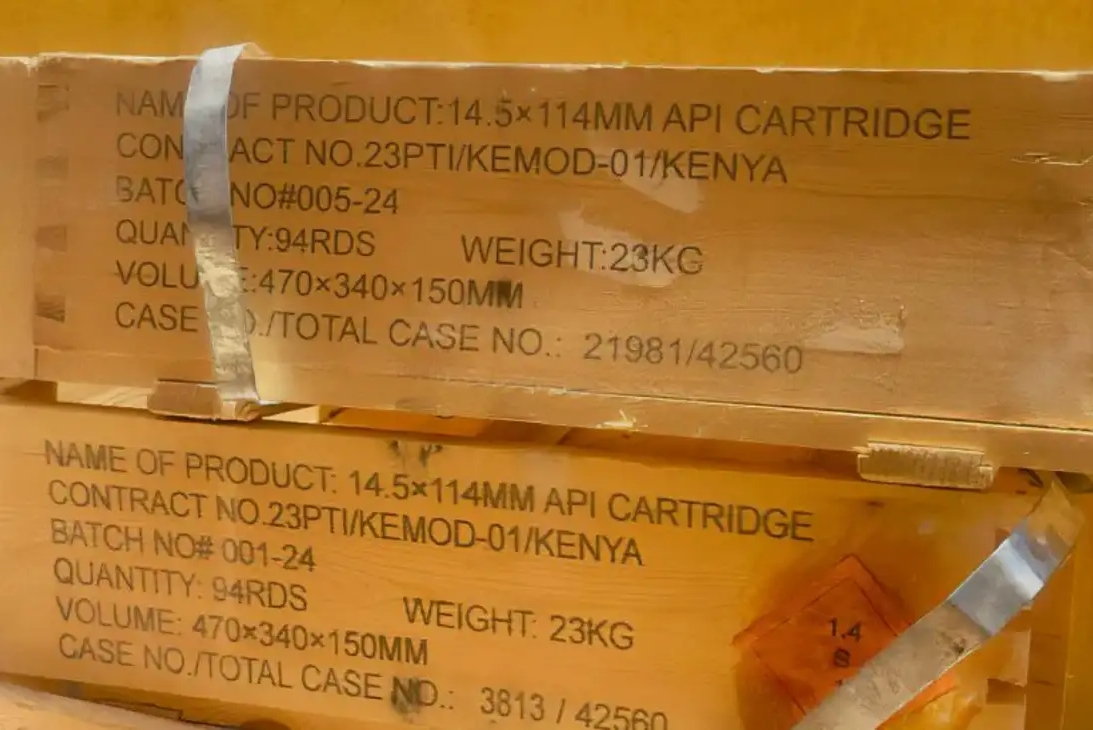
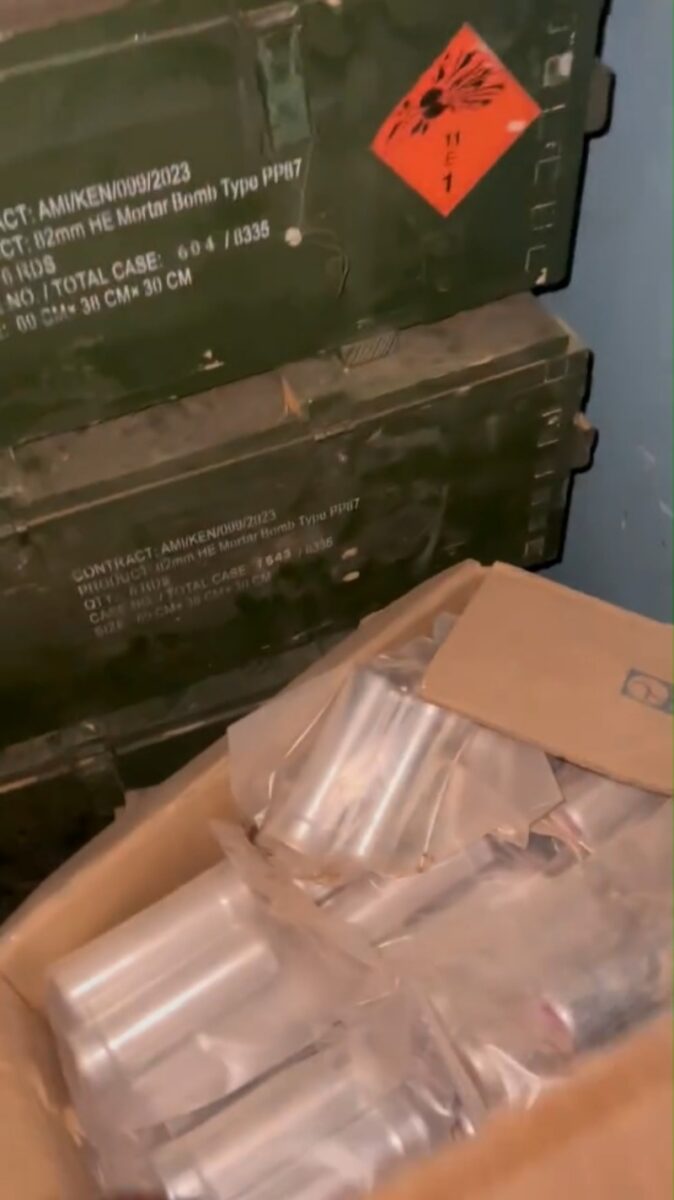
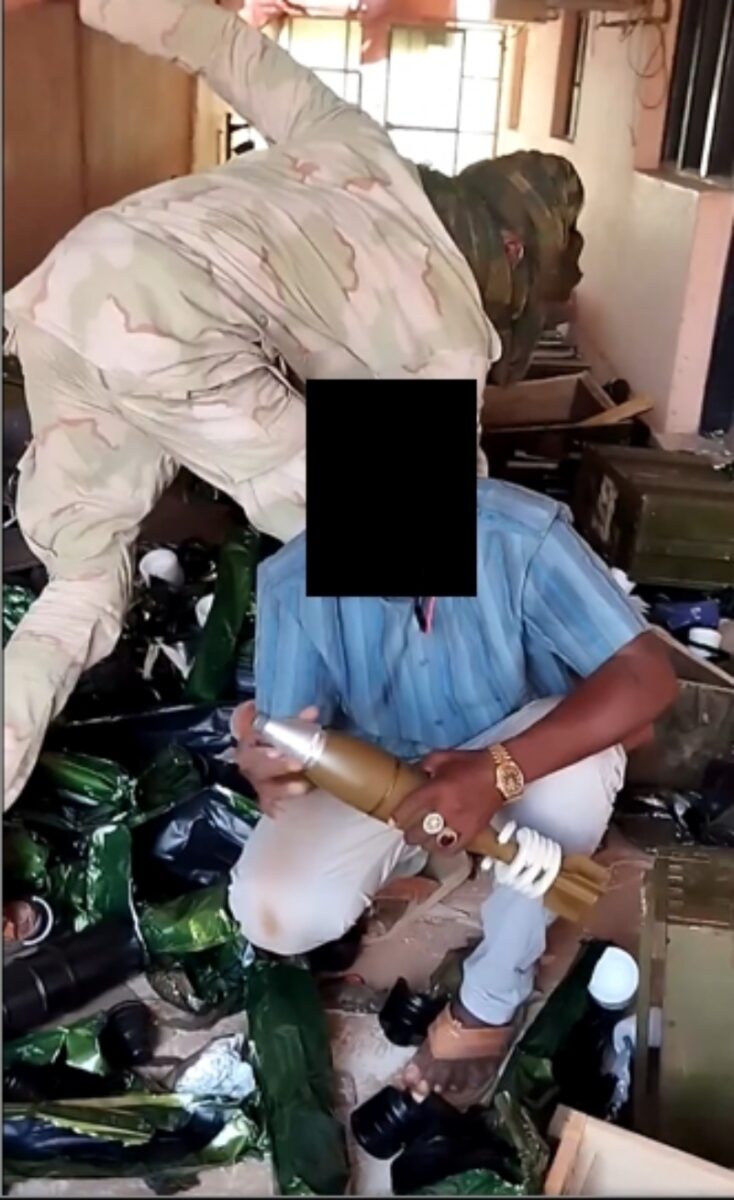
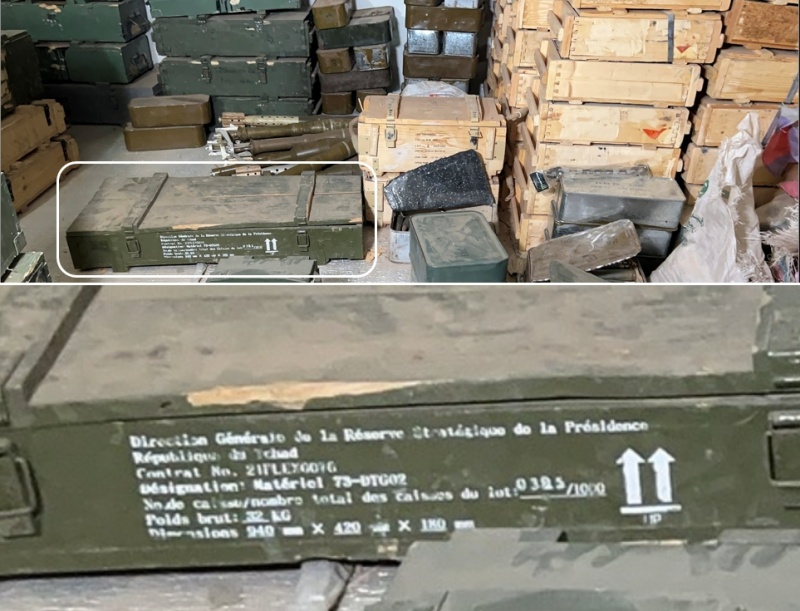
Bellingcat and our partners at Kenya’s Daily Nation have identified Kenyan-labelled crates of ammunition inside an alleged RSF depot close to the recently recaptured Sudanese capital Khartoum.
Although we couldn’t independently verify the contents of every crate identified, tins with ammunition matching the labels on the crates were found nearby among the captured weapons displayed by the Sudanese Armed Forces (SAF).
The confirmation of ammunition crates inside Sudan raises new questions about Kenya’s involvement in the conflict following a high-profile visit by Rapid Support Forces leader General Mohamed Hamdan Dagalo to Nairobi earlier this year.
In response to the visit, the Sudanese government banned all imports from Kenya amid a perception of close ties between the Ruto government and General Dagalo, widely known as Hemedti.
The Kenyan government defended the decision to host Hemedti, stating that their aim was to promote dialogue and peace and emphasising the importance of engaging all parties involved in the conflict.
Examples of images of Kenyan MOD-labelled ammunition crates. These images had been circulating on social media, allegedly showing ammunition left behind by the RSF. Credit: posted on X
While the Kenya Ordnance Factories Corporation (KOFC) states on its website that it produces small arms ammunition, it does not indicate manufacturing higher-calibre 14.5×114 mm cartridges and the Chinese-made HE PP87 mortar bombs identified in this investigation.
Our partners at Daily Nation reached out to the Ministry of Defence (MoD) of Kenya to ask about the crates we identified and how they ended up in Sudan. We also asked whether it was Kenyan government policy to supply ammunition or weapons to the Rapid Support Forces and how this comports with the government’s public commitment to facilitating peace and dialogue in Sudan.
Support Bellingcat
Your donations directly contribute to our ability to publish groundbreaking investigations and uncover wrongdoing around the world.
In its response, the Ministry of Defence said it did not recognise the crates or labels on them and distanced itself from the allegations. Its answer appears to be limited to nationally produced ammunition only as well as internal protocols. It didn’t mention if Kenya has done any imports, international transfers or diversions of the weapons or ammunition in question. A statement that leaves key concerns about the Sudan connection unclear.
“Upon examination of the photographs provided, we wish to state that we do not recognize the crates nor the inscriptions on them.
The Kenya Ordinance Factory Corporation and, by extension, the Ministry is alive to the sensitive nature of the ammunition it manufactures, and as a result, it has clear records of its supplies within and beyond Kenya. Alongside this, and to guarantee public safety, audits of the factory’s operations are frequently conducted by the managing and external oversight authorities.
The Ministry of Defence, therefore, distances itself from the allegations you sent earlier.
Further, we remain fully committed to upholding the rule of law and continue to operate strictly within the mandate granted by the Constitution and applicable authorizations.”
Justin Lynch, Managing Director of the Conflict Insights Group and a Sudan researcher, told Bellingcat the discovery of the crates is further evidence of Kenya’s political and logistical support for the RSF.
A Country at War, Awash with Foreign Weapons
Sudan is in the midst of an ongoing civil war between two rival factions, the Sudanese Armed Forces (SAF) and the paramilitary Rapid Support Forces (RSF).
The stash of ammunition crates located near Sudan’s capital was filmed by Sudanese Armed Forces (SAF) soldiers who took part in the final push to retake the city from the RSF who have controlled Khartoum and its surrounding cities for much of the civil war.
The SAF declared it had retaken the final areas of resistance in Khartoum, its twin city of Omdurman, and the neighbouring city of Bahri on May 20, stating the three areas were now completely free of RSF forces.
The re-taking of the capital has led to much footage and images being released. Including footage that appears to show supplies used by the RSF.
A 2005 UN arms embargo remains in place prohibiting any country from supplying weapons to Darfur, Sudan, an area that has seen intense fighting since the outbreak of the civil war.
The Sudanese government brought a case before the International Court of Justice in The Hague in May, accusing the UAE of complicity in genocide for its role in supporting the RSF. The UAE has categorically denied supporting the RSF. The case was dismissed as the UAE has not signed Article 9 of the Genocide Convention.
Both sides of the conflict have been accused of war crimes, and the RSF has been accused of ethnic cleansing in certain areas, including around Darfur. The UN says more than 24,000 people have been killed since fighting began in 2023 following a peaceful uprising by civilians against dictator Omar al-Bashir. More than 11 million people have reportedly been displaced.
While there is detailed reporting on routes between the UAE and Sudan’s neighbouring countries, including Chad, being used for weapons transfers, specific details about how the Kenyan ammunition crates ended up in the country remain scarce.
How Do We Know the Ammunition Crates Were in the Vicinity of Khartoum?
On May 19, after weeks of reported intense fighting with the RSF, SAF soldiers and allied forces posted video clips claiming they were inside the Salha area in southern Omdurman, located across the Nile from Khartoum.
Bellingcat and Daily Nation have identified three videos containing Kenyan MOD-labelled ammunition crates allegedly left behind by the RSF inside an unknown depot most likely in Salha.
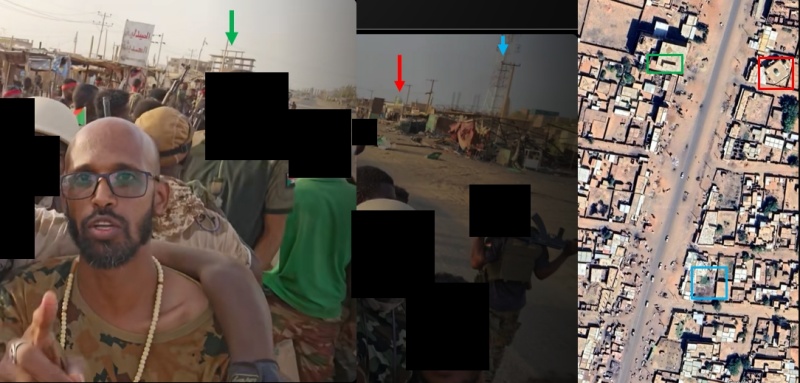
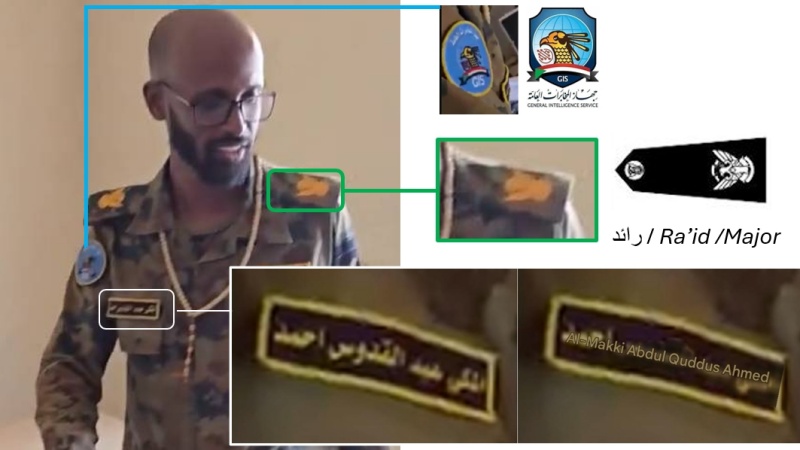
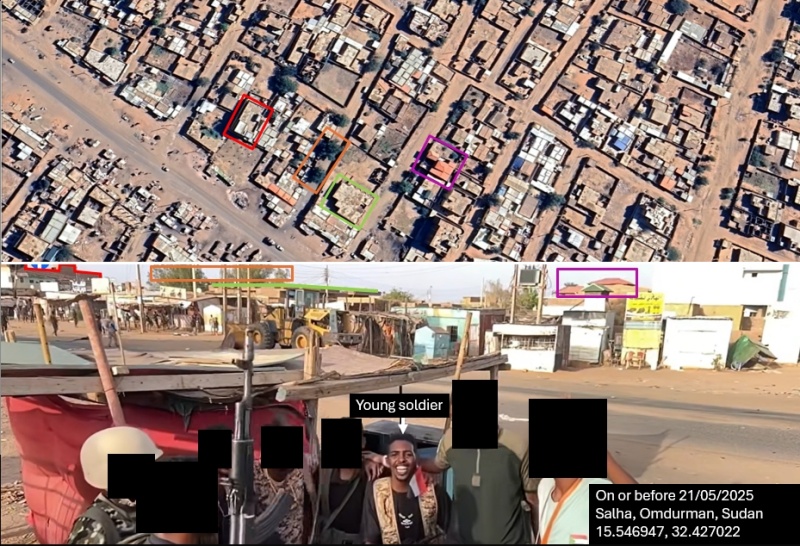
Using social media, we identified soldiers seen in the depot next to the ammunition: A Major from the SAF’s General Intelligence Service (GIS) and at least one other young Sudanese soldier. Both appear to have been in the depot during the same time the operation in Salha was taking place.
Video 1, Video 2 and Video 3 show soldiers rummaging through several rooms containing crates and talking about the armour allegedly left behind by the RSF. Photos of the same type of crates with the same label from the Kenyan MOD had been circulating on social media for some time earlier this year. But it had been difficult to geolocate inside Sudan before these more recent videos emerged.
In video 3, the speaker mentions the ammunition discovery and repeats ‘Salha’, the location, several times.
In video 1, an Arabic speaker can be heard saying: “But I swear to God, you can’t fight again and you won’t defeat us, is this the work (equipment) you leave?”
Above: Example of one of the crates featured in one of the videos filmed inside the dark depot. Below: The stencil label appears to be the same as seen in other previous pictures circulating earlier on social media. Credit: X
Video 1 shows a man inside the depot wearing a fatigued t-shirt, glasses and white Tasbih prayer beads. We found further footage showing what appears to be the same man wearing the same clothes and accessories. Elements in the background tell us that the video was indeed filmed in Salha, Omdurman, along the main road (15.5479, 32.4273).
Left: Soldier in the armour depot. Right: Stitched frames of a video showing the same soldier wearing the same clothes and accessories but on this occasion in an outdoor setting. Credit: X, Facebook
The outdoor setting was geolocated to Salha, Omdurman (15.5479, 32.4273). Credit: Facebook, Google Earth
We identified the soldier above as a Major (Ra’id) from the SAF’s General Intelligence Service, as indicated by his uniform insignias and patches seen in another video circulating on May 20. His name appears to be Al-Makki Abdul Quddus Ahmed.
A video showing a man with the same characteristics as the soldier from the depot is wearing a uniform featuring an insignia consistent with a Rai’d/Major rank used by the Sudanese Armed Forces and a patch from the General Intelligence Service of Sudan. Using Optical Character Recognition, his name appears to read Al-Makki Abdul Quddus Ahmed. Credit: X, globalsecurity.org, gis.gov.sd
Similarly, in another video filmed approx 150m from Major Al-Makki, here (15.546947, 32.427022), we identified a second man seen in the ammunition depot videos. In both videos, he is seen wearing the same clothes with a small Sudanese flag on his left shoulder.
A young soldier who was in the ammo depot was also seen outdoors in a street scene celebrating with other soldiers and wearing the same outfit and accessories as in the depot.
We geolocated the young soldier just 150m from Major Al-Makki in Salha, Omdurman. Credit: Facebook/Google Earth Pro
All the videos analysed were posted between May 19 and May 21. We geolocated the soldiers in a market area of southern Omdurman’s Salha district. This is consistent with the Sudanese Armed Forces retaking the city. Aljazeera reported that SAF had regained full control of the area by May 20.
Although we were unable to confirm the exact location of the depot, corroborating the presence of soldiers in the Salha area, along with open source information, strongly indicates that the depot is indeed located in the Salha neighbourhood of Omdurman.
From Sudan to the World: International Connections of the Weapons Crates
We compared the labels of the crates located near the Khartoum depot with other images of Kenyan munition crates circulating online, reportedly also from Sudan. On the labels, we can see English wording that includes the name of the product, contract number, batch number, quantity, volume, case number and total case number.
To be clear, although the crates are labelled with contractual and technical information, we are not able to say with certainty the origin or producer of the munitions. However, there are important details to highlight.
Bellingcat and our partners at Daily Nation shared images of the crates with three independent armament experts. All confirmed that the markings indicated the ammunition crates were part of the same contract (No. 23PTI) and were delivered to the Kenyan Ministry of Defence (KEMOD-01).
Australian-based Armament Research Services (ARES) told us: “The markings on this crate are consistent with other crates we have seen that we believe to be delivered on a Kenyan contract.”
Still of video showing Kenyan MOD-labelled ammunition crates. These images had been circulating on social media, allegedly showing ammunition allegedly captured by SAF in Khartoum. Credit: X, Sudan Nabaa
Upon examining the images, the weapons experts also told us that many of the crates indicate delivery during or after 2024 – when the civil war in Sudan was well underway.
Former Royal Artillery Army officer and director of Chiron Resources, Chris Cobb-Smith said: “The batch number suggests they were packed in 2024 – delivery date to Kenya would probably have been the same year. When delivered to Sudan is not known.”
All three experts agreed that the type of ammunition indicated on the labels was 57 calibre (14.5×114mm) armour-piercing incendiary (API) cartridges.
Cobb said that 14.5×114mm (.57 calibre) is a heavy machine gun and anti-material rifle cartridge used by the Soviet Union, the former Warsaw Pact states, modern Russia, and other countries.
Although not specified on the crates, Cobb added that this type of cartridge has been manufactured in Bulgaria, China, Egypt, Hungary, Iraq, North Korea, Poland, Romania, Russia, and the former Czechoslovakia.
One of the videos we found with these crates inside a depot in Salha, Omdurman, showed cans inside the crates and at least one open can next to the crates had visible ammunition consistent with the specifications on the label. The ammunition visible appears to have a green case and what appears to be a standard black-tip.
Several cans were visible inside crates in the depot. At least one open can located next to the crates had visible ammunition consistent with the specs on the label. Credit: X
Left and centre: screenshots from Salha depot Video 1, showing a round next to the Kenyan MOD-labelled crates. The bullet appears to feature a green-coloured case and a black marking on the tip. Right: Example of a 14.5×114 MM API cartridge. Credit: X, cjaie.com
We were also able to identify two additional green crates seen in a video showing the Salha depot. The label appears to indicate the boxes likely contain (or at least contained) an explosive with the specification “82mm HE Mortar Bomb Type PP87”.
Two additional green crates are seen in one of the videos showing the Salha depot. The label on the Kenyan-labelled crate reads 82 mm HE Mortar Bomb Type PP87. Credit: X
According to weapons experts, the markings on the crate suggest the box and its contents were likely initially delivered to Kenyan authorities under contract AMI/KEN/099/2023.
Director of Chiron Resources, Chris Cobb-Smith told Bellingcat that the contract number on these crates indicates the Kenyan MOD purchased mortar bombs from China in 2023. He added that it would be impossible to say whether they were immediately diverted or not.
Human Rights Watch reported in 2024 that RSF appeared to be using this Chinese-made mortar ammunition. This video shows a man in RSF camouflage and another in civilian clothes unpacking 82mm HE Mortar Bomb Type PP87. HRW was unable to verify RSF claims that it captured this new mortar munition from the SAF. Amnesty International has also reported the use of this weapon in Sudan.
Still image of a video from June 2024 showing a man in RSF camouflage and another in civilian clothes unpacking 82mm HE Mortar Bomb Type PP87. Credit: X
We also found another sample of these bombs among other SAF-captured ammo displayed in early May in Khartoum. The Chinese-made bomb was photographed next to another Kenyan labelled crate stating it contained 7.62mm SMG (submachine guns or self-loaded rifles) TYPE CS/LR11- sold by the intermediary China Jing An Import & Export Corporation (CJAIE).
82mm HE Mortar Bomb Type PP87 photographed next to another Kenyan-labelled crate stating it contained: 7.62mm SMG TYPE CS/LR11 – a submachine gun or self-loaded rifle (SMG) sold by the intermediary China Jing An Import & Export Corporation (CJAIE). Credit: China Xinhua News, Facebook
There have been several reports identifying Chinese-made weapons in the arms of the RSF. In April, China’s charge d’affaires in Port Sudan was summoned by the Sudanese government over the RSF’s use of Chinese-made drones. China has stressed they have “nothing to do with the presence of these drones and has no connection with the RSF”. Earlier this month Sudanese media outlet Ayin used open sources to identify Chinese-made weapons in the hands of RSF fighters.
Chadian Labelled Crates
In a separate alleged capture of weapons and ammunition displayed by the SAF at the Engineering Corps building in Omdurman (15.609734, 32.480369), similar crates were seen but with the stencil label removed.
The Sudanese army displays weapons allegedly captured from Rapid Support Forces (RSF) in Omdurman in mid-May 2025. Source: Facebook
Next to the crates, a green box is seen with a stencil label that appears to read:
“Direction Générale de la réserve Stratégique de la Présidence … République du Tchad”: General Directorate of Strategic Reserves (DGRS) of the Presidency… Republic of Chad.
The label on this box indicates a different designation “73-DTG02”. According to the Collective Awareness to Unexploded Ordnance (CAT-UXO), this designation is believed to be a Chinese 73mm High-Explosive-Dual-Purpose (HEDP), High-Explosive-Anti-Tank (HEAT) with Anti-Personnel (AP) HE-Frag, fin-stabilised Rocket.
The UAE has been accused of supplying Sudan’s RSF via a Chad airstrip. Dozens of flights from the UAE appear to have used an airstrip at Amdjarass in eastern Chad since the war began in April 2023.
Weapons Continue to Fuel Suffering
The discovery of the Kenyan-labelled munitions crates is further evidence of Kenya’s political and logistical support to the RSF, Justin Lynch, Managing Director of Conflict Insights Group and Sudan researcher, told Bellingcat.
He said the UAE has used Kenya and other African states as a political and logistical hub to support the Rapid Support Forces.
“It seems hardly a coincidence that RSF public conferences in Nairobi were immediately followed by a $1.5 billion loan from the UAE and a surge in suspicious UAE-to-RSF shipments transiting through Kenya,” Lynch said.
Kenya is reported to draw down next week the first portion of $500 million from the $1.5 billion United Arab Emirates (UAE) – backed commercial loan.
Delegates affiliated to Sudan’s Rapid Support Forces (RSF) react during a meeting for the planned signing, later postponed, of a political charter that would provide for a “Government of Peace and Unity” to govern the territories the force controls in Nairobi, Kenya, February 18, 2025. REUTERS/Monicah Mwangi
Despite losing control of the beating heart of the country, the RSF still rules huge swathes of Sudan including Darfur in the country’s southwest where violence is causing one of the world’s worst humanitarian crises, according to the UN.
As long as the conflict continues, questions about who is providing weapons and support to the warring sides will remain.
This article has been updated to reflect new information.
Bellingcat would like to thank our partners at the Daily Nation Forensics Unit for collaborating on this investigation.
Pooja Chaudhuri, Youri van der Weide and Jake Godin contributed to this report.
Bellingcat is a non-profit and the ability to carry out our work is dependent on the kind support of individual donors. If you would like to support our work, you can do so here. You can also subscribe to our Patreon channel here. Subscribe to our Newsletter and follow us on Bluesky here and Mastodon here.

 Entrar


 (@bayraktar_1love)
  Special Kherson Cat


 : Abdallah Alattar / Anadoluimages