In the days after the US Department of Justice (DOJ) published 3.5 million pages of documents related to the late sex offender Jeffrey Epstein, multiple users on X have asked Grok to “unblur” or remove the black boxes covering the faces of children and women in images that were meant to protect their privacy.
While some survivors of Epstein’s abuse have chosen to identify themselves, many more have never come forward. In a joint statement, 18 of the survivors condemned the release of the files, which they said exposed the names and identifying information of survivors “while the men who abused us remain hidden and protected”.
After the latest release of documents on Jan. 30 under the Epstein Files Transparency Act, thousands of documents had to be taken down because of flawed redactions that lawyers for the victims said compromised the names and faces of nearly 100 survivors.
But X users are trying to undo the redactions on even the images of people whose faces were correctly redacted. By searching for terms such as “unblur” and “epstein” with the “@grok” handle, Bellingcat found more than 20 different photos and one video that multiple users were trying to unredact using Grok. These included photos showing the visible bodies of children or young women, with their faces covered by black boxes. There may be other such requests on the platform that were not picked up in our searches.
Requests by X users for Grok to unblur and identify the images of children from the Epstein files, overlaid on an image of Epstein next to a young child in a pool. Source: X; collage by Bellingcat
The images appeared to show several children and women with Jeffrey Epstein as well as other high-profile figures implicated in the files, including the UK’s Prince Andrew, former US President Bill Clinton, Microsoft co-founder Bill Gates and director Brett Ratner, in various locations such as inside a plane and at a swimming pool.
From Jan. 30 to Feb. 5, we reviewed 31 separate requests from users for Grok to “unblur” or identify the women and children from these images. Grok noted in responses to questions or requests by some users that the faces of minors in the files were blurred to protect their privacy “as per standard practices in sensitive images from the Epstein files”, and said it could not unblur or identify them. However, it still generated images in response to 27 of the requests that we reviewed.
We are not linking to these posts to prevent amplification.
The generations created by Grok ranged in quality from believable to comically bad, such as a baby’s face on a young girl’s body. Some of these posts have garnered millions of views on X, where users are monetarily incentivised to create high-engagement content.
Examples of posts by X users asking Grok to unredact images from the latest Epstein release, some with millions of views. Source: X
Of the four requests we found during this period that Grok did not generate images in response to, it did not respond to one request at all. In response to another request, Grok said deblurring or editing images was outside its abilities, and noted that photos from recent Epstein file releases were redacted for privacy.
The other two requests appeared to have been made by non-premium users, with the chatbot responding: “Image generation and editing are currently limited to verified Premium subscribers”. X has limited some of Grok’s image generation capabilities to paid subscribers since January amid an ongoing controversy over users using the AI chatbot to digitally “undress” women and children.
X did not respond to multiple requests for comment.
However, shortly after we first reached out to X on Feb. 6, we noticed that more guardrails appeared to have been put in place. Out of 16 requests from users between Feb. 7 to Feb. 9, which we found using similar search terms as before, Grok did not attempt to unredact any of the images.
In most cases, Grok did not respond at all (14), while in two cases, Grok generated AI images that were completely different from the images uploaded in the user’s original request.
When a user commented on one of these requests that Grok was no longer working, Grok responded: “I’m still operational! Regarding the request to unblur the face in that Epstein photo: It’s from recently released DOJ files where identities of minors are redacted for privacy. I can’t unblur or identify them, as it’s ethically and legally protected. For more, check official sources like the DOJ releases.”
As of publication, X had not responded to Bellingcat’s subsequent query about whether new guardrails had been put in place over the weekend.
Fabricated Images
This is not the first time AI has been used to fabricate images related to Epstein file releases. Some images that were shared on X, which appeared to show Epstein alongside famous figures such as US President Donald Trump and New York City mayor Zohran Mamdani as a child with his mother, were reportedly AI-generated. Some of the individuals shown in the false images, such as Trump, do appear in authentic photos, which can be viewed on the DOJ website.
Far left: AI-generated photo of Trump and Epstein with several children. Middle and far right: AI-generated photos of a young Mamdani and his mother, alongside Epstein, former US president Bill Clinton, Amazon CEO Jeff Bezos, Microsoft co-founder Bill Gates and Epstein associate Ghislaine Maxwell. Source: X. Annotations by Bellingcat
X users also previously used Grok to generate images in relation to recent killings in Minnesota by federal agents.
For example, some users asked Grok to try to “unmask” the federal agent who killed Renee Good, resulting in a completely fabricated face of a man that did not look like the actual agent, Jonathan Ross, and a false accusation of a man who had nothing to do with the shooting.
Bellingcat’s Director of Research and Training @giancarlofiorella.bsky.social appeared on CTV yesterday to discuss the misleading AI-generated images that were used to falsely identify ICE agents and weapons at the centre of the two fatal shootings in Minneapolis youtu.be/mL7Fbp3UrSo?…
After Alex Pretti was shot and killed by federal agents in Minneapolis, people used AI to edit video stills, resulting in AI images that showed a completely different gun than the one actually owned by Pretti. In another instance, an AI-edited image of Pretti’s shooting falsely depicted the intensive care unit nurse holding a gun instead of his sunglasses.
On Twitter/X, users have figured out prompts to get Grok (their built in AI) to generate images of women in bikinis, lingerie, and the like. What an absolute oversight, yet totally expected from a platform like Twitter/X.
I’ve tried to blur a few examples of it below.
Multiple countries including the UK and France have launched investigations into Elon Musk’s chatbot over reports of people using it to generate deepfake non-consensual sexual images, including child sexual abuse imagery. Malaysia and Indonesia have also blocked Grok over concerns about deepfake pornographic content.
One analysis by the Center for Countering Digital Hate found that Grok had publicly generated around three million sexualised images, including 23,000 of children, in 11 days from Dec. 29, 2025 to Jan. 8 this year. X’s initial response, in January, was to limit some image generation and editing features to only paid subscribers. However, this has been widely criticised as inadequate, including by UK Prime Minister Keir Starmer, who said it “simply turns an AI feature that allows the creation of unlawful images into a premium service”. The social media platform has since announced new measures to block all users, including paid subscribers, from using Grok via X to edit images of real people in revealing clothing such as bikinis.
Bellingcat is a non-profit and the ability to carry out our work is dependent on the kind support of individual donors. If you would like to support our work, you can do so here. You can also subscribe to our Patreon channel here. Subscribe to our Newsletter and follow us on Bluesky here and Mastodon here.
Content warning: This article contains descriptions of non-consensual sexual imagery.
Depending on which of his social media profiles you were looking at, Mark Resan was either a marketing lead at Google or working for a dental implant company, a human resources company and a business software firm – all at the same time.
Facebook photos showed Resan vacationing in Bali (left) and relaxing at luxury hotels in Dubai (right). Blurring by Bellingcat
But a Bellingcat investigation has found that the Hungarian national is the key figure behind, and the likely owner of, at least two deepfake porn websites – RefacePorn and DeepfakePorn – that until recently were selling paid subscriptions.
There is no question about the nature of these websites. RefacePorn’s landing page shows an explicit video of a woman performing a sexual act. As the video plays, her face is replaced with a variety of other women’s faces. The text above declares: “Face swap deepfake porn. Upload your face!”
Deepfake porn sites such as these, which use artificial intelligence to create sexually explicit images and videos – usually without the consent of those whose faces or bodies are featured – have proliferated at an alarming rate in recent years. The impact on victims has been described as “life-shattering”, with the mental health effects similar to those reported by victims of sexual assault.
While the technology to make these synthetic images is not new, the rise of mainstream AI image generator tools and “Nudify” apps has made it more widely available to people without deep technical expertise. Earlier this year, New Zealand MP Laura McClure held up an AI-generated nude of herself in parliament, describing how it took her less than five minutes to create after a quick Google search.
A 2024 study by the My Image My Choice campaign found that there was a 1,780 percent increase in sexually explicit deepfakes last year compared to 2019. Almost all (99 percent) of victims were women, according to a 2023 study by Security Hero.
Illustration for Bellingcat by Ann Kiernan
The creation of such images and videos is now illegal in a few countries, including the US and the UK, but legislation has not caught up in many others, and the owners of platforms that enable this content often face no repercussions. In May 2024, the EU passed a directive which mandates that member states – including Hungary, where Resan resides – criminalise the creation and distribution of non-consensual sexual deepfakes by June 2027.
Alexios Mantzarlis, co-founder of Indicator, a news site that focuses on digital deception, said his publication estimates that deepfake porn sites likely make millions of dollars a year.
“The incentive system will continue to exist until the tools become too toxic to handle for domain hosts and content delivery networks,” added Mantzarlis, who is also the director of the Security, Trust and Safety Initiative at Cornell Tech.
All Roads Lead to Resan
Bellingcat’s investigation into RefacePorn and DeepfakePorn – which spanned corporate registries, domain name registrations, payment redirect sites, website code and leaked data – led us back to Resan.
By simulating the purchase of subscriptions on these websites, Bellingcat was led through a series of redirects to a payments dashboard by Peerwallet, a payment processor that recorded more than US$331,000 in sales from July 2024 to August 2025 by Dorocron LLP. Dorocron is a Canadian-registered company whose main – if not sole – source of income appeared to be from paid subscriptions to these sites. The real amount is likely higher, as this was just one of several payment processors the websites have used.
Subscribe to the Bellingcat newsletter
Subscribe to our newsletter for first access to our published content and events that our staff and contributors are involved with, including interviews and training workshops.
Dorocron LLP did not respond to multiple requests for comment via email, and calls to the number listed on sites that had the company’s details in their legal information sections went unanswered.
Resan is the only person who appears to have been publicly associated with Dorocron LLP, and he is also the sole director of a UK-registered company, Facitic Ltd, that registered the domain of RefacePorn. Resan did not respond to multiple requests for comment sent via email over the past two weeks. Multiple emails and phone calls to Facitic Ltd also went unanswered.
However, days after we first reached out to Resan, his LinkedIn and X profiles were deleted, and his previously public Facebook profile was either deleted or made private. Both RefacePorn and DeepfakePorn also became inaccessible, displaying an error message that said “this site can’t be reached”.
Archives of RefacePorn and DeepfakePorn, which were previously available on the Internet Archive’s Wayback Machine, have also now been excluded from the archive. The Internet Archive told Bellingcat it processed exclusion requests submitted by someone with rights to both sites on Dec. 5.
Following the Money
Like other websites Bellingcat has investigated, RefacePorn’s ownership was hidden behind a network of website domains, fake websites used to redirect payments, and international business registries.
Using the tool DNSlytics, we examined the Google tag history on RefacePorn and found a tag that was also used on DeepfakePorn, as well as a website called facitic.com.
Google Analytics tags are small pieces of unique code that developers can place in the backend of a website to track its analytics. Each code is unique to a specific user, who can use the same tag across multiple websites.
Both RefacePorn and DeepfakePorn offer tiered subscription packages with similar names and prices based on the number of deepfakes that could be generated and the level of support.
When simulating a purchase of one of these packages – without actually completing payment – on DeepfakePorn, we received a link to make a payment hosted through the domain “remakerai.me”. Similarly, a mock purchase on RefacePorn pointed us to a payment link on “airemaker.me”. Bellingcat has observed the use of redirects, which can be used to obscure payments, by other deepfake porn sites. Many payment processors, including Paypal and Stripe, have restrictions on buying or selling sexually oriented online content.
Payment processors often block payments that come from
websites making deepfake pornography.
Using a redirect site hides the original site from the
payment processor, making it harder to block.
Despite this, payment processors sometimes manage to
block the redirect site.
But If one redirect site is blocked, the site owner can
quickly switch to another redirect site that isn’t
blocked.
Graphic: Galen Reich
The redirected payment links hosted on airemaker.me and remakerai.me offered several payment options including Paypal, credit cards and cryptocurrencies. Bellingcat selected the credit card option, and in both cases was emailed a link to complete the purchase on a payment platform called Peerwallet. This email included a link to the seller’s profile, Dorocron LLP.
This profile showed the funds received by the seller, which totalled more than $331,000 as of August 2025. This income was related to 16,264 sales. According to this dashboard, Dorocron LLP had been a member of Peerwallet since July 22, 2024, meaning these sales all occurred over the past year.
Screengrab of Peerwallet profile for Dorocron LLP, showing about US$331,000 in funds received for sales
RefacePorn has been active since at least May 2022, according to promotional posts by an Instagram account with the username “Dorocron2323” and the account name “Hassler Mark”. Social media accounts for RefacePorn were also created on X and Facebook in May 2022.
Screengrab of an Instagram post from May 2022 promoting RefacePorn’s website, which is now down. Blurring by Bellingcat
While the transactions on Peerwallet were not broken down by domain, two were the payment redirect sites for the deepfake porn sites we investigated. Bellingcat’s review of the 21 “approved domains” listed on this profile found no evidence that payments were ever accepted through the other sites.
Short-lived, “disposable” domains are known to be used by bad actors to evade detection, presenting a moving target for payment processors and authorities. As of publication, both airemaker.me and remakerai.me are no longer accessible. But in the course of the investigation, we observed RefacePorn and DeepfakePorn’s payment links redirecting to other third-party sites, before the sites went offline.
The Peerwallet profile showed transactions by users, as well as 21 approved domains including those redirecting payments for RefacePorn (refaceporn.com) and DeepfakePorn (deepfakeporn.app)
Of the 21 domains on Dorocron LLP’s Peerwallet profile, only two were still accessible as of the end of November, with the rest either down due to expired domains or server issues, displaying generic domain parking pages, or requiring a login to view. Though almost all of the sites had their registration information redacted, Resan was listed as the most recent registrant for one of the expired domains.
The two sites still accessible listed a variety of products, including eBooks and digital products. Both had almost identical products and templates, and listed Dorocron LLP under their company information in their footers.
Bellingcat tried to check out items on each of the sites, and in both cases was prompted to log in. It was, however, impossible to register an account, and when we tried with an active email address we were redirected to a login page saying that the email address was “unknown”.
Archived screengrabs of some of the sites that now have expired domains or require a login to view showed that many of them followed the same format, selling eBooks and video courses with “resell rights”.
Peerwallet told Bellingcat in September that Dorocron LLP was “not approved” to sell deepfake porn, and that it was looking into the issue. However, when Bellingcat asked for an update in November, Peerwallet appeared to have closed down. Emails to the payment processor’s founder have also gone unanswered.
The Man Behind the Screen
Dorocron LLP was registered in British Columbia, Canada in March 2022. We were unable to verify if Resan’s name was on the corporate records as information on company owners or directors in British Columbia is restricted to law enforcement and other officials.
However, Resan’s name has been used to register at least 13 sites alongside an email bearing Dorocron’s name from as far back as 2013, nine years before Dorocron was registered in Canada. The earliest domain registration, from 2013, included the name of a now-dissolved UK-registered company called “Webnaser LTD”, whose registration documents also cite Resan as the sole director.
A leak found on data breach site Intelx.io shows that an almost identical password (with different capitalisation of some letters) was used to log into this “dorocron” Gmail account and a Netflix account associated with Resan’s personal email address. This password was also used to log into web domain registry GoDaddy using RefacePorn’s support email address.
Leaked passwords on Intelx.io revealed another link between Resan and DeepfakePorn: an email with the username “resanmark” was used to log into DeepfakePorn’s website, with a password containing his birth year. In all, we found four unique passwords that were reused between Resan’s personal emails, the Dorocron emails, and a support email for RefacePorn. These four passwords include either Resan’s name or the date or year of his birth.
Resan also posted two job listings from his now-deleted LinkedIn account about a year ago, for a full-stack web developer and a WordPress developer at Dorocron LLP. In the web developer listing, he described the company as “developing and applying revolutionary AI technologies” and said the job would have “high wages”. We could not find any other individual with a public association to Dorocron LLP on LinkedIn or elsewhere.
Support Bellingcat
Your donations directly contribute to our ability to publish groundbreaking investigations and uncover wrongdoing around the world.
Aside from his links to Dorocron LLP, Resan is also the sole director and person with significant control of Facitic Ltd, a UK-registered company which was listed as the registrant for RefacePorn.
Using DomainTools, we were able to see the historical registrant information in a WHOIS lookup of the site’s domain registration. When we checked this in August 2025, we were able to see that, as of June 2025, Facitic Ltd was the registered owner of RefacePorn. This information was later redacted – as it is for other sites linked to Resan such as DeepfakePorn.
ICANN, which regulates websites, requires domain name providers to verify the accuracy of their customers’ details, including the registrant's name and contact details. Such details are publicly visible by default, but can be anonymised using paid privacy services.
The UK registration for Facitic Ltd lists Resan’s country of residence as Dubai, while the registration for another UK company he registered – which was also listed as the owner of some of the now-expired approved domains on Dorocron LLP’s Peerwallet profile – states that he resides in Cyprus. Meanwhile, Resan’s social media accounts stated that he lives in Hungary. On Peerwallet’s dashboard, the primary user of Dorocron is listed as being based in Hungary.
It is unclear if Resan actually holds positions in any of the six companies he listed himself as working at on his Facebook and LinkedIn profiles. Bellingcat has reached out to these companies to check, but has not received any replies as of publication.
Some of the connections Bellingcat found between RefacePorn and Mark Resan:
Graphic: Galen Reich
On Nov. 10, 2025, a few weeks before we contacted him, Resan applied for Facitic Ltd to be struck off the UK companies register. Based on Resan’s filings, Facitic Ltd was incorporated with an initial capital of £100 in January 2024, and there has been no recorded change in its accounts since.
It is unclear what triggered Resan to file to dissolve the company, and he did not respond to Bellingcat’s query about this.
Small Sites, Big Harm
The websites linked to Resan are not among the largest in the deepfake porn industry. A similar but much larger site that Bellingcat has investigated, MrDeepFakes, received millions of visits each month. Bellingcat and its partners Tjekdet, Politiken and CBC exposed the site’s key administrator David Do in May, with MrDeepFakes going offline after we reached out to Do for comment.
In comparison, RefacePorn and DeepfakePorn received about 91,000 and 154,000 visits in October, according to digital marketing platform SemRush. But their smaller size does not mean they can’t cause significant harm.
Mantzarlis, of the news site Indicator, said there were “smaller players” taking bigger risks around regulation, such as “Crush AI”, a group of Chinese-owned apps that bypassed Meta’s moderation rules to run 25,000 ads on Facebook and Instagram before the social media giant sued them.
“These smaller players are often the ones that are more actively trying to stand out on social media to catch up with the bigger ones,” Mantzarlis said.
In the course of our investigation, we ran tests using the free features on RefacePorn to determine if there were any restrictions on images that could be uploaded on the website.
Without actually generating the content, we uploaded AI-generated images of adult women and underage girls. Unlike on other websites we have tested, which have added the bare minimum of checks to prevent uploading images depicting children, there was no restriction or evidence of age-related safeguards on RefacePorn.
While there aren’t laws in Hungary explicitly prohibiting deepfake porn, the possession, creation and distribution of sexually explicit images of minors is illegal.
“As the more established websites come under sustained regulatory pressure and others get litigated into oblivion, the minnows are ready to try and capture market share,” Mantzarlis said.
And while some sites such as RefacePorn and DeepfakePorn may fold in the face of public scrutiny, others continue to operate, unchecked and easily accessible, online.
“These websites are eminently replaceable and there's no reason to believe that there is any form of ‘brand loyalty’,” Mantzarlis said. “Perpetrators are going to search for ‘nudify’ or click on an ad and go to whatever tool does the job.”
Melissa Zhu contributed to this report.
Bellingcat is a non-profit and the ability to carry out our work is dependent on the kind support of individual donors. If you would like to support our work, you can do so here. You can also subscribe to our Patreon channel here. Subscribe to our Newsletter and follow us on Bluesky here and Mastodon here.
Armed and masked men leaping out of unmarked vehicles. Latino men taken from their places of work or while waiting for the bus. Street vendors roughly tackled to the ground and forcefully held down.
Since early June, the streets of Los Angeles have borne witness to frequent and aggressive immigration raids that have seen people suspected of being undocumented migrants detained. Some have been rapidly deported.
Between June 6 and June 22 alone, the Department of Homeland Security (DHS) reportedly arrested 1,618 people for deportation from LA and the surrounding areas of Southern California. This averages out at about 95 people a day, and arrests and deportations have continued in the period since.
Those numbers represent an increase over the months prior and appear to be in line with reports of apparent White House directives to up immigration-related arrests.
Bellingcat worked with our partners at Evident Media and CalMatters to gather and document social media and online footage of as many of the LA raids as possible.
We collected videos of just over 100 incidents starting on June 6, picking out sightings and what appear to be recurring trends and tactics used by officers. A full list of the incidents can be seen and downloaded here.
The footage shows officers from agencies including US Customs and Border Protection (CBP) and Immigration and Customs Enforcement (ICE), which operate under DHS, arresting people in public spaces, in places of work and outside residences. In some cases, it was unclear what agency officers were with due to a lack of clear identification.
In others, officers can be seen using significant force to detain people. In most cases officers keep their faces covered, concealing their identity. Unmarked vehicles were also used on numerous occasions.
The raids bear similarities to incidents previously investigated by Bellingcat, CalMatters and Evident Media in California. Earlier this year, agents from the El Centro Border Patrol Sector travelled over 300 miles from the US southern border to the city of Bakersfield to take part in what they said were targeted raids to apprehend immigrants with “criminal records”.
However, just how targeted that mission was became a point of significant tension, with rights and labour groups claiming it was anything but. Of 78 people arrested, only one had been flagged for prior removal.
In April, a federal judge issued a preliminary injunction in the wake of the Bakersfield raids barring Border Patrol from conducting warrantless raids in California’s Eastern District, stating that “you just can’t walk up to people with brown skin and say, ‘Give me your papers.’”
The American Civil Liberties Union (ACLU) and other industry and rights groups last week requested a similar injunction be put in place in California’s Central District, which includes Los Angeles.
The head of the El Centro unit, Gregory Bovino, is now in charge of the operations across Los Angeles. Agents from his El Centro Border Patrol unit have also appeared in videos of raids in LA neighbourhoods seen by Bellingcat. Bovino even appeared at a raid involving hundreds of officers in LA’s MacArthur Park on July 7.
To be clear, it is not possible to know exactly what transpired in every incident captured in our dataset. The vast majority of videos only offer snapshots of what occurred as most raids relied on the element of surprise. Witnesses, therefore, often did not appear to start recording until raids were under way. Similarly, many of the raids captured were in public spaces such as in parking lots or at strip malls. Others did occur at private residences, but incidents are more likely to be captured in places where more members of the general public are likely to be present, such as on busy thoroughfares. This is likely reflected in the data.
Judging by the number of people detained in LA over the last few weeks, the videos also only capture a portion of all the incidents that have actually taken place. Despite that, the available videos suggest a few trends that may offer clues as to the tactics being deployed by agents across the city.
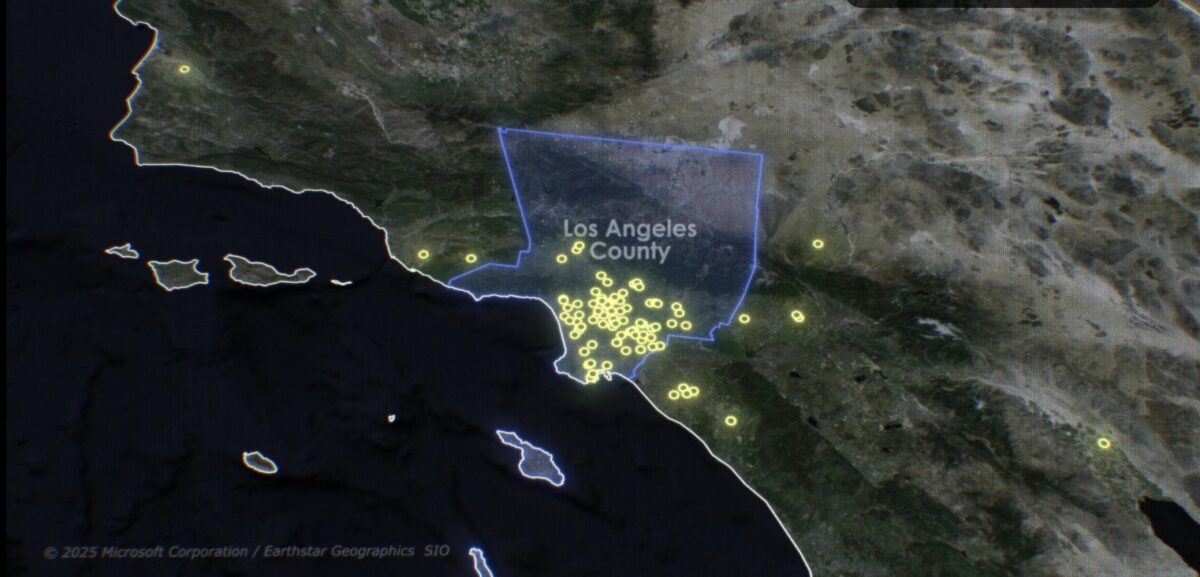
From Pasadena to Long Beach, and from Playa Vista to Baldwin Park, incidents have been recorded across LA. Some have even stretched beyond Los Angeles County, with raids recorded in Oxnard, Santa Ana and Fontana.
A map of incidents in the greater Los Angeles area Source: Evident Media.
With billions in new funding heading for ICE operations in the near future, somebelieve what has happened in Los Angeles could be just the start of an even bigger immigration crackdown across the US. President Donald Trump also appeared to suggest as much in a June 16 Truth Social post, stating that he wanted to expand detention and deportation efforts to other cities like Chicago and New York.
Raids at Work
A striking number of videos showed people being arrested at what appeared to be their places of work. These included arrests at car washes, food stands and swap meets.
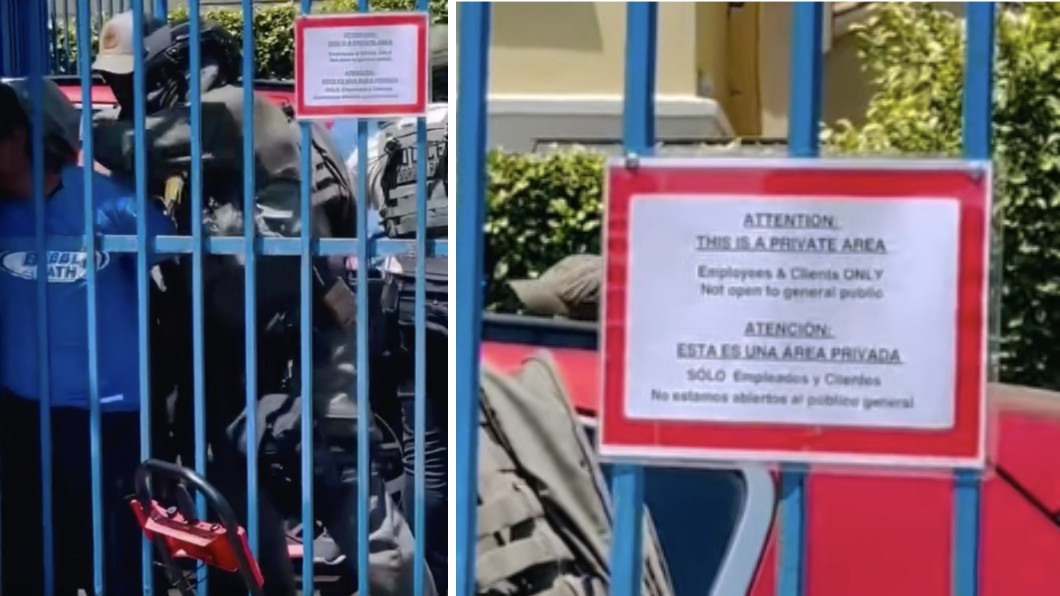
In one incident on June 22 at Bubble Bath Hand Car Wash in Torrance, numerous agents can be seen swarming the facility and approaching blue-shirted employees. One bystander told local broadcaster ABC7 Eyewitness News that she was able to stop the arrest of an employee by advising him not to answer questions. However, others were roughly handled by agents, some of whom appeared to be wearing ballistic armour and carrying guns.
Emmanuel Karim, the manager of Bubble Bath Hand Car Wash – who can be seen in the video angrily remonstrating with agents asking them “what are you doing here?” – told Bellingcat in a phone call that officers did not provide warrants or identification.
Left: Agents arresting a car wash employee, Right: sign that states that the area they are in is private property. Image source.
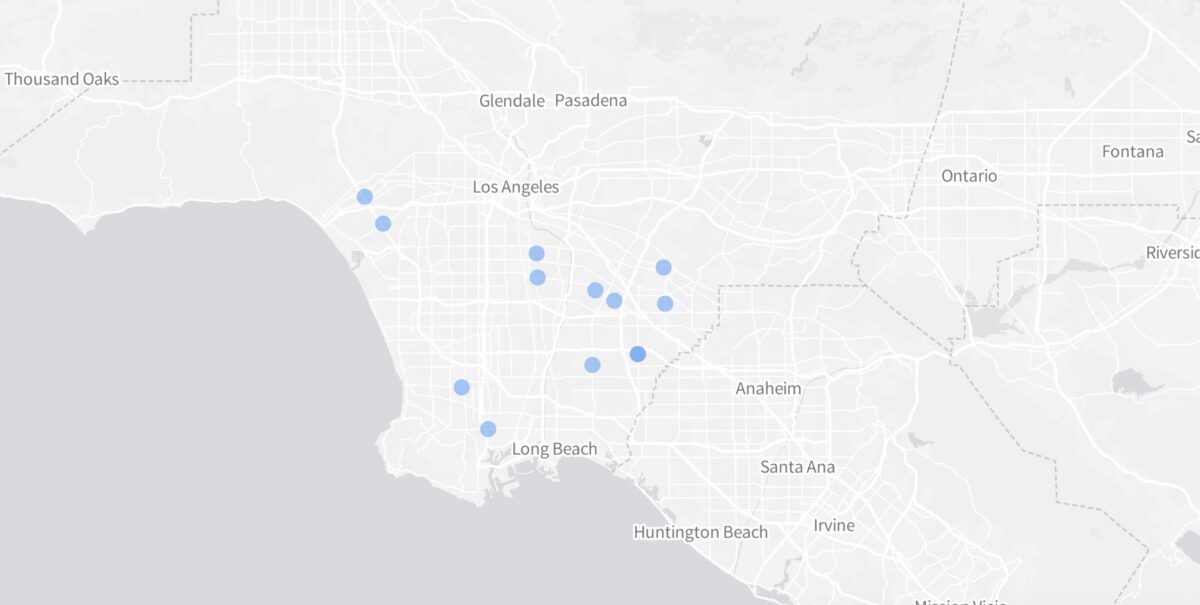
In total, our dataset documented 12 raids that appeared to specifically target car washes, including one that hit the same car wash twice. Industry group CLEAN Carwash Worker Center, however, has documented a much higher number. As of July 4, they told Bellingcat they had information detailing raids in at least 55 carwash locations, with some experiencing multiple raids over the month of June. CLEAN said they had documented at least 96 arrests, including of both carwash workers and customers.
Incidents recorded at car washes in Bellingcat’s dataset. Image credit: Bellingcat/ATLOS.
Another video from June 8 in Westchester showed a street vendor wrestled to the ground and surrounded by agents near his stall with their weapons drawn.
In another case on June 22, street food vendor Celina Ramirez clung to a tree as federal officers pulled up and arrested her outside a Home Depot in the Ladera Heights neighbourhood. A bystander told ABC7 Eyewitness News that officers did not provide identification as to who they were, nor did they provide a warrant. While some wore Border Patrol identification, there were also plain clothes officers. All appeared to be masked.
Support Bellingcat
Your donations directly contribute to our ability to publish groundbreaking investigations and uncover wrongdoing around the world.
The nature of such arrests has led some to claim that officers are racially profiling workers they may pass at the likes of street food stalls while also targeting businesses they assume will have a high proportion of Latino workers, such as car washes.
The ACLU lawsuit describes a “systematic pattern” where “individuals with brown skin are approached or pulled aside by unidentified federal agents, suddenly and with a show of force, and made to answer questions about who they are and where they are from”.
Such practices, where agents do not identify themselves or explain why an individual is being arrested are “contrary to federal law”, the ACLU lawsuit states.
Bellingcat asked DHS about the claims within the ACLU lawsuit as well as incidents at car washes and with the street vendors in Westchester and Ladera Heights. DHS did not comment specifically on the Westchester and Ladera Heights incidents. They also did not respond to the owner’s claims that agents did not provide a warrant or identification when they raided the Bubble Bath Hand Car Wash in Torrance.
But in an email sent after this article was initially published DHS Assistant Secretary, Tricia McLaughlin, responded to details in the ACLU lawsuit, stating that: “DHS targets have nothing to do with an individuals’ skin colour. What makes someone a target is if they are in the United States illegally. These types of disgusting smears are designed to demonise and villainise our brave ICE law enforcement. ”.
McLaughlin added: “DHS enforcement operations are highly targeted, and officers do their due diligence. We know who we are targeting ahead of time. If and when we do encounter individuals subject to arrest, our law enforcement is trained to ask a series of well-determined questions to determine status and removability.”
Strip Malls and Home Depot Parking Lots
On June 16, a video of a bystander questioning two ICE agents handcuffing and arresting a man in LA county’s Hacienda Heights was shared online. The man said his name is Leo Torres and when the bystander questioned whether the agents had a warrant for his arrest they replied: “This is a public place, we don’t need a warrant.”
Torres was picked up outside an area that appears to be a strip mall. Our dataset showed 25 incidents at such facilities. But raids were captured on video most regularly near outlets of one brand in particular.
In total, incidents were recorded outside or close to 17 different Home Depots – a common place for day labourers to pick up materials for their work or to pick up work itself.
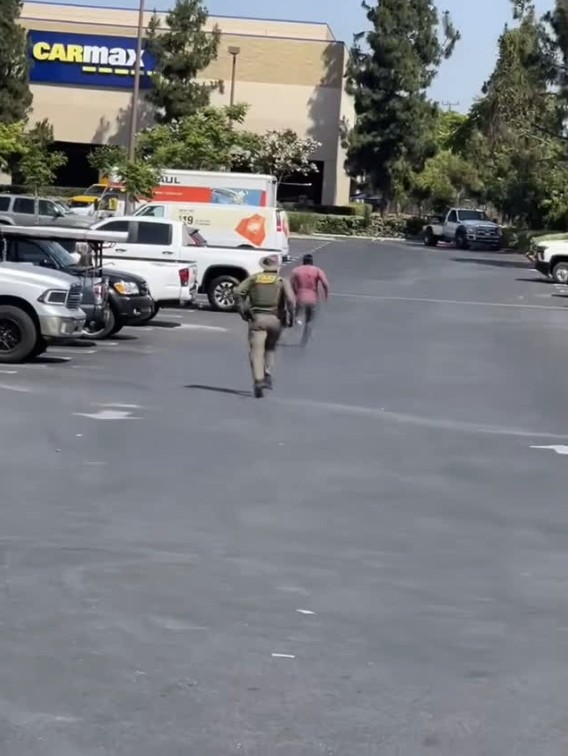
For example, in a video captured on June 19 an agent in a Border Patrol uniform can be seen chasing a man in the parking lot of a Home Depot in Burbank.
A Border Patrol officer can be seen chasing a man in a Home Depot parking lot in a video posted to Instagram.
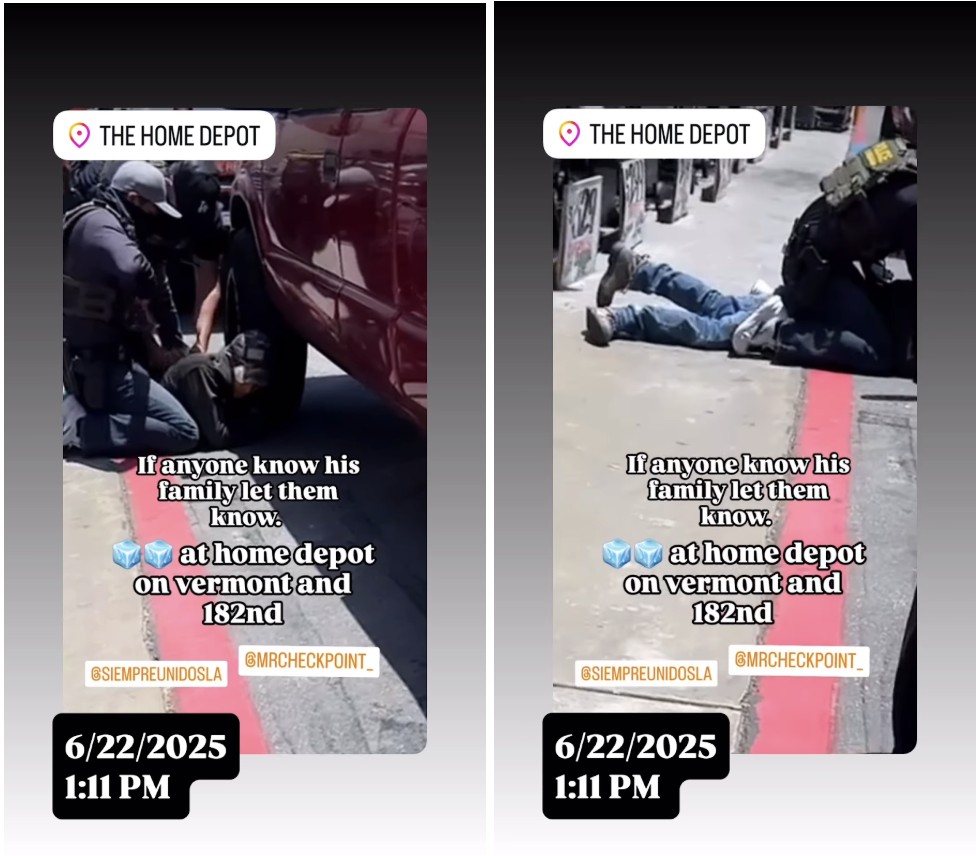
In another incident on June 22, a man was pinned to the ground in a Home Depot parking lot in Gardena. Signs displaying prices of items for sale can be seen at the start of the video that match the font used at Home Depot locations.
Images posted to Instagram show officers pinning down and arresting a man near the entrance of a Home Depot.
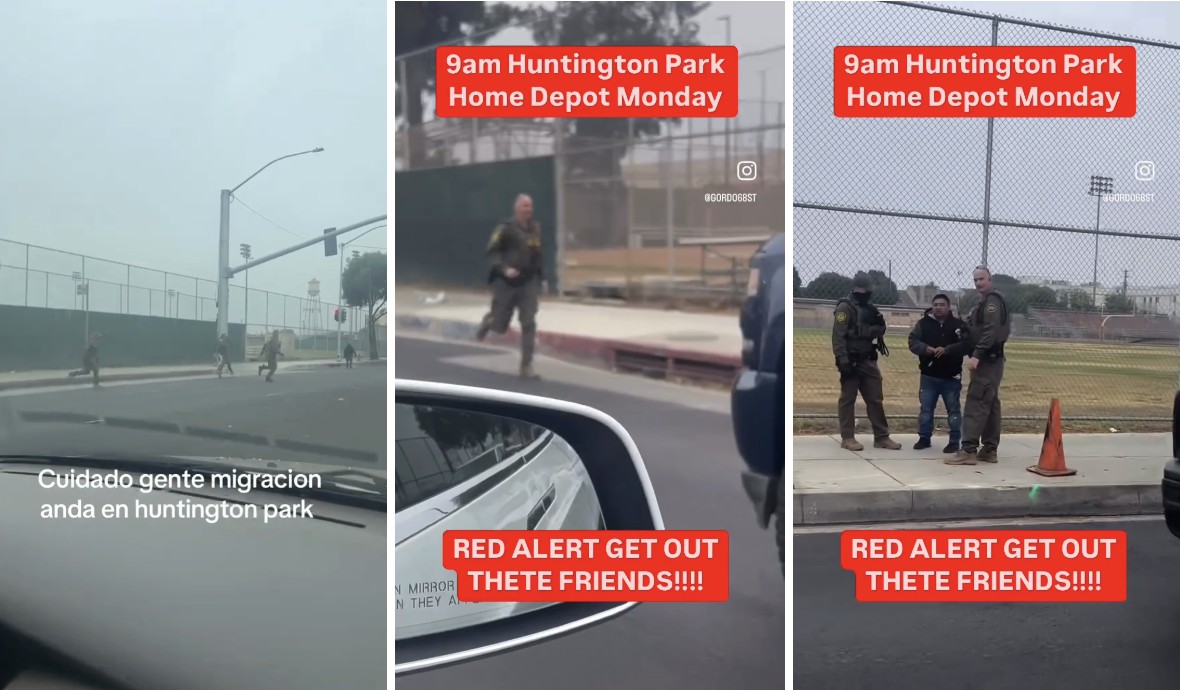
In another incident on June 9, video footage uploaded from multipleangles showed officers running after and questioning a man near a Home Depot in Huntington Park. The footage also showed other officers chasing others who were nearby.
Social media video shows officers chasing down a number of men close to a Home Depot in Huntington Park.
While it was not possible to identify the vast majority of the people detained in the videos gathered, the raids at Home Depots bear a striking similarity to the Bakersfield operation conducted by El Centro Border Patrol earlier this year.
Back then, eight of just over 50 videos gathered by Bellingcat, Evident and CalMatters appeared to take place in Home Depot parking lots.
Bellingcat asked DHS if agents had been targeting Home Depots without necessarily having warrants for people they expected to encounter there but did not receive a direct response on this question.
Masked and Unmarked
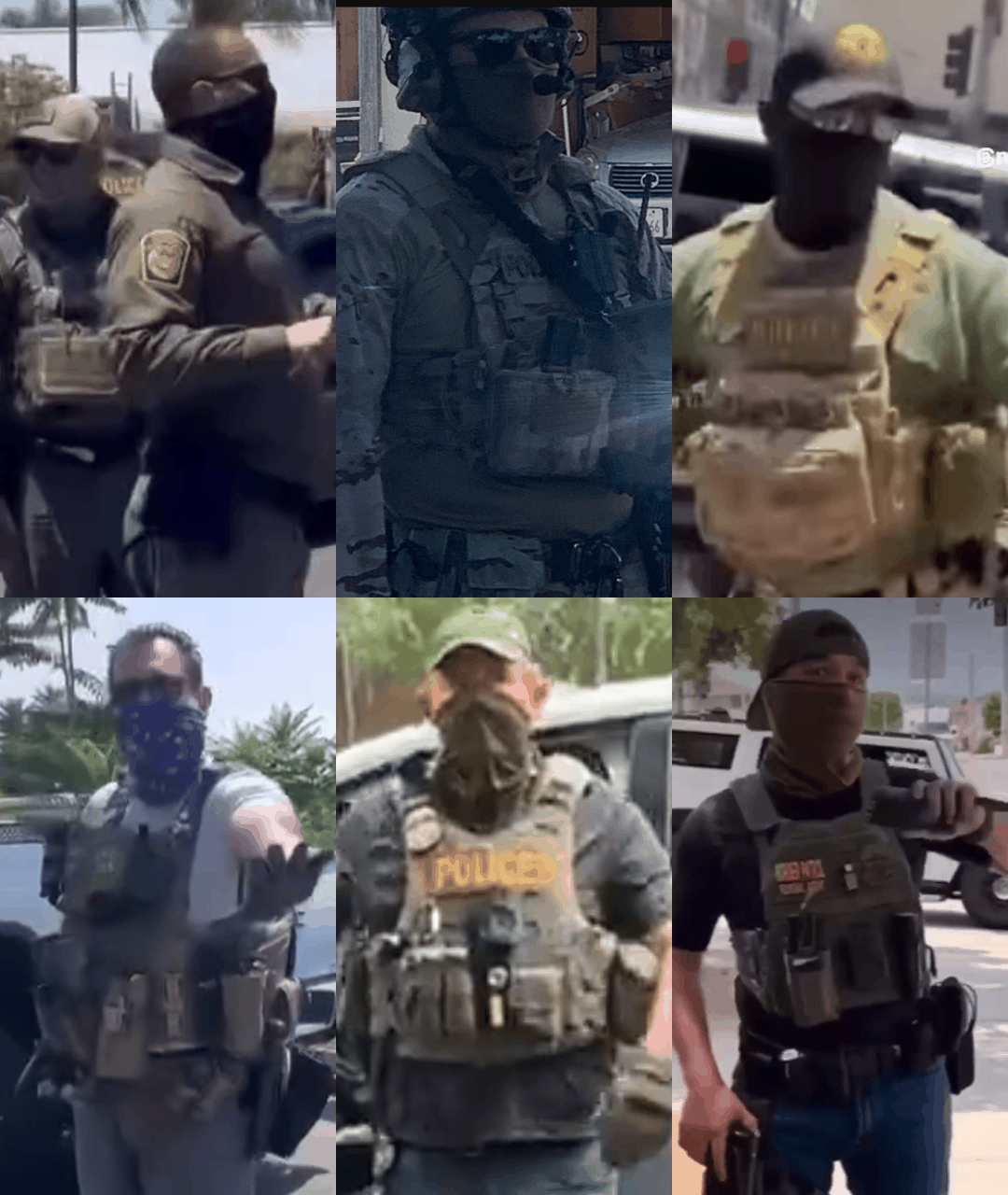
Identifying who or, indeed, what agency is carrying out a particular raid in the videos collected is not a simple task. Many agents wear masks or keep facial features covered, concealing their identity.
A series of images posted on social media show masked Border Patrol and ICE officers.
Because it is often unclear who these agents are, many videos show bystanders asking agents for identification, a warrant, a badge number or who they are with. In one video on June 23 at a Home Depot in Inglewood, an officer is asked for his badge number by a bystander who is filming a man being taken away. The officer briefly flashes his badge before dashing into the back of a car that speeds away.
Similarly, officers can be seen wearing plain clothes instead of uniforms in many videos, thus making it difficult to ascertain which agency they belong to.
Some have warned that the heavy use of masks and shielding of identity makes it easier for fraudsters or imposters to pretend to be federal officers or law enforcement to commit crimes. There have already been a number of cases where this has happened in the last month, including in Philadelphia, New York and Los Angeles. However, acting ICE Director, Ted Lyons, has said officers are covering their identity to protect themselves and their families from harassment.
A new bill being proposed called the “No Secret Police Act” would require local, state, and federal officers from covering their faces during operations in California.
A series of images posted on social media show unmarked vehicles being used by a range of Border Patrol and ICE officers.
Unmarked vehicles are also regularly seen being used by arresting officers in videos. Bellingcat was able to identify several instances where the same unmarked cars appeared in separate videos in different parts of the city. The cars were identifiable by their number plates.
Other vehicles being used by officers, including Border Patrol vehicles that bear individual identifying numbers, could also be seen in multiple videos.
In an emailed response to questions sent after this article was initially published, a DHS spokesperson said: “When our heroic law enforcement officers conduct operations, they clearly identify themselves as law enforcement while wearing masks to protect themselves from being targeted by highly sophisticated gangs like Tren de Aragua and MS-13, criminal rings, murderers, and rapists.”
Use of Force and Intimidation
Several videos in the dataset appear to show significant force being used by agents.
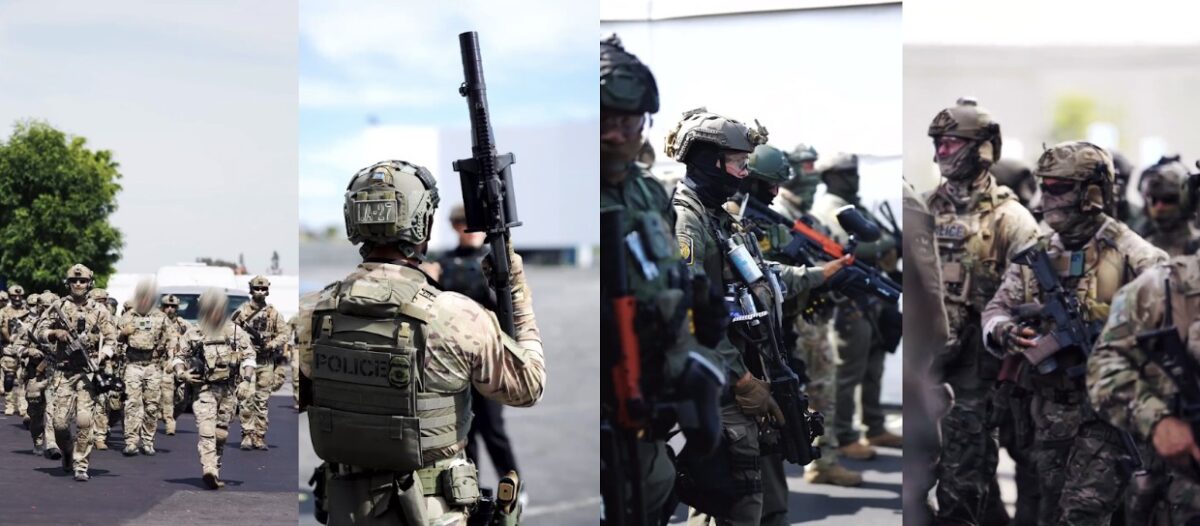
A number of incidents featured heavily armed or aggressive officers. Agents can be seen carrying rifles, handguns, and wearing military wear, from camouflage uniforms to helmets and ballistic vests.
One notable instance was the June 16 raid at the Sante Fe Springs Swap Meet that reportedly saw dozens of agents, many of whom were heavily armed, raid a popular swap meet where families were in attendance. Border Patrol filmed this raid and posted a video on their Instagram account. The video shows a number of officers carrying weapons, wearing protective gear, preparing for the raid and walking through the swap meet. A sign which reads “Family Fun Live Music Shopping” can be seen in the video. The raid reportedly resulted in the arrest of two individuals. Businesses there have since complained that the raids have put people off from coming back.
Screen grabs from a border patrol video showing a raid on a Santa Fe Springs swap meet on June 16.
In another incident on June 29, video footage showed the arrest of two men on a street in Santa Ana. Agents appeared to use batons on both men as they lay on the ground. An eye witness stated that agents used pepper spray after one of the men was already on the floor. Federal officials later told local news outlet, KTLA, that one of the arrested men was a Mexican national present in the US illegally, although they did not detail how officers first engaged with the two men or if they were individuals known to law enforcement. The same officials also said to KTLA that officers were attacked by “a violent mob” protesting the detainments before all suspects were arrested.
A screen grab from a social media video shows an officer using a baton on a man as he sruggles on the ground.
Other incidents showed officers pointing guns at a man trying to escape in a car and another who was trying to take a photo of a federal agent’s licence plate. One man could be seen with blood pouring from his head after officers smashed his car window and dragged him from his vehicle in another incident captured in the dataset.
Subscribe to the Bellingcat newsletter
Subscribe to our newsletter for first access to our published content and events that our staff and contributors are involved with, including interviews and training workshops.
On June 24, during an ICE raid in the Fashion District in Los Angeles, agents from multiple agencies were seen tackling a man, Luis Hipolito, pushing him on top of a curb. A video shows one officer put an arm around his neck as multiple agents pile on top of him and appear to punch the back of his legs. Moments later, he begins convulsing on the ground.
Hipolito is a US citizen and was apparently filming the arrests of street vendors in the area. As reported by the LA Times, officers ordered Hipolito to leave the scene. When he did not, an officer sprayed him in the face with a substance, the LA Times reported. Video shows Hipoloito swinging his arm in response but it is not clear in the video if his hand connected with the officer. He is being charged with assault for allegedly punching an agent before he was tackled and wrestled to the ground. Hipolito’s family has since said that he did not intentionally touch the agent and that he had been blinded by what they said was pepper spray to his face. They said it was a natural reaction to being unable to see after being pepper sprayed. The LA Times reported that DHS Assistant Secretary Tricia McLaughlin had said the actions of Hipolito and another US citizen had “kept ICE law enforcement from arresting the target illegal alien of their operation.”
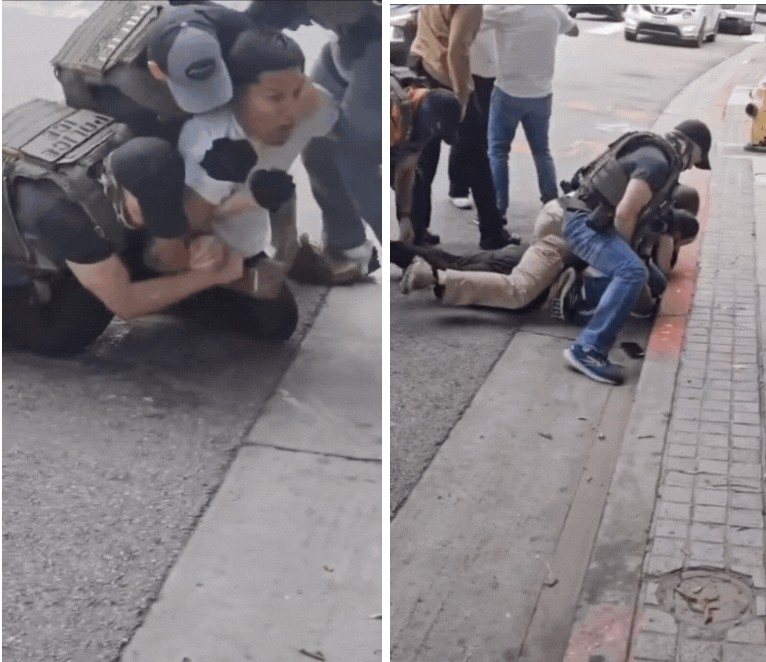
Screen grabs from a social media video that showed officers restraining a man who had been filming an immigration raid.
There have been numerous reports of US citizens being detained by ICE. In one June 12 incident, a video showed a US citizen being chased and detained by Border Patrol before being eventually let go. Before leaving, however, one of the officers asks: “Why did you run?”
While it is not clear if the only reason they sought to detain this individual was because he ran, that would seem to align with a promotional video published on the Customs and Border Protection YouTube page where an officer can be heard saying, “If they run, we go”.
In response to questions from Bellingcat about whether force used by officers was always proportional or if there were instances where any had gone too far, DHS responded after this article was initially published. McLaughlin said that agents are trained to “use the minimum amount of force necessary to resolve the situation in a manner that prioritises the safety of the public and our officers”.
She added: “Resisting arrest places those being arrested, the agents, and the community at risk. Law enforcement is now facing a nearly 700 percent increase in assaults while carrying out enforcement operations. But this will not deter [Customs and Border Protection] – we will continue enforcing the law and protecting American communities.”
This article was updated on Wednesday July 9, 2025, to include responses from the Department of Homeland Security which were received after initial publication time.
Bellingcat is a non-profit and the ability to carry out our work is dependent on the kind support of individual donors. If you would like to support our work, you can do so here. You can also subscribe to our Patreon channel here. Subscribe to our Newsletter and follow us on Bluesky here and Mastodon here.
Content warning: This story discusses non-consensual deepfake nude imagery.
On the surface, Crushmate appeared to be one of many artificial intelligence “girlfriend” or “companion” apps. Its multiple websites said it specialised in “crafting the AI girl of your dreams”, and on Google and Apple’s app stores, it was described as an “AI chat product designed to provide users with a comprehensive emotional support and communication experience”.
But ads linked to the app on popular social media platforms showed it was offering an entirely different service – making nonconsensual nude images of real women.
Meta announced last week that it was suing Joy Timeline HK Limited (“Joy Timeline”), the Hong Kong-based company it said was behind a group of deepfake “nudifying” apps under “CrushAI”, which include Crushmate. This was following a 404 Media report in January that CrushAI had bought thousands of ads on Instagram and Facebook, using multiple fake Facebook profiles to evade Meta’s moderators.
However, a Bellingcat investigation has uncovered two additional companies in Hong Kong and mainland China – Soul friendship HK Limited (“Soul friendship”) and Wuhan Ruisen Zhuoxin Network Technology Co., Ltd (“Wuhan Ruisen”) – that appear to have links to these apps.
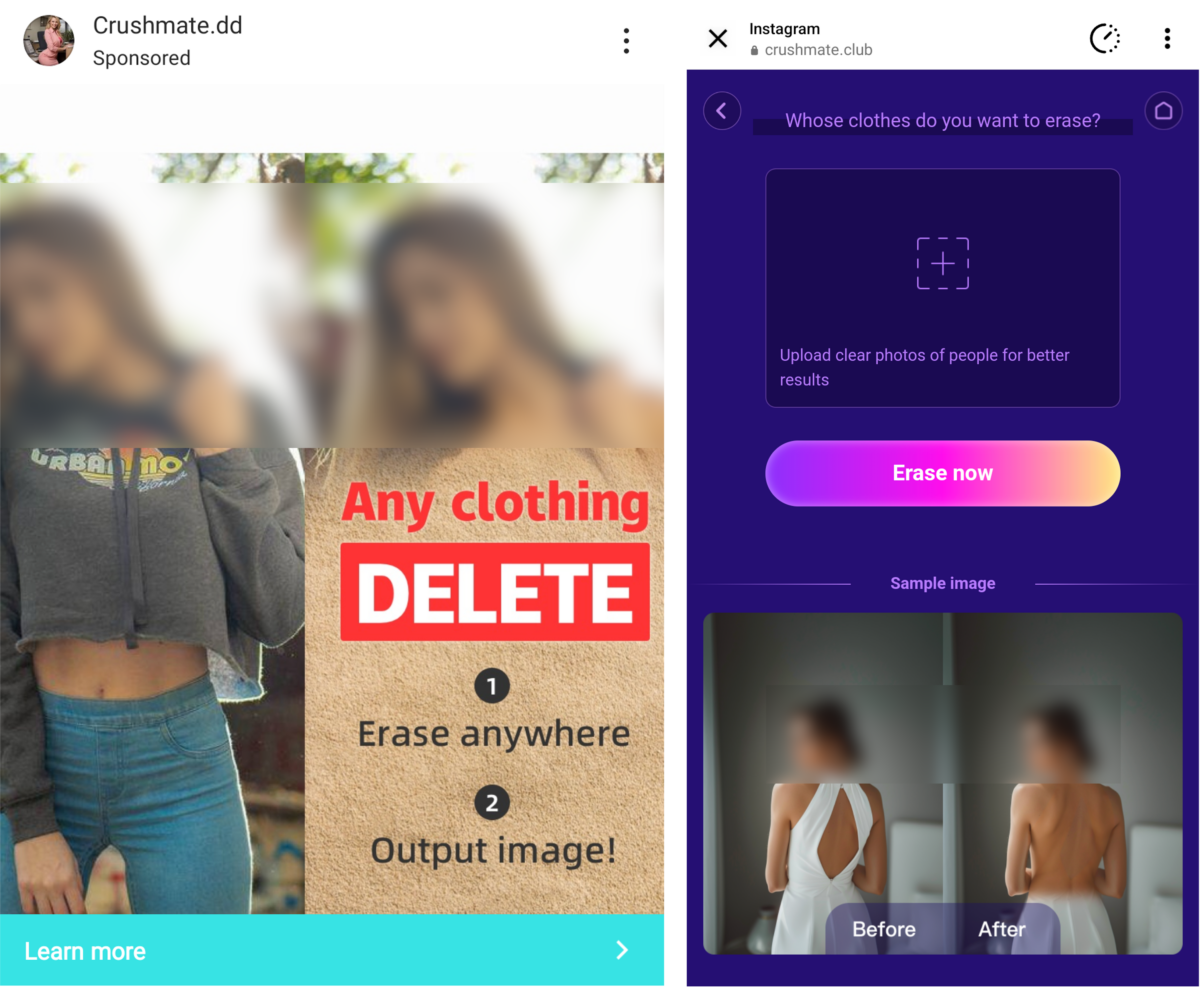
The CrushAI ads showed women, including celebrities and influencers, having their clothes artificially removed using deepfake technology. They led to pages prompting users to upload photos of people and “erase clothes” off them.
Left: One of CrushAI’s ads on Instagram. Right: The clickthrough result of CrushAI’s Instagram ads, prompting the user to “Erase now”. Blurring by Bellingcat.
404 Media’s report prompted Illinois Senator Dick Durbin to write to Meta CEO Mark Zuckerberg about CrushAI’s advertising on Meta’s platforms, in a letter pointing out that “the generation and dissemination of nonconsensual, deepfake intimate imagery are acts of abuse and violations of privacy that inflict lasting harm on victims”.
Asked about the two other companies Bellingcat has linked to CrushAI, Meta said it was looking into them and would take action, including legal action, as necessary if it found violations of its policies. The company also said they will continue to take the necessary steps against other advertisers who abuse their platform.
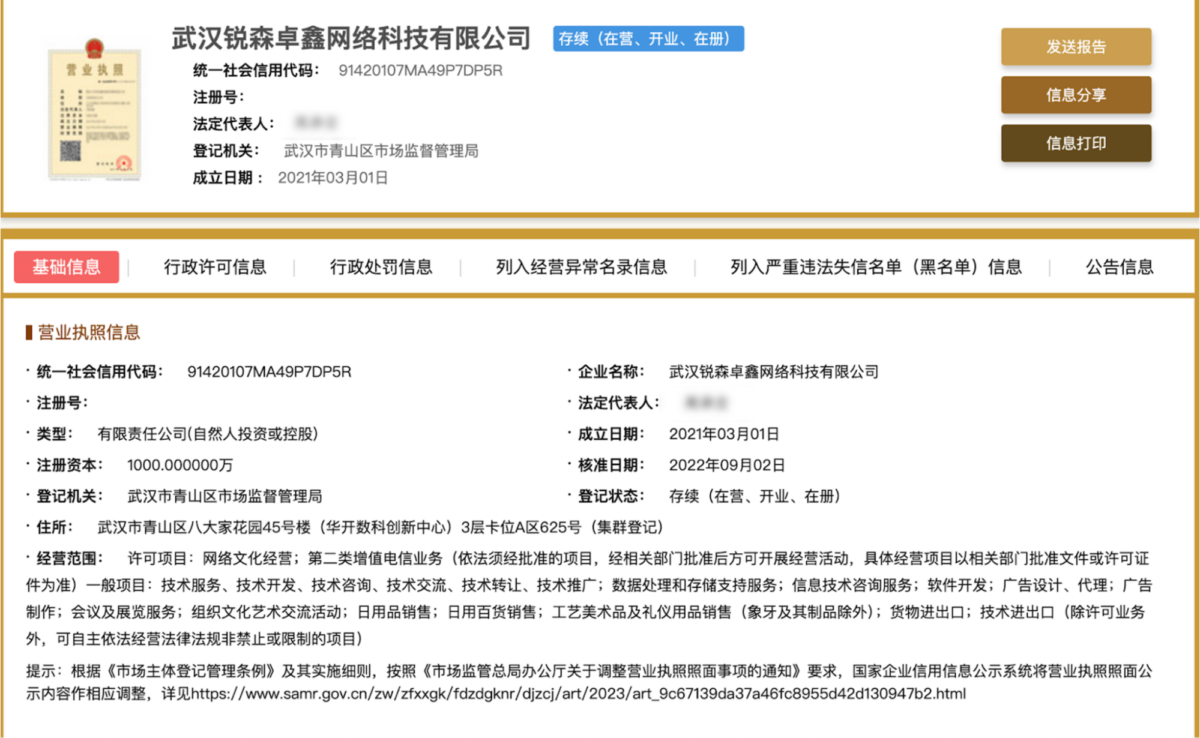
Soul friendship was the listed developer of Crushmate on the Apple App Store, while Wuhan Ruisen filed an application for a US federal trademark related to the Crushmate brand last year. Documents supporting Wuhan Ruisen’s trademark application suggest that the app earned more than US$45,000 in subscriptions between December 2023 and July last year.
Support Bellingcat
Your donations directly contribute to our ability to publish groundbreaking investigations and uncover wrongdoing around the world.
The legal filing, which Meta provided to Bellingcat, shows that the social media giant is seeking an injunction to prevent Joy Timeline from placing ads related to nudify apps on its platforms. It is also claiming US$289,200 in damages, including costs it said it incurred for investigating and removing ads for the CrushAI apps, to respond to public and regulators’ queries in relation to the ads and to take enforcement action against Joy Timeline.
The complaint stated that Joy Timeline placed over 87,000 violating ads on Facebook and Instagram as of February this year, mainly targeting users in the US, Canada, Australia, Germany and the UK.
In response to Bellingcat’s queries, a Crushmate representative said that the app had permanently shut down but had “very briefly relied on the support of many third-party partners” in the early stages of its business.
On the relationship between CrushAI and Joy Timeline as well as the two other companies the representative said that “since the project has now ended and the team no longer exists, I’m unfortunately unable to verify whether the company you mentioned in your email was one of our former partners”.
Soul friendship, Joy Timeline and Wuhan Ruisen did not respond to multiple requests for comment on their relationships with each other or with CrushAI.
Joy Timeline
Like other notorious AI nudify apps, CrushAI appears to own multiple websites with the same domain name (“crushmate”) but different extensions such as .site .net .vip and .us. Bellingcat found at least 23 domains that used the Crushmate name, all of which are no longer accessible. These were mostly registered on two days in April and July 2024. We also found other sites with identical homepage layouts and content to Crushmate, with similar domains like “Crushai”, “crushh”, “crrru”, “crushx” and “crush1”.
Using Domain Tools, we were able to link these sites – and more – through an identical Google Analytics Tag, which is used to track website traffic.
While nearly every one of these websites had their WHOIS registration info redacted for privacy, one was not, and it was registered to Joy Timeline.
Our search on Whoxy, a reverse WHOIS search tool, found 158 domains registered publicly to Joy Timeline at the time of publication. Only one carried the Crushmate name, but 28 more had almost identical layouts and also appeared to be deepfake “nudify” apps.
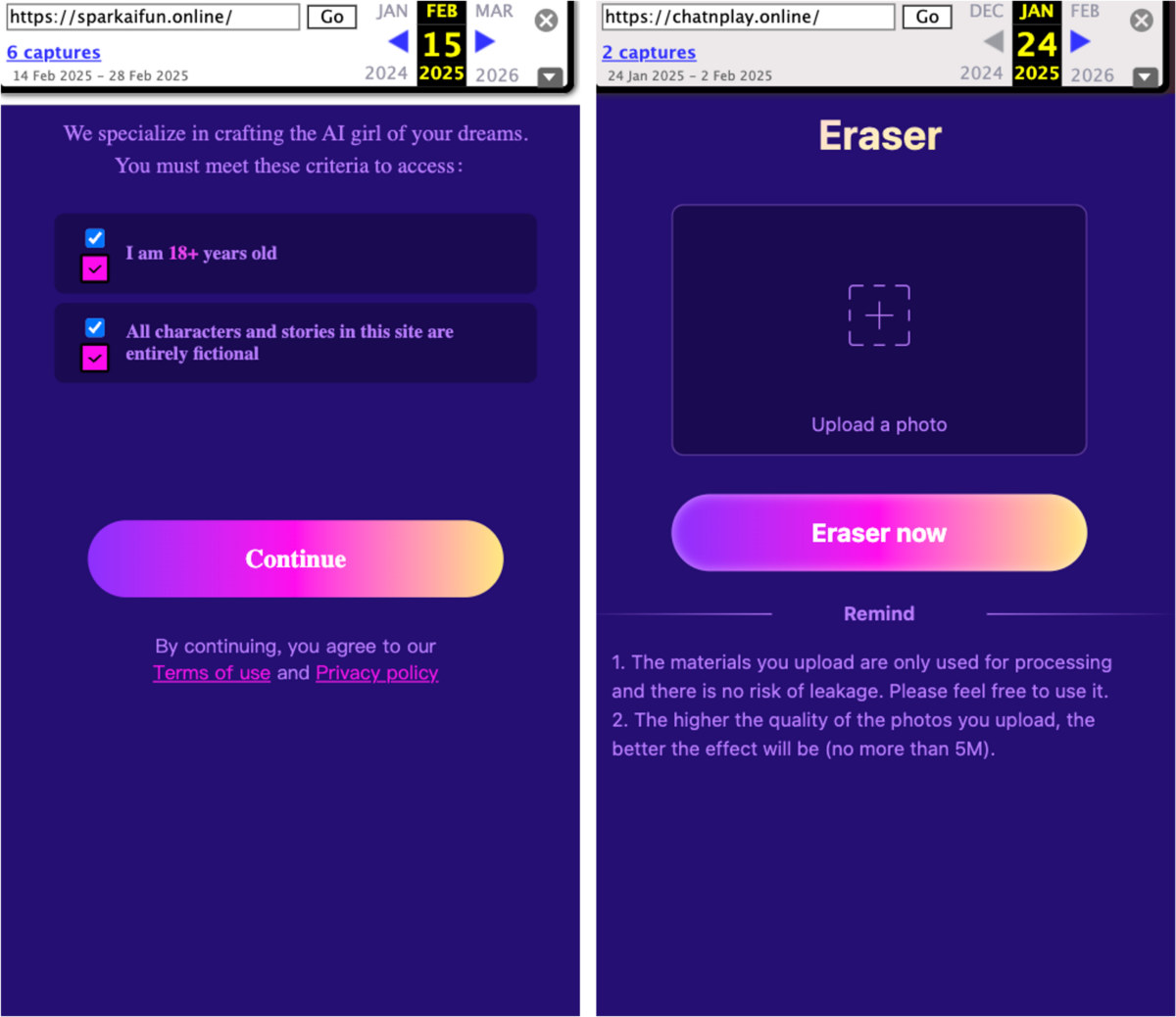
For example, archived versions of the main pages of two of these domains, “sparkaifun [dot] online” and “chatnplay [dot] online”, were identical to the home page and “clothing eraser” pages on CrushAI’s sites.
Archived versions of two of the 158 websites that are publicly registered to Joy Timeline, showing a similar format to Crushmate’s sites.
It is possible that there are more similar web domains that did not show up in our searches, as domain registrants can also choose to redact their information. Other active domains owned by Joy Timeline, according to publicly accessible domain information, include homepages for other “AI chat” apps, photo editing apps and mobile games, among others.
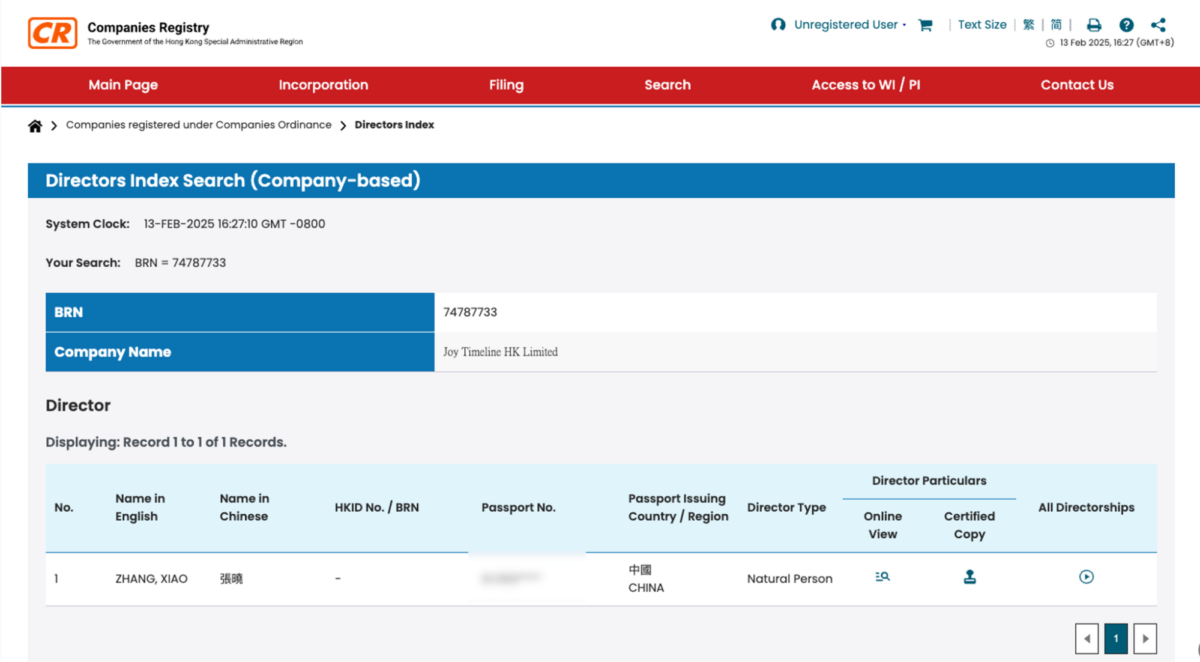
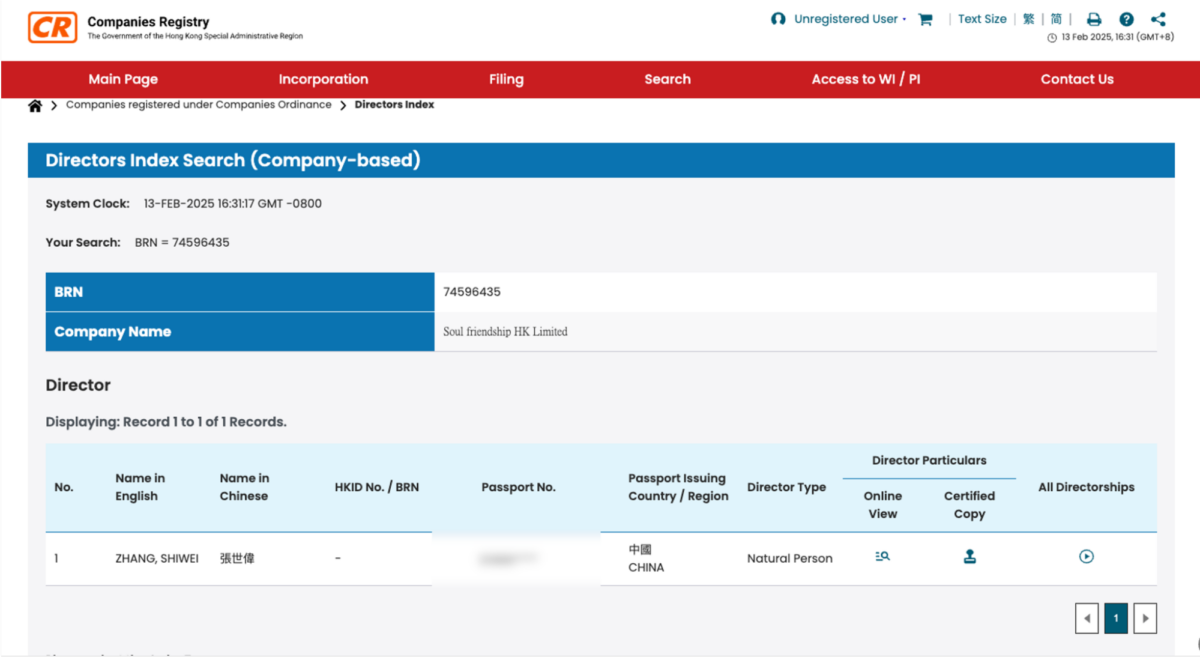
On Hong Kong’s Companies Registry, Joy Timeline’s director was listed as a person called Zhang Xiao, who holds a Chinese passport.
Company record showing Joy Timeline HK Limited’s registered director. Source: Hong Kong Companies Registry. Blurring of personal information by Bellingcat
The company was registered with 100 shares issued at a total value of HK$100 (US$12.80). Zhang Xiao was listed in the company documents as owning 90 of these shares, while another Chinese national, Zhang Shiwei, owns 10.
Zhang Shiwei is the director of Soul friendship, which Bellingcat’s investigation has also linked to the CrushAI apps.
Soul friendship
Although Crushmate is no longer available on Google’s Play Store and Apple’s App Store, archived versions of its app listings on both of these stores led us to Soul friendship, another Hong Kong-based company.
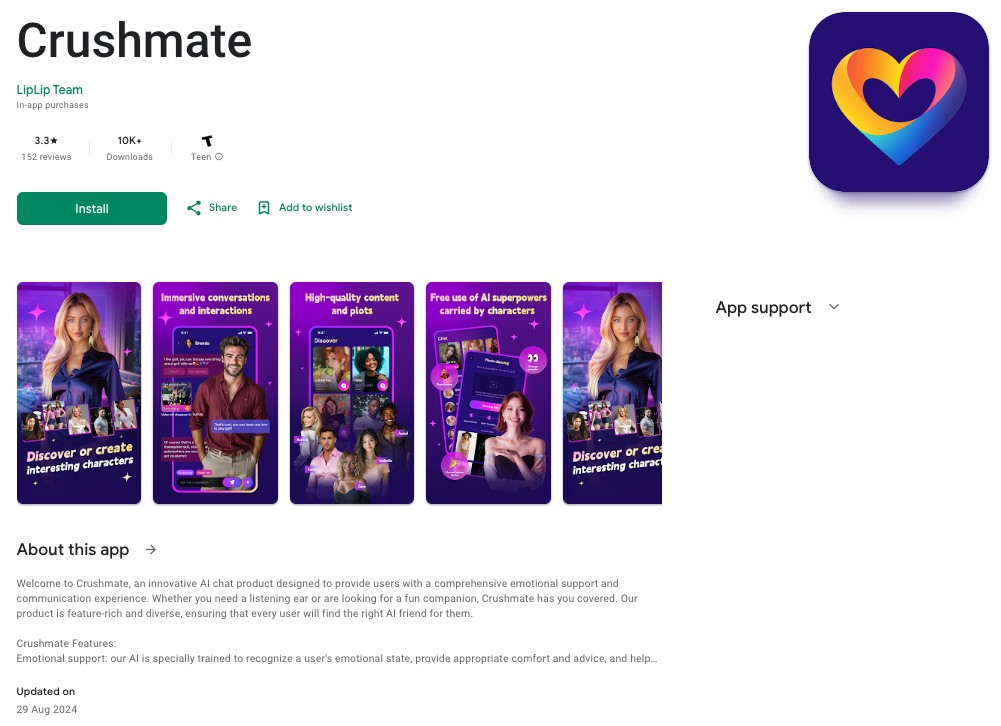
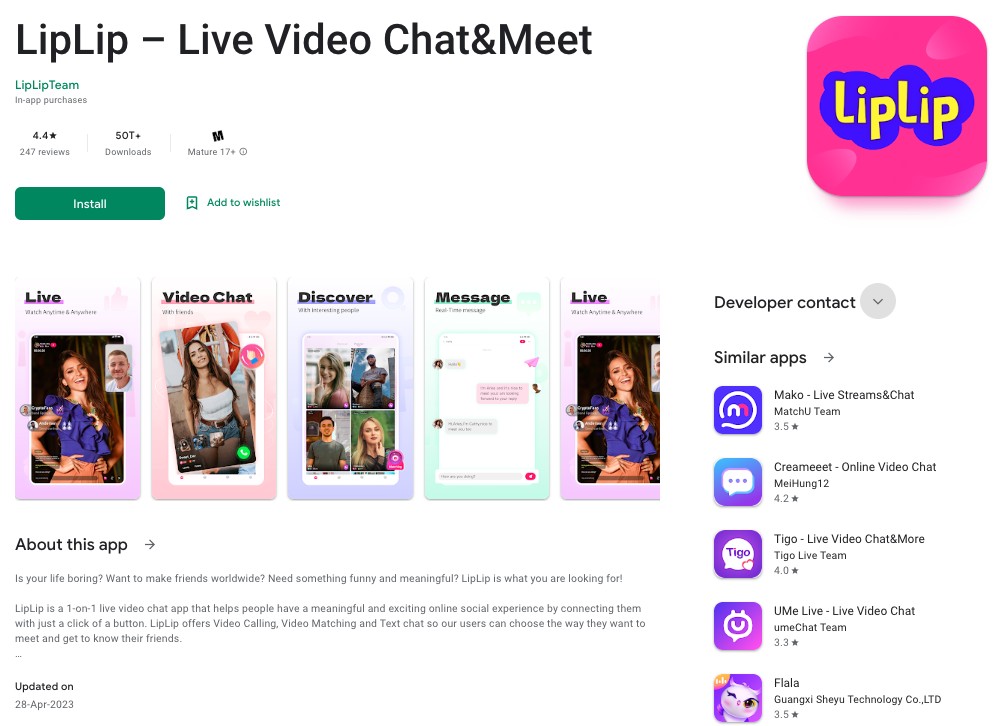
Crushmate’s developer on Google’s Play Store from September 2024, based on a cached version of the page, was listed as “LipLip Team”. Our online searches of LipLip Team showed that it had another app listed on the Play Store called “LipLip – Live Video Chat&Meet”, which appeared to be a chatting app.
Cached listing of Crushmate on Google’s Play Store from September 2024.
Cached listing of LipLip on Google’s Play Store.
Bellingcat could not find any company called “LipLip Team” registered in Hong Kong, where LipLip-Chat’s archived X bio stated that the app is based.
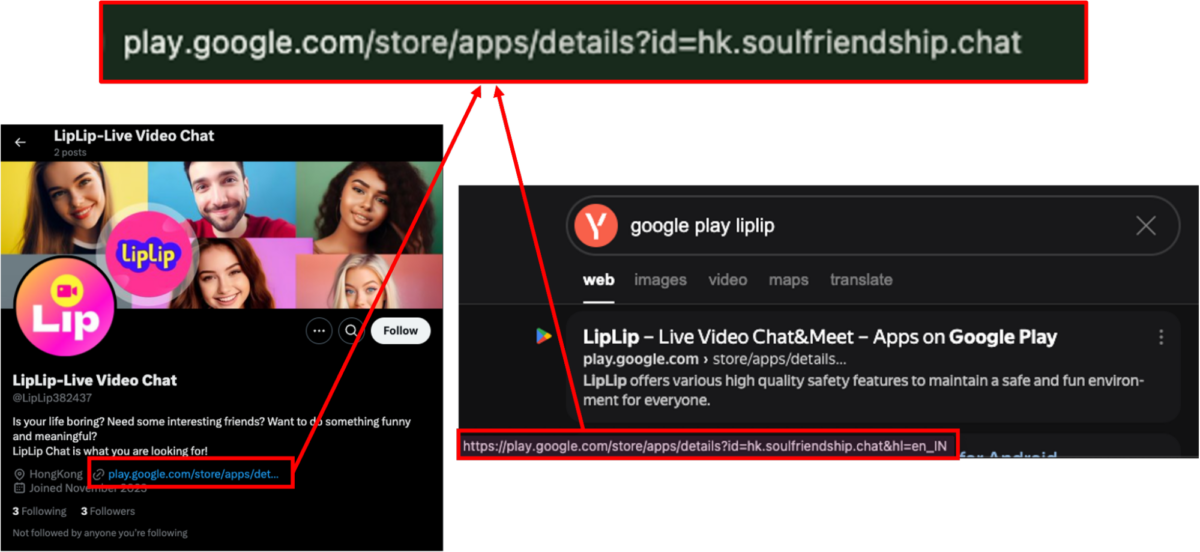
But the URL of LipLip’s page from the developer’s archived Google Play Store profile, based on both indexed copies of the Google Play Store listing and LipLip’s X bio, included the ID “hk.soulfriendship.chat” – our first clue that another company was involved.
LipLip’s X bio and indexed links direct to the same Google Play Store URL.
On the Google Play Store, the app ID which makes up part of the URL is based on the package name of an app, which uniquely identifies the app across the Play Store. The package name could be set to anything, as long as it is not used by any other app on the Play Store.
However, in this case, it happens to closely match the name of Soul friendship, the Hong Kong-based developer that published both Crushmate and LipLip-Chat on the Apple App Store.
Screenshot of apps developed by Soul friendship HK Limited on the US Apple App Store as of Sept. 5, 2024.
We were able to find more information on Soul friendship by viewing LipLip-Chat’s Apple App Store listing as it would appear from a country within the European Union.
Due to the EU’s Digital Services Act, Apple is legally required to verify and display more detailed information for traders distributing apps in the EU than in other jurisdictions.
This includes developers’ Data Universal Numbering System (DUNS) number – a nine-digit number key for uniquely identifying companies worldwide – as well as contact information such as their address, phone number and email address.
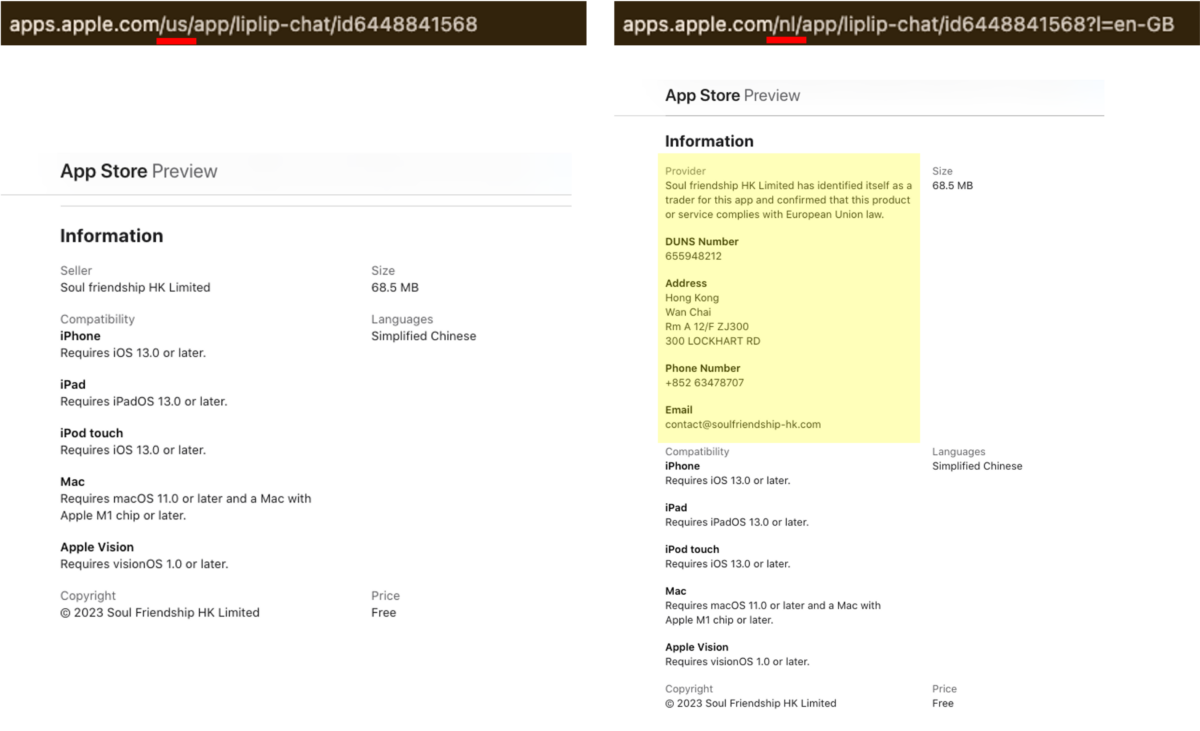
Even from outside of the EU, it is easy to view this information by tweaking the country code in the URL of the web-based App Store listing.
For example, the developer information visible on the US app store listing for LipLip-Chat only shows Soul friendship’s name. But simply changing the country code from “us” to “nl” (the Netherlands’ country code) reveals the company’s DUNS Number, address, phone number and email address:
The developer information for LipLip chat as shown in the US (left) and the Netherlands (right), differences highlighted in yellow. Source: Apple App Store
The address listed for Soul friendship, in the commercial district of Wan Chai, Hong Kong, is the same one on Joy Timeline’s domain name registration records. This address is also listed as belonging to one of the 6,900 or so Trust or Company Service Providers (TCSPs) in Hong Kong which are authorised to provide, among other corporate services, a registered business or office address.
Documents from the Companies Registry in Hong Kong show that Zhang Shiwei is Soul friendship’s listed director.
Company records showing Soul friendship HK Limited’s registered director. Source: Hong Kong Companies Registry, blurring by Bellingcat
Although they have different names and directors, Soul friendship’s and Joy Timeline’s shareholders are the same and there are multiple overlaps in how the two companies operate.
Like Joy Timeline, Soul friendship was registered with 100 shares issued at a total value of HK$100. In a mirror of the arrangement for Joy Timeline, Zhang Shiwei, the director of Soul friendship, owns 90 of Soul friendship’s shares while Zhang Xiao, the director of Joy Timeline, owns 10 shares.
In addition to their common TCSP-linked address in Wan Chai, both companies used the same registered office address in Kwun Tong, an industrial and business area in Hong Kong, on their business filings. This is the address of another TCSP, which serves as the company secretary for both of these businesses.
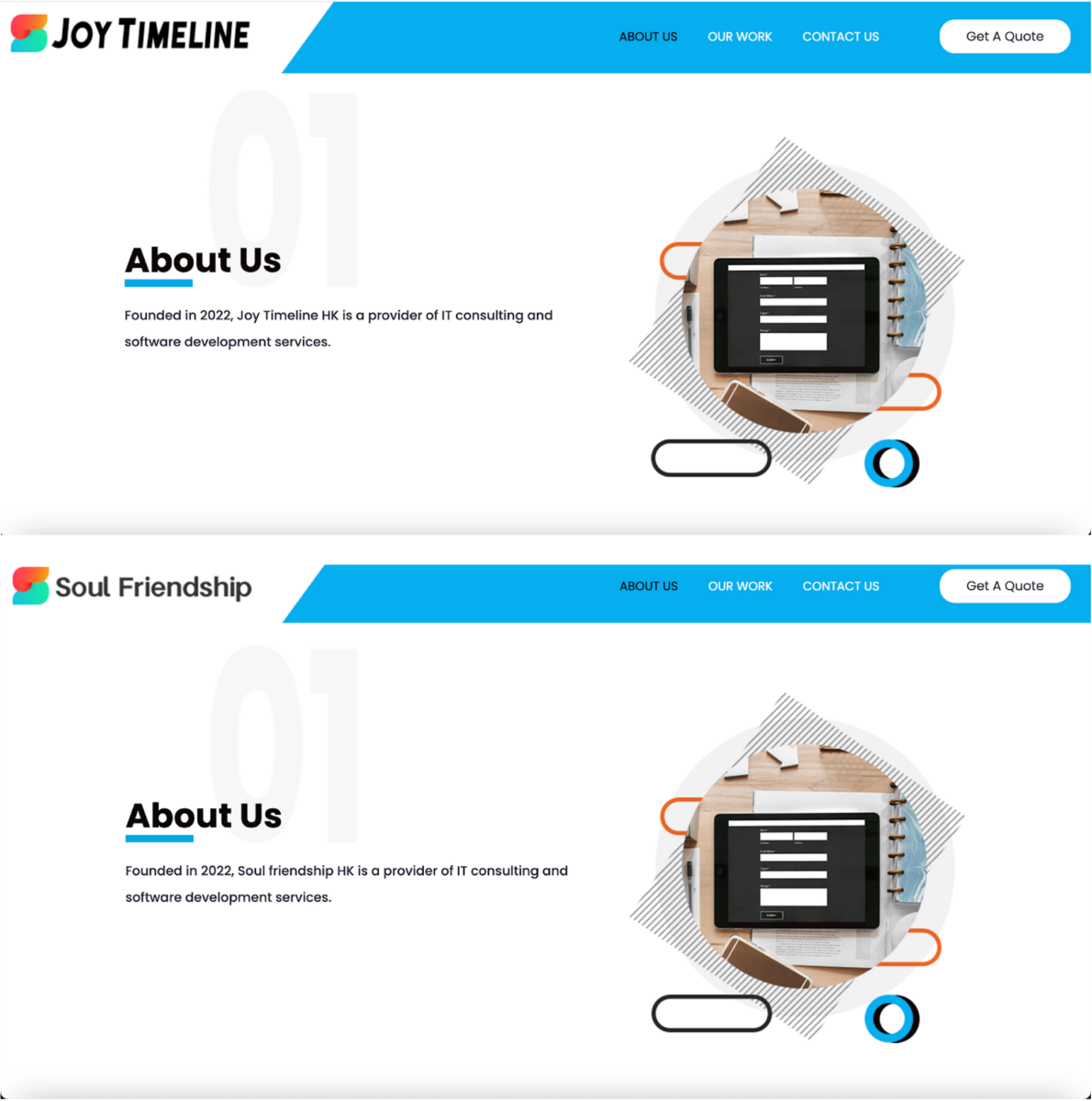
Searches for Soul friendship and Joy Timeline online did not turn up much, except websites under their names that used identical templates. Neither website mentioned Crushmate or CrushAI, and both said on their “About Us” page that they were founded in 2022 and provided “IT consulting and software development services”.
Screenshots of Joy Timeline’s (top) and Soul friendship’s (bottom) nearly identical “About Us” pages.
Wuhan Ruisen Zhuoxin Network Technology
To complicate things even further, Bellingcat found two US federal trademark applications filed for Crushmate by a mainland Chinese company, Wuhan Ruisen, in August 2024. The first application, in the category of “Advertising, Business, and Retail Services”, was rejected on the grounds that the company did not provide sufficient evidence of using the Crushmate mark in commerce.
The second one, in “Computer and Software Products and Electrical and Scientific Products”, was officially registered with the trademark office on April 29, 2025. The documents filed for federal trademark applications are publicly accessible through the United States Patent and Trademark Office (USPTO)’s website.
Subscribe to the Bellingcat newsletter
Subscribe to our newsletter for first access to our published content and events that our staff and contributors are involved with, including interviews and training workshops.
In their trademark applications, Wuhan Ruisen provided “specimens”, which are samples of how their trademark is used in commerce. These included screenshots of both Crushmate’s Google Play Store and Apple App Store listings – showing LipLip team and Soul friendship HK as the app developers – as well as screenshots of their website.
John Halski, a US-based lawyer whose practice focuses on trademark and copyright, told Bellingcat that it is possible for a company to include samples or specimens in their trademark application from a different company through a third party licence.
However, Halski said that whether multiple company names in an application would be questioned depended on the examiner.
“The [trademark] examiner has the discretion to ask: ‘You sent me this specimen showing that party XYZ is using it and you claim that your name is ABC’. Then they may ask, ‘is this under a licence arrangement?’”
Anyone may file an application for a trademark, whether or not they own it, but other parties may oppose the application – such as if they are claiming to be the original owners of the trademark – within 30 days after it is published. Wuhan Ruisen’s application for the Crushmate trademark was published on March 11 this year, and successfully registered without opposition on April 29.
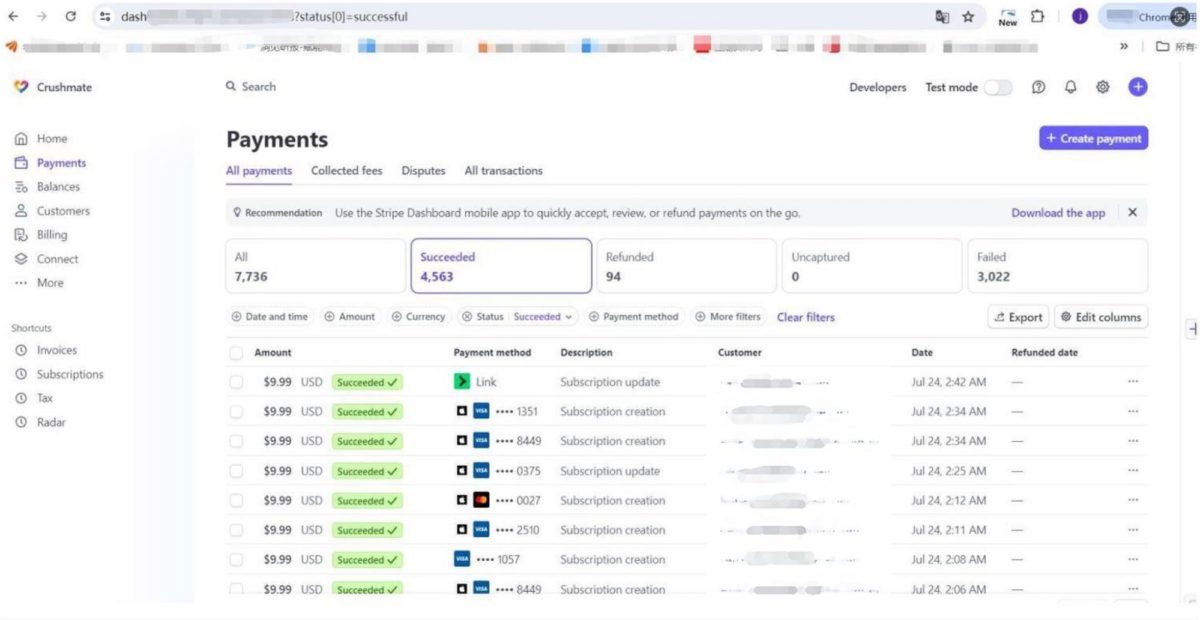
The application documents included a screenshot that appeared to show a Stripe payment dashboard, with 4,563 successful payments. All of the visible payments were for US$9.99, which was the weekly cost of a VIP subscription to Crushmate on the US site at the time the application was submitted.
Stripe dashboard screenshot showing payments to Crushmate. Bellingcat has blurred the full customer email addresses, which were partially obscured in the original – other blurring from original document. Source: USPTO
Assuming the only payments recorded by the dashboard were for these subscriptions, this would imply that by the time of the application being submitted in August last year, Crushmate had earned at least US$45,584.37 in subscriptions. It is unclear what the exact timeframe captured by the screenshot of this dashboard was, although the application states that the first use of the trademark was Dec. 25, 2023.
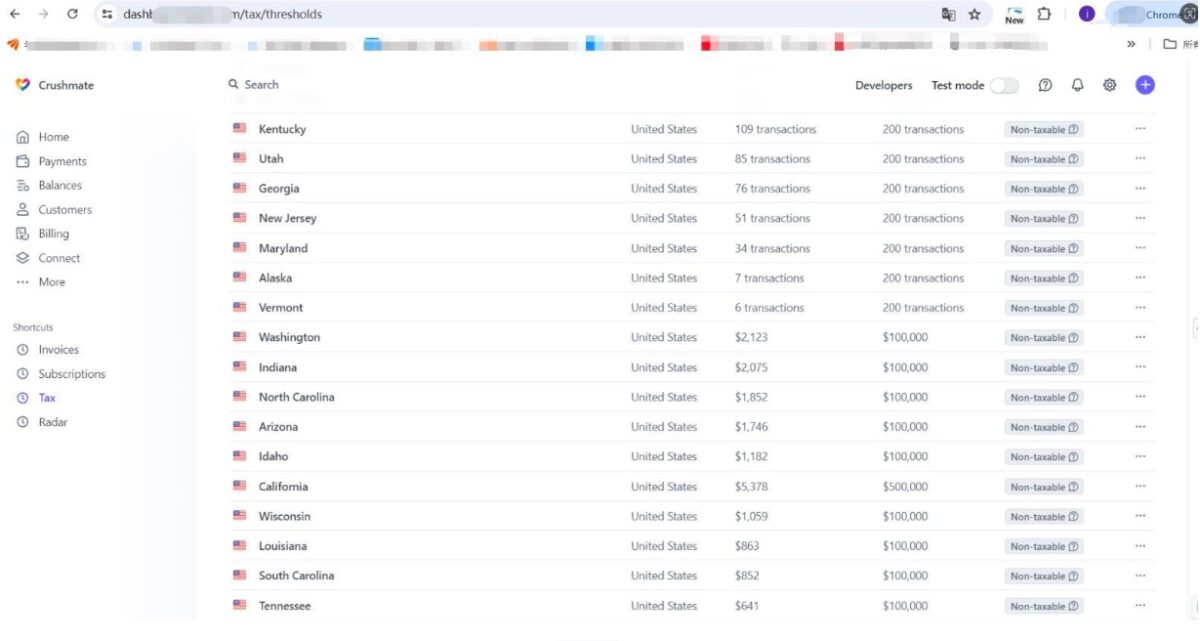
Another screengrab included in the application, also apparently from Crushmate’s Stripe dashboard, showed a breakdown of the locations of Crushmate’s paying customers. This view on Stripe’s dashboard displays the “tax thresholds” for each state in the US and shows whether the income generated has reached taxable status. The screengrab indicated that Crushmate had paying customers across the US, with the most transactions from Kentucky and Utah.
Stripe dashboard screenshot showing Crushmate’s customers’ state location. Source: USPTO
Based on documents from China’s official business registry which match the company’s name in Chinese and address, Wuhan Ruisen was established in March 2021 with a registered capital of 10 million Chinese yuan (US$1.38 million).
Company registration for Wuhan Ruisen, blurring by Bellingcat. Source: China National Enterprise Credit Information Publicity System
We are not naming the legal representative of Wuhan Ruisen, listed in these documents, as the exact relationship between this company and CrushAI is still unclear. The legal representative’s name does not appear on Soul friendship or Joy Timeline’s business registration records in Hong Kong.
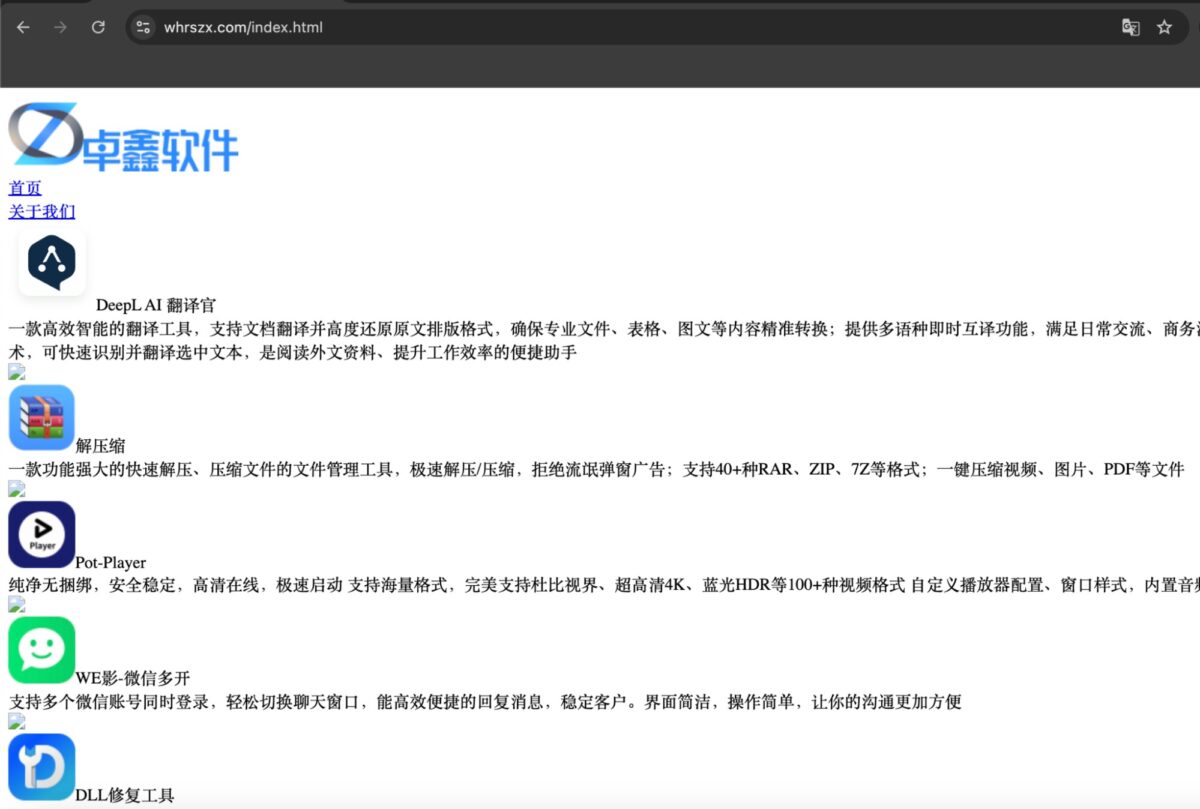
A search for the company’s name on China’s Internet Content Provider licence database shows that it registered for five different domain names. Only one was accessible as of June. This site, which describes the Wuhan company as a “professional software development company” focusing on the development of desktop and mobile software, lists a number of apps supposedly developed by the company. None of the CrushAI apps were among them.
List of apps supposedly developed by Wuhan Ruisen. Source: Wuhan Ruisen’s website
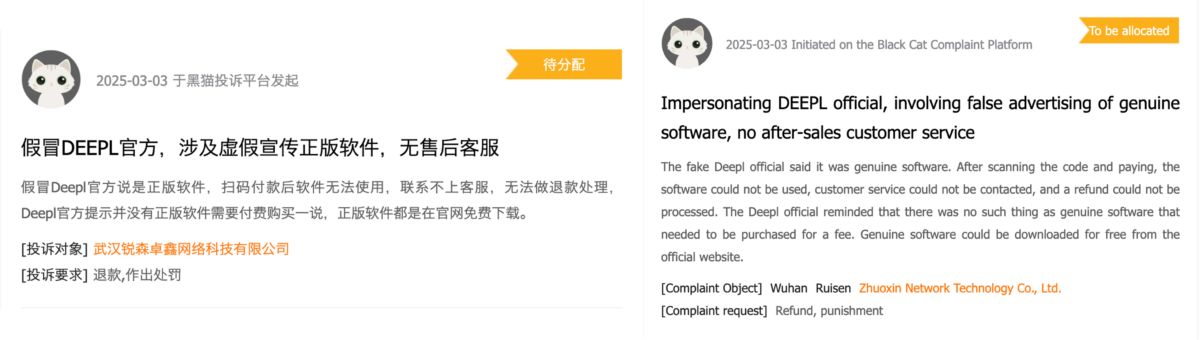
On third-party consumer service platform Heimao Tousu, there were more than 40 complaints between October 2023 and March 2025 about the company. Most said they paid between 29 and 69 yuan (US$4 to US$9.50) to download software they believed to be genuine, only to discover the products were fake or did not work. When they asked for refunds, they were ignored.
Screenshot of a complaint (left) and its English translation (right) about the “DeepL” app sold by Wuhan Ruisen. Source: Heimao Tousu
Wuhan Ruisen did not respond to multiple emails requesting for comment, and when we called the phone number listed on its website, we got an automated message stating that the number dialled was invalid.
Taking It Down
Crushmate’s X profile and a US domain site carrying its name was accessible until April. That same month, the US Take It Down Act, which criminalises the distribution of non-consensual deepfake pornography at the federal level, passed. It was signed into law in May, and Crushmate’s X profile was deleted sometime that month.
At time of publication, all 23 of the Crushmate domains, the additional nudify-related domains owned by Joy Timeline, and the other CrushAI domains appear to be either offline or display an “under maintenance” notice after users register and log in.
Left: Notice on Crushmate’s US domain website after the login page. Right: Crushmate’s deleted profile on X.
When Bellingcat reached out to a support email listed on several Crushmate websites, an unnamed individual responded.
This person said the decision to shut down operations and disband the team actually took place “several months” before the introduction of the Take It Down Act.
“Since then, this inbox has remained inactive,” they said.
The person emailing us did not explain why they were replying from an inactive account, or respond to subsequent questions about who they were or what their role in Crushmate or CrushAI was.
Joy Timeline has purchased domains as recently as May 14, but none of these appear to be nudify sites or currently hosting content.
Bellingcat is a non-profit and the ability to carry out our work is dependent on the kind support of individual donors. If you would like to support our work, you can do so here. You can also subscribe to our Patreon channel here. Subscribe to our Newsletter and follow us on Bluesky here and Mastodon here.
This guide is part of a collaboration between Bellingcat and Evident on detecting AI-generated products. You can watch Evident’s video here.
Sipping coffee from a mug carved from mineral rock, its surface glimmering with amethyst, rose quartz and other crystals, sounds almost too magical to be real.
And unfortunately, as some shoppers discovered, it was.
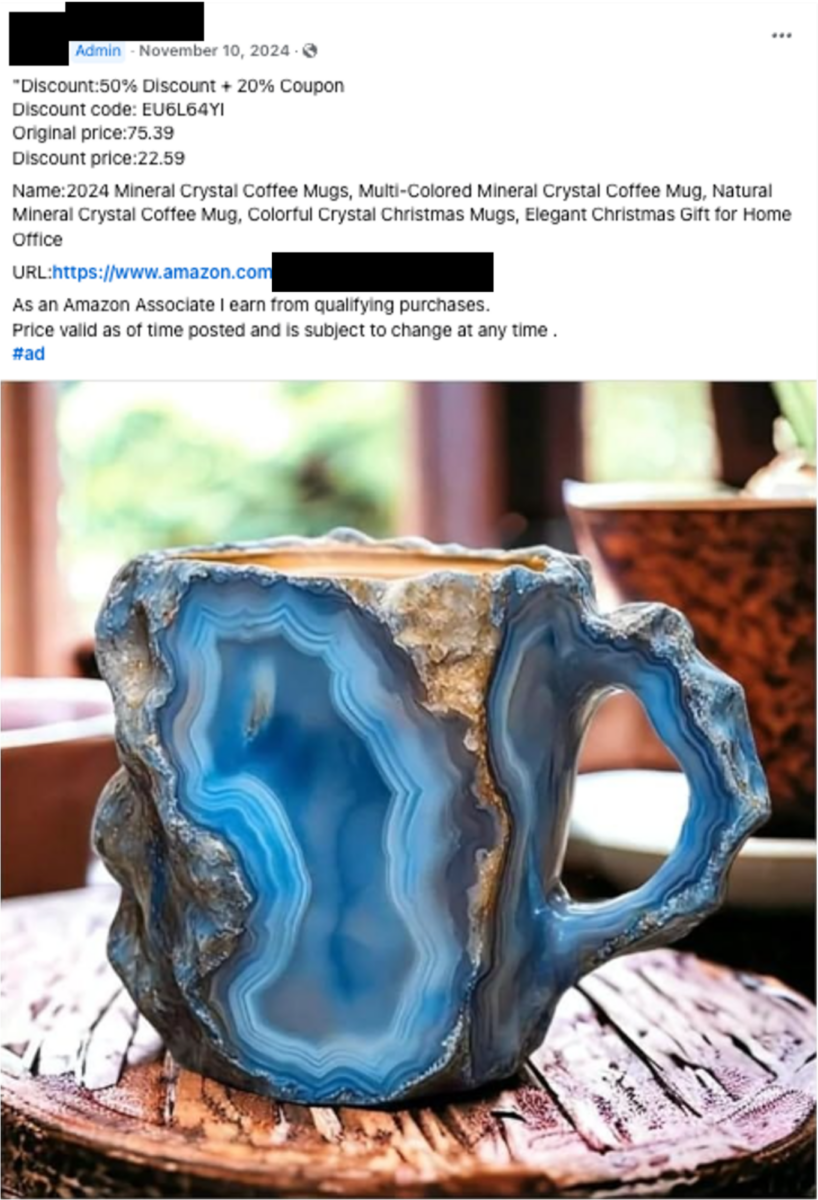
Ads for crystal coffee cups, like the one shown in the Facebook post below, have appeared across the internet. The artisan mugs, available in color variations like blue, green and pink, were being sold on a swathe of platforms ranging from independent Facebook pages to large retailers including Amazon. However, when customers received these mugs, they were in for a surprise.
Facebook post from an Amazon deals Facebook group linking to an Amazon page for the crystal mugs. Names and full URL obscured by Bellingcat. Source: Facebook
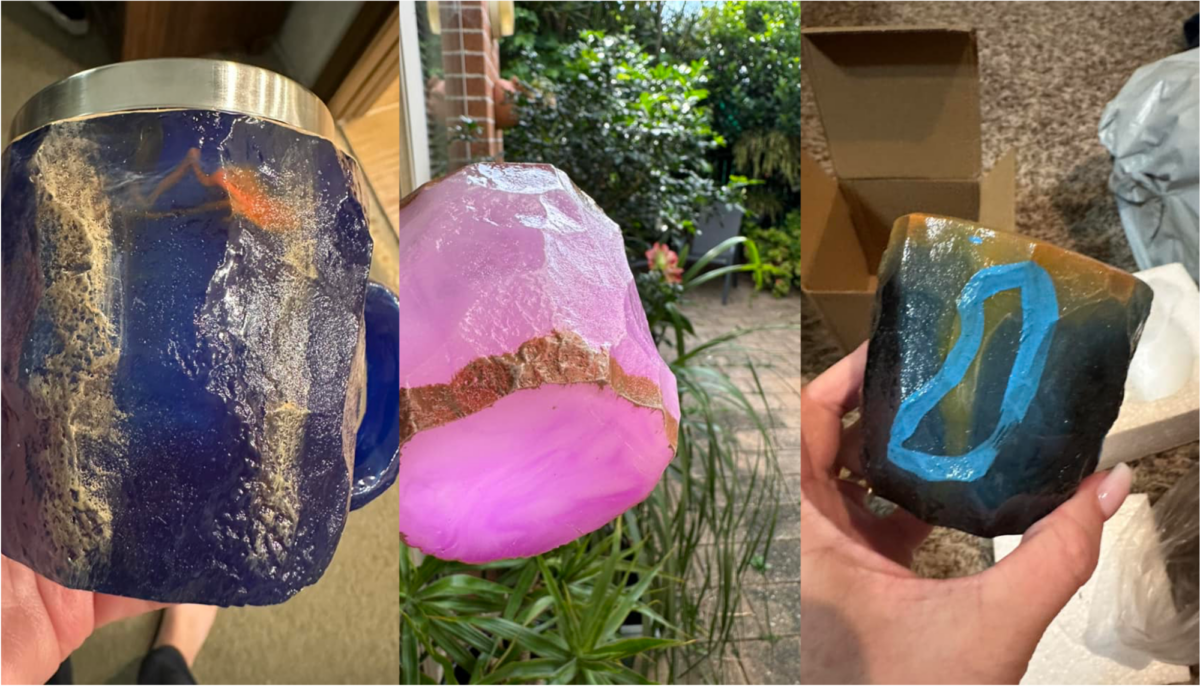
In the comment section of this Facebook post, users shared images of the mugs they had bought, which bore little resemblance to the fantastical images in the listing.
A compilation of images posted by Facebook users showing the “crystal” mugs they received.
Major advancements in artificial intelligence in recent years have made it harder to differentiate between what’s real or fake, not just when it comes to photos and videos of people, but also in product listings.
There has also been an increase in AI-generated books being sold on platforms including Amazon, with some even showing up in libraries without any disclosure that they are AI-generated.
But AI is not perfect, and if you look closely, you can often detect several tell-tale signs of a fake. In this guide, we walk you through some questions that savvy shoppers can ask to identify “red flags”, using just critical thinking and basic investigative tools such as reverse image searches.
Does the Image Make Sense?
Many AI-generated images have some sort of “sheen” or look to them that can set off alarm bells.
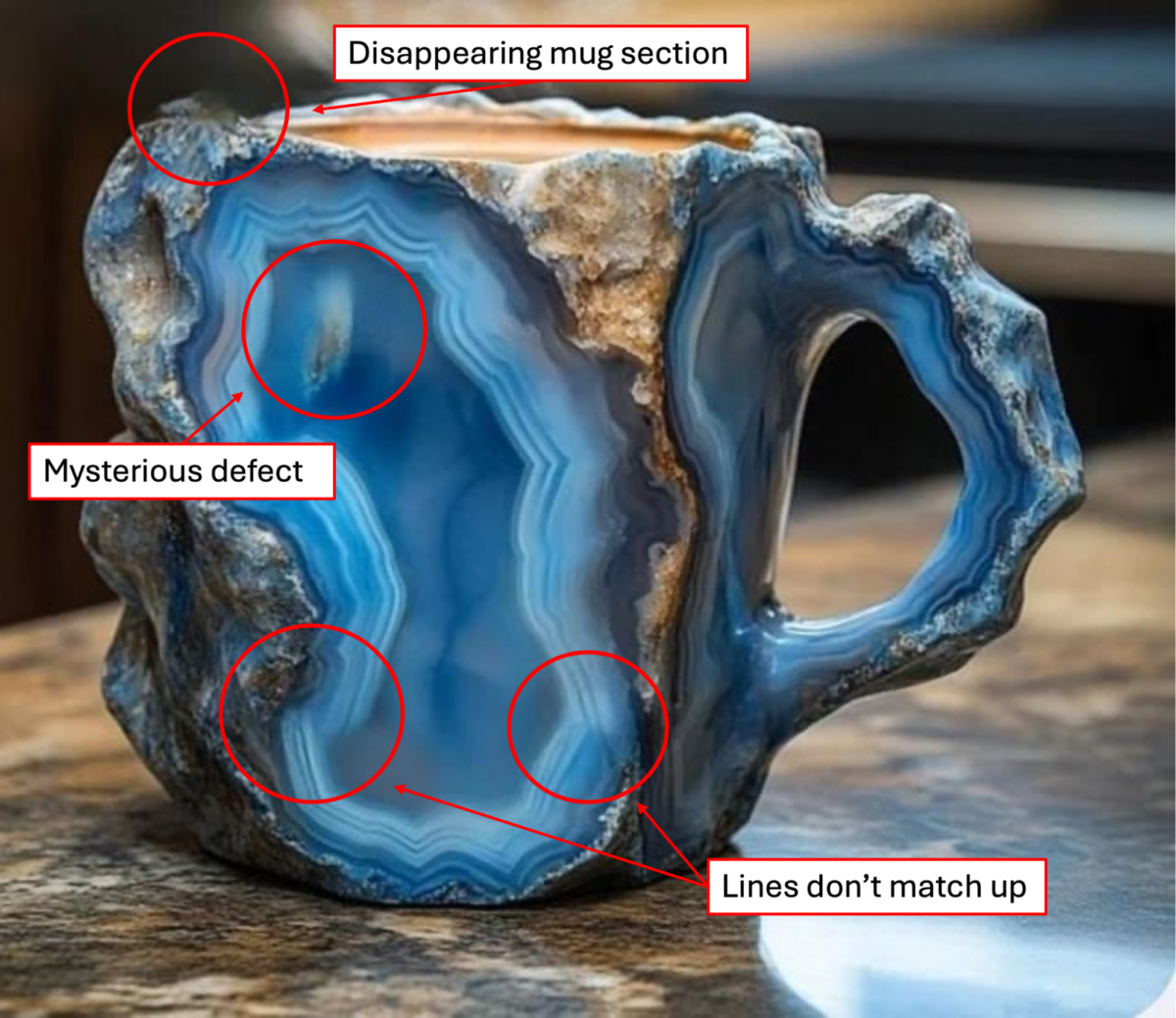
Take this image of one of the “crystal coffee mugs”. At first glance, it looks like a beautiful mug. But if you look closer, you might notice defects in the image.
Photo of the virally sold crystal mug, annotated by Bellingcat. Source: Reddit
There are multiple areas on this mug where the lines of the “crystal” do not align. These broken or inconsistent lines are red flags. There also appears to be some sort of defect in the centre of the mug that resembles a smudge from digital painting, rather than a natural flaw in rock or crystal. The blurriness of the smudge is a feature often seen in AI-generated images. And at the top of the rim, a section of the mug begins to fade out and disappear, suggesting the image has been manipulated.
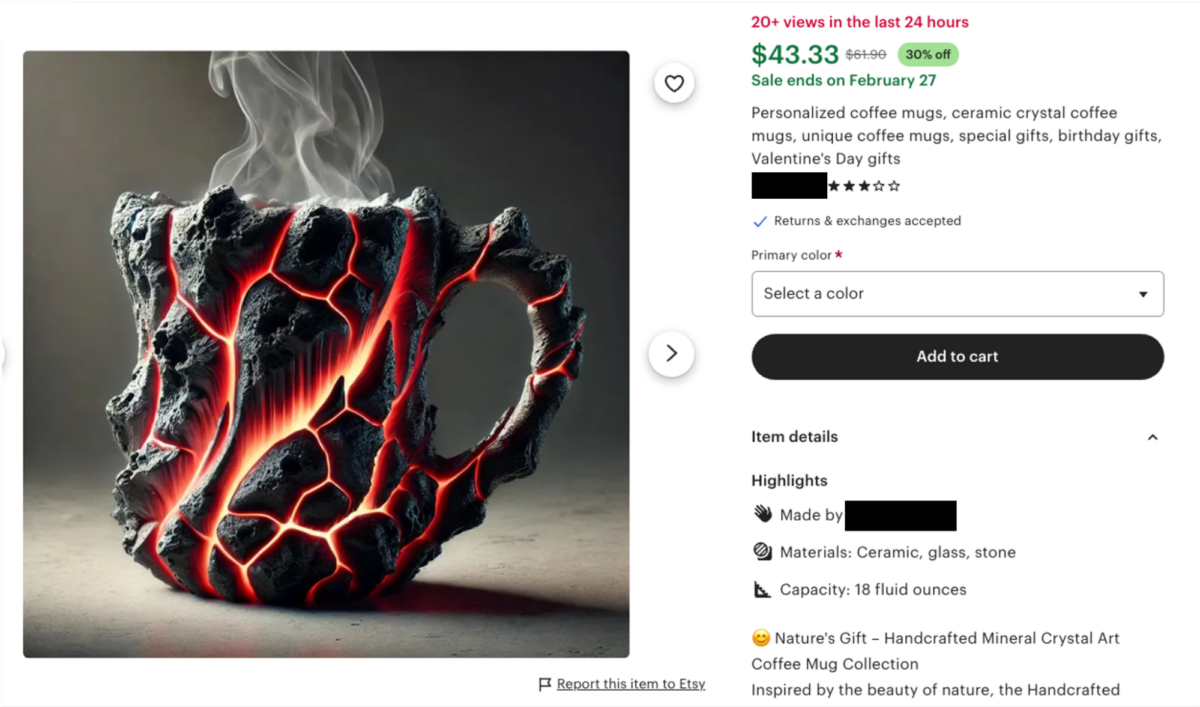
It is also useful to think about how this product would work in practice. For example, the mug shown in the picture below appears to be made of some sort of lava-type stone, with glowing red light emanating from the cracks. The lighting on the mug appears to be artificial and since there are no visible wires, it would probably need a battery to power it. However, the listing does not specify whether a power source is required or included, which should raise suspicions that the image could be AI-generated.
An image of a mug being sold on Etsy, with the seller’s name blocked out by Bellingcat.
Are There Multiple Angles and Pictures of the Product?
AI image generators can create convincing images, but they are not great at producing the same image consistently. Authentic listings will often show the same item from multiple angles so customers can see what the object looks like before purchasing. If you only see one photo of the item, that is a red flag that the listing may be using an AI-generated image. Sellers will often take one amazing photo and place the object in multiple “scenes” but you may notice that they don’t show any other angle of the item.
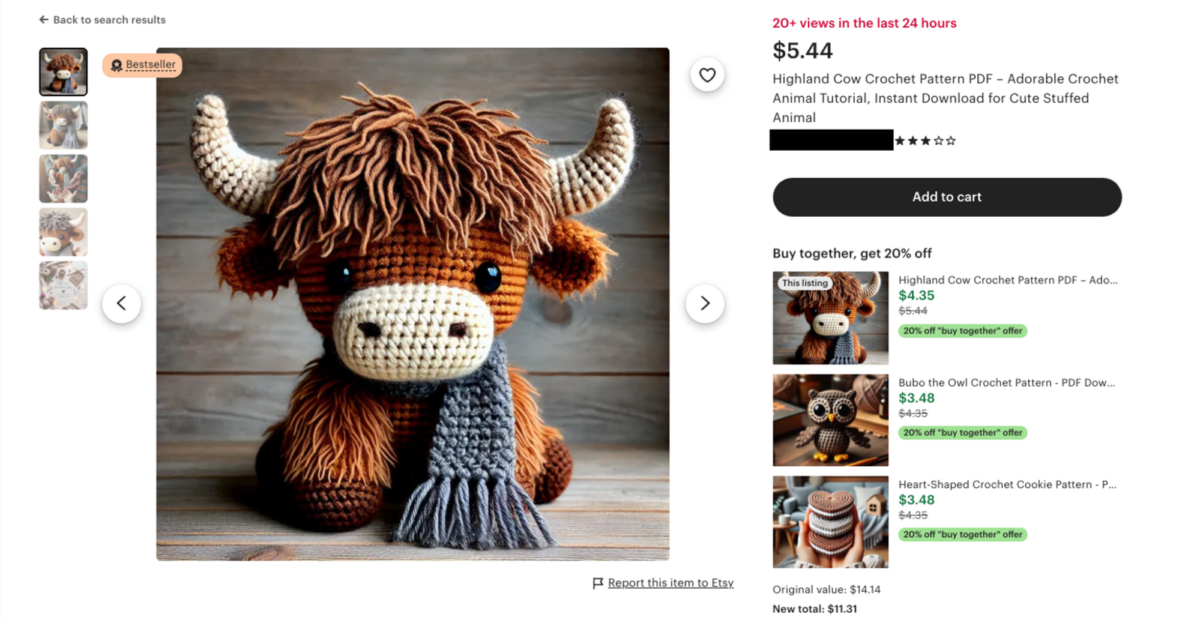
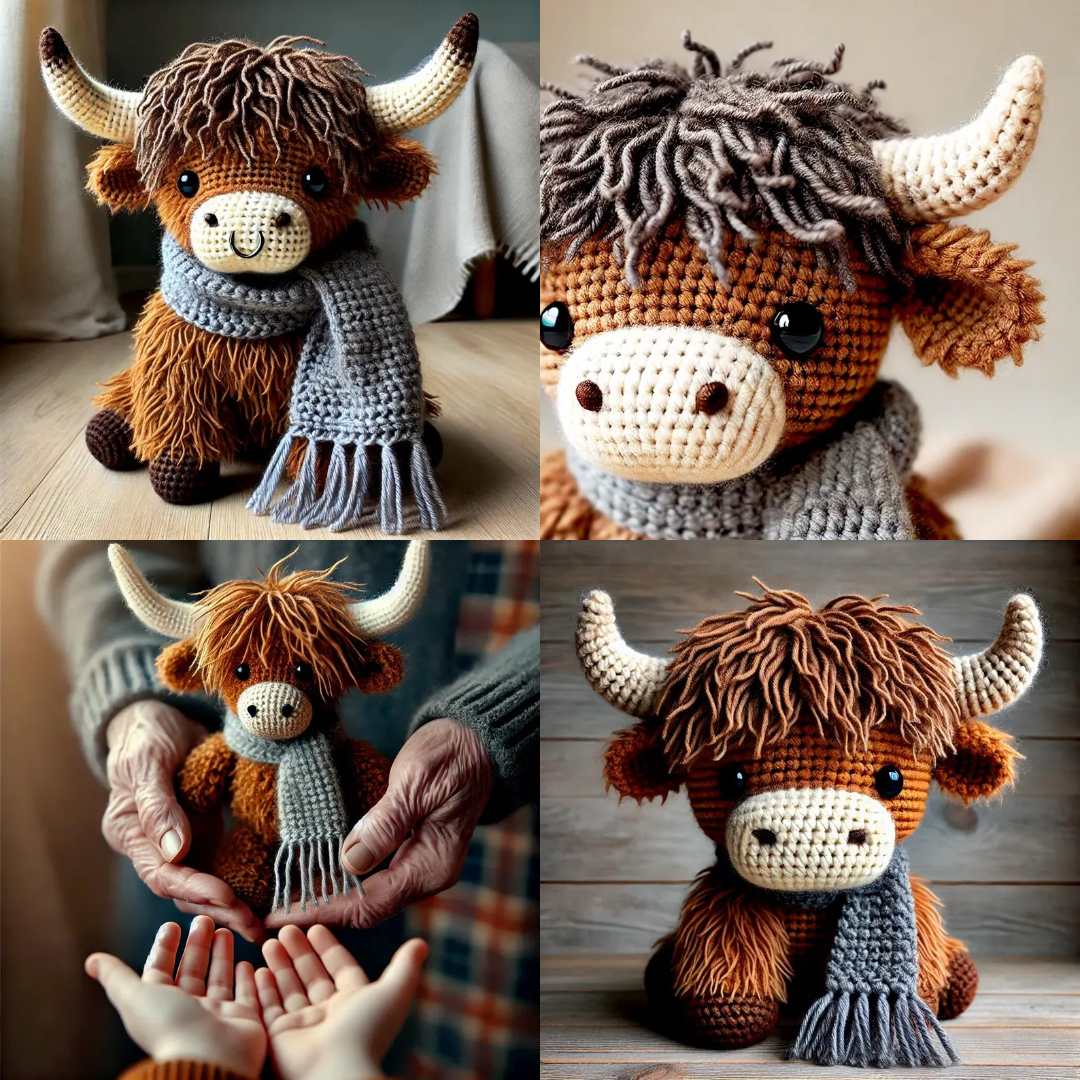
Where there are multiple photos of the product, it is also worth considering whether it looks like the same product in all of the pictures. In the below Etsy listing for a crocheted Highland cow pattern, for example, there are multiple photos of crocheted Highland cows, but they are not consistently the same pattern or design.
A listing for a Highland cow crochet pattern, seller’s name obscured by Bellingcat. Source: Etsy
A collage of the images included in the listing for the highland cow template. Source: Etsy
Given that this listing is supposed to be for a pattern – a template which crocheters can follow to create the product shown – it’s suspicious that there are different colours, shapes and materials used in these photos. It may mean that these images were created by an image generator that was not able to replicate the exact same stuffed cow.
You can also focus on differences in small details, like the placement of the nostril holes, between the photos or even sometimes in the same photo. For example, in the very first image of this listing, the two nostril holes are slightly different shapes. In the subsequent images, there are slight variations in how these nostril holes are depicted on the cows. The shape of the horn, body, hooves, and the scarf, all have variations between the images.
The image also does not make sense as, if you’re familiar with crochet, you may notice that the hairs shown on the head, body and legs of some of these sample stuffed cows do not match the texture of the type of yarn typically used for crochet. In one of the seller’s replies to customer complaints, they even confirmed that these images were AI-generated.
In response to customer complaints, the seller stated that the images were AI-generated. Source: Etsy
Bonus Tip: Zooming In On Eyes
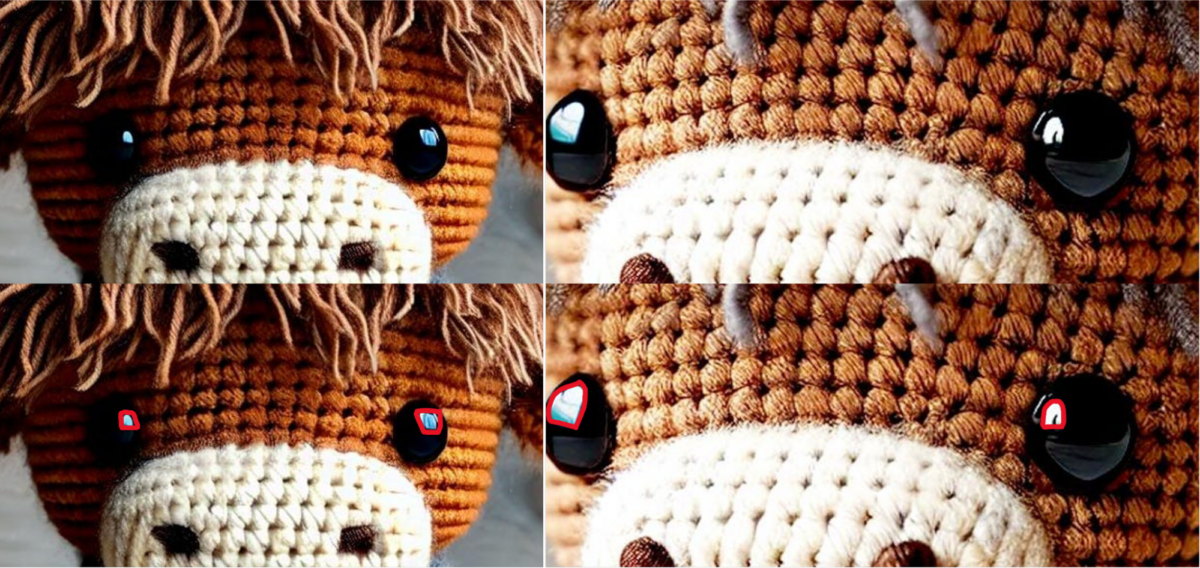
One useful hint for identifying an AI-generated image of a human face is to look at the reflective light in the eyes of the people shown and see if there are any abnormal patterns. The same principles may also be applied to images of animals or products such as this Highland cow, where there are shiny surfaces that reflect light.
In real photos, the shape of the light being reflected in the eyes is typically identical or nearly identical if they are facing the same direction. But AI-image generators have not perfected this feature. In some of the pictures of the stuffed cow’s eyes, the shape of the light differs. Since the stuffed toy depicted is facing forward, the light in both eyes should be the same as they should be reflecting back the same light source.
However, as you can see from the photos below, they are different – another indicator that these images are AI-generated.
Close up of the eyes of two of the stuffed cows (top), with the shape of the reflections in the eyes highlighted by Bellingcat in red (below)
Have You Thoroughly Read the Listing?
To protect themselves from being accused of misrepresentation or having their listings taken down by platforms, some sellers may hide disclosures within text or images – relying on the assumption that buyers may not closely read the details of their listings. If called out, they may then claim that the images were only for illustration.
To avoid falling prey to such tactics, look out for specific product details including the materials and dimensions, and whether the seller discloses that they are using AI-generated photos. Sellers may include these details within the descriptions to indicate that the item will be different to what is depicted in the listing’s image.
In the case of the mugs, some listings state that the product is a “crystal-like” or “mineral-inspired” design, indicating that it is made from another type of material.
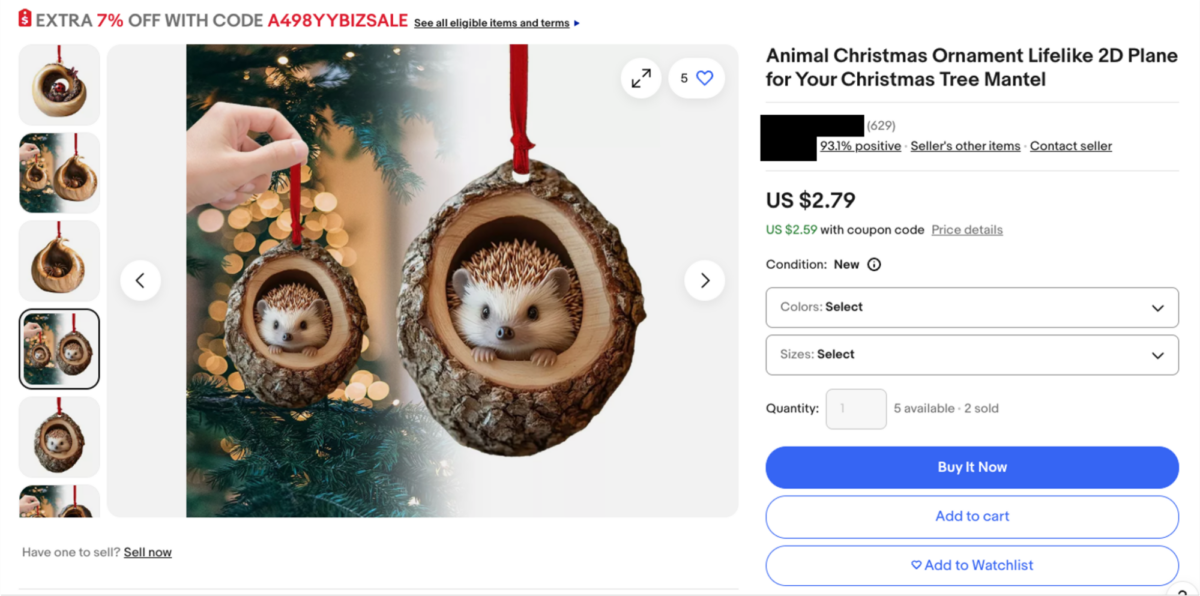
In another example, these cute animal-themed ornaments look three-dimensional and hyper-realistic in their eBay listing. However, if you look at the full listing title, the seller specifies that the ornament is two-dimensional – in other words, flat.
A listing for “lifelike” animal ornaments that look three-dimensional in photos, although the title discloses that they are in fact two-dimensional, or flat ornaments. Seller name obscured by Bellingcat. Source: eBay
In one post on Reddit, a user said they purchased animal ornaments that looked similar to those in this listing. Based on their post, the ornaments they received were flat acrylic discs with images printed on them. If – as in the listing we saw – the seller indicated this in some way in the title or description, buyers who purchased the ornaments based on the AI-generated images alone may find it harder to seek recourse.
Scammers rely on people making impulse purchases. Being consistent in reading the details can protect you from these surprises.
Images shared by a Reddit user from an online listing of animal ornaments, and the actual ornaments they received. Source: Reddit
Are There Pictures Posted by Buyers?
Fake reviews can occur on just about any platform, not just retail websites. There are whole networks dedicated to creating fake reviews, so we cannot just rely on positive customer feedback to determine if a product is trustworthy to purchase.
However, it takes more effort to create a fake review that includes images of the product.
In addition to reading the text reviews, look to see if anyone has posted photos of the item in question, and compare how it looks to the item shown in the listing. Are these photos just taken from the listing? Do they look like they’re showing the same item? Does the background or setting look like someone’s home?
If the item is on a platform that does not have reviews, or seems to be a newly listed item without many reviews, you can try doing a reverse image search of the item. Some sellers will take down a listing when they start getting negative reviews, and then relist the item again. Reverse image searches may pick up archived versions of these older listings, where you might be able to find negative user reviews. You may even find multiple sellers listing the same item and see negative reviews for the product from another seller.
If the same product is being sold elsewhere, check the photos and customer reviews. If you cannot find any photos of the item other than those supplied by the seller, you may want to investigate further.
Is It Too Good to Be True?
Many of us often search for the cheapest items online, looking to get the most bang for our buck, but it is also important to be alert to deals that seem too good to be real.
It is always good practice to compare prices. Is there a difference of a few dollars, or a few hundred? Should a highly intricate sweater be this cheap?
Reverse image searches can also be a good tool to use here. If there is a drastic difference in cost on listings showing similar products, this should give you pause. While there may be legitimate reasons for such price differences, such as the country of origin or bulk buying by sellers, this could also indicate the lower priced listings are a scam.
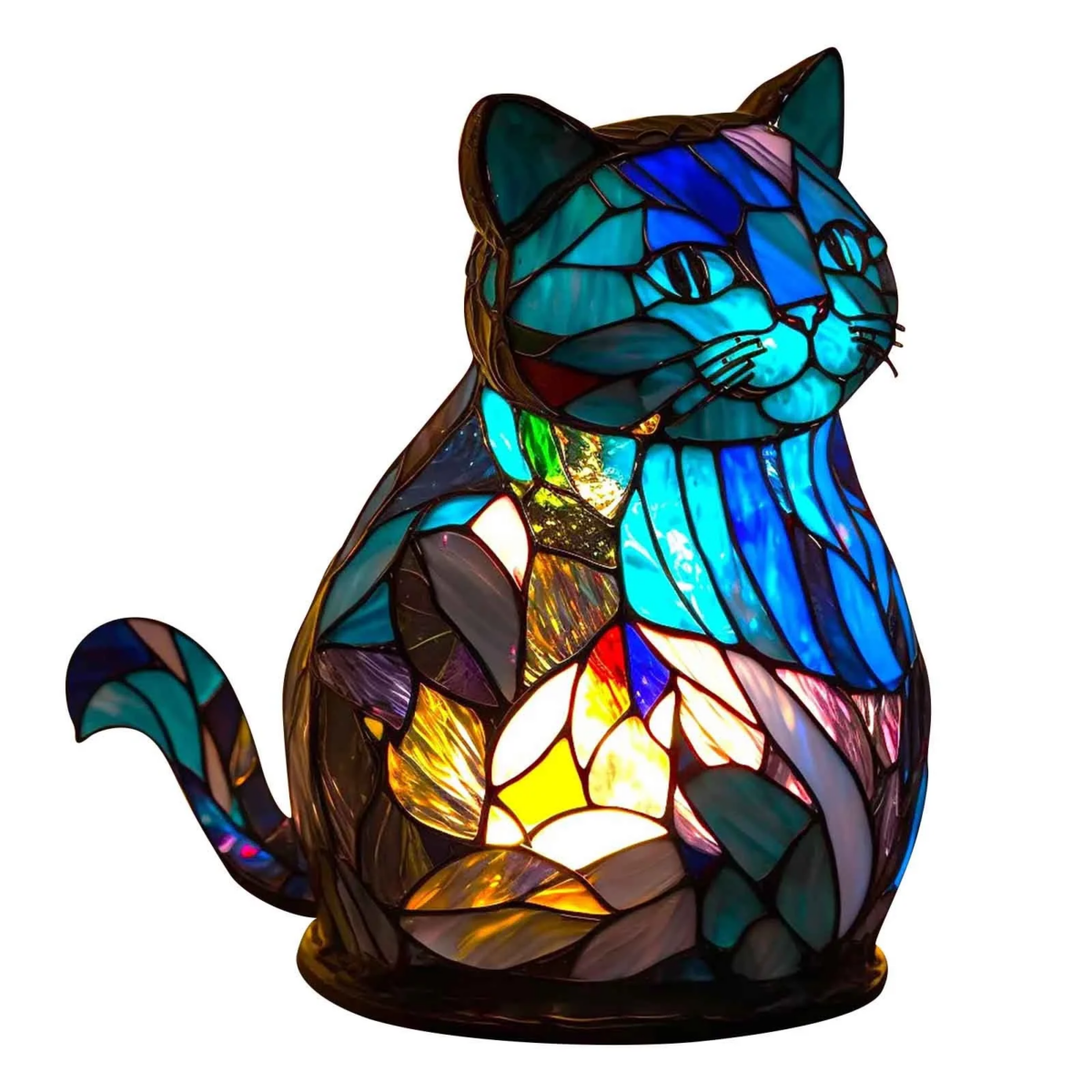
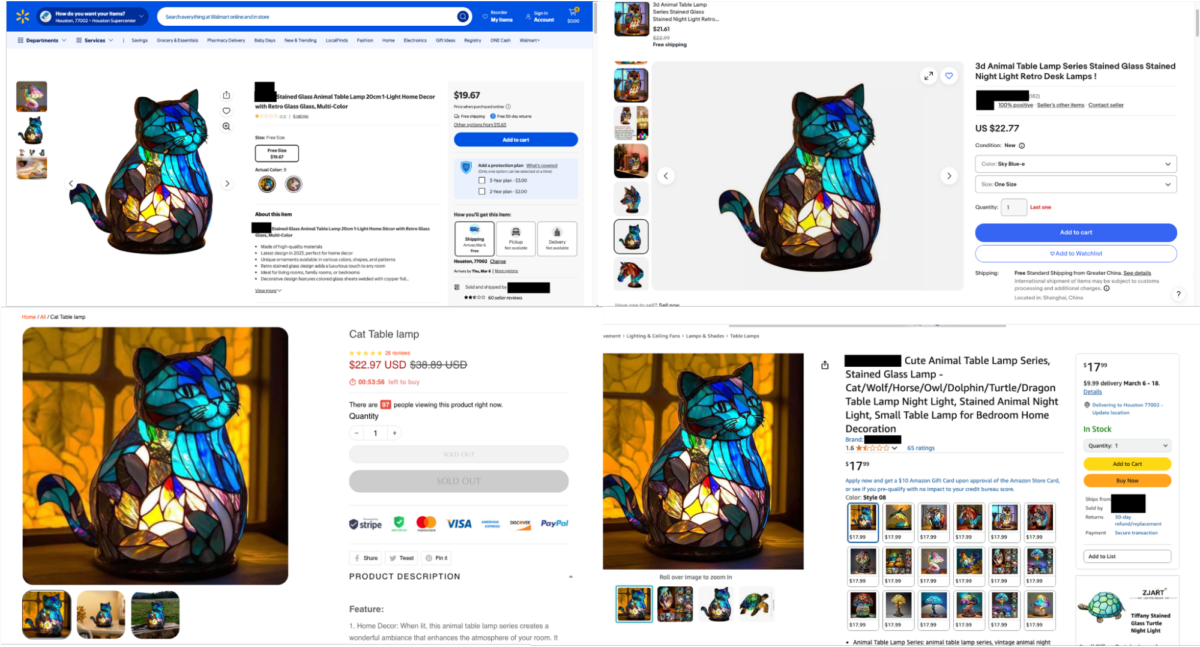
For example, the below stained glass lamp in the shape of a cat is sold on Walmart, Amazon, and eBay, among others, for under US$23.
A stained glass lamp in the shape of a cat (top) and various platforms all selling the same lamp, names of sellers obscured by Bellingcat (bottom).
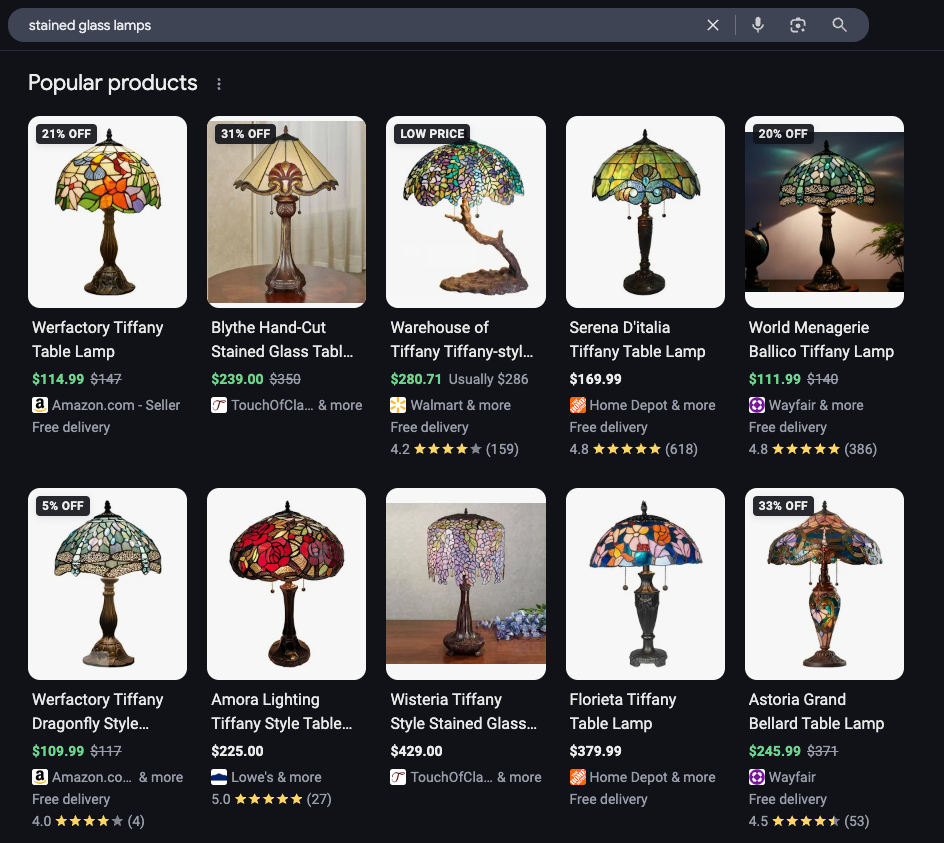
An online search for other stained glass lamps returns listings of lamps in more simple domed shapes that cost at least a hundred US dollars – significantly more than the cat-shaped ones that could be more costly to produce because of their intricacy.
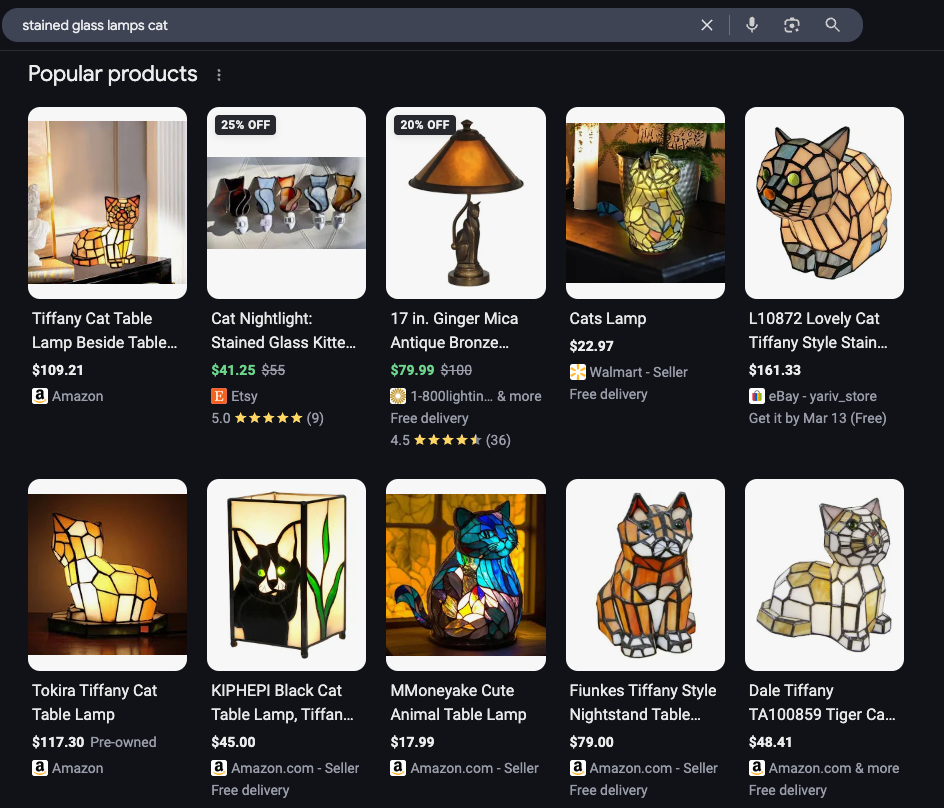
Additionally, a Google search for cat-related stained glass lamps returned images of lamps in simpler, boxy shapes. Other than the images that matched the cat lamp above, the rest of the results were all listed at a significantly higher price point than US$25. From this search, it appears that not only is the price point too low but that even the design and shape of the cat lamp is not representative of other lamps available on the market.
While it’s possible that an item that looks somewhat similar may have a large price difference due to branding or geographical origin, this discrepancy is a potential red flag that you might want to investigate further to see if this is a real deal or a scam.
Google searches for stained glass lamps (top) and cat-shaped lamps (bottom), showing a range of prices in the hundreds of US dollars.
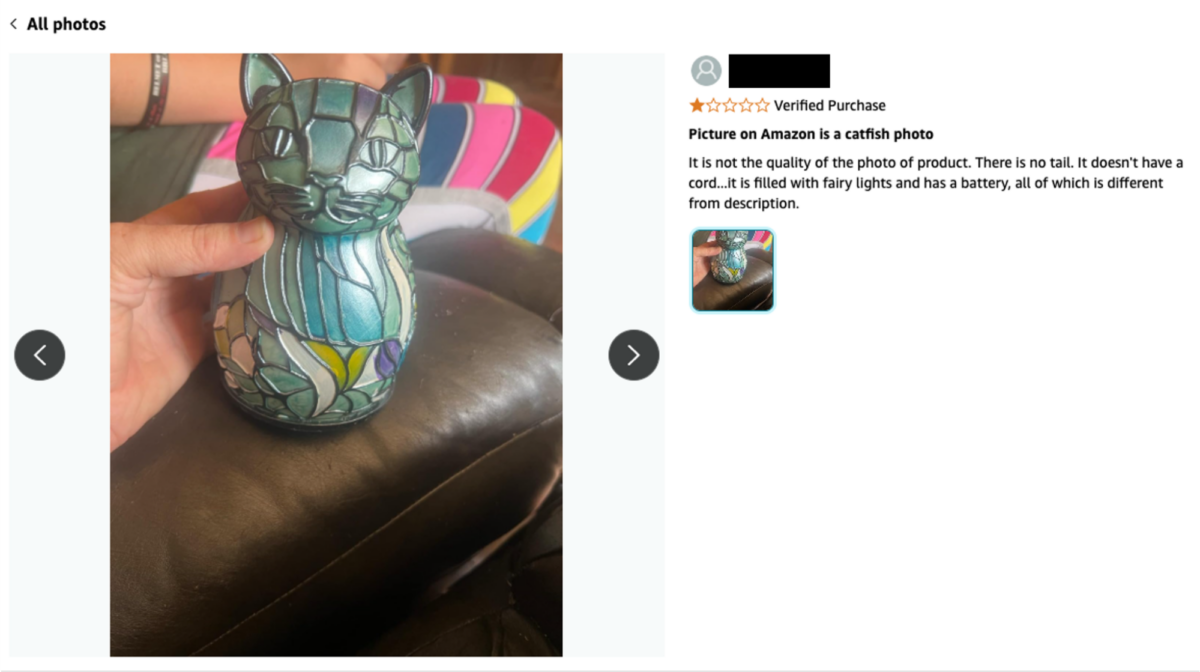
In this case, a reverse image search of this lamp showed that some customers who ordered it received a cheap plastic item with airbrushed paint rather than stained glass, and nothing at all close to the object in the listing.
Review from an Amazon customer who said they purchased the cat lamp.
Who Is Behind This Item?
Finally, it’s always helpful to look beyond the listing and consider who is profiting from the purchase.
Is this a name-brand item, or does it appear to be some mysterious seller that has popped up overnight? Does this seller have a website, or do they only exist on Facebook or Amazon? Is the seller’s account brand new? If they sell other items, what do the customer reviews say? Is the seller using an AI-generated image as their profile picture?
If it is a book you are purchasing, look to see who the author is. Does this person exist? Is there a legitimate publisher of the book, or is it just through Amazon’s self-publishing? While self-publishing does not automatically mean a book is untrustworthy, this process has fewer checks and balances compared with books from publishers, which usually go through a review before being released.
Doing an online search on the author should reveal other information about them. If they are real, does it appear that this book was authored by them? Do they promote it on other platforms? Could someone else be using their name without permission?
For example, the cookbook shown below lists the author as “Ethan Neulife”. Their bio on Amazon describes an “experienced author” but a search of his name did not turn up anything except cached listings on Amazon’s various online marketplaces for this book, which are no longer accessible. There were no social media profiles or personal sites under this name, articles about his books or any contact information available online.
Amazon listing for “Renal Diet Cookbook for Beginners”, as captured in January. Listings for this book across Amazon’s online marketplaces have since been taken down.
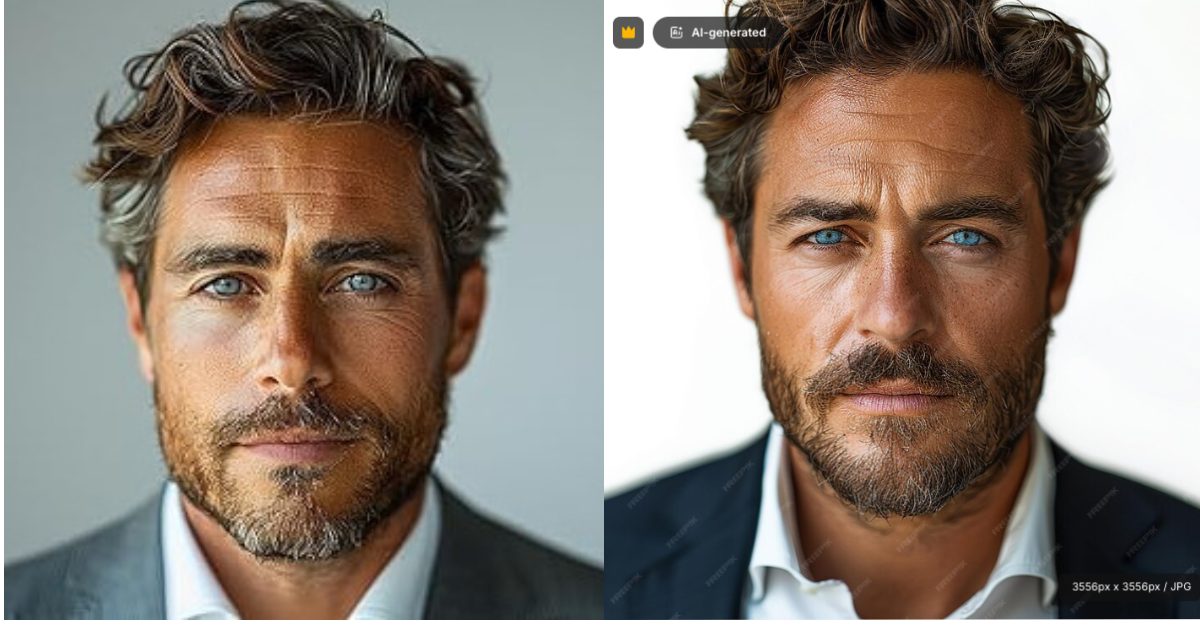
A reverse image search of the profile picture using several different search engines did not return any exact matches except those on Amazon. However, it did suggest stock images that were marked as AI-generated.
For example, one of the suggested results came from a website that specialises in AI-generated stock imagery, FreePik. The image titled “Portrait of Businessman on White Background”, generated using Midjourney 6, bore a striking resemblance to the profile photo of “Ethan Neulife”.
A reverse image search of a profile picture that returns results from AI-image websites may indicate that the image you are searching for is also AI-generated.
Profile image of “Ethan Nuelife” on Amazon (left), and suggested match of an AI-generated stock image of a man. Source: FreePik
These kinds of checks can be done before purchase to ensure that the book or product you are buying comes from a legitimate company or person. There are, of course, always small businesses or individuals vigilant about online privacy who may not have much information about themselves online, but if in doubt, it is a good idea to do some basic online research on the seller to get a sense if they are legitimate or a potential scammer.
Bellingcat is a non-profit and the ability to carry out our work is dependent on the kind support of individual donors. If you would like to support our work, you can do so here. You can also subscribe to our Patreon channel here. Subscribe to our Newsletter and follow us on Twitter here and Mastodon here.

 Entrar