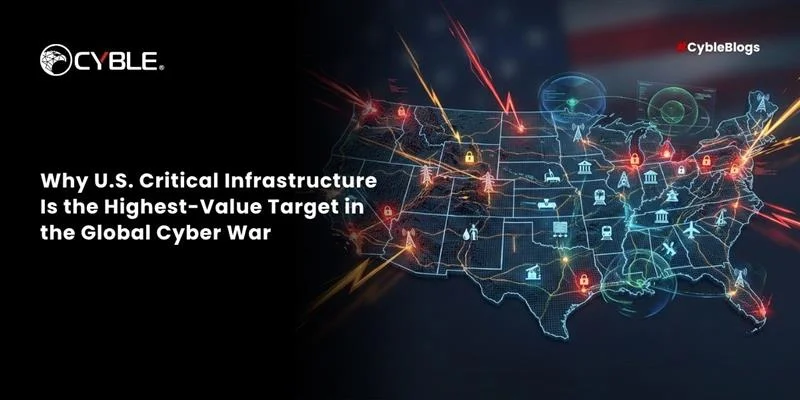
The idea that cyber conflict operates quietly in the background no longer holds. What used to be a shadow contest of espionage and occasional disruption has evolved into something far more direct and consequential. Today, the cyber war on US infrastructure is not a supporting element of geopolitical tension—it is one of its primary arenas.
Recent global conflicts have shown that digital operations are now tightly woven into military and political strategy. Critical systems that sustain everyday life, energy, water, communications, and transportation have become high-value targets. The logic is simple: disrupting infrastructure creates immediate, visible consequences without crossing traditional thresholds of war.
From Silent Intrusions to Persistent Attacks
Cyber operations were once defined by stealth. Attackers sought long-term access, often avoiding detection for as long as possible. That model has shifted toward persistence and scale.
By early 2026, threat activity across the Americas reflected this change. In the first quarter alone, 1,305 cyber incidents were recorded, with 1,138 ransomware attacks publicly claimed, according to the Cyble Americas Threat Landscape Report. This volume alone signals how normalized large-scale cyber operations have become. Even more telling, 58% of these incidents were driven by just five ransomware groups, highlighting how concentrated and industrialized the threat ecosystem is.
This surge is directly tied to rising cybersecurity threats to the US critical infrastructure. Attackers are no longer experimenting; they are executing repeatable, scalable campaigns designed to disrupt essential services.
Why Critical Infrastructure Is a Strategic Target
To understand why critical infrastructure is targeted by hackers, it helps to look at the impact rather than the intent. Infrastructure is not just a technical system; it is a force multiplier.
Disrupting it can:
- Undermine public confidence
- Interrupt economic activity
- Create pressure on governments without physical confrontation
Sectors such as healthcare, manufacturing, and government services have been among the most frequently targeted. These industries are particularly vulnerable because downtime is not an option. For example, ransomware campaigns in healthcare environments can force immediate decision-making under pressure, often leading to rapid payouts or operational shutdowns.
This is why cyberattacks on power grids and water systems are especially concerned. Unlike data breaches, these attacks have physical consequences. Even a temporary outage can cascade across multiple sectors, amplifying the overall impact.
The Rise of Identity-Driven Attacks
One of the most important shifts in the current threat landscape is the move away from traditional malware-centric attacks. Attackers are exploiting identity and trust.
Instead of breaking in, they log in.
Techniques such as:
- Multi-factor authentication (MFA) bypass
- Abuse of third-party access
These techniques have become central to modern attack strategies. This reflects a deeper structural issue: the traditional network perimeter has dissolved. Cloud adoption, remote work, and third-party integrations have created an environment where identity is the new attack surface.
For critical infrastructure operators, this dramatically increases exposure. A compromised vendor or service provider can provide indirect access to sensitive systems, making critical infrastructure cyberattack scenarios more difficult to detect and contain.
Nation-State Strategy and Pre-Positioned Access
The growing frequency of nation-state cyberattacks on US systems adds another layer of complexity. These operations are not opportunistic; they are strategic and often long-term.
State-sponsored actors focus on:
- Mapping infrastructure dependencies
- Identifying systemic weaknesses
- Establishing persistent access for future use
In many cases, access is established well before any visible disruption occurs. This creates a latent risk, where attackers can activate capabilities at a time of their choosing, often aligned with geopolitical escalation.
This approach transforms infrastructure into a strategic asset in conflict scenarios. It is not just about immediate disruption, but about maintaining the ability to disrupt when it matters most.
Hacktivists, Cybercrime, and the Blurred Battlefield
The modern threat environment is no longer defined by clear boundaries. State actors, cybercriminals, and hacktivist groups often operate in parallel, sometimes targeting the same systems for different reasons.
In North America alone, nearly 300 domains were targeted by hacktivist activity in early 2026. These campaigns are often disruptive rather than destructive, but they contribute to a broader atmosphere of instability.
At the same time, cybercriminal groups are leveraging access markets, buying and selling entry points into networks. This accelerates the speed of attacks and lowers the barrier to entry, enabling less sophisticated actors to participate in high-impact operations.
The result is a crowded and unpredictable battlefield, where a single critical infrastructure cyberattack may involve overlapping motives, political, financial, and ideological.
Infrastructure Under Pressure: Real-World Implications
Certain sectors have emerged as consistent targets due to their strategic importance. Technology and financial services accounted for 44% of breach activity in North America, reflecting their central role in both economic and operational systems.
However, the risk extends beyond these industries. Critical infrastructure depends on a web of interconnected services:
- Energy systems rely on telecommunications and cloud platforms
- Water utilities depend on industrial control systems and remote monitoring
- Transportation networks integrate with logistics and supply chain platforms
This interconnectedness means that disruption in one area can quickly spread. The increasing frequency of cyberattacks on power grid and water systems highlights how attackers are beginning to exploit these dependencies more deliberately.
Rethinking Defense in a Persistent Threat Environment
Defending against modern US critical infrastructure cybersecurity threats requires a shift in mindset. Traditional defenses focused on perimeter security and reactive response are no longer sufficient.
Organizations must prioritize:
- Continuous monitoring for early indicators of compromise
- Strong identity and access management
- Visibility into third-party and supply chain risks
- Resilience against high-volume disruption tactics like DDoS
Equally important is the ability to anticipate attacker behavior. With adversaries operating at scale and speed, waiting for alerts is no longer viable. Proactive threat hunting and intelligence-driven defense are becoming essential capabilities.
Infrastructure as the Center of Modern Conflict
Critical infrastructure has become the centerpiece of modern cyber conflict. The convergence of geopolitical tension, advanced attack techniques, and systemic vulnerabilities has created an environment where disruption is both achievable and strategically valuable.
The data reinforces this reality: high volumes of ransomware, concentrated threat actor activity, and increasing reliance on identity-based attacks all point to a more aggressive and coordinated threat landscape.
The cyber war on US infrastructure is not defined by isolated incidents—it is shaped by persistent pressure, evolving tactics, and long-term strategic intent. As nation state cyber attacks on US systems continue to expand in scope and sophistication, the challenge is no longer just preventing breaches.
It is ensuring that the systems society depends on can withstand them. In a threat landscape defined by speed and precision, waiting for alerts is no longer enough.
Request a demo to see how Cyble helps detect and anticipate critical infrastructure cyberattacks—before they turn into real-world disruption.
The post Why U.S. Critical Infrastructure Is the Highest-Value Target in the Global Cyber War appeared first on Cyble.

 Entrar
