Visualização de leitura

Attackers Exploit Amazon SES to Send Authenticated Phishing Emails

Attackers are increasingly abusing Amazon Simple Email Service (SES) to deliver highly convincing phishing emails that bypass traditional security controls, marking a growing trend in email-based threats. The primary goal of any phishing campaign is to evade detection while tricking victims into revealing sensitive data. To achieve this, threat actors continuously refine their techniques, using […]

The post Attackers Exploit Amazon SES to Send Authenticated Phishing Emails appeared first on GBHackers Security | #1 Globally Trusted Cyber Security News Platform.

“Legitimate” phishing: how attackers weaponize Amazon SES to bypass email security

Introduction

The primary goal for attackers in a phishing campaign is to bypass email security and trick the potential victim into revealing their data. To achieve this, scammers employ a wide range of tactics, from redirect links to QR codes. Additionally, they heavily rely on legitimate sources for malicious email campaigns. Specifically, we’ve recently observed an uptick in phishing attacks leveraging Amazon SES.

The dangers of Amazon SES abuse

Amazon Simple Email Service (Amazon SES) is a cloud-based email platform designed for highly reliable transactional and marketing message delivery. It integrates seamlessly with other products in Amazon’s cloud ecosystem, AWS.

At first glance, it might seem like just another delivery channel for email phishing, but that isn’t the case. The insidious nature of Amazon SES attacks lies in the fact that attackers aren’t using suspicious or dangerous domains; instead, they are leveraging infrastructure that both users and security systems have grown to trust. These emails utilize SPF, DKIM, and DMARC authentication protocols, passing all standard provider checks, and almost always contain .amazonses.com in the Message-ID headers. Consequently, from a technical standpoint, every email sent via Amazon SES – even a phishing one – looks completely legitimate.

Phishing URLs can be masked with redirects: a user sees a link like amazonaws.com in the email and clicks it with confidence, only to be sent to a phishing site rather than a legitimate one. Amazon SES also allows for custom HTML templates, which attackers use to craft more convincing emails. Because this is legitimate infrastructure, the sender’s IP address won’t end up on reputation-based blocklists. Blocking it would restrict all incoming mail sent through Amazon SES. For major services, that kind of measure is ineffective, as it would significantly disrupt user workflows due to a massive number of false positives.

How compromise happens

In most cases, attackers gain access to Amazon SES through leaked IAM (AWS Identity and Access Management) access keys. Developers frequently leave these keys exposed in public GitHub repositories, ENV files, Docker images, configuration backups, or even in publicly accessible S3 buckets. To hunt for these IAM keys, phishers use various tools, such as automated bots based on the open-source utility TruffleHog, which is designed for detecting leaked secrets. After verifying the key’s permissions and email sending limits, attackers are equipped to spread a massive volume of phishing messages.

Examples of phishing with Amazon SES

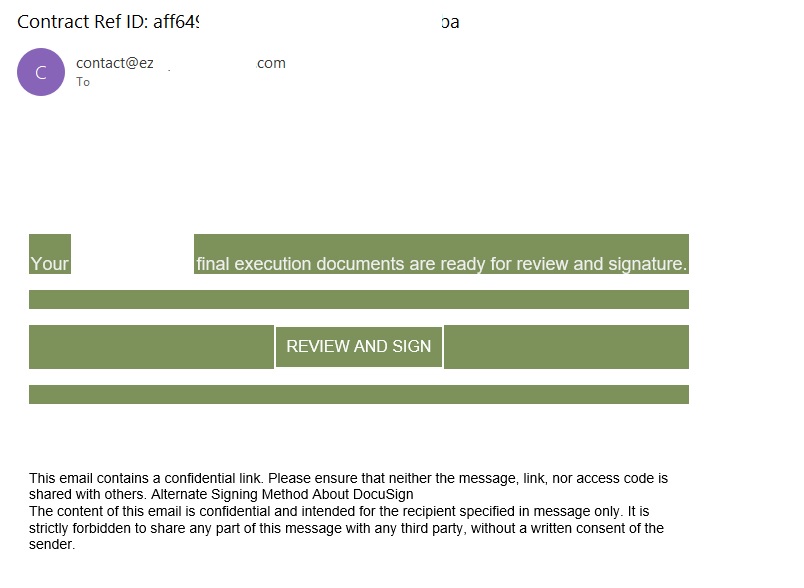
In early 2026, one of the most common themes in phishing emails sent with Amazon SES was fake notifications from electronic signature services.

Phishing email imitating a Docusign notification

Phishing email imitating a Docusign notification

The email’s technical headers confirm that it was sent with Amazon SES. At first glance, it all looks legitimate enough.

Phishing email headers

Phishing email headers

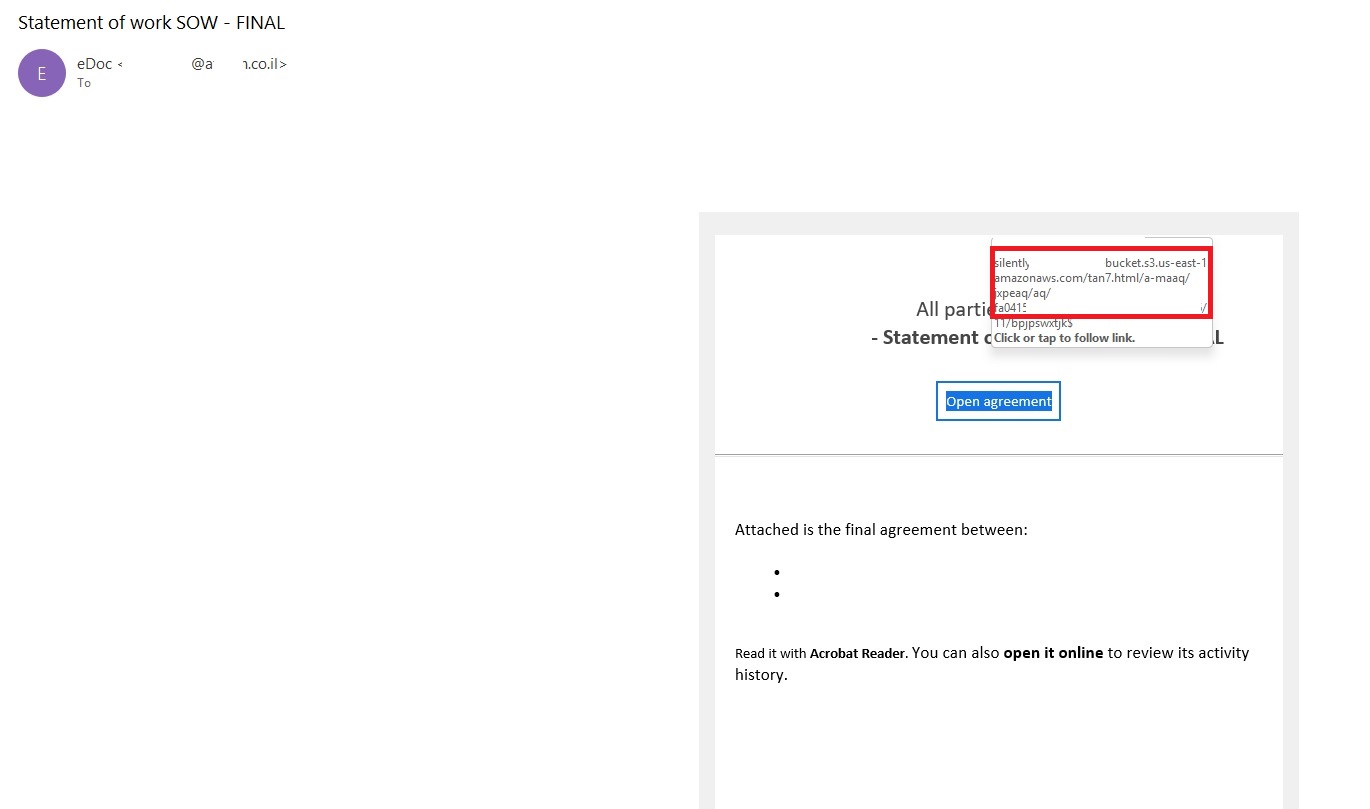
In these emails, the victim is typically asked to click a link to review and sign a specific document.

Phishing email with a "document"

Phishing email with a “document”

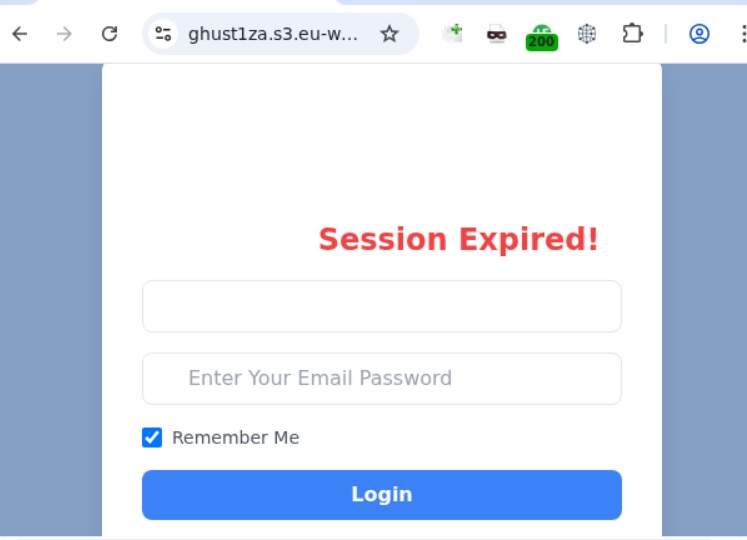
Upon clicking the link, the user is directed to a sign-in form hosted on amazonaws.com. This can easily mislead the victim, convincing them that what they’re doing is safe.

Phishing sign-in form

Phishing sign-in form

The resulting form is, of course, a phishing page, and any data entered into it goes directly to the attackers.

Amazon SES and BEC

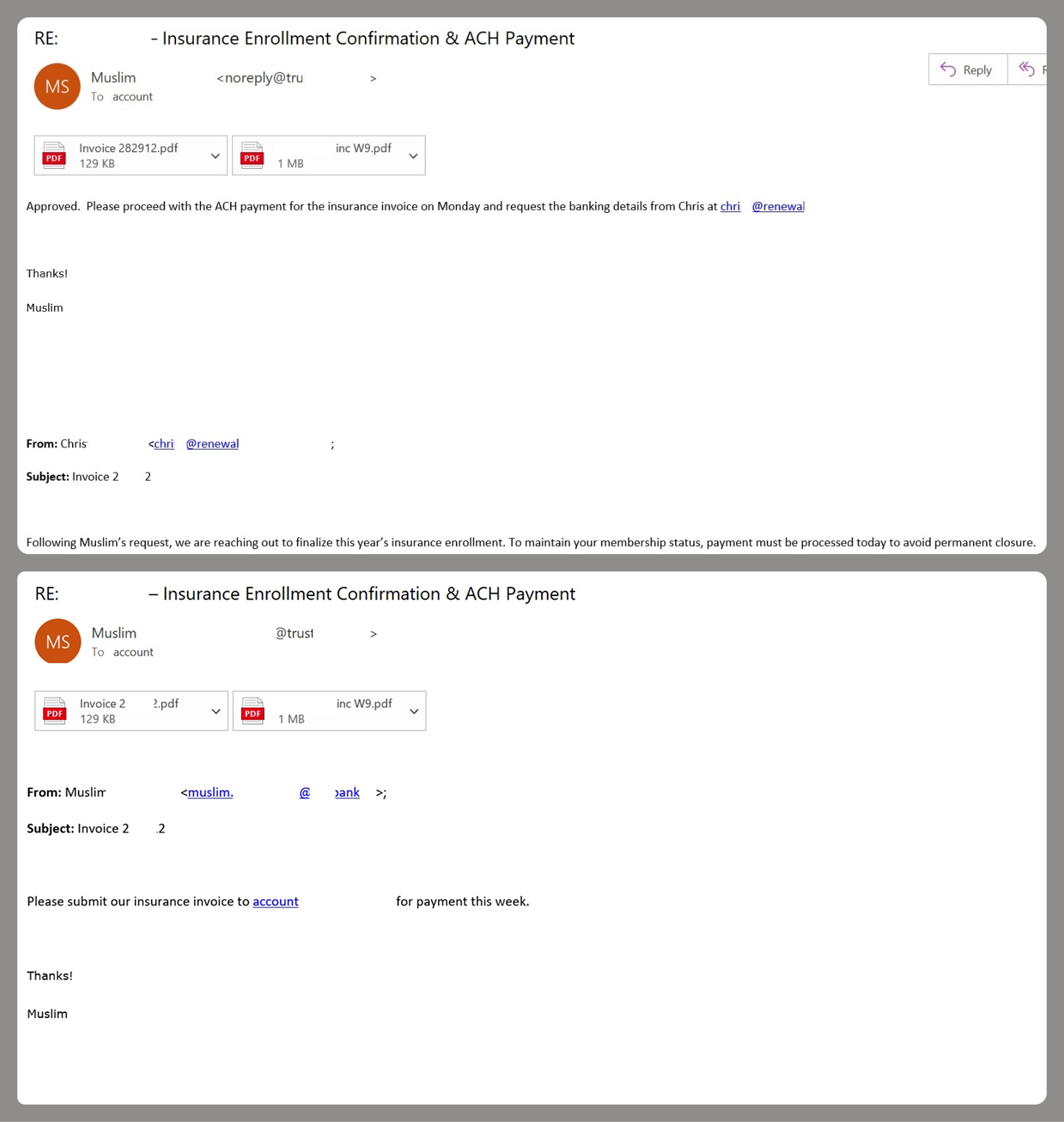
However, Amazon SES is used for more than just standard phishing; it’s also a vehicle for a very sophisticated type of BEC campaigns. In one case we investigated, a fraudulent email appeared to contain a series of messages exchanged between an employee of the target organization and a service provider about an outstanding invoice. The email was sent as if from that employee to the company’s finance department, requesting urgent payment.

BEC email featuring a fake conversation between an employee and a vendor

BEC email featuring a fake conversation between an employee and a vendor

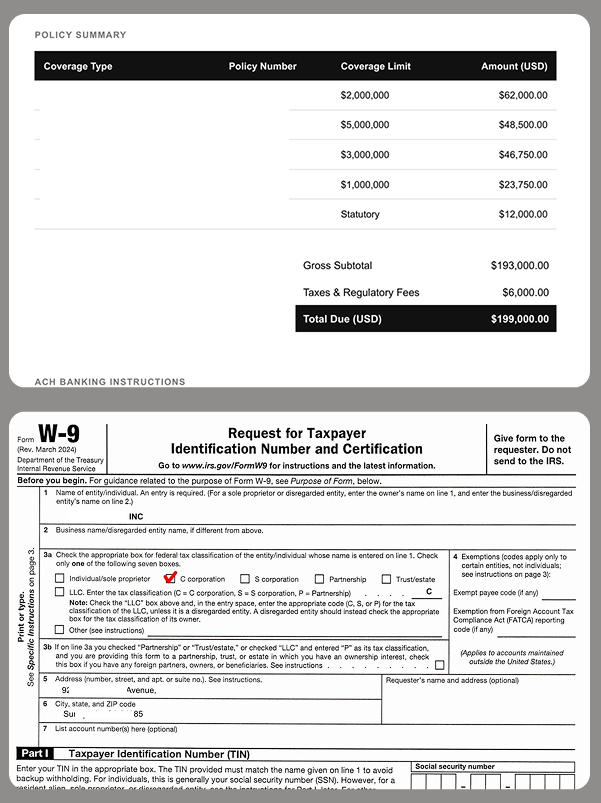
The PDF attachments didn’t contain any malicious phishing URLs or QR codes, only payment details and supporting documentation.

Forged financial documents

Forged financial documents

Naturally, the email didn’t originate with the employee, but with an attacker impersonating them. The entire thread quoted within the email was actually fabricated, with the messages formatted to appear as a legitimate forwarded thread to a cursory glance. This type of attack aims to lower the user’s guard and trick them into transferring funds to the scammers’ account.

Takeaways

Phishing via Amazon SES is shifting from isolated incidents into a steady trend. By weaponizing this service, attackers avoid the effort of building dubious domains and mail infrastructure from scratch. Instead, they hijack existing access keys to gain the ability to blast out thousands of phishing emails. These messages pass email authentication, originate from IP addresses that are unlikely to be blocklisted, and contain links to phishing forms that look entirely legitimate.

Since these Amazon SES phishing attacks stem from compromised or leaked AWS credentials, prioritizing the security of these accounts is critical. To mitigate these risks, we recommend following these guidelines:

  • Implement the principle of least privilege when configuring IAM access keys, granting elevated permissions only to users who require them for specific tasks.
  • Transition from IAM access keys to roles when configuring AWS; these are profiles with specific permissions that can be assigned to one or several users.
  • Enable multi-factor authentication, an ever-relevant step.
  • Configure IP-based access restrictions.
  • Set up automated key rotation and run regular security audits.
  • Use the AWS Key Management Service to encrypt data with unique cryptographic keys and manage them from a centralized location.

We recommend that users remain vigilant when handling email. Do not determine whether an email is safe based solely on the From field. If you receive unexpected documents via email, a prudent precaution is to verify the request with the sender through a different communication channel. Always carefully inspect where links in the body of an email actually lead. Additionally, robust email security solutions can provide an essential layer of protection for both corporate and personal correspondence.

Scammers pose as Amazon support to steal your account

Cybercriminals using the so-called “spray and pray” tactic love to impersonate well-known brands. Especially ones with huge customer bases.

Amazon reportedly has around 310 million active customers, so they certainly qualify as a brand worth impersonating. And it shows in the sheer volume of scams that use its name.

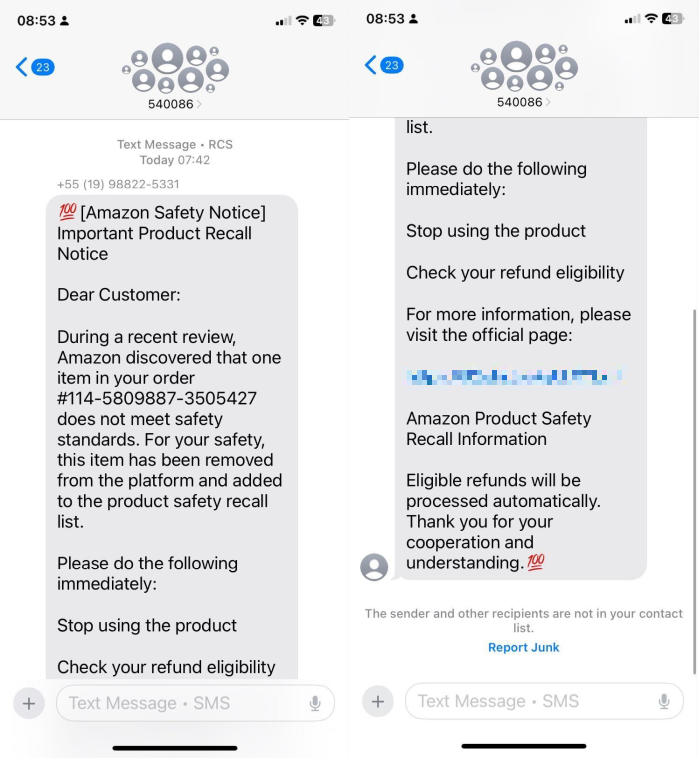
Amazon account take-over (ATO) scams were numerous during the holiday season, and they haven’t gone away. The scammers have ported the “product recall due to safety concerns” text message scam over to email.

The fake product recall message is one of scammers’ most popular lures, and we’ve reported on in the past.

Example of Amazon refund text

The hook in a recent email campaign is the same: something you bought does not meet safety or quality standards.

The UK’s Mirror reported on emails that read:

“Dear Customer, we are writing to inform you of a product recall affecting an item from your March 2026 order due to a design defect that may pose a potential safety risk. We apologise for any inconvenience this may cause and appreciate your prompt attention to this important safety matter. Thank you for your continued trust in Amazon.”

Following the link takes the target to a fake login page designed to steal their Amazon username and password.

These messages are intentionally vague about the nature of the product or the exact issue they’re being recalled for. The less specific they are, the more likely it is that someone will think, “This could be me.” If you’ve recently ordered something from Amazon, you’re more likely to fall for it.

How to avoid falling for Amazon phishing scams

  • If you get a recall notice, don’t click any links. Instead, go straight to Amazon using the app or by typing the website into your browser. Then check the Message Centre in your account. Legitimate messages from Amazon will appear there.
  • If you’ve fallen for this, change your Amazon password straight away and anywhere else you use that password. Monitor your bank statements for any unfamiliar charges, and contact your bank immediately if you see anything suspicious.
  • While you’re in your Amazon account settings, turn on two-step verification.
  • Report the scam to Amazon itself, whether you’ve fallen for it or not.
  • In the US, forward scam texts to 7726 (SPAM) or use the “Report Junk” option. For emails, report them as spam in your inbox.
  • Install web protection that can warn you of phishing sites, card skimmers, and other nasties that could lead to your data being taken.

Scammers sometimes use information they’ve found online to personalize their scam messages. Check what information is already out there about you using our free Digital Footprint scanner and then remove or change as much of it as you can.

Pro tip: Malwarebytes Scam Guard can help you spot scams and guide you through what to do next.


Something feel off? Check it before you click.  

Malwarebytes Scam Guard helps you analyze suspicious links, texts, and screenshots instantly.  

Available with Malwarebytes Premium Security for all your devices, and in the Malwarebytes app for iOS and Android.  

Try it free → 

Amazon S3 Files, Turns S3 Buckets as File System to Access Your Data

Amazon Web Services (AWS) has introduced a major update to its cloud storage infrastructure with the launch of Amazon S3 Files.

This new feature allows organizations to access their Amazon S3 buckets directly as fully functional shared file systems, eliminating the need to move or copy data.

Traditionally, organizations that store analytics data in S3 faced a significant hurdle. Standard file-based tools, agents, and applications could not interact directly with cloud object storage.

To bridge this gap, engineering teams had to manage separate file systems, duplicate sensitive datasets, and build complex synchronization pipelines.

This increased operational overhead and expanded the potential attack surface by creating unnecessary data copies.

Bridging Object and File Storage

Amazon S3 Files removes the friction between object storage and file-based computing.

Built using Amazon Elastic File System (EFS), the new service connects any AWS compute resource, including instances, containers, and serverless functions, directly to S3 data.

The service intelligently translates standard file system operations into efficient S3 API requests in the background.

Because the data never actually leaves the S3 bucket, organizations maintain their centralized security postures, access controls, and compliance boundaries without compromise.

Key Technical Advantages

S3 Files brings several operational and security benefits to cloud environments:

  • Simultaneous access: Applications can interact with data through standard file system protocols and directly via S3 APIs simultaneously.
  • Zero data duplication: Applications process data in place, reducing data silos and minimizing the security risks associated with copying sensitive datasets.
  • High performance: The service automatically caches frequently used data for low-latency access and supports aggregate read throughput of multiple terabytes per second.
  • Seamless integration: File-based tools and legacy applications require zero code changes to operate directly on existing S3 data.

Treating S3 as a native file system heavily benefits modern computing workloads. Artificial intelligence agents can now persist memory and share state across pipelines natively.

Machine learning teams can also perform extensive data preparation directly on the S3 bucket, without staging files in temporary environments.

From a cybersecurity perspective, centralizing data access gives security teams far better visibility.

According to Amazon Web Services, admins can focus on threat detection and access control for the primary S3 repository rather than scattered, duplicate datasets.

Amazon Web Services S3 Files is now generally available in 34 regions, combining object storage scalability with file system simplicity.

Follow us on Google News, LinkedIn, and X for daily cybersecurity updates. Contact us to feature your stories.

The post Amazon S3 Files, Turns S3 Buckets as File System to Access Your Data appeared first on Cyber Security News.

When an Attacker Meets a Group of Agents: Navigating Amazon Bedrock's Multi-Agent Applications

Unit 42 research on multi-agent AI systems on Amazon Bedrock reveals new attack surfaces and prompt injection risks. Learn how to secure your AI applications.

The post When an Attacker Meets a Group of Agents: Navigating Amazon Bedrock's Multi-Agent Applications appeared first on Unit 42.

Google, Microsoft, Amazon, and Others Unite Under New Anti-Scam Pact

Google, Meta, Amazon, OpenAI, and others join a new voluntary accord to share signals, tighten safeguards, and fight online scams across platforms.

The post Google, Microsoft, Amazon, and Others Unite Under New Anti-Scam Pact appeared first on TechRepublic.

Ring doorbells: Won’t you see my neighbor? (Lock and Code S07E05)

This week on the Lock and Code podcast…

On February 8, during the Super Bowl in the United States, countless owners of one of the most popular smart products today got a bit of a wakeup call: Their Ring doorbells could be used to see a whole lot more than they knew.

In a commercial that was broadcast to one of most reliably enormous audiences in the country, Amazon, which owns the company Ring, promoted a new feature for its smart doorbells called “Search Party.” By scouring the footage of individual Ring cameras across a specific region, “Search Party” can implement AI-powered image recognition technology to find, as the commercial portrayed it, a lost dog. But immediately after the commercial aired, people began wondering what else their Ring cameras could be used to find.

As US Senator Ed Markey wrote on social media:

“Ring’s Super Bowl ad exposed a scary truth: the technology in its doorbell cameras could be used to hunt down a lost pet…or a person. Amazon must discontinue its dystopian monitoring features.”

These “dystopian monitoring features” aren’t entirely new, but that’s not to say that most Ring owners knew what they were allowing when they originally bought their devices.

Bought by Amazon in 2018, Ring is the most popular manufacturer of a product that, as of 15 years ago, didn’t really exist. And while other “smart” innovations failed, smart doorbells have become a fixture of American neighborhoods, providing a mixture of convenience and security. For instance, a Ring owner away from home can verify and buzz in their mailman dropping off a package behind a gated entrance. Or, a Ring owner can see on their phone that the person knocking at their door is a salesman and choose to avoid talking to them. Or, a Ring owner can help police who are investigating a crime in their area by handing over relevant footage. Even the presence of a Ring doorbell, and its variety of motion-detecting alerts, could possibly serve as a deterrent to crime.

What has seemingly upset so many of those same owners, then, is learning exactly how their personal devices might be used for a company’s gains.

Today, on the Lock and Code podcast with host David Ruiz, we speak with Matthew Guariglia, senior policy analyst at Electronic Frontier Foundation, about Ring’s long history of partnering with—and sometimes even speaking directly for—police, who can access Ring doorbell footage both inside the company and outside it, and what people really open themselves up to when purchasing a Ring device.

 ”There’s this impression, a myth practically, that ‘I buy a ring doorbell to put on my house, I control the footage… But there is [an] entire secondary use of this device, which is by police that you don’t really get a lot of say in.”

Tune in today to listen to the full conversation.

Show notes and credits:

Intro Music: “Spellbound” by Kevin MacLeod (incompetech.com)
Licensed under Creative Commons: By Attribution 4.0 License
http://creativecommons.org/licenses/by/4.0/
Outro Music: “Good God” by Wowa (unminus.com)


Listen up—Malwarebytes doesn’t just talk cybersecurity, we provide it.

Protect yourself from online attacks that threaten your identity, your files, your system, and your financial well-being with our exclusive offer for Malwarebytes Premium Security for Lock and Code listeners.

AWS Data Centers Hit: Drone Strikes Cripple Cloud

AWS says drone strikes damaged data center facilities in the UAE and Bahrain, disrupting and degrading dozens of cloud services across the Middle East.

The post AWS Data Centers Hit: Drone Strikes Cripple Cloud appeared first on TechRepublic.

Enshittification is ruining everything online (Lock and Code S07E01)

This week on the Lock and Code podcast…

There’s a bizarre thing happening online right now where everything is getting worse.

Your Google results have become so bad that you’ve likely typed what you’re looking for, plus the word “Reddit,” so you can find discussion from actual humans. If you didn’t take this route, you might get served AI results from Google Gemini, which once recommended that every person should eat “at least one small rock per day.” Your Amazon results are a slog, filled with products that have surreptitiously paid reviews. Your Facebook feed could be entirely irrelevant because the company decided years ago that you didn’t want to see what your friends posted, you wanted to see what brands posted, because brands pay Facebook, and you don’t, so brands are more important than your friends.

But, according to digital rights activist and award-winning author Cory Doctorow, this wave of online deterioration isn’t an accident—it’s a business strategy, and it can be summed up in a word he coined a couple of years ago: Enshittification.

Enshittification is the process by which an online platform—like Facebook, Google, or Amazon—harms its own services and products for short-term gain while managing to avoid any meaningful consequences, like the loss of customers or the impact of meaningful government regulation. It begins with an online platform treating new users with care, offering services, products, or connectivity that they may not find elsewhere. Then, the platform invites businesses on board that want to sell things to those users. This means businesses become the priority and the everyday user experience is hindered. But then, in the final stage, the platform also makes things worse for its business customers, making things better only for itself.

This is how a company like Amazon went from helping you find nearly anything you wanted to buy online to helping businesses sell you anything you wanted to buy online to making those businesses pay increasingly high fees to even be discovered online. Everyone, from buyers to sellers, is pretty much entrenched in the platform, so Amazon gets to dictate the terms.

Today, on the Lock and Code podcast with host David Ruiz, we speak with Doctorow about enshittification’s fast damage across the internet, how to fight back, and where it all started.

 ”Once these laws were established, the tech companies were able to take advantage of them. And today we have a bunch of companies that aren’t tech companies that are nevertheless using technology to rig the game in ways that the tech companies pioneered.”

Tune in today to listen to the full conversation.

Show notes and credits:

Intro Music: “Spellbound” by Kevin MacLeod (incompetech.com)
Licensed under Creative Commons: By Attribution 4.0 License
http://creativecommons.org/licenses/by/4.0/
Outro Music: “Good God” by Wowa (unminus.com)


Listen up—Malwarebytes doesn’t just talk cybersecurity, we provide it.

Protect yourself from online attacks that threaten your identity, your files, your system, and your financial well-being with our exclusive offer for Malwarebytes Premium Security for Lock and Code listeners.

Smashing Security podcast #448: The Kindle that got pwned

Think your Kindle is harmless? Think again! In this episode, we unpack a Black Hat Europe talk revealing how a boobytrapped audiobook could exploit the Amazon eBook reader - potentially letting an attacker break into your account and seize control of your credit card. Plus a blast from 2021's "summer of ransomware" returns to haunt Ireland's Health Service Executive, as victims are offered €750 each. And because it's the last show before the Christmas break, there's also a Pick of the Week that veers from cosy rom-com comfort to pointy-polygon nostalgia. All this and much more is discussed in the latest edition of the award-winning "Smashing Security" podcast with computer security veteran Graham Cluley, joined this week by special guest Danny Palmer.

Is Your Android TV Streaming Box Part of a Botnet?

On the surface, the Superbox media streaming devices for sale at retailers like BestBuy and Walmart may seem like a steal: They offer unlimited access to more than 2,200 pay-per-view and streaming services like Netflix, ESPN and Hulu, all for a one-time fee of around $400. But security experts warn these TV boxes require intrusive software that forces the user’s network to relay Internet traffic for others, traffic that is often tied to cybercrime activity such as advertising fraud and account takeovers.
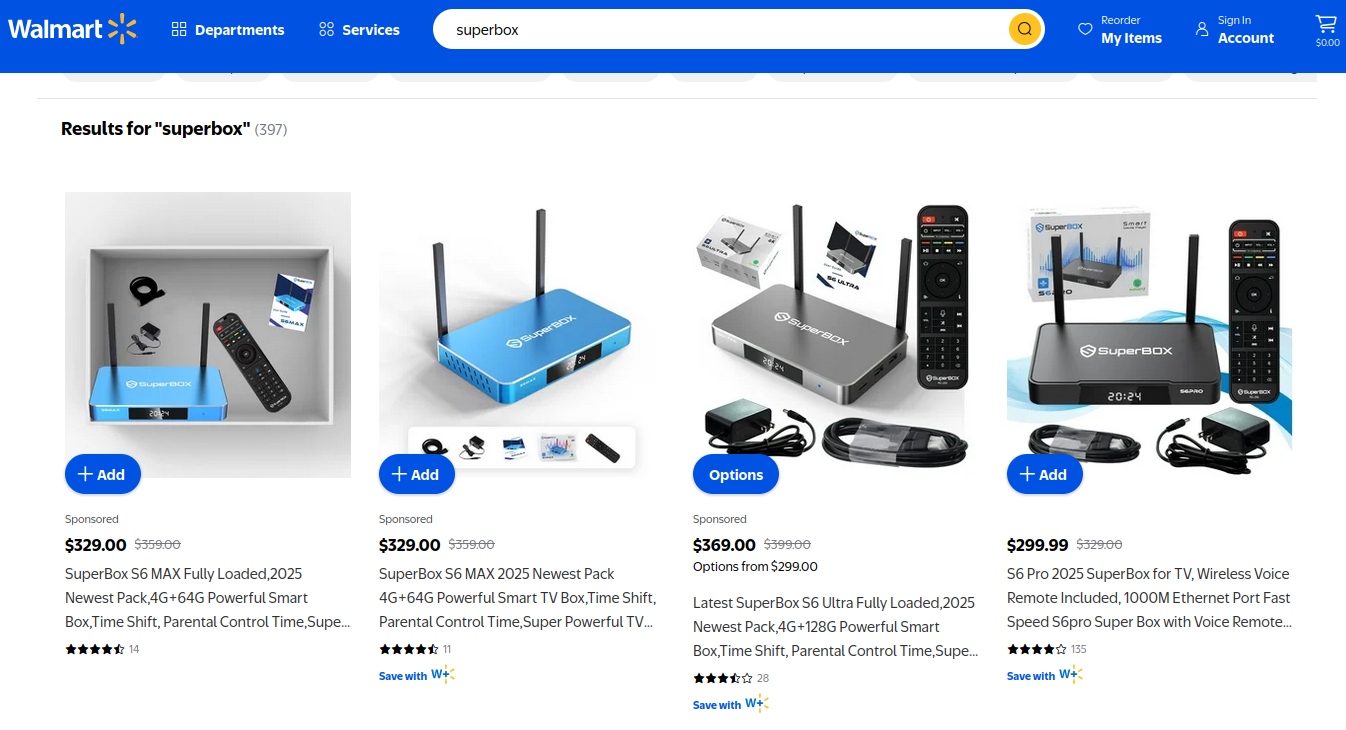
Superbox media streaming boxes for sale on Walmart.com.

Superbox bills itself as an affordable way for households to stream all of the television and movie content they could possibly want, without the hassle of monthly subscription fees — for a one-time payment of nearly $400.

“Tired of confusing cable bills and hidden fees?,” Superbox’s website asks in a recent blog post titled, “Cheap Cable TV for Low Income: Watch TV, No Monthly Bills.”

“Real cheap cable TV for low income solutions does exist,” the blog continues. “This guide breaks down the best alternatives to stop overpaying, from free over-the-air options to one-time purchase devices that eliminate monthly bills.”

Superbox claims that watching a stream of movies, TV shows, and sporting events won’t violate U.S. copyright law.

“SuperBox is just like any other Android TV box on the market, we can not control what software customers will use,” the company’s website maintains. “And you won’t encounter a law issue unless uploading, downloading, or broadcasting content to a large group.”

A blog post from the Superbox website.

There is nothing illegal about the sale or use of the Superbox itself, which can be used strictly as a way to stream content at providers where users already have a paid subscription. But that is not why people are shelling out $400 for these machines. The only way to watch those 2,200+ channels for free with a Superbox is to install several apps made for the device that enable them to stream this content.

Superbox’s homepage includes a prominent message stating the company does “not sell access to or preinstall any apps that bypass paywalls or provide access to unauthorized content.” The company explains that they merely provide the hardware, while customers choose which apps to install.

“We only sell the hardware device,” the notice states. “Customers must use official apps and licensed services; unauthorized use may violate copyright law.”

Superbox is technically correct here, except for maybe the part about how customers must use official apps and licensed services: Before the Superbox can stream those thousands of channels, users must configure the device to update itself, and the first step involves ripping out Google’s official Play store and replacing it with something called the “App Store” or “Blue TV Store.”

Superbox does this because the device does not use the official Google-certified Android TV system, and its apps will not load otherwise. Only after the Google Play store has been supplanted by this unofficial App Store do the various movie and video streaming apps that are built specifically for the Superbox appear available for download (again, outside of Google’s app ecosystem).

Experts say while these Android streaming boxes generally do what they advertise — enabling buyers to stream video content that would normally require a paid subscription — the apps that enable the streaming also ensnare the user’s Internet connection in a distributed residential proxy network that uses the devices to relay traffic from others.

Ashley is a senior solutions engineer at Censys, a cyber intelligence company that indexes Internet-connected devices, services and hosts. Ashley requested that only her first name be used in this story.

In a recent video interview, Ashley showed off several Superbox models that Censys was studying in the malware lab — including one purchased off the shelf at BestBuy.

“I’m sure a lot of people are thinking, ‘Hey, how bad could it be if it’s for sale at the big box stores?'” she said. “But the more I looked, things got weirder and weirder.”

Ashley said she found the Superbox devices immediately contacted a server at the Chinese instant messaging service Tencent QQ, as well as a residential proxy service called Grass IO.

GET GRASSED

Also known as getgrass[.]io, Grass says it is “a decentralized network that allows users to earn rewards by sharing their unused Internet bandwidth with AI labs and other companies.”

“Buyers seek unused internet bandwidth to access a more diverse range of IP addresses, which enables them to see certain websites from a retail perspective,” the Grass website explains. “By utilizing your unused internet bandwidth, they can conduct market research, or perform tasks like web scraping to train AI.” 

Reached via Twitter/X, Grass founder Andrej Radonjic told KrebsOnSecurity he’d never heard of a Superbox, and that Grass has no affiliation with the device maker.

“It looks like these boxes are distributing an unethical proxy network which people are using to try to take advantage of Grass,” Radonjic said. “The point of grass is to be an opt-in network. You download the grass app to monetize your unused bandwidth. There are tons of sketchy SDKs out there that hijack people’s bandwidth to help webscraping companies.”

Radonjic said Grass has implemented “a robust system to identify network abusers,” and that if it discovers anyone trying to misuse or circumvent its terms of service, the company takes steps to stop it and prevent those users from earning points or rewards.

Superbox’s parent company, Super Media Technology Company Ltd., lists its street address as a UPS store in Fountain Valley, Calif. The company did not respond to multiple inquiries.

According to this teardown by behindmlm.com, a blog that covers multi-level marketing (MLM) schemes, Grass’s compensation plan is built around “grass points,” which are earned through the use of the Grass app and through app usage by recruited affiliates. Affiliates can earn 5,000 grass points for clocking 100 hours usage of Grass’s app, but they must progress through ten affiliate tiers or ranks before they can redeem their grass points (presumably for some type of cryptocurrency). The 10th or “Titan” tier requires affiliates to accumulate a whopping 50 million grass points, or recruit at least 221 more affiliates.

Radonjic said Grass’s system has changed in recent months, and confirmed the company has a referral program where users can earn Grass Uptime Points by contributing their own bandwidth and/or by inviting other users to participate.

“Users are not required to participate in the referral program to earn Grass Uptime Points or to receive Grass Tokens,” Radonjic said. “Grass is in the process of phasing out the referral program and has introduced an updated Grass Points model.”

A review of the Terms and Conditions page for getgrass[.]io at the Wayback Machine shows Grass’s parent company has changed names at least five times in the course of its two-year existence. Searching the Wayback Machine on getgrass[.]io shows that in June 2023 Grass was owned by a company called Wynd Network. By March 2024, the owner was listed as Lower Tribeca Corp. in the Bahamas. By August 2024, Grass was controlled by a Half Space Labs Limited, and in November 2024 the company was owned by Grass OpCo (BVI) Ltd. Currently, the Grass website says its parent is just Grass OpCo Ltd (no BVI in the name).

Radonjic acknowledged that Grass has undergone “a handful of corporate clean-ups over the last couple of years,” but described them as administrative changes that had no operational impact. “These reflect normal early-stage restructuring as the project moved from initial development…into the current structure under the Grass Foundation,” he said.

UNBOXING

Censys’s Ashley said the phone home to China’s Tencent QQ instant messaging service was the first red flag with the Superbox devices she examined. She also discovered the streaming boxes included powerful network analysis and remote access tools, such as Tcpdump and Netcat.

“This thing DNS hijacked my router, did ARP poisoning to the point where things fall off the network so they can assume that IP, and attempted to bypass controls,” she said. “I have root on all of them now, and they actually have a folder called ‘secondstage.’ These devices also have Netcat and Tcpdump on them, and yet they are supposed to be streaming devices.”

A quick online search shows various Superbox models and many similar Android streaming devices for sale at a wide range of top retail destinations, including Amazon, BestBuy, Newegg, and Walmart. Newegg.com, for example, currently lists more than three dozen Superbox models. In all cases, the products are sold by third-party merchants on these platforms, but in many instances the fulfillment comes from the e-commerce platform itself.

“Newegg is pretty bad now with these devices,” Ashley said. “Ebay is the funniest, because they have Superbox in Spanish — the SuperCaja — which is very popular.”
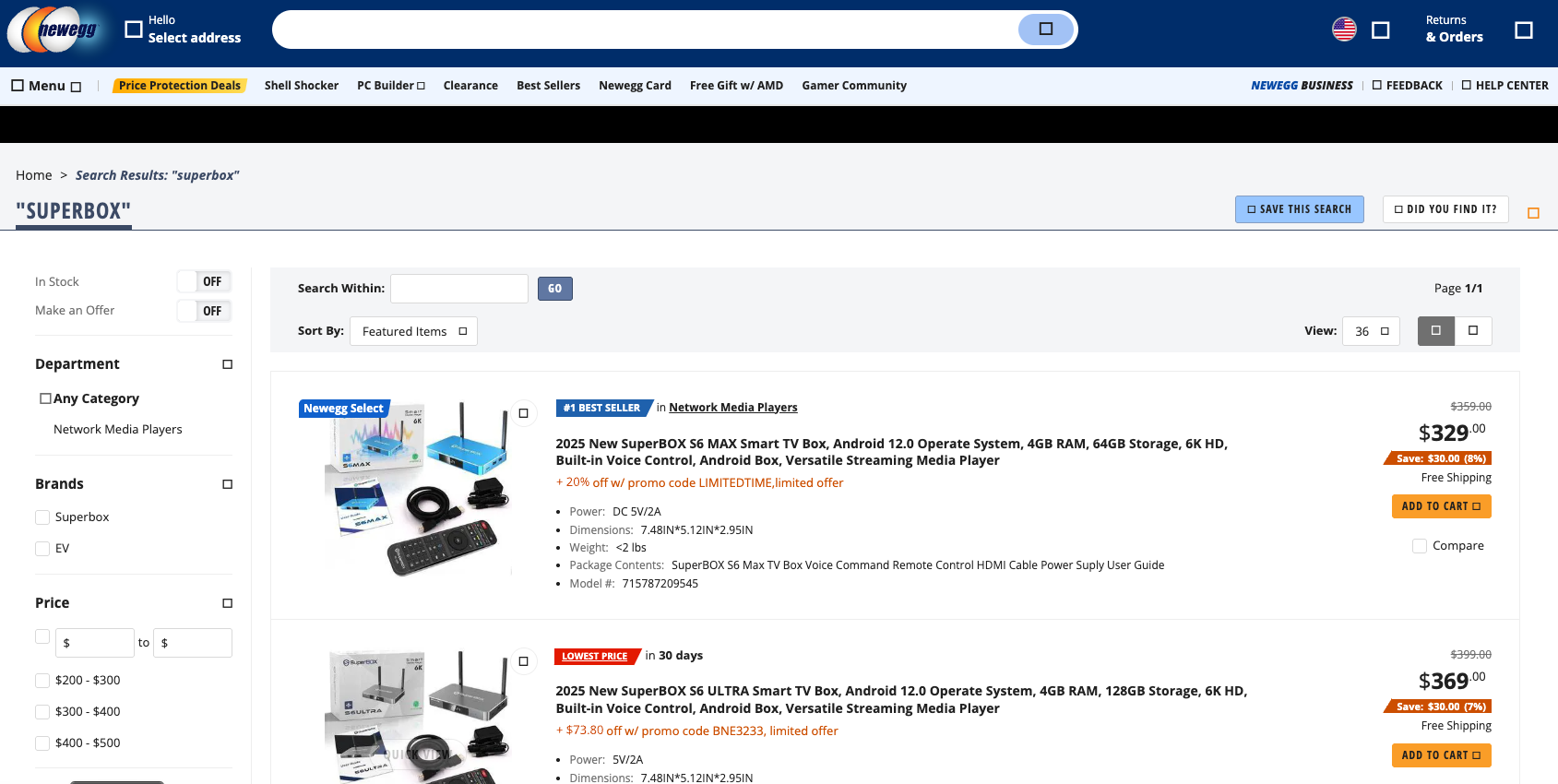
Superbox devices for sale via Newegg.com.

Ashley said Amazon recently cracked down on Android streaming devices branded as Superbox, but that those listings can still be found under the more generic title “modem and router combo” (which may be slightly closer to the truth about the device’s behavior).

Superbox doesn’t advertise its products in the conventional sense. Rather, it seems to rely on lesser-known influencers on places like Youtube and TikTok to promote the devices. Meanwhile, Ashley said, Superbox pays those influencers 50 percent of the value of each device they sell.

“It’s weird to me because influencer marketing usually caps compensation at 15 percent, and it means they don’t care about the money,” she said. “This is about building their network.”

A TikTok influencer casually mentions and promotes Superbox while chatting with her followers over a glass of wine.

BADBOX

As plentiful as the Superbox is on e-commerce sites, it is just one brand in an ocean of no-name Android-based TV boxes available to consumers. While these devices generally do provide buyers with “free” streaming content, they also tend to include factory-installed malware or require the installation of third-party apps that engage the user’s Internet address in advertising fraud.

In July 2025, Google filed a “John Doe” lawsuit (PDF) against 25 unidentified defendants dubbed the “BadBox 2.0 Enterprise,” which Google described as a botnet of over ten million Android streaming devices that engaged in advertising fraud. Google said the BADBOX 2.0 botnet, in addition to compromising multiple types of devices prior to purchase, can also infect devices by requiring the download of malicious apps from unofficial marketplaces.

Some of the unofficial Android devices flagged by Google as part of the Badbox 2.0 botnet are still widely for sale at major e-commerce vendors. Image: Google.

Several of the Android streaming devices flagged in Google’s lawsuit are still for sale on top U.S. retail sites. For example, searching for the “X88Pro 10” and the “T95” Android streaming boxes finds both continue to be peddled by Amazon sellers.

Google’s lawsuit came on the heels of a June 2025 advisory from the Federal Bureau of Investigation (FBI), which warned that cyber criminals were gaining unauthorized access to home networks by either configuring the products with malicious software prior to the user’s purchase, or infecting the device as it downloads required applications that contain backdoors, usually during the set-up process.

“Once these compromised IoT devices are connected to home networks, the infected devices are susceptible to becoming part of the BADBOX 2.0 botnet and residential proxy services known to be used for malicious activity,” the FBI said.

The FBI said BADBOX 2.0 was discovered after the original BADBOX campaign was disrupted in 2024. The original BADBOX was identified in 2023, and primarily consisted of Android operating system devices that were compromised with backdoor malware prior to purchase.

Riley Kilmer is founder of Spur, a company that tracks residential proxy networks. Kilmer said Badbox 2.0 was used as a distribution platform for IPidea, a China-based entity that is now the world’s largest residential proxy network.

Kilmer and others say IPidea is merely a rebrand of 911S5 Proxy, a China-based proxy provider sanctioned last year by the U.S. Department of the Treasury for operating a botnet that helped criminals steal billions of dollars from financial institutions, credit card issuers, and federal lending programs (the U.S. Department of Justice also arrested the alleged owner of 911S5).

How are most IPidea customers using the proxy service? According to the proxy detection service Synthient, six of the top ten destinations for IPidea proxies involved traffic that has been linked to either ad fraud or credential stuffing (account takeover attempts).

Kilmer said companies like Grass are probably being truthful when they say that some of their customers are companies performing web scraping to train artificial intelligence efforts, because a great deal of content scraping which ultimately benefits AI companies is now leveraging these proxy networks to further obfuscate their aggressive data-slurping activity. By routing this unwelcome traffic through residential IP addresses, Kilmer said, content scraping firms can make it far trickier to filter out.

“Web crawling and scraping has always been a thing, but AI made it like a commodity, data that had to be collected,” Kilmer told KrebsOnSecurity. “Everybody wanted to monetize their own data pots, and how they monetize that is different across the board.”

SOME FRIENDLY ADVICE

Products like Superbox are drawing increased interest from consumers as more popular network television shows and sportscasts migrate to subscription streaming services, and as people begin to realize they’re spending as much or more on streaming services than they previously paid for cable or satellite TV.

These streaming devices from no-name technology vendors are another example of the maxim, “If something is free, you are the product,” meaning the company is making money by selling access to and/or information about its users and their data.

Superbox owners might counter, “Free? I paid $400 for that device!” But remember: Just because you paid a lot for something doesn’t mean you are done paying for it, or that somehow you are the only one who might be worse off from the transaction.

It may be that many Superbox customers don’t care if someone uses their Internet connection to tunnel traffic for ad fraud and account takeovers; for them, it beats paying for multiple streaming services each month. My guess, however, is that quite a few people who buy (or are gifted) these products have little understanding of the bargain they’re making when they plug them into an Internet router.

Superbox performs some serious linguistic gymnastics to claim its products don’t violate copyright laws, and that its customers alone are responsible for understanding and observing any local laws on the matter. However, buyer beware: If you’re a resident of the United States, you should know that using these devices for unauthorized streaming violates the Digital Millennium Copyright Act (DMCA), and can incur legal action, fines, and potential warnings and/or suspension of service by your Internet service provider.

According to the FBI, there are several signs to look for that may indicate a streaming device you own is malicious, including:

-The presence of suspicious marketplaces where apps are downloaded.
-Requiring Google Play Protect settings to be disabled.
-Generic TV streaming devices advertised as unlocked or capable of accessing free content.
-IoT devices advertised from unrecognizable brands.
-Android devices that are not Play Protect certified.
-Unexplained or suspicious Internet traffic.

This explainer from the Electronic Frontier Foundation delves a bit deeper into each of the potential symptoms listed above.

Cloudflare Scrubs Aisuru Botnet from Top Domains List

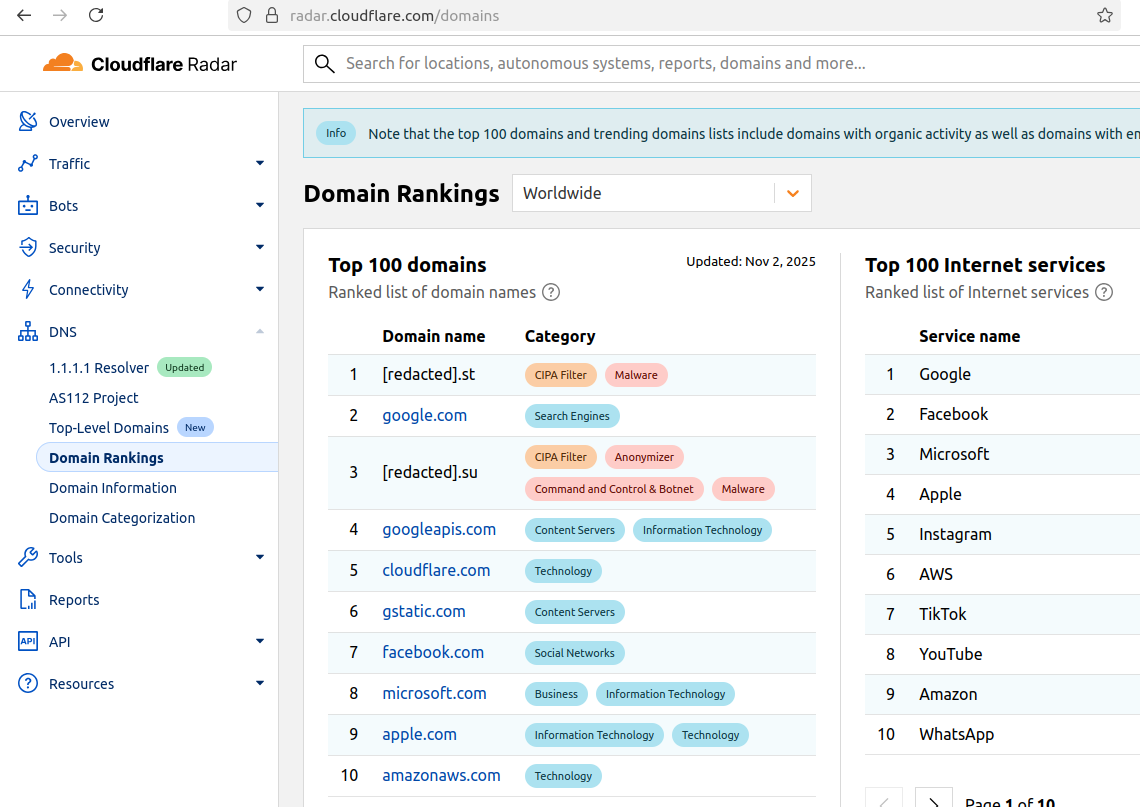
For the past week, domains associated with the massive Aisuru botnet have repeatedly usurped Amazon, Apple, Google and Microsoft in Cloudflare’s public ranking of the most frequently requested websites. Cloudflare responded by redacting Aisuru domain names from their top websites list. The chief executive at Cloudflare says Aisuru’s overlords are using the botnet to boost their malicious domain rankings, while simultaneously attacking the company’s domain name system (DNS) service.

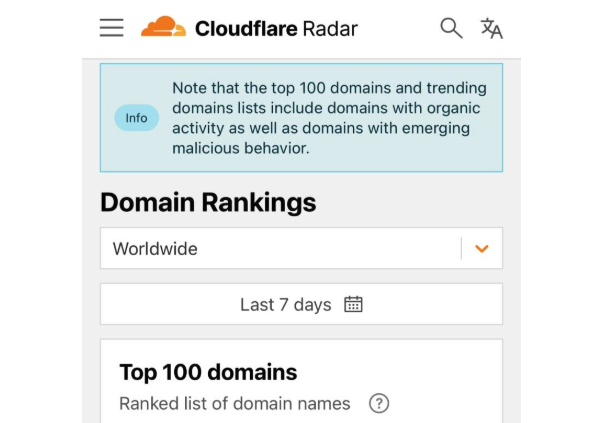
The #1 and #3 positions in this chart are Aisuru botnet controllers with their full domain names redacted. Source: radar.cloudflare.com.

Aisuru is a rapidly growing botnet comprising hundreds of thousands of hacked Internet of Things (IoT) devices, such as poorly secured Internet routers and security cameras. The botnet has increased in size and firepower significantly since its debut in 2024, demonstrating the ability to launch record distributed denial-of-service (DDoS) attacks nearing 30 terabits of data per second.

Until recently, Aisuru’s malicious code instructed all infected systems to use DNS servers from Google — specifically, the servers at 8.8.8.8. But in early October, Aisuru switched to invoking Cloudflare’s main DNS server — 1.1.1.1 — and over the past week domains used by Aisuru to control infected systems started populating Cloudflare’s top domain rankings.

As screenshots of Aisuru domains claiming two of the Top 10 positions ping-ponged across social media, many feared this was yet another sign that an already untamable botnet was running completely amok. One Aisuru botnet domain that sat prominently for days at #1 on the list was someone’s street address in Massachusetts followed by “.com”. Other Aisuru domains mimicked those belonging to major cloud providers.

Cloudflare tried to address these security, brand confusion and privacy concerns by partially redacting the malicious domains, and adding a warning at the top of its rankings:

“Note that the top 100 domains and trending domains lists include domains with organic activity as well as domains with emerging malicious behavior.”

Cloudflare CEO Matthew Prince told KrebsOnSecurity the company’s domain ranking system is fairly simplistic, and that it merely measures the volume of DNS queries to 1.1.1.1.

“The attacker is just generating a ton of requests, maybe to influence the ranking but also to attack our DNS service,” Prince said, adding that Cloudflare has heard reports of other large public DNS services seeing similar uptick in attacks. “We’re fixing the ranking to make it smarter. And, in the meantime, redacting any sites we classify as malware.”

Renee Burton, vice president of threat intel at the DNS security firm Infoblox, said many people erroneously assumed that the skewed Cloudflare domain rankings meant there were more bot-infected devices than there were regular devices querying sites like Google and Apple and Microsoft.

“Cloudflare’s documentation is clear — they know that when it comes to ranking domains you have to make choices on how to normalize things,” Burton wrote on LinkedIn. “There are many aspects that are simply out of your control. Why is it hard? Because reasons. TTL values, caching, prefetching, architecture, load balancing. Things that have shared control between the domain owner and everything in between.”

Alex Greenland is CEO of the anti-phishing and security firm Epi. Greenland said he understands the technical reason why Aisuru botnet domains are showing up in Cloudflare’s rankings (those rankings are based on DNS query volume, not actual web visits). But he said they’re still not meant to be there.

“It’s a failure on Cloudflare’s part, and reveals a compromise of the trust and integrity of their rankings,” he said.

Greenland said Cloudflare planned for its Domain Rankings to list the most popular domains as used by human users, and it was never meant to be a raw calculation of query frequency or traffic volume going through their 1.1.1.1 DNS resolver.

“They spelled out how their popularity algorithm is designed to reflect real human use and exclude automated traffic (they said they’re good at this),” Greenland wrote on LinkedIn. “So something has evidently gone wrong internally. We should have two rankings: one representing trust and real human use, and another derived from raw DNS volume.”

Why might it be a good idea to wholly separate malicious domains from the list? Greenland notes that Cloudflare Domain Rankings see widespread use for trust and safety determination, by browsers, DNS resolvers, safe browsing APIs and things like TRANCO.

“TRANCO is a respected open source list of the top million domains, and Cloudflare Radar is one of their five data providers,” he continued. “So there can be serious knock-on effects when a malicious domain features in Cloudflare’s top 10/100/1000/million. To many people and systems, the top 10 and 100 are naively considered safe and trusted, even though algorithmically-defined top-N lists will always be somewhat crude.”

Over this past week, Cloudflare started redacting portions of the malicious Aisuru domains from its Top Domains list, leaving only their domain suffix visible. Sometime in the past 24 hours, Cloudflare appears to have begun hiding the malicious Aisuru domains entirely from the web version of that list. However, downloading a spreadsheet of the current Top 200 domains from Cloudflare Radar shows an Aisuru domain still at the very top.

According to Cloudflare’s website, the majority of DNS queries to the top Aisuru domains — nearly 52 percent — originated from the United States. This tracks with my reporting from early October, which found Aisuru was drawing most of its firepower from IoT devices hosted on U.S. Internet providers like AT&T, Comcast and Verizon.

Experts tracking Aisuru say the botnet relies on well more than a hundred control servers, and that for the moment at least most of those domains are registered in the .su top-level domain (TLD). Dot-su is the TLD assigned to the former Soviet Union (.su’s Wikipedia page says the TLD was created just 15 months before the fall of the Berlin wall).

A Cloudflare blog post from October 27 found that .su had the highest “DNS magnitude” of any TLD, referring to a metric estimating the popularity of a TLD based on the number of unique networks querying Cloudflare’s 1.1.1.1 resolver. The report concluded that the top .su hostnames were associated with a popular online world-building game, and that more than half of the queries for that TLD came from the United States, Brazil and Germany [it’s worth noting that servers for the world-building game Minecraft were some of Aisuru’s most frequent targets].

A simple and crude way to detect Aisuru bot activity on a network may be to set an alert on any systems attempting to contact domains ending in .su. This TLD is frequently abused for cybercrime and by cybercrime forums and services, and blocking access to it entirely is unlikely to raise any legitimate complaints.

❌