Visualização de leitura

How India’s Ruling Party is Using AI to Boost Hate Speech in States Near Bangladesh

The video posted by a state branch of India’s ruling Bharatiya Janata Party (BJP) showed Assam chief minister Himanta Biswa Sarma shooting an image of two men in Muslim skull caps. “Foreigner-free Assam”, read one caption across the video. “Why did you not go to Pakistan?” said another. 

Screenshots of the now-deleted video shared by BJP on Feb. 7 showing Assam Chief Minister Himanta Biswa Sarma shooting an AI-generated version of INC leader Gaurav Gogoi (in a white skull cap) and another unidentified, bearded man. Source: BJP4Assam/X

One of the men in the photo that Sarma was portrayed as shooting was Gaurav Gogoi, a leader of the Indian National Congress (INC), the BJP’s main competitor in Assam for the state’s upcoming legislative elections next month

Gogoi has stated that he is Hindu but enjoys visiting different religious sites and observing their norms. He has been photographed wearing traditional Muslim attire during religious occasions such as Eid

But the image of him in the video shared by BJP Assam, wearing a casual singlet with a skull cap, was not one of those occasions. 

Bellingcat has seen several dozen videos posted by the BJP that use generative artificial intelligence (AI) alongside anti-Muslim and anti-Bangladeshi messaging in the border states of Assam and West Bengal in December last year, ahead of legislative elections scheduled in both states for April.

Left: Original photo shared by Gogoi on Jun. 17, 2025. Right: An image shared by BJP Assam that was edited with AI to show Gogoi with a skull cap, beard and Quran. Source: gauravgogoiasm/Facebook, BJP4Bengal/Facebook

Bellingcat analysed 499 social media posts containing photos and videos shared on Facebook, Instagram and X by the BJP’s official accounts in the two states for this time period, finding 194 posts that appeared to meet the United Nations’ definition of hate speech: discriminating against persons or communities based on inherent characteristics such as religion and national origin. Of these, 31 (about one in six of the hateful posts) contained the obvious use of AI-generated imagery. 

visualization

Chart: Galen Reich

These appear to be part of a larger pattern of politicians and parties globally using generative AI to amplify hateful or divisive content, particularly ahead of major political events such as elections. 

Ahead of the New York City mayoral race last year, Andrew Cuomo’s official X account shared, then deleted, an AI-generated video depicting Mamdani eating rice with his hands and a Black man in a keffiyeh shoplifting. In Italy, several opposition parties complained to a communications watchdog after deputy prime minister Matteo Salvini’s League party published a series of AI-generated images depicting men of colour attacking women or police officers. And in the UK, videos by an AI-generated rapper funded by the far-right Advance UK party, with lyrics targeting Muslims, were viewed millions of times. 

A Campaign of Hate

Both Assam and West Bengal share a border with Bangladesh. BJP, the world’s largest political party, is currently in power in Assam, where legislative elections are scheduled on Apr. 9. West Bengal, which goes to the polls on Apr. 23, is governed by the Trinamool Congress (TMC).

Map: Pooja Chaudhuri. Source: Goran tek-en, CC BY-SA 4.0, via Wikimedia Commons 

Tensions between India and Bangladesh worsened after former Bangladeshi Prime Minister Sheikh Hasina, who enjoys close ties with Delhi, was ousted in 2024 and fled to India

US-based international affairs expert Mohammed Zeeshan told Bellingcat that the “dehumanising and debasing” terminology used in India to refer to alleged illegal Bangladeshi immigrants, including by senior ministers, has caused resentment towards India in Bangladesh. 

“The situation, in fact, was so bad that Hasina herself had subtly warned the Modi government in public statements that Indian domestic rhetoric was endangering Bangladeshi Hindus, who bore the brunt of that resentment,” Zeeshan said. 

Zobaida Nasreen, a professor of anthropology at Dhaka University, said that anti-Muslim rhetoric intensified by BJP leaders reinforces the belief in Bangladesh that Muslims and Bengalis are being collectively targeted in India.

“Viral videos containing this message tend to spread quickly across Bangladeshi media and social platforms especially on Facebook, enhancing perceptions of hostility and triggering anti-India sentiment or nationalist backlash,” she added.

In December, the month our dataset was collected, Dipu Das, a Hindu garment worker, was beaten to death at an anti-India protest in Bangladesh over allegations that he had made derogatory remarks about Islam. 

And while the administration led by Bangladesh’s newly elected leader Tarique Rahman has sought to reset strained ties, most of the hateful social media posts we saw posted by the BJP in December attacked Bangladeshi Muslims and/or Bengali-origin Muslims in India, showing how tensions between the two countries continue to influence political messaging in India’s border states.

Bellingcat’s analysis included a total of 202 posts by BJP Assam and 297 by BJP’s West Bengal branch on their official accounts. We also looked at posts shared by BJP’s main opponent parties – 194 from INC in Assam and 357 from the TMC in West Bengal – during the same time period in December. 

This included all visual social media posts (containing photos or videos) by each party in December, except those that did not appear to contain any overt political messaging, such as those simply commemorating public holidays. We only counted each photo or video once, regardless of how many platforms it was shared across. 

Although all of the major parties contesting in the Assam and West Bengal state elections appeared to use AI-generated imagery in some of their posts, there appeared to be a particularly high concentration of hateful messaging in the ones posted by the BJP’s accounts. 

In Assam, we identified 28 posts by BJP using apparently AI-generated imagery, of which 24 carried hateful messaging. Of the 194 INC posts we looked at from December, 41 appeared to feature AI-generated imagery, but none of these appeared to carry hateful messaging. 

In West Bengal, we found 14 BJP posts that contained clear indicators of AI-generated imagery, seven of which were hateful. We also identified 15 posts by the incumbent TMC that appeared to feature AI imagery, but none of these appeared to meet the definition of hate speech. 

Support Bellingcat

Your donations directly contribute to our ability to publish groundbreaking investigations and uncover wrongdoing around the world.

When contacted for comment, BJP Assam spokesperson Rupam Goswami did not directly respond to questions on the party’s general use of AI but said they did not post any AI-generated photos of Gogoi. “BJP does not stoop so low,” he told Bellingcat.

As for the “point blank” shooting video, Goswami initially said the person responsible had been punished and removed from the party. However, when asked about Sarma saying that he would re-post the video with those he was depicted shooting labelled as “Bangladeshis”, Goswami said, “[Bangladeshis] need to be completely suppressed.”

BJP West Bengal did not respond to multiple requests for comment by Bellingcat via phone and email.

It is important to note that as generative AI technology improves, it can be increasingly difficult to detect AI-generated imagery. Our manual count of AI-generated imagery only included posts that had obvious signs of generative AI such as unnaturally smooth textures and multiple people with the same faces. It is therefore possible that there were other images in our dataset where generative AI was used more subtly. 

However, Joyojeet Pal, Professor of Information at the University of Michigan, told Bellingcat that the quality of these visuals, or whether they looked real, was not the priority. 

“What politicians in India have understood is that the sociocultural drivers of misinformation are most important for elections, so they harp on about things to the extent that they have started to not care about form over substance. It looks bad? It doesn’t matter,” he said.

More important to voters, according to Pal, was whether they already believed in the narrative contained in the videos, which generative AI could help create more quickly: “AI is helping cement polarised opinions by giving you the kind of content you have already decided you want to engage with.” 

When asked about INC’s use of AI, party spokesperson Aman Wadud said that it was obvious that some of the videos they posted were made with AI and that there was no intention to mislead. 

“AI can be both destructive and creative. We are using it in a creative manner, we are not using it in a destructive manner. We don’t violate people’s dignity, we don’t falsely accuse people,” he said.

TMC did not respond to Bellingcat’s multiple requests for comment via phone and email by publication time.

Portraying Bengali Muslims as ‘Foreigners’

The largest category of hateful messaging Bellingcat observed in the BJP’s posts targeted Bangladeshi or Bengali-origin Muslims, referring to them as “infiltrators” or “foreigners”. We counted 66 such posts by the BJP’s Assam and West Bengal branches from December, of which eight appeared to contain obvious AI-generated imagery. 

Bengali-origin Muslims are often stereotyped as “illegal immigrants” in the state, although members of the community have lived in India since the late 1800s

Last year, the BJP deported thousands of alleged undocumented migrants – reportedly including Indian Muslim citizens – to Bangladesh. Human rights groups have called the deportations unlawful and discriminatory, as well as lacking in due process

One video referencing this theme shows AI-generated visuals of protests against “illegal infiltration” in Assam, with the caption urging people to “wake up” or the country would “turn into Bangladesh”. 

A different one uses real footage from past violence in Assam mixed in with images of Muslim men. A song playing in the background accuses them of taking over “Assamese land” and shows AI images of “Assamese” people, i.e. those not in stereotypical Muslim clothing, crying.

An AI-generated image of a crying man in non-Muslim clothing and a traditional Assamese scarf on his shoulders. Source: BJP4Assam/X

Both videos use religious markers to draw a distinction between “infiltrators” – men in skull caps or lungis associated with Bengal-origin Muslims – and “citizens” in non-Muslim attire. 

Clothing is often used by the Hindu far-right as a visual shorthand for identity and a deepening religious divide. In 2019, Prime Minister Narendra Modi said of protests against a controversial citizenship law that those responsible for violence could be “identified by their clothes”

In the hateful posts seen by Bellingcat, both real and AI-generated images of opposition figures – particularly Gogoi – were shown alongside messaging that suggested that they supported “foreigners” or “infiltrators”. 

The Center for the Study of Organized Hate (CSOH) also noted, in a 2025 report on AI-generated imagery and Islomophobia in India, that Hindu far-right politicians and media outlets have invoked and reinforced the trope of Muslims as “infiltrators” for years. 

“AI-generated images on these themes reinforce associations between Muslim identity and illegality, reinforcing xenophobic and Islamophobic stereotypes. In doing so, they play a powerful role in justifying exclusionary policies and normalising discrimination against Muslims,” the report said. 

‘Save Hindus’

Zenith Khan, a data analyst who worked on the CSOH report, noted that AI-generated propaganda was often tightly knit with current political moments, and its impact depended on “timing it right” especially when “people are emotionally charged”. 

The violence against the minority Hindu community in Bangladesh has been used by the BJP to raise concerns over the safety of Hindus in India. 

Days after Das’ lynching, the Assam state branch of BJP posted a video with an image of his face – except that it was manipulated with AI to show tears streaming from his eyes. “Save Hindus”, said the text accompanying the video. 

Posts by BJP’s West Bengal unit also seemed to frame Muslims as criminals or threats. A video, styled after the TV show “Stranger Things”, raised alarms over an “upside down” version of the state under the current government. 

A man is depicted being chased by men in skull caps. Arrows label them as “Ralib,” “Galib,” and “Chalib” – a play on Muslim names ending in “-lib” – in case the skull caps left any ambiguity about their Muslim portrayal. 

“Stranger Things” themed post that depicts Hindus under threat from Muslims in West Bengal. Source: BJP4Bengal/X

INC filed a police complaint in September last year against the BJP for sharing AI videos targeting Gogoi and the Muslim community, as well as another complaint in relation to the video of Sarma portrayed as shooting two men “point blank” in February. 

INC Assam spokesperson Wadud said that no action had been taken on the party’s police complaints as far as he knew. 

Disinformation researcher Bharat Nayak told Bellingcat that it has always been tech platforms’ responsibility to control new types of content. 

“The goal post can’t shift. This has always been a tech problem,” he said. 

When this responsibility is shrugged off, Nayak added, the result is a lack of accountability. “If you’re using old videos from other countries as new, you will have people countering you. But AI-generated videos can be shared without context just to spread hate – like showing people in skull caps – and the ‘when, where, how’ questions vanish.”

Both Meta – which owns Facebook and Instagram – and X have policies against hateful conduct. 

Meta also announced in 2024 that it would start adding “AI info” labels to more content detected as AI-generated, while some X users spotted a similar feature introduced on the platform last month. Only five of INC’s AI visuals that we identified – and none of those by TMC or the BJP – had a disclaimer that said “AI-generated”. 

Bellingcat reached out to Meta and X for comment on whether the posts we identified breached their terms of use regarding hateful conduct or labelling AI-generated posts. A Meta spokesperson said they were reviewing the flagged content and “will take appropriate action on any violations of our policies”. As of publication, X had not responded.


Kalim Ahmed from Bellingcat’s Discord Community contributed research to this piece.

Bellingcat is a non-profit and the ability to carry out our work is dependent on the kind support of individual donors. If you would like to support our work, you can do so here. You can also subscribe to our Patreon channel here. Subscribe to our Newsletter and follow us on Bluesky here, Instagram here, Reddit here and YouTube here.

The post How India’s Ruling Party is Using AI to Boost Hate Speech in States Near Bangladesh appeared first on bellingcat.
Violence in the Name of Cows: The ‘Animal Welfare’ Groups That Beat Up Truck Drivers in India

This article is a collaboration with Alt News, a non-profit fact-checking website in India. Read the article on Alt News’ website here.

They describe themselves as “cow protectors” or “gau rakshaks” in Hindi. On social media, they often post about carrying out charitable work such as operating ambulances for sick or injured cows, feeding stray animals and distributing food to people.

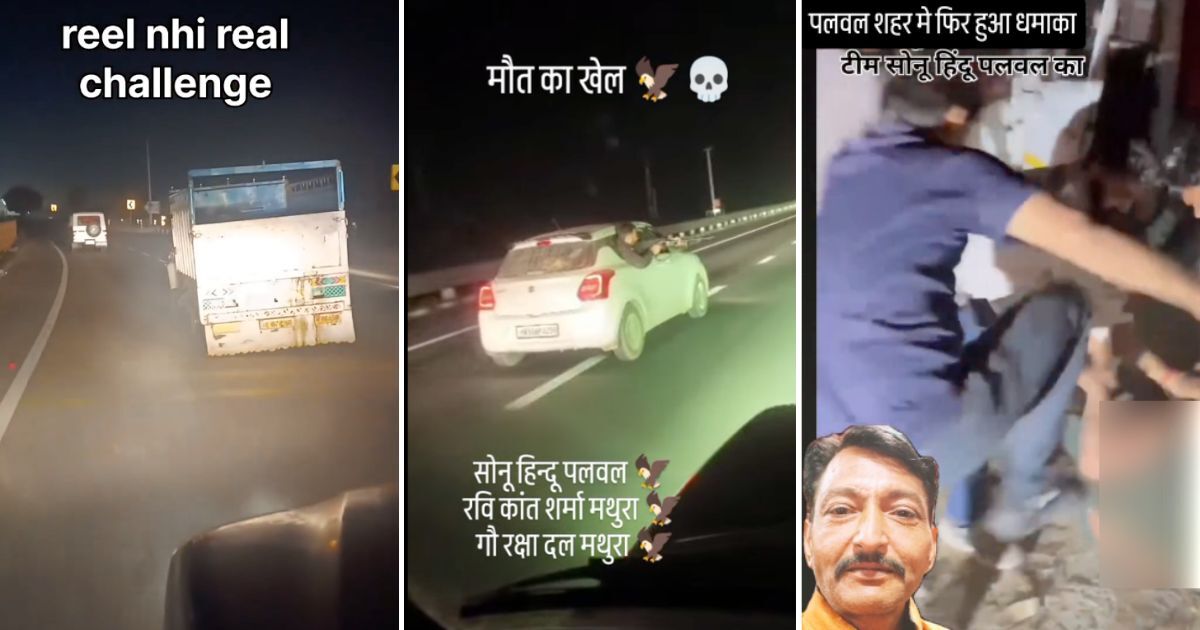
But in the dark of the night, their work takes on a more violent edge. Multiple photos and videos show members of “cow protection” groups chasing, shooting at and beating up truck drivers they claim are “smuggling” cows for slaughter. 

Stills from videos of a car chase (left), shooting at a truck (centre) and assaulting truck drivers (right). Sources: shivadahiya92 / Instagram, gau_raksha_dalmathura / Instagram and parveenvashisth1414/ Instagram

Cows are considered sacred in Hinduism, the dominant religion in India. Many states in the country prohibit the slaughter of cows and have strict laws on the transportation, sale and purchase of cattle. These laws have become more stringent since the Hindu nationalist Bharatiya Janata Party (BJP) came into power in 2014.

The vigilantes attacking truck drivers tend to be closely aligned with hardline Hindu nationalist organisations, and a majority of their victims are Muslims. And while they claim to be doing this for the sake of the cows, in some of the videos the animals can also be seen injured from vehicles overturning during aggressive chases. 

Elaine Pearson, Asia Director at Human Rights Watch, told Bellingcat that cow protection has become part of the political agenda of leaders of the BJP and in some cases they have backed the alleged actions of the suspects “while the police have failed to take action against them”.

Support Bellingcat

Your donations directly contribute to our ability to publish groundbreaking investigations and uncover wrongdoing around the world.

Bellingcat and our partners at the Indian outlet Alt News found videos on social media showing violent assaults by members of five self-described animal welfare groups, mainly operating in the states of Uttar Pradesh and Haryana where incidents involving cow-related violence have frequently been reported

(Editor’s note: We are not sharing links to these videos to avoid amplifying content depicting violent attacks seemingly targeting minority groups. However, if you are a journalist or researcher interested in obtaining this dataset, please email inquiries@bellingcat.com.)

Some of the leaders of these vigilante groups, when we reached out to them, claimed that they were working closely with the local police. One even received an award for “cow and social service” from a cabinet minister, alongside police officers. Senior police officers from the districts that these groups operate in did not answer questions about alleged police support for the cow vigilantes when we could reach them. 

While these groups most likely only represent a small fraction of the “cow vigilantes” in India, who have been reported on by the media and human rights groups in the country for years, our investigation sheds more light on how they informally work together to carry out mob violence against truck drivers.

Akhil Bharatiya Gau Seva Samiti (ABGS)

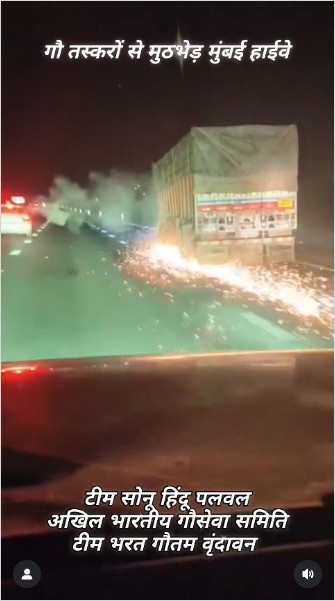
In a video uploaded in February this year, several men in cars are seen chasing a truck down a highway at night. A man from one of the cars pulls out a shotgun and fires at the truck. Police sirens can be heard in the background but law enforcement does not appear to interfere. 

Still from the video of cars chasing a truck. Source: akhil_bharatiya_gauseva_samiti / Instagram

Akhil Bharatiya Gau Seva Samiti (ABGS), which uploaded the car chase video, is a trust – a non-profit organisation (NPO) formed to promote charitable activities. It was established in 2022, according to the Indian government’s non-profit database. ABGS is based in Vrindavan, Mathura district in the state of Uttar Pradesh. 

While its day job may seem to be “animal welfare”, videos of its members terrorising truck drivers at night are routine and oftentimes, promoted by the trust itself. 

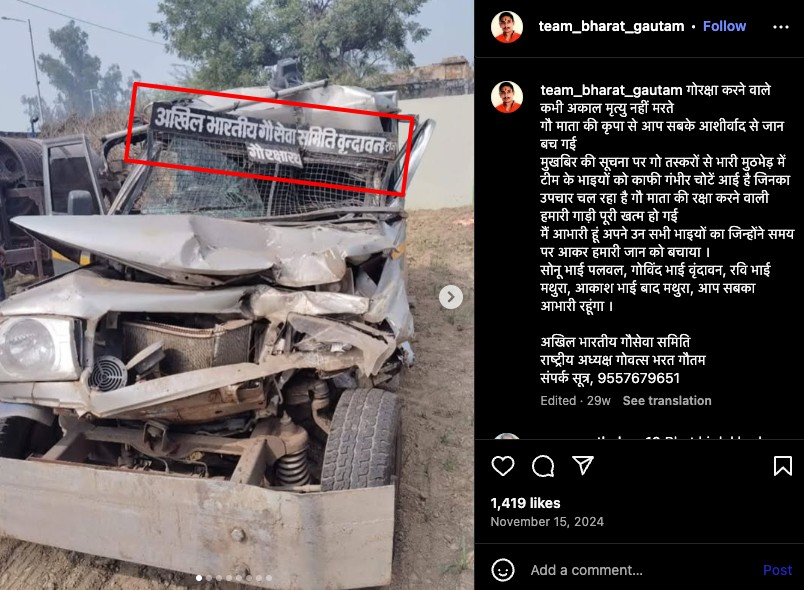
ABGS president Bharat Gautam shared a post in November 2024 that shows a smashed-up car, with a sign for “Akhil Bhrataiya Gau Seva Samiti” on top of it, after what he described in Hindi as a “heavy encounter with cow smugglers”. 

Still from the video of cars chasing a truck. Source: akhil_bharatiya_gauseva_samiti / Instagram

Alt News spoke to Gautam, who said that cows are “not an animal”, but a mother figure in Hinduism.

Gautam claimed that his team works closely with Vrindavan police to save cows from being slaughtered for meat. “We either pass on the information we receive [about trucks transporting cattle] to the police and they accompany us in our pursuit or we patrol areas we know are frequented by cow smugglers,” he said, adding that the police register cases against the drivers based on complaints filed by his team once the vehicle is caught. Multiple calls by Alt News to the Vrindavan police station’s general line, as well as to the direct lines of senior police officials from the district, to request for comment on ABGS’ claims went unanswered. 

“We help the administration but they can’t do everything so it’s also our duty to protect our religion, our mother,” said Gautam.

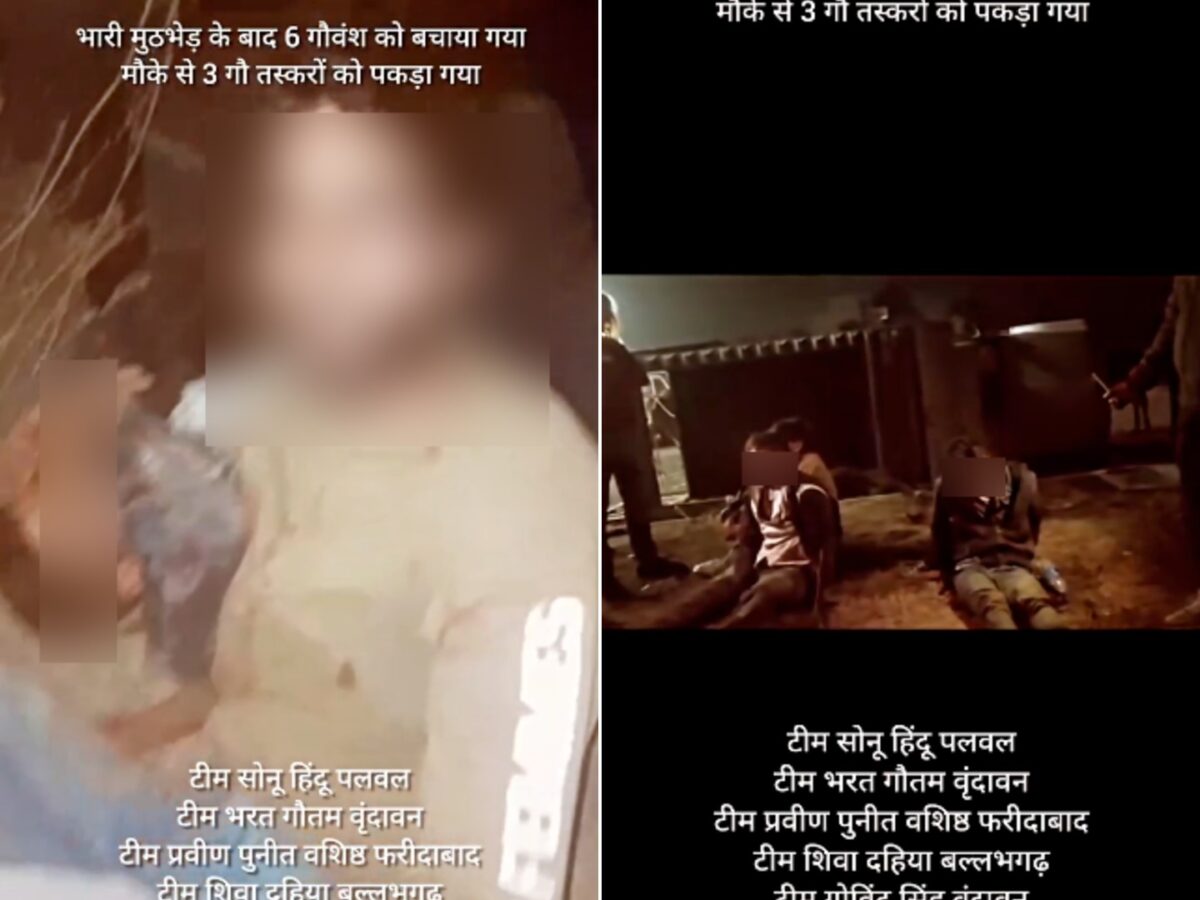
However, videos shared by his team reveal that the cows they claim to rescue are also frequently injured during their car chases. For example, a video from February last year shows a pick-up truck that had overturned apparently as a result of being pursued, causing the cattle inside to fall onto the road. The video shows three men sitting on the ground, looking gravely injured, and several people hitting them while posing for photos. Meanwhile, the cows can be seen sprawled on the side of the road, also apparently injured.

Still from a video that shows three men injured (left) and their hands tied behind their backs (right). Source: team_bharat_gautam/ Instagram

Gautam’s team operates in Uttar Pradesh, which is one of at least 20 out of 28 states in India that either partially or completely bans the slaughter of cows and the sale of beef. When Alt News asked Gautam about his team’s use of violence, he shifted the blame onto the truck drivers. “Cow smugglers collide with our cars … shoot at us,” he said.

ABGS’ headquarters are located in Vrindavan city’s Venkatesh Temple. When Alt News contacted the temple, they claimed to have no connection with the group. “We only rent out a space,” a temple staff member said. 

Gautam told Alt News that the temple does offer some support to his team, including manpower and financial assistance. But he maintained that most of their work was self-funded and denied receiving any government aid or donations, despite the trust having appealed for donations on social media.

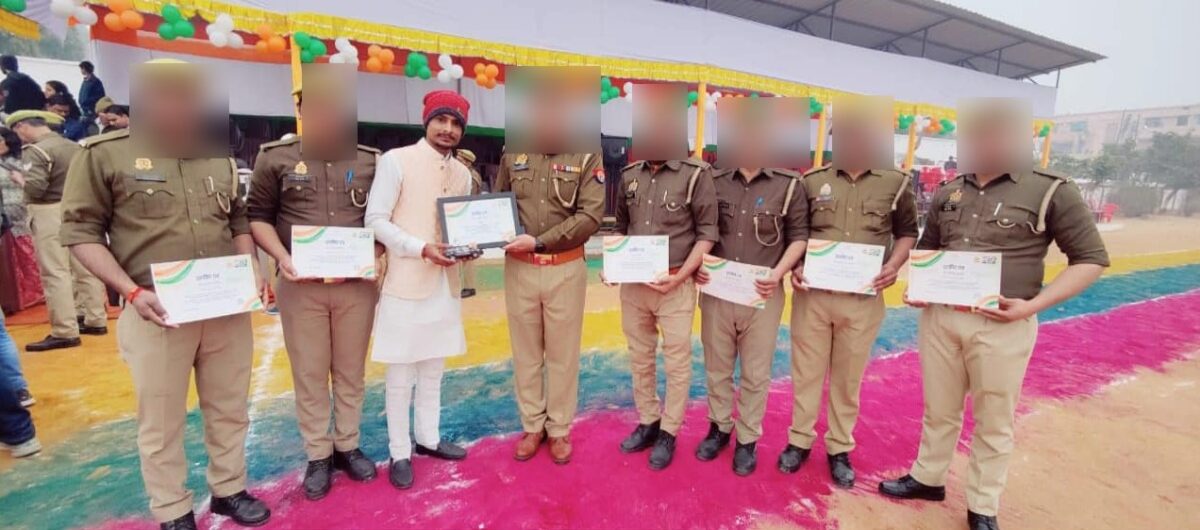
His “cow protection” activities have also won him recognition from the Uttar Pradesh government. In January last year, he received an award for “cow and social service” from a cabinet minister in the state. For this, he was congratulated in the presence of the district magistrate of Mathura city, who is responsible for maintaining law and order in the district, and Mathura police. 

Bharat Gautam posing with the police with his award. Blurring by Bellingcat. Source: Bharat Gautam/ Facebook

Multiple calls made to senior police officers in Mathura district went either unanswered or the officers did not comment when asked about the Mathura police’s relationship with Gautam and whether they supported cow vigilantism.

Team Sonu Hindu Palwal

While ABGS’ vigilante activities have been particularly visible on social media, our investigations found it is part of a network of local groups based in Uttar Pradesh and Haryana. In a video uploaded on June 27, Gautam says that cow vigilantes have been working under the guidance of one “Sonu Hindu Palwal” the past five years. 

In March, videos shared by ABGS and several related cow vigilante groups show cars chasing a truck, and two men being brutally beaten and kicked.

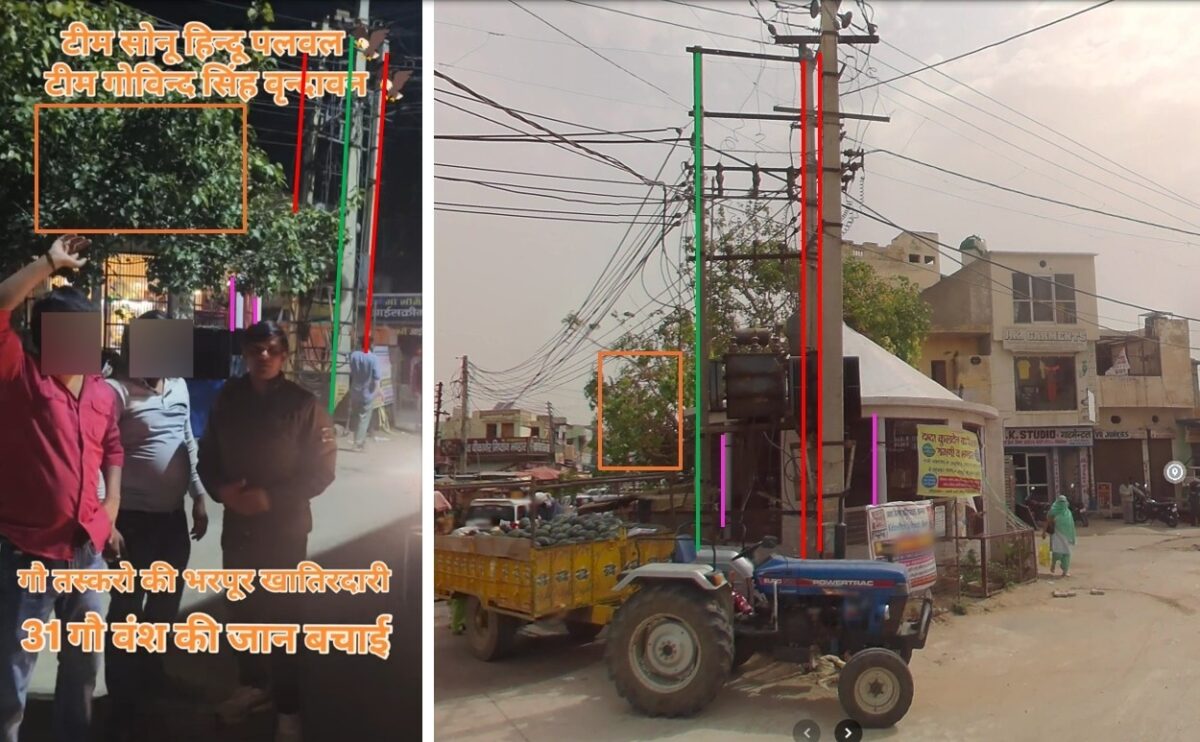
Bellingcat geolocated the incident to a location outside a police station in Beri in the state of Haryana based on the trees, lamp posts and a temple seen in one of these videos, posted by a member of “Team Sonu Hindu Palwal”.

Stills from a video showing the Beri incident. Blurring by Bellingcat. Source: Instagram/robin_singh_chattha
Left: Screenshot from Instagram video by the account robin_singh_chattha, with Sonu shown in black; Right: Location on Google Maps in Beri, Haryana

This location matches reports of an attack that took place in Beri on March 9, where eight men  were arrested after a police officer on the scene filed a complaint. The officer’s complaint stated that the mob shouted “we will not leave you Muslims alive today” while beating up the two men from the truck. 

A man who goes only by one name, Sonu – his official name listed on court documents – was among the eight arrested. He operates a team named after himself called “Team Sonu Hindu Palwal”. Palwal is the district in Haryana state where his team primarily operates.

Sonu told Bellingcat that he is the Palwal district president of Gau Raksha Dal (GRD) – literally “cow protection” unit – an NPO established in 2012. The GRD is one of the largest cow protection networks in India, and its leader told Human Rights Watch in 2017 that the network’s volunteers have a presence in nearly every state.

When asked about the incident in Beri, Sonu said that while they were chasing the truck drivers, the truck collided with another car, and the passengers of that car beat up the truck drivers. “We were blamed”, he said – even though videos of the assault were shared by members of his own team.  

Bellingcat also showed Sonu several videos posted by cow vigilante groups including Team Bharat Gautam that either tagged Team Sonu Hindu or mentioned them in their captions. These videos showed men surrounded by members of the cow vigilante groups, who were hitting them or otherwise treating them roughly. Sonu was personally seen posing for a group photo in one of these videos, even though he wasn’t shown assaulting anyone. When shown these videos, Sonu denied that his team beat people up.

The cow vigilante leader did not directly respond to our questions about what he thought about violence committed by members of his team, but said: “Do whatever you want. Our job is to save cows and we will continue to do so.”

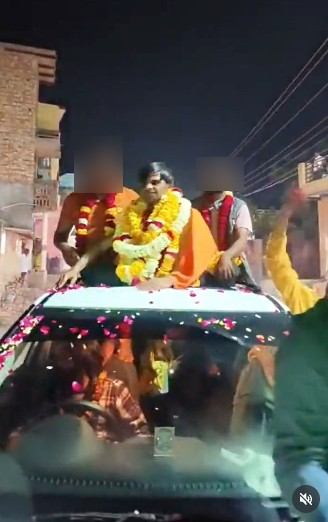
The day after his arrest in Beri, videos of Sonu’s supporters celebrating his release began circulating on Instagram. He and others from his team were paraded in a car with garlands around their necks and a procession followed them while dancing to “Hindutva pop”, a genre of music associated with the Hindu far-right which carries lyrics with anti-Muslim rhetoric.

Still from a video of celebrations after the release of Sonu (centre with garlands around the neck). Blurring by Bellingcat. Source: Instagram/robin_singh_chattha

The men beaten up by Sonu and his team in March were arrested after a counter-complaint under animal cruelty and cow protection laws was filed against them.

When Alt News called the police station’s number, the police personnel who answered did not seem to know whether the two men seen being attacked in the video were still in jail. One of them said that the case has been transferred to the crime unit but was unable to provide any details of the investigating officers. 

However, bail orders for the two men who were beaten up, which Bellingcat found on the district court website of Palwal, indicated that they each spent at least two months in custody before being released on bail.

Alt News spoke to Sonu who said that his team is tipped off by “informants” whenever cows are being transported, receiving details such as the vehicle’s route and licence plate number. 

According to Sonu, the rescued cows are taken to shelters, while the people transporting them are handed over to the police. He said that the police sometimes show up after a vehicle is intercepted, but at other times the police are with the gau rakshaks during these incidents. 

Alt News’ questions to the Additional Superintendent of Police, Palwal about Sonu’s claim that the police accompanies his team in their pursuits of truck drivers went unanswered.

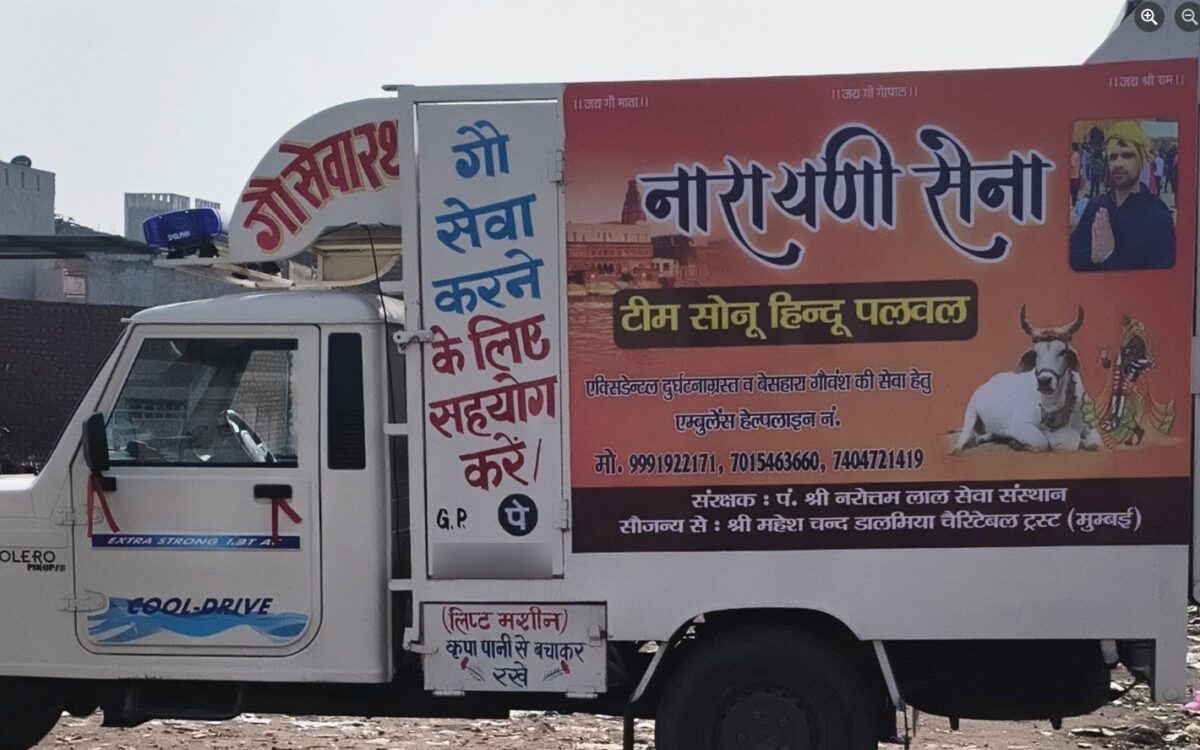
Bellingcat also found links between Team Sonu and a Mumbai-registered charitable trust, through a photo Sonu posted showing a large truck which he described as an “ambulance for sick or injured cows in Palwal”. There is a Google Pay number shown on the vehicle for receiving donations.

A photo of a large truck, described as an ambulance for cows, with a Google Pay number for donations (blurred by Bellingcat). Source: Sonu Hindu/ Facebook

The signage on the ambulance says the service is “courtesy of” an organisation called “Shri Mahesh Chand Dalmia Charitable Trust”, which appears to be a misspelling of “Shri Mahesh Chandra Dalmia Charitable Trust”, a registered trust based in Mumbai. 

Sonu told Alt News that Shri Mahesh Chandra Dalmia Charitable Trust supported his team’s ambulance after local priests in Vrindavan introduced the organisation to his work. 

According to the government’s NPO database, the trust works in the sectors of “Education & Literacy, Any Other, Health & Family Welfare”. The trustee, or person who manages the trust, is listed as Satyadeo Banka. 

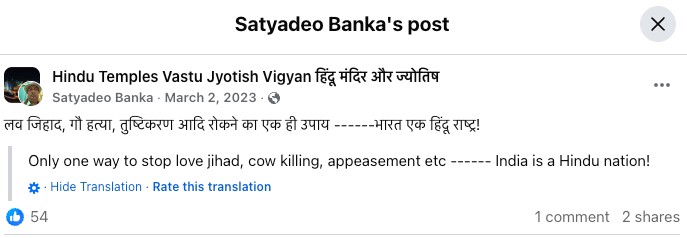
Banka is regularly tagged on Facebook in videos of Team Sonu’s attacks on truck drivers. His posts on the platform also frequently promote ideas in line with Hindutva, a nationalist ideology that advocates for establishing India as a Hindu nation-state. 

Satyadeo Bank’s post on a Facebook group.

We attempted to contact Banka on social media but did not receive any response. Alt News contacted the trust’s president, Rahul Dalmia, on the phone and emailed him about his organisation’s relationship with Team Sonu Hindu Palwal, asking whether he was aware of the group’s violent activities and Banka being tagged in their “cow protection” videos. Dalmia declined to be quoted when asked about the trust’s work over the phone, and did not respond, as of the time of publication, to further questions over email about whether the trust supported cow vigilantes in any way.

Live For Nation 

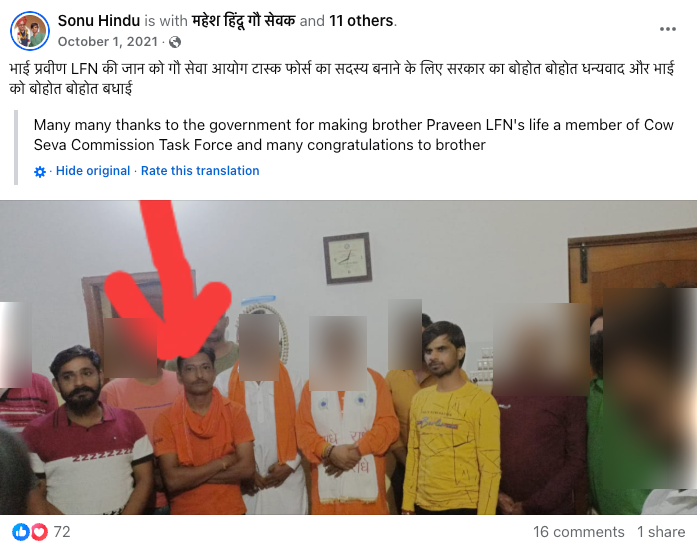
In 2021, Sonu congratulated someone he referred to as “LFN’s Parveen” for joining the Haryana government’s cow protection force, in a post on Facebook. LFN is the abbreviation of “Live For Nation”, a registered NPO in Haryana’s Faridabad which aims to “save cows”. This group was also involved in a car chase last year that resulted in the death of a 20-year-old man.

On Aug. 23, 2024, Aryan Mishra, 20, was out with his friends on a drive when five cow vigilantes – all LFN members – allegedly “mistook” them to be cattle smugglers and began chasing their car before firing at them. Mishra was killed in the incident. 

One of the accused who was arrested, Anil Kaushik, reportedly told Mishra’s father that he thought the boy was Muslim and regretted killing a Brahmin, the highest ranking caste in the Hindu caste system. Kaushik identified himself as a member of Haryana government’s special cow protection task force, which Parveen is also a part of. 

In a Facebook post, Sonu (right, in yellow) congratulated Parveen Vashisth (second from left, indicated by the arrow in the original post) for becoming a member of Haryana govt’s cow protection task force. Govind Singh, the leader of Gau Seva Mission – another group linked to cow vigilantism – is also in the same picture (left). Source: Sonu Hindu/ Facebook 

His full name is Parveen Vashisth and his Facebook bio says that he is a member of the Haryana government’s “special cow protection task force”. Vashisth also names the task force while sharing videos on Instagram of cow vigilantes from Team Sonu Hindu chasing trucks. 

Alt News reached out to the “Haryana Gau Seva Aayog”, the government body responsible for overseeing the task force. Its chairman, Sharwan Garg, said that anyone can engage in cow protection work independently, provided they stay “within the limits of the law and coordinate with the authorities”.

However, Vashisth’s videos on Instagram showing Team Sonu Hindu chasing after trucks, shooting at them and assaulting drivers appear to show that these “limits” are often breached.

Gau Seva Mission

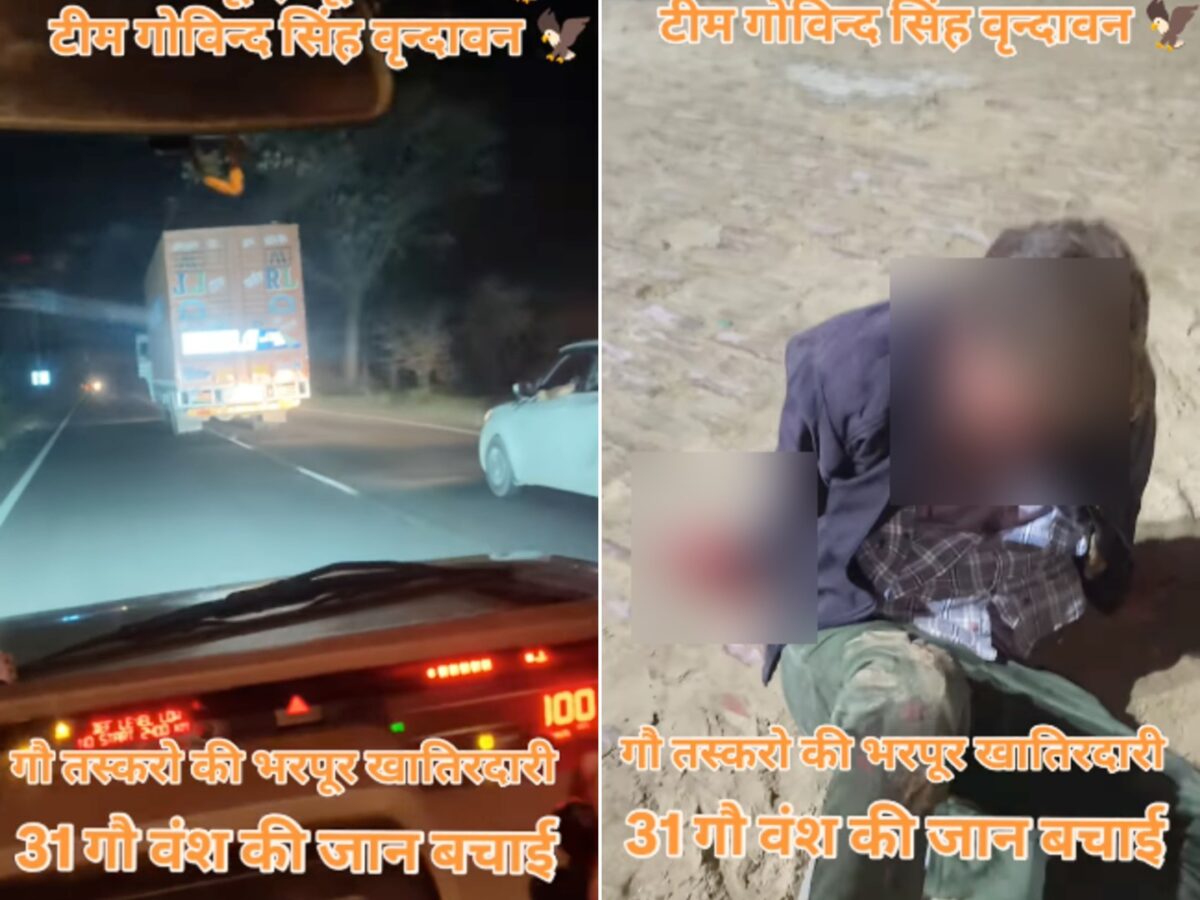
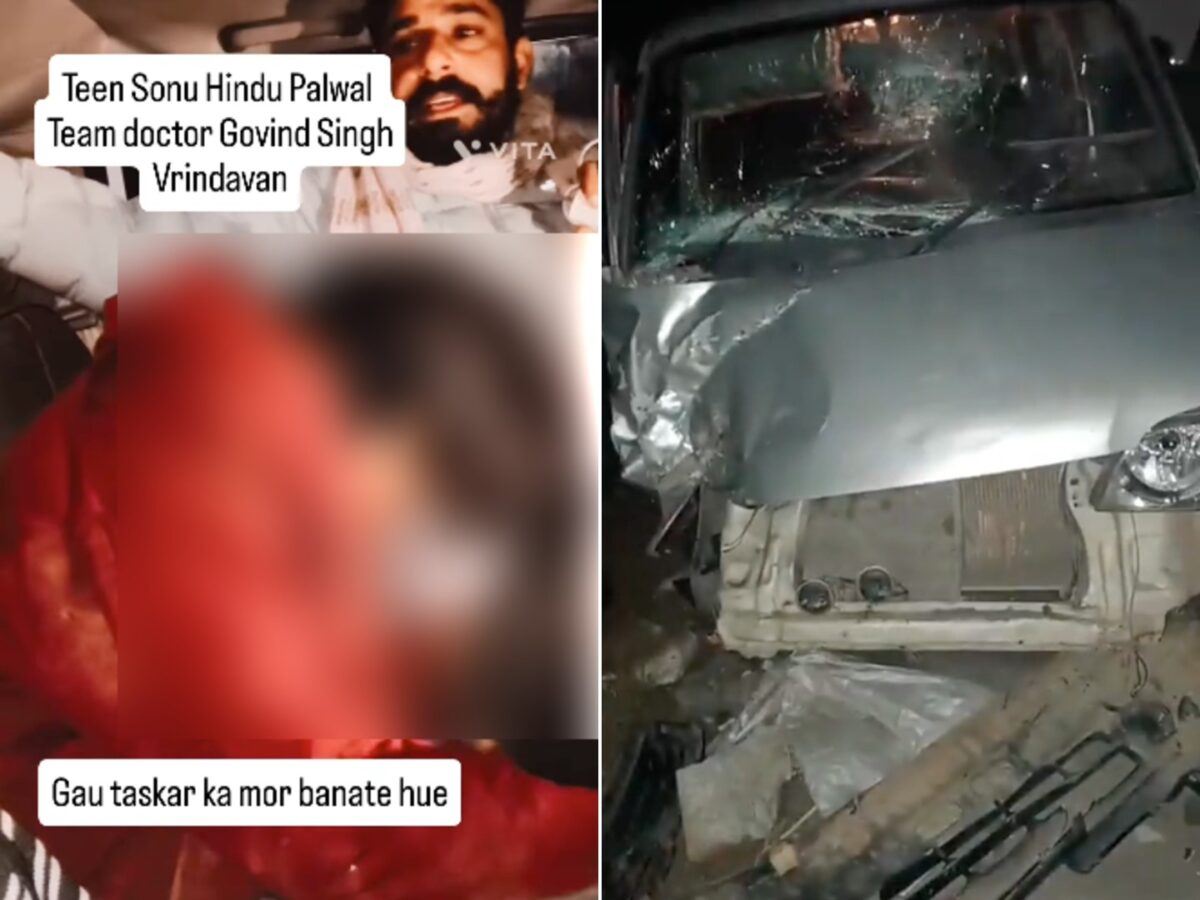
Another organisation that claims to work for cow welfare and operates in the same network uploaded a video on Jan. 9, 2025, showing vigilantes capturing a man they claimed was a “cow smuggler”. In multiple videos, the man looks gravely injured and bloody. His vehicle is also badly damaged. 

Source: team_gauseva_mission_vrindavan/ Instagram (left); Shiva Dahiya/ Facebook (right)

The organisation, “Gau Seva Mission”, is based in Vrindavan, like ABGS. Its leader, Govind Singh, is frequently tagged in videos of attacks on alleged “cow smugglers” along with Bharat Gautam, Sonu and Parveen Vashisth. 

Singh told Alt News that he is a veterinary doctor by profession and bears most of Gau Seva Mission’s expenses through his private work. 

Gau Seva Mission appears to be known to the Uttar Pradesh government. In November last year, Singh uploaded photos and videos of the chairperson of the Uttar Pradesh government’s cow service commission visiting his office. 

Singh told Alt News he used to be a member of the GRD – the NPO that Sonu is a member of – but left the organisation to start his own group, although he did not say when this was. One of Singh’s Facebook posts from three years ago gives the helpline number of GRD’s Vrindavan branch – the same number is now the helpline number of Gau Seva Mission. Its office also used to be at the same address as the office of the Vrindavan branch of GRD at least until March 2022, according to older images of the location on Singh’s Facebook account. 

Gau Vansh Sewa Dham

Another organisation that claims to be involved in animal welfare but whose leader has been involved in cow-related violence is “Gau Vansh Sewa Dham”, in Haryana’s Faridabad. It is run by Shiva Dahiya, who told Alt News that the group runs a hospital for cows.

Videos of injured cows being treated are all over the Facebook page of the organisation, and Gau Vansh Sewa Dham makes regular appeals for donations to support their rescue and relief efforts. Dahiya said that the money for his organisation’s work is raised from the community. 

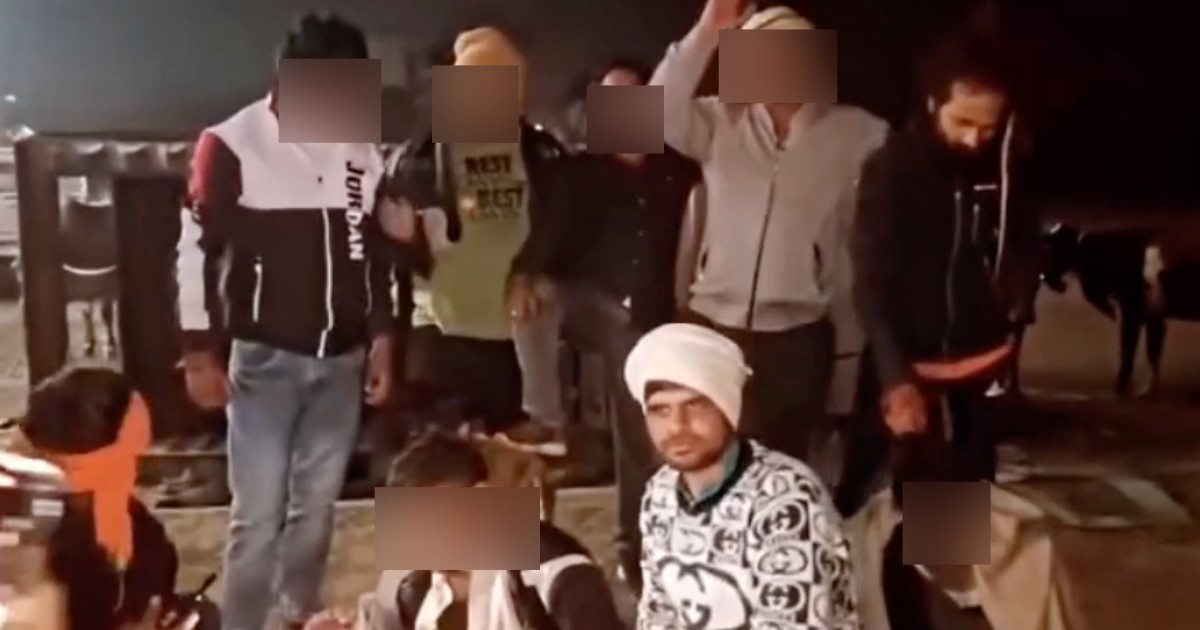
Posts on Instagram that tag Dahiya show him seemingly participating in or being present at the scene of vigilante attacks targeting those transporting cattle. For example, one post from February shows him holding tire puncture spikes to stop a truck. In another, he is seen pulling an injured man, who was slumped over, up by his hair so his face was visible as a group of vigilantes – also including Sonu – posed for a picture with several captured men. 

Shiva Dahiya (extreme right) and Sonu (sitting down) posing with men that were shown being assaulted by cow vigilantes in a video posted on social media. Blurring by Bellingcat. Source: team_bharat_gautam / Instagram

However, when Alt News asked if the car chases ever got violent, Dahiya said, “We don’t want to do any wrong by our hands”. And when asked if he had ever done anything wrong, he replied, “By the grace of God, never.”

Dahiya denied there was any violence committed by “cow protectors”.

“We never beat anyone,” he told Alt News.


Shalaka Shinde contributed research to this piece.

Bellingcat is a non-profit and the ability to carry out our work is dependent on the kind support of individual donors. If you would like to support our work, you can do so here. You can also subscribe to our Patreon channel here. Subscribe to our Newsletter and follow us on Twitter here and Mastodon here.

The post Violence in the Name of Cows: The ‘Animal Welfare’ Groups That Beat Up Truck Drivers in India appeared first on bellingcat.
India-Pakistan Conflict: How a Deepfake Video Made it Mainstream

India and Pakistan have been trading blows in the wake of a militant attack on tourists in Indian-administered Kashmir last month. 

On May 7, India said it had launched missile strikes in Pakistan and Pakistan-administered Kashmir. Pakistan – which denies any involvement in the April attack on the tourists, most of whom were Indian – then claimed to have shot down Indian drones and jets.

Claims and counterclaims of ongoing strikes and attacks have been forthcoming from both sides. Some have been difficult to immediately and independently verify, creating a vacuum that has enabled the spread of disinformation.

For example, on May 8, a deepfake video of US President Donald Trump appearing to state that he would “destroy Pakistan” was quickly debunked by Indian fact-checkers. Its impact was therefore minimal.

However, the same cannot be said of another deepfake video spotted by Bellingcat and, by the time of publication, at least one Pakistani outlet.

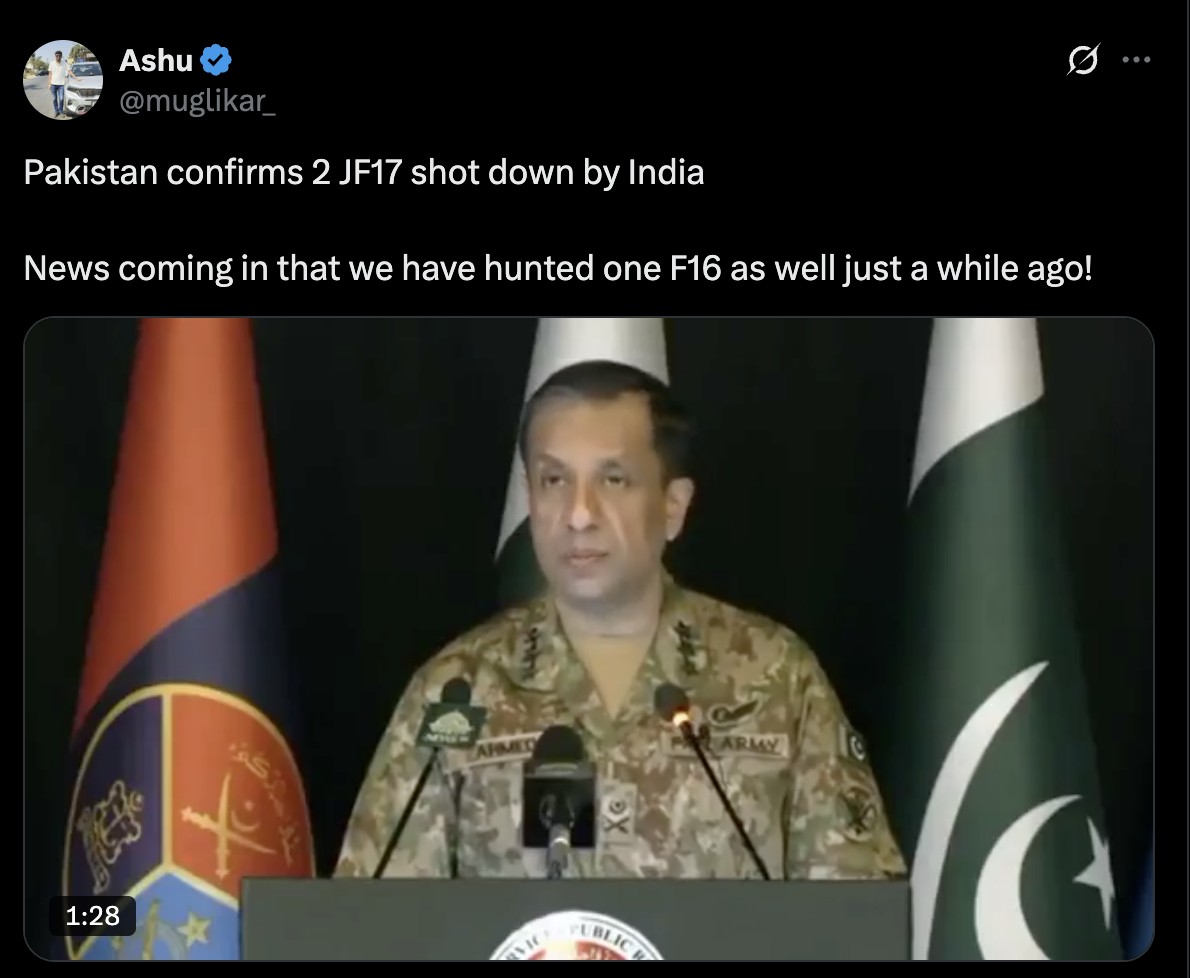
The altered video had been shared on X (formerly Twitter) nearly 700,000 times at the time of publication and purports to show a General in the Pakistani army, Ahmed Sharif Chaudhry, saying that Pakistan had lost two of its aircraft. 

A screen grab of a video from X (formerly)Twitter that falsely claimed to show a video of a Pakistani general stating that two Pakistani jets had been shot down.

A Community Note was later added to the video on X detailing it as an “AI generated deepfake”.

However, several Indian media companies had already picked up and ran with the story, including large outlets like NDTV. Other established news media that featured quotes from the altered footage in their coverage include The Free Press Journal, The Statesman and Firstpost

Bellingcat was able to debunk the video by finding another clip of the same press conference from last year. The video confirms that a different audio was added over the original footage, with Chaudhry’s lips appearing to sync with the altered audio.

The position of the microphones, Chaudhry’s position in relation to the flags, and his movements are identical. Both videos cut to the audience which is also the same.

You can see the video published on Facebook in 2024 here and the manipulated video published on X here.

Mohammed Zubair, co-founder of Indian fact-checking organisation Alt News, told Bellingcat that mis-and-disinformation are commonly found on Indian social media. But while it may be easy enough for trained fact-checkers to debunk a deepfake where an old video is recycled and the audio manipulated, Zubair was concerned that the common public may just hit the share button because of its emotional appeal. “It is actually very worrisome because it looks very convincing,” he said.

Bellingcat contacted NDTV, The Free Press Journal, The Statesman and Firstpost about the details of this story but did not receive a response before publication.

NDTV and The Statesman later deleted their reports without clarification. Yet experts warn videos like these act as a warning to the continued and evolving dangers of disinformation. 

Rachel Moran, a senior research scientist at the University of Washington’s Center for an Informed Public, told Bellingcat that the speed with which such videos can be created and posted brings a new challenge.

“In crisis periods, the information environment is already muddied as we try to distinguish rumours from facts at speed,” Moran said. “The fact that we now have high-quality fake videos in the mix only makes this process more taxing, less certain and can distract us from important true information.”


Correction: This article was amended on May 9 to clarify that the Facebook video of Chaudhry was published in 2024 and not 2025.

Bellingcat is a non-profit and the ability to carry out our work is dependent on the kind support of individual donors. If you would like to support our work, you can do so here. You can also subscribe to our Patreon channel here. Subscribe to our Newsletter and follow us on Bluesky here and Mastodon here.

The post India-Pakistan Conflict: How a Deepfake Video Made it Mainstream appeared first on bellingcat.
❌