 Entrar
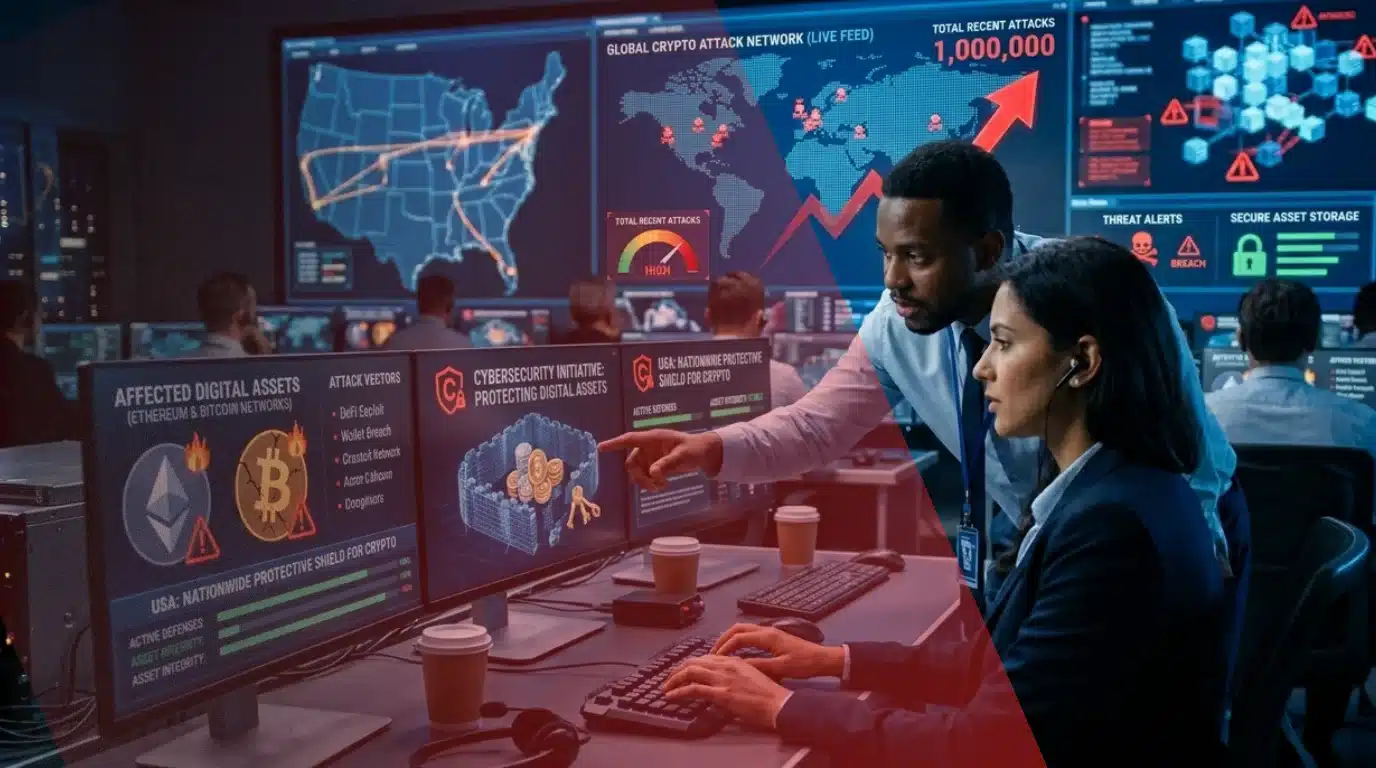
U.S. Treasury Rolls Out Cybersecurity Information Sharing Initiative as Crypto Attacks Rise


With 90% of organizations unprepared for quantum threats, the shift to post-quantum cryptography (PQC) is a structural necessity. Explore the "harvest now, decrypt later" risk and the NIST PQC standards.
The post The Quantum Clock is Ticking and Your Encryption is Running Out of Time appeared first on Security Boulevard.
CTG, now operating under the Cegeka Group, is rolling out a cyber resilience scoring dashboard at RSAC 2026 that boils an organization’s security posture down to one number. The dashboard consolidates results from multiple security assessments into a single view. It produces an overall resilience score, domain-level maturity indicators, and progress tracking mapped to NIST,..
The post CTG Launches Cyber Resilience Scoring Dashboard to Give CISOs a Single Risk Number appeared first on Security Boulevard.

Collaboration is more important than ever—and doable—according to the WEF’s Global Security Outlook 2026 report.
The post Collaboration Critical As Geopolitical Pressures, AI Reshape Cybersecurity appeared first on Security Boulevard.

 Image Source: PIB[/caption]
These space cyber security guidelines are advisory in nature but provide a structured baseline for organizations to assess and improve their cyber posture. Importantly, the document pushes stakeholders to adopt risk-based governance rather than reactive compliance.
Image Source: PIB[/caption]
These space cyber security guidelines are advisory in nature but provide a structured baseline for organizations to assess and improve their cyber posture. Importantly, the document pushes stakeholders to adopt risk-based governance rather than reactive compliance.
Organizations today continuously face a number of fast-moving cyber threats that regularly challenge the effectiveness of their cybersecurity defenses. However, to keep pace, businesses need a proactive and adaptive approach to their security planning and execution.
Cyber threat exposure management (CTEM) is an effective way to achieve this goal. It provides organizations with a reliable framework for identifying, assessing and mitigating new cyber risks as they materialize.
Regardless of the industry, all organizations are subject to certain security risks. While various tools and solutions can help to reduce this risk, the only real way of maintaining a strong security posture is by developing a certain amount of cybersecurity resilience.
Cybersecurity resilience is the ability of a business to maintain its core operational state regardless of an attempted or even successful cyberattack. The key components of cybersecurity resilience include:
Proactive risk management: It’s important to be able to identify and mitigate any potential threats before they have the opportunity to exploit known vulnerabilities. This requires regular risk assessments and strict security policies.
Continuous monitoring and improvement: Monitoring systems and networks is critical to help identify suspicious network activity while informing the necessary stakeholders for mediation. Regularly reviewing logs and threat reports also allows organizations to improve their security efforts going forward.
Incident response and recovery: In the event of a successful breach, organizations must be prepared to handle all necessary protocols for threat containment while executing critical recovery efforts to minimize operational disruption.
Maintaining a progressive cybersecurity culture: While security tools and solutions are important, organizations looking to establish more cybersecurity resilience need to also build awareness with their employees on relevant threats and how they can help protect themselves and the business.
While establishing cybersecurity resilience on its own is important, the prevalence and severity of modern-day security threats mean organizations need to look for a more comprehensive approach to threat management.
CTEM relies on the use of automated routines spread across an organization’s entire infrastructure, designed to identify and assess any security gaps present. Unlike traditional vulnerability assessments, which are typically scheduled throughout the year, CTEM solutions enable real-time threat intelligence at all times.
When integrated across all of an organization’s IT assets, including on-premise and cloud networks, systems, applications and databases, CTEM solutions provide a much more proactive approach to strengthening an organization’s security posture.
Explore cyber threat management servicesCTEM frameworks operate by incorporating several key components across an organization’s entire infrastructure. These components include:
Threat intelligence
Leveraging real-time threat intelligence, CTEM references an organization’s location, industry type and digital structure to benchmark against similar organizations while recognizing and prioritizing likely threats. This helps businesses place their mitigation efforts in the right places while always being one step ahead of malicious attackers.
Vulnerability management
CTEM makes use of active vulnerability scanning and assessment tools to look for common vulnerabilities and exposures (CVEs) as well as misconfigurations in systems and networks that could lead to exploitation. Using automated routines, CTEM solutions will run continuous scans for these vulnerabilities and then prioritize them based on the most critical risks.
Security testing
Applying CTEM frameworks across an organization can often include making use of penetration testing services and establishing red teams to help simulate real-world attack scenarios. This helps organizations validate the effectiveness of their current cybersecurity solutions and helps to “stress-test” response capabilities.
Risk assessment
CTEM solutions apply various risk assessment methodologies to help evaluate the potential impact of discovered vulnerabilities. This includes considering various factors that can impact remediation efforts, including the types of assets at risk, how financially sensitive each asset is and the potential impact a successful breach could have on the long-term viability of an organization.
CTEM deployments are an iterative process that involves continuous improvement and refinement. The five stages of CTEM include:
Scoping: The initial stage of CTEM involves establishing certain boundaries within which the solution will operate. This requires organizations to identify the relevant systems, applications or key data the solution will actively monitor. Another element of this stage is to outline any specific goals or objectives that need to be achieved to ensure the solution is properly calibrated.
Discovery: The discovery stage is when all digital assets are cataloged within the defined scope. While many assets may already be defined during initial scoping stages, the CTEM discovery process may also identify unknown assets, including SaaS solutions or other shadow IT elements that may have been missed. This stage is completed using a series of automated tools that scan and catalog new assets as they’re discovered.
Prioritization: After all assets are properly cataloged, the next step is to assess and prioritize all risks associated with each of them. To achieve this, CTEM solutions will apply risk assessment protocols and active threat intelligence to determine the most critical risks.
Validation: The validation stage makes sure that any identified vulnerabilities are legitimate and require an actual remediation process. This is designed to minimize or eliminate any false positives.
Mobilization: The final stage of CTEM is mobilization, which is any action necessary to remediate vulnerabilities and mitigate risks. This can include coordinated efforts between security teams, IT operations and business stakeholders to ensure that vulnerabilities are addressed effectively.
Implementing CTEM is a crucial step towards improving an organization’s cybersecurity resilience. Here are some steps your organization can follow to start benefiting from CTEM integrations:
Begin with a cybersecurity risk assessment: Take the time to conduct a comprehensive cybersecurity risk assessment with the help of a security services partner to identify any potential vulnerabilities in your organization.
Embrace automation: Leveraging automation tools to streamline various aspects of your CTEM program is critical to enable real-time threat mitigation. This can help to reduce manual security efforts, improve the accuracy of risk remediation efforts and accelerate incident response times.
Prioritize and validate: Prioritize any discovered vulnerabilities based on their potential impact on your organization and validate any potential attack vectors using techniques like penetration testing and red team simulations.
Establish clear communication channels: It’s important to ensure that security information is shared effectively between different teams and stakeholders. Regardless of the type of CTEM solution your organization chooses to implement, establishing clear communication channels and protocols is essential to ensure that security information is disseminated effectively and acted on in a timely manner.
Implementing a CTEM program for your organization is a critical step for organizations considering today’s increasing cyber threats. By taking a proactive and continuous approach to your risk management strategy, you can significantly minimize your digital attack surface while achieving a more resilient cybersecurity posture.
The post How CTEM is providing better cybersecurity resilience for organizations appeared first on Security Intelligence.
A recent CISA red team assessment of a United States critical infrastructure organization revealed systemic vulnerabilities in modern cybersecurity. Among the most pressing issues was a heavy reliance on endpoint detection and response (EDR) solutions, paired with a lack of network-level protections.
These findings underscore a familiar challenge: Why do organizations place so much trust in EDR alone, and what must change to address its shortcomings?
A cornerstone of cyber resilience strategy, EDR solutions are prized for their ability to monitor endpoints for malicious activity. But as the CISA report demonstrated, this reliance can become a liability when paired with inadequate network defenses. Here’s why:
The challenges highlighted in the CISA report mirror broader issues organizations face with EDR:
Recognizing these shortcomings, cybersecurity is rapidly evolving beyond traditional EDR. Here’s how:
Even with these advancements, many organizations struggle to fully address EDR’s limitations:
The CISA red team findings are a wake-up call: Endpoint protection alone is no longer enough. To outsmart today’s sophisticated adversaries, organizations must adopt a layered defense strategy that integrates endpoint, network and cloud security. Solutions like XDR, zero trust principles and advanced behavioral analysis offer a path forward — but they require strategic investments and cultural shifts.
The post Insights from CISA’s red team findings and the evolution of EDR appeared first on Security Intelligence.
