Visualização de leitura

Linux ELF Malware Generator Evades ML Detection With Semantic-Preserving Changes

As Linux continues to dominate high-performance computing, cloud services, and Internet of Things (IoT) devices, it has become a prime target for cybercriminals. However, while much research has focused on manipulating Windows executables to bypass security, the Linux Executable and Linkable Format (ELF) has largely been ignored. To address this gap, researchers at the Czech […]

The post Linux ELF Malware Generator Evades ML Detection With Semantic-Preserving Changes appeared first on GBHackers Security | #1 Globally Trusted Cyber Security News Platform.

Microsoft Graph API misused by new GoGra Linux malware for hidden communication

A new GoGra Linux malware uses Microsoft Graph API and an Outlook inbox to deliver payloads, making it stealthy and hard to detect.

A new Linux version of the GoGra backdoor uses Microsoft’s Graph API and an Outlook inbox to deliver malicious payloads stealthily. The malware is linked to the Harvester cyberespionage group, which is believed to be a nation-state actor. The malicious code blends in with legitimate traffic, making detection more difficult and increasing its effectiveness in targeted cyber espionage operations.

“The Harvester APT group has developed a new, highly-evasive, Linux version of its GoGra backdoor. The malware uses the legitimate Microsoft Graph API and Outlook mailboxes as a covert command-and-control (C2) channel, allowing it to bypass traditional perimeter network defenses.” reads the report published by Broadcom Symantec. “The Symantec and Carbon Black Threat Hunter Team linked this new Linux malware to a previously known Windows espionage campaign by Harvester due to similarities in code, demonstrating that the threat actor is actively expanding its cross-platform capabilities.”

Initial evidence suggests the campaign targeted South Asia, with early samples submitted from India and Afghanistan and the use of localized decoy documents indicating a tailored approach. The Harvester group, active since at least 2021 uses both custom malware and public tools, including Graphon, a backdoor similar to GoGra that relies on Microsoft infrastructure for command-and-control.

The GoGra backdoor abuses Microsoft cloud services by using hardcoded Azure AD credentials to obtain OAuth2 tokens. It polls a specific Outlook mailbox folder via Microsoft Graph API, looking for emails with commands. These are decrypted and executed on the system, while results are encrypted and sent back.

“It uses OData queries to poll a specific mailbox folder, named “Zomato Pizza”, at two-second intervals. OData (Open Data Protocol) query is the syntax used to filter, sort, and shape data when interacting with the Microsoft Graph API. Interestingly, the Windows version of the malware used a mailbox named “Dragan Dash”. Dragan Dash Kitchen is a food delivery restaurant located in in the Indian city of Hyderabad.” continues the report. “The backdoor filters for incoming email messages with a subject line starting with the word ‘Input’. Upon receiving an email, it decrypts the base64-wrapped message body using AES-CBC encryption, and executes the payload on the host via /bin/bash -c.”

Afterward, the malware deletes the messages to erase traces and remain stealthy.

The researchers noted that Linux and Windows versions of GoGra share a nearly identical codebase, indicating a cross-platform development effort by the Harvester group. Despite different OS targets, both variants keep the same command-and-control logic and even share identical coding mistakes, suggesting a single developer.

Both versions use the same AES key and similar modules, but differ in architecture, beacon timing, and mailbox names used for command delivery.

“The use of a new Linux backdoor shows that Harvester is continuing to expand its toolset and actively develop new tooling in order to go after a wider range of victims and machines.” concludes the report. “While we did not see victims in this activity, it seems clear that the group continues to retain an interest in the South Asia region for espionage purposes. “

Follow me on Twitter: @securityaffairs and Facebook and Mastodon

Pierluigi Paganini

(SecurityAffairs – hacking, malware)

ClipXDaemon Malware, a Stealthy Cryptocurrency Clipboard Hijacker on Linux

ClipXDaemon, Linux malware

Security researchers have identified a new Linux malware strain called ClipXDaemon, a stealthy threat designed to target cryptocurrency users by manipulating copied wallet addresses.   Cyble’s Research & Intelligence Labs (CRIL) found the malware delivered through a loader structure previously associated with ShadowHS activity. Despite that structural overlap, researchers say there is no evidence that ClipXDaemon and ShadowHS share the same operators or malware authors.  Instead, both threats appear to rely on bincrypter, an open-source shell-script encryption framework hosted on GitHub.  

ClipXDaemon: A Cryptocurrency-Focused Linux Threat 

Unlike traditional Linux malware that depends on remote infrastructure, ClipXDaemon operates as a fully autonomous cryptocurrency clipboard hijacker. It contains no command-and-control (C2) functionality, performs no beaconing, and does not require instructions from remote servers.  Instead, the malware monetizes victims directly. Once installed on a Linux system running an X11 graphical environment, ClipXDaemon monitors clipboard activity and replaces copied cryptocurrency wallet addresses with attacker-controlled ones in real time. If a victim pastes the altered address into a transaction field, funds are unknowingly transferred to the attacker.  Researchers noted that the malware checks the runtime environment before execution. If it detects a Wayland session, where global clipboard scraping is restricted, the program terminates immediately. 

Links to ShadowHS Through a Shared Loader 

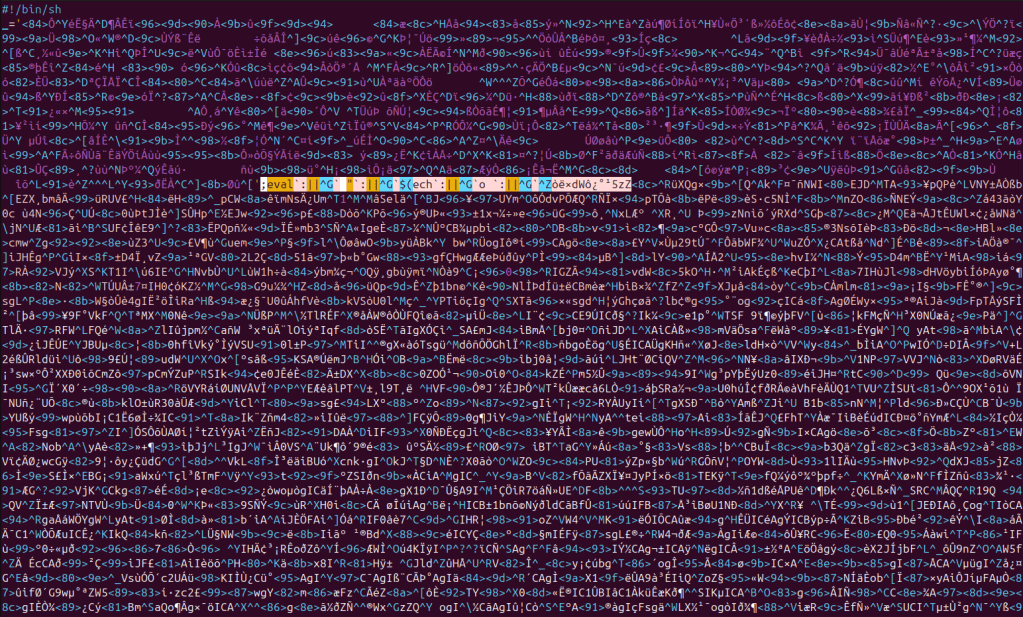
The initial loader used in the campaign resembles one previously observed in ShadowHS malware samples. However, the similarity appears to stem from both threats using the same open-source bincrypter framework.  [caption id="" align="aligncenter" width="1023"]Bincrypt Obfuscated Loader Bincrypt Obfuscated Loader (Source: CRIL)[/caption] In January, ShadowHS was documented as a malware family that deployed encrypted shell loaders to execute a weaponized hackshell payload targeting server environments for post-exploitation activities. In contrast, ClipXDaemon delivers a completely different payload: a Linux-based cryptocurrency clipboard hijacker. 
Multi-Stage Infection Chain

The ClipXDaemon campaign uses a three-stage infection process: 
  1. Encrypted Loader: A bincrypter-generated script containing an encrypted payload blob. 
  2. Memory-Resident Dropper: Decrypted in memory using AES-256-CBC and gzip decompression. 
  3. On-Disk ELF Payload: A clipboard-hijacking daemon written to disk. 
The loader stores encrypted data inline, decodes it from base64, strips non-printable characters, and derives AES-256-CBC parameters before executing the decrypted stage directly from memory. Variable naming conventions and the use of OpenSSL commands match bincrypter’s typical output.  When the loader decrypts the intermediate dropper, it executes the script through /proc/self/fd, avoiding the creation of visible files and minimizing forensic artifacts. 

Persistence and Installation 

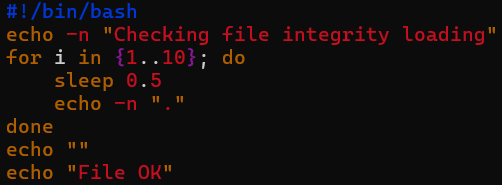
The decrypted dropper embeds a base64-encoded ELF binary, which it writes to the path:  ~/.local/bin/<random_name>  The filename is randomly generated between eight and nineteen characters with a numeric suffix. After writing the binary, the dropper marks it executable and launches it in the background.  [caption id="" align="aligncenter" width="502"]Dropper Cosmetics Dropper Cosmetics (Source: CRIL)[/caption] To maintain persistence, the ClipXDaemon appends an execution line to the user’s ~/.profile file. This ensures the malware runs during future login sessions without requiring root privileges, systemd services, or scheduled tasks. The design suggests that attackers are targeting desktop Linux environments rather than servers. 
Stealth Techniques and Process Masquerading 

Once running, ClipXDaemon performs a double-fork daemonization sequence to detach from the controlling terminal. It creates a new session, closes standard file descriptors, and resets the file mode mask.  The malware then calls prctl(PR_SET_NAME, …) to rename the process, disguising itself as a kernel worker thread. Specifically, it mimics the process name “kworker/0:2-events.”  This technique is meant to reduce suspicion during casual inspection using tools like ps or top, as Linux administrators frequently encounter kernel worker processes and may overlook them. 

Clipboard Monitoring and Cryptocurrency Hijacking

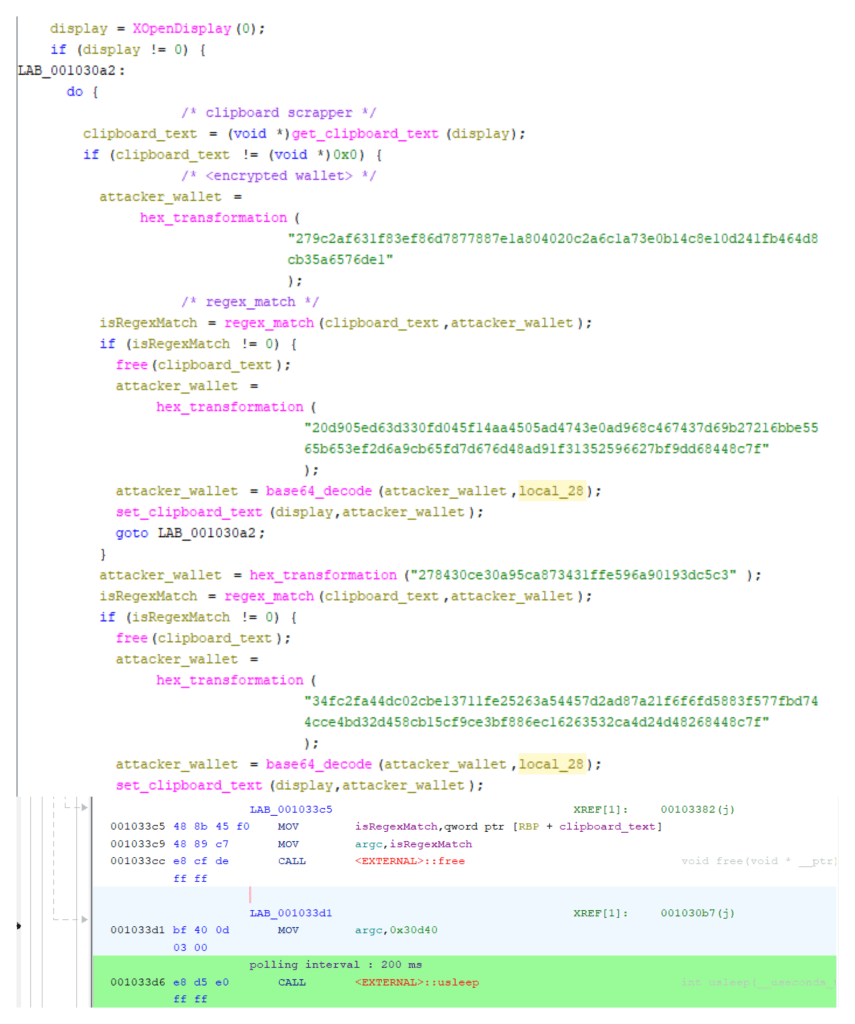
After daemonization, ClipXDaemon connects to the X server using standard X11 APIs. If the connection fails, execution stops. Otherwise, the malware begins monitoring clipboard content every 200 milliseconds.  [caption id="" align="aligncenter" width="610"]Clipboard Monitoring Loop with 200ms Polling Clipboard Monitoring Loop with 200ms Polling (Source: CRIL)[/caption] Using the X11 selection protocol, the malware retrieves clipboard data in UTF-8 format through XConvertSelectionXNextEvent, and XGetWindowProperty. Clipboard contents are copied into memory and analyzed for cryptocurrency wallet patterns.  The malware contains encrypted regular expressions for several major cryptocurrency formats, including: 
  • Ethereum: ^0x[0-9a-fA-F]{40}$ 
  • Bitcoin: ^(bc1|[13])[a-km-zA-HJ-NP-Z1-9]{25,34}$ 
  • Monero: ^[4][0-9AB][1-9A-HJ-NP-Za-km-z]{93}$ 
  • Dogecoin: ^D{1}[5-9A-HJ-NP-U]{1}[1-9A-HJ-NP-Za-km-z]{32}$ 
  • Litecoin 
  • Tron 
  • Ripple (XRP) 
  • TON 
When a match is detected, ClipXDaemon replaces the clipboard content with a malicious wallet address. The replacement happens quickly enough to occur before a typical paste operation.  Observed attacker wallets include: 
  • Ethereum: 0x502010513bf2d2B908A3C33DE5B65314831646e7 
  • Monero: 424bEKfpB6C9LkdfNmg61pMEnAitjde8YWFsCP1JXRYhfu4Tp5EdbUBjCYf9kRBYGzWoZqRYMhWfGAm1N5h6wSPg8bSrbB9 
  • Bitcoin: bc1qe8g2rgac5rssdf5jxcyytrs769359ltle3ekle 
  • Dogecoin: DTkSZNdtYDGndq1kRv5Z2SuTxJZ2Ddacjk 
  • Litecoin: ltc1q7d2d39ur47rz7mca4ajzam2ep74ccdwvqre6ej 
  • Tron: TBupDdRjUscZhsDWjSvuwdevnj8eBrE1ht 
While the malware also monitors TON and Ripple wallet formats, researchers did not observe replacement addresses for those assets. 

Configuration Encryption and C2-Less Malware Model 

To obscure its configuration, ClipXDaemon encrypts wallet patterns and replacement addresses using the ChaCha20 stream cipher. A static 256-bit key and counter decrypt these values at runtime before compiling the regular expressions in memory.  Although this method prevents simple static analysis, researchers say it provides only limited protection against dynamic analysis.  One of the most notable characteristics of ClipXDaemon is the absence of any network communication. During analysis, the binary performed no DNS queries, HTTP requests, or socket connections and contained no embedded domains or IP addresses.  This C2-less architecture changes the traditional malware lifecycle. Without remote infrastructure, attackers do not need to maintain servers or communicate with infected machines. Instead, monetization occurs directly when a victim unknowingly sends cryptocurrency to the attacker’s wallet. 
❌