Visualização de leitura

Why U.S. Critical Infrastructure Is the Highest-Value Target in the Global Cyber War

US critical infrastructure cyberattack

The idea that cyber conflict operates quietly in the background no longer holds. What used to be a shadow contest of espionage and occasional disruption has evolved into something far more direct and consequential. Today, the cyber war on US infrastructure is not a supporting element of geopolitical tension—it is one of its primary arenas. 

Recent global conflicts have shown that digital operations are now tightly woven into military and political strategy. Critical systems that sustain everyday life, energy, water, communications, and transportation have become high-value targets. The logic is simple: disrupting infrastructure creates immediate, visible consequences without crossing traditional thresholds of war. 

From Silent Intrusions to Persistent Attacks 

Cyber operations were once defined by stealth. Attackers sought long-term access, often avoiding detection for as long as possible. That model has shifted toward persistence and scale. 

By early 2026, threat activity across the Americas reflected this change. In the first quarter alone, 1,305 cyber incidents were recorded, with 1,138 ransomware attacks publicly claimed, according to the Cyble Americas Threat Landscape Report. This volume alone signals how normalized large-scale cyber operations have become. Even more telling, 58% of these incidents were driven by just five ransomware groups, highlighting how concentrated and industrialized the threat ecosystem is. 

This surge is directly tied to rising cybersecurity threats to the US critical infrastructure. Attackers are no longer experimenting; they are executing repeatable, scalable campaigns designed to disrupt essential services. 

Why Critical Infrastructure Is a Strategic Target 

To understand why critical infrastructure is targeted by hackers, it helps to look at the impact rather than the intent. Infrastructure is not just a technical system; it is a force multiplier. 

Disrupting it can: 

  • Undermine public confidence  

  • Interrupt economic activity  

  • Create pressure on governments without physical confrontation  

Sectors such as healthcare, manufacturing, and government services have been among the most frequently targeted. These industries are particularly vulnerable because downtime is not an option. For example, ransomware campaigns in healthcare environments can force immediate decision-making under pressure, often leading to rapid payouts or operational shutdowns. 

This is why cyberattacks on power grids and water systems are especially concerned. Unlike data breaches, these attacks have physical consequences. Even a temporary outage can cascade across multiple sectors, amplifying the overall impact. 

The Rise of Identity-Driven Attacks 

One of the most important shifts in the current threat landscape is the move away from traditional malware-centric attacks. Attackers are exploiting identity and trust. 

Instead of breaking in, they log in. 

Techniques such as: 

  • Credential theft  

  • Multi-factor authentication (MFA) bypass  

  • Session hijacking  

  • Abuse of third-party access  

These techniques have become central to modern attack strategies. This reflects a deeper structural issue: the traditional network perimeter has dissolved. Cloud adoption, remote work, and third-party integrations have created an environment where identity is the new attack surface. 

For critical infrastructure operators, this dramatically increases exposure. A compromised vendor or service provider can provide indirect access to sensitive systems, making critical infrastructure cyberattack scenarios more difficult to detect and contain. 

Nation-State Strategy and Pre-Positioned Access 

The growing frequency of nation-state cyberattacks on US systems adds another layer of complexity. These operations are not opportunistic; they are strategic and often long-term. 

State-sponsored actors focus on: 

  • Mapping infrastructure dependencies  

  • Identifying systemic weaknesses  

  • Establishing persistent access for future use  

In many cases, access is established well before any visible disruption occurs. This creates a latent risk, where attackers can activate capabilities at a time of their choosing, often aligned with geopolitical escalation. 

This approach transforms infrastructure into a strategic asset in conflict scenarios. It is not just about immediate disruption, but about maintaining the ability to disrupt when it matters most. 

Hacktivists, Cybercrime, and the Blurred Battlefield 

The modern threat environment is no longer defined by clear boundaries. State actors, cybercriminals, and hacktivist groups often operate in parallel, sometimes targeting the same systems for different reasons. 

In North America alone, nearly 300 domains were targeted by hacktivist activity in early 2026. These campaigns are often disruptive rather than destructive, but they contribute to a broader atmosphere of instability. 

At the same time, cybercriminal groups are leveraging access markets, buying and selling entry points into networks. This accelerates the speed of attacks and lowers the barrier to entry, enabling less sophisticated actors to participate in high-impact operations. 

The result is a crowded and unpredictable battlefield, where a single critical infrastructure cyberattack may involve overlapping motives, political, financial, and ideological. 

Infrastructure Under Pressure: Real-World Implications 

Certain sectors have emerged as consistent targets due to their strategic importance. Technology and financial services accounted for 44% of breach activity in North America, reflecting their central role in both economic and operational systems. 

However, the risk extends beyond these industries. Critical infrastructure depends on a web of interconnected services: 

  • Energy systems rely on telecommunications and cloud platforms  

  • Water utilities depend on industrial control systems and remote monitoring  

  • Transportation networks integrate with logistics and supply chain platforms  

This interconnectedness means that disruption in one area can quickly spread. The increasing frequency of cyberattacks on power grid and water systems highlights how attackers are beginning to exploit these dependencies more deliberately. 

Rethinking Defense in a Persistent Threat Environment 

Defending against modern US critical infrastructure cybersecurity threats requires a shift in mindset. Traditional defenses focused on perimeter security and reactive response are no longer sufficient. 

Organizations must prioritize: 

  • Continuous monitoring for early indicators of compromise  

  • Strong identity and access management  

  • Visibility into third-party and supply chain risks  

  • Resilience against high-volume disruption tactics like DDoS  

Equally important is the ability to anticipate attacker behavior. With adversaries operating at scale and speed, waiting for alerts is no longer viable. Proactive threat hunting and intelligence-driven defense are becoming essential capabilities. 

Infrastructure as the Center of Modern Conflict 

Critical infrastructure has become the centerpiece of modern cyber conflict. The convergence of geopolitical tension, advanced attack techniques, and systemic vulnerabilities has created an environment where disruption is both achievable and strategically valuable. 

The data reinforces this reality: high volumes of ransomware, concentrated threat actor activity, and increasing reliance on identity-based attacks all point to a more aggressive and coordinated threat landscape. 

The cyber war on US infrastructure is not defined by isolated incidents—it is shaped by persistent pressure, evolving tactics, and long-term strategic intent. As nation state cyber attacks on US systems continue to expand in scope and sophistication, the challenge is no longer just preventing breaches. 

It is ensuring that the systems society depends on can withstand them. In a threat landscape defined by speed and precision, waiting for alerts is no longer enough. 

Request a demo to see how Cyble helps detect and anticipate critical infrastructure cyberattacks—before they turn into real-world disruption. 

The post Why U.S. Critical Infrastructure Is the Highest-Value Target in the Global Cyber War appeared first on Cyble.
How Cyble Blaze AI Delivers 360° Threat Visibility Across Dark Web and Enterprise Systems

Cyble Blaze AI

Modern cybersecurity no longer suffers from a lack of data; it suffers too much of it, scattered across systems that rarely speak the same language. Security teams today must monitor endpoints, cloud workloads, SaaS applications, and an ever-expanding universe of external threats, including those emerging from hidden corners of the internet.  

This is where Cyble Blaze AI introduces a different approach. Rather than acting as another layer of alerts, it functions as an enterprise threat intelligence platform designed to unify signals and convert them into decisive action. 

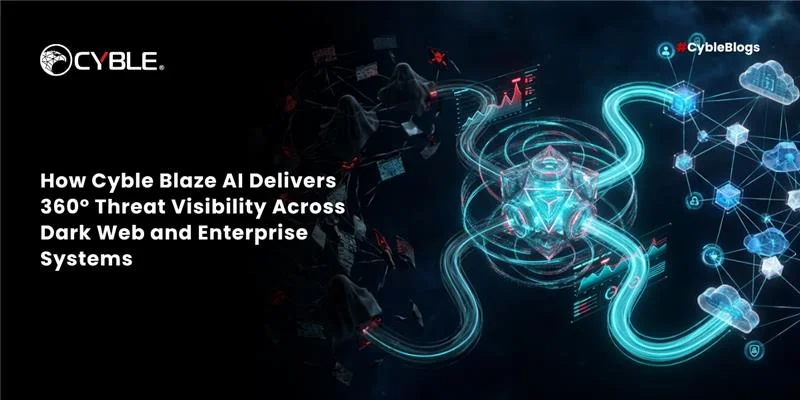
Cyble Blaze AI threat visibility is about connecting what happens inside an organization with what is brewing outside it, particularly across forums, marketplaces, and channels often associated with dark web activity. The result is a continuous, contextual understanding of risk that spans both internal systems and external threat landscapes. 

Rethinking Threat Intelligence with AI-Native Architecture 

Many security tools claim intelligence, but most still rely on predefined rules and human-driven workflows. Cyble Blaze AI takes a fundamentally different path by operating as an AI-native system. This distinction matters. Instead of layering automation on top of legacy infrastructure, the platform embeds reasoning into every stage, from ingestion to response. 

This architectural shift allows it to process massive volumes of telemetry generated daily across enterprise environments. Whether it’s logs from endpoint detection systems or chatter picked up by a dark web monitoring AI, the platform treats all data as part of a unified intelligence fabric rather than isolated inputs. 

The Dual-Brain System Behind Cyble Blaze AI Threat Visibility 

A defining feature of Cyble Blaze AI threat visibility is its dual-brain architecture, which mirrors how experienced analysts combine structured evidence with contextual interpretation. 

The first layer, often described as neural memory, operates like a living knowledge graph. It maps relationships between indicators of compromise, attacker infrastructure, and behavioral patterns. This enables the system to track how threats evolve over time, linking seemingly unrelated signals into coherent attack narratives. 

The second layer, vector memory, handles unstructured data. This includes analyst notes, intelligence reports, and content gathered through AI dark web surveillance tools. Instead of relying on keyword matching, it interprets meaning through semantic embeddings. This allows the platform to understand nuance, intent, and emerging threat signals that would otherwise go unnoticed. 

Together, these layers enable cross-domain reasoning that bridges enterprise telemetry with enterprise dark web detection, offering a far more complete picture of risk. 

From Alerts to Outcomes 

One of the most persistent problems in cybersecurity is alert fatigue. Traditional tools generate thousands of notifications, leaving analysts to manually triage and investigate. Critical signals are often buried in noise. 

Cyble Blaze AI addresses this by shifting from alert generation to outcome delivery. It doesn’t just surface potential threats; it investigates them, correlates related activities, and initiates response actions automatically. 

For example, a credential leak detected through dark web monitoring AI can immediately trigger internal checks across endpoints and identity systems. If suspicious activity is confirmed, the platform can isolate affected systems or enforce access controls without waiting for manual approval. This dramatically reduces the time between detection and containment. 

Autonomous Agents and Real-Time Orchestration 

The platform’s operational strength lies in its network of autonomous agents. Each agent is designed for a specific function, threat detection, intelligence gathering, cloud security, or endpoint remediation. What makes this system effective is coordination. 

Insights generated by one agent are instantly shared across the system. A signal identified through an AI dark web surveillance tool can influence actions within enterprise infrastructure in seconds. This real-time orchestration enables end-to-end response cycles that are often completed in under two minutes. 

This model replaces fragmented workflows with a unified, collaborative system where detection and response are tightly integrated. 

Predicting Threats Before They Materialize 

Beyond detection, Cyble Blaze AI threat visibility extends into prediction. By analyzing historical attack patterns, vulnerability disclosures, and global threat activity, the platform identifies where risks are likely to emerge next. 

Its access to vast datasets, including signals from enterprise dark web detection pipelines, allows it to uncover weak signals early. These might include discussions about new exploits, leaked credentials, or subtle behavioral anomalies within enterprise systems. 

Instead of reacting to incidents, organizations can address vulnerabilities months in advance. This shifts cybersecurity from defensive posture to proactive risk management. 

Turn early signals into decisive action with Cyble Blaze AI.
Schedule a Demo Today! 

Continuous Learning and Reduced False Positives 

A static security system quickly becomes outdated. Attack techniques evolve constantly, and defenses must adapt just as fast. Cyble Blaze AI incorporates continuous learning into its core operations. 

Every detection, investigation, and response feeds back into the system, refining its models over time. This feedback loop improves accuracy and reduces false positives, ensuring that analysts are not overwhelmed by irrelevant alerts. 

As the system matures, it begins to replicate expert-level decision-making, handling both routine and complex scenarios with autonomy. 

Integrating the Enterprise Security Ecosystem 

Modern enterprises rely on dozens of security tools, from SIEM platforms to cloud security solutions. These systems often operate in silos, making it difficult to achieve a unified view of risk. 

As an enterprise threat intelligence platform, Cyble Blaze AI integrates with more than 70 tools, including EDR, XDR, SOAR, and cloud platforms. This interoperability allows organizations to enhance existing investments rather than replace them. 

By acting as an orchestration layer, it bridges gaps between tools, ensuring that intelligence flows seamlessly across the environment. 

Supporting Every Layer of the Security Team 

The benefits of Cyble Blaze AI threat visibility extend across the organization. Tier-1 analysts gain faster triage through automated summaries. Threat hunters receive a unified view that combines endpoint telemetry with insights from dark web monitoring AI.  

Incident responders can execute coordinated actions more efficiently, while leadership gains clear visibility into business risk and compliance metrics. This alignment between technical operations and strategic decision-making is critical in complex enterprise environments. 

A Shift Toward Preventive Cybersecurity 

Cyble Blaze AI signals a break from reactive cybersecurity, where delayed responses can no longer keep pace with machine-speed attacks. By combining autonomous agents, predictive analytics, and tightly integrated AI dark web surveillance tools, it unifies external threat intelligence with internal defenses into a continuous, self-reinforcing system.  

In this model, enterprise dark web detection and internal monitoring operate as a single intelligence layer that not only detects but anticipates and neutralizes threats before they escalate. This shift highlights a new industry direction where speed, context, and automation define effectiveness, and where Cyble Blaze AI threat visibility demonstrates that true 360° security depends on turning vast, fragmented data into immediate, actionable insight. 

The post How Cyble Blaze AI Delivers 360° Threat Visibility Across Dark Web and Enterprise Systems appeared first on Cyble.

When Geopolitical Conflict Spills into Cyberspace — How US Organizations Should Respond 

cyber warfare attacks in 2026

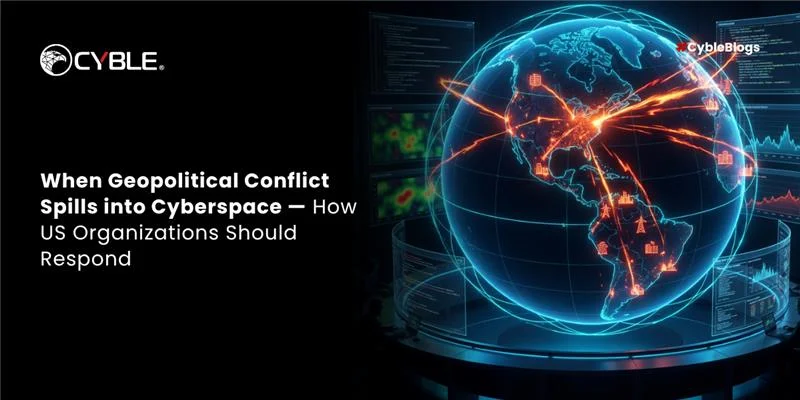
Modern conflict no longer begins with troops crossing borders; it often starts with packets crossing networks. For example, the escalation on February 28, 2026, involving Iran, the United States, and Israel gives insights on how quickly geopolitical cyber threats can evolve into full-spectrum confrontations. What unfolded was not just a regional clash but a preview of how cyber warfare attacks now operate alongside missiles, drones, and information campaigns. 

In this environment, cybersecurity for US organizations can no longer be treated as a purely technical function. It has become a matter of strategic resilience. Nation-state cyberattacks are synchronized with real-world conflict, creating ripple effects that extend far beyond the immediate battlefield. 

Cyber Warfare Attacks Meet Kinetic Force 

The opening phase of hostilities, initiated through Operation Epic Fury by the United States and Operation Roaring Lion by Israel, marked a new shift in how cyber warfare attacks are deployed. Within the first 72 hours (February 28 to March 3), cyber operations were executed in parallel with kinetic strikes, targeting both infrastructure and perception. 

At approximately 06:27 GMT on February 28, coordinated strikes hit more than two dozen Iranian provinces, targeting nuclear facilities, IRGC command centers, and missile systems. Reports indicated the targeted killing of Ayatollah Ali Khamenei, a moment that fundamentally altered the trajectory of the conflict. 

Simultaneously, cyber operations disrupted Iranian digital infrastructure at scale. Internet connectivity dropped to roughly 1–4% of normal levels, crippling government communications, media platforms, and military coordination. This was not incidental; it was deliberate integration of cyber defense strategies into offensive planning. 

Compromised mobile applications and defaced state websites were used to inject confusion into the population, while misinformation campaigns blurred the line between truth and manipulation. This convergence of cyber and psychological operations reflects a new doctrine in nation-state cyberattacks: control the narrative while degrading the network. 

The Expanding Threat Landscape 

By March 1, the conflict had entered a second phase: retaliation and decentralization. Iran launched ballistic missiles and drones targeting Israel, GCC countries, and US-linked assets. At the same time, cyberspace saw a surge in non-state actors. 

More than 70 hacktivist groups mobilized within days. These groups, spanning ideological lines, including pro-Iranian and pro-Russian actors, conducted distributed denial-of-service (DDoS) attacks, website defacements, and credential theft campaigns. Their operations targeted government portals and critical infrastructure across regions such as Turkey, Poland, and the Gulf. 

One notable example was a malicious Android application disguised as an Israeli missile alert system. Distributed via Hebrew-language SMS, it harvested sensitive user data, including contacts, SMS logs, IMEI numbers, and email credentials, while employing encryption and anti-analysis techniques. This level of technical prowess blurred the distinction between hacktivism and state-sponsored tooling. 

At the same time, cybercriminal groups exploited the chaos. Social engineering campaigns surged across the UAE, while ransomware actors began blending ideological messaging with extortion tactics.  

Critical Infrastructure Security Under Pressure 

As the conflict intensified between March 2 and March 3, its impact on critical infrastructure security became more apparent. Missile strikes damaged physical assets, including infrastructure linked to aviation and cloud services. Meanwhile, cyber activity targeted digital dependencies supporting those systems. 

Although most observed cyber warfare attacks during this period were disruptive rather than destructive, primarily DDoS attacks, exposed surveillance systems, and propaganda operations, there were persistent, unverified claims of industrial control system (ICS) compromise. Even without confirmation, such claims can influence decision-making and public confidence. 

The broader implication is clear: critical infrastructure security must account for both verified threats and perceived ones. In a hybrid conflict, perception itself becomes a weapon. 

Latent Capabilities and Strategic Risk 

One of the more nuanced aspects of this conflict is what has not happened, at least not yet. Despite the scale of activity, large-scale destructive nation-state cyberattacks remained limited during the first 72 hours. This was partly attributed to disruptions in Iran’s internet connectivity, which constrained command-and-control operations. 

However, intelligence indicators suggest that pre-positioned access and dormant capabilities remain intact. Once connectivity stabilizes, these assets could be activated rapidly, potentially escalating cyber warfare attacks to a more destructive phase. 

Cyber Defense Strategies for US Organizations 

Given the global interconnectedness of digital systems, US organizations are not insulated from geographically distant conflicts. Supply chains, cloud dependencies, and third-party services create indirect exposure to geopolitical cyber threats. 

Effective cyber defense strategies must therefore evolve in several key areas: 

  • Proactive Threat HuntingOrganizations should actively search for indicators of pre-positioned access within their networks. Waiting for alerts is no longer sufficient in the context of nation-state cyberattacks. 

  • Resilience Against DDoS and Disruption: With high-volume, low-sophistication attacks dominating early phases, ensuring availability of external-facing services is critical. This includes stress-testing infrastructure under simulated attack conditions. 

  • Strengthened Identity and Access Controls: Credential theft remains a primary vector. Multi-factor authentication, behavioral analytics, and privileged access management are essential components of cyber risk management. 

  • Mobile and Endpoint Security: The rise of malicious mobile applications highlights the need for robust endpoint detection and user awareness. Organizations must treat mobile devices as critical assets, not peripheral ones. 

  • Social Engineering Awareness: Conflict-driven anxiety creates fertile ground for phishing and vishing attacks. Continuous training and simulated exercises can reduce susceptibility. 

  • Supply Chain Visibility: Organizations must map dependencies, particularly those linked to regions experiencing instability. Disruptions in one geography can cascade into operational risks elsewhere. 

Preparing for a Persistent Hybrid Threat Environment 

The events between February 28 and March 3, 2026, mark a shift in modern conflict, where cyber warfare attacks are now central to military strategy. For US organizations, this means adapting to persistent geopolitical cyber threats that blur the lines between physical and digital conflict.  

Cybersecurity for US organizations must focus on anticipation, strengthening cyber defense strategies, improving cyber risk management, and reinforcing critical infrastructure security to handle sustained campaigns.  

Cyble supports this approach by providing AI-powered threat intelligence and real-time visibility to help organizations detect and respond to nation-state cyberattacks more effectively. Security teams can schedule a demo or access Cyble’s latest reports to better prepare for modern cyber threats. 

The post When Geopolitical Conflict Spills into Cyberspace — How US Organizations Should Respond  appeared first on Cyble.

UK Businesses Are Being Targeted Through Their Middle East Supply Chains — What to Do Now

Middle East supply chain risk

The conversation around cyber risk in the UK has shifted. It is no longer confined to domestic networks, internal systems, or even direct attacks on British infrastructure. The weak link sits thousands of miles away, embedded within third-party vendors, logistics partners, and digital dependencies across the Middle East. This growing exposure has created a new layer of Middle East supply chain risk, one that is proving difficult to monitor and even harder to control. 

Recent warnings from the UK’s National Cyber Security Centre (NCSC) noted that organizations are not just facing isolated incidents, but a widening threat landscape where geopolitical tensions, hacktivism, and supply chain interdependencies intersect. The result is a sharp rise in UK business supply chain threats, particularly those that exploit indirect access points. 

A Threat That Travels Through the Supply Chain 

The most concerning aspect of today’s cyber environment is how attacks propagate. Threat actors are no longer required to breach a UK-based system directly. Instead, they can compromise a supplier, disrupt a regional service provider, or exploit a shared platform operating in the Middle East. 

This is where the Middle East supply chain disruption in the UK becomes a critical concern. Organizations with operations, vendors, or infrastructure in the region are now exposed to “collateral cyber risk”. Attacks that are not aimed at them specifically but still affect their operations. 

At the same time, pro-Russian hacktivist groups have intensified their campaigns. Since March 2022, groups such as NoName057(16) have targeted NATO-aligned countries using distributed denial-of-service (DDoS) attacks. These attacks are not financially motivated; they are ideological, designed to disrupt services and undermine confidence. 

Their methods are relatively less technical but highly effective on scale. By leveraging publicly distributed tools and coordinating through online communities, they can overwhelm services, take down websites, and degrade operational systems. This pattern has already contributed to a rise in supply chain cyberattack scenarios in the UK, where disruption spreads across interconnected systems. 

Why the Middle East Supply Chain Risk Matters More Than Ever 

While the direct cyber threat from nation-states like Iran to the UK remains under constant assessment, the indirect risk is already evident. The ongoing instability in the Middle East has increased the likelihood of cyber spillover, where regional conflicts trigger digital consequences beyond their borders. 

For UK organizations, this translates into heightened UK supply chain security risks, particularly in sectors reliant on international logistics, energy infrastructure, or outsourced technology services. The issue is not just connectivity, it’s dependency. Many UK businesses rely on third-party providers for critical operations, from cloud hosting to industrial control systems.  

If those providers are affected by cyber incidents or operational disruptions in the Middle East, the downstream impact can be immediate. 

The Evolution of Attack Tactics 

Modern attacks are evolving in both intent and execution. Traditional cybercrime focused on financial gain, ransomware, fraud, and data theft. Today’s threat actors are driven by political alignment, using disruption as a weapon. 

DDoS attacks, in particular, have become a preferred tactic. They are relatively easy to execute, difficult to attribute, and capable of causing significant operational damage. The NCSC has repeatedly warned that UK organizations must strengthen their defenses against these attacks, especially as they become more frequent and coordinated. 

What makes this more complex is the growing overlap between IT and operational technology (OT). Many attacks now target systems that control physical processes, energy grids, transport networks, and manufacturing systems. This convergence expands the potential impact of a successful breach. 

Building Resilience Against Distributed Threats 

Addressing Middle East supply chain risk requires more than perimeter security. It demands a shift in how organizations think about resilience. 

  • Understand the Full-Service Chain: Every service has multiple pressure points where resources can be exhausted. Organizations need to map these dependencies, both internal and external, and identify where attacks are most likely to occur. 

  • Strengthen Upstream Defenses: Internet service providers and third-party platforms play a crucial role in mitigating attacks before they reach core systems. Businesses should evaluate what protections are already in place and where additional safeguards, such as content delivery networks or dedicated DDoS mitigation services, are needed. 

  • Design for Scalability: Systems must be able to absorb unexpected surges in traffic. Cloud-native architectures offer a clear advantage here, allowing dynamic scaling during an attack. However, even private infrastructure can be adapted with sufficient planning and spare capacity. 

  • Plan for Degraded Operations: No system is immune. The goal should not be absolute prevention, but controlled failure. Services should be able to continue operating at reduced capacity, maintaining critical functionality even during an attack. 

The Role of Monitoring and Threat Intelligence 

Improved visibility is essential in tackling UK business supply chain threats. Increased monitoring, however, comes with its own challenges: more alerts, more noise, and greater demand for security teams. 

Organizations are being encouraged to adopt proactive threat hunting, rather than relying solely on automated detection. This includes: 

  • Analyzing log data to identify anomalies. 

  • Monitoring traffic patterns across both cloud and on-premises systems. 

  • Simulating attacks to test detection and response capabilities. 

For operational technology (OT) environments, this level of monitoring becomes even more important. Unlike traditional IT systems, OT networks tend to operate with highly predictable traffic patterns. Even minor deviations can indicate a potential compromise, especially in the context of a supply chain cyber-attack UK scenario where attackers exploit trusted connections. 

To operationalize this level of visibility at scale, organizations are turning to platforms like Cyble, which combine threat intelligence with real-time monitoring. By correlating external threat signals, such as dark web activity, emerging vulnerabilities, and attacker infrastructure, with internal telemetry, such platforms help security teams prioritize what matters.  

This is particularly valuable when dealing with Middle East supply chain disruption in the UK, where early indicators often surface outside traditional security boundaries. As UK supply chain security risks continue to expand, organizations need more than visibility; they need context, speed, and the ability to act decisively. Platforms like Cyble are designed to bridge that gap, enabling teams to detect, correlate, and respond to threats before they cascade across the supply chain. 

For organizations navigating UK business supply chain threats and rising Middle East supply chain risk, now is the time to move beyond reactive defense. Book a demo with Cyble to see how AI-driven threat intelligence can help identify hidden risks, strengthen monitoring, and stay ahead of supply chain cyber threats. 

References:

The post UK Businesses Are Being Targeted Through Their Middle East Supply Chains — What to Do Now appeared first on Cyble.

Hybrid Warfare 2026: When Cyber Operations and Kinetic Attacks Converge

Hybrid Warfare

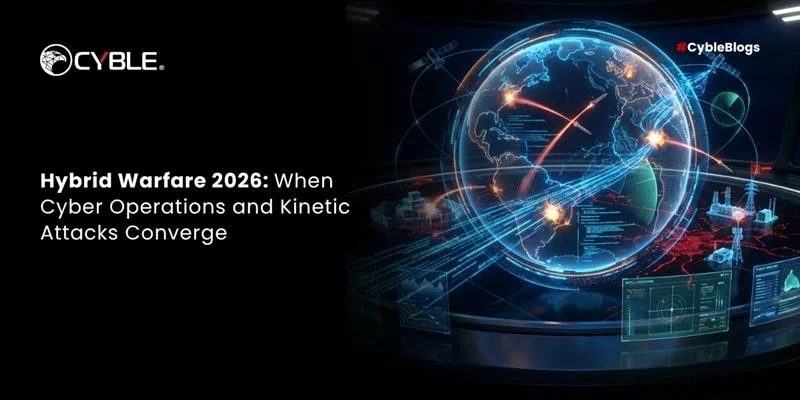
In 2026, hybrid warfare is no longer a theoretical construct discussed in policy circles; it is shaping geopolitical conflict in real time. The convergence of cyber warfare and kinetic attacks has transformed how nations project power, blending missiles, malware, and misinformation into unified campaigns. What distinguishes modern hybrid warfare from earlier conflicts is not just the presence of digital operations, but their synchronization with physical strikes to produce layered, systemic disruption. 

Nowhere is this more evident than in the Middle East, where escalating tensions have turned the region into a proving ground for cyber-physical warfare. Governments, energy systems, financial networks, and communication infrastructures are being targeted simultaneously, exposing vulnerabilities that extend far beyond national borders. The result is a battlespace where the frontlines are both physical and invisible, and where disruption can ripple globally within hours. 

From Conflict to Convergence: The Rise of Cyber Physical Warfare 

The turning point came on February 28, 2026, when coordinated military and cyber campaigns marked a new phase in hybrid war strategy. Joint operations combined airstrikes with cyberattacks, information warfare, and psychological operations, targeting nuclear facilities, military assets, and digital infrastructure in parallel. Internet connectivity in targeted regions dropped to as low as 1–4% of normal levels during the initial assault, demonstrating the effectiveness of integrated cyber warfare and kinetic attacks. 

These operations were not designed for immediate destruction alone. Instead, they aimed to disorient command structures, disrupt civilian communication, and weaken public trust. Digital interference extended to media channels and widely used mobile applications, some of which were compromised to spread false information and induce panic. 

The response was equally multifaceted. Within 72 hours, missile and drone strikes were accompanied by a surge in cyber activity, including spear-phishing campaigns, ransomware-style attacks, and coordinated data exfiltration efforts targeting energy grids, airports, and financial institutions. 

Hacktivists as Force Multipliers in Modern Hybrid Warfare 

One of the defining characteristics of modern hybrid warfare is the role of non-state actors. More than 70 hacktivist groups became active participants in the 2026 conflict, blurring the lines between state-sponsored operations and independent cyber activism. These groups executed distributed denial-of-service (DDoS) attacks, website defacements, and credential harvesting campaigns across multiple countries. 

Their involvement amplifies the scale and unpredictability of cyber warfare and kinetic attacks. While some groups operate with ideological motivations, others appear loosely aligned with state objectives, acting as force multipliers without formal attribution. This ambiguity complicates response strategies and increases the risk of escalation. 

Cyber campaigns emerged during this period, including fake missile alert applications designed to harvest sensitive user data such as contacts, messages, and device identifiers. These tools demonstrated a level of technical refinement typically associated with advanced persistent threat (APT) groups. 

Iranian Cyber Capabilities and Strategic Depth 

Despite early disruptions to its infrastructure, Iran maintained a good cyber posture throughout the conflict. Established threat groups continued to conduct espionage, infrastructure attacks, and credential theft operations targeting sectors such as energy, aviation, and telecommunications. 

Parallel to these efforts, Iran-aligned hacktivist groups escalated disruptive campaigns, including industrial control system intrusions and data leaks. Some reports suggest coordination with Russia-linked actors. 

A notable example is the emergence of hybrid threat actors employing destructive malware. Tools designed to overwrite system data, disable operating systems, and erase critical infrastructure highlight a shift toward more aggressive cyber physical warfare tactics. These operations are often executed in stages: initial access through phishing or exposed services, lateral movement using legitimate system tools, and eventual payload deployment designed for maximum disruption. 

Infrastructure Disruption and Global Spillover Effects 

The consequences of hybrid warfare are not confined to the immediate conflict zone. Early incidents in 2026 disrupted fuel distribution in Jordan and interfered with navigation systems, affecting over 1,100 vessels near the Strait of Hormuz. These disruptions pose significant risks to global oil and gas supply chains, illustrating how localized cyber warfare and kinetic attacks can have worldwide economic implications. 

Countries like India are experiencing indirect exposure due to interconnected digital ecosystems. Supply chain dependencies, shared technologies, and cloud-based services create pathways for cyber threats to propagate across borders. Vulnerabilities in widely used platforms, including VPNs and enterprise communication systems, are actively exploited. 

Attackers are also leveraging AI-driven techniques to enhance their effectiveness. Phishing campaigns now use highly personalized messaging, while automated reconnaissance tools map organizational structures to identify high-value targets. These capabilities reduce the time required to execute complex attacks and increase their success rates. 

Cybercrime Exploitation in a Hybrid War Environment 

Geopolitical instability has created fertile ground for cybercriminal activity. More than 8,000 domains linked to the 2026 conflict have been registered, many serving as platforms for scams, malware distribution, and misinformation campaigns. 

Examples include fake donation websites, fraudulent e-commerce platforms, and cryptocurrency schemes designed to exploit public sentiment. Conflict-themed malware, often disguised as alert systems or news updates, has been used to deploy backdoors and establish persistent access to compromised systems. 

This convergence of cybercrime and state-aligned activity reflects a broader trend: the industrialization of cyber threats. Ransomware-as-a-service platforms now provide end-to-end attack capabilities, lowering the barrier to entry for less experienced actors. With subscription costs as low as $500 per month, cyberattacks are becoming accessible. 

India’s Evolving Role in the Hybrid Warfare Landscape 

India’s cybersecurity environment in 2026 reflects many of the same dynamics observed in the Middle East. State-sponsored actors are focusing on long-term access and intelligence gathering, targeting government networks, defense systems, and critical industries. These operations often remain undetected for extended periods, leveraging advanced persistent techniques to maintain access. 

At the same time, hacktivist groups in India are becoming more organized and technically capable. Their activities now include coordinated data leaks, disruption campaigns, and the use of advanced tools traditionally associated with nation-state actors. 

Supply chain attacks are a growing concern, particularly in sectors undergoing rapid digital transformation. Healthcare, manufacturing, and financial services are vulnerable due to their reliance on interconnected systems. These vulnerabilities highlight the importance of continuous monitoring, vendor risk management, and layered security architectures. 

Intelligence-Driven Defense in the Age of Hybrid War Strategy 

As hybrid warfare evolves, traditional reactive security models are proving insufficient. Organizations are shifting toward intelligence-driven approaches that integrate tactical, operational, strategic, and technical insights. 

This shift is critical in a landscape where attackers exploit legitimate platforms, use “living off the land” techniques, and maintain persistence for extended periods. Behavioral analytics, anomaly detection, and contextual authentication are becoming essential tools for identifying threats that bypass conventional defenses. 

Equally important is the adoption of proactive measures such as multi-factor authentication, network segmentation, and robust incident response frameworks. Information sharing between organizations and governments is also emerging as a key component of resilience in the face of coordinated cyber warfare and kinetic attacks. 

Conclusion 

Hybrid warfare in 2026 is an operational reality. Cyber warfare and kinetic attacks now work in tandem, creating rapid, high-impact disruptions across both digital and physical systems. This is the core of modern hybrid warfare: fast, coordinated, and difficult to contain. 

Defending against this requires a shift to intelligence-led security. In a landscape shaped by cyber physical warfare, organizations need real-time visibility, faster response, and the ability to anticipate threats, not just react to them. Cyble enables this shift with its AI-native platform, Cyble Blaze AI, designed to predict and stop threats before they escalate. 

Strengthen your hybrid war strategy, explore Cyble’s threat intelligence capabilities or schedule a demo to see proactive security in action. 

References:

The post Hybrid Warfare 2026: When Cyber Operations and Kinetic Attacks Converge appeared first on Cyble.

❌