❌

Visualização de leitura

Analysis of the GitHub “php2shell” Repository: Public PoCs and Defense Tools That Spread Immediately After the Disclosure of the PHP Vulnerability

Overview Immediately after the PHP vulnerabilities CVE-2026-109618 and CVE-2026-109619 were disclosed on October 21, 2026, a large number of repositories named “php2shell” were created in a short period of time on GitHub, a code repository platform. Of the top 100 repositories (excluding forks) found by searching for “php2shell,” 99 addressed these vulnerabilities, and nearly all […]

Reproducing the PHP2Shell Vulnerability and Detection Using AhnLab EDR/XDR

On October 22, 2026, the PHP Security Team announced in an advisory that it would release security updates addressing the vulnerabilities CVE-2026-109618 and CVE-2026-109619. Although the causes of the two vulnerabilities differ, they are both remote code execution vulnerabilities that allow an unauthenticated threat actor to execute arbitrary code remotely. AhnLab SEcurity intelligence Center (ASEC) […]

💾

The Keys Are in the Browser: Secret Exposure Across AI-Built Websites

Best DRP Tools 28 1

Cyble scanned 1.3M+ newly registered domains and found AI-built sites leaking live secrets to the browser: OpenAI keys, Stripe keys, and database tokens.

Spinning up a website no longer takes a developer. A prompt to an AI app-builder returns a working, styled, deployable site in minutes, and when one template works, the same operator clones it across a dozen domains before launch. That is also how secrets end up in plain sight.

Over a month, Cyble Research and Intelligence Labs (CRIL) scanned more than 1.3 million newly registered domains, identified the ones built by AI app-builders, and read their public front-end code for exposed credentials. We built our own classifiers to spot AI-generated websites as they are registered, paired with a scanner that pulls exposed keys and credentials straight from their public code. On 35 of the 22,306 AI-built sites we identified, a genuinely private secret was sitting in the browser: live OpenAI keys, Stripe secret keys, backend database tokens, and, in several cases, a single credential cloned across a whole fleet of domains.

Thirty-five is a small number, since counting every key-shaped string on an AI-built site is easy and misleading, as most are meant to be in the browser; a single reCAPTCHA key appeared on thousands of sites. We kept only the credentials that are never supposed to leave a server. Those are the findings below.

This report walks through the two leak patterns we observed, what appears exposed, what an attacker can do with these keys, and how to shut down the exposure.

AI-built Websites are leaking the keys that power them

An AI-built site generates its content with a Large Language Model (LLM), and the key to that model often ships in the page the visitor downloads. That is the plainest pattern we found, and the most on-the-nose.

Five AI-built sites carried live OpenAI API keys in their client-side code, sixteen distinct keys across them, and four of the five are confirmed AI-generated. One AI-writing site stands out on its own: it shipped twelve different OpenAI keys, one per content category, as plain values in its bundle. Figure 1 shows a single entry, with the key masked.

Figure 1 – Live OpenAI keys embedded as plain values in an AI-writing site’s JavaScript (key masked by CRIL).

AI-Built Website
Figure 1 – Live OpenAI keys embedded as plain values in an AI-writing site’s JavaScript (key masked by CRIL).

A handful of sites, but each key is sensitive to exposure. An OpenAI secret key is a billing credential: anyone who reads the page can spend the owner’s balance, exhaust the rate limit, or run the bill up until someone notices and revokes it. Twelve keys in one bundle are twelve live credentials shipped at once, and five sites like this are five accounts an attacker can exploit.

Clone-and-leak: one secret across a whole fleet

An AI builder makes the hundredth site as cheap as the first, so an operator clones a working template across many domains, and whatever secret sat in the template now sits on every copy. We saw this in two shapes.

A Slack webhook shared across a 13-domain fleet. Thirteen near-identical domains, each a short word (ask, call, chat, get, hello, hey, hi, its, join, let, meet, my, see), glued to one brand, all served the same client bundle, and all embedded the same live Slack incoming-webhook URL. Figure 2 shows the URL in the shipped bundle, masked.

Figure 2 – One Slack webhook shared across a 13-domain fleet, in each site’s shipped bundle (secret and workspace IDs masked).

AI-built websites
Figure 2 – One Slack webhook shared across a 13-domain fleet, in each site’s shipped bundle (secret and workspace IDs masked).

Anyone who can read the page can post messages to the operator’s Slack workspace via that webhook. That works for spam, for phishing aimed at the operator’s own staff, or for flooding a channel.

One Stripe secret key across four domains and two brands. A single Stripe secret key appeared on four domains under two separate brand names. The same sk_live_ value across all four points to one operator, or one shared Stripe account, behind every site. Figure 3 shows the assignment.

Figure 3 – The same live Stripe secret key reused across four domains under two brands.

A Stripe secret key provides full API access to the account, including the ability to create charges, issue refunds, and read customer and payout records. That one key exposes the operator’s whole payment account on every domain in the fleet.

The 13-domain Slack fleet runs on Bubble, a no-code and AI app builder, as confirmed by Bubble’s x-bubble-perf response header and client markers. Bubble serves each app from a dynamic.js bundle, and any value a developer places in a client-accessible field ships inside that bundle in plain text. The Stripe cluster runs on a Next.js build instead, which shows that the pattern spans builders rather than tracing to a single platform.

What else is exposed

Four AI-built sites exposed a Supabase service role JSON Web Token (JWT) on their front ends. A service-role token bypasses row-level security and grants full read and write to the project database. In terms of impact, it sits at the top of the set because it opens the entire backend rather than a single service.

Most of the remaining secret-looking strings on AI-built sites carry no/minimal exposure.

  • 3,824 sites shipped browser-safe values: reCAPTCHA site keys, Stripe publishable keys, Supabase anon keys, builder telemetry tokens.
  • 2,172 sites carried Google API keys, which matter only if they are unrestricted.
  • 1,461 sites exposed a Supabase or Firebase backend address, which is a real exposure only when that backend’s rules are open.

Filtering those out is why the confirmed count is 35, not several thousand. Table 1 breaks the 35 down by type. The values stay withheld, and a few sites appear under more than one row.

Exposure Sites What an attacker gains
OpenAI API key 5 Spend the owner’s balance, exhaust quota, run up the bill
Shared Slack webhook 13 Post arbitrary messages into the operator’s workspace
Stripe secret key 6 Full API access: charges, refunds, customer and payout data
Supabase service-role JWT 4 Full read/write to the backend database, bypassing access rules
AWS access key 5 Cloud account access, scope set by the paired secret
GitHub token / Google OAuth secret 2 Source-control or identity-provider access

Table 1 – Confirmed private-credential exposures across 22,306 AI-built sites, by type.

What an attacker can do with these

Every credential in Table 1 is a working key to a live account. An attacker reads a public web page, copies a value, and calls an API. Here is what that buys them, key by key.

  • OpenAI and other LLM keys: Run inference on the victim’s account until the bill or rate limit stops them. On a metered account, that is direct financial loss; on a funded one, it is a free, anonymous model endpoint that the attacker can point at anything, billed to the victim and running under their quota and identity.
  • Stripe secret key; Drive the victim’s payment account through Stripe’s own API: create and refund charges, push the account toward fraud, and pull the customer list, email addresses, and payout history. One key is a money problem and a data-breach problem at once.
  • Supabase service-role token: Read and write the entire production database, past whatever row-level security the app configured. That means stealing every user record, altering or deleting data, and planting content the app will serve back to its own visitors.
  • Slack incoming webhook:  Post into the operator’s own Slack as if from inside. Flooding a channel is a nuisance case; the real risk is internal phishing.
  • AWS access key: With the paired secret and enough permission, reach into the owner’s cloud: spin up resources (crypto-mining is the usual first move), read storage buckets, or pivot further in.
  • GitHub token or OAuth secret: Read or push to the owner’s source repositories or misuse their identity integration.

One exposure counts many times over. When the key sits on a cloned fleet, it is live on every domain in that fleet, so an attacker who finds it on one site has compromised all of them.

Conclusion

AI app-builders made it almost free to publish a website, and just as free to clone one, and most of what they produce is worth nothing to steal.

The exceptions are what we went looking for. A small, steady set of these sites hand over the key that runs them, and when an operator copies one site across a fleet, the leak rides along to every domain.

Against the millions of domains registered each month, the number is tiny, but every hit is a live account an attacker can reach and exploit just by opening the page.

If you build on these tools, read your own shipped code before you publish it. If you defend an organization, assume your keys may surface on sites you never built and look for them.

Cyble’s Threat Intelligence Platforms continuously monitor emerging threats, infrastructure, and activity across the dark web, deep web, and open sources. This proactive intelligence empowers organizations with early detection, impersonation, infrastructure mapping, and attribution insights. Altogether, these capabilities provide a critical head start in mitigating and responding to evolving cyber threats.

Our Recommendations

For developers and AI-builder users:

  • Keep every secret key (OpenAI sk-, Stripe sk_live_, a Supabase service-role token) in a server-side function or backend workflow, never in a client-accessible field.
  • Use only the browser-safe variants on the front end, publishable and anon keys, and enforce access with Supabase row-level security, Firebase rules, and API key restrictions.
  • Rotate any key that has ever sat on the client side, and treat it as already compromised.
  • Read your own page source before you ship, and search it for sk-, sk_live_, service_role, and hooks.slack.com. If you find them, so can anyone.

For SOCs and defenders:

  • Monitor public code and newly registered domains for your own keys and webhooks; don’t just paste sites.
  • Treat a secret found on one domain of a template fleet as exposed on all of them, and scope the response to the fleet, not the domain.

The post The Keys Are in the Browser: Secret Exposure Across AI-Built Websites appeared first on Cyble.

Q3 2026 Statistical Report on Malware Targeting Windows Web Servers

Content The AhnLab SEcurity intelligence Center (ASEC) analyzed the attack status of Windows web servers in the third quarter of 2026 based on AhnLab Smart Defense (ASD) logs. The targets were Internet Information Services (IIS) web servers and Apache Tomcat web servers running in Windows environments, with attacks primarily exploiting unpatched vulnerabilities, misconfigurations, and inadequate […]

Pegasus, New NoviSpy Variant Found on Serbian Students and Opposition Figures

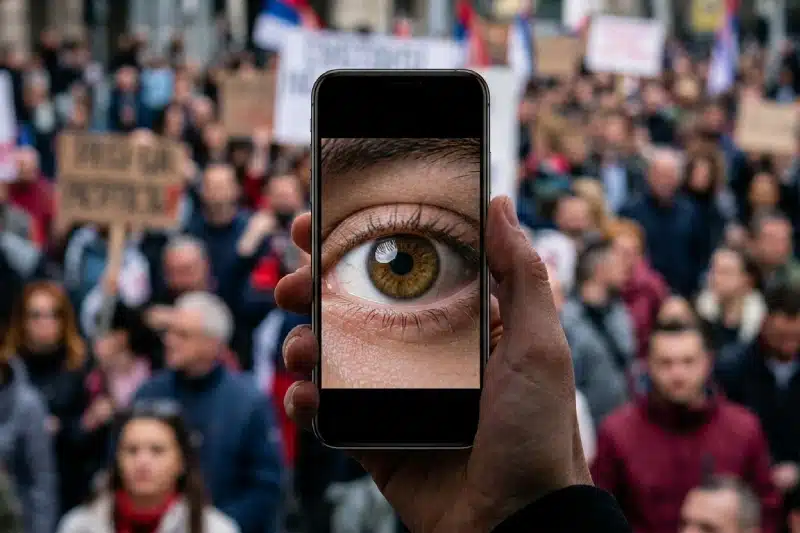
Pegasus, Pegasus Spyware, Serbia, Serbia Protests, Smartphone screen forming an eye shape against an abstract protest crowd, illustrating spyware targeting of Serbian student activists.

At least 14 people connected to Serbia's student protest movement and opposition politics have been targeted with mercenary spyware since early 2026, the Belgrade-based digital rights organization SHARE Foundation said, in what it called the largest documented wave of such targeting in the country.

The group said the cohort includes student movement members, civil society activists, a member of parliament and a local councilor. Forensic analysis was independently confirmed by the Citizen Lab at the University of Toronto and by Amnesty International's Security Lab.

Citizen Lab, in its own findings, said it verified an infection with NSO Group's Pegasus on the iPhone of a student activist who asked not to be named. High-confidence infection indicators span December 2025 through January 2026, delivered by a zero-click iMessage exploit that required no interaction from the target. Apple has since patched the underlying flaw; the fix shipped in iOS 18.4.1. Pegasus grants an operator access to notes, photographs and messages decrypted on the device, and can silently activate the microphone and camera.

Amnesty's Security Lab confirmed a new variant of NoviSpy, an Android implant first identified in Serbia in 2024, on two additional devices. SHARE said the rebuilt version was designed to evade the detection methods that exposed its predecessor.

Also read: Investigative Journalists in Serbia Hit by Advanced Spyware Attack

The circumstances of two infections are what elevate the findings beyond routine spyware reporting. SHARE said one NoviSpy infection appeared after police seized a student's phone during questioning, and another after private messages from that device were published by a pro-government media outlet. Donncha Ó Cearbhaill, who heads Amnesty's Security Lab, said the evidence suggests "infections are being carried out during detention by Serbian authorities."

Suspicion centers on Serbia's Security Information Agency, or BIA. Amnesty's December 2024 report "A Digital Prison" found earlier NoviSpy samples configured to send collected data to IP addresses associated with BIA servers, and documented the agency's parallel use of Cellebrite extraction tools on journalists and activists. In March 2025, Amnesty reported that two journalists at the Balkan Investigative Reporting Network were targeted with Pegasus.

The current cases surfaced through Apple's threat notification wave of Aug. 13, which reached users in 110 countries. The timing is politically loaded. The targeting overlaps with protests that followed the November 2024 collapse of a railway station canopy in Novi Sad, spans local elections held March 29 in 10 municipalities, and precedes October parliamentary elections widely read as a test of the ruling Serbian Progressive Party.

Ana Toskic Cvetinovic, a legal expert cited in the reporting, noted that deploying intrusive software without judicial authorization is unlawful under Serbian law. SHARE published an analysis of the domestic legal framework in January arguing the same. Criminal complaints filed over the 2024 cases remain pending before Serbian courts, with no resolution.

Also read: 7 New Pegasus Infections Found on Media and Activists’ Devices in the EU

NSO has been on the U.S. Commerce Department's Entity List since 2021.

Serbia is an accession candidate, the European Parliament has previously questioned the Commission over unlawful spyware use in the country, and the Commission published its 2026 enlargement country report in July. Amnesty's submission for that package raised surveillance directly.

Both groups urged at-risk users to enable Lockdown Mode on iOS or Advanced Protection on Android.

FBI Probes Service Selling 153M+ Drivers Licenses

A new identity theft service launched on the dark web this week is selling digital scans of more than 153 million drivers licenses from people in the United States and Canada. Based on interviews with individuals whose licenses are available for purchase on this service, it appears to be siphoning images collected by a widely-used identity verification company based in Louisiana. KrebsOnSecurity also has learned that the New Orleans field office of the Federal Bureau of Investigation (FBI) today launched an official inquiry into the source of the images.

A record available at this identity theft service that includes the drivers license for U.S. Defense Secretary Pete Hegseth, one of several high-ranking U.S. government officials whose drivers licenses can be found for sale.

On Monday, Aug. 31, a source alerted KrebsOnSecurity to a service advertised by a new user on the Russian cybercrime forum Exploit, offering access to digital scans of identity documents on more than 170 million people in North America. The source brought it to my attention because the proprietor of this identity theft service offered my Virginia drivers license as a free sample in their initial sales thread on Exploit.

The service, dubbed Nexus, claims to have more than 153 million drivers licenses for people in the United States and Canada, as well as more than 10 million identification cards; more than three million travel documents and/or international IDs; and at least 579,000 medical cards.

A quick look around Nexus finds they are likely not exaggerating about that 153 million number: Running a blank search in Nexus (with no search parameters entered) returns approximately 11.5 million pages of results, with roughly 15 results displayed per page. It includes documents from people in both Canada and the United States, but the bulk of these records are on Americans: searching for just Canadian drivers licenses returns approximately 1.1 million results, with the largest concentration from Ontario (473,673 records).

Curiously, the identity records include not only drivers licenses but also marijuana dispensary cards. Some of the records list their “source” as “CDL,” presumably short for “commercial drivers license.” Other records carry the source notation of “CAC,” which may refer to Common Access Cards, government issued identity cards that grant physical access to government buildings and secure rooms.

The people behind Nexus claim the license images are coming from an active breach at “a major identity verification company” whose customers include multiple Fortune 500 companies.

The record totals listed by the Nexus identity theft service. The number of drivers license records increased by nearly 400,000 in the span of just 24 hours.

“We have been continuously exfiltrating new data for over a year into our private database,” the service enthused in its introductory post on Exploit. “Records are available to preview before purchase with pertinent information redacted. Customer photos are displayed if available.”

Indeed, over the past 24 hours, the number of drivers license records listed as available in Nexus has increased by nearly 400,000, suggesting that freshly stolen license data is being harvested and uploaded to this service on a semi-regular basis.

The record featuring my drivers license includes six image files: three pairs of photos of the license’s front and back, a basic image scan, as well as infrared and ultraviolet versions of the same images. A date and timestamp is appended to each image file, and the timestamp on my license scan corresponds to a date in June 2025 when I took a flight to the midwest United States to attend a family funeral.

Some of the 153 million+ license scans — including mine — feature six image files with date and timestamps appended to the filenames. Not all records include photos, and some that do feature photos do not display the associated filenames.

Intent on discovering the source of this data, KrebsOnSecurity asked more than a dozen friends and family members for permission to search for their licenses in this service. Each person whose license could be found (nine of them) confirmed having traveled on or very close to the dates in the timestamps attached to their images. It is unclear what timezone these timestamps are in, but from reviewing car rental records shared by several people who helped with this research, it appears the timezone is set to Greenwich Mean Time (GMT).

At first, I thought the source of the data might have something to do with airports. However, that theory went out the window when it became apparent there were no passports in this data set. Also, only some of those who helped with this research said they showed their drivers license at the airport on the day of their travel. One person whose license was in Nexus hadn’t flown at all recently, but was renting a car from Hertz for several months around the date of their timestamp.

Two of those who agreed to help are federal employees who said they shared other forms of government identification when passing through airport security. However, those individuals each said they shared their state-issued drivers licenses later that day when renting vehicles at their respective destinations, and that both rented their cars from Hertz.

After finding a note in my calendar for the day of my June 2025 flight reminding me to bring my passport, I remembered that I also never actually shared my drivers license when I went through security at Reagan National Airport on that day because I did not yet have a Real ID, a security-enhanced drivers license that is now required by the Transportation Security Administration (TSA) for all domestic travel. Instead, I showed the TSA agent my government-issued U.S. passport.

Here’s where it gets interesting: I was able to find my mother’s drivers license in this service as well, and the timestamps for her images are just a few seconds apart from mine. That’s notable because we both handed our licenses to the Hertz rental car representative at the same time.

According to my mom, the only place she gave her drivers license to that day was the rental car company, and if memory serves that is also true for me. I don’t recall if the rental car representative inserted our licenses into any kind of machine, but I remember they held onto them for several minutes behind the counter while we were signing various forms. KrebsOnSecurity sought comment from Hertz and will update this story in the event they reply.

Zach Edwards is a well-known security and privacy researcher who recently launched a service called DecryptAds to help people better understand how online advertisers are tracking them. A scan of Edwards’s drivers license is available for purchase on this identity theft service, and Edwards said the timestamp on his record corresponds to the middle of a trip last month to Las Vegas for the annual DEFCON security conference.

Edwards told KrebsOnSecurity that although he did not rent a car in Vegas, he did hand over his license at the TSA checkpoint, at a marijuana dispensary in Vegas, and at his hotel (the Aria). But he said the only one of those three that for sure scanned his ID in some kind of device was the dispensary.

To enter Planet13’s weed dispensary in Las Vegas, one must pass through a red telephone booth. Image: Zach Edwards.

Edwards said the dispensary he visited that day was Planet13, a multi-state chain with stores in California, Florida, Illinois and Nevada. In 2022, the New Orleans-based identity provider idscan.net published a press release announcing an exclusive identity verification agreement with Planet13’s dispensaries nationally. IDScan says it processes ID verification for more than 1,000 marijuana dispensaries in 19 U.S. states.

The “trust” page of idscan.net states that the company provides identity verification services for numerous big brands, including Hertz, Target, Fedex, Motorola Solutions, the financial services giant Jack Henry, and Caesars Entertainment. And as idscan.net’s own documentation states, the technology scans IDs with both infrared and ultraviolet light. Idscan.net says the company’s systems and technology perform more than 21 million verifications monthly, at more than 20,000 locations around the world.

Image: idscan.net.

Contacted by KrebsOnSecurity, idscan.net said it was investigating the matter, but the company has not yet shared an official statement or a substantive reply to specific questions sent via email.

“At this point I’m not able to share any additional information, but the updates you have provided have been welcome, and helpful to our team’s investigation,” wrote Jillian Kossman, a marketing and operations leader at idscan.net.

During the course of my research for this story, word got around to the FBI that I was poking at the apparent source of this new identity theft service’s data. Probably they were tipped off when I shared with a trusted source that Nexus also is selling the drivers license information for the assistant director of the FBI (I did not find FBI Director Kash Patel’s license in Nexus).

Earlier this afternoon, I was added to a conference call with a half-dozen FBI agents, including senior leaders from the agency’s cyber division. During that call, the FBI shared that earlier today their New Orleans field office opened an official investigation into an apparent breach involving idscan.net.

Edwards said that as more in-person and online experiences require sharing drivers licenses, vendors who collect this sensitive data need to be held to a higher standard.

“This episode should further strengthen the resolve for people who are fighting back against online ID schemes which are requiring countless providers to ask for drivers licenses in order to access services under the guise of protecting kids,” Edwards told KrebsOnSecurity. “These systems are putting sensitive data into more and more 3rd party vendors, and we don’t have nearly the oversight to ensure they are safe.”

Larry Baldwin is principal intelligence researcher at the cybersecurity firm Cybera. Baldwin said a front and back scan of his drivers license available at Nexus contains timestamps that correspond to the date of a car rental from Hertz on a recent vacation.

Baldwin said the Nexus identity theft service presents multiple serious security and privacy threats, noting that state-issued drivers licenses are commonly used as proof of one’s identity when opening new lines of credit. Baldwin said the service could also dangerously expose many people who do not wish to be found but who cannot meaningfully change their appearance (or at least not enough to fool today’s AI-based image matching tools).

This category of people, he said, includes those fleeing domestic violence, and even people who have been assigned a whole new life and identity as part of the federal government’s witness protection program, which is generally reserved for criminal defendants in racketeering and conspiracy investigations who agree to cooperate with federal authorities.

“Just when it seems like we’re making some headway in improving authentication controls through drivers license verification systems, this happens and the very thing those improvements are dependent on are compromised,” Baldwin said.

Update, Sept. 8: IDscan.net published a brief notice saying it has “determined that an unauthorized third party may have accessed and/or copied certain customer information, including full names and drivers license or other government-issued identification numbers.” The statement said IDscan.net is notifying affected individuals and offering credit protection services.

Update, Sept. 2, 6:05 p.m. ET: A spokesperson for Caesars Entertainment said Caesars has not been a client of IDScan.net and has not used VeriScan since February 2025, despite IDScan.net listing them as a client on their website. That person said Caesars had no active VeriScan accounts at the time of the incident and did not authorize IDScan.net to retain data from its accounts, and that IDScan.net said the incident should have no impact on Caesars Entertainment.

Update, 8:56 p.m. ET: Shortly after this story was published, the Nexus identity theft service website vanished from the darkweb, replacing its login page with a plain text message that reads, “This service is no longer available.”

This is a potentially fast-moving story. Any changes or updates will be noted here along with a timestamp.

[Joint Cybersecurity Advisory] Operation Double Barrel (The Relationship Between a State-Sponsored Threat Actor and the Gunra Ransomware Group)

This technical analysis report was prepared as part of the joint cybersecurity advisory titled “Advisory on Cyberattacks Targeting Korean Citizens and Businesses by State-Sponsored Hacking Groups” issued by the Republic of Korea’s National Intelligence Service (NIS), National Police Agency (NPA), Korea Internet & Security Agency (KISA), and Financial Security Institute (FSI).   OverView AhnLab SEcurity […]
❌