Entrar
Liquid Network Hackers Demand Bug Fix Before Returning $320M BTC




 Image Source: https://rewardsforjustice.net/[/caption]
Yaryab is also accused of directing Shahid Hemmat and Shahid Shushtari, two groups linked to cyberattacks against U.S. organizations. The sectors allegedly targeted include defense, news, shipping, travel, energy, financial services and telecommunications.
The six Iranian officials named in the advisory are linked to Iran's Islamic Revolutionary Guard Corps and its Cyber-Electronic Command.
Image Source: https://rewardsforjustice.net/[/caption]
Yaryab is also accused of directing Shahid Hemmat and Shahid Shushtari, two groups linked to cyberattacks against U.S. organizations. The sectors allegedly targeted include defense, news, shipping, travel, energy, financial services and telecommunications.
The six Iranian officials named in the advisory are linked to Iran's Islamic Revolutionary Guard Corps and its Cyber-Electronic Command.





The CISA and FBI, along with cybersecurity agencies from Australia, Canada, New Zealand and the U.K., have released new guidance on outage communications for service providers dealing with major IT and OT outages. The guide calls for prompt, factual and audience-specific communication during disruptions caused by malicious cyber activity or non-malicious events.
Titled “Communicating Under Pressure: Best Practices for Service Providers,” the guidance says effective communication is critical to limiting operational impact when IT and OT outages affect customers, network defenders, critical infrastructure owners and operators, and the public. It recommends that organizations clearly communicate what is known, what remains unknown and what is still under investigation, while providing frequent updates as circumstances change.
The agencies recommend that service providers establish an outage communications plan before an incident occurs. The plan should define incident thresholds, escalation paths, target audiences and procedures for status pages, customer and partner notices, and regulatory communications. Organizations are also advised to establish cross-functional incident teams involving engineering and operations, communications, legal, risk and compliance, and customer support.
The guidance calls for clearly defined roles, including an incident lead, communications lead and spokesperson. It also recommends parallel workstreams so technical teams can focus on diagnosing and remediating the root cause while communications teams manage external messaging and leadership handles strategy and regulatory requirements.
For organizations responding to cyber incidents, the guidance places particular emphasis on balancing transparency with operational security. If malicious activity is suspected or confirmed, external communications should not compromise investigations, containment efforts or other response activities. Organizations are also advised against making premature conclusions when the root cause remains under investigation.
The guidance recommends segmenting communications for technical teams, executives and the public. Audiences can include enterprise IT teams and security operations centers, employees and customers, government partners and regulators, critical infrastructure owners and operators, as well as the media and general public.
During an outage, organizations should lead with a concise summary covering affected systems, user impact, scope and the known cause without speculation. The agencies also advise against vague descriptions such as “service degradation” and recommend messaging that can be understood quickly during high-pressure situations.
Transparency is another central principle. Service providers are advised to state what they know and do not know, use a single source of truth such as a status page, and focus communications on actionable guidance rather than reputation management. Customers should be told what actions they need to take or clearly informed when no action is required.
The guidance also calls for continuous, time-stamped updates that show the incident timeline, actions taken, and recovery milestones. Organizations should maintain a single status page and align external messaging with legal, contractual and sector-specific reporting obligations.
Agencies ultimately frame effective outage communications around five principles: immediate acknowledgement, technical and actionable information, transparency, accountability, and continuous updates. For service providers, the guidance positions communication as an important part of incident response, alongside technical remediation and recovery.

This week, sophisticated cyber criminals attempted a password-recovery attack on hundreds of thousands of X users. X disrupted the attack to prevent user accounts from being captured. But, as we’ve shown, the Justice Department will stop at nothing in its pursuit of cyber fraudsters and scammers. We are working closely with @X to track down the criminals behind this week’s attack. There is no refuge for those that perpetrate their criminal schemes from behind computer screens."The attorney general did not disclose additional technical details about the cyberattack on X users, including how the attackers attempted to exploit the recovery system, whether any individual accounts were compromised, or where the suspected criminals were operating from. The DOJ investigation is intended to identify those responsible for the attempted intrusion, with Blanche emphasizing that authorities would pursue individuals involved in cyber fraud and scams even when those activities are conducted remotely.


path = "$." <> Enum.join(right, ".")The individual path segments were neither escaped nor quoted. Consequently, a key intended to represent the literal name private.secret could instead be interpreted as two JSON levels. Characters such as ., [, ], and $ could similarly alter JSONPath interpretation. The GitHub advisory describes the flaw as “JSONPath injection in AshSqlite.SqlImplementation get_path”, stating that an attacker controlling a get_path/2 segment can traverse nested JSON and disclose private fields. The affected package is ash_sqlite, with versions 0.1.2-rc.0 through before 0.2.18 affected and 0.2.18 listed as the patched release. The flaw remains separate from SQL injection because the generated JSON path is supplied to SQLite's json_extract as a bound expression parameter. The attacker manipulates the JSONPath grammar, rather than injecting SQL commands.

Authorities in Australia have arrested two men believed to be members of TeamPCP, a prolific cybercrime and data extortion group blamed for perpetrating the longest running spree of software supply chain attacks ever.
In a statement released today, the Australian Federal Police (AFP) said two men from Western Australia, aged 21 and 23, were arrested in connection with a “sophisticated cybercrime syndicate that allegedly created malicious open-source software to rob thousands of global businesses.”
The AFP did not name the defendants, but KrebsOnSecurity learned the 21-year-old suspect’s real identity in June, and has been communicating with him ever since. This story includes interviews with TeamPCP’s self-described spokesperson, and examines clues left behind by the TeamPCP leader that likely led to his undoing.
TeamPCP vaulted onto the cybercrime scene in late 2025, embedding malicious code in hundreds of open source software tools and extorting victims for profit. Members of the group made headlines by compromising corporate cloud environments using a self-propagating worm dubbed Shai-Hulud, which added malicious code to open source programs maintained by developers whose credentials at public code repositories like GitHub or NPM were phished or stolen.
Writing for Wired, journalist Andy Greenberg described TeamPCP’s core tactic as a kind of cyclical exploitation of software developers.
“The hackers gain access to a network where an open source tool commonly used by coders is being developed,” Greenberg wrote in May. “The hackers plant malware in the tool that ends up on other software developers’ machines, including some who are writing other tools intended to be used by coders. The malware allows TeamPCP’s hackers to steal credentials that let them publish malicious versions of those software development tools, too. The cycle repeats, and TeamPCP’s collection of breached networks grows.”
TeamPCP also has practiced something akin to cyclical recruitment. In May, the source code for the third iteration of Shai-Hulud was published online, and TeamPCP soon after launched a contest offering $1,000 in virtual currency to whichever participant could conduct the largest supply chain operation using the worm’s code. According to the contest rules, participants were scored based on the number of weekly and monthly downloads of packages they compromised — directly incentivizing them to target the most popular code libraries.

A screenshot of a message from TeamPCP’s Telegram account, announcing the supply chain hacking contest. Image: dataminr.com.
“TeamPCP has stated the competition is a recruiting opportunity and they intend to purchase all meaningful access harvested from participants’ campaigns,” the security firm Dataminr wrote. “The $1,000 XMR (Monero) prize is a recruitment floor and has been dismissed by the actor as ‘just like participation trophy,’ adding ‘if you find something good you will be paid way more,’ confirming the contest’s true function as talent identification and malicious access acquisition at scale.”
In March, TeamPCP executed a supply chain attack targeting AI infrastructure by compromising the code for LiteLLM, an open source AI gateway that connects users to more than 100 different large language models. A recent analysis by the security firm CloudSEK found TeamPCPs attack on LiteLLM harvested cloud service keys and other secrets from more than 2,500 organizations, including many of the world’s top technology companies.
In May, TeamPCP claimed credit for compromising at least 3,800 code repositories at the Microsoft-owned GitHub, after a GitHub developer installed a code extension that was compromised by TeamPCP’s malware.
Security experts say TeamPCP is less of a hacker group than an amalgamation of threat actors from multiple cybercriminal gangs who sometimes work together toward similar goals.
“It is not a structured criminal crew with a single operator,” said Austin Larsen, a principal threat analyst with the Google Threat Intelligence Group. “It is a peer community of individually-skilled actors, with one clear center of gravity.”
That center of gravity is George Prepakis, an accomplished security researcher and self-described exploit developer who operates the Twitter/X profile @kernelstub. Earlier this year, @kernelstub tweeted a public invite link to a Matrix chat server he created and dubbed “Cybercats,” and TeamPCP and several other cybercrime entities have been using this server to communicate daily for the past several months.

A screenshot of the Matrix chat server “Cybercats,” whose members used hacker handles associated with multiple distinct cybercrime groups that have occasionally collaborated on a series of supply chain and data ransom attacks over the past nine months.
Kernelstub, like other administrators in the Cybercats chat, has been using his Twitter/X profile name as his handle in these Matrix communications, frequently tweeting references to other members and to conversations taking place in the Cybercats chat. In a number of cases, the corresponding X accounts for members of the Cybercats chat taunted cybercrime victims publicly before the incidents were reported in the news media.
The Cybercats administrator listed at the top of the screenshot above — “Boxturtle” — is a close associate of TeamPCP who has been tweeting about the group’s conquests under the name @xpl0itrsturtle. This handle corresponds to a data breach broker active on Breachforums and Darkforums who has been selling data stolen in a wave of recent breaches at automobile manufacturers, including BMW Group, Audi, Honda, Mercedes-Benz, Volvo and Toyota, as well as data allegedly taken from Snapchat and SportRadar.

The data leak site for the extortion group or handle “xpl0itrs.”
The Cybercats administrator “SeesawSec” in the screenshot above is the alias of whoever is behind the cybercrime group known as Fulcrumsec, which recently claimed credit for data extortion attacks against the pharmaceutical giant Novo Nordisk, the data broker LexisNexis, and Avnet, a Fortune 500 distributor of electronic components.

The data leak site of Fulcrum Security, a.k.a. Fulcrumsec.
The Cybercats administrator “@pcpcasper” also has been using a similar name on X to discuss TeamPCP’s attacks and victims. This person has an extensive message history on Telegram, where their messages and shared videos show @pcpcasper is an active and vocal member of the National Socialist Network, a neo-Nazi political organization based in Australia.
At one point in these chats, @pcpcasper shared videos and images of what they claimed was their cat, and several of those videos place this user in Western Australia. One source close to the investigation told KrebsOnSecurity that @pcpcasper was one of the two arrested, a claim supported by messages that @kernelstub posted online this morning.
The Cybercats member roster pictured above also features an administrator with the username “T,” which is short for the now-banned Twitter/X profile @pcpcats, the account operated by the self-described TeamPCP spokesperson who was arrested today. As we’ll see in a moment, @pcpcats also is from Western Australia.
By the time @kernelstub tweeted a public invite link to the Cybercats Matrix server, T/@pcpcats was posting only infrequently to the group chat, with other members often inquiring as to his whereabouts and well-being. The group’s collective concern related to @pcpcats’s tendency to blame his increasingly extended absences on the use of hallucinogens and other narcotics that kept him awake for days on end, but also caused him to crash in bed for several days after the highs wore off.
The Cybercats member @pcpcats has used multiple nicknames on the cybercrime forums, including EllisD25/LSD on Darkforums, BulkDMT on Breachstars, and Express on Breachforums. These accounts are linked because they all advertised the same Tox ID and/or Session ID as instant message contact handles in their cybercrime forum posts. BulkDMT was also known on the forums as DMT Host, which was a virtual private server (VPS) hosting service that was peddled on Darkforums and Breachstars.

DMT Host/EllisD25, posting on the English-language cybercrime community DarkForums in September 2025. Image: ke-la.com.
According to the cyber intelligence firm Intel 471, Express registered on Breachforums using the email address shitstickpp@gmail.com. Intel 471 finds Express posted on Breachforums across a two-month period in 2025 using four different Internet addresses located in South Africa. On July 30, 2025, Express announced on Breachforums they were selling access to 14 gigabytes of data stolen from South Africa’s State Information Technology Agency.
The threat intelligence platform Flashpoint recorded more than a year’s worth of messages from the TeamPCP leader’s alter ego on Telegram — Persy_PCP — who claimed they split their life living between two countries [full disclosure: Flashpoint is an advertiser on this blog]. “I have these [files] as well, problem is these are in another country,” Persy_PCP explained to another user inquiring about a stolen data set in November 2025.
Later that month, Persy_PCP complained, “My whole country is racist and they want people like me dead.” Flashpoint records show BulkDMT shared in September 2025 that “this country is going to fucking starve when they take the farmers land,” a likely reference to white landowners in South Africa who claim to be targeted by an ongoing genocide campaign.
This tracks with public reporting on TeamPCP. Cyberscoop reported in June that Google had traced TeamPCP’s residential and mobile Internet address connections to South Africa, “indicating the primary operator was located there during at least some of its attacks.”
BulkDMT also shared on the group chat at Breachforums that they were recovering from an addiction to methamphetamine. “My life is kinda fucked rn [right now], but that’s fine and there isn’t really a point in pouring so much emotional energy into that fact, my parents had money but I unfortunately got really addicted to some things so I don’t get to benefit from that. As long as I continue to survive, stay sober, and move closer towards my goals that’s enough drive and meaning.”
The identity threat protection company SpyCloud finds shitstickpp@gmail.com shows up in the registration of an account called ChristmasSnow on the cybercrime community Raidforums in 2022. Nearly all of the Internet addresses used to access that account came from ISPs in Perth, Australia, SpyCloud found.
KrebsOnSecurity looked up all of those Perth IP addresses in passive DNS records maintained by DomainTools.com, and found one of them — 211.27.196.111 — for several years was used as a private file server by a family in Perth with the last name of Thomson. Those records show at least three hosts — ithomson.direct.quickconnect.to (a remote Synology server), kthomson0061.direct.quickconnect.to, and joshuawthomson39.myqnapcloud.com (a QNAP network storage device) — persisted at that address between 2022 and 2025.
Searching on “joshuathomson39” in the breach tracking service Constella Intelligence reveals an account at the freight forwarding company kwe.com created in the name of Joshua Thomson from Perth, Australia. The open source intelligence platform Epieos finds the phone number attached to that kwe.com account was used to register a Facebook profile for Josh Thomson, which says his family includes a brother named Ruben, his father Ian, and his mom Cindy.
That Facebook profile also says Josh and his family are originally from Pietermaritzburg, in KwaZulu-Natal, South Africa, but currently living in Cottesloe, a beach-side suburb of Perth. A search in DomainTools for Ian Thomson and Australia unearthed five domains by the same registrant, including securecomputing.au, thomson.org.au, and thomsonfamily.net.au. Ian Thomson is a dentist in Cottesloe, and a biography says he graduated from The University of the Witwatersrand in Johannesburg, South Africa.
Constella finds a joshua@thomson.org.au registered a number of accounts online, but Josh doesn’t seem to have much of a connection to dodgy cybercrime forums. His brother Ruben, on the other hand, has quite the presence on these communities, dating back to at least 2018. Constella reports ruben@thomson.org.au frequently reused the password “joshuathomson1,” and Constella further finds that password was used by just a handful of accounts, including yolosolo17@gmail.com and surfinup8@gmail.com.
According to Intel 471, surfinup8@gmail.com was used to register the user Yolosolo17 on the crime forum Altenen in 2018, and that user account was registered from the Perth address 110.141.230.15. On Altenen, Yolosolo17 advertised free web proxies, as well as the domain rubenthomson.com, which was at one point used to sell steeply discounted iPhones. DomainTools says rubenthomson.com was hosted at 110.141.230.15 and registered to surfinup8@gmail.com.

A cached copy of the domain rubenthomson.com from 2017 shows a login page underneath a banded stack of money. Image: archive.org.
SpyCloud reports 10.141.230.15 was used by the email address sheepstealing@gmail.com on Raidforums and surfinup8@gmail.com on Nulled, and that the same IP was used by the email addresses ian@thomsonfamily.net.au, jasper@yakuza.cc, and rubenthomson1@gmail.com. SpyCloud also shows that sheepstealing Gmail address is tied to the accounts Sheep420, YoloSolo117 and Yakuza.cc on Raidforums, and to the account “Sheep Stealing” on Hackforums. Intel 471 says sheepstealing@gmail.com was used to register the account DingoFlour on Breachforums in October 2023, as well Sheepx on Altenen.
Epieos reports that ruben@securecomputing.au is tied to an Airbnb account for Ruben, who described himself as a Web developer who went to school at the University of Western Australia and was living outside the country. “Hey, I’m Ruben, my friends call me Ellis. I’m a Perth creative who occasionally books rooms when visiting family and for photography.”
Epieos also finds sheepstealing@gmail.com registered an upwork.com profile under the name Ruben, who said his main skills are setting up secure server hosting solutions and PHP full-stack Web development.
“I’m familiar with Linux, working with relational databases (SQL),” the Upwork profile reads. “I also script in Python mainly for writing social media bots.”

The Upwork profile for Ruben Thomson in Cottesloe, Australia.
Epieos further discovered sheepstealing@gmail.com is connected to a Microsoft account for Ruben Thomson, and to a now-defunct GitHub account called XmasSnow/XmasSnowisBack that scammed people on the forums in 2022 by claiming to sell exclusive exploits for recently-released software patches (recall that shitstickpp@gmail.com was used to register a forum account named ChristmasSnow).
This same sheepstealing email address registered a Twitter/X account in 2026 called “Gone Fishing” that lists its location as South Africa. That Gmail account also left several reviews for businesses listed on Google Maps over the past seven years, but all of those establishments are located on the west coast of Australia.

Business reviews in Western Australia left by the Google account sheepstealing at gmail.com.
The people search service Pipl finds a 21-year-old Ruben Thomson in Western Australia who has a phone number ending in 979. A lookup on that number at Epieos reveals it is connected to a TikTok account under the name Ellis, and to a PayPal account in the name of Ruben Thomson.
Finally, a search on the name Ruben Thomson from Cottesloe at the Australian government’s record of registered businesses finds he has incorporated or served as an official in multiple companies created since 2024, including Secure Computing Solutions, Tensor Industries, and another entity ironically named OPSEC Express. Recall that Express was BulkDMT’s nickname on Breachforums.

Australian companies connected to Ruben Thomson. Image: abr.business.gov.au.
It’s ironic because OPSEC is short for the term “operational security,” which refers to techniques and behaviors used to obfuscate and compartmentalize one’s real-life identity online, and using your cybercrime handle as part of your own company name is very much the antithesis of that practice.
There is at least one other major opsec failure by Ruben that exposed a link to TeamPCP. In June 2025, someone using the name Ruben Thomson registered on HackerOne, a popular “bug bounty” program that seeks to reward and recognize researchers who agree to work with affected software vendors to help fix the flaws before publishing about their findings. What was Ruben Thomson’s chosen HackerOne username? Deadcatx3, a nickname that has been flagged by multiple security firms as an alias used by TeamPCP.

The HackerOne profile for “Ruben Thomson” uses the nickname Deadcatx3, which multiple security firms have concluded is an alias used by TeamPCP. Image credit: flare.io.
In early July 2026, not long after having discovered clues about Ellis’s real life identity, KrebsOnSecurity interviewed the TeamPCP leader via Signal, where he was remarkably open about his activities and personal struggles [for the sake of simplicity, the TeamPCP spokesperson will be referred to from here on as Ellis].
Ellis claims he stopped doing cybercrime for TeamPCP in March 2026 — just before the attacks that compromised LiteLLM — and that at least one other individual has taken over the group’s leadership since then. Ellis shared that a year earlier he had just completed the latest in a series of detox and sobriety programs, and was two months sober when he reconnected with some old friends from the malware development scene.
“One year ago I needed help monetizing some [GitHub credentials], I was two months sober and needed a distraction and something to keep busy as well as people to speak to,” Ellis said. “I had largely disconnected from my old circle, they had become very toxic and I needed to get away from the substances. Previously I had done some mass exploitation campaigns and grew up doing [malware development] and [capture the flag] contests. There were some friends who were also vending but had stopped a while, and one of them introduced me to some chats where I posted access for sale.”
Prior to that, Ellis said, he was homeless and hopping between “some very unstable places.”
“Blackhatting is fun,” he said. “There are actual rewards and incentives to learn and you grow with your team. Without qualifications, no employer will even take the time to hear you out.”
Ellis claims he’s earned a grand total of about $20,000 for his activities with TeamPCP, and that it was never about the money or fame for him. Asked whether his experiences with TeamPCP might prepare him for gainful employment in a legitimate IT job, Ellis said he doubted it.
“I am nowhere close to a skill level where I am comfortable, and this would take maybe half a decade of further experience,” he said. “I no longer have to choose between rent and food for that I’m grateful and so are the team members.”
Ellis expressed no remorse over his cybercrime activities, and said he was grateful for the friendships and relationships built throughout his engagement with TeamPCP. The young hacker also seemed resigned to his fate, and told KrebsOnSecurity that he’ll accept the consequences if he’s ever arrested.
“If I’ve already been found out then its out of my control, I’ll make peace with that,” he said. “Honestly, I think someone like me needs a lot of help that prison just can’t provide. If I had the funds to study different parts of the field and closer guidance, this would have turned out differently. But that’s a pipe dream and we both know this.”
It is clear from reading Ellis’s posts to the group’s Matrix server chats that his struggles with sobriety are ongoing. On Thursday, June 25, Ellis told @kernelstub he was about to “trip” with his “homie.”
“What kind,” @kernelstub inquired.
“Ketty and some DMT,” Ellis replied, referring to the dissociative anesthetic ketamine and dimethyltryptamine (DMT), a powerful psychedelic compound that is found naturally in some plants but is also synthetically produced in underground lab environments. “There’s a little 2cb so we might throw that in the mix,” he continued, referring to another psychedelic compound by its chemical shorthand.
Roughly two weeks before his arrest, Ellis told KrebsOnSecurity he was ready to leave his life of crime behind and was prepared to turn himself in, but that in the meantime he was making plans to tie up loose ends.
Less than 24 hours later, the TeamPCP leader posted an image on Telegram showing a yellowish powdered substance in a baggie and on a scale, possibly synthetic DMT. The image shows the powder being weighed next to a series of small vape cartridges, two of which are open on the table in front of the photographer.

An image posted by the TeamPCP leader to Telegram, advertising his acquisition of some type of psychoactive substance, most likely a synthetic version of the powerful hallucinogen known as DMT.
The two defendants were arrested Wednesday morning. The AFP said the men face a combined 14 cybercrime offenses and are scheduled to appear in Perth Magistrates Court today.
Charlie Eriksen is a security researcher at Aikido Security who has closely followed TeamPCP’s cybercrime campaigns. Eriksen said TeamPCP are a good example of a new kind of threat actor that does not fit neatly into the usual categories.
“They are not a state actor, not quite organized cybercrime, and not purely ideological,” he said. “Their motivations seem to mix money, disruption, attention, and ideology.”
Eriksen said that historically there has always been a meaningful gap between reading about an attack technique and being able to reliably turn it into an operational campaign, but that large language models (LLMs) and artificial intelligence increasingly are helping threat actors to bypass that knowledge gap.
“You had to understand the research, adapt the code, troubleshoot it, build infrastructure around it, and then repeat that process across different targets,” he said. “LLMs have compressed that gap significantly.”
According to Eriksen, this creates an environment where threat actors suddenly have the ability to operate at significant scale without having developed the operational discipline that traditionally accompanies that level of capability. Put another way, it sets the stage for cybercriminals who are capable enough to cause significant damage, but not necessarily careful enough to understand or care about the consequences.
“They can be noisy, they can make mistakes,” he said. “They can leave evidence everywhere. They can take risks that a professional criminal group or intelligence service would consider completely unacceptable. But that does not necessarily make them less dangerous. In some ways, it can make them more dangerous.”
In a recent blog post, Eriksen called TeamPCP’s Shai-Hulud worm the “best thing to happen to supply chain security,” because it forced GitHub and other public coding platforms to erect new security safeguards.
In direct response to TeamPCP’s broad success at pushing poisoned versions of popular software packages, GitHub in late July introduced a three-day “cooldown” mechanism for Dependabot, the platform’s tool for auto-fetching newly shipped updates for any package dependencies. Cooldown periods are designed to help buy time for security tools and package maintainers to identify and remove any compromised versions. Other coding ecosystems like Python and various JavaScript platforms also added support for cooldown periods this year amid growing calls from security experts about the need for more widespread adoption of the safety feature.
Eriksen said TeamPCP’s legacy is that they achieved in the span of a few months what the supply chain security community has been unable to do for years.
“They managed to wake up Microsoft to the fact that they had become negligent in terms of security,” Eriksen said. “By compromising GitHub and stealing their source code, they humiliated Microsoft into action, making them finally act on what we had been asking them to do and take seriously for a while now.”
Update, 10:08 a.m. ET: A story this morning from ABC News in Australia confirms Ruben Ian Thomson of Cottesloe was one of the two arrested. The 23-year-old suspect thought to be @pcpcasper, Michael Gaebler, also was arrested in Perth. ABC News reports that Thomson was denied bail (Mr. Gaebler’s attorney reportedly did not request bail for his client), and that both men will be held in custody until their next court appearance on September 18.
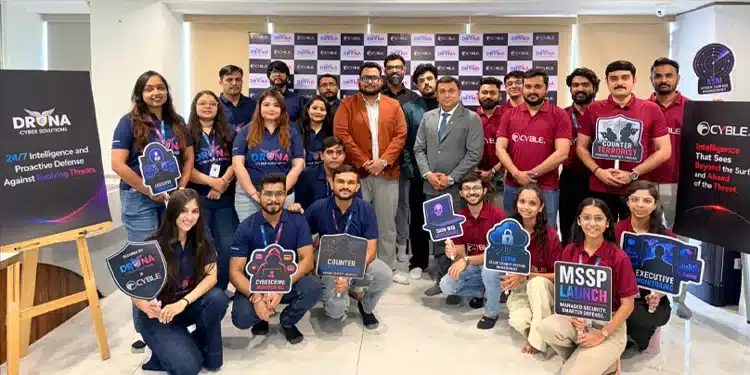
The AI-Powered Intelligence for Cyber Defense initiative was formally launched Tuesday at DRONA Cyber Solutions' Command and Control Centre, where the companies presented a live technical demonstration showing how an intrusion attempt can be detected, investigated and contained.
The launch comes as India faces a growing cybercrime burden. India recorded 28.15 lakh cybercrime cases in 2025, a 24 percent increase over the previous year, with reported losses reaching ₹22,495 crore. The government's 1930 cybercrime helpline received 32.4 million calls during the year. Of the complaints filed, 55,484 were converted into FIRs. While large enterprises and banks increasingly have dedicated security teams, budgets and incident response capabilities, many manufacturers, hospital chains, schools and mid-sized businesses, particularly across Tier-2 and Tier-3 cities, continue to operate without comparable security resources.
The final containment action was authorised by a human analyst rather than executed automatically. The demonstration brought together multiple capabilities. Cyble Vision provided the initial detection through continuous monitoring of criminal marketplaces and leak sites.
Cyble Hawk supported the investigative process and attribution, while Cyble Titan handled endpoint enforcement, using hardware-level integrity checks to support its assessment. DRONA analysts remained at the centre of the process, making decisions that the system was deliberately not permitted to make independently. Mandar Patil, Executive Vice President at Cyble, said the initiative was designed to address a longstanding gap between threat detection and action for mid-sized businesses.
"India is not short of alerts. It is short of what happens next," Patil said. "We have spent a long time in this industry watching mid-sized businesses get told about a threat and then having nowhere to take that information. What we are launching today is not another alert. It is a complete chain — intelligence before the attack, investigation that would stand up to scrutiny, enforcement on the device, and a person accountable for the decision at the end of it."Dhruv Pandit, Co-Founder and CEO of DRONA Cyber Solutions, said the initiative reflects the operational needs of organisations that require immediate action rather than another security dashboard.
"A factory owner calling us at two in the morning does not want to be shown a dashboard," Pandit said. "He wants to know what happened, he wants it contained, and he wants someone to take responsibility for what happens next."
The session brought together speakers from Cyble and DRONA Cyber Solutions to examine areas including dark web threat intelligence, government and PSU cybersecurity projects, digital forensics and incident response (DFIR), and the transition of threat intelligence from information to action.
Mandar Patil and Augustin Kurian of Cyble discussed the dark web threat intelligence landscape. Prathmesh Pawar spoke about government and PSU cybersecurity projects, while Brijesh Kapadiya addressed DFIR and Vijay Mali discussed moving threat intelligence from information to action. The keynote was delivered by Prof. Dr. Kapil Kumar, Coordinator, Department of Biochemistry and Forensic Science.
The session highlighted several practical aspects of cybersecurity work. The dark web was discussed not simply as a hidden part of the internet, but as a structured ecosystem requiring dedicated intelligence-gathering and threat-discovery methods. DFIR was presented as an area where speed and process are as important as technical expertise.
Another key takeaway was the importance of turning threat intelligence into action. Rather than treating intelligence as information alone, the session focused on how it can inform practical security decisions.
Patil told students that the cybersecurity industry faces a shortage of professionals with practical skills in analysing and validating threat intelligence."The gap this industry has is not a gap of ideas. It is a gap of people who know how to do the work," Patil said. "What separates a useful analyst from an alert-reader is the ability to ask whether a piece of intelligence is actually true before you act on it."Augustin Kurian, Editor-in-Chief of The Cyber Express, told students that threat intelligence and journalism share an emphasis on verification.
Every story we publish about a breach, a ransomware group or a leaked database starts exactly where today's demonstration started — with intelligence somebody had to go and find, verify, and decide was worth acting on," Kurian said. The instinct we have tried to build at The Cyber Express is the same instinct a good analyst needs: do not report, and do not act on, what you have not verified.The programme also involved technical and production teams supporting the session. Screen, sound and lighting were handled by the technical team under the guidance and supervision of Aditya More, while Misha Alagiya, Kavya Maharaja, Pathak Ami, Omi and Nandini supported stage management and photography.
"India's exposure is too large for any single partnership to take credit for solving," Patil said. "What matters is whether more of these collaborations exist a year from now, and whether the businesses we are talking about today — the ones without a security team — actually have somewhere to turn."
The AI-Powered Intelligence for Cyber Defense initiative will be delivered through DRONA's Ahmedabad command centre, with the companies indicating an intent to extend the service model to customers elsewhere in India over time.
The initiative also folds into DRONA's existing Cyber Yodha Campaign, a national programme aimed at building 50 integrated cybersecurity command centre labs and training more than 100,000 defenders.
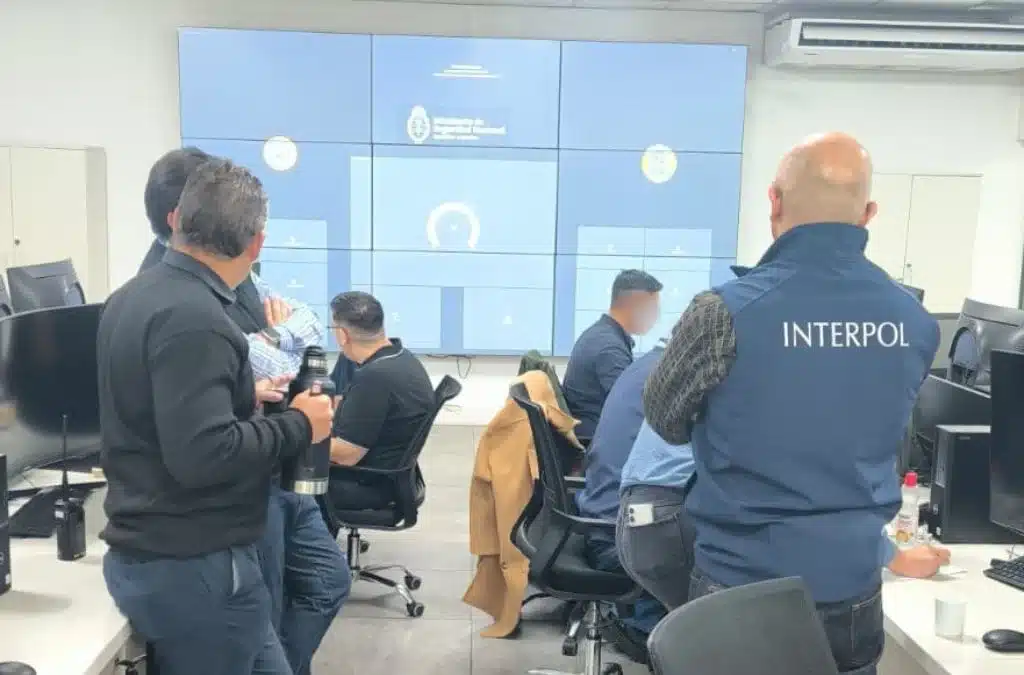
 Image Source: INTERPOL[/caption]


AliExpress, the online marketplace owned by Alibaba Group, has come under scrutiny after researchers and browser maker Brave reported finding silent Web Audio processing on the site that could help fingerprint visitors’ devices.
The audio processing did not record people through their microphones. Instead, it generated and processed an inaudible signal, then measured small, repeatable differences in the way a browser and device handled it.
Browser fingerprinting is a way for websites to identify devices and recognize returning visitors without relying on conventional cookies. It works by using information about a device and browser to create a unique signature.
The AliExpress website was found processing a fixed audio waveform and examining the resulting numerical values. Tiny differences can arise from the browser, operating system, CPU behavior, audio hardware, and drivers. When combined with other signals, they become another input that can contribute to a browser or device identifier.
Investigation of the page’s code reportedly found audio-processing graphs that were set to zero volume but remained connected to the system audio output. That explains why a user could hear nothing, and why muting a browser tab would not necessarily prevent the processing. All the relevant work was occurring within the Web Audio graph rather than through a conventional media player.
And audio measurements were only one part of the reported data collection. The scripts also gathered information tied to canvas rendering, WebGL, display settings, hardware configuration, WebRTC behavior and user interactions. Together, those signals can create a more detailed profile of a device than any one signal would provide on its own.
Fingerprinting can be used for legitimate purposes such as fraud prevention, bot detection, and risk assessment. It can help companies spot suspicious transactions or automated activity even when cookies have been deleted or accounts have changed. But it also raises privacy concerns because users may not know the tracking is happening and have limited control over it.
Earlier studies have shown that visitors’ choices about allowing cookies were ignored in more than half the cases studied. Fingerprinting adds another privacy concern because it can allow websites to recognize visitors without relying on cookies at all.
The alleged AliExpress implementation is a useful example of how modern tracking can be both silent and technically legitimate at the API level while still raising privacy concerns.
Brave says its browser blocks the AliExpress scripts responsible for the audio-based tracking. Other steps you can take include:
Browse like no one’s watching.
Malwarebytes Privacy VPN encrypts your connection and never logs what you do, so the next story you read doesn’t have to feel personal. Try it free →
AliExpress audio fingerprinting uses hidden WebAudio scripts for browser fingerprinting, silently seizing your Bluetooth audio. Learn to block it.
Related Posts:
The post AliExpress Audio Fingerprinting Hijacks Your Bluetooth appeared first on Daily CyberSecurity.