Visualização de leitura

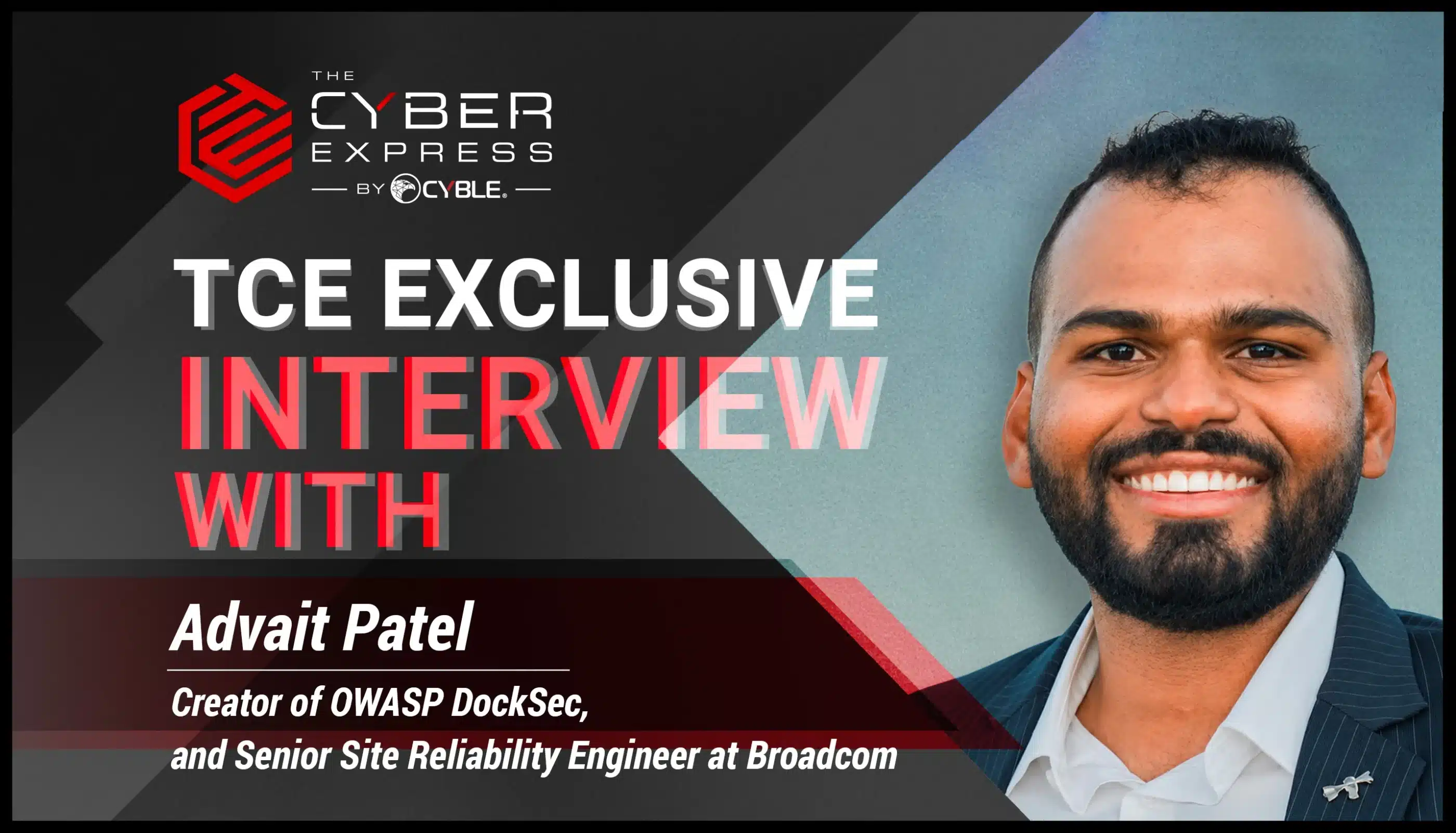
Advait Patel on How SRE and Security Engineering Are Converging

SRE and Security Engineering- Advait Patel Interview

The convergence of SRE and Security Engineering is reshaping how organizations build, operate, and protect modern cloud environments. As infrastructure grows more complex and distributed, reliability, security, identity management, and observability are becoming increasingly interconnected disciplines rather than separate functions.

Advait Patel, Senior Site Reliability Engineer at Broadcom and author of DockSec, has witnessed this shift firsthand. With experience spanning cloud infrastructure, DevSecOps, and observability platforms such as Wavefront (Tanzu Observability), he has worked on systems processing more than 10 million data points per second while leading initiatives in IAM, cloud migration, and security engineering.

In this interview, Patel shares his insights on securing observability platforms at scale, managing identity across multi-cloud environments, balancing automation with human oversight, and the role AI is playing in the future of DevSecOps and incident response.

Advait Patel Breaks Down SRE and Security Engineering 

TCE: How are you seeing SRE and security engineering converge in modern cloud environments? 

Advait Patel: The short version is that the failure modes started overlapping and the org charts are catching up. A misconfigured IAM policy that takes down a service and a misconfigured IAM policy that exposes data are usually the same mistake. SREs already own the deployment pipeline, the observability stack, and the incident process, which happen to be the three places security has to live if it wants to be effective instead of decorative.  What changed it for me was security as code. When I ran the zero-downtime migration of our observability platform from AWS to GCP, security could not be a review step bolted on at the end. It had to be expressed the same way reliability was, as policy in the pipeline, with the same testing and the same rollback story.   That is the real convergence. Not security and SRE attending the same standup, but security becoming something you can measure and enforce the way you measure latency or error rate. We are not all the way there as an industry. Plenty of shops still treat security as a gate at the end. But the teams moving fastest have stopped pretending the two disciplines are separate. 

TCE: What are the biggest challenges in securing large-scale observability platforms handling high-volume data streams? 

Advait Patel: This one is close to home, since I spent a long time on a platform ingesting north of 10 million data points per second. A few things make it genuinely hard.  First, telemetry is one of the most underrated attack surfaces in a company. Your metrics, traces, and logs describe your entire architecture. Get read access to that and you do not need to break into anything, the map is already drawn for you. And secrets leak into logs constantly. Someone logs a full request, the token rides along with it, and now your observability store is a credential store you never meant to build.  Second, at that volume you cannot inspect everything inline. Any control you add has to be cheap or it becomes the exact bottleneck you were hired to prevent. That single constraint rules out a lot of textbook advice.  Third is tenant isolation. When many teams share one pipeline, one team seeing another team's data is both a security incident and a trust failure at once. Getting that right without wrecking throughput was one of the harder problems in that migration. 

TCE: How do you approach identity and access management (IAM/CIAM/WIAM) in multi-cloud architectures? 

Advait Patel: I have spent enough time here to have written a couple of books on identity in the cloud, and the honest summary is that multi-cloud IAM is hard mostly because the providers disagree with each other. AWS, GCP, and Azure each have a different mental model for what an identity even is and how permissions attach to it. The abstractions do not map cleanly, so anyone selling you one tidy policy language across all three is usually hiding the seams.  The part I am most interested in right now is workload identity. For years, we secured machines the same way we secured people, with long-lived static credentials sitting in config files waiting to leak. That model is finally dying. Short-lived, attested identities through approaches like SPIFFE and workload identity federation are a much better answer, because the credential expires before an attacker can do much with it.  For human and customer identity, the rules are simpler, but the stakes are higher. Kill static keys, federate to one source of truth, and treat access review as something continuous rather than an annual audit nobody reads. Entitlement creep is the quiet killer here. People accumulate access and almost never lose it. 

TCE: What role do you see AI playing in improving reliability and security operations (AIOps/DevSecOps)? 

Advait Patel: I will give you the unfashionable version. AI is genuinely good at one specific thing in security operations and oversold at most of the rest.  The thing it is good at is the layer between detection and action. You run a scan, you get 200 findings, and historically, a human burns half a day working out which three actually matter for their system. AI is very good at that triage and at explaining a finding in the context of your specific setup. That is most of the real value, and it is the whole reason I built DockSec the way I did.  Where it gets oversold is autonomous action in production and the idea that it replaces the analyst. It does not. The right pattern is AI sitting on top of deterministic signals, not in place of them. A coding assistant telling you a Dockerfile looks fine does not survive an auditor's first question. You still need the scanner underneath and the human judgment on top.  And there is a twist people forget. AI is also a new attack surface. Agentic systems can be manipulated through their own inputs in ways we are only starting to score properly, which is part of why I put time into AI-specific vulnerability scoring. We are adding capability and risk in the same motion. 

TCE: How can teams balance automation with human oversight in incident response? 

Advait Patel: My rule of thumb is to automate the reversible and the boring and keep humans on the irreversible and the ambiguous.  Automation is excellent at the parts of incident response that are well understood and repetitive. Detect a known pattern, enrich it, page the right person, contain something you have contained a hundred times.   That should all run at machine speed. Where I get nervous is letting automation take actions with real blast radius on its own, because automation fails confidently and at scale. A human making a bad call breaks one thing. A bad automated remediation can take the whole fleet down before anyone has read the alert.  So I think of it as trust earned in increments. New automation runs in suggest mode first, where it only tells you what it would have done. Once it has been right enough times on low-risk actions, you let it act on those, and you keep the high-consequence decisions with a person. The piece people skip is the after. Humans own the retro and the learning. You do not automate understanding why it broke. 

TCE: What are the most important security practices for containerized environments today? 

Advait Patel: A few that matter more than the rest.  Start small. Minimal base images and multi-stage builds do more for your posture than almost any tool you can buy, because you cannot be vulnerable to something that is not in your image. Most containers ship with a full operating system that they never touch.  Do not run as root, and drop the capabilities you do not need. It is basic, and people still skip it.  Care about provenance. Sign your images, generate an SBOM, and know where your base layers came from, because you inherit every vulnerability in them, whether you wrote that code or not. The supply chain is where the interesting attacks are now.  But the practice I would push hardest is making your scanning actionable. A report with 200 CVEs that nobody can act on is security theater. The problem most teams actually have is not detection, it is prioritization and remediation. Coverage without a path to a fix just manufactures guilt. Closing that gap between found and fixed is what genuinely moves your risk down, and it is the problem I have spent the most time on. 

Conclusion

From securing observability platforms handling millions of data points per second to managing identity across multi-cloud environments, Advait Patel's experience highlights the practical challenges facing today's infrastructure teams. His views on automation, AI, incident response, and container security reinforce a common theme throughout the discussion: the growing overlap between SRE and Security Engineering.

As organizations continue to modernize their cloud environments, the ability to balance reliability, security, and operational efficiency will become increasingly important. For teams navigating that shift, Patel's insights offer a grounded perspective on what it takes to build and secure systems at scale.

CVE-2026-0300: Palo Alto PAN-OS Zero-Day Enables Root RCE on Exposed Firewalls

Edge security appliances remain high-value targets, especially when a flaw can be exploited before a patch is widely available. The CVE-2026-0300 vulnerability is a critical buffer overflow in the User-ID Authentication Portal, also known as Captive Portal, in Palo Alto Networks PAN-OS. Palo Alto rates it 9.3/10 when the portal is exposed to the internet or other untrusted networks, and says an unauthenticated attacker can execute arbitrary code with root privileges on affected PA-Series and VM-Series firewalls by sending specially crafted packets.

For teams beginning CVE-2026-0300 analysis, the most important details for CVE-2026-0300 are the exposure conditions: the issue applies only when User-ID Authentication Portal is enabled, and Palo Alto says risk is greatly reduced when access is limited to trusted internal IP addresses. The company also says limited exploitation has already been observed against portals exposed to untrusted IP space or the public internet.

In practice, CVE-2026-0300 affects only PA-Series and VM-Series firewalls configured to use the User-ID Authentication Portal. Prisma Access, Cloud NGFW, and Panorama are not impacted, which makes configuration review as important as version review when triaging exposure.

CVE-2026-0300 analysis

The vulnerability in CVE-2026-0300 is a buffer overflow in PAN-OS’s User-ID Authentication Portal service. According to Palo Alto, exploitation does not require credentials or user interaction, and the attacker’s goal is remote code execution as root through specially crafted network packets. SecurityWeek likewise describes the flaw as a zero-day used to hack some firewall models, underscoring that this is not a theoretical issue.

The publicly described CVE-2026-0300 payload is not a malware file dropped to disk but a malicious packet sequence sent to the Captive Portal component. Neither the vendor advisory nor the cited media reports includes a public CVE-2026-0300 poc, but the confirmed in-the-wild exploitation means defenders should assume capable threat actors already understand the triggering conditions well enough to weaponize them.

From a risk standpoint, CVE-2026-0300 detection should focus on externally reachable Authentication Portal instances and signs of attempted access to that service from untrusted networks. Palo Alto’s advisory does not publish packet-level CVE-2026-0300 iocs, so defenders are better served by identifying exposed portal configurations, narrowing allowed source IP ranges, and prioritizing internet-facing firewalls for remediation.

Explore Detections

CVE-2026-0300 Mitigation

Effective CVE-2026-0300 mitigation starts with reducing exposure before fixes land. Palo Alto recommends either restricting User-ID Authentication Portal access to trusted zones/internal IP addresses or disabling the portal entirely if it is not required. That advice is especially important because, at disclosure, the flaw was still unpatched, with the first wave of fixes expected on May 13, 2026 and additional releases on May 28, 2026 across supported 12.1, 11.2, 11.1, and 10.2 trains.

To Detect CVE-2026-0300 exposure in your environment, verify whether Device > User Identification > Authentication Portal Settings has the portal enabled and determine whether it is reachable from the internet or any untrusted network segment. Palo Alto’s advisory makes clear that customers following this hardening model are at greatly reduced risk compared with deployments that leave the service publicly accessible.

Organizations should also map affected firewalls to Palo Alto’s target fixed versions and prepare an upgrade plan as soon as the relevant release becomes available. Because limited exploitation is already underway, this is a case where configuration hardening and emergency change control should happen in parallel rather than waiting for normal maintenance windows.

FAQ

What is CVE-2026-0300 and how does it work?

CVE-2026-0300 is a critical PAN-OS buffer overflow in the User-ID Authentication Portal (Captive Portal). Palo Alto says an unauthenticated attacker can send specially crafted packets to the service and achieve arbitrary code execution with root privileges on affected PA-Series and VM-Series firewalls.

When was CVE-2026-0300 first discovered?

Palo Alto’s advisory says the issue was discovered in production use and was published on May 5, 2026. The public coverage from The Hacker News and SecurityWeek followed on May 6, 2026.

What is the impact of CVE-2026-0300 on systems?

The impact is severe: unauthenticated remote code execution as root on exposed firewalls. Because the flaw affects security infrastructure at the network edge, successful exploitation could give an attacker privileged control over a highly sensitive enforcement point.

Can CVE-2026-0300 still affect me in 2026?

Yes. Any affected PA-Series or VM-Series firewall can still be at risk in 2026 if it has User-ID Authentication Portal enabled and exposed to untrusted IP addresses or the public internet, especially until the relevant patched PAN-OS release is installed.

How can I protect myself from CVE-2026-0300?

Restrict User-ID Authentication Portal access to trusted internal IPs, disable it if it is unnecessary, and move to Palo Alto’s fixed PAN-OS builds as soon as they are available for your release train. The vendor explicitly says these steps materially reduce risk while active exploitation continues.


The post CVE-2026-0300: Palo Alto PAN-OS Zero-Day Enables Root RCE on Exposed Firewalls appeared first on SOC Prime.

Solving the Multi-Tenancy Identity Crisis in Modern Finance

Explore how to solve multi-tenancy identity challenges in modern finance with secure IAM strategies, improving access control and compliance.

The post Solving the Multi-Tenancy Identity Crisis in Modern Finance appeared first on Security Boulevard.

RSA Launches ID Plus Sovereign Deployment for Organizations That Can’t Afford Identity Downtime

RSA opened RSAC 2026 with a new deployment model for its ID Plus identity platform, aimed squarely at government agencies, financial services firms, and critical infrastructure operators that need identity security to work even when everything else fails. RSA ID Plus Sovereign Deployment is a “deploy anywhere” identity and access management solution that gives organizations..

The post RSA Launches ID Plus Sovereign Deployment for Organizations That Can’t Afford Identity Downtime appeared first on Security Boulevard.

Cisco Extends Security Reach to AI Agents

Cisco today at the RSA Conference (RSAC) extended its cybersecurity portfolio to secure artificial intelligence (AI) agents while at the same time employing AI to automate security operations. At the core of that effort are extensions to the Cisco Duo identity and access management (IAM) platform that make it possible to discover them and apply..

The post Cisco Extends Security Reach to AI Agents appeared first on Security Boulevard.

Why AISPM Isn’t Enough for the Agentic Era 

AI agents have moved from novelty to operational reality, acting autonomously across business systems in ways traditional AI security posture management (AISPM) and IAM can’t fully govern. Learn why risk now emerges at runtime, where existing posture tools fall short, and how Agentic SPM enables continuous discovery, runtime decision control, and auditability for autonomous agents.

The post Why AISPM Isn’t Enough for the Agentic Era  appeared first on Security Boulevard.

❌