❌

Visualização de leitura

FBI Seizes Bulletproof Hosting Domain Linked to Cybercrime

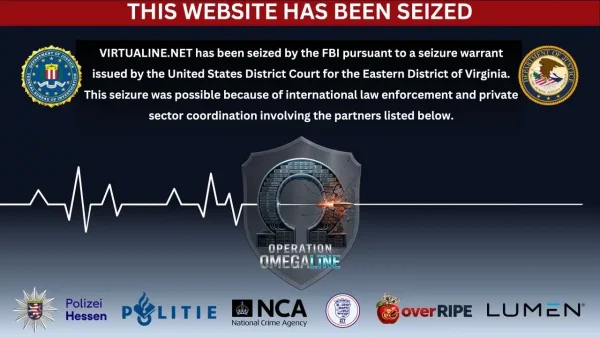
FBI seizes Virtualine

The FBI seizes Virtualine domain in a court-authorized operation alongside the U.S. Department of Justice , disrupting a so-called bulletproof hosting service accused of facilitating cybercrime, the distribution of child sexual abuse material (CSAM), and international money laundering. Before the seizure, Virtualine.net allegedly provided hosting infrastructure to criminal operations and continued supporting certain services despite repeated abuse notifications from law enforcement agencies and other organizations. The seizure followed a court-authorized operation against Virtualine, which also operated under the names Secury, Massgod, Spamhouse, Lanedo and Omegatech. According to court records, the service offered hosting, server solutions and domain purchasing options while advertising its ability to protect customers from law enforcement intervention.

FBI Seizes Virtualine Over Alleged Cybercrime Activity

Theophani K. Stamos, First Assistant U.S. Attorney for the Eastern District of Virginia, and Darren B. Cox, Assistant Director in Charge of the FBI Washington Field Office, announced the seizure of Virtualine.net. Authorities said the domain had been used to facilitate multiple forms of criminal activity, including advertising sexually explicit images of minors, the intentional disclosure of nonconsensual intimate images involving adults and minors, and international money laundering.
FBI seizes Virtualine
Image Source: FBI
Virtualine marketed its services on cybercrime forums, where it openly promoted hosting options for users engaged in illegal activities. In September 2024, the service told a user on Exploit.in that its infrastructure could be used for activities including phishing, carding, email spam and port scanning, while claiming to prohibit child sexual abuse material and terrorism-related content.
However, court records allege that Virtualine knowingly hosted a criminal online forum, identified as Vendor 1, that allowed users to post and sell access to nude, sexually suggestive and sexually explicit images and videos involving minors and adults.

Hosting Provider Allegedly Ignored Repeated Abuse Reports

The investigation found that Virtualine continued hosting Vendor 1 despite receiving multiple notifications about sexually explicit images and videos of minors. According to court records, Virtualine assigned an IP address to Vendor 1 around December 2025, with notifications about the material beginning in January 2026. Reports came from law enforcement agencies in Germany, Canada and Australia, the U.S. National Center for Missing and Exploited Children (NCMEC), and an attorney representing a victim. Despite these notifications, Virtualine allegedly continued providing hosting services to the forum. The records also state that Virtualine worked directly with Vendor 1 to develop another website that allowed customers to upload illicit content and download it after making a purchase. Authorities said Virtualine continued hosting this website and had received at least one abuse complaint concerning sexually explicit images of children found on the platform. Vendor 1 also promoted a hack-for-hire service, through which customers could pay hackers to gain unauthorized access to victims’ online accounts and obtain explicit images and videos.

Virtualine Advertised Measures to Evade Law Enforcement

Beyond its hosting services, Virtualine allegedly offered customers additional protection designed to keep criminal infrastructure operational when authorities intervened. In March 2026, the provider advertised an “additional protection plan” that it said could be activated after receiving an official request from law enforcement agencies. Under the arrangement, Virtualine would move a customer’s criminal infrastructure to another shell company not affiliated with the provider, after which the server would be reactivated. The alleged practice illustrates how bulletproof hosting services can be used to maintain online criminal operations by moving infrastructure when enforcement or abuse complaints threaten existing arrangements. Virtualine also promoted its tolerance of abuse on underground forums. In a June 2025 post on HackForums, it claimed to have ignored more abuse reports than other providers.

Cryptocurrency Payments Linked to Money Laundering

Investigators also examined Virtualine’s payment arrangements and their alleged role in concealing criminal proceeds. According to court records, Virtualine accepted payments through Bitcoin, including specific unhosted Bitcoin addresses that allowed customers to make direct payments without their funds being flagged as illicit. The service received payments from criminal customers, some of which investigators could trace directly to various criminal groups. Virtualine then allegedly laundered the funds further to conceal their origin. Authorities identified international money laundering as one of the criminal activities facilitated through the service.

International Cooperation Behind Virtualine Takedown

The FBI’s Washington Field Office led the investigation, with significant assistance from Germany’s Polizei Hessen, the Netherlands’ Politie Midden-Nederland and the United Kingdom’s National Crime Agency. Private-sector partners OverRIPE and Lumen also assisted, while the Justice Department’s Office of International Affairs provided additional support. Assistant U.S. Attorneys Laura D. Withers and Stefanie A. Schwartz are representing the government in the matter. The seizure of Virtualine.net disrupts a hosting service that authorities allege provided infrastructure and financial services to support criminal activity. The case also highlights the role of international law enforcement cooperation in targeting providers accused of enabling cybercrime across multiple jurisdictions.

Virtualine Domain Seized, but Allegedly Abusive Website Remains Online

The FBI seized Virtualine, a hosting service accused of supporting criminal sites, ignoring abuse reports and helping launder money from illegal activities

The FBI seized the website of Virtualine, a hosting service that sold its services to criminals. The seized domain is virtualine.net, and the government says the site was used to commit and facilitate prolific criminal activity. That includes the advertisement of sexually explicit images of minors, the intentional disclosure of nonconsensual intimate images of adults and minors, and international money laundering. A court authorized the seizure.

“Theophani K. Stamos, First Assistant U.S. Attorney for the Eastern District of Virginia, and Darren B. Cox, Assistant Director in Charge of the FBI Washington Field Office, announced today the seizure of the website virtualine.net after it was used to commit and facilitate prolific criminal activity, including the advertisement of sexually explicit images of minors, the intentional disclosure of nonconsensual intimate visual depictions of adults and minors, and international money laundering designed to conceal and promote criminal conduct.” The Justice Department has the details in a press release.

Virtualine, also known as Secury, Massgod, Spamhouse, Lanedo and Omegatech, offers “bulletproof” hosting. It sells hosting, servers and domain names to customers who want a provider that ignores abuse complaints. It promotes its services on cybercrime forums.

Court records include examples of those ads. In September 2024, Virtualine told an Exploit.in user that it allowed illegal activities such as phishing, payment card fraud, email spam and port scanning, but banned child sexual abuse material and terrorism-related content. In June 2025, it boasted on HackForums that it ignored more abuse than three therapists combined.

In March 2026, Virtualine promoted an “additional protection plan” for customers, offered after the company received an official request from law enforcement. Under the plan, it would move the customer’s criminal infrastructure to another shell company unaffiliated with Virtualine, and then reactivate the server. It was a game of musical shell companies.

“In March 2026, Virtualine advertised its “additional protection plan,” which it offered to its customers after “receiv[ing] an official request from law enforcement agencies.” Under this plan, Virtualine would move the customer’s criminal infrastructure to “another shell company not affiliated with Virtualine, after which the server is reactivated.”” continues the press release.”As Virtualine advertised to users on the platform HackForums in June 2025, “Virtualine ignored more abuse than your last three therapists.””

Despite saying it bans child content, the government says Virtualine knowingly hosted a website that carried it. Court records call that site Vendor 1. It’s a criminal online forum where users post and sell access to nude, sexually suggestive or sexually explicit images and videos of minors and adults, and it also promotes a hack-for-hire service in which people pay hackers to get into victims’ online accounts without consent and take explicit images and videos.

In January 2026, about a month after assigning Vendor 1 an IP address, Virtualine began receiving reports of child sexual abuse images and videos on the server. The reports came from police in Germany, Canada and Australia, the US National Center for Missing and Exploited Children (NCMEC), and a victim’s lawyer. According to the government, Virtualine continued hosting Vendor 1 despite those warnings.

The government also says Virtualine helped Vendor 1 build a new website. It allowed users to upload illegal material and download it after paying.

The site accepted several payment methods, including an option called “BTC [NO-AML].” It used bitcoin addresses outside a hosted payment service, allowing customers to pay directly and avoid that service’s checks for illegal funds.

Authorities say some payments came directly from criminal groups. They accuse Virtualine of accepting the money and moving it through further transactions to hide its source.

The FBI’s Washington Field Office led the investigation, with significant help from Germany’s Polizei Hessen, the Netherlands’ Politie Midden-Nederland, the U.K.’s National Crime Agency, and private partners OverRIPE and Lumen. The Justice Department’s Office of International Affairs also assisted. Assistant U.S. Attorneys Laura D. Withers and Stefanie A. Schwartz represent the government.

A domain seizure doesn’t end the problem, and the government says so in plain terms. The new website Virtualine built with Vendor 1 has already drawn at least one abuse complaint about sexually explicit images of children, and the release adds: Virtualine hosts this new website to this day.

Follow me on Twitter: @securityaffairs and Facebook and Mastodon

Pierluigi Paganini

(SecurityAffairs – hacking, Virtualine)

Global Crackdown on West African Crime Networks Leads to 58 Arrests

West African Organized Crime Groups

An eight-month international operation targeting West African organized crime groups has resulted in 58 arrests and the identification of 263 suspects across 22 countries, according to INTERPOL. Operation Jackal IV, conducted from November 2025 to June 2026, focused on disrupting criminal networks, tracing illicit funds, identifying high-value targets and supporting arrests and prosecutions. The operation brought together countries across six continents to tackle the growing global threat posed by West African criminal networks, including Black Axe and similar groups. These networks have been linked to a significant share of global cyber-enabled financial fraud, including romance scams, cryptocurrency and investment scams, and business email compromise fraud.

Operation Jackal IV Targets West African Organized Crime Groups

Operation Jackal IV also targeted money laundering activities used to move and conceal criminal proceeds across borders. INTERPOL coordinated cross-border intelligence sharing, analysis and operational support during the operation. It also provided specialized training to strengthen international investigations into financial crime. Tomonobu Kaya, Director of the INTERPOL Financial Crime and Anti-Corruption Centre, said the operation showed the importance of international cooperation in following illicit financial flows and disrupting criminal networks. [caption id="attachment_113806" align="aligncenter" width="600"]West African Organized Crime Groups Image Source: INTERPOL[/caption]

Major Arrests and Financial Crime Investigations

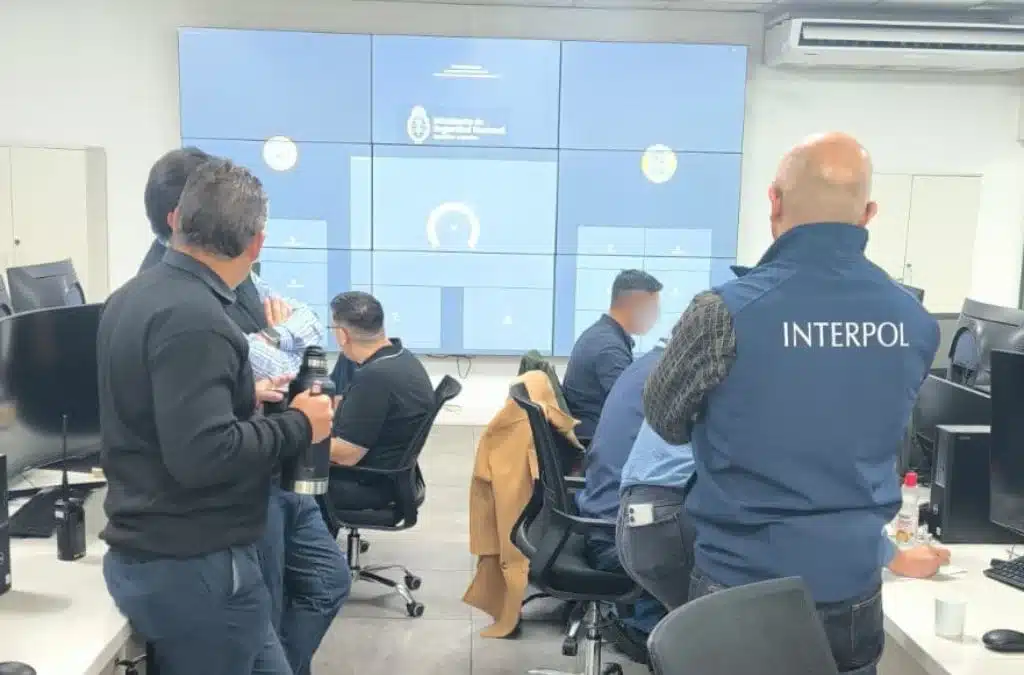
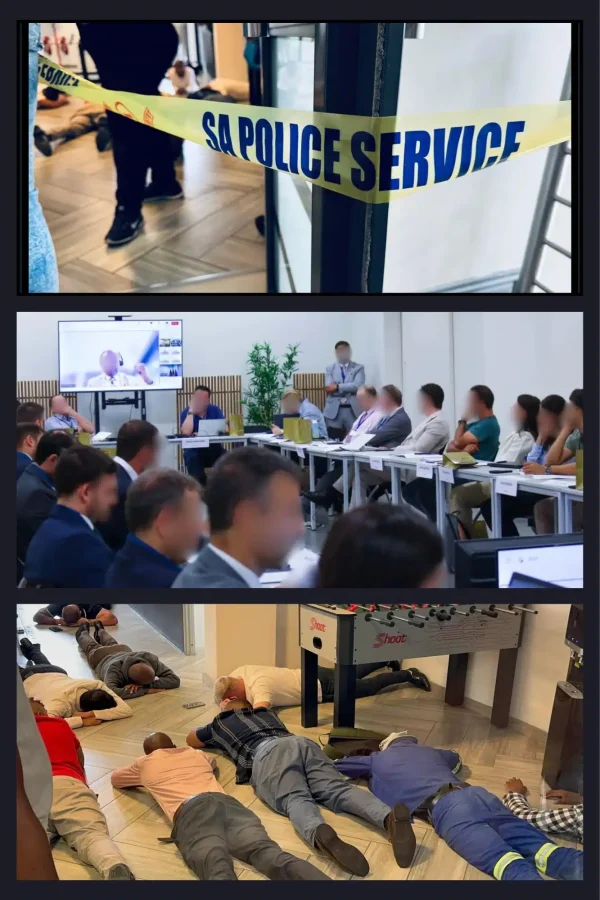
In Argentina, authorities identified 196 individuals linked to a major Crime-as-a-Service network suspected of providing website domains and money laundering support to West African organized crime groups. The investigation resulted in 17 arrests, with an INTERPOL Operational Support Team assisting with analysis of seized data and identification of suspects and criminal networks. South African authorities raided seven locations in Johannesburg linked to a syndicate involved in romance and investment scams targeting retirees in English-speaking countries. Investigators arrested 39 people, seized USD 2.67 million and blocked 257 bank accounts. In Italy, investigators identified an individual connected to a pan-European money laundering network that used shell companies, remittance services and cash withdrawals. One account processed EUR 845,000, or about USD 736,000, through 560 transactions involving 20 financial instruments. Romanian authorities dismantled a criminal group operating an investment scam through a call centre. The group promoted high returns from stocks and cryptocurrencies, with victims' money transferred to electronic wallets controlled by perpetrators. Authorities estimated that EUR 143 million had been stolen and laundered globally. Eleven people were arrested, while cash, cryptocurrency, six real estate properties and luxury watches were seized.

Sextortion and Crime-as-a-Service Emerge

Beyond individual investigations, the operation highlighted emerging threats involving sextortion and Crime-as-a-Service. INTERPOL identified an increase in West African organized crime groups using sextortion to target minors, including victims as young as 14. In these cases, offenders typically contacted minors through social media, established trust and persuaded them to share explicit images or videos. They then threatened to distribute the material to the victim's contacts unless a ransom was paid. Investigators also found that some criminal syndicates were procuring Crime-as-a-Service from external providers, including through the dark web. These services were used to outsource activities such as money laundering and other operational functions. While several cases from Operation Jackal IV remain under investigation, the preliminary results demonstrate the scale and international reach of the networks targeted during the eight-month operation. The participating countries were Austria, Argentina, Australia, Canada, Côte d'Ivoire, France, Germany, Indonesia, Ireland, Italy, Japan, Malaysia, the Netherlands, Nigeria, Portugal, South Africa, Spain, Sweden, Switzerland, the United Arab Emirates, the United Kingdom and the United States.
❌