❌

Visualização de leitura

OpenAI buys tiny software developer to improve Codex

OpenAI is buying Pierre Computer Company in order to incorporate the San Francisco-based software developer’s Code.Storage infrastructure layer for Git into its Codex AI-powered programming tool.

Pierre Computer, whose employees number just barely in the double digits, has got plenty of clout for its small size. It’s well-known for Code.Storage offering, as well as for its open-source software libraries, Trees and Diffs, which OpenAI already uses in Codex.

OpenAI has experienced some of the limitations of Git itself, and its in-house engineering teams are already working to improve its support for human coders and AI agents working in parallel. Earlier this week the company described how it built a new back end for Git repositories, Pando, to enable concurrent working at scale.

The AI developer has been pushing Codex more aggressively this year: offering it to Mac users and expanding it to Windows. It cited Pierre Computer’s ability to help developers review code as one of the reasons for the acquisition. OpenAI highlighted the Diffs’ Edit mode and the recently released Highlights as components that were particularly helpful to development teams.

Announcing the deal on its news page, OpenAI set out how it would integrate the company into its existing offerings. “With the Pierre team, we wish to set the standard for modern software development: from the first branch an agent creates to that magic moment when code is deployed to the world. We want to make Codex the place where developers and agents take on their most ambitious projects.”

Neither company disclosed details of the acquisition price. OpenAI said that Code.Storage customers will be able to continue using the product until it brings the features into Codex, while Pierre Computer’s open-source projects will remain open, and OpenAI will continue to contribute to them.

This article first appeared on InfoWorld.

Stopping Node2Shell: How SentinelOne Protects Customers From Brotli-Based Remote Code Execution

Executive Summary

On October 21, 2026, the Node.js project released security updates that fix CVE-2026-111497, an out-of-bounds write in the Brotli decoder bundled with the runtime. Vendors have labeled the vulnerability Node2Shell, Brotli2Shell, Broccoli2Shell, and HTTP2Shell, because the flaw sits in Google's Brotli library and reaches software well beyond Node.js. Any application that decompresses attacker-controlled data with a vulnerable Brotli library could be at risk. Google, as the CVE Numbering Authority, scored it 9.2 under CVSS v4.0, and Node.js rates it high.

CISA added CVE-2026-111497 to its Known Exploited Vulnerabilities (KEV) catalog on October 27, 2026, with a November 10, 2026 deadline for federal civilian agencies. The public telemetry we reviewed shows exploitation attempts against honeypot sensors, and researchers have demonstrated code execution in lab environments. As of October 29, 2026, we are not aware of a public report of a confirmed compromise of a production system.

This report details Node2Shell's mechanism, affected versions, and observed activity, and outlines how SentinelOne customers and partners can strengthen their defenses.

Key Highlights

  • One flaw, many patches. Node.js, Google Brotli, Bun, .NET, Python, Envoy, Istio, and PHP for Windows each shipped their own fix. Updating one does not update the others.

  • Attempts are confirmed. Production compromise is not. ELLIO and Previdian have each recorded an exploitation attempt against their honeypot sensors. Previdian notes that such observations do not show the target was vulnerable or that the attempt succeeded.

  • A default Node.js server is not exposed by itself. Something must hand attacker-controlled Brotli data to the decoder. Node.js names direct node:zlib use. Express 5 request bodies and built-in fetch() responses reach the same decoder, and Imperva reproduced both in the lab.

  • A failed exploit still costs you. The Node.js advisory lists a crash as an outcome, and Sysdig reports that crashes have been easy to reproduce. Repeated crashes are a denial of service against any service that decodes attacker-influenced Brotli.

  • The fix was visible for nearly eight months before release. Google committed it on February 27, 2026, with no release and no advisory. End-of-life Node.js 20, 23, and 25 are not expected to receive a fix.

Organizations should take the following steps immediately:

  • Upgrade Node.js to 22.23.4, 24.22.1, or 26.12.1, then restart processes and rebuild container images.

  • Inventory every other runtime and library that embeds the Brotli decoder, and patch internet-facing services first.

  • Where patching must wait, reject inbound requests that carry Content-Encoding: br at the proxy or load balancer.

What is Node2Shell

Node2Shell is a memory corruption flaw in the Brotli decoder, the code that expands Brotli-compressed data. A Brotli stream signals switches between block types. When a stream declares only one block type, a switch is invalid and the decoder should reject it. The vulnerable decoder instead reported the invalid switch as a request for more input. The caller supplied more bytes, and the decoder kept appending them to an eight-byte internal buffer and wrote past its end, according to the Node.js advisory.

Node.js lists the outcomes as a crash, disclosure of process memory, or remote code execution, and the CVE record describes the attacker as unauthenticated. Imperva demonstrated code execution on the official Node.js 24.22.0 arm64 image. Microsoft describes the .NET impact as information disclosure, denial of service, or elevation of privilege.

Node2Shell at a Glance

Attribute

Detail

CVE

CVE-2026-111497, also called Brotli2Shell, Broccoli2Shell, and HTTP2Shell

Weakness

Unchecked return value (CWE-252) leading to an out-of-bounds write (CWE-787). No authentication required.

Severity

CVSS v4.0 9.2 (Google, CNA). Node.js: high.

Affected Component

Google Brotli 1.0.3 through 1.0.9, 1.1.0, and 1.2.0, bundled or linked by many products

How Attacker-Controlled Brotli Reaches the Decoder

Path

Condition

Inbound request bodies

Routes that use express.json(), express.urlencoded(), express.text(), or express.raw() in Express 5 or body-parser 2 decompress bodies sent with Content-Encoding: br by default. Any client can send one.

Outbound responses

Built-in fetch() decodes Brotli automatically, so a malicious or compromised server can target the client.

Direct calls

Applications that pass untrusted input to zlib.brotliDecompress() or zlib.createBrotliDecompress().

Disclosure Timeline

Date (2026)

Event

February 27

Google commits the upstream fix with no release and no advisory.

October 21

Node.js discloses CVE-2026-111497. Google releases Brotli 1.0.10, 1.1.1, and 1.2.1.

October 22

Imperva demonstrates code execution on arm64. CVE record is published.

October 25

Microsoft releases out-of-band .NET security updates.

October 27

CISA adds the CVE to the KEV catalog.

Exploitation in the Wild

Exploitation attempts have been recorded, but a successful attack on a production system has not been publicly reported as of October 29, 2026. CISA added CVE-2026-111497 to its KEV catalog on October 27, 2026, with a November 10, 2026 deadline for federal civilian agencies under BOD 26-04.

The public telemetry comes from honeypots. Two threat intelligence providers each recorded an attempt: ELLIO saw a request built for Node.js 24.22.0 on x86-64 on October 26, and Previdian saw one from a U.S.-based address on October 27. Previdian notes that such observations do not show the target was vulnerable or that the attempt succeeded.

Researchers have reproduced code execution only in lab testing. Imperva ran code on the official Node.js 24.22.0 arm64 image through fetch() and Express 5 request bodies, needed multiple attempts, and did not test every Node.js build. Public proof-of-concept code appeared within hours of the October 21 release, according to Sysdig, so organizations should expect further attempts, particularly against internet-facing Express 5 services.

Observed Indicators

Type

Indicator

IP Address

94[.]154[.]43[.]7

SHA-256

7fcbdaaecd4419e2930927844f3b772668204737a4e7602a2290c991c93c5c4b

Behavior

A Node.js process that starts or becomes a shell

Patch Status

Node.js has fixed every supported release line: 22.x, 24.x, and 26.x. It will not patch end-of-life lines, which the project says are always affected when a security release occurs. Organizations running Node.js 20, 23, or 25 have no patch to apply and must upgrade to a supported line.

Product

Affected Version

Fixed Version

Node.js

22.x before 22.23.4, 24.x before 24.22.1, 26.x before 26.12.1

22.23.4, 24.22.1, 26.12.1

Node.js 20, 23, 25

All versions

No fix. Move to a supported line

Google Brotli

1.0.3 through 1.0.9, 1.1.0, 1.2.0

1.0.10, 1.1.1, 1.2.1

Bun

1.0.21 through 1.4.3

1.4.4

Microsoft .NET

8 before 8.0.33, 9 before 9.0.22, 10 before 10.0.14, 11 before RC3. Exposed only where Brotli decompression is in use. .NET Framework is not affected.

8.0.33, 9.0.22, 10.0.14, 11 RC3

PHP for Windows

Builds that bundle Brotli 1.0.3 through 1.2.0

8.2.35-1, 8.3.36-1, 8.4.27-1, 8.5.12-1

Python Brotli, brotlicffi

Bundled Brotli 1.0.3 through 1.2.0 (brotlicffi up to 1.2.0.2)

Brotli 1.2.1, brotlicffi 1.2.1.0

Envoy Proxy

1.36.11, 1.37.7, 1.38.5, and 1.39.2

1.36.12, 1.37.8, 1.38.6, 1.39.3, 1.40.0

Istio

1.29.x before 1.29.9, 1.30.x before 1.30.6, 1.31.x before 1.31.2

1.29.9, 1.30.6, 1.31.2

Recommended Mitigations

Patch, Restart, and Rebuild

  • Upgrade to a fixed Node.js release, update every Dockerfile that pins an older tag, and restart or redeploy every workload.
  • Confirm patch status from the Node.js release version running in each workload, not a bundled library version string, which may not reflect a backported fix.

Find Every Copy of the Decoder

  • Inventory Bun, .NET, Python Brotli, Envoy, Istio, PHP for Windows, and statically built executables, including staging, CI, build images, and developer machines.
  • Where Node.js links the system Brotli library, as it does on Debian, check your distribution’s advisory for the Node.js package as well as brotli. Debian’s tracker lists both.
  • PHP for Windows fixed the flaw with rebuilt packages that keep the same PHP version number, so php -v looks the same before and after. Check the -1 build suffix or the SHA-256 on the download page.
  • Move off Node.js 20, 23, and 25 on a defined date.

Reduce Exposure Until Patching Finishes

  • Reject requests with Content-Encoding: br at the WAF or proxy, or set the body-parser inflate option to false so compressed bodies return HTTP 415. The second option also rejects gzip and deflate bodies, so test client traffic first.
  • Restrict server-side fetches to trusted destinations. Link previews, webhooks, and crawlers send attacker-influenced URLs into fetch(), and removing br from Accept-Encoding does not stop a hostile server from replying with Brotli.
  • Enable a vendor WAF rule as a stopgap where one exists. It does not replace the upgrade.

Limit the Blast Radius

  • Run Node.js services as a non-root user and limit outbound connections from Node.js hosts. Docker runs containers as root by default, and the official node image provides a node user (uid 1000) that you must select with USER or -u.

Watch for Failed Attempts

  • Alert on repeated worker crashes after requests with Content-Encoding: br. Where core dumps are enabled, restrict who can read them and shorten retention, because a core file can hold memory contents from other users’ sessions.

How SentinelOne Protects You

Node2Shell exploits the Brotli decoder inside the Node.js process. Patching Node.js and every other copy of the Brotli decoder remains the primary control. SentinelOne provides detection and visibility into post-exploitation behavior while that work is underway.

The Singularity agent builds a storyline of process activity on a host, including the Node.js services targeted by Node2Shell. These processes have a predictable life: they answer requests, call APIs, and read files. They do not normally start /bin/sh, run reconnaissance commands, download executables into /tmp, or open connections to arbitrary hosts. Behavioral detection looks for that deviation from normal behavior. 

Detection in Singularity AI SIEM

Platform detection content looks at what happens on the host after exploitation, not at the request body. 

Attacker Step

Telemetry

Visible Indicators

Code execution in the service

Process creation

Shell processes whose lineage or prior image is node, nodejs, or bun, including an in-place exec, followed by enumeration utilities (id, whoami, uname, hostname) or sensitive file reads

Tooling download

Process creation, File creation

Downloaders (curl, wget, interpreters) fetching to world-writable paths, and executables written and then run from /tmp

Files written by the service

File creation

A Node.js service account writing new executables or scripts outside its normal application paths

Shell and C2

Process creation, IP Connect

Shell processes with a socket as standard input or output, socket-redirection patterns (/dev/tcp, nc, socat), and unexpected outbound connections from Node.js service accounts

Novel child process

First-seen analytics

A Node.js process that starts or becomes a shell or image it has never run in that environment

Correlation rules tie these together. A request to the service, or an outbound fetch to an untrusted host, followed by a process spawn or file drop from the same Node.js process is the shape of a successful chain. 

Visibility at the Edge

Sysdig reports that the crash is easy to reproduce, which makes repeated worker crashes and restarts a useful early signal. Web server, WAF, and CDN logs may show requests with Content-Encoding: br followed by bursts of HTTP 5xx responses and unexplained worker restarts. Singularity AI SIEM can ingest those sources alongside endpoint data if you forward them. 

Hunt with Purple AI While You Patch

Patching is the only complete fix. While that work runs, analysts can ask Purple AI questions such as:

  • Show me shell processes whose parent or prior image was node, nodejs, or bun since October 21.
  • Show me new executable files written by the Node.js service account since October 21.
  • Show me outbound connections from the Node.js service account to destinations we have never seen.
  • Show me hosts with a spike in 500 responses followed by a Node.js process restart.

The last question depends on web server logs being ingested. 

Confirm Agent Saturation on Node.js Hosts

Confirm the agent is deployed, healthy, and in protect mode on every server and container host that runs Node.js, Bun, or another service that decompresses Brotli. Start with internet-facing Express 5 services and services that fetch external URLs.

Disclaimer

Information contained herein is current as of October 29, 2026, and is subject to change as patch releases and threat activity evolve. Recipients should not rely solely on this report for security decisions and should consult with their security teams and SentinelOne account representatives for current guidance.

Salesforce acquires Rune Technologies to add offline capabilities to Missionforce

Salesforce is in the process of acquiring US-based defense-tech startup Rune Technologies to add offline capabilities to Missionforce, its Agentforce avatar for national security, defense, aerospace, and government agencies.

The startup’s TyrOS platform will be used to extend Missionforce into frontline military logistics, enabling deployed units to forecast supply requirements, optimize resource allocation, and make operational decisions even when network connectivity is unavailable, the CRM software provider said in a statement.

That is possible due to TyrOS’s offline-first architecture that caches last-known information about inventory, vehicles, and transportation routes using NFC-based hardware, allowing deployed units to access operational data without a continuous connection to centralized systems, according to the company’s website.

The platform can also exchange prioritized information between distributed nodes through a mesh network when connectivity becomes available, the website showed.

Currently, Missionforce acts as a system of record for personnel, equipment, and supplies across defense organizations, while providing tools for strategic planning.

For CIOs of defense organizations, the acquisition could mean improved operational continuity and better utilization of available resources, said Premal Shah, principal analyst at Avasant.

This would be helpful because frontline units could now continue to access critical logistics information and coordinate resource requirements during connectivity disruptions, rather than relying on manual records or waiting for centralized systems to become available, Shah added.

Once connectivity is restored, information can be synchronized across distributed nodes, helping headquarters regain visibility into frontline requirements and make more informed decisions about resource allocation and resupply, he further added.

However, implementing technologies such as TyrOS comes with its own set of risks, according to Pareekh Jain, principal analyst at Pareekh Consulting.

CIOs need to ensure that information updated by different military units while offline does not result in conflicting records when their systems reconnect, while also maintaining data security across distributed locations, Jain said.

TyrOS, though, is not an untested technology in military environments. Its platform is already deployed with the US Army and US Marine Corps, giving Rune an established presence in the defense sector, Salesforce said.

It plans to use the acquisition to build the foundation for a recent 10-year contract it won with the US Army, which has a $5.6 billion ceiling and focuses on modernizing military operations. The transaction is expected to close by April 2027.

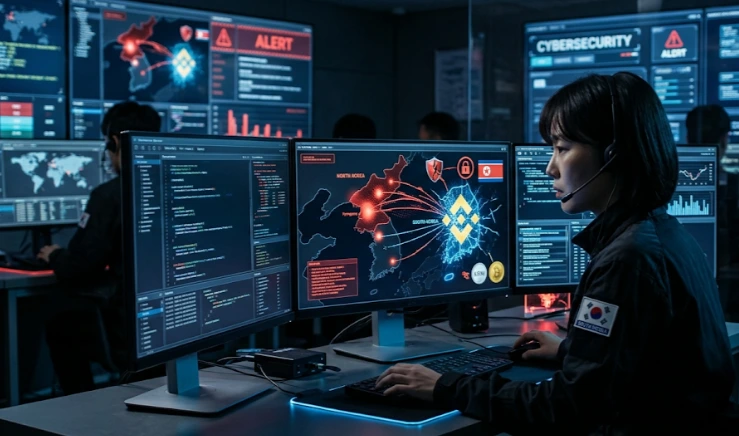
South Korea President Eyes Cybersecurity Task Force After North Korea-Linked Crypto Heist

cybersecurity task force

South Korean President Lee Jae-myung has directed officials to look into creating a cybersecurity task force. A wave of hacking incidents at financial firms and a massive cryptocurrency theft linked to North Korea have raised alarm over the country's digital defenses.  Lee instructed on Tuesday, Nov. 3, 2026, during a Cabinet meeting at Cheong Wa Dae in Seoul. The proposed task force would focus solely on strengthening online security. 

Cybersecurity Task Force and North Korea's Binance Heist 

The directive follows a string of attacks on domestic financial companies that exposed customer data. The most recent targets were Mirae Asset Global Investments, cryptocurrency exchange Bithumb, and Daishin Securities. It also comes after the hacking of Binance, the world's largest crypto exchange, in which more than US$6 billion in cryptocurrency was stolen. The U.S. Federal Bureau of Investigation (FBI) has since attributed the theft to North Korea, which gives the incident a national security dimension beyond financial crime. Lee said cyber threats have grown severe enough to endanger the national economy, national security and the daily lives of ordinary citizens. He called for "a comprehensive prevention system" to address them. According to the president, hacking methods are becoming more sophisticated and widespread, driven partly by advances in artificial intelligence (AI). He said this trend is exposing clear limits in the systems currently used to maintain security.

A Possible "Czar Agency" Amid North Korea Threats 

Lee's plans go further than a single task force. He stressed the need for talks on setting up a pan-government agency responsible for cybersecurity across both the public and private sectors.  He specifically told officials to "proactively consider the formation of a cybersecurity czar agency" that could act as a strong and effective control tower for security management.  The president also ordered officials to thoroughly fix security weaknesses at major state institutions and key national infrastructure, naming information communications, energy, and finance. Because hackers tied to North Korea have repeatedly targeted financial assets, the finance sector is a particularly pressing concern. 

Social Media Limits for Teens Also on the Agenda 

Cybersecurity was not the only digital issue raised at the meeting. Lee also called for quick discussions on the government's plan to restrict adolescents' use of social media.  "The harmful effects (of social media on teenagers) appear to be greater than what we think," Lee said.  The government is pursuing measures to limit social media sign-ups by young teens and to restrict their use of certain services, including algorithm-based ones. The goal is to shield adolescents from the harms of social media.  Lee told Kim Jong-cheol, chairman of the Korea Media and Communications Commission, to "conduct relevant discussions thoroughly and promptly." He pointed to similar efforts already under way in Europe, Australia and Canada.  Kim replied that the plan should be pursued on the basis of social consensus. He said the commission intends to gather public input and finalize the measures in the first half of next year.  Officials will now weigh whether to form a cybersecurity task force and a broader czar agency. Their decisions will shape how South Korea responds to escalating digital threats, including attacks attributed to North Korea. 

Tech Firms Dismantle Botnet That Turned 1.3M TV Boxes Into Proxies

Google said today it worked with industry partners to dismantle a botnet made up of more than 1.3 million Android TV set-top boxes that ship with malicious software which secretly rents the user’s Internet connection out to strangers and conducts advertising fraud. Experts involved in the takedown say the action is likely to sever the botnet’s access to more than 10 million additional compromised systems, including other Internet of Things (IoT) products such as Android-based healthcare devices and karaoke machines.

A report from the Google Threat Intelligence Group (GTIG) said Google has severed ties with Videostrong Technology Co., a TV box manufacturer in China that GTIG and other industry experts concluded was responsible for including malware that enrolled more than 1.3 million set-top boxes in a botnet dubbed “XCPE” (named after one of the malware’s core code components).

The global distribution of XCPE botnet infections. Image: Google Threat Intelligence Group.

The report said the XCPE botnet loaded the user’s device with software that makes their Internet address available for resale by multiple “residential proxy” services, which allow customers to rent Internet addresses as a way to anonymize their web traffic or spoof their true location. As detailed in several stories here over the past year, residential proxy services are a major source of unwanted and often malicious traffic, including account takeover activity, advertising fraud, and mass content scraping for AI projects.

“Videostrong monetized the backdoor by selling access to criminal affiliates and loading those affiliates’ malware modules onto infected devices,” the GTIG post reads, noting that Google took legal action to take down the domains and servers Videostrong used to control the botnet and install additional malware. “A device manufacturer intentionally infecting their users with malware is an unacceptable breach of trust, and represents a serious risk to those users. Without users’ knowledge or consent, infected devices were offered as a distribution mechanism for a wide array of criminal actors.”

The report notes that while TV boxes made up the the majority of the botnet, the same XCPE malware was found in other Android-based IoT products, including telehealth devices, karaoke machines, and even digital signage systems.

Google said it requires all Android device makers to pass compatibility and security tests to ensure their products don’t harm users, but that Videostrong nevertheless found a way to load their malicious software immediately after a user boots up one of these devices for the first time (Google says it has since addressed that weakness).

The GTIG report calls out a number of residential proxy providers whose software development kits were routinely downloaded by devices infected by the XCPE botnet. Those include AppSalt, also known as Honeygain, which was developed by the Vilnius, Lithuania-based Oxylabs. In October 2026, Oxylabs and Honeygain were reorganized as independent platforms under an umbrella entity called Source, which received $130 million in funding from private equity firm Warburg Pincus that reportedly valued the business at $3.6 billion.

Another provider linked to the botnet was NetNut, a once sprawling residential proxy company operated by the publicly-traded Israeli company Alarum Technologies. In July 2026, the FBI worked with industry partners to seize hundreds of domains associated with NetNut, saying the company was responsible for operating a separate botnet called Popa that enslaved TV boxes as residential proxies. Other proxy providers named in the GTIG report include EarnFM, Traffmonetizer, Jaguar, LINKFOG, BMW/IPWeb and GaGaNode.

Google’s announcement credits a number of industry partners, including Synthient, a startup that tracks proxy providers. In January 2026, Synthient published research into the rapid spread of the Kimwolf botnet, which at the time was hammering networks worldwide with record-smashing DDoS attacks. Synthient documented how Kimwolf infected millions of Android set-top boxes virtually overnight, using a widespread vulnerability in these residential proxy services to compromise other Android-based devices inside the local networks of unsuspecting TV box users.

Synthient’s research caused dozens of residential proxy providers to patch their networks, which helped to fragment the Kimwolf botnet into much smaller pieces that made its incessant and disruptive DDoS attacks far easier for network operators to manage. It also attracted the attention of the Motion Picture Association (MPA), a trade group representing the major Hollywood studios, which partnered with Synthient to purchase and tear apart a number of popular Android TV set-top boxes — including some that were being infected by Kimwolf and other IoT botnets.

In a report published today, Synthient examined a popular, pre-infected TV box sold under the brand MECOOL by a publicly traded company in China called Skyworth Technology, concluding that MECOOL also bundled the malware from Videostrong Technology Co. and likewise installed AppSalt/Honeygain and other proxy components.

The MECOOL storefront and marketing. Image: Synthient.com.

Synthient founder Ben Brundage told KrebsOnSecurity that Videostrong’s malware also distributed software for the proxy service Grass. In our November 2025 story, “Is Your Android TV Streaming Box Part of a Botnet?” we quoted a researcher from Censys who found the popular Superbox TV streaming device bundled Grass’s residential proxy software. We also quoted the Grass founder, who denied any affiliation with the TV box maker.

That November 2025 story noted that Superbox and similar Android TV set-top boxes gain new customers primarily by engaging influencers on Tiktok and other social networks who praise the product’s ability to offer hundreds of (pirated) pay TV streaming services for a one-time fee.

Likewise, Synthient’s report observes that the MECOOL set-top boxes exploded in popularity after the product was mentioned in 2023 by the Youtube channel Linus Tech Tips, which has an audience of nearly 17 million subscribers [Linus Tech Tips said in a statement shared with Synthient that it has since updated the video to explicitly frame the product as a scam and have removed all associated affiliate links].

The popular Youtube channel Linus Tech Tips discussing MECOOL TV streaming boxes.

The GTIG report estimates the XCPE botnet takedown should sever access to at least 10 million additional compromised devices, noting that the various proxy and ad fraud affiliates of Videostrong “each have diversified distribution channels for their modules beyond XCPE.”

Synthient’s Brundage echoed that conclusion, calling the 1.3 million number “highly conservative.”

“The scale of affected devices is likely way higher,” he said. “This is probably the largest operation against backdoored TV boxes that we’ve seen.”

Update, Nov. 5, 11:07 a.m. ET: In a statement shared post-publication, Oxylabs said that while its system is built so that a device can’t be used as a proxy exit node unless they receive a signal that it has consented, the developer faked these signals.

“We have been conducting regular audits of the applications provided by our partners,” the statement reads. “However, following this incident, we will improve the application and application’s build fingerprinting logic to better detect cases where the SDK is running on an unapproved build of an originally authorized application.”

The statement said Oxylabs has no record of any company called Videostrong Technology Co., but it did find between is suppliers the domain “com.abc[.]nexus,” mentioned in the GTIG report as an external malware loader.

“As soon as we saw that, we suspended the relationship and sent them a formal legal inquiry,” the statement reads. “This supplier accounts for less than 1% of our IP address pool. We had a signed contract with them, they assured our QA team that users had given consent, and we saw the consent flow ourselves.”

Further reading:
Plume Security Labs white paper on the XCPE botnet (PDF)
Black Lotus Labs writeup on LinkedIn
TrendAI’s analysis
Synthient’s list of affected devices, broken down by model number

A gift to scammers: why you should probably keep your birthday a secret

Using a fake DOB or leaving the field blank when making an online account can offer protection from identity theft

You get a call from your bank saying there has been suspicious activity on your account. They read out your name, address and date of birth so you are happy it is a legitimate caller.

But you are talking to criminals who have used your date of birth as part of a web of verifying information to convince you they are someone else.

Continue reading...

© Photograph: kmt_rf/Alamy

© Photograph: kmt_rf/Alamy

© Photograph: kmt_rf/Alamy

The Weak Link Identified by AI: October 2026, When the Outer Contact Point Collapsed

Security Blind Spots Identified by AI The large-scale data breaches disclosed in quick succession in South Korea and Japan in October 2026 mostly originated not from internal core systems, but from peripheral entry points such as externally exposed web services, app backend APIs, and outsourced SaaS (services provided by third-party vendors via the cloud, such […]
❌