Entrar
The Cyber Express Weekly Roundup: Claude Session Hijacking, PaperCut Exploits, and Enterprise Cyberattacks

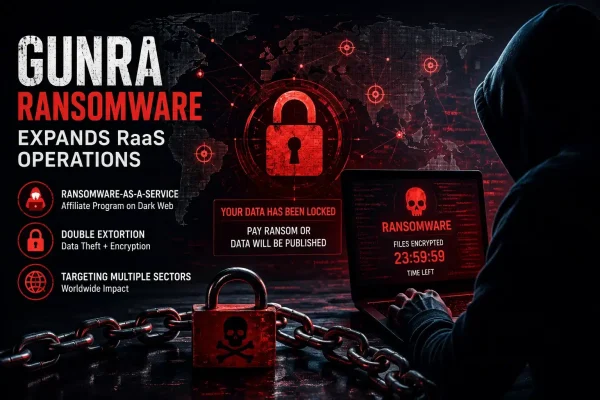
.ENCRT extension for encrypted files. A documented sample from July 2025 used the .CRYPT extension. The ransomware also uses Windows Management Instrumentation to delete volume shadow copies before encryption, while one victim had backup and archived data deleted from both primary and disaster recovery infrastructure.

 The group also maintained a strong presence in Europe and the UK, claiming 158 attacks, while Asia-Pacific recorded 64 incidents linked to Qilin. In South America, the group was responsible for 40 attacks, further demonstrating its ability to operate across diverse geographic environments.
Rather than concentrating on a single market, Qilin followed a broad targeting strategy designed to maximize opportunities across industries.
The group also maintained a strong presence in Europe and the UK, claiming 158 attacks, while Asia-Pacific recorded 64 incidents linked to Qilin. In South America, the group was responsible for 40 attacks, further demonstrating its ability to operate across diverse geographic environments.
Rather than concentrating on a single market, Qilin followed a broad targeting strategy designed to maximize opportunities across industries.

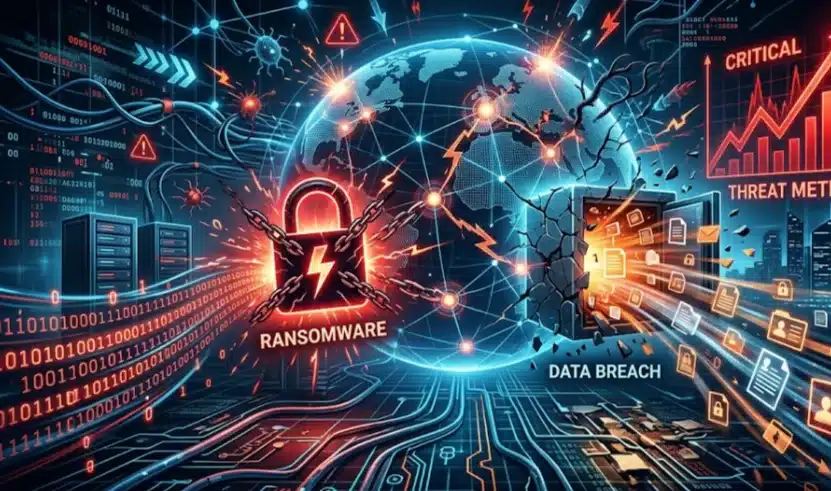

Strip away the geopolitics, the hacktivist noise, and the espionage headlines, and one number from the first half of 2026 stands out above everything else: 1,721. That's how many ransomware attacks hit organizations in the United States between January and June, according to new research from Cyble Research and Intelligence Labs (CRIL). It's not just the highest total of any country tracked in the report — it's more than the next nine most-targeted countries combined.
Canada, in second place worldwide, recorded 179 attacks. Germany logged 155. The United Kingdom, 138. Add up the rest of the global top 10 — France, Italy, Spain, Thailand, India and Brazil — and the total still falls more than 600 attacks short of the U.S. figure alone. Out of 3,836 ransomware attacks CRIL tracked worldwide this half, roughly 45% landed on American soil.
Widen the lens slightly and the picture holds. North America as a whole recorded 1,981 ransomware attacks in H1 2026 — more than half of every ransomware incident Cyble observed globally — alongside 35 data breach and leak incidents and 9 initial access sale listings. The report describes the region as home to "a mature, persistently active RaaS ecosystem operating at high volume across a wide range of industries and geographies."
Two ransomware-as-a-service operators did much of the damage. Qilin, the single most prolific gang worldwide, claimed 370 of those North American attacks on its own — nearly 19% of the regional total. Akira followed with 268, and INC Ransom added another 164. Together, Qilin and Akira alone accounted for more than half of all recorded ransomware activity across the region, a level of concentration that points to a small number of highly organized affiliate networks doing the bulk of the damage rather than a diffuse swarm of opportunists.
Professional Services bore the brunt of North American ransomware activity, with INC Ransom showing a marked preference for law firms and other high-value services with sensitive client data. Construction, Manufacturing and Healthcare followed close behind.
One operator, AiLock, stood out for a coordinated wave of victim disclosures that all landed on the same day — March 3 — a pattern consistent with a mass-exploitation campaign rather than isolated intrusions. LockBit, despite years of law enforcement pressure and takedown attempts, kept up a steady tempo against public-sector and educational targets throughout the period, showcasing how difficult the group has been to fully dismantle.
On the data breach side, Technology and financial services (BFSI) were the most frequently targeted sectors in North America, together accounting for roughly 43% of incidents — a reflection of how much intellectual property and monetizable personal data those industries hold.
Notably, Agriculture & Livestock emerged as a significant target for initial access brokers, accounting for a third of all access listings tied to the region. Cyble flags this as a sign of "growing risk in the food supply chain," an area that has historically drawn less attention from ransomware operators than finance or healthcare.
The initial access market itself was strikingly concentrated: two sellers, tracked under the handles "redpin" and "xpl0itrs," accounted for nearly all listings targeting North American organizations. Threat actors also continued to lean on known and zero-day vulnerabilities in widely deployed enterprise platforms — including products from Ivanti and Palo Alto Networks — as their preferred way into corporate networks.
North America wasn't spared the hacktivism wave sweeping the rest of the world either. Collectives including SOLDADOS DIGITALES – UNIÓN AMERICANA and LYSTIC TEAM #ID drove roughly 56 data leak or dump posts and touched about 360 unique domains across the region, with Government, Technology, financial services and telecommunications entities most frequently in the crosshairs.
Cyble's broader findings suggest many groups marketing themselves as ideologically driven hacktivists are, in practice, running side businesses in stolen data brokerage and DDoS-for-hire services — a blurring of motive that complicates how defenders triage the threat.
The scale of the U.S. numbers doesn't necessarily mean American companies have weaker defenses than their global peers — the concentration also reflects the sheer size and digital density of the U.S. economy, and its outsized share of the high-value targets ransomware affiliates chase. But the data does argue for a shift in posture.
Cyble's broader recommendations — treating data exfiltration, not just encryption, as the primary risk; prioritizing patches for the recurring vendor list; and monitoring initial access markets as a leading indicator rather than an afterthought — apply nowhere more urgently than in a country absorbing this much of the world's ransomware volume on its own.


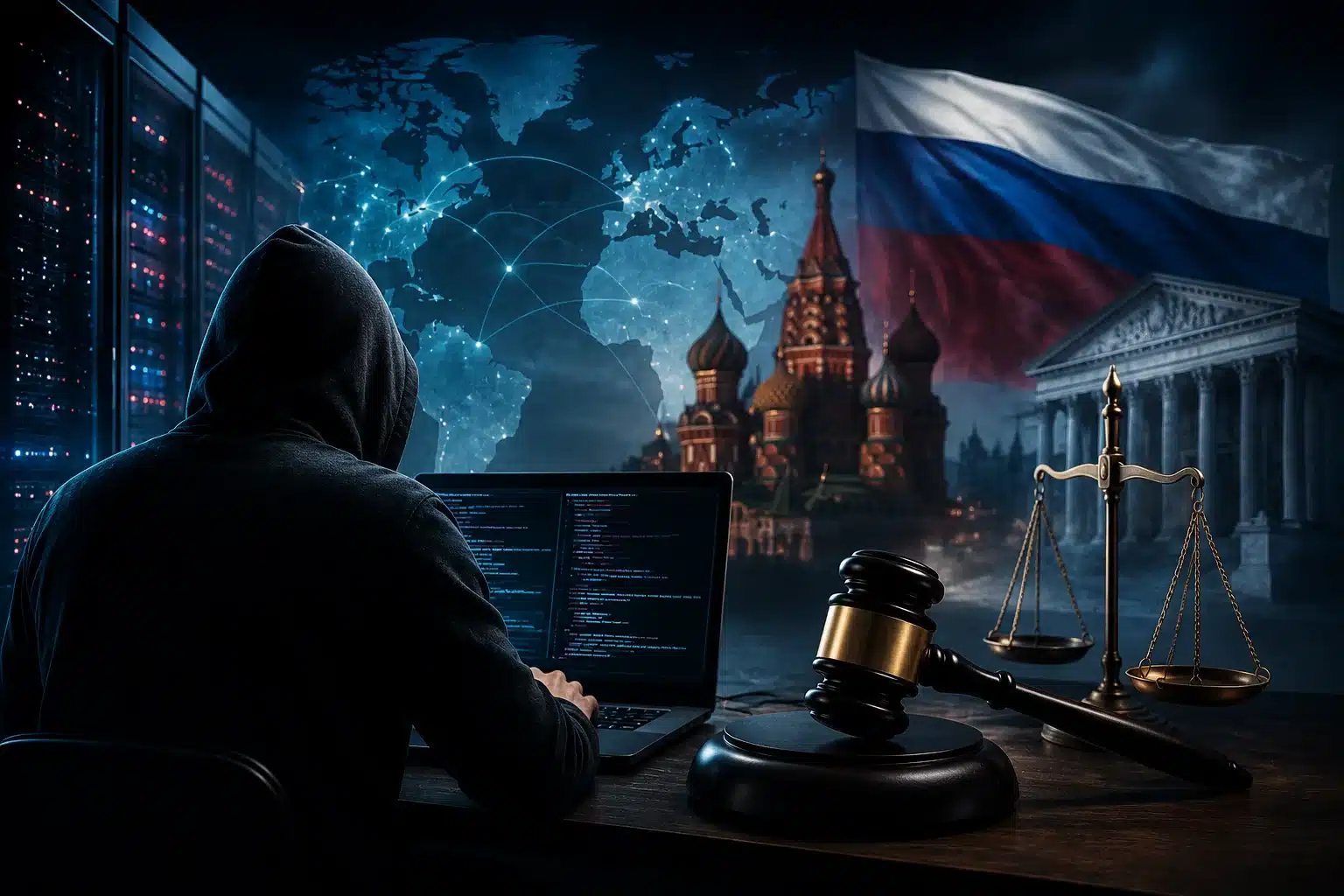
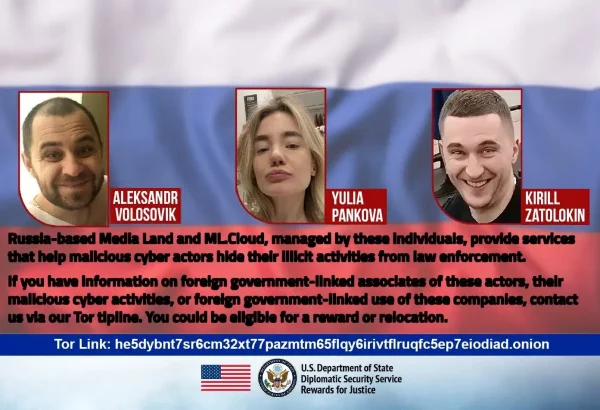
Three Russian nationals have been charged in a sweeping Russian cybercrime indictment tied to an alleged bulletproof hosting operation that U.S. authorities say enabled ransomware, malware, phishing, and other cybercriminal activities, resulting in more than $62 million in losses to victims across the United States and several other countries.
The U.S. Attorney's Office for the Northern District of Ohio announced the unsealing of the indictment following a seven-year investigation. Alongside the criminal charges, the U.S. Department of State is offering a reward of up to $10 million for information on foreign government-linked associates connected to the operation.
A federal grand jury returned the indictment in December 2024 against:
The defendants face charges including conspiracy to commit computer fraud, wire fraud, money laundering, and aiding cybercriminal activities.
Assistant Attorney General A. Tysen Duva said the defendants allegedly operated criminal infrastructure from overseas that supported attacks against U.S. critical institutions and placed the public at risk.
According to court documents, Media Land, owned by Volosovik, and ML.Cloud, owned by Pankova, provided internet infrastructure and server hosting services designed to help cybercriminals evade law enforcement.
Authorities allege the companies operated from St. Petersburg while maintaining infrastructure in multiple countries, including China, Finland, the Netherlands, and the United States.
The businesses allegedly offered bulletproof hosting services that enabled criminal clients to deploy malware and ransomware, extort victims for money and cryptocurrency, register fraudulent domains, operate criminal marketplaces, and launch phishing and brute-force attacks.
Investigators said the companies also provided technical support to cybercriminal customers, allowing malicious campaigns to continue while avoiding detection.
Officials said the operation targeted dozens of organizations across 21 U.S. states as well as multiple countries.
Victims included:
Communities affected in Ohio included Akron, Brookfield, Canton, Cleveland, Elyria, Medina, Findlay, Solon, and Valley View.
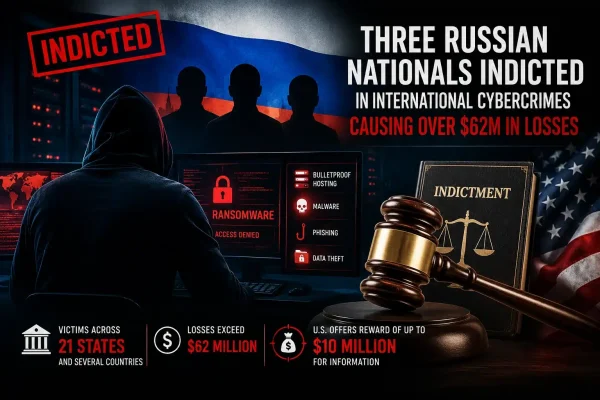
Additional affected states included California, Florida, Georgia, Illinois, Louisiana, Maryland, Massachusetts, Michigan, Minnesota, New Hampshire, New York, North Carolina, Pennsylvania, Tennessee, Texas, Utah, Virginia, Washington, Wisconsin, and Delaware.
International victims were identified in Australia, Canada, the European Union, the United Arab Emirates, and the United Kingdom.
FBI Cyber Division Assistant Director Brett Leatherman said Media Land enabled malicious activity that caused tens of millions of dollars in losses while impacting victims across multiple countries.
The U.S. Department of State's Rewards for Justice program announced a reward of up to $10 million for actionable information regarding foreign government-linked associates of the indicted individuals, their malicious cyber activities, or foreign government-linked use of Media Land or ML.Cloud.
The program also noted that relocation assistance may be available for qualifying information.
The indictment follows coordinated international action against the alleged operators. In November 2025, the U.S. Department of the Treasury's Office of Foreign Assets Control, together with authorities from the United Kingdom and Australia, sanctioned Media Land for facilitating global ransomware operations, distributed denial-of-service attacks, and other malicious cyber activities.
The sanctions also targeted Volosovik, Zatolokin, and Pankova individually, along with Media Land subsidiaries Media Land Technology (MLT), Data Center Kirishi (DC Kirishi), and sister company ML Cloud.
On July 13, the European Union also announced sanctions against the companies and key individuals as part of broader efforts to disrupt cybercrime infrastructure.
The investigation was led by the FBI Cleveland Division with support from the Cybersecurity and Infrastructure Security Agency (CISA) and the Office of Foreign Assets Control.
Authorities also received assistance from the National Police of the Netherlands, the Public Prosecutor's Office of the Netherlands, the United Kingdom's National Crime Agency, the United Kingdom Foreign Commonwealth and Development Office, the Australian Department of Foreign Affairs and Trade, and the Australian Federal Police.
Officials from CISA and partner agencies said disrupting bulletproof hosting providers remains essential because these services form a critical part of the cybercriminal ecosystem by enabling ransomware, phishing, malware, and other malicious operations while helping threat actors remain anonymous.
The investigation into the Odido cyberattack has uncovered possible involvement of Dutch nationals, according to Dutch police, as authorities continue to investigate the ShinyHunters ransomware-linked attack that exposed the personal data of approximately 6.39 million customers. Law enforcement has urged the public to come forward with information as investigators work to identify those responsible for one of the country's largest telecom data breaches.
The cyberattack took place on February 5 and 6 after attackers allegedly used voice phishing (vishing) to deceive Odido's customer service team.
According to the company, the attackers posed as members of its internal IT staff, gaining unauthorized access before exfiltrating customer data. Odido said its teams detected the unauthorized access immediately on both occasions and revoked the attackers' access, but the incident still resulted in a large-scale data breach.
Under the direction of the National Public Prosecution Service, the High Tech Crime Team (THTC) of the National Investigation and Intervention Unit launched an extensive investigation into the breach.
Authorities said investigators have found strong indications that Dutch criminals may have been involved. One key lead centers on a phone call made shortly before the breach in which a Dutch-speaking man allegedly impersonated an Odido IT employee while speaking with customer service representatives. Police are continuing efforts to identify the caller and have indicated that his voice could be made public if necessary.
Investigators believe people within cybercrime circles may have information about those responsible and are encouraging anyone with relevant details to contact law enforcement.
Odido attributed the attack to the cybercriminal group ShinyHunters, which the company said carried out the social engineering campaign.
Chief Executive Officer Søren Abildgaard acknowledged the incident in a public statement, apologizing to customers and outlining the company's commitment to strengthening its cybersecurity capabilities. He said Odido would continue investing in security, improve data protection practices, expand customer support, and share lessons learned from the incident.
The CEO also explained why the company refused to pay the ransom demand. According to Odido, paying cybercriminals would reward illegal activity and could encourage future attacks against other Dutch organizations. The company said the decision was made following guidance from authorities, despite knowing that stolen data could eventually be published.
Odido confirmed that approximately 6.39 million active and former customers of Odido and its Ben brand were affected by the breach. Customers of Simpel were not impacted.
The exposed information varied by individual and included names, addresses, mobile phone numbers, customer numbers, email addresses, IBAN numbers, dates of birth, identification details, nationality, and gender.
The company clarified that My Odido account passwords, call records, location data, billing information, and scans of identity documents were not compromised.
Odido also addressed reports claiming customer passwords had been leaked, stating that login passwords remain securely encrypted and were never accessible during the attack. Instead, a separate telephone verification field known as "password_c," used as a customer challenge code, was included for a limited number of customers. The company has since discontinued using that verification method.
Following the breach, Odido increased customer support by adding more than 140 service agents and introduced additional security measures. These include its "Check je Gesprek" verification service, allowing customers to confirm whether communications claiming to be from Odido are legitimate, along with access to the F-Secure digital security service.
The telecom provider said all customers identified as affected have been notified by email or SMS, while customer service teams continue assisting users with questions related to their specific data exposure.
Meanwhile, Dutch authorities expect investigations into the Odido cyberattack to continue for several months. Police have also warned that cyberattacks targeting businesses and institutions are becoming increasingly common, urging organizations to strengthen cybersecurity defenses and encouraging citizens to remain vigilant against follow-on fraud and phishing attempts.
An alleged member of the Scattered Spider cybercrime group has been extradited from Finland to the United States to face federal charges related to conspiracy, cyber intrusion, and fraud. U.S. authorities said the case marks another step in their ongoing efforts to prosecute individuals accused of participating in high-profile cybercrime operations linked to the notorious hacking group.
Peter Stokes, 19, a dual U.S. and Estonian citizen, made his initial appearance in federal court in Chicago after being extradited from Finland.
According to the U.S. Department of Justice, Stokes was arrested by Finnish authorities in April following an Interpol Red Notice and was transferred to the United States last week. A criminal complaint filed in the Northern District of Illinois accuses him of participating in cyberattacks carried out as part of the Scattered Spider group.
According to the complaint, Scattered Spider, also known as Octo Tempest, UNC3944, and 0ktapus, has been associated with more than 100 network intrusions. Authorities allege the group's activities have resulted in over $100 million in ransom payments and millions of dollars in additional damages suffered by victims.
Investigators said the group targeted companies across the United States by obtaining access to employee accounts through fraudulent methods.
Once inside corporate networks, the attackers allegedly encrypted data or exfiltrated sensitive information to remote servers before demanding cryptocurrency payments to restore access or prevent the public release of stolen data.
The criminal complaint describes an alleged cyber intrusion that occurred in May 2025 involving a luxury jewelry retailer.
Federal prosecutors allege that Stokes and other co-conspirators breached the retailer's computer systems, exfiltrated company data, and demanded approximately $8 million in cryptocurrency as ransom. According to court documents, the retailer's security team successfully removed the threat actors from its network before any ransom payment was made.
Although the company did not pay the ransom, authorities said it still incurred losses of at least $2 million due to business disruption, investigation costs, and mitigation efforts following the incident.
The extradition and criminal charges were announced by the Department of Justice, the U.S. Attorney's Office for the Northern District of Illinois, and the FBI. The investigation also involved the FBI's Copenhagen Law Enforcement Attaché Office, the FBI Las Vegas Field Office, the Justice Department's Office of International Affairs, and Finland's National Bureau of Investigation.
Officials said the case forms part of Operation Riptide, an ongoing FBI campaign focused on disrupting cybercriminal actors, infrastructure, financial networks, and fraud schemes targeting Americans.
According to the FBI, Americans reported more than $20 billion in cybercrime losses last year, representing a 26% increase compared with the previous year.
Assistant Attorney General A. Tysen Duva said the charges stem from years of investigative work by the Justice Department, the U.S. Attorney's Office, and the FBI, adding that authorities would continue working together to pursue cybercriminals operating across international borders.
U.S. Attorney Andrew S. Boutros said the alleged attacks caused significant disruption to businesses across the United States and emphasized the government's commitment to prosecuting individuals involved in cyber intrusions.
FBI Special Agent-in-Charge Douglas S. DePodesta also highlighted the role of international law enforcement partnerships in identifying alleged members of the hacking group and pursuing cross-border cybercrime investigations.
The arrest follows recent law enforcement efforts targeting the Scattered Spider threat group. In July 2025, the FBI and CISA released updated guidance describing the group's latest attack techniques, including the use of DragonForce ransomware to encrypt VMware ESXi servers.
The advisory urged organizations to maintain isolated offline backups, implement phishing-resistant multifactor authentication (MFA), and apply application controls to manage software execution.
Separately, in November 2025, two alleged Scattered Spider members appeared before Southwark Crown Court in the United Kingdom and pleaded not guilty to charges related to the August 2024 cyberattack on Transport for London (TfL).
The Department of Justice emphasized that the complaint against Stokes contains allegations only. As with all criminal cases, he is presumed innocent unless and until proven guilty in court.
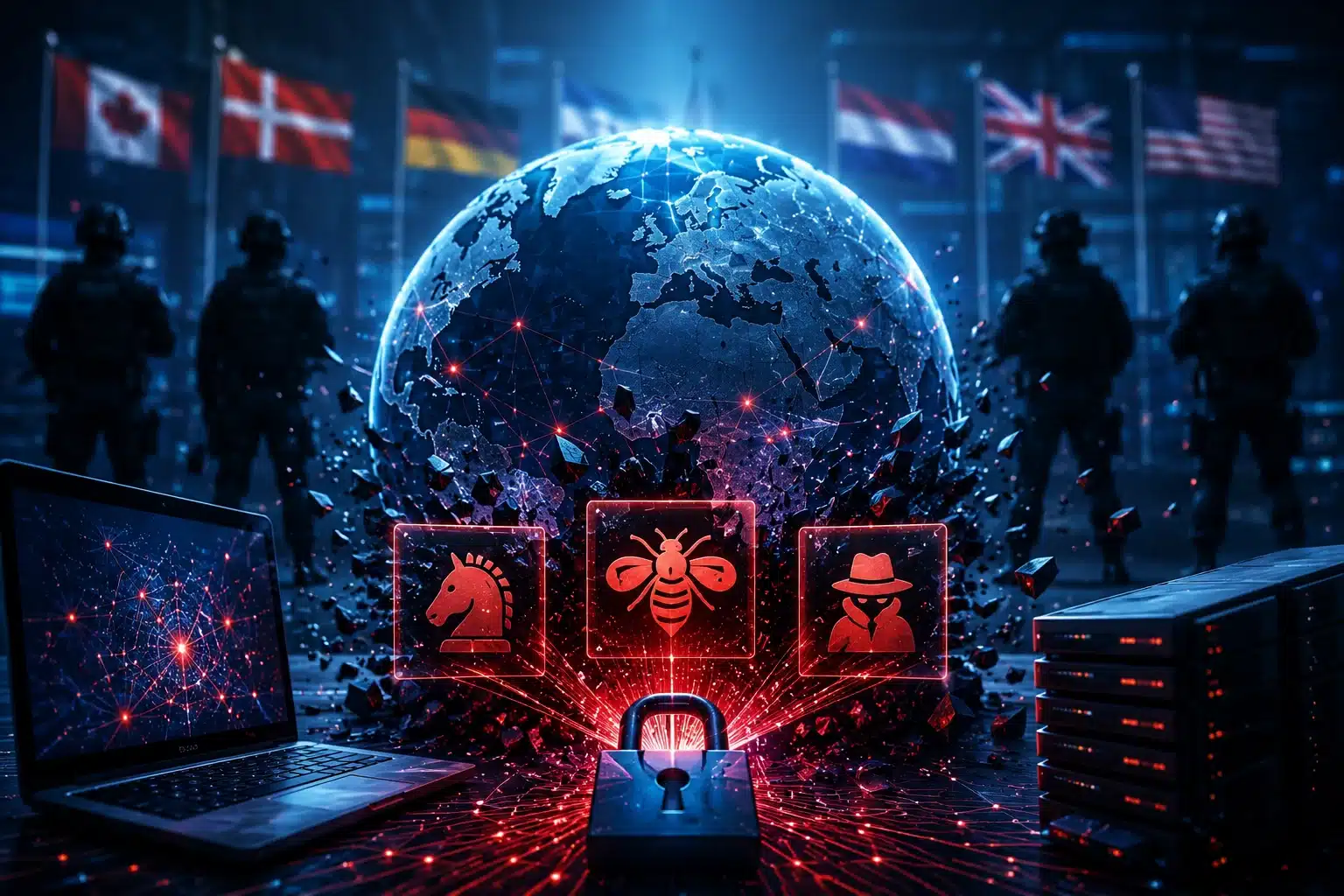
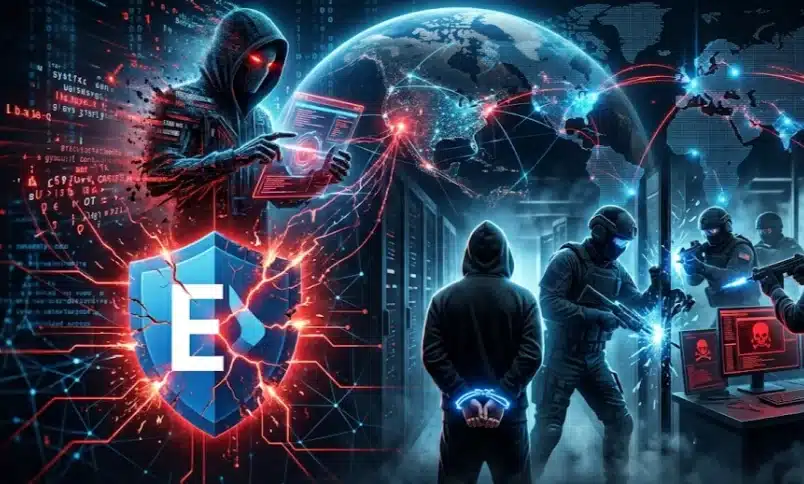
Operation Endgame has dealt another blow to cybercriminal operations after international law enforcement agencies and private sector partners dismantled infrastructure supporting the SocGholish, Amadey, and StealC malware families. The coordinated operation resulted in the seizure of more than EUR 41 million in criminal cryptocurrency assets, the recovery of 27 million stolen login credentials, and the disruption of hundreds of servers and domains used to distribute malware.
Led by Europol and Eurojust, the operation brought together authorities from Canada, Denmark, Germany, the Netherlands, the United Kingdom, the United States, Microsoft, and several cybersecurity organizations. Officials said the objective was to disrupt the infrastructure cybercriminals rely on to launch ransomware attacks, financial fraud, and attacks against critical infrastructure.
During the coordinated action, authorities targeted the infrastructure supporting malware delivery rather than focusing on a single malware family.
Law enforcement and industry partners took action against 326 servers and 142 domains, significantly disrupting malware distribution channels. Investigators also identified and restricted criminal cryptocurrency assets currently valued at more than EUR 41 million (USD 47 million) while recovering approximately 27 million stolen login credentials.
According to Europol, the operation aimed to disrupt the "assembly line" used by cybercriminals to gain initial access to victim systems before deploying ransomware or stealing sensitive information.
[caption id="attachment_112936" align="aligncenter" width="600"]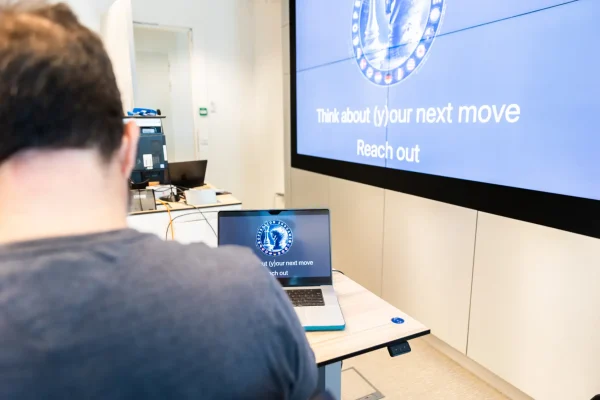 Image Soure: Europol[/caption]
[caption id="attachment_112937" align="aligncenter" width="600"]
Image Soure: Europol[/caption]
[caption id="attachment_112937" align="aligncenter" width="600"] Image Source: Europol[/caption]
The operation focused on three malware families that are commonly offered under the cybercrime-as-a-service model.
Microsoft reported that during the first two weeks of May 2026 alone, Amadey and StealC malware were linked to more than 140,000 infected computers worldwide.
One of the largest actions under Operation Endgame targeted SocGholish, also known as FakeUpdates.
Authorities remediated 14,971 infected WordPress websites, including websites belonging to restaurants, automotive repair businesses, and other organizations. Investigators also disabled the SocGholish botnet by taking control of domains and shutting down supporting servers.
Website owners whose credentials had been exposed were notified through platforms including Have I Been Pwned, DIVD, Spamhaus, CheckjeHack, NoMoreLeaks, Shadowserver, and NL-NCSC.
The Dutch Police urged WordPress administrators to change passwords, enable multi-factor authentication, remove unknown administrator accounts, and keep their websites updated to reduce future compromise risks.
Authorities said SocGholish has been linked to Evil Corp, a Russian cybercriminal group previously associated with the Zeus and Dridex malware families, as well as multiple ransomware and money laundering operations.
Rather than targeting only malware operators, investigators focused on disrupting the broader infrastructure supporting cybercriminal activity. Europol said this strategy increases operational costs for threat actors and makes large-scale cyberattacks more difficult to execute.
Europol's European Cybercrime Centre (EC3) coordinated operational intelligence sharing through SIENA while providing analytical, technical, and cryptocurrency tracing support throughout the investigation.
The operation forms part of Operation Endgame, described by Europol as the largest international initiative to disrupt ransomware enablers worldwide.
Officials said the latest disruption reflects a growing international strategy of targeting the infrastructure that enables cybercrime operations, rather than responding only after attacks have occurred.

 Source: NCA[/caption]
Authorities also found evidence indicating Flowers had accessed an online marketplace that sold breached credentials. Investigators further discovered videos recorded by Flowers that allegedly showed Jubair accessing TfL systems during the attack.
The investigation revealed that the two communicated through Telegram and collaborated using an online workspace platform that allowed multiple participants to work remotely on shared systems.
Source: NCA[/caption]
Authorities also found evidence indicating Flowers had accessed an online marketplace that sold breached credentials. Investigators further discovered videos recorded by Flowers that allegedly showed Jubair accessing TfL systems during the attack.
The investigation revealed that the two communicated through Telegram and collaborated using an online workspace platform that allowed multiple participants to work remotely on shared systems.