WeedHack Minecraft Malware Survives C2 Takedown: Fake Client Sites Still Active, SEO Poisoning Puts Malicious Downloads at the Top of Google
McAfee Labs published a follow-up report on the WeedHack Malware-as-a-Service campaign this week, documenting ten active malicious sites and multiple file-hosting accounts that are still spreading the infostealer despite a disruption to its command-and-control infrastructure. Over the past month alone, McAfee WebAdvisor blocked more than 6,300 user attempts to reach these sites.
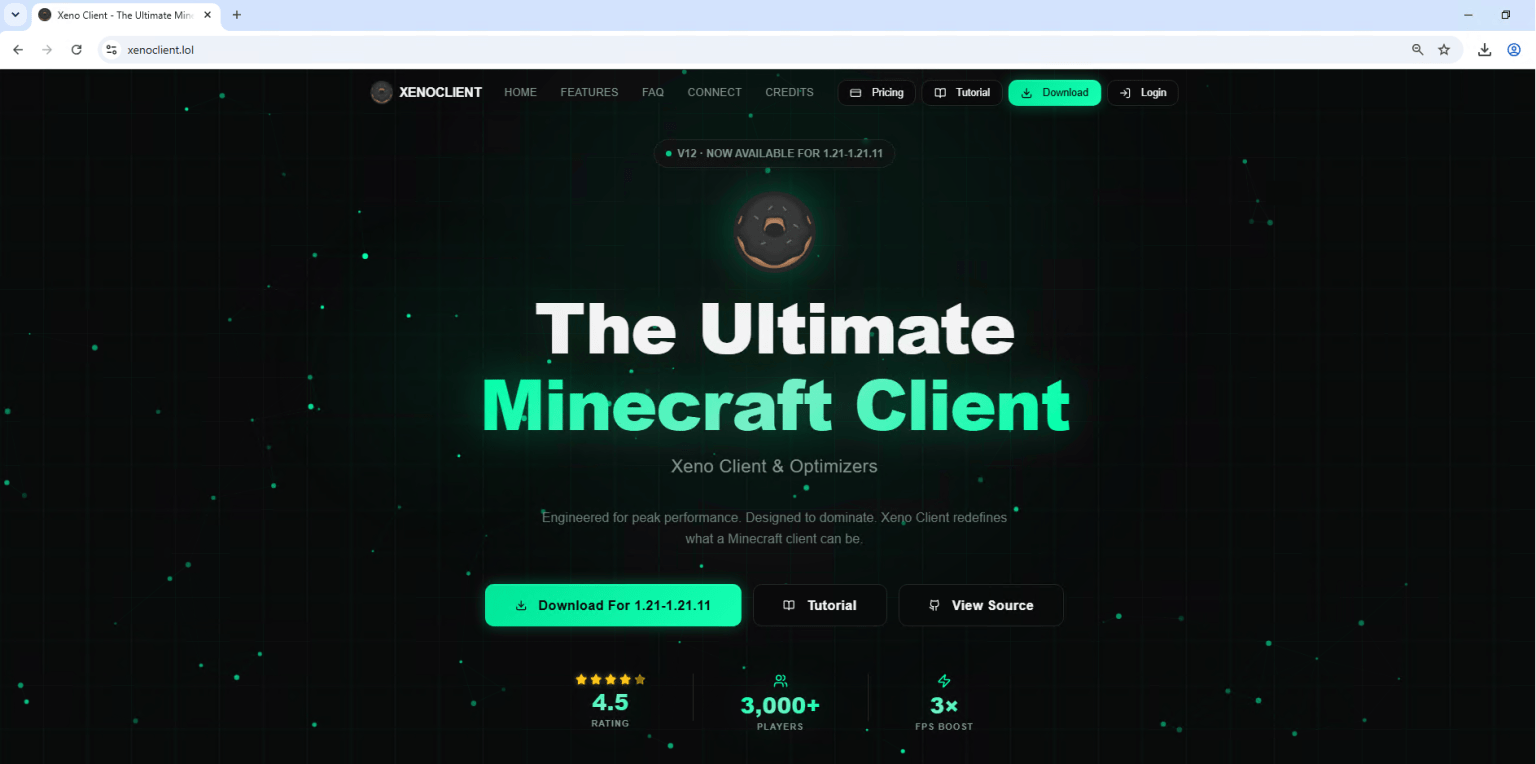
WeedHack was first spotted in early June 2026 when McAfee researcher Aayush Tyagi documented a Malware-as-a-Service operation that had been running since January and had logged 116,464 infected systems, adding between 2,000 and 3,000 new victims every day. The operation offered a free tier that anyone with a Discord account could access, a premium tier with webcam surveillance capability for $5 a month, and a dashboard letting operators view stolen credentials, configure custom payloads, and monitor victims in real time. It spread through fake Minecraft client websites, YouTube videos linking to malicious downloads, and SEO poisoning that pushed those fake sites to the top of search results for popular Minecraft tool names. The malware stole session cookies, passwords, browser data, and cryptocurrency wallet contents, and used EtherHiding, a technique that fetches the attacker’s active server address from the Ethereum blockchain, to maintain contact with its infrastructure even when individual servers were shut down.
“During our investigation of this campaign, we observed that most of these websites appear legitimate, as they are well-crafted and often mimic legitimate websites. We observed a series of dedicated brand-impersonation attacks targeting several popular Minecraft clients.” reads the report published by McAfee.
“We published the original article in the first week of July, and, as a result, we’ve seen a disruption in WeedHack’s campaign: its C2 server is no longer active. Consequently, we have observed a shift in tactics by these attackers. “
The dashboard is gone. The distribution sites are not.
Each fake website copies the real tool’s features, FAQs, installation steps, developer information and even links to legitimate GitHub repositories. The sites look detailed and convincing, so most users have little reason to suspect anything.
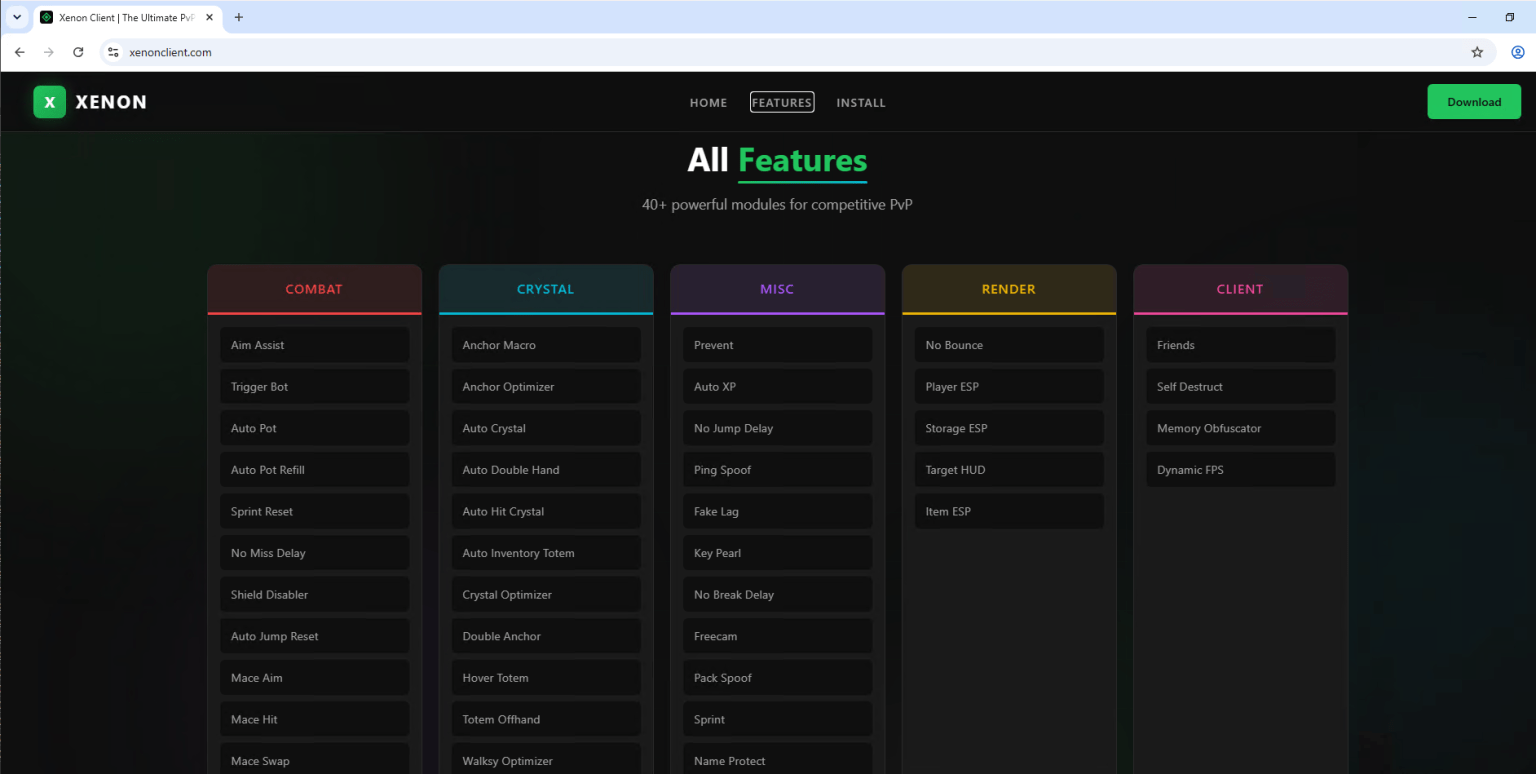
The attackers also use search rankings to reach victims. Researchers found that the first two Google results for “Xenon Client,” a popular Minecraft client, led to fake sites distributing WeedHack. The sites offered installation guides, free and paid downloads, and links to the real Xenon Client GitHub repository. A player searching for the tool, clicking the first result and downloading the file could easily end up installing malware.
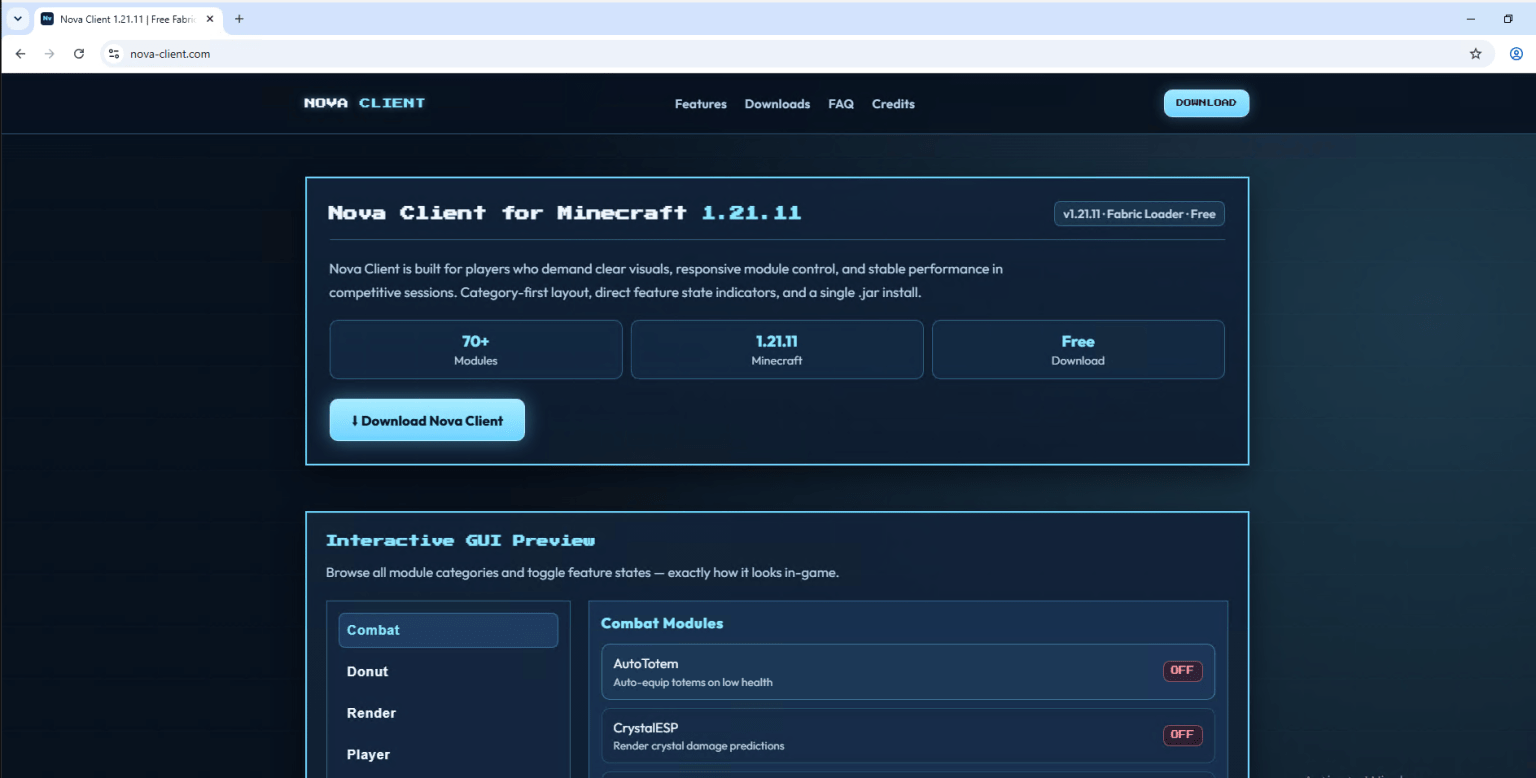
The campaigns exploit a structural weakness in the Minecraft modding community: many popular tools don’t have official websites, only GitHub pages and Discord servers. Nova-client.com is a fake website for a client that has no real website; the attackers built one and ranked it above the genuine GitHub repository. 22qq-client.com does the same for a Crystal PVP mod. For nova-client.com, the researchers specifically noted that the credits section lists generic team names instead of anyone who actually worked on the project, which is one of the cleaner ways to spot an impersonation if you know who the real developers are.
One site in the campaign was built using lovable.app, an AI-powered web application builder that accepts natural language instructions and produces working sites. The platform is legitimate; the use here is not. The ready availability of tools like this means the cost and technical skill required to launch a new convincing fake gaming site is now close to zero.
McAfee found that most malicious links came through Discord (49.6%), followed by MediaFire (23.4%), GitHub (8.2%) and Dropbox (4.6%). One Discord channel promoting fake DonutSMP clients had more than 1,900 members, while another site offered eight different mods that all delivered the same malware.
The campaign also spread through trusted Minecraft communities such as Planet Minecraft and EndMods, making the scams harder to spot because users already trusted these platforms.
McAfee recommends downloading mods and clients only from official developer repositories or trusted platforms such as Modrinth and CurseForge. If a tool asks you to disable antivirus protection, treat it as malware.
Cyble Research & Intelligence Labs (CRIL) has identified an active SEO poisoning campaign exploiting abandoned cloud DNS zone delegations to serve Thai-language gambling content under the domain authority of reputed enterprise organizations. The campaign has compromised 163 organizations across 30+ countries, spanning federal government agencies, national healthcare systems, financial institutions, critical infrastructure operators, and major universities.
The primary mechanism is the Azure DNS zone takeover. When enterprises decommission cloud infrastructure, NS delegations to Azure DNS zones are routinely left in place. The actor systematically identifies these abandoned delegations, claims the orphaned zones under a fresh Azure subscription, and deploys a Next.js gambling kit behind a valid Let's Encrypt wildcard TLS certificate, all resolving cleanly under the victim's own domain. A browser, a search engine, and a Thai user following a search result all see a page identical to a legitimate enterprise property.
This report documents the full campaign architecture: the pivot chain from initial discovery through infrastructure attribution, the DNS compromise mechanisms observed, the structured affiliate monetization layer with server-side geographic filtering and dual-tier commission tracking, and a dedicated 103-node application backend in Hong Kong tied to a single Chinese operator by twelve independent technical evidence points. At the time of publication, 161 organizations remain actively compromised.
Initial Discovery
During an ongoing vulnerability assessment, CRIL identified an anomalous DNS resolution on the cardsforheroes.verizon.com subdomain environment. What initially appeared to be a single misconfigured endpoint turned out to be 1000+individually named subdomains, each serving Thai-language online gambling content under Verizon's trusted domain authority.
Every subdomain followed a gambling brand keyword pattern with URL-encoded Thai characters confirming the intended audience. All endpoints resolved to a single IP at OVH SAS (AS16276). Loading a representative endpoint revealed a fully rendered Next.js gambling application with outbound affiliate redirect links.
It matched the structural similarity of 97 other enterprise subdomains across completely unrelated organizations. The affiliate referral parameter on every redirect established the monetization intent immediately: this was not defacement or malware delivery, but a structured operation funneling Thai search traffic to gambling registrations for commission.
The Verizon endpoint was not the campaign's origin. Following it, 162 other compromised organizations were exposed.
Figure 1: Screenshot of the compromised endpoint cod9[.]cardsforheroes[.]Verizon[.]com
Background: The Vulnerability Class
Cloud infrastructure provisioning introduces a category of DNS misconfiguration that is structurally different from the record-level errors security teams routinely audit. When an enterprise provisions Azure resources for a project environment, a standard step is to delegate a subdomain to an Azure DNS zone by adding NS records in the parent DNS zone that point to Microsoft's nameservers for that environment. The zone lives inside the Azure subscription, the team manages its records there, and the project operates normally.
What consistently fails is the decommissioning step. When the project ends, and the Azure resources are deleted, the NS delegation in the parent DNS zone is not usually removed. It persists silently, pointing any DNS query for that subdomain to Azure nameservers that no longer serve authoritative records for it.
In several cases identified during this investigation, these delegations had been left in place for over six years.
The exploitability of this configuration depends on another condition: whether the Azure DNS zone for that subdomain is claimable by a new subscriber. Microsoft's zone-creation model has historically allowed any subscriber to register a zone by name under their own subscription. A zone abandoned with a canceled subscription can be recreated by a third party, who then inherits the delegated DNS authority that the enterprise's parent zone never revoked.
Our analysis of this campaign demonstrates that awareness has not translated into hygiene at an enterprise scale.
DNS Compromise Mechanisms
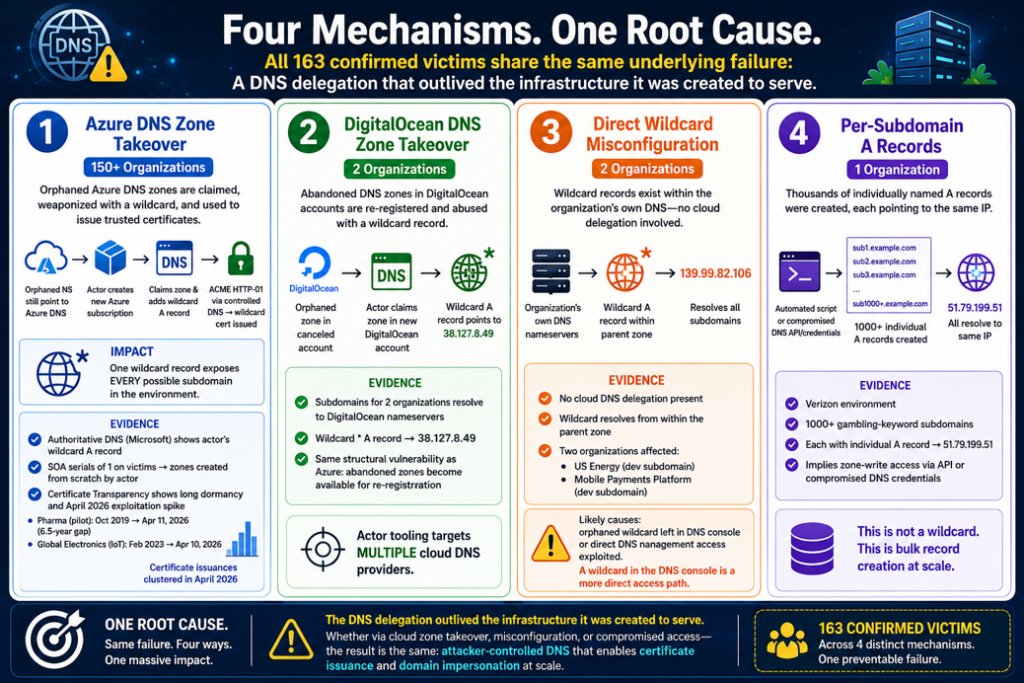
Four distinct mechanisms account for the 163 confirmed victims. Each exploits the same underlying failure: a DNS delegation that outlived the infrastructure it was created to serve.
Mechanism 1 — Azure DNS Zone Takeover (150+ Organizations)
The actor identifies subdomains whose NS records still point to Azure DNS nameservers, even though the underlying subscription has been canceled or abandoned. A new Azure subscription is created, the orphaned zone is claimed by name, a wildcard A record is added that points all subdomains to a delivery IP, and ACME HTTP-01 validation is performed through the now-controlled DNS to obtain a Let's Encrypt wildcard certificate. One DNS record exposes every possible subdomain of the environment.
Direct authoritative DNS evidence confirms the mechanism. Querying Microsoft's own nameserver infrastructure returns the actor's wildcard A record. Zone SOA serials of 1 on confirmed victims establish that the zones were created from scratch by the actor, not modified from an existing state. Certificate Transparency logs confirm the dormancy periods:
A major pharmaceutical company's pilot subdomain: last legitimate certificate October 2019, actor certificate April 11, 2026 — a 6.5-year gap
A global electronics company's IoT platform: last legitimate certificate February 2023, actor certificate April 10, 2026
The bulk of actor-obtained certificates cluster in April 2026, indicating a concentrated automated exploitation window applied across targets abandoned over multiple years.
Mechanism 2 — DigitalOcean DNS Zone Takeover (2 Organizations)
Two organizations, a US luxury furniture retailer and an Indian university, have their compromised subdomains delegated to DigitalOcean nameservers rather than Azure. Both carry wildcard records resolving to 38.127.8.49.
DigitalOcean's zone-claiming model carries the same structural vulnerability: abandoned DNS zones in canceled accounts become available for re-registration. The actor's tooling targets multiple cloud DNS providers.
Mechanism 3 — Direct Wildcard Misconfiguration (2 Organizations)
A US energy company's development subdomain and a mobile payments platform's development subdomain both resolve via wildcard to 139.99.82.106, even though there is no cloud DNS zone delegation. Both use their own organizational nameservers, making cloud zone takeover mechanically impossible.
The wildcard records resolve from within the parent zone, indicating either an orphaned wildcard A record left in the organization's own DNS console when a project was decommissioned, or a direct DNS management access path the actor exploited. "A wildcard A record in the DNS console of a payments platform is a more direct access path than a cloud zone takeover.
Mechanism 3 — Direct Wildcard Misconfiguration (2 Organizations)
A US energy company's development subdomain and a mobile payments platform's development subdomain both resolve via wildcard to 139.99.82.106, even though there is no cloud DNS zone delegation. Both use their own organizational nameservers, making cloud zone takeover mechanically impossible.
The wildcard records resolve from within the parent zone, indicating either an orphaned wildcard A record left in the organization's own DNS console when a project was decommissioned, or a direct DNS management access path the actor exploited. "A wildcard A record in the DNS console of a payments platform is a more direct access path than a cloud zone takeover.
Mechanism 4 — Per-Subdomain A Records (1 Organization)
The Verizon environment represents a distinct approach: 1000+ individually named A records rather than a single wildcard. Each gambling-keyword subdomain is a separately created DNS entry pointing to 51.79.199.51. This implies either an automated DNS API script with zone-write access or a compromised DNS management credential that enabled bulk record creation.
Technical Analysis
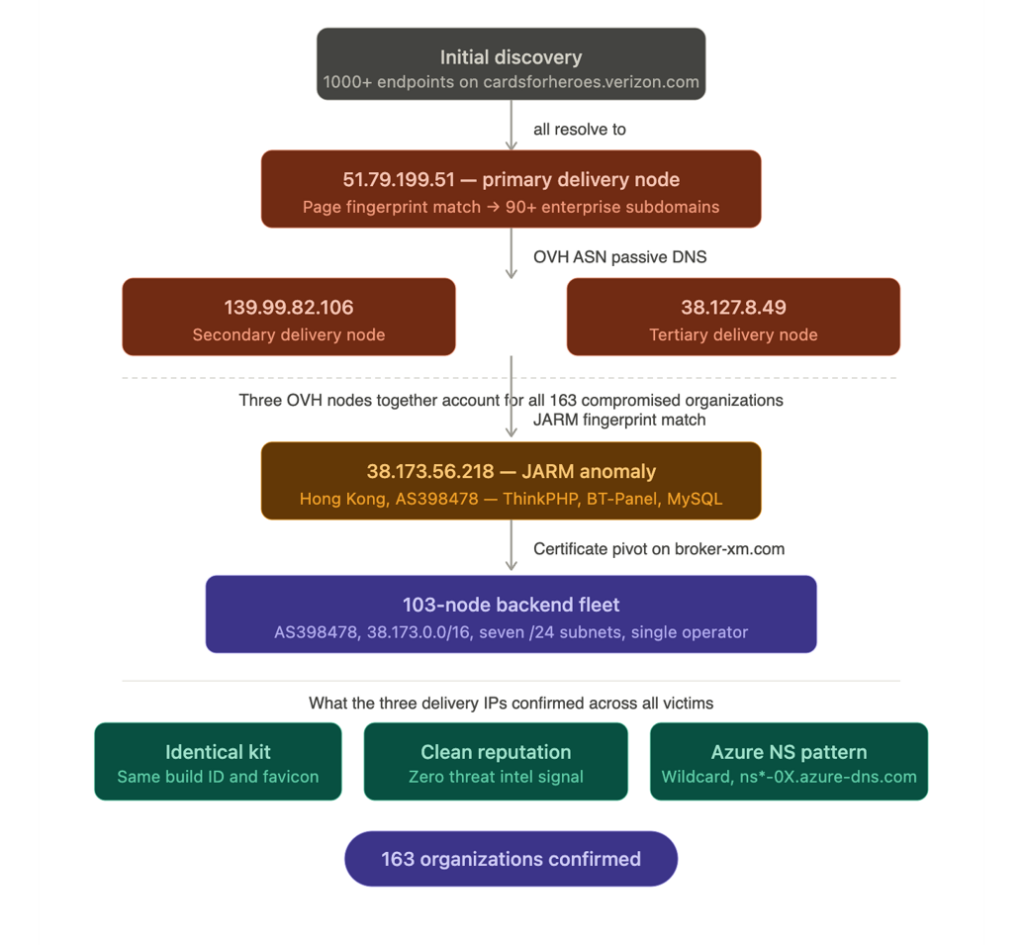
Pivoting: From One Endpoint to 163 Organizations
Pivot 1: 51.79.199.51 — Primary Delivery Node and First Scope Expansion
The first pivot came from the primary delivery IP itself. Cross-referencing 51.79.199.51 against passive DNS resolution data and page fingerprint matching returned over 90 enterprise subdomains serving identical content, confirmed by:
Identical Next.js build ID: QQOrXCFjoI6C9oF-4YVhl
Identical favicon path: /img/ib99-hq.ico
Outbound affiliate redirects to the same three destination domains across every result
Every result was a subdomain of a legitimately owned enterprise domain with a clean reputation. Standard threat intelligence feeds returned no signal on any of them. The shared page fingerprint expanded the confirmed victim set from 1 organization to over 90 in a single query.
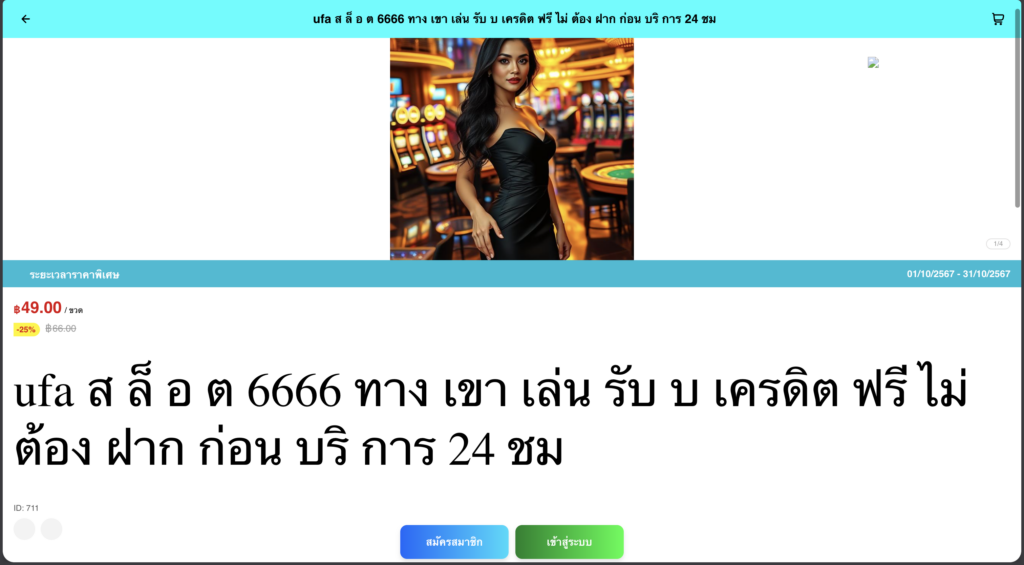
Figure 2: Thai-language gambling page served from a compromised enterprise subdomain, advertising free credits with no deposit required.
Pivot 2: 139.99.82.106 and 38.127.8.49 — Secondary and Tertiary Delivery Nodes
Passive DNS resolution data against AS16276 (OVH) surfaced two additional delivery IPs operating in parallel. Both served the identical gambling kit with the same build fingerprint across a partially overlapping but distinct victim set. Government agencies, healthcare organizations, and several non-Azure takeover victims routed through these two nodes rather than the primary. Together, the three OVH nodes account for the full 163-organization victim estate. All three presented clean IP reputations, no prior association with threat actors, and standard deployment signatures at the surface level.
Figure 3: Compromised endpoint pointing to “38[.]127[.]8[.]49”
Pivot 3: 38.173.56.218 — The JARM Anomaly That Exposed the Backend
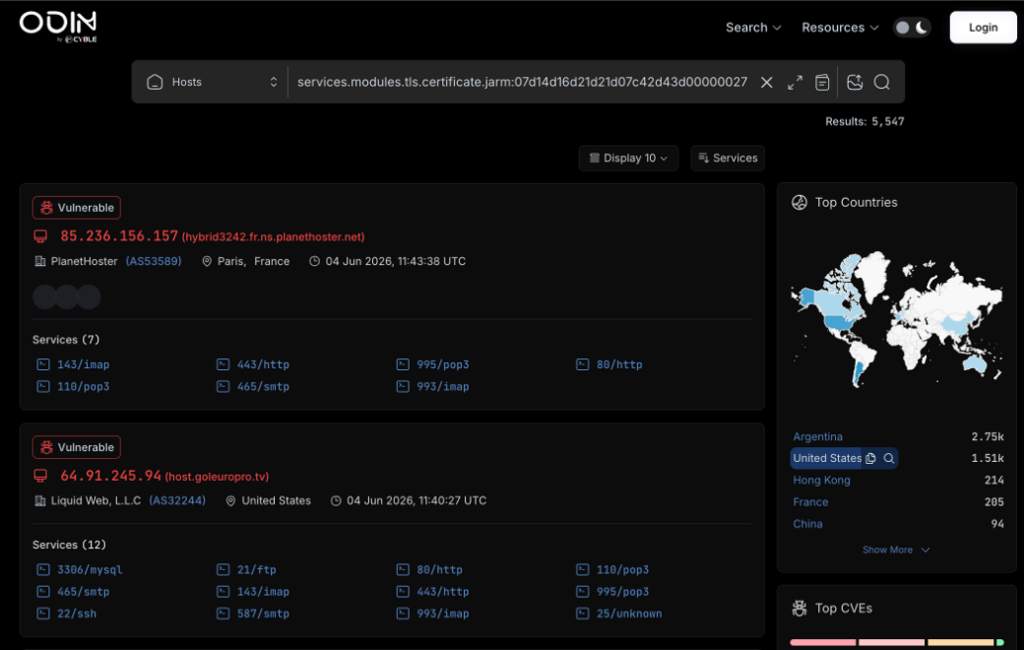
JARM TLS fingerprinting against the primary delivery node returned thousands of global matches, nearly all of them generic shared hosting providers. One result stood apart by every observable metric: 38.173.56.218 in Hong Kong, AS398478 (PEG TECH INC), presenting:
A ThinkPHP application framework error on port 443
A Chinese server management panel certificate identity on port 21
MySQL 5.7.44-log on port 3306
Where every other JARM match represented commodity hosting, this node showed a purpose-built application stack managed from mainland China. This was the single point of entry from the OVH delivery layer into the backend infrastructure. Figures 2 and 3 showcase these using findings from ODIN by Cyble.
Affiliate Architecture: How the Campaign Monetizes
Every destination redirect carries a ?rc= affiliate code — ibiza99vip1, bigwinv1, link99, or seven77vip1 — that attributes completed registrations to the actor and triggers a commission payout from the destination platform. This is standard affiliate marketing infrastructure; legal and illegal gambling operations use it. A server-side layer beneath the visible code separates this campaign from simple redirect farms. A POST request intercepted at a live endpoint returned this before any redirect was issued:
"status": "ok",
"msg": "TH - Referrer verified",
"data": { "referrer": "link99" },
"x-token": ""
The backend validates geographic origin server-side. Requests from outside Thailand are not redirected, keeping traffic focused and limiting scanner exposure. The link99 identifier is a sub-affiliate publisher ID that sits above the ?rc= codes in the platform's tracking hierarchy.
The actor earns at both tiers: publisher-level credit under link99 for delivering Thai traffic, and a per-registration payout under the ?rc= code for each conversion. The two layers are independent — campaign codes can rotate while link99 persists as the actor's permanent platform identity.
Figure 4: 5,547 results matching the JARM hash on ODIN (source: ODIN by Cyble)
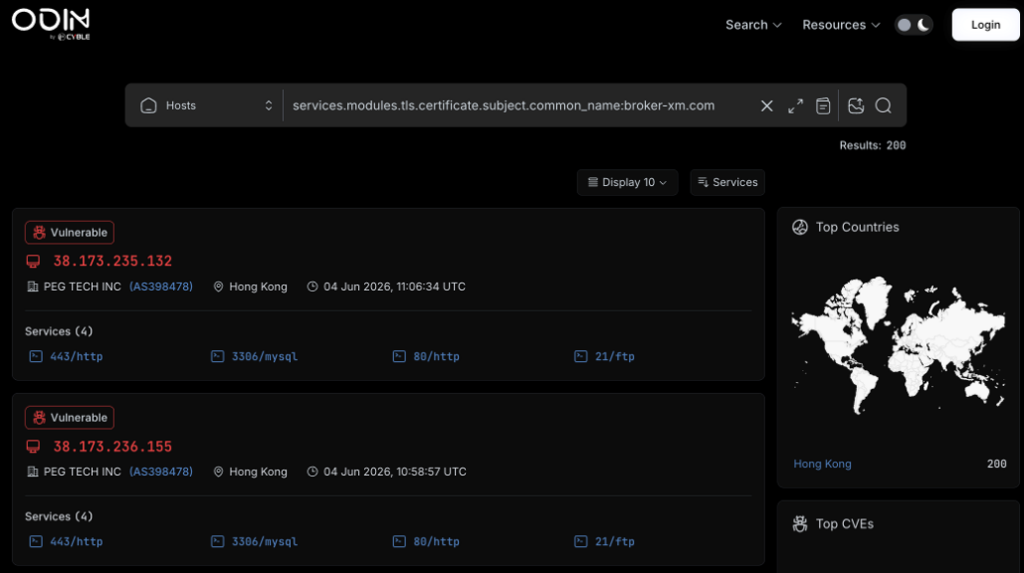
Pivoting on the Let's Encrypt certificate presented by this node, issued to broker-xm.com, returned 103 IPs across seven contiguous /24 subnets in 38.173.0.0/16, all within AS398478. A single certificate deployed across 103 servers in a wholesale-allocated IP block produced the complete backend fleet inventory from one certificate query.
Figure 5: Results for Cert CN->broker-xm.com showcasing 200 hits from Hong Kong with the IP range 38.173.0.0/16 (source: ODIN by Cyble)
Affiliate Architecture: How the Campaign Monetizes
Every destination redirect carries a ?rc= affiliate code — ibiza99vip1, bigwinv1, link99, or seven77vip1 — that attributes completed registrations to the actor and triggers a commission payout from the destination platform. This is standard affiliate marketing infrastructure; legal and illegal gambling operations use it. A server-side layer beneath the visible code separates this campaign from simple redirect farms. A POST request intercepted at a live endpoint returned this before any redirect was issued:
"status": "ok",
"msg": "TH - Referrer verified",
"data": { "referrer": "link99" },
"x-token": ""
The backend validates geographic origin server-side. Requests from outside Thailand are not redirected, keeping traffic focused and limiting scanner exposure. The link99 identifier is a sub-affiliate publisher ID that sits above the ?rc= codes in the platform's tracking hierarchy.
The actor earns at both tiers: publisher-level credit under link99 for delivering Thai traffic, and a per-registration payout under the ?rc= code for each conversion. The two layers are independent — campaign codes can rotate while link99 persists as the actor's permanent platform identity.
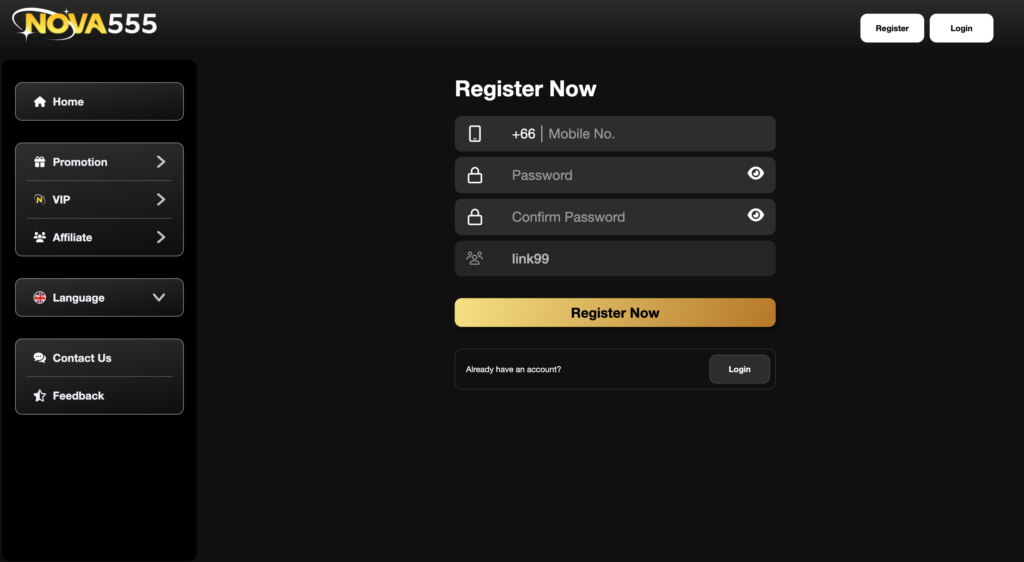
Figure 6 : Phishing page Redirected to hxxps://link99.nova555.rest/register/ with link99 as a referral code
Four destination platforms have been confirmed — ibiza99.autos, big888.store, seven77.click, and stillsunday.pl. These domains are white-label deployments on a shared codebase, as confirmed by identical CSS hashes and JavaScript resilience logic across all three, except big888.store, which carries active Google Search Console verification, indicating the platform operator runs its own independent SEO operation beyond this campaign. Each platform maintains its own appbox.* CDN subdomains, a fourth infrastructure layer entirely separate from the delivery nodes, backend fleet, and victim domains.
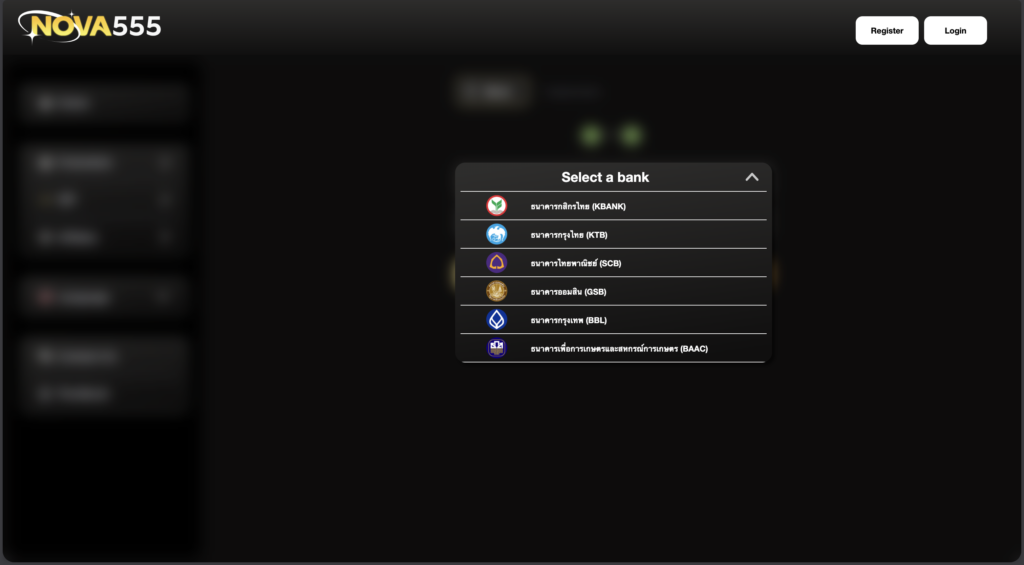
Figure 7: Asking for banking information post login via Thailand phone number
The Gambling Kit: What the Endpoint Delivers
An HTTP request to any compromised enterprise subdomain with Thai locale headers returns a fully rendered Next.js page that returns a legitimate enterprise web property. The page presents
lang="th" with Thai-language gambling platform branding
A valid Let's Encrypt wildcard TLS certificate matching the victim subdomain, clean browser padlock, no warnings
Schema.org FAQ structured data with Thai-language answers about minimum deposits, withdrawal timelines, and mobile compatibility, directly targeting the queries Thai users make when researching gambling platforms
AMP alternate links for Google mobile indexing coverage
Static assets served from paths under the compromised domain itself, using the victim's domain authority as a CDN
The minimum deposit advertised across all kit variants is 1 Thai Baht, approximately $0.03 USD. The 1-baht minimum ($0.03 USD) removes the deposit threshold that causes most users to abandon the registration flow before converting. The kit fingerprint is consistent across the entire victim estate, regardless of which victim domain or OVH node serves the content, confirming centralized build and deployment by a single operator.
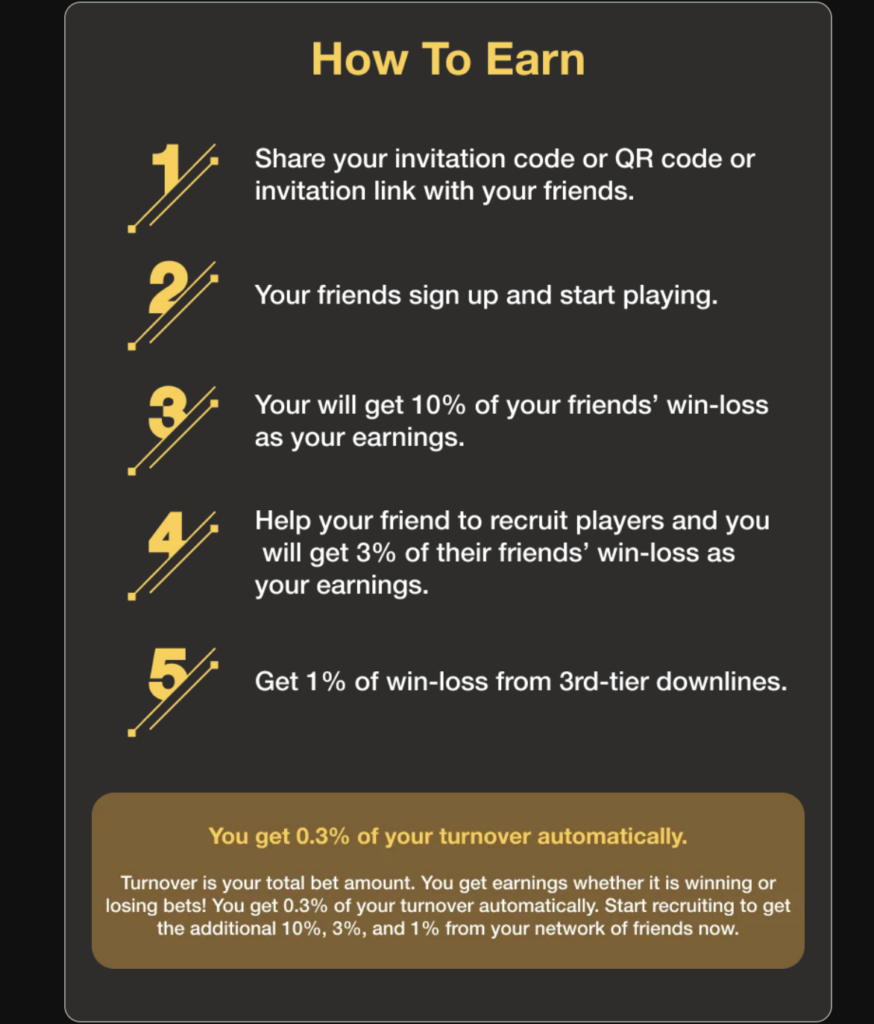
Figure 8 - Three-tier referral commission structure (10%/3%/1%) plus 0.3% turnover rebate, embedded in the gambling kit served across all 163 compromised subdomainsFigure 9: Multi-level recruitment diagram promoting unlimited monthly commissions across three affiliate downline tiers.
Backend Infrastructure: The Hong Kong Fleet
The three OVH delivery nodes handle content distribution, but the application layer sits entirely within a separate dedicated infrastructure in Hong Kong. The 103-node backend fleet is distributed across seven /24 subnets within 38.173.0.0/16, all under AS398478 (PEG TECH INC). Seven independent evidence points converge on single-operator control; the MD5 match across all 103 nodes on port 80 alone eliminates coincidence.
Evidence Point
Detail
Weight
HTTP body MD5 match
7df3d7cf3358af3f470ac7229387ef94 (615 bytes) identical across all 103 nodes on port 80
Critical
Single shared certificate
broker-xm.com Let's Encrypt cert deployed across all 103 servers
High
Envoy proxy fingerprint
Identical 503 error string on port 443 across all 103 nodes
High
MySQL version
5.7.44-log with binary replication logging enabled uniformly
High
BT-Panel provisioning
admin@bt.cn, Dongguan, Guangdong, on FTP certificates across all nodes
High
JARM fingerprint
07d14d16d21d21d07c42d43d000000270a013a3e21e28897e76e8fe13e2f7d uniform across fleet
High
Zero PTR records
No reverse DNS on any of the 103 IPs, deliberate suppression
Medium
Detection and Hunting
The campaign produces no signal in standard security controls. Valid TLS certificates, clean IP reputation, trusted domain names, and no exploit delivery mean conventional tooling produces no signal. Detection requires operating at the DNS layer.
Certificate Transparency monitoring is the most reliable early indicator. An unexpected Let's Encrypt wildcard certificate on a corporate-owned subdomain, particularly following a period of no issuance, is an anomaly no legitimate provisioning scenario produces. Monitoring CT logs for wildcard certificates whose expected issuer is a corporate or premium CA would have detected every Azure takeover victim at the time of certificate issuance.
Azure DNS zone delegationauditing is a structural prevention control. Organizations should enumerate all NS delegation records in their parent DNS zones and verify that corresponding Azure DNS zones exist in subscriptions they own and actively manage. 163 organizations across 30 countries had gambling content served under their domain authority without any alert firing. One class of DNS misconfiguration enabled it.
Wildcard DNS testing confirms active exploitation. A randomized nonsense hostname query against any Azure-delegated subdomain that returns a resolution should be treated as a compromised zone until proven otherwise.
Network and endpoint detection rules:
DNS answers resolving to 51.79.199.51, 139.99.82.106, or 38.127.8.49
URL query parameters containing rc=ibiza99vip1, rc=bigwinv1, or rc=seven77vip1 or rc=link99
HTTP requests to /img/ib99-hq.ico
Outbound connections to 38.173.30.0/24, 38.173.37.0/24, 38.173.56.0/24, 38.173.57.0/24, 38.173.235.0/24, 38.173.236.0/24, or 38.173.239.0/24
Internet scanning queries:
HTTP body MD5: 7df3d7cf3358af3f470ac7229387ef94
TLS certificate CN: broker-xm.com
ASN sweep: AS398478
Remediation
For Azure DNS zone takeover victims:
Remove the NS delegation from your parent DNS zone immediately. This severs the attack chain regardless of what the actor maintains inside the Azure zone, which is under their control and cannot be directly modified by the victim organization.
Report the abandoned zone to Microsoft MSRC at msrc@microsoft.com with the zone name and evidence. Microsoft can force-remove zones from subscriptions holding abandoned delegations.
Request revocation of any Let's Encrypt certificates issued against the compromised subdomain using the certificate serial numbers from crt.sh.
Audit all remaining subdomains for additional environment-style entries (dev, uat, staging, preprod, pilot, lab, test, sandbox) carrying NS delegations to cloud providers, and verify each delegation is intentional, current, and managed.
For DigitalOcean zone takeover victims: Remove the NS delegation from the parent zone and verify whether the DigitalOcean zone exists in an account you own.
For direct wildcard misconfiguration victims: Remove the wildcard A record from your DNS management console. If the origin of the record cannot be identified, treat the DNS management credential as compromised and rotate it immediately.
Conclusion
This campaign demonstrates that enterprise reputational trust can be systematically harvested through a single class of DNS misconfiguration that most organizations have no visibility into. The actor did not breach any perimeter or exploit any application vulnerability. They claimed what had been left unclaimed and built a commercial affiliate operation on top of it.
The scale, 163 organizations across 30+ countries, is not the result of 163 separate attacks. It is an automated scanning process applied to a single vulnerability class. A single wildcard record beneath an abandoned Azure delegation exposes an unlimited subdomain namespace, each entry inheriting the full TLS-verified authority of the victim's brand. The campaign lives entirely within legitimate infrastructure, OVH delivery nodes, Let's Encrypt certificates, victim-owned domains, and organic search rankings, which is precisely why conventional controls produce no signal.
Audit your DNS estate. Every abandoned NS delegation pointing to a cloud provider is a candidate for the next version of this list. Every abandoned NS delegation pointing to a cloud provider is a potential entry in the next version of this list. The remediation is simple. The detection methodology is documented here. The gap between a decommissioned project and an actively exploited subdomain closed silently on 163 organizations. In several cases, it stayed closed for over six years.
MITRE ATT&CK® Techniques
Technique
ID
Description
Resource Development — Acquire Infrastructure
T1583.003
OVH VPS for delivery; PEG TECH INC ASN for backend fleet
Resource Development — Compromise Infrastructure
T1584
Azure DNS zone takeover of legitimate enterprise subdomains
Initial Access — Drive-by Compromise
T1189
Thai users directed to compromised enterprise subdomains via organic search
Persistence — Valid Accounts
T1078
DNS management credentials implied by per-subdomain record creation (Verizon)
Defense Evasion — Impersonation
T1656
Gambling kit served under legitimate enterprise TLS certificates
Defense Evasion — Valid Accounts: Cloud Accounts
T1078.004
Azure account used to claim abandoned DNS zones
Collection — Adversary-in-the-Middle
T1557
Server-side affiliate referrer verification intercepts the user session
Exfiltration — Web Service
T1567
User registration data and financial transactions were exfiltrated to gambling platforms
A large-scale Thai gambling SEO poisoning operation has compromised 163 organizations across more than 30 countries by exploiting abandoned cloud DNS delegations, according to research from Cyble Research & Intelligence Labs (CRIL). The ongoing SEO poisoning campaign has affected government agencies, healthcare organizations, financial institutions, universities, and critical infrastructure operators, allowing attackers to host Thai-language gambling content on trusted enterprise domains.
How the SEO Poisoning Campaign Works
Researchers found that the campaign primarily abuses abandoned Azure DNS zone delegations. When organizations retire cloud projects, DNS records that delegate subdomains to Azure are often left behind. Threat actors identify these orphaned delegations, recreate the abandoned DNS zones under new Azure subscriptions, and gain authority over the affected subdomains.Using this method, the attackers deploy a Next.js-based Thai-language gambling kit protected by valid Let's Encrypt wildcard certificates. As a result, users, browsers, and search engines see what appears to be legitimate content hosted under trusted corporate domains.At the time of publication, 161 of the 163 affected organizations remained actively compromised.
Discovery Leads to Global Exposure
The investigation began when CRIL identified unusual DNS activity on a Verizon subdomain environment. Researchers discovered more than 1,000 individually named subdomains serving Thai-language gambling content. Each page contains affiliate links designed to drive user registrations and generate commissions.Further analysis revealed the same infrastructure and content fingerprints across 162 additional organizations. More than 90 compromised enterprise subdomains shared the same Next.js build ID (QQOrXCFjoI6C9oF-4YVhl), favicon path (/img/ib99-hq.ico), and affiliate redirect destinations.
Four DNS Abuse Methods Identified
The Thai gambling SEO poisoning operation relied on four compromise mechanisms:
Azure DNS zone takeover: More than 150 organizations were affected through abandoned Azure DNS delegations.
DigitalOcean DNS zone takeover: Two organizations were compromised using a similar technique.
Direct wildcard DNS misconfigurations: Two organizations had wildcard records pointing to attacker-controlled infrastructure.
Mass A-record creation: Verizon's environment contained over 1,000 individual DNS records directing traffic to gambling content.
Certificate Transparency records showed some abandoned zones had remained dormant for years. One pharmaceutical company's subdomain had not seen a legitimate certificate since October 2019 before attackers obtained a new certificate on April 11, 2026. Another electronics firm's platform showed a gap between February 2023 and April 10, 2026.
Monetization and Backend Infrastructure
The SEO poisoning campaign generated revenue through affiliate tracking codes such as "ibiza99vip1," "bigwinv1," "seven77vip1," and "link99." Researchers observed server-side filtering that verified visitors originated from Thailand before redirecting them to gambling platforms.The campaign ultimately linked to four gambling destinations: ibiza99.autos, big888.store, seven77.click, and link99.nova555.rest. The gambling pages promoted deposits as low as 1 Thai Baht (approximately $0.03 USD) and included structured SEO content, FAQ schema, and mobile optimization features.Behind the delivery infrastructure, researchers uncovered a dedicated backend fleet of 103 servers located in Hong Kong under AS398478 (PEG TECH INC). Evidence linking the servers included identical TLS fingerprints, shared certificates, matching HTTP hashes, uniform MySQL configurations, and common administration tools.
Detection and Mitigation
CRIL noted that traditional security tools are unlikely to detect this Thai gambling SEO poisoning activity because the attackers use valid certificates, reputable domains, and clean infrastructure. The researchers recommend continuous monitoring of Certificate Transparency logs, auditing all DNS delegations, and immediately removing abandoned NS records pointing to cloud providers.According to the report, the campaign demonstrates how a single DNS hygiene failure can be systematically exploited at scale. Rather than breaching networks or applications, the attackers capitalized on forgotten cloud configurations, turning trusted domains into vehicles for a sophisticated SEO poisoning campaign targeting Thai search traffic.
Fake Anthropic websites are being used to target Claude Code users with a fileless infostealer campaign that steals browser credentials and evades detection.

 Entrar
![Figure 1: Screenshot of the compromised endpoint cod9[.]cardsforheroes[.]Verizon[.]com
Borrowed Trust](https://cyble.com/wp-content/uploads/2026/06/image-4-1024x771.png)
![Figure 2: Compromised endpoint pointing to “38[.]127[.]8[.]49”](https://cyble.com/wp-content/uploads/2026/06/image-19-1024x565.png)