CVE-2026-9586, a critical Sangoma Switchvox vulnerability, is exploited in the wild, giving unauthenticated attackers SQL injection and remote code execution.
Phoenix Contact patched three PLCnext flaws, including CVE-2025-41771, which lets an attacker execute unauthorized SQL queries, plus a CVSS 9.8 RCE bug.
GeoServer faces an unpatched zero-day enabling SQL injection and potentially RCE, with attackers already probing exposed systems.
A newly disclosed GeoServer zero-day is already attracting active exploitation attempts, and there is no patch available yet. Organisations running the open-source geospatial platform should check their exposure.
A security researcher with the handler q1uf3ng discloded the vulnerability that has yet to be assigned a CVE identifier.
The flaw lies in the jsonArrayContains functionality and allows unauthorised SQL injection. Under some configurations, especially where the service can reach a privileged database account, that path may lead to remote code execution
The vulnerability has yet to be assigned a CVE identifier.
The issue was publicly disclosed on 12 August 2026. Within hours, watchTowr said it had begun seeing exploitation attempts, with hundreds of probes coming from a small number of IP addresses.
“Within hours of public disclosure, we began observing exploitation attempts and have since recorded hundreds of attempts originating from a small number of source IP addresses. Yet another example of how quickly attackers move once a vulnerability enters the public domain,” said WatchTowr’s Jake Knott.
That timing matters. Once a proof of concept or enough technical detail is public, attackers don’t need to wait for a polished exploit. They can scan broadly, trigger errors, compare responses, and build a list of systems worth revisiting later. It’s reconnaissance with an error message as a compass.
Threat actors are probing vulnerable GeoServer systems, but no follow-up activity has been observed yet. However, researchers warn exploitation could soon escalate.
“However, this is unlikely to remain the case for long: GeoServer has a track record of being targeted and exploited at scale, with multiple vulnerabilities listed in CISA’s Known Exploited Vulnerabilities catalog,” Knott added.
“With no patch currently available and exploitation already underway, organizations running GeoServer should take this vulnerability seriously and, where possible, identify exposed instances, restrict public access, and monitor for a vendor fix,”
Attackers are probing GeoServer systems for the unpatched zero-day, triggering errors to identify vulnerable targets before likely exploitation.
GeoServer is a popular platform for publishing and sharing geographic data through web services. It appears in public-sector portals, environmental platforms, mapping projects, utilities, transport systems, research institutions, and internal business applications. That makes a remotely reachable instance more than a technical footnote; it may expose geospatial information, backend services, credentials, or a route into a wider network.
The absence of a patch changes the usual response. Teams cannot simply schedule an update and move on. They need to identify every GeoServer instance, determine whether it is internet-facing, restrict access wherever possible, inspect logs for unusual requests and database errors, and limit the permissions available to the application’s database account.
This is also not GeoServer’s first encounter with active exploitation. In 2024, attackers used the critical GeoServer GeoTools vulnerability CVE-2024-36401 (CVSS score of 9.8), to pull compromised systems into DDoS and cryptocurrency-mining botnets and residential proxy networks. That history does not prove that every exposed instance will be compromised this time, but it does make complacency hard to defend.
The practical priority is exposure reduction. Put GeoServer behind a VPN, a reverse proxy, IP allow-listing, or another access-control layer if the service does not need to be public. If public access is unavoidable, treat it as a temporary high-risk exception, watch it closely, and prepare to apply the vendor fix as soon as it arrives.
Security researchers warn hackers are actively exploiting two patched WordPress Core vulnerabilities that could let attackers fully compromise unpatched websites.
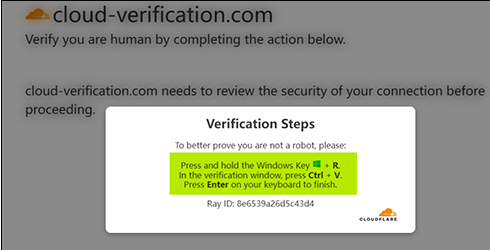
Attackers are abusing a critical Ghost Content Management System(CMS) vulnerability to hijack more than 700 legitimate websites and inject a fake Cloudflare verification step that tricks visitors into running a Windows command that installs malware.
These social engineering campaigns—where website visitors are tricked into running malicious commands on their systems—are commonly known as “ClickFix” attacks. In this case, cybercriminals turned websites belonging to trusted organizations, including universities and tech companies, into delivery platforms for the malware campaign.
More than 700 Ghost‑powered websites were compromised through a known SQL injection vulnerability tracked as CVE‑2026‑26980. The attackers used this bug to steal administrative API keys and silently inject malicious JavaScript into posts and pages across affected sites.
Researchers found that the injected script loads a second‑stage ClickFix flow, presenting visitors with a fake Cloudflare or CAPTCHA verification dialog.
Example of fake Cloudflare verification
Instead of a normal checkbox, the page instructs users to copy‑paste a command into the Windows Run dialog or PowerShell, effectively tricking them into installing malware on their own systems.
Details for website managers
At the heart of this campaign is a critical SQL injection bug in Ghost’s Content API. The researchers noted:
“Without any authentication, an attacker can directly read the database contents through this vulnerability, including the Admin API Key used to call the Ghost Admin API.”
The vulnerability affects Ghost versions 3.24.0 through 6.19.0 and can be exploited without logging in.
A patched version is now available and should be installed as soon as possible. Not just because of the ClickFix campaign; once attackers steal an Admin API key, they can edit, delete, or create posts, inject scripts, hijack themes, and tamper with user‑facing content in other ways.
How to stay safe
This campaign is likely to be particularly effective because the instructions are framed as harmless technical steps such as “verify you’re human,” “fix your connection,” or “continue to the site.” Worse still, the content appears on websites users already trust.
With ClickFix running rampant—and it doesn’t look like it’s going away anytime soon—it’s important to be aware, careful, and protected.
Slow down. Don’t follow instructions on a webpage without thinking them through, especially if the page asks you to run commands on your device or copy-paste code. Attackers rely on urgency to bypass critical thinking, and many ClickFix pages use countdowns, fake user counters, or other pressure tactics to make you act quickly.
Avoid running commands or scripts from untrusted sources. Never run code or commands copied from websites, emails, or messages unless you trust the source and understand the action’s purpose. If a website tells you to execute a command or perform a technical action, check official documentation or contact support before proceeding.
Be cautious when copy-pasting commands. Attackers often disguise malicious payloads inside clipboard text. Typing commands manually instead of copy-pasting them can reduce the risk of unknowingly running hidden malicious payloads.
Secure your devices. Use an up-to-date, real-time anti-malware solution with a web protection component.
Stay informed about evolving attack techniques. Cybercriminals constantly adapt their methods, and awareness remains one of your best defenses, so keep reading our blog!
Pro tip: Did you know the free Malwarebytes Browser Guard extension warns you when a website tries to copy something to your clipboard?
Stop threats before they can do any harm.
Malwarebytes Browser Guard blocks phishing pages and malicious sites automatically. Free, one click to install. Add it to your browser →
Shortly after our recent coverage of high-impact FortiOS SSO zero-day exploitation (CVE-2026-24858), defenders are facing another urgent patching priority in the Fortinet ecosystem. On February 6, Fortinet released a fix for a critical SQL injection flaw that can be triggered remotely and doesn’t require authentication, potentially leading to unauthorized code or command execution.
Although there are currently no signs of exploitation in the wild, CVE-2026-21643 requires immediate attention and patching as SQL injection remains one of the most dangerous web vulnerability classes. OWASP Top 10 2025 links Injection to 62,445 known CVEs, including more than 14,000 SQL injection issues. The risk is straightforward. If an application lets untrusted input reach the database interpreter, an attacker can make the database run unintended commands, steal or change data, and, in some cases, escalate to full system compromise.
Sign up for the SOC Prime Platform to access real-time detection intelligence and ready-to-go use cases for emerging risks like vulnerability exploitation. Click Explore Detections to view the full collection of rules filtered by the “CVE” tag.
All rules are compatible with multiple SIEM, EDR, and Data Lake platforms and are mapped to the MITRE ATT&CK® framework. Each rule includes CTI links, attack timelines, audit settings, triage guidance, and more relevant metadata.
Cyber defenders can also use Uncoder AI to empower their detection engineering workflows. Generate detection algorithms from raw threat reports, enable fast IOC sweeps, predict ATT&CK tags, optimize query code with AI tips, and translate it across multiple SIEM, EDR, and Data Lake languages.
CVE-2026-21643 Analysis
On February 6, 2026, Fortinet released an advisory describing CVE-2026-21643 as an improper neutralization of special elements used in an SQL Command (SQL Injection) in FortiClient EMS, where a remote attacker can send specially crafted HTTP requests to trigger the flaw. Because the issue is pre-auth, an exposed or reachable EMS administrative interface becomes a high-value target for initial access, potentially leading to rapid foothold establishment, follow-on tooling, and lateral movement from a system that often has broad visibility into endpoints.
CVE-2026-21643 obtains a critical CVSS score of 9.8, highlighting the urgent need for patching. The good news for defenders is that the scope is clear. Fortinet’s advisory highlights that only FortiClientEMS 7.4.4 is affected and that upgrading to 7.4.5 or later addresses the issue, while 7.2 and 8.0 are not impacted.
Enhancing proactive cybersecurity strategies is crucial for reducing exploitation risk. By leveraging SOC Prime’s AI-Native Detection Intelligence Platform for enterprise-grade cyber defense, organizations can scale detection operations and strengthen their security posture. Register now to improve visibility into threats most relevant to your business and to accelerate response when new critical threats like CVE-2026-21643 appear.
FAQ
What is CVE-2026-21643 and how does it work?
CVE-2026-21643 is a critical SQL injection vulnerability in Fortinet FortiClientEMS 7.4.4. The issue is caused by improper handling of special characters in SQL commands, so a remote attacker can send specially crafted HTTP requests and potentially execute unauthorized code or commands.
When was CVE-2026-21643 first discovered?
Fortinet has released an advisory describing CVE-2026-21643 on February 6, 2026, which is also the day when the vulnerability was recorded by NVD. Gwendal Guégniaud from the Fortinet Product Security team has been credited for discovering and reporting the flaw.
Which risks does CVE-2026-21643 pose to systems?
The main risk is remote compromise of the FortiClient EMS server. If a vulnerable EMS instance is reachable, an attacker can abuse the SQL injection through crafted HTTP requests to run unauthorized actions and potentially escalate to code or command execution. This can lead to data access or tampering, service disruption, and a foothold that can be used to pivot deeper into the environment.
Can CVE-2026-21643 still affect me in 2026?
Yes, if you are running FortiClient EMS 7.4.4 and have not applied the fix. Fortinet states the issue is resolved in 7.4.5 and later, and notes that 7.2 and 8.0 are not affected.
How can you protect against CVE-2026-21643?
Upgrade FortiClient EMS to 7.4.5 or later and limit access to the EMS web interface to trusted admin networks only. Until patching is complete, increase monitoring on the EMS host and its web traffic for unusual requests and unexpected process activity.

 Entrar