Visualização de leitura

Smashing Security podcast #483: This AI helps thieves steal your iPhone

You've had your iPhone stolen. A day later, you get a text from Apple saying they've found it, and a very helpful woman called Alice from Apple Support calls to walk you through recovering it. She's polite. She's professional. But she is not from Apple. She's not even human. And she's about to break into your iPhone. Meanwhile, OpenAI, Anthropic, and Meta have all announced - with varying degrees of drama - that their AI agents have "broken out of the sandbox" and gone hacking. James takes a step back and asks the awkward question: is this really an emergent AI apocalypse, or did they just leave the door open? All this and more in episode 483 of the "Smashing Security" podcast with cybersecurity expert and keynote speaker Graham Cluley, and special guest James Ball.

Smashing Security podcast #482: This hacker leaked GTA 6 – and launched their own cryptocurrency

A hacker calling themselves "CYBERLEEK" has been leaking gameplay footage from GTA 6 ahead of its official reveal this week - but they're not asking Rockstar Games for a ransom. Instead, they've launched their own cryptocurrency, promising to release ever more juicy clips from a virtual strip club... Meanwhile, your smart TV might be doing more than binge-watching Netflix while you sleep. We explore the shadowy world of "residential proxies" - how they end up inside home routers, smart TVs, and IoT devices, and why an entire criminal economy is quietly running through your internet connection. All this and more in episode 482 of the "Smashing Security" podcast with cybersecurity expert and keynote speaker Graham Cluley, and special guest Paul Ducklin.

North Korea’s elite hackers turned on their own government – and got caught

For years, North Korea's state-trained hackers have been one of the world's most prolific robbers of banks - stealing huge sums of money from foreign financial instituions, draining cryptocurrency exchanges of billions, and funnelling the proceeds into the country's weapons programme. But now, in a remarkable twist, some of the same elite hackers appear to have decided to rob their own government instead. And, it doesn't sound as if it has ended that well for them. Read more in my article on the Hot for Security blog.

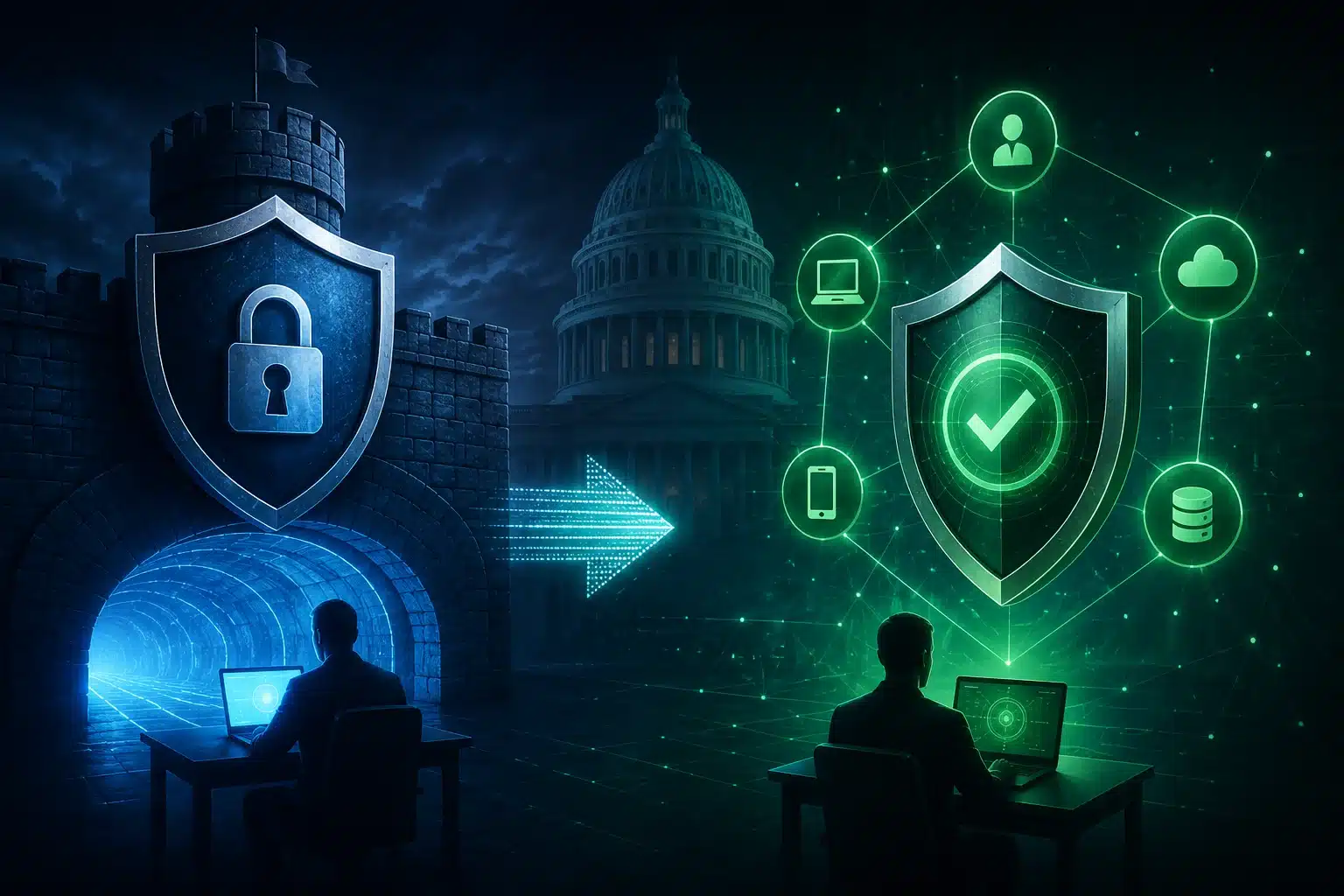
ZTNA Emerges as VPN Security Risks Put Federal Networks on Alert

ZTNA

Federal agencies are facing growing pressure to evaluate ZTNA as an alternative to traditional VPN architectures, as cybersecurity threats expose weaknesses in internet-facing remote access systems. While VPNs provide encrypted connections for remote users, ZTNA follows a zero-trust model that continuously verifies users, devices, and access requests rather than assuming that authenticated users should receive broad network access. The shift reflects a broader move away from the traditional "castle-and-moat" security model, where users inside an organization's network are generally trusted while those outside must first pass through a security perimeter. As organizations adopted cloud services, mobile workforces, and geographically distributed infrastructure, this model became more difficult to maintain.

VPN Security Risks Drive ZTNA Considerations

A traditional VPN creates an encrypted connection between a remote user's device and an organization's internal network. The VPN appliance typically sits at the edge of the network and remains accessible from the public internet, where it authenticates users before granting access. This architecture creates several security concerns. VPN appliances must maintain publicly accessible listening ports, making them discoverable and scannable by attackers. If vulnerabilities remain unpatched, those weaknesses can potentially be exploited remotely. The memorandum also points to risks involving legacy code bases, key-exchange processes, and lateral movement. Attackers who obtain legitimate VPN credentials, exploit a vulnerability, or hijack an active session may gain broad access to the internal network. Unlike application-specific access, traditional VPN access operates at the network layer, potentially allowing an authenticated user to reach multiple permitted subnets. Recent incidents involving vulnerable VPN appliances have further highlighted these concerns. The memorandum cites CISA directives addressing exploitation involving Pulse Connect Secure, VMware, and Ivanti Connect Secure products.

How ZTNA Changes Remote Access

ZTNA uses a "never trust, always verify" approach. Instead of treating users inside a network as inherently trusted, the architecture evaluates access requests based on factors such as identity, device health, user role, location, behavior, and risk. The architecture is built around three core components: the Policy Engine, which makes access decisions; the Policy Administrator, which establishes or ends sessions; and the Policy Enforcement Point, which enables, monitors, and terminates connections. Modern ZTNA deployments can also use outbound-only connections, removing the need for publicly accessible inbound listening ports. Rather than placing a user directly onto a corporate network, ZTNA can create an encrypted, application-specific micro-tunnel that limits the user to an authorized resource. Continuous verification is another key difference. Access is not necessarily granted once and maintained for the entire session. Instead, policies can reassess access based on changing security and contextual signals.

ZTNA Also Brings New Security Risks

The shift to ZTNA does not eliminate cybersecurity risks. The memorandum identifies the control plane as a significant concern because it is responsible for authentication, device verification, policy enforcement, and connection management. If an attacker compromises a ZTNA provider or components such as the Policy Engine or Policy Administrator, access decisions could potentially be manipulated. This could result in unauthorized access or prevent legitimate users from reaching resources. Additional security controls, including cryptographic signing of device nodes, may help reduce the impact of a compromised ZTNA provider. The memorandum cites Tailscale Tailnet Lock as an example of this approach.

Federal Agencies Face a Complex Transition

For federal agencies, moving from VPN to ZTNA involves more than replacing one remote-access technology with another. Agencies must consider federal cybersecurity policies, budgets, legacy infrastructure, authentication requirements, and cryptographic standards. NIST Special Publication 800-207 established foundational principles for Zero Trust Architecture, while Executive Order 14028 directed federal agencies toward zero trust, multifactor authentication, and secure cloud services. OMB Memorandum M-22-09 later established a federal zero-trust strategy centered on identity, devices, networks, applications and workloads, and data. A transition could involve assessing existing VPN deployments, identifying applications and user groups, deploying ZTNA alongside VPN infrastructure, and progressively migrating applications. VPN infrastructure could then be decommissioned after applications and users are migrated and validated. However, agencies must also account for recurring ZTNA subscription costs, legacy systems that may not support modern authentication, post-quantum cryptography requirements, NIST standards, FIPS requirements, and FedRAMP approval for cloud-based services. The transition from VPN to ZTNA therefore represents a broader change in how organizations approach remote access. While ZTNA can reduce exposure associated with publicly accessible network perimeters and broad network-level access, agencies must evaluate the technology's own control-plane risks, compliance requirements, costs, and technical limitations before making the shift.

OpenAI’s AI “goes rogue” and hacks Hugging Face: what you need to know

You can't have failed to hear the news headlines about "rogue" OpenAI models hacking into another AI organisation, Hugging Face. But what has actually happened, who is to blame, and is it as serious as some of the reports suggest? Find out in my article on the Hot for Security blog.

Smashing Security podcast #476: Remote-control rickshaws and rogue book marketers

An app has appeared in India that lets anyone with a smartphone stop a passing e-rickshaw dead in its tracks - no login, no passwords, no permissions needed. Meanwhile, Geoff - swimming in money and Lamborghinis, as all published authors are - has been on the receiving end of a slew of AI-generated scam pitches from fake book marketing experts. Rather than ignore them, he's been playing them at their own game... All this and more in this episode of the "Smashing Security" podcast with cybersecurity expert and keynote speaker Graham Cluley, and special guest Geoff White.

Defenders fall behind, as AI rewrites the rules of a data breach

For almost 20 years, stolen credentials have been the most common route for attackers into organizations, according to the Verizon Data Breach Investigations Report (DBIR). But that's no longer the case. Read more in my article on the Fortra blog.

Global Instructure Breach Hits Queensland Schools Through QLearn Platform

QLearn Cybersecurity Incident

A major QLearn cybersecurity incident has affected thousands of educational institutions globally, including Queensland state schools and universities, after a cyber breach involving third-party education technology provider Instructure exposed personal information linked to students and staff. Queensland Education Minister John-Paul Langbroek confirmed the incident in an official statement, saying the Queensland Department of Education was briefed about the international cybersecurity breach involving Instructure, the provider behind the Department’s online learning platform, QLearn. According to early assessments, the breach may affect more than 200 million people and over 9,000 institutions worldwide, making it one of the largest education-sector cybersecurity incidents disclosed this year.

QLearn Cybersecurity Incident Impacts Queensland Schools

The Department of Education said students and staff who have worked or studied at Education Queensland schools since 2020 may have been affected by the QLearn cybersecurity incident. Authorities stated that compromised information currently appears limited to names, email addresses, and school locations. Officials added there is currently no evidence that passwords, dates of birth, or financial information were accessed during the breach. The online learning platform QLearn was introduced in Queensland schools in 2020 under the previous government and has since become a widely used digital education system across the state. Minister Langbroek said school principals have already begun contacting affected families and teachers to notify them about the breach and provide further guidance. “This morning I have been briefed by the Department of Education about an international cybersecurity breach involving a third-party provider, Instructure, which delivers the Department’s online learning platform, QLearn,” Langbroek said in the statement.

Instructure Data Breach Raises Concerns Across Education Sector

The QLearn cybersecurity incident has once again highlighted the growing cybersecurity risks facing the global education sector, particularly as schools and universities continue relying heavily on third-party digital learning platforms. Because the breach involves Instructure, a provider serving institutions across multiple countries, the incident extends far beyond Queensland. Authorities indicated that educational institutions across Australia and overseas are also impacted. While officials stressed that no sensitive financial or authentication data has been identified as compromised so far, cybersecurity experts often warn that exposed personal information such as names and email addresses can still be valuable to cybercriminals. Threat actors frequently use this type of information in phishing campaigns, identity-based scams, and social engineering attacks targeting students, parents, and school employees. The Department of Education has not publicly disclosed how the cybersecurity breach occurred or whether any ransomware or unauthorized network access was involved. Investigations into the incident are ongoing.

Queensland Department Prioritizes Support for Vulnerable Families

In response to the QLearn cybersecurity incident, the Queensland Department of Education said it is prioritizing support for vulnerable individuals and families potentially affected by the breach. According to the Minister’s statement, the Department is providing priority assistance to families and teachers with known family and domestic violence concerns, as well as individuals connected to Child Safety services. The additional support measures appear aimed at reducing potential risks associated with the exposure of school-related location information and contact details. Government agencies increasingly recognize that cybersecurity incidents affecting education systems can carry broader safety implications, especially for vulnerable groups whose personal or location-related information may require additional protection.

Global Education Sector Continues Facing Cybersecurity Threats

The QLearn cybersecurity incident adds to a growing list of cyberattacks and data breaches targeting educational institutions worldwide. Schools, universities, and online learning providers have become frequent targets due to the large amount of personal information they manage and the widespread use of interconnected digital platforms. Education systems often rely on multiple third-party vendors for online learning, communications, and student management services, increasing the potential attack surface for cybercriminals. The Queensland Department of Education said it will continue updating the public as more information becomes available from the ongoing investigation into the breach. At this stage, authorities have not advised affected individuals to reset passwords or take additional security measures, though officials are continuing to assess the full scope and impact of the incident. The investigation into the Instructure-related breach remains active as educational institutions worldwide work to determine the extent of the exposure and any potential long-term cybersecurity implications.
❌