Visualização de leitura

Canadian Man Pleads Guilty in Snowflake Extortions

A 26-year-old Canadian man once described as one of the most consequential cybercrime threat actors of 2024 has pleaded guilty to computer fraud and conspiracy to hack and extort more than 165 organizations that used the cloud provider Snowflake. Connor Riley Moucka, of Kitchener, Ontario, also admitted to stealing call and text history records of more than 100 million AT&T customers.

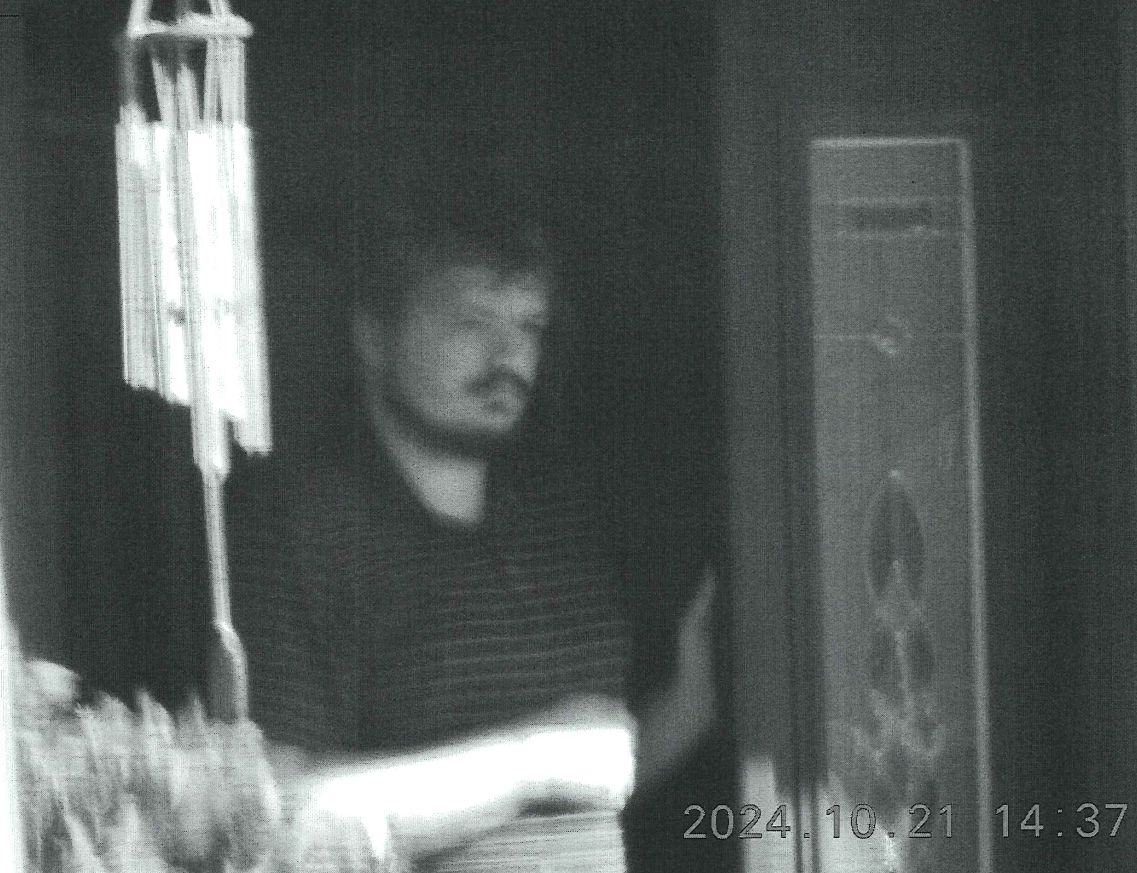
A surveillance photo of Connor Riley Moucka, a.k.a. “Judische” and “Waifu,” dated Oct 21, 2024, 9 days before Moucka’s arrest. This image was included in an affidavit filed by an investigator with the Royal Canadian Mounted Police (RCMP).

The U.S. Justice Department said between February and October 2024, Moucka and co-conspirators used stolen login credentials to steal cloud-hosted data belonging to at least 165 customers of a U.S.-based software-as-a-service company.

The hackers targeted stolen credentials for Snowflake customer accounts that did not enforce multi-factor authentication, and extorted or attempted to extort a host of well-known companies, including TicketMaster, Lending Tree, Advance Auto Parts and Neiman Marcus. Snowflake responded to the data thefts by increasing password complexity requirements and enforcing multi-factor authentication.

Moucka adopted new nicknames frequently — sometimes operating multiple identities concurrently — but two of his best-known monikers were “Judische” and “Waifu.” Judische’s admitted role in the Snowflake data thefts was first documented by KrebsOnSecurity in a September 2024 story about the overlap between Western, English-speaking cybercriminals and extremist groups that harass and extort minors into harming themselves or others.

That September 2024 story identified Judische as a software engineer from Ontario who has been involved in numerous data breaches and voice phishing attacks against U.S. companies since at least 2020. A little more than a month later, Canadian authorities arrested Moucka on a provisional warrant from the United States.

The government says Moucka and others used their unauthorized access to steal billions of sensitive customer records and download terabytes of information, “including individuals’ non-content call and text history records, banking and other financial information, payroll records, Drug Enforcement Administration (DEA) registration numbers, driver’s license numbers, passport numbers, social security numbers and other personally identifiable information. They then extorted victims by threatening to publish data online.”

Moucka also threatened and harassed government officials and security researchers who were helping to track him down. The Justice Department said the conspirators made over $2.5 million in ransom payments, and that in at least one instance, Moucka re-extorted a victim with threats of further disclosure of the victim’s stolen data.

“Moucka used the stolen data of a government officer and members of a then-former government officer’s immediate family in this re-extortion attempt,” reads a statement from the Justice Department.

One of Moucka’s admitted co-conspirators is Cameron “Kiberphant0m” Wagenius, a U.S. Army soldier who pleaded guilty in July 2025 to extorting AT&T and Verizon for their customer account data. Less than a month before Wagenius’s arrest, KrebsOnSecurity published a deep dive into Kiberphant0m’s various Telegram and Discord identities over the years, revealing how the owner of the accounts told others they were in the Army and stationed in South Korea.

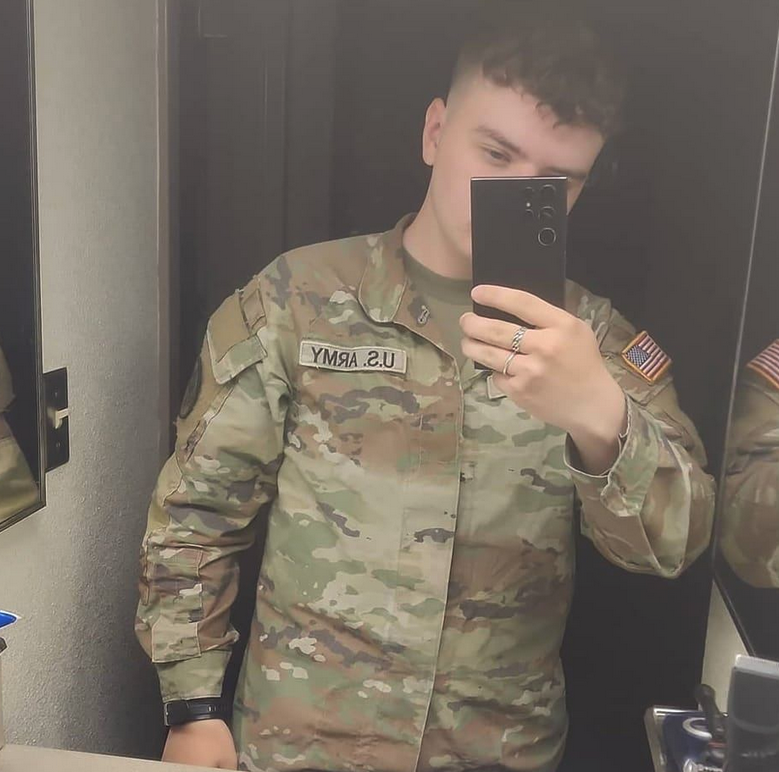
One of several selfies on the Facebook page of Cameron Wagenius.

Kiberphant0m also re-extorted victims. Immediately following Moucka’s arrest, Kiberphant0m posted on hacker forums what he claimed were the AT&T call logs for then President-elect Donald Trump and for then Vice President Kamala Harris, as well schematics allegedly stolen from the U.S. National Security Agency (NSA).

Wagenius is set to be sentenced on September 3, 2026. The government says he faces a maximum penalty of 20 years in prison for conspiracy to commit wire fraud, a maximum penalty of five years in prison for extortion in relation to computer fraud, and a mandatory two-year sentence consecutive to any other prison time for aggravated identity theft.

The third alleged co-conspirator is John Erin Binns, 26, an elusive American man who fled the United States after being indicted for his admitted role in a 2021 breach at T-Mobile that exposed the personal information of at least 76 million customers.

Sources close to the investigation said Binns, also known as “IRDev” and “IntelSecrets,” was until recently incarcerated in a Turkish prison, but that he has since been released and has resurfaced online. Those sources said Binns also recently obtained Turkish citizenship, and under Turkish law a citizen cannot be extradited to a foreign country.

An image of a passport that Binns shared in an email to KrebsOnSecurity in Feb. 2023.

Moucka pleaded guilty to four criminal counts, including computer fraud, wire fraud, aggravated identity theft, and conspiracy. He is slated to be sentenced on Oct. 27 and faces a mandatory minimum penalty of two years in prison on the aggravated identity theft count, as well as a maximum penalty of 30 years in prison on the remaining counts. Ultimately, it will be up the federal judge how much time Moucka actually serves for his extensive cybercriminal rap sheet.

For an interview with Moucka prior to his arrest and a deeper look at Binns, see our original report on Moucka’s arrest.

Snowflake Hacker Pleads Guilty After Breaching 165 Companies and Stealing Billions of Records

Snowflake hacker Connor Moucka pleads guilty after breaching 165 organizations, stealing billions of records, and extorting victims.

Connor Riley Moucka, 26, of Kitchener, Ontario, pleaded guilty this week to a computer hacking conspiracy that compromised over 165 organizations, stole billions of customer records, and extorted multiple victims for millions of dollars.

“Connor Riley Moucka, 26, of Kitchener, Ontario, pleaded guilty today to a widespread computer hacking conspiracy that resulted in the compromise of over 165 victim organizations, the theft of billions of sensitive customer records and the extortion of numerous victims.” states DoJ.

The unnamed “U.S.-based software-as-a-service company” at the center of the scheme is Snowflake, the cloud data platform, though the DOJ press release doesn’t name it directly. Moucka was arrested just six months after the breaches began, which is either impressive law enforcement work or a sign that he wasn’t as careful as he thought.

“between February and October 2024, Moucka and his co-conspirators used stolen login credentials to compromise cloud-hosted data belonging to at least 165 customers of a U.S.-based software-as-a-service company. Moucka and others used their unauthorized access to these customers’ computer systems to steal billions of sensitive customer records and download terabytes of information, including individuals’ non-content call and text history records, banking and other financial information, payroll records, Drug Enforcement Administration (DEA) registration numbers, driver’s license numbers, passport numbers, social security numbers and other personally identifiable information.” continues the DoJ’s press release.”They then extorted victims by threatening to publish data online.”

Moucka and his accomplices earned more than $2.5 million by extorting victims after stealing their data. In one case, they threatened to release information again, using stolen data belonging to a government official and family members to increase pressure.

They also sold stolen information on cybercrime forums and Telegram, allowing Moucka to personally gain at least $495,000. The attacks caused more than $9.5 million in direct losses for affected companies and exposed data linked to over 100 million individuals. Moucka pleaded guilty to computer fraud, wire fraud, identity theft, and conspiracy charges, and faces up to 30 years in prison.

The entry method wasn’t a sophisticated zero-day. The conspirators used stolen credentials, meaning accounts that weren’t protected by multi-factor authentication. That one missing control opened the door to what became one of the largest cloud data theft operations on record.

Re-extortion, going back to a victim who already paid and threatening them again, is a pattern that law enforcement has documented increasingly in ransomware and data theft cases. It works because victims are already compromised, the data is already gone, and the attacker has leverage as long as the data remains unpublished.

“Today’s guilty plea sends a clear message to cybercriminals: you cannot hide from justice, no matter how hard you may try to cover your tracks,” said Special Agent in Charge W. Mike Herrington of the FBI Seattle field office. “Connor Moucka’s threats and re-extortion tactics were calculated and predatory, and his actions did real harm to his victims, be they companies targeted for theft and extortion or the millions of everyday people who are their customers. Ultimately, though, Mr. Moucka’s schemes were no match for the tenacity of FBI Seattle and this international investigative team. I am incredibly proud of their work. Let this outcome serve as a reminder: actions have consequences, and the FBI will continue to relentlessly pursue those who target American businesses and individuals in cyberspace, wherever they may be.”

Moucka pleaded guilty to four counts: computer fraud, wire fraud, aggravated identity theft, and conspiracy. He faces a mandatory minimum of two years on the identity theft count and up to 30 years on the others. Sentencing is scheduled for October 27.

The man was extradited from Canada to the US in July 2025 with cooperation from the Royal Canadian Mounted Police, the Australian Federal Police, Spain’s Guardia Civil, the Security Service of Ukraine, and the Turkish National Police, a list that tells you something about how international these criminal networks have become.

“Connor Moucka hacked over 150 companies and organizations, obtained extremely sensitive information, and extorted the victims for millions of dollars,” said Assistant Attorney General A. Tysen Duva of the Justice Department’s Criminal Division. “Moucka was arrested just six months after these breaches began, demonstrating this Department’s firm commitment to investigating and prosecuting sophisticated cybercriminals who cause extensive harm to American businesses and consumers. Today’s guilty plea serves as a reminder to all cybercriminals, regardless of where they live, that they cannot hide behind a wall of anonymity. You will be found and brought to justice.”

Follow me on Twitter: @securityaffairs and Facebook and Mastodon

Pierluigi Paganini

(SecurityAffairs – hacking, newsletter)

❌