Visualização de leitura

Britain Gains Access to Ukraine’s ‘Goldmine’ of Battlefield AI Data

UK Ukraine AI partnership

The UK Ukraine AI partnership will give Britain access to Ukraine’s Avengers AI Labs, bringing together Ukrainian battlefield experience, operational data and engineering expertise with the UK’s AI ecosystem. The agreement, signed by President Volodymyr Zelenskyy and Prime Minister Andy Burnham in Ukraine, will focus initially on defence and national security. Under the partnership, British innovators and researchers will gain access to data and insights collected across the battlefield. The UK government described Avengers AI Labs as a “goldmine of battlefield data,” offering researchers access to real-world operational information used to train AI models.

How Avengers AI Labs Uses Battlefield Data

The data is collected through thousands of daylight cameras and infrared sensors deployed across the battlefield. The systems capture images and information involving tanks, artillery, air defence systems, infantry and aerial targets, including Shahed drones and reconnaissance UAVs. The data is used to train AI models to recognize and classify battlefield objects. Ukraine’s Defense Ministry has previously said that systems trained using the Avengers Labs platform analyze more than 100,000 drone video feeds each month and help identify about 70% of enemy targets in real time. The UK’s access to the platform is intended to allow British startups, researchers and engineers to work with operational insights and develop technologies based on real-world datasets. The partnership will initially bring together engineers, academics, businesses and military operational expertise from both countries to address national security challenges. The two countries will also explore additional platforms for future collaboration.

UK Ukraine AI Partnership Test New Defence Technology

Several pilot projects involving British startups have already been rolled out as part of the agreement. The companies named are Bristol-based Sintela, Oxford’s Mind Foundry and London’s Skyral. The first technology is due to be deployed at a UK defence site to help protect bases from protestors and hostile actors seeking intelligence. The project combines Ukrainian data with UK technology and turns buried fibre-optic cables into an AI-enabled sensor. The technology could also be used in other critical locations, including airports, prisons, railways and energy plants, according to the information released about the partnership. A second project will examine the development of next-generation low-power AI chips designed for future drones, robotics and autonomous systems. If successful, the technology could support machines designed to operate for longer, respond faster and function in environments where conventional systems face limitations.

AI Sovereignty and Defence Innovation

The agreement forms part of the UK and Ukraine’s 100 Year Partnership and expands cooperation between the two countries in AI and defence technology. The UK will provide access to its universities, researchers, technology companies and AI ecosystem, while Ukraine will provide access to operational experience and datasets generated during the war. Minister for AI Kanishka Narayan described the arrangement as AI sovereignty in practice, focused on developing national capabilities and turning frontline experience into technologies for military and critical infrastructure protection. The partnership also follows the UK government’s announcement that defence firm MBDA can release classified information on UK components for the long-range SCALP missile to establish local assembly lines in Ukraine. The broader agreement is intended to combine Ukrainian battlefield data with British scientific, engineering and technology expertise, with the initial focus remaining on defence, national security and the development of future defence technology.

Apple Challenges UK Demand For Access To Encrypted iCloud Data

Apple is challenging a UK order reportedly requiring access to encrypted iCloud data, reviving a wider dispute over privacy, security, and lawful access.

The post Apple Challenges UK Demand For Access To Encrypted iCloud Data appeared first on TechRepublic.

Smashing Security podcast #470: This AI security flaw might be impossible to fix

A website called "UK visa portal" has been quietly collecting passport scans, selfies, and personal data from thousands of travellers who thought they were applying through official channels. They weren't. And when a journalist tried to warn the company, it was lawyers who responded. Meanwhile, a paper from Cornell suggests that prompt injection - the technique malicious actors use to trick AI agents into doing things they really shouldn't - may be fundamentally unsolvable. Which is err... awkward, because everyone is rushing to plug AI agents into their email, files, and corporate networks. Plus don't miss our featured interview with Andrea Sivieri of CoreView, who tells us how hackers can lock your entire organisation out of its Microsoft 365 environment... without having to trick you into running a single piece of malicious code or handing over a password. All this and more in episode 470 of the "Smashing Security" podcast with cybersecurity expert and keynote speaker Graham Cluley, and special guest Tanya Janca.

UK Cybersecurity Innovation SilentGlass Goes Global After Licensing Deal

cyber security device

The UK government has officially licensed SilentGlass, a government-developed cyber security device, for global commercial use, marking a major step in expanding public sector cybersecurity innovation into international markets. Developed by the National Cyber Security Centre, a part of Government Communications Headquarters, SilentGlass was originally designed to protect sensitive government systems from cyber threats linked to smart display connections. The technology is now being commercialized with support from the Government Office for Technology Transfer through a global intellectual property licensing agreement with a UK-based company. The launch highlights growing concerns around hardware-based cyber risks in modern workplaces, especially as organizations increasingly adopt hybrid work environments, shared office spaces, and connected devices.

SilentGlass Designed to Block Video Connection Cyber Threats

According to the NCSC, the cyber security device was created to address risks associated with modern smart monitors and digital video connections. Security experts have warned that video connections between laptops and monitors can potentially be exploited by attackers to compromise connected systems. The threat becomes more serious in environments where devices with different security levels are connected to shared displays. SilentGlass works as a small plug-and-play hardware device positioned between a laptop and monitor. Its primary role is to prevent the physical video connection from being used as a pathway for cyberattacks. By blocking that attack route, the cyber security device helps organizations reduce exposure to hardware-level threats while enabling safer flexible working arrangements, including hot desking and remote work setups. The NCSC stated that the technology was initially developed for internal government operations before demonstrating broader commercial potential across multiple sectors.

UK Government Expands Cyber Security Innovation to Global Market

Following a competitive commercial process, the UK government approved a global intellectual property licensing agreement for SilentGlass with a UK-based company. The agreement allows the cyber security device to be distributed internationally, expanding access to technology that was originally built for high-security government environments. Officials said the move reflects a wider effort to commercialize public sector innovation while ensuring strong governance and protection of government-developed intellectual property. The NCSC noted that SilentGlass could support:
  • Government departments
  • Public sector organizations
  • Critical national infrastructure operators
  • Businesses with advanced cybersecurity requirements
  • Employers supporting hybrid work environments
The technology is expected to benefit sectors where device trust, network security, and hardware protection are considered critical operational requirements.

GOTT Supported Commercialization of SilentGlass

The Government Office for Technology Transfer played a key role in helping the NCSC bring the cyber security device to market. According to officials, GOTT supported the project by advising on intellectual property licensing strategies, funding commercialization initiatives, and connecting the NCSC with technology transfer and investment experts. The organization also provided mentoring support for knowledge asset management and helped guide the licensing process through market engagement and competitive partner selection. The UK government has increasingly focused on turning public sector-developed technologies into commercially viable products that can deliver broader economic and security benefits.

Growing Focus on Hardware-Level Cybersecurity

The release of SilentGlass comes as cybersecurity experts continue raising concerns about hardware-level attack vectors that are often overlooked in traditional cybersecurity strategies. Modern monitors, docking stations, USB-connected devices, and display interfaces are increasingly viewed as potential entry points for attackers targeting enterprise and government systems. As hybrid work models expand globally, organizations are under pressure to secure not only software environments but also physical device connections used in day-to-day operations. The NCSC said SilentGlass was specifically designed to address these emerging risks without requiring complex deployment or major infrastructure changes.

NCSC Highlights Future Commercialization Plans

Ollie Whitehouse, Chief Technology Officer at the NCSC, described the commercialization of SilentGlass as an example of how government-developed innovation can support both national cybersecurity and economic growth. According to Whitehouse, the partnership demonstrates how UK government departments can derive greater value from intellectual property while making advanced security technologies more widely available. The NCSC also indicated that additional government-developed cybersecurity technologies could be commercialized in the future following the success of the SilentGlass initiative.

UK Regulator Ofcom Cracks Down on Viral Deepfake Nude Content

non-consensual intimate image

Ofcom has announced tougher measures aimed at stopping the spread of non-consensual intimate images and AI-generated deepfake abuse online, as the UK regulator pushes tech companies to strengthen user safety protections. The updated guidance, released Monday, will require platforms to do more to identify, detect, and remove illegal intimate content shared without consent. The changes are part of Ofcom’s strengthened Illegal Content Codes under the UK’s Online Safety Act and are expected to come into force in autumn 2026, subject to parliamentary approval. At the centre of the updated rules is the growing concern over deepfake intimate images, including AI-generated nude content and manipulated explicit media targeting women and girls online.

Tech Platforms Asked to Deploy Hash Matching Technology

Under the proposed measures, Ofcom is recommending that certain platforms and apps expand their use of automated detection systems known as “hash matching” technology to identify and block illegal intimate images before they spread further online. Hash matching works by converting harmful images into unique digital fingerprints, or hashes, which are then stored in a database. When users attempt to upload the same or similar content again, platforms can automatically detect and block the material. Ofcom specifically referenced the use of databases such as StopNCII, one of the leading systems designed to combat the spread of non-consensual intimate imagery online. The regulator said the move is aimed at providing stronger protections for women and girls who are increasingly being targeted through AI-enabled abuse and image manipulation. According to Ofcom, the updated recommendations, combined with new UK legislation banning “nudification tools,” could significantly reduce the circulation of harmful intimate content online.

UK Government Pushes Faster Removal of Non-Consensual Intimate image

The tougher stance follows recent action by the UK government to pressure technology companies into removing abusive content more quickly. Earlier this year, UK Prime Minister Keir Starmer backed legislation introducing heavy penalties for platforms that fail to promptly remove illegal intimate images. Under the law, companies may face substantial fines if they do not take down reported content within 48 hours. Authorities have also warned that services repeatedly failing to comply could face restrictions or blocking in the UK. The government said the rules are intended to prevent victims from repeatedly reporting the same harmful images while waiting for action from online platforms. The push for stricter enforcement comes amid rising global concern over the misuse of generative AI tools to create realistic explicit deepfake content without consent.

Deepfake Concerns Grew After Viral AI Image Abuse Cases

The UK government’s increased focus on deepfake intimate images follows widespread concern over reports that millions of manipulated nude images involving women and children circulated online through AI-powered tools and chatbots earlier this year. Regulators and child safety advocates have warned that the rapid growth of generative AI platforms has made it easier to create convincing fake explicit images, raising concerns around online abuse, harassment, and exploitation. Ofcom said technology companies must take greater responsibility for detecting harmful content and preventing its distribution across their platforms.

Ofcom Investigation Into Online Platforms Continues

The latest action also comes as Ofcom continues broader investigations into online platforms under the Online Safety Act.

In April, the regulator expanded an ongoing probe into Telegram, Teen Chat, and Chat Avenue over concerns linked to child sexual abuse material (CSAM) and online grooming.

According to Ofcom, the investigation began after receiving evidence suggesting that harmful content and predatory behaviour may have been taking place across these services.

A major focus of the investigation involves Telegram’s potential exposure to CSAM. Authorities said intelligence shared by the Canadian Centre for Child Protection indicated the alleged presence and distribution of abusive material on the platform.

Following its own assessment, Ofcom launched a formal investigation into whether Telegram may have failed to meet its legal responsibilities under the Online Safety Act.

The regulator stated that platforms offering user-to-user communication services are legally required to assess risks related to illegal content and implement safeguards to prevent its spread.

High Court Backs UK Police Use of Live Facial Recognition Technology

Facial Recognition Policy

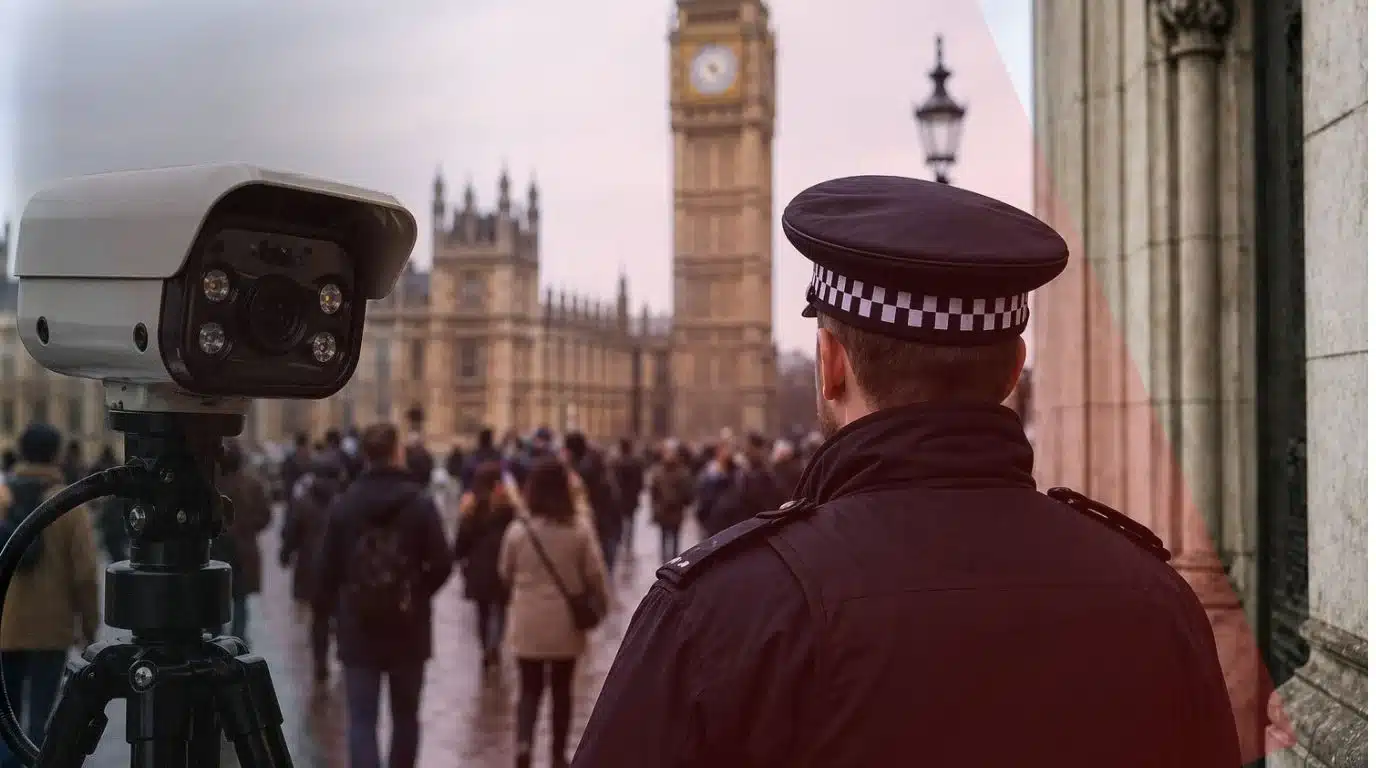
A Live Facial Recognition Policy used by the Metropolitan Police Service has been upheld by the High Court of Justice, marking a significant legal development in the use of surveillance technology in the UK. The ruling, delivered on April 21, 2026, dismissed a legal challenge that questioned whether the policy allows excessive discretion in how facial recognition is deployed. The case, brought by civil liberties campaigners, focused on whether the Live Facial Recognition Policy complies with protections under the European Convention on Human Rights, particularly rights related to privacy, expression, and assembly.

Challenge to Live Facial Recognition Policy and Legal Grounds

The judicial review was filed by Shaun Thompson and Silkie Carlo, director of Big Brother Watch. The claimants argued that the Live Facial Recognition Policy gives police officers too much freedom to decide where and how the technology is used, potentially leading to arbitrary surveillance. Their case relied on Articles 8, 10, and 11 of the ECHR, which protect the right to privacy and freedom of expression and assembly. They argued that the policy lacked sufficient clarity and safeguards, making it incompatible with legal standards that require laws to be foreseeable and constrained. However, the court clarified that the case was not about whether facial recognition technology itself is appropriate, but whether the policy governing its use meets legal requirements.

Court Finds Safeguards and Structure in Live Facial Recognition Policy

In its judgment, the court ruled that the Live Facial Recognition Policy contains clear rules and does not grant unchecked powers to police officers. Judges highlighted that the policy limits deployment to three defined scenarios: crime hotspots, protective security operations, and cases involving specific intelligence about a suspect’s presence. The court noted that each deployment must undergo a proportionality assessment, ensuring that potential impacts on privacy and civil liberties are considered. It also emphasized that decisions are subject to oversight and follow a structured chain of command. According to the ruling, these safeguards distinguish the current policy from earlier concerns raised in previous cases. The judges concluded that the Live Facial Recognition Policy meets the legal requirement of being “in accordance with the law.”

Evidence and Concerns Around Misuse Rejected

The claimants pointed to concerns about wrongful identification and potential misuse of facial recognition technology. One claimant described being mistakenly stopped after being incorrectly matched to a suspect. Despite these concerns, the court found that much of the supporting evidence did not directly address the legality of the policy. Some submissions were dismissed as opinion rather than factual or expert evidence relevant to the legal issues being considered. The court also rejected arguments that the policy enables widespread surveillance in crowded areas. It clarified that deployment decisions are based on crime data and intelligence, not simply on the number of people in a location.

Discrimination Concerns and Broader Debate

Concerns about bias in facial recognition systems were raised during the proceedings, particularly following earlier findings by the National Physical Laboratory. However, the court stated that no substantial legal challenge on discrimination grounds had been properly presented. As a result, it did not find evidence that the Live Facial Recognition Policy is unlawful on those grounds. Separately, the UK government has signaled plans to expand the use of facial recognition technology. The Home Office has proposed increasing its deployment and is consulting on a stronger legal framework to support wider use.

Operational Impact and Future of Facial Recognition

The Metropolitan Police has defended the use of facial recognition, stating that the technology has supported thousands of arrests angd helped identify suspects in serious crimes, including violent and sexual offenses. Officials also highlighted improvements in accuracy and safeguards, including the immediate deletion of non-matching data and human review of alerts. Commissioner Mark Rowley described the ruling as a major step forward for public safety, emphasizing that the technology is carefully controlled and effective. With the court confirming that the Live Facial Recognition Policy meets legal standards, the decision is likely to influence how surveillance tools are used and regulated in the UK. It also sets a precedent for future legal challenges as governments and law enforcement agencies continue to expand the use of biometric technologies.
❌