Visualização de leitura

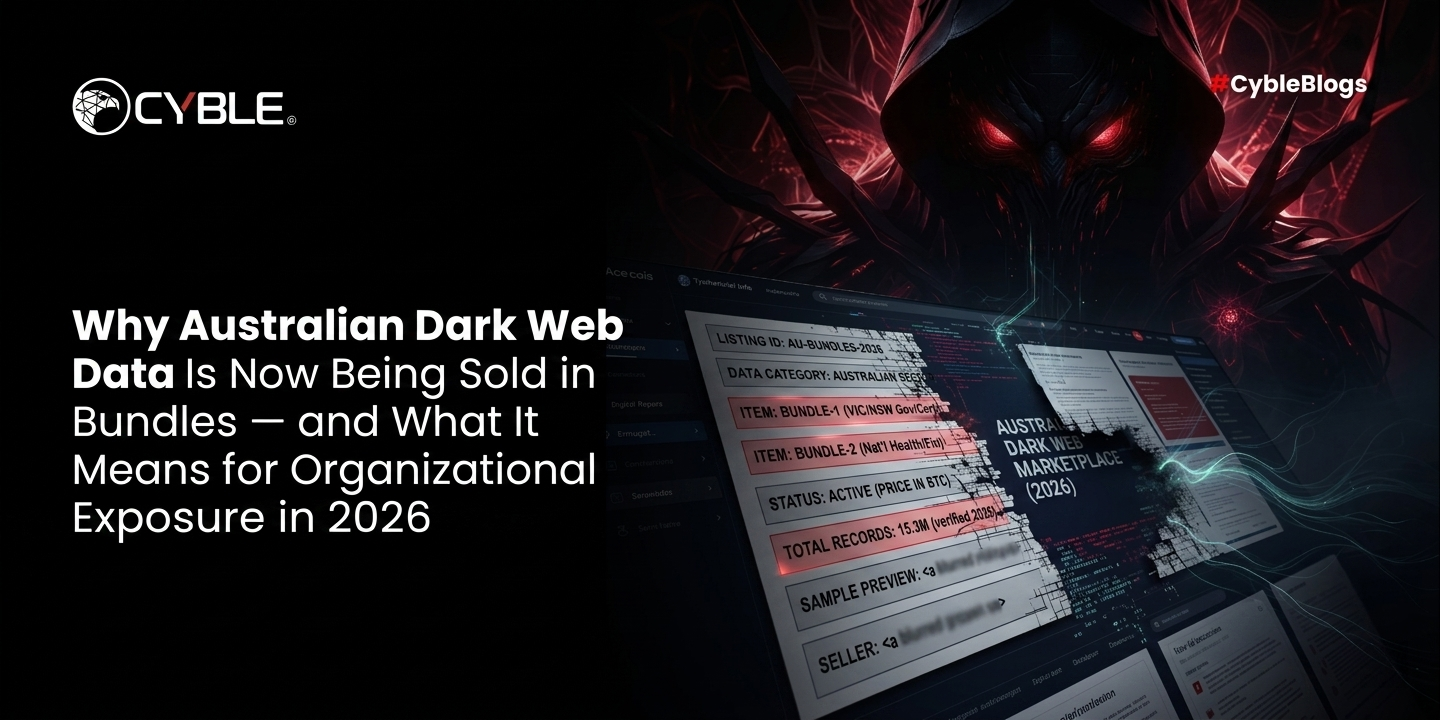
Why Australian Dark Web Data Is Now Being Sold in Bundles — and What It Means for Organizational Exposure in 2026

Australian dark web data

In 2026, opportunistic assaults and isolated breaches will no longer characterize Australia's cyber risk environment. Industrialized data theft, in which stolen data is packaged, repackaged, and marketed on underground marketplaces, is influencing it. 

Threat actors are already combining Australian data into composite "breach packages," increasing both its commercial worth and its downstream danger, as opposed to single-company breaches occurring in isolation. This trend is also intensifying concerns around Australian dark web data, where aggregated breach packages are increasingly traded and monetized. 

This move has a direct impact on how exposed enterprises will be in 2026 and is not merely cosmetic; rather, it represents a structural shift in how cybercriminal ecosystems monetize stolen information. 

Why are Australian dark web data breaches increasing?

Australian cyber events have sharply increased, according to Cyble cyber threat intelligence monitoring. 71 publicly reported data breaches involving Australian companies were found between January and early October 2025. Compared to the 48 breaches that were reported at the same time in 2024, that is a 48% increase. 

The overall trend is even more telling: 71 breaches in 2025 have already surpassed the 66 Australian breaches that were reported in 2024. This suggests that the year is structurally exceeding previous standards rather than just drifting upward. The rapid escalation in both the number and severity of every major data breach Australia has experienced indicates a maturing underground economy centered on stolen information. 

Cyble reported 1,684 occurrences of reported data breaches worldwide in 2025, an 18% increase. In light of this, Australia's more rapid growth stands out as being disproportionately severe rather than a component of a global increase. 

It is crucial to remember that these numbers only include occurrences that have been reported to the public. Since many breaches never appear on forums or leak sites, the actual exposure baseline is probably much greater. This means the scale of the current Australian data breach landscape may still be underestimated. 

Why “Bundled Data” Has Become the New Trade Standard

The packaging of stolen Australian data into bundled datasets is one of the most significant developments in underground markets. Threat actors are progressively combining several datasets into composite offerings rather than selling a single breach per victim organization. 

Bundled data is easier to monetize, which provides a straightforward economic explanation for this practice. It enables cybercriminals to: 

  • Combine data from several organizations to increase resale value  

  • Attract a larger range of purchasers (ransomware affiliates, fraud groups, and access brokers)  

  • Cut down on the time spent promoting specific violations  

Bundling also indicates maturity in the supply chain for cybercrime from an operational perspective. Data is now curated rather than just stolen. 

This implies that an organization's security posture is no longer the only factor influencing exposure. One vendor or partner's data may unintentionally be included in a larger selling bundle with unrelated victims due to a breach. This is one reason why modern dark web data breach operations are becoming more difficult to contain once information is leaked. 

Ransomware Groups Are Driving the Acceleration

The prevalence of ransomware-related entities is a significant contributing element to Australia's breach rise. 

Ransomware groups were responsible for around half of the 71 breaches that were discovered in 2025. This indicates a change in attribution from around 42% of Australian violations in 2024 to approximately 71% in 2025. 

This modification shows how ransomware tactics have evolved. Data theft is becoming more important to groups than encryption. Even if encryption is never used, attackers exfiltrate sensitive data before using it for extortion or resale, rather than depending only on locking measures. 

This dual-use approach feeds directly into the bundling ecosystem. Stolen datasets become modular assets that can be repackaged across multiple campaigns, contributing to the growing volume of dark web data breaches impacting Australian organizations. 

Supply Chain Attacks Expand the Blast Radius

The increase in supply chain compromise is another significant factor. Attackers are taking advantage of third-party providers' laxer security measures rather than going after companies directly. 

This has a domino effect: 

  • Numerous downstream companies may be exposed by a single hacked vendor  

  • Unintentionally, data from unrelated victims is combined  

  • Attack surfaces extend beyond the impacted enterprise's direct control  

This is one of the main ways that bundled data sales are made possible. Multi-organization datasets are inevitably created by supply chain breaches, consolidated, and resold. 

Sector Exposure: No Industry Left Untouched

Australian breaches in 2025 have impacted a wide range of industries, including: 

  • Professional services  

  • Information technology  

  • Healthcare  

  • Energy and utilities  

  • Banking and financial services  

  • Education  

  • Construction and real estate  

  • Telecommunications  

  • Transportation and hospitality  

  • Manufacturing  

The breadth of targeting highlights a key reality: attackers are no longer selecting industries solely based on prestige or financial value. Instead, any organization with usable data, operational leverage, or weak third-party dependencies becomes a viable target. 

Notable Incidents Highlight the Scale of Exposure

Several incidents in 2025 illustrate the depth and variety of compromised data: 

  • A threat actor operating via a private Telegram channel claimed access to approximately 2TB of sensitive documents allegedly belonging to a major Australian airline  

  • A telecommunications-related database containing around 236,000 records reportedly included names, emails, passwords, phone numbers, billing details, and payment data  

  • A SaaS provider offering loan management and digital signing tools reportedly had its source code exposed, including authentication systems, APIs, and administrative modules  

  • An ICT and telecommunications provider breach allegedly exposed financial records and internal databases, claimed by an extortion group  

  • In construction, 71GB of engineering and infrastructure files were advertised, including geotechnical reports and safety documentation  

  • A trading platform breach reportedly exposed 27,000 records containing KYC data, user identities, and transaction histories  

  • Pension funds were impacted through credential reuse attacks that enabled unauthorized account access and financial losses  

  • Energy and logistics systems were affected by leaks involving millions of operational files from petroleum distribution and internal logistics networks  

Across these incidents, one pattern stands out: attackers are extracting structured, high-value data sets that can be reused, recombined, and resold. 

Why Australia Is in the Crosshairs

The increase in targeting can be explained by several structural factors: 

First, ransomware and data extortion groups find Australian companies appealing because they are very data-driven and technologically advanced. 

Second, systemic exposure is increased by reliance on outside service providers. One provider's security flaws can spread throughout large ecosystems. 

Third, the cost of starting large-scale campaigns is being reduced by attackers using sophisticated tools, such as automation and AI-assisted phishing. 

Lastly, Australia's widespread use of digital technology raises the attack surface and data accessibility. 

Defensive Shifts Required for 2026

Organizations are being forced to adopt intelligence-driven security solutions due to the shifting threat landscape. 

Risk-based vulnerability management, which concentrates remedial efforts on actively exploited vulnerabilities rather than theoretical problems, is becoming important. 

To protect against credential-based assaults, which are commonly employed in supply chain and ransomware incursions, multi-factor authentication is becoming a standard requirement. 

To identify vulnerability outside of their immediate surroundings, organizations are also improving their supply chain risk assessments. 

To combat contemporary threats like AI-generated phishing, deepfake impersonation, and automated social engineering efforts, security awareness programs are changing. 

Behavioral analytics and AI-driven detection systems are becoming more and more important at the infrastructure level to find anomalies that conventional monitoring tools overlook. 

Lastly, as businesses shift from implicit trust to continuous verification models, Zero Trust architectures are becoming more popular. 

The Role of Intelligence-Led Defense Platforms

Platforms such as those developed by Cyble reflect a broader shift toward real-time, intelligence-led security operations. Their approach combines dark web monitoringexternal attack surface visibility, vulnerability intelligence, and endpoint compromise detection. 

While such systems vary in implementation, the broader trend is clear: security teams are moving away from static defense models toward continuous monitoring of external threat ecosystems. 

This shift is especially relevant in environments where stolen data is rapidly aggregated and resold, making early detection of exposure more valuable than post-incident response. 

Bundling Is the New Exposure Multiplier

The 48% increase in Australian data breaches highlights a major shift in cybercrime operations. Stolen data is no longer traded in isolation — cybercriminals are bundling, repackaging, and reselling Australian dark web data across larger underground ecosystems, increasing exposure for multiple organizations at once.

For the upcoming years, organizations must focus not only on preventing breaches but also on understanding how stolen data is reused and monetized after exfiltration. With AI-native threat intelligence, dark web monitoring, and attack surface management, Cyble helps organizations identify exposed data, detect emerging threats, and strengthen cyber resilience.

Want to see the intelligence behind the data in this report or learn how Cyble can help protect your organization?

Schedule a personalized demo with Cyble today.

The post Why Australian Dark Web Data Is Now Being Sold in Bundles — and What It Means for Organizational Exposure in 2026 appeared first on Cyble.

Developer withdraws plans for Perth datacentre after fierce community opposition

Three-storey GreenSquare datacentre in Hazelmere was to power cloud computing and the acceleration of AI

A 15,000 sq metre datacentre near Perth will no longer go ahead after the developer withdrew plans amid community opposition over its impact on culturally significant sites.

The three-storey, 120-megawatt GreenSquare datacentre in the town of Hazelmere had been intended to power cloud computing and the acceleration of artificial intelligence, but faced fierce community backlash – as is increasingly common with such developments.

Continue reading...

© Photograph: Trillion Trees

© Photograph: Trillion Trees

© Photograph: Trillion Trees

Australia Forms Cyber Incident Review Board to Strengthen Defences After Major Breaches

Cyber Incident Review Board

Australia has announced the creation of a Cyber Incident Review Board, a move aimed at strengthening the country’s ability to respond to and learn from major cyberattacks. The initiative places Australia among a small group of jurisdictions globally that have formalised independent review mechanisms to assess significant cyber incidents and improve long-term resilience. The Cyber Incident Review Board will conduct no-fault, post-incident reviews of major cybersecurity events affecting both government and private sector organisations. Rather than assigning blame, the board’s mandate is to identify systemic gaps and generate actionable recommendations to improve how Australia prevents, detects and responds to cyber threats. Established under the Cyber Security Act 2024, the board is a central element of the government’s 2023-2030 Australian Cyber Security Strategy. The broader goal is to position Australia as one of the most cyber secure nations by the end of the decade, supported by resilient infrastructure, prepared communities and stronger industry practices. Officials said the Cyber Incident Review Board will focus on extracting lessons from incidents and translating them into practical steps that can reduce the likelihood and impact of future attacks.

Cyber Incident Review Board Brings Leaders From Cross-Sector 

The government has appointed a panel of senior cybersecurity and industry leaders to the Cyber Incident Review Board. The board will be chaired by Narelle Devine, Global Chief Information Security Officer at Telstra. Other members include Debi Ashenden of the University of New South Wales, Valeska Bloch from Allens, Jessica Burleigh of Boeing Australia, Darren Kane from NBN Co, Berin Lautenbach of Toll Group and Nathan Morelli from SA Power Networks. The group brings experience across cybersecurity operations, legal frameworks, governance, national security and critical infrastructure. Authorities said this mix is designed to ensure independent, credible advice that reflects both technical and policy realities.

Government Emphasises Learning Over Blame

Australia’s Minister for Cyber Security Tony Burke said the Cyber Incident Review Board will play a key role in ensuring continuous improvement in national cyber defence. “We know that cyber attacks are constant. This guarantees we learn from every attack and keep increasing our resilience,” Burke said in a statement. He added that the board will examine major cybersecurity incidents, develop findings and provide recommendations that can be applied across sectors. The no-fault model is intended to encourage cooperation from affected organisations, while still producing insights that can benefit the wider ecosystem.

Response Shaped by Recent High-Profile Cyberattacks

The creation of the Cyber Incident Review Board follows a series of major cyber incidents in Australia, including breaches involving health insurer Medibank and telecom provider Optus. These events exposed sensitive customer data and triggered widespread public concern, increasing pressure on the government to strengthen cybersecurity oversight. By introducing structured post-incident reviews, authorities aim to ensure that lessons from such breaches are not lost and can inform future preparedness efforts.

How Australia’s Approach Compares Globally

Australia’s Cyber Incident Review Board aligns with similar efforts internationally but includes some distinct features. The European Union has established a comparable mechanism under its Cyber Solidarity Act, tasking the EU Agency for Cybersecurity with reviewing significant cross-border incidents. However, that framework has yet to be tested in practice. In the United States, a cyber safety review board has already examined several incidents, including a high-profile breach involving Microsoft. That report pointed to avoidable security failures and called for cultural and leadership changes within the company, prompting CEO Satya Nadella to prioritise security across operations. However, earlier U.S. reviews, such as those into the Log4j vulnerability and the Lapsus$ group, were criticised for lacking focus and impact. Analysts noted that broader, less targeted reviews made it harder to drive accountability or meaningful change.

Stronger Powers to Ensure Participation

One notable difference in Australia’s model is its ability to compel organisations to provide information if they decline to participate voluntarily. This marks a shift from the U.S. approach, which relied on cooperation from affected entities. Experts have argued that such powers could improve the depth and accuracy of findings, ensuring that the Cyber Incident Review Board has access to critical data when analysing incidents. At the same time, the framework stops short of allowing flexible expansion of board membership for specialised cases, an idea that has been suggested in international policy discussions.

Focus on Long-Term Cyber Preparedness

The Cyber Incident Review Board is expected to become a key mechanism in shaping Australia’s cybersecurity posture over the coming years. By systematically reviewing incidents and sharing lessons across sectors, the government hopes to build a more coordinated and resilient defence against evolving cyber threats. With cyberattacks continuing to target critical infrastructure, businesses and public services, the success of the Cyber Incident Review Board will likely depend on its ability to translate insights into measurable improvements across the national ecosystem.

Australia’s APRA Issues AI Risk Warning to Banks and Insurers

APRA AI risk warning

The APRA AI risk warning has placed banks, insurers, and superannuation trustees on alert as Australia’s financial regulator calls for a significant uplift in how artificial intelligence is governed across the sector. The Australian Prudential Regulation Authority has stated that current governance, risk management, and operational resilience practices are not keeping pace with the rapid adoption of AI. In a letter to regulated entities, APRA said the APRA AI risk warning follows a targeted supervisory review conducted late last year across major financial institutions. The review assessed how AI is being deployed and governed across the industry and found widening gaps between technology adoption and risk control frameworks.

APRA AI Risk Warning on Governance and Operational Gaps

The APRA AI risk warning highlights that AI is increasingly being embedded into operational systems, customer services, and decision-making tools across regulated entities. While adoption is accelerating, APRA observed that governance structures have not matured at the same speed. According to the regulator, assurance practices remain fragmented, particularly in areas involving cyber security, data protection, procurement, and operational resilience. The APRA AI risk warning notes that many organisations are still relying on traditional risk management approaches that are not designed for AI-driven systems. Another key concern raised in the APRA AI risk warning is the limited visibility over how AI models are trained, updated, or modified when embedded within third-party platforms. This lack of transparency, APRA said, reduces the ability of institutions to fully assess risks linked to model behaviour and system dependencies.

Board Oversight Gaps Highlighted in APRA Warning

The APRA AI risk warning also draws attention to board-level oversight challenges. While boards show strong interest in AI-driven productivity and customer service improvements, many still lack sufficient technical understanding to effectively challenge management decisions. APRA observed that some boards are heavily reliant on vendor summaries and presentations rather than detailed internal assessments of AI risk exposure. The APRA AI risk warning stresses that this creates blind spots in governance, particularly when dealing with unpredictable model outputs and operational risks.

AI Risk Warning Flags Cyber and Concentration Risks

Cybersecurity is a major focus of the APRA AI risk warning, with APRA noting that advanced AI models could significantly increase the speed and scale of cyberattacks. The regulator specifically referenced frontier AI models that may assist malicious actors in identifying system vulnerabilities more efficiently. The APRA AI risk warning also highlights growing concentration risk, where institutions depend heavily on single AI providers across multiple use cases. APRA cautioned that insufficient contingency planning in such scenarios could create operational vulnerabilities if service disruptions occur.

Fragmented Risk Management Systems

A key theme in the APRA AI risk warning is the fragmented nature of current risk management frameworks. AI-related risks often cut across multiple domains, including cyber security, privacy, procurement, and operational risk. However, APRA found that existing systems are not always integrated enough to manage these overlaps effectively. The regulator said this fragmentation limits the ability of financial institutions to gain a complete view of AI-related exposure and weakens overall assurance mechanisms.

Expectations for Stronger Controls

APRA Member Therese McCarthy Hockey stated that financial institutions must adapt quickly to manage emerging risks while continuing to leverage AI for efficiency and service improvements. She noted that while AI presents significant opportunities, organisations must ensure their systems are capable of identifying and responding to vulnerabilities at a pace matching AI-driven threats. The APRA AI risk warning outlines expectations for boards to maintain sufficient understanding of AI systems, set clear risk appetite frameworks, and ensure stronger oversight of third-party dependencies. APRA also expects clearer triggers for intervention when systems do not operate as intended.

Ongoing Supervisory Focus

The APRA AI risk warning confirms that while no new regulatory requirements are being introduced at this stage, APRA expects immediate improvements in how institutions manage AI-related risks. The regulator has indicated that it will continue to monitor AI adoption closely and may consider further policy action if necessary. APRA also stated it will continue engaging with domestic and international regulators to assess emerging risks linked to AI technologies and their impact on financial system stability.

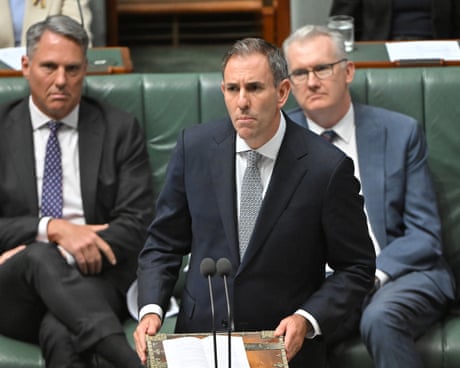
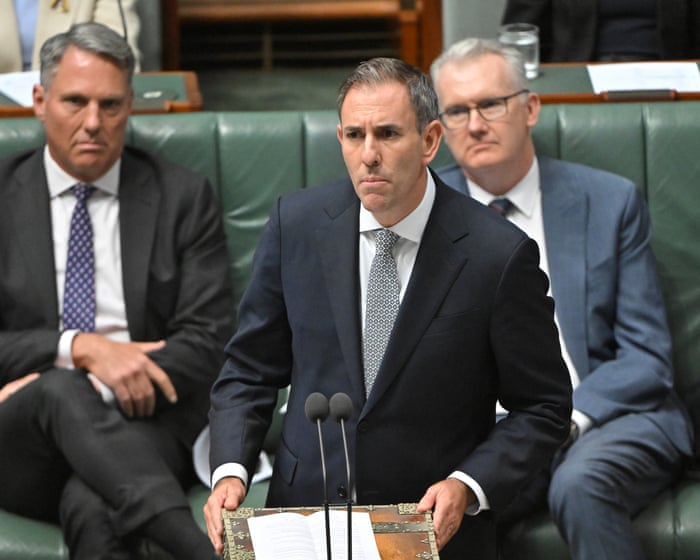
Crossbench MPs pressure Labor over gas export tax – as it happened

This blog is now closed

The pollies have been asked this morning whether people should consider working from home to save fuel, as conflict escalates in the Middle East.

Tehran has said it will “irreversibly destroy” essential infrastructure across the Middle East, including vital water systems, if the US follows through on Donald Trump’s threat to “obliterate” Iran’s power plants unless the strait of Hormuz is fully opened within two days.

This is like Covid style restrictions I think that are potentially being floated. I would not support that in any way, and I don’t think businesses would do so either …

If people can work from home and they want to and it works for their employers, fine, I think that’s terrific, but it doesn’t help small businesses. It certainly doesn’t help the truckers and the fishers and the farmers and the manufacturers and the miners that are relying on fuel supply.

Continue reading...

© Photograph: Mick Tsikas/AAP

© Photograph: Mick Tsikas/AAP

© Photograph: Mick Tsikas/AAP

‘Hacking is assumed now’: experts raise the alarm about added risk of surveillance cameras in childcare centres

As governments consider mandatory CCTV in early education, one big provider with cameras already installed is yet to formalise guidelines for how the footage will be stored and used

In the wake of horrifying reports last week alleging that eight children had been sexually abused by a worker in a Melbourne childcare centre, politicians and providers have scrambled to offer a response.

One option emerged from the fray as something concrete and immediate: the installation of CCTV cameras in childcare centres.

Sign up for Guardian Australia’s breaking news email

Continue reading...

© Composite: Getty

© Composite: Getty

© Composite: Getty

❌