Visualização de leitura

Cloudflare Launches Open-Source OS to Secure AI Agents’ Access to Internal Data

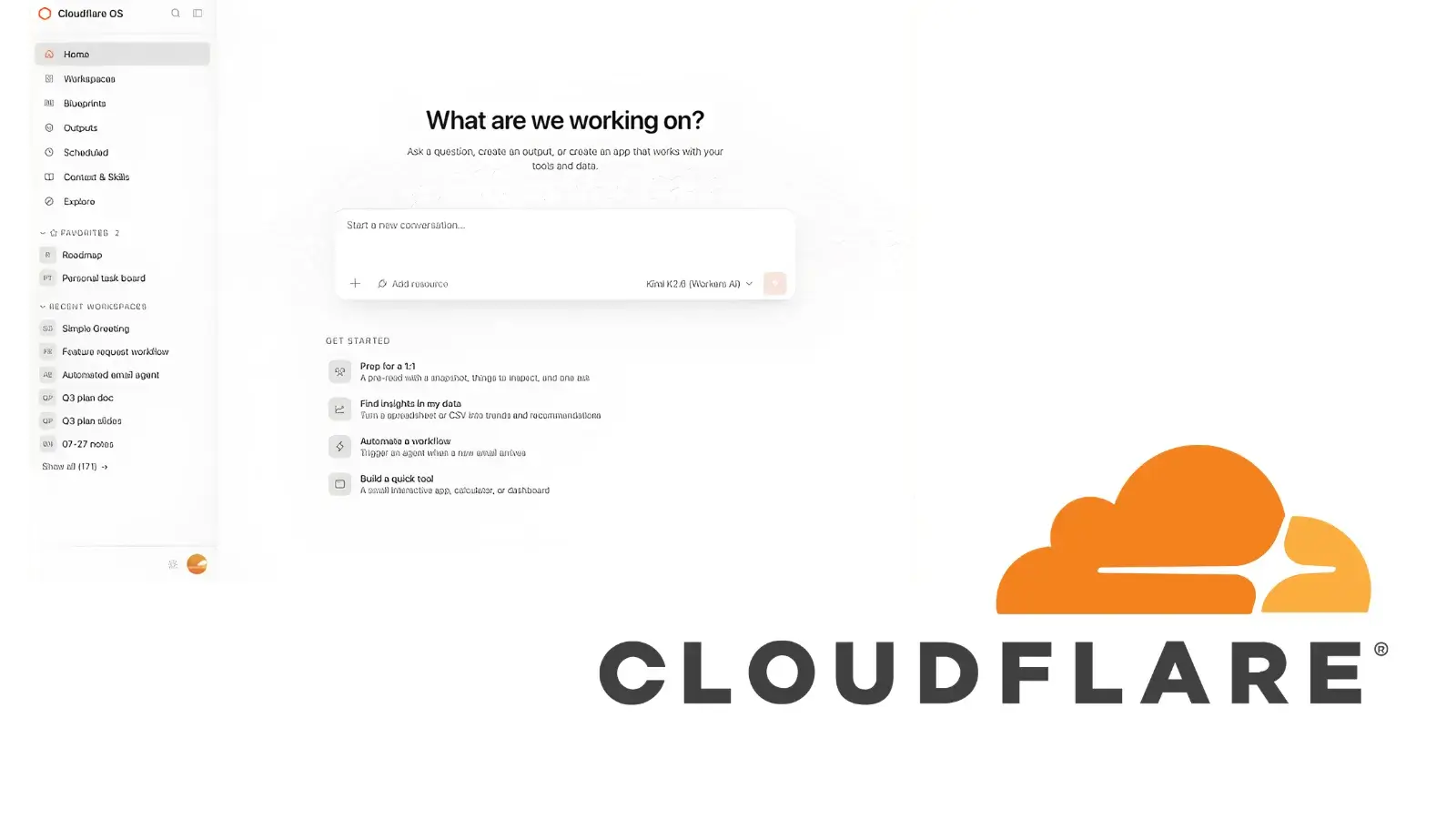
Cloudflare has open-sourced Cloudflare OS, a platform designed to provide enterprise AI agents with controlled access to internal systems, company context, and workflows without exposing long-lived credentials or bypassing access controls. This release addresses a significant security challenge for enterprises: while agents need access to business data and tools to be effective, conventional API keys […]

The post Cloudflare Launches Open-Source OS to Secure AI Agents’ Access to Internal Data appeared first on GBHackers Security | #1 Globally Trusted Cyber Security News Platform.
The Cyber Express Weekly Roundup: Crypto Breaches, State-Linked Schemes, and Platform Exploits

The Cyber Express weekly roundup cybersecurity

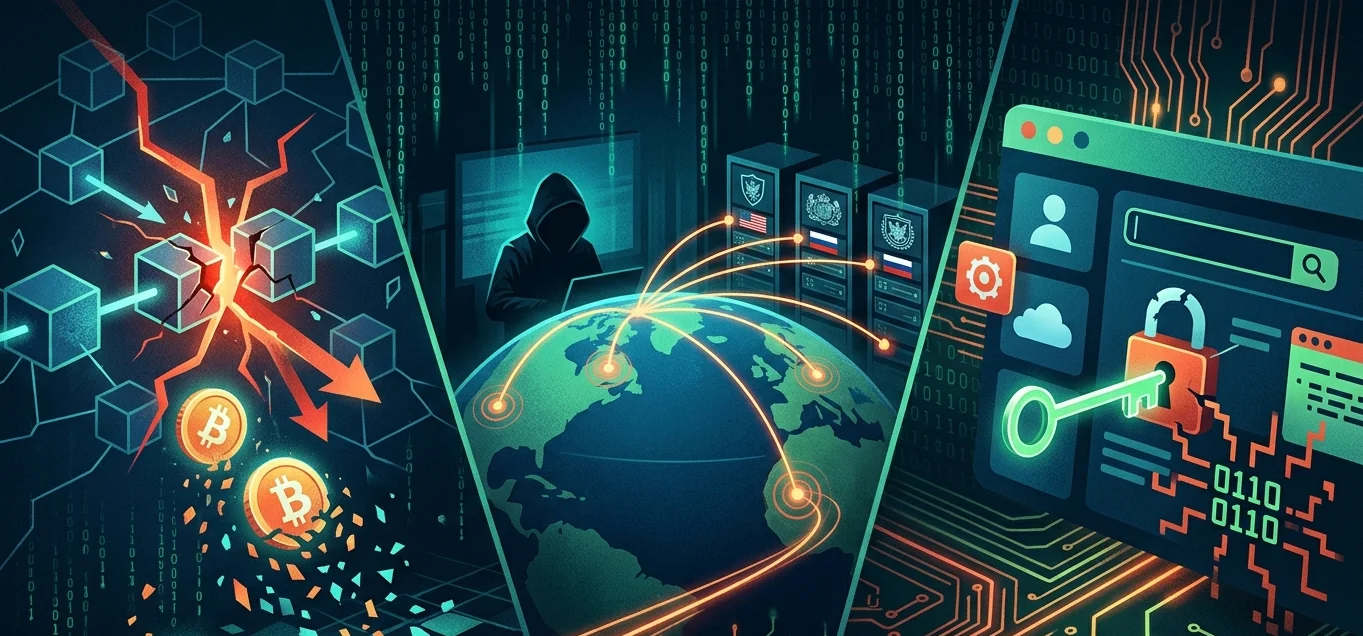
In this week’s weekly roundup, The Cyber Express reviews major developments across the cybersecurity domain. highlighting incidents involving crypto ecosystem attacks, state-linked fraud operations, regulatory scrutiny, and underground cybercrime activity. The broader threat landscape continues to show attackers targeting infrastructure weaknesses, social engineering pathways, and third-party dependencies rather than isolated technical flaws.  Across multiple cases, state-aligned and financially motivated actors are focusing on routers, DNS layers, and decentralized systems to intercept data and manipulate transactions. At the same time, gaps in regulation and enforcement continue to complicate platform accountability, particularly in online safety and digital content governance.  

The Cyber Express Weekly Roundup 

$15M Grinex Hack Halts Trading After Wallet Breach 

Grinex suspended trading and withdrawals following a coordinated attack that compromised its wallet infrastructure, resulting in the theft of more than $15 million in USDT. The attackers rapidly moved assets across Ethereum and Tron networks, using chain-hopping and layering techniques to obscure transaction trails and avoid detection. Read more... 

Two U.S. Nationals Sentenced in $5M North Korea IT Worker Scheme 

Two U.S. nationals, Kejia Wang and Zhenxing Wang, received prison sentences of 108 and 92 months for their roles in a North Korea-linked remote employment scheme that generated over $5 million. The operation used stolen identities, domestic “laptop farms,” and shell companies to present overseas workers as U.S.-based employees across more than 100 companies. Read more... 

Australia Social Media Ban Faces Enforcement Questions 

Australia’s under-16 social media restriction is facing renewed scrutiny after a study of 1,050 children found that over 60% of previously active users aged 12–15 continue accessing platforms such as TikTok, YouTube, and Instagram. Many accounts remained active without intervention from providers, and in some cases, users created new profiles after restrictions were applied. Read more... 

TierOne Dark Web Contest Offers $10K for Exploit Writeups 

A dark web forum known as TierOne has launched a $10,000 contest encouraging detailed technical write-ups on vulnerability exploitation techniques. Running from April 13 to May 14, 2026, and reportedly sponsored by a ransomware group, the contest focuses on topics such as remote code execution, IDOR, SSTI, firmware attacks, and EDR bypass methods.  Read more... 

Rockstar Cyberattack Confirmed Amid Extortion Threat 

Rockstar Games confirmed a cyberattack involving unauthorized access through a third-party service, though it stated that core operations and player systems were unaffected. The threat actor group ShinyHunters claimed responsibility, alleging access to internal company data and demanding payment by April 14, 2026, under threat of public release. Read more... 

Weekly Takeaway 

The Cyber Express weekly roundup reflects a threat landscape that is fragmented yet interconnected. From multimillion-dollar crypto thefts and criminal employment schemes to underground exploit markets and extortion-driven breaches, attackers are consistently blending technical exploitation with deception and supply chain targeting.   Regulatory uncertainty and weak enforcement mechanisms further amplify these risks, allowing both state-linked and financially motivated actors to operate with greater flexibility across digital environments. 

The Cyber Express Weekly Roundup: Major State Threats, Crypto Attacks, and Legal Gaps

The Cyber Express weekly roundup April 2026

In this week’s weekly roundup, The Cyber Express summarizes key cybersecurity news across state-sponsored attacks, crypto ecosystem breaches, regulatory gaps, and mobile data exposure risks.   State-linked groups are focusing on internet infrastructure like routers and DNS for interception and credential theft, while crypto-related actors are exploiting weaknesses in decentralized finance systems and governance layers. Regulatory uncertainty in areas such as online content detection further complicates response efforts.  The Cyber Express weekly roundup also notes that even secure messaging systems can leave residual data on devices through OS-level features like notification storage.  

The Cyber Express Weekly Roundup 

APT28 DNS Hijacking Campaign Disrupted 

APT28, a Russian-linked threat group, has been exploiting vulnerable routers to carry out DNS hijacking and adversary-in-the-middle (AITM) attacks. These operations were primarily aimed at intercepting traffic and stealing credentials, with a particular focus on email platforms such as Microsoft Outlook. Read more... 

EU CSAM Legal Gap Raises New Concerns 

The expiration of the EU’s temporary 2021 regulatory framework on April 3, 2026, has created uncertainty around how technology companies can detect and report Child Sexual Abuse Material (CSAM). The framework previously allowed platforms to voluntarily scan private communications using techniques such as hash-matching, a method widely considered essential by investigators for identifying illegal content and tracking offenders. Read more... 

$285M Drift Protocol Hack Shakes Cybersecurity Landscape 

In a major cryptocurrency-related incident, attackers successfully stole $285 million from Drift Protocol on April 1, 2026. Drift Protocol, the largest decentralized perpetual futures exchange on Solana, reportedly lost over half of its total value within just 12 minutes of the breach. Read more... 

FBI Finds Deleted Signal Data Can Persist in iPhone Systems 

A notable finding in this weekly roundup comes from an FBI investigation related to the Prairieland ICE Detention Facility case in Texas. Investigators discovered that deleted Signal messages may still be partially recoverable from iPhones. Importantly, this is not a failure of Signal’s encryption. Instead, the issue stems from how iOS handles notification previews. Read more... 

Treasury Launches Digital Asset Cybersecurity Initiative 

The U.S. Department of the Treasury has launched a Digital Asset Cybersecurity Initiative through its Office of Cybersecurity and Critical Infrastructure Protection (OCCIP). The initiative is designed to strengthen cybersecurity defenses across the cryptocurrency ecosystem. Read more... 

Weekly Takeaway 

This weekly roundup highlights a rapidly diversifying threat landscape, ranging from state-sponsored DNS hijacking campaigns and multimillion-dollar crypto thefts to regulatory uncertainty and mobile data persistence risks.  Across all incidents, a consistent pattern emerges; attackers are blending technical exploitation with social engineering, infrastructure compromise, and long-term strategic planning.  
❌