Visualização de leitura

Pegasus, New NoviSpy Variant Found on Serbian Students and Opposition Figures

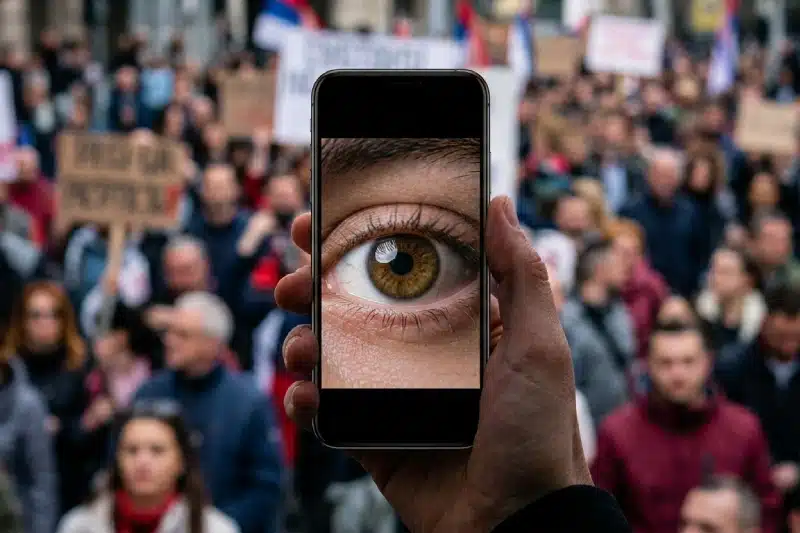
Pegasus, Pegasus Spyware, Serbia, Serbia Protests, Smartphone screen forming an eye shape against an abstract protest crowd, illustrating spyware targeting of Serbian student activists.

At least 14 people connected to Serbia's student protest movement and opposition politics have been targeted with mercenary spyware since early 2026, the Belgrade-based digital rights organization SHARE Foundation said, in what it called the largest documented wave of such targeting in the country.

The group said the cohort includes student movement members, civil society activists, a member of parliament and a local councilor. Forensic analysis was independently confirmed by the Citizen Lab at the University of Toronto and by Amnesty International's Security Lab.

Citizen Lab, in its own findings, said it verified an infection with NSO Group's Pegasus on the iPhone of a student activist who asked not to be named. High-confidence infection indicators span December 2025 through January 2026, delivered by a zero-click iMessage exploit that required no interaction from the target. Apple has since patched the underlying flaw; the fix shipped in iOS 18.4.1. Pegasus grants an operator access to notes, photographs and messages decrypted on the device, and can silently activate the microphone and camera.

Amnesty's Security Lab confirmed a new variant of NoviSpy, an Android implant first identified in Serbia in 2024, on two additional devices. SHARE said the rebuilt version was designed to evade the detection methods that exposed its predecessor.

Also read: Investigative Journalists in Serbia Hit by Advanced Spyware Attack

The circumstances of two infections are what elevate the findings beyond routine spyware reporting. SHARE said one NoviSpy infection appeared after police seized a student's phone during questioning, and another after private messages from that device were published by a pro-government media outlet. Donncha Ó Cearbhaill, who heads Amnesty's Security Lab, said the evidence suggests "infections are being carried out during detention by Serbian authorities."

Suspicion centers on Serbia's Security Information Agency, or BIA. Amnesty's December 2024 report "A Digital Prison" found earlier NoviSpy samples configured to send collected data to IP addresses associated with BIA servers, and documented the agency's parallel use of Cellebrite extraction tools on journalists and activists. In March 2025, Amnesty reported that two journalists at the Balkan Investigative Reporting Network were targeted with Pegasus.

The current cases surfaced through Apple's threat notification wave of Aug. 13, which reached users in 110 countries. The timing is politically loaded. The targeting overlaps with protests that followed the November 2024 collapse of a railway station canopy in Novi Sad, spans local elections held March 29 in 10 municipalities, and precedes October parliamentary elections widely read as a test of the ruling Serbian Progressive Party.

Ana Toskic Cvetinovic, a legal expert cited in the reporting, noted that deploying intrusive software without judicial authorization is unlawful under Serbian law. SHARE published an analysis of the domestic legal framework in January arguing the same. Criminal complaints filed over the 2024 cases remain pending before Serbian courts, with no resolution.

Also read: 7 New Pegasus Infections Found on Media and Activists’ Devices in the EU

NSO has been on the U.S. Commerce Department's Entity List since 2021.

Serbia is an accession candidate, the European Parliament has previously questioned the Commission over unlawful spyware use in the country, and the Commission published its 2026 enlargement country report in July. Amnesty's submission for that package raised surveillance directly.

Both groups urged at-risk users to enable Lockdown Mode on iOS or Advanced Protection on Android.

Apple Warns Users in 110 Countries of Mercenary Spyware as iPhone Alerts Get Harder to Miss

Apple sent a new wave of mercenary spyware threat notifications to targeted users in 110 countries, while making the warnings more visible on iPhones. The alerts signal suspected targeting, not confirmed compromise, and Apple is urging affected users to verify the warning, consider Lockdown Mode, and seek expert help.

The post Apple Warns Users in 110 Countries of Mercenary Spyware as iPhone Alerts Get Harder to Miss appeared first on TechRepublic.

Apple warned hundreds of users of mercenary spyware attacks

Apple warns users of credible, targeted attacks and urges immediate verification, stronger protections, and expert assistance.

Apple has sent a new round of threat notifications to users it believes may have been singled out by mercenary spyware. The company told TechCrunch the latest alerts reached people in 110 countries, adding to notifications it has already issued in more than 150 countries since the programme began in 2021.

“Apple threat notifications are designed to inform and assist users who may have been individually targeted by mercenary spyware attacks, likely because of who they are or what they do. Such attacks are vastly more sophisticated than regular cybercriminal activity, as mercenary spyware attackers apply exceptional resources to target a very small number of specific individuals and their devices.” reads the alert. “Mercenary spyware attacks cost millions of dollars and often have a short shelf life, making them much harder to detect and prevent. The vast majority of users will never be targeted by such attacks.”

That alone should reset the usual mental model. This isn’t about a suspicious app, a recycled phishing email, or the kind of opportunistic malware that lands wherever it can. Apple’s alerts concern highly targeted attacks against particular people, often because of their role, their work, or the people they know.

The people most likely to receive these notifications include journalists, activists, politicians, diplomats, lawyers, and others whose devices may hold valuable conversations, contacts, documents, or location data. That does not mean every recipient has been fully compromised, but it does mean Apple has observed enough to treat the risk as credible.

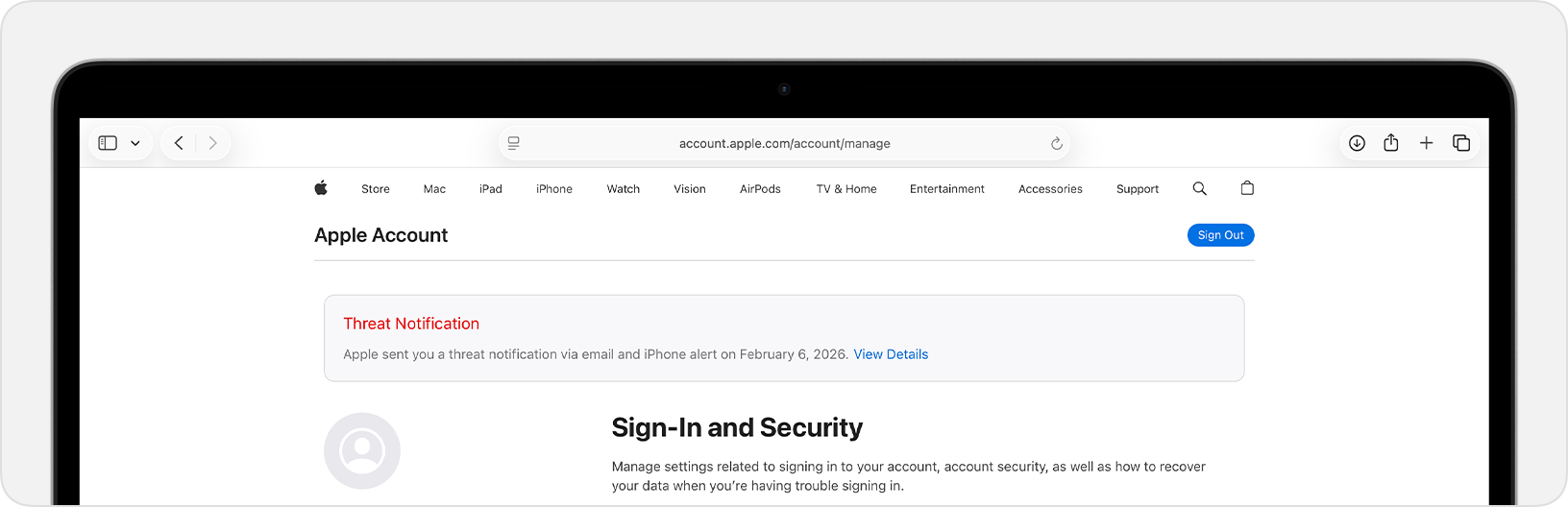
Apple has also changed how it delivers those alerts. A recipient may see a push notification directly on the iPhone lock screen and in Settings, receive an email from threat-notifications@email.apple.com, and find a warning banner after signing in to their Apple Account. The company says genuine notices will never ask users to click a link, open a file, install a profile, or provide a password or verification code by email or phone.

“Apple relies solely on internal threat-intelligence information and investigations to detect such attacks. Although our investigations can never achieve absolute certainty, Apple threat notifications are high-confidence alerts that a user has been individually targeted by a mercenary spyware attack, and should be taken very seriously.” continues the report. “We are unable to provide information about what causes us to issue threat notifications, as that may help mercenary spyware attackers adapt their behavior to evade detection in the future.”

That lack of detail can frustrate recipients. They want to know who targeted them, how the device was approached, and whether the attacker got in. Apple can’t safely answer most of those questions in public, because publishing the detection logic would give spyware vendors a free quality-assurance report. Nobody needs to make Pegasus-style operators more efficient.

If you receive the warning, don’t panic and don’t start improvising. First, verify it by signing in directly at account.apple.com: a genuine Apple threat notification appears at the top of the page. Then preserve the device, avoid unnecessary resets or changes until you have spoken to someone qualified, and seek expert help, such as the Digital Security Helpline run by Access Now.

Apple recommends enabling Lockdown Mode, its high-security setting designed to reduce the attack surface available to sophisticated spyware. It also advises keeping devices updated, using a strong passcode with Touch ID or Face ID, turning on two-factor authentication, enabling Stolen Device Protection, using strong and unique passwords or passkeys, installing apps only through the App Store, and treating unexpected links or attachments as hostile until proven otherwise.

“Since 2021, we have sent Apple threat notifications multiple times a year as we have detected these attacks, and to date we have notified users in over 150 countries in total. The extreme cost, sophistication, and worldwide nature of mercenary spyware attacks make them some of the most advanced digital threats in existence today.” states the alert. “As a result, Apple does not attribute the attacks or resulting threat notifications to any specific attackers or geographical regions.”

The wider value of these alerts goes beyond the device in front of the recipient. Citizen Lab researcher John Scott-Railton told TechCrunch that notifications can reveal that an entire community is being targeted, because people who receive them often seek help and their cases lead investigators to others.

Most people will never receive one of these warnings. Apple says that plainly, and it is worth repeating because not every cybersecurity story needs to become a universal panic. But if your phone shows an Apple notice saying it detected a targeted mercenary spyware attack, assume it matters until an expert tells you otherwise.

Follow me on Twitter: @securityaffairs and Facebook and Mastodon

Pierluigi Paganini

(SecurityAffairs – hacking, Apple)

Apple now uses iPhone alerts for targets of mercenary spyware

Apple has expanded its threat-notification system for targets of mercenary spyware.

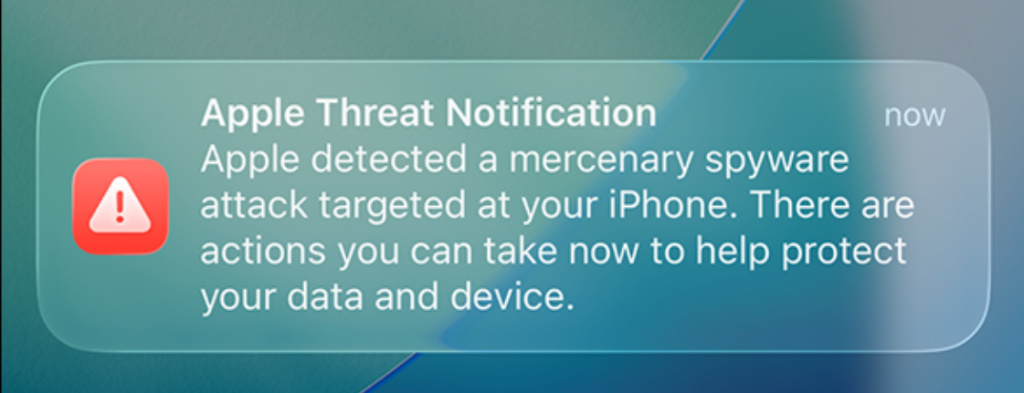
Apple now shows a warning directly on an iPhone’s Lock Screen and in Settings when it believes the device owner has been targeted by mercenary spyware. The new on-device alert is meant to make a high-risk warning harder to overlook and complements notifications by email and through the user’s Apple Account page.

In the explanation, Apple states:

“Apple threat notifications are high-confidence alerts that a user has been individually targeted by a mercenary spyware attack, and should be taken very seriously.”

Apple Threat Notification

“Apple Threat Notification
Apple detected a mercenary spyware attack targeted at your iPhone. There are actions you can take now to help protect your data and device.”

Apple says its threat notifications are intended for people individually targeted by mercenary spyware attacks, which are highly sophisticated campaigns usually associated with commercial surveillance vendors and their government customers. Apple says it has notified targets in over 150 countries since the launch of the program in 2021, while the latest round of notifications reached people in 110 countries.

Mercenary spyware campaigns are usually not aimed at the average iPhone owner—at least at first. The initial targets are often people selected for who they are, what they know, or the work they do. But it would be a mistake to view this as someone else’s problem.

Attack techniques developed for narrowly targeted operations have a habit of spreading. Exploits can be reused, sold onward, reverse engineered, copied by other surveillance vendors, or adapted by criminal groups. A vulnerability initially valuable because it compromises a small number of carefully chosen devices may become much more dangerous once public disclosure, patch analysis, or exploit sharing makes them available for more widespread campaigns.

How to stay safe

Apple advises users to:

  • Update your devices to the latest software, which includes the latest security fixes.
  • Protect your devices with a passcode, Touch ID, or Face ID.
  • Use two-factor authentication and a strong password for your Apple Account.
  • Turn on Stolen Device Protection.
  • Install apps from the App Store.
  • Use strong and unique passwords, and passkeys where available.
  • Don’t open links or attachments from unknown senders.

We’d like to add:

  • Potential targets of mercenary spyware should consider applying Apple’s Lockdown Mode.
  • Check if an Apple Threat Notification is real. Scammers will undoubtedly try and mimic them. You can verify a notification by signing in to your Apple account. A genuine Threat Notification will always be clearly listed there.
  • If you receive an Apple Threat Notification, Apple recommends seeking expert help, such as the Digital Security Helpline from Access Now.

Scammers know more about you than you think. 

Malwarebytes Mobile Security protects you from phishing, scam texts, malicious sites, and more. With real-time AI-powered Scam Guard built right in. 

Download for iOS → Download for Android → 

❌