Visualização de leitura

The Password Notebook Is Back — but Is It Actually Safer?

Password notebooks are making an unexpected comeback as infostealers and browser attacks revive debate over the safest way to store credentials.

The post The Password Notebook Is Back — but Is It Actually Safer? appeared first on TechRepublic.

Chick-fil-A loyalty accounts hijacked using stolen passwords

Fast-food chain Chick-fil-A is warning customers after attackers hijacked loyalty accounts using stolen passwords in a credential stuffing attack.

Chick-fil-A says it detected suspicious login activity against some Chick-fil-A One accounts in June and launched an investigation. The company later concluded that unauthorized parties ran an automated credential stuffing attack against its website and mobile app between June 17 and June 19, 2026, using usernames and passwords obtained from previous data breaches or other third‑party sources. Chick-fil-A says it reset passwords and ended active sessions for affected accounts while investigating the incident.

Credential stuffing is an attack where criminals take username–password pairs stolen from one service and automatically try them on many other websites and apps to see where they still work. Because many people reuse passwords, attackers often gain access to accounts without ever breaking into the company’s systems in the traditional sense.

So, some may conclude that there are two sides to this. On the one hand, customers who reuse passwords across multiple sites make credential stuffing attacks much more likely to succeed. On the other, companies also have a responsibility to put protections in place to detect and block automated credential stuffing attacks before accounts are compromised.

How it works

To understand how it works, we’ve created a typical scenario:

  • Cybercriminals obtain large lists of breached credentials from previous data breaches, dark web markets, or public dumps.
  • They use automated tools to fire those credentials at login endpoints for popular services like retailers, banks, and loyalty programs.
  • They take over accounts where the credentials still work, then siphon off stored value, personal data, or loyalty rewards, or resell the access to other criminals.

To a victim, this may seem like a breach at the company, but technically speaking, the cybercriminals already had the credentials and were able to enrich their database with additional information about the victims.


What do cybercriminals know about you?

Use Malwarebytes’ free Digital Footprint scan to see whether your personal information has been exposed online.

According to Chick-fil-A’s breach notifications, the attackers may have accessed a combination of:

  • Name and email address.
  • Chick-fil-A One membership number and mobile pay number.
  • QR codes associated with the account.
  • The balance of any Chick-fil-A credit, such as gift cards or rewards on the account.
  • The last four digits of the stored credit or debit card number.

If you saved more details in your Chick-fil-A One account, attackers may also have seen:

  • Birthdate (month and day).
  • Phone number.
  • Physical address.

Advice for Chick-fil-A customers

The real problem is that, over the years, we’ve designed and adopted a system that no longer works well for most people: passwords. We tell people not to reuse them and to use a password manager to keep track of unique passwords for every account. But for many people, password managers still seem complicated or untrustworthy. I’m afraid the same may turn out to be true for passkeys.

If you have or suspect you had a Chick-fil-A One account, you should act even if you haven’t received a letter.

  • Set a new, unique password for your Chick-fil-A One account that you do not use anywhere else. And if you’ve used the same password elsewhere, change it on those accounts too.
  • If you cannot log in because your account was locked or reset, follow Chick-fil-A’s recovery process.
  • Turn on multi-factor authentication (MFA) if you haven’t already. Chick-fil-A supports MFA for Chick-fil-A One accounts using a verified mobile phone number.
  • Be aware that attackers can use the exposed data to craft more convincing phishing messages and scams.

Something feel off? Check it before you click.  

Malwarebytes Scam Guard helps you analyze suspicious links, texts, and screenshots instantly.  

Available with Malwarebytes Premium Security for all your devices, and in the Malwarebytes app for iOS and Android.  

Try it free → 

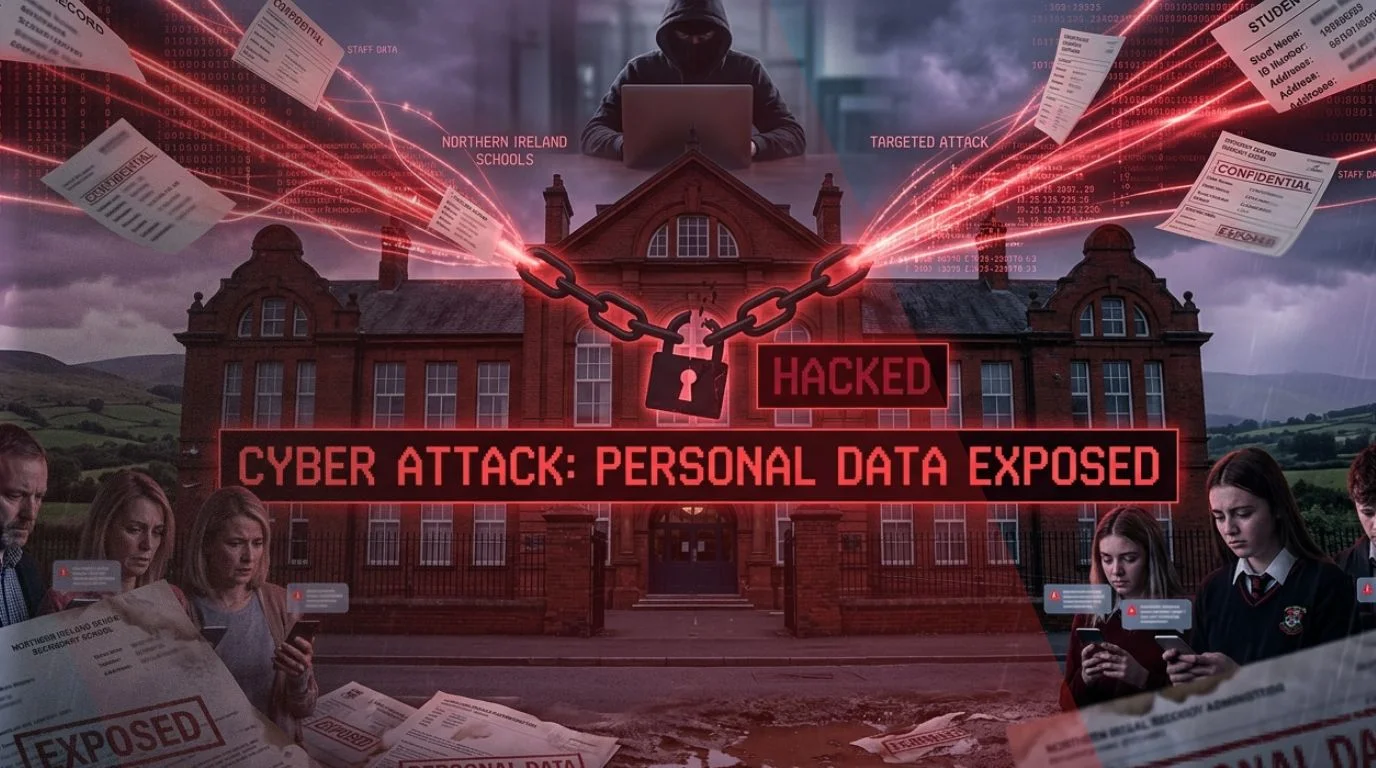
Targeted Cyberattack on Northern Ireland Schools Exposes Personal Data

Education Authority cyberattack

The Education Authority cyberattack investigation has confirmed that a recent incident involved a targeted attack on a small number of schools, leading to the compromise of some personal data. The update comes days after the incident was first reported, with new findings shedding light on the nature and impact of the breach. According to officials, the Education Authority cyberattack was identified on April 10, 2026, when authorities were alerted to suspicious activity affecting school systems. Forensic experts have since determined that attackers gained specific and targeted access to personal information linked to certain schools.

Targeted Nature of Education Authority Cyberattack

The latest findings indicate that the Education Authority cyberattack was not a widespread system breach but a focused attack on select institutions. Investigators confirmed that personal data was accessed in these cases, though the full extent of the compromised information has not yet been disclosed. Authorities had earlier stated that there was no evidence of data exfiltration or corruption. That assessment was based on initial findings, with officials noting at the time that the investigation was ongoing. The updated confirmation reflects the results of a more detailed forensic review, which required analysis across multiple systems. The breach is believed to have occurred before additional cybersecurity measures were implemented by the authority earlier this month.

Investigation and Law Enforcement Involvement

The Education Authority cyberattack is currently under active investigation, with law enforcement agencies involved. The Police Service of Northern Ireland and the Information Commissioner’s Office were notified immediately after forensic experts confirmed that personal data had been accessed. Officials stated that details of the incident are being disclosed publicly following an arrest made by the police. Prior to this development, authorities had withheld information to avoid interfering with ongoing investigations. The involvement of regulatory and law enforcement bodies highlights the seriousness of the Education Authority cyberattack, particularly given the sensitivity of data held by educational institutions.

Containment and System Recovery Efforts

System managers have assessed that the Education Authority cyberattack has been contained. Additional security measures were deployed as soon as the incident was detected, aimed at preventing further unauthorized access. Efforts are now focused on restoring normal operations. Work is ongoing to reconnect affected schools to the C2k system, which supports digital services across the education network. Officials said that restoring full functionality remains a priority while ensuring system security. The authority has also urged users to reset their C2k passwords as a precautionary step.

Notification of Affected Individuals

Authorities have confirmed that individuals whose personal data may have been compromised in the Education Authority cyberattack will be notified. The process of informing affected schools and individuals is currently underway and is being guided by the final findings of the investigation, along with advice from relevant authorities. Officials acknowledged the concern such incidents may cause and said efforts are being made to communicate with impacted parties as quickly as possible. At the same time, they noted that certain details cannot yet be disclosed publicly due to the ongoing police investigation. Further updates are expected once authorities are able to share more information without affecting the case.

Ongoing Monitoring and Next Steps

The Education Authority cyberattack remains under close monitoring as forensic analysis continues. Investigators are working to fully understand how the breach occurred and whether additional risks remain. While the incident appears to be contained, the confirmation of targeted access to personal data underscores the risks facing education systems, which often manage sensitive information across interconnected platforms. Authorities have indicated that further updates will be provided as the investigation progresses and more details become available.

Hong Kong Police Can Force You to Reveal Your Encryption Keys

According to a new law, the Hong Kong police can demand that you reveal the encryption keys protecting your computer, phone, hard drives, etc.—even if you are just transiting the airport.

In a security alert dated March 26, the U.S. Consulate General said that, on March 23, 2026, Hong Kong authorities changed the rules governing enforcement of the National Security Law. Under the revised framework, police can require individuals to provide passwords or other assistance to access personal electronic devices, including cellphones and laptops.

The consulate warned that refusal to comply is now a criminal offense. It also said authorities have expanded powers to take and keep personal electronic devices as evidence if they claim the devices are linked to national security offenses.

LLMs Generate Predictable Passwords

LLMs are bad at generating passwords:

There are strong noticeable patterns among these 50 passwords that can be seen easily:

  • All of the passwords start with a letter, usually uppercase G, almost always followed by the digit 7.
  • Character choices are highly uneven ­ for example, L , 9, m, 2, $ and # appeared in all 50 passwords, but 5 and @ only appeared in one password each, and most of the letters in the alphabet never appeared at all.
  • There are no repeating characters within any password. Probabilistically, this would be very unlikely if the passwords were truly random ­ but Claude preferred to avoid repeating characters, possibly because it “looks like it’s less random”.
    ...

The post LLMs Generate Predictable Passwords appeared first on Security Boulevard.

❌