Visualização de leitura

Amsterdam’s De Bijenkorf Hit by Logistics Cyberattack, Orders Delayed

De Bijenkorf cyberattack

A De Bijenkorf cyberattack involving one of the retailer's external logistics partners has disrupted order processing, returns, and refunds while raising concerns over potential customer data exposure. The Dutch luxury department store chain said the security incident occurred within the systems of a third-party logistics provider, adding that there is currently no evidence that its own infrastructure was compromised.

The Amsterdam-based retailer confirmed that customers can continue placing online orders and stores remain open. However, deliveries, returns, and refunds are expected to take longer than usual as the investigation continues.

De Bijenkorf Confirms Third-Party Security Incident

According to De Bijenkorf, unauthorized individuals gained access to part of its logistics partner's systems. The logistics provider responded by immediately blocking the unauthorized access and implementing additional security measures.

An external investigation is now underway to determine the cause of the incident, its scope, and whether customer information was affected.

As a precaution, De Bijenkorf has informed customers about the incident and submitted a report to the Dutch Data Protection Authority while awaiting the investigation's findings.

What Customer Data Could Be Affected in De Bijenkorf Cyberattack?

The retailer said investigators are still determining whether any personal information has been compromised.

Based on the information currently available, data that may be involved includes:

  • Customer names and contact details, including email addresses, postal addresses, and phone numbers.
  • Information related to online purchases, such as ordered products, pricing, discounts, delivery details, and the payment method used.
  • For business customers, company names and VAT numbers stored in My Account may also be involved.

De Bijenkorf emphasized that sensitive financial information is not part of the incident. The company said payment details, bank account numbers, credit card information, usernames, and passwords were not accessed.

Investigation Continues as Customers Await Confirmation

The retailer said it is still investigating whether individual customers have been affected. Customers whose information is confirmed to be involved will receive direct communication via email from info@debijenkorf.nl.

For those who have not yet received a notification, the company said it cannot currently rule out the possibility that their information was included in the incident until the investigation is completed.

De Bijenkorf also stressed that no login credentials were compromised, meaning unauthorized individuals cannot access customer accounts using stolen usernames or passwords.

Retailer Warns Customers About Phishing Risk

Although the investigation remains ongoing, De Bijenkorf warned customers to stay alert for a possible phishing risk if personal information is ultimately found to have been exposed.

The retailer advised customers not to click on suspicious links or open unexpected attachments. It also reminded customers never to share passwords, payment information, or personal details through email or phone calls.

The company said it will never request credit card details, gift card information, or other sensitive information via email.

Logistics Cyberattacks Continue to Disrupt Supply Chains

The incident adds to a growing list of attacks targeting organizations that support retail operations rather than retailers directly. A logistics cyberattack can interrupt deliveries, returns, and customer service even when the affected retailer's own systems remain operational.

In July 2026, a ransomware attack on Japan's largest refrigerated logistics company disrupted food deliveries across the country, causing supply shortages for restaurant chains, including Kentucky Fried Chicken. The incident demonstrated how cyberattacks on logistics providers can quickly impact downstream retail operations and customer services.

For now, De Bijenkorf said its stores remain open, online ordering continues to operate, and there are no indications that its own systems have been compromised. The retailer said it will provide additional updates as the external investigation establishes whether customer data was affected and the full extent of the incident.

Hugging Face Deepfake Tests Raise New Risks for AI Procurement

Researchers found that seven of nine tested Hugging Face image-editing tools produced sexualized alterations, highlighting gaps in model oversight, provenance, and enterprise vendor controls.

The post Hugging Face Deepfake Tests Raise New Risks for AI Procurement appeared first on TechRepublic.

Lidl Data Breach Exposes Customer Details in Germany, Belgium, and the Netherlands

Lidl says attackers stole customer data in Germany, Belgium, and the Netherlands via a third-party provider, raising concerns about phishing and GDPR compliance.

The post Lidl Data Breach Exposes Customer Details in Germany, Belgium, and the Netherlands appeared first on TechRepublic.

AI Cyber Attacks Emerge as Biggest Threat to Indian Banking: RBI

AI Cyber Attacks

The Reserve Bank of India (RBI) has identified AI Cyber Attacks as the biggest near-term cybersecurity threat facing the Indian banking system, according to the June 2026 edition of its Financial Stability Report (FSR). The central bank's latest assessment highlights that while banks and financial institutions have strengthened cyber risk management practices, rapid advances in artificial intelligence are making cyber threats more difficult to counter. The findings are based on a survey conducted by the RBI to assess the preparedness of major banks and non-banking financial companies (NBFCs) against evolving cyber risks. The survey found that institutions have established robust cybersecurity practices, particularly in vulnerability assessment and penetration testing of critical systems. However, AI Cyber Attacks emerged as the most significant challenge expected over the next 12 months.

AI Cyber Attacks Lead RBI's Cyber Risk Assessment

According to the RBI Financial Stability Report, AI-enabled cyber threats can increase the speed, scale and sophistication of attacks targeting financial infrastructure. Survey responses showed that most financial institutions are still in the developing or intermediate stages of integrating AI-specific threat preparedness into their existing cybersecurity frameworks, while only a smaller number reported mature capabilities. The report states that continued improvements in threat monitoring, detection, response mechanisms, employee awareness and cyber resilience will remain critical as AI-powered attacks continue to evolve.

Cybersecurity Practices Improve, But Gaps Remain

The RBI noted that financial institutions have made significant progress in cyber risk management. Regulatory reporting processes and board-level reporting of major cyber incidents have also matured. However, the report identified employee cybersecurity awareness and training as areas requiring further improvement, noting that human behaviour remains one of the most exploited entry points for cyberattacks. It also highlighted the need to strengthen forensic preparedness to improve incident response, preserve digital evidence and support regulatory and law enforcement investigations following sophisticated cyber incidents. The survey further revealed that around 67 percent of respondents increased IT and cybersecurity staffing between March 2025 and March 2026. Additionally, 71 percent reported higher cybersecurity spending as a share of overall IT expenditure during the last three financial years.

Third-Party Risk Emerges as Second Biggest Concern

Beyond AI Cyber Attacks, the RBI ranked third-party risk and supply chain dependencies as the second most important cybersecurity challenge for the financial sector. The survey found that 93 percent of respondents rely partially or substantially on external vendors for cybersecurity functions such as security operations centre monitoring, cloud security, incident response, threat intelligence and vulnerability assessments. Three-fourths of respondents also reported moderate to very high dependence on third-party technology providers for critical applications. According to the RBI, a major cyber incident affecting a common service provider could rapidly disrupt multiple regulated entities and create broader financial stability risks.

Growing Digital Transactions Increase Cyber Risk

The report noted that cyber risk has become a major financial stability concern as India's financial ecosystem becomes increasingly digital and interconnected. About 79 percent of surveyed institutions said more than three-fourths of their customer transactions are now conducted through digital financial services. Although 98 percent of respondents rated their current cyber risk exposure as very low to moderate and reported minimal disruption to customer services during 2025-26, nearly one-third indicated that cyber risk had increased compared with the previous year. The RBI also observed that geopolitical uncertainty is contributing to the evolving threat landscape, with 42 percent of surveyed institutions believing it has increased the likelihood of cyberattacks.

Financial Sector Cybersecurity Strategy Advances

The report said the proposed Financial Sector Cybersecurity Strategy is at an advanced stage of formulation. Developed by an Inter-Ministerial Group under the Financial Stability and Development Council, the strategy aims to establish governance frameworks, regulatory harmonisation and implementation timelines across the financial sector. The RBI said the strategy will address cybersecurity risks associated with artificial intelligence, cloud computing, quantum technologies, third-party dependencies, consumer protection and cross-sector critical infrastructure, strengthening the resilience of India's financial system against emerging cyber threats.

Cyber Risk Assumptions Are Becoming Obsolete Due to AI, Warn Five Eyes

AI Cyber Risk

AI Cyber Risk is evolving faster than many organizations can adapt, prompting a joint warning from the Five Eyes cyber security agencies. The agencies have called on business leaders, executives, and boards to act now, warning that advances in artificial intelligence are rapidly transforming the cyber threat landscape and shortening the time available to respond to emerging risks. In a coordinated statement, the leaders of the Five Eyes cyber security partnership said that while AI has the potential to improve defensive capabilities, it is also accelerating the speed, scale, and sophistication of cyber attacks. They cautioned that developments in Frontier AI are expected to exceed current industry expectations and could fundamentally change both offensive and defensive cyber operations within months rather than years.

AI Cyber Risk Demands Immediate Attention

The agencies stressed that AI is no longer a future consideration. According to the statement, AI is already lowering barriers for malicious actors and increasing the complexity of attacks. At the same time, it is reducing the gap between the discovery of vulnerabilities and their exploitation. As a result, organizations are being urged to assess their readiness, understand accountability structures, and strengthen foundational Cyber Security practices. The agencies emphasized that cyber resilience should be viewed as a critical component of business continuity, market confidence, and long-term organizational value. Leaders were encouraged to remain actively engaged as threats continue to evolve and new guidance emerges.

Frontier AI Is Accelerating Cyber Risk

The Five Eyes agencies warned that Frontier AI models are advancing faster than many organizations anticipate and could fundamentally reshape both cyber attacks and cyber defence within months. As these systems evolve, long-standing assumptions about cyber risk, threat detection, and vulnerability management may quickly become outdated.

The agencies cautioned that organizations that fail to adapt could face growing operational and strategic disadvantages. They emphasized that leaders should not view AI-driven cyber risk as a future challenge but as an immediate business concern requiring proactive planning, continuous assessment, and investment in cyber resilience. As AI capabilities expand, the agencies said organizations must remain prepared for rapidly changing threats and emerging vulnerabilities that may challenge traditional security approaches.

Cyber Resilience Is a Leadership Responsibility

The Five Eyes agencies stated that Cyber Resilience can no longer be treated solely as a technical issue. Instead, it should be considered a core Business Risk and a leadership responsibility. According to the statement, boards and executives must ensure that cyber resilience measures are not only implemented but are capable of functioning effectively during real-world incidents. The agencies noted that having security controls in place is not enough. Organizations must be confident those controls will perform under pressure. They also called on leaders to reassess long-standing trade-offs and adopt AI deliberately to strengthen defensive capabilities rather than focusing exclusively on operational efficiency.

Key Cyber Security Principles Highlighted

The agencies identified several principles organizations should adopt to address evolving AI Threats. They stated that Secure-by-Design and secure-by-default approaches should become standard practice rather than long-term goals. They also warned against relying on a single security solution, emphasizing that layered security remains essential. The statement further noted that as AI systems continue to evolve, organizations should expect new and previously unknown vulnerabilities to emerge, including Zero-Day Vulnerabilities. The agencies acknowledged that breaches are likely to occur and emphasized that preparedness is essential for containing incidents quickly and preventing them from escalating into larger operational and financial crises.

Practical Actions for Organizations

To reduce technical, operational, financial, and reputational exposure, the Five Eyes agencies outlined several practical actions. Organizations were advised to reduce their attack surface by limiting unnecessary system access and external connectivity. They were also encouraged to accelerate patching processes, warning that AI is shortening the time available between vulnerability disclosure and exploitation. The agencies highlighted unsupported legacy systems as strategic liabilities that can become easy targets for attackers. They also urged organizations to review and strengthen Identity and Access Controls, limit access to critical systems, enforce strong authentication, and regularly assess permissions. In addition, they recommended testing Incident Response plans, training teams, and preparing for breaches before they occur, with a focus on rapid containment and recovery.

Using AI to Strengthen Defense

The agencies noted that threat actors are already using AI to improve their capabilities and increase operational speed. As a result, defenders must also embrace AI-driven security tools. According to the statement, organizations that integrate AI into security operations can improve vulnerability detection, enhance software quality, identify unusual activity, and accelerate response efforts. The agencies emphasized that success will not depend on having the largest number of security tools. Instead, it will come from strong fundamentals, rapid action, and integrating cyber security into core business strategy.

Five Eyes Call for Collective Action

The Five Eyes leaders concluded that assumptions about cyber threats can become outdated within months due to the rapid pace of AI development. They urged organizations, including technology vendors, to act now, strengthen resilience, and remain prepared to adapt to changing threats. The agencies said leaders who move quickly can reduce exposure, strengthen resilience, and build trust among customers, partners, and investors. Those who delay, they warned, face growing and avoidable risk.

Taiwan Flags Five Major Cyber Risks After 726 Security Incidents in 2025

Taiwan cyber risk

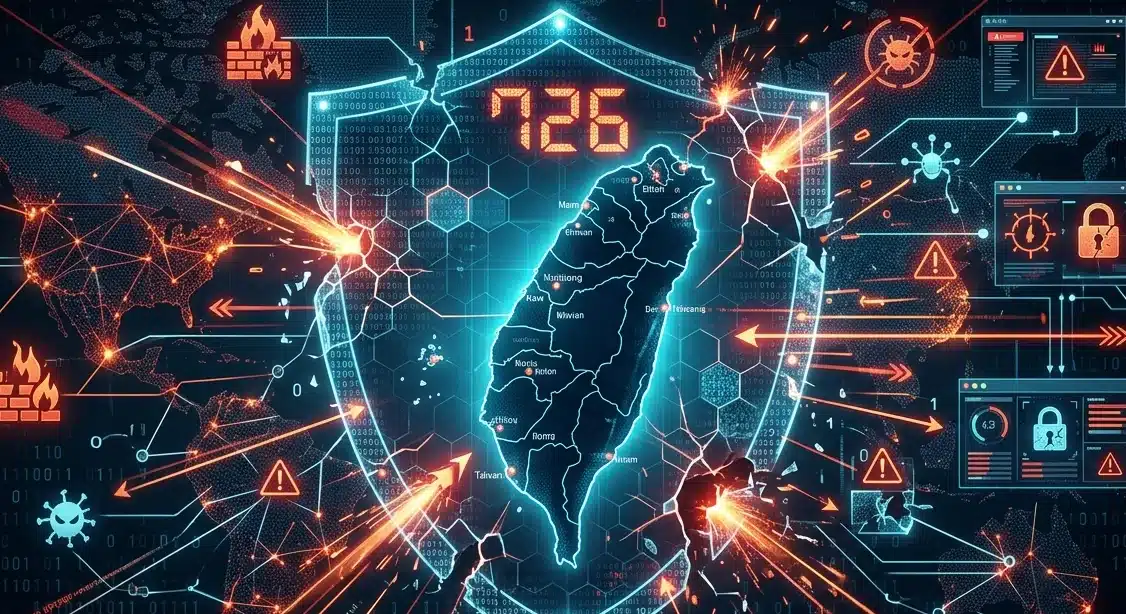
Taiwan’s digital security authorities have identified five major areas of concern following hundreds of reported cybersecurity incidents involving government agencies in 2025. According to Taiwan’s Ministry of Digital Affairs, the country recorded 726 cybersecurity incidents this year, highlighting ongoing Taiwan cyber risk challenges tied to ransomware, fake software, supply chain weaknesses, and social engineering attacks. The Administration for Cyber Security said the total number of reported cases declined slightly compared to 2024, with 29 fewer incidents recorded year over year. However, officials warned that attack methods continue to expose weaknesses across government systems and digital infrastructure.

Cybersecurity Incidents in Taiwan 

As reported by CNA and cited by UDN, most cybersecurity incidents were categorized as low-level threats under Taiwan’s classification system. However, authorities stressed that even minor breaches can create broader operational and national security concerns if left unresolved.  Under Taiwan’s cybersecurity framework, incidents are divided into four levels based on their impact on confidentiality, integrity, and system availability. Level 1 incidents accounted for 87.33% of all reports in 2025, while Level 2 incidents represented 9.78%. Level 3 incidents made up 2.89% of the total. No Level 4 incidents — the most severe category — were reported during the year.  Unauthorized access remained the most common issue among reported cybersecurity incidents, accounting for 68.6% of all cases. Equipment-related failures represented 15.43% of incidents, while denial-of-service attacks accounted for 4.96%. Website attacks made up another 2.48% of reported cases.  Following a review of cyber threat patterns and incident reports from government agencies, Taiwan’s Administration for Cyber Security identified five major Taiwan cyber risk trends that officials believe require immediate attention. 

Fake Messaging Apps Raise Taiwan Cyber Risk

One of the biggest cybersecurity risks highlighted by the administration involved fake communication software distributed through unofficial websites. According to UDN, some users unknowingly downloaded counterfeit messaging applications after replacing old devices or setting up new computers. Authorities said these downloads allowed attackers to install backdoor malware capable of compromising systems and sensitive information. The administration urged government agencies to implement stricter procedures for system modifications and software installations. Officials recommended that all software, hardware, and application installations receive prior approval before being used within agency systems. The administration warned that unofficial downloads continue to create major Taiwan cyber risk exposure across public sector networks.

Ransomware Tactics Become More Sophisticated

The second major concern centered on ransomware groups using customized software drivers to infiltrate systems and evade security detection tools. Authorities noted that attackers are becoming more advanced in bypassing conventional endpoint security measures. To reduce the likelihood of future cybersecurity incidents, the administration advised agencies to regularly scan websites for vulnerabilities, apply timely fixes, deploy web application firewalls, and ensure endpoint protection software remains updated. The ministry emphasized that outdated security tools and delayed patch management continue to increase Taiwan's cyber risk across both government and critical infrastructure networks.

Weak Supply Chain Security Creates Additional Exposure 

Supply chain vulnerabilities were identified as the third major cybersecurity threat. Officials cited one case in which a maintenance contractor installed remote desktop software on a website server. Hackers later gained access to the system after successfully guessing the password linked to the remote access tool.  The incident highlighted growing concerns about third-party vendors and contractor oversight. According to the administration, external maintenance work can create hidden entry points for cybercriminals if agencies fail to maintain strict security controls. The administration said agencies should strengthen supervision of vendors, improve password management practices, and enforce tighter restrictions on remote access systems to reduce Taiwan's cyber risk tied to supply chain operations. 

NCSC Warns Organisations to Act Fast as Hidden Software Flaws Surface

vulnerability patch wave

Organisations worldwide are being urged to prepare for a vulnerability patch wave, as security experts warn that advances in artificial intelligence (AI) could rapidly expose long-standing weaknesses across software systems. The warning comes from National Cyber Security Centre (NCSC), which says businesses must act now to strengthen their environments before a surge of critical updates arrives. In a blog, Chief Technology Officer Ollie Whitehouse highlighted that years of accumulated technical debt are now becoming a major cybersecurity risk. Technical debt refers to unresolved flaws and compromises in software that arise when organisations prioritise speed or short-term delivery over long-term resilience. According to Whitehouse, artificial intelligence is accelerating the problem. Skilled attackers are increasingly able to use AI tools to identify and exploit vulnerabilities at scale, forcing what the NCSC describes as a “correction” across the technology ecosystem. This is expected to trigger a vulnerability patch wave, with a high volume of security updates affecting open source, commercial, proprietary, and software-as-a-service platforms.

Prioritising External Attack Surfaces

As part of preparing for the vulnerability patch wave, the NCSC advises organisations to first focus on their external attack surfaces. Internet-facing systems, cloud services, and exposed infrastructure present the highest risk when new vulnerabilities are disclosed. The guidance recommends a perimeter-first approach. Organisations should secure outward-facing technologies before moving deeper into internal systems. This reduces the likelihood that attackers can exploit newly discovered weaknesses during the vulnerability patch wave. Where resources are limited, priority should be given to patching systems that are directly exposed to the internet. Critical security infrastructure should follow next. However, the NCSC cautions that patching alone will not solve every issue. Legacy and end-of-life systems remain a major concern. Many of these technologies no longer receive security updates, leaving organisations vulnerable even during a vulnerability patch wave. In such cases, businesses may need to replace outdated systems or bring them back into supported environments, especially if they are externally accessible.

Preparing for Faster and Large-scale Patching

The expected vulnerability patch wave will require organisations to rethink how they manage updates. The NCSC is urging businesses to prepare for faster, more frequent, and large-scale deployment of security patches, including across supply chains. Several key measures have been recommended:
  • Enable automatic updates wherever possible to reduce operational burden
  • Adopt secure “hot patching” to apply fixes without service disruption
  • Ensure internal processes support rapid and large-scale updates
  • Use risk-based prioritisation models such as Stakeholder Specific Vulnerability Categorisation (SSVC)
Whitehouse noted that organisations must be ready to accelerate patching timelines when critical vulnerabilities are actively exploited, particularly those affecting internet-facing systems. At the core of this approach is an “update by default” policy. This means applying software updates as quickly as possible, ideally through automated processes. While this may not always be feasible for safety-critical or operational technology systems, the NCSC says it should form the foundation of modern vulnerability management strategies.

Beyond Vulnerability Patch Wave: Addressing Systemic Risks

The NCSC emphasises that the vulnerability patch wave is only part of a broader cybersecurity challenge. Patching addresses immediate risks, but it does not eliminate the underlying causes of technical debt. Technology vendors are being encouraged to build more secure systems from the outset. This includes adopting memory safety and containment technologies such as CHERI, which can reduce the likelihood of exploitable vulnerabilities. For organisations operating critical services, strengthening cybersecurity fundamentals is equally important. Frameworks such as Cyber Essentials and sector-specific resilience models can help reduce the impact of breaches and improve overall security posture. Additional guidance has also been issued for high-risk environments, covering areas such as privileged access workstations, cross-domain security architecture, and threat detection through observability and proactive hunting.

Organisations Urged to Act Now

The NCSC has made it clear that preparation cannot be delayed. The anticipated vulnerability patch wave is expected to impact organisations of all sizes and sectors. Businesses are advised to review their vulnerability management processes, assess their exposure, and ensure their supply chains are also ready to respond. Larger organisations, in particular, are encouraged to seek assurance from both commercial and open-source partners. As Whitehouse concluded, readiness for the vulnerability patch wave will depend on proactive planning, strong fundamentals, and the ability to respond quickly at scale.
❌