❌

Visualização de leitura

Top 10 Best Deception Technology Solutions in 2026 [Ranked & Scored]

Deception inverts security’s worst ratio: instead of mining millions of events for one attacker, you plant assets only an attacker would touch and wait for the phone to ring.

A tripped canary token or accessed decoy credential carries near-zero false-positive probability, which makes deception the cheapest high-fidelity signal in the stack.

The 2026 market splits between radical-simplicity tripwires and full fake-network platforms, with several entries now living inside acquirers’ portfolios flagged honestly below. Thinkst Canary takes 1; SentinelOne (Attivo) and Acalvio complete the podium.

Key Takeaways

• 1 overall: Thinkst Canary the simplicity benchmark: deployed in minutes, alerting for years, loved by practitioners.

• Podium: Thinkst (signal-per-effort), SentinelOne/Attivo (identity-deception depth), Acalvio (enterprise-scale deception fabric).

• Acquisition map: Attivo→SentinelOne, TrapX→Commvault, Smokescreen→Zscaler three of the category’s pioneers now ship inside bigger portfolios; confirm packaging before contracting.

• 2026 theme: identity deception fake credentials and poisoned AD entries catching lateral movement where EDR looks away.

How We Scored (Methodology)

Research-based evaluation; no lab testing, no paid placement; editorial scores excluded from structured data. Criteria: signal fidelity, deployment/maintenance economics, decoy realism and breadth (network, endpoint, identity, cloud, OT), lateral-movement coverage, integration with response stacks, and pricing accessibility.

Weights: signal-per-effort 25%, decoy breadth 20%, identity/lateral coverage 20%, realism 20%, integration 15%.

The 2026 Deception Power Rankings

S.NO SolutionAwardScore*
1Thinkst CanaryBest signal-per-effort in security9.0
2SentinelOne (Attivo)Best identity-deception depth8.6
3AcalvioBest enterprise deception fabric8.4
4Zscaler (Smokescreen)Best zero-trust-integrated deception8.1
5CounterCraftBest threat-intel-grade deception8.0
6Fortinet (FortiDeceptor)Best Fabric/OT deception7.9
7LabyrinthBest European challenger platform7.6
8Commvault (TrapX)Best resilience-stack deception lineage7.5
9CyberTrapBest DACH-region deception specialist7.3
10Rapid7Best bundled deception points7.2

*Editorial research-based scores, not lab results.

1. Thinkst Canary — Best Signal-Per-Effort in Security

Thinkst Canary — Best Signal-Per-Effort in Security

Snapshot: Per-device/token pricing, famously transparent | Hardware/VM/cloud canaries + free Canarytokens | Minutes-to-deployed

Why it earns 1: Thinkst won by refusing complexity: canaries that impersonate a NAS, a domain controller, a SCADA box in four minutes of setup; Canarytokens (free) that turn documents, AWS keys, and DNS lookups into tripwires; and alerts that mean something every single time.

No consoles to babysit, no models to tune the product is the absence of burden. Practitioner devotion and transparent pricing finish the case.

Pros: Deployment triviality; alert purity; free token tier; pricing honesty.

Cons: Deliberately not a sprawling deception fabric breadth-seekers look below.

Bottom line: The highest signal-to-effort ratio money buys in this industry.

2. SentinelOne (Attivo) — Best Identity-Deception Depth

SentinelOne (Attivo) — Best Identity-Deception Depth

Snapshot: Singularity Identity modules | Attivo lineage | AD/credential deception at endpoint scale

Why it ranks here: Attivo’s crown jewel identity deception now rides SentinelOne’s agent: fake credentials seeded in memory, poisoned AD query results, decoy shares that make lateral movement a minefield.

Every endpoint becomes deception real estate without separate infrastructure. The classic full-decoy-network lineage continues, but identity-layer tripwires are where the integration shines.

Pros: Endpoint-scale identity traps; AD-attack coverage; agent-delivered economics.

Cons: Full value couples to the SentinelOne stack.

Bottom line: Lateral movement’s least favorite acquisition.

3. Acalvio — Best Enterprise Deception Fabric

Acalvio — Best Enterprise Deception Fabric

Snapshot: Platform licensing | ShadowPlex autonomous deception | AI-managed decoy realism

Why it ranks here: Acalvio builds the full illusion at enterprise scale: ShadowPlex projecting fleets of decoys hosts, services, credentials, data across segments from central infrastructure, with AI handling placement and freshness so realism doesn’t rot.

It’s the choice when the mission is a persistent fake attack surface, not tripwires with the operational weight that implies.

Pros: Fabric scale; autonomous placement; realism management; OT/cloud reach.

Cons: Platform-grade deployment and care.

Bottom line: A standing fake enterprise, professionally maintained.

4. Zscaler (Smokescreen) — Best Zero-Trust-Integrated Deception

Zscaler (Smokescreen) — Best Zero-Trust-Integrated Deception

Snapshot: Zscaler Deception module | Smokescreen lineage | ZTE-integrated response

Why it ranks here: Smokescreen’s platform became Zscaler Deception: decoys and lures woven into the Zero Trust Exchange, where a tripped trap can trigger policy quarantine the user, cut the session inside the same fabric.

For Zscaler estates it’s deception with an enforcement arm; outside them, the lineage’s standalone era is over.

Pros: Policy-coupled response; estate-native deployment; lure breadth.

Cons: Zscaler-coupled by design.

Bottom line: Traps that pull the zero-trust trigger.

5. CounterCraft — Best Threat-Intel-Grade Deception

CounterCraft — Best Threat-Intel-Grade Deception

Snapshot: Campaign-based platform | Adversary-engagement environments | Intel-collection focus

Why it ranks here: CounterCraft plays a different game: not just detecting intruders but studying them long-form deception campaigns with realistic environments that keep adversaries engaged while TTPs, tooling, and intent stream out as intelligence.

Governments and mature programs buy it as a collection discipline; it rewards operators who think like case officers.

Pros: Engagement depth; intel-product output; campaign craft.

Cons: Specialist mission; not a set-and-forget tripwire.

Bottom line: Deception as an intelligence program.

6. Fortinet (FortiDeceptor) — Best Fabric/OT Deception

Fortinet (FortiDeceptor) — Best Fabric/OT Deception

Snapshot: Appliance/VM licensing | Security Fabric integration | OT/IoT decoy library

Why it ranks here: FortiDeceptor extends the Fortinet Fabric with decoys that speak industrial: PLC, SCADA, and IoT personas alongside IT decoys, with tripped traps feeding FortiGate enforcement natively.

For the industrial estates Fortinet already serves, it’s the lowest-friction route to OT deception a lane the simplicity leaders don’t drive.

Pros: OT persona depth; Fabric-native response; appliance pragmatism.

Cons: Strongest inside Fortinet gravity.

Bottom line: The factory floor’s decoy vendor.

7. Labyrinth — Best European Challenger Platform

Labyrinth — Best European Challenger Platform

Snapshot: Platform licensing | Point-based decoy mesh | EU-based vendor

Why it ranks here: Labyrinth’s deception mesh interactive decoy points imitating services across segments delivers credible platform breadth from a European vendor, a procurement fact that matters in sovereignty-weighted shortlists.

Capability honest for its size; ecosystem gravity smaller than the acquirer-backed entries.

Pros: EU vendor posture; mesh architecture; interactive decoys.

Cons: Scale and integration breadth versus majors.

Bottom line: The sovereignty-friendly challenger.

8. Commvault (TrapX) — Best Resilience-Stack Deception Lineage

Commvault (TrapX) — Best Resilience-Stack Deception Lineage

Snapshot: Within Commvault cyber-resilience portfolio | TrapX DeceptionGrid lineage | Threatwise branding

Why it ranks here: TrapX’s DeceptionGrid once the category’s medical/OT pioneer now ships as Commvault’s Threatwise, pointed at a specific thesis: decoys as early warning for the backup-and-recovery estate, catching ransomware staging before encryption reaches the vaults.

Inside that resilience mission it’s coherent; as standalone deception, the lineage has new priorities.

Pros: Ransomware early-warning fit; resilience-stack integration; OT/medical lineage.

Cons: Portfolio mission narrower than the original platform’s.

Bottom line: Deception standing guard in front of the backups.

9. CyberTrap — Best DACH-Region Deception Specialist

CyberTrap — Best DACH-Region Deception Specialist

Snapshot: Platform licensing | High-interaction decoys | Austrian vendor, DACH gravity

Why it ranks here: CyberTrap builds high-interaction deception real-feeling systems that hold attacker attention for forensic-grade observation with DACH-region presence and compliance fluency.

A regional specialist ranked as one: deep where it plays, limited gravity beyond.

Pros: High-interaction realism; regional compliance fit.

Cons: Regional scale; ecosystem breadth.

Bottom line: The DACH shortlist’s deception entry.

10. Rapid7 — Best Bundled Deception Points

Rapid7 — Best Bundled Deception Points

Snapshot: InsightIDR-included | Honeypots, honey users, honey credentials | Detection-bundle economics

Why it ranks here: Rapid7 includes deception primitives inside InsightIDR honeypots, honey users, honey files, credential traps as detection-bundle features rather than a platform.

The right amount of deception for teams that would never buy it standalone: planted in an afternoon, feeding the same alert queue. Ceiling acknowledged; price unbeatable when it’s already in the bundle.

Pros: Zero-marginal-cost deployment; bundle integration; honest primitives.

Cons: Primitives, not a fabric realism and breadth ceilings.

Bottom line: The deception you already own if you run InsightIDR.

Full Comparison Table

SolutionShapeIdentity deceptionOT/IoT personasResponse integrationPricing model
Thinkst CanaryTripwiresTokensPartialAlert-firstTransparent per-device
SentinelOne/AttivoEndpoint-identityCorePartialAgent-nativeModules
AcalvioFabricYesYesSOAR/EDR hooksPlatform
Zscaler/SmokescreenZT-integratedYesPartialPolicy-coupledModule
CounterCraftIntel campaignsYesPartialIntel pipelinesCampaign
FortiDeceptorFabric/OTPartialCoreFortiGate-nativeAppliance/VM
LabyrinthMesh platformYesPartialSIEM hooksPlatform
Commvault/TrapXResilience-frontPartialYes (lineage)Backup-stackPortfolio
CyberTrapHigh-interactionPartialPartialSIEM hooksPlatform
Rapid7Bundled primitivesHoney usersNoInsightIDR-nativeIncluded

Yes/No Capability Table

SolutionDeployable in under a day?Endpoint-seeded credential lures?OT/ICS decoy personas?Attacker-engagement intel collection?Free tier or included-in-bundle option?
Thinkst CanaryYes (core)Yes (tokens)PartialNoYes (Canarytokens)
SentinelOne/AttivoPartialYes (core)PartialPartialNo
AcalvioNo (platform)YesYesYesNo
Zscaler/SmokescreenPartialYesPartialPartialNo
CounterCraftNo (campaigns)YesPartialYes (core)No
FortiDeceptorPartialPartialYes (core)PartialNo
LabyrinthPartialYesPartialPartialNo
Commvault/TrapXPartialPartialYesNoNo
CyberTrapPartialPartialPartialYesNo
Rapid7YesYesNoNoYes (bundle)

Buying Advice: Start With Tokens, Scale With Intent

Deception’s economics argue for a staged build. Week one costs almost nothing: free Canarytokens in finance folders, fake AWS keys in repos, honey credentials in memory if your EDR supports them if you’re not doing this already, no platform purchase is justified yet.

Stage two adds tripwire devices (Thinkst-class) at segment boundaries and crown-jewel adjacencies, sized in dozens not thousands.

Only clear intent justifies stage three: identity-deception fabrics (Attivo-class) when lateral movement is your modeled kill chain, OT personas (FortiDeceptor-class) for industrial estates, engagement platforms (CounterCraft-class) when you genuinely want intelligence product.

Wire every trap to a paging-grade alert path deception’s zero-false-positive signal deserves interrupt-driven response, and a tripped canary routed to a weekly digest is the category’s saddest failure mode.

Verify the three acquisition integrations (Attivo, TrapX, Smokescreen) at the packaging level before contracting, and test realism annually: have your red team hunt your decoys if they fingerprint them in an hour, the attacker will too.

FAQs

What are the best deception technology solutions in 2026? Thinkst Canary for signal-per-effort, SentinelOne (Attivo) for identity deception, Acalvio for enterprise fabric, Zscaler (Smokescreen) for zero-trust coupling, with CounterCraft, FortiDeceptor, Labyrinth, Commvault (TrapX), CyberTrap, and Rapid7’s bundle by mission.

Why is deception’s signal so clean? Legitimate users have no reason to touch a decoy so nearly every interaction is attacker or misconfiguration, both worth knowing in minutes.

Honeypots versus modern deception platforms? Classic honeypots were isolated research boxes; modern platforms seed production-adjacent lures (credentials, tokens, decoy hosts) that catch real lateral movement, integrated with response stacks.

Can attackers detect decoys? Poorly maintained ones, yes realism decays. Red-team your own deception annually and prefer platforms (or simplicity models) that keep personas fresh.

Where should deception sit in our roadmap? After EDR and logging basics, before exotic analytics: tokens cost nothing today, tripwires cost little this quarter, and both outperform most detection spend per dollar.

Verdict

Ten solutions, one clean signal, one staged path: tokens today, tripwires this quarter, fabrics on evidence of need.

Thinkst for the purest ratio, Attivo’s identity mines inside SentinelOne, Acalvio’s standing illusion, Smokescreen’s policy trigger inside Zscaler, CounterCraft for the case officers, FortiDeceptor on the factory floor, TrapX guarding Commvault’s vaults, Labyrinth and CyberTrap for regional shortlists, Rapid7’s primitives already in the bundle plant the traps, page on every trip, and make your red team find them first.

Author: [AUTHOR NAME], [credential]. Reviewed by: [REVIEWER NAME]. Last updated: October 2026. Cybersecurity News editorial: independent, research-based rankings; no paid placement; scores are editorial and excluded from structured data.

Read next on Cybersecurity News:

• Top 10 Best Threat Hunting Services

• Top 10 Best ITDR Solutions

• Top 10 Best EDR Solutions

• Top 10 Best Insider Threat Detection Tools

• Top 10 Best UEBA Tools

• Top 10 Best BAS Tools

• Top 10 Best SIEM Tools

• Top 10 Best Detection Engineering Tools

• Top 10 Best Threat Intelligence Platforms

• Top 10 Best Ransomware Recovery Solutions

The post Top 10 Best Deception Technology Solutions in 2026 [Ranked & Scored] appeared first on Cyber Security News.

Top 10 Best Security Data Lake Platforms in 2026 [Ranked & Scored]

The security data lake movement is a jailbreak: telemetry escaping SIEM-priced storage into open formats on cheap object storage, with detection and query engines brought to the data.

The 2026 field mixes general data clouds hosting security workloads, purpose-built security lakes, and SIEM vendors racing to rebuild atop lake economics before the exodus empties them. Snowflake takes 1; Google SecOps and Microsoft complete the podium.

Key Takeaways

• 1 overall: Snowflake the gravity well where security teams and a vendor ecosystem meet on one data cloud.

• Podium: Snowflake (ecosystem gravity), Google SecOps (bundled retention speed), Microsoft (Sentinel data lake trajectory).

• Architecture bet: open table formats (Iceberg-class) and OCSF normalization are the anti-lock-in levers grade every candidate on both.

• 2026 theme: detection-over-lake matured Panther and Anvilogic-class engines prove you can leave ingest-priced SIEM without leaving detection behind.

How We Scored (Methodology)

Research-based evaluation; no lab testing, no paid placement; editorial scores excluded from structured data.

Criteria: storage/query economics, openness (table formats, OCSF, exit paths), detection-engineering fit atop the lake, scale/performance, ecosystem (apps, connectors, shared data), and operational burden.

Weights: economics 25%, openness 20%, detection fit 20%, performance 20%, ecosystem 15%.

The 2026 Security Data Lake Power Rankings

S.NO PlatformAwardScore*
1SnowflakeBest security-data-cloud ecosystem8.9
2Google (SecOps)Best bundled retention-and-speed8.7
3Microsoft (Sentinel data lake/ADX)Best estate-native lake trajectory8.5
4DatabricksBest lakehouse ML/analytics depth8.4
5Amazon (Security Lake)Best OCSF-native cloud lake8.3
6PantherBest detection-as-code over the lake8.2
7CriblBest lake feeder & search-in-place8.0
8AnvilogicBest multi-lake detection layer7.9
9ElasticBest open searchable-snapshot lake7.8
10HydrolixBest cost-per-queryable-terabyte challenger7.5

*Editorial research-based scores, not lab results.

1. Snowflake — Best Security-Data-Cloud Ecosystem

Snowflake — Best Security-Data-Cloud Ecosystem

Snapshot: Consumption (compute+storage separated) | Partner detection apps atop | Iceberg-era openness moves

Why it earns 1: Snowflake became the security lake by gravity: storage and compute priced separately, near-infinite retention economics, SQL every analyst speaks, and decisively an ecosystem where Panther, Anvilogic, and dozens of security apps run detection directly on your tables.

Threat intel arrives as shared datasets, no pipelines. The lake you were promised, with a marketplace attached.

Pros: Ecosystem depth; economics separation; SQL accessibility; data sharing.

Cons: Compute costs need governance; security content comes from partners, not the platform.

Bottom line: The security lake with the richest neighborhood.

2. Google (SecOps) — Best Bundled Retention-and-Speed

Google (SecOps) — Best Bundled Retention-and-Speed

Snapshot: Flat/employee-based packaging | A year of hot retention standard | Mandiant intel retro-application

Why it ranks here: Google’s answer to lake economics is to bundle them: SecOps packaging includes retention measured in months-to-a-year hot, sub-second search across it, and fresh Mandiant intel retro-hunted against history automatically.

It’s the lake and the SIEM in one bill less open than the build-your-own path, more finished than any of it.

Pros: Bundled retention; retro-hunt automation; predictable packaging.

Cons: Less architectural openness than true lake builds.

Bottom line: Lake economics without the construction project.

3. Microsoft (Sentinel Data Lake/ADX) — Best Estate-Native Lake Trajectory

Microsoft (Sentinel Data Lake/ADX) — Best Estate-Native Lake Trajectory

Snapshot: Consumption tiers + lake tier | Sentinel data lake direction; ADX for power users | KQL everywhere

Why it ranks here: Microsoft is rebuilding Sentinel’s storage story around a lake tier: cheap long-retention storage under the same KQL surface, with Azure Data Explorer serving the roll-your-own crowd.

For Microsoft estates, the trajectory means staying put may deliver lake economics without migration watch the tier pricing as it matures.

Pros: Estate-native path; KQL continuity; ADX escape hatch for builders.

Cons: Maturing tier structure; consumption governance still required.

Bottom line: The lake coming to where Microsoft estates already live.

4. Databricks — Best Lakehouse ML/Analytics Depth

Databricks — Best Lakehouse ML/Analytics Depth

Snapshot: Compute-based consumption | Delta Lake openness | ML-native security analytics

Why it ranks here: Databricks brings the lakehouse to security: open Delta tables on your object storage, notebooks and ML pipelines for the detection problems rules can’t express fraud graphs, beacon detection, UEBA models you own. It rewards teams with data engineers and gives security programs genuine ML custody; turnkey it is not.

Pros: Open-format custody; ML-native analytics; engineering ceiling.

Cons: Build-it culture required; security content ecosystem younger.

Bottom line: The lake for teams who model, not just query.

5. Amazon (Security Lake) — Best OCSF-Native Cloud Lake

Amazon (Security Lake) — Best OCSF-Native Cloud Lake

Snapshot: Service + S3/ingest costs | OCSF normalization at the core | Multi-account AWS aggregation

Why it ranks here: AWS built the standards bet into the product: Security Lake normalizes AWS and partner telemetry into OCSF on S3 under your control, queryable by Athena, OpenSearch, or any engine you point at it.

For AWS-centric estates it’s the lowest-friction open lake; the analytics experience is deliberately bring-your-own.

Pros: OCSF-native; your-bucket custody; AWS-source gravity.

Cons: BYO analytics layer; multi-cloud breadth thinner.

Bottom line: The standards-purist lake, batteries not included.

6. Panther — Best Detection-as-Code Over the Lake

Panther — Best Detection-as-Code Over the Lake

Snapshot: Platform subscription| Python detections, lake-backed | Snowflake-native heritage

Why it ranks here: Panther proved the decoupled thesis: detection-as-code in Python, CI/CD-tested, running over lake storage (Snowflake lineage, now broader) at economics ingest-priced SIEMs can’t match.

Security engineers get software-engineering rigor; teams wanting GUI-driven content get a culture shock worth having.

Pros: Detection-as-code rigor; lake economics; engineer ergonomics.

Cons: Engineering-culture prerequisite.

Bottom line: The SIEM rebuilt by software engineers.

7. Cribl — Best Lake Feeder & Search-in-Place

Cribl — Best Lake Feeder & Search-in-Place

Snapshot: Volume licensing | Stream routing + Lake + Search | Vendor-neutral tiering

Why it ranks here: Cribl isn’t where logs live it’s who decides where they go: filtering the 40% nobody queries, enriching in transit, routing one copy to the SIEM and a full-fidelity copy to cheap object storage, replayable on demand.

In cost-crisis logging programs, the pipeline tier routinely pays for itself first year, and Cribl Search queries data where it already sits.

For staged migrations off ingest-priced platforms, it’s the pragmatic path most estates actually walk.

Pros: Migration pragmatism; search-without-moving; filtration economics.

Cons: Detection layer comes from elsewhere.

Bottom line: The lake movement’s moving company.

8. Anvilogic — Best Multi-Lake Detection Layer

Anvilogic — Best Multi-Lake Detection Layer

Snapshot: Platform subscription | Detections across Snowflake/Databricks/Splunk simultaneously | AI-assisted detection engineering

Why it ranks here: Anvilogic answers the transition decade’s real question detections spanning the Splunk you still run and the lake you’re filling: one detection plane compiling to multiple backends, with AI-assisted rule building and a content library mapped to attacker techniques. Hybrid-backend reality, productized.

Pros: Multi-backend compilation; migration-era fit; AI-assisted engineering.

Cons: Another layer in the stack; backend coverage specifics evolve.

Bottom line: One detection brain across two eras of storage.

9. Elastic — Best Open Searchable-Snapshot Lake

Elastic — Best Open Searchable-Snapshot Lake

Snapshot: Resource pricing, free tier | Searchable snapshots on object storage | Full detection stack included

Why it ranks here: Elastic’s frozen tier is a lake with a search engine fused on: snapshots on S3-class storage queried directly, detection rules and UEBA included, everything open-core.

For teams wanting lake economics plus a built-in security layer without assembling partners, it’s the single-vendor version of the thesis.

Pros: Fused search+detection; open-core custody; snapshot economics.

Cons: Operational ownership; pure-lake query engines scale cheaper at extremes.

Bottom line: The lake with the search engine welded on.

10. Hydrolix — Best Cost-Per-Queryable-Terabyte Challenger

Hydrolix — Best Cost-Per-Queryable-Terabyte Challenger

Snapshot: Consumption | Extreme-compression streaming lake | Hot-query on compressed data

Why it ranks here: Hydrolix attacks the metric that decides lake arguments: cost per queryable terabyte, via aggressive compression that stays hot-queryable without rehydration.

Observability-adjacent heritage, now pointed at security telemetry. A challenger bet smaller ecosystem, startling economics for estates drowning in volume.

Pros: Compression economics; hot-query retention; volume appetite.

Cons: Ecosystem youth; security-content layer BYO.

Bottom line: The economics outlier worth benchmarking.

Full Comparison Table

PlatformLake typeOpenness (formats/OCSF)Detection layerEconomics leverPricing model
SnowflakeData cloudIceberg-era [VERIFY]Partner appsStorage/compute splitConsumption
Google SecOpsBundled SIEM-lakePartialIncludedBundled retentionPackaging
MicrosoftEstate lake tierPartialIncluded (Sentinel)Lake-tier pricingConsumption
DatabricksLakehouseDelta (open)BYO/MLCompute-basedConsumption
AWS Security LakeOCSF-nativeOCSF (core)BYOYour S3Service+storage
PantherDetection-on-lakeYesDetection-as-codeLake-backedSubscription
CriblFeeder+lakeNeutralBYOFiltrationVolume
AnvilogicDetection layerMulti-backendCross-lakeBackend-agnosticSubscription
ElasticSnapshot lakeOpen-coreIncludedFrozen tierResource
HydrolixCompression lakePartialBYOCompressionConsumption

Yes/No Capability Table

PlatformOpen table format custody (your storage)?OCSF normalization support?Detection content included natively?Query without rehydration at year-scale?SQL-accessible for analysts?
SnowflakePartial (Iceberg) [VERIFY]Yes (partner)No (partners)YesYes (core)
Google SecOpsNoPartialYesYesPartial
MicrosoftPartial (ADX/lake)PartialYesYesKQL
DatabricksYes (Delta)YesNo (BYO)YesYes
AWS Security LakeYes (your S3)Yes (core)No (BYO)YesYes (Athena)
PantherPartialYesYes (as-code)YesYes
CriblYesYesNoYes (Search)Partial
Anvilogicn/a (layer)YesYesn/aPartial
ElasticYes (snapshots)YesYesYesES
HydrolixPartialPartialNoYes (core)Yes

Buying Advice: Own the Tables, Rent the Engines

The lake decision is a custody decision: who owns the bytes, in what format, queryable by whose engines. Grade every candidate on two anti-lock-in levers open table formats (can another engine read your history without export?) and OCSF normalization (can detections port?) because the lake movement’s whole point dies if you rebuild SIEM lock-in on prettier storage.

Architect in three layers deliberately: pipeline (what lands), lake (open tables, your bucket where possible), detection engine (Panther/Anvilogic-class, or the bundled layer if you chose Google/Microsoft’s finished path).

Benchmark the only number that settles arguments cost per queryable terabyte-month at your real volumes, including compute for your actual query patterns and run one honest investigation drill: a 180-day-old incident reconstructed end-to-end on each finalist.

Teams without data-engineering capacity should buy the bundled trajectory (SecOps, Sentinel lake) without shame; teams with it should keep custody and compose. Either way, write the export test into the contract: a terabyte out, in an open format, timed.

FAQs

What are the best security data lake platforms in 2026? Snowflake for ecosystem gravity, Google SecOps and Microsoft for bundled trajectories, Databricks for lakehouse ML, AWS Security Lake for OCSF purity, Panther and Anvilogic for detection layers, with Cribl, Elastic, and Hydrolix completing the architecture.

Does a security data lake replace our SIEM? It replaces SIEM storage economics; detection and workflow still need a layer bundled (Google, Microsoft, Elastic) or composed (Panther, Anvilogic over Snowflake/Databricks/AWS).

What is OCSF and why does it matter? The Open Cybersecurity Schema Framework a vendor-neutral event schema; OCSF-normalized data makes detections and tools portable across engines, which is the anti-lock-in point.

What’s the realistic cost advantage? Object-storage retention typically runs an order of magnitude below ingest-priced SIEM storage; the honest comparison adds query compute for your patterns benchmark, don’t assume.

Who shouldn’t build a security data lake? Teams without data-engineering capacity the bundled paths (SecOps, Sentinel’s lake tier) deliver most of the economics with none of the assembly.

Verdict

Ten platforms, one custody question, one benchmark: cost per queryable terabyte with your queries.

Snowflake’s neighborhood, Google’s finished bundle, Microsoft’s estate trajectory, Databricks’ modeling ceiling, AWS’s standards purity, Panther and Anvilogic proving detection travels, Cribl moving the boxes, Elastic welding search on, Hydrolix compressing the argument own the tables, rent the engines, port the detections, and time the export before you need it.

Author: [AUTHOR NAME], [credential]. Reviewed by: [REVIEWER NAME]. Last updated: October 2026. Cybersecurity News editorial: independent, research-based rankings; no paid placement; scores are editorial and excluded from structured data.

Read next on Cybersecurity News:

• Top 10 Best Security Log Management Tools

• Top 10 Best SIEM Tools

• Top 10 Best Detection Engineering Tools

• Top 10 Best Managed SIEM Services

• Top 10 Best SOAR Tools

• Top 10 Best Cloud Security Tools

• Top 10 Best UEBA Tools

• Top 10 Best GenAI SOC Copilots

• Top 10 Best Threat Hunting Services

• Top 10 Best Data Discovery Tools

The post Top 10 Best Security Data Lake Platforms in 2026 [Ranked & Scored] appeared first on Cyber Security News.

Top 10 Best Security Log Management Tools in 2026 [Ranked & Scored]

Security logging has become a commodities market with three prices: the cost to move a log, to store it, and to ask it a question.

The 2026 winners optimize different legs pipeline brokers slashing transit volume, hot-architecture engines making every byte queryable, cloud giants bundling retention into estates.

This ranking scores ten tools on economics, search speed, and control, with the SIEM question deliberately bracketed: these are the logging foundations SIEMs sit on. Splunk takes 1; Elastic and Cribl complete the podium.

Key Takeaways

• 1 overall: Splunk still the deepest log-analytics engine, with tiering finally softening its cost story.

• Podium: Splunk (analytics depth), Elastic (open-architecture economics), Cribl (the pipeline layer that tames everyone else’s bill).

• Structural shift: the pipeline tier (Cribl-class) became standard architecture route, filter, and enrich before anything expensive touches the data.

• Brand note: LogRhythm’s logging lane ships from the merged Exabeam company roadmap diligence applies.

How We Scored (Methodology)

Research-based evaluation; no lab testing, no paid placement; editorial scores excluded from structured data.

Criteria: ingest/storage economics, query performance at retention scale, pipeline control (filtering, routing, transformation), security-content fit, operational burden, and ecosystem reach.

Weights: economics 25%, query performance 25%, pipeline control 20%, security fit 15%, operations 15%.

The 2026 Log Management Power Rankings

S.NO ToolAwardScore*
1SplunkBest analytics depth9.0
2ElasticBest open-architecture economics8.7
3CriblBest pipeline control layer8.6
4Microsoft SentinelBest estate-bundled logging8.4
5DatadogBest observability-fused logging8.3
6Sumo LogicBest dual-use SaaS logging8.0
7GraylogBest value-tier dedicated log platform7.9
8DevoBest always-hot query performance7.8
9ManageEngineBest SMB/mid-market log compliance7.5
10LogRhythm (Exabeam)Best mid-market SIEM-logging lineage7.4

*Editorial research-based scores, not lab results.

1. Splunk — Best Analytics Depth

Splunk — Best Analytics Depth

Snapshot: Ingest/workload pricing, tiered storage | SPL query power | Federated search era

Why it earns 1: For asking hard questions of messy machine data, SPL remains the sharpest knife: schema-on-read flexibility, statistical commands, and a two-decade content ecosystem.

Workload pricing, SmartStore tiering, and federated search against cheap object storage answer partially the bill that built its reputation. The Cisco era adds integration bets; the analytics moat stands.

Pros: Query-language ceiling; content ecosystem; tiering options matured.

Cons: Still premium at scale; architecture choices demand expertise.

Bottom line: The deepest answers, at a price worth engineering around.

2. Elastic — Best Open-Architecture Economics

Elastic — Best Open-Architecture Economics

Snapshot: Resource-based pricing, free tier | ES|QL + searchable snapshots | Frozen-tier economics

Why it ranks here: Elastic’s economics compound: compute-based pricing decoupled from ingest volume, searchable snapshots making frozen object storage directly queryable, and an open content model. Teams with engineering appetite run petabyte retention at fractions of ingest-priced rivals; the trade is ownership burden someone must be the Elastic person.

Pros: Cost architecture; frozen-tier search; openness; dual-use with observability.

Cons: Operational ownership weight; managed tiers close the gap at cost.

Bottom line: The engineer’s economics play.

3. Cribl — Best Pipeline Control Layer

Cribl — Best Pipeline Control Layer

Snapshot: Data-volume licensing | Stream/Edge/Search product family | vendor-neutral routing

Why it ranks here: Cribl isn’t where logs live it’s who decides where they go: filtering the 40% nobody queries, enriching in transit, routing one copy to the SIEM and a full-fidelity copy to cheap object storage, replayable on demand.

In cost-crisis logging programs, the pipeline tier routinely pays for itself first year, and Cribl Search queries data where it already sits.

Pros: Bill-shrinking filtration; vendor neutrality; replay architecture; search-in-place.

Cons: Another tier to run; volume-priced itself.

Bottom line: The thermostat on everyone else’s invoice.

4. Microsoft Sentinel — Best Estate-Bundled Logging

Microsoft Sentinel — Best Estate-Bundled Logging

Snapshot: Consumption with basic/auxiliary tiers | Data-lake direction | KQL

Why it ranks here: Sentinel’s logging story matured into tiers: analytics-grade tables for detection data, cheaper basic/auxiliary tiers for the long tail, and a data-lake trajectory aimed squarely at retention economics.

For Microsoft estates, connector gravity plus KQL fluency makes it the path of least resistance costed per gigabyte, so pipeline discipline still matters.

Pros: Estate connectors; tiering flexibility; KQL ecosystem.

Cons: Consumption math punishes undisciplined ingestion.

Bottom line: The Microsoft estate’s logging default, tiered at last.

5. Datadog — Best Observability-Fused Logging

Datadog — Best Observability-Fused Logging

Snapshot: Ingest+indexing split pricing | Logging without limits model | Cloud SIEM atop

Why it ranks here: Datadog decoupled the two prices cleverly: ingest everything cheap, index selectively for search, rehydrate from archives when investigations demand.

Security teams sharing budgets with DevOps get one platform for both lanes, with Cloud SIEM detections riding the same pipes. The model rewards teams who tune indexing policies and punishes those who don’t.

Pros: Ingest/index decoupling; dual-use consolidation; rehydration model.

Cons: Costs balloon without indexing discipline; security depth versus dedicated SIEMs.

Bottom line: Observability money buying security logging.

6. Sumo Logic — Best Dual-Use SaaS Logging

Sumo Logic — Best Dual-Use SaaS Logging

Snapshot: Credits/flex consumption | Cloud-native multi-tenant SaaS | Security analytics layer

Why it ranks here: Sumo’s cloud-native SaaS removes infrastructure ownership entirely, flexes on credits, and serves security and observability from one store.

Its lane is the team that wants zero logging infrastructure and sane defaults less ceiling than Splunk, less ownership than Elastic, less pipeline control than Cribl, and deliberately so.

Pros: Zero-infrastructure SaaS; flex licensing; dual-use.

Cons: Depth ceilings versus the specialists on either side.

Bottom line: Logging as a utility bill.

7. Graylog — Best Value-Tier Dedicated Log Platform

Graylog — Best Value-Tier Dedicated Log Platform

Snapshot: Open + enterprise tiers | Purpose-built log management | Security edition analytics

Why it ranks here: Graylog keeps the dedicated-log-platform lane honest: open-core economics, pipeline processing, archiving tiers, and a security edition adding detection content at pricing that undercuts the giants meaningfully.

Mid-market teams get real capability without the enterprise invoice; frontier analytics and ecosystem breadth stay upstream.

Pros: Value economics; purpose-built ergonomics; open-core option.

Cons: Ecosystem and analytics ceiling versus leaders.

Bottom line: The sensible middle of the market.

8. Devo — Best Always-Hot Query Performance

Devo — Best Always-Hot Query Performance

Snapshot: Platform licensing | No-rehydration hot architecture | High-velocity ingestion

Why it ranks here: Devo’s architecture bet: everything stays hot four hundred days queryable in seconds, no rehydration ceremonies, ingestion built for terabyte-per-day velocity. Estates whose investigations routinely reach back months (fraud, telecom, large retail) buy exactly this; others pay for headroom they won’t use.

Pros: Hot-retention speed; velocity handling; investigation reach.

Cons: Niche strength priced as such; ecosystem gravity.

Bottom line: For teams that query last year like yesterday.

9. ManageEngine — Best SMB/Mid-Market Log Compliance

ManageEngine — Best SMB/Mid-Market Log Compliance

Snapshot: Per-device/source tiers | EventLog Analyzer + Log360 family | Compliance-report engine

Why it ranks here: ManageEngine serves the vast quiet market: SMBs and mid-market IT teams needing centralized logs, canned compliance reports (PCI, HIPAA, SOX), and basic correlation at prices that don’t require a committee. It’s logging as a solved administrative problem the right tool below the complexity line.

Pros: Entry economics; compliance-report breadth; low operational bar.

Cons: Scale and analytics ceilings; enterprise estates outgrow it.

Bottom line: Compliance logging without the procurement drama.

10. LogRhythm (Exabeam) — Best Mid-Market SIEM-Logging Lineage

LogRhythm (Exabeam) — Best Mid-Market SIEM-Logging Lineage

Snapshot: Platform tiers | SIEM-integrated log management | Merged-entity roadmap

Why it ranks here: LogRhythm’s logging layer serves its substantial mid-market SIEM base collection, normalization, retention integrated with detection content now shipping from the merged Exabeam company.

Existing estates get continuity; new logging-first buyers should weigh the merged roadmap and the dedicated alternatives above.

Pros: Install-base continuity; SIEM integration; mid-market fit.

Cons: Merged-entity roadmap diligence; logging-first buyers have leaner options.

Bottom line: Continuity play inside the Exabeam-merged world.

Full Comparison Table

ToolArchitectureEconomics leverQuery strengthPipeline controlPricing model
SplunkHybrid tieredWorkload+tieringSPL (deepest)YesIngest/workload
ElasticOpen hybridCompute-priced**ESQL+snapshots**Yes
CriblPipeline tierFiltration (core)Search-in-placeCore productVolume
SentinelCloud SaaSTable tieringKQLPartialConsumption tiers
DatadogCloud SaaSIngest/index splitGoodYesSplit pricing
Sumo LogicCloud SaaSCredits flexGoodPartialCredits
GraylogOpen-coreValue tiersGoodYesOpen+enterprise
DevoAlways-hotHot-retentionFastest reach-backPartialPlatform
ManageEngineOn-prem/cloudEntry pricingBasicNoPer-source
LogRhythm/ExabeamSIEM-fusedBundledGoodPartialTiers

Yes/No Capability Table

ToolQuery cold/object storage directly?Pre-ingest filtering & routing?Consumption/cost tiering built in?Dual-use (security+observability)?Open-source/free tier available?
SplunkYes (federated)PartialYesPartialTrial only
ElasticYes (snapshots)YesYesYesYes
CriblYes (Search)Yes (core)YesYesYes (limits)
SentinelYes (aux tiers)PartialYes (core)NoNo
DatadogYes (rehydrate)YesYes (core)Yes (core)Trial
Sumo LogicPartialYesYesYesYes (limits)
GraylogPartialYesYesPartialYes
Devon/a (always hot)PartialPartialPartialNo
ManageEngineNoNoPartialNoYes (limits)
LogRhythm/ExabeamPartialPartialPartialNoNo

Buying Advice: Architect the Three Prices Separately

Logging bills explode when one product sets all three prices transit, storage, and query. Architect them independently: a pipeline tier (Cribl-class, or Elastic/Datadog’s native controls) deciding what moves where; cheap object storage holding full fidelity; and an analytics engine indexing only what detection and investigation actually query.

Model your real telemetry’s three-year growth against each candidate’s pricing after a realistic 30–50% pipeline filtration assumption, and test reach-back honestly in the pilot time a 90-day-old investigation query on each finalist, because archived-but-unqueryable is a compliance checkbox, not a capability.

Keep detection content portable (Sigma-friendly where possible) so the logging layer can change without the detection program resetting, confirm the LogRhythm–Exabeam roadmap if that lineage is on your list, and write data-export terms into every contract: in logging, the exit bill is measured in petabytes.

FAQs

What are the best security log management tools in 2026? Splunk for analytics depth, Elastic for open economics, Cribl as the pipeline layer, Sentinel for Microsoft estates, Datadog and Sumo for dual-use SaaS, with Graylog, Devo, ManageEngine, and LogRhythm/Exabeam by tier.

Log management versus SIEM? Logging is the substrate collection, retention, query; SIEM adds detection content, correlation, and workflow on top. Modern architecture separates them deliberately for cost control.

What’s a pipeline tier and do we need one? A broker (Cribl-class) that filters, enriches, and routes logs before expensive destinations above roughly a few hundred gigabytes daily, it typically pays for itself.

How long should we retain security logs? Hot for investigation norms (90 days common), compliant-cold for your regulatory floor (one to seven years by regime) the architecture question is whether cold stays queryable.

How do we cut logging costs without losing evidence? Filter duplicates and heartbeat noise in the pipeline, keep full fidelity in cheap object storage with replay, and index selectively fidelity archived beats fidelity indexed.

Verdict

Ten tools, three prices, one architecture rule: never let a single invoice set them all. Splunk for the deepest questions, Elastic for engineered economics, Cribl deciding what goes where, Sentinel and Datadog and Sumo for cloud-estate gravity, Graylog for the sensible middle, Devo for the long reach-back, ManageEngine for the quiet market, the LogRhythm lineage for continuity filter first, archive everything, index what you query, and time that 90-day search before you sign.

Author: [AUTHOR NAME], [credential]. Reviewed by: [REVIEWER NAME]. Last updated: October 2026. Cybersecurity News editorial: independent, research-based rankings; no paid placement; scores are editorial and excluded from structured data.

Read next on Cybersecurity News:

• Top 10 Best SIEM Tools

• Top 10 Best Security Data Lake Platforms

• Top 10 Best Managed SIEM Services

• Top 10 Best Detection Engineering Tools

• Top 10 Best SOAR Tools

• Top 10 Best UEBA Tools

• Top 10 Best Digital Forensics Tools

• Top 10 Best Compliance Management Tools

• Top 10 Best File Integrity Monitoring Tools

• Top 10 Best Threat Intelligence Platforms

The post Top 10 Best Security Log Management Tools in 2026 [Ranked & Scored] appeared first on Cyber Security News.

Top 10 Best Threat Hunting Services in 2026 [Ranked & Scored]

Detection engineering catches what you anticipated; threat hunting catches what you didn’t. The craft is hypothesis-driven “if an actor used this tradecraft here, what residue would exist?” and the services market sells it in two shapes: platform-native hunting across a vendor’s own telemetry ocean, and estate-attached hunting through MDR relationships.

One jurisdictional note is handled plainly at 10. CrowdStrike OverWatch takes 1; Mandiant and Red Canary complete the podium.

Key Takeaways

• 1 overall: CrowdStrike OverWatch the reference for continuous, human-led hunting at telemetry scale.

• Podium: OverWatch (scale+tempo), Mandiant (actor-knowledge depth), Red Canary (published-methodology transparency).

• Shape split: platform-native hunters (OverWatch, Sophos, Trellix) hunt their own sensor oceans; estate-attached hunters (Expel, eSentire, Secureworks) hunt what you grant telemetry reach decides value either way.

• Jurisdiction note: Kaspersky’s hunting research is technically formidable; Western procurement restrictions gate it regardless compliance decides before capability.

How We Scored (Methodology)

Research-based evaluation; no lab testing, no paid placement; editorial scores excluded from structured data. Criteria: hypothesis-craft maturity, telemetry reach, hunt tempo (continuous versus periodic), findings quality (novel TTPs surfaced, not re-labeled alerts), feedback loop into detections, and transparency of method.

Weights: hypothesis craft 25%, telemetry reach 25%, tempo 15%, findings quality 20%, detection feedback 15%.

The 2026 Threat Hunting Power Rankings

S.NO ProviderAwardScore*
1CrowdStrike (OverWatch)Best continuous hunting at scale9.0
2Google (Mandiant)Best actor-knowledge hunting8.8
3SentinelOne Wayfinder MDRBest AI-assisted managed threat hunting8.6
4eSentireBest response-fused hunting8.4
5ExpelBest BYO-stack hunting8.3
6SecureworksBest research-fed estate hunting8.1
6HuntressBest human-led threat hunting for lean teams8.1
7SophosBest mid-market managed hunting8.0
8Rapid7Best bundled hunting value7.8
9TrellixBest XDR-estate hunting7.6
10KasperskyDeepest APT hunt research — jurisdiction-gated7.3

*Editorial research-based scores, not lab results.

1. CrowdStrike (OverWatch) — Best Continuous Hunting at Scale

CrowdStrike (OverWatch) — Best Continuous Hunting at Scale

Snapshot: Falcon add-on subscription | 24/7 human hunt teams on global telemetry | Hunt-to-detection pipeline

Why it earns 1: OverWatch defined managed hunting’s modern form: human hunters working planetary Falcon telemetry around the clock, pattern-matching across millions of endpoints so a novel tradecraft seen once becomes a hunt lead everywhere.

Findings feed Falcon’s detection content, compounding the loop. If your estate runs Falcon, the marginal power of attaching OverWatch is the category’s best ratio.

Pros: Telemetry ocean; 24/7 tempo; cross-customer pattern leverage; detection feedback.

Cons: Hunts Falcon’s view non-Falcon estates see less.

Bottom line: The hunting benchmark, priced as a Falcon multiplier.

2. Google (Mandiant) — Best Actor-Knowledge Hunting

Google (Mandiant) — Best Actor-Knowledge Hunting

Snapshot: Managed hunt engagements + retainer pairing | Frontline actor intel as hypothesis source | Compromise-assessment craft

Why it ranks here: Mandiant hunts from the actor’s biography: hypotheses sourced from live incident-floor knowledge of specific groups’ tradecraft, applied in targeted hunts and compromise assessments.

Where OverWatch hunts broad and continuous, Mandiant hunts deep and informed the team you point at “are they in here?”

Pros: Actor-specific hypotheses; compromise-assessment rigor; intel provenance.

Cons: Engagement-shaped more than continuous-service-shaped.

Bottom line: Hunting with the adversary’s file open.

3. SentinelOne Wayfinder MDR — Best AI-Assisted Managed Threat Hunting

SentinelOne Wayfinder MDR — Best AI-Assisted Managed Threat Hunting

Snapshot: MDR subscription | Singularity platform + Purple AI | Endpoint, identity, cloud, and telemetry hunting

Why it ranks here: SentinelOne Wayfinder MDR combines human-led threat hunting with the Singularity platform’s behavioral detections threat intelligence, and AI-assisted investigation.

Its hunters use Purple AI and cross-environment telemetry to investigate suspicious activity, validate threats, and accelerate response across endpoint, identity, cloud, and other security data.

Pros: Strong platform telemetry; AI-assisted investigations; broad attack-surface coverage; integrated response.

Cons: Best value comes when organizations are already invested in the SentinelOne ecosystem.

Bottom line: Human threat hunters amplified by automation, behavioral analytics, and AI.

4. eSentire — Best Response-Fused Hunting

eSentire — Best Response-Fused Hunting

Snapshot: Service tiers | Hunts that end in containment | Threat response unit linkage

Why it ranks here: eSentire welds hunting to its response authority: hypotheses worked by its threat response unit, and findings that don’t become reports they become containment actions within the same hour.

For buyers who measure hunting by evicted adversaries rather than documents produced, the fusion is the feature.

Pros: Hunt-to-containment speed; 24/7 operation; original research input.

Cons: Full value requires granted response authority.

Bottom line: Hunts that end with someone locked out.

5. Expel — Best BYO-Stack Hunting

Expel — Best BYO-Stack Hunting

Snapshot: Add-on to MDR | Hunts across your existing tooling | Transparent Workbench findings

Why it ranks here: Expel hunts the estate you already built EDR, cloud, identity, SaaS with hypotheses tuned to your tech mix and findings written in Workbench where you watch the investigation unfold.

The BYO respect extends to honesty about signal gaps: they’ll tell you which telemetry you lack to support which hunts.

Pros: Stack-agnostic reach; transparency; signal-gap honesty.

Cons: Hunt depth bounded by the telemetry you grant.

Bottom line: Your stack, hunted honestly.

6. Huntress — Best Human-Led Threat Hunting for Lean Teams

Huntress — Best Human-Led Threat Hunting for Lean Teams

Snapshot: Subscription-based | 24/7 human-led SOC | Managed EDR + identity and security monitoring

Why it ranks here: Huntress focuses on making managed threat hunting accessible to organizations without large internal SOC teams, combining endpoint telemetry, identity monitoring, and human investigation.

Its analysts continuously review suspicious activity, investigate persistent footholds and attacker behavior, and provide guided remediation rather than simply forwarding alerts.

Pros: Human-led investigations; strong mid-market fit; straightforward deployment; actionable remediation guidance.

Cons: Narrower telemetry and global-scale hunting depth than large XDR platform providers.

Bottom line: Practical human-led hunting for teams that need expert coverage without building a full SOC.

7. Sophos — Best Mid-Market Managed Hunting

Sophos — Best Mid-Market Managed Hunting

Snapshot: MDR tiers including hunt function | X-Ops research teams | Cross-product telemetry

Why it ranks here: Sophos folds genuine hunting into MDR economics the mid-market clears: X-Ops research driving hypotheses, hunts across endpoint/firewall/email telemetry, and response included.

It’s the pragmatic answer for organizations that will never buy a standalone hunt engagement but deserve better than alert triage.

Pros: Hunt-inclusive MDR pricing; X-Ops research; product-telemetry breadth.

Cons: Depth ceilings versus dedicated hunt benches.

Bottom line: Real hunting at MDR-bundle prices.

8. Rapid7 — Best Bundled Hunting Value

Rapid7 — Best Bundled Hunting Value

Snapshot: MDR-inclusive hunting | InsightIDR telemetry base | Vulnerability-context pairing

Why it ranks here: Rapid7’s managed hunting rides the Insight platform: periodic and lead-driven hunts across InsightIDR telemetry with exposure context from InsightVM sharpening hypotheses (“this CVE is exploitable here hunt for its post-exploitation residue”). Value-tier honest: solid hunting economics, not frontier craft.

Pros: Bundle economics; exposure-informed leads; platform integration.

Cons: Hunt tempo and depth versus leaders.

Bottom line: The budget-sane hunting attach.

9. Trellix — Best XDR-Estate Hunting

Trellix — Best XDR-Estate Hunting

Snapshot: Service attach to XDR | Advanced Research Center input | Broad control-point telemetry

Why it ranks here: Trellix hunts across its XDR fabric endpoint, email, network, DLP control points with Advanced Research Center threat work feeding hypotheses. For the substantial installed base running Trellix controls, attached hunting extracts value from telemetry already flowing; outside that base, the case thins.

Pros: Control-point breadth; research center input; installed-base economics.

Cons: Estate-coupled value; brand momentum.

Bottom line: The Trellix estate’s hunt layer.

10. Kaspersky — Deepest APT Hunt Research, Jurisdiction-Gated

Kaspersky — Deepest APT Hunt Research, Jurisdiction-Gated

Snapshot: Managed hunting via MDR/intel portal | GReAT-grade hypotheses | Procurement restrictions decide first

Why it ranks here compliance first: On craft alone, Kaspersky’s hunting lineage is elite GReAT’s APT discoveries seeded half the industry’s hypothesis playbook, and its managed hunting inherits that depth.

But US federal prohibition and parallel Western restrictions gate procurement regardless of capability; organizations under those regimes should treat it as unavailable, and others should run compliance review before capability evaluation.

Pros: APT-research depth; unique regional visibility.

Cons: Jurisdictional gates precede technical evaluation.

Bottom line: Elite craft behind a compliance door many can’t open.

Full Comparison Table

ProviderShapeTelemetry reachHunt tempoDetection feedback loopPricing model
OverWatchPlatform-nativeFalcon oceanContinuous 24/7Yes (core)Add-on
MandiantEngagement+retainerEstate+intelTargetedYesEngagements
SentinelOne Wayfinder MDRPlatform-native MDRSingularity telemetryContinuous 24/7Yes (behavioral + AI-assisted)MDR subscription
eSentireMDR-fusedAtlas estateContinuousYesTiers
ExpelBYO-stackYour stackContinuousYesAdd-on
HuntressMDR-bundledEndpoint + identity telemetryContinuous 24/7Yes (human-led SOC)Subscription
SophosMDR-bundledSophos productsContinuousYesMDR tiers
Rapid7MDR-bundledInsight platformLead-drivenPartialBundle
TrellixXDR-attachedControl pointsPeriodicYesAttach
KasperskyMDR/portalOwn sensorsContinuousYesGated

Yes/No Capability Table

Provider24/7 continuous human hunting?Hunts non-vendor (BYO) telemetry?Findings convert to new detections?Compromise-assessment engagements?Clear of US federal procurement restrictions?
OverWatchYes (core)NoYesPartialYes
MandiantPartialYesYesYes (core)Yes
SentinelOne Wayfinder MDRYesPartialYesYes (Wayfinder IRR)Yes
eSentireYesPartialYesYesYes
ExpelYesYes (core)YesPartialYes
HuntressYesPartialYesPartialYes
SophosYesPartialYesPartialYes
Rapid7PartialPartialYesPartialYes
TrellixPartialPartialYesPartialYes
KasperskyYesPartialYesYesNo

Buying Advice: Audit the Hypotheses, Not the Brochure

Hunting services separate on one question brochures never answer: where do hypotheses come from? Demand each candidate walk you through three real hunts the hypothesis, its intel source, the telemetry queried, the outcome and distinguish genuine hypothesis-driven work from re-labeled alert triage, which is the category’s quiet fraud.

Match shape to estate: Falcon shops attach OverWatch almost axiomatically; heterogeneous stacks want BYO hunters (Expel, Red Canary); “are we already owned?” moments buy Mandiant-class compromise assessments rather than subscriptions.

Contract the feedback loop explicitly every hunt finding should become a detection you keep, written into deliverables so the service makes your estate smarter, not just watched.

Set the honest success metric with the provider up front: novel findings per quarter and dwell-time trend, acknowledging that a mature estate yields few true positives a quarter of clean hunts with new detections shipped is success, not failure.

And run every candidate through procurement’s jurisdiction screen first; the Kaspersky gate is the visible case of a general rule.

FAQs

What are the best threat hunting services in 2026? CrowdStrike OverWatch for continuous scale, Mandiant for actor-driven assessments, Red Canary for transparent methodology, eSentire for response fusion, Expel for BYO stacks, with Secureworks, Sophos, Rapid7, Trellix, and Kaspersky (jurisdiction permitting) by fit.

Threat hunting versus MDR aren’t they the same? MDR triages what alerts; hunting hypothesizes what doesn’t real hunting is proactive, hypothesis-driven work, and many MDR contracts include only token amounts of it. Read the deliverables.

What telemetry does hunting need? Endpoint process/command-line data is the floor; identity logs, DNS, and cloud-control-plane events multiply hypothesis space hunters should tell you honestly which hunts your telemetry can’t support.

How do we measure a hunting service? Hypotheses run per quarter with sources shown, novel findings (not re-labeled alerts), detections shipped from findings, and estate dwell-time trend.

Is a clean hunt a wasted hunt? No a documented clean hunt with a new detection shipped is bought-down risk; the waste is hunts without hypotheses or artifacts.

Verdict

Ten services, one craft test: show me the hypothesis. OverWatch hunting the ocean, Mandiant hunting the actor, Red Canary publishing the method, eSentire ending hunts in evictions, Expel respecting your stack, Secureworks and Sophos and Rapid7 and Trellix by estate, Kaspersky behind the compliance gate audit three real hunts, contract the detection feedback, and judge by novel findings and falling dwell time, not by the thickness of the quarterly PDF.

Author: [AUTHOR NAME], [credential]. Reviewed by: [REVIEWER NAME]. Last updated: October 2026. Cybersecurity News editorial: independent, research-based rankings; no paid placement; scores are editorial and excluded from structured data.

Read next on Cybersecurity News:

• Top 10 Best DFIR Companies

• Top 10 Best SOC-as-a-Service Providers

• Top 10 Best EDR Solutions

• Top 10 Best CTI Feeds & Services

• Top 10 Best Threat Intelligence Platforms

• Top 10 Best Detection Engineering Tools

• Top 10 Best Deception Technology Solutions

• Top 10 Best UEBA Tools

• Top 10 Best BAS Tools

• Top 10 Best SIEM Tools

The post Top 10 Best Threat Hunting Services in 2026 [Ranked & Scored] appeared first on Cyber Security News.

Top 10 Best Identity Governance & Administration (IGA) Tools in 2026

Quick Answer: Linx is the AI-native solution for modern IGA across all identity types; SailPoint remains the IGA benchmark with AI-driven certifications; Saviynt leads cloud-native converged governance; Microsoft Entra ID Governance wins bundled economics in M365 estates; Omada owns the configurable mid-enterprise; One Identity rules AD-heavy shops.

IGA answers the question auditors always ask: who should have access and can you prove it?

Access reviews done in spreadsheets are how audit findings and insider breaches happen. Identity Governance & Administration automates the entitlement lifecycle: joiner-mover-leaver provisioning, access certifications, separation-of-duties enforcement, and the continuous evidence trail that SOX, ISO, and enterprise cybersecurity frameworks now expect on an ongoing basis rather than during annual scrambles.

The 2026 field pairs deep incumbents with cloud-native challengers, while AI-assisted certification (recommend, don’t rubber-stamp) became the real differentiator.

We scored ten tools across five weighted criteria, then detail each features, best fit, pros, cons. Editorial assessment, not a lab test; pricing by model only.

Table of Contents

  1. How We Evaluated
  2. The Scorecard
  3. The 10 Tools in Depth
  4. Full Comparison Table
  5. Buyer’s Guide
  6. FAQ

How We Evaluated the Best Identity Governance & Administration (IGA) Tools in 2026

To select the top 10 Identity Governance and Administration (IGA) tools in 2026, we evaluated each solution based on its identity security capabilities, governance features, automation, scalability, and overall business value. Our evaluation focuses on the following 10 key criteria:

1. Identity Lifecycle Management: We assess how effectively each tool automates user provisioning, access modifications, and deprovisioning across employee, contractor, and third-party identities.

2. Access Governance and Certification: We evaluate access reviews, periodic certifications, entitlement management, and approval workflows to determine how well organizations can control user permissions.

3. Role-Based Access Control (RBAC): We examine how each platform supports role management, least-privilege access, role mining, and separation of duties (SoD) to reduce unnecessary access.

4. Automation and AI Capabilities: We assess AI-driven access recommendations, automated identity workflows, risk-based decisions, and intelligent access reviews that reduce manual administrative work.

5. Integration and Compatibility: We examine integration capabilities with Active Directory, Microsoft Entra ID, cloud applications, HR systems, enterprise applications, and existing security infrastructure.

6. Compliance and Audit Readiness: We evaluate built-in reporting, audit trails, access certification records, and support for regulatory requirements such as GDPR, HIPAA, SOX, and ISO 27001.

7. Security and Risk Management: We assess how effectively each solution detects excessive privileges, orphaned accounts, toxic access combinations, and identity-related security risks.

8. Scalability and Deployment Flexibility: We examine whether the platform supports growing enterprise environments, hybrid infrastructures, multi-cloud deployments, and complex organizational structures.

9. Ease of Use and Administration: We evaluate dashboard usability, configuration complexity, workflow customization, deployment effort, and the administrative skills required for ongoing management.

10. Pricing, Support, and Overall Value: We consider licensing models, implementation costs, technical support, documentation, customer feedback, and the overall value delivered to organizations of different sizes.

Our Evaluation Approach: These criteria provide a consistent framework for comparing IGA solutions based on security effectiveness, operational efficiency, and enterprise requirements. The final ranking should also consider verified product documentation, available demonstrations, independent user reviews, and publicly documented capabilities to help organizations identify the most suitable identity governance platform for their needs.

The Scorecard

ToolCert/SoDLifecycleAI/analyticsTime-to-valueValueWeightedPricing model
Linx Security545554.80Quote
Saviynt554434.35Quote (per identity)
Microsoft (Entra ID Governance)444554.35Published add-on
One Identity553334.00Quote
Omada544444.30Quote/SaaS tiers
IBM (Verify Governance)443333.55Quote
Oracle (Access Governance)444333.70OCI/quote
Okta (Identity Governance)343543.75Per user add-on
RSA (Governance & Lifecycle)443333.55Quote
Ping Identity (incl. ForgeRock)343333.30Quote

The 10 Tools in Depth

1. Linx Security

Description. The AI-native leader: Linx is the identity security platform for the agentic era. Linx’s AI-native platform unifies identity discovery, posture management, and access governance to help organizations uncover critical exposures, prioritize what matters most, and enforce least-privilege access.

From employees and service accounts to applications and AI agents, Linx enables organizations to govern every identity and proactively mitigate risk across the enterprise.

Key features: Autonomous agents; identity graph; lifecycle automation; access review campaigns; MCP Gateway; converged IGA+ISPM

Best for: Mid-market and enterprise teams modernizing IGA that don’t want to rely on professional services

Pros: AI-driven review automation; unified governance and posture; native NHI and AI agent coverage; time-to-value.

Cons: Newer vendor with a smaller install base.

2. Saviynt

Saviynt
Saviynt

Description. The cloud-native converger: Enterprise Identity Cloud delivers converged IGA and Cloud Infrastructure Entitlement Management (CIEM) alongside application GRC in a single unified SaaS platform strongest where governance must bridge SaaS applications, multi-cloud control planes, and SAP-grade SoD without deploying three separate products.

Key features: Converged IGA+CIEM+app GRC; fine-grained SoD (SAP/ERP depth); cloud-native SaaS; risk-based certifications; peer analytics.

Best for: Cloud-first enterprises and ERP-heavy compliance.

Pros: Convergence breadth; ERP SoD depth; SaaS delivery.

Cons: Configuration complexity at depth; services-heavy deployments persist.

3. Microsoft (Entra ID Governance)

 Microsoft (Entra ID Governance)
Microsoft (Entra ID Governance)

Description. Governance at bundle economics: native entitlement management, access reviews, lifecycle workflows, and Privileged Identity Management (PIM) integration built directly into Microsoft Entra hardening directories to prevent scenarios where Microsoft Entra ID vulnerabilities let attackers escalate privilegesthrough unmonitored service principals and federated roles.

Key features: Access packages/entitlement management; automated access reviews; lifecycle workflows (JML); PIM synergy; published add-on pricing.

Best for: M365 estates wanting governance without a new platform.

Pros: Price/level of effort unbeatable in-stack; native depth.

Cons: Cross-platform/legacy connector breadth trails specialists; deep SoD lighter than SailPoint/Saviynt.

4. One Identity (Identity Manager)

One Identity (Identity Manager)

Description. The Active Directory and SAP workhorse: Identity Manager delivers granular lifecycle provisioning, access certification, and SoD policy enforcement, supported by active vendor patches that remediate One Identity Manager privilege escalation vulnerabilities
across on-premises enterprise environments.

Key features: Deep AD/SAP connectors; granular lifecycle; certification/SoD; data governance extension; on-prem/hybrid deployment.

Best for: AD/SAP-centric enterprises modernizing deliberately.

Pros: AD/SAP depth benchmark; deployment control.

Cons: Cloud-native polish trails SaaS rivals; interface utilitarian.

5. IBM (Verify Governance)

 IBM (Verify Governance)
IBM (Verify Governance)

Description. Governance with services scale: IBM Verify Governance handles access certification, automated provisioning, and role and risk modeling, supported by security updates addressing vulnerabilities in the IBM Security Verify platform typically deployed inside larger IBM identity or GRC transformations where consulting delivery matters as much as software.

Key features: Certifications; provisioning; role/risk modeling; SAP integration; IBM services ecosystem.

Best for: IBM-aligned enterprises and services-led programs.

Pros: Enterprise credibility; services muscle.

Cons: Product momentum trails leaders; ecosystem-dependent value.

6. Omada

 Omada
Omada

Description. The configurable mid-enterprise champion: Omada Identity Cloud incorporates standard IGA process frameworks (IdentityPROCESS+) that deploy in weeks rather than years, aligned with essential criteria for choosing the right enterprise IAM and IGA solutions to deliver European-grade governance globally.

Key features: Templated best-practice processes; certification/SoD; lifecycle automation; SaaS delivery; strong European compliance fit.

Best for: Mid-to-large enterprises wanting depth without SailPoint-scale programs.

Pros: Time-to-value with real depth; process templates.

Cons: Connector breadth and AI trail the top two; NA brand still building.

7. Oracle (Access Governance)

Oracle (Access Governance)

Description. Oracle-estate governance modernized: the cloud-native Access Governance service brings AI-assisted access reviews and continuous lifecycle automation across Oracle applications, OCI, and databases, protecting against configuration gaps that expose vulnerabilities in Oracle E-Business Suite and ERP applications.

Key features: AI-assisted access reviews; OCI-native service; Oracle app/DB connector depth; lifecycle; usage-based cloud pricing.

Best for: Oracle-centric enterprises.

Pros: Oracle-stack integration; modernized SaaS delivery.

Cons: Limited pull beyond Oracle estates; ecosystem breadth narrow.

8. Okta (Identity Governance)

Okta (Identity Governance)

Description. Governance unified where access lives: Okta Identity Governance (OIG) adds access requests, periodic certifications, and lifecycle workflows natively to Okta’s core platform, evaluated in our top identity and access management solutions roundup for SaaS-centric businesses.

Key features: Access requests/certifications in Okta; workflow automation; lifecycle synergy with Okta provisioning; per-user add-on pricing.

Best for: Okta estates needing pragmatic governance fast.

Pros: Zero-friction adoption; unified admin.

Cons: SoD/analytics depth trails specialists; Okta-tenant scope.

9. RSA (Governance & Lifecycle)

RSA (Governance & Lifecycle)

Description. The installed-base stalwart: RSA Governance & Lifecycle (formerly Aveksa) serves long-standing enterprise deployments with access certification, request management, and identity tracking, evaluated among enterprise user access management and governance tools
for high-assurance compliance.

Key features: Certifications; lifecycle; violation management; on-prem strength; RSA Unified Identity platform alignment.

Best for: Existing RSA governance estates optimizing continuity.

Pros: Proven at scale; incumbent stability.

Cons: New-selection momentum low; modernization diligence needed.

10. Ping Identity (incl. ForgeRock)

Ping Identity (incl. ForgeRock)

Description. Scope note: Ping Identity (with ForgeRock unified under its umbrella) is primarily an access management and CIAM platform; its governance capabilities focus on identity orchestration and relationship modeling aligned with NIST Zero Trust Architecture guidelines
, typically pairing with a specialist like SailPoint or Saviynt for full SoD programs.

Key features: Identity lifecycle (ForgeRock lineage); relationship/role modeling; orchestration hooks to IGA partners; unified Ping platform.

Best for: Ping-anchored estates with light governance needs or as the access layer beside specialist IGA.

Pros: Orchestration strength; platform consolidation.

Cons: Not a certification/SoD specialist; pair for full IGA.

Full Comparison Table

ToolCertificationsSoD depthAI recommendationsSaaS-nativePricing
Linx SecurityYesModerateBest-tierYesQuote
SaviyntYesBest-tier (ERP)YesYesQuote/identity
Entra ID GovernanceYesModerateYesYesPublished add-on
One IdentityYesYesModerateHybridQuote
OmadaYesYesYesYesQuote/SaaS
IBMYesYesModerateHybridQuote
OracleYesYesYesYes (OCI)OCI/quote
Okta OIGYesLightLightYesPer-user add-on
RSAYesYesLightHybridQuote
Ping (ForgeRock)LightLightLightHybridQuote

Buyer’s Guide

Match program appetite to platform weight. Full-scale regulated governance → SailPoint (depth/AI) or Saviynt (convergence/ERP). Weeks-not-years with real depth → Omada.

M365-centric → Entra ID Governance first; add a specialist only where its SoD/connector gaps bite. Okta-centric SaaS estates → OIG for pragmatic coverage. AD/SAP-on-prem truth → One Identity. Oracle estates → Access Governance.

AI is the certification cure: recommendation engines (SailPoint’s benchmark) are what stop reviewers from approve-all fatigue demand live demos on your entitlement data.

Secure on-premises truth: Where Active Directory and legacy on-premises systems remain authoritative, One Identity provides direct operational control ensure environments are audited against an Active Directory security checklist to eliminate stale privileged accounts.

Key takeaways: per-identity quoting dominates (Entra’s published add-on is the price anchor); machine and non-employee identities are the growth audit surface verify coverage; convergence (Saviynt IGA+CIEM) saves platforms but adds configuration; and certification evidence must export cleanly auditors, not dashboards, are the customer.

FAQ

What are the best IGA tools in 2026?

SailPoint (benchmark depth/AI), Saviynt (cloud-native convergence), Entra ID Governance (bundled economics), Omada (configurable time-to-value), One Identity (AD/SAP depth) with Okta OIG, Oracle, IBM, and RSA serving their ecosystems.

What does IGA do that IAM doesn’t?

IAM authenticates and connects users; IGA governs entitlements automated joiner-mover-leaver provisioning, access certifications, SoD enforcement, and audit evidence. IAM is the door; IGA decides who deserves keys.

How is IGA priced?

Per governed identity per year, almost universally by quote SailPoint/Saviynt/Omada at premium tiers, with Microsoft’s published Entra ID Governance add-on the market’s transparent price anchor, and Okta OIG a per-user add-on.

Why is IGA critical for preventing privilege abuse?

Unmonitored entitlement creep leaves orphaned accounts and dormant permissions open for attackers. Understanding how attackers exploit privileged access highlights why continuous access certifications and automated deprovisioning are necessary to starve lateral movement.

SailPoint or Saviynt?

SailPoint for the deepest certifications, AI, and connector maturity; Saviynt for converged IGA+CIEM+ERP GRC in one SaaS. ERP-heavy SoD leans Saviynt; broadest governance depth leans SailPoint. Both are program commitments.

Is Entra ID Governance enough?

For M365-centric estates with moderate SoD needs often yes, at unbeatable economics. Cross-platform connector depth, ERP SoD, and advanced role mining remain the specialist’s territory.

Why did AI become the IGA differentiator?

Certification fatigue: reviewers rubber-stamp bulk approvals. AI recommendations, peer-group outliers, and role mining turn reviews into risk decisions measurably reducing inappropriate access instead of documenting it.

Conclusion

IGA turns “who has access” from an audit scramble into an automated, evidenced process. SailPoint sets the depth-and-AI benchmark; Saviynt converges governance with cloud entitlements; Entra ID Governance makes M365 estates governance-credible at add-on pricing; Omada compresses time-to-value; One Identity, Oracle, IBM, RSA, and Okta serve their strongholds; and Ping (ForgeRock) plays the access layer beside true specialists.

Demand AI recommendations on your own data, verify machine-identity coverage, and buy the platform your program appetite can actually feed.

Related Reading

The post Top 10 Best Identity Governance & Administration (IGA) Tools in 2026 appeared first on Cyber Security News.

Russian Hackers Exploit MDaemon Mail Server Flaw to Install Backdoors Without User Interaction

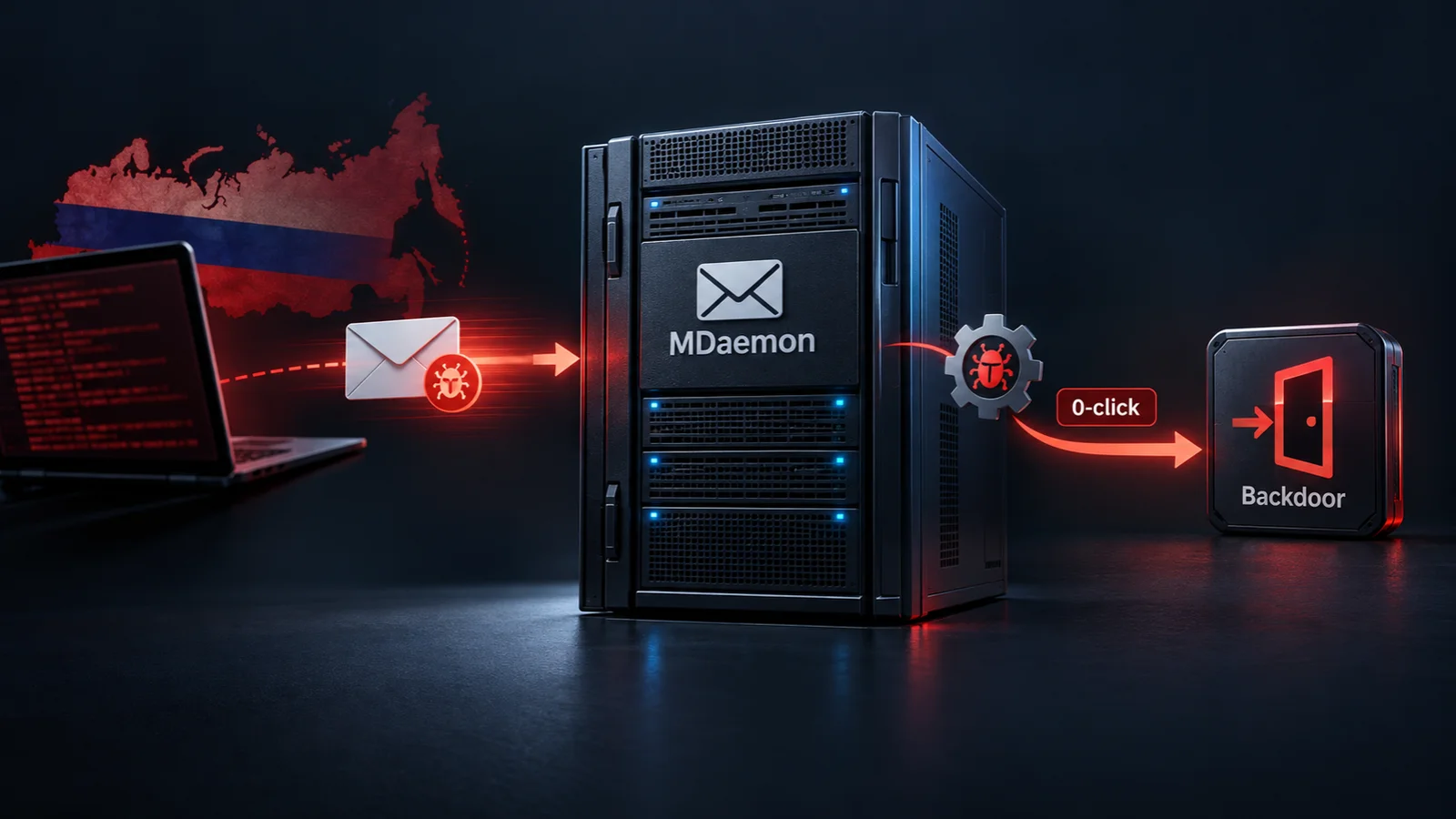
Russia-aligned threat actors are exploiting a flaw in MDaemon mail server software to run code on the server. Victims don’t have to open or click anything. ESET’s APT Activity Report for Q2–Q3 2026 describes an active campaign in Ukraine. ESET could not attribute it to a known Russia-aligned group. Mdaemon mail server flaw According to […]

The post Russian Hackers Exploit MDaemon Mail Server Flaw to Install Backdoors Without User Interaction appeared first on GBHackers Security | #1 Globally Trusted Cyber Security News Platform.

North Korean Hackers Steal $6.36 Billion From Binance in Largest Crypto Hack Ever

North Korea’s TraderTraitor group drained about $6.36 billion from Binance wallets across ten blockchains on October 29, 2026. TRM Labs, which published the findings, calls it the largest crypto theft on record. TRM Labs says the total is about four times the $1.5 billion Bybit heist of February 2025. North Korean hackers Binance theft According […]

The post North Korean Hackers Steal $6.36 Billion From Binance in Largest Crypto Hack Ever appeared first on GBHackers Security | #1 Globally Trusted Cyber Security News Platform.

Unauthorized Codex and Claude Code Relays Disable Security Protections at 12 Organizations

Symantec’s Threat Hunter Team has found an unauthorized relay service that installs the genuine OpenAI Codex and Anthropic Claude Code CLIs, then rewrites their settings to turn off sandboxing. It has affected 12 organizations since early 2026, mostly in mainland China. Codex Claude Code relays AI coding agents read files, write code, and run commands […]

The post Unauthorized Codex and Claude Code Relays Disable Security Protections at 12 Organizations appeared first on GBHackers Security | #1 Globally Trusted Cyber Security News Platform.

Japan Faces Growing Cyberattack Crisis as AI Tools Help Hackers Target Businesses and Government

Japan is dealing with an intense wave of AI-assisted intrusions that has exposed weaknesses in its corporate and public-sector defenses. Dozens of incidents, from brokerages to delivery firms, have made data leaks routine. Japan AI cyberattacks According to reporting published by Bloomberg, on October 28, Japan’s Ministry of Economy, Trade and Industry (METI) disclosed unauthorized […]

The post Japan Faces Growing Cyberattack Crisis as AI Tools Help Hackers Target Businesses and Government appeared first on GBHackers Security | #1 Globally Trusted Cyber Security News Platform.

Hackers Target Asian Governments With New NetamLoader Malware Hidden in Windows Update Files

Kaspersky researchers have uncovered NetamLoader, a .NET loading framework built on XAML markup. It appears to be a supply-chain attack on a customized Windows build used only by Asian government bodies. No known APT group has been linked to it. NetamLoader malware Kaspersky Security Network flagged a .config file that used AppDomainManager injection to load […]

The post Hackers Target Asian Governments With New NetamLoader Malware Hidden in Windows Update Files appeared first on GBHackers Security | #1 Globally Trusted Cyber Security News Platform.

Fake Polymarket Scam Network Claims Nearly $11 Million in Cryptocurrency Deposits

Russian-language “traffer” teams are selling ready-made fake prediction-market platforms to affiliates. One of them, AtlasCore, claims about $10.97 million in victim deposits. Recorded Future’s Insikt Group tracked the campaigns, which impersonate sites like Polymarket and Kalshi. The deposit figures come from the threat actors themselves and are unverified. Fake Polymarket scam Since spring 2026, AtlasCore, […]

The post Fake Polymarket Scam Network Claims Nearly $11 Million in Cryptocurrency Deposits appeared first on GBHackers Security | #1 Globally Trusted Cyber Security News Platform.

New Kairos DDoS Botnet Hijacks Linux Devices to Overwhelm Servers With Thousands of TCP Connections

Nozomi Networks Labs has documented Kairos, a previously undocumented Go-based DDoS bot for Linux. It turns compromised Linux devices into attack nodes that exhaust a victim’s connection capacity with thousands of idle TCP sessions. Kairos DDoS botnet Honeypot telemetry captured three Kairos builds. They differ only in the hard-coded C2 address and the Go compiler […]

The post New Kairos DDoS Botnet Hijacks Linux Devices to Overwhelm Servers With Thousands of TCP Connections appeared first on GBHackers Security | #1 Globally Trusted Cyber Security News Platform.

DarkSword iOS Exploit Chain Bypasses Safari Sandbox and Steals Apple Notes Data

Zimperium zLabs has found that the Coruna iOS exploit campaign now serves two iOS exploit chains, picked by the victim’s iOS version. A DarkSword-derived chain escapes Safari’s sandbox on newer iPhones and has stolen Apple Notes data. Recent coverage of Coruna and DarkSword spreading through Instagram ads and abandoned tags shows the kits are still […]

The post DarkSword iOS Exploit Chain Bypasses Safari Sandbox and Steals Apple Notes Data appeared first on GBHackers Security | #1 Globally Trusted Cyber Security News Platform.

New AI-Powered NIK C2 Malware Uses OpenAI API to Help Hackers Steal Data and Control Windows PCs

Cisco Talos has uncovered NIK C2, a Go-based, 64-bit Windows remote access tool that embeds a working OpenAI client. Operators can send prompts through an infected machine and read the model’s replies in their C2 panel. NIK C2 malware According to technical research published by Cisco Talos, the implant talks to its server over TLS-secured […]

The post New AI-Powered NIK C2 Malware Uses OpenAI API to Help Hackers Steal Data and Control Windows PCs appeared first on GBHackers Security | #1 Globally Trusted Cyber Security News Platform.

Claude AI Exposes Internal Sandbox Details That Help Researcher Bypass Local Connection Restrictions

A Bishop Fox researcher investigating Claude’s sandbox obtained an internal control binary, recovered authorization tokens from process memory, and bypassed a local connection restriction to reach a sandbox control service. Anthropic said the sandbox observations did not qualify as security issues because its security boundaries sit outside the untrusted sandbox. According to technical research published […]

The post Claude AI Exposes Internal Sandbox Details That Help Researcher Bypass Local Connection Restrictions appeared first on GBHackers Security | #1 Globally Trusted Cyber Security News Platform.

Top 10 Best Threat Intelligence Platforms (TIP) in 2026 [Ranked & Scored]

Raw intelligence is cheap; operationalized intelligence is rare. A threat intelligence platform earns its keep by fusing feeds, deduplicating indicators, scoring relevance against your estate, and pushing enriched context into the SIEM, SOAR, and firewall before the analyst asks.

The 2026 rankings reward platforms that close that loop, not those that merely aggregate. Recorded Future takes 1; Anomali and ThreatConnect complete the podium.

Key Takeaways

• 1 overall: Recorded Future the intelligence graph with the broadest collection and cleanest productization.

• Podium: Recorded Future (collection breadth), Anomali (big-data intel analytics), ThreatConnect (intel-ops workflow).

• Buyer split: intelligence providers with platforms (Recorded Future, Mandiant, Flashpoint, Intel 471) versus neutral aggregation platforms (Anomali, ThreatQuotient, Cyware, EclecticIQ, ThreatConnect) many programs need one of each.

• 2026 theme: relevance scoring the TIP that ranks intel against your attack surface beats the one with the most feeds.

How We Scored (Methodology)

Research-based evaluation; no lab testing, no paid placement; editorial scores excluded from structured data.

Criteria: collection/fusion breadth, relevance-scoring intelligence, operationalization depth (SIEM/SOAR/control push), analyst workbench quality, collaboration/sharing, and pricing accessibility.

Weights: operationalization 25%, collection/fusion 25%, relevance scoring 20%, workbench 15%, sharing 15%.

The 2026 TIP Power Rankings

S.NOPlatformAwardScore*
1Recorded FutureBest intelligence graph & collection9.1
2AnomaliBest big-data intel analytics8.6
3OpenCTI (Filigran)Best open-source intel operations platform8.5
4Google (Mandiant)Best frontline adversary intel8.5
5CywareBest intel sharing & collective defense8.2
6ThreatQuotientBest data-driven intel library8.1
7EclecticIQBest analyst-centric STIX-native TIP8.0
8Palo Alto (Cortex)Best suite-embedded intel engine7.9
9FlashpointBest deep/dark-web intelligence7.8
10Intel 471Best cybercrime-underground coverage7.7

*Editorial research-based scores, not lab results.

1. Recorded Future — Best Intelligence Graph & Collection

Recorded Future — Best Intelligence Graph & Collection

Snapshot: Module-based subscription | Intelligence Graph, 100+ sources classes | AI-assisted analyst tooling

Why it earns 1: Recorded Future industrialized intelligence: automated collection across open, technical, and dark sources into a graph that links actors, infrastructure, vulnerabilities, and targets, then packages it into modules a SOC can act on vulnerability prioritization, brand, geopolitical, identity exposure.

Its AI layer summarizes and drafts, cutting analyst reading time. The breadth comes at anchor-tier pricing.

Pros: Collection breadth; graph linkage; module productization; API depth.

Cons: Premium cost; module sprawl needs scoping discipline.

Bottom line: The most intelligence per query budget for it.

2. Anomali — Best Big-Data Intel Analytics

Anomali — Best Big-Data Intel Analytics

Snapshot: Platform tiers | ThreatStream TIP + Match retro-search | Copilot analytics

Why it ranks here: Anomali pairs a mature TIP (ThreatStream’s feed fusion, scoring, and dedup) with its differentiator: Match, which retro-searches years of your telemetry against fresh intel in seconds answering “were we already hit?” the moment an IOC publishes.

The big-data spine now powers broader security analytics ambitions.

Pros: Retro-matching at scale; feed-fusion maturity; analytics trajectory.

Cons: Full value assumes telemetry centralization.

Bottom line: The “were we already compromised?” machine.

3. OpenCTI (Filigran) — Best Open-Source Intel Operations Platform

OpenCTI (Filigran) — Best Open-Source Intel Operations Platform

Snapshot: Free Community + Enterprise | STIX 2.1 knowledge graph | Threat intelligence workflows + integrations

Why it ranks here: OpenCTI turns threat intelligence into a structured operational workflow by connecting indicators, threat actors, malware, vulnerabilities, campaigns, and TTPs inside a STIX 2.1-based knowledge graph.

It supports enrichment, case management, automation, intelligence sharing, and integrations with SIEM, SOAR, EDR, and other security tools, making it well suited for teams that want to build and operate a full threat intelligence function.

Pros: Open-source core; STIX 2.1 native; strong knowledge graph; broad connector ecosystem; case management and automation.

Cons: Self-hosting requires operational effort; some advanced capabilities and enterprise support require paid editions.

Bottom line: Build and operationalize threat intelligence around an open, structured knowledge graph.

4. Google (Mandiant) — Best Frontline Adversary Intel

Google (Mandiant) — Best Frontline Adversary Intel

Snapshot: Subscription tiers | Breach-frontline sourcing | Fused into Google SecOps

Why it ranks here: Mandiant’s edge is provenance: intelligence written by the teams inside the breaches, actor profiles with incident-floor grounding, and now native fusion into Google SecOps where fresh intel retro-hunts automatically.

As a neutral TIP it’s less the point; as an intelligence source with platform reach, it’s elite.

Pros: Frontline sourcing; actor-profile depth; SecOps fusion.

Cons: Platform story strongest inside Google’s suite.

Bottom line: The intel other intel cites.

5. Cyware — Best Intel Sharing & Collective Defense

Cyware — Best Intel Sharing & Collective Defense

Snapshot: Modular platform | CTIX TIP + CSAP sharing hub | ISAC/ISAO backbone

Why it ranks here: Cyware owns the sharing lane: the infrastructure behind many ISACs and ISAOs, bidirectional intel exchange with governance, and a TIP-plus-orchestration stack that moves verdicts to controls.

For sector collectives and enterprises running hub-and-spoke intel with subsidiaries, it’s the purpose-built answer.

Pros: Sharing infrastructure; ISAC pedigree; orchestration ties.

Cons: Solo-enterprise buyers use half the platform.

Bottom line: Collective defense, productized.

6. ThreatQuotient — Best Data-Driven Intel Library

ThreatQuotient — Best Data-Driven Intel Library

Snapshot: Platform licensing | ThreatQ library + ACE scoring | Securonix-adjacent ownership note

Why it ranks here: ThreatQ built the intel library pattern: everything into one deduplicated, scored repository; adaptive scoring that learns from analyst decisions; and integrations marketplace pushing verdicts stack-wide.

Note the ownership landscape has shifted (Securonix acquisition) confirm roadmap continuity in procurement.

Pros: Library model clarity; adaptive scoring; integration marketplace.

Cons: Post-acquisition roadmap diligence required.

Bottom line: The classic TIP pattern, still clean verify the roadmap.

7. EclecticIQ — Best Analyst-Centric STIX-Native TIP

EclecticIQ — Best Analyst-Centric STIX-Native TIP

Snapshot: Platform licensing | STIX-native graph workbench | Gov/CERT pedigree

Why it ranks here: EclecticIQ serves the analyst who thinks in STIX: native structured-intel modeling, graph pivoting across entities, and the European government/CERT pedigree that shows in its rigor. It’s the craftsman’s TIP strongest where analysis quality, not feed volume, is the product.

Pros: STIX fidelity; analyst workbench; sovereign-sector fit.

Cons: Less turnkey for feed-consumer teams.

Bottom line: For intel teams that produce, not just consume.

8. Palo Alto (Cortex) — Best Suite-Embedded Intel Engine

Palo Alto (Cortex) — Best Suite-Embedded Intel Engine

Snapshot: Suite module | Unit 42 intel + TIM in Cortex | AutoFocus lineage

Why it ranks here: Palo Alto folds threat-intel management into Cortex: Unit 42’s research stream, TIM operationalizing indicators across XSOAR playbooks, and enforcement reach into the firewall estate no neutral TIP matches.

It’s intel as a suite layer compelling inside Palo Alto gravity, secondary outside it.

Pros: Enforcement reach; Unit 42 stream; XSOAR fusion.

Cons: Suite-coupled by design.

Bottom line: Intel that ends in a firewall rule.

9. Flashpoint — Best Deep/Dark-Web Intelligence

 Flashpoint — Best Deep/Dark-Web Intelligence
Flashpoint — Best Deep/Dark-Web Intelligence

Snapshot: Subscription collections | Underground communities coverage | Fraud/physical convergence

Why it ranks here: Flashpoint’s collectors live where threats are planned: closed forums, markets, messaging channels.

The platform packages that access with analyst support for fraud, ransomware-extortion tracking, and physical-security convergence. As a primary TIP it’s narrower; as the underground lens in a stack, it’s the standard.

Pros: Underground access depth; fraud convergence; analyst services.

Cons: Complements rather than replaces a general TIP.

Bottom line: The dark-web telescope.

10. Intel 471 — Best Cybercrime-Underground Coverage

 Intel 471 — Best Cybercrime-Underground Coverage
Intel 471 — Best Cybercrime-Underground Coverage

Snapshot: Intelligence subscriptions | Adversary/malware/credential intel | Actor-tracking methodology

Why it ranks here: Intel 471 tracks the cybercrime economy like a beat reporter: actor handles, malware-as-a-service supply chains, credential markets, and the HUMINT-grade sourcing that automated collectors miss.

Programs defending against monetized crime finance, retail, logistics get disproportionate value.

Pros: HUMINT depth; crime-economy mapping; credential-market visibility.

Cons: Specialist lens, not full-spectrum TIP.

Bottom line: Follow the money this is who’s watching it.

Full Comparison Table

PlatformTypeCollection strengthOperationalizationSharing/collabPricing model
Recorded FutureProvider+platformBroadest graphStrongYesModules
AnomaliNeutral TIPFeed fusionRetro-matchYesTiers
OpenCTI (Filigran)Open-source TIPSTIX 2.1 graph + connectorsWorkflow + automationYesFree + enterprise
MandiantProviderFrontlineSecOps-fusedPartialTiers
CywareSharing+TIPFusionOrchestrationISAC-gradeModular
ThreatQuotientNeutral TIPLibraryMarketplace pushYesPlatform
EclecticIQNeutral TIPSTIX-nativeYesCERT-gradePlatform
Palo Alto CortexSuite moduleUnit 42EnforcementPartialSuite
FlashpointProviderUndergroundAPIPartialCollections
Intel 471ProviderHUMINT crimeAPIPartialSubscriptions

Yes/No Capability Table

PlatformNeutral multi-feed aggregation?Retro-search own telemetry?Push verdicts to controls?ISAC/community sharing?Own primary-source collection?
Recorded FutureYesPartialYesYesYes (core)
AnomaliYesYes (Match)YesYesPartial
OpenCTI (Filigran)YesPartialYesYesNo
MandiantPartialYes (SecOps)YesPartialYes (frontline)
CywareYesPartialYesYes (core)No
ThreatQuotientYesPartialYesYesNo
EclecticIQYesPartialYesYesNo
Palo Alto CortexYesYesYes (enforce)PartialYes (Unit 42)
FlashpointNoNoPartialPartialYes (underground)
Intel 471NoNoPartialPartialYes (HUMINT)

Buying Advice: Score Relevance, Not Volume

Feed count is vanity; the metric that matters is what percentage of pushed indicators your estate could actually encounter.

Structure the program in two layers one neutral aggregation platform (Anomali, ThreatConnect, ThreatQuotient, EclecticIQ, Cyware) fusing everything, plus one or two primary-source providers (Recorded Future, Mandiant, Flashpoint, Intel 471) matched to your threat model and resist buying five overlapping feeds before measuring overlap.

In the pilot, demand a relevance test: have each platform score a month of its intel against your industry, stack, and geography, then count how many scored-critical items your SIEM could have matched.

Wire the TIP to push, not just store SIEM enrichment, SOAR verdicts, firewall and DNS blocklists and measure time-from-publication-to-control.

Confirm the ThreatQuotient ownership roadmap in writing, and remember the quiet ROI: deduplication alone often pays for the platform by cutting false-positive enrichment calls.

FAQs

What are the best threat intelligence platforms in 2026? Recorded Future leads on collection and graph depth; Anomali for retro-matching, ThreatConnect for intel-ops workflow, Mandiant for frontline sourcing, with Cyware, ThreatQuotient, EclecticIQ, Cortex, Flashpoint, and Intel 471 by lane.

TIP versus threat intel feed what’s the difference? Feeds are content; a TIP is the machinery that fuses, dedupes, scores, and pushes that content into controls and workflow.

How many intel sources do we need? One neutral aggregation layer plus one or two primary providers matched to your threat model measured overlap should stay under ~30% before adding more.

What’s the best TIP success metric? Time from intel publication to control update, and the percentage of pushed indicators relevant to your estate.

Do small teams need a TIP? Below a dedicated intel analyst, a TIP is usually premature suite-embedded intel (Cortex, Sentinel, SecOps) covers the basics until the function exists.

Verdict

Ten platforms, two layers, one discipline: intelligence only counts when it reaches a control before the attacker reaches you.

Recorded Future for breadth, Anomali for retro-truth, ThreatConnect for workflow, Mandiant for frontline authority, Cyware for sharing, ThreatQuotient and EclecticIQ for the library and the analyst, Cortex for enforcement, Flashpoint and Intel 471 for the underground fuse once, score against yourself, push everywhere, and measure the minutes.

Author: [AUTHOR NAME], [credential]. Reviewed by: [REVIEWER NAME]. Last updated: October 2026. Cybersecurity News editorial: independent, research-based rankings; no paid placement; scores are editorial and excluded from structured data.

Read next on Cybersecurity News:

• Top 10 Best CTI Feeds & Services

• Top 10 Best SIEM Tools

• Top 10 Best SOAR Tools

• Top 10 Best Threat Hunting Services

• Top 10 Best Digital Forensics & IR Companies

• Top 10 Best Deception Technology Solutions

• Top 10 Best Attack Surface Management Tools

• Top 10 Best Detection Engineering Tools

• Top 10 Best GenAI SOC Copilots

• Top 10 Best Insider Threat Detection Tools

The post Top 10 Best Threat Intelligence Platforms (TIP) in 2026 [Ranked & Scored] appeared first on Cyber Security News.

Top 10 Best SOAR Tools in 2026 [Ranked & Scored]

SOAR grew up twice: first from scripts to playbooks, then in the current wave from playbooks to AI agents that draft, decide, and act under human guardrails.

The 2026 field splits into suite engines living inside SIEM/XDR platforms and independent automation fabrics (Tines, Torq, Swimlane) selling speed-to-build to any stack. Palo Alto Cortex XSOAR takes 1 on depth and content gravity; Splunk SOAR and Tines complete the podium.

Key Takeaways

• 1 overall: Cortex XSOAR the deepest playbook ecosystem and marketplace in the category.

• Podium: XSOAR (depth), Splunk SOAR (SIEM-fused automation), Tines (fastest no-code build velocity).

• Market split: suite-embedded SOAR (Sentinel, Splunk, FortiSOAR) versus independent fabrics (Tines, Torq, Swimlane, D3) pick by stack gravity versus neutrality.

• 2026 theme: agentic AI automation platforms racing to let LLM agents execute tier-1 triage with auditable guardrails.

How We Scored (Methodology)

Research-based evaluation; no lab testing, no paid placement; editorial scores excluded from structured data. Criteria: playbook/automation depth, integration breadth, build velocity (time from idea to running workflow), AI-agent maturity, case management, and pricing accessibility.

Weights: automation depth 25%, build velocity 20%, integrations 20%, AI maturity 20%, case management 15%.

The 2026 SOAR Power Rankings

S.NO PlatformAwardScore*
1Palo Alto Cortex XSOARBest playbook depth & ecosystem9.0
2Splunk SOARBest SIEM-fused automation8.7
3TinesBest no-code build velocity8.6
4TorqBest agentic-AI automation fabric8.5
5Microsoft Sentinel (Logic Apps)Best bundled estate automation8.3
6Google SecOps SOAR (Siemplify)Best case-centric suite SOAR8.2
7SwimlaneBest low-code at enterprise scale8.0
8Fortinet FortiSOARBest Fabric-integrated SOAR7.8
9Rapid7 (InsightConnect)Best mid-market bundled automation7.6
10D3 SecurityBest MSSP-grade case automation7.5

*Editorial research-based scores, not lab results.

1. Palo Alto Cortex XSOAR — Best Playbook Depth & Ecosystem

Palo Alto Cortex XSOAR — Best Playbook Depth & Ecosystem

Snapshot: Platform licensing | Largest content marketplace | XSIAM convergence path

Why it earns 1: XSOAR remains the category’s reference: hundreds of content packs, a marketplace rivals haven’t matched,war-room case management, and playbook depth that handles the ugly edge cases simple workflows punt on.

Its gravity now pulls toward XSIAM, where SOAR becomes a layer of a converged SOC platform buyers should ask which SKU carries the roadmap.

Pros: Content ecosystem; playbook depth; case management maturity; threat-intel fusion.

Cons: Platform weight and cost for small teams; XSIAM-era packaging questions.

Bottom line: The most automation per playbook if you can feed the platform.

2. Splunk SOAR — Best SIEM-Fused Automation

Splunk SOAR — Best SIEM-Fused Automation

Snapshot: Per-seat/event licensing | Native Splunk ES integration | Cisco portfolio ties

Why it ranks here: For Splunk estates the case is short: detections in ES trigger SOAR playbooks natively, context flows without connector glue, and the automation layer inherits Splunk’s content maturity.

Under Cisco the roadmap adds network-action reach. Outside Splunk estates, the independents win on neutrality and build speed.

Pros: SIEM fusion; mature playbook library; Cisco action surface.

Cons: Strongest only inside Splunk gravity.

Bottom line: The default when Splunk is the SOC’s spine.

3. Tines — Best No-Code Build Velocity

Tines — Best No-Code Build Velocity

Snapshot: Story-based tiers, generous free tier | No-code canvas | AI workflow steps

Why it ranks here: Tines made automation a product anyone on the team can ship: seven building blocks, a canvas instead of code, and workflows live in an afternoon that playbook platforms would scope in weeks.

Its free tier seeded a practitioner community, and AI steps slot into stories under explicit control. Case management is deliberately lean pair with your ticketing spine.

Pros: Fastest idea-to-running-workflow; practitioner-loved; transparent tiers.

Cons: Lean case management; deep-custom logic eventually wants code.

Bottom line: The velocity pick — automation as a daily habit, not a project.

4. Torq — Best Agentic-AI Automation Fabric

Torq — Best Agentic-AI Automation Fabric

Snapshot: Workflow/usage tiers | Hyperautomation + AI agents | Multi-agent orchestration

Why it ranks here: Torq leaned hardest into the agentic wave: socoteria-style AI runbooks where LLM agents triage, enrich, and close tier-1 cases under policy guardrails, with human escalation baked in.

The no-code fabric underneath matches the velocity leaders; the AI layer is the bet that differentiates it. Validate agent-autonomy claims against your own alert mix.

Pros: Agentic-AI depth; build speed; modern integration fabric.

Cons: Agent-autonomy claims need your-environment validation.

Bottom line: The AI-forward pick for teams ready to delegate tier-1.

5. Microsoft Sentinel — Best Bundled Estate Automation

 Microsoft Sentinel — Best Bundled Estate Automation
Microsoft Sentinel — Best Bundled Estate Automation

Snapshot: Consumption (Logic Apps) | Sentinel-native playbooks | Copilot automation path

Why it ranks here: For Sentinel shops, SOAR arrives bundled: Logic Apps playbooks trigger from analytics rules, a connector catalog spanning the Azure estate, and Copilot threading AI assistance into response.

Costing is consumption-granular and the ceiling is real complex SOC workflow wants the dedicated platforms but the marginal price of starting is near zero.

Pros: Bundled economics; estate-native triggers; connector breadth.

Cons: Workflow depth and case management trail dedicated SOAR.

Bottom line: Start here if you’re already in Sentinel; graduate if workflows outgrow it.

6. Google SecOps SOAR — Best Case-Centric Suite SOAR

Google SecOps SOAR — Best Case-Centric Suite SOAR

Snapshot: Suite packaging | Siemplify lineage | Gemini-assisted response

Why it ranks here: The Siemplify acquisition gave Google a genuinely case-centric SOAR: alert grouping into threat-centric cases, analyst workbench ergonomics, and now native fusion with SecOps SIEM and Mandiant intel.

Inside the Google SecOps suite it’s a clean story; as standalone SOAR, the independents iterate faster.

Pros: Case-grouping model; suite fusion; Gemini assistance.

Cons: Tied to suite gravity; standalone roadmap secondary.

Bottom line: The right SOAR if Google SecOps is your SIEM answer.

7. Swimlane — Best Low-Code at Enterprise Scale

Swimlane — Best Low-Code at Enterprise Scale

Snapshot: Platform licensing | Turbine engine | Beyond-SOC automation reach

Why it ranks here: Swimlane’s Turbine pitches low-code automation at enterprise case volume high-throughput event processing, flexible data models, and use cases stretching past the SOC into fraud, compliance, and OT workflows.

It wins complex, high-scale automation programs; lighter teams find the platform more than they need.

Pros: Throughput scale; data-model flexibility; beyond-SOC reach.

Cons: Platform weight for small teams.

Bottom line: Enterprise automation programs, not quick wins.

8. Fortinet FortiSOAR — Best Fabric-Integrated SOAR

Fortinet FortiSOAR — Best Fabric-Integrated SOAR

Snapshot: Appliance/VM/SaaS licensing ] | Security Fabric native | OT-aware playbooks

Why it ranks here: FortiSOAR completes the Fortinet story: playbooks that action FortiGate, FortiEDR, and the wider Fabric natively, with connector breadth beyond the family and OT-conscious content for the industrial estates Fortinet serves.

Outside Fortinet gravity it competes on price; inside, it’s the path of least resistance.

Pros: Fabric-native actions; OT content; value pricing.

Cons: Strongest case is Fortinet-estate-specific.

Bottom line: The Fabric estate’s automation layer.

9. Rapid7 InsightConnect — Best Mid-Market Bundled Automation

Rapid7 InsightConnect — Best Mid-Market Bundled Automation

Snapshot: Per-user/workflow tiers | Insight platform native | Pre-built workflow library

Why it ranks here: InsightConnect extends Rapid7’s bundle logic to automation: pre-built workflows for the common 80%,native triggers from InsightIDR and InsightVM, and pricing a mid-market budget survives.

Depth-ceiling applies heavy custom orchestration belongs upstream but the time-to-first-automation is short.

Pros: Bundle economics; quick starts; platform-native triggers.

Cons: Custom-depth ceiling.

Bottom line: Automation for teams that already buy Rapid7.

10. D3 Security — Best MSSP-Grade Case Automation

D3 Security — Best MSSP-Grade Case Automation

Snapshot: Tiered platform licensing | Smart SOAR, multi-tenant | MITRE-mapped playbooks

Why it ranks here: D3 built for the service-provider pattern: multi-tenant case management, codeless playbooks mapped to ATT&CK, and event-pipeline automation that normalizes noisy client stacks.

MSSPs and large internal SOCs running many estates get leverage; single-tenant buyers have flashier options above.

Pros: Multi-tenancy; ATT&CK-mapped content; pipeline normalization.

Cons: Brand gravity trails the leaders.

Bottom line: The MSSP workhorse.

Full Comparison Table

PlatformBuild modelAI agentsCase managementBest stack fitPricing model
Cortex XSOARPlaybook/codeYesWar-room gradePalo Alto / neutralPlatform
Splunk SOARPlaybookYesYesSplunkPer-seat/event
TinesNo-code canvasStepsLeanNeutralStory tiers
TorqNo-codeAgentic (core)YesNeutralUsage tiers
SentinelLogic AppsCopilotBasicMicrosoftConsumption
Google SecOpsPlaybookGeminiCase-centricGoogleSuite
SwimlaneLow-codeYesEnterprise-scaleNeutralPlatform
FortiSOARPlaybookYesYesFortinetFlexible
InsightConnectPre-builtPartialBasicRapid7Tiers
D3 SecurityCodelessYesMulti-tenantMSSPTiers

Yes/No Capability Table

PlatformNo/low-code builder?Agentic AI triage?Multi-tenant (MSSP) mode?SIEM-native triggers?Free tier or community edition?
Cortex XSOARPartialYesYesYesCommunity
Splunk SOARPartialYesPartialYes (ES)No
TinesYes (core)PartialYesYesYes
TorqYesYes (core)YesYesYes
SentinelYesYesNoYes (native)Consumption-min
Google SecOpsYesYesYesYes (native)No
SwimlaneYesYesYesYesNo
FortiSOARYesYesYesYes (Fabric)No
InsightConnectYesPartialNoYes (Insight)No
D3 SecurityYesYesYes (core)YesNo

Buying Advice: Automate the Boring 80% First

SOAR programs die from over-ambition: the six-month mega-playbook that never ships. Start with the five alerts that eat the most analyst-minutes per week phishing triage, IP enrichment, account-disable, EDR containment, ticket hygiene and demand each finalist demonstrate those five live, built in front of you, during the pilot.

That one request separates velocity platforms from services engagements. Decide the suite-versus-independent question by stack honesty: two-plus years committed to one SIEM favors its embedded SOAR; a mixed or shifting stack favors Tines/Torq-class neutrality.

For agentic AI, require audit trails and approval gates per action class before any autonomy, and measure the only number that matters: analyst-hours returned per week, published monthly.

FAQs

What are the best SOAR tools in 2026? Cortex XSOAR leads on depth, Splunk SOAR for SIEM fusion, Tines for build velocity, Torq for agentic AI, with Sentinel, Google SecOps SOAR, Swimlane, FortiSOAR, InsightConnect, and D3 by stack and scale.

Suite SOAR or independent? Committed single-SIEM estates lean suite (native triggers, bundled cost); mixed stacks lean independent fabrics for neutrality and speed.

Are AI agents ready for tier-1 triage? Ready for guardrailed delegation enrichment, grouping, draft verdicts with human sign-off on containment; full autonomy should be earned per playbook with audit trails.

What should a SOAR pilot prove? Your five noisiest workflows, built live during the pilot, with time-to-build and analyst-hours-saved measured.

Does SOAR replace analysts? No it converts their hours from copy-paste to judgment; the headcount story is capacity reclaimed, not seats cut.

Verdict

Ten platforms, two buying lanes, one metric: analyst-hours returned. XSOAR for maximum depth, Splunk and Sentinel and Google for suite gravity, Tines and Torq for the speed-and-AI frontier, Swimlane for enterprise scale, FortiSOAR for Fabric estates, InsightConnect for the mid-market, D3 for MSSPs ship the boring 80% first, gate the AI with audit trails, and publish the hours you got back.

Author: [AUTHOR NAME], [credential]. Reviewed by: [REVIEWER NAME]. Last updated: October 2026. Cybersecurity News editorial: independent, research-based rankings; no paid placement; scores are editorial and excluded from structured data.

Read next on Cybersecurity News:

• Top 10 Best SIEM Tools

• Top 10 Best GenAI SOC Copilots

• Top 10 Best Incident Response Platforms

• Top 10 Best Threat Intelligence Platforms

• Top 10 Best Detection Engineering Tools

• Top 10 Best SOC-as-a-Service Providers

• Top 10 Best Managed SIEM Services

• Top 10 Best UEBA Tools

• Top 10 Best EDR Solutions

• Top 10 Best Security Log Management Tools

The post Top 10 Best SOAR Tools in 2026 [Ranked & Scored] appeared first on Cyber Security News.

Top 10 Best Confidential Computing Platforms in 2026 [Ranked & Scored]

Encryption always had a hole: data must decrypt to compute, and whoever owns the machine cloud admin, hypervisor, intruder with root could watch.

Confidential computing closes it with hardware-enforced trusted execution environments (TEEs) that keep data encrypted even mid-computation and prove it via attestation.

In 2026, AI made the niche mainstream: enterprises want models fine-tuned on regulated data inside enclaves neither the cloud nor the model vendor can inspect.

We ranked ten players noting that two, Intel and AMD, are the silicon lanes the rest build on rather than competing platforms. Microsoft Azure takes 1; AWS and Google Cloud complete the podium.

Key Takeaways

• 1 overall: Azure the broadest confidential-computing portfolio, from confidential VMs to confidential AI.

• Podium: Azure (portfolio breadth), AWS Nitro Enclaves (operational simplicity at scale), Google Cloud (one-checkbox adoption).

• Lane labels: Intel (TDX/SGX) and AMD (SEV-SNP) are ranked as the silicon foundations they are you buy them through the platforms above.

• 2026 driver: confidential AI attested enclaves for training and inference on data nobody, including the provider, can see.

How We Scored (Methodology)

Research-based evaluation: TEE breadth (VM-level, enclave-level, GPU), attestation maturity and tooling, lift-and-shift friction, confidential-AI capability, ecosystem/ISV support, and pricing structure.

No lab testing; no paid placement; editorial scores excluded from structured data.

Weights: attestation & assurance 25%, adoption friction 25%, confidential-AI readiness 20%, TEE breadth 20%, pricing clarity 10%.

The 2026 Confidential Computing Power Rankings

S.NO PlatformAwardScore*
1Microsoft AzureBest portfolio breadth9.0
2AWS (Nitro Enclaves)Best operational isolation model8.7
3Google CloudBest one-checkbox adoption8.6
4Intel (SGX/TDX)Silicon lane: finest-grained enclaves8.5
5AMD (SEV-SNP)Silicon lane: lift-and-shift VMs8.5
6FortanixBest enclave application platform8.3
7AnjunaBest lift-and-shift enclave runtime8.1
8Edgeless SystemsBest open-source confidential Kubernetes8.0
9IBMBest regulated-industry confidential cloud7.9
10DecentriqBest confidential data clean room7.7

*Editorial research-based scores, not lab results.

1. Microsoft Azure — Best Portfolio Breadth

Microsoft Azure — Best Portfolio Breadth

Snapshot: Consumption pricing | Confidential VMs (SEV-SNP/TDX), SGX enclaves, confidential containers/AKS, confidential GPU | Attestation service

Why it earns 1: Azure treats confidential computing as a product family, not a feature: confidential VMs on both AMD and Intel silicon, fine-grained SGX enclaves, confidential containers on AKS, Managed HSM running in TEEs, Microsoft Azure Attestation as a service and the frontier piece, confidential GPU capacity for AI workloads where the model and data stay sealed even from Microsoft.

The breadth means one cloud covers lift-and-shift, rebuild, and confidential-AI patterns simultaneously.

Pros: Widest TEE menu; attestation tooling maturity; confidential-GPU lead lane; enterprise compliance fit.

Cons: Navigating the menu takes architecture work; GPU capacity economics.

Bottom line: The most ways to say “nobody can see inside provably.”

2. AWS (Nitro Enclaves) — Best Operational Isolation Model

AWS (Nitro Enclaves) — Best Operational Isolation Model

Snapshot: No extra enclave charge (EC2-based) | Nitro Enclaves + KMS attestation integration | NitroTPM/confidential options evolving

Why it earns 2: AWS approached the problem through its Nitro architecture: enclaves carved from a parent EC2 instance no persistent storage, no interactive access, cryptographic attestation wired into KMS so keys release only to approved code.

The model is operationally clean and already processes payment, identity, and healthcare secrets at scale.

Its philosophy differs from VM-level competitors (isolation from your own instance rather than blanket memory encryption marketed as confidential VMs), so map your threat model accordingly.

Pros: Elegant attestation-to-KMS flow; no enclave surcharge; Nitro’s hardened pedigree.

Cons: Application partitioning required; VM-level “confidential by checkbox” is not the AWS framing.

Bottom line: Enclave isolation as a disciplined AWS primitive.

3. Google Cloud — Best One-Checkbox Adoption

Google Cloud — Best One-Checkbox Adoption

Snapshot: Modest premium on N2D/C3-class | Confidential VMs/GKE nodes (SEV, TDX) | Confidential Space for collaboration

Why it earns 3: Google made the on-ramp trivial: tick “confidential” and your VM or GKE node pool runs memory-encrypted on AMD or Intel silicon, no code changes.

Confidential Space extends the model to multi-party work joint analysis where no participant (or Google) sees the others’ raw data one of the cleanest productizations of the technology’s collaborative promise.

Pros: Lowest adoption friction anywhere; Confidential Space’s multi-party design; clean attestation flows.

Cons: Fine-grained enclave options narrower than Azure’s menu.

Bottom line: Confidential computing as a checkbox, collaboration as a product.

4. Intel (SGX/TDX) — Silicon Lane: Finest-Grained Enclaves

 Intel (SGX/TDX) — Silicon Lane: Finest-Grained Enclaves
Intel (SGX/TDX) — Silicon Lane: Finest-Grained Enclaves

Snapshot: Not a direct purchase consumed via clouds/OEMs | SGX app enclaves + TDX confidential VMs

Why it earns 4: Intel is a foundation, not a competing platform: SGX pioneered application-level enclaves (the smallest possible trust boundary just your code and data, not a whole OS) and TDX brings VM-scale isolation to match AMD’s lane.

You choose Intel by choosing instances and ISV stacks built on it; its attestation ecosystem and enclave granularity remain the differentiators where minimal trusted-code-base matters most.

Pros: Finest-grained isolation (SGX); maturing TDX VM lane; deep ISV/attestation ecosystem.

Cons: SGX programming model demands rebuild; consumed indirectly.

Bottom line: The silicon for the smallest circle of trust.

5. AMD (SEV-SNP) — Silicon Lane: Lift-and-Shift VMs

AMD (SEV-SNP) — Silicon Lane: Lift-and-Shift VMs

Snapshot: Not a direct purchase consumed via clouds/OEMs | SEV-SNP full-VM memory encryption + integrity

Why it earns 5: AMD’s SEV-SNP made confidential computing adoptable: encrypt and integrity-protect an entire VM’s memory with no application changes, which is exactly why every major cloud’s “confidential VM” checkbox runs disproportionately on EPYC.

The trust boundary is bigger than an SGX enclave you’re trusting your whole guest OS but the migration cost is near zero, and that trade built the market.

Pros: Zero-rebuild adoption; integrity protection (SNP); ubiquitous cloud availability.

Cons: Larger trusted base than app-level enclaves; consumed indirectly.

Bottom line: The silicon that made “confidential” a checkbox.

6. Fortanix — Best Enclave Application Platform

Fortanix — Best Enclave Application Platform

Snapshot: Tiered/quote | Confidential Computing Manager + enclave-native DSM | Run/convert apps into TEEs

Why it earns 6: Fortanix built its business inside enclaves before it was fashionable: tooling to convert existing applications into attested TEEs, orchestration across enclave infrastructure, and its own key-management platform running enclave-native as proof.

For enterprises wanting confidential computing as a managed application layer rather than raw cloud primitives, it’s the most complete independent stack.

Pros: App-conversion tooling; cross-cloud enclave management; eats its own dog food (DSM in TEEs).

Cons: Independent-vendor scale vs hyperscaler gravity.

Bottom line: The application layer on top of everyone’s silicon.

7. Anjuna — Best Lift-and-Shift Enclave Runtime

Anjuna — Best Lift-and-Shift Enclave Runtime

Snapshot: Quote | Seaglass/runtime converting unmodified apps to enclaves | Multi-cloud TEE abstraction

Why it earns 7: Anjuna’s pitch is the pragmatic one: run your unmodified application inside an enclave SGX, SEV, Nitro via its runtime, abstracting each vendor’s TEE quirks behind one deployment model.

Defense and fintech adopters validate the approach where rebuild budgets don’t exist.

Pros: No-rewrite enclave adoption; multi-cloud TEE abstraction ; strong regulated-sector references.

Cons: Runtime abstraction adds a vendor to the trust conversation.

Bottom line: Enclaves without the enclave engineering.

8. Edgeless Systems — Best Open-Source Confidential Kubernetes

Edgeless Systems — Best Open-Source Confidential Kubernetes

Snapshot: Open source + enterprise | Constellation (confidential K8s), Continuum (confidential AI) | Attestation-first design

Why it earns 8: Edgeless open-sourced the stack others sell: Constellation wraps an entire Kubernetes cluster in confidential VMs with attested, verifiable supply chains, and Continuum extends the model to confidential AI serving.

For platform teams who want auditability down to the source, it’s the transparency lane’s leader.

Pros: Open-source verifiability; whole-cluster confidentiality; confidential-AI tooling.

Cons: Self-managed depth; commercial ecosystem younger.

Bottom line: Confidential Kubernetes you can actually read.

9. IBM — Best Regulated-Industry Confidential Cloud

IBM — Best Regulated-Industry Confidential Cloud

Snapshot: Quote/cloud pricing | Hyper Protect (LinuxONE-based) | Keep-your-own-key, technical assurance

Why it earns 9: IBM’s Hyper Protect line delivers confidential computing with a bank regulator’s accent: LinuxONE hardware isolation, keep-your-own-key where even IBM operators lack access paths, and contractual technical-assurance language regulated industries can take to examiners. Narrower menu, deeper assurance posture.

Pros: Operator-exclusion assurance model; KYOK; regulated-sector fit.

Cons: Platform gravity assumes IBM estates; ecosystem breadth.

Bottom line: Confidential computing written in compliance language.

10. Decentriq — Best Confidential Data Clean Room

Decentriq — Best Confidential Data Clean Room

Snapshot: Quote | Confidential Computing Data Clean Rooms | Multi-party analytics/AI on sensitive data

Why it earns 10: Decentriq enables multiple organizations to securely collaborate on sensitive datasets inside hardware-protected confidential computing environments, without exposing the underlying raw data to other participants or the platform provider.

Its Data Clean Rooms combine confidential computing with strict access controls, approvals, and auditability, making it a strong fit for privacy-preserving analytics, regulated data sharing, and confidential AI use cases.

Pros: Purpose-built data collaboration; strong confidential-computing foundation; granular permissions and audit controls; supports advanced analytics and AI workloads.

Cons: Specialist scope; quote-based pricing; smaller ecosystem than major cloud confidential-computing platforms.

Bottom line: Clean rooms that let organizations collaborate on sensitive data without exposing the data itself.

Full Comparison Table

PlatformTEE granularityLift-and-shiftConfidential AI/GPUAttestation toolingPricing
AzureVM + enclave + container + GPUYes (CVMs)Leading laneService-gradeConsumption
AWSEnclave (Nitro)Partitioning neededEvolving KMS-wiredNo surcharge
GoogleVM + SpaceCheckboxYes (A3-class) StrongModest premium
IntelApp-level (SGX) + VM (TDX)TDX yes / SGX noVia platformsDeep ecosystemVia instances
AMDVM-level (SEV-SNP)BestVia platformsVia platformsVia instances
FortanixApp/enclave layerConversion toolingPartialYesTiered
AnjunaRuntime abstractionUnmodified appsPartialYesQuote
EdgelessCluster-levelYes (K8s)Yes (Continuum)Open-sourceOSS + enterprise
IBMLPAR/VM assuranceYesPartialContract + techQuote
DecentriqWorkload / data clean roomN/A (platform)Multi-party AIYesQuote

Yes/No Capability Table

PlatformConfidential VMs?App-level enclaves?Confidential GPU/AI offering?Remote attestation service?Open-source core?
AzureYesYes (SGX)YesYesNo
AWSPartial (framing differs)Yes (Nitro)Partial Yes (KMS-integrated)No
GoogleYesNo (VM-level focus)Yes YesPartial
IntelYes (TDX via clouds)Yes (SGX)Via platforms Yes (ecosystem)Partial (SDKs)
AMDYes (SEV-SNP)NoVia platformsVia platformsPartial (firmware docs)
FortanixVia cloudsYesPartialYesPartial
AnjunaVia cloudsYes (runtime)PartialYesNo
EdgelessYes (Constellation)PartialYes (Continuum)YesYes
IBMYes (Hyper Protect)PartialPartialYesNo
DecentriqPlatform-managedPlatform-managedYes (confidential AI/analytics)YesNo

Buying Advice: Start With the Threat, Not the Checkbox

Confidential computing answers a specific question who must be unable to see data during computation? so write that answer first: cloud-operator exclusion for a regulator, partner exclusion in joint analytics, model-vendor exclusion in AI fine-tuning.

Then pick the trust boundary honestly: checkbox confidential VMs (AMD-lane, Google/Azure) exclude the host but trust your whole guest OS; app-level enclaves (SGX, Nitro) shrink the trusted base at rebuild cost; abstraction layers (Fortanix/Anjuna) split the difference.

Treat attestation as the product a TEE without verified attestation wired into key release (the AWS-KMS pattern is the reference) is encryption theater and rehearse the attestation-fails path.

For confidential AI, confirm GPU TEE availability, capacity, and cost in your region before promising the board; the lane is real but young.

And pilot on one workload with a named adversary in the design doc “even Azure operators cannot read the fine-tuning set, and here is the attestation evidence” is the sentence you’re buying.

FAQs

What is the best confidential computing platform in 2026? Azure ranks 1 for portfolio breadth through confidential GPUs, AWS Nitro Enclaves for operational isolation discipline, and Google Cloud for checkbox adoption plus Confidential Space with Fortanix and Anjuna leading the independent application layer.

Aren’t Intel and AMD the real products here? They’re the silicon foundations SGX/TDX and SEV-SNP consumed through clouds and ISVs, which is why we rank them as lanes rather than competing platforms. Your real choice is granularity: app-level enclaves vs whole-VM encryption.

What is attestation and why does it matter most? Cryptographic proof of exactly what code runs inside the TEE before secrets are released to it. Without verified attestation gating key release, “confidential” is a label, not a guarantee.

Does confidential computing slow workloads down? VM-level memory encryption typically costs single-digit percentages; app-level enclaves vary with I/O patterns; confidential GPU overheads are workload-dependent and improving. Benchmark your workload generic numbers mislead.

What’s driving adoption in 2026? Confidential AI: fine-tuning and inference on regulated data inside attested enclaves, plus multi-party clean rooms (Confidential Space, Opaque-class) replacing contractual trust with hardware guarantees.

Verdict

Azure sells the fullest menu, AWS the cleanest discipline, Google the easiest on-ramp all standing on Intel’s and AMD’s silicon while Fortanix, Anjuna, and Edgeless make enclaves deployable and Opaque turns them into clean rooms.

Name your excluded party, verify the attestation chain, and let the trust boundary you actually need pick the platform.

Author: [AUTHOR NAME], [credential]. Reviewed by: [REVIEWER NAME]. Last updated: October 2026. Cybersecurity News editorial is independent; no paid placement; scores are research-based, not lab-tested.

Read next on Cybersecurity News:

• Top 10 Best HSM Solutions

• Top 10 Best Encryption & Key Management Solutions

• Top 10 Best Tokenization Solutions

• Top 10 Best Cloud Security Tools

• Top 10 Best Container Security Tools

• Top 10 Best Kubernetes Security Tools

• Top 10 Best AI Security Tools

• Top 10 Best Data Masking Tools

• Top 10 Best Database Security Tools

• Top 10 Best Secrets Management Tools

• Top 10 Best CSPM Tools

The post Top 10 Best Confidential Computing Platforms in 2026 [Ranked & Scored] appeared first on Cyber Security News.

Top 10 Best Data Access Governance Tools in 2026 [Ranked & Scored]

Ask any enterprise “who can read the M&A folder?” and watch the room go quiet effective access is buried under nested groups, inherited shares, service-account grants, and warehouse roles nobody has reviewed since the migration.

Data access governance (DAG) answers that question continuously and then shrinks the answer. It’s also 2026’s quiet AI prerequisite: every copilot deployment inherits your permission sprawl and surfaces it in chat.

We scored ten tools on visibility truth, remediation muscle, and estate fit. Varonis takes 1; Veza and Immuta complete the podium.

Key Takeaways

• 1 overall: Varonis the effective-access graph plus automated least-privilege remediation at collaboration scale.

• Podium: Varonis (remediation muscle), Veza (identity-to-data authorization graph), Immuta (warehouse-native policy).

• Copilot effect: AI assistants surface every overexposed file to every user who technically has access DAG is the fix, not the chatbot settings.

• Nonhuman identities: service accounts and pipelines now outnumber humans on data grants; govern them first.

How We Scored (Methodology)

Research-based evaluation: effective-access computation (nested groups, inheritance, cross-system), activity-informed right-sizing, automated remediation safety, access-review/certification workflows, estate coverage (collaboration, warehouse, SaaS, infrastructure), and pricing structure.

No lab testing; no paid placement; editorial scores excluded from structured data. Weights: effective-access truth 30%, remediation automation 25%, estate coverage 20%, review workflows 15%, pricing clarity 10%.

The 2026 Data Access Governance Power Rankings

S.NO ToolAwardScore*
1VaronisBest effective-access remediation9.1
2VezaBest authorization graph8.8
3ImmutaBest warehouse-native policy8.6
4Microsoft PurviewBest M365-estate governance8.4
5SailPointBest IGA-integrated data governance8.3
6BigIDBest discovery-anchored governance8.2
7NetwrixBest mid-market auditing value8.0
8PrivaceraBest open-standard lakehouse control7.9
9SatoriBest deploy-light warehouse access7.8
10Concentric AIBest semantic risk-based governance7.7

*Editorial research-based scores, not lab results.

1. Varonis — Best Effective-Access Remediation

Varonis — Best Effective-Access Remediation

Snapshot: Per-user/quote | Permission graph + audit stream + automated fixes | SaaS-delivered

Why it earns 1: Varonis computes what others estimate true effective access across nested groups and inheritance then watches actual usage and acts: automated removal of unused grants, global-access-group elimination, and continuous least-privilege enforcement that has shrunk blast radius at thousands of organizations.

With Copilot-readiness assessments riding the same engine, it’s the category’s remediation benchmark, not just its dashboard.

Pros: Remediation automation that actually executes; activity-informed decisions; deep M365/file-share/SaaS coverage.

Cons: Warehouse/lakehouse depth lighter than policy-native rivals.

Bottom line: Finds the sprawl, then deletes it safely.

2. Veza — Best Authorization Graph

Veza — Best Authorization Graph

Snapshot: Quote | Identity-to-data effective permissions across systems | NHI-strong

Why it earns 2: Veza’s graph answers the cross-system question nobody else frames as crisply: this identity (human or service account) can take these actions on this data, across warehouses, SaaS, infrastructure, and apps Identity-to-data effective permissions across systems local roles translated into one effective-permission model.

For the nonhuman-identity sprawl defining 2026, it’s the clearest lens on who-can-do-what.

Pros: Cross-system authorization truth; NHI governance strength; access reviews on real permissions, not role names.

Cons: Younger remediation muscle than Varonis in collaboration estates.

Bottom line: The permissions graph your IGA tool thinks it has.

3. Immuta — Best Warehouse-Native Policy

Immuta — Best Warehouse-Native Policy

Snapshot: Quote/tiered | Plain-language ABAC policies | Native Snowflake/Databricks enforcement

Why it earns 3: Immuta turns governance into enforced policy where analytics lives: attribute-based rules written once (“masks PHI except for care-team roles”) compile into native warehouse controls no proxies, no copies with discovery wiring detected sensitive columns straight into enforcement. The lakehouse lane’s policy anchor.

Pros: Policy-as-code clarity; native pushdown enforcement; discovery-to-policy loop.

Cons: Scoped to analytics platforms, not file/collab estates.

Bottom line: Access governance the warehouse itself enforces.

4. Microsoft Purview — Best M365-Estate Governance

Microsoft Purview — Best M365-Estate Governance

Snapshot: E5/bundled | Labels, DLP, access reviews, Restricted SharePoint Search era | Copilot-driven urgency

Why it earns 4: Copilot made Microsoft’s own governance stack urgent: Purview labels and DLP, Entra access reviews, SharePoint Advanced Management, and oversharing assessments form the native toolkit for taming M365 permission sprawl before AI amplifies it.

It’s assembly-required several consoles, E5-tier licensing but it’s the estate’s first-party answer.

Pros: Native depth; bundle economics at E5; Copilot-readiness alignment.

Cons: Fragmented toolchain; effective-access truth still favors specialists.

Bottom line: The first-party toolkit Copilot forced onto every roadmap.

5. SailPoint — Best IGA-Integrated Data Governance

SailPoint — Best IGA-Integrated Data Governance

Snapshot: Quote | Data Access Security (file-access governance) inside the IGA leader

Why it earns 5: SailPoint extends identity governance to unstructured data Data Access Security (file-access governance) inside the IGA leader delivers discovery of overexposure, access reviews, and remediation requests in the same platform that already runs joiner-mover-leaver and certifications.

For enterprises standardized on SailPoint IGA, folding data access into existing governance rhythms beats bolting on a parallel program.

Pros: One governance program for apps and data; certification-campaign maturity.

Cons: Analytics depth trails the data-native specialists.

Bottom line: Data access inside the identity-governance machine.

6. BigID — Best Discovery-Anchored Governance

BigID — Best Discovery-Anchored Governance

Snapshot: Quote | Access intelligence on the discovery graph | Who-can-access-what-sensitive-data

Why it earns 6: BigID starts from the data truth it already owns classified, correlated inventory and layers access intelligence: which identities can reach which sensitive classes, where open access meets regulated data, and remediation workflows scoped by sensitivity rather than folder names. Governance that knows what the data is first.

Pros: Sensitivity-weighted access risk; one engine for discovery + governance; privacy-use synergy.

Cons: Remediation execution depth behind Varonis.

Bottom line: Access risk ranked by what the data actually is.

7. Netwrix — Best Mid-Market Auditing Value

Netwrix — Best Mid-Market Auditing Value

Snapshot: Licensed | Auditor + Data Classification + PolicyPak lineage | AD/file-share strength

Why it earns 7: Netwrix gives mid-market teams the working core who has access, who used it, what changed, with classification context and review workflows across AD, file shares, and M365 at licensing that doesn’t require a platform committee.

Pros: Approachable pricing/operations; strong AD/change context; suite synergy.

Cons: Enterprise-scale graph analytics and automation lighter.

Bottom line: The pragmatic mid-market governance workhorse.

8. Privacera — Best Open-Standard Lakehouse Control

Privacera — Best Open-Standard Lakehouse Control

Snapshot: Quote | Apache Ranger lineage | Unified policies across cloud data services

Why it earns 8: Built by Ranger’s creators, Privacera applies unified policies across lakehouse and cloud data services attractive for platform teams wanting Ranger-compatible governance without proprietary lock-in, with encryption and masking in the same policy plane.

Pros: Open-source lineage; multi-service policy unification.

Cons: Ecosystem gravity behind Immuta in the lane.

Bottom line: The open-standard path to lakehouse policy.

9. Satori — Best Deploy-Light Warehouse Access

Satori — Best Deploy-Light Warehouse Access

Snapshot: Tiered/quote | Proxy-based, agentless | JIT access + dynamic masking in hours

Why it earns 9: Satori’s transparent access layer delivers governance outcomes just-in-time grants, dynamic masking, universal audit over Snowflake-class platforms in hours, no warehouse-side changes. The speed-to-governed pick when the mandate landed last quarter.

Pros: Fastest deployment in the lane; self-service access flows.

Cons: Proxy architecture is a design decision to accept.

Bottom line: Warehouse governance measured in hours, not quarters.

10. Concentric AI — Best Semantic Risk-Based Governance

Concentric AI — Best Semantic Risk-Based Governance

Snapshot: Quote | Meaning-based sensitivity + peer-exposure analysis | Autonomous risk flags

Why it earns 10: Concentric governs by semantics: it understands a document is a term sheet, compares its sharing against peer documents, and flags deviation surfacing the overshared contract no pattern rule would catch.

A sharp unstructured-data lens that pairs well with heavier remediation engines.

Pros: Catches context-dependent overexposure; low-rule-maintenance operation.

Cons: Remediation and structured-data reach are the slimmer chapters.

Bottom line: The risk flags your rules were never going to write.

Full Comparison Table

ToolEffective-access truthAuto-remediationEstate focusNHI coveragePricing
VaronisDeep (collab/file)Best-in-classM365/shares/SaaSPartialPer-user
VezaCross-system graphWorkflow-drivenWarehouse/SaaS/infraStrongQuote
ImmutaPolicy-computedPolicy-nativeLakehousePartialQuote
PurviewM365-scopedPartialM365/AzurePartialBundled (E5)
SailPointVia IGA + DASRequest-drivenApps + filesGrowingQuote
BigIDSensitivity-weightedWorkflowBroad data planesPartialQuote
NetwrixAD/share-scopedPartialMid-market estatesPartialLicensed
PrivaceraPolicy-computedPolicy-nativeLakehousePartialQuote
SatoriProxy-observedJIT-nativeWarehousePartialTiered
ConcentricSemantic peer-basedFlag + workflowUnstructuredNoQuote

Yes/No Capability Table

ToolEffective-access graph?Automated grant removal?Access certifications?Warehouse-native enforcement?Copilot/AI-readiness module?
VaronisYesYesYesPartialYes
VezaYes (cross-system)PartialYesPartialYes
ImmutaYes (policy scope)Yes (policy)PartialYesPartial
PurviewPartialPartialYes (Entra)NoYes
SailPointPartialPartialYesNoPartial
BigIDYesPartialYesNoYes
NetwrixPartialPartialYesNoPartial
PrivaceraYes (policy scope)Yes (policy)PartialYesNo
SatoriYes (proxy scope)Yes (JIT expiry)PartialVia proxyPartial
ConcentricPartial (semantic)NoPartialNoYes

Buying Advice: Fix One Folder, Then Trust the Automation

Prove value on the crown jewels first: pick your most sensitive repository, have each finalist compute true effective access (nested groups and service accounts included compare against a manual audit), then let it right-size based on actual usage and measure how many grants die without a single access complaint.

That one exercise exposes the category’s real differences: graph truth, remediation safety, and rollback discipline.

Scope by estate collaboration sprawl → Varonis; cross-system authorization and NHIs → Veza; lakehouse → Immuta/Privacera/Satori by deployment taste; IGA-standardized shops → SailPoint’s extension.

If Copilot or an equivalent assistant is deploying, run an oversharing assessment before enablement AI turns latent overexposure into daily exposure.

And put nonhuman identities in the first certification campaign, not the someday list; they hold the widest grants and answer to nobody’s manager.

FAQs

What is the best data access governance tool in 2026? Varonis ranks 1 for effective-access truth plus automated remediation, Veza for the cross-system authorization graph, and Immuta for warehouse-native policy with Purview the M365 first-party toolkit and Netwrix the mid-market value pick.

How is DAG different from IGA? IGA governs accounts and app entitlements; DAG governs what identities can actually do to data resolving nested groups, shares, and warehouse roles into effective access, then shrinking it. Mature programs connect both (SailPoint and Veza sit at that junction).

Why did Copilot make DAG urgent? AI assistants retrieve anything the asking user can technically access permission sprawl that hid behind obscurity becomes one prompt away. Oversharing assessment and least-privilege remediation are the prerequisite, not a post-launch fix.

What about service accounts and pipelines? Nonhuman identities now dominate data grants and are never recertified by habit. Demand NHI visibility (Veza-class) and include them in review campaigns from day one.

How do we run access reviews that aren’t rubber stamps? Review effective access with usage evidence attached “can read, hasn’t in 14 months” and default to removal with easy re-grant. Tools that present role names without usage data produce the rubber stamps you’re trying to escape.

Verdict

Varonis deletes the sprawl, Veza maps it across every system that grants it, Immuta compiles policy into the warehouse itself, and Purview is the first-party kit Copilot made mandatory pilot on your crown-jewel folder, certify the service accounts first, and judge every tool by grants removed without complaints, the category’s only honest metric.

Author: [AUTHOR NAME], [credential]. Reviewed by: [REVIEWER NAME]. Last updated: October 2026. Cybersecurity News editorial is independent; no paid placement; scores are research-based, not lab-tested.

Read next on Cybersecurity News:

• Top 10 Best Data Discovery Tools

• Top 9 Best Data Classification Tools

• Top 10 Best DSPM Tools

• Top 10 Best IGA Tools

• Top 10 Best JIT Access Tools

• Top 10 Best PAM Tools

• Top 10 Best Database Security Tools

• Top 10 Best DLP Software

• Top 10 Best Insider Threat Detection Tools

• Top 10 Best Data Masking Tools

• Top 10 Best Identity Management Solutions

The post Top 10 Best Data Access Governance Tools in 2026 [Ranked & Scored] appeared first on Cyber Security News.

Top 10 Best Sensitive Data Discovery Tools in 2026 [Ranked & Scored]

Every data-security control inherits the same dependency: an inventory someone actually believes.

Discovery is where that inventory comes from and in 2026 the job has hardened, because shadow data multiplies in SaaS and warehouses, AI pipelines copy training sets nobody registers, and classification without identity correlation can’t answer the only legal question that matters: whose data is this? We scored ten tools on depth, scale economics, and honesty of coverage.

BigID takes 1; Varonis and Cyera complete the podium.

Key Takeaways

• 1 overall: BigID discovery with identity correlation, the property DSARs and breach notices legally require.

• Podium: BigID (correlation depth), Varonis (discovery fused with access analytics), Cyera (agentless cloud-speed coverage).

• Shadow data is the 2026 driver: the copies nobody registered snapshots, exports, AI training sets are where breaches shop.

• Scan economics matter: at petabyte scale, sampling strategy and cloud-API costs decide feasibility, not feature lists.

How We Scored (Methodology)

Research-based evaluation: detection accuracy approach (ML/context vs regex), identity correlation, estate coverage (cloud, SaaS, on-prem, unstructured + structured), shadow-data detection, scan economics at scale, and remediation/action hooks.

No lab testing; no paid placement; editorial scores excluded from structured data. Weights: accuracy & correlation 30%, coverage breadth 25%, shadow-data capability 20%, scan economics 15%, pricing clarity 10%.

The 2026 Data Discovery Power Rankings

S.NO ToolAwardScore*
1BigIDBest correlation-grade discovery9.1
2VaronisBest discovery + access analytics8.9
3CyeraBest agentless cloud-native discovery8.7
4Microsoft PurviewBest M365-estate discovery8.5
5SentraBest discovery-to-security platform8.4
6Concentric AIBest semantic (meaning-based) discovery8.2
7Netwrix Endpoint ProtectorBest endpoint data discovery & remediation8.0
8ImmutaBest warehouse-policy discovery7.9
9OneTrustBest privacy-workflow discovery7.8
10Ground LabsBest compliance-scan specialist7.6

*Editorial research-based scores, not lab results.

1. BigID — Best Correlation-Grade Discovery

BigID — Best Correlation-Grade Discovery

Snapshot: Quote | ML classification + identity correlation | Privacy, security, governance apps on one engine

Why it earns 1: BigID’s moat is correlation: not just “this bucket holds SSNs” but “these records across eleven systems belong to the same person” the capability that turns discovery into fulfillable DSARs, accurate breach-notification scope, and defensible deletion.

Add broad structured-plus-unstructured coverage, cluster analysis for duplicate sprawl, and app modules that act on findings, and BigID remains the inventory of record for enterprises with real regulatory exposure.

Pros: Identity correlation unmatched; breadth across data planes; action modules on one engine.

Cons: Enterprise price and deployment weight.

Bottom line: Discovery that knows whose data it found.

2. Varonis — Best Discovery + Access Analytics

Varonis — Best Discovery + Access Analytics

Snapshot: Per-user/quote | Classification fused with permissions and activity | SaaS-delivered

Why it earns 2: Varonis answers the question that makes discovery actionable: who can touch it, and who actually does? Classification runs alongside its permission graph and audit stream, so findings arrive pre-prioritized sensitive data that’s overexposed and actively accessed first with automated least-privilege remediation attached. Discovery that fixes, not just finds.

Pros: Exposure-plus-activity context; automated remediation; strong M365/file-share depth.

Cons: Center of gravity is collaboration estates more than exotic warehouses.

Bottom line: Finds it, and tells you who’s already in it.

3. Cyera — Best Agentless Cloud-Native Discovery

Cyera — Best Agentless Cloud-Native Discovery

Snapshot: Quote | Agentless, API-driven | Minutes-to-coverage across cloud/SaaS

Why it earns 3: Cyera represents the DSPM-era rebuild: connect cloud accounts, get classified inventory with exposure context in days, no agents or appliances with shadow-data detection (forgotten snapshots, stale copies, rogue buckets) as a headline capability and AI-data mapping riding the same engine.

Velocity is the differentiator: coverage you can actually stand up this quarter.

Pros: Fastest route to cloud-estate coverage; shadow-data focus; modern UX.

Cons: On-prem/legacy depth trails the veterans.

Bottom line: Cloud-speed discovery for cloud-shaped sprawl.

4. Microsoft Purview — Best M365-Estate Discovery

Microsoft Purview — Best M365-Estate Discovery

Snapshot: E5/bundled | Built-in classifiers + trainable models | Purview Data Map beyond M365

Why it earns 4: Inside Microsoft’s world, Purview’s classifiers, trainable models, and content explorer deliver discovery as configuration, not procurement and the Data Map extends scanning toward Azure and multicloud sources.

It’s the floor every M365 enterprise should exhaust first; its edges appear in non-Microsoft SaaS and deep structured estates.

Pros: Bundle economics; native M365 depth; label pipeline integration.

Cons: Coverage conviction fades outside the Microsoft gravity well.

Bottom line: Exhaust this floor before buying a ceiling.

5. Sentra — Best Discovery-to-Security Platform

Sentra — Best Discovery-to-Security Platform

Snapshot: Quote | Agentless DSPM + data discovery | Cloud, SaaS, warehouses + on-prem

Why it earns 5: Sentra continuously discovers and classifies sensitive data across cloud, SaaS, data warehouses, and on-premises environments, then connects those findings to access governance, exposure reduction, threat detection, and AI-data security.

Its in-environment scanning model also helps reduce data movement and scanning overhead at enterprise scale.

Pros: Agentless discovery; strong classification; DSPM + access-governance integration; AI-data coverage.

Cons: More security-focused than privacy-workflow platforms such as Securiti or OneTrust.

Bottom line: Discovery built to turn sensitive-data visibility into security action.

6. Concentric AI — Best Semantic Discovery

Concentric AI — Best Semantic Discovery

Snapshot: Quote | Deep-learning semantic models | Finds sensitive meaning, not just patterns

Why it earns 6: Concentric reads documents the way reviewers do recognizing contracts, board materials, IP, and financial terms by meaning rather than regex then flags risk by comparing each file’s exposure to its semantic peers.

It’s the strongest answer for the unstructured estate where patterns fail and context is everything.

Pros: Semantic accuracy on unstructured data; peer-based risk scoring; autonomous operation.

Cons: Structured/warehouse lane is not the focus.

Bottom line: Discovery that understands what the document is.

7. Netwrix Endpoint Protector — Best Endpoint Data Discovery & Remediation

Netwrix Endpoint Protector — Best Endpoint Data Discovery & Remediation

Snapshot: Commercial | Endpoint eDiscovery + DLP | Windows, macOS, Linux

Why it earns 7: Endpoint Protector continuously scans endpoint data at rest using configurable content policies and predefined sensitive-data patterns, then lets security teams act directly on findings through encryption, deletion, or policy enforcement.

Its endpoint-first architecture makes it a close functional replacement for Spirion’s endpoint discovery role.

Pros: Strong endpoint discovery; Windows/macOS/Linux coverage; built-in remediation; content-aware policies.

Cons: Less cloud-native and DSPM-oriented than Cyera or Sentra.

Bottom line: A strong endpoint-first discovery platform when sensitive data on employee devices is the primary risk.

8. Immuta — Best Warehouse-Policy Discovery

 Immuta — Best Warehouse-Policy Discovery
Immuta — Best Warehouse-Policy Discovery

Snapshot: Quote/tiered | Sensitive-data detection on lakehouse platforms | Discovery wired to enforcement

Why it earns 8: Immuta scopes discovery to where analytics lives Snowflake, Databricks, BigQuery and wires findings directly into enforcement: detected sensitive columns become masking and access policies automatically.

Narrow by design, and within that lane the find-to-enforce loop is the point.

Pros: Discovery-to-policy automation; lakehouse-native pushdown.

Cons: Warehouse-scoped; not an estate-wide inventory.

Bottom line: Find it and police it, in the same motion.

9. OneTrust — Best Privacy-Workflow Discovery

OneTrust — Best Privacy-Workflow Discovery

Snapshot: Tiered/quote | Discovery feeding RoPA/DSAR/assessments | Privacy-suite integration

Why it earns 9: OneTrust’s discovery exists to feed its privacy machine data maps that populate records of processing, DSAR scoping, and assessment evidence inside the suite most privacy offices already run. Buy it as privacy-program plumbing more than security-grade inventory.

Pros: Native fit with the dominant privacy suite; workflow-ready outputs.

Cons: Security-depth and correlation trail the discovery specialists.

Bottom line: Discovery in service of the privacy program.

10. Ground Labs — Best Compliance-Scan Specialist

Ground Labs — Best Compliance-Scan Specialist

Snapshot: Published/tiered | Enterprise Recon | PCI-rooted multi-pattern scanning

Why it earns 10: Ground Labs’ Enterprise Recon grew from PCI card-data scanning into broad PII discovery across servers, endpoints, email, and databases a focused, affordable scanner for compliance-driven sweeps where the mandate is “prove where cardholder/PII data lives,” not build a platform.

Pros: Compliance-sweep pragmatism; approachable pricing; PCI heritage accuracy.

Cons: Platform ambitions (correlation, DSPM context) limited.

Bottom line: The right-sized scanner for audit-driven discovery.

Full Comparison Table

ToolIdentity correlationShadow-data detectionUnstructured depthStructured/warehousePricing
BigIDBest-in-classYesDeepDeepQuote
VaronisPartialYesDeep + accessGrowingPer-user
CyeraYesHeadline strengthYesCloud-nativeQuote
PurviewPartialPartialM365-deepAzure-centricBundled
SentraYesYesYesStrong / cloud-nativeQuote
ConcentricPartialYesSemantic-bestLightQuote
Netwrix Endpoint ProtectorPartialNoEndpoint-deepLimitedQuote
ImmutaNoPartialNoLakehouse-nativeQuote
OneTrustPartialPartialYesYesTiered
Ground LabsNoNoYesYesPublished

Yes/No Capability Table

ToolAgentless cloud scanning?Identity correlation?AI/training-data mapping?Auto-remediation actions?Published pricing?
BigIDYesYesYesYes (apps)No
VaronisYesPartialPartial YesNo
CyeraYesYesYesPartialNo
PurviewYes (Data Map)PartialPartialYes (labels/DLP)Partial (E5)
SentraYesYesYesYes / guided remediationNo
ConcentricYesPartialPartialYesNo
Netwrix Endpoint ProtectorNo / endpoint-agent basedPartialNoYesNo
ImmutaYesNoPartialYes (policy)Partial
OneTrustYesPartialPartialPartialPartial
Ground LabsPartialNoNoPartialYes

Buying Advice: Seed the Test Data, Then Audit the Bill

Benchmark honestly: seed known sensitive records including deliberately mangled formats and documents where sensitivity is contextual across your three messiest systems, and score finalists on recall and false-positive rate, because an inventory the team distrusts is shelfware.

Demand a petabyte-scale cost model in writing (sampling strategy, cloud egress/API charges, re-scan cadence); scan economics kill more deployments than accuracy does.

Match the lane to the estate: correlation-grade regulatory exposure → BigID/Securiti; collaboration sprawl with permissions chaos → Varonis; cloud-first velocity → Cyera; M365 gravity → exhaust Purview first; contracts-and-IP unstructured risk → Concentric; audit-scoped sweeps → Ground Labs.

Ask every vendor the 2026 question can you find and label the AI training copies? and wire findings into classification and DLP from day one; discovery that terminates in a dashboard is an expensive map to nowhere.

FAQs

What is the best sensitive data discovery tool in 2026? BigID ranks 1 for identity-correlated discovery at enterprise depth, Varonis for discovery fused with access analytics, and Cyera for agentless cloud-native speed with Purview the bundle floor and Ground Labs the compliance-sweep value pick.

What’s the difference between data discovery and DSPM? Discovery builds the classified inventory; DSPM layers posture exposure, misconfiguration, risk on top of it. The lines are merging: Cyera-class platforms sell both, and BigID/Securiti feed both.

What is shadow data and why does it matter? Copies outside governance snapshots, exports, abandoned buckets, AI training sets. It matters because attackers find it with the same APIs you neglected to point at it, and it carries production sensitivity with none of production’s controls.

How accurate are these tools really? Materially better than regex-era scanning, but accuracy is estate-specific which is why seeded-data benchmarks on your own messy systems beat any vendor-quoted precision number.

Why does identity correlation matter? DSARs, deletion mandates, and breach notifications are obligations about people, not patterns. Without correlation, you know you have SSNs; with it, you know whose and only one of those answers is legally usable.

Verdict

BigID knows whose data it found, Varonis knows who can reach it, Cyera finds the copies you forgot existed, and Purview covers the estate you already license seed the benchmark, audit the scan economics, and buy discovery that feeds enforcement, because the inventory is only the first sentence of the sentence.

Author: [AUTHOR NAME], [credential]. Reviewed by: [REVIEWER NAME]. Last updated: October 2026. Cybersecurity News editorial is independent; no paid placement; scores are research-based, not lab-tested.

Read next on Cybersecurity News:

• Top 9 Best Data Classification Tools

• Top 10 Best DSPM Tools

• Top 10 Best Data Access Governance Tools

• Top 10 Best DLP Software

• Top 10 Best Data Privacy Management Software

• Top 10 Best Data Masking Tools

• Top 10 Best Database Security Tools

• Top 10 Best Tokenization Solutions

• Top 10 Best CASB Solutions

• Top 10 Best SaaS Security Tools

• Top 10 Best Insider Threat Detection Tools

The post Top 10 Best Sensitive Data Discovery Tools in 2026 [Ranked & Scored] appeared first on Cyber Security News.

❌