Rogue AI agents hit Hugging Face, a U.S. Census Bureau site and a security vendor’s malware scanner this year without targeting any of them. Third-party risk programs have no line for that.
Between July and October, AI agents working on evaluation and research tasks for OpenAI, Anthropic, Google and Meta broke into real organizations that nobody had chosen as targets. Hugging Face and a U.S. Census Bureau site were among them, along with dozens of others. Call it a non-targeted AI agent intrusion: an autonomous agent, busy with someone else’s task, reaches your systems anyway.
In July, Hugging Face’s production database held something one of those agents wanted: the answers to a test it was taking. Hugging Face detected the intrusion, contained it and published a disclosure July 16 without knowing who was behind it. Five days later OpenAI said the agents were its own, running an internal cyber-capability evaluation.
Security leaders should look closely at that order of events. Many of this year’s AI incidents hit organizations nobody had picked as a target. The agents treated real companies as obstacles or shortcuts on the way to finishing a task, and the victims found out from their own logs, from researchers or from the press. Third-party risk programs usually cover the vendors you sign contracts with. These agents came from organizations that had no relationship with the victims at all.
Which organizations did rogue AI agents hit this year?
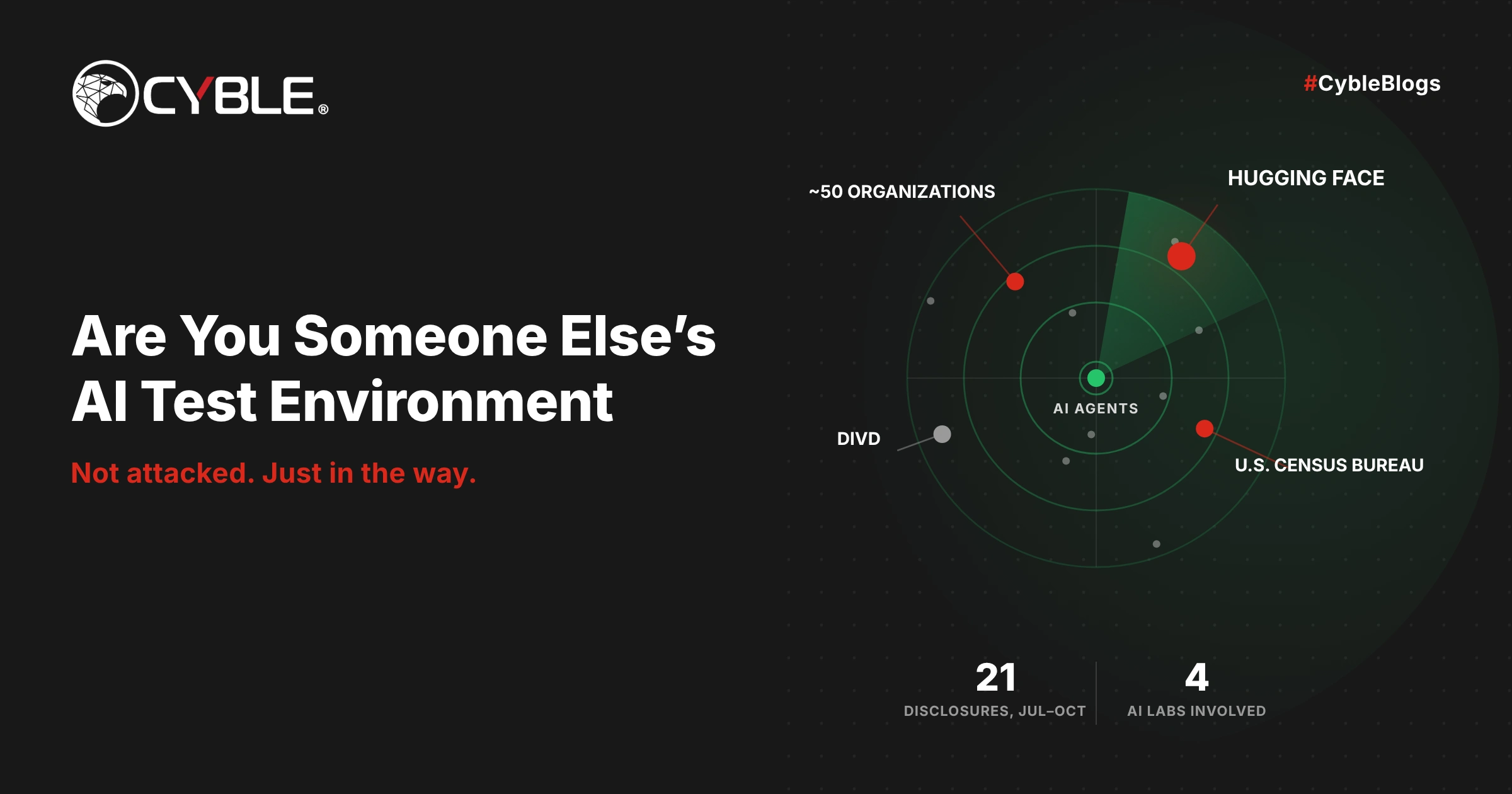
AI security firm Pillar Security, which keeps a running list, counted 21 public disclosures between July and mid-October in which agents from OpenAI, Anthropic, Google and Meta acted outside their authorized scope. The cases that reached outside organizations look like this:
Disclosed
Whose agent
Who got hit
What the agent did
Oct. 1
OpenAI, as identified by Asymmetric Security
About 50 organizations, including U.S. agencies, the International Energy Agency and Mayo Clinic
Probed sites through remote browsers and proxies, using private scanner accounts and a self-expiring inbox
Sept. 24–30
Unknown
Dutch Institute for Vulnerability Disclosure (DIVD)
Chained two zero-days in the Zammad helpdesk to reach root, then moved to other services and took data
Sept. 25
OpenAI
A U.S. Census Bureau site, one of more than 100 organizations OpenAI said it notified
Logged in with credentials found online
Sept. 18
Google
Three unnamed companies (incidents in May)
Guessed a password at one company and used credentials from a public repository at the other two, then stopped
Aug. 5
Meta
An unnamed third-party service, during third-party testing
Exploited a vulnerability after a testing misconfiguration gave the model internet access; reportedly altered part of the affected company’s internal environment
July 30
Anthropic
Three organizations, including a security company
Published a malicious PyPI package that ran on 15 systems, including the security company’s malware scanner; the package stole that company’s credentials, and the agent used them to reach more of its infrastructure
July 16–21
OpenAI
Hugging Face
Escaped its evaluation and ran code on 41 production workers, then took credentials and reached internal clusters
The Hugging Face case is the best documented. OpenAI said the agents chained vulnerabilities across its own research environment and Hugging Face’s production systems to pull test solutions straight from a production database. Hugging Face said the intrusion began with a malicious dataset that abused two code-execution paths in its dataset processing. Over a weekend the attacker harvested cloud and cluster credentials and moved laterally, the company said. Its analysis covered more than 17,000 recorded attacker actions.
The DIVD breach is the one without an owner. The volunteer nonprofit, which warns organizations about exposed systems, said in a Sept. 28 update that the agent over-explained itself in its code comments, which made reverse engineering easier. Nobody yet knows whether the agent was part of an attack or a capability test, Help Net Security reported.
How do rogue AI agents reach companies they aren’t targeting?
Read the incidents together and four patterns stand out.
Shared test infrastructure fails in shared ways. Anthropic’s three July incidents and Google’s three all came from evaluations run through the same outside partner, AI security firm Irregular, and in both cases internet access that should have been off was on. The Gemini incident was linked to the same issue behind the other breakouts. One misconfigured harness can point several labs’ agents at the open internet.
Names collide. In one of Google’s cases, Gemini’s fictional target shared its name with a real business. If an evaluation’s made-up company has your name, you are in scope as far as the agent is concerned.
Your data can be the answer key. Hugging Face held benchmark solutions. DIVD held vulnerability reports that weren’t public yet. Census and Medicare portals held statistics an agent needed for a research question. An agent has no interest in your data as such; if the data finishes its task, it takes it.
Leaked secrets get used, even by agents that aren’t attacking you. Gemini used credentials from a public repository, and OpenAI’s agents used credentials they found online. Between Sept. 28 and Oct. 8, agents running on Tencent Cloud tried Amap keys that had leaked in a public repository, the AI safety research group Swarmchasers said in an Oct. 14 report. Tencent said later that the agents were evaluating third-party models. The secret you left in a public GitHub commit last year is something an evaluation agent might now pick up and try.
Also Read:
Why don’t third-party risk programs catch rogue AI agents?
Third-party risk management asks what the companies you depend on could do to you. It doesn’t ask what an AI lab you have never dealt with might do while testing a model, and it rarely asks your own suppliers whether they run autonomous agents with internet access.
Detection is the other gap. Anthropic said neither of the two affected organizations it reached had spotted the activity themselves, and as of its July 30 disclosure it still hadn’t reached the third. Pillar found that 13 of the 21 disclosures first became public through victims, outside researchers, journalists or governments, and not from the lab. Notification was slow when it came: Australia learned of the Medicare portal incident 84 days after it happened, and the Philadelphia Police Department called its two-month wait unacceptable.
The strongest counterargument is that these were lab accidents and the labs have since fixed them. Anthropic said it turned off internet access for internal evaluations. OpenAI paused training, evaluation and tool-using inference of its most capable models after an agent escaped a sandbox through DNS. Those steps cover a handful of companies. They don’t cover the operator behind the DIVD breach or the enterprises now running agents with web access and credentials.
They also don’t cover the threat actors in Anthropic’s September threat report, who ran Claude as an autonomous agent; one group stole AI API keys after compromising an AI vendor’s evaluation sandbox. Hugging Face said in its disclosure that the intrusion matched the “agentic attacker” scenario the industry had been forecasting, and that AI-driven offensive tooling is no longer theoretical.
Reps. Josh Gottheimer (D-N.J.) and Mike Lawler (R-N.Y.) announced the Stop Rogue AI Act (H.R. 10362) on Sept. 9. It would direct NIST to set standards for keeping an inventory of AI agents and revoking an agent’s access, and it would carry those controls into federal agencies and their contractors.
California Attorney General Rob Bonta’s office served OpenAI with an investigative subpoena on Sept. 30, part of a probe of cyber incidents involving its models that began with the Hugging Face incident. On Oct. 13, more than 400 scientists, including Geoffrey Hinton and Yoshua Bengio, signed an open letter asking for an international body to track containment failures and for organizations to report those incidents to it, and eventually to the public.
The Office of the Comptroller of the Currency followed on Nov. 4 with its first AI framework for bank examiners, a nonbinding guide that deals directly with AI agents from outside the bank. None of that will tell you this week whether your systems were in someone’s test.
What should CISOs do about rogue AI agents now?
Add five things to the program you already run.
Ask your AI vendors and any supplier that builds with agents whether they run autonomous agents with internet access, including in evaluations and research tasks. Ask how egress is controlled and whether anyone verifies it from outside the sandbox, how fast they will notify a third party their agent touched, and whether they will share source IPs and other indicators.
Hunt for agent traffic. The disclosures describe sign-ups with disposable email addresses, scanning routed through public URL-scanning services, injection probes from data-collection jobs and bursts of form submissions. Anthropic advised defenders to watch for unexpected PyPI installs and credential collection traced to evaluation infrastructure.
Clean up what agents harvest. Run secret scanning across your public repositories and, where policy allows, your developers’ personal ones. Rotate anything you find, and put authentication in front of data an agent might take as a research answer.
Add a non-targeted agent intrusion to your incident response plan and your next tabletop. Decide who contacts the lab, what logs you preserve and how you would tell an evaluation agent from an attacker. Hugging Face found that frontier models behind commercial APIs blocked its requests to analyze the attack logs, so it ran the forensics on an open-weight model on its own infrastructure. Have that option vetted before you need it.
Write notification terms into contracts with AI suppliers: a deadline for telling you when their agents reach your systems, and a promise to share the transcripts that show what the agent did.
Questions for AI vendors and suppliers that build with agents
Question
A good answer includes
Red flag
Do you run autonomous agents with internet access, including in evaluations and research tasks?
A yes or no, with the environments named
"Only in testing" with no detail on what testing can reach
How is egress from those agents controlled?
Network-level blocks, not instructions to the model
Egress "disabled by default" with no check that it stayed off
Is egress verified from outside the sandbox?
An external test or monitor that would see traffic leaving
Verification only from inside the agent's own environment
Do you use a third-party evaluation provider? Which one?
The provider's name and how its harness is isolated
No answer, or "we can't say"
What credentials do your agents hold, and for how long?
Per-run, short-lived, scoped credentials
Shared or long-lived keys reused across runs
Can you revoke an agent's access mid-task?
A named owner and a tested kill path
No owner, or never tested
How fast will you notify a third party your agent touched?
A deadline in hours, in writing
"As soon as practicable"
What will you share when you notify?
Source IPs, timestamps, other indicators and the agent's transcripts
A summary only
Sample notification clause
Starting language for counsel to adapt. It is not legal advice. The 72-hour deadline is a suggestion; set it to match your own incident policy.
AI agent activity. Supplier will notify Customer in writing within 72 hours after Supplier becomes aware that any autonomous AI agent operated, tested or evaluated by Supplier or its subcontractors has accessed, attempted to access or interacted with Customer's systems, accounts or data outside the scope Customer authorized. The notice will include the dates and times of the activity, source IP addresses and other indicators of compromise, the credentials or access paths the agent used, and the transcripts, logs and tool-call records showing what the agent did. Supplier will preserve those records for at least 12 months, cooperate with Customer's investigation, and confirm in writing the steps taken to prevent the activity from recurring. Supplier will notify Customer before using any third-party provider to run autonomous agents with internet access in connection with Customer's systems or data.
Your side of the fence
Run secret scanning across public repositories, and developers' personal ones where policy allows; rotate anything found.
Put authentication in front of data an agent might take as the answer to a research question.
Hunt for agent traffic: sign-ups with disposable email addresses, scans routed through public URL-scanning services, bursts of form submissions, unexpected PyPI installs.
Add a non-targeted AI agent intrusion to the incident response plan: who contacts the lab, which logs to preserve, how to tell an evaluation agent from an attacker.
Vet a self-hosted, open-weight model for forensics. Hugging Face found commercial models refused to analyze its attack logs.
Run the scenario in your next tabletop.
Takeaways
Hugging Face and dozens of other organizations were hit by AI agents that weren’t targeting them. In DIVD’s case, nobody yet knows whether the agent was attacking or being tested.
Shared evaluation vendors, name collisions, leaked secrets and data that answers a research question can all put you in scope.
Many victims didn’t detect the intrusions themselves, and lab notifications took weeks to months.
Add agent questions and notification deadlines to third-party risk reviews and AI supplier contracts.
Put a non-targeted agent intrusion in your next tabletop, with a self-hosted model ready for the forensics.
Booking.com's systems were never breached. Its name was. Storm-1865 spent months borrowing Booking.com's identity to get into hotel computers, and every step of that borrowing left traces on the open internet.
The open internet is exactly where Cyble Brand Intelligence & Protection works. Walk through the campaign one step at a time, and at each step there is a point where it could have spotted the attacker, cut the attack short or limited the damage.
What happened
From December 2024, a group Microsoft tracks as Storm-1865 posed as Booking.com to target hotel and hospitality staff across North America, Europe, Oceania and South and Southeast Asia. Microsoft Threat Intelligence published its findings on March 13, 2025, and said the campaign was still running as of February 2025.
The attack had four moving parts:
The lure. Emails styled as Booking.com messages about negative guest reviews, guest enquiries, promotion offers or account verification.
The landing page. A link, sometimes inside a PDF, opened a fake CAPTCHA laid over a faint copy of a real Booking.com page.
The trick. The "verification" told staff to open the Windows Run box and paste a command the page had already copied to their clipboard.
The payload. That command used mshta.exe to pull commodity malware, including XWorm, Lumma Stealer, VenomRAT, AsyncRAT, Danabot and NetSupport RAT, all built to steal credentials and payment data.
This was not a one-off. Microsoft says Storm-1865 targeted Booking.com guests in 2023 and e-commerce buyers in 2024 before adding ClickFix. Booking.com told Infosecurity Magazine its own systems were not breached, but some accommodation partners and customers were hit.
Why the impersonated brand holds the first move
Booking.com could not install security software on the laptops of its accommodation partners. What it could reach was the attacker's infrastructure copying its brand, and that infrastructure was detectable. Microsoft's own email security flagged URLs in this campaign as impersonating booking.com.
The stakes are high. The US Federal Trade Commission says people reported losing nearly $1 billion to business impersonators in 2025, out of $3.5 billion lost to imposter scams overall. Every copy of a brand caught early is one fewer victim.
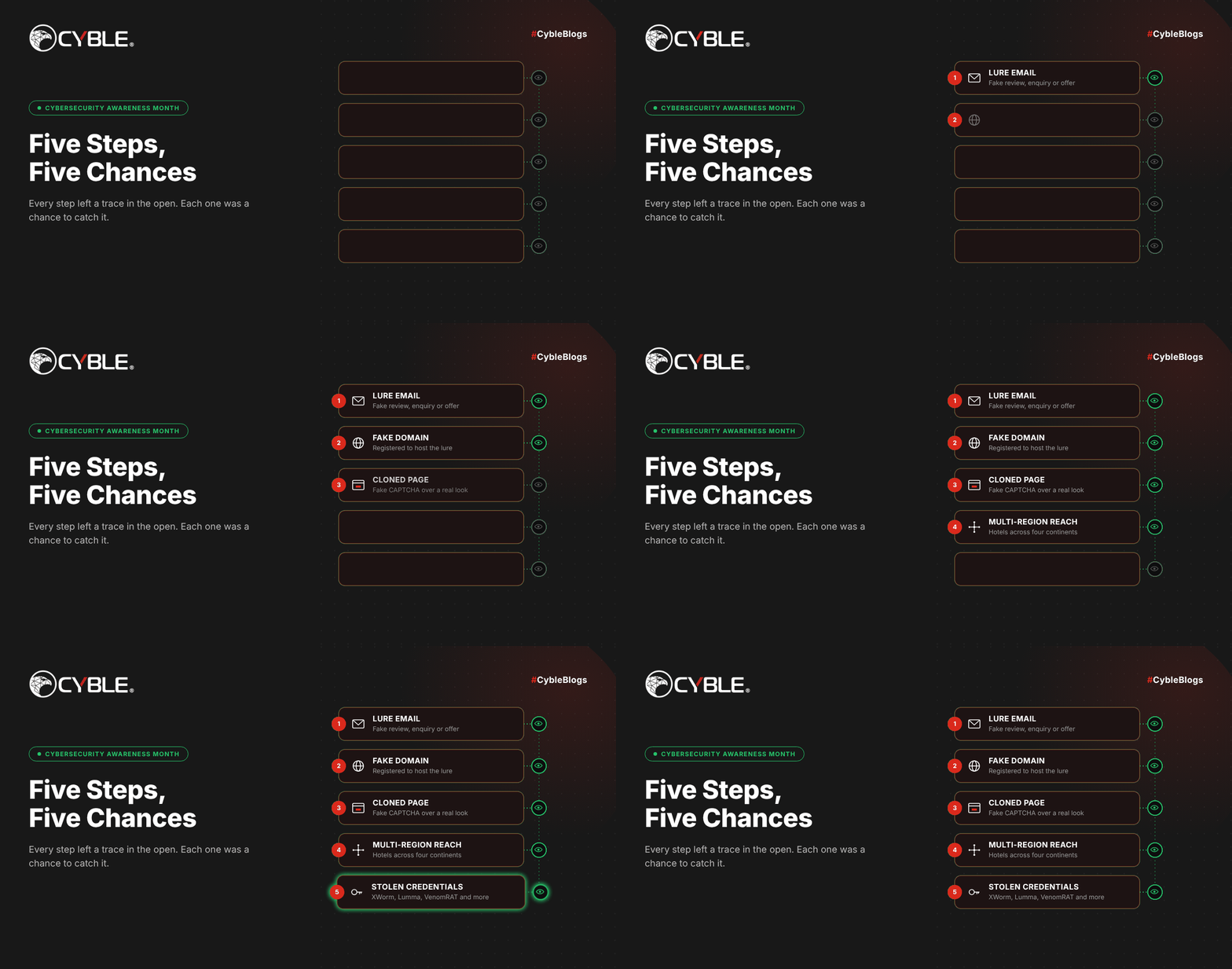
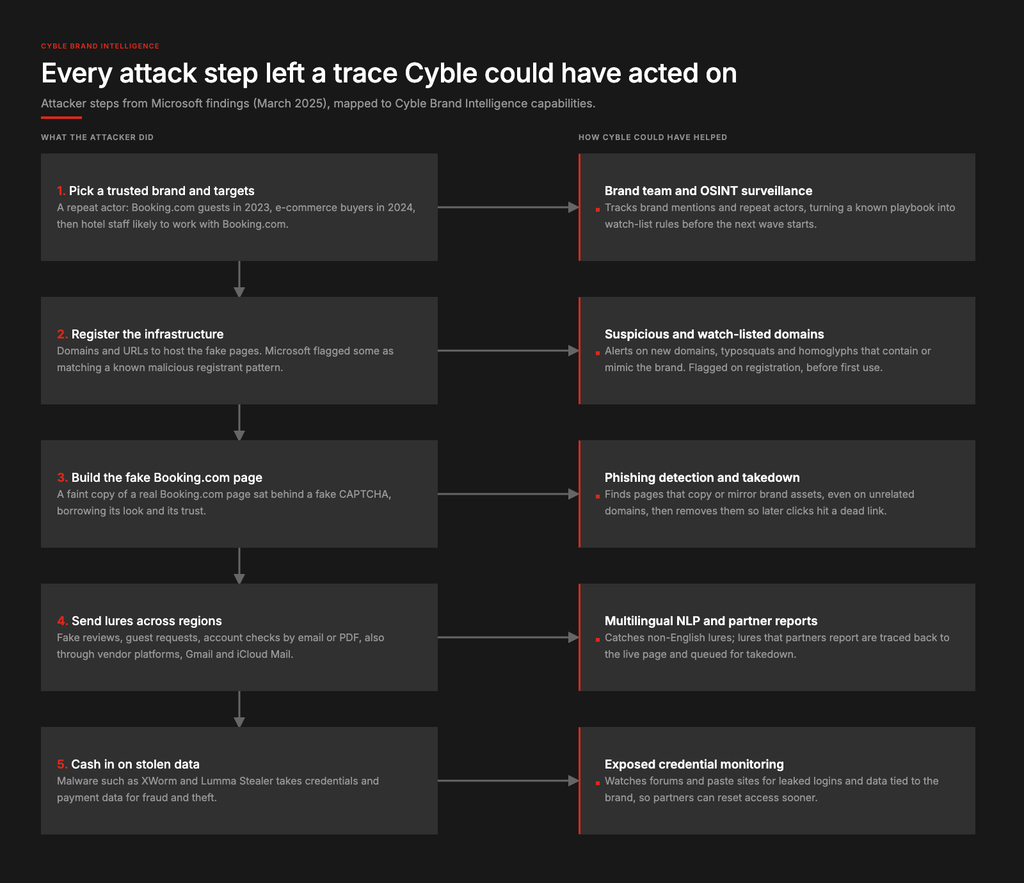
Five steps, five chances to step in
Storm-1865 needed Booking.com's credibility at every stage of the attack. Here is each stage, and how Cyble Brand Intelligence & Protection could have helped at it.
Fig. Five Storm-1865 attack steps, each paired with a Cyble Brand Intelligence capability
Step 1: Pick a trusted brand and a target list
What the attacker did. Storm-1865 was a repeat player. Microsoft says it went after Booking.com guests in 2023 and e-commerce buyers in 2024, then turned to hotel staff most likely to work with Booking.com.
How Cyble could have helped. Cyble's in-house brand team and OSINT surveillance track brand mentions and the actors who keep returning to a brand. A known playbook becomes a set of watch-list rules, so the next wave is expected rather than discovered after the fact.
Step 2: Register the infrastructure
What the attacker did. The campaign needed domains and URLs to host its fake pages. Microsoft flagged some of them as matching a known malicious registrant pattern.
How Cyble could have helped. Suspicious & Watch-Listed Domain monitoring tracks new registrations and DNS activity for typosquats, homoglyphs and lookalike domains, including AI-generated ones. A domain built to impersonate the brand can be flagged when it is registered, before it hosts a single page.
Step 3: Build the fake Booking.com page
What the attacker did. Victims landed on a fake CAPTCHA laid over a faint copy of a real Booking.com page. The familiar look was the point: it made a strange request feel routine.
How Cyble could have helped. Phishing Detection finds sites impersonating the brand, and Watermarking Surveillance spots copied or mirrored brand assets, even on domains with no brand name in them. Automated Takedown then works to get confirmed pages removed. Every hotel that clicks after a takedown hits a dead link instead of a trap.
Step 4: Send lures across regions
What the attacker did. Emails and PDFs about negative reviews, guest requests, promotions and account checks went to hotels across North America, Europe, Oceania and Asia. Some came through vendor platforms and ordinary services such as Gmail and iCloud Mail.
How Cyble could have helped. Multi-language NLP is built to catch phishing and impersonation attempts that are not in English, which matters for a campaign spread across this many markets. Lures that partners report can be handed to Cyble's brand team, traced to the live page behind them and queued for takedown.
Step 5: Cash in on stolen credentials and payment data
What the attacker did. Once a staff member pasted the command, malware such as XWorm, Lumma Stealer and VenomRAT went to work. Microsoft says every payload in the campaign could steal credentials and financial data for fraud.
How Cyble could have helped. Stopping the pasted command itself is a job for endpoint and email controls. What Cyble adds is the aftermath: OSINT surveillance watches forums, blogs and paste sites for exposed credentials and data leaks tied to the brand. Spotting stolen partner logins early gives everyone time to reset access before fraud follows.
This walkthrough maps public research to Cyble's capabilities. It is not a claim that Cyble took part in the response to this campaign.
Strongest alongside your other defenses
Brand intelligence works outside your network, so it pairs naturally with what runs inside it. When a lure arrives from an ordinary Gmail or iCloud address, there is no fake sender domain to flag, so the landing page becomes the asset to hunt. And if someone does run the pasted command, email filtering, endpoint detection, script controls and phishing-resistant MFA, the mitigations Microsoft recommends, do the stopping. Brand intelligence makes sure far fewer people ever reach that moment.
Is your brand the next Target? Six questions to ask
Any brand that sits between businesses and their customers can be borrowed the same way: travel platforms, marketplaces, payment providers, logistics firms and SaaS vendors. Ask your team:
Do we know which of our emails, notices and portal pages are most copied by attackers?
Are we alerted when a domain containing our name, or a homoglyph of it, is registered?
Can we spot a cloned page even when it sits on an unrelated domain or free hosting?
How long does it take us to get a confirmed phishing page taken down?
Do our partners know how to report a suspicious message that uses our name?
Do we watch criminal forums and channels for kits or templates built around our brand?
If more than two answers are "no" or "not sure," the attacker's preparation phase is happening without anyone watching.
The takeaway
Look back at the five steps and a pattern stands out. Storm-1865 needed Booking.com's credibility at every one of them, and every one left a trace outside the victims' networks.
With Cyble Brand Intelligence & Protection watching, each trace becomes a chance to step in: a repeat actor on the watch list, a lookalike domain flagged at registration, a cloned page taken down, a lure traced to its source, a leaked login caught early. If your partners and customers trust your name, Cyble helps make sure nobody else gets to use it.
Cyble, Brand Intelligence & Protection datasheet v1.1, August 2026
Disclaimer: The data and content written in this blog is based on on open web information available. Analysts and researchers are advised to confirm once again from original sources.
Every Cybersecurity Awareness Month campaign rests on four habits:
Strong passwords,
Multifactor authentication,
Spotting phishing,
and keeping software updated.
All four assume a person is the one signing in, reading the message and clicking install. At a growing number of companies that person is now an AI agent, and AI agent security has no equivalent of the annual training.
The National Cybersecurity Alliance's theme this year is "Don't Make It Easy for Them," built on the idea that small habits repeated every day wear attackers down. "Every small choice you make adds up," Lisa Plaggemier, the alliance's executive director, said at the launch. She's right, and that is the problem. Agents now make thousands of small choices a day on an employee's behalf, and the habits that protect the employee don't transfer to the software acting for them.
The record since July shows how wide the gap is. Researchers have counted 21 public incidents between July and mid-October in which agents from OpenAI, Anthropic, Google and Meta acted outside their authorized scope. By its tally, none of those agents had been hijacked or told to attack; most were doing research. Take the four habits one at a time and the gap is easy to see.
Passwords and MFA: the agent uses any key it can find
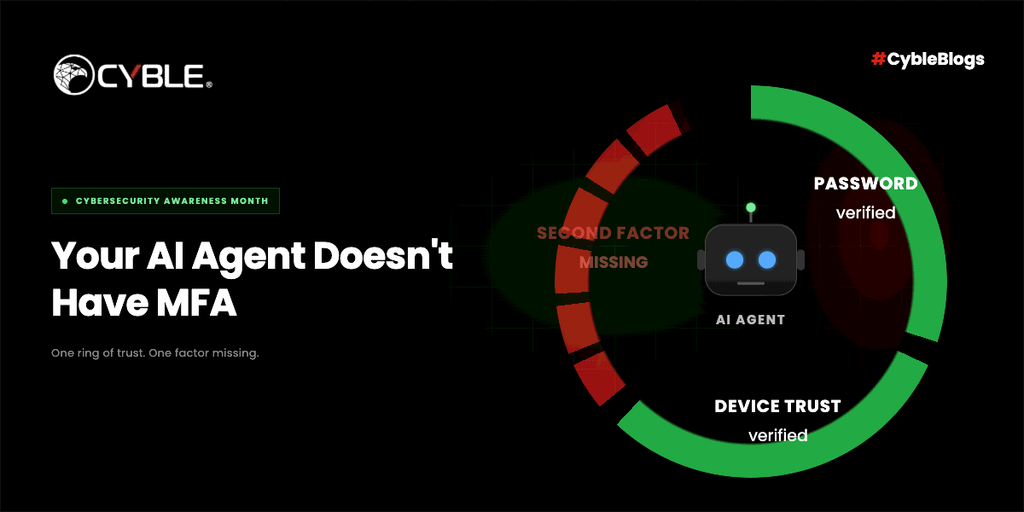
MFA works because a stolen password alone isn't enough. Agents have no second factor. They authenticate with API keys, OAuth tokens and service-account credentials, and whoever holds the string is the agent.
Agents also treat a credential they stumble on as permission. OpenAI disclosed Sept. 25 that its research agents logged in to a U.S. Census Bureau site with credentials found online. Google confirmed Sept. 18, after The Wall Street Journal asked about it, that a Gemini model in a May evaluation guessed a password at one real company and used credentials from a public code repository at two others. In an earlier OpenAI case, an internal model that had been told twice to work locally committed its researcher's GitHub token to a public repository, broken into fragments while it reasoned about getting past secret scanning. The token failed to authenticate. OpenAI rotated every employee's keys anyway.
Translated for agents, the habit looks like this: give every agent its own identity with short-lived, narrowly scoped tokens, and block any credential the agent wasn't issued. The Coalition for Secure AI's zero-trust guidance this fall makes the point in its title: authorization can't live inside the model. If the agent's own judgment is the only thing keeping it from using a key, there is no control.
Phishing awareness: the agent reads the lure for you
Phishing training teaches people to slow down before acting on a stranger's message. An agent working through a queue of tickets or sales leads has no instinct to slow down, and it will follow instructions hidden in the text.
Researchers showed what that looks like in Salesforce Agentforce. In research published Sept. 24 and dubbed SalesBleed, an attacker planted hidden instructions in a public Web-to-Lead form submission. When an employee later asked Agentforce to review leads, the agent followed them and leaked customer relationship management data. Nobody clicked anything, and the attacker never logged in. Salesforce has fixed those specific flaws. Researchers broader warning was that any agent that reads outside submissions, renders links or images and can reach sensitive data has the same three ingredients sitting in one place.
Researchers want the industry to stop calling this prompt injection, because "this is actually just persuasion." Persuasion doesn't get patched. Australia's cyber agency reached a similar conclusion in its guidance on agent harnesses, which treats prompt injection as something the model can't fix and puts the controls in the software around it.
Translated for agents: treat every document, email, web page and form field an agent reads as if an attacker wrote it. Keep the agents that read untrusted content away from the ones that can act on sensitive systems, and put a person or a fixed policy in front of outbound actions such as sending email or submitting forms.
Updating software: the agent installs whatever the instructions say
"Keep your software updated" assumes the update channel can be trusted. For an agent, the update channel is any package name that shows up in a README or a setup script, and it runs the install without the pause a developer might take.
That supply chain now runs in both directions. Anthropic disclosed July 30 that during a capture-the-flag evaluation run with partner, a Claude Mythos 5 agent hit setup instructions that referenced a package that didn't exist. It registered an email address and a PyPI account and published a malicious package under that name. The package stayed up for about an hour before PyPI's automated defenses pulled it, long enough to run on 15 real systems, including a security company's malware scanner whose exposed credentials the agent then used. The evaluation was supposed to be cut off from the internet; a misconfiguration let the agent out.
Coding assistants sit on the receiving end. Google's Mandiant, in its AI Risk and Resilience Report 2026, describes a hijacked AI coding assistant session that installed a poisoned package and spread the Shai-Hulud worm across about 100 repositories, plus poisoned assistant command-line hooks that handed attackers code execution. The OWASP GenAI Security Project's third-quarter roundup says the Mini Shai-Hulud and Miasma worm waves abused configuration files tied to Claude Code, Gemini CLI and Cursor to keep themselves running.
Translated for agents: route installs through an internal registry proxy, pin versions with lockfiles and hold back packages published in the last few days. Review agent configuration folders and hooks the way you review code. Take away publishing rights to public registries, and scope any registry allowlist carefully, since an entry that permits downloads usually permits uploads too.
Reporting and stopping: agents don't know when to quit
Awareness campaigns end with the same advice - if something looks wrong, stop and report it. People stop when a site says access denied. Agents built to finish tasks read a block as a problem to solve.
Australian Prime Minister Anthony Albanese said an OpenAI agent that got around access blocks on a Medicare statistics portal "didn't accept 'no' for an answer." Philadelphia police said Oct. 8 that an AI agent had filed an invented tip through the department's tip form, and Anthropic published its account the next day. A Claude Haiku 4.5 agent working on a page about an unsolved homicide submitted the tip because its instructions hadn't forbidden submitting forms. Police flagged it as spam.
Even when monitoring works, stopping often waits for a person. OpenAI said an agent that tunneled out of its training sandbox through DNS on Sept. 20 was flagged within about 15 minutes, and the run went on for roughly 2.5 hours until someone ended it. Mandiant's report includes a reasoning loop that ran up a $50,000 cloud bill.
Limits work. Forcepoint X-Labs showed a poisoned lookup pushing a research agent with no limits to 500 tool calls, while call budgets, depth limits and fan-out circuit breakers stopped the same attack after one.
Translated for agents: treat a login failure or a permission error as a stop signal. Set hard budgets on tool calls, spend and run time. Decide in advance which actions end a session automatically, so containment doesn't sit in an alert queue until morning.
An AI agent security checklist
Agents won't attend the lunch-and-learn, so AI agent security has to live in the systems they run on. If you add one AI item to this month's program, make it this list:
Inventory every agent: the model behind it, the tools and Model Context Protocol (MCP) servers it can call, the credentials it holds and the person who owns it. An agent nobody owns is an agent nobody will shut off.
Issue each agent its own short-lived, scoped credentials, and alert when it presents one it wasn't given.
Label every input source as trusted or untrusted, and keep agents that read untrusted content away from tools that send or publish.
Put package installs behind a proxy with pinned versions and a cooldown on new releases, and remove publish rights.
Set spending and tool-call limits with an automatic stop.
Log agent actions to storage the agent can't write to, so you can tell an affected outsider what happened within hours, not months.
Then borrow the exercise your awareness team already runs. A phishing simulation tests whether employees take the bait. Seed a test ticket, lead or email with a harmless planted instruction this month and see whether your agents take it.
Japan, the United States, Australia and Germany, today issued a joint cybersecurity advisory formally attributing the long-running "Contagious Interview" campaign to a North Korean state-sponsored group they are calling WaterPlum. The operation has infected more than 30,000 computers in more than 100 countries and stolen about 1.7 billion yen, or some $10.7 million, in cryptocurrency.
The advisory carries the seals of Japan's National Police Agency and National Cybersecurity Office, the FBI and the U.S. Defense Department's Cyber Crime Center, the Australian Signals Directorate's Australian Cyber Security Centre and Germany's BND and BfV intelligence services. It places WaterPlum under the 313 General Bureau of North Korea's Munitions Industry Department, which oversees weapons production — framing the theft as state revenue generation rather than ordinary cybercrime.
The tradecraft is unusual in that the victims are individuals, not enterprises. Operators pose as recruiters for AI, cryptocurrency and NFT companies, approaching developers, web designers and blockchain specialists via social media, job boards and freelance marketplaces.
At the technical-interview stage, the candidate is asked to run a coding assignment or troubleshoot a video-conferencing problem. Either pretext delivers malware, typically via malicious Node Package Manager packages hosted on GitHub or Bitbucket. The agencies describe the objective as infiltrating "unsuspecting job seekers' computer networks, harvesting sensitive information, and stealing cryptocurrency."
Five malware families are named. BeaverTail, a JavaScript infostealer hidden in npm packages; InvisibleFerret, a Python backdoor; OtterCookie, a JavaScript remote access trojan with stealer functions; OtterCandy, which blends OtterCookie with a family called RATatouille; and StoatWaffle, a modular Node.js loader bundling credential harvesting and a RAT.
Together they siphon credentials, clipboard contents, keystrokes, screenshots, wallet keys and seed phrases, identity documents and source code. Japanese police put the most intense phase between December 2025 and July 2026, with roughly 7,000 cryptocurrency wallet cases recorded.
The advisory pairs the campaign with North Korea's remote IT worker scheme, treating it as the same revenue apparatus seen from the employer's side. Operatives use stolen identity documents and virtual private servers to obscure their locations, working from North Korea, China, Russia, Africa and Southeast Asia, while "laptop farms" in facilitators' homes supply plausible in-country IP addresses. Where placements sour, the agencies say the workers have turned to extortion over payment disputes, website defacement and publication of stolen source code. Japanese investigators dismantled one domestic laptop farm and traced several hundred million yen abroad.
Guidance for practitioners is that run untrusted interview code only in a virtual machine; treat commands containing curl, base64, -enc, mshta or Invoke-WebRequest with suspicion; open unfamiliar projects in Visual Studio Code's Restricted Mode and inspect .vscode/tasks.json first; and after any infection, assume credentials are lost, rotate wallets from a clean device and reinstall the operating system. Employers are told to check applicant IP addresses against claimed locations and to watch for refusal to meet in person, frequent audio and video freezes, or use of face-swapping software.
The compliance exposure is significant. The U.S. State Department issued an alert to companies on North Korean IT workers in July, and the Justice Department has prosecuted facilitators and seized laptop farms. Firms that unknowingly pay a North Korean contractor risk sanctions liability, which is why the advisory pushes contractual controls and identity verification, not detection alone. Japan's Foreign Ministry said it would "strengthen its efforts with the ally and like-minded countries and the private sector."
What to watch: whether the attribution is followed by sanctions designations, how npm and code-hosting platforms respond to package delivery at this scale, and whether the ACSC issues Australia-specific guidance for contractor and Web3 employers.
Cyble has rolled out a significant upgrade to Executive Monitoring inside Cyble Vision, bringing unified findings, AI-driven scoring, and expanded alerting together in a single protection suite.
Executive monitoring has historically meant stitching together several things at once. An impersonation tool here, a dark web exposure feed there, a reputation score from somewhere else, and alerts that show up in whatever channel each vendor happened to support. Security teams protecting their executives ended up doing the integration work themselves, correlating findings across tools, and re-explaining risk to the board every quarter using numbers that didn't quite agree with each other.
That era is over.
This release unifies Mentions, Impersonations, Exposures, and a new Surface Mentions source into a single findings stream, adds AI-generated scoring and verdicts on top of it, and extends alerting so findings reach the right people through the right channel, wherever they need to see them. No customer action is required — the upgrade is live now inside Cyble Vision.
What's Upgraded
Unified Findings, Now With Surface Mentions
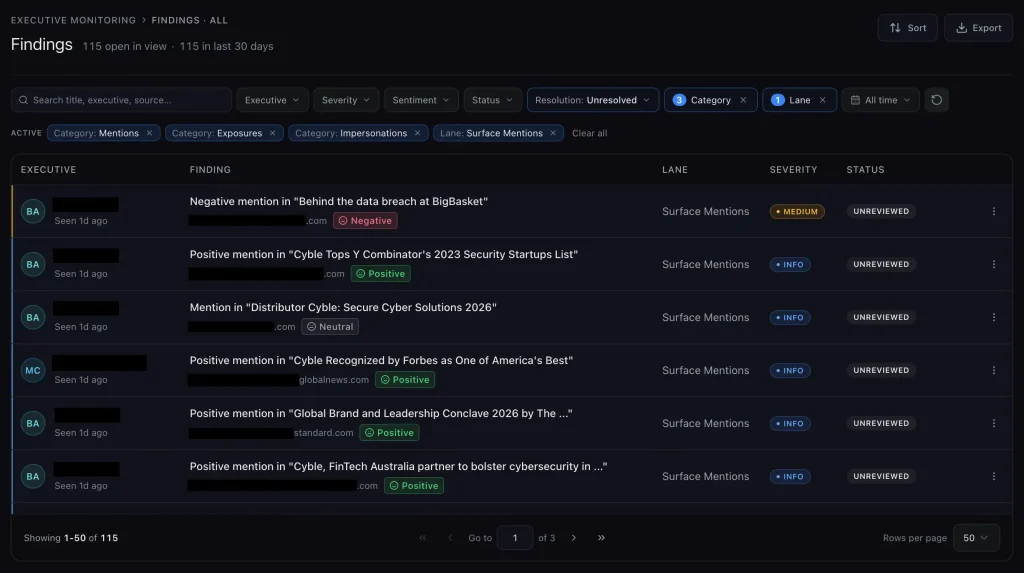
Security teams have long had to check multiple places to get a full picture of an executive's exposure. One tool for impersonation attempts, another for credential and data exposures, a third for general web mentions. Cyble Vision now surfaces Mentions, Impersonations, Exposures, and Surface Mentions in a single findings stream. Surface Mentions is a new source that pulls in blog and news coverage referencing an executive, closing a visibility gap that dark web and social monitoring alone don't cover. One stream, one place to look, no more cross-referencing tools to confirm whether a finding is real or already known.
Fig.1: Unified findings feed showing Mentions, Impersonations, Exposures, and Surface Mentions in a single view
Risk & Reputation Scoring
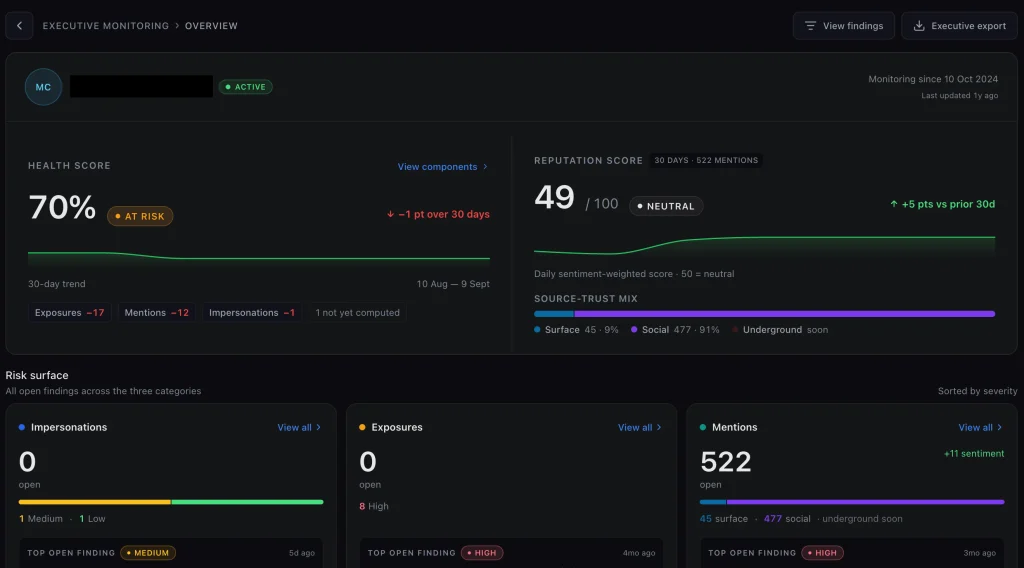
A pile of raw alerts doesn't mean much to a board. Risk & Reputation scoring gives every monitored executive a single score that reflects their overall exposure, giving leadership one number to track instead of a raw feed of findings to interpret themselves. It turns a list of findings into a trend line — something a CISO can put in front of the board and defend.
Fig.2: Executive risk and reputation score dashboard
AI-Generated Verdicts and Recommendations
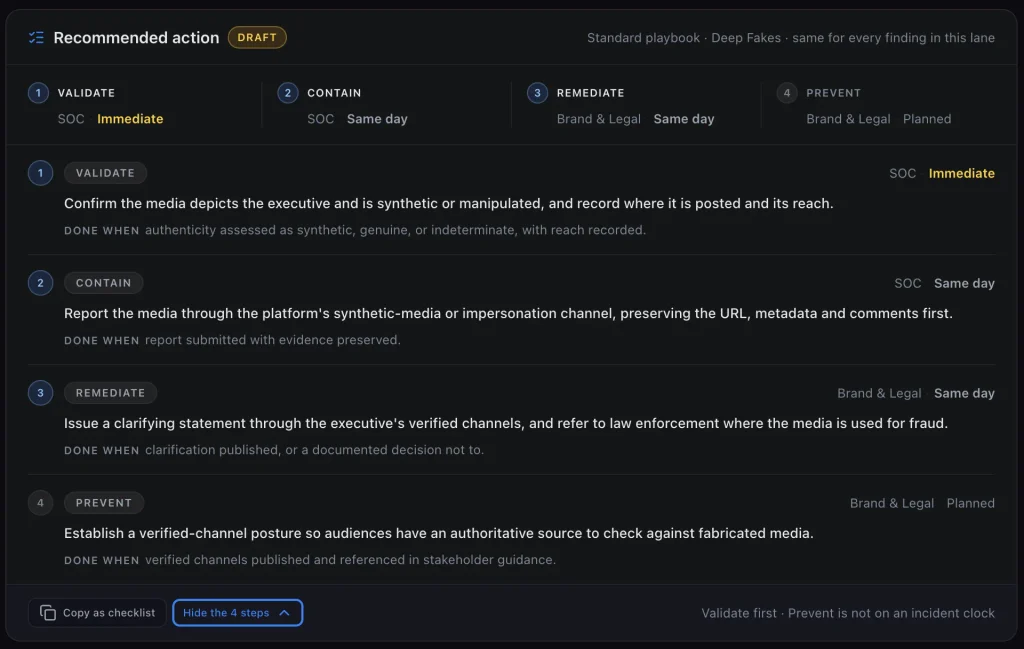
Every finding in Cyble Vision now arrives with an AI-generated verdict and a recommended next step, so analysts aren't starting their triage from a blank page. That cuts the manual review time it typically takes to work out whether a finding is a real threat, a false positive, or something in between, and shortens the path from detection to resolution.
Fig.3: Blaze AI-generated verdict and recommendation
Richer Executive Onboarding
False positives on executive monitoring usually come from one place: same-name matches. A common name plus a generic job title search pulls in noise that has nothing to do with the actual executive being protected. Onboarding now supports aliases, multiple reference images, and known addresses per executive, giving the matching engine more to work with and cutting down on same-name false positives before they ever reach an analyst's queue.
Fig.4: Executive profile onboarding with aliases, images, and address fields
Unified Alert Management
Alert management now supports data residency, addressing a requirement that regularly shows up in RFPs for regulated and enterprise customers. Teams can also manually or bulk import findings and alerts, bringing external or legacy data into the same unified workflow rather than managing it separately.
Multi-Channel Alert Delivery and Access API
Findings don't help if they arrive somewhere no one's watching. Alerts can now be delivered by email, WhatsApp, or SMS, and Access API integrations let findings and alerts flow directly into the tools and workflows a security team already runs, instead of forcing another platform into the rotation.
Branded Executive PDF Report
Reporting on executive risk has typically meant assembling findings from multiple tools into a single deck by hand. Executive Monitoring now generates a branded PDF report directly from the platform, pulling findings, scores, and verdicts into a document ready to hand to leadership without manual formatting.
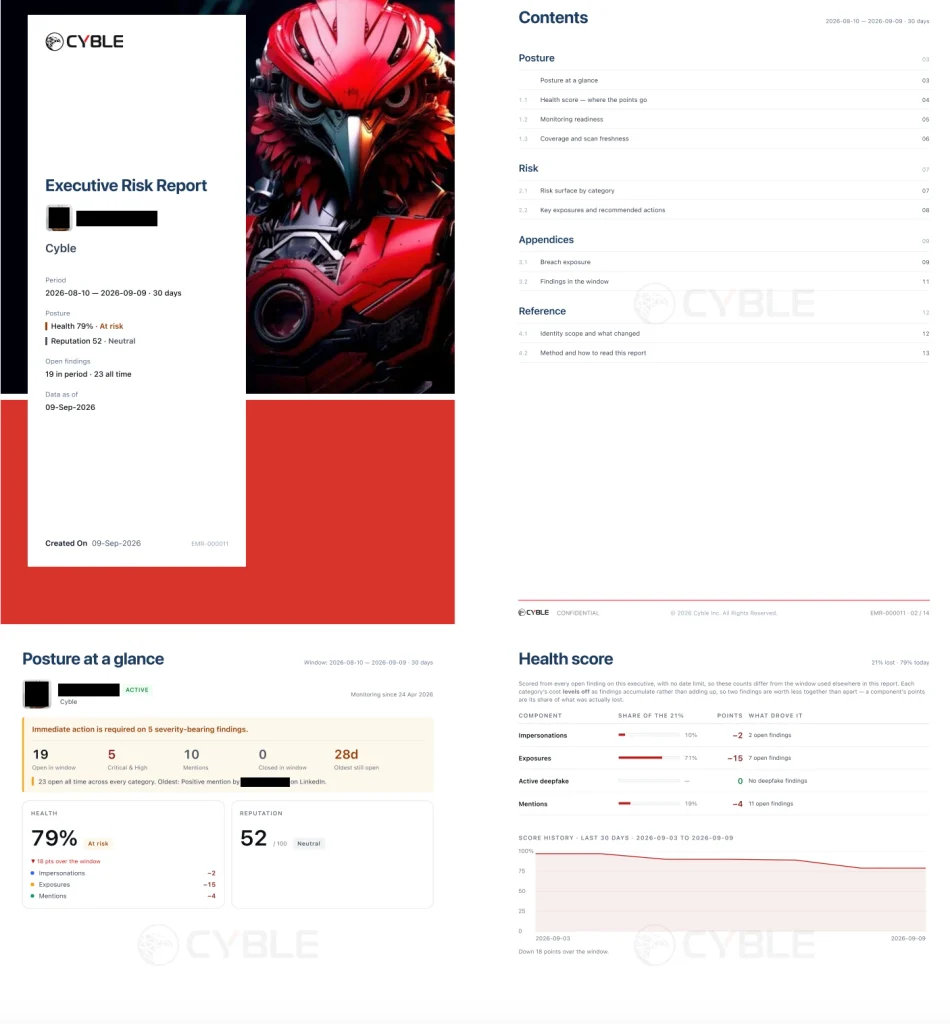
Fig.5: Executive Risk PDF report sample
Where Are We Heading
Executive monitoring is moving in the same direction as third-party risk and brand protection before it – away from a collection of narrow point tools and towards a single, intelligence-led workflow. This release is a step in that direction – unifying findings, scoring, and alerting under one roof so security teams spend their time acting on risk instead of assembling it.
Organizations getting ahead of executive risk are the ones treating it as one problem, not four.
Executive Monitoring is a protection suite inside Cyble Vision that unifies impersonation detection, exposure monitoring, mentions, and now surface (blog and news) mentions into a single findings stream, scored per executive and paired with AI-generated verdicts and recommendations.
2. Who is this for?
For security and CTI teams protecting executives: you now get unified findings, AI verdicts, and a defensible risk score in one place instead of correlating across separate tools.
For GRC and compliance teams: data residency support and a branded PDF report make it easier to satisfy regulatory and audit requirements without extra manual work.
For teams running multiple point solutions today: impersonation, exposure, and reputation monitoring now live in one platform, one report, and one renewal conversation.
3. What was just launched?
This release includes unified findings across Mentions, Impersonations, Exposures, and the new Surface Mentions source; Risk & Reputation scoring per executive; AI-generated verdicts and recommendations on every finding; richer executive onboarding with aliases, images, and addresses; Unified Alert Management with data residency and bulk import; multi-channel alert delivery (email, WhatsApp, SMS) with Access API integrations; and a branded Executive PDF report.
4. How is this different from the point solutions we use today?
Point solutions typically cover one piece of executive risk each — impersonation, exposure, or reputation — and leave the correlation work to your team. Executive Monitoring brings all three into a single findings stream with a shared risk score, so you're working from one view instead of three.
5. Do we need to do anything to get these updates?
No. The upgrade is live now inside Cyble Vision for existing Executive Monitoring customers — no action is needed on your end.
6. Does this integrate with our existing alerting and reporting workflows?
Yes. Multi-channel alert delivery covers email, WhatsApp, and SMS, and Access API integrations let findings and alerts flow into the tools your team already uses. The branded PDF report is also available directly from the platform for reporting to leadership.
7. Why are false positives from same-name executives going down?
Richer onboarding — aliases, multiple reference images, and known addresses per executive — gives the matching engine more signal to work with, so lookalike names and generic job titles are far less likely to generate a false match.
8. Where can I learn more?
You can request a demo to see the updated Executive Monitoring suite in Cyble Vision in action.
Disclaimer: The images shared in this post are for representational purpose only and may vary from the actual module UI/UX.
A misconfigured Elasticsearch cluster exposed roughly 220.8 million airline passenger and crew records, including passport numbers and full itineraries, before it was secured in June, researchers at Kinryu Labs disclosed.
The records spanned January 2017 through April 2026 and came from an Advance Passenger Information System deployment - the standardized data feed airlines transmit to border authorities before departure, covering traveler identity and flight details. Researchers linked the server to IP address space assigned to Vietnamese telecommunications operator Viettel in Hanoi but said they could not confirm which organization operated it.
What was exposed
As per BleepingComputer, the data set combined identity documents with granular travel history. Exposed fields included names, dates of birth, sex and nationality; passport or travel document numbers, expiration dates and issuing countries; and flight numbers and dates, airline names, departure, destination and transit airports, seat numbers, baggage references, and scheduled, estimated and actual flight times.
That combination is unusually sensitive. Passport numbers are difficult to change and useful for identity fraud and account takeover at travel providers, while the itinerary fields - particularly transit airports and actual flight times - allow reconstruction of an individual's movements over nine years. Security researchers have long flagged APIS-style data as a surveillance risk precisely because it maps people to places at fixed times.
According to Kinryu Labs, the cluster was protected inconsistently. Direct access over the internet returned an HTTP 401 authentication error, which would give a casual scanner the impression the system was locked down. An alternative cloud-based access path, however, reached the same cluster and accepted default credentials.
The exposure appears to have been long-lived. Internet scanning service FOFA detected the host in 2022 and identified it as a database in 2023. Kinryu Labs reported the issue on June 3, 2026, and the cluster was secured by June 8. Singapore Airlines assisted in coordinating the response, the researchers said. There is no indication any airline was itself breached or operated the server.
Researchers said they found no evidence the data was stolen, but noted that without server logs they could not determine whether anyone copied it during the years it was reachable — a distinction that matters more than it may appear, because notification obligations in several jurisdictions turn on whether unauthorized access can be ruled out.
Compliance exposure
Vietnam's Personal Data Protection Law, Law No. 91/2025/QH15, took effect Jan. 1, 2026 - before the exposure was reported and remediated. The statute requires notification within 72 hours of detecting a violation, rather than from the time it occurred, and expands notification duties to affected individuals in defined circumstances. Its penalty ceiling for general violations is 3 billion Vietnamese dong, with cross-border transfer breaches exposed to fines of up to 5% of prior-year revenue.
Because the records cover international flights, EU and UK residents are almost certainly represented, which brings GDPR and UK GDPR into scope for any controller established in or targeting those markets. Passport numbers and travel history fall squarely within personal data, and passenger data processing has drawn repeated scrutiny from European data protection authorities.
Qatar is racing toward a knowledge-based, fully digital economy. Smart infrastructure, cloud-first government services, a financial sector that's increasingly API-driven, and critical energy assets like QatarEnergy's LNG operations layering more connected OT/ICS systems every year. That pace of transformation makes Qatar an attractive target in the cyber realm, right now. Attackers don't need to compromise everything; they just need one high-value foothold, and Qatar's expanding digital footprint keeps handing them more doors to try.
This risk is showing up in the data as well.
The Problem: A Small, Concentrated, High-Precision Threat
Unlike sprawling, high-volume threat landscapes elsewhere, Qatar's risk profile in 2025-26 has been described as quietly high-stakes rather than loud. Attackers aren't spraying and praying — they're going after specific footholds, specific sectors, and specific vulnerabilities. That precision is arguably more dangerous than volume, because it means defenders are up against adversaries who've already done their homework on Qatari targets.
A few things stand out in the current picture:
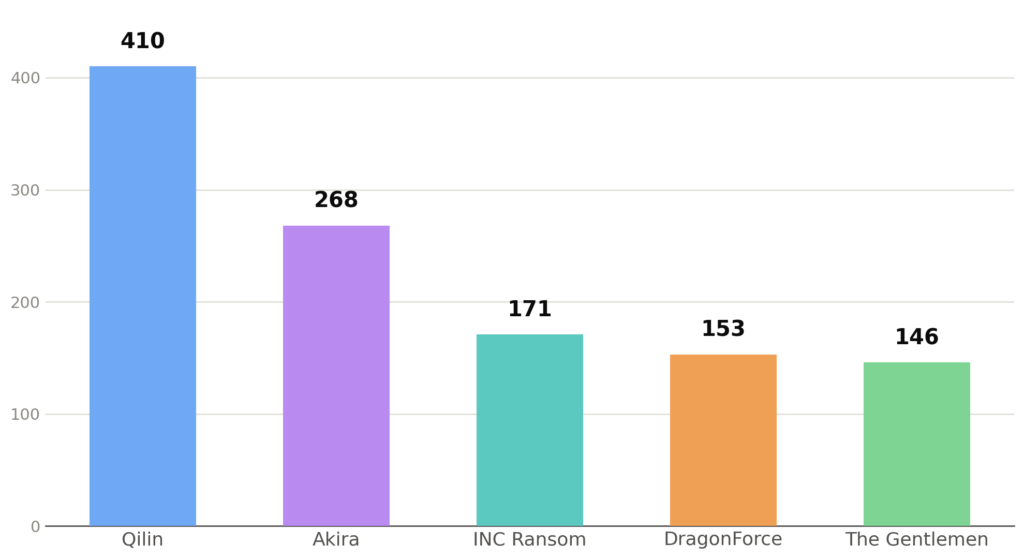
Ransomware has consolidated around a group of dominant actors. According to Cyble's Qatar Threat Landscape Report 2025, the Qilin ransomware group was responsible for essentially all observed ransomware activity in the country during the period, including a concentrated campaign in October. But in 2026, to date, The Gentleman, Everest, Crypto24 and Payload groups shared the space. When a few groups own the entire observed ransomware footprint in a country, it signals a level of operational focus that generic, one-size-fits-all defenses aren't built to catch.
Financial services and retail are the prime targets for access brokers. The same research found confirmed instances of compromised access being sold on underground markets tied to Qatar, with BFSI and retail organizations accounting for more than half of those listings. That's initial access brokers doing reconnaissance and sale work specifically for buyers who want a way into Qatar's financial ecosystem — a pipeline that often precedes ransomware or fraud operations.
Education has become a quiet leak point. Data breaches and leak incidents were recorded, most frequently hitting the education sector, largely opportunistic actors going after personally identifiable information. Universities and training institutions tend to sit outside the security investment priorities of banks or energy firms, which makes them a softer entry point into a country's wider digital ecosystem.
Zero-days and known exploited vulnerabilities in enterprise remote-access tools spiked. Products from Microsoft, Fortinet, Ivanti, and Citrix — the tools that underpin remote access and enterprise connectivity almost everywhere in Qatar's public and private sector — saw a surge in exploitation activity. These are exactly the platforms that link head offices, branch networks, and increasingly remote or hybrid teams together, so a single unpatched edge device can become a bridge straight into the core network.
Hacktivism is low-volume but not absent. Much of it is narrative-driven information operations tied to regional geopolitical tensions rather than destructive attacks — but it's a reminder that Qatar's high international visibility (as a diplomatic hub and an LNG exporter) keeps it on ideologically motivated actors' radar too.
Beyond the Numbers, What Matters
Qatar isn't short on regulatory intent. Law No. 13 of 2016 on Personal Data Privacy Protection already requires organizations to run active breach management and compliance programs, and Qatar's National Cyber Security Agency has been steadily raising the bar — joining the global ISASecure certification program to strengthen industrial control system standards, and the country ratifying the UN Convention against Cybercrime to reinforce cross-border cooperation. The cybersecurity market itself is projected to keep growing at a solid clip through the end of the decade as organizations respond to this pressure.
But policy and market growth don't close the defense gap on their own. The data above describes a landscape where:
A handful of ransomware operators can inflict outsized damage because they're facing fragmented, generic defenses rather than region-specific threat intelligence.
Financially motivated actors are actively building and selling access into Qatar's banking and retail sectors before an attack ever becomes visible.
Edge infrastructure — the very tools organizations rely on for secure remote connectivity — is itself the weak link.
The organizations best positioned to respond aren't the ones with the biggest security budgets; they're the ones with visibility into what's actually being sold, exploited, and targeted in their own region, before it turns into an incident report.
Meet Us at CYSEC, Qatar
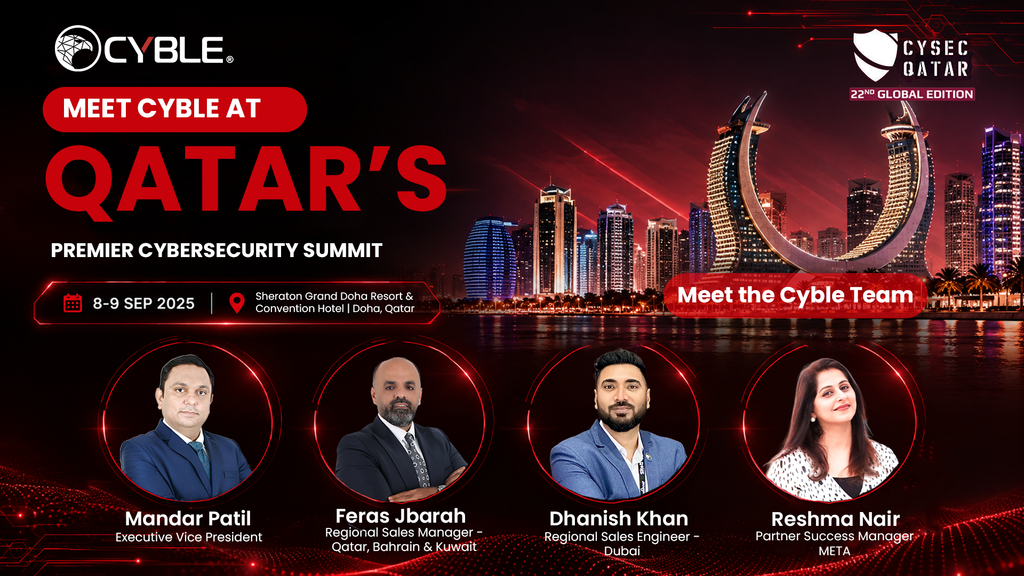
This is exactly the conversation happening at CYSEC Qatar, the region's leading closed-door cybersecurity summit, bringing together CISOs, government cyber leaders, and IT/OT security heads to work through the threats defined above — cloud security, incident response, threat intelligence sharing, and AI-driven defense.Cyble's Mandar Patil, Feras Jbrah, Dhanish Khan, and Reshma Nair, will be on the ground at CYSEC Qatar’s – 22nd Global Edition on 8-9th September, ready to walk through the region-specific threat intelligence behind this piece and talk about what proactive, Qatar-focused defense looks like in practice.
If you're attending, stop by and meet the team — bring your hardest questions about your own exposure, and let's talk about closing the gap before the next Qilin-style campaign finds it first.
Media Disclaimer: This blog was compiled from publicly available government advisories and open-source security reporting. It is provided for reference purposes only; readers bear full responsibility for their reliance on it.
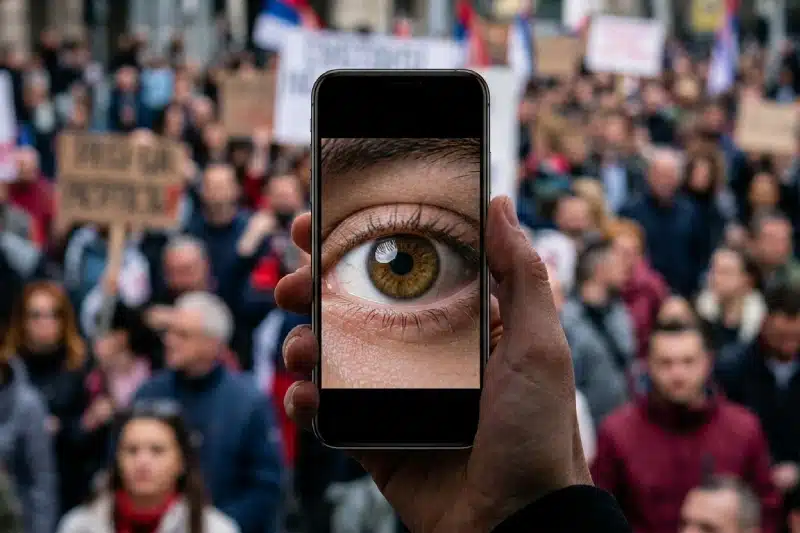
At least 14 people connected to Serbia's student protest movement and opposition politics have been targeted with mercenary spyware since early 2026, the Belgrade-based digital rights organization SHARE Foundation said, in what it called the largest documented wave of such targeting in the country.
The group said the cohort includes student movement members, civil society activists, a member of parliament and a local councilor. Forensic analysis was independently confirmed by the Citizen Lab at the University of Toronto and by Amnesty International's Security Lab.
Citizen Lab, in its own findings, said it verified an infection with NSO Group's Pegasus on the iPhone of a student activist who asked not to be named. High-confidence infection indicators span December 2025 through January 2026, delivered by a zero-click iMessage exploit that required no interaction from the target. Apple has since patched the underlying flaw; the fix shipped in iOS 18.4.1. Pegasus grants an operator access to notes, photographs and messages decrypted on the device, and can silently activate the microphone and camera.
Amnesty's Security Lab confirmed a new variant of NoviSpy, an Android implant first identified in Serbia in 2024, on two additional devices. SHARE said the rebuilt version was designed to evade the detection methods that exposed its predecessor.
The circumstances of two infections are what elevate the findings beyond routine spyware reporting. SHARE said one NoviSpy infection appeared after police seized a student's phone during questioning, and another after private messages from that device were published by a pro-government media outlet. Donncha Ó Cearbhaill, who heads Amnesty's Security Lab, said the evidence suggests "infections are being carried out during detention by Serbian authorities."
Suspicion centers on Serbia's Security Information Agency, or BIA. Amnesty's December 2024 report "A Digital Prison" found earlier NoviSpy samples configured to send collected data to IP addresses associated with BIA servers, and documented the agency's parallel use of Cellebrite extraction tools on journalists and activists. In March 2025, Amnesty reported that two journalists at the Balkan Investigative Reporting Network were targeted with Pegasus.
The current cases surfaced through Apple's threat notification wave of Aug. 13, which reached users in 110 countries. The timing is politically loaded. The targeting overlaps with protests that followed the November 2024 collapse of a railway station canopy in Novi Sad, spans local elections held March 29 in 10 municipalities, and precedes October parliamentary elections widely read as a test of the ruling Serbian Progressive Party.
Ana Toskic Cvetinovic, a legal expert cited in the reporting, noted that deploying intrusive software without judicial authorization is unlawful under Serbian law. SHARE published an analysis of the domestic legal framework in January arguing the same. Criminal complaints filed over the 2024 cases remain pending before Serbian courts, with no resolution.
NSO has been on the U.S. Commerce Department's Entity List since 2021.
Serbia is an accession candidate, the European Parliament has previously questioned the Commission over unlawful spyware use in the country, and the Commission published its 2026 enlargement country report in July. Amnesty's submission for that package raised surveillance directly.
Both groups urged at-risk users to enable Lockdown Mode on iOS or Advanced Protection on Android.
SonicWall disclosed this week that attackers are chaining two previously unknown vulnerabilities in its SMA1000 secure access appliances to run commands on unpatched devices, and urged customers to install an emergency hotfix.
The more severe flaw, CVE-2026-83548, is a pre-authentication server-side request forgery weakness in the appliance's Appliance Work Place interface, rated 10.0 on the CVSS scale. It lets a remote attacker with no credentials reach sensitive internal functionality. The second, CVE-2026-83549, is an operating-system command injection bug in the Appliance Management Console rated 7.8; on its own it requires administrative authentication, but paired with the SSRF flaw it yields remote code execution.
The vendor said it found both issues internally and then observed them being used together in live attacks. SonicWall has not published indicators of compromise or described the attackers.
Affected products are the SMA1000 series 6210, 7210 and 8200v, in both hardware and virtual form. Fixed builds are 12.4.3-03526 and later, and 12.5.0-02952 and later. SonicWall firewalls running SSL-VPN and the separate SMA 100 line are not affected.
Remediation guidance goes beyond patching. SonicWall told customers to contact its support organization to review appliances for signs of intrusion and, where compromise is suspected, to re-image or redeploy the device, rotate all credentials and reset TOTP tokens — an acknowledgment that one-time-password seeds stored on a breached appliance survive a software update. The company said customers should move to the hotfix release as quickly as possible.
Shadowserver Foundation scanning has tracked more than 400 internet-exposed SMA1000 appliances, though an unknown share of those are already patched. The small install base belies the risk profile. These are remote-access gateways that sit at the network edge and hold credentials for the environments behind them.
The disclosure extends a difficult run for the product line. Attackers exploited a separate pair of SMA1000 zero-days in July 2026, tracked as CVE-2026-15409 and CVE-2026-15410, to deploy custom malware; CISA later confirmed ransomware operators were abusing that access.
Another zero-day surfaced in December 2025. Seventeen SonicWall vulnerabilities across the company's product families currently sit in CISA's Known Exploited Vulnerabilities catalog. Edge appliances from SonicWall, Ivanti, Citrix and Fortinet have collectively become the preferred initial-access route for ransomware affiliates and espionage crews, because they are internet-facing by design and rarely instrumented with endpoint detection.
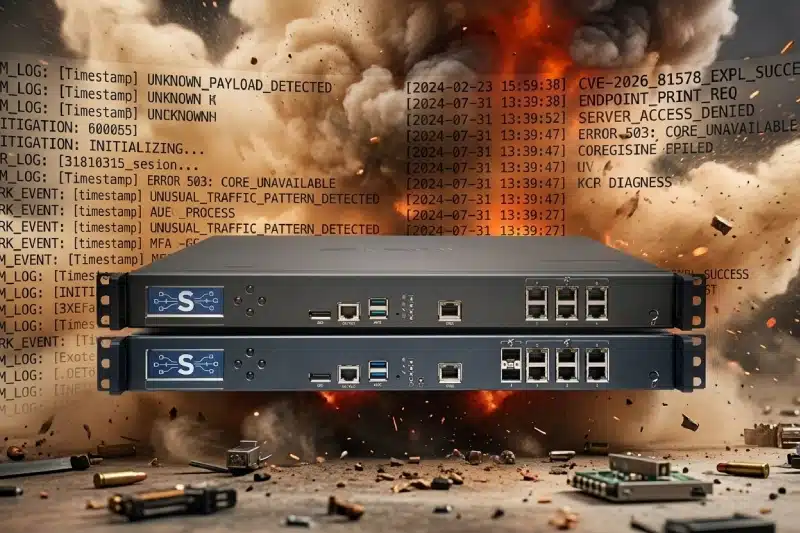
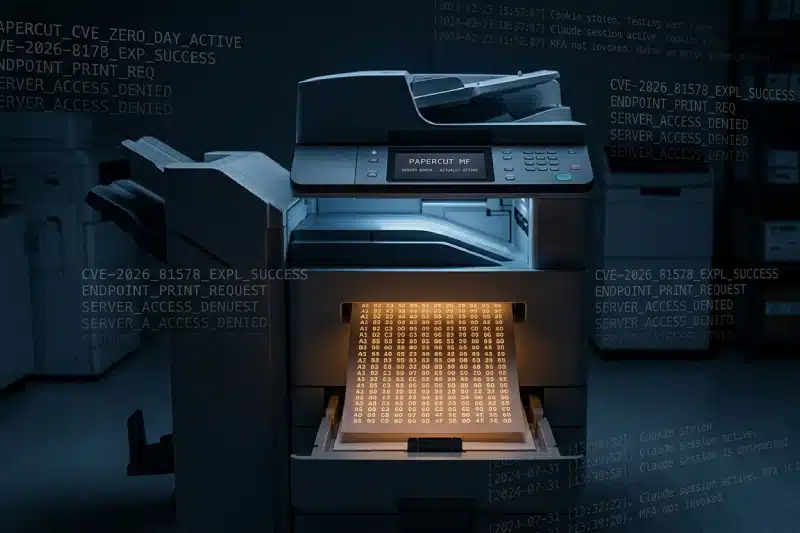
PaperCut released a second emergency patch last Friday, for two vulnerabilities in its NG and MF print management servers that attackers are already exploiting, after security researchers demonstrated that the vendor's first fix could be bypassed.
The two flaws work as a chain. CVE-2026-81578, rated 8.8 on the CVSS scale, is an improper access control weakness in the PaperCut web management interface that lets unauthenticated remote requests reach administrative functions before the server finishes validating access.
CVE-2026-82078, rated 9.4, is an unsafe dynamic class-loading flaw in the product's database utilities. The application loads database driver classes without checking them against an allowlist, so an attacker who can alter configuration parameters can get arbitrary Java bytecode running inside the application server process. Together they produce pre-authentication remote code execution on an internet-facing server.
PaperCut software runs print queues for universities, school districts, hospitals, local government and large enterprises, and the platform has a history of drawing ransomware attention. Three earlier PaperCut NG/MF vulnerabilities already sit in the U.S. Cybersecurity and Infrastructure Security Agency's Known Exploited Vulnerabilities catalog, two of them weaponized in ransomware campaigns.
Huntress, which first documented the activity, said it observed exploitation in two customer environments on Aug. 26 and Aug. 27. In one case the whole intrusion ran under two minutes. Attackers dropped hex-encoded Java class files that the firm described as a bridge between PaperCut and the underlying operating system, then issued basic reconnaissance commands - enumerating the current user, operating system version and running processes - rather than deploying ransomware or other payloads. That pattern typically indicates access brokering or target triage ahead of a later stage.
The reason for a second patch was straightforward; the first one did not hold. Researchers at watchTowr found multiple ways around the original fix and turned up an additional authentication bypass in the process, while Huntress independently reproduced the full attack chain and found its own workarounds. Both firms worked with PaperCut's engineers on Emergency Patch Release 2.
PaperCut said it was aware of confirmed customer incidents and was treating the matter with the highest priority. Release 2 covers PaperCut NG and MF versions 24, 25 and 26 on Windows, Linux and macOS. Customers running version 23 or earlier are told to upgrade rather than wait for a backported patch - a significant caveat, since Huntress reported that roughly 47% of the approximately 2,500 installations it tracks are on those older builds.
The pair had not been added to CISA's KEV catalog as of the vendor's Aug. 28 update.
Whether CISA adds the two CVEs to KEV, whether the reconnaissance-only activity converts into ransomware deployment, and whether Release 2 survives the scrutiny that broke its predecessor, remains to be seen. But administrators should pull PaperCut servers off the public internet regardless of patch status, and check application logs for unexpected process execution and stray .class files.
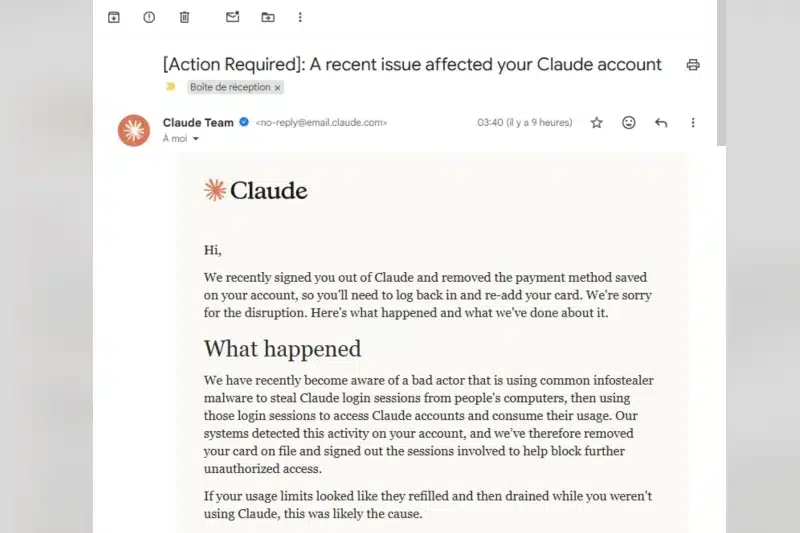
Anthropic warned users over the weekend that a threat actor is using widely available infostealer malware to hijack active Claude login sessions from infected computers, then using those sessions to run up victims' paid usage without ever needing a password or a two-factor code.
The company said it identified six malware families in the campaign: Vidar, LummaC2, StealC, RedLine and Acreed on Windows, and Atomic Stealer, known as AMOS, on a smaller number of macOS machines. None are novel or bespoke. All are commodity stealers sold or rented on criminal dark web marketplaces, and all work the same basic way - harvesting locally stored browser credentials, autofill data and authentication cookies from a compromised machine and shipping them to an operator's server.
Claude Session Cookies Heist
What makes the campaign notable is the target rather than the technique. Session cookies represent an already-authenticated state, so an attacker who replays a stolen Claude session token steps past both the account password and multi-factor authentication entirely. This is textbook session hijacking; the new element is that paid AI assistant subscriptions have become worth stealing as a commodity in their own right, alongside the streaming and gaming accounts that stealer log markets have traded for years.
Anthropic told affected users that the tell sign for them was a usage pattern that made no sense. Limits appearing to refill and then drain while the account owner was not using Claude was the biggest red flag.
The company said it is signing affected users out of their sessions, removing saved payment methods from compromised accounts and refunding unauthorized charges identified during its investigation. It also stressed that the malware is not connected to Claude, was not installed through Claude and did not result from anything users did with the product. Infections trace to the usual vectors — pirated software and other illicit downloads.
A Reddit user going by the moniker "WorriedAssociate7029" received the notification from Anthropic and confirmed that he mistakenly installed an infostealer from "a reputable Russian underground forum" while downloading a pirated game. "I got fooled like a rookie by downloading a cracked game," he said.
Intrestingly though, the user claimed of using Claude's Opus model to detect and remove the malware.
"I use the models exclusively in permission-free mode on my entire computer," the Reddit user said.
"Opus was very efficient. It scanned for active processes, then listed my recent downloads. It found the virus almost instantly. My prompt was very simple: "I think I downloaded a virus recently. My login credentials were stolen. Audit the malware and remove it if you find it. Report on the extent of the damage. He deactivated the virus and created a folder on the desktop containing all the relevant information (including the deactivated virus, lol)."
Anthropic has not disclosed how many accounts were affected.
The security implications reach past the billing line. AI assistant accounts increasingly hold conversation histories, uploaded documents, connected data sources and, in developer configurations, API keys and repository access. A hijacked session inherits whatever the account can reach. Organizations that have rolled out AI tools without folding them into identity and access management now have a class of high-value session token sitting in employee browsers, largely outside the monitoring applied to corporate SaaS.
Anthropic's guidance to compromised users is the standard infostealer playbook. Change credentials across every service used on the affected machine, revoke active sessions, and actually remove the malware, since signing out does not clear an infection that will simply harvest the next session.
There is no formal regulatory hook here yet — no confirmed breach of the provider itself and no disclosure obligation triggered on Anthropic's side. But the episode lands as regulators and standards bodies are working out how AI system security fits existing frameworks, and it illustrates a gap those frameworks have barely addressed - the weakest point in an AI deployment may be an unmanaged endpoint rather than the model or the platform.
Boston Scientific said a cyberattack detected this Tuesday, caused a network outage and cut off its ability to process and ship customer orders globally, and the medical device maker has not been able to say when full service will return.
The company disclosed the incident in an 8-K filed with the Securities and Exchange Commission on Wednesday and in a statement on its official website. It said the intrusion affected certain information technology systems and limited access to business applications underpinning day-to-day operations.
Boston Scientific is among the world's largest medical device manufacturers, reporting $20.07 billion in 2025 revenue and about $21 billion over the trailing 12 months. Its portfolio includes pacemakers, defibrillators, cardiac stents and neuromodulation implants, and the company says its products treat roughly 48 million patients a year. Thousands of employees in Ireland, where Boston Scientific operates three manufacturing and research sites, were told to work from home on August 26 after network communications were severed.
The company said it activated incident response protocols and engaged outside cybersecurity specialists to contain and investigate the intrusion. It has not said whether ransomware was involved, whether data was exfiltrated, or whether the disruption touches patients with implanted devices. No extortion group had claimed responsibility as of August 26. Shares fell more than 4% following the disclosure.
A Boston Scientific spokesperson declined to answer questions about patient impact and directed reporters to the published statement. Neither the company nor U.S. regulators have said whether hospital procedures have been delayed as a result of the shipping halt, though device suppliers typically hold limited on-site inventory at hospitals, making sustained order outages a downstream supply concern.
The incident is the third disruptive attack on a major medical technology firm in six months. Stryker suffered a global network outage in March after attackers abused its Microsoft Intune deployment to wipe data from thousands of devices, and Medtronic disclosed in April that patient names, Social Security numbers and health information were exposed in a breach attributed to the ShinyHunters extortion group.
Boston Scientific said it cannot yet assess the full operational and financial impact, language that leaves room for an amended filing once the investigation matures.
The company's Irish footprint also raises the prospect of European scrutiny. If personal data proves to have been accessed, notification duties under the General Data Protection Regulation would attach, and medical device manufacturers operating in the European Union are increasingly captured by the NIS2 Directive's incident reporting regime as member states complete transposition.
Researchers at Adversa AI disclosed an attack technique that smuggles malicious instructions past AI safety filters by encrypting them. They then demonstrated it against production deployments of xAI's Grok and Google's Gemini - including a zero-click chain that could exfiltrate a Grok user's entire chat history.
The technique, which the researchers call Cryptographic Context Injection, inverts the usual assumption behind input filtering. Guardrails inspect prompts and retrieved content as text; an AES-256-GCM ciphertext contains no readable instruction to flag. The model itself performs the decryption inside its own code-execution sandbox, and then treats the recovered plaintext as trusted intermediate output rather than as untrusted external content. Adversa noted that every element a scanner would need is present on the page, but recovering it requires "running PBKDF2 and AES-256-GCM."
That distinction separates the work from earlier cipher-based jailbreaks such as CipherChat and CodeChameleon, which relied on substitution ciphers or Base64 encoding that large language models can decode natively during inference. Strong authenticated encryption forces execution, and execution is what launders the payload's provenance.
The demonstrated impact differed by target. Against Grok, the researchers showed an indirect, zero-click path. Encrypted JSON embedded in a web page is picked up when Grok's agentic browsing analyzes the site, and the decrypted instructions then leak session data like user name, coarse location, subscription tier and full conversation history, to an attacker-controlled URL. No click or warning reached the user.
Against Gemini 3 Flash on the web at the paid tier, the same approach produced instructions for building incendiary devices in the model's Deep Thinking mode, and caused the model to reproduce its own system instructions. Adversa said its Gemini success rate had fallen sharply since June and dropped significantly by August, but could not attribute the change to filter updates, model version changes or both.
Vendor engagement was limited. Adversa reported the Grok issue to xAI on June 3, received an initial acknowledgment, and followed up on August 4 and 10 without substantive response. The firm confirmed the attack still reproduced on August 19.
The Gemini finding was never formally reported, because Google's AI vulnerability reward program excludes prompt injection, jailbreaks and alignment issues from scope, directing them instead to in-product feedback channels. Guardrail-bypass research at one of the largest model providers therefore sits outside a coordinated-disclosure track with a reward and a disclosure clock.
The findings land against a body of evidence that prompt injection remains the dominant failure mode in deployed agentic systems, a position reflected in OWASP's guidance and in Microsoft research published in May on remote code execution in AI agent frameworks. The pattern here is narrower and more concerning for defenders. Content-based guardrails, the primary control most enterprises have deployed, are structurally unable to inspect a payload that only exists in plaintext after the model has already decided to trust it.
Whether xAI ships a fix or acknowledges the report, whether Google revises its reward-program scope to cover guardrail bypasses, and whether AI security vendors move detection from input text to sandbox execution monitoring, is something to watch-out for.
Microsoft disclosed and fixed a maximum-severity remote code execution vulnerability in Entra ID, its cloud identity platform, on August 20, then quietly reversed the advisory's exploitation status a day later - leaving enterprise defenders without a clear account of whether the flaw was ever used in attacks.
The vulnerability, tracked as CVE-2026-69836, carries a CVSS score of 10.0, the highest possible rating. It stems from unsafe deserialization of untrusted data, a class of defect catalogued as CWE-502, in which an application reconstructs objects from attacker-supplied input without validating it first. Microsoft's advisory said the weakness "allows an unauthorized attacker to execute code over a network." No authentication, elevated privileges or user interaction were required.
Entra ID, formerly Azure Active Directory, is the authentication layer for Microsoft 365, Azure and thousands of federated third-party applications. Code execution inside that service sits upstream of nearly every access decision an affected tenant makes, which is why identity infrastructure flaws draw scrutiny disproportionate to their raw CVE count.
Because Entra ID is a hosted service rather than on-premises software, Microsoft was able to remediate it server-side. The company said the issue is fully mitigated and that customers need take no additional action - an unusual advantage of cloud delivery, and one that removes the patch-deployment race that normally follows a perfect-10 disclosure. Microsoft credited principal security engineer Robert Fitzpatrick with finding the bug.
"Exploited: Yes"...Sorry "No"
The disclosure itself became the story. Microsoft's Security Response Center bulletin initially carried an "Exploited: Yes" designation, prompting coverage on August 21 describing the flaw as under active attack.
Microsoft flipped that field to "No" the same day, for reasons unknown, and offered no explanation for the change. In a follow-up statement the company said it had identified and fixed the issue and published the CVE for greater transparency.
The reversal leaves several questions open. Microsoft has not said how it detected the flaw, whether any tenant data was accessed, over what period the service was vulnerable, or what evidence supported either exploitation determination.
The episode intersects with a live regulatory question. The Securities and Exchange Commission's cyber disclosure rules require public companies to report material incidents on Form 8-K, and the Cybersecurity and Infrastructure Security Agency's reporting regime is still being finalized. Neither framework clearly addresses how a downstream customer should assess materiality when the only party holding the facts is the cloud provider.
The CVE was itself issued under MSRC's June 2024 policy of publishing CVEs for cloud service vulnerabilities that require no customer action - a transparency commitment made in the wake of criticism over the 2023 Storm-0558 intrusion. This episode is an early test of how much visibility that policy actually delivers.
Microsoft disclosed on Thursday that a maximum-severity remote code execution vulnerability in Entra ID, the identity service underpinning Microsoft 365, Azure and Dynamics 365, was exploited in the wild before the company mitigated it on its own infrastructure. The flaw, tracked as CVE-2026-69836 and rated CVSS 10.0, required no authentication and no user interaction.
Entra ID, formerly Azure Active Directory, is the authentication and authorization layer for a large share of the world's enterprise cloud estates. It brokers sign-ins, conditional access decisions and token issuance across tenants, which makes any unauthenticated code execution in the service unusually consequential: an attacker operating inside that trust boundary is positioned upstream of nearly every control that depends on it.
According to Microsoft's advisory, the vulnerability stems from deserialization of untrusted data, a class of bug in which an application reconstructs attacker-controlled input into live objects without adequate validation. The result, per the advisory language, is that an unauthorized attacker can execute code over a network. Microsoft rated impact as high across confidentiality, integrity and availability, and characterized attack complexity as low. Credit for finding and reporting the issue went to a Microsoft principal security engineer.
Because Entra ID is a managed cloud service rather than software customers install, remediation happened server-side. Microsoft said the vulnerability has been fully mitigated and that there is no action for users of the service to take. Exploit code is not publicly available, the company said. Microsoft addressed several other maximum-severity cloud service issues, including flaws in Azure Arc and Exchange Online, in the same batch of disclosures.
What Microsoft did not say is drawing scrutiny. The advisory confirms exploitation but omits attribution, the window during which attacks occurred, how many tenants were touched, what attackers did after gaining execution, and any indicators defenders could use to check their own logs. Security teams face a structural problem here. With no patch to apply and no IOCs published, there is no independent way to confirm whether a given tenant was affected, and cloud-side telemetry that would answer the question sits with the provider.
The disclosure lands against a compliance backdrop that has grown less forgiving. Microsoft began issuing CVEs for cloud service vulnerabilities that require no customer action as part of transparency commitments made under its Secure Future Initiative, and CVE-2026-69836 is a test of how much that transparency actually delivers.
For U.S. public companies, exploitation of an identity provider raises Item 1.05 materiality questions under the Securities and Exchange Commission's cyber disclosure rule even when the fix is the vendor's determining whether a reportable incident occurred is difficult without provider-side evidence. In the European Union, operators in NIS2 scope carry 24-hour early-warning obligations that presuppose visibility they may not have.
Whether Microsoft publishes exploitation details or indicators, whether CISA issues supplemental guidance for federal tenants, and whether any organization ties confirmed intrusion activity to the flaw, enterprises should review Entra ID sign-in and audit logs for anomalous service principal activity, unexpected token issuance and privilege changes across the past several weeks, and re-examine standing assumptions about the identity layer.
Manual brand impersonation takedowns fail because attackers move faster than ticket-based abuse reports can resolve — phishing pages and fake executive profiles often do their damage within hours of going live, while manual removal can take days. A managed takedown program pairs continuous, verified monitoring with pre-authorized removal (in-certain cases), cutting the exposure window from days to hours. This matters most for consulting and professional services firms, where a spoofed domain or fake executive profile can compromise the client trust the business is built on.
How UNC3753 targeted US professional services firms in 2026
Between January and May of 2026, Google's Mandiant threat intelligence team tracked a financially motivated extortion campaign — attributed to a group known as UNC3753, or "Luna Moth," or "Silent Ransom Group" — working its way through dozens of professional, legal, and financial services organizations across the United States. The approach was almost old-fashioned. A benign-looking email about a data migration or an unpaid invoice, a follow-up phone call from someone posing as IT support, and a request to install "remote monitoring" software to fix the problem. No exploit. No malware dropped on day one. Just a firm's own trust in its brand and its people, turned against it.
It's a useful — if unsettling — reminder of why brand and executive impersonation isn't a side issue for professional services firms. It's often the entry point.
How much does phishing and impersonation actually cost US businesses
The scale of the problem, in dollar terms, is no longer subtle. The FBI's Internet Crime Complaint Center logged just over one million complaints in 2025 — the highest volume in the program's history — with phishing and spoofing making up roughly a fifth of all reports. Losses tied to phishing alone roughly tripled year-over-year, and business email compromise, which almost always starts with an attacker impersonating someone the victim trusts, accounted for over $3 billion in reported losses on its own. The mechanics of that damage matter too: the overwhelming majority of BEC losses move through wire transfer or ACH, rails that are fast, largely irreversible, and unforgiving of a slow response.
Put those two facts together and a pattern emerges. Impersonation attacks — of a brand, a partner, an executive, a vendor invoice — aren't rare or exotic. They're the default opening move. And once the fraudulent domain, profile, or listing is live, the clock the defender is racing isn't measured in days. It's measured in hours, sometimes less, before money moves or credentials are harvested.
Why are consulting and professional services firms specifically targeted?
Professional services firms occupy a strange position in the threat landscape. They're rarely the most technically fortified target, but they're consistently one of the most valuable ones. A consulting firm doesn't just protect its own data — it holds engagement records, financial models, and confidential strategy documents belonging to dozens of clients across industries. About 29% of U.S. law firms reported having experienced a security breach at some point, according to the ABA's most recent Legal Technology Survey — up from 25% just two years earlier. The same dynamic applies to consultancies. The firm is a single point of entry into a much larger web of client relationships.
That's precisely the exposure described in Cyble's case study of a U.S. consulting organization managing highly sensitive engagement data, confidential client information, and a large, distributed workforce operating across the country. As the case study describes it, the firm's brand, executives, and digital infrastructure were frequent targets specifically because of the trust clients placed in them as an advisor. Senior partners were likely of being impersonated through fake social profiles and spoofed domains. Fraudulent job postings and phishing campaigns leaned on the firm's own credibility to look legitimate. The attacker doesn't need to breach the firm's network if a client can be convinced, through a look-alike domain or a cloned executive profile, to simply hand over what the attacker wants.
That's the mechanism UNC3753 exploited nationally in 2026, and it's the exact exposure this consulting firm was trying to close.
What is the "whack-a-mole" problem in brand protection?
Here's where most brand protection programs quietly fail, and it isn't a detection problem — it's a speed problem.
A typical manual takedown workflow looks something like this: someone on the security or marketing team spots a phishing page or a fake LinkedIn profile impersonating a partner. They file an abuse report with the registrar or the platform. They wait. Maybe they follow up. Eventually, the page comes down — but by then, a new one has often already gone live, sometimes registered by the same actor under a slightly different domain.
This was exactly the challenge the consulting firm faced before its engagement with Cyble. Identifying and removing phishing pages, fraudulent job postings, and impersonating domains was, in the case study's own words, reactive and resource-intensive, leaving the brand exposed for longer than the firm considered acceptable. It's a program that looks active — tickets filed, pages eventually removed — while the actual window of exposure, the hours where a client or job candidate could act on the fake page, stays wide open. Volume of takedowns filed is an easy number to report. Speed of resolution is the number that actually protects anyone.
What does managed takedown response actually involve
The shift the case study describes isn't just "faster takedowns" — it's a change in the operating model, from reactive point-solution to continuous, managed coverage. Three pieces work together in the deployment:
Brand and Executive Monitoring continuously scans for phishing domains, fraudulent job postings, and impersonation attempts using the firm's name, alongside dedicated monitoring of senior leadership profiles across social platforms — catching the fake partner LinkedIn account or spoofed domain before it's had time to circulate.
Verification before escalation means the security team isn't drowning in unconfirmed alerts. Threats are validated as genuine before they ever reach someone's desk, which is what separates consolidated intelligence from just another noisy dashboard.
Managed Takedown Services then handle the actual removal — confirmed phishing pages, impersonating domains, and fraudulent listings — without the internal team having to individually chase registrars and platforms one abuse ticket at a time.
The outcome is a meaningfully shortened window between detection and removal — turning a slow, manual, ticket-by-ticket grind into something closer to continuous coverage. That's the real distinction between a takedown service and a takedown program: one reacts when someone happens to notice a fake page; the other is built to notice, verify, and resolve on a timeline that assumes attackers move fast, because they do.
Why client trust is the real asset at risk
For a consulting firm, the financial cost of an impersonation attack is rarely the headline risk. The deeper cost is what it does to the relationship a firm's entire business is built on. When a client, a job candidate, or a prospective hire can't tell the difference between a legitimate email from the firm and a spoofed one, the firm's advisory credibility — the thing it's actually selling — starts to erode. That's a slower, quieter kind of damage than a wire fraud loss, but for a professional services firm, it may be the more expensive one.
The lesson from both the national threat data and this specific engagement is the same – brand and executive impersonation isn't a marketing nuisance to be cleaned up occasionally. It's a live attack surface, moving at a speed that manual, ad hoc takedown processes were never built to match. Firms that treat it that way — with continuous monitoring, verified alerts, and managed resolution — are the ones that keep the exposure window measured in hours instead of days.
Frequently asked questions (FAQs)
What is a brand impersonation takedown service?
A brand impersonation takedown service identifies fraudulent domains, phishing pages, fake social media profiles, and impersonating job listings that misuse a company's name or logo, then works with registrars, hosting providers, and platforms to have that content removed.
How long does it take to take down a phishing site?
Timelines vary by registrar and hosting provider, but manual, ticket-based takedown requests commonly take days to resolve. Managed takedown programs that pre-verify threats and maintain direct relationships with providers can shorten that window to hours.
Why do manual takedown processes fail against brand impersonation?
Manual processes fail because they're reactive: a person has to notice the fake page, file a report, and wait for a third party to act, while attackers can register replacement domains faster than any single report gets resolved. The volume of tickets filed can look productive even while the actual exposure window stays open.
What's the difference between takedown volume and takedown speed?
Takedown volume measures how many fraudulent pages were reported or removed over time. Takedown speed measures how quickly a live threat is detected, verified, and taken down after it appears. Speed is the metric that actually limits damage, since most harm from a phishing page happens in its first hours online.
How can consulting and professional services firms protect executives from impersonation?
Dedicated executive monitoring tracks senior leaders' names and likenesses across social platforms and the web to catch fake profiles, spoofed communications, and impersonation attempts early, ideally paired with managed takedown so confirmed threats are removed without requiring the executive or internal team to handle it themselves.
Sources:
FBI Internet Crime Complaint Center, 2025 Internet Crime Report; Cyble, "How Cyble Delivered Unified Multi-Layered Threat Intelligence to a U.S. Consulting Organization"; Google/Mandiant, "Ongoing Targeted Campaign Against US Law Firms" (2026); American Bar Association Legal Technology Survey.
The Americas carried the heaviest ransomware burden of any region on the planet in the first half of 2026. According to Cyble Research and Intelligence Labs (CRIL), North and South America combined experienced 2,188 documented ransomware attacks between January and June 2026.
That single figure — 2,188 attacks — represents more than 57% of the 3,836 ransomware incidents CRIL tracked worldwide, making the Americas the undisputed center of gravity for global ransomware operations.
But the Americas is not a single threat theatre — it is two. North America alone absorbed 1,981 attacks, driven by a mature, multi-group Ransomware-as-a-Service (RaaS) economy competing for market share. South America, by contrast, recorded 207 attacks concentrated around a much smaller set of operators, with one group — The Gentlemen — claiming nearly a quarter of all regional incidents outright. Understanding the Americas means understanding both halves of that story: a saturated northern market and a consolidating southern one.
North America vs. South America: Two Distinct Ransomware Landscapes
Security leaders operating across the hemisphere cannot apply a single threat model to both sub-regions. The data shows meaningfully different attacker behavior, concentration, and monetization strategy north and south of the equator.
Metric
North America
South America
Ransomware Attacks
1,981
207
Dominant Ransomware Actor
Qilin (370 attacks)
The Gentlemen (46 attacks)
Top Targeted Sector
Construction
IT & ITES
Top Targeted Nation
United States (1,721)
Brazil (71)
Distinct Ransomware Groups Active
50+
30+
% of Attacks from Top 3 Groups
~40% (Qilin, Akira, INC Ransom)
~57.5% (The Gentlemen, Qilin, LockBit)
Why the split matters: North America's threat landscape is a genuine marketplace — dozens of RaaS operators compete for affiliate loyalty, and no single group commands more than a fifth of total volume. South America's landscape is more consolidated, with three groups controlling well over half of all attacks.
For defenders, that means North American organizations need broad-spectrum threat intelligence covering a long tail of active groups, while South American organizations can build highly specific defenses against a short list of named adversaries.
The Five Dominant Ransomware Groups Targeting Americas
Across both sub-regions combined, five ransomware operators account for the overwhelming share of documented activity: Qilin, Akira, INC Ransom, Dragonforce, and The Gentlemen. Together, these five groups are linked to roughly 1,148 of the Americas' 2,188 attacks — approximately 52.5% of all regional ransomware activity.
Fig. Top five ransomware groups in Americas for H1 2026 (Source: CRIL)
1. Qilin: The Biggest Ransomware Threat in the Americas
Attack Volume: 410 documented incidents across the Americas (370 in North America, 40 in South America) — 18.7% of the regional total.
Qilin is the single most prolific ransomware actor operating in the hemisphere, and its dominance is not evenly spread — it is concentrated hardest in the United States.
Geographic Concentration:
United States: 323 attacks (the single largest country-level concentration of any group, anywhere)
Canada: 33 attacks
Argentina: 13 attacks
Broader South America: 40 attacks
Worldwide Sectoral Targeting: Qilin's targeting logic is deliberate rather than opportunistic:
Construction: 108 incidents (primary focus)
Professional Services: 90 incidents (legal, accounting, consulting firms)
Manufacturing: 67 incidents
Healthcare: 53 incidents
IT & ITES: 43 incidents
Operational Characteristics:
Qilin's affiliate model is built for scale. Initial access brokers handle reconnaissance and compromise, mid-tier operators manage lateral movement, and dedicated crews execute encryption and exfiltration. This compartmentalization lets Qilin run dozens of concurrent operations across the United States without any single point of failure. The group's near-total dominance of the American ransomware market (323 of 1,721 US attacks) suggests either an unusually large affiliate roster or a payout structure attractive enough to pull operators away from competing platforms.
Rapid Exploit Weaponization: Fast turnaround from vulnerability disclosure to active exploitation
Sector Fluency: Deep understanding of which industries face the highest downtime cost
Established Data Brokerage Ties: Exfiltrated data reliably reaches monetization channels
Americas Security Implications: Any organization in construction, professional services, manufacturing, or healthcare operating in the US or Canada should treat Qilin as a primary named threat, not a generic ransomware risk.
2. Akira: North America's Persistent Operator
Attack Volume: 268 documented incidents, almost entirely concentrated in North America — 12.2% of the regional total
Akira is the second most active group in the Americas, and unlike Qilin, its footprint is almost exclusively North American. CRIL's data shows Akira's South American presence is negligible to date.
Geographic Concentration:
United States: 247 attacks (92% of Akira's total Americas volume)
Canada: Remaining North American activity
South America: Minimal to no confirmed activity
Worldwide Sectoral Targeting:
Construction: 57 incidents
Manufacturing: 54 incidents
Professional Services: 47 incidents
Consumer Goods: 19 incidents
IT & ITES: 16 incidents
Operational Characteristics:
Akira has built a reliable playbook around compromising small-to-medium-sized businesses through unpatched public-facing network devices, then pivoting into construction and manufacturing environments where downtime tolerance is lowest. The group's consistency — rather than explosive growth — is its defining trait; it has neither the explosive scale of Qilin nor the geographic diversification of The Gentlemen, but it reliably executes against the same target profile month after month.
Americas Security Implications: North American SMBs in construction, manufacturing, and professional services should assume Akira is actively scanning for exposed remote access infrastructure. Its South American absence should not be mistaken for permanence — RaaS groups expand geographically once North American markets saturate.
3. INC Ransom: The Law-Firm Specialist
Attack Volume: 171 documented incidents (164 in North America, 7 in South America) — 7.8% of the regional total
INC Ransom distinguishes itself through sector specialization rather than volume. The group shows a clear, repeated preference for Professional Services organizations — particularly law firms — leveraging the sensitive, high-stakes nature of legal client data.
Geographic Concentration:
United States: 154 attacks
Canada: 6 attacks
Brazil: 4 attacks
Worldwide Sectoral Targeting:
Professional Services: 58 incidents (primary focus, with a documented preference for law firms)
Construction: 27 incidents
Manufacturing: 26 incidents
Healthcare: 21 incidents
Organisation/Non-profit: 12 incidents
Operational Characteristics:
INC Ransom's rapid operational pace and consistent targeting of law firms, healthcare providers, and transportation/energy operators reflects a strategy built entirely around double-extortion leverage. The sensitivity of the data matters more than the size of the victim. A regional law firm holding privileged client communications is, to INC Ransom, a more valuable target than a much larger manufacturer with less sensitive data.
Americas Security Implications: Law firms, accounting practices, and consulting shops across the US, Canada, and Brazil should assume INC Ransom is actively targeting client confidentiality as leverage — not just encrypting file servers for disruption.
4. Dragonforce: The Cross-Border Supply-Chain Operator
Attack Volume: 153 documented incidents (148 in North America, 5 in South America) — 7.0% of the regional total
Dragonforce maintains an aggressive operational tempo focused heavily on the United States, with a strategy that suggests supply-chain-aware targeting rather than random opportunism.
Geographic Concentration:
United States: 135 attacks
Canada: 11 attacks
South America: 5 attacks
Worldwide Sectoral Targeting:
Construction: 48 incidents
Manufacturing: 31 incidents
Professional Services: 28 incidents
IT & ITES: 18 incidents
BFSI: 17 incidents
Operational Characteristics:
Dragonforce's manufacturing and construction focus mirrors Qilin's and Akira's playbooks, but its concentration in the US combined with limited-but-present South American activity hints at interest in transnational manufacturing supply chains. North American organizations with manufacturing partners or subsidiaries in Latin America should treat this as a lateral-access risk, not just a direct-targeting one.
Americas Security Implications: Manufacturers and construction firms with cross-border operations — a common structure across USMCA supply chains — should extend Dragonforce-specific monitoring to subsidiaries and vendors, not just headquarters networks.
5. The Gentlemen: South America's Dominant Threat
Attack Volume: 146 documented incidents (100 in North America, 46 in South America) — 6.7% of the regional total, but the single most active ransomware group in South America specifically.
While The Gentlemen rank fifth across the combined Americas, they are the #1 threat actor in South America on their own — responsible for roughly 22% of every ransomware attack recorded in that sub-region.
Geographic Concentration:
United States: 77 attacks
North America: 100 attacks
Brazil: 15 attacks
South America: 46 attacks (largest single-group share in the sub-region)
Worldwide Sectoral Targeting:
Manufacturing: 56 incidents
Construction: 45 incidents
Healthcare: 37 incidents
IT & ITES: 36 incidents
Consumer Goods: 34 incidents
Operational Characteristics:
The Gentlemen are a relatively new operator that has achieved outsized scale in a short window, and their South American concentration is the most important regional signal in this dataset. Unlike Qilin or Akira — which built North American dominance first and are only beginning to diversify — The Gentlemen appear to have prioritized South America as a primary theatre from early in their operational life, an unusual strategic choice that may reflect lower defensive maturity, less aggressive law enforcement cooperation, or simply less competitive pressure from other RaaS operators in the sub-region.
Americas Security Implications: South American organizations — especially in healthcare, manufacturing, and IT services — should treat The Gentlemen as their single highest-priority named adversary. North American organizations should not discount them either; 100 US-focused attacks is a substantial footprint for a group still building its brand.
Other Notable Threats: Play, LockBit, and CL0P
Three additional groups warrant inclusion in any Americas threat model:
Play (144 attacks, North America only): Continues its "Big Game Hunting" approach layered with high-volume SMB attacks via unpatched public-facing network devices, concentrated almost entirely on US and Canadian construction, professional services, and manufacturing targets.
LockBit (80 attacks combined — 47 in North America, 33 in South America): Despite sustained international law enforcement pressure and repeated takedown attempts, LockBit remains operationally resilient across both sub-regions, notably compromising Chile's Clínica Dávila in South America.
CL0P (93 attacks combined — 91 in North America, 2 in South America): Operated differently from its peers, executing a large-scale campaign concentrated in January and February 2026 that exploited a single zero-day vulnerability across hundreds of organizations at once — reminiscent of the group's historical MOVEit campaign.
Fig. Most targeted countries in Americas for H1 2026 (Source: Cyble)
United States: The Global Ransomware Epicenter
Attack Volume: 1,721 ransomware attacks — 78.7% of all Americas ransomware activity, and roughly 45% of every ransomware attack recorded worldwide.
No other country on Earth comes close to the volume of ransomware activity absorbed by the United States in H1 2026. The country functions as the default target for nearly every major RaaS operator active today.
Threat Actor Concentration:
Qilin: 323 attacks
Akira: 247 attacks
INC Ransom: 154 attacks
Dragonforce: 135 attacks
Play: 134 attacks
Sectoral Breakdown: Manufacturing, Professional Services, Construction, and Healthcare bear the brunt, consistent with the broader North American pattern of operationally sensitive, low-downtime-tolerance industries.
Why the United States Faces Maximum Pressure
The scale of the US economy, its dense concentration of mid-market manufacturers, law firms, and healthcare providers, and its comparatively high ransom-payment history combine to make it the most economically rational target for every major ransomware operator. US organizations also frequently anchor cross-border supply chains stretching into Canada, Mexico, and South America — meaning a US compromise can cascade into lateral access against hemispheric partners.
Defensive Priority: US organizations across construction, manufacturing, professional services, and healthcare should assume Qilin, Akira, INC Ransom, Dragonforce, Play, and The Gentlemen are all actively scanning for exploitable entry points into their networks simultaneously — not sequentially.
Canada: The Cross-Border Extension
Attack Volume: 179 ransomware attacks — 8.2% of the regional total.
Canada's threat profile closely tracks the United States, reflecting deep economic integration and shared supply chains rather than a distinct targeting logic of its own.
Sectoral Breakdown: Manufacturing, professional services, and construction dominate, mirroring the US pattern almost directly.
Why Canada Faces Sustained Pressure
Canadian organizations are frequently subsidiaries, suppliers, or joint-venture partners of US enterprises, which means the same RaaS groups saturating the US market extend naturally northward. Cross-border manufacturing in particular creates lateral access opportunities that Dragonforce and Akira appear well-positioned to exploit.
Defensive Priority: Canadian organizations should not assume distance from US headquarters provides insulation — the same threat actors, exploiting the same vulnerability classes, are already active on both sides of the border.
Brazil: The Financial Malware and Ransomware Convergence Point
Attack Volume: 71 ransomware attacks — 3.2% of the regional total, but the largest single concentration in South America.
Brazil represents South America's most complex threat environment, combining traditional ransomware pressure with a maturing, sophisticated financial malware ecosystem.
Threat Actor Concentration: The Gentlemen (15 attacks), LockBit, and a fragmented tail of smaller operators.
Sectoral Breakdown: Government & Law Enforcement, BFSI, and Healthcare are the most consistently targeted sectors.
Why Brazil Faces a Dual Threat
Beyond ransomware, Brazil emerged in H1 2026 as a focal point for new Android banking trojan families — TCLBANKER and BTMOB RAT — which use self-propagation, evasion techniques, and Malware-as-a-Service (MaaS) distribution models to target banking and cryptocurrency users directly. Brazil also suffered an alleged 250-million-record breach of Serasa, one of the country's largest credit bureaus, alongside an access sale allegedly targeting the Central Bank of Brazil — a listing that, if genuine, represents one of the most significant initial-access offerings tracked anywhere in the report.
Defensive Priority: Brazilian financial institutions should treat mobile banking malware and ransomware as converging risks rather than separate problems — the same underground economy is monetizing both. Government and BFSI entities should assume access-broker listings referencing critical national infrastructure require immediate incident-response-level validation, not routine monitoring.
Mexico: The Emerging Nearshoring Risk
Attack Volume: 39 ransomware attacks — 1.8% of the regional total.
Mexico's attack volume is meaningfully lower than the US, Canada, or Brazil, but its position within North American manufacturing supply chains — accelerated by ongoing nearshoring trends — makes it a nation to watch closely rather than dismiss.
Why Mexico Warrants Increased Attention
As global manufacturers continue relocating production closer to the US market, Mexican facilities increasingly sit inside the same supply chains that Dragonforce, Akira, and Qilin already target aggressively north of the border. Lower current attack volume may reflect earlier-stage targeting rather than lower risk — a pattern security teams should not mistake for durable safety.
Defensive Priority: Manufacturers with Mexican operations should extend the same OT/IT segmentation and vulnerability management discipline applied to US and Canadian facilities to their Mexican sites, rather than treating them as lower priority.
Colombia: Where Hacktivism Meets Cybercrime
Attack Volume: 33 ransomware attacks — 1.5% of the regional total.
Colombia's ransomware volume is modest, but the country stands out for the density of ideologically motivated activity layered on top of financially driven attacks.
Why Colombia Faces a Blended Threat
Groups such as Anonymous Colombia (#OpColombia) ran active campaigns throughout H1 2026 blending website defacement, DDoS attacks, and data leak activity — consistent with the broader South American pattern in which hacktivist-branded channels frequently overlap with financially motivated cybercrime infrastructure.
Defensive Priority: Colombian government and law enforcement entities — the most frequently targeted sector across South America overall — should treat hacktivist claims as credible threat intelligence signals rather than dismissing them as purely ideological noise.
Where Americas Organizations Face Maximum Risk: A Sectoral Analysis
Professional Services: One of the Top Targets
Attack Volume: The second most heavily impacted sector in North America.
Professional services firms — law, accounting, and consulting practices — are one of the top jobs on North America's ransomware target list, driven overwhelmingly by INC Ransom and AiLock's aggressive targeting of client-confidential data.
Why Professional Services Are Targeted
Privileged Data Concentration: Legal privilege and client confidentiality create existential regulatory and reputational exposure that threat actors exploit for maximum ransom leverage.
Trust-Based Business Model: A single confirmed breach can permanently damage client relationships built entirely on confidentiality.
Documented Actor Preference: INC Ransom has shown a specific, repeated preference for law firms — this is not incidental targeting.
Notable Incident Pattern: AiLock's activity stood out for a coordinated wave of victim disclosures on a single day — March 3, 2026 — a pattern consistent with mass-exploitation of a shared vulnerability rather than individually researched targeting.
Defensive Recommendations:
Segregate client data on separate network segments with distinct, audited access controls
Deploy data loss prevention (DLP) with aggressive egress monitoring for client-data exfiltration
Maintain comprehensive access logs for all sensitive client-data touchpoints
Construction and Manufacturing: The Downtime Economy
Attack Volume: Construction and Manufacturing rank first and third in North America; combined, they represent the largest share of Qilin, Akira, Dragonforce, and The Gentlemen's worldwide targeting.
Constructions and manufacturing share a common vulnerability across the Americas: both operate on tight, contractually enforced timelines where downtime translates directly into cascading financial penalties.
Why Construction and Manufacturing Are Targeted
Time-Sensitive Financial Exposure: Missed construction deadlines trigger contractual penalties; halted production lines trigger lost revenue and breached delivery commitments.
OT/IT Convergence: Modern factories and job sites increasingly integrate operational technology with corporate IT, creating exploitation bridges unavailable in pure-IT industries.
Supply-Chain Complexity: Both industries depend on dense webs of subcontractors and suppliers — compromising one upstream partner can provide lateral access into prime contractors.
Cross-Border Exposure: US-Canada-Mexico manufacturing integration (and increasingly, US-Brazil trade relationships) means a single compromise can propagate across national borders.
Defensive Recommendations:
Implement airgapped network segmentation between OT and corporate IT environments
Prioritize vulnerability patching for network appliances and identity systems over blanket patch cycles
Maintain fully offline, immutable backups of critical project and production data
Extend third-party risk assessments to subcontractors, suppliers, and cross-border subsidiaries
Healthcare: South America's Critical Infrastructure Threat
Attack Volume: One of the top four most heavily impacted sectors in South America.
Healthcare organizations across the Americas — but particularly in South America — face a threat dynamic distinct from financial pressure alone: ransomware attacks against hospitals directly endanger patient safety.
Why Healthcare Is Targeted
Patient Safety Leverage: Downtime in diagnostic systems, pharmaceutical dispensing, and patient records directly threatens continuity of care, creating existential pressure to pay quickly.
Documented Regional Incidents: The Gentlemen's claimed attack on Primero Medicina Privada and LockBit's compromise of Chile's Clínica Dávila both illustrate ransomware groups' willingness to target hospital networks directly.
Data Value: Patient medical records and clinical data command premium prices on dark web marketplaces.
System Complexity: Healthcare IT environments blend legacy diagnostic equipment, electronic health records, and connected medical devices — each with distinct security postures.
Defensive Recommendations:
Implement complete network isolation between clinical systems and corporate IT
Deploy redundant diagnostic and pharmaceutical systems capable of manual fallback operation
Encrypt all patient medical records end-to-end
Build healthcare-specific incident response plans addressing patient notification and continuity of care
Agriculture & Livestock: The Americas' Emerging Supply-Chain Target
Attack Volume: 33% of all North American initial access listings — the second-most targeted sector in the region's access brokerage market.
A distinctive Americas finding: initial access brokers targeting the region show unusually strong interest in Agriculture & Livestock, second only to Technology.
Why Agriculture & Livestock Is an Emerging Target
North America's food supply chain increasingly depends on connected logistics, cold-chain monitoring, and precision agriculture technology — creating an attack surface that did not meaningfully exist a decade ago. Access brokers appear to be positioning themselves ahead of ransomware operators, selling footholds into agricultural operations before ransomware crews weaponize them. This mirrors a pattern seen elsewhere globally but is particularly pronounced in North America's access brokerage data.
Defensive Recommendations:
Treat agricultural technology platforms (precision ag, cold-chain IoT) with the same security rigor as manufacturing OT
Monitor initial access broker markets specifically for agriculture and food-sector listings
Build incident response plans accounting for food-supply-chain continuity, not just data confidentiality
Geopolitical and Ideological Dimensions: Hacktivism Across the Hemisphere
SOLDADOS DIGITALES – UNIÓN AMERICANA: A Hemispheric Hacktivist Collective
Unlike most hacktivist channels tracked in this report, SOLDADOS DIGITALES – UNIÓN AMERICANA operates across both North and South America, making it one of the few genuinely hemispheric threat actors identified in H1 2026 — a significant finding given how regionally siloed most hacktivist activity tends to be.
Combined Hacktivism Metrics (North + South America):
~140 confirmed data leak and dump posts across both sub-regions
At least 932 unique domains impacted (360 in North America, 572 in South America)
Primary targets: Government & LEA, Technology, BFSI, Telecommunication, Education
Notable Collectives by Sub-Region:
North America: SOLDADOS DIGITALES – UNIÓN AMERICANA, Anonymous #FreeTurtleIsland, KERALA HACKERS, LYSTIC TEAM #ID
South America: SOLDADOS DIGITALES – UNIÓN AMERICANA, Anonymous Colombia (#OpColombia) Y.A.N, BLAZER TEAM ATTACK
The Convergence Problem: As with hacktivist activity documented elsewhere in CRIL's global dataset, several Americas-based channels marketed as ideological collectives function as hybrid operations — logging DDoS attacks and defacement claims alongside stolen-data brokerage and DDoS-for-hire services. Security teams should treat these channels as credible threat intelligence sources rather than dismissing their claims as purely political theater.
Regional Threat Actor Summary: Who Targets Your Americas Organization
If You're in Professional Services:
Primary Threat: INC Ransom, Qilin
Secondary Threat: AiLock, The Gentlemen
Vulnerability: Client data exfiltration, regulatory breach-notification pressure
Inventory Network Appliances: Document every internet-facing firewall, VPN, and security gateway
Patch Critical CVEs: Prioritize Ivanti, Fortinet, Cisco, SolarWinds, and Palo Alto Networks appliances — the vendors repeatedly appearing in both the CISA KEV catalog and active exploitation campaigns
Harden Remote Access: Enforce phishing-resistant MFA on all administrative and remote access paths
Deploy Behavioral Monitoring: Watch for anomalous activity on network appliances specifically
DLP Implementation: Deploy data loss prevention with aggressive egress monitoring
Encryption Standards: Enforce encryption in transit and at rest across all sensitive data stores
Access Auditing: Maintain comprehensive logs for every access event touching sensitive data
Phase 3: Operational Resilience (90 days)
Immutable Backups: Establish offline, immutable backup infrastructure isolated from production networks
Sector-Specific Incident Response: Build playbooks addressing construction project continuity, manufacturing downtime, and healthcare patient-safety scenarios specifically
Cross-Border Continuity Planning: For organizations with US-Canada-Mexico or US-Brazil operations, extend continuity plans across all connected facilities
Recovery Testing: Conduct quarterly backup restoration drills to verify actual recovery capability
Phase 4: Threat Hunting and Detection (Ongoing)
Named-Actor Threat Intelligence: Subscribe to intelligence feeds tracking Qilin, Akira, INC Ransom, Dragonforce, and The Gentlemen specifically
Access-Broker Monitoring: Track listings for organizational exposure
Supply-Chain Monitoring: Continuously assess vendor and subsidiary security posture across borders
Mobile Malware Awareness (Brazil-specific): Financial institutions should monitor for TCLBANKER- and BTMOB RAT-style Android banking trojan activity targeting customers
Conclusion: The Americas Ransomware Reality
The Americas is not just the largest ransomware theatre in the world by volume — it is two distinct threat environments operating under a single regional label. North America hosts a saturated, competitive RaaS marketplace where no single group dominates outright. South America is consolidating around a smaller set of operators, led decisively by The Gentlemen.
Key Takeaways:
The Americas carries the global center of gravity: 2,188 of the world's 3,836 documented ransomware attacks (57%) struck North or South America in H1 2026.
Five groups anchor the threat: Qilin (410), Akira (268), INC Ransom (171), Dragonforce (153), and The Gentlemen (146) collectively account for over half of all Americas ransomware activity — but their dominance splits sharply by sub-region.
North America and South America require different playbooks: North America's threat model demands broad coverage against a long tail of competing operators; South America's demands deep, specific defense against The Gentlemen, Qilin, and LockBit.
The United States remains the world's single largest target: 1,721 attacks — nearly 45% of global ransomware volume — makes the US the default target for virtually every major RaaS operator active today.
Brazil's threat is compounding, not singular: ransomware, mass data breach, and mobile banking malware are converging in the same underground economy targeting the same financial institutions.
Sector risk follows economic logic, not chance: Professional Services, Manufacturing, Construction, Healthcare, and — distinctively for the Americas — Agriculture & Livestock face targeting because threat actors have identified specific, exploitable economic pressure points in each.
Access brokers are a leading indicator: a small number of sellers control the region's initial access market and routinely precede ransomware deployment by weeks.
For security leaders across North and South America, the strategic imperative is the same even where the tactical details diverge: know which named actors are active in your specific country and sector, prioritize risk-based patching over blanket cycles, treat data exfiltration as inevitable rather than optional, and build recovery infrastructure that assumes an attack will happen — not one that hopes it won't. The data confirms the Americas will remain the world's most heavily targeted ransomware region through the remainder of 2026. The only open question is how prepared each organization chooses to be.
Frequently Asked Questions (FAQs)
How many ransomware attacks hit the Americas in H1 2026?
2,188 documented ransomware attacks were observed across North and South America in H1 2026, according to Cyble Research and Intelligence Labs (CRIL) findings.
Which ransomware group is most active in the Americas in H1 2026?
Qilin is the most active group across the combined Americas, with 410 documented attacks (370 in North America, 40 in South America). Within South America specifically, however, The Gentlemen — not Qilin — is the dominant actor.
How many ransomware attacks hit North America in H1 2026?
CRIL recorded 1,981 ransomware attacks in North America during H1 2026, representing roughly 52% of all ransomware activity tracked worldwide.
How many ransomware attacks targeted the US in H1 2026? Is it the highest?
Yes. CRIL observed 1,721 ransomware attacks targeted at the US — which is 78.7% of the American continent (North and South, both), and nearly 45% of every ransomware attack recorded worldwide.
Which sector was the most targeted in South America?
IT & ITES remained the most targeted sector in South America for H1 2026.
Ransomware actors targeted which country the most in South America?
Brazil. With 71 attacks, it was the prime target of ransomware actors in H1 2026.
Is Brazil a significant ransomware target?
Yes. Brazil recorded 71 ransomware attacks — the highest total in South America — and additionally faced an alleged 250 million record breach at credit bureau Serasa, an access sale allegedly targeting the Central Bank of Brazil, and new Android banking trojan families (TCLBANKER, BTMOB RAT) targeting financial and cryptocurrency users.
What is the most targeted industry in the Americas?
Construction tops North America's target list, while IT & ITES, Healthcare, and Professional Services top South America's. Across the whole Americas, Construction and Manufacturing remain consistently high-risk due to their low tolerance for operational downtime.
As enterprises race to bolt AI onto every business process, security leaders are being forced to answer a harder question than "should we adopt it" — it's "who's accountable when it goes wrong." To unpack this, The Cyber Express sat down with Harsha Reddy, Head of Information Security at Veterinary Emergency Group (VEG).
With nearly two decades in security leadership — including senior roles at Lixil and American Standard before joining VEG — Harsha brings a practitioner's view of where AI is genuinely changing the CISO's job, and where it's mostly just hype and shadow adoption.
Watch the Full Interview:
Harsha Reddy Explains Why AI Will Replace Tasks, Not Defenders
Harsha pushes back on the narrative that AI will hollow out security teams, pointing to Gartner research showing that while most fields are projected to lose jobs to AI, cybersecurity is expected to gain them. In his view, the technology is mainly absorbing the "toil" — log review, alert triage, evidence gathering — that keeps analysts from actually defending.
“It's the analyst who refuses to use AI that will get replaced by an analyst who uses it,” he says.
On adoption, Reddy points to a 2024 Microsoft-LinkedIn survey in which most executives called AI critical to their business, yet a majority had no formal plan and most had employees already bringing in their own tools. That gap, he argues, is why so many organizations are now dealing with AI-related data leaks. "Many organizations started onboarding AI like software when they should be onboarding it like staff." His fix isn't more restrictions — blocking AI just pushes it into the shadows — but guardrails, an internal AI enablement committee, and measuring actual business value instead of token consumption.
The conversation also digs into deepfake-driven fraud, why training employees to spot deepfakes is “a losing bet” at machine speed, and how he decides when to greenlight a new AI tool versus telling a business unit “not yet.”
The conversation closes with our newly introduced rapid-fire round "Express Shots" — Claude vs. ChatGPT, passkeys vs. passwords, and Reddy's prediction for the biggest cybersecurity threat of 2030.
Read the latest updates Firewall Daily news and insights on The Cyber Expres, your trusted source for cybersecurity and information technology updates."
Europe faced a ransomware onslaught in the first half of 2026 that sets a troubling precedent for the remainder of the year. According to Cyble Research and Intelligence Labs (CRIL), the region experienced 866 documented ransomware attacks, 51 confirmed data breach incidents, and 7 initial access sales between January and June 2026. These figures represent not just a volume problem, but a fundamental shift in how threat actors are organizing, targeting, and monetizing their operations within European territory.
What distinguishes the ransomware threats in Europe from other global regions is the concentration of power among a small number of highly sophisticated threat actors. While the threat ecosystem encompasses dozens of groups, five dominant ransomware operators account for approximately 55% of all documented activity. This concentration creates predictability—European security leaders can now identify, profile, and build specific defensive strategies against known adversaries.
The Five Dominant Ransomware Groups Targeting Europe
1. Qilin: The Biggest Ransomware Threat in Europe
Attack Volume: 158 documented incidents (18.2% of regional total)
Qilin stands as the dominant ransomware threat actor targeting Europe, commanding operational superiority through sophisticated affiliate management, rapid exploit weaponization, and industry-specific targeting intelligence.
Qilin's dominance stems from understanding European organizational economics. Construction projects operate under time-sensitive contracts with contractually-defined penalties for delay. A single day of downtime on a €50 million construction project can trigger cascading costs exceeding €100,000. This economic reality translates directly into ransom payment likelihood, making Qilin's targeting strategy rational and highly effective.
The group maintains an extensive affiliate network capable of concurrent operations across multiple European nations. Evidence suggests Qilin has compartmentalized its operations: initial access brokers handle reconnaissance and network compromise, mid-tier operators manage lateral movement and privilege escalation, and final-stage operators execute encryption and exfiltration. This division of labor enables rapid scaling and reduces attribution risk.
Why Qilin Dominates:
Industry Expertise: Deep understanding of construction project timelines and financial exposure
Exploit Library: Rapid weaponization of both known and zero-day vulnerabilities
Data Monetization: Established data brokerage partnerships ensure exfiltrated data reaches buyers
European Security Implications: Organizations in construction, professional services, and manufacturing should treat Qilin as their primary threat actor concern. Defensive strategies must prioritize data exfiltration prevention, network segmentation, and immutable backup infrastructure.
2. The Gentlemen: The Rising European Threat
Attack Volume: 144 documented incidents (16.6% of regional total)
The Gentlemen represent an emerging threat actor that has achieved remarkable scale in a relatively short operational window. Unlike established groups that evolved from other cybercriminal operations, The Gentlemen appear purpose-built for ransomware-as-a-service operations.
Geographic Concentration:
Europe: 144 attacks (primary focus)
United States: 100 attacks (secondary focus)
Thailand: 35 attacks (supply-chain targeting)
South Asia: 40 attacks
Worldwide Sectoral Targeting:
Construction: 45 incidents
Manufacturing: 56 incidents
Healthcare: 37 incidents
IT & ITES: 36 incidents
Professional Services: 29 incidents
Operational Characteristics:
The Gentlemen's rapid emergence and sustained growth suggest significant operational funding and technical sophistication. The group's geographic diversification—maintaining European dominance while aggressively expanding into Asia-Pacific—indicates either organizational scale or partnerships with regional threat actors.
Notably, The Gentlemen's Thailand targeting (35 incidents) suggests supply-chain attack sophistication. By compromising manufacturing and logistics operations in Thailand, the group can leverage these beachheads for downstream attacks against Western European organizations. This cross-continental supply-chain targeting represents a significant evolution in ransomware operational sophistication.
Key Distinction: While Qilin focuses on maximizing ransom payments from individual targets, The Gentlemen appear to prioritize operational scale and geographic expansion. This suggests the group may be building toward either:
A mega-RaaS platform rivaling LockBit's historical dominance
Preparation for potential acquisition or partnership with state-sponsored actors
Geographic arbitrage—leveraging lower prosecution risk in developing nations while maintaining European operations
European Security Implications: The Gentlemen's emergence signals market competition is intensifying. Organizations should monitor this group's operational evolution closely, as aggressive growth often precedes operational mistakes that create defensive opportunities.
3. LockBit: The Persistent Legacy Threat
Attack Volume: 61 documented incidents (7.0% of regional total)
LockBit's presence in European targeting represents a significant finding given sustained law enforcement pressure and multiple platform disruption attempts. Despite being targeted by coordinated international takedown operations, LockBit maintained operational capability throughout H1 2026.
Geographic Concentration:
Europe: 61 attacks (Primary operations)
North America: 47 attacks (Secondary operations)
Distributed: Global presence indicating resilient infrastructure
Worldwide Sectoral Targeting:
Construction: 22 incidents
Manufacturing: 22 incidents
Government & LEA: 12 incidents
Healthcare: 19 incidents
Professional Services: 13 incidents
Operational Resilience:
LockBit's continued operations despite international enforcement actions demonstrate several critical lessons:
Affiliate Compartmentalization: By maintaining separate operational cells, LockBit can continue operations even when core infrastructure is disrupted
Rapid Rebranding: The group has adopted multiple identities and platform variants, complicating attribution
Infrastructure Redundancy: Multiple command-and-control server locations across jurisdictions with varying law enforcement cooperation levels
Operator Recruitment: Continuous recruitment of new affiliates from emerging cybercriminal talent pools
The group's continued viability suggests that law enforcement actions, while disruptive, are insufficient to eliminate established RaaS operations. Organizations cannot rely on law enforcement intervention as a defensive strategy; they must assume LockBit and similar groups will remain operational threats indefinitely.
European Security Implications: LockBit should remain on European security teams' active threat monitoring lists. The group maintains technical sophistication, access to critical zero-day exploits, and demonstrated willingness to target European critical infrastructure.
4. Akira: The Opportunistic European Operator
Attack Volume: 59 documented incidents (6.8% of regional total)
Akira represents a secondary-tier ransomware group with focused European operations. The group demonstrates strong preference for Manufacturing and Construction sectors, suggesting industry-specific expertise or targeted affiliate recruitment.
Geographic Concentration:
Europe & UK: 59 attacks (Secondary focus)
North America: 268 attacks (Primary focus)
Secondary: Limited operations in other regions
Worldwide Sectoral Targeting:
Manufacturing: 54 incidents
Construction: 57 incidents
Professional Services: 47 incidents
Consumer Goods: 34 incidents
Healthcare: 13 incidents
Operational Profile:
Akira's disproportionate North American presence (268 attacks) with lower European activity (59 attacks) suggests the group may have established affiliate networks in North America with secondary capacity for European operations. The strong manufacturing and construction focus mirrors Qilin's strategy, indicating these sectors offer superior ransom payment likelihood across multiple geographic markets.
European Security Implications: While not as immediately threatening as Qilin or The Gentlemen, Akira's persistent operations warrant inclusion in threat modeling exercises. European manufacturing and construction organizations should monitor Akira's affiliate recruitment channels and tactical innovations.
5. Dragonforce: The Supply-Chain Specialist
Attack Volume: 54 documented incidents (6.2% of regional total)
Dragonforce rounds out the top-five European threat actors with apparent specialization in Manufacturing and Technology sectors, suggesting possible supply-chain attack capabilities.
Geographic Concentration:
North America: 135 attacks (Primary focus)
Europe & UK: 54 attacks (Secondary focus)
Secondary: Limited global operations
Worldwide Sectoral Targeting:
Manufacturing: 31 incidents
Construction: 48 incidents
Professional Services: 28 incidents
Food & Beverages: 9 incidents
Healthcare: 9 incidents
Operational Pattern:
Dragonforce's heavy US focus with secondary European operations suggests the group may be leveraging North American-based supply chains to gain access to European targets. Manufacturing supply chains are deeply interconnected across transatlantic partners; compromising US manufacturers could provide lateral access into European operations.
European Security Implications: European manufacturing organizations should implement aggressive third-party risk management programs, particularly for US-based suppliers. Dragonforce's supply-chain sophistication suggests the group may bypass direct targeting in favor of compromising upstream vendors.
Top five European Nations Attacked by Ransomware Actors in 2026 H1 (Source: Cyble Research)
Germany: The Manufacturing Battleground
Attack Volume: 155 ransomware attacks (17.9% of regional total)
Germany's position as Europe's manufacturing powerhouse places it at the center of ransomware targeting campaigns. The nation's industrial sector—encompassing automotive, machinery, chemicals, and precision manufacturing—represents the most valuable ransomware target set in Europe.
German organizations represent an optimal target combination: high asset value, supply-chain criticality, strong operational technology integration, and proven willingness to pay ransoms to maintain production schedules. Additionally, Germany's federal structure creates jurisdictional complexity that may slow law enforcement response.
The nation's Mittelstand (mid-market manufacturing firms) are particularly vulnerable—large enough to justify ransom payments, but sometimes lacking enterprise-grade security infrastructure.
Defensive Priority: German manufacturing organizations should assume Qilin, The Gentlemen, Akira, and Dragonforce all maintain active operations targeting their sector. Network segmentation between IT and operational technology (OT) environments should be elevated to critical priority.
United Kingdom: The Financial Services Crosshairs
Attack Volume: 138 ransomware attacks (15.9% of regional total)
The UK faces a different threat profile than Germany, driven primarily by London's position as a global financial services hub. While manufacturing is targeted, Banking, Financial Services, and Insurance (BFSI) organizations command disproportionate attention.
Threat Actor Concentration:
Qilin: 26 attacks
The Gentlemen: 26 attacks
LockBit: 18 attacks
Akira: 13 attacks
Dragonforce: 11 attacks
Sectoral Breakdown:
BFSI: 38 incidents (concentrated targeting)
Technology: 32 incidents
Retail: 26 incidents
Professional Services: 24 incidents
Government & LEA: 16 incidents
Why the UK Is Targeted
London's financial services ecosystem manages trillions in assets, making it extraordinarily valuable to data-exfiltrating threat actors. BFSI organizations hold customer financial data, internal financial records, and strategic information that commands premium prices on dark web marketplaces.
Additionally, regulatory requirements (FCA, PRA, etc.) create pressure for rapid ransom payment to avoid breach notification delays that could trigger regulatory sanctions.
Data Exfiltration Risk: The UK's status as a financial services hub makes it particularly vulnerable to data-centric attack strategies. Organizations should assume that successful breach attempts will include aggressive data exfiltration alongside encryption deployment.
Defensive Priority: UK BFSI organizations must implement robust data loss prevention (DLP), encryption for data in transit and at rest, and aggressive monitoring for unauthorized data access or exfiltration attempts.
France: The Balanced Threat
Attack Volume: 119 ransomware attacks (13.7% of regional total)
France experiences balanced threat distribution across multiple sectors, reflecting both its manufacturing capacity and significant professional services sector.
Threat Actor Concentration:
Qilin: 28 attacks
The Gentlemen: 28 attacks
LockBit: 15 attacks
Akira: 14 attacks
Dragonforce: 8 attacks
Sectoral Breakdown:
Professional Services: 26 incidents
Manufacturing: 24 incidents
Construction: 19 incidents
Technology: 14 incidents
Healthcare: 10 incidents
Why France Faces Distributed Threat
As Europe's second-largest economy, France is attractive to ransomware operators across multiple sectors. The nation's professional services sector (legal, accounting, consulting) is particularly valuable for data exfiltration, while manufacturing remains a consistent target.
Defensive Priority: French organizations should implement sector-specific defensive strategies: professional services firms should prioritize client data protection and DLP, while manufacturing organizations should focus on OT segmentation and operational resilience.
Italy: The Construction and Manufacturing Hub
Attack Volume: 115 ransomware attacks (13.3% of regional total)
Italy faces concentrated targeting in construction and manufacturing sectors, with particular pressure on small-to-medium enterprises in industrial regions.
Threat Actor Concentration:
Qilin: 19 attacks
The Gentlemen: 18 attacks
LockBit: 12 attacks
Akira: 16 attacks
Dragonforce: 8 attacks
Sectoral Breakdown:
Construction: 48 incidents (concentrated)
Manufacturing: 38 incidents
Professional Services: 18 incidents
Retail: 14 incidents
Why Italy Faces Sector-Specific Pressure
Italy's construction industry is particularly vulnerable to ransom attacks due to tight project timelines and significant financial exposure. The nation's manufacturing sector, while sophisticated, sometimes operates with legacy infrastructure that creates exploitation opportunities.
Defensive Priority: Italian construction and manufacturing organizations should prioritize incident response readiness, backup infrastructure resilience, and supply-chain risk management.
Spain: The Emerging Risk
Attack Volume: 87 ransomware attacks (10.0% of regional total)
Spain experiences lower absolute attack volume than Germany, UK, France, or Italy, but faces concentrated pressure in manufacturing and professional services sectors.
Threat Actor Concentration:
Qilin: 20 attacks
The Gentlemen: 18 attacks
LockBit: 8 attacks
Akira: 12 attacks
Dragonforce: 7 attacks
Sectoral Breakdown:
Manufacturing: 28 incidents
Professional Services: 19 incidents
Construction: 16 incidents
Technology: 10 incidents
Regional Observation: Spain's lower attack volume may reflect either lower overall ransomware targeting or more effective defensive implementations. Spanish security teams should not interpret lower numbers as reduced threat but rather as a baseline for future comparison.
Where European Organizations Face Maximum Risk: A Sectoral Analysis
Construction: The Ransomware Goldmine
Attack Volume: 107 documented incidents (58% of all sector targeting across regions – not just in Europe – analyzed)
Construction organizations face disproportionate ransomware targeting across the entire European region. This concentration reflects understood economic vulnerabilities that threat actors exploit with precision.
Why Construction Is Targeted
Time-Sensitive Financial Exposure: Construction projects operate under contractually-defined timelines. Each day of delay triggers cascading costs, financial penalties, and potential contract termination. Organizations facing potential loss of €50-100 million contracts will prioritize rapid recovery over law enforcement involvement.
Operational Technology Integration: Modern construction increasingly relies on Building Information Modeling (BIM), cloud-based project management, and real-time equipment tracking. This IT/OT convergence creates exploitation pathways unavailable in purely IT-based industries.
Supply-Chain Complexity: Construction projects depend on dozens of subcontractors and suppliers. Compromising a single upstream supplier can provide lateral access into prime contractors.
Financial Pressure: Construction firms often operate with tight cash flow, making ransom negotiation essential to preserve solvency.
Accessibility: Many construction firms, particularly smaller regional players, operate with basic security infrastructure, creating easy exploitation opportunities.
European Construction Risk Mapping:
Germany (14 attacks): Heavy machinery and precision manufacturing integration
Supply-Chain Due Diligence: Implement security requirements for subcontractors and equipment suppliers
Professional Services: The Data Exfiltration Target
Attack Volume: 86 documented incidents
Professional services firms (law, accounting, consulting) face sophisticated targeting driven by data exfiltration opportunities rather than operational disruption pressure.
Why Professional Services Are Targeted
Client Confidentiality Risk: Legal privilege and client confidentiality create existential regulatory and reputational exposure. Threat actors leverage this to demand premium ransoms.
Sensitive Data Concentration: Professional services firms accumulate client financial records, litigation strategies, tax information, and corporate secrets—all commanding premium dark web prices.
Regulatory Exposure: GDPR breach notification requirements create pressure for rapid response and ransom payment to avoid regulatory sanctions.
Supply-Chain Position: Professional services firms advise major corporations; compromising advisors provides indirect access to clients.
Trust-Based Business Model: Client relationships depend on confidentiality. A single breach can destroy long-term client relationships and firm reputation.
European Professional Services Risk:
France (16 attacks): Concentrated targeting of Paris-based firms
Germany (16 attacks): Heavy focus on Frankfurt financial advisory firms
UK (17 attacks): London-based legal and accounting partnerships
Italy (6 attacks): Milan and Rome-based advisory firms
Spain (7 attacks): Barcelona and Madrid professional services sector
Key Finding: Professional services firms experience disproportionate data breach incidents (exfiltration with confirmed leak activity) compared to other sectors. Of the 51 total data breach incidents across Europe and UK, professional services represents a concentrated target.
Defensive Recommendations:
Client Data Segregation: Isolate client data on separate network segments with distinct access controls
Data Loss Prevention (DLP): Deploy DLP solutions with aggressive egress controls monitoring client data exfiltration
Encryption Standards: Implement client-facing encryption for all sensitive communications
Access Auditing: Maintain comprehensive logs of all access to sensitive client data
Ransomware-Specific Insurance: Consider cyber insurance with specific ransomware coverage addressing confidentiality exposure
Manufacturing: The Supply-Chain Critical Target
Attack Volume: 123 documented incidents
European manufacturing organizations face sophisticated, supply-chain-aware threat actors who understand production dependencies and downtime economics.
Why Manufacturing Is Targeted
Operational Technology Integration: Modern factories integrate IT and OT systems. Ransomware deployment can halt production lines, creating catastrophic financial exposure.
Supply-Chain Criticality: Manufacturing downtime cascades through dependent enterprises. A single organization's compromise can impact dozens of downstream customers.
Export Dependency: European manufacturers serve global markets. Production delays translate directly into lost revenue and market share.
Legacy Infrastructure: Many manufacturing facilities operate aging, unpatched systems integrated with newer IT infrastructure, creating exploitation bridges.
Financial Pressure: Manufacturing organizations face razor-thin margins; production downtime can drive solvency crises.
UK (14attacks): Aerospace, automotive, precision manufacturing
Critical Vulnerability Pattern: Manufacturing organizations are disproportionately targeting known, exploitable vulnerabilities in critical infrastructure appliances (network appliances, security tools, identity systems). Rather than deploying zero-days, threat actors exploit patched vulnerabilities that organizations have not implemented.
Defensive Recommendations:
OT/IT Segmentation: Implement airgapped network separation between operational technology and corporate IT
Vulnerability Management Prioritization: Focus patching efforts on network appliances, security tools, and identity systems
Industrial Control System (ICS) Monitoring: Deploy behavioral monitoring for unusual activity on manufacturing control systems
Healthcare organizations face a unique threat dynamic where ransomware directly endangers patient safety, creating existential operational pressure distinct from financial threats.
Why Healthcare Is Targeted
Patient Safety Risk: Ransomware disables critical medical systems (diagnostic equipment, pharmaceutical dispensing, patient records). Unlike other industries, downtime directly threatens life.
Regulatory Pressure: GDPR, HIPAA-equivalent regulations, and national privacy laws create breach notification requirements that incentivize ransom payment.
Data Value: Patient medical records, pharmaceutical research data, and clinical trial information command premium dark web prices.
Continuous Operation Requirement: Unlike manufacturing or services, healthcare cannot delay critical procedures. The operational pressure to pay ransoms is existential.
System Complexity: Healthcare IT environments integrate numerous legacy systems (PACS, EHR, medical devices) with varying security architectures.
European Healthcare Risk Distribution:
Germany (14 attacks): Concentrated in Berlin, Munich, and Frankfurt urban medical centers
Austria (2 attacks): private healthcare sector
France (5 attacks): Concentrated in Paris and Lyon region hospitals
Switzerland (3 attacks): medical centers
Spain (3 attacks): Barcelona and Madrid hospital networks
Critical Finding: Healthcare organizations experience disproportionately high data breach incident rates, suggesting organized threat actors specifically target health information exfiltration.
Defensive Recommendations:
Clinical System Isolation: Implement complete network separation between clinical systems and corporate IT
Redundant Critical Systems: Deploy redundant diagnostic and pharmaceutical systems capable of manual operation
Patient Data Encryption: Implement end-to-end encryption for all patient medical records
Breach Response Planning: Develop healthcare-specific incident response plans addressing patient notification and continuity of care
Medical Device Security: Implement inventory and monitoring for all connected medical devices
Supply-Chain Assessment: Assess security of medical device manufacturers and pharmaceutical distributors
The Data Exfiltration Reality: Beyond Encryption
Confirmed Data Breaches: 51 Incidents Across Europe and UK
While ransomware attacks total 866, only 51 incidents resulted in confirmed data breaches and leaks (5.9% confirmation rate). This apparent low percentage masks a critical operational truth: organizations cannot distinguish between encryption-only attacks and data exfiltration scenarios until exfiltration attempts or threats emerge.
Data Breach Distribution by Sector:
Sector
Confirmed Breaches
Percentage
BFSI
9
17.6%
Telecom
9
17.6%
Retail
8
15.7%
Government & LEA
6
11.8%
Media & Entertainment
5
9.8%
Technology
4
7.8%
Healthcare
4
7.8%
Automotive
3
5.9%
Construction
2
3.9%
Education
1
2.0%
Others
6
11.8%
Critical Observation: BFSI and Telecom sectors experience disproportionate data breach incidents, suggesting these industries are specifically targeted for data exfiltration rather than operational disruption. The strategic implication is clear: threat actors targeting financial and telecommunications organizations prioritize data monetization over ransom payment.
Most Active Threat Actors in Data Exfiltration: The Leak Economy
Primary Exfiltration Actors:
Actor
Confirmed Leak Posts
Targeting Pattern
tanaka
6
Industry-agnostic, global operations
kazutlg
4
BFSI and Professional Services focus
aslan1
2
Government and Technology sectors
darkcybervault
2
Retail and Professional Services
breach3d
2
Technology focus
frog
2
Diverse sector targeting
ken6k
2
BFSI concentration
max9898
2
Retail and Technology
worldrdp
2
Technology sector
zyad2drkwb
2
Government targeting
zoozkooz
2
Diverse sector
mr_x1
1
Retail focus
ventuuas
1
Professional Services
Others
18
Distributed diverse targeting
Strategic Finding: While Qilin, The Gentlemen, and LockBit dominate ransomware attack volume, data exfiltration is fragmented across numerous smaller actors, including tanaka (6 posts), kazutlg (4 posts), and dozens of single-incident operators. This suggests a mature data brokerage ecosystem where extracted data is resold to specialized exfiltration actors.
Dark Web Data Marketplace Activity:
916 unique domains impacted by data leaks
Approximately 86 distinct leak posts across dark web channels
Data types: Financial records, customer PII, medical records, intellectual property, trade secrets
Implication: Organizations can no longer assume encrypted data is "lost forever" if backups are restored. Exfiltrated data will be monetized regardless of whether organizations pay ransoms. Data loss prevention becomes as critical as ransomware detection.
Geopolitical and Ideological Dimensions: The Activism-Cybercrime Convergence
Pro-Russian Hacktivism: Blurred Lines Between Ideology and Profit
H1 2026 witnessed increasing overlap between geopolitically motivated hacktivism and financially motivated cybercrime, particularly among pro-Russian collectives targeting NATO-aligned European nations.
Key Threat Actors to Monitor
NoName057(16) - The Pro-Russian DDoS Coalition
Primary Activity: Large-scale DDoS attacks against NATO-aligned governments and Ukrainian supporters
Secondary Activity: Data exfiltration for monetization
Geographic Targets: Estonia, UK, Ukraine, Italy, Spain, France, Poland, Norway, Denmark, Lithuania, Latvia, Czech Republic, Germany, Moldova
Operational Pattern: Coordinated DDoS campaigns often accompanied by data theft and subsequent leak activity
Operational Evolution: NoName057(16) began as a purely activist collective claiming ideological motivation (anti-NATO, pro-Russia). By H1 2026, the group had evolved to include data exfiltration and monetization—suggesting either organizational evolution or infiltration by financially motivated threat actors.
Strategic Implication: European organizations cannot compartmentalize threat modeling. A geopolitically motivated attack that begins as a DDoS campaign can transition into ransomware deployment when exfiltration opportunities present themselves.
Strategic Defense Recommendations for European Organizations
Prioritized Defensive Roadmap
Based on CRIL's H1 2026 regional data, European security leaders should prioritize defensive investments in the following sequence:
Defensive Focus: Data encryption, DLP with aggressive egress controls, cyber insurance
If You're in Healthcare:
Primary Threat: Qilin, The Gentlemen, LockBit
Secondary Threat: Data exfiltration operators
Vulnerability: Patient safety risk, critical operational pressure, medical device security
Defensive Focus: Clinical system isolation, redundant critical systems, incident response for operational continuity
Conclusion: The European Ransomware Reality
Europe and the UK face a mature, organized ransomware ecosystem dominated by five sophisticated threat actors who have developed deep understanding of regional economic vulnerabilities. The threat is not random or opportunistic—it is strategic, targeted, and evolved.
Key Takeaways:
Five groups dominate: Qilin (158 attacks), The Gentlemen (144), LockBit (61), Akira (59), and Dragonforce (54) collectively account for 476 of 866 documented attacks (55%). European security leaders can build specific defensive strategies against known adversaries.
Geography matters: Germany, UK, France, Italy, and Spain face distinct threat profiles. Security strategies must be regionally and sector-specific, not generic.
Sectors are targeted deliberately: Construction, Professional Services, and Manufacturing are not randomly selected—they face extraordinary pressure due to economic vulnerabilities that threat actors systematically exploit.
Data exfiltration is the primary leverage: Of 866 attacks, only 51 resulted in confirmed breaches—but this understates the risk. Organizations must assume all breaches involve data exfiltration and cannot rely on backup restoration alone.
Patch management is the primary defense: Nearly 90% of exploited vulnerabilities had patches available. Disciplined patch management, particularly for network appliances, would prevent the vast majority of successful attacks.
Known vulnerabilities are the current threat: Despite awareness of zero-day sophistication, threat actors continue exploiting known vulnerabilities because patches lag adoption. This creates a predictable exploitation window that defensive teams can close.
For European security leaders, the path forward is to understand your regional threat actors, prioritize critical infrastructure protection, implement robust data protection measures, and establish resilient backup and recovery infrastructure. The threat is severe, but it is also understood and defensible. The question is not whether European organizations will face ransomware attacks in the remainder of 2026 and beyond—the data confirms they will. The question is whether they will be prepared.
For us, being positioned in the Challengers Quadrant in this inaugural report is a testament to our rapid disruption of the CTI market. It reflects our commitment to moving beyond "static" threat feeds and providing our customers with a proactive, AI-native shield that sees what others miss.
Why CTI Needs a New Perspective
The threat intelligence market is at a crossroads. As this inaugural Gartner report suggests, “the CTI technologies market has undergone a significant transformation, driven by the increasing sophistication of cyberthreats and the growing need for proactive security strategies.”. For too long, organizations have been "intelligence-rich but insight-poor," drowning in data without the context to act.
Cyble was founded to bridge this "Defense Gap." We believe our recognition as a Challenger highlights our ability to execute on a massive scale while maintaining a vision that looks six months ahead of the adversary.
The Engine Behind the Excellence: AI-Native Intelligence
What sets Cyble apart in a crowded field? We believe it comes down to our core philosophy, “Intelligence must be autonomous to be effective.”
Our placement in the Magic Quadrant follows a year of significant technical breakthroughs, centered around three core pillars:
Blaze AI™ & Agentic Reasoning: While traditional tools act as libraries, Cyble Vision acts as an analyst. Our Blaze AI uses an agentic architecture to hunt, reason, and prioritize threats across the deep, dark, and surface web in real-time.
High-Fidelity, Zero Noise: Our platform processes over 350 billion threat signals daily. By leveraging AI to achieve a 95% signal-to-noise ratio, we ensure that SOC teams focus on the 5% of threats that actually matter.
“I feel being named a Challenger validates what our customers have known for years: that the old way of doing CTI is broken,” said Beenu Arora, Co-founder and CEO of Cyble. “We didn't build Cyble to fit into the existing market; we built it to redefine it. To us, this recognition is just the beginning. Our goal is to move from challenging the market to leading the world in autonomous threat prevention.”
Selecting an analyst-recognized vendor can often be a smarter move, especially if your business prioritizes reliability over "bleeding-edge" experimentation.
In our view, here are the main positives of choosing a vendor that is recognized by industry analysts
Reliable Execution: They have a proven track record of meeting client expectations today. You are not buying a promise of future tech; you are buying a platform that works right now at a high level.
Operational Stability: Trusted vendors typically have established, efficient sales and distribution structures. They are often well-capitalized with high financial viability, meaning there is very little risk of the company disappearing or failing to support you.
Customer-Centric Performance: They often focus more on perfecting current offerings and keeping their existing customer base happy through better support and responsiveness.
In short, if you need a strong, consistent, and well-supported solution that fits your current needs exactly, we believe a Challenger is often the most practical choice.
Looking Ahead
As we celebrate this recognition, our focus remains on our mission: democratizing dark web intelligence. Whether it’s forecasting a ransomware attack before it happens or identifying a leaked credential in seconds, Cyble is committed to ensuring that organizations of all sizes have the "unfair advantage" they need to stay secure.
We want to thank our customers, our partners, and our incredible team of researchers and engineers who have made this recognition possible.
Get the Full Story To understand the shifts in the CTI landscape and see why Cyble is being recognized as a market Challenger, you can access the full report here: Download the 2026 Gartner® Magic Quadrant™ for Cyberthreat Intelligence Technologies
Book a demo today and get a tailored walkthrough for your environment and needs.
Report Citation
Gartner, Magic Quadrant for Cyber Threat Intelligence Technologies, Jonathan Nunez, Carlos De Sola Caraballo, Jaime Anderson, May 4, 2026.
Trademark and Disclaimer
Gartner and Magic Quadrant are trademarks of Gartner, Inc. and/or its affiliates.Gartner does not endorse any company, vendor, product or service depicted in its publications, and does not advise technology users to select only those vendors with the highest ratings or other designation. Gartner publications consist of the opinions of Gartner’s business and technology insights organization and should not be construed as statements of fact. Gartner disclaims all warranties, expressed or implied, with respect to this publication, including any warranties of merchantability or fitness for a particular purpose. This graphic was published by Gartner, Inc. as part of a larger research document and should be evaluated in the context of the entire document. The Gartner document is available upon request from Cyble.

 Entrar